February 18, 2007

Indians revived Doc Martens

He's behind Doc Marten, now Wayne puts the boot inWayne and Gerardine Hemingway began selling second-hand clothes at a market stall in Camden in 1981.

The pair formed the Red or Dead label, despite having no fashion training.

Hemingway had studied for a degree in geography at University College, London, after growing up in Blackburn. He was born in Morecambe in 1961.

His father is a Mohawk Indian chief, Billy Two Rivers, who is now a champion of Native American rights in Quebec, and a former British heavyweight wrestling champion. But Two Rivers left home when his son was three and ran off with pools winner Viv Nicholson.

Red or Dead became famous for its footwear, especially its revival of Doc Marten boots.

Indian culture is hip

From the Durham Herald-Sun, 2/18/07:

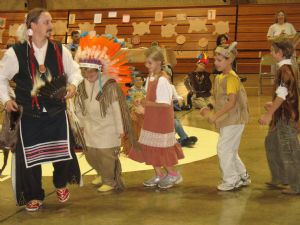
Celebration of culture has 'wow' factorAsk Amber Richardson whether American Indian culture is "hip" and she'll smile and confidently answer, "I think so."

Richardson, 17, of Hollister, not only is a first-year student at the N.C. School of Science and Mathematics, she took part in the annual powwow at the school's physical education complex.

Richardson said she made her heritage known to others. The first week at the school others wondered, "Well, what is she?" she said, and she's been telling them about her tribe, the Haliwa-Saponi, ever since. "And they're really interested and they like it," she said.

My sovereignty video

I finally figured out how to record movies with my digital camera, so I created this little video as a test project. It's my first effort, so don't be too critical.

The Hooters Tribal Nation

"Satire":  Hooters tribe is recognized, "squaws" wear t-shirts

February 17, 2007

Little Big Girl

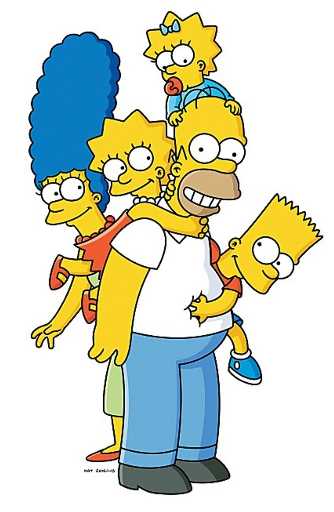
Little Big Girl (airdate: February 11, 2007) is another Simpsons episode featuring Indians.

Summary

Multicultural Day is approaching in Springfield, and Lisa Simpson has to write a report about her ancestors. Only problem is, they're boring.

Bart is playing with a Land O' Lakes butter carton--creating a flap to reveal the Indian woman's breasts. Lisa reacts, "Native Americans are a proud people with a noble heritage." Then she has an epiphany: "A noble heritage that anyone can claim."

On her laptop she types that her distant ancestor was--she spots a nearby Hitachi microwave--a member of the Hitachee tribe. (Good choice since "Hitachee" does sound like a Southeastern Indian word.)

She has a pang of conscience. "Is it wrong for me to appropriate the garb of a long-suffering people?" she asks herself. Her conscience answers that it's more important for her to get into Wellesley. Having decided, she says, "I'll just need to find traditional garb."

At the school assembly, Lisa has painted her face red and fashioned her kitchen's corn-cob curtains into a dress. She gives the best presentation and Principal Skinner praises her. "Why did I have to lie about my heritage?" she moans to herself. "By speaking with forked tongue, I am in heap big trouble!

"And now I'm thinking in stereotypes? That's even worse!" She runs off and Skinner muses that her shrieking is the war cry of her tribe.

Now adding a pearl headband with feather to her "traditional garb," Lisa has to speak at a city-wide meeting. There she claims the Hitachee invented women's lacrosse, soft luggage, and the sidestep where two people try to get around each other. They have seven words for this movement, she adds.

John Squawking Bear, an Indian reporter for the Chippewa Bugle, is there to hear her speak. He says he's never heard of the Hitachee. Lisa makes an excuse and ducks out.

But now she has to speak at the National Tribal Council in Capital City. Accompanied by ominous war drum-style music, Indians file into the convention center. In her speech, she finally confesses she's not an Indian. At the end, several people in the audience admit they're not real Indians either. The fakers include someone with a great tan and a midget standing atop another midget.

Rob's review

Despite its title, this episode is primarily about Bart's road trip. But the Indian subplot is one of the longest ones in Simpsons history.

Other episodes with Indian themes include The Bart of War and Margical History Tour.

Little Big Girl is a good example of employing humor about Indians without making fun of the Indians. I could complain about a few things: the name "Squawking Bear," the flaming arrow, the idea that Indians would take a white girl wearing a headband from a tribe they'd never heard of seriously. But the show deserves credit for showing an Indian as a journalist and Indians attending a political convention. Overall it was an effective look at modern-day Indians and the wannabe issue.

Incidentally, if you think the Land O' Lakes bit is childish, you're right. But things like this do happen. In fact, I saw grown (30-ish) men playing this very game at the LA Times in the mid-1980s. These were highly intelligent white-collar programmers who were responsible for the newspaper's news editing system. If a woman or minority had seen them, it easily could've resulted in a "hostile workplace" lawsuit.
Tlingit comic book debuts

Alaska comic superhero

Comic book creators team up to give classic Tlingit tale a new twistAnchorage artist Dimi Macheras and Juneau storyteller Ishmael Hope spent the past two years designing an action-packed comic called "Strong Man." It is based on the traditional Tlingit hero tale, which is then merged with a story of the life of a contemporary Alaska Native teenager.

"The story is traditional, but the underlying themes are classic comic book," Macheras said.

One major theme is acceptance in society, familiar territory for fans of X-Men's mutants or Spider-Man, whose alter ego, Peter Parker, is practically mayor of nerd city.

The comic was recently published by the Association of Alaska School Boards and its youth advocacy arm, Alaska Initiative for Community Engagement (Alaska ICE).

"It's really important work they're doing, bringing Native culture to more of a mass audience," said Steve Nelson, public information coordinator at Alaska ICE in Juneau. "They've created a great message of healthy living among young people, using culture as a foundation of achievement and strength."

Native video game in development

Announcing the best video game no one has played...yet!!

Students learn stereotypes, again

Students taught that Indian means chief, warrior, teepee, pony

Fiction about Indian gaming

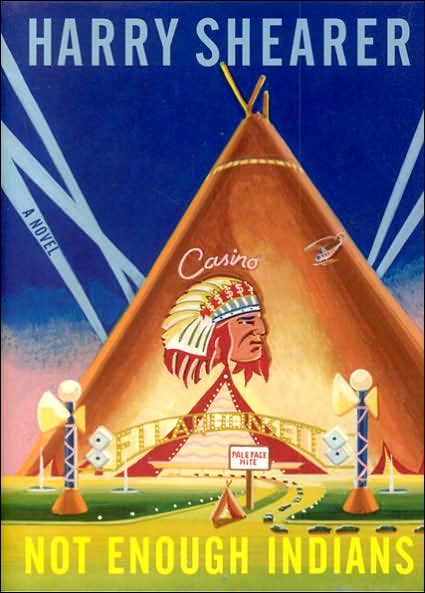
Not Enough Indians:  Town becomes "tribe" to open casino

February 16, 2007

Indians need permit for religion

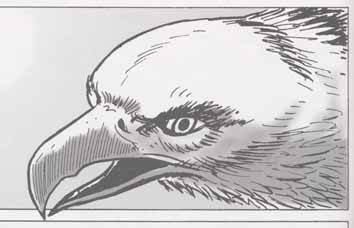
Stokes:  Time for new eagle feather lawThink your religious freedom is protected? Think again. As many people across Indian country are aware, American Indians are the only ethnic group in the United States that require a federal permit for religious freedom. The law upholding this is commonly referred to as the “eagle feather law,” referring to Title 50, Part 22 of the U.S. Code of Federal Regulations (50 CFR 22), and it governs the possession and use of eagle feathers.

Many people don't know how problematic the eagle feather law really is. To possess eagle feathers, citizens must be able to legally prove their ethnicity and only individuals of certifiable American Indian ancestry enrolled in a federally recognized tribe are authorized to obtain permits. Those caught without permits face imprisonment and fines up to $25,000--for practicing their religion.

But there's a problem. Falsification of state records in what has been termed “paper genocide” has artificially decreased the true number of indigenous people in the United States and terminated the “official” existence of many tribes. Consequently, many Native Americans cannot be found on the Dawes Rolls (the major determinant of tribal enrollment and application for an eagle permit) and many tribes are unable to win federal recognition. As a result, many people lose access to eagles and the ability to practice and preserve traditional customs otherwise protected for “recognized” tribes and their members.

Ding, dong, the Chief is dead!

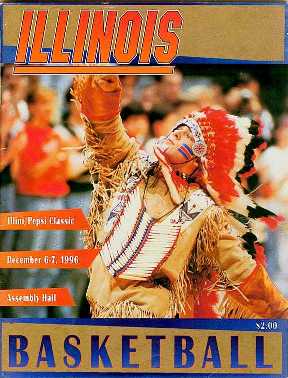
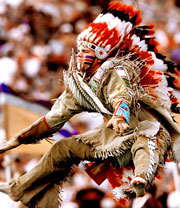
U. of I. ends Chief Illiniwek's runThe University of Illinois' American Indian mascot, Chief Illiniwek, no longer will perform at athletic events on the school's main campus after Wednesday—the last men's home basketball game of the season.

School officials today issued a news release on the retirement of the 81-year-old mascot, who is portrayed by buckskin-clad students who dance at football and basketball games and other athletic events.
Comment:  The students who played Chief Illiniwek and the Chief's supporters are some of the biggest crybabies around. Get over your self-righteous self-involvement and start worrying about some real problems. You know, like global warming and the war on Iraq?

See Ending a Tradition That Some Find Racist, Others Noble for a comprehensive review of the subject. See Blog Search for reactions to the decision.

Attacking Indians via Hawaii

Parker:  Overcoming neocon campaign against Akaka Bill key for tribal rightsAs I recently pointed out in remarks to the more than 200 tribal delegates attending [January's] Tribal Leaders Forum in San Diego, the highly orchestrated political campaign attacking the Native Hawaiian bill is clearly aimed at U.S. tribes. The Akaka Bill is a proxy for an attack by the neoconservative movement on the right of tribal sovereignty and it is clear that their line of attack would be the same if a tribal sovereignty issue were up for a vote in the Congress. For this reason I believe that it is absolutely necessary for all tribal leaders to actively engage in this fight and to make sure that this anti-Native Hawaiian/anti-tribal sovereignty attack is defeated. If not, they will be emboldened to attack the weakest link that they can find in the armor of tribal rights with all the resources at their disposal.

Students of the political tactics and strategies of the neo-conservative movement will recognize the elements of their campaign. They focus upon several buzzwords that are known to evoke a particular negative response in the American public and then just keep repeating their arguments on as many levels of media as possible. It is irrelevant that their arguments are false or distortions of the truth (as they certainly are in this case) because they are not appealing to logic, but prejudice. These tactics have been well-documented and were effectively analyzed in George Lakoff's book, “Don't Think of an Elephant!” As Lakoff points out, you cannot win a public debate on their chosen terms.

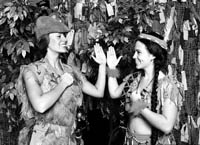
No harm in Peter Pan?

A comment from a correspondent:The "Indians" in Neverland were meant to be fantasy Indians. Realism, was never the intention from the get go. As a huge fan of Peter Pan in many of the stories' incarnations, I never found the Indians offensive. In the most recent live action film a couple of years ago, Tiger Lily and her kin were given the most dignified and respectful treatment ever.Isn't that what people say whenever Natives criticize their fictional Indians? E.g., Pocahontas, the Zagar commercials, Apocalypto, sports mascots. "These Indians weren't intended to be 'real,' so your criticism doesn't apply. We made them stereotypical intentionally because we have the right to exploit Indians however we want for our own selfish purposes."

Yes, the recent Peter Pan movie handled the Indians well. Which only goes to prove that Barrie didn't need to make his Indians "redskins" and "savages" to tell his story. He stereotyped them because he was ignorant about them--because that's what people did back then.

See Tiger Lily in Peter Pan:  An Allegory of Anglo-Indian Relations for more on the subject.

Claymation Trail of Tears

More from Roy Boney, Jr.:

On a Spring Day

No reason to apologize?

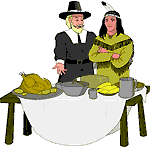
Thanksgiving celebrates "gratitude, humility, and inclusiveness"

February 15, 2007

Feds recognize Pilgrims' rescuers

Tribe at 1st Thanksgiving is recognizedThe tribe that shared in the first Thanksgiving celebration received federal recognition Thursday as a sovereign American Indian nation, 32 years after it began its quest.

The ancestors of the Mashpee Wampanoag tribe were at the area where Plymouth was founded long before the Pilgrims arrived, but their population was nearly wiped out by war and disease.
Some history on the tribe:After the Pilgrims arrived in 1620, members of the Mashpee tribe dined with the English settlers at the first Thanksgiving. The harmony, though, gave way to a brief period of bloody war.

The tribe dominated the town of Mashpee until the 1960s, when home construction transformed the town and much of the Cape. It notified the government in 1975 that it planned to seek recognition but didn't file a petition until 1990.

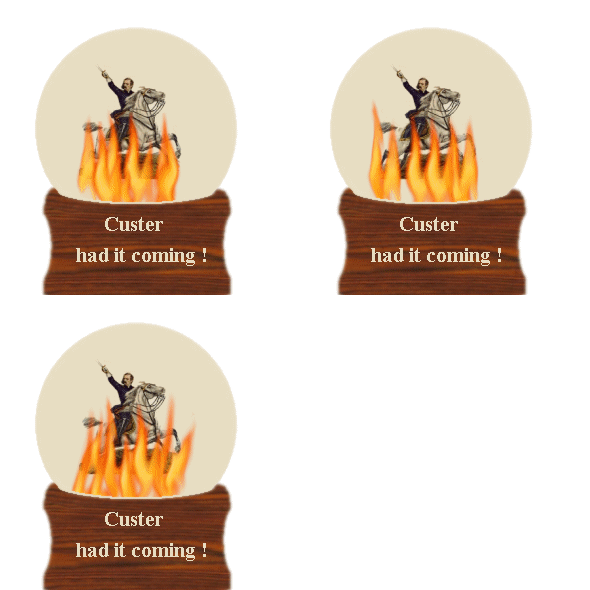
Killing Custer rereleased

American Indian history revisited

Rerelease of book takes readers on tour of conflict, battlesThe idealized textbook version of the prominent figures of this time are thrown out. Welch instead presents George Armstrong Custer as a man who had the highest number of casualties of all the Union division commanders during the Civil War. He wore crazy costumes, including "a sombrero, tight-fitting black hussar jacket, [and] Mexican spurs." and relied on "Custer's Luck." Custer was possibly involved in several shady business deals and did not do reconnaissance before attacking in the famed battle.

Welch himself, who died in 2003, was an American Indian, part of the Blackfeet and Gros Ventre tribes, and "Killing Custer" enables him to tell the story from an empathetic rather than sympathetic standpoint. His research is spot-on, including interviews from American Indians and white soldiers, pictures, drawings and even Custer's last letter. Details of American Indian rituals, vision quests and beliefs permeate the text, giving the reader a greater understanding of why the Plains Indians of the time acted the way they did. Mutilating the corpses of enemies was to ensure that those who meant them harm in this life would not be able to cause them any harm in the next life, where they would all inevitably go. By seeking to eliminate the prejudices and change the perceptions of this time period, "Killing Custer" succeeds.

Empowering Indian entertainers

Emergence Productions...Entertainment as EmpowermentThe empowerment factor—to benefit teens and talent of all ages. Because when it’s all said and done, It’s about Native American Entertainment. Not Hollywood Indians, but entertainers who are Native American. Who dance traditionally and play the flute; who rock and roll, hip hop, sing the blues, and do stand-up comedy.

Not Hollywood Indians, but entertainers who are Native American.

Melissa Sanchez and Shkeme Garcia are leading the way. And through it all, absolutely loving what they do.

Chief protected by law?

From newsblogs.chicagotribune.com:

Is Illiniwek academic freedom?Maloney and Ponce allege that being forced to abandon the Chief would violate their freedom of speech and academic freedom.

The students portraying Chief Illiniwek have a funded scholarship and receive class credit, according to Smith.

He pointed out that, just like at any university, the Marching Illini are a music ensemble. The class is a rehearsal. And the pregame and halftime shows at athletic events represent an exhibition of the course content, like a test in academic-type classes, Smith said.

The princess and the Petoskey Stone

Kathy Jo Wargin's The Legend of the Petoskey StoneThe Legend of the Petosky Stone purports to be a legend about a Native American chief from a community on the eastern shore of Lake Michigan. It also purports to tell the origin of the name of the northwest Michigan town of Petoskey, as well as the transfer of that name to a fossilized coral that was made the official state stone. There is absolutely nothing factual or traditional in this book. The language pronunciation guides, the explanations, the translations, are all false.

I don’t think I’ve ever seen so many stereotypes—in text and pictures—in a single spread of a picture book! A nameless and faceless Indian woman—a “Princess” with a capital “P”—marries a French fur trader living with the local Indians, who have made him an “honorary chief.” They travel to their “hunting grounds” along the shore in a birchbark canoe made with the outside of the bark on the outside, thereby guaranteeing that it will sink.
(Excerpted from Debbie Reese's American Indians in Children's Literature, 2/14/07.)