I recently reported on
Isuma.TV, a Native film site. Here's more on the subject along with an unnecessary swipe at us information providers.
IsumaTV. Films Made; Films Seen. OnlineThere’s a choice. We can continue to bitch and moan about Hollywood’s stereotypical portrayal of Natives in productions like Comanche Moon and Bury My Heart at Wounded Knee. We can; and while it’s cathartic, let’s be honest.
All the bitchin’ and moanin’ in the world doesn’t change a damn thing. Change changes things. And changing things starts with empowering Native filmmakers with the money to get their productions completed and, equally important, a medium to get their movies seen by a mass audience.
Organizations like Northwest Indian News and Native American Television (NATV) understand this and are quickly creating an international venue for Native news and cultural expression.
Add another change agent to the list: www.isuma.tv, a new website providing a video portal for Indigenous filmmakers. A collaborative effort started by Igloolik Isuma Productions, Nunavut Independent TV Network (NITV), imagineNATIVE Film+Media Arts Festival, and Vtape, the new site brings the Indigenous perspective to a worldwide audience. At no cost to either the filmmaker or the viewer.Comment: I couldn't disagree more with the opening remarks in this item. Bitchin’ and moanin’ don’t change a damn thing? Wrong.
Information is the first step in any process of change. First you identify what the problem is, then you decide how to fix it. If Eloise Cobell hadn't "bitched and moaned" about the Indian Trust Fund scandal, for instance, no lawsuits would've been filed. Few Indians would've received what the government owed them.
Do Indians still live in tipis? Are Indians underrepresented in the media? Are Indian mascots offensive to people? Until someone answers these and other questions with facts and evidence, there's no reason to expect people to act. Because no one will try to solve a problem until they believe a problem exists.
So that's why I and others (e.g.,
PECHANGA.net, Indianz.com, Indian Country Today) spend our time disseminating information. We're taking the first step necessary to change the world. Information is power, so the saying goes. Without it, we're powerless.
Ever since the first storytellers, bards, and town criers, informing people has been an honored role. Indians recognized this and so did many others. "Were it left to me to decide whether we should have a government without newspapers, or newspapers without a government," said Thomas Jefferson, "I should not hesitate a moment to prefer the latter."
I frequently hear from people how they've learned from my website and newsletters and blogs. The word for this is education. It may be a
slow process--changing the world a person at a time--but it
is happening. Some 50,000 people are visiting this site alone every day.
A hundred years ago, most people thought Indians were ignorant
savages. Now many people have a more enlightened view. They didn't get that perspective from Isuma.TV. They got it from thousands of activists, authors, and others who have striven to correct the record.
Of course, I'm also creating Native-oriented fiction. But if I weren't, I wouldn't feel bad about being "only" a reporter. The people who gather, organize, and share information--researchers, librarians, teachers, journalists, bloggers--are near the top in my estimation. Their work is essential in promoting change.
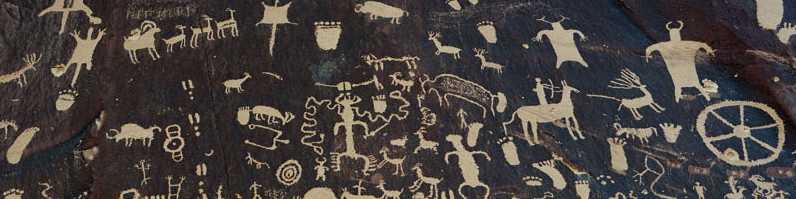
Below: The opening image for Isuma.TV.