July 08, 2015

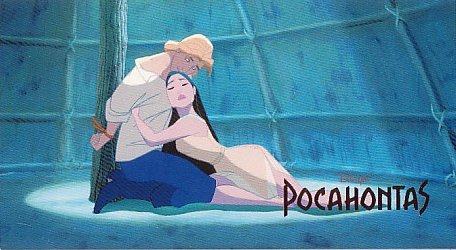
Fever sexualizes Pocahontas

Some of the lyrics of Fever--originally sung by Peggy Lee and covered by Madonna:Cap'n Smith and Pocahontas
Had a very mad affair
When her daddy tried to kill him
She said, "Daddy, oh, don't you dare!

"He gives me fever
"With his kisses
"Fever when he holds me tight
"Fever! I'm his missus
"Daddy, won't you treat him right?"
Comment:  This is a great example of how our culture has sexualized Native women such as Pocahontas. And why Disney's Pocahontas is problematical: for perpetuating a "storybook romance" that never existed.

For more on the subject, see "In Defense of Pocahontas."

July 07, 2015

Native scholars demand academic integrity

The Andrea Smith controversy continues to simmer:

Fake Cherokee?

By Scott JaschikThe issue is both important and sensitive to many Native American studies scholars. Leaders in the field stress that they believe that outstanding scholarship has been done by people with a variety of backgrounds, Native American and other. But many also say that there is a particular obligation in this field--when the number of Native American scholars with prominent university positions is so small and when Native Americans have been misunderstood by scholars for generations--to be open about one's background.

"All scholarship should be based on integrity and that integrity includes honesty and transparency," said Winona Wheeler, president of the Native American and Indigenous Studies Association, associate professor indigenous studies at the University of Saskatchewan, and a member of the Fisher River Cree Nation. "One of the significant tenets of indigenous studies as a discipline is that we strive to [situate] ourselves with our research. So it's really important in the discipline that we advise our readers somehow about the place that we're coming from."
And:The American Indian Studies Program at the University of Illinois at Urbana-Champaign, where Smith had a postdoctoral fellowship, in 2010 issued a statement called "Identity and Academic Integrity."

Robert Warrior, director of American Indian studies at Illinois, said that Smith didn't prompt the statement, but that the reports about her were "a topic of discussion throughout our development of it. We knew about the ethical issues regarding her claims to Cherokee descent at that point."

The Illinois statement said in part: "We recognize the importance of being able to identify ourselves clearly and unambiguously. Too often, we realize, American Indian studies as a field of academic inquiry has failed to live up to its potential at least in part because of the presence of scholars who misrepresent themselves and their ties to the Native world. While we do not in any way want to suggest that only Native scholars can do good scholarship in Native studies, neither do we want to make light of the importance of scholars who work in this field being able to speak with clarity about who they are and what brings them to their scholarship and creative activity."
Open Letter From Indigenous Women Scholars Regarding Discussions of Andrea Smith

By various authorsWe call first and foremost for accountability to the communities in which we claim membership. This is not a call for the punitive or the exclusionary. This case evokes people’s fears and vulnerabilities about very real histories of disenfranchisement, expulsion, discrimination, and normative policing in Indian Country and beyond. Thus it bears repeating: our concerns about Andrea Smith do not emerge from statist forms of enrollment or non-enrollment, federal recognition or lack thereof. They are not about blood quantum or other biologically essentialist notions of identity. Nor are they about cultural purity or authenticity, or imposing standards of identification that those who would work for or with indigenous communities must meet.

Rather, our concerns are about the profound need for transparency and responsibility in light of the traumatic histories of colonization, slavery, and genocide that shape the present. Andrea Smith has a decades-long history of self-contradictory stories of identity and affiliation testified to by numerous scholars and activists, including her admission to four separate parties that she has no claim to Cherokee ancestry at all. She purportedly promised to no longer identify as Cherokee, and yet in her subsequent appearances and publications she continues to assert herself as a non-specific “Native woman” or a “woman of color” scholar to antiracist activist communities in ways that we believe have destructive intellectual and political consequences. Presenting herself as generically indigenous, and allowing others to represent her as Cherokee, Andrea Smith allows herself to stand in as the representative of collectivities to which she has demonstrated no accountability, and undermines the integrity and vibrancy of Cherokee cultural and political survival. Her lack of clarity and consistency in her self-presentation adds to the vulnerability of the communities and constituents she purports to represent, including students and activists she mentors and who cite and engage her work. This concerns us as indigenous women committed to opening spaces for scholars and activists with whom we work and who come after us.
And:Smith’s self-acknowledged false claims and lack of clarity on her own identity perpetuate deeply ingrained notions of race—black, white, and Indian—that run counter to indigenous modes of kinship, family, and community connection. When she and others continue to produce her as Cherokee, indigenous, and/or as a woman of color by default, they reinforce a history in which settlers have sought to appropriate every aspect of indigenous life and absolve themselves of their own complicity with continued dispossession of both indigenous territory and existence.

The stories we tell have consequences, and the harm that some stories produce goes beyond their individual context. One of the devastating consequences of Smith having served as the often singular representative of indigeneity in a variety of academic and activist social justice contexts is damage to strategic alliance building, especially between indigenous and non-indigenous women of color. Accountability to communities, kinship networks and multiple histories is part of the difficult work scholars of indigenous and critical race studies must be willing to undertake to ensure that our work combats rather than reinforces or leaves untouched the intricate dynamics of heteropatriarchal racist colonialism.
Comment:  For more on the subject, see Smith's Defenders Denounce "Identity Policing" and "Cherokee" Activist Isn't Cherokee.

July 06, 2015

Superficial symbols = deep values

White Southern hate, stripped bare for all to see

As a nation finally confronts the truth about the Confederate flag, we join together to tear a hateful symbol down

By Heather Cox Richardson
The fight over the Confederate battle flag may change the course of a generation of American politics. The flag is not simply about race. It is about the nature of the American government. These two fundamental American issues cannot be separated today any more than they could 150 years ago. Does the federal government have the power to promote the good of all Americans, as Abraham Lincoln insisted? Or is the nation, in fact, a loose confederation of states that can do as they wish, without worrying about treating everyone equally?Comment:  Exactly. Every battle about a symbol is actually a battle about our core values. Displaying a cross = are we a Christian or secular nation? Gay marriage = is the Bible or the Constitution our source of law? Indian mascot = did we commit genocide and must we atone for it?

If a symbol is just a symbol, then replacing your Confederate flag or Indian mascot with a substitute should be no problem. The fact that it is a problem for you proves it's more than a symbol.

For more on the Confederate flag, see Redskins Mascot = Confederate Flag and Confederate Flag vs. Other Flags.

July 05, 2015

"From Tiger Lily to Green Inferno"

From Tiger Lily to Green Inferno: The Ethnocidal Exploits of Joe Wright, Eli Roth, and Hollywood

By Johnnie JaeInstead of waxing poetic about the ethnocidal liberties that were taken with the portrayal of the indigenous people, I wish Joe Wright had taken a cue from Spielberg’s Hook. Rather than serving up the same racist characterizations or promoting the ethnocidal “melting pot” present in Warner Bros. Pan, there was no Tigerlily and there was no tribe. There was no dehumanization of indigenous people, no opportunity for an actress to describe her movements as an indigenous warrior as ‘animalistic’. There was no opportunity to misappropriate an entire people’s identity and culture. There was no glorification or servitude to the “Great White Father” figure (Pan) or White Savior Industrial Complex, which brings us to Eli Roth’s The Green Inferno.

IMDB describes the plot of The Green Inferno in the following words:

“A group of student activists travels to the Amazon to save the rain forest and soon discover that they are not alone, and that no good deed goes unpunished.”

This is a huge improvement from the original description released last year that described the plot as “A group of student activists travel from New York City to the Amazon to save a dying tribe. Unfortunately, they crash in the jungle and are taken hostage by the very natives they protected.”

After watching this trailer, I’m sure many of you are not surprised by this characterization of indigenous people. Disgusted, but not surprised. In true Hollywood fashion, Eli Roth, like Joe Wright, glorifies the White Savior Industrial Complex and the “Kill the Indian, Save the Man” propaganda.
And:Last year, when I first wrote about The Green Inferno, I wrote that:

“While it is just a movie and while it may not have been Eli Roth’s intention, this movie will negatively affect the way that people will treat the struggles of these isolated and uncontacted tribes. Dehumanizing them, making them into monsters will only help to justify the genocide of these aboriginal people because it causes people to lose their ability to empathize and to see these tribal people as fellow human beings. It instills fear and the belief that they deserve what they get for not joining ‘civilized’ society.”
Comment:  I commented on these movies in postings such as Natives Protest Tiger Lily Casting and Cannibal Indians in Green Inferno.

The following image suggests how badly The Green Inferno stereotypes Indians as bizarre and inhuman.

July 04, 2015

Miramanee in Star Trek Continues

The coolest 'Star Trek' reboot you're probably not watching

Fan production "Star Trek Continues" re-creates the original series with incredible attention to detail. Crave’s Michael Franco talks with the series creator to see how he’s helping "Trek" live long and prosper.

Star Trek Continues--Episodes

Episode 4 is titled The White Iris. The official description:Captain Kirk finds himself haunted by guilt from his past as the fate of an alien world hangs in the balance.** spoiler alert **

In particular, Kirk is haunted by three of his lost loves--the black silhouettes at the bottom of this image. One is Miramanee from The Paradise Syndrome.

Here are some details of the plot:

The White IrisPlot summary

Kirk is struck in the back of the head by an Eretrian dissident, forcing an emergency beam out.

While Spock and McCoy try to plead with Kirk, he once again has another hallucination: this time of Miramanee, the American Indian princess whom he married during a memory lapse (episode "The Paradise Syndrome"). Miramanee had became pregnant with Kirk's child, but subsequently died when Kirk was attacked by angry villagers. Kirk then experiences another seizure, but resolves to perform his duties.

In the American Indian village, Miramanee is on her deathbed. Kirk tells her he sometimes wishes that he had not been found, as he was never happier than when he was with her. She was a gift he could never repay. Miramanee tells him that he made her very happy; that her place was by his side; that one does not repay a gift.

[Kirk] begins to head to the bridge when he encounters the little girl again. He asks her name, and she says he never gave her one. She then shows him a gift–a piece of beadwork with markings from Miramanee's headband–at which point Kirk realizes she is a vision of his unborn child. Kirk imagines hugging her, and she whispers the word "Irises." Remembering now that this is the password, Kirk is able to activate the defense grid.
Rob's review

The plotting and acting in these continuances is hit and miss, but the spirit is willing. They certainly convey the look and feel of Trek, if not their quality. They come across as below average but not totally unacceptable episodes compared to the originals.

As for Miranmanee (Tiffany Brouwer), it was nice to see her again and get some closure to her story. It was especially nice to see her unborn child, who would've been Kirk's second after David Marcus.

Fortunately the episode didn't add any new stereotypes to The Paradise Syndrome's story. In fact, the little girl was less stereotypical than anything in the original.

Another take on the series and Miramanee:

A web-series any Star Trek TOS fan should love(By Les)Whenever they have to match a character seen in TOS, they’ve unfailingly found an actor/actress that not only looked identical, but sounded and acted identical. In episode 4, “The White Iris,” for instance, they had to produce 3 women from Kirk’s past: Reyna (Requiem for Methuselah), Miramanee (The Paradise Syndrome) and Edith Keeler (The Guardian of Forever). They were instantly recognizable and acted precisely as the original actresses had.

Of course, Nakia didn't exist before this episode, so it was easy to get her right. But it was a nice multicultural touch to give Kirk a black girlfriend. And it nicely filled the gap between Carol Marcus, the somewhat unbelievable "Ruth" and Janice Lester, and the original series.

For more on The Paradise Syndrome, see Clear Inferiority in The Paradise Syndrome and Mistakes and Stereotypes in The Paradise Syndrome.

July 03, 2015

Even children enjoy white privilege

An excellent example of how white privilege works in the smallest of ways:

I am a recovering racist: I was somehow taught hate as a gift of love

I grew up in the segregated South. It took a question from an 11-year-old to teach me how I really felt about it

By Jonathan Odell
A girl raised her hand. “Did a black person ever have to give up her seat so you could sit down?”

It was obvious they had been studying Rosa Parks.

I was still off balance from the first question, editing my race history to include the fact that I liked segregation for the feelings of superiority it gave me. The thought was disorienting.

“Yes!” I answered, and knowing where she was going with her question, I continued. “I liked that, too. To see a grown man offer me his seat because I was more important than he was a good feeling.”

Before I entered the classroom that day, I felt it was enough to have condemned my past, along with those old white men who had created my racist world. After all, I was born into that society. I didn’t have a choice. I had to follow the rules. I’m certainly not to blame for it. I figured a little liberal guilt was enough to buy my redemption.

But the kids’ questions presented me with a moral dilemma. I was not a neutral or innocent bystander after all, even as a child. My enjoyment of the privileges testifies to that. In addition, it became clear to me that I got my seat because someone was forced to give up his. For every meal I was served in the pristine restaurant, somebody had to eat hers in an alley. My college scholarship came at the expense of some field hand’s son who couldn’t afford to finish the eighth grade. Each time I benefited because of my whiteness, an African-American paid because of his blackness. Guilt or moral repugnance is not enough. There is a real debt to be paid.
Comment:  For more on white privilege, see White Men = Winning Tribe and "It Feels Good" to Be White.

July 02, 2015

Smith's defenders denounce "identity policing"

As the criticism of "Cherokee" activist Andrea Smith unfolded, her defenders also took to the Internets. The first "criticism" I saw was mild:

No, Andrea Smith is not the “Native American Rachel Dolezal”

By Erica Violet LeeYes, if it is true that Andrea’s claims to heritage were entirely made up, it is a betrayal. Pretending to be Indigenous is not okay, regardless of your intentions. Accepting the astounding number of public engagements she has done over the years (and payments for these events) on the basis that one is a Cherokee scholar is unthinkably harmful and displaces countless Indigenous women scholars. For this reason I support the many Indigenous scholars I know that have worked to bring this particular case to light and demanded accountability; many of them important, senior women scholars who make spaces in the academy for young Indigenous women like me.But:Moving forward, how do we best deal with this situation?

Rather than tearing down any one woman, support the already-existing immense body of work of Indigenous scholars, particularly, that of Indigenous feminists and Indigenous women. Support the work of Indigenous feminists whose work is useful for our communities.
It's not one or the other. We can tear down Smith's wall of denial while supporting the work of genuine indigenous scholars. In fact, nudging Smith out of the limelight does exactly that. It frees up time and space for us to examine other people's work.

Jealous of Smith?

But then Smith's defenders got serious with their accusations:

Statement from Tawna Barnett-Little (Muscogee Creek/Seminole)All academics have shortcomings and it amazes me that you choose to attack Andy’s identity as her shortcoming and take it to this level. That’s the best you could do in finding something to call her out on? How pitiful. Why not go after her scholarship, her arguments? Oh yeah, because they’re brilliant! And her work is used in both grass roots organizing spaces and academic settings. Testimonies of Indigenous female rape survivors have asserted Andy’s work to be healing and empowering. Andrea and her sister Justine have both been extraordinarily positive voices in my life as well as other members of my family. This also rings true during times of hardship when their words have been encouraging and they have been physically present in our lives…..oh, remember that I said I’m a FULL-BLOOD (black haired-brown skinned-Indian looking individual unlike the rest of these insecure-in-your-identity-academic-mixed-bloods who I would not have criticized until you decided to exercise identity policing) which means that Andrea does hang out with Native People, contrary to previous blogging claims that she does not hang around other Natives. Many others can attest to that as well.

As we say in Muscogee, “mistvlke fekcahke owet fullet owes” (they are going about in a jealous way). I guess if my academic scholarship was lacking, I might also develop jealousy toward Andrea Smith. So, attacking her identity on grounds of not having an enrollment card and “misrepresenting herself” is an easy target eaten up by non-grass roots Indigenous Peoples and is something that only mainstream whites and insecure Natives seem to care about. It is obvious that these attackers do not know Andrea and her personal family challenges, particularly those surrounding her lineage. Trying to survive in academia can be brutal in Native Studies arenas where everyone wants to be Indianer-than-thou. I am altogether compassionate toward her claim/misunderstanding about enrollment in the Cherokee Nation. That doesn’t dismiss her exceptional work, commitment to social justice and desire to end global oppression. Andrea does not claim to be a Cherokee cultural or language expert and these attackers evidently have fooled folks into thinking they are somehow culturally and linguistically superior to Andy in their Native identity. Wow, that’s a joke! Andrea has not used her Cherokee identity as a way to promote herself; rather, she identifies with what she was told her identity is growing up and she participates in social justice advocacy--for people other than herself. In fact, she went to law school to defend those who cannot defend themselves. Andrea has made INCREDIBLE personal sacrifices for her family and herself in order to fight for justice, and anyone that attempts to discredit her clearly does not get the whole picture. The virtues of my Muscogee People (vnokeckv, eyasketv, mehenwv, kvncvpkv) do not support this kind of hateful behavior. It sounds like most of these attackers are without traditional teachings from their respective nations; they have yet to learn how to live on this earth.
Why not go after Smith's scholarship? Because her scholarship and her identity are two separate issues. Duh.

If I ever heard of Smith before this controversy, I don't remember it. I'm not Native, "traditional," or academic, so there's nothing for me to be jealous of. I criticize people who lie and dissemble because lying and dissembling is wrong.

For the umpteenth time, no one is saying a word about Smith's work or her advocacy. We're talking about her identity problems such as the "misunderstanding" about being an enrolled Cherokee.

More important things to do?

Why Realness Fails Us in Native Studies

By Chris FinleyIn the shadow of the Rachel Dolezal scandal, mostly non-Cherokee Indigenous academics have raised an alarm about Andy Smith’s identity once again. I want to point out that it is mostly tenured faculty that are doing this. I want to know why you have an investment in Andy’s identity in particular. Indian identity has always been heavily policed. Usually it was the settlers trying to undo us, but in this case, it is ourselves. This is the part that makes me truly sick. There isn’t a settler in sight but there is a massacre occurring. It isn’t only Andy who is hurt and scared by this discussion. I know if my identity was held up to a microscope or even a magnifying glass, I would fail spectacularly. I don’t speak my language, I don’t make it home much, I don’t eat venison because I’m a vegetarian (total Indigenous failure!), I don’t even like camping, I haven’t had sexual relations with an Indian in over 5 years, and I never wear turquoise jewelry. Sure, I’m enrolled, but as an Indigenous person my identity is always scrutinized and measured. (People often ask me for my blood quantum or specific questions about my cultural practices.) As a Native woman, my identity and civility are always under attack. Native men in the academy do not have their identities and work scrutinized as much as Native women do.

Andy Smith has done more for Indigenous people than I ever will and this is not because I think she blocked me but I just never had the energy she had to dedicate every waking moment to ending oppression. To me the question or desire should not be for a self-confession from Andy about what went wrong or what she is or is not, because I think her actions speak louder than that. My desire is for Indigenous people to stop tearing each other apart and to stop attacking someone who really tried to do some good. Why didn’t so many people call out Kevin Costner when he was adopted by the Rosebud Nation and then built a casino and that was not about sovereignty or decolonization. I tell you, I saw Andy go through her tenure battle at Michigan and the institution would have never treated a white woman that way, but it most certainly would have done so to a Native feminist.
And:For us to forsake Andy for not being Native when we have a white president of Native American and Indigenous Studies is very hypocritical. Why let white people run Native Studies? Does that make us less Native? I don’t think so but maybe it does. We have real things to worry about, theorize, and love. And this debate does not get us there. It is not a caring debate. The debate relies on those who want to be Native informants who tell all the other non-Natives that Andy is not Cherokee or Native like this means something really deep. To me, it doesn’t. When I found out there wasn’t a Santa Claus, I got over it.

This is not the most important thing happening in Native America, nor should it be.

This is NOT about Andy, but this is about us and how we deal with this shit.
I call postings such as this "Fifty shades of defending wannabes."

Wow, I am so sick of the "more important things" argument. If you're in academia, you're automatically not doing anything truly critical. "Chris Finley is a queer Native feminist finishing her PhD in American culture at the University of Michigan"...and that's what we should be doing instead of criticizing Andrea Smith? Because getting a PhD is the key to saving Native lives?

Finley and her ilk are thinking, writing, and teaching about long-term issues, which is fine and dandy. But don't tell us you're holier than thou--e.g., saving children from burning fires--and we're not. Academics, journalists, entertainers, and artists all contribute to the furtherance of Native culture and history in their own ways. Talking about wannabes who co-opt Native identity is one of those ways.

Working for Big Brother?

Statement from Klee Benally (Diné/Russian-Polish)Off social media most of the day and now back to a witch hunt against fierce feminist author and friend, Andy Smith. While I’m not privy to all that’s been published, so far I’ve read tequilasovereign’s (aka Joanne Barker) tumblr and a couple others. tequilasovereign’s statements eerily evoke cointel-pro badjacketing rather than Indigenous feminism. Reading it I couldn’t help ask myself, what interests are served via this pillory?

When Ward Churchill’s identity was called into question it clearly served a conservative agenda. My position then was that his identity is between him and the creator and an issue for his family and Nation to address internally through their own cultural process. After all, the primary issues regard accountability, colonialism, and white supremacy. I still maintain that his political contributions shouldn’t be uncritically thrown out when challenged with the colonial institution of “blood-quantum.”

Accountability on Indigenous terms figures quite different than putting someone on a social media blast. Certainly ethnic fraud should be critically addressed regarding Indigenous (mis)representation but is this the proper way and venue to address matters that have such serious implications? Perhaps we should also consider the standard set by Cherokee Nation of Oklahoma’s shit politics regarding anti-black dis-enrollments? It’s further concerning how the logic of this applies to non-Federally recognized Indigenous Peoples too, what are the standards for Indigenous academic purity there?

This isn’t to excuse redface, but to recognize that quantum/enrollment issues are more complex than the Dolezal matter (her own family put her on blast, which is quite different than what’s playing out with Andrea Smith), just check the Pechanga or Pala issues for reference: http://losangeles.cbslocal.com/…/casino-tribe-outcasts-cla…/
Churchill's and Smith's identities are between them and their creator? Is that also true of Iron Eyes Cody and all the German hobbyists and hipsters in headdresses? They're Native if they say they are?

In other words, Benally is excusing redface. Anyone and everyone can pretend to be Native if they feel like it. If my heart and soul tell me I'm Cherokee, I am.

Unfortunately for Benally, Smith isn't being accused of having a too-low blood quantum, or of violating the Cherokee Nation's standards. She's accused of having no Cherokee heritage whatsoever. No blood ties, no community ties, nothing. So spare us the histrionic talk about how the System and the Man are trying to oppress poor Andrea the wannabe.

Sticking to Smith's fraud

Another commenter pushed back against these accusations, noting how people were trying to change the subject from Smith's misdeeds.

On the Politics of Distraction

By Joanne BarkerMy point is that expecting Andrea Smith–or anyone else–to be honest, to have integrity, in how they identify themselves and their work is not the same thing as policing their/her identity through the standards of racial authenticity. No one I know has ever asked her what her racial quota is or whether or not she can produce her CDIB.

Equating “identity policing” with the expectation of integrity with how someone presents themselves as Native is part of the trouble–anticipating that kind of racialized equivalence is exactly why Cherokee people and Native scholars who have known about Smith’s fraud for 7 to 24 years have never come forward.
And:I share this because in the blogosphere of reactions to what seems like new information about Smith for a lot of people, people are speaking as if those of us who have known, who have tried to think out loud about the issues in the last few days and weeks, are spiteful and mean-spirited and hateful people. That has not been my experience. The Native feminists and NAIS allies, UCSC alum and others, who have known and who are just beginning to speak up about the issues are compassionate, generous, empathetic, and smart and have been genuinely distressed about Smith–and for Smith’s health and well-being–and what the right thing is to do and to say for years and years and years. It has required a lot of spiritual, emotional, professional, and intellectual energy to work through. And we are only just beginning.

My challenge to everyone is to stay focused. There are too many distractions in conversations about these issues–too many accusations of papergenocide, lateral violence, cruelty. They have seemed, to me, disingenuous. A way to refocus the question and alleviate Smith of any kind of responsibility or accountability.
You know, it wouldn't affect me one iota if I found a nonwhite ancestor in my family tree. Why should it? It literally would have nothing to do with my present circumstances or plans.

Therefore, I don't understand why people would go around touting a rumor or a lie for years. Why don't they just save us the trouble and check themselves into a psychiatric institute? Because clearly they have unresolved issues and need help.

For more on Indian wannabes, see Vague Ancestors Aren't a Free Pass and Rachel Dolezal = Indian Wannabe.
July 01, 2015

"Cherokee" activist isn't Cherokee

Meet the Native American Rachel Dolezal

Andrea Smith is a Native American activist and academic hailed for her Cherokee heritage. One small problem: She’s not Cherokee.

By Samantha Allen
Andrea Smith—an associate professor at University of California, Riverside, the founder of INCITE! Women of Color Against Violence, and a leading Native American studies scholar and activist—may not, in fact, be a Cherokee woman, despite repeatedly presenting herself as such since at least 1991.

I first saw Andrea Smith in 2013 when she delivered a keynote at the Southeastern Women’s Studies Association (SEWSA) conference and, although her program bio did not explicitly mention that she was Cherokee, she was widely understood by conference goers to be a Native American speaker.

After all, she was the author of Conquest, a landmark text about state-sanctioned acts of violence against Native American women, she had been involved with the Chicago chapter of the organization Women of All Red Nations (WARN), and when she was denied tenure by the University of Michigan, students and faculty rallied around her, suggesting discrimination on the basis of her Native American descent.

She had a long history of speaking as a Native American woman on issues affecting Native Americans. Her tenure controversy, in particular, was legendary in academic circles. At the time, Inside Higher Ed referred to her as “[a] Cherokee,” adding that “she is among a very small group of Native American scholars who have won positions at top research universities.”

But that’s not so, as David Cornsilk—a research analyst who did genealogical work for the Cherokee Nation in the late 1980s and has operated his own practice, Cherokee Genealogy Services, since 1990—can attest. He confirmed to The Daily Beast that Smith reached out to him twice during the 1990s to research her own genealogy. There was no evidence of Cherokee heritage either time.
Some details on Smith's history of claiming to be Cherokee:

Rachel Dolezal and Andrea Smith: Integrity, Ethics, Accountability, Identity

By AnonNDNAbout two weeks ago, Annita Lucchesi (Southern Cheyenne) posted a comment on her tumblr page entitled “Andrea Smith is not Cherokee.” In Lucchesi’s biography for an article she wrote for Last Real Indians in honor of Loretta Saunders, it says, “Annita Lucchesi is a Southern Cheyenne survivor of sexual and domestic violence. She is a graduate student in the Critical Culture, Gender, & Race Studies department at Washington State University, and also works at the National Indigenous Women’s Resource Center, which is dedicated to reclaiming the sovereignty of Native nations and safeguarding Native women and their children.” Her comment on tumblr about Smith begins:

“Andrea Smith is not Cherokee. omg. this is not new information. this is what bugs me about how Natives are treated by non-Natives in academia!!! most Native scholars that are connected to their cultures/communities have questioned her for a very long time. but non-Natives get so comfortable using their one token go-to Native Feminist to quote that those questions don’t get heard or understood.”
And:Within a few days, a new tumblr page appeared: andreasmithisnotcherokee. With multiple Cherokee and other sources and primary and secondary documentation dating back to 1991, the page tracks a 24-year history of Smith misrepresenting herself as an enrolled Cherokee citizen, of being confronted on the validity of her claims and agreeing with the Cherokee Nation to no longer publicly identify as Cherokee, and of subsequently allowing others to misrepresent her as a Cherokee intellectual and activist.

Smith’s admissions to multiple Cherokee people in 1993, 2007, and 2008 that she has no lineal descent claims as a Cherokee is as striking as the fact, as noted on tumblr, that, “To date, no member of the Redbirth Smith family or any other Cherokee family has acknowledged Andrea Smith’s claims of descent/belonging.”

In the two weeks since Lucchesi’s posts, the twitter and Facebook flurry, and the appearance of andreasmithisnotcherokee, not a single national media outlet or professional institution or association to which Smith is a member has remarked on Smith’s case. And neither has Smith responded–to refute, to acknowledge, to apologize. In fact, it appears that all she has done in response is to close her twitter account (@andrea366, though one she seems to be affiliated with @NativeChristian remains active) and her Facebook account (Andy Smith).

[Insert the sounds of crickets here.]
Rachel Dolezal Outs Andrea Smith Again; Will Anybody Listen This Time?

By Steve RussellBack in 2008, I signed a petition favoring her tenure at the University of Michigan and subsequently published a column here saying the same thing and saying why. I did not recant my opinion that she has produced serious scholarship when she was outed as not Cherokee about a month later because I do not believe ethnicity can be or should be a condition for academic employment.

Still, fraud is fraud, and professors are to some degree, whether we like it or not, role models. When I had personal contact with Andrea Smith, I came away with the same impression many people have had after personal contact with Rachel Dolezal: this is a deeply disturbed person.

How can you be an Indian without knowing which of your relatives is Indian? How can you be an Indian with no ties to an Indian community? How can you “mistake” whether or not you are tribally enrolled?

By seeking grants and honoraria and academic positions as a Cherokee, she does harm both in the sense of denying these things to real Cherokees and in the sense of representing a Cherokee culture about which she knows little. Still, I can sense that she wants to be Cherokee as desperately as Rachael Dolezal wants to be black.

When the dust settled over the outing of Andrea Smith half a dozen years ago, she had agreed to quit representing as Cherokee and several Cherokees, myself included, agreed to quit harping on the fraud already committed.

Years later, I found out she never quit playing Cherokee and, worse, her sister Justine joined what is beginning to appear to be a family scam, reportedly going so far as to submit a Cherokee Registry card with her name and somebody else’s number on it to a prospective academic employer.
Two prominent Native Americans accused of faking their Cherokee heritage: “They’re just trying to make a buck off of us”

An artist and a scholar are both under fire for claiming to be Native American, which furthered their careers


Why it matters

Four Words for Andrea Smith: 'I’m Not an Indian'

By David ShorterAndrea Smith surely thinks she is Cherokee; or she did at some point. She has been asked repeatedly to either stop claiming Cherokee identity or to either authenticate her claims through a reliable kinship, through ties to a specific family, or through the Cherokee Nation’s official process for enrollment. And she’s smart enough to know that in many tribal cultures, identity is not who you claim but who claims you. She has done incredible theoretical work in the academic field of Indigenous Studies and has even been recognized internationally for her broad and groundbreaking anti-violence coalition building. So does it matter that she did all of that in Red Face?

Yes it does.

Andy Smith did not just appear out of an egg, as a fully formed “woman of color” advocate, validated as an Indigenous scholar, and a Nobel Peace Prize nominee. She got there by grabbing the microphone, keeping others away from it, and deciding to speak both “as” and “for” a group of people. While writing my ethnographic works, I do sometimes speak “for” Yoemem; but I’ve also gone to great lengths to simply translate and when possible, amplify Yoeme people’s claims. But, I’ve never spoken “as” a Yoeme person.

For every scholarship she received as a Native person, for every honorarium she has received as an Indigenous speaker, for her book sales that a publisher sold as coming from a “Cherokee” author, those recognitions came at the expense of some student who wasn’t funded, some speaker who wasn’t invited, or some book by an Indigenous author that wasn’t bought.

She spent years cultivating relationships with other powerful women of color to ensure her insider status. And as I personally know, she pushed others out of her way by not only playing an insider, but also playing the gatekeeper. One only needs to visit this Tumblr page (http://andreasmithisnotcherokee.tumblr.com/) to see her strategic use of “we” when talking about Indigenous experiences and “them” when talking about colonizers. Andy and I both went to a graduate program, History of Consciousness, a place that excelled at theorizing the strategies of exactly such representations within social movements.

Lisa Aldred wrote a great scholarly article that methodically shows why people want to be Indian. In “Plastic Shamans and Astroturf Sun Dances,” she demonstrated that non-Indians are unconsciously motivated to become or affiliate as Indigenous because doing so alleviates them of their guilt about colonization. This essay is powerful in the classroom because it shows the sheer power of this motivation, from headdresses, to sweat lodge tourism, to the entire market for anything smacking of Indian spirituality.
Honest Injuns*: Policing Native Identity in the Wake of Rachel DolezalFor many of us, we’ve fought tooth and nail to hold onto our Native identity in the face of oppression. So woe unto the person who gains some kind of notoriety after claiming to be Native without also providing indisputable tangible proof. Just ask Ellie Reynolds, a conservative lapdog who was outed as a non-member with no lineage by the Oglala Sioux tribal government back in May after using her “Oglala Sioux Native American” background as a platform to speak in support of the use of Indian mascots. Or ask Elizabeth Warren. Or Andrea Smith (after reading that link, make sure to read this one AND this one).And:You’re Native? Back it up.

Blogger tequilasovereign (Joanne Barker, Lenape) wrote about this very subject of indigenous identity back in April. From “13 Observations in 3 Parts: Anti-Racist Feminist Allies and the Politics of Indigeneity,” Barker asserts:If you say you are Indigenous, you should be able to identify who your nation/tribe/band is (Cherokee, Tlingit, etc.) and who your family/clan is (by name). This identifies you within a set of relationships but also within a set of responsibilities to/within the nation/tribe/band you claim. These responsibilities are political, ceremonial, and social.

If you cannot identify your nation/group/tribe/band, then you should have a transparent explanation (adoption, for instance).

Because of the histories of misrepresentation of Indigeneity in territorial dispossession and violence, there are deep ethical responsibilities in identifying oneself as Indigenous.
I couldn’t agree more.
Comment:  For more on Indian wannabes, see Vague Ancestors Aren't a Free Pass and Rachel Dolezal = Indian Wannabe.


June 29, 2015

Obama's "n-word" controversy

The GOP’s secret “n-word” politics: What their latest Obama outrage is really about

In the Age of Obama, conservatives continue their tradition of racial slurring—without actually saying the word

By Chauncey DeVega
The faux-controversy over Obama’s use of “the n-word” in a discussion about white supremacy and racial animus in the United States is one more example of how conservatives have hijacked anti-racist language and concepts such as “colorblindness,” “discrimination” and “racism” in the post-civil rights era. Instead of abiding by the original intent of such language, as offered and used by progressives and liberals, the White Right has twisted those concepts to serve white privilege and protect entrenched systems of white supremacy.

Now, racism (what is, “power” plus “privilege”) is distorted as “reverse racism” (an oxymoron, a type of newspeak, as to reverse racism actually means that there is in fact no racism). The concept is rooted in the bizarre notion that it is white people who are the actual racists; rather, it is black Americans and those others who dare to talk about white privilege and white supremacy that are guilty of that sin. Similarly, when White America is asked to no longer use a racial slur, it is the former who are now somehow victims of “anti-white discrimination” and “unfair” racial “double-standards.” The ultimate effect of the right wing’s deft rewriting and reworking of the language of race in America is to fuel a white victimology and grievance industry, of which Fox News and the Republican Party are the main purveyors and beneficiaries.

The ugly irony of this latest fake outrage is that Fox News, the Republican Party, and the white right more broadly have been calling America’s first black President a “nigger”—normally in all but name, but sometimes even in plain speech itself—since his candidacy for president began, close to a decade ago.

While some conservatives and their defenders will immediately object to such a claim, the reality is that there are in fact many ways—deployed throughout modern history—to call a black person that word without ever saying it outright. The word itself came into common usage in the 19th century, as an “evolution” of earlier words used by white people in the context of white-on-black slavery, rape, violence, and the Maafa. Language has symbolic power. Words can be inherently provocative and violent acts against the minds and emotions of those individuals they are directed at. (The law even acknowledges such language as “fighting words.”)
Some of the hundreds of examples for those unclear on the concept:Examples of such “dog whistles” include words and phrases such as “welfare queen,” “black crime,” “black pathology”; and references to black people’s bad culture,” “broken homes,” “dependency,” “laziness” and lack of “work ethic.” This language has even expanded in recent years to include such phrases as “makers versus takers,” fatuous distinctions about “real Americas,” as well as Mitt Romney’s infamous claims about “the 47 percent.” In the Age of Obama, the Republican Party, Fox News, the right-wing echo chamber, and movement conservatives have provided a litany of examples in which they have invoked racist attitudes toward Obama without actually having to directly utter that six-letter word.

Barack Obama was subjected to a racial litmus test known as “Birtherism.” His legitimacy as president of the United States was questioned because of a deep belief that he is some type of foreign Other, incompatible with what it means to be a “real American.” (Read between the lines: A white American.)
Comment:  For more on conservative racism, see Conservatives Can't Handle Roof's Racism and Black Professor Criticizes White Men.

June 28, 2015

Vague ancestors aren't a free pass

Sherman Alexie offered a great quote on Indian wannabes. It was partly a response to the Rachel Dolezal controversy swirling in the air:

Blow-Your-Mind Quotes On Race By Sherman Alexie And Tonya MosleyAfter this, one of you white people is going to come up to me, and you're going to say, "My great-grandmother was something." You're going to say it to me. Even though I am pre-mocking you. You are so deaf to your own privilege that you're not even hearing me right now saying this to you.

I have Scottish ancestors. I would never go to Scotland, walk up to somebody Scottish and say you know what, you and I have a lot in common.
Someone asked what she should do if she really was part-Native--1/8th, 1/16th or whatever--and wanted to join in. Couldn't she go up to Alexie then?

My response:

First I'd document your Native ancestry so people couldn't question it. And I wouldn't lead with it in a conversation. Sherman Alexie doesn't need to know your ancestry to acknowledge you.

In my case, I have no Native ancestry. I don't ask or expect people to accept me because I have a Native great-grandma somewhere. Rather, I demonstrate my awareness of Native history and culture through my writings and postings. Then people can accept me or not as they choose.

I'd say the people who start off talking about their great-grandmas are just trying to get approval or attention. Problem is, they haven't earned a place at the "Native table."

They should listen, study, and learn about Natives first. Then people like Alexie will acknowledge them--because they've earned it.

Someone else had a similar response:Alexie does not need to give cookies to people who trot out their family myths to him, who primarily identify and live as non-Indigenous.

A vague ancestor does not confer being Native on a person. Why are folks not embracing OR redeeming their mostly white ancestors? I have a Scandivanian ancestor, whose last name I hold, but I do not run around claiming to be a Viking. That is not my experience. Being Native is not a costume one can put on when it's convenient. Don't be co-opting Native identity while you divorce yourself from our struggle.
More on the subject

Then I tweeted this comment:

A Cherokee ancestor isn't a free pass to a secret society of Natives. Your beliefs and actions are what gain you admittance, not your blood.

Followed by:

A Native great-grandma is one of dozens of ways you can start a conversation about becoming a Native ally. Like a white person who grew up on a rez. Or Richard Nixon's playing for a Native football coach. Or my doing Native comic books.

Then you can spend a decade or so looking, listening, and learning. And then you may be qualified to join a conversation on Native issues.

But no, your possibly mythical ancestor doesn't let you bypass all the work and become an instant Native. If Johnny Depp and Elizabeth Warren didn't get a free pass, neither do you.

So don't trot out your legendary great-grandma and expect to join the club. Nobody wants you because of a relative who may or may not exist.

Some related thoughts:

Fake Black Folks, Fake Indians, and Allies: The Native Roots of the Rachel Dolezal Saga

For more on Rachel Dolezal, see Rachel Dolezal = Indian Wannabe and Churchill, Depp, Warren, and Dolezal.

June 27, 2015

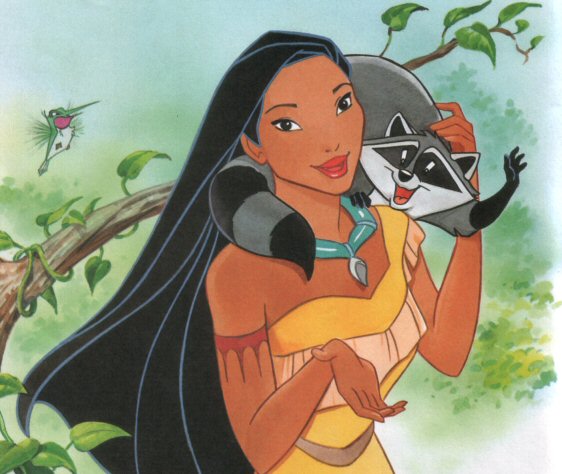
"In Defense of Pocahontas"

The following posting raised a ruckus on the Internets. The headline says it all:

In Defense of Pocahontas: Disney's Most Radical Heroine

20 years after the movie’s release, its character and premise still feel notably progressive.

By Sophie Gilbert
Pocahontas was something different entirely. The success of Beauty and the Beast spurred studio chairman Jeffrey Katzenberg to push for another romance, and directors Mike Gabriel and Eric Goldberg wanted to pursue a story that had its origins in early American history, while also incorporating the Romeo and Juliet-esque elements of two people from very different backgrounds falling in love. But unlike the naive and uncertain Ariel and Belle, Pocahontas would be far more confident—“a woman instead of a teenager,” as supervising animator Glen Keane put it. As the producer Jim Pentacost says in Disney’s 1995 documentary about the making of the feature, “Pocahontas is the strongest heroine we’ve ever had in a Disney film.”

The main problem with Pocahontas—as expressed by several Native American groups, including the Powhatan Nation, which traces its origins back to Pocahontas herself—is that over time, she’s come to embody the trope of the “Good Indian,” or one who offers her own life to help save a white settler. “Her offer of sacrifice, her curvaceous figure, and her virginal stature have come to symbolize America’s Indian heroine,” wrote Angela Aleiss in an op-ed in The Los Angeles Times. Aleiss goes on to criticize how female Indian characters are defined by their male relationships, are “tossed aside by the white man” for a woman of his own race, and have nothing in their appeal beyond their “on-screen pulchritude.”

But Pocahontas as a character is much more complex than Aleiss allows. She does throw herself on John Smith as he’s about to be executed, emphasizing the value of human life and the destructive nature of war, but her move is reciprocated minutes later, when Smith then positions himself between Pocahontas’s father and the furious head of the English settlers, Governor Ratcliffe, and gets shot in the process. The injured Smith decides to return home, and begs Pocahontas to go with him, but she chooses to stay with her tribe in her homeland. Instead of sacrificing something for love (like Ariel giving up her voice, or Belle her freedom), Pocahontas puts her identity and heritage first. It’s a bold ending, and one that deliberately subverts real history, which saw the real Pocahontas marry a different Englishman, John Rolfe, and travel to London with him, where she was feted as an example of the “civilized savage” before dying at the age of 21 shortly before her husband was due to sail back to Virginia.

Powhatan Nation has a page on its website in which it also criticizes Disney for propagating the “Good Indian/Bad Indian” theme and basing a movie on what is largely believed to be a lie told by John Smith to enhance his own mystique. “Euro-Americans must ask themselves why it has been so important to elevate Smith’s fibbing to status as a national myth worthy of being recycled again by Disney,” the page says. “Disney even improves upon it by changing Pocahontas from a little girl into a young woman.” But an animated feature about the relationship between a 10-year-old (as Pocahontas is believed to have been at the time she met John Smith) and an adult male would presumably have horrified audiences. “We had the choice of being historically accurate or socially responsible,” Glen Keane said.
So other than being historically inaccurate, it was a great movie? Okay!

An unrelated posting inadvertently echoes some of Gilbert's arguments:

17 reasons why Pocahontas is the best Disney film

Natives respond

Many Natives didn't like this full-throttled defense of Pocahontas. Debbie Reese posted the first response I saw in her American Indians in Children's Literature blog:

A Native Response to Sophie Gilbert's Article "In Defense of Pocahontas"Gilbert is doing the same thing Disney did. She is promoting this dishonest and self-serving myth at the expense of the Powhatan Nation and all the people who are led astray by the narrative of that film.

By focusing on "female agency" and an "environmentalist message," Gilbert is throwing millions of people under the bus.
Reese linked to the Powhatan Nation's statement on the movie but didn't go into it. Her point, if I read it correctly, is that a Native viewpoint should be central to any critique of Pocahontas. You wouldn't critique Birth of a Nation without noting its racism against blacks. This is the same kind of thing.


A roundup of responses included the one below from Kenzie Allen. She goes deeper into the issue of a white frame vs. a Native frame:

Does Disney's Pocahontas Do More Harm Than Good? Your Thoughts

Sophie Gilbert found the film progressive and feminist. Readers feel it whitewashes a horrific past. Perhaps it’s both.

By Chris Bodenner
I’ve struggled with Disney’s Pocahontas as a source of pain and stereotype. Both Pocahontas and Sacagawea are often held up as heroines in the Western perspective, their stories reduced to kinder details rather than serving the interest of the dominant culture. Yes, there is visibility in telling their stories, but it is a tainted visibility, a false reality rendered through the dominant culture, which seeks to ameliorate, always, the horrific methods by which they came to occupy an entire nation’s worth of landmass.

Nobody wants to feel like a settler. Disney’s Pocahontas gives just enough of a flogging to the “real” bad guys to leave the non-native viewers coming away feeling as though they’ve done the good work of recognizing their own faults, while the pain of forced assimilation and erasure continues for the Powhatan Nation and others.

It is the Western lens that sees a progressive narrative in the way the settlers of Disney’s movie are mocked (but eventually befriended), the way Pocahontas rejects a voyage overseas (but was in reality kidnapped—and in the sequel, even this part of the story is made family-friendly and song-worthy), and the way she chooses family over love (when in reality her “choice” was anything but).

Disney goes so far as to try to turn the narrative around by having the Powhatans call the settlers the “savages,” but it’s only done half-way. Much like coverage of mascot issues often features white voices in the interest of “fair and balanced coverage,” the movie ends with the two groups considered even, with no indication of the devastation yet to come.

If Disney’s choice was between being “accurate” or “socially responsible,” my question would be: socially responsible to whom?
Native Barbie doll

These critiques touch upon portraying Pocahontas as an attractive young woman rather than a preteen girl. An old posting discusses how phony Disney's representation of her was:

Representations of PocahontasGertrude Custalow, a Powhatan Indian, remarks, “The real Pocahontas was a child, not a voluptuous woman. And one thing’s for sure—she didn’t own an uplift bra (quoted in Tillotson C8)” (Edwards 154). This stresses the sexualized nature of representations of Pocahontas not only in art but also in children’s movies. This also addresses Disney’s indifference to what Pocahontas actually looked like. Instead, they make her into a “brown-skinned Barbie Doll” (154).

The artist who created Disney’s Pocahontas concerned himself less with recreating what Pocahontas must have looked like in reality and more with creating a generic racial other. He literally combines women of various non-white races to generate a very sexualized representation of Pocahontas. Edwards states, “Pocahontas becomes an historically-impossible multiethnic body—an anachronistic image composed of ‘aesthetically-pleasing’ body parts drawn from American Indian, African American, Asian American, and Caucasian models. Disney animator Glen Keane describes his Pocahontas drawing as ‘an ethnic blend whose convexly curved face is African, whose dark, slanted eyes are Asian and whose body proportions are Caucasian’ (qtd. In Tillotson C8). In addition to historical representations of Pocahontas herself, the visual models of various ethnicities that Keane used for his drawing included Irene Bedard, the American Indian actor who provides Pocahontas’s voice, American Indian consult to the film Shirley ‘Little Dove’ Custalow McGowan, Filipino model Dyna Taylor, black supermodel Naomi Campbell, and white supermodels Kate Moss and Christy Turlington” (151-152).
Okay, Disney animator Glen Keane. Thanks for letting us know how fake your version of Pocahontas was!

Rob's reaction

I liked Pocahontas, but I knew her real story. I took the movie as a fantasy largely divorced from reality. Like The Hobbit but with characters who vaguely resembled historical figures.

In fact, I suggested that Disney should've changed the characters' names to show audiences this wasn't history. Make the characters generic Anglos and Indians, or even generic fantasy figures--e.g., dwarves and elves.

Of course, that would've ruined Disney's marketing plans, so no way was it going to happen. But it was the kind of solution I would've liked.

As for the question of how progressive Pocahontas was, I'd say it moved the dial from near zero, in Disney's older movies, to maybe 25. That's only 1/4 of the way to a goal of 100.

So you could say the glass was one-quarter full or three-quarters empty. But ignoring the three quarters for the one quarter isn't exactly responsible writing. It's like saying the Titanic's initial voyage was great except for the iceberg.

For more on the subject, see Pocahontas Bastardizes Real People.

June 26, 2015

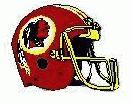
Redskins mascot = Confederate flag

As the Confederate flag came down, people wondered about the Redskins nickname and logo. Many made the obvious connection between one racist symbol and another. For instance:


The Confederate Flag, the Washington Football Team, and the Owners Who Love Them

If the Confederate flag is seen as poisonous, then products bearing the Washington football team name should be regarded in similar fashion.

By Dave Zirin
It may be literally the least they could do, but it’s a victory for human decency that the Confederate flag will no longer be available at Walmart, Amazon, Sears, and eBay. Even though it is heartbreaking that it took the murder of nine people to get ghouls like Nikki Haley and Lindsay Graham as well as their corporate masters to see it as a public-relations liability, it also raises a question. If the Confederate flag is too toxic to sell, then how can Amazon and Walmart continue to peddle the merchandise of a Washington football team that bears the name of a racial slur? How can they stock the blood-red profile of a Native American chieftain’s head adorned with feathers and a brand—no matter what revisionists argue—that celebrates their violent death?The Racial Wallpaper of Slavery and Genocide

By Tara HouskaIt is monumental to see people recognizing and tearing down racial wallpaper; to witness progress in some of our most divided regions. Here in Washington, D.C., however, racial wallpaper is not even recognized as such.

Every day, I walk down the streets of our Nation’s capitol, through the halls of Congress, past statues of celebrated American leaders. And every day, I am subjected to pinpricks of racism directed at Native Americans.

Jerseys, hats, bags, umbrellas, bumper stickers, miniature flags, giant banners, even paper towels–all proudly displaying a caricature of a Native American with a dictionary-defined racial slur as its moniker.
Native Americans Look At Confederate Flag Controversy And Ask: What About 'Redskins' And Other Racist Symbols?

By Ismat Sarah Mangla“Our country is having a national debate over symbols, and we should take an honest look at those symbols that don’t promote inclusivity but rather promote bigotry,” said Joel Barkin, vice president of the Oneida Indian Nation and spokesperson for Change the Mascot, a national campaign for ending the use of the word “redskins” as the mascot and name of the NFL team in the nation's capital.

Just as defenders of the Confederate flag have argued that it represents pride in Southern culture and history rather than racism, supporters of team names like the "Redskins" have insisted that they actually honor Native Americans. But activists say parallels between the two controversies are worth noting. Even if the intention behind the usage of such symbols isn't to harm, Americans should recognize that minority groups are harmed by them nonetheless--and eliminate them as a result.

“Proud tradition does not negate the racism of a flag associated with the enslavement of a people, nor does it negate the racism of a moniker that dehumanizes and slurs a people who underwent attempted eradication,” wrote Tara Houska, tribal rights attorney in Washington, in the Indian Country Today Media Network. “Despite empirical studies demonstrating psychological harm, numerous tribal resolutions, lawsuits, and protests spanning decades, the r-word still remains widely accepted.”
Are they defending the Redskins name or the Confederate flag?

By Washington PostWhich brings us, perhaps inevitably, to the closest thing the world of sports has to the Confederate flag: The logo and nickname of the Washington Football Team.

Many will reject this comparison for obvious reasons, pointing out that a scientific poll has shown Native American support for the Redskins name, that football should not be compared with politics, and that it’s entirely unfair to link the name of a sports team with such a weighty symbol as the Confederate battle flag.

Still, it’s hard to deny that defenders of both the team name and the flag have sometimes used very similar language to state their cases. This quiz asks if you can tell the difference.

1) “It is a symbol of everything we stand for: strength, courage, pride, and respect.”

Redskins
Confederate flag

10) "We are not racists. We despise racism and bigotry. And we think the people who are creating this ‘cultural cleansing’ are the real bigots in this story."

Redskins
Confederate flag

12) "Most--by overwhelming majorities--find [it] to be rooted in pride for our shared heritage and values."

Redskins
Confederate flag

14) "Heritage, Honor, Pride, Not Racist."

Redskins
Confederate flag


More on the subject

A couple of weeks later, pundits were still making the connection:

What the Nazis, the Confederates and the Redskins All Have in Common: Symbols That Deserve Burial

By Steve Benson"No business wants to look old or dated or be seen as being behind the times. But on this issue, that's exactly where we find Snyder and his team, stuck with a bad 20th-century name in an attentive 21st-century world."

Snyder will eventually cave and go back to his cave.

The Nazi swastika, the Confederate flag, the Redskins logo--all rancid relics of bygone days. One by one, they're marching to the beat of their own funeral dirges, trudging toward a well-deserved and long-overdue final resting place atop the ash heap of history.

And not a moment too soon.
As Confederate flags fall, ‘Redskins’ defenders buck tide of progress

By Donn EsmondeThe nickname undoubtedly represented strength and pride to generations of Lancaster students. Unfortunately, few pondered the term’s deeper meaning. Or placed it in the context of the grim history of Native American annihilation–or, later, the “assimilation” on reservations and in white-run boarding schools, where native culture, language, customs and pride were forcibly extracted from a people.

“You’re appropriating an image or a nickname from someone else’s culture for your own use, without understanding what it truly means,” said John Kane, a local Native American activist and radio talk show host. “While it may represent pride to those people, to us it conveys dominance over a race, a superiority. It’s not a happy connotation.”
And:It’s not political correctness. It’s society pulling off its racial/ethnic blinders. Into this headwind of cultural common sense, the pro-“Redskins” crowd marches on.

Whether it’s the nickname, or the “Stars and Bars” flag, there’s a deeper truth that can’t be ignored. Trying to turn back the clock merely leaves you stuck in the past.
Comment:  In this context, "mascot" includes the Redskins name, logo, and the associated beliefs and actions of team officials and fans. It's a concept, a package of ideas, not a physical presence.

The team doesn't have a physical mascot who appears at games and so forth. Not since Chief Zee the unofficial mascot retired, anyway.

For more on the Confederate flag, see Confederate Flag vs. Other Flags and The Confederate Flag Must Go.

June 25, 2015

Confederate flag vs. other flags

For some reason people continued to make derogatory comments about the Confederate flag. First, noting the circumstances that created it:


Comparing it to another symbol of white supremacy:


But what about the Germans' pride in their brave soldiers?!Retweeted Tim Wise (@timjacobwise)
Conservatives who say removing ‪#‎ConfederateFlag‬ = purging history -- Is that what u said when Berlin Wall came down? Or swastikas in Germany?
Stars and Bars vs. Stripes

And finally comparing it to the world's greatest flag:


Didn't Southerners lead some of the attacks and massacres against Indians? And Northerners tolerated slavery as official US policy for about 70 years. So nobody is without blame here.

In the same vein, the Onion posted a semi-satirical comment:

U.S. Flag Recalled After Causing 143 Million Deaths

Then there was this:


White power! White men killing "savage" animals and people--that's pretty much America in a nutshell.

It's just "funny" to me how the hunters draped an American flag over their kill. Even better would be a Confederate flag. Both Americans and foreigners would get the message: that this is the epitome of America.

Leave it to Russell Means to spell it out:


For more on the subject, see The Best Indian Movies.

June 24, 2015

The Confederate flag must go

The biggest outcome of the Charleston wasn't new gun-control laws, or a reexamination of America's racist past. Apparently it was the removal of the Confederate flag.

It's a potentially big moment in the history of American race relations. Some postings on the subject:

The GOP’s delusional Charleston outrage shows just how desperate it has become

From "n-word" handwringing to ludicrous complaints about "politicizing" a tragedy, Republicans have totally lost it

By Heather Digby
On Monday, the horrors of Charleston brought about a symbolic, but meaningful change: Republicans who had previously been unwilling to offend the neo-Confederate faction of their party took a deep breath and recommended the Confederate flag be removed from the grounds of the South Carolina Statehouse. It had been flying on the grounds somewhere since the early 1960s when white political leaders all over the South suddenly had an overwhelming urge to officially celebrate their “heritage,” just as African Americans were agitating for civil rights. In South Carolina, it was recently moved from the capitol to the grounds as part of a ”compromise,” and Republicans swore they’d been pushed to the brink and would move no further. But a massacre of nine people in a historic African American church by a white supremacist seems to have made them re-evaluate the value of their 50 year heritage of celebrating their resistance to civil rights.Walmart doesn’t get any credit for not selling the Confederate flag

A handful of major companies and red states are ditching the flag en masse. But this isn't courage. Far from it

By Bob Cesca
Today, in 2015, too many southerners continue to embrace it while refusing to embrace the hellscape; they refuse to own the century-plus waking nightmare that was so much a part of the African-American experience following the war, for which the South was almost entirely responsible. Flying the flag at the state Capitol or selling it in Walmart is a constant reminder, a constant reinforcement and ongoing legitimization of things that should otherwise be, in a sane world, shameful. And that’s exactly what the flag should rightfully symbolize to white southerners: shame.

Worse yet, it required the deaths of nine African-American parishioners in Charleston to finally begin to consider downplaying the flag. It should never have come to this, and every state—every retailer—that waited until after Dylann Roof opened fire before reconsidering the appropriateness of the flag should be justifiably shamed and scolded, rather than applauded.

Ultimately, if the South really, really desperately needs a symbol of its regional heritage, why not a mint julep or a pecan log from Stuckey’s? It doesn’t matter as long as it’s not that flag. The war is over. The Confederacy lost. And now’s the time to finally take ownership of what happened; to own what the flag really stands for. Enough of this childish cowering behind bogus, manufactured symbolism. Let the Confederate flag burnings commence in earnest, and dedicate each one to an African-American man, woman and child who was wronged under the symbolism of that banner.


New/old flag to replace the Stars and Bars in the Confederate South.


The Southern heritage...of white supremacy.

The ‘Southern Avenger’ Repents: I Was Wrong About the Confederate Flag

States’ rights? Heritage? I was wrong: The Confederate flag has always been about race.A 14-year-old black girl attending a pool party in McKinney, Texas, had been manhandled and thrown to the ground by a police officer. ... The overwhelming response was that she was a “thug” who was “no saint” and needed to be taught “respect.” ... It bothered me greatly, probably because at one time I might have done the same thing.Rand Paul: Confederate Flag a 'Symbol of Human Bondage and Slavery'

"And that's okay by me," Paul might've added. "Slavery is the natural result of unrestrained capitalism aka libertarianism, and that's the god I worship."

Fox Panel Debates Whether Removal of Confederate Flag Is 'A Slippery Slope'

Removing the flag is "sterilizing history"? So keeping the flag is meant to remind us that the South's racist rebellion was based on slavery? I don't think so.


Let's remember the white stuff and forget the black and Native stuff!


Get over it, Confederate crybabies!


For more on the subject, see Natives React to Charleston Shootings and Conservatives Can't Handle Roof's Racism.

June 23, 2015

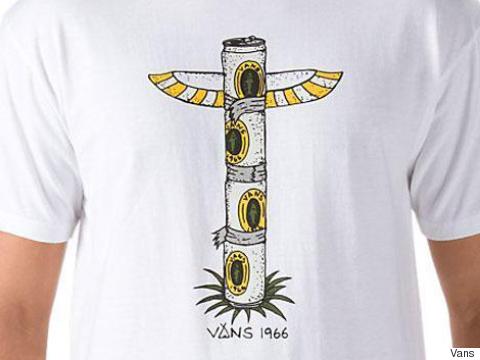
Vans sells "drunken Indian" t-shirt

Vans Removes 'Drunken Indian' T-Shirt From Shelves After Canadian Petition

By Jesse FerrerasThe Vans clothing company has stopped selling a T-shirt that shows a totem pole made out of beer cans over concerns that it promotes a "drunken Indian" stereotype.

Chad Girardin, a Métis man from Vancouver, launched a Change.org petition calling on the retailer to remove the "Wizard Totem" shirt.

He is also seeking an official apology from the company. "This imagery is uncalled for and very hurtful," Girardin wrote.

"By creating this shirt Vans is stating that Natives culture revolves around alcohol and that all 'Indians' are drunks," the petition reads.
Comment:  For more on the subject, see "Siouxper Drunk" T-Shirts at UND and AIM Fights "Runs with Beer" T-Shirt.

June 22, 2015

Natives react to Charleston shootings

Some Natives reacting to the Charleston shootings noted our long history of racial violence:

A day of lament...

By Mark CharlesI lament the words of our political candidates who promise to lead America back to its former "greatness", ignorant of the fact that much of America's "greatness" was built on the exploitation and dehumanization of its people of color.

I lament that today the dominant culture in America is in shock because in the city of Charleston South Carolina one individual committed a single evil and heinous act of violence, while minority communities throughout the country are bracing themselves because the horrors of the past 500 years are continuing into their lifetime.

I lament with every person and community, throughout the history of this nation, who, due to the color of their skin, had to endure marginalization, silence, discrimination, beatings, lynching, cultural genocide, boarding schools, internment camps, mass incarceration, broken treaties, stolen lands, murder, slavery and discovery.

Today I lament that the United States of America does not share a common memory and therefore is incapable of experiencing true community.


Opinion / Making Sense of the Senseless

By Sherri MitchellIn the last 24 hours, I have seen posts that have blamed the NRA for their overbearing insistence that access to guns does not contribute to gun violence; the NRA in turn blamed one of the victims, claiming that his vote against guns in church made the victims less safe; another group blamed mental illness; while their opponents claimed that mental illness had simply become the catch-phrase for avoiding the larger problem, which was clearly psychotropic drugs. We blame, and blame, and blame, because it relieves us of taking any responsibility. The truth is that we are all complicit in the current state of affairs. By some unspoken, common agreement, Americans have chosen to overlook the fact that this country was founded on blood, and that it continues to thrive in blood. War has been the most significant and sustained truth guiding this country since its inception. And, despite all of the “progress” that has been made, American school children continue to be taught that genocide, slavery, and all other forms of subjugation and oppression, though terrible, are acceptable means to achieve noble ends. This is the true root of the problem. Until we are able to enter into meaningful dialogue about this truth, healing will not take place. And, we will all be doomed to repeat these devastating cycles over and over again.White America is complicit: Charleston, Dylann Roof and the country’s real race war

Questioning the motivations of the Charleston shooter is worse than obtuse. It is itself an act of violence

By Kali Holloway
At 21-years-old, Roof had fully absorbed the message his country has taught him, just like terrorists in every other country, in every other part of the world. He clung to the old American idea that white women are our most precious resource to be protected by any means, and felt it was his right as a white man to protect his birthright—this country and his privilege within it—which he saw as being taken from him. We are guns and violence and race hatred and systemic, codified, state-sanctioned terrorism against people of color and that is who we have always been. While our media is certain to attribute Roof’s heinous acts to mental illness (and the cops were careful to take him alive, which even the most innocent of black folks cannot count on), I consider him a particularly apt pupil. Just the latest of many. Though certainly not the last.Even President Obama had an opinion:

Obama rejects mass shootings as 'new normal' in America

"How can anyone call shootings the new normal," Obama might've explained, "when they go back to the Mystic Massacre of 1637?"

For more on the subject, see Conservatives Can't Handle Roof's Racism and Conservatives Make Excuses for Roof.

June 21, 2015

Conservatives can't handle Roof's racism

Having failed to come up with any other explanation for Dylann Roof's assault, they still failed to address his expressed motives:

HuffPost BlackVoices ‏@blackvoices
Fox News twists itself in knots to find an explanation other than racism for the #CharlestonShooting http://huff.to/1H24kHk

Wall Street Journal: Please ignore the Confederate flag on the South Carolina capitol — institutionalized racism “no longer exists” in the South

Dylann Roof murdered nine black people not because of racism, but some "problem that defies explanation"

Why Conservatives Still Won't Admit That Charleston Was A Racist Crime

The GOP’s staggering Charleston cowardice: Why are so many Republicans so scared of admitting the truth?

When it comes to the Republican Party, terrorism in South Carolina will never, ever be described as such

Short answer: Because many of their followers share Roof's views.

‘I know where he got his news': Bill Maher links Charleston terrorist to right-wing media

By Arturo GarciaLewis again tried to argue for religion as a motivation for Roof, only to be cut off by Maher and Reid.

“If you look even at the three flags that this young man adhered to, the Confederate flag emblem on his car, the Rhodesian flag and the South African flag from Apartheid[-era] South Africa, all three of those purported to be Christian governments,” Reid said. “The white Christian government in South Africa, which ruled over the majority-black population; in Rhodesia, the violent white government that ruled over that population considered themselves quite Christian. [Roof] could’ve been completely embraced in what those governments stood for.”
The proof is in

As if we didn't have enough evidence of Roof's beliefs, someone found this:

Dylann Roof Photos and a Manifesto Are Posted on Website

Conservatives immediately announced they're still not sure why Roof acted. "It's senseless, unthinkable, and unfathomable," they said in unison, reading from their white supremacist talking points.

Here's a great summary of conservative confusion and cowardice:

Fox News Goes to Insane Lengths to Underplay Gun Violence

For years, Fox News and conservatives have routinely tried to underplay gun violence and even horrific bouts of mass murders.

By Eric Boehlert
Like frantic shoppers running down a last-minute list, Fox News talkers last week desperately tried to cobble together an inventory of reasons why racist gunman Dylann Roof may not have been primarily motivated by racism.

As the conservative media anxiously and collectively searched for political cover, Fox News hosts and guests offered up an array of illogical explanations: Maybe the Charleston, S.C. church killing was an attack on Christians. Maybe it was an attack on South Carolina. Maybe political correctness was to blame. Or "diversity." Maybe pastors should be armed. (In any case, Fox Newsers agreed, President Obama was being very, very "divisive" regarding the matter.)

On and on, the alternative explanations were offered up in the face of overwhelming evidence that Roof allegedly had set out to kill as many black people as possible because he wanted to start a "race war." Period. And the way Roof allegedly chose to do that was to open fire, and then reload, in the basement of the historic Emanuel African Methodist Episcopal Church in Charleston, killing the pastor and eight parishioners.

Like so many Americans, Fox News has been reeling in the wake of the massacre, except reeling in a different way. While Americans recoiled from the raw hate behind the gun rampage, Fox News wrestled with bouts of pathological denial.

Indeed, for Fox News and much of the conservative media, the horrific killings in South Carolina represented a political challenge because the act of mass murder revolved around two topics Fox News has long insisted don't really afflict America, or don't require pressing action: Racism and gun violence. That denial has made it nearly impossible for Fox to address the shooting in any coherent way.
For more on the subject, see Were Charleston Shootings "Unfathomable"? and Initial Reactions to Charleston Shootings.

June 20, 2015

Conservatives make excuses for Roof

Let's review what we've learned about Dylann Roof, the suspect in the Charleston shootings:

White Shooter Reportedly Told Black Victims: 'You're Taking Over Our Country'

In the wake of this heinous crime, right-wingers swung into action, blaming everything but Roof's explicit hatred of blacks. For starters, they tried their favorite "persecution of Christians" fantasy:

“Fox & Friends” just can’t stop the spin: In the wake of Charleston, we must arm our pastors and priests

It's "extraordinary" that it's being investigated as a hate crime, Steve Doocy said--it's an attack on Christians

Problem solved! Good guys with guns to shoot bad guys with guns. Pump 'em all full of lead and let God sort them out.

Santorum Calls Charleston Shooting 'Assault on Religious Liberty'

Ri-i-ight...it was an atheist assault on Christianity, not a white assault on blacks. Despite what the killer explicitly said. Thanks for demonstrating that none of my parodies is more extreme than the right-wing reality.

The following is not, I repeat not, an Onion satire:

White Supremacists Worried Charleston Shooting Makes Them Look BadStormfront commenters continued to hold out hope Thursday morning that perhaps Roof wasn't motivated by racism--maybe it was anti-Christian hatred instead--and their movement could keep what they think of as their good name.More from the lunatic fringe

Conservatives also floated the usual "crazed lone gunman" theory, which others shot down:

It’s not about mental illness: The big lie that always follows mass shootings by white males

Blaming "mental illness" is a cop-out--and one that lets us avoid talking about race, guns, hatred and terrorism

Racism Is Not a Mental Illness

Then Fox News agreed with Dylann Roof that "different cultures" was a reason for his mass murder:

Fox News host blames mass shootings on ‘different cultures’ living together in America

"All those brown people...so different from me...must kill them!"

And of course they blamed Obama, the root of all evil:

Frequent Fox guest: Whites might shoot up more black churches if Obama keeps calling them racist

Right...because the worse thing you can do to whites is call them out on their racism. It's practically a hate crime. It makes them so mad they literally can't stop themselves from pulling the trigger and killing more blacks.

For more on the subject, see Were Charleston Shootings "Unfathomable"? and Initial Reactions to Charleston Shootings.