Showing posts with label movies. Show all posts

October 01, 2016

Werewolves excised from Lone Ranger

A Native filmmaker says Disney excised a werewolf plot from Johnny Depp's The Lone Ranger:The tone is bonkers. All the underlying structure of Injun Werewolves is still there... We see Butch Cavendish eat the Lone Ranger's brother's heart, and then the next scene is wacky hijinx with Tonto. Tonto calls Cavendish "Wendigo" all through the film. 200 residents of Tonto's boyhood village were killed by two white men with pistols? No one ran away? They never ran out of bullets? Clearly it was supposed to be a werewolf attack. Helena Bonham Carter's leg was eaten by Cavendish. There are rabbit meat-eating bunny rabbits everywhere. The signs of the excision of the Werewolves are everywhere... and they're typically over the top and unnecessarily violent. They go utterly unexplained, and then are immediately papered over in each case by goofy pratfalls. It's just bizarre. I went in with a truly open mind, and was enjoying it for a while... but then it abruptly got stupid and long and wow was it tedious toward the end. The final action sequence is 30 minutes long, and it's visually amazing... But it comes too late to save a truly confused film.Comment:  Tonto says he's hunting Cavendish because Cavendish is a wendigo--a flesh-eating creature from the northeastern woodlands.

It doens't make sense for a wendigo to be in Texas--the movie's setting. Or in Monument Valley in southern Utah, the movie's actual setting.

It also doesn't make sense for Tonto, supposedly a Comanche Indian, to believe in or care about wendigos. It would be like a Chinese man hunting a Jewish golem. It could happen, but it makes no sense without an elaborate explanation.

I don't know anything about the supposed werewolf subplot. What's left is a villain who's inordinately evil because he's a wendigo--a malevolent spirit in human form. He eats human hearts and massacres whole villages--which isn't much different from your usual mass-murdering bad guy.

August 31, 2016

Racist stereotypes in Sausage Party

“Sausage Party”’s race problem: This “equal opportunity offender” is just plain offensive

No matter how well-intentioned, this kind of comedy only really works in a world where opportunity itself is equal

By Nico Lang
Humphrey also pointed to Firewater, a Native American chief played by Bill Hader, who is distressingly reminiscent of the redface caricatures in “Peter Pan.” Like the Indian Chief in the Disney feature, he speaks in “grunts and uses sign language.”

June 08, 2016

Review of Sikumi (On the Ice)

Sikumi (On the Ice) by Andrew Okpeaha MacLean | Short Film

Sikumi (On The Ice)

Sikumi (on the ice)"An Inuit hunter drives his dog team out on the frozen Arctic Ocean in search of seals, but instead, becomes a witness to murder. Winner of the Jury Prize for Short Filmmaking at the 2008 Sundance Film Festival."

Hearing that Sikumi or “On the Ice” had won awards I was very excited to watch this movie. My expectations were really high, what could it be, what could it be. What turned out was a touch disappointing. It’s a nice little movie no doubt, but an award-dinner at Sundance…that can’t be right.
Comment:  I agree with this opinion. I've seen enough Native shorts to say Sikumi is one of the better ones, but the best?

And I believe it won over all films, not just Native films. Best Short Film Shot Under Harsh Conditions, perhaps. But not Best Short Film overall.

For more on Sikumi, see National Distribution for On the Ice and AIFI's 2011 Winners.

June 04, 2016

Review of Grab

Movie Tells Story of Laguna Pueblo’s Grab Day

At Sundance, Tradition Meets Modern World in Billy Luther’s ‘Grab’

SUNDANCE REVIEW: Native Showcase Doc Fails to 'Grab' Audience

Comment:  I don't agree with this review at all. I enjoyed seeing life in the little-known Laguna Pueblo. The ceremony showed us something other than the usual families mired in tragedy or dances in regalia. Shots of a train passing by and animated paper cutouts kept the cinematography fresh.

All in all, I'd say Grab is one of the better Native documentaries I've seen.

May 28, 2016

Persistent stereotype of burial grounds

A posting on the stereotype of Indian burial grounds makes some good points:

'The Darkness,' 'The Shining,' And The Persistent Myth of The "Indian Burial Ground"

Redsploitation Horror has a long tradition in American cinema. Kevin Bacon's new horror flick continues the trend.

By Matt Kim
In truth, these types of stories often frame Native Americans—who rarely appear in horror stories purportedly written about them and their culture—into westernized notions of the supernatural and the afterlife. Ghosts and possessions and the like are more closely associated with European superstitions, while there are simply too many diverse traditions in the indigenous culture to pigeonhole as a unified religion, or set of spiritual practices.And:There is some poetic justice, I imagine, in films which revolve around Native American “curses” destroying the lives of suburban white families. Naive nuclear family units who often overstep their bounds by moving into either a former reservation land, or burial ground, end up incurring the wrath of the vengeful spirits or dormant curse laid down by a people who were themselves laid down by the United States government. There’s an attempt at cultural restitution there, by way of making white American guilt into a literal horror.Comment:  For more on the subject, see Evil Spirits in The Darkness.

May 23, 2016

Review of The Activist

Review: 'The Activist' suffers from lack of activity

By Gary GoldsteinIt's an intriguing setting—and set-up. But a lack of subtlety in the writing and much of the acting (particularly Circus-Szalewski and Ron RoggĂ© as a pair of good cop/bad cop jailers) mitigate the power of the caged men's plights as well as the movie's intended tension. As the action unfolds almost entirely within the walls of a South Dakota sheriff's substation, the film can't escape a stagy, at times claustrophobic feel.A Story of Becoming Indigenous: A Movie Review of "The Activist" (2013)

By Eric RitskesIn sum: we have a savage Indian warrior and a (dead) Indian princess, the only two Indigenous characters (one dead)--in a film supposedly telling ‘forgotten’ Indigenous history--battling the one bad racist. I won’t spoil the end, in case you enjoy watching White settler colonial dramas masquerading as politically conscious movies, but The Activist is not a movie about Indigenous struggle; rather, it is one that uses the backdrop (and it really is little more than news reports in the background) of the Indigenous struggle at Wounded Knee to mask tired colonial narratives of disappearing Indians and settler replacement through White heroes who are down with the struggle as long as they get to become Indian.A video showing Tonantzin Carmelo as Sacheen Littlefeather.

Rob's review

The good cop and bad cop may have been clichés, but I thought they were the most interesting characters. Certainly more interesting than Marvin, the non-Native activist, and Bud, his Native bud.

As someone who's trying to make my own independent films, I can appreciate a movie set almost entirely in two rooms. But I don't think it succeeds.

In The Activist, Sacheen Littlefeather becomes Anna, who is murdered like Anna Mae Aquash, during the Wounded Knee occupation or the equivalent. This has something to do with the uranium mining also featured in Thunderheart, so the evil Nixon administration wants to declare the rez a nuclear zone or something and take it over.

The conspiracy plot is hard to follow, but the most annoying part is how the government lawyer wants to negotiate with the young white savior Marvin. Because Marvin knows Indians and is a bridge to them, or something.

Moreover, Marvin enlists a pretty blonde lawyer to do his legwork while he's in jail. Because when you're in trouble with the government, a hot babe just out of law school is your best bet.

Meanwhile, Bud (Michael Spears) can only fulminate in the next cell and get kicked around by the racist guard. Once again, Natives are supporting characters in their own story.

The Activist is passable but nothing special. Rob's rating: 7.0 of 10.

May 15, 2016

Review of Hollywood's Indians

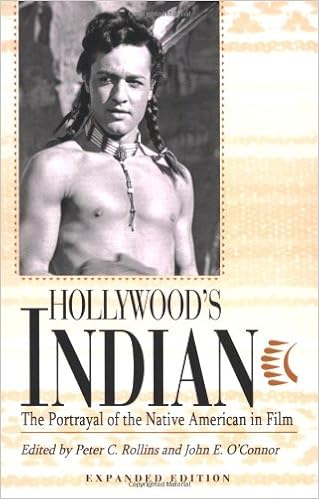
Hollywood's Indian: The Portrayal of the Native American in FilmOffering both in-depth analyses of specific films and overviews of the industry's output, Hollywood's Indian provides insightful characterizations of the depiction of the Native Americans in film. This updated edition includes a new chapter on Smoke Signals, the groundbreaking independent film written by Sherman Alexie and directed by Chris Eyre. Taken as a whole the essays explore the many ways in which these portrayals have made an impact on our collective cultural life.

Editorial Reviews

"Raises interesting issues and challenges readers to consider the complex realities of American Indian cultures and Indian/non-Indian relations that major motion pictures often fail to communicate." ―American Graduate

"Important and groundbreaking work." ―Bookman News

"Enables readers to construct a cinematic chronology of the Hollywood Indian and to comprehend the larger cultural forces at work interpreting the Indian-white past on screen." ―Choice

"Rollins and O'Connor have skillfully blended a variety of thoughtful viewpoints." ―Chronicles of Oklahoma

"A collection of quality essays, put together by two of the leading experts in this particular topic area." ―Communication Booknotes Quarterly


Comment:  I read Hollywood's Indians and it's a solid academic-style book. Individual essays cover the usual milestones of 20th-century "Native" films: John Ford's movies, Broken Arrow, Tell Them Willie Boy Is Here, Little Big Man, Pow Wow Highway, Dances with Wolves, Last of the Mohicans, Pocahontas, Indian in the Cupboard, and Smoke Signals.

As with most anthologies, some of its essays are more compelling than others. And of course it doesn't address the independent Native filmmaking that's flourished since its 1999 publication date.

All in all, it's a useful but not essential book on Native-themed movies. Rob's rating: 7.0 of 10.

For more on the subject, see The Best Indian Movies.

March 22, 2016

Seeing is believing in movies

Someone asked me the following via e-mail:Q--Do you think people believe more what they see in the movies than actual history? Braveheart is a great example of something that played with history, yet is taken as largely factual by people. What are the negatives and positives to this? You wrote a bit about it happening with Apocalypto. Do you know of other examples?My response:

I think people believe what they absorb from all sources--from movies to TV shows to history books. The problem is that most people have seen 10 or 100 movies and TV shows featuring stereotypical Indians for every book they've read. If the ratio were reversed--10 or 100 history books for every movie or TV show--I think their beliefs would be reversed too. But that isn't the case.

I'd say this applies to every work of fiction featuring Indians, not just Apocalypto. I've written about it often--in general and in specific cases such as Apocalypto. For example:

Why people believe movies
The influence of movies
Verisimilitude in movies
Audiences don't want dry facts

Others have written about this too because it's patently obvious. Movies try to recreate reality with locations, sets, costumes, and so forth. Lincoln was a tall guy with a beard and a hat, not a short bald woman. If everything else in a movie strives to seem real, why would someone assume the Indians are false and unrepresentative?

Answer: No one would assume that. The fact that is that few if any people think critically about the elements of moviemaking. They assume a Native-themed movie is based on reality because the vast majority of historical dramas are based on reality.

I hope that answers your question. Let me know if you have any other questions.

Rob

P.S. For more on the subject, see The Best Indian Movies.

March 03, 2016

Diversity lacking at 2016 Oscars

Chris Rock’s Oscars didn’t “fight the power”: A night of crude jokes and cynical deflection is a poor way to show progress

Rock's big night shows us Hollywood wants it both ways—for movies to be powerful art and blameless entertainment

By Arthur Chu
The stage was set with Chris Rock’s opening monologue, which, while it certainly directly addressed the #OscarsSoWhite issue, made two breathtakingly tone-deaf arguments in quick succession: One, that the Oscars (and representation in entertainment media in general) is really not that big a deal, and two, the reason people are making a stink about it now is that we are no longer dealing with things that are big deals, like the actual violence and murder protested by the 1960s civil rights movement.

This was an incredibly stupid thing to say. The fact that #OscarsSoWhite has trended in tandem with its preceding sister hashtag #BlackLivesMatter isn’t exactly subtle to anyone who’s ever glanced at so-called Black Twitter. (Which Rock clearly has, given his much-appreciated last-minute shout-out to #BlackLivesMatter at the end of the ceremony.) A #BlackLivesMatter documentary addressing the violence and murder going on in the streets right now was commissioned by HBO as a direct result of the uncomfortable negative attention #OscarsSoWhite put on the film industry.

Acting like caring about day-to-day violence in the streets and the impact media and culture have on that violence are somehow mutually exclusive—a common, frustrating, tired argument anyone who talks about racism in media will inevitably see dozens of times in the comments section—ignores history.

It ignores the many, many arguments that have been made about how the excuses made for the deaths of Trayvon Martin and Mike Brown frequently come verbatim from untrue stereotypes out of TV and movies, how the only way Darren Wilson’s description of Brown as a “demon” who was “bulking up to get through the bullets” could possibly make sense to anyone is after a lifetime of media portrayals of the scary superhuman black man. It ignores Martin Luther King going out of his way to call Nichelle Nichols and tell her not to quit “Star Trek” because having a black woman on TV who wasn’t a domestic servant mattered. It ignores the ongoing civil rights protests around the Oscars back in the 1960s and ’70s, including Marlon Brando making history as the first and only best actor winner to boycott the ceremony, sending American Indian Movement activist Sacheen Littlefeather to accept the award in his place.

It ignores the fact that at the very moment Chris Rock was talking, there was a “Justice for Flint” fundraiser going on in protest of the Oscars, hosted by two black prominent filmmakers snubbed for best director nods who used #OscarsSoWhite to bring attention to the cause of a predominantly black community whose water was literally poisoned.
8 Reasons Why I Hated Chris Rock's Oscars Monologue

Opinions about the funnyman's opener ranged from "he told the truth" to "I laughed at parts," to "it sucked." Here are eight reasons why Akiba Solomon wishes it never happened.

By Akiba Solomon
One: Rock was foul for saying that Jada Pinkett Smith was only boycotting the Oscars because she wasn't invited. I can see why some see Pinkett Smith's actions as calculated and insincere, but Rock didn't say that. Instead, he reduced everything—the #OscarsSoWhite hashtag, the boycott and the alternate events (including one starring his brother)—to the sour grapes of a self-centered, spoiled, unqualified Black woman. It was also dumb. Because Jada Pinkett Smith can get into the Oscars.

Two: #OscarsSoWhite isn't some silly little hashtag. This year, people of all races have used it to talk about the problems large and small with an awards show that nominates strictly White actors across 20 categories. Plus the hashtag, news coverage and discussions provided Cheryl Boone Isaacs, the Black woman who heads up the Academy, with the political cover I believe she needed to change membership and voting rules that have grossly privileged elderly White men for years.

Three: Claiming that Black people care about #OscarsSoWhite because we have nothing real to be mad about was hostile to the truth. Here is a man who made an (uneven, sexist) documentary about Black hair in 2009 because his daughter was sad about not having "good hair." But in 2016, Rock knows nothing of contemporary Black struggle? Like, when people say "Black lives matter," does he hear, "Tekjjdioj gj()gui p;/00+"? Does "I can't breathe" bring anything to mind? How about "Sandra Bland," "Michael Brown," "Eric Garner" and "not guilty"?

Four: Using the image of a Black grandmother hanging from a tree as a punch line was blasphemous. This country has never atoned for its history of lynching, castrating and fatally dragging Black people from pickup trucks. Nor has it meaningfully addressed the burning of entire Black towns, race riots and other lynching-adjacent crimes.
Commentary: Joe Biden wasn't as funny at the Oscars as Chris Rock, but at least he didn't make an Asian joke

By Dexter ThomasAs the show progressed, some people who were watching used Twitter to ask why Chris Rock wasn't talking about all underrepresented people, instead of just black people. This has been a point of concern for a while, as some have assumed that just because the #OscarsSoWhite hashtag was started by a black woman, it must be black-focused, though the originator has repeatedly clarified that she was speaking of inclusion for all people.

The argument spun off into a separate conversation under the #NotYourMule hashtag, as people argued over whether black people should need to stand up for other people of color at every opportunity.

And really, Chris Rock shouldn't have to deal with this criticism: While he may have focused on the lack of opportunities available to black talent Sunday night, he is on record talking about diversity issues in Hollywood that go beyond black and white. In 2014, he wrote in the Hollywood Reporter:

But forget whether Hollywood is black enough. A better question is: Is Hollywood Mexican enough? You're in L.A, you've got to try not to hire Mexicans. It's the most liberal town in the world, and there's a part of it that's kind of racist—not racist like "... you, ..." racist, but just an acceptance that there's a slave state in L.A. There's this acceptance that Mexicans are going to take care of white people in L.A. that doesn't exist anywhere else.

That insight was nowhere to be found at the Oscars on Sunday when he made a cheap joke about Asian child labor.
The Oscars’ awkward & insincere masochism: Why the #OscarsSoWhite ceremony felt like such a disappointment

Last night's show was defined less by Chris Rock's uneven hosting turn than by the Academy's cognitive dissonance

By Jack Mirkinson
Watching this extended masochism session was a strange experience. We were told, time and again, how wrong the Oscars had gotten things, and then another award was given out and the violins swelled and an oh-so-worthy Oscar moment was had. The show was desperate for us to know how sorry it was to have failed us so thoroughly, but it also wanted us to remain utterly devoted to both the people who did get nominated and to the broader idea of importance and integrity of the Oscars. The cognitive dissonance seeped through the entire night.

One thing that really didn’t help was the ceremony’s complete tone-deafness about any diversity that didn’t fit into a black-white framework. Rock did a bit about Asians—using children, no less—that was so off-key, so glaringly unfunny that you wondered how it had gotten through in a year when the show was trying to prove that it had its finger on the pulse. Aside from winning director Alejandro Gonzalez Iñarritu and a couple of short film awardees, Asians and Latinos had virtually no presence for the entire evening. It was, to say the least, an odd choice.
After Oscars, Hashtags Ask: Does One Minority Group Have to Fight for Another?

By Karen WorkmanNo sooner had the curtains closed on the 88th Academy Awards, which was punctuated by Chris Rock’s scathing but broadly praised opening monologue on racism in Hollywood, than a new battle had reached a fever pitch on social media. And it had its own hashtag: #notyourmule.

Some viewers took issue with what they saw as the narrow focus of Mr. Rock’s opening monologue, which skewered racism in Hollywood but, they said, ignored the concerns of Asian, Latino and other minority artists. Others slammed the comedian’s bit involving Asian children posing as accountants as reinforcing negative stereotypes.
Summing it up

Critic's Notebook: Chris Rock's Monologue Is All #OscarsSoWhite All the Time

By Daniel FienbergFor viewers who think that Academy Awards diversity is not a problem at all, it was presumably way too monomaniacal, especially if you were hoping that Rock would unload on Donald Trump for a few minutes just to soften the blow of Jon Stewart's absence from late night.

But for people who think this actually is a serious thing because movies are supposed to be a reflection of society—and the Oscars are supposed to be a reflection of the best in movies—the actual effectiveness may have been mixed. Rock attacked the problem, while minimizing it; announced the racism, but made it seem benign and friendly; offered solutions, but the main feigned solution was black-only categories like "best black friend" ("And the winner for the 18th year in a row is, Wanda Sykes!").
Comment:  For more on the subject, see Asian Jokes at 2016 Oscars and Recapping the 2016 Oscars.

February 29, 2016

Asian jokes at 2016 Oscars

If the Oscars were all about diversity, why the crude Asian joke?

By Jessica ContreraChris Rock opened his monologue by saying he’d never be the host if he had to be nominated for the job. We all got the joke—Chris Rock is black, and for the second year in the row, not a single actor nominated for an Oscar was black.

But they also weren’t Asian or Latino. Representation is a problem in Hollywood for all minorities, but all night long, the show’s jokes focused almost entirely on the problem as it pertains to black people.

During a sketch in which Rock altered top movies to include actors of color, he chose Whoopi Goldberg, Leslie Jones and Tracy Morgan. Stacey Dash wished everyone a happy Black History Month. Kevin Hart joked, wasn’t it about time they put him in the front row?

There was a lack of diversity in the lack of diversity. This became most apparent when Rock brought three Asian children to the stage, posing as “bankers” from finance firm PricewaterhouseCoopers.
Chris Rock's Oscars joke about Asian American accountants stirs outrage

By Randall RobertsDespite an Academy Award ceremony focused on addressing issues of diversity in Hollywood, Asian Americans expressed outrage on social media after two jokes that poked at stereotypes. The comments, one by host Chris Rock during a skit and another by comedic actor Sacha Baron Cohen under his Ali G persona, were particularly notable due to the controversy surrounding the #OscarsSoWhite theme.

Rock's skit drew the most ire. In a rehearsed bit involving the tabulation of Academy Awards votes, he introduced the would-be PriceWaterhouseCoopers representatives overseeing the count. “They sent us their most dedicated, accurate and hard-working representatives," he said. "Please welcome Ming Zhu, Bao Ling and David Moskowitz."

Three kids of Asian descent, dressed in suits and carrying briefcases, walked toward center stage. Following a muted response from the crowd, Rock added: "If anybody’s upset about that joke, just tweet about it on your phone that was also made by these kids."

And react they did, many wondering how the gag made it out of the writers room.
“Yellow people with tiny dongs”?: The Oscars have more than one diversity problem—and it shows

Tasteless jokes about Asians put a damper on what was otherwise a joyous celebration of diversity

By Sonia Saraiya
Last night’s 88th Academy Awards was a major platform, at the center of Hollywood’s glitterati, for a discussion of diversity in Hollywood. As I wrote last night, host Chris Rock made that the focus of the evening, paying an equally self-righteous and self-mocking attention to the contributions of black performers in Hollywood, from Academy Award winner Jamie Foxx as Ray Charles to outspoken black conservative Stacey Dash as the Oscars’ “diversity outreach coordinator.”

But diversity in Hollywood isn’t just about black artists and performers in Hollywood. Writer Kelly Oxford observed on Twitter last night, “There have been more droids on the Oscar stage than Latinos or Asians,” after three “Star Wars” robot-characters rolled out and spoke or beeped to the audience. First Nations actors were only highlighted through their supporting roles in “The Revenant,” which nabbed both the Best Actor and Best Director awards.

And to add insult to injury, rather too much of the Oscars telecast mocked Asians and Asian-Americans. It’s one thing for a black host to play with stereotypes of both white and black people to create a commentary on inclusion in the Academy Awards, especially when notable roles by black performers were not recognized by the Academy. It is another for that same host—and that predominantly white show—to turn to making jokes about another marginalized race, as if that somehow neutralizes the issue.
Comment:  For more on the subject, see Recapping the 2016 Oscars and Facebooking the 2016 Oscars.

Recapping the 2016 Oscars

I guess Chris Rock dropped a lot of truth bombs at last night's Academy Awards, but I didn't find his monologue especially incisive or entertaining. Let's see what others are saying:

“Is that the first ‘rape, lynch’ joke by a host in Oscars history?”: Twitter loses it over Chris Rock’s Oscars monologue and #OscarsSoWhite

Chris Rock’s Oscars monologue stuns: “When your grandmother’s swinging from a tree it’s really hard to care about best documentary foreign short”

So the point of his lynching comment was what...that diversity in movies is a trivial issue? "All you movie protesters don't understand what really matters, so shut up"? That's the way I heard it.

What if your short documentary was about grandmothers swinging from a tree? Or about war, climate change, disease, or another important issue? Should the host of an arts program really be dismissing the arts?

Someone wrote that Rock was trying to thread the needle, but they didn't say exactly how. It was by dismissing or belittling the protests and congratulating the people like him who showed up.

Hence the diss of Jada Pinkett Smith--that she wouldn't have been invited anyway. And the "Black History Month Minute" that seemed to honor Will Smith but switched to Jack Black.

The rest of the show

“This Oscar is going home in a Honda Civic”: Louis C.K. steals the show with a real tribute to an unloved category

I agree: Louis CK stole the show. Make him the host next year!

And the winning short documentary was about honor killing, Chris Rock. So yes, short docs can be as relevant to the world as someone's lynching. In this case, they're roughly about the same subject: heinous but quasi-legal murder.

VP Joe Biden speaks out at Oscars against sexual abuse: “We must and we can change the culture”

Yep, one of the night's best moments.

Finally:

Leo earned his Oscar for “The Revenant”—and he might be our greatest movie star ever

Or not:

Leo’s Oscar isn’t overdue: He hasn’t won before because he didn’t earn it

For more on the subject, see Facebooking the 2016 Oscars and Duane Howard at the Oscars.

February 28, 2016

Facebooking the 2016 Oscars

Some people live-tweet events such as the Oscars. This year I posted a running commentary on Facebook. Here it is:

Opening monologue

I guess Chris Rock is giving a speech rather than telling jokes this year? ‪#‎OscarsSoWhite‬

"Writers, we know that you are the true backbone of the industry, and we love you for it. We also think you're all extremely hot."

So true! ‪#‎WritersSoHot‬

Commercial break! Debuting next week on ABC: The Real O'Neals. Finally, an Irish American family gets a turn in the spotlight. ‪#‎diversity‬

After #Blackish, #FreshOfftheBoat, #Empire, and #DrKen, it's about time someone featured a white family.

Kind of awkward to bring out Stacey Dash since everyone knows she's a Fox commentator and apologist for white supremacy. What's up with that? ‪#‎OscarsSoWhite‬

Response: awkward silence from the audience.

Pretty average ‪#‎Oscar‬ show so far. Obviously they decided to make it mainly about diversity. Slamming the issue with a sledgehammer rather than slicing it with a scalpel.

Moving along

Jared Leto makes the first merkin joke in Oscar history.

Consider the Merkin: A Brief History of Pubic Wigs in Hollywood

Guy thanked his one-week-old daughter. Not sure what her role was in the years-long production of Mad Max: Fury Road.

The "thank you" crawl beneath the award winners is a good idea. Everyone gets thanked on-screen and the winner can focus on thanking the key people. Or saying something distinctive and memorable.

At least the show is zipping along nicely. None of Neil Patrick Harris's middling stunts.

Let's cut to Sofia Vergara every so often! She's pretty...and Latina! ‪#‎OscarsSoWhite‬

We get to see some Indians on screen--usually savage warriors--whenever they play the standard clips from The Revenant. Yay? ‪#‎OscarsSoWhite‬

Giving Andy Serkis recognition for, well, anything is a novelty.

So far nothing that qualifies as a memorable moment. ‪#‎OscarsSoBland‬

Picking up the pace

Really? Selling your daughter's Girl Scout cookies? Is that supposed to be funny and charming rather than crass and competitive? ‪#‎OscarsSoMercenary‬

The interview segment straight outta Compton was cute. ‪#‎OscarsSoWhite‬

Louis CK was good. All the awards should be presented like that--with smart and seemingly spontaneous riffs.

Leonard Nimoy got the final spot in the "In Memoriam" montage! ‪#‎SpockLives‬ ‪#‎OscarsSoVulcan‬

Vice President Joe Biden! Another white guy! What film was he in? ‪#‎OscarsSoWhite‬

Cue the conservative Twitter outrage over the domestic violence segment. How dare the Oscars talk about the real world? It's only movies!

Unlike the Stacey Dash bit, that will go on the show's highlight list.

Pharrell has hair? Who knew?

Sacha Baron Cohen was entertaining. Thus proving my point re Louis CK.

Alejandro González Iñárritu mentions his Native American cast! ‪#‎OscarsSoWhite‬

Where's Sean Penn to make a follow-up joke about immigrants?

Not sure why the show is over three hours. It's not as if they padded it with a lot of unnecessary bits. ‪#‎NeilPatrickHarris‬ ‪#‎OscarsSoLong‬

The big awards

Gender confirmation surgery! I haven't heard that term before. ‪#‎OscarsSoFluid‬

Forrest Goodluck featured in Leonardo DiCaprio's Best Actor clip! ‪#‎OscarsSoWhite‬

DiCaprio won because of the kid!

"Climate change is real," says Leo. Cue the conservative numbskulls still raging over Lady Gaga and domestic violence.

Another one for the highlight reel. DiCaprio uses his speech time effectively.

2016 Oscar Winner DiCaprio Dedicates his speech to Mother Earth and Indigenous PeopleLeonardo DiCaprio used his Oscars speech to address climate change. He urged the audience to “support leaders around the world who do not speak for the big polluters or the big corporations but who speak for all of humanity, for the indigenous people of the world, for the billions and billions of underprivileged people who’ll be affected by this”.

"Making The Revenant was about man's relationship to the natural world, a world that we collectively felt in 2015 as the hottest year in recorded history. Our production had to move to the southern tip of this planet just to find now. Climate change is real. It is happening right now. It is the most urgent threat facing our entire species and we need to work collectively together and stop procrastinating.

We need to support leaders around the world who do not speak for the big polluters or the big corporations, but who speak for all of humanity, for the indigenous people of the world, for the billions and billions of under privileged people who will be most affected by this, for our children's children, and for those people out there whose voices have been drowned out by the politics of greed.

I thank you all for this amazing award tonight. Let us not take this planet for granted, I do not take this night for granted. Thank you so much."
Glad to see Spotlight won Best Picture. Just because I hate it when a film gets "momentum" and sweeps.

Sorry, The Revenant. Better luck next year.

Thus endeth the Oscars. A few good moments in the second half, but still nothing special. ‪#‎BlackLivesMatter‬

And Fight the Power plays over the final credits.

Journalism wins

A few final tweets:

Retweeted Kate Sheppard (@kate_sheppard):
I haven't seen any of these movies but hey, nice to see attn paid to sexual assault, climate change, and need for investigative journalism.

Retweeted Dave Pell (@davepell):
The message of Spotlight.
The media helps to protect us. Stop maligning it.

I forgot that conservatives also will rage at the Girl Scouts. Damn liberal feminist atheist girls!

For more on the subject, see The Best Indian Movies.

Duane Howard at the Oscars

It's extremely rare to see a Native at the Academy Award ceremony. So it's worth noting that actor Duane Howard attended this year.

The Revenant's Duane Howard outfitted by Haida designer for Academy Awards red carpet

Dorothy Grant had one week to stitch outfit that could be seen by millions at Oscars


With Forrest Goodluck, Arthur RedCloud, and Leonardo DiCaprio. I think this photo was taken before or after the ceremony, but I'm not sure. It could've been taken somewhere else.


With Cate Blanchett.

Others at the Oscars

Meanwhile, another Native actor in The Revenant wasn't invited.

Despite controversy over #OscarsSoWhite, Canadian actress and Revenant star Grace Dove was not invited to the Academy Awards

As a newly elected member of the Academy, veteran actor Sonny Skyhawk was planning to attend the ceremony too:

Sonny Skyhawk Bringing His War Bonnet to Oscars, Fighting for His People

But I didn't see any reports from him or others about his being there.

For more on the subject, see Why Are Oscars So White? and #OscarsSoWhite 2016.

February 16, 2016

Evil spirits in The Darkness

Real Life Native American Demons Wreak Havoc In 'The Darkness'

By Jancy RichardsonYou guys. I'm super stoked to share this exclusive footage from Blumhouse Tilt's newest venture The Darkness with you. The horror powerhouse that brought The Purge, Insidious, The Conjuring, and Sinister into our lives is teaming up with Wolf Creek director Greg McLean to create The Darkness, a dark horror tale about an autistic kid unleashing something that should have been left in Native American history....

Check out the trailer for The Darkness (if you can handle tension)!


Comment:  I think we have a winner for the millionth movie to feature evil Indian spirits that come back to life. With an image of what looks like a Hopi snake dancer, something completely different that has nothing to do with evil spirits.


"They curse you"

More images suggest how the movie stereotypes Native culture and history as dark and accursed. A computer screen:


A girl with Native-style handprints:


And the Indians' evil spelled out:


I'm not sure anyone knows more about The Darkness than what's in the trailer. So we can't tell how stereotypical the movie is. But I'll stick with my rule of thumb: the stereotyping is always worse than what you see or hear initially.

For more on the subject, see The Best Indian Movies.
February 09, 2016

White Woman Walks Ahead

White woman walks ahead: Jessica Chastain starring in a film about Sitting Bull is everything that’s wrong with prestige films

"Woman Walks Ahead" is the latest installation in Hollywood's pathological obsession with white-savior films

By Paula Young Lee
According to the report, Chastain will portray Caroline Weldon, a “19th-century Brooklyn artist and activist who moved to the Standing Rock Reservation in Dakota Territory to help Sioux chieftain Sitting Bull fight to keep the land for his people.”

The basic problem is that “Woman Walks Ahead” is already being conceived and presented as a white-savior film, precisely because the narrative is being framed through Weldon’s white feminist, righteous position of ally-ship with a dispossessed and marginalized people. The tragedy of history becomes a narrative shield that continues to legitimize the hideous fate of Lakota Sioux precisely because the story is mined for its tragedy … and that’s it. Must stories about Natives always take place in some mythologized past stocked with pintos and muskets? Is it so difficult to grasp that a fairy tale wrapped in museologically accurate buffalo robes is still a fairy tale? Frankly, the setup would be a lot more interesting if the film unfolded from the perspective of a young Lakota girl born and raised in the Standing Rock reservation, with a story line exploring her bafflement and anger at this random white lady who shows up to play interlocutor and scribe, while being utterly clueless about how to make poultices out of wild plants or anything that has to do with functioning as a whole person.

What would it take to get the film written in this way? A female team of Sioux screenwriters, to start. But the bigger obstacle is Hollywood’s near pathological obsession with white-savior narratives, which become synonymous with the “prestige” film. “In the last quarter-century,” David Sirota wrote in 2013 for Salon, “10 White Savior films have received major Hollywood award nominations, with fully half of those coming in just the last five years.” No surprise, then, that since 2010, only two actors of color have garnered Oscars for acting, both times in “supporting” roles that position them as subservient to white authority: Octavia Spencer in 2012, playing a maid in “The Help,” and Lupita Nyong’o in 2013, as a slave in “12 Years a Slave.” In other words, as Kara Brown writes for Jezebel, “Hollywood has a problem with only paying attention to non-white people when they’re playing a stereotype.”

Small victories do not fundamentally alter the structural racism of the industry. “The reality is that if no scripts or films are made that include roles for Native people, roles that call for extraordinary acting chops,” wrote Sonny Skyhawk, “then we are excluded from the opportunity to participate in the yearly considerations for Golden Globe Awards, SAG Awards, and Oscars.” It’s not a chicken-and-egg problem so much as an exclusionary system pretending to reward merit. As long as Oscar-bait films privilege white-savior narratives, actors of color will find it difficult if not impossible to get nominated for awards—especially best actor or actress—inside a system designed to prevent this.
Comment:  Also known as Stands With a Fist: The True Story. Juliette Lewis wanted the role because she looks good in a headdress.

Discussion

I discussed this project with a few Facebook friends:[Sitting Bull] had an Irish confidant?Her name was Caroline Weldon and she was his "white squaw." Her story was more important than Sitting Bull's and needs to be told.WTFChastain is young and pretty, so it makes sense to make a Native movie starring her.[Godzilla facepalm]They were going to call it Sitting Bull Walks Behind. But they decided to focus on the star.I remember Steve Judd and I were meeting with people who wanted to do this story. Obviously, it never happened. Acctually I think the producers ripped off some Indians. But I wanted to do the story (SPOILERS) because I thought it was the anti-white saviour story. I thought the woman had savior syndrome and wanted to be the great white hope for the Lakota and ended up losing her son, and may have been one of the reasons for instigating Sitting Bull's death and the massacre of Wounded Knee. After that, she left the rez and never dealt with Indians again. There was also inference that she messed around with Sitting Bull. So, it would be a tragedy. I wonder if this movie would be more hopeful.I don't think they can make the history surrounding Sitting Bull and Wounded Knee more hopeful. They can make Weldon's life more hopeful as a fighter for justice.

I hope you pitched it as the dramatic story of a white woman who refused to give up. Because that was the way to get this movie made!

Savior or anti-savior?

I'm being somewhat sarcastic, since I don't know the actual story. It could well be an anti-white-savior tragedy. It could feature as-yet-unnamed Native actors in career-making roles. It could champion a Native writer and a Native director--oh, wait, those ships have already sailed.

I guess Weldon could give up and go home after Sitting Bull dies. But somehow I imagine her pounding doors or tables, refusing to give up, demanding justice. Only after the Great White Father shuts her out will she admit defeat. But not really, because she'll be defiant to the end in her heart!

Caroline WeldonCaroline Weldon was a 19th-century artist and activist with the National Indian Defense Association. Weldon became confidante and private secretary to Sitting Bull during the time when Plains Indians had adopted the Ghost Dance movement.I don't see anything more dramatic than writing letters in her bio. Maybe the movie will surprise us and not have a dramatic scene of her storming the halls of Congress or the Indian agent's office and demanding justice.

No doubt they'll play up the relationship as a torrid love affair. Something like this:


The movie's previous title was Savage Desire aka Sitting Bull Walks Behind aka Sitting Bull's White Squaw. Not Me Sexy. Because that would be silly.

Why stop with Chastain?

But maybe I'm giving them too much credit. What about a rugged white star to play Sitting Bull? You know, the way Joseph Fiennes is playing Michael Jackson.

Perhaps someone like Jeff Bridges or Kurt Russell. You know, someone who has an affinity for old Westerns. And can put a few butts in the seats.

White people want to see white stars! It's a law!The lady is a little known historical figure and very little information about her, so you have a lot of freedom with how to depict her. but, as you said, there's no mention of the rest of the cast. There are also very few well-known (by western standards) American Indian actors/actresses. so a publication of Hollywood Reporter will not care, they just care about the star of the moment, not some little known actor who may have been in a few movies and TV shows. I doubt they would even throw Gil Birmingham or Wes Studi a shout out even though they've been in in award winning and some of the most successful films.Heaven forbid we should lower Jessica Chastain (39 roles according to IMDB) to the level of a Gil Birmingham (51 roles) or Wes Studi (92 roles). I mean, she starred in Zero Dark Thirty, which was way bigger than Twilight or Avatar.

Obviously, the lack of mentions is my point. Even in a movie that's ostensibly about Natives, the announcement is all about the white people doing the project.

For more on the subject, see The Best Indian Movies.

January 25, 2016

Native women in film

Someone asked me if I had a list of Native women in film. Not just Native actors, which would be easy, but writers, directors, and producers.

I didn't, so I went to work. Here are the results:

This is the most comprehensive list I could find of Native filmmakers. In 5-10 minutes of searching, that is:

National Museum of the American Indian
Film & Media Catalog: People

You probably know some of these people. For the others, you'd have to check the female names via IMDB and Google. To see whether they're directors, producers, writers, actors, or some combination thereof.

This article:

Powerful and Resonant: Native & First Nations Women’s Filmic Presence

lists a few of the big names:A very brief list includes Alanis Obomsawin (Abenaki), Sandra Sunrising Osawa (Makah), Christine Welsh (Métis), Shirley Cheechoo (Cree), Beverly Singer (Tewa, Navajo), Loretta Todd (Métis, Cree), Shelley Niro (Mohawk), Valerie Red-Horse, Tracey Deer (Mohawk), Missy Whiteman (Arapaho, Kickapoo), Heather Rae (Cherokee), and Tamara Podemski.These postings:

Through Indian Eyes: Native American Cinema

Native American & Indigenous Film

First Nations & Native American Celebs

list a lot of performers but also some directors, producers, and so forth. You can search them for the words "director," "producer," and so forth. And add them to your list.

I think these combined will give you most of the Native women working in film these days. There may be a few hundred of them, if not more.

Below: Tantoo Cardinal in Shelley Niro's Honey Moccasin.

January 24, 2016

Movie and TV diversity sells

After the #OscarsSoWhite announcement for 2016, Hollywood once again considered its failure to diversify.

In Hollywood, a major disconnect between economic interests and business practices

Study by UCLA Bunche Center finds that women and minorities are still underrepresented among actors, directors and executives

By Eric Greene
The report reveals a dramatic disconnect between the reality of America and the Hollywood dream factory. It found that although films and TV shows with casts that reflect the nation’s racial and ethnic diversity are more likely to succeed at the box office or in the Nielsen ratings, minorities and women continue to be severely underrepresented as directors, show creators, writers and lead actors.

For example, although women make up a little more than 50 percent of the U.S. population, only 6.3 percent of the films in the study were directed by women, and only 17 percent of film studio senior management were women. Not a single film studio CEO was a woman during the period studied in the report.

Similarly, while racial minorities are approximately 40 percent of the population, racial minorities directed just 17.8 percent of theatrical films in 2013 and represented only 8 percent of film studio senior management. Only one person of color was a film studio CEO.

The report also reveals that more than half of “frequent moviegoers”—a group that buys half of all domestic movie tickets—are minorities, suggesting that the industry’s hiring practices are out of sync with its economic interests.

“What we’re finding is that audiences want diverse content,” Hunt said. “They want diverse content created by diverse talent. So the industry would increase its odds of success if there was more diversity in the room.”
When will Hollywood figure out that diversity sells?

Panel discusses findings of UCLA's Hollywood Diversity Report

By Sarah Rothbard/Zocalo
Hunt, who wrote the report with Ana Christina Ramon, also with the Bunche center, said that he was not surprised by most of this year’s findings, which came from analyzing 200 films and more than 1,100 television shows released in the 2012-13 season. Film directors, writers and actors remain overwhelmingly white and male; TV is more diverse, but both nonwhites and women remain vastly underrepresented.

Hunt said that the study’s most interesting finding is that “diversity clearly sells.” More diverse TV shows are more popular than shows that aren’t diverse. And movies with diverse casts did best at the worldwide box office.

So why doesn’t Hollywood follow the money and create more diverse content?

Hunt said that white men have dominated positions behind the camera for many years. In a high-risk industry, they want to feel they have the best chance of succeeding, and so they tend to hire people who look and think like them.
Diverse movies are a huge business. Why doesn’t Hollywood make more?

By Drew HarwellThe industry is ignoring a gold mine. Every year for the past half-decade, the average white American has bought a ticket to fewer films than the average black, Hispanic or Asian moviegoer, industry data shows. Though 37 percent of the U.S. population, minorities bought 46 percent of the $1.2 billion in tickets sold in the United States last year.

Some of the year’s biggest surprises had diverse actors and small budgets but ended up dominating the silver screen. For five straight weeks ending in September, movies with predominately black casts topped the box office, including the Christian drama “War Room,” thriller “The Perfect Guy” and rap biography “Straight Outta Compton,” which has made $200 million on a $28 million budget to become the highest-grossing biopic of all time.

More recently, “Creed,” a “Rocky” spinoff starring Michael B. Jordan and directed by Ryan Coogler—both 20-something black men who led the 2013 critical darling “Fruitvale Station”—has triumphed with $72 million at the box office and one of the best opening weekends in the boxing franchise’s 40-year history.

High-profile hires of actors such as Jordan in “Creed” and John Boyega in “Star Wars: The Force Awakens” have remained the exception in a Hollywood that has shown only stuttering progress over the past year in getting more-diverse talent into blockbuster roles.
How Hollywood Keeps Minorities Out

By Dennis RomeroFilms with casts that are 21 to 30 percent minority fared better than movies with any other racial-ethnic mix, earning a median box office take of $160 million, according to Hunt's last UCLA study. Those films also saw the greatest return on investment. With major network TV, "median household ratings peaked" for shows with casts that were 41 to 50 percent minority, the report found.UCLA Releases Scathing Report on Diversity in Film and TV

By Melissa SilversteinJust when you thought it was safe to be hopeful again, here comes another reality check.

The Bunche Center at UCLA has released its annual "Hollywood Diversity Report" to remind us that we're still nowhere near where we should be in terms of gender and racial diversity. Researchers examined 172 theatrical films released in 2011 and 1061 TV shows aired during the 2011-12 season on six broadcast and 62 cable networks, eloquently explaining their reasoning as follows: "When media images are rooted primarily in stereotype, inequality is normalized and is more likely to be reinforced over time through our prejudices and practices."

Here's the crazy--and yet entirely logical and expected--part: Diversity means money. Broadcast comedies and dramas with more diversity get higher ratings. Films with just 21-30% diversity earned a global median box-office total of $160 million, while films with less than 10% diversity made just $68.5 million.
Oscars So White? Or Oscars So Dumb? Discuss.

By Manohla Dargis, Wesley Morris, and A.O. ScottMANOHLA DARGIS I love that so many people are enraged at this year’s whiteout—anyone who yells at the Academy is a friend of mine—but I wish that this anger was being expressed 365 days a year and not when the nominations are announced. As Tony suggested, it’s worth repeating again and again (and again!): The primary reason the Oscars are so white this year and most years is that the movie industry is overwhelmingly white. That’s infuriating, but that’s not shocking, and it sure isn’t news. And if that bothers people, then they need to start complaining loudly and perhaps even begin voting with their dollars. By, say, supporting movies with minorities and women. Because the only way the industry will change is if people give them hell.

WESLEY MORRIS Manohla, wouldn’t you say that’s what happened in the last year and the year before? The audiences paid to see women, films with mostly black actors and racially diverse casts, and paid often: “The Force Awakens,” “Inside Out,” “Furious 7,” “Pitch Perfect 2,” “Spy,” “Mad Max: Fury Road,” “Trainwreck,” “Straight Outta Compton,” “Cinderella,” “Creed,” “Get Hard,” “Sisters,” that second “Divergent” movie and the last “Hunger Games.” There’s demonstrable proof that North America wants to see itself—more of itself—in its entertainment. And the Academy—which is working to add more women, young people and color to its ranks—should want to see more of its ideal self at the Oscars.
Comment:  For more on the subject, see The Revenant vs. Life of Pi and Diversity Is "An Artistic Necessity."