Showing posts with label climate change. Show all posts

May 16, 2014

Billboard mocks rain dances

Larry Smith posted the following on Facebook:Billboard sign located and 2nd and Roycroft in Belmont Shore/Long Beach, CA.

The billboard is owned by ClearChannel.

The client is the Long Beach Department of Water and Power.

Matthew R. Veeh, Director of Government & Public Affairs, Long Beach Department of Water and Power, say's everyone has signs like this, so it's O.K. for us to a have a sign like this too--regardless of the sign's problematics.


Comment:  Given that droughts are an ongoing problem, shouldn't we continue to do rain dances along with everything else?

In fact, one could argue that a return to rain dances might be called for, since Western lifestyles and technologies are causing the drought. Because rain dances go along with reverence for water, which means not wasting it on lawns and pools and so forth.

In short, a rain dance couldn't hurt and might help. So the billboard's message is false as well as stereotypical.

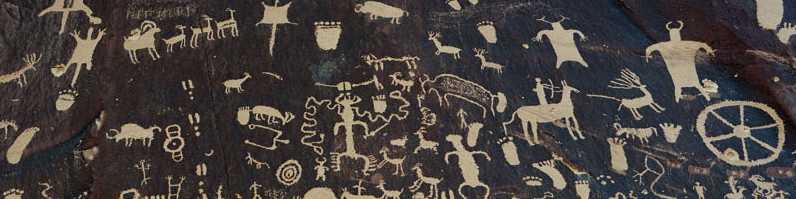
It qualifies as stereotypical because it implies Indians were superstitious fools who did nothing but rain dances. Actually, they conserved their water and thus managed to survive in a harsh desert climate.

This is something we haven't managed to do without huge, wasteful expenditures of water, energy, and other resources. But it's something we may have to (re)learn eventually.

For more on rain dances, see Krauthammer: Scientific Consensus = "Rain Dance" and Indians Perform "Rain Dance" to End Drought.

May 09, 2014

Krauthammer: Scientific consensus = "rain dance"

Krauthammer: Climate Change Is 'Superstition' Like 'The Rain Dance Of Native Americans'

By Catherine ThompsonCharles Krauthammer believes climate change is a mere superstition, just like the "rain dance of Native Americans."

Appearing Tuesday on Fox News' "Special Report," the conservative pundit rejected the consensus of between 97 and 98 percent of scientists who believe climate change is real and is fueled by human activity.

"It's always a result of what is ultimately what we're talking about here, human sin with pollution of carbon," Krauthammer said. "It's the oldest superstition around. It was in the Old Testament, it's in the rain dance of Native Americans--if you sin, the skies will not cooperate."
Fox News devolves from climate denial to rejecting all science

Witness the spectacular collapse of the right-wing mind

By Lindsay Abrams
As for the consensus of 97 percent of scientists who say man-made global warming is a real phenomenon, Will contends that “they pluck these things from the ether” (as Chait points out, the number actually comes from this report), while Krauthammer just dismisses the idea of a scientific consensus. “Ninety-nine percent of physicists convinced that space and time were fixed until Einstein working in a patent office wrote a paper in which he showed that they are not,” he says. “I’m not impressed by numbers. I’m not impressed by consensus.”

Thus begins the point at which Krauthammer completely gives up on science, Chait writes:It is hard to dispute this except to note that Krauthammer here has taken a radically skeptical position not merely on climate science, but on all science. His argument implies that no scientific argument merits respect. Given the provisional and socially constructed peer pressure driving the consensus theory of aerodynamics, it is amazing that he is willing to travel in an airplane.
Comment:  For more on climate change, see LaDuke Endorses Obama and First Stewards Symposium at NMAI.

October 31, 2012

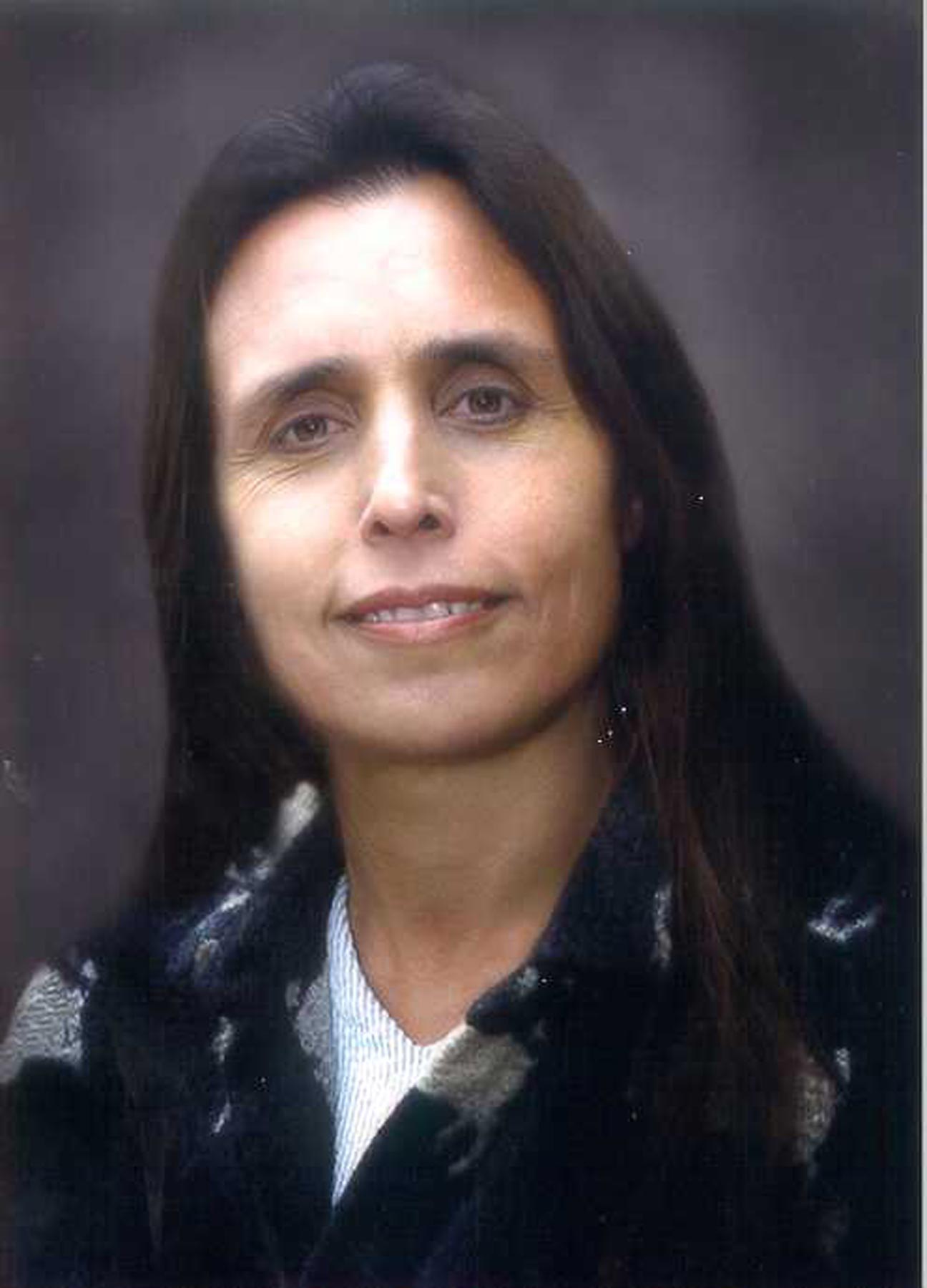
LaDuke endorses Obama

Pro Life and Not a Planet Baker: Why I’m voting for Barack Obama

By Winona LaDukeLet’s start big. It’s official. Climate change is no longer a topic of the presidential election banter. Since pretty much no one has mentioned climate change for the past three months, we must be free and clear. As I watch the east coast get hammered with Hurricane Sandy, and 7.4 million people out of power, I note that politicians may be wrong.

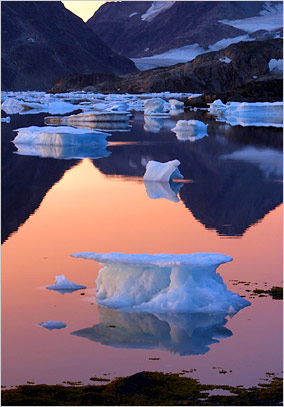
I just spent an evening with my Harvard classmate Bill McKibben, president of 350.org, who sobered me up a bit on where we are. As of May, we had broken world temperature records for the 327th month in a row. Worldwide, we broke maybe 100,000 temperature records this year. This year we saw the sea ice melt in the Arctic, making it possible to move through the region, and to exploit more oil, deeper than ever. Nice, except if you are a polar bear, or happen to live on Christmas Island, Tuvalu or other Pacific countries, which are now going underwater. Then, there is our food, coming from the ocean to a Red Lobster near you. The north Pacific itself is already about 30 percent more acidic than it was 25 years ago. That is climate change.

In Copenhagen, in a post conference accord, l67 countries agreed to not hit the two degree temperature rise mark. We have already driven global temperatures up 0.8 degrees. And if we are interested in the tipping point: Swiss Re, the world’s largest reinsurance company predicts that climate-change-related disasters will be costing about 20 percent of world GDP by 2020—that’s a scant eight years away, or two presidential elections. That will be a costly problem for our economy, and for whomever is in the White House.
And:So, where am I going with this column?

I know President Obama does not share my enlightened views on all issues, but, I am dead sure that the terrain should be contested.

I am a person of faith, who does not happen to be Christian.

And I am pro-life, in a much larger sense.

I believe that life should include the Earth.

So there you have it, a two time Green Party Candidate for vice president and I am voting for Barack Obama, because I am pro-life and want to see our descendants have a beautiful life on our Mother Earth.
Comment:  For more on Winona LaDuke, see Winona LaDuke Changed Our World and Warrant Issued for LaDuke.

July 20, 2012

First Stewards symposium at NMAI

Pacific Indigenous Leaders Meet in Washington D.C. to Discuss Adapting to Climate ChangeAmong indigenous cultures being affected by climate change, coastal communities are in the lead. Since these cultures have been around for millennia—during which things have decidedly not stayed the same—they have had a fair amount of practice in adapting to various changes.

But climate change and its rapidity proves a formidable challenge to today’s indigenous. However, using their traditional ecological knowledge, they are finding ways to cope. Recently five U.S. tribes hosted a gathering in Washington D.C., the First Stewards symposium, to examine climate change’s impact on indigenous coastal communities and ways of life, as well as explore solutions.

Led by the Hoh, Makah and Quileute tribes and the Quinault Indian Nation tribes of Washington State, this national event took place from July 17–20, tapping into millennia of traditional ecological knowledge. Held at the National Museum of the American Indian at the Smithsonian, the symposium united hundreds of Native leaders, climate scientists and policy makers, as well as representatives from nongovernmental organizations (NGOs). Plans are to meet yearly.

The changes on way of life are marked. There are the Quinault Indians, whose salmon supply is dwindling. There are Native Alaskan villagers being forced to move as the permafrost beneath their dwellings melts. And in the U.S. Pacific Islands, storms are getting more intense as temperatures of both air and water increase, pushing up sea level, even as rainfall and water levels in streams decreases.
Comment:  I believe this symposium led to the tribal leaders appearing on PBS NewsHour while they were in town.

For more on Indians and the environment, see Callingbull Protests Shell's Arctic Drilling and Indians Protest Minnesota Wolf Hunting.

Below:  "Northwest tribes perform during opening ceremony of First Stewards Symposium on July 17 at the National Museum of the American Indian in Washington, D.C."

January 28, 2012

Navajo undergrad studies climate change

Diné student gains fame for research

By Cindy YurthFor the 23-year-old junior in environmental science, who is Bitterwater born for bilagáana, the launch pad was two consecutive summer internships at the NASA Marshall Space Flight Center in Huntsville, Ala.

The first year, Sifford developed a way to use data from global imaging systems to monitor fluctuations in snow and ice fields.

That garnered him a lecture tour on the climate change circuit, and he was also able to parlay his newfound knowledge of GIS into a contract position mapping cultural archeology sites for the Confederated Tribes of Grand Ronde in Oregon.

"I work out of my home and on my own time, so it's ideal for a college student," Sifford said.
Comment:  For more on climate change, see Inuit Knowledge and Climate Change and Morales:  Obama Takes Vengeance Against Indians.

October 21, 2010

Inuit Knowledge and Climate Change

New documentary recounts bizarre climate changes seen by Inuit elders

By Guy DixonImagine how this feels: The land and weather are turning erratic and dangerous. Warmer, unpredictable winds are coming from strange directions. Severe floods threaten to wash away towns. And native animals, the food supply, aren’t behaving as they used to, their bodies less capable in the changing climate.

Even stranger is the fact that the sun now appears to set many kilometres off its usual point on the horizon, and the stars are no longer where they should be. Is the Earth shifting on its axis, causing the very look of the sun and stars to change?

These are the drastic conditions Northern Canadians, whose lives depend from childhood on their knowledge of the most minute details of the Arctic land and skies, say they see all around them. These observations by Inuit elders are detailed in a groundbreaking new documentary, Inuit Knowledge and Climate Change, by acclaimed Nunavut filmmaker Zacharias Kunuk (The Fast Runner, The Journals of Knud Rasmussen) and environmental scientist Ian Mauro.

The documentary--screening at Toronto’s imagineNATIVE film and media arts festival this weekend and streaming live at isuma.tv--is the first to ask Inuit elders to describe the severe environmental changes in the Arctic they are seeing and to do so in their own language. The tone of the film is intimate. The elders aren’t trying to cross a language barrier, or even speak to the Southern scientific community. They’re simply imparting their expert knowledge and wisdom--and the result will undoubtedly cause controversy.
Comment:  For more on the subject, see Indigenous People Seek Climate Action, Natives Address Climate Change, and IsumaTV's "Countdown to Copenhagen."

April 24, 2010

Morales:  Obama takes vengeance against Indians

Bolivian President Evo Morales on President Obama:  “I Can’t Believe a Black President Can Hold So Much Vengeance Against an Indian President”AMY GOODMAN:  We’re talking to President Evo Morales, the president of Bolivia. Yesterday at the Earth Day rally, the foreign minister of Ecuador said that the US had cut two-and-a-half million dollars to Ecuador because they didn’t sign onto the Copenhagen Accord. He said he would give two-and-a-half million dollars to the United States if they signed onto the Kyoto Protocol. Bolivia, the US cut two-and-a-half million dollars, or $3 million, because you didn’t sign onto the Copenhagen Accord. Can you explain what happened?

PRESIDENT EVO MORALES:  [translated] The thing is that there’s permanent sabotage and blackmail from the US government. I cannot believe that a black president can have so much vengeance with an Indian president, because our grandparents and our populations, black and indigenous, have been excluded, marginalized, humiliated. That’s where Obama is coming from, from that experience and that suffering. And me, too. And so, it’s one who’s been discriminated against discriminating against another who’s been discriminated against, one oppressed who is oppressing another oppressed. So much blackmail, and the so much blackmail we had experienced before, and now I’m being subject to $3 million blackmail.

But it’s with great pride and humility that we’re now better off without the United States. We’re better off economically. And in terms of macroeconomic policy, we’re better off without the International Monetary Fund.

AMY GOODMAN:  What was the $3 million supposed to be for, before it was cut?

PRESIDENT EVO MORALES:  [translated] Of course, for social programs, as well as environmental programs, but that’s just $3 million. In terms of fighting drug trafficking, they have the responsibility to make an investment, and that it’s not just a question of cooperation, it’s a matter of an obligation on their part. Nonetheless, they have pulled out, and we are facing drug trafficking alone—some crumb to make it seem like something, certainly. And so, for example, I had information that they were going to invest in the Millennium Development Account, like $600 million, and they withdrew all of it. And so, we worked this out with other countries. We’re talking about investment. One is not going to raise that claim about this. We are a country of dignity.

But what they do is take vengeance, intimidate. And that is why my doubt is, one who has been subjugated, one’s family has been subjugated to discrimination, is now president; how is it possible that he can discriminate against another movement that has been discriminated against? It is the peoples who will hear.

AMY GOODMAN:  Do you see a change between President Bush and President Obama?

PRESIDENT EVO MORALES:  [translated] If something is changed, it’s just the color of the president that’s changed.
Comment:  Sounds petty of Obama to withhold $3 million in aid because Bolivia refused to sign the weak Copenhagen Accord. Especially since the US didn't let Bolivia, other small nations, and indigenous groups negotiate the accord.

For more on the subject, see Climate-Change Conference in Bolivia and Indians Fight Back in Latin America.

April 22, 2010

Climate-change conference in Bolivia

Bolivia's fight for survival can help save democracy too

The people's summit to tackle climate change is a radical, transformative response to the failure of the Copenhagen club

By Naomi Klein
[T]he actions causing the melting are taking place not in Bolivia but on the highways and in the industrial zones of heavily industrialised countries. In Copenhagen, leaders of endangered nations like Bolivia and Tuvalu argued passionately for the kind of deep emissions cuts that could avert catastrophe. They were politely told that the political will in the north just wasn't there.

More than that, the United States made clear that it didn't need small countries like Bolivia to be part of a climate solution. It would negotiate a deal with other heavy emitters behind closed doors, and the rest of the world would be informed of the results and invited to sign on, which is precisely what happened with the Copenhagen accord.

When Bolivia and Ecuador refused to rubberstamp the accord, the US government cut their climate aid by $3m and $2.5m respectively. "It's not a freerider process," explained US climate negotiator Jonathan Pershing. (Anyone wondering why activists from the global south reject the idea of "climate aid" and are instead demanding repayment of "climate debts" has their answer here.)

Pershing's message was chilling: if you are poor, you don't have the right to prioritise your own survival. When Morales invited "social movements and Mother Earth's defenders … scientists, academics, lawyers and governments" to Cochabamba for a new kind of climate summit, it was a revolt against this experience of helplessness, an attempt to build a base of power behind the right to survive.

The Bolivian government got the ball rolling by proposing four big ideas: that nature should be granted rights that protect ecosystems from annihilation (a "universal declaration of Mother Earth rights"); that those who violate those rights and other international environmental agreements should face legal consequences (a "climate justice tribunal"); that poor countries should receive various forms of compensation for a crisis they are facing but had little role in creating ("climate debt"); and that there should be a mechanism for people around the world to express their views on these topics ("world people's referendum on climate change").
Comment:  For more on the subject, see "Hopenhagen" Turns into "Nopenhagen" and Copenhagen Talks = "Climate Injustice."

December 21, 2009

"Hopenhagen" turns into "Nopenhagen"

Widespread anger over climate deal

By Richard InghamThe agreement was met with dismay by campaigners, who said it was weak, non-binding and sold out the poor.

"By delaying action, rich countries have condemned millions of the world's poorest people to hunger, suffering and loss of life as climate change accelerates," said Nnimmo Bassey, chair of Friends of the Earth International, calling the outcome "an abject failure".

"The blame for this disastrous outcome is squarely on the developed nations."

"It can't even be called a deal. It has no deadline for an agreement in 2010 and there is no certainty that it will be a legally binding agreement," Antonio Hill of Oxfam said.
Copenhagen:  A lesson in geopolitics

By Joanna KakissisThe accord, which gutted a comprehensive agreement to pay poor countries to protect their forests, since the mass cutting of trees accounts for 20 per cent of global emissions, is not binding and does not have a set date for capping carbon emissions.

It provoked reactions from fury to despair.

Lumumba Stanislaus Dia-ping, Sudan's chief negotiator, compared it to the Holocaust, while Hugo Chavez, the Venezuelan president, referenced the sulfur of hell and suggested that Obama was Satan.

Ian Fry of Tuvalu, the drowning island-nation that has become the poster country for the perils of rising sea levels, likened the accord to "being offered 30 pieces of silver to betray our people and our future."
And:Cleo Paskal, a fellow in the Energy, Environment and Development Programme at the British think tank Chatham House, says the world's changing political landscape is partly why even Obama's last-minute brokering did not produce something powerful.

"Climate change has become part of global politics," Paskal says. "There was a very high expectation from the West that a deal would be pushed through. But what's happened is a real wake-up call to how geopolitics has changed."

Environmental groups, developing nations such Venezuela and Cuba, and much of the European media criticised Obama for the deal.

"He formed a league of super-polluters, and would-be super-polluters," environmentalist and author Bill McKibben wrote in the American magazine Grist. "It is a coalition of foxes who will together govern the henhouse."
Comment:  For more on the subject, see Copenhagen Talks = "Climate Injustice" and Natives March in Copenhagen.

Below:  "Evo Morales said rich countries owe poor nations 'climate reparations.'" (Gallo/Getty)

December 14, 2009

Copenhagen talks = "climate injustice"

Indigenous Leaders at the Front Line of Climate Change, at the Front of the Historic Climate March in CopenhagenAMY GOODMAN: On Saturday, over 100,000 people marched in Copenhagen calling on world leaders to agree to a just climate policy. Leading the march was a delegation of indigenous leaders from communities on the front lines of climate change.

Democracy Now!’s Anjali Kamat and Elizabeth Press spoke to indigenous activists at the march and at an earlier event at the Danish National Museum.

ROBBY ROMERO: My name is Robby Romero. I am from the Apache and Pueblo territories of the Southwest, Turtle Island. And I’m here because I think it’s vital that indigenous peoples’ voice is part of the global conversation, especially when it comes to climate change. I believe that everything new is hidden in the past and that indigenous peoples are the first to be impacted. They live at the point of impact and are the first to experience the ruin and unnecessary desecration of land and life. And it’s their wisdom, along with modern science—it’s going to take both—to lead us into a time of healing. And if the indigenous voice is not included in the negotiations here at COP15, it will be a major, major mistake.

JOHNSON CERDA: My name is Johnson Cerda. I am a Quechua Indian from the Ecuadorian Amazon, and I grew up in the rainforest. Now we are here because we understand that climate change—in the climate change negotiation, we need at least to put our voice first. Second, we want to insert some safeguards for indigenous peoples. And the third thing is that we need to also say here that we have knowledge, and we can share our knowledge.
Copenhagen brings indigenous climate change issues to world stage

By Terri HansenIndigenous peoples of the Amazon, the Arctic, the islands of the Pacific Ocean and communities throughout the world that depend on their natural ecosystem for sustenance, livelihood and culture are the world’s prime witnesses to climate change.

Yet even as they watch as their lands experience some of its earliest impacts, they have little say in the most important climate negotiations to date: the 15th United Nations Framework Convention on Climate Change that began Dec. 7 – something that Inupiat Patricia Cochran, chair of the Indigenous Peoples Global Summit on Climate Change, said “epitomizes climate injustice.”

“We did get some gains in the work that we are doing here in Copenhagen,” Victoria Tauli-Corpuz, chair of the UN Permanent Forum on Indigenous Issues said. “We managed to bring in the recognition of the UN Declaration on the Rights of Indigenous Peoples, an important instrument to ensure the rights and the knowledge of indigenous peoples is respected in all climate mitigation and adaptation processes.”

Tauli-Corpuz considers this a major victory because no convention has even discussed the rights of indigenous peoples, much less mentions the Declaration. “Of course, we would have wanted stronger language but because of the opposition by the United States, and that we’ll have to negotiate with them on what is going to be contained in the document, that is the best that we can reach so far.”
Comment:  I don't think everyone took me seriously when I posted that Global Warming Is Racist. Now it's becoming conventional wisdom--at least among liberals and environmentalists.

Consider how undemocratic it is to have the ruling parties of the ruling countries decide what's best for everyone. If you really believe in democracy, put a climate plan to a vote of the world's people. Not one country, one vote--I'm talking about one person, one vote.

For more on the subject, see Natives March in Copenhagen and Indigenous People Seek Climate Action.

December 12, 2009

Natives march in Copenhagen

Indigenous Activists March on US Embassy in Copenhagen Urging Obama to “Stop the US Energy Industry’s War on Native Peoples and Lands”AMY GOODMAN: Shortly before President Obama received the Nobel Peace Prize today, a coalition of North American indigenous groups marched to the US embassy here in Copenhagen, calling on Obama to stop what they described as the war on native peoples and lands waged by the US energy industry.

Speakers at the protest included Faith Gemmill of Arctic Village in Alaska—she works with the group Resisting Environmental Destruction on Indigenous Lands—and Clayton Thomas-Muller of the Canadian-based Indigenous Tar Sands Campaign.

FAITH GEMMILL: We’re here today to send a message to the US government that no longer can their energy policy and their unsustainable development practices threaten the future of indigenous peoples. This is what’s happening in America. All these indigenous communities are under threat by fossil fuel extraction and the fossil fuel issues that affect us, the energy issues.

Alaska is ground zero for US energy policy. Many of our indigenous homelands, our ancestral territories, are under threat, and it threatens the very existence of our communities. We live a subsistence way of life that’s very, very much connected to our homelands. And for us to live that way of life, our homelands have to be intact.

CLAYTON THOMAS-MULLER: You know, today President Obama accepts his Nobel Peace Prize, when we all know that it’s just representing such immense hypocrisy, with calling out 30,000 US troops to continue to go into Afghanistan and oppress peoples in the Middle East.

The administration continues to oppress indigenous peoples and racialize communities in the United States and in Canada through their energy and climate policies. So we’re here in Copenhagen at the United Nations international climate negotiations to call out the US government and their little bully brother, the Darth Vader of Copenhagen, the Canadian government, in their ridiculous and oppressive energy policies and to say we want a just and clean future, a new economic paradigm that doesn’t sacrifice our communities at the altar of irresponsible policies for the economic benefit of the select few who pull the political strings.
Comment:  For more on the subject, see Indigenous People Seek Climate Action and Gwich'in Elder at Klimaforum09.

December 08, 2009

Indigenous people seek climate action

North American Indigenous peoples call for strong climate action in CopenhagenA multi-generational delegation of 21 Indigenous Peoples from North America have arrived in Copenhagen, Denmark this week to advocate for the incorporation of Indigenous Peoples rights in the language of a fair, binding, and science-based global climate treaty at the United Nations Framework Convention on Climate Change (UNFCCC).

The delegation is comprised of Native American, Alaskan Native and First Nation activists and leaders from the communities most affected by climate change and fossil fuel development in North America. They represent many Nations including Cree, Mandan, Hidatsa, Arikara, Blackfoot, Ojibwe, Kachiquel Mayan, Pasqua, Gwich'in, Navajo, Mikisew Cree, Inupiaq, Mohawk, Oneida, Zuni, and Athabasca Chipewyan First Nation.
And:In order to protect their homelands from climate chaos, the IEN delegation is pushing for not only strong targets for reducing greenhouse gas emissions, but also demanding effective, fair and equitable methods to address the climate issue. Global expectations for Copenhagen outcomes have dimmed in recent weeks, most prominently due to inaction by the world's biggest emitters, such as the United States and Canada. IEN delegates will work to pressure their home governments to step up their efforts to combat climate change.

We are here to tell the world, as the Indigenous Peoples of North America we will not sit on the side lines as the American and Canadian governments systematically kill international climate negotiations in the interest of promoting dirty fossil fuel development such as the Tar sands in Northern Alberta, Canada," says Clayton Thomas-Muller, Tar Sands Campaigner for IEN.
Comment:  For more on the subject, see Gwich'in Elder at Klimaforum09, Natives Address Climate Change, and IsumaTV's "Countdown to Copenhagen."

Gwich'in elder at Klimaforum09

“We Are Having a Hard Time Surviving”

Gwich’in Elder Sarah James on How Climate Change Is Altering Life in the Alaskan ArcticWhile 15,000 delegates, activists and journalists are gathered here at the Bella Center for the official climate conference, a people’s summit called Klimaforum09 opened last night across town. Speakers at the Klimaforum include Sarah James, a longtime advocate for the Gwich’in people in Alaska. She traveled to Copenhagen with the Indian-born photographer Subhankar Banerjee, who has spent years documenting life in the Arctic. [includes rush transcript]Comment:  Follow the link to see the video or read the transcript.

For more on the subject, see Indigenous People Seek Climate Action, Natives Address Climate Change, and IsumaTV's "Countdown to Copenhagen."

November 18, 2009

Natives address climate change

Native Americans Meet In Minn. On Climate ChangeNative American groups gather in Prior Lake, Minn., on Wednesday to strengthen their clout in global climate change talks.

The Native Peoples Native Homelands conference aims to give indigenous people more say ahead of a 192-nation conference on climate change in Copenhagen next month.

The conference will look at the effect of climate change on Native American communities, touching on subjects including subsistence economies, traditional plants and sacred sites. Organizers say global warming has a disproportionate effect on Indian communities because of their relationship to the land.

Sponsors include the National Aeronautics and Space Administration, 36 tribal colleges and Native American environmental groups. The conference runs through Saturday at Mystic Lake Casino Hotel.
Comment:  For more on the subject, see Indians Fight for Earth's Future and IsumaTV's "Countdown to Copenhagen."

May 26, 2009

IsumaTV's "Countdown to Copenhagen"

From a press relesase:Zacharias Kunuk and IsumaTV announce the launch of Countdown to Copenhagen May 29, 2009 with a two-hour Live Webcast featuring Siila Watt-Cloutier, Inuit climate activist and 2007 Nobel Peace Prize nominee, speaking on Inuit, Human Rights and Climate Change live from Iqaluit, Nunavut to a worldwide audience.

Igloolik Isuma Productions is creator of the award-winning Fast Runner Trilogy including Atanarjuat The Fast Runner, The Journals of Knud Rasmussen and Before Tomorrow. IsumaTV is Isuma’s free interactive website of Inuit and Aboriginal multimedia content with over 1000 films in 28 Indigenous languages.

Countdown to Copenhagen is Isuma’s six-month internet campaign to promote the importance of Inuit knowledge and human rights in the global discussion of Climate Change. Monthly webcasts on IsumaTV from May to November will culminate in Live From the Floe Edge, ten days of daily internet streaming hosted by Zacharias Kunuk live from his arctic wilderness hunting camp during the UN Climate Change Conference in Copenhagen, December 7-17.
Comment:  Interesting to see the supposedly primitive Inuit take the lead in campaigning with new media.

For more on climate issues, see Global Warming Is Racist and Droughts, Floods for Indians.