"Gilligan's Island": V for Vitamins (TV Episode 1966) Episode aired 14 April 1966The Professor tells his fellow castaways that if they don't find a way to grow more oranges and other fruits on the island, they risk dying from vitamin deficiencies.The story starts with a blatant stereotype:
"Gilligan's Island": The Sweepstakes (TV Episode 1965) Episode aired 14 October 1965Gilligan wins a million-dollar sweepstakes and is invited to the Howell's country club. After feeling lonely he issues IOUs to the others so they may also attend. He quickly misplaces the wining ticket and they all get evicted.Comment: In a "Wild West" dream sequence, Prospector Howell and Marshal Gilligan meet sweet, innocent Mary Ann. The following dialogue ensues:GILLIGAN: Keep your hands where I can see 'em.
MARY ANN: Oh, marshal. it's just me.
MARY ANN: Sweet little warm-hearted girl of the golden west me.
GILLIGAN: Why are you crying, Mary Ann?
HOWELL: Will you have a little drink on me?
HOWELL: Would you like a little drink?
MARY ANN: Oh, dare I say it in front of a stranger?
HOWELL: Well, I'm not a stranger.
HOWELL: I'm a friend of your father's.
MARY ANN: Was.
HOWELL: You mean, he passed over?
MARY ANN: Helped by the Apache.
HOWELL: Well, your mother and me, we were kind of friendly.
MARY ANN: Pushed out by the Cherokee.
HOWELL: Your brother, Tom?
MARY ANN: Sioux.
HOWELL: Your sister, Emily?
MARY ANN: Navajo.
HOWELL: Your dear, sweet, innocent little grandmother?
MARY ANN: Shot by the marshal.
GILLIGAN: Well, you can't win 'em all.The obvious meaning is that Indians are anonymous and interchangeable savages. As if tribes in three widely separated regions took turns surrounding a cabin and picking off settlers one by one.
The dialogue doesn't explicitly say the Indians killed anyone, but it strongly implies it. No one would get the impression that the Indians kindly "helped" the settlers pack up and move to a better location.
It's a typical example of 1960s stereotyping--trying to have it both ways. The writers might have learned enough not to label Indians as bloodthirsty killers and scalpers. But they wanted to use that racist idea, so they cloaked it in veiled language and slipped it in.
Another stereotypical episode of Gilligan's Island:
"Gilligan's Island": The Little Dictator (TV Episode 1965) Episode aired 30 September 1965A Latin American dictator is exiled to the island, and he immediately declares himself dictator of the island, with Gilligan as his puppet leader in training.A video of the episode:
The setup is that Gilligan is dreaming about being a Latin American dictator. Everyone shows him glimpses of "his" country through a window, including Ginger aka Secret Agent 0036. The scene goes like this:DICTATOR: And I say the country is in great shape.
GINGER: And I say it's in terrible shape. Take a look.
Gilligan looks at her bikini-clad body.
GINGER: Not at me. At the state of the country.
GILLIGAN: Oh.
He looks out as whooping and yelling fill the air. He sees rampaging Indians on horseback, many wearing headdresses, from an old Western movie.
GILLIGAN: That must be the window facing the west.So Indians = a country in terrible shape. Chaos and destruction. The decline and fall of civilization.
Mrs. Howell wears a headband with a feather in it. Her dress looks vaguely native American, but she has accessorized it with a broach and pearls.
MRS HOWELL
I can't understand it, Thurston. All that nonsense about a divining rod to bring water.
MR HOWELL (O.S.)
Yes, I know. Totally unscientific.
MRS HOWELL
Are you ready?
Mr. Howell enters dressed in a Cherokee ceremonial headdress.
MR HOWELL
Yes, any time you are, my dear. One, two, three.
The Howells perform a "rain dance."
HOWELLS
Ha!
Mr. Howell and Mrs. Howell look to the sky.
MR HOWELL
Rain!
Mr. Howell looks at his dry palm and then back up at the sky.
MR HOWELL (cont'd)
You're not listening.
MRS HOWELL
I don't understand it. It worked last year in Yellowstone Park for the Cherokees.
Comment: I don't remember the line about the Cherokees. The show may have eliminated it during filming.
The fact that it's in the script makes the stereotyping worse. Clearly the writers didn't know the difference between Plains and Cherokee Indians, or anything.
Sikumi (on the ice)"An Inuit hunter drives his dog team out on the frozen Arctic Ocean in search of seals, but instead, becomes a witness to murder. Winner of the Jury Prize for Short Filmmaking at the 2008 Sundance Film Festival."
Hearing that Sikumi or “On the Ice” had won awards I was very excited to watch this movie. My expectations were really high, what could it be, what could it be. What turned out was a touch disappointing. It’s a nice little movie no doubt, but an award-dinner at Sundance…that can’t be right.Comment: I agree with this opinion. I've seen enough Native shorts to say Sikumi is one of the better ones, but the best?
And I believe it won over all films, not just Native films. Best Short Film Shot Under Harsh Conditions, perhaps. But not Best Short Film overall.
Comment: I don't agree with this review at all. I enjoyed seeing life in the little-known Laguna Pueblo. The ceremony showed us something other than the usual families mired in tragedy or dances in regalia. Shots of a train passing by and animated paper cutouts kept the cinematography fresh.
All in all, I'd say Grab is one of the better Native documentaries I've seen.
Redsploitation Horror has a long tradition in American cinema. Kevin Bacon's new horror flick continues the trend.
By Matt KimIn truth, these types of stories often frame Native Americans—who rarely appear in horror stories purportedly written about them and their culture—into westernized notions of the supernatural and the afterlife. Ghosts and possessions and the like are more closely associated with European superstitions, while there are simply too many diverse traditions in the indigenous culture to pigeonhole as a unified religion, or set of spiritual practices.And:There is some poetic justice, I imagine, in films which revolve around Native American “curses” destroying the lives of suburban white families. Naive nuclear family units who often overstep their bounds by moving into either a former reservation land, or burial ground, end up incurring the wrath of the vengeful spirits or dormant curse laid down by a people who were themselves laid down by the United States government. There’s an attempt at cultural restitution there, by way of making white American guilt into a literal horror.Comment: For more on the subject, see Evil Spirits in The Darkness.
By Rich BarrettCape Horn comes from French writer Christian Perrissin and Italian artist Enea Riboldi, who bathes it in authenticity with beautiful, realistic artwork. His landscapes are lushly illustrated and the characters are distinct and real, giving this the feel of a Hugo Pratt or Milo Manara adventure comic. However, American comic readers should be warned that it's less a rollicking adventure and more of a pensive period drama. There is a very deliberate pace to the story but when big things happen it makes them all the more surprising.The Best Comics of 2014
By Seth T. HahneCape Horn is kind of like Manara's "Indian Summer" minus the probably misogynistic treatment of women by the artist and the rampantly cliched vision of preachers and Native Americans and their activities and predilections. The art is as luscious as Manara's, but it's got story and sense to propel it. There's nothing in Cape Horn to push the astute mature reader to reevaluate history or our place in it (the story functions mostly as grand adventure), but it's so well done that one almost can't help but marvel in admiration. A wholly lovely endeavor.The Native aspects
By Greg BurgasCape Horn, like so much of fiction, is about power. When you introduce a colonial element to it, it becomes more about cultural power, as the frontier of Tierra del Fuego, like the frontier of the West in the United States and Canada or any frontier, really, is about the clash between “civilization” and “barbarism.” Just because Perrissin sets this in a place unfamiliar to most people doesn’t change the paradigm too much.
The natives in the area, mainly the Yamana, have a choice to make–accommodate the Europeans and try to learn their ways, or resist as fiercely as possible and get killed or die out.And:Ultimately, Perrissin comes down on the same side as most liberal writers–that the natives would have been better off without the “benefits” of “civilization”–but that doesn’t mean he doesn’t try to show the kindness of people like Bridges, who really do believe they’re working to make the natives’ lives better.
Perrissin offers a macrocosmic version of the “civilizers” versus “savages” idiom, as well, and it puts Cape Horn on a more interesting level than just an adventure story. Without commenting on it too obviously, Perrissin shows the way frontiersmen become marginalized in their turn.Some background on the Natives of Tierra del Fuego:
It's surprising to learn that a "first contact" situation with Indians happened in the late 1800s. I'm used to first contacts happening in the 1600s and 1700s, with tribal independence eliminated by the late 1800s.
But here we have a sad drama unfolding a couple of centuries after it unfolded elsewhere. I guess that's how long it took to settle Tierra del Fuego.
Anyway, Cape Horn followed too many characters to be an unqualified success. Other than that, I agree with the above reviews. It's well worth checking out.
By Gary GoldsteinIt's an intriguing setting—and set-up. But a lack of subtlety in the writing and much of the acting (particularly Circus-Szalewski and Ron Roggé as a pair of good cop/bad cop jailers) mitigate the power of the caged men's plights as well as the movie's intended tension. As the action unfolds almost entirely within the walls of a South Dakota sheriff's substation, the film can't escape a stagy, at times claustrophobic feel.A Story of Becoming Indigenous: A Movie Review of "The Activist" (2013)
By Eric RitskesIn sum: we have a savage Indian warrior and a (dead) Indian princess, the only two Indigenous characters (one dead)--in a film supposedly telling ‘forgotten’ Indigenous history--battling the one bad racist. I won’t spoil the end, in case you enjoy watching White settler colonial dramas masquerading as politically conscious movies, but The Activist is not a movie about Indigenous struggle; rather, it is one that uses the backdrop (and it really is little more than news reports in the background) of the Indigenous struggle at Wounded Knee to mask tired colonial narratives of disappearing Indians and settler replacement through White heroes who are down with the struggle as long as they get to become Indian.A video showing Tonantzin Carmelo as Sacheen Littlefeather.
Rob's review
The good cop and bad cop may have been clichés, but I thought they were the most interesting characters. Certainly more interesting than Marvin, the non-Native activist, and Bud, his Native bud.
As someone who's trying to make my own independent films, I can appreciate a movie set almost entirely in two rooms. But I don't think it succeeds.
In The Activist, Sacheen Littlefeather becomes Anna, who is murdered like Anna Mae Aquash, during the Wounded Knee occupation or the equivalent. This has something to do with the uranium mining also featured in Thunderheart, so the evil Nixon administration wants to declare the rez a nuclear zone or something and take it over.
The conspiracy plot is hard to follow, but the most annoying part is how the government lawyer wants to negotiate with the young white savior Marvin. Because Marvin knows Indians and is a bridge to them, or something.
Moreover, Marvin enlists a pretty blonde lawyer to do his legwork while he's in jail. Because when you're in trouble with the government, a hot babe just out of law school is your best bet.
Meanwhile, Bud (Michael Spears) can only fulminate in the next cell and get kicked around by the racist guard. Once again, Natives are supporting characters in their own story.
The Activist is passable but nothing special. Rob's rating: 7.0 of 10.
The May 21 episode of SNL featured another of its comedic classroom experiences. This time, some terrible white actors performed a terrible "educational" skit about Lewis and Clark:
Comment: In the phony historical "lesson," Lewis and Clark are mostly interested in sleeping with Sacagawea. She isn't opposed to this and at one point does a sexy dance.
The skit within the sketch is definitely racist, with Sacagawea as nothing but a sex object who speaks Tonto talk. The sketch itself is borderline racist as well.
On the one hand, the actors are supposed to be buffonish, so you're not supposed to take them seriously. On the other hand, the teacher encourages them and is moved to tears by their performance. Other than Sasheer Zamata's frowns, no one is really rejecting the lesson.
This leaves viewers unclear about how accurate the lesson is. Obviously Lewis and Clark didn't want to have a ménage à trois with anyone. But was Sacagawea a sexy and savage Indian princess? No, she was a teenage girl with a husband and a baby.
Call it another example of hipster racism. The sketch kind of mocks anti-Indian racism, but also kind of supports it. If you didn't know better, you might swallow some of its points.
Not funny
For fans of SNL, the sketch also was completely unfunny. Whether it was racist or not, it should've been axed for that reason alone.
It's a good bet Fred Armisen had something to do with its creation. He may be SNL's leading purveyor of racist stereotypes in the last decade.
How do stupid things like this sketch get on the air? Because ignorant white people, many of them liberals, control the airwaves.
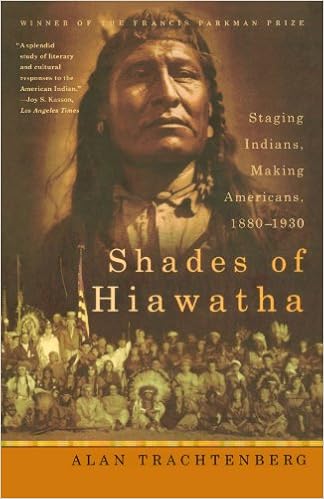
By Alan Trachtenberg"A book of elegance, depth, breadth, nuance and subtlety." --W. Richard West Jr. (Founding Director of the National Museum of the American Indian), The Washington Post
A century ago, U.S. policy aimed to sever the tribal allegiances of Native Americans, limit their ancient liberties, and coercively prepare them for citizenship. At the same time, millions of new immigrants sought their freedom by means of that same citizenship. Alan Trachtenberg argues that the two developments were, inevitably, juxtaposed: Indians and immigrants together preoccupied the public imagination, and together changed the idea of what it meant to be American.
In Shades of Hiawatha, Trachtenberg eloquently suggests that we must re-create America's tribal creation story in new ways if we are to reaffirm its beckoning promise of universal liberty.
From Publishers Weekly
What does it mean to be an American? How was "Americanness" first conceived? In this fascinating study, Trachtenberg (Reading American Photographs) investigates the construction of the "American" by linking the experience of Native Americans in the late 19th century to the experiences of Eastern Europeans in the early 20th century. Ironically, the earliest Americans—the Indians—were first displaced from their own land—making them un-American—and then were offered the opportunity to become Americans by repurchasing that land and conforming to American values such as the ownership of private property. The overly mythologized image of Hiawatha, Trachtenberg argues, crystallizes the ways that American writers and American society made Indians almost invisible. In a similar way, the earliest European immigrants experienced a displacement from their own lands and a requirement to embrace American social and political values in order to become American citizens. In an exceptional final chapter, Trachtenberg juxtaposes the writings of Luther Standing Bear and Hart Crane to show how deeply the idea of being American was contested even in the early 20th century and to call for the inclusion of Native American identity in the ongoing struggle to define what it means to be an American. Although some of these ideas are not new, Trachtenberg's historical depth and lively prose make them extremely vivid.A review by Paige Raibmon:Trachtenberg's method is to establish something of a taxonomy, holding up a wide array of cultural artifacts for display: poetry, theatre, travelogues, photography, and department store displays to name a few. Many of these were produced by well-known characters from the historical annals of American high culture: Robert Frost, Ralph Waldo Emerson, Henry Wadsworth Longfellow, Henry James, and Edward Curtis to name a few. Others were produced by figures who will be less familiar to readers: Yehoash, the Russian poet who translated The Song of Hiawatha into Yiddish, and Joseph Kossuth Dixon, who led Indian "expeditions" for the Wanamaker department stores. The book is much more about these non-Indian "stagers" of Indians than about Indians themselves. Trachtenberg's interest lies in the implications of these cultural artifacts for Americanness rather than in their impact on Indian lives.Rob's review
The Shades of Hiawatha title is appropriate. The book is kind of about how Song to Hiawatha filtered into the public consciousness and helped defined who and what was considered American. The six chapters are kind of disjointed, but Trachtenberg tries to link things back to the play and what it represents.
I'm not sure he develops any deep or meaningful thesis--at least not one that I can summarize. But he explores some little-known areas of Native history, including the origins of Song of Hiawatha and the Wanamaker Expeditions. His writing is interesting enough that I give the book an 8.0 of 10, which is good for this kind of material.
Some initial reactions to the Washington Post's Redskins poll claiming nine of 10 Natives don't mind the racial slur. First, official responses from the contending parties:
Halifax council discussed this week whether to look into removing his name from city properties
By Cassie WilliamsCornwallis was a British military officer who founded Halifax in 1749 while he was governor of Nova Scotia. He also issued the so-called scalping proclamation the same year, in which he offered a cash bounty to anyone who killed a Mi'kmaq person.
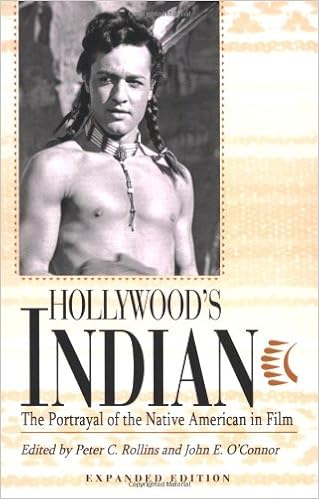
Hollywood's Indian: The Portrayal of the Native American in FilmOffering both in-depth analyses of specific films and overviews of the industry's output, Hollywood's Indian provides insightful characterizations of the depiction of the Native Americans in film. This updated edition includes a new chapter on Smoke Signals, the groundbreaking independent film written by Sherman Alexie and directed by Chris Eyre. Taken as a whole the essays explore the many ways in which these portrayals have made an impact on our collective cultural life.
Editorial Reviews
"Raises interesting issues and challenges readers to consider the complex realities of American Indian cultures and Indian/non-Indian relations that major motion pictures often fail to communicate." ―American Graduate
"Important and groundbreaking work." ―Bookman News
"Enables readers to construct a cinematic chronology of the Hollywood Indian and to comprehend the larger cultural forces at work interpreting the Indian-white past on screen." ―Choice
"Rollins and O'Connor have skillfully blended a variety of thoughtful viewpoints." ―Chronicles of Oklahoma
"A collection of quality essays, put together by two of the leading experts in this particular topic area." ―Communication Booknotes Quarterly
Comment: I read Hollywood's Indians and it's a solid academic-style book. Individual essays cover the usual milestones of 20th-century "Native" films: John Ford's movies, Broken Arrow, Tell Them Willie Boy Is Here, Little Big Man, Pow Wow Highway, Dances with Wolves, Last of the Mohicans, Pocahontas, Indian in the Cupboard, and Smoke Signals.
As with most anthologies, some of its essays are more compelling than others. And of course it doesn't address the independent Native filmmaking that's flourished since its 1999 publication date.
All in all, it's a useful but not essential book on Native-themed movies. Rob's rating: 7.0 of 10.
When "Chief Runs with Paws" is anything but cuteA description of the figurine on The Hamilton Collection's website reads: "Wearing his majestic ceremonial headdress with pride and casting an all-knowing, green-eyed stare your way, this adorable kitty is the chosen guardian of the spirt world."
Paul says these are just a bunch of buzzwords.
"They're using these words to make it sound magical and mystical and beautiful," she says. "They're buzzwords. They're sell-words to buy people into this idea of Native-ness—which is appropriation and not right."