Showing posts with label Snowbowl. Show all posts

July 18, 2012

Nader joins fight against Snowbowl

Ralph Nader and Friends Petition Full Panel Hearing on Sanction of San Francisco Peaks Attorney

By Gale Courey ToensingConsumer advocate and former presidential candidate Ralph Nader and a group of individuals and nonprofit organizations interested in protecting the sacred San Francisco Peaks from spiritual and environmental degradation have petitioned the Ninth Circuit Court of Appeals for a full panel rehearing of a recent ruling that imposed sanctions on the pro bono attorney for the Save the Peaks Coalition.

The amici curiae, or friends of the court brief, was filed on July 16 by Nader; Myles V. Lynk; Gary Marchant; Association on American Indian Affairs; Native American Rights Fund; Women’s Earth Alliance; Suzan Shown Harjo’s Morning Star Institute, and the Center for Biological Diversity.

On June 21 a three-judge panel of the Ninth Circuit ruled that environmental and Indian rights attorney Howard Shanker, who has worked pro bono for more than six years to prevent a ski business from using recycled human waste to make fake snow on the ski trails, acted in “bad faith,” that he “grossly abused the judicial process,” and “misled his clients” and held him “personally liable for excessive costs for unreasonably multiplying proceedings.”

The amici petitioners argue that the ruling “will have the unforeseen and deleterious effect of reducing the availability of pro bono legal representation for those most in need of such representation. All Amici Petitioners have an interest in ensuring ready access to pro bono legal representation, particularly for public interest claims in controversial, high-risk cases.”
Comment:  For more on the Snowbowl, see "Hunger Strike for the Peaks" and Blackfire Embodies Social Change.

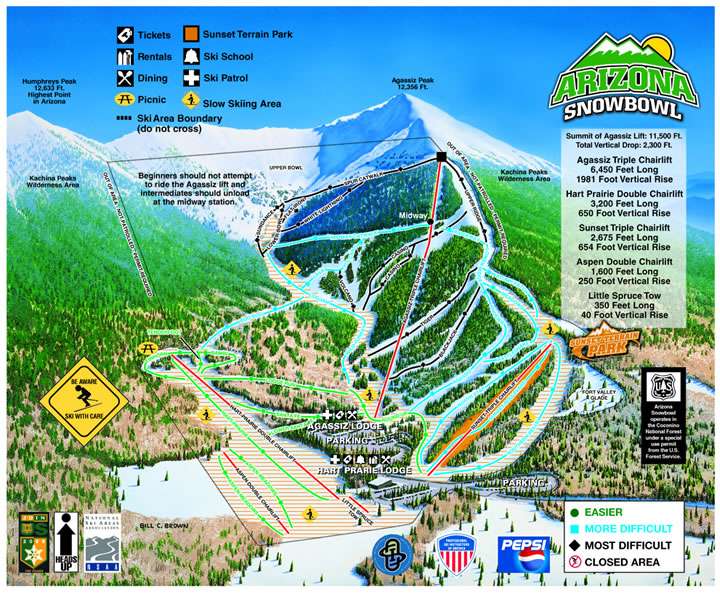
Below:  "The Hopi, Navajo and other tribes that hold the San Francisco Peaks sacred fear contamination and desecration from a wastewater-to-snow project."

June 08, 2012

"Hunger Strike for the Peaks"

Flagstaff Residents Embark on Hunger Strike to Oppose Snowmaking on San Francisco Peaks

By Anne MinardA pair of young Flagstaff, Arizona residents has embarked on a hunger strike to oppose snowmaking at a ski area on the San Francisco Peaks, held sacred by 13 tribes in the Southwest.

Jessica Beasley, a Navajo tribal member and Northern Arizona University nursing student, and her partner, Joseph Sanders, are keeping vigil during daylight hours at Flagstaff City Call; a city-wide camping ordinance prevents them from staying overnight.

They say their approach differs from recent demonstrations during which protestors chained themselves to an excavator and were arrested for trespassing on the property of Arizona Snowbowl, the controversial ski resort.

“A hunger strike is a non-violent form of protest, and we’re committed to that,” Sanders said.

Tribal and environmental activists have been protesting Snowbowl’s use of the sacred mountain since the 1970s, and have consistently lost in courts. Protestors suffered another disappointing loss earlier this year, when Ninth Circuit Court of Appeals upheld a district court decision dismissing a lawsuit filed by the Save the Peaks Coalition against the Forest Service. Beasley and Sanders say they were partly inspired to begin their hunger strike when Coral Evans, then a candidate for Flagstaff City Council, said in campaign interviews this spring that snowmaking on the Peaks was a “dead issue.” The pair began their hunger strike on June 5. They say they don’t intend to injure themselves; they’ll be taking in fruit juices, tea and water to stay hydrated and somewhat nourished.

They’re hoping to call attention to what they believe is a human rights violation against people who hold the Peaks sacred. The U.S. Forest Service should rescind Snowbowl’s permit to build the infrastructure that will deliver reclaimed wastewater to the ski slopes, they say–or the city of Flagstaff should rescind its contract to deliver reclaimed water for the project.
Comment:  For more on the Snowbowl, see Blackfire Embodies Social Change and Forest Service Seeks Snowbowl Solution.

August 18, 2011

Blackfire embodies social change

Indigenous Rights And A New Wave of Social Change

By Blair HickmanBlackfire's music represents the resurgence of social protest that's dominated the news since early this year. Its context is a vital new wave of social change.

"We started our band because the issues impacting our community as DinĂ© people and as indigenous people here in the U.S. were being completely ignored, from coal mining to forced relocation and further environmental degradation," says one Blackfire member. "The corporate media wasn’t telling that story, so we took up arms through music. That’s been our main way of communicating the need for change, the need for dignity, and the need for respect.”

We've seen this same need in the Arab Spring, in the unrest in London, in Israel, in the Philippines and in America on Twitter and even, somewhat, in the Tea Party. Though few condone the violence of the London riots, the unemployed youth that comprise the bulk of rioters have even bluntly stated that one of their motivations is to get people to listen to them.

Perhaps this video isn't social entrepreneurship, according to typical definitions. And perhaps it's not a particularly innovative model.

But the frequency and significance of protests over the last few months indicates a fundamental power shift that social entrepreneurs, or really anyone interested in changemaking, must study. As op-eds around the web have noted, the boundaries between social enterprise, citizen activism and public policy are shifting.

The Atlantic has even launched a whole new blog on the topic, Notes From the Foreign Policy Frontier. Its author, politics Prof Anne-Marie Slaughter, pointed out on Foreign Policy that the Arab Revolutions, and its global ripple effects, are only the beginning of a much larger shift in how people organize and affect change. That's why we included this video.
Demonstrating Blackfire's commitment to social action, here's a recent news item:

Photos Klee Benally locks down to Snowbowl equipment

By Brenda NorrellNavajo Klee Benally chained himself to heavy equipment on Snowbowl Road on Saturday, as an excavator continued destroying sacred San Francisco Peaks during a morning prayer gathering of Native Americans and supporters.

The destruction is part of the development of Arizona Snowbowl ski resort, which is digging into the earth and clearcutting for a pipeline to carry sewage water for snowmaking on the sacred mountains.

While Klee Benally was chained to an excavator, he said, "Here we draw the line, here we say no more!"

"You are criminals. You allow the desecration of our sacred. You threaten our cultural survival.

"What part of sacred don’t you understand," Benally said. His words were repeated by supporters gathered at the site as police arrived and a forest service officer emerged from the woods who had been videotaping them.
Comment:  For more on Blackfire, see Blackfire and the Native Legacy.


November 25, 2009

Forest Service seeks Snowbowl solution

Feds acknowledge withholding permits for Snowbowl

By Felicia FonsecaThe U.S. Forest Service said Wednesday it was withholding snowmaking permits for a northern Arizona ski resort as a way to promote settlement talks in a long-running dispute between American Indian tribes and the resort's owners.

The permits were delayed despite a U.S. Supreme Court decision in June that upheld the Arizona Snowbowl's right to spray man-made snow on San Francisco Peaks.
And:The stalemate marks the latest development in the dispute in which tribes insist making snow with wastewater would desecrate land they hold sacred and infringe on their religious beliefs.

Snowbowl officials counter the man-made snow is necessary to ensure the survival of the ski area, which opened in 1937 on Forest Service land and has struggled with short seasons because of a lack of snow.
Comment:  The article also notes that Sen. John McCain is demanding that the Forest Service act for the snowmakers against the tribes. So much for his claims of being pro-Indian.

The US Forest Service is part of the USDA, where I spoke in early November. This is a good example of how the USDA is involved in Native issues.

In fact, I'm a bit surprised the Forest Service is taking the tribes' side by stalling the permits. Usually the feds are gungho to develop the land at the expense of Indians.

For more on the subject, see Sewage Water as Holy Water and Court Rules Against Native Religion.

June 20, 2009

Sewage water as holy water

Editorial:  No room for the red man in a black and white world

By Wells Mahkee Jr.Well, it appears as if the Almighty Dollar has won out once again and the religions of many Native Americans have been shoved to the wayside. Last Monday, the U.S. Supreme Court decided not to hear an appeal filed in January by the Navajo Nation and other tribal and environmental groups that ultimately would have protected the San Francisco Peaks from further development by the Arizona Snowbowl Ski Resort.

This comes to light after the state of New Mexico placed Mt. Taylor--another mountain held sacred by at least 30 tribes--on their State Register of Cultural Properties on June 5 to protect it from exploratory drilling and possible uranium mining. Incidentally, both Mt. Taylor and the San Francisco Peaks are used by tribes from both New Mexico and Arizona as a place of worship.

At the center of this controversial issue is the fact that the Ninth Circuit Court's previous ruling states that use of reclaimed sewage water to make artificial snow wouldn't "substantially burden" a tribe's exercise of religion, as defined in the Religious Freedom and Restoration Act (RFRA). The Act also states that if there is a substantial burden on the exercise of religion, then there must be a "compelling public need" that outweighs the religious burden in order for this decision to be reversed. So what is the burden, you may ask?

The claim says that using reclaimed sewage water for snowmaking won't affect any religious ceremonies that tribes wish to conduct on the Peaks and that the sacred mountains would still be accessible to tribes to conduct such ceremonies. Opponents, however, have been saying all along that it's basically like saying the Catholic church (or any church, for that matter) can substitute reclaimed sewage water for holy water and continue to conduct their religious ceremonies without subterfuge. That's pretty much saying that "water is water" and that those ceremonials that require the use of holy water won't be affected.

Visually, the Peaks may not look like a church, but they are revered and sanctified as such by the different tribes.
Comment:  The "sewage water as holy water" analogy is a good one. Would Catholics accept a law that forced them to use sewage water for their holy water? I don't think so. Yet we're forcing Natives to accept sewage water rather than natural snow in their sacred peaks.

For more on the subject, see:

Snowbowl battle continues
"Reclaim the Peaks" from Indians
Ski resort vs. Native religion