Showing posts with label business. Show all posts

June 24, 2014

FedEx targeted for sponsoring Redskins

Shareholders concerned about FedEx link to Redskins

By Erik BradyA consortium of investment firms filed a shareholder proposal with FedEx in April asking the company to respond to "reputational damage" from the company's association with the Washington NFL club.

The firms, which emphasize responsible investing, went public with their filing Thursday, one day after a federal trademark board canceled the team's six federal trademark registrations on disparagement grounds.

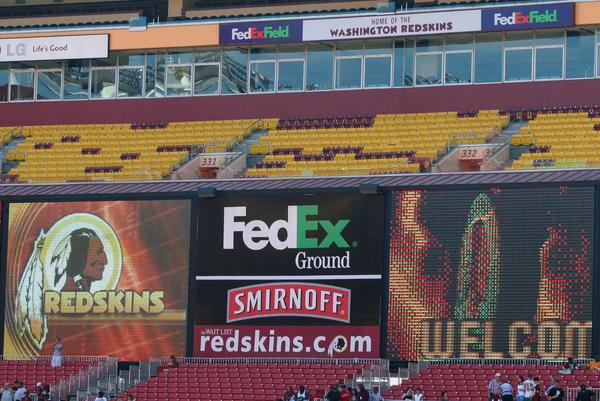
The filing represents a new battleground in the fight over the Washington club's controversial team name—sponsors. FedEx owns the naming rights at the suburban Maryland stadium where the Washington team plays.

Jonas D. Kron, senior vice president, director of shareholder advocacy at Trillium Asset Management, told USA TODAY Sports that the firms have been working on similar proposals since 2009. He said FedEx opposes having the proposal placed on the proxy for its annual meeting in September.
FedEx flagged for 'reputational damage' from sponsoring Redskins stadium (Video)

By Kent HooverThe Oneida tribe was joined in the shareholder filing by Mercy Investment Services, an asset management firm for the Sisters of Mercy, and Calvert Investments, an investment firm based in Bethesda, Maryland.

“There is growing consensus that there is no reason for the team to continue to use a logo with a symbol that is contemptuous and condescending toward Native Americans,” said Sister Valerie Heinonen of Mercy Investment Services.

“FedEx has a responsibility to do more and to respond to the ongoing reputational damage generated by this controversy, reminiscent of Aunt Jemima, black face and other racist uses of African American people and heritage. The issue isn’t going away—nor should it.”

"We strongly encourage FedEx to address and examine its role in perpetuating and supporting such stereotypes,” said Reed Montague, sustainability analyst at Calvert Investment.

“Each time a game is broadcast or the team name mentioned, the company is perceived as supporting disparaging and racist language,” said Jonas D. Kron, senior vice president and director of shareholder advocacy at Trillium Asset Management, which provided assistance for the shareholder proposal.
Most sponsors sit out controversy over Redskins name

By Josh PeterA day after the U.S. Trademark Trial and Appeal Board ruled the Washington Redskins' nickname is disparaging to Native Americans, the team's corporate sponsors largely remained on the sidelines.

Only Harris Teeter, a grocery store chain with stores primarily in the South, took a stance—supporting team owner Daniel Snyder and his vow to keep the Redskins' nickname.

FedEx, the company whose name is most closely tied to the Redskins because it owns the stadium's naming rights—the team plays at FedEx Field—distanced themselves from the legal proceedings rather than the team's use of the nickname.

Bank of America, Sprint Nextel and Coca-Cola were among the major sponsors that did not respond to requests for comment from USA TODAY Sports.
A tweet in response to this:

#RacistFedEx, #RacistBofA, #RacistSprint, and #RacistCocaCola all support the #Redskins slur, which denigrates Native people. #ChangetheName

EONM and NCAI

Native Americans Support Consumers Boycotting FedEx Corporation Over Sponsoring Racism in NFLEradicating Offensive Native Mascotry, a group of Native parents and their allies from across the country started a pledge drive on change.org “Pledge to Stop Using FedEx While They Still Quietly Support the Washington ‘Redskins’ Shameful Mascot” for consumers or investors who wish to stop using FedEx products to feel support in their decision to boycott the corporation. Signers pledge to stop buying FedEx products, to the best of their ability, until FedEx drops sponsorship of the Washington NFL team using a cancelled trademark found to be disparaging against Native Americans by the US Patent and Trademark Office, over 200 civil rights organizations, and the majority of Native American Tribal Nations.

Sustainability Analyst at Calvert Investments Reed Montague said:

“As times change, so must our language. Given the historic and present connotations of the name, turning real people into caricatures and mascots or insulting a portion of our population with an offensive name is no longer acceptable in this day and age,” said Montague. “We strongly encourage FedEx to address and examine its role in perpetuating and supporting such stereotypes.”
Activist group targets FedEx over Washington NFL team name

By Erik BradyThe National Congress of American Indians sent a letter to FedEx CEO Frederick W. Smith on Tuesday asking for his help to change the Washington NFL team's name.

The two-page letter, set to arrive Wednesday, comes one week after a federal trademark court ruled "Redskins" is disparaging to American Indians. Smith, who owns part of the team, told CNBC last week that his company does not have a dog in the fight and that he prefers to keep his personal view to himself. A company statement Tuesday said FedEx has a longstanding contractual commitment to naming rights at FedEx Field and that questions about the team name should be directed to the team.

"At FedEx Field, your company is allowing its iconic brand to be used as a platform to promote the R-word—a racist epithet that was screamed at Native Americans as they were dragged at gunpoint off their lands," says the letter obtained by USA TODAY Sports. It is signed by NCAI executive director Jacqueline Pata, Oneida Indian Nation representative Ray Halbritter and United Church of Christ ministers John Deckenback and Graylan Hagler.

The letter notes that a section of FedEx Field is named for George Preston Marshall, the team's original owner, who was last in the NFL to integrate and only under pressure from the U.S. Department of the Interior. Attached to that the letter is a one-page document listing Marshall's racist history.
As someone noted, the NCAI is a pan-tribal governance group, not an "activist" group. As with the US Congress, it isn't "activism" if this congress works for policy change.

The article also offers a reply from FedEx's CEO:"Well, first of all, let me answer that question from the standpoint of FedEx, which sponsors FedEx Field," Smith said. "We have a long-standing contract with Washington Football, Inc. The Redskins play at FedEx Field, but there are many, many other events there—the Rolling Stones, Notre Dame, Army and Navy football, Kenny Chesney. So that's our sponsorship, and we really don't have any dog in this issue from a standpoint of FedEx.A tweet in response to this:

@FedEx "doesn't have a dog" in the #Redskins battle--other than profiting from its support of the racist status quo.

Decision could cost millions

Meanwhile, pundits talk about the reality of a racist brand:

The question is not whether the football team will change its name, but when and how

By Mike WiseBeyond a very symbolic legal victory for this country’s most underrepresented and marginalized ethnic minority—no small win considering its rights have been trampled in the courts and the halls of Congress for centuries—it’s important because it could eventually hit Snyder in the wallet.

After legal appeals are exhausted, this effectively could enable you, me and Robert Griffin III to go into business together on a super store across from FedEx Field, where we would undercut exorbitant NFL prices and make a mint. Worse for the team, patent lawyers say, if sponsors aren’t scared off by the mounting glut of negative publicity against the name, they can get shafted by banks, grocery stores and auto dealerships that aren’t official sponsors of the team yet will be legally allowed to put posters and banners in their windows.

This could take as little as two years and as long as a decade. But sure as training camp starts in July, if Snyder wants to play this out to its ugly end, his bullheaded defiance in the face of growing, sustained opposition eventually is going to cost himself and everyone in the NFL who shares in merchandising profits—including players—millions.

Social pressure has begat economic pressure. Yikes.
Rodney K. Smith: The Washington Redskins must deal with the reality of a racist brand

By Rodney SmithThe battle over public opinion is being lost. Snyder and the owners of the Washington Redskins are increasingly being associated with a racist name they choose, through pride or perhaps principle, to maintain. They will soon be branded as racist.

Snyder should learn from the cautionary tale of Donald Sterling and the NBA. For Sterling, the costs of persisting in a battle of this sort are exceedingly high. Sterling will be viewed in history as a racist. The personal and economic costs are similarly significant for Snyder.

Other owners of the Redskins and their sponsors will soon find themselves backtracking rather than running the risk of being branded as part of a franchise that perpetuates a trademark that is perceived to be racist. As reputational costs mount, negative revenue implications will increase.

The Redskins depend on sponsorships and public support. Revenue from those groups will shrink as they assess the risk of being labeled racist. For example, Fred Smith, a co-owner, and Fed-Ex will be under increasing pressure to terminate their sponsorship, which is a major asset in the Redskin portfolio. Other sponsors and owners will follow.

The NFL is equally concerned with implications for its brand. The NFL and sponsors will pressure Snyder to relent. There are surely clauses in the NFL’s contracts and the contracts of sponsors with the Redskins that will permit them, if necessary, to take steps against Snyder, much as the NBA acted against Donald Sterling.
November 08, 2013

Natives protest Yum Yum logo

Krispy Kernels snacks slammed over 'Little Indian' logo

Quebec potato chip company says loincloth-clad mascot is 'retro,' not racist“It's just like ‘look at that, I'm pretending to be an Indian,’” said Beljaars.

“You're just perpetuating racial stereotypes. You're just continuing to mock us by doing things like this.”

Beljaars said other members of the province's aboriginal community have contacted the company about the campaign, asking for the logo to be removed.

In response, Krispy Kernels released a statement saying the packaging is a nod to the founder of the potato chip, who was native.

The company said the caricature on the package is a return to the company's roots, and is not meant to be mocking.


A myth debunked: No, “yum yum” is not the Algonquin word for “potato”

By Don MacphersonYum Yum’s marketing director told TVA the mascot is based on a child’s drawing for a contest. It was chosen by the company’s founder, who was of aboriginal descent, to go with the name he had given the company, “which, I am told, means ‘potato’ in Algonquin.”

Really? The familiar expression “yum, yum” also happens to be the Algonquin word for “potato?”

That sounded too good to be true. So, doing my duty as a journalist to, er, dig up the truth about the “yum yum,” I sent an email to the Algonquin Anishinabeg Nation Tribal Council, which comprises Quebec’s seven Algonquin communities.

“That’s a good one,” replied Norm Odjick, the Algonquin council’s director-general. “I’ve never heard of ‘yum yum’ as the word for potato in Algonquin. For us it’s ‘padak’ for ‘potato,’ and ‘padakan’ for ‘potatoes.’ Another word that can be used is ‘opinig.’

“Thanks for your email. I needed a laugh today.”
Comment:  Let's go through the company's excuses:

It's a racist nod to the founder that looks nothing like the founder.

It's not meant to be mocking, but it's mocking anyway. It portrays real people as childish cartoon characters.

The claim that "Yum Yum" is an Algonquin word is false. Is the founder's aboriginal heritage also false?

Does the company have any other defenses for this insulting move? Because we haven't heard a legitimate one yet.

For more on the subject, see Yum Yum Revives "Little Indian."

Below:  "The original Yum Yum mascot was introduced in 1959 when the potato chip company was founded." (Krispy Kernels)

A Native boy who looks like a chipmunk or a beaver? And that isn't a complete mockery of Native people? Yeah, right.

November 06, 2013

Yum Yum revives "little Indian"

A photo on Twitter caught my eye:


A Quebecois article, roughly translated from the French, gives an explanation:

Yum Yum returns the "little Indian"

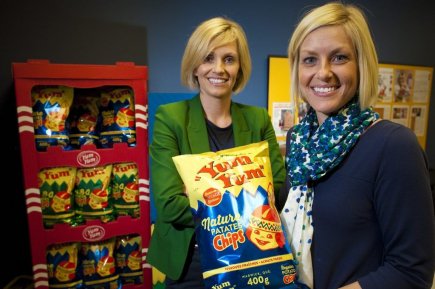
By Isabelle MasséDuring a fall, Chips Yum Yum back to the forefront of its bags of chips Nature and BBQ's "famous Indian" less visible on the packaging in the late 90s. Go back is betting the company has done Warwick to attract attention.

The new bags are inspired by the graphics of the 60s. "The vintage trend is in many areas, note the marketing director, Renee-Maude Jalbert. It was launched in 2009 vintage packaging for our 50th anniversary with success. We wanted to ride all year round and the bags have gone faster."

In time for the start of the holiday season, the company has brought to market hundreds of thousands of bags of 400 g, instead of the traditional 235 g. Due to the positive response from retailers, the company was able to add 150 stores to its already expanded to several hundred outlets distribution.

Offensive marketing

"The Nature and BBQ flavors remain the two most popular on the market, notes Renee-Maude Jalbert. And we see an increase in sales of chips during the holiday season, compared to other months of the year, about 20%."

"This is a very important offensive to us in terms of image and marketing," says Valérie Jalbert, CEO of Yum Yum Chips and Krispy Kernels. It plans to sell more, even if we do not talk about planned special sales."
Comment:  You gotta love the phrase about "offensive marketing." Yep, this is offensive marketing, all right.

Below:  "Valérie Jalbert, CEO of Yum Yum Chips and Krispy Kernels, and Renee-Maude Jalbert, marketing director."

September 10, 2013

Wyandotte company named Manufacturer of the Year

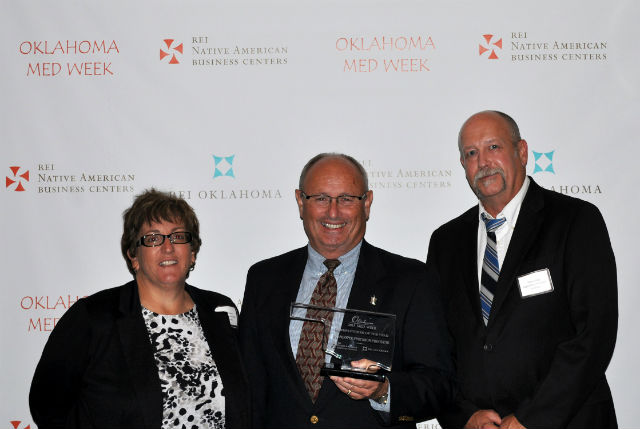
Wyandotte Nation company named 'Manufacturer of the Year'Wyandotte Precision Products (WPP) was named “Manufacturer of the Year” during Oklahoma Minority Enterprise Development Week. The celebration of success of minority entrepreneurs was coordinated by the REI Native American Business Centers.

“It is an honor for our team at Wyandotte Precision Products to receive the award from the MED organization and REI of Oklahoma,” said WPP President Ron Brown. “We still have a tremendous amount of work to do to meet our goals, but the award is an unexpected and welcome recognition of our efforts so far. As with all of our WTOK businesses, it is a team effort and a team recognition. We could not do what we do without the support of the Wyandotte Nation and all the departments of WTOK.”

The company was formed in June 2011, with the acquisition and workforce transition of an existing machine shop by the Wyandotte Tribe of Oklahoma’s Economic Development Department. WPP is a precision machine shop, located at the Joplin, Mo., airport, that produces maintenance and repair parts for manufacturing companies in the food processing, printing, oil and gas, military, explosives and automotive industries.

Experts in the reverse engineering process, the workforce consists of nine full-time employees, in addition to a contract worker. WPP also utilizes the Wyandotte Nation’s intern program to augment its customer service staff.
Comment:  For more on Native business honors, see Northrop Wins Warrior Award and Minority Construction Firm of the Year.

September 03, 2013

Hoka! Coffee on Pine Ridge

HOKA! Coffee is a-brewing on the Rez

By David MichaudSome people are lucky enough to find a job that stimulates their passions, Sharice Davids just happens to be one of those people.

Sharice’s recently created a coffee company on the Pine Ridge Indian Reservation. Taking inspiration from the Lakota language she decided to name her company Hoka! Coffee.

“I made a list of things I am passionate about and there were just a few things on it–economic development in Indian country, martial arts and coffee,” said Davids.

To this point in time Hoka! has been attempting to spread their name throughout the reservation by making appearances at various events. The first event Hoka! appeared at was the OLC graduation pow wow and after that they attended Oglala Nation Pow Wow, with great results.
Comment:  For more on Native coffee businesses, see Chukchansi Coffee Company and Tribal Grounds at Mitsitam Coffee Bar.

Below:  "Sharice Davids poses in front of her booth at the Oglala Nation Pow wow."

August 31, 2013

Trickster skateboards and playing cards

Ravens on Decks: The Art of Trickster Skateboards

By Cristina OldsA couple of innovative young artists are melding the ancient tradition of formline drawing with the hip canvas of skateboard decks. "The demand for Native art skateboards was made very clear by the popularity of my early hand-painted decks," Rico Lanáat’ Worl (Tlingit/Athabascan) of Trickster Company said in a recent interview.

Worl painted decks for himself and his family first, but soon saw the need for an affordable line of manufactured boards sporting his digitized designs. He also paints custom artboards, and says his clientele are split fairly evenly between skaters who actually ride the boards and collectors who hang them on their walls.

"I started painting on decks just for fun, just for myself," Worl said. "It continues to be my canvas of choice while I study the old masters and the new masters of formline design, in the rich history of Tlingit and Athabascan art." Flowing two dimensional formline designs featuring northwestern coastal sea creatures and other symbols have adorned totem poles and house posts for thousands of years.


Formline Playing Cards from Ace Artist Rico Worl

By Sara ShahriariArtist Rico Lanáat’ Worl, Tlingit/Athabascan, designs skateboards and snowboards, but often branches out to other products. His newest design is playing cards that rethink the classic figures through formline, the graphic indigenous art style native to the Pacific Northwest. The only problem was that Worl needed an order of 2500 cards to get printing underway. In search of money to fund that order he turned to Kickstarter, the online fundraiser. "I made these cards to represent our living art of the Northwest coast: its adaptability, resilience, and quality," Worl, who is based in Juneau, Alaska, wrote on his Kickstarter page.

Adding a touch of Native artistry to an everyday item like a deck of cards is a natural step for Worl. "Growing up in a family that is close to the culture ensured the arts would be close by," he says.


Comment:  For more on the subject, see Tlingit Artists Designs Skateboards.

August 27, 2013

Western Sky ends payday business

Online Lender Western Sky Shutters Payday Business

By Sean SpositoAmid pressure from regulators, Western Sky Financial plans to close for business early next month.

The prominent online lender was one of several web-based payday loan shops that allegedly flouted New York's usury laws. Western Sky, which is owned by a Cheyenne River Sioux tribe, claims it operates on the tribe's South Dakota reservation.

Western Sky—along with CashCall Inc. and WS Funding—made roughly 18,000 loans to New Yorkers, doling out approximately $38 million in cash, according to the state's attorney general's office.

In a statement given at the time, Western Sky said, "we have complied with applicable laws in our business practices, and we stand behind those practices."

The lender went on to say that its practices "are governed by the laws of the Cheyenne River Sioux Tribe" and "beyond the purview of state regulation."

However, the Native American Financial Services Association, a group that advocates for tribes that offer lending services, says that Western Sky does not operate under tribal law, nor does it abide by Native American regulatory bodies.
Comment:  There's only one Cheyenne River Sioux tribe, so "a Cheyenne River Sioux tribe" is slightly incorrect.

For more on payday loans, see Western Sky Financial Investigated and Payday Lenders to Stop Deceptive Practices.

August 21, 2013

In-N-Out Burger at Morongo

In-N-Out comes to Morongo

By Debra GruszeckiEarth was getting pushed around Wednesday for construction of the nation’s first In-N-Out Burger on tribal lands.

The scene unfolded to the west of Morongo Casino Resort & Spa on the Morongo Band of Mission Indians Reservation along Interstate-10 in Cabazon.

The popular 1950′s styled restaurant is set to open in 2014. It will be within walking distance from the casino resort and the tribe’s Travel Center, a fueling station that’s equipped with competitively priced gasoline, diesel fuel and slot machines.

In-N-Out will join two other fast-service eateries, Ruby’s Diner and the A&W Restaurant. Hadley’s Date Garden is also located nearby.
In-N-Out Coming To Morongo Indian Reservation, A First For Burger ChainIn a milestone for Southern California's beloved hamburger chain, In-N-Out will be opening its first ever location on tribal lands: the Morongo Indian Reservation.

The restaurant location, adjacent to the Morongo Casino off the 10 freeway in Cabazon, Calif., is set to open some time in 2014. The new restaurant is part of a larger development plan along the 10 freeway in the area on the way to the casino and outlets, reports Banning-Beaumont Patch.

“We are delighted that In-N-Out Burger has chosen the Morongo Indian Reservation as the home for its first restaurant ever on tribal land,” said Chairman Robert Martin of the Morongo Band of Mission Indians in a press release. "Given the current economic environment, Morongo is happy to be developing a new project that will not only bring new business activity and jobs to our region but will also generate future economic development opportunities.”

Fast food workers make a median wage of just $8.94 an hour nationwide, which is why it may seem strange that the tribe is hailing the addition as an economic development opportunity.

But fans of In-N-Out know that the restaurant stands out not only for its freshly-made food, but also for the way it treats its employees. An In-N-Out employee starts at $10.50 per hour, significantly higher than California's minimum wage of $8 or federal minimum wage at $7.25. According to the company's site, even part-timers are eligible for flexible schedules, paid vacations, free meals and a 401K plan.
Comment:  For more on Indians and restaurants, see Owners Plan to Franchise Tocabe and Mitsitam Wins DC Restaurant Award.

July 19, 2013

Chukchansi coffee company

Chukchansi tribe launches line of coffee in bid to diversify businesses

By Bethany CloughFrom casinos to coffee, economic development by the Chukchansi tribe is taking on a more flavorful flair.

The Picayune Rancheria of the Chukchansi Indians is now selling Native American Coffee, a product Chukchansi leaders hope will bring greater prosperity to the Madera County tribe, and eventually others.

The coffee beans are grown by indigenous tribes in South and Central America and roasted in Mariposa with a Native American-influenced process the coffee roaster says makes for a smoother, purer cup of coffee.

Selling coffee is an unusual business for a tribe to get into, but it's no surprise that the Chukchansi are trying to vary their economic efforts, says Troy Vanderhule, director of marketing for the nonprofit National Center for American Indian Enterprise Development. Seeing competition from Internet gambling in the future, many tribes are changing up the ways they make money.
Comment:  For more on Native coffee businesses, see Tribal Grounds at Mitsitam Coffee Bar.

June 14, 2013

Popcorn drives Lower Brule economy

Popcorn Sovereignty: Growing the Lower Brule Tribe's Economy

By Tanya LeeThe Lower Brule Tribe in South Dakota hopes to leverage its popcorn enterprise into a driver of inter-tribal economic development, and the U.S. Department of Agriculture has just awarded the tribe a $300,000 Value-Added Producer Grant to help.

The tribe's USDA Value-Added Producer grant was one of 110 such awards totaling $16.9 million given out this year to help agricultural producers increase earnings by expanding their markets, creating new products or developing new uses for existing products.

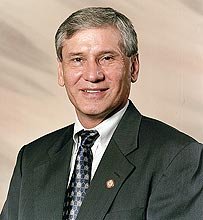
Lower Brule Tribal Chairman Michael Jandreau says the tribe will use the funding, which it will match with $310,000 of its own money, to develop a robust marketing program for the renewable resource and create more jobs for the 3,800-member tribe.

While many tribes are using casino profits to diversify their economies, Jandreau said that is not the case here. The tribe does have a gaming enterprise, the Golden Buffalo Casino & Motel, but it began its agriculture business in 1977, long before the Indian Gaming Regulatory Act was even passed.

So far, the farm has provided $30 million in revenues to the tribe. That money has produced not only jobs, but also provided a steady income stream for the tribe and made it possible to buy back several thousand acres of homeland within the external boundaries of the reservation, says Jandreau.
Comment:  In related news, Indian reservations have economies that aren't based totally on casinos. Who knew?

For more on the subject, see Lower Brule Popcorn Company.

Below:  "Lakota Foods also sells six-ounce bags of flavored popcorn, like butter, cheddar and white cheddar."

June 11, 2013

Native vineyards are growing business

Tribes Take to the Vine

From Santa Barbara to British Columbia, Native American vineyards are a growing business

By Matt Kettmann
When the first wine grapes were planted in California by Spanish missionaries in the late 1700s, the Chumash people's economic empire extended from the Malibu shores through Santa Barbara to the Paso Robles plains. But by the time the modern wine industry emerged on the Central Coast a couple centuries later, the Chumash were struggling, much like many Native American tribes. The few dozen who managed to achieve federal recognition as the Santa Ynez Band of Mission Indians were left with a little slice of land, where most residents lived below the poverty line.

Fast forward to today, and the Chumash are once again prospering, thanks to a successful casino and resort they built on their Santa Ynez Valley reservation in 2004. Six years later, with hopes of expanding their reservation, the 154-member tribe bought a nearby 1,400-acre property for a reported $40 million from the late actor-turned-vintner Fess Parker. The land came with 256 acres of vines, the Camp Four Vineyard, planted with 19 different grape varieties. While honoring existing contracts for the fruit (one-third of it goes to the Parker family's brands, while most of the rest is sold to about 70 small producers from all around the state), the Chumash started making their own wine, and released their first vintages of Kitá Wines last month.
And:The first Native American group in modern times to grow wine grapes was the Osooyos Indian Band of the southern Okanagan Valley in British Columbia. First planted in 1968 and then grafted over to French clones in the 1990s, the band’s 1,200 acres of vines mostly supply other producers, but they retain about 60 acres to make 18,000 cases a year under the brand Nk’Mip Cellars, which started in 2001.

In Arizona, members of the Yavapai-Apache Nation started Fire Mountain Wines in 2010 and, in California’s Sonoma County, two tribes of Pomo heritage both purchased vineyards in 2012: the 270-member Lytton Band, which own the San Pablo Casino in the Bay Area, spent $13.3 million to buy a 110-acre vineyard of Cabernet, Merlot and Chardonnay on 269 acres of land from Jordan Winery in the Alexander Valley, while the 1,000-member Dry Creek Band spent $24 million on 310 acres of land surrounding their River Rock Casino in Geyserville, including 130 acres of Chardonnay, Sauvignon Blanc, Gewürztraminer and Cabernet Sauvignon vines near the Russian River.

More inland, about an hour northwest of Sacramento in the Capay Valley, the Yocha Dehe Wintun Nation also got into vineyards as a way to diversify their business beyond their Cache Creek Casino. In 2012, the tribe became the first in California to release their wines, including a Viognier, Syrah rosé and two red blends under the Seka Hills label.
Comment:  For more on the subject, see Osoyoos Band's Nk'Mip Winery and Yoche Dene Wine and Olive Oil.

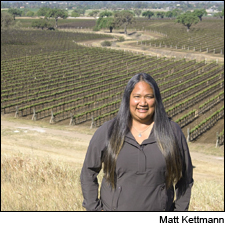
Below:  "Winemaker Tara Gomez stands above the Camp Four Vineyard." (Matt Kellerman)

May 23, 2013

Aub's Unique Barber Shop

Bad-boy barber converts shed into barbershop, mancave

By Cindy YurthA large-screen TV fills one corner of the one-room building. A basketball hoop hangs on the edge of the loft. A collage of scantily clad women plasters the ceiling.

Is this a barbershop or a man cave?

It's both, and it's the most creative use we've seen yet for the portable buildings that are springing up all over the Navajo Nation like mushrooms after a rain (see accompanying story).

Aubrey "Aubs" Dahozy calls his shop south of the Fort Defiance hospital "Aub's Unique Barber Shop," and that is no exaggeration.
Comment:  For more on Navajo business, see Navajo Tattoo Artist and Navajo Architect Faces Sexism.

May 18, 2013

Cherokee Nation plans wind farm

Cherokee Nation Developing Largest Tribal Wind Farm in U.S.The site of a former Indian boarding school in Kay County, Oklahoma will soon become the largest wind farm on tribal land in the United States. The Cherokee Nation has partnered with Chicago-based PNE Wind USA Inc. to develop a 90-turbine wind farm, which is estimated to generate $6 million over the next two decades. Development will start immediately on 6,000 acres of the former property of the Chilocco Indian School, which operated from 1884 to 1980.

The 153-megawatt wind farm will power homes, businesses and farms of the southwest grid region.

“The Cherokee Nation has an opportunity to be a leader among Indian nations in renewable energy,” said Cherokee Nation Deputy Speaker Chuck Hoskin, Jr. “The tribe will be able to utilize an underutilized resource. We talk a lot about protecting our environment and conserving our resources, so this is a prime opportunity to put words into action.”
Comment:  For more on Cherokee business, see Cherokee Nation Signs Sikorsky Contract and Cherokee Nation in JA BizTown.

May 15, 2013

Kickstarter campaign for indigenous kayaks

Qayaq Co-Op Campaigns on Kickstarter for $25K To Build High-Tech, Indigenous Boats

When Traditional Culture Meets High-Tech Construction, The People Can Qayaq Forward

By Ralph Richardson
More than 10,000 years ago, Eskimos constructed the first kayaks from stitched seal and other animal skins by stretching them across a wood or whalebone-skeleton frame. Called skin boats, they used them to hunt on the inland lakes, rivers and coastal waters of the Arctic Ocean, North Atlantic Ocean, Bering Sea and North Pacific Ocean.

Today, kayaking is one of the fastest growing sports in North America, with nearly 8 million active participants in the U.S. alone, up from 3.5 million just 10 years ago, according to the National Sporting Goods Association.

With its rising popularity, David Michael Karabelnikoff (Aleut/Athabaskan) noticed kayaking equipment was primarily being mass-produced. So, in August 2012, Karabelnikoff established Qayaq Co-Op with co-founders Julian Jacobes and Martin Leonard III.

The Co-Op’s mission is twofold, Karabelnikoff explains: To inspire a movement in Southeast Alaska to revitalize canoe building and paddling, while encouraging youth to learn science, technology, engineering and math (STEM), and to produce top quality kayaks that elite athletes would seek for their own use on the water. While the nonprofit embraces traditional Native craftsmanship, it also updates the kayaks, canoes, and skin boats with digital manufacturing and fabrication technology.
Comment:  For more on Inuit business, see Nunavut Resources Corporation Seeks Financing.

May 13, 2013

Goshutes open for-profit clinic

Utah Indian tribe breaks into the health care business

Health » Goshutes open tribal clinic in downtown Salt Lake City, the first outside a reservation in Utah.

By Kirsten Stewart
A group of doctors is working with the Confederated Tribes of the Goshute to open a family health clinic in downtown Salt Lake City.

Sacred Circle Health Care will be the first tribe-owned clinic located outside a reservation in Utah, say its founders. But that’s not all that sets it apart.

The clinic is designed to be a moneymaker for the tribe—with the profits used to improve tribal members’ access to health care no matter where they reside.

"Any money made by the Goshutes has to go to health care," said John Lopez, a retired dentist and the clinic’s manager. "I don’t know what their vision is, but I would love to see them have an upgraded clinic, get dental care and provide nutritional counseling for diabetes on the reservation."
Comment:  For more on Native healthcare, see Mental Health Services Needed and American Idol Funds Ho-Chunk Mobile Clinic.

Below:  "David Hadley, a dentist from Vernal, left, and John Lopez, a retired dentist, will work in a new clinic scheduled to open next week. Designed to make money for the Goshute Tribe, it is the first such clinic in Utah located off a reservation. It will be open to the general public, not just tribal members." (Francisco Kjolseth/The Salt Lake Tribune)

May 10, 2013

Cherokee Nation signs Sikorsky contract

Cherokee Nation Industries Signs $5.1M Contract With Sikorsky Aircraft Corp.Cherokee Nation Industries has inked a $5.1 million contract with Sikorsky Aircraft Corp., an industry leader in manufacturing and service of military and commercial aircraft. The tribal enterprise will be providing frame and instrument panel assembly for the S-300C helicopter, a highly versatile piston-engine rotorcraft. Its maneuverability, responsive handling, range and endurance make it ideal for personal transportation, military and civil training, aerial photography, law enforcement patrol and more.

“Aerospace and defense manufacturing is a core industry in Oklahoma and our business portfolio,” said Principal Chief Bill John Baker. “The Cherokee Nation plays a vital role in this industry and is proud to have earned a new multimillion dollar contract with Sikorsky. This new contract creates more jobs in an advanced, high-tech industry.” This is the second, consecutive year Cherokee Nation Industries has received the honor.

The deal comes shortly after Cherokee Nation Industries was honored with a 2013 Sikorsky Gold Supplier award in recognition of the company's exceptional delivery of high quality products in the timeframe needed. Baker said the Gold Supplier certification “reflects the commitment to quality we have established in our advanced manufacturing efforts at CNI.”

The 18-month contract allocates $4 million for the production of 84 instrument panels that integrates all flight instruments, with the exception of customer-specified radios. CNI will also provide frame assembly for 74 aircraft, adding copy.1 million to the contract.
Comment:  For more on Cherokee business, see Cherokee Nation in JA BizTown and Cherokee Nation Parnters with Walmart.

May 04, 2013

Alaska Native Voices

Native corporation launches tourism service

By Rachel D'OroAn Alaska Native village corporation that operates a popular cruise ship destination has launched a commercial consulting service for others seeking help developing their own cultural tourism ventures.

Huna Totem Corp. opened Alaska Native Voices on Wednesday. Huna Totem is the village Native corporation for Hoonah—a largely Tlingit community of 775 in southeast Alaska—and one of the front-runners of tribal tourism, a growing trend in Alaska and nationally.

The corporation is entering the 10th year of operating its Icy Strait Point, a long-closed salmon cannery near Hoonah that was converted to a tourism complex with offerings that include Tlingit heritage performances and nearby attractions such as nature tram rides, whale watching tours and a mile-long zipline with a 1,300-foot vertical drop. Huna Totem also is entering its 13th year of providing cultural heritage guides to visitors of Alaska's Glacier Bay.

The corporation's new consulting business is available to Native groups as well as communities worldwide wanting to establish tourism around their own cultures, Alaska Native Voices director Mark McKernan said. The cost will vary, depending on the extent of services sought, he said.
Comment:  For more on the subject, see Promoting Alaska Native Tourism.

April 02, 2013

Lower Brule popcorn company

Lower Brule popcorn manufacturer making a name for itself

By Kristi EatonTucked away in central South Dakota, Lakota Foods may not yet compete with popcorn’s biggest brand names, but the tribal-owned popcorn manufacturer is gaining lots of accolades from agriculture officials for its products and job opportunities.

Situated on the Lower Brule Indian Reservation, Lakota Foods is the first and only Native American-owned company that grows, packages and distributes popcorn—about 17 million pounds each year.

“It’s unique because it’s raised, cleaned and packaged right here in South Dakota, but people don’t realize that and there are other people trying to copy it,” Barry Heiss, manager of the Lower Brule Farm Corp., said.

The Lower Brule Sioux Tribe started the business about seven years ago. It buys the popcorn seed and then raises it on 8,000 acres of irrigated land, Heiss said.
Comment:  For more on the subject, see Pine Ridge = "Food Desert" and Tanka Bar Company Wins Innovation Award.

March 30, 2013

Smith publishes book on leadership

Former CN chief publishes book on leadership

By Teddye SnellFormer Cherokee Nation Principal Chief Chad Smith draws from the past and embraces the future to move from “Point A to Point B” as a leader.

Smith’s book, “Leadership Lessons From The Cherokee Nation,” published by McGraw Hill, explains in detail how he developed a model to move the tribe forward throughout his 12-year tenure.

“Four years ago, I wanted to write this as an employee handbook,” said Smith. “What we found is we needed to streamline a philosophy for running our government, which included over 150 different products and services. And I recalled what [full-blood Cherokee traditionalist] Benny Smith said to me at my inauguration in 1999: ‘Be a student of the Cherokee people and nation,’ or learn from all I observe.”

Smith pointed out that given the number and diversity of the tribe’s interests, he would need an overarching concept of management.

“You can’t run a marshal service the way you run a hospital, and you can’t run a school the way you run an aerospace company,” said Smith. “So, I took Benny’s words very seriously; we simply needed to look at our history to gain clarity about where we wanted to go. We concluded our design purpose was to be a happy, healthy people. It’s important to get from A to B in 10 words or less.”
Comment:  For more on Chad Smith, see Cherokee Chief in Wrestling Hall of Fame.

March 25, 2013

Ak-Chin to sponsor Arizona Rattlers

Arizona Rattlers sign sponsor deal with Ak-Chin Indian Community

By Mike SunnucksThe Ak-Chin Indian Community has inked a sponsorship deal with the Arizona Rattlers arena football team.

The Rattlers field at US Airways Center in Phoenix will be called Ak-Chin Field and the tribe’s seal will be displayed on the field and around the arena. Financial terms of the sponsorship were not disclosed.

California-based UltraStar Cinemas—which has movie theater, bowling alley and entertainment complex at a new development on Ak-Chin land in Maricopa—is also part of the sponsorship deal.

The 937-member tribe owns Harrah’s Ak-Chin Casino in Maricopa and also has some industrial and commercial enterprises on its Pinal County reservation. The deal does not involve the casino, which is about 60 miles south of Phoenix.
Comment:  For more on Indians and the football business, see Oneida Nation Sponsors Packers Gate and Ho-Chunk Starts Arena Football Team.