Showing posts with label sports. Show all posts

March 23, 2015

Marathon running on a wing and a prayer

One of my occasional articles for the Native media:

Native Presence at L.A. Marathon Provides Hydration and Spiritual Uplift

By Rob SchmidtAt Mile 17 of this year’s Los Angeles Marathon, held March 15, runners saw and heard something a little different: a powwow dancer and a drum group. It was a subtle reminder that they were on Gabrielino Tongva land—and that the land’s first inhabitants are still here.

For the second year in a row, the American Indian Community Council (AICC) was an official race sponsor. AICC is a central hub and resource for LA’s American Indian/Alaska Native community. It operates groups for women, elders, and the Indian Child Welfare Act, among other things.

AICC’s 2015 goal was to raise funds for United Native Youth of LA (UNYLA), which represents LA’s Native youth councils. Specifically, AICC plans to send Native youngsters on a Youth Leadership Journey to nearby reservations to learn about their roots. Some urban Indians have never visited a reservation.

The LA Marathon encourages participants to raise funds for causes. This spurred 27 Indians to run this year—up from only three a few years ago. They included long-time marathoners Shawn Imitates-Dog and Willie Sandoval as well as some first-timers. Nineteen completed the whole 26.2 miles while the others ran half-marathons in relays.
Comment:  For more on the subject, see Indians Raise Awareness at LA Marathon.

Below:  "Young helpers pass out water to runners in the L.A. Marathon at the American Indian Community Council's water station."

April 29, 2014

What Bundy and Sterling tell us

The paternalism of rich white men aka the 1%:

Donald Sterling’s disgusting 1 percent ramblings: Let’s pity the racist billionaire

Donald Sterling's racism is cut from the GOP playbook--a classic case of "makers vs. takers" delusion

By Paul Rosenberg
DS: You just, do I know? I support them and give them food, and clothes, and cars, and houses. Who gives it to them? Does someone else give it to them? Do I know that I have—Who makes the game? Do I make the game, or do they make the game? Is there 30 owners, that created the league? (emphasis added)

Excuse me. Donald Sterling gives the players on his team food? Clothes? Cars? Houses? They don’t work their asses off earning what they buy for themselves, building on a lifetime of hard work and practice, and years of unmitigated exploitation as unpaid athletes along the way?

Does anyone other than Sterling have the slightest difficulty in hearing how much he sounds like a classic 19th century slave owner, talking about everything he’s done for his ungrateful slaves?

Certainly his question, “Who makes the game?” recalls the slaveholders’ delusion that they alone created the enormous wealth they enjoyed. It was a believable fiction, I suppose, if first you absolutely convinced yourself that the slaves who did all the actual work were not people at all, but mere property, nothing more than livestock, really. One has to wonder: Is that what Sterling thinks of the men who play on his team today?
Donald Sterling and Cliven Bundy’s ignorant paternalism: Angry old white men gone wild, again!

Donald Sterling’s racial views are worse than Cliven Bundy’s, yet some on the right defend the racist billionaire

By Joan Walsh
It’s just another episode of “Angry Old White Men Gone Wild,” but the two men’s sins aren’t the same. Racism wasn’t entirely shocking coming from the not-too-sharp Nevada cattleman who seems to have marinated in the paranoid anti-government thinking that’s taken hold in marginal white communities. Its crude expression was much more disturbing coming from the powerful, wealthy Sterling.

But there’s more than simple anti-black racism linking the views of Bundy and Sterling. They share an ignorant, self-serving paternalism.
And:Comparing the situation of Sterling’s players—talented, wealthy athletes with agents and contracts—to slavery is silly. Still, a twisted and racist paternalism links Cliven Bundy’s slavery rant with Sterling’s talk about his players. “I give them food, and clothes, and cars, and houses” is only a few bad leaps of logic away from slavery being good for black people because it gave them “homes with their chickens and their gardens and their children around them, and their man having something to do.” In both cases, black people are simple, passive and not entirely capable of caring for themselves. They should be grateful for the good will of the men who exploit their labor and accept their position at the bottom of society, because they’re not meant for more than that.

Of course I’d say it’s the players who give Sterling food, and clothes, and cars, and houses. Without their labor, their talent and their extraordinary dedication to do everything it takes to win, Donald Sterling wouldn’t have a basketball team. Now, he’d still have food and clothes and cars and houses, because he’s a predatory real estate mogul who paid $2.725 million to settle a Justice Department suit that accused him of driving African-Americans, Latinos and families with children out of his apartment complexes.


Systemic racism

White racism won’t just die off: No utopia awaits when retrograde attitudes like Donald Sterling and Cliven Bundy’s are gone

Sterling and Bundy belong to a different generation, but Paul Ryan and the Supreme Court are enshrining white power

By Brittney Cooper
The staggering political and historical amnesia that allowed six justices to co-sign such a policy caused Justice Sonia Sotomayor to both write and read a 58-page dissent before the court. Sotomayor rightfully suggested that those, like Chief Justice John Roberts, who believe racial discrimination will end by restricting the right of race to be a consideration hold a “sentiment out of touch with reality.” Such a view reminds me of my academic colleagues who put the term “race” in scare quotations, and tell themselves that because race is a social construction–a biological fiction–that they no longer have to think about the real material impact that centuries of race-based discourse have had on constructing a racist world.

“Race matters,” Sotomayor wrote. And “the way to stop discrimination on the basis of race is to speak openly and candidly on the subject of race, and to apply the Constitution with eyes open to the unfortunate effects of centuries of racial discrimination.”

The dangerous, backward and wrongheaded thinking of Cliven Bundy and Donald Sterling represent just two of the most obvious iterations of these kinds of “unfortunate effects.” And we are powerless to advocate for ourselves against systemic expressions of such thinking because the Supreme Court has chosen a “see no evil, hear no evil” approach to the problem.

Though the racial views of Bundy/Sterling on one hand and the Supreme Court on the other exist rhetorically at opposite ends of the spectrum, both point to an insidious and unchecked march of continued racism that disadvantages and harms black people, in particular. Bundy/Sterling vocally promote the kind of racial thinking that makes even the most conservative white person cringe, while Chief Justice John Roberts and five other justices promote the kind of colorblind view that seems to represent the highest expression of our national understandings of liberty and justice for all.

However, what Sterling’s and Bundy’s views demonstrate is the extent to which retrograde racial attitudes are alive and well among white men with money, power and control over the livelihoods of black people. And what the Supreme Court’s abdication of responsibility suggests is that the government has no responsibility to remedy the discrimination that clearly still exists in institutions that are run largely by white men who belong to the same generation and school of thought as Bundy and Sterling.
Donald Sterling was more than just a “painful episode”

The Clippers owner has been publicly shamed and banned from the NBA. But that won't fix the root of the problem

By Roxane Gay
For now, the NBA’s punishment is, like the security theater to which we are subjected at airports, an elaborate performance. “Look,” the NBA is saying, “look how quickly we have dispatched with this racist aberration in our midst.” Unfortunately, it is not a new revelation that Donald Sterling is racist (and sexist). He is not an aberration. He has been made to pay for his racism twice before—in 2003 and 2009—in housing discrimination lawsuits, which are far graver infractions than his racist comments and behavior over the years. The NBA simply remained silent in 2003 and 2009 because there wasn’t yet enough public outrage for them to have to perform some kind of response. It took a splashy gossip spill from TMZ (and what an unexpected meter of justice that site is) for Sterling to face any kind of comeuppance that is not really comeuppance.

There has been and there will continue to be vigorous discussions about race in America. I worry that little will come of these discussions because we aren’t addressing what must be done to change the current racial climate. Donald Sterling’s lack of interest in having black people at Clippers’ games is on par with rancher Cliven Bundy’s nostalgia for slavery as a means of giving black folk something to do. These men’s racial attitudes are troubling and indicative of the racist beliefs far too many people hold. More important, these men and their ilk are propped up by a system for which the consequences for extolling such beliefs are painfully inadequate. They are propped up by a system that enables voter suppression, segregation, the retrenchment of affirmative action supported by even the Supreme Court, a glass ceiling in far too many industries, and the list goes on.

What truly worries me, though, is that far too many people seem surprised when racists like Sterling or Bundy are revealed, as if these men are closer to the exception than the rule. What worries me is that I am not at all surprised when these men are revealed for who they truly are. What worries me is that “post-racial” America is not that different from the Americas that have preceded us, and it might not ever be.
Comment:  Bundy and Sterling have been rich and racist most of their lives. They've been acting on their racist beliefs all this time. Sterling even had a record of housing discrimination. Yet most of us are just learning about this racism, just reacting to it now.

Both cases are great examples of how systemic racism surrounds us. People like Bundy and Sterling are in charge of the large powerful entities--government, business, the military, churches, the media--that dominate our lives. And this power is mostly invisible to the naked eye.

What matters isn't whether our next-door neighbor is considerate or not. What matters is who's in charge of things such as defense, finance, taxation, health, welfare, education, and the environment. And the answer is generally rich white men who support the military-industrial complex run by other rich white men. They decide who gets most of society's benefits, and it's them, not us.

For more on systemic racism, see Whites Think They're Losing to Blacks and Educating DMarks About Systemic Racism.

First Sterling, then Snyder?

Many people noted the irony of the NBA's cracking down on Donald Sterling's racism while the NFL supports Dan Snyder's racism. Some tweets and images on the subject:

Dave Zirin ‏@EdgeofSports Apr 26
It's very difficult to look at universal condemnation of Donald Sterling's racism and not think about the pass given to Dan Snyder.


BlueCornComics ‏@bluecorncomics
Dan Snyder, say hello and good-bye to @NBA owner Donald Sterling. P.S. You're next. #Redskins #NotYourMascot #ChangetheName

BlueCornComics ‏@bluecorncomics
Why not "Sterling didn't mean any harm, he's helping black people, there are more important things to worry about"? Because #racism is EVIL.

BlueCornComics ‏@bluecorncomics
That shiver you just felt was every sports team owner with a racist Indian mascot wondering if he's the next Donald Sterling. #ChangetheName


Unless it's the Redskins and Chief Wahoo? Time to start applying our disapproval of racism to every sports team in America.

Getting the ball rolling

The first of what undoubtedly will be many postings on the subject:

Will Sterling lifetime ban push Redskins issue to critical mass?

By Mike FlorioTo no surprise, Oneida Indian Nation opted to use the penalties imposed on Sterling as a reason to draw more attention to the lingering controversy involving the Redskins name.

“In banning Clippers owner Donald Sterling, NBA Commissioner Adam Silver and other NBA team owners have taken a courageous stand against racism in professional sports, acknowledging that professional leagues cannot be a platform to promote bigotry,” Oneida Indian Nation Representative Ray Halbritter said in a release. “In taking such appropriate disciplinary action, the NBA has shown leagues like the NFL that they have a moral responsibility to take disciplinary action against people like Dan Snyder, who also continues to proudly promote bigotry with the use of a dictionary-defined racial slur as his team’s name.”

While it’s unlikely that the Sterling situation will nudge the Redskins name controversy toward a critical mass, the unwillingness of the NBA to tolerate an owner expressing racist views behind closed doors highlights the question of whether and to what extent the NFL is willing to tolerate a situation where reasonable minds may differ on the existence of overt racism.

Dear R*dskins Stars: The Clippers Show You Don't Have to Fear Your Owner

For more on the subject, see What Bundy and Sterling Tell Us and NBA Bans Sterling for Life.

NBA bans Sterling for life

The outcome of the fast-moving Donald Sterling story:

NBA commissioner bans Clippers owner Sterling, pushes to 'force a sale' of team

The lesson of Bundy and Sterling—your racist friend isn't okay anymore

By Matthew YglesiasIn a Facebook post, Bundy's daughter slammed conservatives like Hannity. "What does this have to do with land rights issues?" She asked. Historically speaking, the answer to that question is, to say the least, complicated. But the more immediate answer is simple: by and large, America isn't willing to tolerate a racist friend anymore.Sorry, racist friends!

Twitter Explodes With Hilarious First Amendment Fails Over Racist Clippers Owner’s Ban

"I'm no racist but...," said almost every conservative on the Internet.

Donald Sterling’s stunning comeuppance: The supreme satisfaction of swift action

NBA's Adam Silver brought a tone of moral outrage. Now owners should reckon with something else: The other victims

By Joan Walsh
In the end it likely came down to money, not morality. Donald Sterling’s racism had already cost the Los Angeles Clippers a dozen sponsors, Coach Doc Rivers had already made it known he would not return to the team next year, and more trouble was coming. But NBA commissioner Adam Silver brought a tone of moral outrage in delivering the toughest judgment possible against Sterling Tuesday afternoon: banning him for life from any involvement with the team and the NBA, fining him the maximum $2.5 million and urging NBA owners (the only ones with the power) to force a sale. “I fully expect to get the support I need to from other owners to remove him,” Silver declared.

It was a satisfying moment: Rarely do we see racists get such a quick comeuppance. Silver seemed genuinely, personally aggrieved by Sterling’s disgusting comments about African-Americans in a league that runs on black labor, talent and fandom. He praised great black NBA pioneers including Earl Lloyd, Chuck Cooper, Sweetwater Clifton and “the great Bill Russell.” His quick, tough action earned him praise from NBA Players Association advisor Kevin Johnson, also the mayor of Sacramento. “Today the players believe the commissioner has done his duty,” Johnson declared in a press conference following Silver’s announcement. “He is not just the owners’ commissioner, he is also the players’ commissioner.”

Still, Silver’s tough sanctions against Sterling can’t erase the fact that the NBA did nothing about earlier allegations of Sterling’s racism and ignored his ugly off the court behavior as a slumlord repeatedly charged with discriminating against black and Latino tenants. In fact, the bold move almost served to underscore how long the league had looked away from the festering sore that was Donald Sterling. Taking questions after his announcement, Silver said, “I can’t speak to past actions. When we had evidence, we acted on it.” He added that he only considered Sterling’s recently recorded racism in deciding on his lifetime ban, but said the owners would consider the entire record when deciding whether to force him to sell the team.
Why Donald Sterling’s inevitable downfall is proof that the “outrage machine” actually works

Pundits love to mock Twitter's ability to stoke anger—but the rapid fall of a corrupt NBA owner shows its value

By Andrew Leonard
Yes, people, this is for real: When the ad money starts drying up, shit is about to go down. Donald Sterling is now in the fight for his professional life.

But why now? Everyone who seriously follows the NBA has known for decades that Donald Sterling is a horrible human being, a bigot and an abuser of women. Eight years ago, Bomani Jones wrote a piece for ESPN lamenting that a man who had settled the largest housing discrimination suit ever brought by the Department of Justice, could skate by without any sanction from the NBA. Sterling managed to be both an abominable person and the worst owner in professional sports (as measured by wins and losses) and yet his position was still untouchable. So what’s so different today, that the release of one audiotape could set off an avalanche of fury so apparently meaningful? Why are a few words so much more hurtful than actual deeds?

The amplifying power of social media has to be part of the answer. Of course, it’s not the whole answer. The narrative of race in America is always a touchy subtext in the NBA, a league in which the teams are 70 percent African-American, but the ownership is overwhelmingly white and male. The smoking-gun nature of the audio recording speaks more directly to our hearts than any Department of Justice legal filing ever could. And the simple fact that the NBA world had its full attention focused on the most thrilling first round of competition anybody can recall in recent NBA history has certainly helped focus the media’s attention. A zillion TV cameras were already pointed at these playoffs. You want drama? You got it.

But just as “black Twitter” forced the murder of Trayvon Martin into the mainstream; and just as social media took Romney’s 47 percent video and spread it instantly to an entire electorate; so to has the ubiquitous transmission of TMZ’s Sterling scoop meant that the man’s racism—and, by extension, the beating heart of racial privilege in America—was front and center in everyone’s news feed and timeline.
For more on the subject, see Natives Condemn Sterling's Comments and Sterling: Don't Bring Blacks to Games.

April 28, 2014

Sterling: Don't bring blacks to games

Cliven Bundy the welfare cowboy must've been overjoyed to find himself bumped out of the news this week. Clippers owner Donald Sterling took his place with a racist and sexist tirade caught on tape.

A sampling of Sterling postings, with my comments:

Report: Clippers owner Donald Sterling caught on tape telling his girlfriend to not bring African-Americans to 'my games'

Clippers owner Donald Sterling can't be a racist. Some of his best friends and basketball players are black!

Your Complete Quotable Guide To Decades Of Donald Sterling's Racism


Digging deeper

Why Is the NAACP In Bed With Racist Donald Sterling?

NAACP On Sterling: Local Chapters Need 'Better Vetting Process' For Awards

Ya think?!

Maybe give the award to someone who hasn't donated big bucks to your cause. #conflictofinterest

Conservatives Called Him A Democrat, But Sterling Is Registered Republican

Sordid Subplot Appears To Show Another Ugly Side Of Donald Sterling

Let's not forget that he's a sexist pig as well as a racist pig.

Donald Sterling’s girlfriend has magical racism powers!

Maybe Stiviano should get the NAACP's award for exposing racism against blacks.

For more on conservative racism, see Bundy the Conservative Racist and The Science of Conservative Racism.

Natives condemn Sterling's comments

Chumash Casino Yanks Sponsorship of LA ClippersThe tribal-owned Chumash Casino announced Monday it was ending sponsorship of the Los Angeles Clippers basketball team in the wake of racist comments attributed to team owner Donald Sterling.

Sterling is alleged to have made the comments in a recorded conversation with a woman. Portions of that conversation were released over the weekend by TMZ and Deadspin, leading to a national outcry.

Chumash Tribal Chairman Vincent Armenta released the following statement:

“We’ve always been proud supporters of the Los Angeles Clippers, however, the recent statements attributed to the Clippers’ owner have forced us to reconsider our relationship. We remain supportive of the members of the team and we wish them the very best going forward. As a group that has long been marginalized itself, the Santa Ynez Band of Chumash Indians and the Chumash Casino Resort are especially sensitive to maintaining the dignity of all people. We cannot ignore any statement that causes harm or hurts any group. As a result, we’re withdrawing our sponsorship of the Clippers organization.“

Other businesses are also ending sponsorships with the Clippers including used car dealership chain CarMax.
NCAI Condemns Sterling’s Comments: “No Place In Modern Society For That Kind Of Hatred And Discrimination.”The National Congress of American Indians (NCAI) released the following statement in response to the ongoing situation around the Los Angeles Clippers:

“NCAI condemns Donald Sterling’s appalling comments regarding African Americans. There is no place in modern society for that kind of hatred and discrimination. We also want to applaud the many athletes, sportscasters, corporations, and individuals who have spoken out against Sterling and his comments. It is encouraging to see so many people standing together and declaring that this behavior is unacceptable.

“NCAI is no stranger to facing down racism and ignorance in American sports. Every incident of hate and racism–whether a singular incident or the repeated, high-profile use of offensive words and images–is unacceptable and has no place in the 21st Century. We will continue to support the LA Clippers players and fans as they face the fallout from Sterling’s words and we will continue to fight for a world in which no race or ethnic group is treated in this way.”
Comment:  For more on the subject, see Sterling: Don't Bring Blacks to Games.

Below:  The Chumash Casino.

February 02, 2014

Twitter storm against "Redskins"

As Super Sunday dawned, a lot of people were talking about Proud to Be, the NCAI's Redskins video:

Anti-Redskins logo commercial making waves on Internet

The Best Ad You’ll See This Super Bowl Weekend

The NFL Would Never Let This Ad Air On The Super Bowl, So We're Gonna Show You It. It's Important.

The Upworthy posting was noteworthy because it's one of the biggest sites--perhaps the biggest--for page views. If Upworthy posts your video, a lot of people will see it.

Adrienne Keene of Native Appropriations also endorsed the video, although she noted a few problems with it:

“Proud to Be”: NCAI’s answer to the R-word mascot debate

Super Bowl protest

I wondered if people were going to protest outside the Super Bowl in New Jersey. Apparently not, but a group called Change the Name Now did propose a Twitter campaign:We've agreed on a hashtag for the Super Bowl!

First things first: If you're going to join in the tweet storm, the official hashtag is ‪#‎NotYourMascot‬. We had used ‪#‎changethename‬ last time, and it worked like a charm, but the spamming on it last weekend make it basically impossible to use if we're going to try to officially trend.

In addition to #NotYourMascot, use ‪#‎SuperBowl‬ and ‪#‎Seahawks‬ and ‪#‎Broncos‬, too. The idea is to spread the message as far and wide as possible and directly compete with the NFL's biggest show of the year, and the best way to do that on Twitter is to associate what we're doing with said biggest show of the year.

Here's an example tweet: During #SuperBowl ‪#‎Natives‬ say #NotYourMascot @nflcommish @nfl @Redskins.

We'll post official times to participate on Sunday as we get closer, but feel free to test it out a little bit beforehand.

What's the point?

#SuperBowl is definitely going to trend on Sunday. So will #Seahawks and #Broncos. There aren't many bigger stories in the United States than each year's Super Bowl, and Twitter is going to be absolutely buzzing with it. So what we want to do is get #NotYourMascot to trend, too, so that we can show a large, significant body of people who want to #changethename!

Even if we don't trend, by using the #SuperBowl and team name hashtags, we'll ensure that literally millions of people will see the #NotYourMascot message, and that's important, too!

Want to take part, but you don't know Twitter? Here's a good how-to from WikiHow. You can also ask questions in the comments, and those of us who are Twitter veterans can help you out.
The outcome

I joined in the fun, tweeting or retweeting 14 times with the #NotYourMascot hashtag.

Apparently the activity had an effect. Change the Name Now posted this update:‪#‎NotYourMascot‬ is currently trending on Twitter. Hop on, join the fun and keep it going until "I'm going to Disney World!" Remember to tweet on that hashtag, plus ‪#‎SuperBowl‬ ‪#‎Broncos‬ and ‪#‎Seahawks‬, and tweet @nflcommish and @Redskins as much as possible. MAKE THEM FEEL OUR POWER!An image on Facebook suggested that #NotYourMascot was no. 8 among trending hashtags on Twitter.


I don't know if the trending list is complete. Or if "trending" is the same as "most popular." Still, it's a tremendous accomplishment. Between the Super Bowl and the death of Phillip Seymour Hoffman, anti-mascot activists made themselves heard. If the Washington Redskins think this protest is going away, they're sadly mistaken.

January 21, 2014

Boastful cornerback = "thug"?

Interesting case study of racial politics in 2014:

Richard Sherman goes on postgame rant with Erin Andrews (video)

By Cindy BorenThe Seattle Seahawks advanced to the Super Bowl with an emotional, physical, exhausting victory over the San Francisco 49ers and no one was more heated after the win than Richard Sherman.

Here’s a transcript:

“I’m the best corner in the game! When you try me with a sorry receiver like Crabtree, that’s the result you’re going to get. Don’t you ever talk about me.” When Andrews asked who was talking about him, he replied, “Crabtree. Don’t you open your mouth about the best, or I’ll shut it for you real quick. LOB [Legion of Boom]!”
This quickly brought out America's legion of racists:

Dumb People Say Stupid, Racist Shit About Richard Sherman

Racist Rants About Seattle Seahawk Richard Sherman


Sherman apologizes

Richard Sherman: Rant was 'immature,' reaction 'mind-boggling'

By Lateef Mungin and Steve Almasy, CNN"I probably shouldn't have attacked another person," he told Nichols in an exclusive interview that will air in its entirety Friday night on CNN's "Unguarded."

"You know, I don't mean to attack him. And that was immature and I probably shouldn't have done that. I regret doing that."

But then, Sherman turned the spotlight on to him, making himself the victim, defending his actions and saying that what he regretted most was the way the media covered his rant.

He also said he was shocked by some of the racists responses he received.

"It was really mind-boggling the way the world reacted," Sherman said. "I can't say the world, I don't want to generalize people like that because there are a lot of great people who didn't react that way. But for the people who did react that way and throw the racial slurs and things like that out there, it was really sad. Especially that close to Martin Luther King Day."

"I learned we haven't come as far as I thought we had," Sherman added. "I thought society had moved past that."
Why Richard Sherman Shouldn’t Have To Apologize For His Post-Game Interview

By Travis WaldronI can only imagine that by now you’ve seen Seattle Seahawks cornerback Richard Sherman’s post-game interview from Sunday’s NFC Championship, the one in which he called San Francisco 49ers wide receiver Michael Crabtree “sorry” and proclaimed that he was the best defensive back in football. The interview earned him no shortage of backlash on Twitter, Facebook, and all the other conductors of insta-reaction/outrage, and it earned him plenty of criticism in the sports media too.

Sherman is a “classless” “thug” who forgot for 30 seconds Sunday night that athletes are supposed to stick to language that would make corporate PR executives swoon. That’s the case even for an athlete like Sherman, who had a microphone in his face mere minutes after making the biggest play of his life in the biggest game of his life. There’s a code in sports that says you can’t talk smack about your opponents even if it’s what you believe, because that’s “classless” and “thuggish,” or something like that. It’s a code of dishonesty, but it’s a code Richard Sherman violated. And so Monday, he apologized.
And:We’ve been led to believe that Sherman said something awful, but watch the clip again. He criticizes a wide receiver on a rival team that he’s been battling for 60 minutes and he claims to have a personal history with. He claims he’s the best defensive back in the game. Neither of those seem to be outlandish enough to warrant the outrage they generated, at least not from anyone whose name isn’t Michael Crabtree. And neither of those statements seem to necessitate an apology, at least not to anyone who isn’t Michael Crabtree. So what’s Sherman apologizing for? For becoming a distraction. And that’s even more amazing, because the idea that he was a distraction—that catch-all term we use to criticize athletes when they step outside the realm of what the sports world deems acceptable—is nonsense that ignores that this turned into a major story for no particularly legitimate reason.

"Thug" talk

America’s racial double standard: White celebs are excused, but black stars are “thugs”

White stars escape the judgment Richard Sherman received--even if, like Justin Bieber, they get arrested

By Beanie Barnes
Following the NFC Championship game last weekend, Richard Sherman gave an interview to Erin Andrews. He yelled to millions watching in their living rooms about being the best and shutting down opposing receiver Michael Crabtree. However, following his interview, he somehow morphed from a football player who had just reached the pinnacle of sports achievement into a racial stereotype.

Suddenly he was “classless,” a “thug” from Compton, and any manner of other negative terms that one can substitute for the N-word. Sherman was no longer human, but a racist caricature.

Black people exist in a “damned if we do, damned if we don’t” space within American conversation. If a black person does something that’s seen as negative, that negative behavior is used as yet another example of how “we” are. Negative behavior, so it goes, is just inherent in “us.”

On the flip side, if a black person achieves something positive, the positive achievement is often dismissed as either undeserved or the result of an innate gift the achiever can’t take credit for. Many people believe President Obama only got into Harvard because of affirmative action, and just as many believe he was only elected into office (twice, no less) because he is black. In sports, the success of white athletes is most often attributed to “smarts” and “hard work,” but the success of black athletes is often attributed to “natural ability” or “God-given” talent.
Richard Sherman, Thugs, and Black Humanity

By Olivia A. ColeToday I’m wondering what it takes for a black man to be regarded as human in America.

Today Richard Sherman is being lambasted for his animated post-game interview in which he dared to express emotion outside of the cubic centimeter men of color are allotted. A cornerback in one of the most physically demanding sports in the country—after a game in which bodies were injured and crushed; after a game that required players to be helped off the field—wins a critical game and has a microphone stuck in his face. He says what he says, and suddenly the nation is clutching its pearls, tutting and making pretend-concerned remarks about sportsmanship and graciousness. Today, Tom Brady criticizes Richard Sherman for his lack of “graciousness.” Today, Richard Sherman is being called a thug, and I’m wondering what that word really means.

Does it mean foul-mouthed? After all, Tom Brady was never called a thug. Not when he got in the ref’s face when losing to the Panthers and dropped the F-bomb on national television just two months ago. What about Richie Incognito, when he called Jonathan Martin the n-word on his voicemail? That’s a foul word, isn’t it? I didn’t hear Incognito referred to as a thug either. Or does “thug” mean violent? I’m not sure. Because, despite his animation, Sherman didn’t use a single curse word. He didn’t threaten anyone’s safety or injure anyone.

The truth is, I only ever hear “thug” applied to black people. And not just adult men. A black toddler made news recently when Omaha police posted a video on their website of the child cursing and holding up his middle finger. The child was described as a thug by Omaha police, who insisted they only shared the video to show “the cycle of thuggery.” The video was posted without the knowledge or consent of the child’s mother.
Richard Sherman: “Thug” is simply the “accepted way of calling somebody the N-word”

The Seattle Seahawks player calls out those who demonized him for his post-game remarks

By Elias Isquith
Seattle Seahawk cornerback Richard Sherman spoke in Seattle on Wednesday with the media, expressing regret that his infamous post-game boisterousness had distracted many from appreciating the hard work and talent of his fellow teammates and calling out those who were quick to label him a “thug.”

“The only reason it bothers me is because it seems like it’s the accepted way of calling somebody the N-word nowadays,” Sherman said. “It’s like everybody else said the N-word, and then they say ‘thug.’ And that’s fine. That’s where it’s kind of, you know—it kind of takes me aback. And it’s kind of disappointing, because they know. What’s the definition of a thug, really?”

Sherman isn’t the only one who has noticed a not-so-subtle racial subtext in some of his harshest critics’ words. Forget subtext, actually—as the sports blog Deadspin has shown, much of the response to Sherman, especially on Twitter, was blatantly, unapologetically racist. But the “thug” charge has been more prominent. As Deadspin noted in a separate post, the Monday following Sherman’s post-game interview saw the word “thug” used on television 625 times, “more often than on any other day in the past three years.”
Has 'thug' become a covert substitute for the N-word?

By VeronicaSComedian Bill Maher, host of HBO’s “Real Time With Bill Maher,” said something interesting on his show Friday. He thinks the T-word (thug) is being used as a weapon today like the N-word (nig**r) was used in the good ole days of open racism sanctioned by the Union.

Does he have a point?

It does appear that those loudly calling every black guy a thug on television, the Internet and talk radio have found another way to denigrate, dehumanize and spew bile at black men.

When white men or white teens act out, take drugs, rape, riot, get arrested, commit mass murder and repeatedly break the law, they are never called thugs in the media.

When Seattle Seahawks cornerback Richard Sherman, who came from Compton to beat the odds and attend a prestigious university like Stanford, gets pumped up on victorious excitement, adrenaline and aggression—all things football encourages—he is promptly labelled a thug. The 25-year-old’s taunting antics have even cost him a $7,875 fine.

But when teen pop idol Justin Bieber breaks the law numerous times here and abroad, racks up more than $20,000 in damages by vandalizing other people’s property, takes drugs, gets arrested, assaults people, drag races—no one in the media refers to him as a thug.


Uppity? Too bad

Finally, a columnist ties this incident to what Indians and other minorities have to deal with.

We Are Not Your Grandparents’ Minorities: The Richard Sherman Debate

By Lyle JacobsSo why, over the past 24 hours, has Richard Sherman been the hottest topic in sports? Simple: because Richard Sherman is a black professional athlete who refused to conform to the role of the obedient negro that white America expects a black professional athlete to play.And:Is Richard Sherman acting like a thug in this video? What about a monkey? Asshole? Cocky nigger? Or is Richard Sherman acting like a guy who just made the biggest play of his career to reach the biggest stage his livelihood offers and was high off of emotion after battling a rival who was obviously talking trash throughout the game? In the whitest of all sports, hockey, when a guy violently attacks another he isn’t labeled a thug, he is labeled a perfect teammate. What if someone like Tom Brady gave an interview like this? Would he be a classless, cocky thug? Of course not. Tom Brady would probably be called “emotional,” “fiery,” and “inspirational” after an interview like this. Man, that guy has a desire to win. What a competitor! Look at the fire in his eyes, the passion in his speech! A million different variations of that bullshit would be spewed by all the racially biased internet trolls and commentators in the mainstream. But because Richard Sherman is a black professional athlete, a minority, not a white man, who showed some personality and got “cocky” on national television, he is labeled a thug.And:Too often minority men in all aspects of life are ostracized for not fulfilling their assigned role in society. The moment one refuses to play the subservient, obedient, white-washed, “masta please” role they are a thug, classless, and an embarrassment. Richard Sherman broke that role and told society that minority males are no longer allocated to the back page by playing the role you want us to play. We are stepping out of your glass box with our talents, educations, and communities behind us. The days of you telling us how we are supposed to act is over. Thank you Richard Sherman, for smashing that glass box that kept us in the back of the bus for so long.Comment:  We've seen this hero/thug dichotomy many times during America's Native history. People such as Columbus, Jackson, and Custer have been called heroes for killing or enslaving Indians. Unlike the Indians, they were lionized for their savage behavior.

For more on the subject, see The Rage of Angry White Men and "Defund Obamacare" = "Nigger, Nigger."

January 19, 2014

1948 broadcast proves mascots' racism

"Tribal Warfare": Listen To The 1948 Radio Broadcasts Of The Cleveland Indians-Boston Braves World Series

By Doug BrownThe Cleveland Indians beat the Boston Braves to win their last World Series in 1948 and, man, the radio broadcaster had a field day with the matchup of two teams with Native American-themed names. The series was "tribal warfare," their stadiums were "wigwams," and Cleveland would be "smoking the peace pipe" if they keep Boston "penned up in the reservation" unless their "chief medicine man" comes up with the "proper potion" prior to game five, according to announcer Mel Allen. Broadcasting standards really were different 65 years ago.

Audio from two games of the 1948 World Series--games one and five, the two games the Indians lost in the six-game series--popped up on YouTube today and they're well-worth a listen for nostalgic Cleveland sports fans, and those interested in some good ole' fashion racial stereotyping. And while you're listening, open this recent story about the Indians phasing out Chief Wahoo, and Scene's takedown of the racist logo.
Comment:  Mascot lovers are the ones being politically correct when they claim they're "honoring" Indians. Until recently, every mascot was a savage on the warpath. As this posting suggests.

This is what Indian mascots are: a compendium of mistakes and stereotypes that homogenize hundreds of diverse cultures into a mass of savage warriors. There's no honor in any of this stereotyping; it's pure racism.

Every mascot from the first part of the 20th century has a history like this. This history is usually 50-75 years of ugly mockery--of faux "Indians" gyrating, whooping, and chopping like crazed killers.

Only recently have professional and college teams wised up and realized their mascots were racist. Only then did they make up the "honoring" argument and try to sell it.

But no sensible person is buying it. A dignified and noble Indian is a PR person's spin on the real mascot, who is a savage through and through.

November 21, 2013

Second "Trail of Tears" banner displayed

Second 'Trail of Tears' Banner Displayed at Tennessee High School Football GameAnother high school football team has used a “trail of tears” banner to allegedly taunt their visiting opponents.

The Dyersburg Trojans played the Northside Indians in the Tennessee High School Football Playoffs on Friday. The Trojans held up a banner that had blue dots in the shape of tears trickled on the word “tears”; and yellow dots, also in the shape of tears, on the word “trail.”

According to Mother Jones, a Facebook page, that is managed by the Dyersburg coaching staff, highlighted a half-dozen photos of their students holding up the sign for the visiting team, the Indians.

Their principal, Jon Frye, did not attend the playoff game and said that he was not aware of the photos on Facebook. He also said that he would ask the administrators of the page to take them down. The photos have been removed.
Comment:  See the previous "Trail of Tears" gaffe--Opponents Taunted with "Trail of Tears" Sign--for why this sign is problematical.

November 19, 2013

Colleges ban peace pipe, invite Churchill

LA colleges ban ‘peace pipe’ but invite fake Indian to campus event

By Charles C. JohnsonKowtowing to pressure from left-wing groups, liberal arts colleges in Southern California have banned a tradition of passing a peace pipe at homecoming football games—at the same time that the schools brought fake Indian and mass-murder supporter Ward Churchill to campus.

Pomona and Claremont McKenna College in eastern Los Angeles County have exchanged a Native American peace pipe every football game since 1959, but Mike Sutton, director of athletic and physical education, announced an end to the tradition last week.

“The issue of the inappropriate use of the Peace Pipe as a trophy was not a topic of conversation until October when members of the CMS (Claremont McKenna-Mudd-Scripps) and PP (Pomona-Pitzer) Athletic leadership met with students who are members of our Indigenous Student Alliance (ISA),” Sutton said in an email.

“The Peace Pipe’s retirement rests on the spiritual context of this religious tradition,” Sutton wrote. “If a group holds an object as sacred whether a pipe, a cross or a menorah, our values here at the college and the other colleges as well lead us to respect that object.”

But while the colleges maintain a position of honoring Native Americans by removing the tradition, they didn’t object to having Ward Churchill on campus Nov. 14 to denounce U.S. “colonialism.”

Churchill is described as an “American Indian scholar/activist,” though in fact the United Keetoowah Band of Cherokee Indians in 2005 announced that it had no record indicating his tribal affiliation was genuine.
Comment:  Peace pipes weren't a tradition among Southern California's Indians. And neither college has an Indian mascot to provide a rationale for the ritual. So yes, it should go.

Johnson says the colleges bowed to "pressure from left-wing groups." Two paragraphs later he identifies only one source of pressure: the Indigenous Student Alliance (ISA).

As usual with conservative idiots, Johnson tries to smear opposition to racism and stereotyping as liberal hand-wringing and "political correctness." Then he demolishes his own claim by admitting that Native students are behind the protest.

Johnson might have a point about the schools' inconsistency, but he ignores a key factor. The Claremont Colleges consist of five campuses, not one. They must have thousands of school officials and faculty members, and tens of thousands of students.

An athletic department's decision has little or nothing to do with a speakers' bureau decision. Expecting them to be consistent would like expecting the US Congress, the Maryland state legislature, and the DC city council to be consistent. Sure, it would be nice, but they're different bodies with different processes and priorities.

I agree that Churchill's identification as an "American Indian scholar/activist" is problematical, but is that really what bothers Johnson? I doubt it.

Judging by his comments, Johnson objects to Churchill primarily because of his "little Eichmanns" speech. If Churchill was identified correctly as a "scholar/activist involved in American Indian issues," would Johnson still care? I think he would, which would make him, like so many other conservatives, a free-speech hypocrite.

November 18, 2013

Opponents taunted with "Trail of Tears" sign

A High School Football Team Taunted A Rival Team Named The Indians With A “Trail Of Tears” Banner

Update: The school later apologized.

By Ryan Broderick
This photo was posted on Tumblr over the weekend. It was taken at McAdory High School in McCalla, Ala.

The blogger who posted the picture, fiftyfourfortyorfight, wrote that as of Sunday the school has not addressed it and that local media hasn’t covered either.

Last night, this sign went up at a McAdory High School football game.

I am absolutely disgusted that this sign was allowed to go up, and that it was not stopped by school administrators, and that after this, no one has mentioned it.

The school and the students have shown no remorse for the sign (as expected) and the students have claimed ignorance and/or that it was just a “joke”.

Sorry, but the Indian Removal Act of 1830 and the death of thousands of Native Americans is not a joke.
High School Football Team Taunts ‘Indians’ Opponent With ‘Trail Of Tears’ Banner

By Travis WaldronSchool officials apologized Sunday in a statement on the McAdory web site.

“This was not condoned by the school administration, the Jefferson County Board of Education or the community,” McAdory principal Tod Humphries said in the statement . “The person who would normally be responsible for approving such signs is out on maternity leave, and I take full responsibility that arrangements were not made to have the signs pre-approved before the ballgame. Please accept our sincere apologies to the Native American people and to anyone who was offended by the reference to an event that is a stain on our nation’s past forever.”

Humphries said the school’s social studies and history teachers would re-teach or review lessons on the 1830 Indian Removal Act that created the Trail of Tears.

This incident, though, is the epitome of the basic problem with the prevalence of Native American imagery in sports. When we turn Native Americans into mascots, we put them in a class with the Philly Phanatic or generic Bulldogs and Tigers rather than remembering that they are a people who have survived—and are still dealing with the effects of—real atrocities and terrible policies that aren’t in any way similar to the outcome of a high school football game.
Principal Apologizes for ‘Trail of Tears’ Banner, Makes It a Teaching Moment

By Vincent SchillingMonday, McAdory High School Principal Tod Humphries issued an apology on the school’s website and today he reached out to ICTMN. He said he wanted to ensure the public he felt remorseful about the incident and that the sign was a mistake, not malicious.

“I knew when the sign popped up that it was a mistake. The woman that oversees this was on maternity leave, but I know this is not an excuse. I don’t know what else to say other than it was wrong,” Humphries said.

“That is not what we are. The adults in the audience and in the stands understood immediately when the sign went up that it was wrong. I know this perception is not out there right now, but it is not who we are.”

Humphries expressed concern that his school would be seen as a stereotypical Alabama “redneck” school that did not care about the history of Indians. Humphries says nothing could be further from the truth and that the school is extremely diverse.

“We are a very diverse school, with 40 percent African-American, 15 percent Hispanic, rich and poor and everybody gets along. We are probably the most diverse school in our district. Our school is also very family oriented,” Humphries said.

“Most people in the South are part Native American. If you asked our classes who has Native American ancestry, about half the class will raise their hands. The Creeks were here—the Cherokee and the Scots-Irish came in here and intermarried. Most of us here have Native American blood, however ignorance can still slip in about the history of us,” said Humphries.

Humphries also said the moment, though difficult, was an opportunity for teaching.

“We are going to take buses and travel Friday to Gadsden, Alabama to visit the Native American man who has a Indian Removal Act Museum,” Humphries said. “We will be taking the cheerleaders and the student government.”


Natives respond

Cherokee Nation responds to offensive Trail of Tears referenceCherokee Nation Principal Chief Bill John Baker issued the following statement.

Ironically, the Cherokee Nation is commemorating the 175th anniversary of the start of our Trail of Tears this year. About 16,000 Cherokees began the trek to Oklahoma from our homelands in Alabama, Georgia, Tennessee, North Carolina, South Carolina and Kentucky, but only 12,000 lived through the harsh conditions that winter.

The Trail of Tears was arguably the most horrific period in the Cherokee Nation’s history and among the worst atrocities ever sanctioned by the United States government.

The legacy of that terrible era has had a profound effect on generations of tribal citizens, and still lingers today.

This unfortunate display shows how much improvement is still needed in the understanding of Native peoples, our triumphs and our challenges, both historical and modern.

We hope this becomes an opportunity for administrators at McAdory High School, and at schools all across the United States, to teach our young people not only the terrible history behind the Indian removal era, but also the resilience of tribes across the nation.
Trails of Tears Lesson: Anti-Semitism, Gay Hatred, Native “Learning Opportunity?”

By Linda SacksIt is unbelievable to write off the genocide known as the Trail of Tears as a “learning opportunity.” This cheerleading squad glorified the horrific massacre of my ancestors for the sake of sports and the 2nd round of playoffs.

Despite its form and despite the ignorance claimed, they directly praised and glorified the murdering of a people group that still exists…my family and all that comprise the Nations of Cherokee, Chickasaw, Choctaw, Seminole, and Creek. We, natives, are not something of the past and a history lesson.

McAdory, you say, “sorry” and “reteach?” What exactly are you teaching them?

When it comes to sports, political correctness is applied selectively. What if the words “rape” and “murder” were used? These terms are used to describe how awful the opponent suffered on the playing field or court, expressing the brutality of which one team “destroys” another. Anyone in the sports world can testify to this, as do I, therefore finding the cheerleaders’ actions not guilty of ignorance, but fully charged with the lack of conscience for Native American people.
“Trail of Tears” Signs Mocking Genocide at Multiple High Schools Point to Epidemic of Racism and Insensitivity Against Native Americans

By Danielle MillerHow could anyone think that mocking genocide is acceptable in any context? I don’t understand how thought processes can be so disconnected. Football games are not a place where racism gets to be excused. People certainly wouldn’t allow anyone to mock 9/11, Hiroshima, or the Holocaust. If there was a sign about lynching at a football game it wouldn’t be a joke. Even some black people with the shared history of oppression defend the issue and basically deem Native Americans unimportant. Why is the genocide and continued marginalization of Native Americans considered to be a “joke”? Has America devolved back to the era of Assimilation and Termination of Natives?

Why are all these administrators and educators ALLOWING this to happen? Clearly there must be institutional racism taking place. Schools also handle this situations terribly with apologies which put the blame on those victimized by racism. Their apologies are always something along the lines of: “We’re sorry YOU were offended. We will reteach about the Trail of Tears.” Great for you to emphasize that WE are offended, rather than taking responsibility. The acts of racism themselves are far more harmful than being “offended” or calling them out will ever be. Obviously repeating a lesson will not help the situation, if its colonized content was part of the reason this occurred in the first place.

It appears that America is harboring subconscious, engrained racism towards Native Americans; their actions are showing it. No matter what excuse or intentions they claim to have. If you act racist, you are perpetuating racism, period. The new racism is the denial of racism. People believe if they defend racism and deny that it is racist, it justifies them in whatever they do. That is completely absurd. If you are dehumanizing or marginalizing a race of people, congratulations--you are being racist! That is a fact, not an opinion!
Comment:  Not everyone emphasized the point, but again, the opposing team's nickname was the Indians. These "Indians" received this death-dealing threat because of their stereotype-inducing identity. "We're gonna kill you, fake Indians, just like we did the real Indians!"

This incident is a good example of what happens when we treat Indians as mascots and other stereotypical figures. No one treats the Jewish Holocaust lightly anymore, but Indians are still something of a national joke.

They're the silly savages who got in the way of progress. We smile at their antics: the leathers and feathers, the whoops and dances, the painted faces and birds on the heads. They're like Elmer Fudd against Bugs Bunny or the Coyote against the Roadrunner: potentially deadly but in reality hapless.

When Americans wear phony headdresses or laugh at a "Trail of Tears" sign, they're not taking Indians seriously. They're not recognizing the Indians' pain or even acknowledging their existence. Therefore, it's not surprising that Americans also ignore Native issues--whether it's climate change, the effects of sequestration, or violence against women. Why would anyone bother to care when the people affected are only cartoon characters?

November 13, 2013

Review of Houdini Pie

Back in 2010, the author of the novel Houdini Pie sent me a copy to review. I previewed it and read it, but I didn't have time to post about it until now.

The book is based on the legend of the "Lizard People" of Los Angeles. Which is why I posted something about that subject recently.

Houdini PieBook Description

BOOTLEGGING, BARNSTORMING and a Hard-Rock BOONDOOGLE. Los Angeles, 1934: Based on a true chapter of California history, Houdini Pie explores the depths to which a family, and a city, will sink when hard luck comes knocking and there's nothing left to lose. Young Hal Gates is a celebrated pitcher for an upstart rural ball club, and the son of a notorious booze smuggler who vanished at the end of Prohibition. At his lonely mother's urging, and with the desperate backing of the municipal powers-that-be, he teams up with a crackpot geologist to mine for a mythical Hopi treasure trove buried miles beneath the downtown streets. The deeper they tunnel the more Hal learns about loyalty, treachery, hunger and hope, and mostly--in ways he never would have imagined--about love.

Editorial Reviews

Michel's narrative voice [is] a perfect and enlightening use of 30's slang and patois, a condensation of all those movies we've all watched. This is a funny funny book--exhilirating and smart and sophisticated. Michel is a born storyteller, and lord knows, we need more writers like that. A guaranteed pleasure. --Lewis Buzbee

Michel successfully captured the era in his story and was studious enough to insert historical events that would help to mesh the story with the time period. --Bookventures Book Club

Witty, whimsical, wonderfully unpredictable, Paul Michel's wildly entertaining first novel simply shines. Houdini Pie is a fat, succulent slice of story-telling at its best. --A. Manette Ansay, author of Blue Water and Good Things I Wish You

Paul Michel's Houdini Pie is an old fashioned romp filled with colorful characters, an implausibly plausible plot and sheer story-telling verve. Think Treasure of the Sierra Madre grafted onto Chinatown grafted onto The Natural, and the fruits are a rich, and entertaining, Houdini pie. --C.J. Hribal, author of The Company Car and The Clouds in Memphis
The author's take

Michel's own site gives you another take on the book:

Houdini Pie“Houdini Pie” is a novel based on historical facts, about the efforts of a group of hapless entrepreneurs to mine for the mythical treasure of a tribe of ancient Hopi Indians under the streets of urban Los Angeles during the Great Depression. The city was in such dire straits that the City actually granted permits for the exercise, which was covered in the press—a mine shaft hundreds of feet deep right in the downtown core. The story’s real life ending is incomplete, as the project was abruptly stopped, and its chief architect essentially disappeared without (presumably) finding a lick of treasure. So go the news accounts.

The novel picks up where the historical record leaves off. It's a tale of desperation, loyalty and love among a group of mostly fictional figures who populate the more-or-less factual tale. It follows particularly the family of Halley (“Hal”) Gates, a young man named after the comet that filled the sky at the time of his birth in 1910. Hal’s deadbeat father Charlie is a successful bootlegger during the 1920s. He leaves Hal’s home town of Oxnard when Prohibition ends. In Charlie’s absence Hal becomes a reluctant accomplice to the treasure hunt, in fulfillment of a promise to his abandoned and unbalanced mother. He also becomes a successful baseball player on a rag-tag barnstorming team that takes on the more legitimate clubs of the popular Pacific Coast League, and he falls in love with the daughter of a psychic who becomes a focus of the treasure-hunters’ desperation as the plot unfolds. Eventually competing crews are hunting for the gold, and Hal and his family are caught in the middle, along with a host of characters that includes a peripatetic Hopi chief and his mysterious trouble-making daughter, who have their own interest in the myth of the buried treasure.
This summary is revealing. I kind of expected the story to be focused on the search for the Hopi treasure (first paragraph). But it's really about a sprawling set of characters for whom the treasure is only a plot device (second paragraph).

So it's not really a Native-themed novel, except tangentially. But a few points are worth mentioning.

The Native aspects

As Michel's site notes, there are two Native characters: "a peripatetic Hopi chief and his mysterious trouble-making daughter."

Chief Greenleaf is the more interesting of the two. He shows up mysteriously and does little besides sit and smoke. It's a welcome change from the usual wise elder who spouts greeting-card platitudes.

Of course, the Hopi tribe, a collection of independent villages, never had a single chief. Even now, their Westernized tribal government is led by a chairperson, not a chief.

Also, "Greenleaf" isn't a Hopi name.

If I were Michel, I would've explained that "Chief" was an honorary title or a nickname. I also would've given him a real Hopi name and said "Greenleaf" was a translation or a nickname.

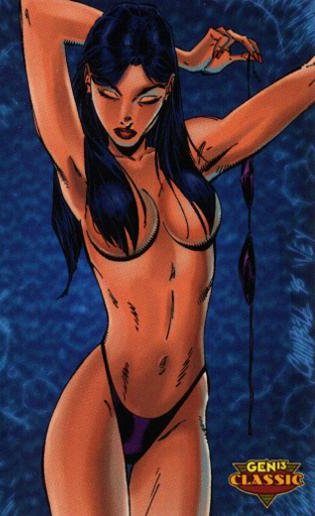
Greenleaf's daughter is more two-dimensional--a sexy Indian temptress who seduces Hal. Given that the Hopi were traditionally conservative and isolationist, this character is highly implausible. It would be like an Amish woman leaving her farming community, moving to New York City, and sleeping her way to the top. It could happen, but it's extremely unlikely.

In short, she's more of a stereotypical Indian princess than anything else. She's one of the book's weaker elements.

Typical Hopi woman from the early 20th century (photo by Edward S. Curtis):


My impression of the chief's daughter:


Greenleaf doesn't offer many details about the "Lizard People" or their underground lair. He does say they were people who could change shape. This is more plausible than talking lizard-men, and it's consistent with Native legends.

I won't say how Houdini Pie ends, but it's a bit unsatisfactory. I guess there was no good way to end the book without a major rewrite of Los Angeles history. And that would've turned the book into science fiction, not a rogue's tale.

Still, it's a good book, if not a great one. Rob's rating: 8.0 of 10. Check it out if you're curious.
October 19, 2013

ESPN's Seminole minstrel show

Here's a perfect example of how Indian mascots are racist, offensive, and insulting:


ESPN Has ‘No Comment' on Its College GameDay 'Minstrel Show'This weekend, during the preview for the college football game between Florida State University and Clemson on ESPN’s College GameDay, actor-comedian Bill Murray delighted a crowd of students by selecting Clemson to win the game. Moments later, ESPN analyst Lee Corso entered the set dressed as FSU mascot Chief Osceola, and danced around for several seconds, holding a staff covered in yellow, red and white feathers. Murray, pretending to be a pro wrestler, then “body-slammed” Corso and hurled the staff into the crowd.

ESPN declined on Sunday to comment about the incident.

The FSU tradition, which some members of the Seminole tribe have called a “minstrel show.” dates back to 1978: A man dressed up like a tribal 'chief' named Osceola (né William Powell), rides out onto the field at Doak Campbell Stadium in Tallahassee on a horse before home games and throws a flaming spear into the ground at midfield while the crowd goes wild.
And:"This is a perfect example of how Native Americans are ridiculed in the course of sports entertainment. Good-natured rivalries are one thing. Wearing the native equivalent of black face is quite another,” said an NCAI spokeswoman of this weekend’s FSU incident.A commenter on Deadspin summed it up nicely:That would be a lot more tolerable if somebody as notoriously out-of-touch as "Disco! Hey I like that" Lee Corso wasn't the guy making a "comedic" mockery of Native Americans. I'm all for Blazing Saddles, but having a 200 year old white male football commentator do a five-year-old's version of a native american ritual in the cartoonish guise of a revered leader of a tribe eradicated 150 years ago by old white men is pretty offensive.

ESPN: No Comment on Talent 'Wearing the Native Equivalent of Black Face'

This is not how you honor Native American heritage.

By Andrew Cohen
Each week, Lee Corso, a nationally known college football commentator, dons the garb of the team he is picking to win the feature game of the weekend. Sometimes, Corso wears a mascot head. Sometimes he dresses up. The college kids eat it up. It's great fun and great for the show's ratings. On Saturday, Corso, an alum of FSU, happened to pick his alma mater to beat Clemson (which FSU did, by a lot), which is why he was dressed up like Osceola. (Update: I don't mean to suggest this is the first time he has done this. Here is how he did it last year)

It's nothing personal against Native Americans, ESPN wants you to know. It's strictly business and entirely part of the show's routine. So a white man dresses up like an American Indian "chief," dances around the set like a clown, gets tackled by Bill Murray, the spear gets tossed into the crowd at Clemson, and everyone has a grand old time, including the on-air talent and ESPN's own online tribunes.

Evidently, no one at ESPN stopped to think: "Hey, maybe some folks might consider Corso's dance inappropriate" especially for a network that has covered the "Redskins" controversy and has a huge stake in the success and reputation of the National Football League (and college football, for that matter). And clearly no one afterward at the network seemed inclined to offer any sort of explanation or rationale for what had just aired.

But the fact is that many people did consider the episode highly offensive.
More commentaries on Corso's minstrel show:

ESPN Makes a Mockery of Native Americans on National Television

ESPN’s “Red-face” Minstrel Show by Matt Remle

Native American group unhappy with Lee Corson for portraying Seminole on College GameDay

For more on the Seminole mascot, see Seminole Fans in Plains Headdresses and Why FSU's Seminoles Aren't Okay.

October 07, 2013

Oneida symposium challenges "Redskins"

Redskins Name-Change Symposium: Where Were Snyder and Goodell?

By Rob CapricciosoAn emotion-laden symposium sponsored October 7 by the Oneida Indian Nation in Washington, D.C. highlighted the voices of many people aggrieved by the Washington NFL team’s racist Redskins name and mascot.

“No matter what the history of something is, if it is offending people, then it’s time to change it,” said Ray Halbritter, Oneida Indian Nation representative and CEO of Nation Enterprises, parent company of Indian Country Today Media Network, in his introductory remarks. “It’s a dictionary-defined offensive term.”

Held at the Ritz Carlton in Georgetown, the event featured many more American Indian leaders and citizens explaining that the term is a racial slur that does not honor anyone. There was also a psychologist detailing the harmful emotional social and psychological effects of such mascots on both Indian and non-Indian children (backed up by recent scientific studies); there was a Smithsonian director discussing the negative historical and contemporary roots of the word; there were high school youth who had taken on similarly offensive school names in their school districts and gotten them removed; and there were congressional legislators, Rep. Eleanor Holmes Norton (D-Washington, D.C.) and Betty McCollum (D-Minnesota), working their political pathways to drive change.

But there was no Daniel Snyder, owner of the Redskins since 1999 who made news in May when he said he would “never” change the team’s name, despite the growing criticism of it. And there was no Roger Goodell, commissioner of the National Football League, who spotlighted Snyder’s position when he said on a radio program in September, “[I]f we are offending one person, we need to be listening and making sure that we’re doing the right things to try to address that.”

Halbritter said at the event that he was disappointed that no NFL representatives chose to attend. He said they had been invited, and the symposium was held in D.C. to coincide with the NFL’s fall meeting in the city specifically to make it easier for NFL representatives to be there. He also noted that his tribe has been a sponsor of the Buffalo Bills, and it supports the football league financially as a business partner.

“We made it as convenient as possible for them to attend, but no one is attending,” said Halbritter, whose tribal nation is currently carrying out a large publicity campaign, called "Change the Mascot,” which is featuring radio ads in D.C. and other NFL cities that explain why the name offends so many Native Americans.
Oneida Nation takes battle against 'racial epithet' to Washington Redskins' turf

By Mark WeinerOn Monday, more than 150 reporters and others crowded into a conference room to hear the panel discussion. More than a dozen TV cameras lined a riser, and news trucks with satellites crowded the streets in front of the hotel.

One man in the audience wore a T-shirt with a message printed on the back, "I'm a Cherokee, not a Redskin." A backdrop behind the panelists displayed images of the Washington Redskins logo with the international "no" signed stamped across the front.

U.S. Rep. Betty McCollum, D-Minn., co-chair of the Congressional Native American Caucus, was among those at the symposium who said that the use of the Washington Redskins nickname should no longer be debatable.

"Native Americans are not mascots or caricatures to be exploited for profit," McCollum said. "There is no dignity or respect for exploitation."

McCollum and others who spoke at the symposium refuted polls cited by the Redskins that show the public and Native Americans are not offended by the nickname.

"The hired PR folks who are now defending Mr. Snyder's football team are citing outdated polls and data," she said.
Indian tribe pushes for Washington Redskins name change as NFL owners gather

By Theresa Vargas and Mark MaskeIts conference, held at the Ritz-Carlton in Georgetown, featured a panel of speakers that included the head of the Smithsonian’s National Museum of the American Indian , a psychologist who spoke about the public health consequences of the word, student activists and politicians—Rep. Betty McCollum (D-Minn.) and Del. Eleanor Holmes Norton (D-D.C.).

“I can think of no argument for retaining a name that directly insults Americans and especially our first Americans,” said Holmes Norton, speaking as a third-generation Washingtonian.

She said NFL Commissioner Roger Goodell showed leadership last month when he stepped back from his earlier defense of the team’s name and said, “If one person’s offended, we have to listen.”

Nevertheless, no formal discussion of the Washington Redskins’ name is expected among NFL owners who are gathering at another Ritz-Carlton in Washington for a one-day meeting Tuesday, according to two people familiar with the situation, who spoke on the condition of anonymity because of the sensitivity of the topic.

They said they sense little or no sentiment within the league to urge Redskins owner Daniel Snyder to make a change.

NFL officials were invited to the Native American symposium, but none attended the event, Halbritter said. But he said he was encouraged that Goodell had instructed Adolpho Birch, the NFL’s senior vice president for labor policy and government affairs, to schedule a meeting. The sit-down is scheduled for Nov. 22 at the league’s offices, but two sources said it could be held sooner.
Meeting face to face

The November-or-sooner meeting between NFL officials and the Oneida is the real news coming out of the symposium. Is it a real sign of the NFL's shifting position, or a gimmick to placate protesters by pretending to take them seriously?

Bell: Snyder can't keep dodging Native American meeting

By Jarrett BellDetails of the meeting are pending. It could occur at the league's headquarters in Manhattan or in central New York, where the Oneida Indian Nation is based. The list of participants, at least from the NFL side, is still in the works. Even Goodell's presence hasn't been promised.

But when Adolpho Birch, the NFL's vice president of labor policy and government affairs, wrote to Oneida Nation Homelands chief operating officer Peter Carmen on Friday, he wanted to meet sooner than a previously scheduled Nov. 22 date at NFL headquarters.

That seems like a recognition by the NFL that the issue is more than an annoyance as pressure and momentum mount. Over the weekend, President Obama advocated more dialogue, which added fuel to the "Change the Mascot" campaign.

Now, if somebody can just make sure Snyder is part of the dialogue.
Owners won’t take up issue of Redskins name at D.C. meetings

By Mike FlorioIt’s highly unlikely that the topic will be raised in any formal league meetings. Instead, if the NFL decides that Redskins owner Daniel Snyder needs a nudge, he’ll get it in the form of a visit from Commissioner Roger Goodell and a handful of owners regarded as influential upon Snyder.

“If” remains the key word. There are no plans for such an effort, and some owners will be reluctant to do anything that would set a potential precedent regarding the twisting of arms to get teams to do what the league wants them to do.

Meanwhile, Peter King of TheMMQB.com reported during Football Night in America that Snyder remains steadfast in his position that the name will never change.

He may never change the team’s name, but he won’t own the team indefinitely. At some point, the team will be owned by someone who hasn’t painted himself (or herself) into a corner on the issue.

And it could be that the next owner will be approved only with a wink-nod understanding that the first order of business will be to change the name.
Comment:  A Facebook buddy thinks the NFL's upcoming meeting with the Oneida is a PR stunt. Maybe, but I don't see it. There'll be a ton of media coverage...activists in person and online demanding justice...and the potential for more league insensitivity and arrogance. Why risk that in a vain attempt to placate the Indians, when it almost certainly won't work and may well backfire?

As I said to my pal, the NFL's best bet would be to say nothing and hope the controversy fades. There's no way this debate ends if Snyder, Goodell, the NFL, and their apologists keep trying to spin it away.

September 22, 2013

Relocation, lacrosse, and buffalo

Three recent Native documentaries of note:

Moses Brings Plenty: Representing for 'Urban Rez'Urban Rez is a documentary about the relocation program that President Eisenhower put into place in the early 1950s. Urban Rez helped me to understand and educate me about the relocation process.The Medicine Game Premieres September 24 on Public TelevisionTucked away in central New York State is the Onondaga Nation, a sovereign Native American community known to produce some of the top lacrosse players in the world. ... Enter the Thompson brothers–Jerome "Hiana" and Jeremy–who are driven by a single goal of beating the odds against them and playing lacrosse for national powerhouse Syracuse University.Scot who saved American buffalo subject of film“He realised that if you eliminated the buffalo, you eliminated the Native Americans, and that was the mindset of the American government. Scotty could not understand this because he had tremendous respect for the Native Americans.”Below:  Moses Brings Plenty.

September 12, 2013

Native movies of note--September 2013

Editorial: Film provides true look into reservation communityPride and Basketball is a documentary that highlights the role that basketball plays for the community of Lame Deer, Mont. located on the Northern Cheyenne Reservation, as told from the perspective of current players, past greats, and community members. Pine Ridge: Venice ReviewThe Bottom Line
A familiar style of magic-hour ethnography yields some entrancing and unflinching visions of American margins.
‘Bury My Heart With Tonawanda’ selected for two film festivalsIt is the story of a young man with Down syndrome who escapes while being transported to a home for the insane in the late 1800s and finds his way into Western New York’s Native American community.

September 01, 2013

Silverheels started with lacrosse

A Sidekick’s Little-Known Leading Role in Lacrosse

By Jeff Z. KleinAt Iroquois Lacrosse Arena in Hagersville, Ontario, the home of the Six Nations Chiefs, box lacrosse champions of eastern Canada, a photograph from 1931 hangs on the wall. Gazing ahead resolutely and gripping a lacrosse stick is a handsome dark-haired Mohawk man with a bandage over his right brow.

That man was Harry J. Smith, but many years later, he became known to the world as Jay Silverheels, the actor who played Tonto in the “The Lone Ranger,” a television series that ran from 1949 to 1957. This summer, there is renewed interest in Silverheels, after Johnny Depp’s portrayal of Tonto in the big-budget film “Lone Ranger.”

How Smith, a lacrosse star of the Six Nations of the Grand River, became Silverheels, an actor who despised his own portrayal of an Indian, is a story that spans a continent and an era. But few realize that what put him on the path to Hollywood was the invention of indoor lacrosse—box lacrosse, as it is called in Canada and western New York.

“He would never have been discovered, never have become Tonto, if he hadn’t been in L.A. to play box lacrosse,” said the historian Larry Power, compiler of the Internet archive Bible of Lacrosse.
Comment:  For more on Tonto, see New Tonto as Racist as Old Tonto and Best of the Lone Ranger Reviewed.

August 31, 2013

Team USA wins 6th NB3 Challenge

Team USA Claims Notah Begay III Foundation Challenge TitleTeam USA outshot a star lineup of international PGA Tour golfers to win the 2013 Notah Begay III Foundation, NB3 Challenge, hosted by the Oneida Indian Nation at Turning Stone Resort's Atunyote Golf Club in central New York on Wednesday.

Rickie Fowler and Begay's resolute focus, paired with the artful strategy of Gary Woodland and Bo Van Pelt, gave Team USA the competitive edge needed to secure victory in the combined, best-ball event. The sixth annual NB3 Challenge not only attracted thousands of enthusiastic golf fans, but raised funds and awareness to benefit the mission of the Notah Begay III Foundation, NB3F, which addresses the pressing health and wellness issues facing American Indian children.

“Year after year, this event serves as a unique platform to raise awareness for the disparities in resources and support facing Native American communities,” said the fundraiser's host, four-time PGA Tour winner and NBC/Golf Channel Analyst Notah Begay III.

"The combination of humbling support, financial contributions and strategic partnerships with world class golfers, Oneida Indian Nation and loyal fans is so powerful, and truly invaluable, in driving our mission to reverse the obesity and type 2 diabetes epidemic among Native children. I'm incredibly grateful to everyone who helps us with this mission."
Notah Begay III Foundation to Launch New $1.5 Million Diabetes InitiativeThe Notah Begay III Foundation, NB3F, has announced it will launch a new initiative to expand its fight against childhood obesity and type 2 diabetes for American Indian children.

This announcement, which includes plans to lead extensive research and advocacy initiatives while assisting more American Indian communities in developing their own evidence-based health and wellness programs, was made possible through a generous $1.5 million grant to NB3F by the Robert Wood Johnson Foundation, one of the nation's largest health foundations.

“This is a transformative time for the Notah Begay III Foundation. It's the next step in realizing our vision to empower Native American children nationwide to achieve their potential as tomorrow's leaders,” said four time PGA Tour winner, NBC/Golf Channel analyst and NB3F founder, Notah Begay III–Navajo/San Felipe Pueblo.

"Childhood obesity and type 2 diabetes are epidemics in Native American communities. Until we invest the appropriate resources to turn the tide against these preventable diseases, they will continue to overwhelm our communities. There is still much more work to be done but, with the help of the great people at the Robert Wood Johnson Foundation and the ongoing support of all our partners and donors, we've taken a very important step toward accomplishing our mission."
Comment:  For more on Begay, see Begay Joins NBC Golf Team and Notah Finally Wins NB3 Challenge.

Below:  "Notah Begay III Foundation, NB3F, Board of Directors celebrates another successful NB3 Challenge yesterday."

August 26, 2013

Indian village at Super Bowl XLIX

Football and Hogans: Super Bowl XLIX Will Feature Large Indian Village

By Lee AllenSeeking to take advantage of a captive audience, all 22 tribes in the state of Arizona are expected to be represented at an American Indian Village as part of the 2015 Super Bowl XLIX in Phoenix. Even though it’s two years out, planning by the Arizona American Indian Tourist Association is already underway.

“This is a fantastic opportunity to get the Indian country message out to the thousands who will attend the football championship,” says Donovan Hanley (Navajo), current Tourist Association president. The Village, one of the association’s largest collaborative efforts, showcases the sights, sounds and flavors of Native dance, music, arts and crafts, and food—a slice of tribal life.

“We set up an Indian Village during the 1996 and 2008 NFL Super Bowls in Phoenix and drew 20,000 attendees,” said past AAITA President Rory Majenty (Yavapai). Another 8,000 visitors enjoyed the experience during the 2012 Centennial.

Although plans are not yet in place for 2015, much of the color and pageantry of last year’s Centennial should re-appear at the Super Bowl—displays like a replica of a Navajo hogan, a traditional Hopi house, and a Salt River Pima-Maricopa round house; demonstrations of traditional piki bread-making; performances by gourd singers accompanied by aboriginal instruments; dancers performing the Pal’hik Mana (Water Maiden) and the Eagle Dance; artists who will show how pottery is made from the collection of the clay to the finished product—everything is on the table in current discussions.
Comment:  For more on Indians marketing themselves via football, see Ak-Chin to Sponsor Arizona Rattlers and Oneida Nation Sponsors Packers Gate.