Showing posts with label health. Show all posts

January 24, 2014

Healthy Aboriginal Network's comic books

I haven't mentioned the Healthy Aboriginal Network in a while. They've been busy producing Native comic books.

Healthy Aboriginal NetworkWe create comic books on health and social issues for youth. The books we have in stock are listed below.

Financial literacy--The Game Plan. We all think we know what happens to our money--how much we make and where we spend it. And if we’re asked whether impulse buys and payday loans are a good idea, we all likely know that the answer is ‘no’. But making the right decision at the right time can be hard to do. Check out how money all finally makes sense to Jake once he relates it to his lacrosse aspirations.

Dog bites--The Gift. Dog bites are a real problem in some rural communities. Knowing what to do, but maybe more importantly what not to do, could help avoid a painful bite. It’s up to all of us to respect our relationship with dogs.

Residential school--Lost Innocence is a fictional story (but based on documented real life experiences of survivors) of a brother and sister's residential school experience in the 1930s. It's our longest book at 64 pages and has a truth and reconciliation theme.

Maternal child health--It Takes a Village. Our maternal child health book is about Lara, a young mom-to-be that is visited by Danis, a stranger. Danis teaches Lara the importance of eating healthy foods, avoiding alcohol, breastfeeding, keeping dad involved and bonding with your baby.

Sexual health--Kiss Me Deadly. A range of issues are covered in our sexual health comic book--from respect and communication in relationships, to pregnancy and sexually transmitted infections, two-spirit people and sexual health as a career or youth led project.

Integrating gang youth back into communities--Incarcerated youth were asked about their experiences with their gangs. Droppin' the Flag is the product of those discussions. When asked what we could change during the focus group testing process, gang youth said 'don't change a thing. That's the way it is.'

Youth in care--Lighting up the Darkness. Jenny returns to her community after living in the city with her aunt and uncle. While visiting family, she has a series of painful flashbacks to when she was a little girl. Jenny’s story is one girl’s struggle. But many youth will be able to relate to events in her young life.

Living with FASD--Drawing Hope is a collection of five stories, based on stories told by members of the Whitecrow Village community. The stories are about struggling in school, the importance of friendships and receiving support from friends and family.

Smoking prevention--River Run is the story of a group of youth that learn the traditional use of tobacco while on a canoe trip. One of the youth, who smokes, gets her world opened up along the way.

Sports/gang awareness--In Path of the Warrior, Cullen gets rolled out of his gang and is forced to reconnect with his family and community. Team sports and culture become his new support system.

Mental health--In Just a Story, Wendy doesn’t have any friends her age and feels overwhelmed at school. Her little brother is more social but he’s quick to lose his temper and get into fights. Something is clearly bothering them both. Good thing they’re open to getting help and breaking down the stigma of mental health.

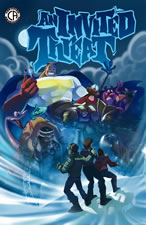
Diabetes awareness--An Invited Threat is about a family’s realization that the food they eat and make available to their community is not good for them. It’s about making healthy decisions now, rather than waiting until it’s too late.

Dropping out/staying in school--In Level Up, Terry is contemplating dropping out of school. But before he does, he’s asked to spend some time with his cousin Dave, a successful game developer. Rather than lecture Terry, Dave makes the importance of school relatable - he compares education to moving up a level in a video game.

Gambling awareness--In On the Turn is about a young woman that learns how to play poker at school. Peer pressure gets the best of her and she learns what it feels like to hurt someone she loves.

Youth health issues--Standing Together was HAN’s first comic book. It was created by youth, on the issues that they felt were important to their community. As it turns out, health authorities felt the same.
September 03, 2013

"Declare War on Diabetes" motorcycle run

Dennis Banks to Lead 18,000 Mile "Declare War on Diabetes" Motorcycle Run in 2014

By Levi RickertDennis Banks, 77, a cofounder of the American Indian Movement, has announced a 18,000 mile motorcycle run across America with hundreds of American Indians participating to "declare war on diabetes."

Dennis Banks, cofounder of the American Indian Movement, has issued a Declaration of War on Diabetes.
And:The motorcycle run will have four staring locations in Seattle, San Francisco, Los Angeles and San Diego on August 11 with the final destination of the nation's capital, Washington, DC on September 10, 2014.

Throughout the various routes across America, motorcyclists will stop at various American Indian reservations and communities as they journey to Washington.

Once in Washington, the group will visit members of Congress and present them with a national diabetes policy, according to Banks.

This will be the second endeavor by Banks to draw attention to the ill-effects of diabetes in Indian country. In 2011, he led the "Longest Walk 3–Reversing Diabetes" that took the long walkers to 72 American Indian reservations and communities before they arrived in Washington.
Comment:  For more on the subject, see Longest Walk 3--Reversing Diabetes.

August 31, 2013

Team USA wins 6th NB3 Challenge

Team USA Claims Notah Begay III Foundation Challenge TitleTeam USA outshot a star lineup of international PGA Tour golfers to win the 2013 Notah Begay III Foundation, NB3 Challenge, hosted by the Oneida Indian Nation at Turning Stone Resort's Atunyote Golf Club in central New York on Wednesday.

Rickie Fowler and Begay's resolute focus, paired with the artful strategy of Gary Woodland and Bo Van Pelt, gave Team USA the competitive edge needed to secure victory in the combined, best-ball event. The sixth annual NB3 Challenge not only attracted thousands of enthusiastic golf fans, but raised funds and awareness to benefit the mission of the Notah Begay III Foundation, NB3F, which addresses the pressing health and wellness issues facing American Indian children.

“Year after year, this event serves as a unique platform to raise awareness for the disparities in resources and support facing Native American communities,” said the fundraiser's host, four-time PGA Tour winner and NBC/Golf Channel Analyst Notah Begay III.

"The combination of humbling support, financial contributions and strategic partnerships with world class golfers, Oneida Indian Nation and loyal fans is so powerful, and truly invaluable, in driving our mission to reverse the obesity and type 2 diabetes epidemic among Native children. I'm incredibly grateful to everyone who helps us with this mission."
Notah Begay III Foundation to Launch New $1.5 Million Diabetes InitiativeThe Notah Begay III Foundation, NB3F, has announced it will launch a new initiative to expand its fight against childhood obesity and type 2 diabetes for American Indian children.

This announcement, which includes plans to lead extensive research and advocacy initiatives while assisting more American Indian communities in developing their own evidence-based health and wellness programs, was made possible through a generous $1.5 million grant to NB3F by the Robert Wood Johnson Foundation, one of the nation's largest health foundations.

“This is a transformative time for the Notah Begay III Foundation. It's the next step in realizing our vision to empower Native American children nationwide to achieve their potential as tomorrow's leaders,” said four time PGA Tour winner, NBC/Golf Channel analyst and NB3F founder, Notah Begay III–Navajo/San Felipe Pueblo.

"Childhood obesity and type 2 diabetes are epidemics in Native American communities. Until we invest the appropriate resources to turn the tide against these preventable diseases, they will continue to overwhelm our communities. There is still much more work to be done but, with the help of the great people at the Robert Wood Johnson Foundation and the ongoing support of all our partners and donors, we've taken a very important step toward accomplishing our mission."
Comment:  For more on Begay, see Begay Joins NBC Golf Team and Notah Finally Wins NB3 Challenge.

Below:  "Notah Begay III Foundation, NB3F, Board of Directors celebrates another successful NB3 Challenge yesterday."

June 23, 2013

Superficial treatment in Silver Linings Playbook

I watched Silver Linings Playbook recently. I didn't know "bipolar" meant delusions, paranoia, and violent rage. I would've thought these symptoms suggested some other mental disorder.

The movie seems to want to have it both ways. He's "bipolar," which means the state can release him to his daffy parents because he merely has "mood swings." But he's dangerously psychotic because he nearly beat someone to death and still flies into a rage at the slightest provocation.

If the movie diagnosed him correctly, I don't think he'd get released after a mere eight months by fake-taking his meds. He seems to have a long-term problem he may have inherited from his father.

But if he wasn't released, we wouldn't have a cute romance movie where both parties say and do inappropriate things. So he's "bipolar," not psychotic.

Others agree it's a mess:

Is Silver Linings Playbook Really About Mental Illness?

Silver Linings Playbook: Treating bipolar disorder a la Hollywood is not funny

'Silver Linings Playbook' OK on Mental Illness?

What I learned from Silver Linings Playbook: Dance competitions cure mental illness; football victories cure gambling addiction and OCD.

How Silver Linings Playbook is like Hollywood's Native movies. 1) All illnesses and Indians are the same. 2) Good feelings cure the problems. 3) Just acknowledging them is enough to excuse the mistakes and stereotypes.

I'd say Argo was better than Lincoln, and both were better than Silver Linings Playbook. Rob's rating: 7.5.

For more on mental illness, see Negative Reviews of Jimmy P. and Mental Health Services Needed.

May 27, 2013

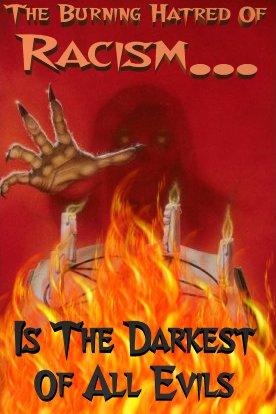
Racism causes PTSD in DSM-5

Changes In DSM-5: Racism Can Cause PTSD Similar To That Of Soldiers After War

Updates to the recently released DSM-5 could potentially transform how race-based traumas are diagnosed in ethnic minorities.

By Nadia-Elysse Harris
Dr. Monnica T. Williams suggests that proposed changes in the criteria for post-traumatic stress disorder (PTSD) in the fifth edition of the Diagnostic Manual of Mental Disorders (DSM-5) could increase the potential for better recognition of race-based trauma in racial and ethnic minorities.

In a recent article in Psychology Today, Williams, who is a clinical psychologist and the associate director of the University of Louisville's Center for Mental Health Disparities, said that before the release of the DSM-5 Thursday, racism was recognized as a trauma that could potentially cause PTSD, but only in relation to a specific event. There had to be an incident of intense fear, helplessness, or horror for such consideration. For instance, if someone was assaulted in a racially-motivated event, then racism qualified as a sufficient trauma to be categorized as a cause of PTSD.

But now, under the new definition, the requirements for fear, helplessness, and horror have been removed, making room for the more lasting effects of subtle racism to be considered in the discussion of race-based traumas.

In 2011, researchers found that African Americans who reported experiences of racial discrimination had higher odds of suffering from generalized anxiety disorder (GAD). An article on PsychCentral termed the phenomenon as "racial battle fatigue, saying that "exposure to racial discrimination is analogous to the constant pressure soldiers face on the battlefield."

"While the term [racial battle fatigue] is certainly not trying to say that the conditions are exactly what soldiers face on a battlefield, it borrows from the idea that stress is created in chronically unsafe or hostile environments," said Dr. Jose Soto, Ph.D., associate professor of psychology at University of California, Berkeley.
Comment:  I've written about this subject several times. For instance, in:

Racism linked to addictive behavior
Indians suffer toxic stress
"Thick dark fog" = PTSD
Subtle racism = psychological torture

I'd call it common sense that being persecuted and discriminated against is psychologically harmful. So I'm glad to see the psychological community is finally recognizing this.

Of course, this point also applies to the less virulent forms of racism such as stereotyping. That's what we're talking when we talk about things like "subtle racism," "unconscious racism," and "microaggression."

Being portrayed as a whooping savage in a headdress every day takes a psychological toll. Contrary to the unfounded saying, words and images will hurt you.

For more on the subject, see "Why Can't Indians Just Move On?" and Unabomber Shows Effects of Stress.

March 29, 2013

Anti-smoking ads include Natives

Anti-smoking ads include American Indians, Alaska NativesThe Be Tobacco Free campaign has released a new set of videos that are aimed at reducing smoking among American Indians and Alaska Natives.

One ad features Nathan, a 54-year-old member of the Oglala Sioux Tribe. He said secondhand smoking caused him asthma attacks, infections and lung damage.

"When you smoke, it affects more than just your health," Nathan says.
Another ad features Michael, a 57-year-old Tlingit veteran from Alaska. His smoking habit left him with Chronic obstructive pulmonary disease, a lung disease.

“If your doctor gives you five years to live, spend it talking with your grandchildren," Michael says. "Explain to them that your grandpa is not going to be around anymore to share his wisdom and his love. I haven’t figured out how to do that yet, and I’m running out of time.”

According to the Centers for Disease Control and Prevention, American Indians and Alaska Natives report the highest rates of smoking. This included youth and women who are pregnant.
Comment:  For more on Native health initiatives, see Gaming Improves Indians' Health and "Let's Move! in Indian Country."

March 07, 2013

Star Nayea's wellness tour

Grammy winner brings Wellness Tour to Oklahoma

By Karen ShadeAs winter pushes out to make way for warmer temperatures, spring cleaning rituals abound like wild onion dinners. The timing is perfect for a tour coming to Oklahoma aimed at helping children and youth live better inside and out.

The 7th Annual Spring Into Wellness Tour will be in Oklahoma March 18-30. Founder and presenter Star Nayea said the goal is to reach as many Native communities as possible with a message of healthful, positive living.
And:Spring Into Wellness began in Santa Fe, N.M., when she lived there and taught music. Now a Seattle resident, Nayea is a speaker and mentor. She may be best known as a recording artist with several solo albums to her name. She also was part of the album Sacred Ground: A Tribute to Mother Earth, which won the Grammy Award for Best Native American Music Album in 2006. Sacred Ground, a compilation album, also includes singers Robert Mirabal and Joanne Shenandoah. In 2008, Nayea was named the Native American Music Award’s Songwriter of the Year. She is of Canada’s First Nations people known as the Anishinabe tribe (commonly referred to as Ojibwe or Chippewa).

Ten years ago, Nayea began speaking with children in the schools in New Mexico and Arizona about living free of alcohol and drugs and that having good health is essential to a good life. A few years later, she officially dubbed her efforts Spring Into Wellness. The message is one share by Chance Lee Rush, who will be also tour this month.
Comment:  For more on Native music and health, see Concert for a Cure and Healing Natives Through Hip Hop.

February 08, 2013

Posters and comic books for health

Using art to save lives

By Chris ComleyYellow dots circle about the woman, framing her against a murky background. Her arms rest idly by her sides as she gazes askance. The portrait “Grandmother,” by artist Hulleah Tsinhnahjinnie (a member of the Seminole, Muscogee, and Diné tribes), is one of many pieces created by well-known Native American artists featured on public health posters throughout the nation.

The posters are part of a campaign by Native People for Cancer Control, based at the University of Washington, to raise cancer awareness and promote cancer-preventive measures to decrease health disparities in the Native community. By leveraging the appeal of art, a traditional tool for learning, the group hopes that the Native Art for Cancer Project will close what has been a persistent gap in public health.

“It’s a great way to start the conversation on cancer topics,” said Carrie Nass, program director for Partnerships for Native Health (PNH).
And:PNH also utilizes art as an interactive tool to raise awareness of public health issues through the Native Comic Book Project. The project teaches youth through comic books.

“To solve health disparities, you have to start with the kids,” said Corinna Tordillos (Northern Cheyenne and Tlingit), a senior majoring in biochemistry and American Indian studies who has been involved with PNH as a student assistant and as a researcher since her freshman year.

By actively engaging the students in the learning process, the project aligns itself with a traditional Native way of learning, thus increasing its effectiveness, said Robyn Pebeahsy (Yakama and Comanche), research assistant for the Native Comic Book Project.
Comment:  The Native Comic Book Project sounds like what the Healthy Aboriginal Network is doing in Canada. I wonder if the Washington people were inspired by the Healthy Aboriginal Network, or if they're working with them.

For more on comic books and health, see It's Up 2 You Available and CDC Books at NYC Con.

January 16, 2013

Pine Ridge = "food desert"

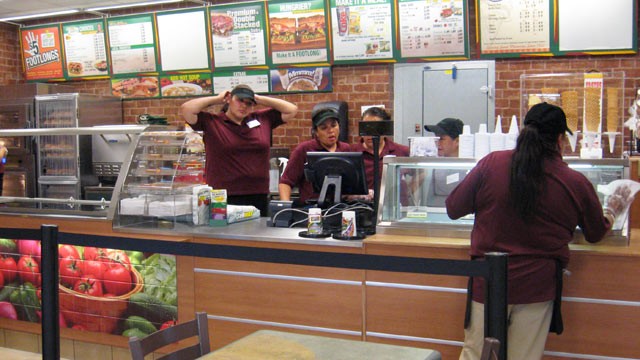
Stuck in 'Food Desert,' Pine Ridge Locals Look to Subway to Meet Nutrition Needs

By Astrid RodriguesAn area the size of Delaware and Rhode Island combined, the reservation is considered a "food desert," defined by the U.S. Department of Agriculture as a low-income community without ready access to healthy and affordable food. Ecoffey, who is also the Bureau of Indian Affairs superintendent for the Pine Ridge Agency, tells ABC News that healthy foods like fresh fruits and vegetables are unavailable because of what he says are limited resources.

"The opportunity just doesn't exist for many people across the reservation," he said.

Ecoffey said Subway offers that opportunity.

Tashina Banks, a member of the Cheyenne River Sioux tribe, is the hiring manager at the Pine Ridge Subway. She shared with ABC News the story of an elder woman from the community who was moved to tears during the store's grand opening week.

"She came in here and literally was crying because of what having this kind of a store or food restaurant in the community meant," Banks said. "Not only because you see people investing in our own community, but also because, she said, 'I haven't eaten a cucumber in years because they're so expensive.'"

There's only one large supermarket and typically the price of staple items across the reservation are more expensive because of its remote location.
Comment:  This article appeared before ABC's Children of the Plains special and my trip to South Dakota, but I just came across it.

For more on the subject, see Economic Development on Pine Ridge and Poverty Porn in Children of the Plains.

December 09, 2012

Review of Coyote Medicine

A book I recently read:

Coyote Medicine: Lessons from Native American HealingInspired by his Cherokee grandmother's healing ceremonies, Lewis Mehl-Madrona enlightens readers to "alternative" paths to recovery and health. Coyote Medicine isn't about eschewing Western medicine when it's effective, but about finding other answers when medicine fails: for chronic sufferers, patients not responding to medication, or "terminal" cases that doctors have given up on. In the story of one doctor's remarkable initiation into alternative ways to spiritual and physical health, Coyote Medicine provides the key to untapped healing methods available today.And a Facebook discussion of it:

After reading a New Age-y book about "Coyote Medicine," I need a book about Klingons bashing each other to cleanse the palate.Don't read that new age junk. You'll get fat.Someone said I "had" to read it. It was good but not great.

So far, the Klingon book is better.Uh, coyote is the example you are NOT supposed to follow. Someone caling a book Coyote Medicine might as well have named it Quack Healing.

Al is so right. I teach classes in cultural history. Interesting to see the reaction to the fact that there are several Native American cultures and religions. Schools have a lot to answer for.

I teach English comp, and I just had a student write a paper on the ways in which Native Americans are stereotyped. The first ones he mentioned are the notions that Natives are all gone and that they all had the same (Plains type) culture. That made me very happy.
It's a decent critique of modern medicine, but the descriptions of the ceremonies go on too long. Mehl-Madrona sometimes spends what seems like 20 pages on one ceremony or patient.

He justifies the use of the "Coyote" title. "Coyote Medicine" is about tricking a disease and surviving it using unconventional means.

On the other hand, he mostly does Lakota-style sweat lodges and vision quests. Which is odd since he's part-Cherokee and his teachers came from various tribes.

If you're going by what he practices, "Coyote" doesn't work for a predominantly Lakota approach. And he sometimes uses crystals for "energy," which pushes him (further) into the New Age category.

I'd fault him for mashing different tribal traditions into one undifferentiated bundle. But if they work in some cases, that's all the patients will care about.

Most of the ceremonies seem to be about helping a patient make a mind-body connection. It would be interesting to focus the same psychological attention on patients using non-Native, non-ceremonial means. It might prove that the ceremonies are unnecessary to achieve the "holistic" results.I understand, but there are very few Coyotes in Cherokee country. Plus, the Southern tribes' trixter is Rabbit.Right, and I believe it's Iktomi in Lakota lore. He mentions Iktomi a couple times, but only as an evil spirit.I recommended the book to Rob. It was my first introduction to Native anything, and the idea that there were other ways to deal with illness, which I suspected to be true, was life changing for me. Medrona does have mixed Lakota/Cherokee ancestry. He has been accused of telling too much in the book, in terms of ceremonies. But I have a Lakota friend who is a veteran. He said Madrona came by and visited the vets and was a very caring person.

In terms of learning that spirits/ceremonies can be helpful in healing, it would help a lot of people to understand there really are other ways that can work, including the mind/body that Rob mentions. I referred the book to Rob based on his agnosticism. I thought it would be interesting for him to read of cases where spirituality is a proven healer.
I'm not convinced spirits or spirituality did the healing. Mehl-Madrona combines a bunch of treatments, including diet, relaxation, massage, visualization, and botanical remedies. He convinced patients they needed the elaborate ceremonies, but he might've achieved the same results without them. All I'd say is that he persuaded the patients' minds to contribute to their bodies' defenses.

It's basically the placebo affect, but dressed up in ceremonies. Placebos have proved to work in many cases. Were the ceremonies and "spirits" necessary to cure people, or did activating their defenses by whatever means do the trick? That's the question here.We have a thread on Mehl-Madrona at NAFPS. The guy is basically assimilated with no knowledge of his heritage so he relies on New Age. This supposed academic endorses several really obvious impostors like Maria Naylin/Yraceburu, so it's apparent he knows very little.Note: NAFPS is New Age Frauds & Plastic Shamans. And yes, Mehl-Madrona is uncritical of everyone and everything that's allegedly Native.

It would be interesting to hear his thoughts on New Agers in general. And to hear what a Lakota medicine man who scorns New Agers thinks of this book.

For more on New Age beliefs and practices, see Serpent Mound Vandalized with Crystals and Tonto as a "Spirit Warrior."

November 21, 2012

The Sugar Project: Modern Day Navajo Monster

‘Navajo Monster’: Artist Shares Diabetes-Focused Multimedia Installation Made From Granulated Sugar

By Eisa UlenChantelle Trista Yazzie sends a powerful message and call to action in her multimedia installation “The Sugar Project: Modern Day Navajo Monster.”

The 19-year-old Navajo artist depicted compelling images of human torsos topped with skeletal heads, which offer ominous warnings about an entire nation’s future. Made with granulated sugar and marked with Xs in place of eyes and mouths and even heart, these chests and skulls suggest that excessive sucrose is a frightening agent of death. The images of blinded and muted Navajos sound an alarm from the grave: overconsumption of sugar is killing the people.

Photographs of everyday Navajo people are covered by heaps of sugar that overwhelm them, symbolizing the burden of sugar addiction, the weight of obesity and the gravity of the diabetes epidemic in Indian country. Words scroll across the video, including the line, “One after another, this monster ate away their faces.”

View a video of her multimedia installation here or on YouTube.
Comment:  For more on Indians and diabetes, see Studi Films Diabetes Prevention Commercial and Notah Finally Wins NB3 Challenge.

October 15, 2012

Sunlight causes cancer in Navajos

Film chronicles impact of genetic disease in Navajo children

By Staci MatlockIt took only a little sunlight to launch a deadly disease in several children on the Navajo Nation.

Afflicted with a rare and fatal genetic condition called XP, or Xeroderma Pigmentosum, the children’s bodies couldn’t repair skin damage caused by the sun’s ultraviolet rays. Instead, sunlight made their bodies rebel. Their skin freckled, then came skin cancer and a slow neurological decline.

XP occurs in about one of every 250,000 children worldwide and as few as one in a million in the United States, according to several studies. But among a scattered group of communities in the Navajo Nation around Coyote Canyon, N.M., the incidence could be as high as one in 30,000, according to a new documentary, Sun Kissed, by filmmakers Maya Stark and Adi Lavy, which is showing Wednesday, Oct. 17, during the Santa Fe Independent Film Festival.

The next-highest XP incidence known to researchers is one in 40,000, seen among Japanese children.

Stark and Lavy, the film’s co-producers and directors, spent four years following the devastating impacts of XP on Dorey and Yolanda Nez, who had two children affected by the disease. Their film documents the couple’s struggle to understand why their son and daughter both were afflicted. Their heartrending journey means the couple must navigate some of their own tribe’s taboos and beliefs about disease, history and marriage. They talked to medicine men, elders, family and scientists. Along the way, they discovered many more children in the area where they lived also had XP.

Eventually, the Nezes’ search led the couple and the filmmakers to Fort Sumner, N.M., and a historian who told them about the Long Walk, a seminal event in Navajo culture, which elders are reluctant to talk about. The Long Walk was the forced march of 8,000 to 10,000 Navajos in 1864 by the U.S. military to Fort Sumner. Half died during the forced march or from disease and cold after arriving at the encampment. The Long Walk could have created a “genetic bottleneck” for XP, one geneticist tells the couple.
Comment:  For more on Native health, see Native Culture Prevents Drug Abuse and Gaming Improves Indians' Health.

October 11, 2012

Means has cancer again

American Indian Movement Veteran Russell Means Fights Cancer Again

By Levi RickertThe past two years have been a struggle for Russell Means, Lakota, as he has vigorously fought cancer.

On Monday the family of Russell Means released an email revealing that the American Indian Movement veteran is again fighting cancer. While sent by his family, the content of the email was written by Means, in the first-person. Here is the text of the email:

Hau Mi Takuyeyapi, hello my relatives.

I know many are concerned about my health and I want to thank you for your strong prayers and for all the ceremonies taking place on my behalf.

On August 20, I learned I have new cancer spots. I am in Scottsdale, AZ where I have fantastic medical teams utilizing both alternative and western applications. We are working toward a good solid program that will enable me to come home to my ranch on the Pine Ridge Sioux Indian Reservation within the next few weeks.

I am sorry I am not available for comments as I need all of my energy to fight for my life once again. I love you and look forward to regaining my life.

May the Great Mystery continue to guide and protect the paths of you and your loved ones.


As indicated in the message, Means does not disclose the location of the cancer in his body. In July 2011, he was diagnosed with esophagus cancer and elected not have surgery which would have required removal of a major portion of his tongue. He depended on alternative medicine, including American Indian ceremonial remedies.
Native Sun News: Activist Russell Means battling cancer again

Comment:  For more on Russell Means, see Means Releases New Book Online and Oglala Sioux Tribe Honors Means.

Below:  "Longtime activist and actor Russell Means, Oglala Lakota, speaks at the Dakota Conference on the campus of Augustana College in Sioux Falls April 27." (Stew Magnuson)

September 02, 2012

Native culture prevents drug abuse

Following American Indian Culture Is Top Predictor of Anti-Drug BehaviorA new research paper gives credence to the many rehabilitation and mental health centers throughout Indian country that incorporate traditional culture as a means of reducing teenage drug and alcohol abuse or dependency.

Following traditional culture is the strongest predictor of anti-drug behavior among American Indian teens, according to social scientists at the Arizona State University School of Social and Family Dynamics who presented at the 107th Annual Meeting of the American Sociological Association (ASA), August 17-20 in Denver, Colorado, reported the ASA.

Engaging spirituality and religion is associated with lower levels of substance use, scientists observed in their study, “Spirituality and Religion: Intertwined Protective Factors for Substance Use Among Urban American Indian Youth,” which was recently published in The American Journal of Drug and Alcohol Abuse. For the study, scientists analyzed data from American Indian students enrolled in five urban middle schools all located within a large southwestern city in 2009. The average age of the 123 respondents was 12.6 years old.

“Most American Indians now live in cities rather than tribal communities. Our study is one of the few to address the role of spirituality and religion among urban Native youth, recognizing the unique histories of cultural integration that characterize today’s urban American Indian communities and the complex belief systems and practices that sustain them in the urban landscape,” said Stephen Kulis, the study’s principal investigator and ASU professor.
Comment:  For more on the subject, see "I Strengthen My Nation" Campaign and Racism Linked to Addictive Behavior.

May 22, 2012

Gaming improves Indians' health

Casinos and American-Indian Health

By Christopher SheaThe influence of casinos on American Indian politics culture—and American culture more generally—has often been debated. But a new study finds that, whatever its other effects, gaming has improved the health (and health care) of Native Americans.

Drawing on data from the period 1988 to 2003, including a sample of 24,000 Native Americans, researchers found that casinos raised household income by $1,750, or 5.3%, on average. And the bump in income translated into improved health:Overall, the results clearly suggest that the exogenous increase in income from casino gaming is tied to an improvement in health, mental health, and health-related behaviors. The largest percentage improvements are for smoking (an average decrease of 9.6%) and anxiety (an average decrease in days anxious of 7.3%). The income produced by casino gaming reduces the probability of heavy drinking by about 5.2%, and those of being obese or overweight, being hypertensive, or having diabetes by between 2% and 4%.An earlier study found a per-household income increase of $6,000 among Native Americans in the Great Smoky Mountains region of North Carolina, as a result of gaming. According to the model in the present paper, the effects of that level of infusion of money would include “reducing the probability of smoking by more than 32% and of heavy drinking by nearly 18%”—and one-fourth fewer days suffering from anxiety.

Source: “The Income and Health Effects of Tribal Casino Gaming on American Indians,” Barbara Wolfe, Jessica Jakubowski, Robert Haveman and Marissa Courey, Demography (May)
Comment:  For more on the subject, see Gaming Saved Billy's Tribe and The Facts About Indian Gaming.

April 19, 2012

Okanagan artist to make Wild Food

Foodie gets green light for TV series

By Steve KiddTracey Kim Bonneau got some very good news this week.

Wednesday, the Okanagan artist, filmmaker and documentarian got word that one of her most ambitious projects, a documentary travel food series, had been approved for production by the Aboriginal Peoples Television Network.

“There were only three shows accepted for the 2013 season and Wild Food was accepted. I officially have a television series,” said Bonneau, who was also recently recognized for her ongoing work in the Media Arts Award at the Okanagan Arts Awards.
And:“That’s the type of work I have done in my career to create a greater understanding of who we are as indigenous people from a different perspective; saying ‘we’re talented, we’re creative,’” she said. “The other part is breaking down the stereotype. What images do you see of yourselves doing great things? That’s why I got into television.”

Wild Food weaves together all those threads of Bonneau’s life. And it all came together when Bonneau’s doctor told her she was pre-diabetic. The doctor told her that if she didn’t take care, she would develop diabetes.

“What I found in my research is that diabetes is killing First Nation People faster than alcoholism,” said Bonneau. “For me, I have always produced stories to make things better. I am not an idealist, I am a realist. If we can get the facts out there in a sensitive, moving way, it might change someone’s thinking.
Comment:  For more on Native food on television, see Apaches in No Kitchen Required and Preview of Growing Native.

Below:  "Multimedia artist Tracey Bonneau just got word that her new TV series, Wild Food, has been given the green light by Aboriginal Peoples Television Network. The Okanagan artist, filmmaker and documentarian plans to begin filming, with an expected $1.3 million budget, by June 2013." (Steve Kidd/Western News)

March 22, 2012

Fashion show for HIV/AIDS awareness

Fashion show helps spread the word about HIV

By Glenda Rae DavisWhat do you do to make people aware that HIV and AIDS is not something that just happens to other people in other places?

How do you raise awareness in your own community, especially when it's still far from routine to openly discuss sex, the main transmission route for HIV among Navajos?

The people behind Diné College's HIV program decided one way is free food, gas cards, iTunes cards, and models strutting the newest fashion trends with a Native twist. Free pizza, spaghetti, salad and punch were on hand, as well.

On March 8 all of that was part of the 2nd Annual Native Blossom Fashion Show, which the program sponsored in recognition of National Women and Girls HIV/AIDS Awareness Day.
Comment:  For more on the subject, see Natives Fight HIV/AIDS and Native CHAT Film Festival.

Below:  "One of the models shows an outfit at the 2nd Annual Native Blossom Fashion Show March 8 at the the Diné College-Shiprock gym." (Glenda Rae Davis)

March 21, 2012

Means says he's cancer-free

Native Sun News: Russell Means goes back to his 'normal' lifeRussell Means says he is still cancer-free and will forever be unaffected by the dread disease.

Means, who is Oglala Lakota, was diagnosed last summer with what was then referred to as “terminal” esophageal cancer. In December, the actor and former American Indian Movement activist claimed victory over his affliction partially by way of “Indian prayer and Indian medicine.”

“The cancer’s gone–I don’t have to worry about that,” Means said from his wife Pearl’s familial home in Santa Fe.

“I beat it, it’s gone,” he said firmly.
Comment:  For more on Russell Means, see Means Cured of Cancer? and Means Receives Lifetime Achievement Award.

February 18, 2012

Zumba craze at San Felipe

Zumba Craze Takes Over San Felipe Pueblo

Pueblo Members Grow Healthier Through Popular Dance ExerciseThe Zumba exercise craze has taken over the San Felipe Pueblo, and tribal leaders said it's one of the most effective tools they have to fight diabetes.

Native American are twice as likely to be diagnosed with diabetes, and in some communities, one in two Native American adults has the disease. Zumba classes are changing the way Native communities battle diabetes.

"Diabetes is a major thing going on for all the pueblos, not just this one. People going on dialysis, amputations all of that. This helps with making sure that they keep staying healthy," physical activity specialist Rochelle Robertson said.

Almost every pueblo in New Mexico has Zumba. The Zumba class at San Felipe's Heart Start building is packed with 92 tribal members of all ages on most days.
Comment:  For more on Indians and exercise, see CDC Books at NYC Con and Review of Losing It with Jillian.

December 15, 2011

Means cured of cancer?

Native Sun News:  Russell Means claims victory over cancer

By Jesse AbernathyIn a remarkable turn of events, actor and American Indian activist Russell Means says he has defeated throat cancer.

This reversal of fortune is nothing short of a miracle. Means was diagnosed this summer with what was then essentially referred to as incurable, or inoperable, esophageal cancer. His physician gave him mere days to live at the time, he said. “The prognosis was grim,” Means told Tom Lawrence of the Mitchell Daily.

In a Dec. 8 telephone interview from his seasonal home in Scottsdale, Means spoke in a clear, robust voice--a stark contrast to his last Native Sun News interview in August, when his tones were made fragile and husky by the disease.

“I won the battle, man--I’m cancer-free,” he declared victoriously. “The doctor told me the day before yesterday that ‘Mr. Means, you will not die of cancer’.”

The triumph in Means’ voice was unmistakable.

Means, an enrolled member of the Oglala Sioux Tribe, partially attributes his amazing recovery to the outpouring of support--in the form of supplication--from all of the multifaceted corners of the globe.

“I beat it with prayer--prayer from all over the world from all the different disciplines,” he said.

“And Indian prayer,” Means added. “Indian prayer and Indian medicine,” he said, in referencing his primary spiritual and cultural connection to his Lakota brethren.
Comment:  For more on Russell Means, see Means Receives Lifetime Achievement Award and Means Is "Riddle Wrapped in Enigma."