Showing posts with label comic books. Show all posts
Showing posts with label comic books. Show all posts
October 27, 2016
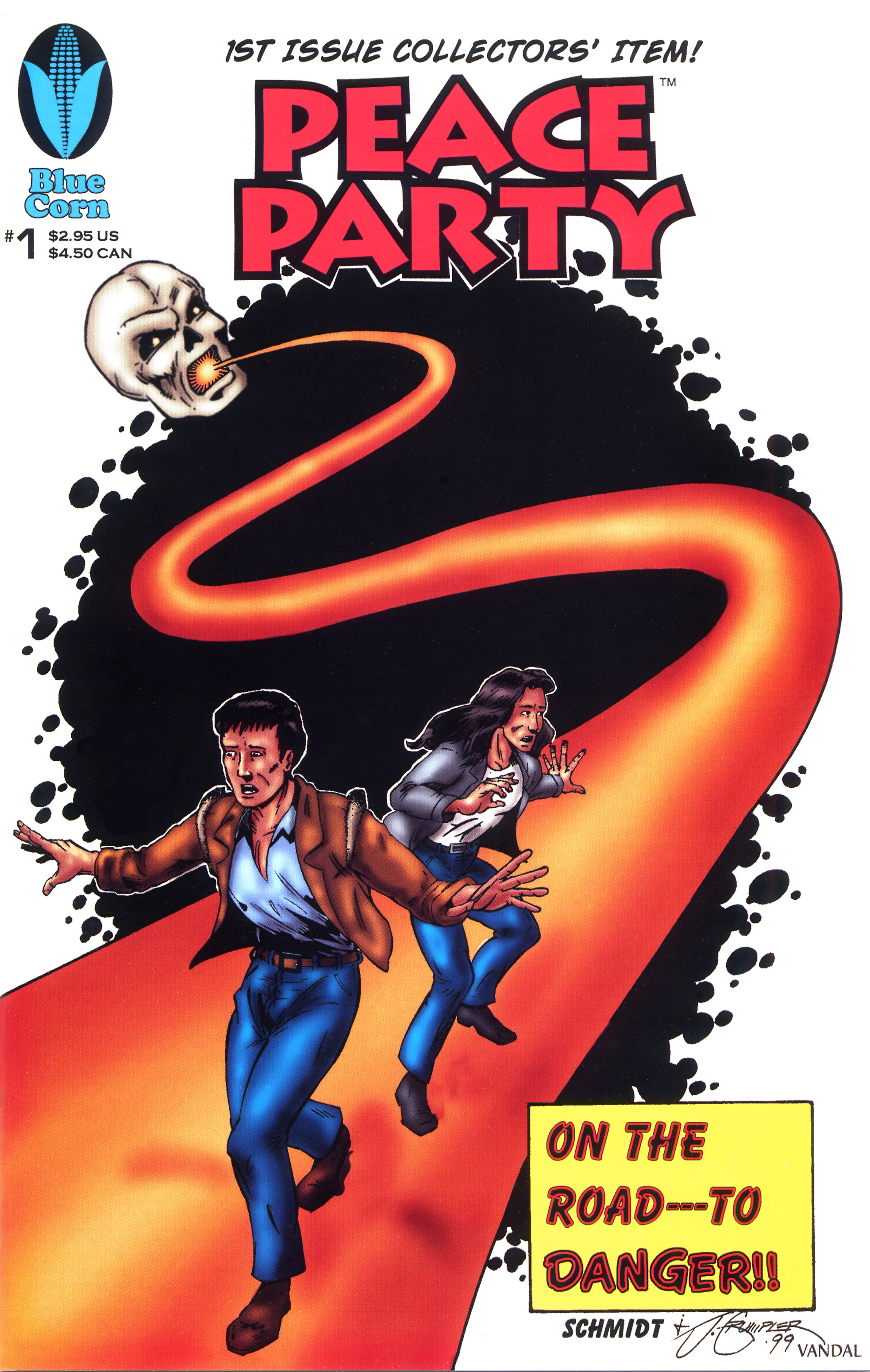
Sheyahshe's review of Peace Party
While I gear up to produce more comics, here is Michael Sheyahshe's review of Peace Party in his Native Americans in Comic Books:Schmidt has put some very hard work into this title. As mentioned, while he is non-Native, he does do his homework and he includes Native Americans in the creative process as well. The books are entertaining, well written, and well illustrated.


October 05, 2016
Buffalo God in American Gods comics
AMERICAN GODS Adapted For Comics By DARK HORSE
Comment: This announcement helpfully includes an image of the figure who's sort of the elder god of the American continent.
A Buffalo God with a Pacific Northwest tattoo and a super-tomahawk? Looks like pan-Indian stereotypes to me.
For more on the subject, see America "Not a Good Country for Gods"?
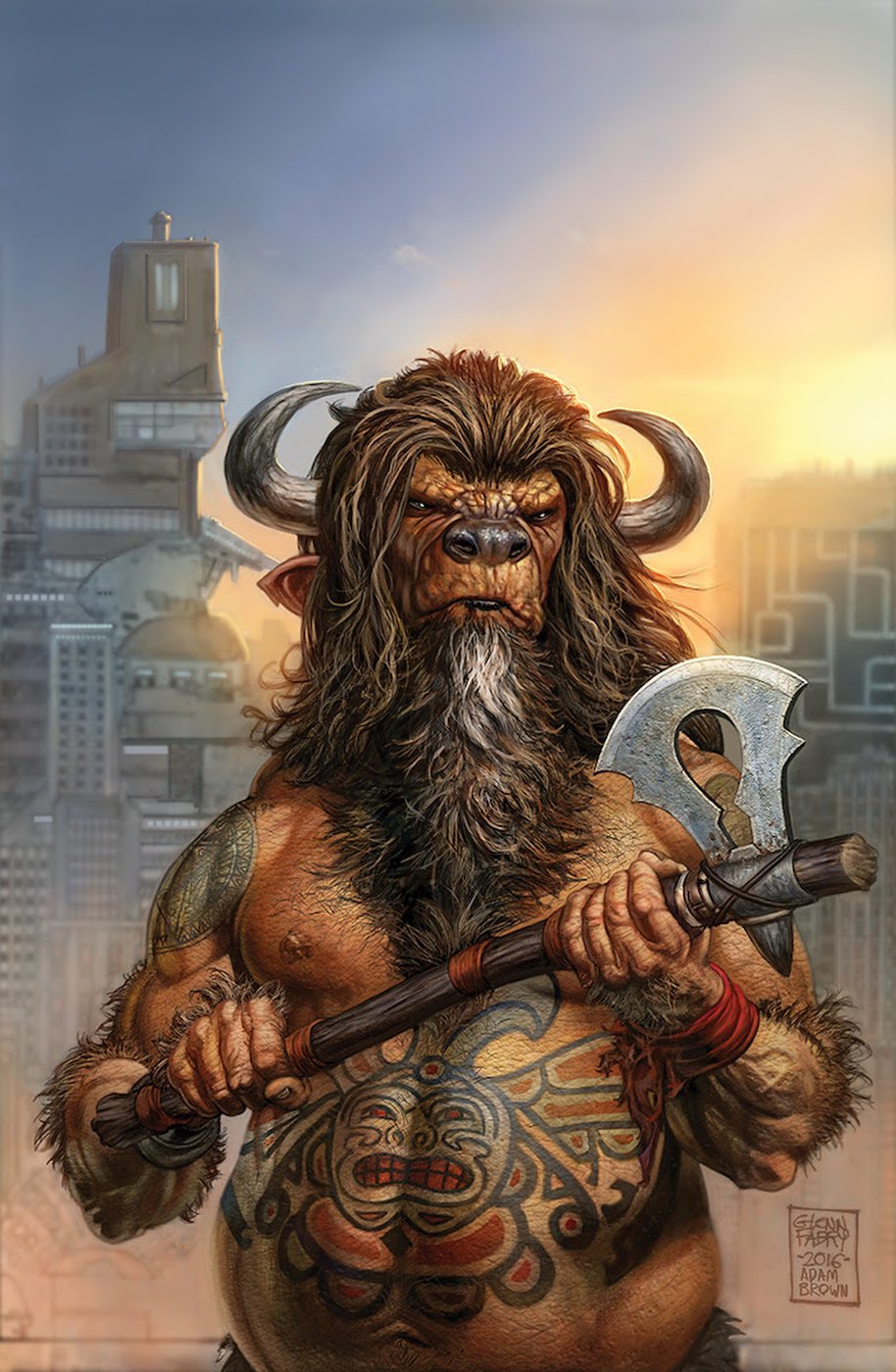
Comment: This announcement helpfully includes an image of the figure who's sort of the elder god of the American continent.
A Buffalo God with a Pacific Northwest tattoo and a super-tomahawk? Looks like pan-Indian stereotypes to me.
For more on the subject, see America "Not a Good Country for Gods"?
September 12, 2016
Whitewashing in Doctor Strange
Not Your Asian Ninja: How the Marvel Cinematic Universe Keeps Failing Asian-Americans
White isn’t a neutral color: “Doctor Strange,” Tilda Swinton and the “unwinnable” diversity argument
George Takei gets real about 'cringeworthy' Marvel casting for 'Doctor Strange'
The Director of Doctor Strange Thinks One Asian Character Makes Up for the Movie's Biggest Screw-Up
White isn’t a neutral color: “Doctor Strange,” Tilda Swinton and the “unwinnable” diversity argument
George Takei gets real about 'cringeworthy' Marvel casting for 'Doctor Strange'
The Director of Doctor Strange Thinks One Asian Character Makes Up for the Movie's Biggest Screw-Up
May 26, 2016
Review of Cape Horn
Reviews of the graphic novel Cape Horn:
The Most Interesting Comics of the Week
By Rich BarrettCape Horn comes from French writer Christian Perrissin and Italian artist Enea Riboldi, who bathes it in authenticity with beautiful, realistic artwork. His landscapes are lushly illustrated and the characters are distinct and real, giving this the feel of a Hugo Pratt or Milo Manara adventure comic. However, American comic readers should be warned that it's less a rollicking adventure and more of a pensive period drama. There is a very deliberate pace to the story but when big things happen it makes them all the more surprising. The Best Comics of 2014
By Seth T. HahneCape Horn is kind of like Manara's "Indian Summer" minus the probably misogynistic treatment of women by the artist and the rampantly cliched vision of preachers and Native Americans and their activities and predilections. The art is as luscious as Manara's, but it's got story and sense to propel it. There's nothing in Cape Horn to push the astute mature reader to reevaluate history or our place in it (the story functions mostly as grand adventure), but it's so well done that one almost can't help but marvel in admiration. A wholly lovely endeavor. The Native aspects
Review Time! With Cape Horn
By Greg BurgasCape Horn, like so much of fiction, is about power. When you introduce a colonial element to it, it becomes more about cultural power, as the frontier of Tierra del Fuego, like the frontier of the West in the United States and Canada or any frontier, really, is about the clash between “civilization” and “barbarism.” Just because Perrissin sets this in a place unfamiliar to most people doesn’t change the paradigm too much.
The natives in the area, mainly the Yamana, have a choice to make–accommodate the Europeans and try to learn their ways, or resist as fiercely as possible and get killed or die out. And:Ultimately, Perrissin comes down on the same side as most liberal writers–that the natives would have been better off without the “benefits” of “civilization”–but that doesn’t mean he doesn’t try to show the kindness of people like Bridges, who really do believe they’re working to make the natives’ lives better.
Perrissin offers a macrocosmic version of the “civilizers” versus “savages” idiom, as well, and it puts Cape Horn on a more interesting level than just an adventure story. Without commenting on it too obviously, Perrissin shows the way frontiersmen become marginalized in their turn. Some background on the Natives of Tierra del Fuego:
Fuegians
Yaghan People
Tierra del Fuego Culture
Rob's review
It's surprising to learn that a "first contact" situation with Indians happened in the late 1800s. I'm used to first contacts happening in the 1600s and 1700s, with tribal independence eliminated by the late 1800s.
But here we have a sad drama unfolding a couple of centuries after it unfolded elsewhere. I guess that's how long it took to settle Tierra del Fuego.
Anyway, Cape Horn followed too many characters to be an unqualified success. Other than that, I agree with the above reviews. It's well worth checking out.

The Most Interesting Comics of the Week
By Rich Barrett
By Seth T. Hahne
Review Time! With Cape Horn
By Greg Burgas
The natives in the area, mainly the Yamana, have a choice to make–accommodate the Europeans and try to learn their ways, or resist as fiercely as possible and get killed or die out.
Perrissin offers a macrocosmic version of the “civilizers” versus “savages” idiom, as well, and it puts Cape Horn on a more interesting level than just an adventure story. Without commenting on it too obviously, Perrissin shows the way frontiersmen become marginalized in their turn.
Fuegians
Yaghan People
Tierra del Fuego Culture
Rob's review
It's surprising to learn that a "first contact" situation with Indians happened in the late 1800s. I'm used to first contacts happening in the 1600s and 1700s, with tribal independence eliminated by the late 1800s.
But here we have a sad drama unfolding a couple of centuries after it unfolded elsewhere. I guess that's how long it took to settle Tierra del Fuego.
Anyway, Cape Horn followed too many characters to be an unqualified success. Other than that, I agree with the above reviews. It's well worth checking out.
March 22, 2016
Inhuman sanctuary = Indian reservation
The Parting Shot episode of Marvel's Agents of SHIELD (airdate: 3/22/16) had a pointed reference to Indian reservations. About all you need to know is that evildoer Malick wants to round up the superpowered Inhumans for nefarious purposes:
‘Marvel’s Agents of S.H.I.E.L.D.’ Recap 3×13: Pour One OutMalick makes an uncomfortable comparison between what Russia will be doing with the Inhuman sanctuary to what America did in setting up Native American reservations. You know, just in case it wasn’t already very clear that he was grade-A evil. MARVEL’S AGENTS OF S.H.I.E.L.D. Review: “Parting Shot”Malick’s plan for an Inhuman “Sanctuary State” comes into full focus this week, as he convinces the Russian Prime Minister’s own men to stage a coup against him. Powers Boothe is more wicked than ever in the role, as he smugly suggests that Native American Reservations were beneficial for the people forced to relocate to them, and that his own plan will do the same for the new “alien threat.” Which he intends to use as prison camp in order to weaponize Inhumans in a bid for more power.
‘Marvel’s Agents of S.H.I.E.L.D.’ Recap 3×13: Pour One Out
February 23, 2016
My Chrononauts script
Here's my submission for Mark Miller's script competition for his Chrononauts comic-book series. Since I didn't win, I've changed the names to avoid copyright issues. Here's a four-page story starring the Time Jerks.
PAGE 1
Panel 1/ A convertible sports car bursts through a fiery circle of light. Dark-haired Grizzle frantically drives while light-haired Forst rides shotgun. Behind them, faintly visible in the glare, Zulu warriors hurl spears at them.
The car has emerged onto a broad grassy plain. In the background are small groves of trees and a low line of bluffs. A few Plains Indian tipis stand in the distance on the right. A couple of dark-haired people and their animals—horses and dogs—look at the commotion.
1. TITLE: Time Jerks
2. SUBTITLE: Two white guys romp though history in search of fame and fortune.
3. CAPTION: 1876
4. FORST: Zulus are as tough as their reputation.
5. GRIZZLE: Yeah, recruiting drive didn’t go so well.
6. CREDITS:
Story: Rob Schmidt
Art: __________
Colors: __________
Panel 2/ Still dodging a few spears, the car plows into a group of tipis. Indians in a mix of Western clothing and buckskins scatter.
7. FORST: Whoa, watch where you’re going!
8. GRIZZLE: Gotta get out of range.
Panel 3/ An overhead shot shows the car zooming past the first campsites of a huge Indian gathering. It’s an obstacle course of tipis, cooking fires, and people and animals. To the north, a river flows below the bluffs.
9. FORST: Where are we?
10. GRIZZLE: Not sure. Didn’t have time to set the coordinates.
11. FORST: Slow down! You’re gonna hit someone!
Panel 4/ The Indians regroup and attack the car as it barrels through the camp. On foot and on horseback, they shoot at the intruders with rifles and bows. Bullets and arrows fly past.
12. FORST: Speed up! Speed up!
13: SOUND F/X: zip zip zip
PAGE 2
Panel 1/ A half-naked warrior leaps onto the car’s hood. With a knife in his mouth, he creeps toward Grizzle and Forst.
1. FORST: Get him off us!
Panel 2/ Grizzle yanks the steering wheel. The car swerves and strikes a tipi, ripping it from its moorings. Surprised, the Indian goes flying in the other direction.
Ahead, just visible in the distance, is a large buffalo hide stretched on a wooden frame.
2. GRIZZLE: Satisfied?
3. FORST: These people … are we changing their history?
Panel 3/ Grizzle and Forst glance behind them. Like a scene from an old Western, angry warriors pursue them on horseback.
4. GRIZZLE: Either we’re creating a parallel timeline or we’re rewriting our own.
5. GRIZZLE: Won’t know which unless we go back to the future.
6: SOUND F/X: yi yi yi yi yi!
Panel 4/ The car slams into the buffalo hide, which envelops the front half of car, blocking the guys’ view.
7. GRIZZLE: Which I don’t plan to—
8. FORST: LOOK OUT!
Panel 5/ As the hide falls away, Grizzle and Forst find warriors surrounding them with weapons aimed to kill. The guys raise their hands in surrender.
9. WARRIORS: Spies! Thieves! Fat takers!
10. GRIZZLE: Whatever they’re speaking, our translators are handling it.
11. FORST: Hey, we’re after fame and fortune, not “fat.”
PAGE 3
Panel 1/ As women and children watch, the warriors lead Grizzle and Forst through the camp. With their hands tied in front of them, the guys try to talk to their captors.
1. FORST: Not spies or thieves. We’re, uh, messengers.
2. GRIZZLE: Never thought I’d say this, but ... take us to your leader.
Panel 2/ The warriors push them through a flap into a big, dimly lit tipi. On the far side, sitting on hides, are a middle-aged Sioux and his advisers. The Indians look unhappy to see white men.
3. FORST: Is that … Sitting Bull?
4. GRIZZLE: Looks like it.
5. FORST: Then this must be Little Big Horn.
6. GRIZZLE: And Custer’s about to attack.
Panel 3/ Grizzle and Forst stand before Sitting Bull and the other Sioux leaders.
7. SITTING BULL: Who are you and where did you come from?
8. FORST: We, uh, flew down from the sky.
9. GRIZZLE: Yeah, uh, on the back of a thunderbird.
10. SITTING BULL: You speak nonsense. Why are you here?
11. GRIZZLE: We come with, er—
Panel 4/ Face to face with Sitting Bull, Grizzle has a bright idea.
12. GRIZZLE: A warning from the spirits.
13. GRIZZLE: Beware the Long Hair. Though you will be victorious, many will die. The white man will hunt you until you have vanished like the buffalo.
Panel 5/ Warriors lead Grizzle and Forst away as Sitting Bull and his men discuss what to do with them.
14. ADVISER #1: They’re lying, of course.
15. ADVISER #2: Kill them and take their scalps.
16. SITTING BULL: No, tie them up. I may have questions for them later.
PAGE 4
Panel 1/ Just outside the tipi, Forst kicks one of the guards in the gut. Grizzle raises his arms to shield himself from another guard slashing at him with a knife. He positions his hands so the blade slices through his bonds.
1. FORST: Didja hear that?
2. GRIZZLE: Let’s get outta here!
Panel 2/ They run for their car as Indians chase them. With his hands still tied, Forst ducks as a warrior tumbles over him. With his bonds unraveling, Grizzle straight-arms another warrior.
3. FORST: Why aren’t they shooting at us?
4. GRIZZLE: Camp’s too crowded! Go!
Panel 3/ With Indians in hot pursuit, the guys leap into their car. Grizzle guns the engine and the wheels spin in a cloud of dust. A circle of light shimmers into existence before them.
5. FORST: Back to your place in Manhattan?
6. GRIZZLE: Yeah, Lucky Luciano’s girl is waiting.
7. SOUND F/X: rrrrRRWRR—
Panel 4/ In the background, the car sits in front of Grizzle’s luxurious mansion. Grizzle and Forst relate their adventures to men in pinstriped suits and women in flapper outfits. Perhaps a black butler stands by with a tray of refreshments.
8. CAPTION: 1929
9. FLAPPER: Were they all barbaric and savage-like?
10. FORST: Actually, they weren’t too bad—
11. GRIZZLE: Considering we invaded their home.
Filling the foreground is a copy of the New York Herald newspaper—on a table or in a henchman’s hands. Part of the front page is visible: the headlines, a drawing, and a chronology in one or two columns. The main headline is big.
12. HEADLINES:
Custer dead at 90
Former president dies in bed
The photo is a drawing of General Custer as seen in photographs just before Little Big Horn. The chronology reads:
His Career in Politics
1876: 7th Cavalry routs Sioux as they break camp
1877: Custer persuades Geronimo to surrender in Ariz.
1879: Custer is proclaimed “The Hero of the West”
1880: Custer runs for president against Garfield, wins
1882: “Learn and Earn” program launched for Negroes
1883: Chinese riot at So. Pacific Railroad ceremony
1884: Custer wins second presidential term
1885: Assassination attempt against Custer fails
1886: France starts to build Statue of Victory for U.S.
1888: Custer wins unprecedented third presidential term
1890: U.S. annexes Panama to begin work on canal
1891: First Hawaiian War ends in stalemate
1892: Custer wins fourth presidential term
1894: Sequoyah admitted to the Union as 45th state
1896: Col. Theodore Roosevelt killed in attack on Cuba
13. CAPTION: End.
For more on the subject, see White Male Privilege in Chrononauts.
PAGE 1
Panel 1/ A convertible sports car bursts through a fiery circle of light. Dark-haired Grizzle frantically drives while light-haired Forst rides shotgun. Behind them, faintly visible in the glare, Zulu warriors hurl spears at them.
The car has emerged onto a broad grassy plain. In the background are small groves of trees and a low line of bluffs. A few Plains Indian tipis stand in the distance on the right. A couple of dark-haired people and their animals—horses and dogs—look at the commotion.
1. TITLE: Time Jerks
2. SUBTITLE: Two white guys romp though history in search of fame and fortune.
3. CAPTION: 1876
4. FORST: Zulus are as tough as their reputation.
5. GRIZZLE: Yeah, recruiting drive didn’t go so well.
6. CREDITS:
Story: Rob Schmidt
Art: __________
Colors: __________
Panel 2/ Still dodging a few spears, the car plows into a group of tipis. Indians in a mix of Western clothing and buckskins scatter.
7. FORST: Whoa, watch where you’re going!
8. GRIZZLE: Gotta get out of range.
Panel 3/ An overhead shot shows the car zooming past the first campsites of a huge Indian gathering. It’s an obstacle course of tipis, cooking fires, and people and animals. To the north, a river flows below the bluffs.
9. FORST: Where are we?
10. GRIZZLE: Not sure. Didn’t have time to set the coordinates.
11. FORST: Slow down! You’re gonna hit someone!
Panel 4/ The Indians regroup and attack the car as it barrels through the camp. On foot and on horseback, they shoot at the intruders with rifles and bows. Bullets and arrows fly past.
12. FORST: Speed up! Speed up!
13: SOUND F/X: zip zip zip
PAGE 2
Panel 1/ A half-naked warrior leaps onto the car’s hood. With a knife in his mouth, he creeps toward Grizzle and Forst.
1. FORST: Get him off us!
Panel 2/ Grizzle yanks the steering wheel. The car swerves and strikes a tipi, ripping it from its moorings. Surprised, the Indian goes flying in the other direction.
Ahead, just visible in the distance, is a large buffalo hide stretched on a wooden frame.
2. GRIZZLE: Satisfied?
3. FORST: These people … are we changing their history?
Panel 3/ Grizzle and Forst glance behind them. Like a scene from an old Western, angry warriors pursue them on horseback.
4. GRIZZLE: Either we’re creating a parallel timeline or we’re rewriting our own.
5. GRIZZLE: Won’t know which unless we go back to the future.
6: SOUND F/X: yi yi yi yi yi!
Panel 4/ The car slams into the buffalo hide, which envelops the front half of car, blocking the guys’ view.
7. GRIZZLE: Which I don’t plan to—
8. FORST: LOOK OUT!
Panel 5/ As the hide falls away, Grizzle and Forst find warriors surrounding them with weapons aimed to kill. The guys raise their hands in surrender.
9. WARRIORS: Spies! Thieves! Fat takers!
10. GRIZZLE: Whatever they’re speaking, our translators are handling it.
11. FORST: Hey, we’re after fame and fortune, not “fat.”
PAGE 3
Panel 1/ As women and children watch, the warriors lead Grizzle and Forst through the camp. With their hands tied in front of them, the guys try to talk to their captors.
1. FORST: Not spies or thieves. We’re, uh, messengers.
2. GRIZZLE: Never thought I’d say this, but ... take us to your leader.
Panel 2/ The warriors push them through a flap into a big, dimly lit tipi. On the far side, sitting on hides, are a middle-aged Sioux and his advisers. The Indians look unhappy to see white men.
3. FORST: Is that … Sitting Bull?
4. GRIZZLE: Looks like it.
5. FORST: Then this must be Little Big Horn.
6. GRIZZLE: And Custer’s about to attack.
Panel 3/ Grizzle and Forst stand before Sitting Bull and the other Sioux leaders.
7. SITTING BULL: Who are you and where did you come from?
8. FORST: We, uh, flew down from the sky.
9. GRIZZLE: Yeah, uh, on the back of a thunderbird.
10. SITTING BULL: You speak nonsense. Why are you here?
11. GRIZZLE: We come with, er—
Panel 4/ Face to face with Sitting Bull, Grizzle has a bright idea.
12. GRIZZLE: A warning from the spirits.
13. GRIZZLE: Beware the Long Hair. Though you will be victorious, many will die. The white man will hunt you until you have vanished like the buffalo.
Panel 5/ Warriors lead Grizzle and Forst away as Sitting Bull and his men discuss what to do with them.
14. ADVISER #1: They’re lying, of course.
15. ADVISER #2: Kill them and take their scalps.
16. SITTING BULL: No, tie them up. I may have questions for them later.
PAGE 4
Panel 1/ Just outside the tipi, Forst kicks one of the guards in the gut. Grizzle raises his arms to shield himself from another guard slashing at him with a knife. He positions his hands so the blade slices through his bonds.
1. FORST: Didja hear that?
2. GRIZZLE: Let’s get outta here!
Panel 2/ They run for their car as Indians chase them. With his hands still tied, Forst ducks as a warrior tumbles over him. With his bonds unraveling, Grizzle straight-arms another warrior.
3. FORST: Why aren’t they shooting at us?
4. GRIZZLE: Camp’s too crowded! Go!
Panel 3/ With Indians in hot pursuit, the guys leap into their car. Grizzle guns the engine and the wheels spin in a cloud of dust. A circle of light shimmers into existence before them.
5. FORST: Back to your place in Manhattan?
6. GRIZZLE: Yeah, Lucky Luciano’s girl is waiting.
7. SOUND F/X: rrrrRRWRR—
Panel 4/ In the background, the car sits in front of Grizzle’s luxurious mansion. Grizzle and Forst relate their adventures to men in pinstriped suits and women in flapper outfits. Perhaps a black butler stands by with a tray of refreshments.
8. CAPTION: 1929
9. FLAPPER: Were they all barbaric and savage-like?
10. FORST: Actually, they weren’t too bad—
11. GRIZZLE: Considering we invaded their home.
Filling the foreground is a copy of the New York Herald newspaper—on a table or in a henchman’s hands. Part of the front page is visible: the headlines, a drawing, and a chronology in one or two columns. The main headline is big.
12. HEADLINES:
Custer dead at 90
Former president dies in bed
The photo is a drawing of General Custer as seen in photographs just before Little Big Horn. The chronology reads:
His Career in Politics
1876: 7th Cavalry routs Sioux as they break camp
1877: Custer persuades Geronimo to surrender in Ariz.
1879: Custer is proclaimed “The Hero of the West”
1880: Custer runs for president against Garfield, wins
1882: “Learn and Earn” program launched for Negroes
1883: Chinese riot at So. Pacific Railroad ceremony
1884: Custer wins second presidential term
1885: Assassination attempt against Custer fails
1886: France starts to build Statue of Victory for U.S.
1888: Custer wins unprecedented third presidential term
1890: U.S. annexes Panama to begin work on canal
1891: First Hawaiian War ends in stalemate
1892: Custer wins fourth presidential term
1894: Sequoyah admitted to the Union as 45th state
1896: Col. Theodore Roosevelt killed in attack on Cuba
13. CAPTION: End.
For more on the subject, see White Male Privilege in Chrononauts.
January 27, 2016
White male privilege in Chrononauts
A review of a recent comic-book series:
Chrononauts Review (Mark Millar, Sean Murphy)Spoilers--this comic is shit!
Meet the ultimate craptastic time-travel story: Chrononauts!
What happens when two meathead “scientist” dudebros invent time-travel? Dude--they use it to get babes, money and fast cars! Yah, brah, they like totally get laid tons and use their knowledge of history and their timesuits to jump into any timezone and get stuff to make their lives easier whenever they want!
They want to become emperors to 16th century people? Give them 21st century weaponry and lead them in battle against their enemies! Machine guns, planes and bombs will easily make them the victors against spears and horses and they’ll make you their ruler. Then you get gold and women and you just keep doing that everywhere in time because that’s what “rock star scientists” do!
It feels redundant to say Chrononauts is a dumb and lazily scripted comic because so much of Mark Millar’s recent output has been like that; Chrononauts is just the most brazen, to date. Rob's review
As I told someone back in October, I got the first trade paperback becauseMillar is holding a contest to write a four-page (!) Chrononauts story. I know time travel, and now that I've seen how simplistic his stories are, it should be easy to come up with something better.
I'm thinking something about the battle of Little Big Horn. Because even though the Chrononauts go hopping through time, they mainly encountered the usual Euro-American highlights (Rome, Vikings, Columbus, the Civil War, 1920s gangsters, JFK). Most of their stops were confined to the white portions of Western civilization, and not a single Indian appeared. Then I got into a discussion with critic Gregory Burgas:
Except for Old Man Logan and Civil War, I haven't read much Millar, Gregory. Has he always written from such a white-male perspective? This series seems like something Mickey Spillane might've written if he were tasked with doing a modern sci-fi story.Well, I've been boycotting Millar for over a decade, so I don't know about his recent work. Wanted pushed me to boycott him, and that's totally a "I'm a white male and the whole world hates me!" whining rant, through and through. It's odd, because his Swamp Thing is superb and I've heard good things about his Superman Adventures. But your assessment is not wrong at all. The "dudebro" ethos
He isn't ranting in this series. More like celebrating the greatness of strapping white males. Who are manly enough to take what they want from every era.
The two most prominent women are also people of color. They have independent careers but they're marked to be wives and mothers. The racial and sexual implications couldn't be much more obvious.
With all of history to play with, you'd think this series would be less white and male than average. But no...its view of history seems to come from a 1950s school textbook. I bet people like Donald Trump, Rush Limbaugh, and Seth MacFarlane would love this book.Ha! Well, then he's embraced the "dudebro" ethos and is just enjoying it. Is that progress? :-) Could be. But I'm thinking it's some idea from his childhood that he recently resurrected. He saw some astronauts and thought they were mighty heroes with the "right stuff." How cool would it be if chrononauts had the same rock-star vibe?
It's like doing The New Frontier or Batman '66 and unironically avoiding every social issue of the last 50 years. You can do that for a series set in that era. But this series seems to be set in the present or near future.
Final thoughts
This book is all "What fun it is to conquer people and become king!" Much like Gunga Din, which I think Millar cited as an inspiration.
Never mind all the people our heroes must've killed to accomplish this. The murder, assassination, enslavement, rape, and pillage all happen off-page.
So stupid that these guys spent 20 years becoming top scientists, then threw it all away for fame and fortune. Hey, if you wanted women and money, maybe become a race-car driver, firefighter, rock star, or soldier of fortune. You know, a profession that might appeal to adrenaline junkies and their groupies. Scientist probably isn't a top-10 choice if you're motivated by greed and lust.
Bottom line: This may be the shallowest time-travel story ever. It's as if a men's magazine wrote about all the fun things you could do with women, cars, and guns in the past.
More reviews:
CHRONONAUTS #1

Chrononauts Review (Mark Millar, Sean Murphy)
Meet the ultimate craptastic time-travel story: Chrononauts!
What happens when two meathead “scientist” dudebros invent time-travel? Dude--they use it to get babes, money and fast cars! Yah, brah, they like totally get laid tons and use their knowledge of history and their timesuits to jump into any timezone and get stuff to make their lives easier whenever they want!
They want to become emperors to 16th century people? Give them 21st century weaponry and lead them in battle against their enemies! Machine guns, planes and bombs will easily make them the victors against spears and horses and they’ll make you their ruler. Then you get gold and women and you just keep doing that everywhere in time because that’s what “rock star scientists” do!
It feels redundant to say Chrononauts is a dumb and lazily scripted comic because so much of Mark Millar’s recent output has been like that; Chrononauts is just the most brazen, to date.
As I told someone back in October, I got the first trade paperback because
I'm thinking something about the battle of Little Big Horn. Because even though the Chrononauts go hopping through time, they mainly encountered the usual Euro-American highlights (Rome, Vikings, Columbus, the Civil War, 1920s gangsters, JFK). Most of their stops were confined to the white portions of Western civilization, and not a single Indian appeared.
Except for Old Man Logan and Civil War, I haven't read much Millar, Gregory. Has he always written from such a white-male perspective? This series seems like something Mickey Spillane might've written if he were tasked with doing a modern sci-fi story.
He isn't ranting in this series. More like celebrating the greatness of strapping white males. Who are manly enough to take what they want from every era.
The two most prominent women are also people of color. They have independent careers but they're marked to be wives and mothers. The racial and sexual implications couldn't be much more obvious.
With all of history to play with, you'd think this series would be less white and male than average. But no...its view of history seems to come from a 1950s school textbook. I bet people like Donald Trump, Rush Limbaugh, and Seth MacFarlane would love this book.
It's like doing The New Frontier or Batman '66 and unironically avoiding every social issue of the last 50 years. You can do that for a series set in that era. But this series seems to be set in the present or near future.
Final thoughts
This book is all "What fun it is to conquer people and become king!" Much like Gunga Din, which I think Millar cited as an inspiration.
Never mind all the people our heroes must've killed to accomplish this. The murder, assassination, enslavement, rape, and pillage all happen off-page.
So stupid that these guys spent 20 years becoming top scientists, then threw it all away for fame and fortune. Hey, if you wanted women and money, maybe become a race-car driver, firefighter, rock star, or soldier of fortune. You know, a profession that might appeal to adrenaline junkies and their groupies. Scientist probably isn't a top-10 choice if you're motivated by greed and lust.
Bottom line: This may be the shallowest time-travel story ever. It's as if a men's magazine wrote about all the fun things you could do with women, cars, and guns in the past.
More reviews:
CHRONONAUTS #1
October 29, 2015
The origin of Captain Paiute
Origin Stories: Theo Tso, Creator of Captain Paiute: Indigenous Defender of the Southwest
By Johnnie Jae“I saw that there was a need for a superhero that was Native American, who would deal with Native issues coming on and off the various reservations of the southwest.”
Thus, Captain Paiute was born.
But after bringing his creation into being, Theo put him away for “a rainy day” as he continued his quest to draw and work for major comic houses, like DC and Marvel. As chance would have it, one of Theo’s friends attended the San Diego Comic Con and returned with a flyer from someone who was looking for a comic book artist to collaborate with. After submitting several samples of his work, Theo was given the opportunity to work on the debut issues of a few comic books from Blue Corn Comics. He penciled the debut issues for Masked Men and Peace Party. His artwork was also published in Phil Yea’s Winged Tiger series.
It was while working on Peace Party that Theo decided that it was time to give Captain Paiute another go. So, he started working on updating and further developing the story and adventures of Captain Paiute: Indigenous Defender of the Southwest. Comment: Thanks for the shout-out, Theo.
Stay tuned for the Captain Paiute/Peace Party team-up, now in progress!

By Johnnie Jae
Thus, Captain Paiute was born.
But after bringing his creation into being, Theo put him away for “a rainy day” as he continued his quest to draw and work for major comic houses, like DC and Marvel. As chance would have it, one of Theo’s friends attended the San Diego Comic Con and returned with a flyer from someone who was looking for a comic book artist to collaborate with. After submitting several samples of his work, Theo was given the opportunity to work on the debut issues of a few comic books from Blue Corn Comics. He penciled the debut issues for Masked Men and Peace Party. His artwork was also published in Phil Yea’s Winged Tiger series.
It was while working on Peace Party that Theo decided that it was time to give Captain Paiute another go. So, he started working on updating and further developing the story and adventures of Captain Paiute: Indigenous Defender of the Southwest.
Stay tuned for the Captain Paiute/Peace Party team-up, now in progress!
October 26, 2015
Three Feathers gets recognition
Some recent Native comic-book news:
Funding in place for Fort Smith’s next Van Camp film
By Craig GilbertThe world’s happiest man is from Fort Smith. Richard Van Camp is knee-deep in creative work, muscling as many as three more of his graphic novels into live action films.
Blanket of Butterflies, The Blue Raven and Three Feathers are all set in Fort Smith and Van Camp wants to film them in the NWT border town as early as this coming spring with local filmmaker Carla Ulrich directing.
Three Feathers is inspired by the true story of three young men caught breaking into houses, Van Camp’s family home among them. In reality, they were sentenced to two years each in prison in the south, but the story imagines that they were instead sent to spend nine months on the land.
“We’re so good at sending people down south for two years every single time,” Van Camp said from his home in Edmonton. “What if we put them on the land with qualified instructors and elders, and what if we trusted them with responsibility; helped them learn their language and their culture, what it means to be a man, a provider and a young warrior today, a protector? The rest of the story seemed very easy.” Wordcraft Circle Honors and AwardsWordcraft Circle is proud to announce the winners for the 2015 Honors and Awards! The winners were selected from an open nomination process and awarded by a panel of Wordcraft Circle members, scholars, writers, and storytellers. These awards are dedicated solely to the work and words of Native and Indigenous writers and storytellers.
Graphic Novel
Three Feathers–Richard Van Camp
Trade Paperback
Super Indian Vol. 2–Arigon Starr
Comic Book
We Speak In Secret–Roy Boney Jr. 
Funding in place for Fort Smith’s next Van Camp film
By Craig Gilbert
Blanket of Butterflies, The Blue Raven and Three Feathers are all set in Fort Smith and Van Camp wants to film them in the NWT border town as early as this coming spring with local filmmaker Carla Ulrich directing.
Three Feathers is inspired by the true story of three young men caught breaking into houses, Van Camp’s family home among them. In reality, they were sentenced to two years each in prison in the south, but the story imagines that they were instead sent to spend nine months on the land.
“We’re so good at sending people down south for two years every single time,” Van Camp said from his home in Edmonton. “What if we put them on the land with qualified instructors and elders, and what if we trusted them with responsibility; helped them learn their language and their culture, what it means to be a man, a provider and a young warrior today, a protector? The rest of the story seemed very easy.”
Graphic Novel
Three Feathers–Richard Van Camp
Trade Paperback
Super Indian Vol. 2–Arigon Starr
Comic Book
We Speak In Secret–Roy Boney Jr.
October 20, 2015
Captain America is a liberal
Fox News Goes Ballistic Over The New Black, Anti-Racist Captain America (Video)
By Tasha DavisYou know Fox News has stooped pretty low when they start going off on superheroes.
Captain America has really pissed conservatives off, but the reason why is f*cking hilarious.
A recent plot-line of the comic book has Captain America on a new mission, a mission against a group of White Supremacists called, Sons of the Serpent.
Only a Republican would get upset over a superhero fighting white racism, because duh, we all know white supremacy is code-word for Republican. And:Childers also, very ignorantly, said:
“Keep politics out of comic books.”
That Childers person should start doing some research on the subject on which they are about to speak, before words come out of that mouth. Because duh, Captain AMERICA is a political hero and always has been. 
More on Captain America's politics:
Sorry, Fox News: Captain America has long been a liberal, anti-nationalist character
Conservatives are throwing a fit because Captain America opposes nationalism. Which is what he's always done.
By Amanda MarcotteThere’s no surer evidence that conservative media coasts on exploiting the ignorance of its audience (and in many cases, the willful ignorance of its pundits) than the hissyfit being thrown over the first issue of a new run of Captain America comics.
In the issue, Sam Wilson, a character who used to be called Falcon and who took over the mantle of Captain America after Steve Rogers became too old to handle the duty any longer, has been on the outs from various intelligence agencies, which he believes have grown corrupt from what is essentially a comic version of the “war on terror.” He also helps out undocumented immigrants that are being plagued by white supremacists. Oh yeah, and he’s black, something white conservatives know better than to be openly angry about but Allen West will go ahead and get angry over for them.
Breitbart, Daily Caller, and Fox News all threw utterly fact-free temper tantrums over this new development, whining that Captain America’s progressivism is somehow new and different and that his stance against racist conservatives is somehow a new development for the character. “Instead of going against Hydra and the typical Captain America villains,” supposed comics expert Clayton Morris said (after incorrectly claiming comic sales are down when, in fact, they are rising), “he’s going up against conservatives! That’s his new enemy!”
What is bizarre about this rant is that it depends on an audience who not only hasn’t ever read the Captain America comic, but has never seen either of the blockbuster pictures starring Chris Evans. If you had, you would remember that Hydra, the fictional enemy of the Captain, was started by Nazis to spread the joys of fascism around the world. In other words, Captain America’s enemies have always been nationalists intent on stomping out anyone they see as untermensch. And:[I]t’s just exploiting audience ignorance to argue that Captain America’s progressivism is “new” or a “change.” Again, if you’ve seen the movies, you can see the flaw in that. The first movie is an allegory about how strength is useless without the liberal value of protecting the vulnerable behind it. The second movie is overtly political, a story that openly suggests that the “war on terror” is becoming indistinguishable from fascism.
The Steve Rogers from the movies is unmistakably liberal: Anti-racist, a lover of independent women, and a man who believes that the best patriot is one who questions his government instead of blindly follows orders. This characterization is consistent with the canonical Steve Rogers of the comic books, who has long been an icon of progressive patriotism, a believer that fighting for America should only be done if America defends its own liberal values.
By Tasha Davis
Captain America has really pissed conservatives off, but the reason why is f*cking hilarious.
A recent plot-line of the comic book has Captain America on a new mission, a mission against a group of White Supremacists called, Sons of the Serpent.
Only a Republican would get upset over a superhero fighting white racism, because duh, we all know white supremacy is code-word for Republican.
“Keep politics out of comic books.”
That Childers person should start doing some research on the subject on which they are about to speak, before words come out of that mouth. Because duh, Captain AMERICA is a political hero and always has been.
More on Captain America's politics:
Sorry, Fox News: Captain America has long been a liberal, anti-nationalist character
Conservatives are throwing a fit because Captain America opposes nationalism. Which is what he's always done.
By Amanda Marcotte
In the issue, Sam Wilson, a character who used to be called Falcon and who took over the mantle of Captain America after Steve Rogers became too old to handle the duty any longer, has been on the outs from various intelligence agencies, which he believes have grown corrupt from what is essentially a comic version of the “war on terror.” He also helps out undocumented immigrants that are being plagued by white supremacists. Oh yeah, and he’s black, something white conservatives know better than to be openly angry about but Allen West will go ahead and get angry over for them.
Breitbart, Daily Caller, and Fox News all threw utterly fact-free temper tantrums over this new development, whining that Captain America’s progressivism is somehow new and different and that his stance against racist conservatives is somehow a new development for the character. “Instead of going against Hydra and the typical Captain America villains,” supposed comics expert Clayton Morris said (after incorrectly claiming comic sales are down when, in fact, they are rising), “he’s going up against conservatives! That’s his new enemy!”
What is bizarre about this rant is that it depends on an audience who not only hasn’t ever read the Captain America comic, but has never seen either of the blockbuster pictures starring Chris Evans. If you had, you would remember that Hydra, the fictional enemy of the Captain, was started by Nazis to spread the joys of fascism around the world. In other words, Captain America’s enemies have always been nationalists intent on stomping out anyone they see as untermensch.
The Steve Rogers from the movies is unmistakably liberal: Anti-racist, a lover of independent women, and a man who believes that the best patriot is one who questions his government instead of blindly follows orders. This characterization is consistent with the canonical Steve Rogers of the comic books, who has long been an icon of progressive patriotism, a believer that fighting for America should only be done if America defends its own liberal values.
September 14, 2015
Red (Wolf) flags
A Twitter exchange on Marvel's new Red Wolf:
Lita Nadebah Beck @LitaBeck Sep 8
Re: Marvel's #RedWolf, I think it's worth pointing out that character from made-up tribe is no win for diversity #RepresentationMatters
BlueCornComics @bluecorncomics Sep 10
@LitaBeck I question the Veregge cover too. Looks like a stylized version of new costume with painted mask, bear paws on half-naked savage.
Lita Nadebah Beck @LitaBeck Sep 10
@bluecorncomics Have you seen the alternate cover? This book is like stereotype Mad Libs: Red Wolf Can Keep His Shirt On

No, I hadn't seen it, I responded. Not much of a costume, but it's the kind of clothing Indians such as Geronimo wore in 1872. A Facebook commenter added some thoughts:The issues with Red Wolf so far: 1) Northwest artist advising on a character Marvel has strongly stated in press releases is ingrained in the Southwest (this is not a insult against Jeff Veregge because he's a great artist, its just he hasn't shown qualifications for the type of story Marvel has been advertising). 2) "Does he wear warpaint to bed?!?!" --Lee Francis, meaning the design is a little cliché and not updated very well (see Equinox from Justice League Unlimited for a good portrayal of a Native superhero costume). 3) Marvel's new "diversity" hires seem gimmicky so far and there is apprehension they will not stick to the promise of a more diverse future. 4) So far the character and story are just boring and not very exciting. Maybe when his own title comes out in Dec it will be better, but for now it's just "eh." It's good that Native artist Veregge is involved. But he's doing covers more than anything else, so I wonder how much input he'll have. If any.
Since they seem to be playing Red Wolf as a generic Indian, I wouldn't rule out Veregge's offering useful ideas. I also wouldn't rule out their ignoring him unless he makes his points forcefully. Backed by a willingness to go public or even quit if they do something worse than "wearing facepaint to bed."
Violent vigilante?
Then there's the issue of the writer. As I tweeted:
@bluecorncomics
.@LitaBeck Another Red (Wolf) flag: writer Edmondson is allegedly a right-winger who's anti-gay and harasses women. On Nathan Edmondson, Marvel, and the Cycle of Harassment (Updated)
I continued my commentary on Facebook:
Now it would surprise me even less if Red Wolf is a ruthless vigilante a la the Punisher while other Indians are downtrodden, faceless, or invisible.
This led to a discussion with comics critic Greg Burgas:I read about this a few days ago, and the key, as always, is allegedly. Being conservative isn't a crime, nor is disparaging anyone verbally. What's frustrating about this is not that Edmondson is a scumbag (I'm sure he is), but that the people accusing him of being a scumbag are saying, "Trust us, we're right!" But why should we? Is this a whisper campaign just because you don't like the guy or his politics? Why will absolutely no one go on the record? I know the reasoning for that--that companies will blacklist those who speak up--but that's problematic, because then we're just supposed to trust the word of people whose ulterior motive we don't know. This is very frustrating, and I hate thinking it's a smear campaign, but every article I've read about it offers absolutely no evidence except, "This is what we've heard but we can't verify." Being conservative isn't a crime, but a conservative is a poor choice to write the most mainstream comic book about an Indian since Scalped. Especially since the violent vigilante tone they're hinting at is similar to the approach we saw in Scalped.
That's my main concern here. Harassing women is serious but, as you say, there's no hard evidence. And it'll have less effect on the Red Wolf comics than a general right-wing philosophy.Oh, I agree. I haven't read a lot of Edmondson's work, but he seems like a poor choice for something like this, unless he's simply going to write him as a "ruthless vigilante," as you point out. He seems to write middle-of-the-road action stuff, with a pro-military bent, which makes him a good writer for 1980s action movies but perhaps not the guy you want writing this. And regardless of Edmondson's alleged right-wing philosophy, what are his qualifications for writing about Indians? His claim that Red Wolf is from another dimension and doesn't need a historical background?
That should be an immediate disqualifier, not a clever qualifier. Yet Edmondson will get to define Indians in mainstream comics for the next decade the way Jason Aaron did for the last decade.
If Marvel wants to experiment with a Native comic book, how about experimenting with a Native writer too? I could suggest dozens of Native writers who would bring a fresh approach to the comic a la Ms. Marvel.
Or perhaps Marvel is thinking, "We'll experiment with a Native comic book, but only with an established writer who'll give us an established take. Sort of a Clint Eastwood/Jason Bourne/Punisher thing that has nothing to do with real Indians but is sure to be popular."
In that case, we should be slamming Marvel as much as applauding it for its weak and ambivalent choices. Which is what I'm doing here. ;-)
For more on Red Wolf, see Marvel to Relaunch Red Wolf and Same-Old, Same-Old Red Wolf.
Lita Nadebah Beck @LitaBeck Sep 8
Re: Marvel's #RedWolf, I think it's worth pointing out that character from made-up tribe is no win for diversity #RepresentationMatters
BlueCornComics @bluecorncomics Sep 10
@LitaBeck I question the Veregge cover too. Looks like a stylized version of new costume with painted mask, bear paws on half-naked savage.
Lita Nadebah Beck @LitaBeck Sep 10
@bluecorncomics Have you seen the alternate cover? This book is like stereotype Mad Libs: Red Wolf Can Keep His Shirt On
No, I hadn't seen it, I responded. Not much of a costume, but it's the kind of clothing Indians such as Geronimo wore in 1872. A Facebook commenter added some thoughts:
Since they seem to be playing Red Wolf as a generic Indian, I wouldn't rule out Veregge's offering useful ideas. I also wouldn't rule out their ignoring him unless he makes his points forcefully. Backed by a willingness to go public or even quit if they do something worse than "wearing facepaint to bed."
Violent vigilante?
Then there's the issue of the writer. As I tweeted:
@bluecorncomics
.@LitaBeck Another Red (Wolf) flag: writer Edmondson is allegedly a right-winger who's anti-gay and harasses women. On Nathan Edmondson, Marvel, and the Cycle of Harassment (Updated)
I continued my commentary on Facebook:
Now it would surprise me even less if Red Wolf is a ruthless vigilante a la the Punisher while other Indians are downtrodden, faceless, or invisible.
This led to a discussion with comics critic Greg Burgas:
That's my main concern here. Harassing women is serious but, as you say, there's no hard evidence. And it'll have less effect on the Red Wolf comics than a general right-wing philosophy.
That should be an immediate disqualifier, not a clever qualifier. Yet Edmondson will get to define Indians in mainstream comics for the next decade the way Jason Aaron did for the last decade.
If Marvel wants to experiment with a Native comic book, how about experimenting with a Native writer too? I could suggest dozens of Native writers who would bring a fresh approach to the comic a la Ms. Marvel.
Or perhaps Marvel is thinking, "We'll experiment with a Native comic book, but only with an established writer who'll give us an established take. Sort of a Clint Eastwood/Jason Bourne/Punisher thing that has nothing to do with real Indians but is sure to be popular."
In that case, we should be slamming Marvel as much as applauding it for its weak and ambivalent choices. Which is what I'm doing here. ;-)
For more on Red Wolf, see Marvel to Relaunch Red Wolf and Same-Old, Same-Old Red Wolf.
September 09, 2015
Marvel to relaunch Red Wolf
Red Wolf, Marvel's first Native American hero, is getting his own comic book
By Josh DickeyMarvel's first and primary Native American character is getting his own book starting in December, Mashable can exclusively reveal. Native Americans have a long history in the comic books, but Red Wolf—who's returned to the fray this year in its current alt-universe Western-themed "1872" run—hasn't had his own series since 1976. The details:The creative team includes writer Nathan Edmondson and artist Jeffrey Veregge, a member of the Port Gamble S'Klallam Tribe based out of Kingston, Washington, who's also of Suquamish and Duwamish decent. Veregge is doing covers, design and consulting; the artist on the book is Dalibor Talajić
"There's not a character like Red Wolf out there right now," Veregge told Mashable. "As a native, I’m really excited to see that he can do things, he can figure out things and stand with Captain America, and hold his own in this universe. That’s what’s awesome about it: You have all these characters of different nationalities and ethnicities, but it’s not all about their culture. It’s about them being a hero."
Though there have been various iterations of Red Wolf over the decades, this character will have his own origins, backstory and powers. For instance, the Red Wolf of old had the power to communicate with wolves; whether that's the case remains to be seen with this new run.
Though there will be supernatural elements, "we’ve made him a little bit of a regular Joe. We’re not too beholden to the Red Wolf of old—this is our take on that character," Edmondson said.
Though he'll be existing in the same primary Marvel universe as Spider-Man, Captain America and the other Avengers, Red Wolf will be from the same alternate universe as "1872," meaning he's not connected to any existing Native American tribe.
"Nobody should go to this looking as its historical," Edmondson said. "He comes from another dimension, after all. But it's very important for us to approach it in as authentic a way as possible. Jeffery offers this, and not just for consultation, but with his creative input—his covers jump out from 100 feet away."
"Above all, he’s resourceful," Edmondson said. "He’s kind of in a sense the Jason Bourne of the West, who can find a way out of any situation, or a way to use the resources of whatever room or position he may be in—he’s not a gunslinger, but he might use a gun if he has to. ... But beyond all that, he’s just a brawling, tough-as-nails fighter." Kitsap artist creating Marvel comic covers

Marvel Comics brings back Native American superhero
Red Wolf, first Native superhero with his own comic book series, uses grit and wits to battle crime
By Renee LewisNathan Edmondson, the Marvel writer working on the new book, said Red Wolf will not be linked to any existing Native American tribe—a scenario that some found troubling.
“I think it’s worth pointing out that character from made-up tribe is no win for diversity,” Navajo journalist Lita Nadabah Beck said on Twitter.
Although industry experts have noted that large publishers including Marvel and DC Comics have been including more Native American characters in recent years, the publishers have also drawn some accusations of presenting stereotypes.
To counter those, Native American writers have been producing their own comic books with Native heroes. Moonshot, published this year by Toronto-based Alternative History Comics, was a collection by 18 Native writers and artists from a variety of different cultures depicting traditional indigenous stories and legends—set in the future, and in space.
Jay Odjick's "Kagagi," published in 2011, included the usual villains and superhuman power themes, but its characters and storyline were deeply rooted in Algonquin culture. Jon Proudstar's 1996 series "Tribal Force" was a story of five young people given superpowers to protect their land from being destroyed by the government. Comment: For more on Red Wolf, see Same-Old, Same-Old Red Wolf and All-New, All-Different Red Wolf?
By Josh Dickey
"There's not a character like Red Wolf out there right now," Veregge told Mashable. "As a native, I’m really excited to see that he can do things, he can figure out things and stand with Captain America, and hold his own in this universe. That’s what’s awesome about it: You have all these characters of different nationalities and ethnicities, but it’s not all about their culture. It’s about them being a hero."
Though there have been various iterations of Red Wolf over the decades, this character will have his own origins, backstory and powers. For instance, the Red Wolf of old had the power to communicate with wolves; whether that's the case remains to be seen with this new run.
Though there will be supernatural elements, "we’ve made him a little bit of a regular Joe. We’re not too beholden to the Red Wolf of old—this is our take on that character," Edmondson said.
Though he'll be existing in the same primary Marvel universe as Spider-Man, Captain America and the other Avengers, Red Wolf will be from the same alternate universe as "1872," meaning he's not connected to any existing Native American tribe.
"Nobody should go to this looking as its historical," Edmondson said. "He comes from another dimension, after all. But it's very important for us to approach it in as authentic a way as possible. Jeffery offers this, and not just for consultation, but with his creative input—his covers jump out from 100 feet away."
"Above all, he’s resourceful," Edmondson said. "He’s kind of in a sense the Jason Bourne of the West, who can find a way out of any situation, or a way to use the resources of whatever room or position he may be in—he’s not a gunslinger, but he might use a gun if he has to. ... But beyond all that, he’s just a brawling, tough-as-nails fighter."
Marvel Comics brings back Native American superhero
Red Wolf, first Native superhero with his own comic book series, uses grit and wits to battle crime
By Renee Lewis
“I think it’s worth pointing out that character from made-up tribe is no win for diversity,” Navajo journalist Lita Nadabah Beck said on Twitter.
Although industry experts have noted that large publishers including Marvel and DC Comics have been including more Native American characters in recent years, the publishers have also drawn some accusations of presenting stereotypes.
To counter those, Native American writers have been producing their own comic books with Native heroes. Moonshot, published this year by Toronto-based Alternative History Comics, was a collection by 18 Native writers and artists from a variety of different cultures depicting traditional indigenous stories and legends—set in the future, and in space.
Jay Odjick's "Kagagi," published in 2011, included the usual villains and superhuman power themes, but its characters and storyline were deeply rooted in Algonquin culture. Jon Proudstar's 1996 series "Tribal Force" was a story of five young people given superpowers to protect their land from being destroyed by the government.
August 20, 2015
Review of Underground
Back in 2009, this comic book got some press:
UndergroundUNDERGROUND is a graphic novel from IMAGE COMICS. Written by Jeff Parker, drawn by Steve Lieber, and colored by Ron Chan, the story follows Park Ranger Wesley Fischer as she tries to save Stillwater Cave--and then has to save herself. Going 'Underground' With Parker & Lieber
By Zack SmithNewsarama: Steve, Jeff: Underground! What's it about and who's in it?
Jeff Parker: Wesley Fischer is our main character, she works for the State Parks system as a Ranger, though her first love is caving. She's a fairly recent immigrant to the town of Marion, where she pulled a lot of strings to get stationed so she could explore the Stillwater Cave there.
The cave has been closed to the public for years for safety reasons, and there's a growing movement in the town to develop it as a show cave, like a sister to Mammoth Cave, to bring some tourist dollars into the area.
Wes is against this because she doesn't want the cave system compromised--there's already been a fair amount of damage to it over the years. But the local entrepreneur Winston Barefoot is putting his considerable weight behind the venture, and an inspector from the state is coming to look into the matter.
The problem is that some of Winston's men have taken the initiative to get the cave ready for development to hurry things along.
NRAMA: Tell us about Wesley and the other main characters.
SL: Wesley is a park ranger and environmentalist, not necessarily in that order. She's smart, athletic and concerned, but not looking to be any sort of hero. But the cave is a fragile ecosystem, and she's committed to keeping it pristine.
Seth Ridge is a park ranger too. He's part Cherokee and unlike Wes, he has deep roots in the town. For him, the cave was a place to hang out with his buddies as a kid. He and Wes hooked up for the first time the night before the story starts, and they aren't really sure where they stand with each other. 
Some reviews of Underground:
This Comic Is Good--Underground
A Year of Cool Comics---Day 82
Native aspects
The story is set in Marion, Kentucky. Since it's in the far west of the state, near Illinois, I don't think many Cherokee lived there. They did spend the winter of 1838-1839 there during the infamous Trail of Tears.
Anyway, several characters seem to be part Native:
Winston Barefoot mentions his "Cherokee heritage" in one panel and runs a store filled with Indian kitsch. Seth Ridge says his mother was Native. Ridge is a Cherokee name and Barefoot is evidently supposed to be Native too.
Barefoot and Ridge both have reddish skin, though it comes and goes. Barefoot's henchman Harden also has this skin color, as does the chief ranger, occasionally. Harden and the ranger may be Native or part Native too.
Alas, Underground makes no use of this Native background. No Native legends of the underground or anything. It's kind of a missed opportunity.
At least there's nothing stereotypical, so that's good.
As for the rest of the series, it's competently done but nothing you need to read. The characters spend one issue mostly dangling by ropes and another creeping through a water-filled passage. If you're into caving or want a change of pace, check it out.

Underground
By Zack Smith
Jeff Parker: Wesley Fischer is our main character, she works for the State Parks system as a Ranger, though her first love is caving. She's a fairly recent immigrant to the town of Marion, where she pulled a lot of strings to get stationed so she could explore the Stillwater Cave there.
The cave has been closed to the public for years for safety reasons, and there's a growing movement in the town to develop it as a show cave, like a sister to Mammoth Cave, to bring some tourist dollars into the area.
Wes is against this because she doesn't want the cave system compromised--there's already been a fair amount of damage to it over the years. But the local entrepreneur Winston Barefoot is putting his considerable weight behind the venture, and an inspector from the state is coming to look into the matter.
The problem is that some of Winston's men have taken the initiative to get the cave ready for development to hurry things along.
NRAMA: Tell us about Wesley and the other main characters.
SL: Wesley is a park ranger and environmentalist, not necessarily in that order. She's smart, athletic and concerned, but not looking to be any sort of hero. But the cave is a fragile ecosystem, and she's committed to keeping it pristine.
Seth Ridge is a park ranger too. He's part Cherokee and unlike Wes, he has deep roots in the town. For him, the cave was a place to hang out with his buddies as a kid. He and Wes hooked up for the first time the night before the story starts, and they aren't really sure where they stand with each other.
Some reviews of Underground:
This Comic Is Good--Underground
A Year of Cool Comics---Day 82
Native aspects
The story is set in Marion, Kentucky. Since it's in the far west of the state, near Illinois, I don't think many Cherokee lived there. They did spend the winter of 1838-1839 there during the infamous Trail of Tears.
Anyway, several characters seem to be part Native:
Winston Barefoot mentions his "Cherokee heritage" in one panel and runs a store filled with Indian kitsch. Seth Ridge says his mother was Native. Ridge is a Cherokee name and Barefoot is evidently supposed to be Native too.
Barefoot and Ridge both have reddish skin, though it comes and goes. Barefoot's henchman Harden also has this skin color, as does the chief ranger, occasionally. Harden and the ranger may be Native or part Native too.
Alas, Underground makes no use of this Native background. No Native legends of the underground or anything. It's kind of a missed opportunity.
At least there's nothing stereotypical, so that's good.
As for the rest of the series, it's competently done but nothing you need to read. The characters spend one issue mostly dangling by ropes and another creeping through a water-filled passage. If you're into caving or want a change of pace, check it out.
August 03, 2015
Tomahawk in Swamp Thing
A 1989 issue of Swamp Thing featured Tomahawk, the Revolutionary War hero who resembled Daniel Boone and Natty "Hawkeye" Bumppo. It also featured several Native characters. You can read a plot summary here:
Swamp Thing Vol 2 86
Whether I read the comic book or this summary, the story initially makes little sense. But I'll try to summarize it.
** spoiler alert **
Swamp Thing has been sent bouncing back through time. He's now trapped in a crystal in the Old West in the year 1800.
The former Tomahawk is now a middle-aged tax collector, weary and cynical. His old foe Gerald Shilling, a master of disguise, takes him to a slave ship to collect its tax. It's not clear what Shilling has planned for Tomahawk, or why he'd help Tomahawk do his job. The only hint is that Shilling is playing some sort of role he isn't aware of.
Meanwhile, Moon Fawn and Wise Owl paddle to the ship and hides a crystal in Tomahawk's rowboat. It's not clear what they're doing either, except perhaps fulfilling some prophecy. When Tomahawk returns to his boat, he discovers the crystal and realizes who Shilling is. After a battle involving magic and a giant bat, Tomahawk gives the crystal--now attached to Shilling's arm--back to the Indians.
About all the Indians have accomplished is to meet Tomahawk when he's in a proper frame of mind. Oh, and to convert the crystal without a hand into a crystal with a hand. Which I guess is part of the prophecy.
From a Native perspective, the last six pages are the most interesting part. Tomahawk says he's tired of city life and wants to return to the wilderness. He accompanies Moon Fawn and her people as they travel west, growing sharper and fitter as they go. Eventually, he and Moon Fawn fall in love and give birth to a boy Hawk. Tomahawk also uses the crystal hand to free Swamp Thing and send him through time.
Years later, Tomahawk's son Hawk stars in the Hawk, Son of Tomahawk series. Hawk writes an autobiography that ends up in the hands of Abby, the girlfriend and wife of Swamp Thing. And the circle is complete, or whatever.
Basically, this issue provides an origin for Tomahawk's later years and for his son Hawk. Since I'm not a big Tomahawk or Hawk fan, I don't know if Hawk's first appearance in Tomahawk #131 covered his history. It may have mentioned his father's journey west, but I doubt it explained how Swamp Thing brought Tomahawk and Moon Fawn together.
Generic Indians
Moon Fawn and Wise Owl, sister and brother, are generic Indians all the way. When we first see them, they're wearing buckskin outfits and paddling a canoe. Wise Owl has a headband with feathers in it.
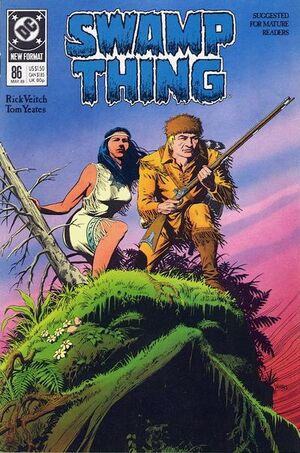
The cover below shows Moon Fawn in a sleeveless dress, but she was more demurely dressed in the story. The hint of sexiness is only a cheap marketing ploy.
Tomahawk and the others go west to the Indians' home in Echo Valley. It's a village of tipis, of course. Chief Grey Elk is the father of Moon Fawn and Wise Owl, of course, and wears a feather bonnet, of course. So Moon Fawn is a typical Indian "princess," though the story doesn't call her that.
The names Moon Fawn and Wise Owl may be the most stereotypical thing about them. Could their names possibly be more of an on-the-nose clicheé? She's soft like a fawn; he's wise like an owl. Get it?
Fortunately, the Indians don't engage in war-whooping dances or other "savage" practices. They don't go off half-naked or in warpaint. In their brief appearances, they seem like real people.
This was a common approach to depicting Indians in the "relevance" era of the 1960s and 1970s. They weren't mindless savages anymore; they exhibited some measure of humanity. But they were mostly generic Plains Indians with no distinct culture or religion. Not terrible, but not great either.
For more on the subject, see Comic Books Featuring Indians.
Swamp Thing Vol 2 86
Whether I read the comic book or this summary, the story initially makes little sense. But I'll try to summarize it.
** spoiler alert **
Swamp Thing has been sent bouncing back through time. He's now trapped in a crystal in the Old West in the year 1800.
The former Tomahawk is now a middle-aged tax collector, weary and cynical. His old foe Gerald Shilling, a master of disguise, takes him to a slave ship to collect its tax. It's not clear what Shilling has planned for Tomahawk, or why he'd help Tomahawk do his job. The only hint is that Shilling is playing some sort of role he isn't aware of.
Meanwhile, Moon Fawn and Wise Owl paddle to the ship and hides a crystal in Tomahawk's rowboat. It's not clear what they're doing either, except perhaps fulfilling some prophecy. When Tomahawk returns to his boat, he discovers the crystal and realizes who Shilling is. After a battle involving magic and a giant bat, Tomahawk gives the crystal--now attached to Shilling's arm--back to the Indians.
About all the Indians have accomplished is to meet Tomahawk when he's in a proper frame of mind. Oh, and to convert the crystal without a hand into a crystal with a hand. Which I guess is part of the prophecy.
From a Native perspective, the last six pages are the most interesting part. Tomahawk says he's tired of city life and wants to return to the wilderness. He accompanies Moon Fawn and her people as they travel west, growing sharper and fitter as they go. Eventually, he and Moon Fawn fall in love and give birth to a boy Hawk. Tomahawk also uses the crystal hand to free Swamp Thing and send him through time.
Years later, Tomahawk's son Hawk stars in the Hawk, Son of Tomahawk series. Hawk writes an autobiography that ends up in the hands of Abby, the girlfriend and wife of Swamp Thing. And the circle is complete, or whatever.
Basically, this issue provides an origin for Tomahawk's later years and for his son Hawk. Since I'm not a big Tomahawk or Hawk fan, I don't know if Hawk's first appearance in Tomahawk #131 covered his history. It may have mentioned his father's journey west, but I doubt it explained how Swamp Thing brought Tomahawk and Moon Fawn together.
Generic Indians
Moon Fawn and Wise Owl, sister and brother, are generic Indians all the way. When we first see them, they're wearing buckskin outfits and paddling a canoe. Wise Owl has a headband with feathers in it.
The cover below shows Moon Fawn in a sleeveless dress, but she was more demurely dressed in the story. The hint of sexiness is only a cheap marketing ploy.
Tomahawk and the others go west to the Indians' home in Echo Valley. It's a village of tipis, of course. Chief Grey Elk is the father of Moon Fawn and Wise Owl, of course, and wears a feather bonnet, of course. So Moon Fawn is a typical Indian "princess," though the story doesn't call her that.
The names Moon Fawn and Wise Owl may be the most stereotypical thing about them. Could their names possibly be more of an on-the-nose clicheé? She's soft like a fawn; he's wise like an owl. Get it?
Fortunately, the Indians don't engage in war-whooping dances or other "savage" practices. They don't go off half-naked or in warpaint. In their brief appearances, they seem like real people.
This was a common approach to depicting Indians in the "relevance" era of the 1960s and 1970s. They weren't mindless savages anymore; they exhibited some measure of humanity. But they were mostly generic Plains Indians with no distinct culture or religion. Not terrible, but not great either.
For more on the subject, see Comic Books Featuring Indians.
July 23, 2015
Native ghosts in comic books
A teacher e-mailed me to say she was interested in Native ghosts. For a section of her literature class, she wanted to know about Native ghosts in comic books. I sent her this response:
Native ghosts in comic books...interesting question.
There are a ton of stories in every genre--comics, movies, TV shows, novels, etc.--that feature Indian ghosts, spirits, or demons. Often they arise from an Indian burial ground that's been cursed somehow.
But these are usually throwaway stories. They're not central to the comic book, movie, or whatever in question. So it's difficult to produce a list of such stories. You'd have to search for "Indian burial ground," "Indian ghost," "Indian spirit," and so forth and weed through the false hits.
There are all sorts of variations, of course. I remember an old Tomahawk story where some Brits pretended to be ghosts to scare the Indians. Lots of wacky things like that.
As one approach, I'd suggest perusing my blog on two topics:
Burial grounds
Supernatural
Most of the postings are about movies or TV shows, not comics. But they may spark your interest anyway.
As for particular comics, characters such as Alpha Flight's Shaman, the New Mutants' Dani Moonstar, the Justice League of America's Manitou Raven, and DC's Arak sometimes enter the spirit world or the dream world. That's kind of like being a ghost. You could search those series for individual issues about ghosts. For instance, try "Alpha Flight Shaman ghost." See what it pulls up.
Beyond that, I can think of a few possibilities. Most of them don't involve ghosts in the classic European sense, but they may be close to what you want:
Desperadoes: Buffalo Dreams. I don't remember this mini-series well, but it may involve actual ghosts.
Ghostdancing. Dancing through different realms or dimensions--kind of like being a ghost.
Muktuk Wolfsbreath. Entering the dream world--again kind of like being a ghost.
I Am Coyote (Epic). Coyote shifts into a phantom state, which is kind of like being a ghost.
Timespirits. I don't remember this series well, but the characters go traveling through time and space. I wouldn't be surprised if they entered a ghostly state too.
New Mutants: The Demon Bear Saga. Dani Moonstar faces a spectral demon, which is kind of like a ghost.
As you can see, there are many suggestions about characters like a ghost. I don't know if that helps, but it's about all I can think of.
As for buying them, I sell just my own comics and a few others. I'd try Mile High Comics at http://www.milehighcomics.com. They have a huge inventory--possibly the biggest online.
From what I've seen, it's about 50-50 whether they have Native-themed comics such as the ones I've mentioned. But the prices for lower-quality items are reasonable.
I trust that helps!
Rob
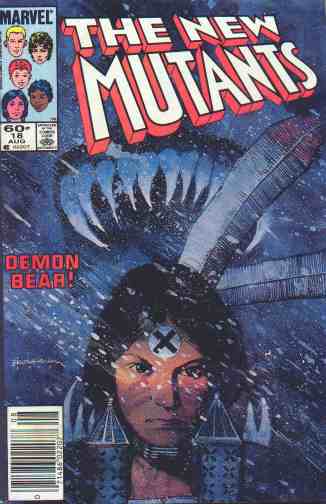
P.S. In a follow-up message, the teacher said she was also interested in Native spirits, demons, and related supernatural beings. That would increase the number of relevant comic books immensely.
Native ghosts in comic books...interesting question.
There are a ton of stories in every genre--comics, movies, TV shows, novels, etc.--that feature Indian ghosts, spirits, or demons. Often they arise from an Indian burial ground that's been cursed somehow.
But these are usually throwaway stories. They're not central to the comic book, movie, or whatever in question. So it's difficult to produce a list of such stories. You'd have to search for "Indian burial ground," "Indian ghost," "Indian spirit," and so forth and weed through the false hits.
There are all sorts of variations, of course. I remember an old Tomahawk story where some Brits pretended to be ghosts to scare the Indians. Lots of wacky things like that.
As one approach, I'd suggest perusing my blog on two topics:
Burial grounds
Supernatural
Most of the postings are about movies or TV shows, not comics. But they may spark your interest anyway.
As for particular comics, characters such as Alpha Flight's Shaman, the New Mutants' Dani Moonstar, the Justice League of America's Manitou Raven, and DC's Arak sometimes enter the spirit world or the dream world. That's kind of like being a ghost. You could search those series for individual issues about ghosts. For instance, try "Alpha Flight Shaman ghost." See what it pulls up.
Beyond that, I can think of a few possibilities. Most of them don't involve ghosts in the classic European sense, but they may be close to what you want:
As you can see, there are many suggestions about characters like a ghost. I don't know if that helps, but it's about all I can think of.
As for buying them, I sell just my own comics and a few others. I'd try Mile High Comics at http://www.milehighcomics.com. They have a huge inventory--possibly the biggest online.
From what I've seen, it's about 50-50 whether they have Native-themed comics such as the ones I've mentioned. But the prices for lower-quality items are reasonable.
I trust that helps!
Rob
P.S. In a follow-up message, the teacher said she was also interested in Native spirits, demons, and related supernatural beings. That would increase the number of relevant comic books immensely.
July 17, 2015
Moonshot comics anthology debuts
Native Characters and Creators Thrive in 176-Page 'Moonshot' Comics Anthology
By Stephanie WoodardExcitement crackles off the pages of Moonshot: The Indigenous Comics Collection, a handsomely produced book just out from AH Comics. The striking art and captivating stories by Indigenous authors and artists will appeal to adults in addition to the typical adolescent comic-book reader. Moonshot has a place in colleges, schools and libraries, as well as on individual bookshelves.
The title comes from a poem by superstar Cree singer-songwriter Buffy Sainte-Marie. In her poem, published in the book, she rejoices in the visionary framework of indigenous storytelling: “Off into outer space you go my friends / we wish you bon voyage / and when you get there we will welcome you again.” Sainte-Marie pokes fun at the false expectations and stereotypes often assigned to indigenous people: “I know a boy from a tribe so primitive / he can call me up without no telephone.”
The book’s Native contributors and others (some indigenous storytellers are paired with top non-Native comic-book artists) have no problem smashing tired stereotypes. In Moonshot’s 176 pages, you won’t find any of what award-winning Caddo comic-book author and historian Michael Sheyahshe calls "fringe-and-feathers Indians"—sepia-toned sidekicks for non-Native characters who are somehow better at being Native than their indigenous buddies. Instead, Moonshot’s stories feature complex Native characters, exhilarating action and thought-provoking lessons threaded through with humor.
The 13 comics published in Moonshot slip-slide along a continuum that arcs from the mythic past through the present to a sci-fi future. The storylines are either little-known or invented—“to help break down ideas of what Native spirituality and culture ‘should be,’” according to editor Hope Nicholson in a foreword to the volume. Importantly, she says, the book emphasizes the diversity of Native cultures. Comment: For more on comics anthologies, see Review of Trickster.
Below: "A panel from 'Water Master,' one of the tales in 'Moonshot.' Courtesy AH Comics."

By Stephanie Woodard
The title comes from a poem by superstar Cree singer-songwriter Buffy Sainte-Marie. In her poem, published in the book, she rejoices in the visionary framework of indigenous storytelling: “Off into outer space you go my friends / we wish you bon voyage / and when you get there we will welcome you again.” Sainte-Marie pokes fun at the false expectations and stereotypes often assigned to indigenous people: “I know a boy from a tribe so primitive / he can call me up without no telephone.”
The book’s Native contributors and others (some indigenous storytellers are paired with top non-Native comic-book artists) have no problem smashing tired stereotypes. In Moonshot’s 176 pages, you won’t find any of what award-winning Caddo comic-book author and historian Michael Sheyahshe calls "fringe-and-feathers Indians"—sepia-toned sidekicks for non-Native characters who are somehow better at being Native than their indigenous buddies. Instead, Moonshot’s stories feature complex Native characters, exhilarating action and thought-provoking lessons threaded through with humor.
The 13 comics published in Moonshot slip-slide along a continuum that arcs from the mythic past through the present to a sci-fi future. The storylines are either little-known or invented—“to help break down ideas of what Native spirituality and culture ‘should be,’” according to editor Hope Nicholson in a foreword to the volume. Importantly, she says, the book emphasizes the diversity of Native cultures.
Below: "A panel from 'Water Master,' one of the tales in 'Moonshot.' Courtesy AH Comics."
July 11, 2015
Review of Trickster
I posted several items about the Trickster anthology when it was published in 2010. Now I've finally read it.
Below are some dueling perspectives on it. First, the good news:
Trickster: Native American Tales: A Graphic CollectionTricksy
By E. R. Bird on November 23, 2010
Nowadays, you can read through a big publisher's full catalog for the upcoming season and not find a single solitary folktale gracing their lists. It's sad really. Maybe that's part of the reason that Trickster, as edited by Matt Dembicki, appealed so strongly to me. This isn't just a graphic novel and it isn't just a pairing of smart writers and great artists. Dembicki has come up with a way of collecting a wide variety of Native American folktales into a single source, done in such a way that kids will find themselves enthralled. When was the last time a book of folktales enthralled one of your kids anyway? It's remarkable. Not that it's a perfect collection (there are a couple things I'd change) but generally speaking I hope Trickster acts as a sign of good things to come.
Trickster is a great example of the graphic storytelling form...
By Donald M. Wood on May 31, 2010
Trickster has a great variety of artists that fit well with each of the different stories. I also think that this book is a great example of how graphic storytelling can reach a greater audience than just the core comic reader.
Each of the stories showcase a different aspect of the trickster persona that makes up a great deal of Native American lore and cautionary tales. The stories vary from cartoony versions of characters, storybook style illustration and fully painted tales.
The production quality of the book is beautiful,the artwork is well represented here. I highly recommend this book!
A Very Lively and Readable Book
By GraphicNovelReporter.com on June 21, 2010
Folkloric stories are powerful. They can be emotional, funny, uplifting, or scary. But they always have pull to them, and that's why they continue to haunt and entertain people.
While there are special classes in school that teach mythology and folklore, it isn't always easy to find a class on Native American stories. Unfortunately, these stories are often pushed aside just as Native American culture and history can so often get left out of textbooks. Trickster: Native American Tales--A Graphic Collection is a unique remedy for this. In the form of a comic book, it tells 21 Native tales about tricksters. The tales range in style and emotion: Some are straightforward, some are humorous, some are frightening. All of them are interesting. More glowing reviews:
Trickster's starred reviews
Journal Sentinel reviews Trickster
On the other hand
Then there's the bad news. Readers on the Goodreads site gushed less and opined more:
Trickster: Native American Tales: A Graphic CollectionMiriam rated it 2 of 5 stars
On the one hand, I feel a little guilty giving this collection only 3 stars, because it is fabulous that they collected all these native american tales together and got various artists to illustrate them and paid for a high-quality heavy-paper glossy publication.
On the other hand, I feel a little guilt giving this collection as much as 3 stars, because man, it was pretty effing boring and the retellings were uninspired and most of the art was stunningly weak and cartoonish.
I am far from being an expert and I could easily come up with a more diverse, complex and interesting set of trickster tales. And I could relate them in a more interesting voice. Hell, I could even illustrate them better than most of these artists bothered to do. And since they actually make careers out of this I can only assume that the artists or the editor thought this over-simple, silly tone was appropriate to the subject matter. Wrong.
Seth Hahne rated it 1 of 5 stars
I frequently remark at the necessarily uneven tone of anthologies, with one story trumping another and the next falling far short of the bar set by the former. I expected this. What I hadn’t expected was for the bar to be set so low and for it to remain low for the book’s duration. These stories were almost* universally uninvolving and trite, offering no compelling reason to read further. It was only a personal need to perform my due diligence that pressed me to continue. Never a good recommendation for a book.
Almost exclusively, the writing in the book was limp. These stories of the Trickster (usually a coyote or rabbit or raccoon) were simply uninteresting. Perhaps they make a better oral tradition than a written one, but my feeling is that almost any of the stories could have been made more compelling with a steadier author’s hand. Many of the tales take forms similar to Kipling’s Just So Stories. How the alligator got his skin, how the rabbit got his tail, how the raccoon got short and fat, how the beaver stopped being an unbridled killing machine, et cetera. There’s meat there for some decent stories. Or at least some lame stories told interestingly. But it just never coalesces.
Samrat rated it 2 of 5 stars
Meh. I really wanted to like this, what with my fondness for native folklore and my work with a number of tribes, mostly in the northern Plains. It may be the graphic novel format alone, which I don't think I care for, or something else I can't put my finger on.
It felt shallow. This book could have really used a forward with information on the traditional role of the trickster and especially contexts with each story, at least a mention of the contributing tribe or region. A few of the comics just seemed inappropriately cartoonish and I wonder if the artwork was fully vetted--quite a bit of it seemed like Disney-Indian. (Much of the art and graphic design just wasn't to my personal taste, too. YMMV.) A tougher editor could have helped shape up some of these stories for the graphic novel format. There are just so many great collections of stories out there (for academic and popular audiences) that this one seemed like a hollow mish-mash with an adorable cover.
Raina rated it 3 of 5 stars
A collection of trickster tales from native tribes all over amerika.
I struggle with this one. On the one hand, it's a neat looking package. An awesome cover, glossy color images inside, with stories contributed by native americans and illustrations by comic artists. As an artifact, I think it's valuable in society.
But I'm not sure it's entirely effective. Many of the stories are extremely text heavy, and it's often hard to see the benefit the illustrations lend to the telling. Also, there's no extra information about where the stories come from, which areas of the country, what tribes, any kind of a context. There was one story set near Celilo Falls (on the Columbia River), and the dwellings were teepees. Maybe I'm ignorant, but I didn't think northwest Native Americans used teepees. Rob's review
As you can surmise from my inclusion of negative reviews, I wasn't that crazy about Trickster.
I think I've read a book of Native trickster tales before. As with most anthologies, those tales were all over the map in terms of enjoyment. Same with these tales.
I'm not sure I can pinpoint the problem. In some cases the art was too childish or cartoonish. One reviewer complained about the "Ren-and-Stimpy style," which I'd concur with. In some cases the writing was too flat or uninspiring. Some stories were not begging to be told, or could've been told in a couple of pages rather than a dozen.
Examples:
A good Indian bets a bad Indian that he can build a bridge before the crow caws at dawn. The bad man cheats by showing the crow a burning torch.
How did the alligator get its mottled skin? Rabbit lit his home on fire and he got burned.
Coyote summons the eligible women to choose a bride, but one isn't a virgin so he turns them all to stone.
Those might be three-page stories in text form. They aren't necessarily improved by making them 3-4 times longer.
Indeed, I would've tried to make the stories as short as possible. Three pages of text condensed to one of illustration might've been a quick but enjoyable read.
For anyone who's read multitudes of fairy tales and fables, it's relatively easy to visualize an animal-based story. It isn't like a superhero or sci-fi saga where the visuals are almost required. Trickster's drawings are sometimes better than what you might imagine, but sometimes worse.
Diverse or generic?
I'd disagree with those who said Trickster's stories showcase the breadth and diversity of Native cultures. Most of the human figures are generic half-naked Indians in buckskins or loincloths and feathers. Few of the stories use more than a couple of Native words or concepts. Most could've taken place anywhere with coyotes, rabbits, wolves, ravens, raccoons, and so forth--which was most of America, originally.
I think trickster tales are supposed to be universal in nature, and Trickster's stories generally are. So they're more like Aesop's Fables or Just So Stories than Native myths and legends. That limits their appeal to aficionados of Native literature.
This is where introductions might've helped: by giving the stories some context. What was this particular culture like? Why was this animal a trickster and not that one? What was the point of the story? How did it resonate with the people who heard it?
Summing it up, I'd probably recommend Trickster only to fans of Native-themed literature and comics. Rob's rating: 6.5 of 10.

Below are some dueling perspectives on it. First, the good news:
Trickster: Native American Tales: A Graphic Collection
By E. R. Bird on November 23, 2010
Nowadays, you can read through a big publisher's full catalog for the upcoming season and not find a single solitary folktale gracing their lists. It's sad really. Maybe that's part of the reason that Trickster, as edited by Matt Dembicki, appealed so strongly to me. This isn't just a graphic novel and it isn't just a pairing of smart writers and great artists. Dembicki has come up with a way of collecting a wide variety of Native American folktales into a single source, done in such a way that kids will find themselves enthralled. When was the last time a book of folktales enthralled one of your kids anyway? It's remarkable. Not that it's a perfect collection (there are a couple things I'd change) but generally speaking I hope Trickster acts as a sign of good things to come.
Trickster is a great example of the graphic storytelling form...
By Donald M. Wood on May 31, 2010
Trickster has a great variety of artists that fit well with each of the different stories. I also think that this book is a great example of how graphic storytelling can reach a greater audience than just the core comic reader.
Each of the stories showcase a different aspect of the trickster persona that makes up a great deal of Native American lore and cautionary tales. The stories vary from cartoony versions of characters, storybook style illustration and fully painted tales.
The production quality of the book is beautiful,the artwork is well represented here. I highly recommend this book!
A Very Lively and Readable Book
By GraphicNovelReporter.com on June 21, 2010
Folkloric stories are powerful. They can be emotional, funny, uplifting, or scary. But they always have pull to them, and that's why they continue to haunt and entertain people.
While there are special classes in school that teach mythology and folklore, it isn't always easy to find a class on Native American stories. Unfortunately, these stories are often pushed aside just as Native American culture and history can so often get left out of textbooks. Trickster: Native American Tales--A Graphic Collection is a unique remedy for this. In the form of a comic book, it tells 21 Native tales about tricksters. The tales range in style and emotion: Some are straightforward, some are humorous, some are frightening. All of them are interesting.
Trickster's starred reviews
Journal Sentinel reviews Trickster
On the other hand
Then there's the bad news. Readers on the Goodreads site gushed less and opined more:
Trickster: Native American Tales: A Graphic Collection
On the one hand, I feel a little guilty giving this collection only 3 stars, because it is fabulous that they collected all these native american tales together and got various artists to illustrate them and paid for a high-quality heavy-paper glossy publication.
On the other hand, I feel a little guilt giving this collection as much as 3 stars, because man, it was pretty effing boring and the retellings were uninspired and most of the art was stunningly weak and cartoonish.
I am far from being an expert and I could easily come up with a more diverse, complex and interesting set of trickster tales. And I could relate them in a more interesting voice. Hell, I could even illustrate them better than most of these artists bothered to do. And since they actually make careers out of this I can only assume that the artists or the editor thought this over-simple, silly tone was appropriate to the subject matter. Wrong.
Seth Hahne rated it 1 of 5 stars
I frequently remark at the necessarily uneven tone of anthologies, with one story trumping another and the next falling far short of the bar set by the former. I expected this. What I hadn’t expected was for the bar to be set so low and for it to remain low for the book’s duration. These stories were almost* universally uninvolving and trite, offering no compelling reason to read further. It was only a personal need to perform my due diligence that pressed me to continue. Never a good recommendation for a book.
Almost exclusively, the writing in the book was limp. These stories of the Trickster (usually a coyote or rabbit or raccoon) were simply uninteresting. Perhaps they make a better oral tradition than a written one, but my feeling is that almost any of the stories could have been made more compelling with a steadier author’s hand. Many of the tales take forms similar to Kipling’s Just So Stories. How the alligator got his skin, how the rabbit got his tail, how the raccoon got short and fat, how the beaver stopped being an unbridled killing machine, et cetera. There’s meat there for some decent stories. Or at least some lame stories told interestingly. But it just never coalesces.
Samrat rated it 2 of 5 stars
Meh. I really wanted to like this, what with my fondness for native folklore and my work with a number of tribes, mostly in the northern Plains. It may be the graphic novel format alone, which I don't think I care for, or something else I can't put my finger on.
It felt shallow. This book could have really used a forward with information on the traditional role of the trickster and especially contexts with each story, at least a mention of the contributing tribe or region. A few of the comics just seemed inappropriately cartoonish and I wonder if the artwork was fully vetted--quite a bit of it seemed like Disney-Indian. (Much of the art and graphic design just wasn't to my personal taste, too. YMMV.) A tougher editor could have helped shape up some of these stories for the graphic novel format. There are just so many great collections of stories out there (for academic and popular audiences) that this one seemed like a hollow mish-mash with an adorable cover.
Raina rated it 3 of 5 stars
A collection of trickster tales from native tribes all over amerika.
I struggle with this one. On the one hand, it's a neat looking package. An awesome cover, glossy color images inside, with stories contributed by native americans and illustrations by comic artists. As an artifact, I think it's valuable in society.
But I'm not sure it's entirely effective. Many of the stories are extremely text heavy, and it's often hard to see the benefit the illustrations lend to the telling. Also, there's no extra information about where the stories come from, which areas of the country, what tribes, any kind of a context. There was one story set near Celilo Falls (on the Columbia River), and the dwellings were teepees. Maybe I'm ignorant, but I didn't think northwest Native Americans used teepees.
As you can surmise from my inclusion of negative reviews, I wasn't that crazy about Trickster.
I think I've read a book of Native trickster tales before. As with most anthologies, those tales were all over the map in terms of enjoyment. Same with these tales.
I'm not sure I can pinpoint the problem. In some cases the art was too childish or cartoonish. One reviewer complained about the "Ren-and-Stimpy style," which I'd concur with. In some cases the writing was too flat or uninspiring. Some stories were not begging to be told, or could've been told in a couple of pages rather than a dozen.
Examples:
Those might be three-page stories in text form. They aren't necessarily improved by making them 3-4 times longer.
Indeed, I would've tried to make the stories as short as possible. Three pages of text condensed to one of illustration might've been a quick but enjoyable read.
For anyone who's read multitudes of fairy tales and fables, it's relatively easy to visualize an animal-based story. It isn't like a superhero or sci-fi saga where the visuals are almost required. Trickster's drawings are sometimes better than what you might imagine, but sometimes worse.
Diverse or generic?
I'd disagree with those who said Trickster's stories showcase the breadth and diversity of Native cultures. Most of the human figures are generic half-naked Indians in buckskins or loincloths and feathers. Few of the stories use more than a couple of Native words or concepts. Most could've taken place anywhere with coyotes, rabbits, wolves, ravens, raccoons, and so forth--which was most of America, originally.
I think trickster tales are supposed to be universal in nature, and Trickster's stories generally are. So they're more like Aesop's Fables or Just So Stories than Native myths and legends. That limits their appeal to aficionados of Native literature.
This is where introductions might've helped: by giving the stories some context. What was this particular culture like? Why was this animal a trickster and not that one? What was the point of the story? How did it resonate with the people who heard it?
Summing it up, I'd probably recommend Trickster only to fans of Native-themed literature and comics. Rob's rating: 6.5 of 10.
June 09, 2015
Judging Red Wolf by his costume
Tom Brevoort Scolds Fans for Judging Marvel Character By Promotional Art Marvel Created to Promote Character
By Jude Terror"Hey Tom," asked Anonymous. "I think bringing Red Wolf into prominence is a great idea, and will fit Marvel's sense of diversity in the future. I do have a question about this though: was there ever a concern that the character might be viewed as a stereotype, or met with a similar controversy to say, the Washington Redskins? Well, thanks for your time and keep up the good work!"
It's a reasonable question. After all, Red Wolf does look a little bit... outdated:
Shirtless, wearing war paint, wearing buckskin pants, wearing, inexplicably, a loincloth over the buckskin pants, wearing a necklace made out of animal teeth, and holding a bow and arrow, Red Wolf looks a little bit stereotypical. Maybe there's a good reason for this. Maybe it totally makes sense in the story and Red Wolf will be the most inoffensive character ever created.
But looking at that image, which Marvel produced and released for the purpose of getting readers excited about All-New All-Different Marvel NOW!, it's a perfectly valid response to ask a question, right? It's something that's been discussed recently in the national media in response to sports teams using stereotypical images of Native Americans as mascots, so it's clearly relevant. We can all agree that asking questions is okay, especially when raised in the respectful and non-confrontational manner as Anonymous did?
Well, not according to Tom Brevoort:No concern, in that we thought that when people read the story, as opposed to judging wildly from a piece of promotional art, they would understand the character. Really, Tom? Did the person asking the question "judge wildly?" Is any kind of response other than blind devotion considered "wild judgement?"
This kind of attitude is indicative of the smarm that permeates the industry and parts of fandom. If the marketing pumped out daily by Marvel gets you excited and in the mood to buy their comics, that's a perfectly accepted response. But if you criticize it? Well, mister, you should wait until the book comes out before passing "wild" judgement! That promotional art is only for people to fawn over and place their preorders. Criticism isn't allowed around here. How dare people "wildly" judge Marvel by the promotional art Marvel itself creates and publishes?! Who do you think you are, comic book reader, to question the House of Ideas? Guess Which 'All New, All Different' Marvel Hero Looks Like a 19th-Century RelicBrevoort's response is so arrogant, it makes us wonder whether the folks at Marvel have already begun holding damage-control meetings that have made Brevoort extra-cranky. Putting a bare-chested, face-painted Native hero in buckskins next to Iron Man in the year 2015 is really unforgivable. That needs to be fixed. Time will tell whether the Red Wolf Marvel ultimately delivers really is All-New and All-Different, or whether he's the same-old same-old. Comment: Except for calling the judgment "wild," I don't think Brevoort's answer is that bad. I wouldn't rant about it as these commentators have done.
But Brevoort is still wrong. You certainly can judge visual stereotypes by the visuals. That's all you can judge them by. No amount of nonvisual information can wipe a visual stereotype from your eyes.
Brevoort's answer about understanding the character is a dodge. Red Wolf may be an extremely well-developed character, worthy of our respect, but we're talking about his appearance. You could dress Hamlet or Willy Loman as Red Wolf and the costume would be stereotypical. Any of them in that costume, with those weapons, would be a half-naked savage by definition.
Let us know when you have a real answer, Tom. So far you haven't addressed the issue of Red Wolf's stereotypical appearance.
For more on the subject, see All-New, All-Different Red Wolf? and Same-Old, Same-Old Red Wolf.

By Jude Terror
It's a reasonable question. After all, Red Wolf does look a little bit... outdated:
Shirtless, wearing war paint, wearing buckskin pants, wearing, inexplicably, a loincloth over the buckskin pants, wearing a necklace made out of animal teeth, and holding a bow and arrow, Red Wolf looks a little bit stereotypical. Maybe there's a good reason for this. Maybe it totally makes sense in the story and Red Wolf will be the most inoffensive character ever created.
But looking at that image, which Marvel produced and released for the purpose of getting readers excited about All-New All-Different Marvel NOW!, it's a perfectly valid response to ask a question, right? It's something that's been discussed recently in the national media in response to sports teams using stereotypical images of Native Americans as mascots, so it's clearly relevant. We can all agree that asking questions is okay, especially when raised in the respectful and non-confrontational manner as Anonymous did?
Well, not according to Tom Brevoort:
This kind of attitude is indicative of the smarm that permeates the industry and parts of fandom. If the marketing pumped out daily by Marvel gets you excited and in the mood to buy their comics, that's a perfectly accepted response. But if you criticize it? Well, mister, you should wait until the book comes out before passing "wild" judgement! That promotional art is only for people to fawn over and place their preorders. Criticism isn't allowed around here. How dare people "wildly" judge Marvel by the promotional art Marvel itself creates and publishes?! Who do you think you are, comic book reader, to question the House of Ideas?
But Brevoort is still wrong. You certainly can judge visual stereotypes by the visuals. That's all you can judge them by. No amount of nonvisual information can wipe a visual stereotype from your eyes.
Brevoort's answer about understanding the character is a dodge. Red Wolf may be an extremely well-developed character, worthy of our respect, but we're talking about his appearance. You could dress Hamlet or Willy Loman as Red Wolf and the costume would be stereotypical. Any of them in that costume, with those weapons, would be a half-naked savage by definition.
Let us know when you have a real answer, Tom. So far you haven't addressed the issue of Red Wolf's stereotypical appearance.
For more on the subject, see All-New, All-Different Red Wolf? and Same-Old, Same-Old Red Wolf.
June 06, 2015
Same-old, same-old Red Wolf
The "all-new, all-different" Red Wolf struck me as problematical since he was still a half-naked savage. Someone else noticed the problem and wrote a good commentary on it:
Not So New, Not So Different: On Red Wolf and Indigenous Representation in the New Marvel
By James LeaskIf the first thing I’d learned about this news was, “Marvel’s bringing back Red Wolf in an important way,” I’d have been thrilled. That’s exactly what I want. There’s a problem, though: that’s not how I first learned about it. I saw the promo image first. And in the promo image, Red Wolf is dressed like the most problematic stereotype you have ever seen of an aboriginal person. He’s holding a bow and arrow. He’s wearing buckskin breeches. He’s wearing a loincloth on top of the buckskin breeches. He has a bone necklace and a warpaint. He’s not wearing a shirt. The only thing missing from the Injun Stereotype Bingo Card is a feather in his hair. It’s hard to make this more suspect-looking. 
If it isn't obvious why this is problematical, Leask explains it:The representation was iffy enough in the context of 1872. It’s easy to defend the antiquated dress by saying, hey, it’s the 19th century, so olde-tyme-y dress is appropriate. There are a couple of problems with that.
First, it takes the dangerous position that in the late 19th century, aboriginal people pretty much only dressed in breeches, loincloths and a startling lack of upper body wear. Of course, this isn’t true; not only did aboriginal people wear a wide variety of clothes, including, yes, shirts and coats (I’d like to see present-day Red Wolf William Talltrees brave his home Montana winters without it), but since contact with European settlers, many aboriginal people had begun dressing in European-style dress, a number that only increased as the two (to oversimplify it) groups co-existed, intermingled, and came together to form the distinct aboriginal people, the Métis. You don't have to be an expert on Native history to get the point. Think of the famous images of leaders such as Sitting Bull and Geronimo from that era. They're usually wearing full outfits, shirts and pants, made of buckskin or cotton. Half-naked Indians, or Indians wearing warpaint, become increasingly rare. Why? Because as Leask says, Indians were intermingling with Anglos and adopting their customs. Going around half-naked was impractical and out of fashion.

Leask's conclusion:Of course, this is just a promotional image. We don’t know how Red Wolf will be included in All New, All Different Marvel or, for that matter, how he’ll be included in Secret Wars: 1872. We don’t know what books he’ll be in, who the creative team will be, or who he will be.
My point is, this could end up being something smart and progressive, potentially even from an aboriginal creator. This could be exactly what I asked for.
But it doesn’t look like it. This is just a promotional image, but it’s the image that Marvel decided to sell their diversity with. It’s the image they decided to present of an aboriginal person in 2015. It’s an Injun.
Axel Alonso is right, that image of Red Wolf “resembles the Marvel Universe that 60 years of readers have come to love.” The problem is, that’s not necessarily a good thing. The main difference between Red Wolf's old and new costumes is whether he wears a physical wolf headpiece or has a wolf headpiece painted on. That's not much of a difference. And since warpaint usually has a symbolic message--one this design is obviously faking--I'd say the old Red Wolf is slightly better.
Yes, the old Red Wolf was problematical as well. But that costume was designed in 1970 or thereabouts. After 45 years, can't Marvel come up with up with something better?
Even the notorious Tonto wore full buckskins in the 1950s. So 65 years later, we've literally made no progress in our portrayals of fictional Indians. Wow.
Not So New, Not So Different: On Red Wolf and Indigenous Representation in the New Marvel
By James Leask
If it isn't obvious why this is problematical, Leask explains it:
First, it takes the dangerous position that in the late 19th century, aboriginal people pretty much only dressed in breeches, loincloths and a startling lack of upper body wear. Of course, this isn’t true; not only did aboriginal people wear a wide variety of clothes, including, yes, shirts and coats (I’d like to see present-day Red Wolf William Talltrees brave his home Montana winters without it), but since contact with European settlers, many aboriginal people had begun dressing in European-style dress, a number that only increased as the two (to oversimplify it) groups co-existed, intermingled, and came together to form the distinct aboriginal people, the Métis.
Leask's conclusion:
My point is, this could end up being something smart and progressive, potentially even from an aboriginal creator. This could be exactly what I asked for.
But it doesn’t look like it. This is just a promotional image, but it’s the image that Marvel decided to sell their diversity with. It’s the image they decided to present of an aboriginal person in 2015. It’s an Injun.
Axel Alonso is right, that image of Red Wolf “resembles the Marvel Universe that 60 years of readers have come to love.” The problem is, that’s not necessarily a good thing.
Yes, the old Red Wolf was problematical as well. But that costume was designed in 1970 or thereabouts. After 45 years, can't Marvel come up with up with something better?
Even the notorious Tonto wore full buckskins in the 1950s. So 65 years later, we've literally made no progress in our portrayals of fictional Indians. Wow.
June 05, 2015
All-new, all-different Red Wolf?
I was a bit slow, but I soon noticed the character on the bottom right of this illustration:

He looked like a cross between Conan the Barbarian and Red Wolf the Native superhero. Turns out I was half right.
'All-New, All-Different Marvel' Spotlight: Meet Red Wolf
The somewhat obscure character first appeared in 1970's Avengers No. 80.
By Graeme McMillanLooking at artist David Marquez's teaser art for Marvel's "All-New All-Different Marvel" relaunch, one question might be on a lot of people's minds: Who is that guy on the far right that looks a bit like Tarzan crossed with Turok? Ladies and gentlemen, meet the somewhat obscure Red Wolf.
Red Wolf's first appearance came in 1970's Avengers No. 80, helpfully titled "The Coming of Red Wolf!" For all writer Roy Thomas and artist John Buscema's clear intent to diversify the predominantly white Marvel Universe of the time with the introduction of William Talltrees, a Cheyenne tribal leader out for revenge on the man who killed his family, the story is very much of its time, complete with well-meaning but awkward attempts at invoking a culture outside their own experience. ("Oh, the Anglos watched all the war dances—the ones done especially for them," Talltrees says at one point, explaining his origin to the Avengers, "but they did not look within our hearts—they could not read our minds —!") 
It would appear that it's the wild west Red Wolf that will inform the version of the character that appears in the All-New, All-Different Marvel Universe this fall; before Marvel puts a spotlight on the character with its high-profile relaunch (although it's unclear where he will appear), a Red Wolf will show up in 1872, a tie-in to the publisher's Secret Wars event set in an alternate reality where versions of familiar Marvel heroes like Captain America, Hulk and Iron Man exist in a wild west setting.
That Red Wolf is returning to Marvel at a time when the publisher is pushing the diversity of characters as a selling point is oddly fitting; he was, after all, one of the earliest examples of the company trying to move beyond its core demographic and try something else. That he's been forgotten in the many years since only makes his return feel all the more important. You can see a preview of 1872 #1 here:
It's High Noon On Battleworld In This 1872 #1 First Look
It appears Red Wolf is dragging a box of explosives. Steve Rogers the sheriff arrests him--perhaps for sabotage or the threat of sabotage? While the others may want to shoot Red Wolf or string him up for his alleged crimes.

More on this new version of a classic Native superhero coming up.
He looked like a cross between Conan the Barbarian and Red Wolf the Native superhero. Turns out I was half right.
'All-New, All-Different Marvel' Spotlight: Meet Red Wolf
The somewhat obscure character first appeared in 1970's Avengers No. 80.
By Graeme McMillan
Red Wolf's first appearance came in 1970's Avengers No. 80, helpfully titled "The Coming of Red Wolf!" For all writer Roy Thomas and artist John Buscema's clear intent to diversify the predominantly white Marvel Universe of the time with the introduction of William Talltrees, a Cheyenne tribal leader out for revenge on the man who killed his family, the story is very much of its time, complete with well-meaning but awkward attempts at invoking a culture outside their own experience. ("Oh, the Anglos watched all the war dances—the ones done especially for them," Talltrees says at one point, explaining his origin to the Avengers, "but they did not look within our hearts—they could not read our minds —!")
That Red Wolf is returning to Marvel at a time when the publisher is pushing the diversity of characters as a selling point is oddly fitting; he was, after all, one of the earliest examples of the company trying to move beyond its core demographic and try something else. That he's been forgotten in the many years since only makes his return feel all the more important.
It's High Noon On Battleworld In This 1872 #1 First Look
It appears Red Wolf is dragging a box of explosives. Steve Rogers the sheriff arrests him--perhaps for sabotage or the threat of sabotage? While the others may want to shoot Red Wolf or string him up for his alleged crimes.
More on this new version of a classic Native superhero coming up.
Subscribe to:
Posts (Atom)