Not Your Asian Ninja: How the Marvel Cinematic Universe Keeps Failing Asian-Americans
White isn’t a neutral color: “Doctor Strange,” Tilda Swinton and the “unwinnable” diversity argument
George Takei gets real about 'cringeworthy' Marvel casting for 'Doctor Strange'
The Director of Doctor Strange Thinks One Asian Character Makes Up for the Movie's Biggest Screw-Up
Showing posts with label Asians. Show all posts
Showing posts with label Asians. Show all posts
September 12, 2016


July 07, 2016
Whitewashing in Ghost in the Shell
A typical movie in which Hollywood changes a nonwhite character to white:
Exclusive: ‘Ghost in the Shell’ Producers Reportedly Tested Visual Effects That Would Make White Actors Appear Asian
Why it matters that Ghost in the Shell is Japanese and Scarlett Johansson isn’t
The Ghost in the Shell Movie Doesn't Know Whether Its Main Character Is Japanese or Not
Ghost in the Shell’s whitewashing: does Hollywood have an Asian problem?
Comment: The same issue comes up often in Native-themed movies and TV shows.
Exclusive: ‘Ghost in the Shell’ Producers Reportedly Tested Visual Effects That Would Make White Actors Appear Asian
Why it matters that Ghost in the Shell is Japanese and Scarlett Johansson isn’t
The Ghost in the Shell Movie Doesn't Know Whether Its Main Character Is Japanese or Not
Ghost in the Shell’s whitewashing: does Hollywood have an Asian problem?
Comment: The same issue comes up often in Native-themed movies and TV shows.
May 25, 2016
Why won't Hollywood cast Asians?
Hollywood's practice of whitewashing characters is in the news again. This time, several major Asian characters have been turned white.
With non-Natives such as Johnny Depp and Taylor Lautner playing Native characters, the subject is highly relevant to this blog. Some analyses:
Why Won’t Hollywood Cast Asian Actors?
“More than just racism in movies”: Asian American protest #WhiteWashedOUT goes beyond Hollywood’s diversity fails
Dear white Hollywood: Here are 3 things you need to hear about your defensiveness on race
#StarringJohnCho highlights Hollywood's 'whitewashing'
Asian-American Actors Are Fighting for Visibility. They Will Not Be Ignored.
For more on the subject, see Diversity Lacking at 2016 Oscars and Asian Jokes at 2016 Oscars.
With non-Natives such as Johnny Depp and Taylor Lautner playing Native characters, the subject is highly relevant to this blog. Some analyses:
Why Won’t Hollywood Cast Asian Actors?
“More than just racism in movies”: Asian American protest #WhiteWashedOUT goes beyond Hollywood’s diversity fails
Dear white Hollywood: Here are 3 things you need to hear about your defensiveness on race
#StarringJohnCho highlights Hollywood's 'whitewashing'
Asian-American Actors Are Fighting for Visibility. They Will Not Be Ignored.
For more on the subject, see Diversity Lacking at 2016 Oscars and Asian Jokes at 2016 Oscars.
March 03, 2016
Diversity lacking at 2016 Oscars
Chris Rock’s Oscars didn’t “fight the power”: A night of crude jokes and cynical deflection is a poor way to show progress
Rock's big night shows us Hollywood wants it both ways—for movies to be powerful art and blameless entertainment
By Arthur ChuThe stage was set with Chris Rock’s opening monologue, which, while it certainly directly addressed the #OscarsSoWhite issue, made two breathtakingly tone-deaf arguments in quick succession: One, that the Oscars (and representation in entertainment media in general) is really not that big a deal, and two, the reason people are making a stink about it now is that we are no longer dealing with things that are big deals, like the actual violence and murder protested by the 1960s civil rights movement.
This was an incredibly stupid thing to say. The fact that #OscarsSoWhite has trended in tandem with its preceding sister hashtag #BlackLivesMatter isn’t exactly subtle to anyone who’s ever glanced at so-called Black Twitter. (Which Rock clearly has, given his much-appreciated last-minute shout-out to #BlackLivesMatter at the end of the ceremony.) A #BlackLivesMatter documentary addressing the violence and murder going on in the streets right now was commissioned by HBO as a direct result of the uncomfortable negative attention #OscarsSoWhite put on the film industry.
Acting like caring about day-to-day violence in the streets and the impact media and culture have on that violence are somehow mutually exclusive—a common, frustrating, tired argument anyone who talks about racism in media will inevitably see dozens of times in the comments section—ignores history.
It ignores the many, many arguments that have been made about how the excuses made for the deaths of Trayvon Martin and Mike Brown frequently come verbatim from untrue stereotypes out of TV and movies, how the only way Darren Wilson’s description of Brown as a “demon” who was “bulking up to get through the bullets” could possibly make sense to anyone is after a lifetime of media portrayals of the scary superhuman black man. It ignores Martin Luther King going out of his way to call Nichelle Nichols and tell her not to quit “Star Trek” because having a black woman on TV who wasn’t a domestic servant mattered. It ignores the ongoing civil rights protests around the Oscars back in the 1960s and ’70s, including Marlon Brando making history as the first and only best actor winner to boycott the ceremony, sending American Indian Movement activist Sacheen Littlefeather to accept the award in his place.
It ignores the fact that at the very moment Chris Rock was talking, there was a “Justice for Flint” fundraiser going on in protest of the Oscars, hosted by two black prominent filmmakers snubbed for best director nods who used #OscarsSoWhite to bring attention to the cause of a predominantly black community whose water was literally poisoned. 8 Reasons Why I Hated Chris Rock's Oscars Monologue
Opinions about the funnyman's opener ranged from "he told the truth" to "I laughed at parts," to "it sucked." Here are eight reasons why Akiba Solomon wishes it never happened.
By Akiba SolomonOne: Rock was foul for saying that Jada Pinkett Smith was only boycotting the Oscars because she wasn't invited. I can see why some see Pinkett Smith's actions as calculated and insincere, but Rock didn't say that. Instead, he reduced everything—the #OscarsSoWhite hashtag, the boycott and the alternate events (including one starring his brother)—to the sour grapes of a self-centered, spoiled, unqualified Black woman. It was also dumb. Because Jada Pinkett Smith can get into the Oscars.
Two: #OscarsSoWhite isn't some silly little hashtag. This year, people of all races have used it to talk about the problems large and small with an awards show that nominates strictly White actors across 20 categories. Plus the hashtag, news coverage and discussions provided Cheryl Boone Isaacs, the Black woman who heads up the Academy, with the political cover I believe she needed to change membership and voting rules that have grossly privileged elderly White men for years.
Three: Claiming that Black people care about #OscarsSoWhite because we have nothing real to be mad about was hostile to the truth. Here is a man who made an (uneven, sexist) documentary about Black hair in 2009 because his daughter was sad about not having "good hair." But in 2016, Rock knows nothing of contemporary Black struggle? Like, when people say "Black lives matter," does he hear, "Tekjjdioj gj()gui p;/00+"? Does "I can't breathe" bring anything to mind? How about "Sandra Bland," "Michael Brown," "Eric Garner" and "not guilty"?
Four: Using the image of a Black grandmother hanging from a tree as a punch line was blasphemous. This country has never atoned for its history of lynching, castrating and fatally dragging Black people from pickup trucks. Nor has it meaningfully addressed the burning of entire Black towns, race riots and other lynching-adjacent crimes. Commentary: Joe Biden wasn't as funny at the Oscars as Chris Rock, but at least he didn't make an Asian joke
By Dexter ThomasAs the show progressed, some people who were watching used Twitter to ask why Chris Rock wasn't talking about all underrepresented people, instead of just black people. This has been a point of concern for a while, as some have assumed that just because the #OscarsSoWhite hashtag was started by a black woman, it must be black-focused, though the originator has repeatedly clarified that she was speaking of inclusion for all people.
The argument spun off into a separate conversation under the #NotYourMule hashtag, as people argued over whether black people should need to stand up for other people of color at every opportunity.
And really, Chris Rock shouldn't have to deal with this criticism: While he may have focused on the lack of opportunities available to black talent Sunday night, he is on record talking about diversity issues in Hollywood that go beyond black and white. In 2014, he wrote in the Hollywood Reporter:
But forget whether Hollywood is black enough. A better question is: Is Hollywood Mexican enough? You're in L.A, you've got to try not to hire Mexicans. It's the most liberal town in the world, and there's a part of it that's kind of racist—not racist like "... you, ..." racist, but just an acceptance that there's a slave state in L.A. There's this acceptance that Mexicans are going to take care of white people in L.A. that doesn't exist anywhere else.
That insight was nowhere to be found at the Oscars on Sunday when he made a cheap joke about Asian child labor. The Oscars’ awkward & insincere masochism: Why the #OscarsSoWhite ceremony felt like such a disappointment
Last night's show was defined less by Chris Rock's uneven hosting turn than by the Academy's cognitive dissonance
By Jack MirkinsonWatching this extended masochism session was a strange experience. We were told, time and again, how wrong the Oscars had gotten things, and then another award was given out and the violins swelled and an oh-so-worthy Oscar moment was had. The show was desperate for us to know how sorry it was to have failed us so thoroughly, but it also wanted us to remain utterly devoted to both the people who did get nominated and to the broader idea of importance and integrity of the Oscars. The cognitive dissonance seeped through the entire night.
One thing that really didn’t help was the ceremony’s complete tone-deafness about any diversity that didn’t fit into a black-white framework. Rock did a bit about Asians—using children, no less—that was so off-key, so glaringly unfunny that you wondered how it had gotten through in a year when the show was trying to prove that it had its finger on the pulse. Aside from winning director Alejandro Gonzalez Iñarritu and a couple of short film awardees, Asians and Latinos had virtually no presence for the entire evening. It was, to say the least, an odd choice. After Oscars, Hashtags Ask: Does One Minority Group Have to Fight for Another?
By Karen WorkmanNo sooner had the curtains closed on the 88th Academy Awards, which was punctuated by Chris Rock’s scathing but broadly praised opening monologue on racism in Hollywood, than a new battle had reached a fever pitch on social media. And it had its own hashtag: #notyourmule.
Some viewers took issue with what they saw as the narrow focus of Mr. Rock’s opening monologue, which skewered racism in Hollywood but, they said, ignored the concerns of Asian, Latino and other minority artists. Others slammed the comedian’s bit involving Asian children posing as accountants as reinforcing negative stereotypes. Summing it up
Critic's Notebook: Chris Rock's Monologue Is All #OscarsSoWhite All the Time
By Daniel FienbergFor viewers who think that Academy Awards diversity is not a problem at all, it was presumably way too monomaniacal, especially if you were hoping that Rock would unload on Donald Trump for a few minutes just to soften the blow of Jon Stewart's absence from late night.
But for people who think this actually is a serious thing because movies are supposed to be a reflection of society—and the Oscars are supposed to be a reflection of the best in movies—the actual effectiveness may have been mixed. Rock attacked the problem, while minimizing it; announced the racism, but made it seem benign and friendly; offered solutions, but the main feigned solution was black-only categories like "best black friend" ("And the winner for the 18th year in a row is, Wanda Sykes!"). Comment: For more on the subject, see Asian Jokes at 2016 Oscars and Recapping the 2016 Oscars.
Rock's big night shows us Hollywood wants it both ways—for movies to be powerful art and blameless entertainment
By Arthur Chu
This was an incredibly stupid thing to say. The fact that #OscarsSoWhite has trended in tandem with its preceding sister hashtag #BlackLivesMatter isn’t exactly subtle to anyone who’s ever glanced at so-called Black Twitter. (Which Rock clearly has, given his much-appreciated last-minute shout-out to #BlackLivesMatter at the end of the ceremony.) A #BlackLivesMatter documentary addressing the violence and murder going on in the streets right now was commissioned by HBO as a direct result of the uncomfortable negative attention #OscarsSoWhite put on the film industry.
Acting like caring about day-to-day violence in the streets and the impact media and culture have on that violence are somehow mutually exclusive—a common, frustrating, tired argument anyone who talks about racism in media will inevitably see dozens of times in the comments section—ignores history.
It ignores the many, many arguments that have been made about how the excuses made for the deaths of Trayvon Martin and Mike Brown frequently come verbatim from untrue stereotypes out of TV and movies, how the only way Darren Wilson’s description of Brown as a “demon” who was “bulking up to get through the bullets” could possibly make sense to anyone is after a lifetime of media portrayals of the scary superhuman black man. It ignores Martin Luther King going out of his way to call Nichelle Nichols and tell her not to quit “Star Trek” because having a black woman on TV who wasn’t a domestic servant mattered. It ignores the ongoing civil rights protests around the Oscars back in the 1960s and ’70s, including Marlon Brando making history as the first and only best actor winner to boycott the ceremony, sending American Indian Movement activist Sacheen Littlefeather to accept the award in his place.
It ignores the fact that at the very moment Chris Rock was talking, there was a “Justice for Flint” fundraiser going on in protest of the Oscars, hosted by two black prominent filmmakers snubbed for best director nods who used #OscarsSoWhite to bring attention to the cause of a predominantly black community whose water was literally poisoned.
Opinions about the funnyman's opener ranged from "he told the truth" to "I laughed at parts," to "it sucked." Here are eight reasons why Akiba Solomon wishes it never happened.
By Akiba Solomon
Two: #OscarsSoWhite isn't some silly little hashtag. This year, people of all races have used it to talk about the problems large and small with an awards show that nominates strictly White actors across 20 categories. Plus the hashtag, news coverage and discussions provided Cheryl Boone Isaacs, the Black woman who heads up the Academy, with the political cover I believe she needed to change membership and voting rules that have grossly privileged elderly White men for years.
Three: Claiming that Black people care about #OscarsSoWhite because we have nothing real to be mad about was hostile to the truth. Here is a man who made an (uneven, sexist) documentary about Black hair in 2009 because his daughter was sad about not having "good hair." But in 2016, Rock knows nothing of contemporary Black struggle? Like, when people say "Black lives matter," does he hear, "Tekjjdioj gj()gui p;/00+"? Does "I can't breathe" bring anything to mind? How about "Sandra Bland," "Michael Brown," "Eric Garner" and "not guilty"?
Four: Using the image of a Black grandmother hanging from a tree as a punch line was blasphemous. This country has never atoned for its history of lynching, castrating and fatally dragging Black people from pickup trucks. Nor has it meaningfully addressed the burning of entire Black towns, race riots and other lynching-adjacent crimes.
By Dexter Thomas
The argument spun off into a separate conversation under the #NotYourMule hashtag, as people argued over whether black people should need to stand up for other people of color at every opportunity.
And really, Chris Rock shouldn't have to deal with this criticism: While he may have focused on the lack of opportunities available to black talent Sunday night, he is on record talking about diversity issues in Hollywood that go beyond black and white. In 2014, he wrote in the Hollywood Reporter:
But forget whether Hollywood is black enough. A better question is: Is Hollywood Mexican enough? You're in L.A, you've got to try not to hire Mexicans. It's the most liberal town in the world, and there's a part of it that's kind of racist—not racist like "... you, ..." racist, but just an acceptance that there's a slave state in L.A. There's this acceptance that Mexicans are going to take care of white people in L.A. that doesn't exist anywhere else.
That insight was nowhere to be found at the Oscars on Sunday when he made a cheap joke about Asian child labor.
Last night's show was defined less by Chris Rock's uneven hosting turn than by the Academy's cognitive dissonance
By Jack Mirkinson
One thing that really didn’t help was the ceremony’s complete tone-deafness about any diversity that didn’t fit into a black-white framework. Rock did a bit about Asians—using children, no less—that was so off-key, so glaringly unfunny that you wondered how it had gotten through in a year when the show was trying to prove that it had its finger on the pulse. Aside from winning director Alejandro Gonzalez Iñarritu and a couple of short film awardees, Asians and Latinos had virtually no presence for the entire evening. It was, to say the least, an odd choice.
By Karen Workman
Some viewers took issue with what they saw as the narrow focus of Mr. Rock’s opening monologue, which skewered racism in Hollywood but, they said, ignored the concerns of Asian, Latino and other minority artists. Others slammed the comedian’s bit involving Asian children posing as accountants as reinforcing negative stereotypes.
Critic's Notebook: Chris Rock's Monologue Is All #OscarsSoWhite All the Time
By Daniel Fienberg
But for people who think this actually is a serious thing because movies are supposed to be a reflection of society—and the Oscars are supposed to be a reflection of the best in movies—the actual effectiveness may have been mixed. Rock attacked the problem, while minimizing it; announced the racism, but made it seem benign and friendly; offered solutions, but the main feigned solution was black-only categories like "best black friend" ("And the winner for the 18th year in a row is, Wanda Sykes!").
February 29, 2016
Asian jokes at 2016 Oscars
If the Oscars were all about diversity, why the crude Asian joke?
By Jessica ContreraChris Rock opened his monologue by saying he’d never be the host if he had to be nominated for the job. We all got the joke—Chris Rock is black, and for the second year in the row, not a single actor nominated for an Oscar was black.
But they also weren’t Asian or Latino. Representation is a problem in Hollywood for all minorities, but all night long, the show’s jokes focused almost entirely on the problem as it pertains to black people.
During a sketch in which Rock altered top movies to include actors of color, he chose Whoopi Goldberg, Leslie Jones and Tracy Morgan. Stacey Dash wished everyone a happy Black History Month. Kevin Hart joked, wasn’t it about time they put him in the front row?
There was a lack of diversity in the lack of diversity. This became most apparent when Rock brought three Asian children to the stage, posing as “bankers” from finance firm PricewaterhouseCoopers. Chris Rock's Oscars joke about Asian American accountants stirs outrage
By Randall RobertsDespite an Academy Award ceremony focused on addressing issues of diversity in Hollywood, Asian Americans expressed outrage on social media after two jokes that poked at stereotypes. The comments, one by host Chris Rock during a skit and another by comedic actor Sacha Baron Cohen under his Ali G persona, were particularly notable due to the controversy surrounding the #OscarsSoWhite theme.
Rock's skit drew the most ire. In a rehearsed bit involving the tabulation of Academy Awards votes, he introduced the would-be PriceWaterhouseCoopers representatives overseeing the count. “They sent us their most dedicated, accurate and hard-working representatives," he said. "Please welcome Ming Zhu, Bao Ling and David Moskowitz."
Three kids of Asian descent, dressed in suits and carrying briefcases, walked toward center stage. Following a muted response from the crowd, Rock added: "If anybody’s upset about that joke, just tweet about it on your phone that was also made by these kids."
And react they did, many wondering how the gag made it out of the writers room. “Yellow people with tiny dongs”?: The Oscars have more than one diversity problem—and it shows
Tasteless jokes about Asians put a damper on what was otherwise a joyous celebration of diversity
By Sonia SaraiyaLast night’s 88th Academy Awards was a major platform, at the center of Hollywood’s glitterati, for a discussion of diversity in Hollywood. As I wrote last night, host Chris Rock made that the focus of the evening, paying an equally self-righteous and self-mocking attention to the contributions of black performers in Hollywood, from Academy Award winner Jamie Foxx as Ray Charles to outspoken black conservative Stacey Dash as the Oscars’ “diversity outreach coordinator.”
But diversity in Hollywood isn’t just about black artists and performers in Hollywood. Writer Kelly Oxford observed on Twitter last night, “There have been more droids on the Oscar stage than Latinos or Asians,” after three “Star Wars” robot-characters rolled out and spoke or beeped to the audience. First Nations actors were only highlighted through their supporting roles in “The Revenant,” which nabbed both the Best Actor and Best Director awards.
And to add insult to injury, rather too much of the Oscars telecast mocked Asians and Asian-Americans. It’s one thing for a black host to play with stereotypes of both white and black people to create a commentary on inclusion in the Academy Awards, especially when notable roles by black performers were not recognized by the Academy. It is another for that same host—and that predominantly white show—to turn to making jokes about another marginalized race, as if that somehow neutralizes the issue. Comment: For more on the subject, see Recapping the 2016 Oscars and Facebooking the 2016 Oscars.
By Jessica Contrera
But they also weren’t Asian or Latino. Representation is a problem in Hollywood for all minorities, but all night long, the show’s jokes focused almost entirely on the problem as it pertains to black people.
During a sketch in which Rock altered top movies to include actors of color, he chose Whoopi Goldberg, Leslie Jones and Tracy Morgan. Stacey Dash wished everyone a happy Black History Month. Kevin Hart joked, wasn’t it about time they put him in the front row?
There was a lack of diversity in the lack of diversity. This became most apparent when Rock brought three Asian children to the stage, posing as “bankers” from finance firm PricewaterhouseCoopers.
By Randall Roberts
Rock's skit drew the most ire. In a rehearsed bit involving the tabulation of Academy Awards votes, he introduced the would-be PriceWaterhouseCoopers representatives overseeing the count. “They sent us their most dedicated, accurate and hard-working representatives," he said. "Please welcome Ming Zhu, Bao Ling and David Moskowitz."
Three kids of Asian descent, dressed in suits and carrying briefcases, walked toward center stage. Following a muted response from the crowd, Rock added: "If anybody’s upset about that joke, just tweet about it on your phone that was also made by these kids."
And react they did, many wondering how the gag made it out of the writers room.
Tasteless jokes about Asians put a damper on what was otherwise a joyous celebration of diversity
By Sonia Saraiya
But diversity in Hollywood isn’t just about black artists and performers in Hollywood. Writer Kelly Oxford observed on Twitter last night, “There have been more droids on the Oscar stage than Latinos or Asians,” after three “Star Wars” robot-characters rolled out and spoke or beeped to the audience. First Nations actors were only highlighted through their supporting roles in “The Revenant,” which nabbed both the Best Actor and Best Director awards.
And to add insult to injury, rather too much of the Oscars telecast mocked Asians and Asian-Americans. It’s one thing for a black host to play with stereotypes of both white and black people to create a commentary on inclusion in the Academy Awards, especially when notable roles by black performers were not recognized by the Academy. It is another for that same host—and that predominantly white show—to turn to making jokes about another marginalized race, as if that somehow neutralizes the issue.
January 05, 2016
Slants vs. Redskins
A court recently ruled that the government couldn't deny a trademark to The Slants, an Asian band. As many have noted, this ruling has obvious consequences for the Washington Redskins' trademark appeal.
The Slants’ Simon Tam: ‘Courts Hijacked My Case’
By Jacqueline Keeler“Major labels will not work with an artist if you can’t protect your creative works and licensing,” said the self-described “racial and social justice” advocate. “We got a rejection letter from USPTO because our name was disparaging to people of Asian descent.” And:Tam and his attorney addressed the USPTO’s logic based on the argument that the band’s use of the term “slants” amounted to re-appropriation of an offensive term by the Asian American community. However, despite this the USPTO rejected it again. And:However, when they took the case to the U.S. Federal Court of Appeals, Tam said, “The judge [Kimberly Moore] said we don’t want to talk about those arguments but about free speech.” ... “And so, at that point our case got hijacked to become this case about free speech,” Tam claimed. Finally:This time The Slants won. “It's no secret,” Tam noted, “that the lead judge in these hearings both in the panel hearing which restricted our arguments as well as the one who wrote the opinions, Judge Kimberly Moore, is a huge Redskins fan. Comment: Tam's "reappropriation" argument is a little disingenuous. He could've guessed that others would use a variation of his argument. For instance, Dan Snyder could say, "Even if it's a slur, we've made it into something honorable."
Expecting the courts to say only an ethnic group can "reappropriate" a word is naive. It would be flat-out racist to rule that a Native team could trademark "Redskins" but the Washington team can't. Under the law, it has to be both or neither.
Fighting for "Slants" is basically fighting for all slurs to be trademarked and used without restrictions. Even banning all slurs is questionable, as the recent court ruling shows. The courts certainly will not pick and choose between "good" and bad slurs.
And the case "hijacking" aspect, while not necessarily predictable, does happen sometimes. Again, fighting for "Slants" opened the courts to rule however they wanted. They could easily ignore the "minority can reappropriate its own slur" argument and declare it a free-speech issue. I.e., the government can't restrict slurs, period.
Not over yet
With the Slants decision, it's beginning to look as if the Redskins will win their trademark appeal. Most commentators seem to think so, anyway. But the following analysis says the battle isn't over yet.
Washington Redskins Haven’t Won Yet: Why Constitutionality of Section 2(a) is Not Yet Final
By Susan Neuberger Weller and Serge SubachWhat do Washington D.C.’s NFL team, the Redskins, and Mr. Tam’s rock band, The Slants, have in common? Both have enjoyed unexpected victories recently and both have been called “disparaging” by the Patent and Trademark Office (“PTO”). However, while the Washington Redskins have been winning on the football field, many legal and business news websites have also been counting Mr. Tam’s recent success at the Federal Circuit as a major win for the football team. In reality, that issue is far from settled. For more on the Washington Redskins, see "Tolteca Aztec Indian" Supports Redskins and More Boycotts of the Washington Redskins.
The Slants’ Simon Tam: ‘Courts Hijacked My Case’
By Jacqueline Keeler
Expecting the courts to say only an ethnic group can "reappropriate" a word is naive. It would be flat-out racist to rule that a Native team could trademark "Redskins" but the Washington team can't. Under the law, it has to be both or neither.
Fighting for "Slants" is basically fighting for all slurs to be trademarked and used without restrictions. Even banning all slurs is questionable, as the recent court ruling shows. The courts certainly will not pick and choose between "good" and bad slurs.
And the case "hijacking" aspect, while not necessarily predictable, does happen sometimes. Again, fighting for "Slants" opened the courts to rule however they wanted. They could easily ignore the "minority can reappropriate its own slur" argument and declare it a free-speech issue. I.e., the government can't restrict slurs, period.
Not over yet
With the Slants decision, it's beginning to look as if the Redskins will win their trademark appeal. Most commentators seem to think so, anyway. But the following analysis says the battle isn't over yet.
Washington Redskins Haven’t Won Yet: Why Constitutionality of Section 2(a) is Not Yet Final
By Susan Neuberger Weller and Serge Subach
August 11, 2015
My take on Unbreakable Kimmy Schmidt
The Unraceable 'Kimmy Schmidt': Does Tina Fey's New Show Have a Race Problem?
With Jane Krakowski playing Native American and an Asian character right out of "Sixteen Candles," "Unbreakable Kimmy Schmidt" is almost begging to be labeled "problematic." Is that so bad?
By Sam AdamsTiny Fey isn't a creator you naturally associate with provocation—a Shonda Rhimes, a Lena Dunham, heck, a Lars Von Trier. But "Unbreakable Kimmy Schmidt," the 13-episode series she created with Robert Carlock for Netflix, has been slapped with a scarlet P for "problematic," especially for its treatment of race.
On Vulture, Libby Hill took issue with the "Kimmy Schmidt" subplot involving Jane Krakowski's Jacqueline, a stressed-out Manhattan trophy wife who it's eventually revealed is Lakota, a refugee from a Native American reservation who's been passing for white for decades. Jacqueline's parents are played by Native actors Gil Birmingham and Sheri Foster and, within the context of "Kimmy's" generally farcical tone, the show works to ground the character in something resembling respect for Lakota culture. But for Vulture's Libby Hill, that doesn't offset an initial decision that seems arbitrary and ill thought-out:
Carlock positions the decision as a narrative choice. But this specific backstory is most frustrating because it doesn’t serve a purpose, either narratively or comedically. There must be more compelling (and funnier!) ways to give Jacqueline a backstory that don’t require sloppily marginalizing a group of people who are already as marginalized as you can get. It’s especially disappointing because "Unbreakable Kimmy Schmidt" so deftly integrates race in other instances, mainly in the latter half of its first season. The most prominent example comes when Kimmy’s African-American roommate, Titus, gets a job that requires him to dress as a werewolf. The punch line: He discovers he gets better treatment from strangers while in a monster costume than he does as a black man. The point is sharp, and it works largely because Titus is the one pointing out the discrepancies. This is precisely what isn’t happening when it comes to the dynamic between Jackie Lynn and her parents.
In the Washington Post, Alyssa Rosenberg countered that the show is careful to make sure the joke is always about Jacqueline's own discomfort, and the contempt for her Native American she's internalized from the culture at large: She changed her name from Jackie Lynn, she explains, because it's "a cheap stripper name. Jacqueline is an expensive stripper name."
Going beyond Jacqueline, a BuzzFeed roundtable between Anne Helen Petersen, Ira Madison III and Alex Alvarez concluded that "Kimmy Schmidt" has "a major race problem." On the one hand, Madison says, "Kimmy Schmidt" has already developed Titus Andromedon (Tituss Burgess), Kimmy's gay, black roommate, more in one season than "30 Rock" developed Tracy Jordan in six. But at the same time, there's "Kimmy's" Dong (Ki Hong Lee), a Vietnamese immigrant who seems like a deliberate callback to "Sixteen Candles'" notoriously racist caricature, Long Duk Dong.
IM3: I know next to nothing about the intricacies of Native American culture and even I was like, um, this doesn’t seem…right? And just like Dong, it was a bunch of jokes that we’ve heard before but said in a winking, “isn’t it funny, we get it’s racist!” kinda way. Like, OK, cool. But in the real world, if a white person says those things to me, it’s a microaggression and I’m most certainly not here for that. So why is it OK when the white person puts those words into an actor’s mouth and just has them say it on TV? What’s the difference?
AA: Right. I hate couching racism under the term “hipster racism,” because, like, it’s the same thing. You’re saying the same thing. The result is the same. It’s racism whether or not you “mean” to be racist. Rob's review
My initial take while watching the show:
Watching Unbreakable Kimmy Schmidt (no relation). Waiting for the jokes to kick in after the first 15 minutes.
I guess the first episode is mostly setup. The humor must start in the second episode.
I hope the Hispanic maid reappears. Since the idea that she'd go to the cult leader for a job interview and stay voluntarily for 15 years, without even learning English, is flatly racist.
So Kimmie supposedly went underground at age 13 or so for 15 years? Y'know, 13-year-olds actually know a fair amount about the world already. Like you don't take a backpack with $13,000 to a dance club. Candy stores sell unlimited amounts of candy that you can eat for dinner if you wish. Horse-drawn carriages aren't some weird form of horse enslavement. Etc.
Maybe this hyper-naivete was funny the first time I saw it on The Beverly Hillbillies 50 years ago. Although that was never the funniest show either. But I'm not feeling it as a source of humor in 2015.
After the first three episodes...I didn't find the show at all funny. Most of the characters are caricatures, starting with the naive and optimistic Kimmy the repeated-rape victim. The gay black roommate loves Broadway shows and The Lion King. The old people--the landlady and Kimmy's first "date"--are a cat lady and a senile old coot, respectively. Jacqueline and her daughter are spoiled rich white people personified--even though Jacqueline is supposedly Native.
Then there are the minor characters. Besides the Latina maid and the Indians, there are the Hispanic performers dressed as a mariachi band. And the Korean mourners at a funeral. They're not strange, exactly, since they don't say anything. But they let Titus, a complete stranger, sing in their midst. They seem to be stereotypical Asians who'll passively let someone take over their ceremony because they don't know what's going on.
Hip to be racist
I gather Kimmy Schmidt's racial portrayals get better later on. But if it takes you six or seven episodes to get race reasonably right, I'd say you've failed.
"Hipster racism" seems like the right label for what's going on. I can imagine the writers saying, "We're not laughing at the stereotypical maid who can't speak English. We're presenting her so you can laugh at the ignorant people who would laugh at her."
Or, "We're not laughing at Indians who think planes are 'iron eagles.' We're laughing at the ignorant people who think Indians think planes are iron eagles. Even thought we don't show any of these ignorant people, much less laugh at them."
It's like Kimmy is trying to have it both ways. Which is evident in the Korean character named Dong. "His name is funny...ha ha! But we understand it's funny, so we're not laughing at him. We're laughing at you if you think his name is funny. You're the ignorant one in that case, not us."
This is a good example of hipster racism: presenting racism, then winking at it. And acting as if that's enough to excuse the racism. No, it isn't.
I'd say the Native subplot is a particular case of failure. In the first three episodes, Jacqueline doesn't show one iota of being torn between her Native and white identities. She's a white woman in her white world and even with her Native parents. That she has a Native upbringing is a gimmick, not a genuine character trait. It does nothing to distinguish her from millions of rich white women who look and act like her.
So she's Native because that's a "hip" way to make her more "complex." Look, she has a backstory! Even though it's little more than a few buzzwords: reservation, buffalo, eagle, etc. It's a Saturday Night Live version of race, which makes sense given Fey's background. And it's about as unsatisfying.
For more on Unbreakable Kimmy Schmidt, see Racial Stereotypes in Unbreakable Kimmy Schmidt and Unbreakable Kimmy Schmidt Just a Comedy?

With Jane Krakowski playing Native American and an Asian character right out of "Sixteen Candles," "Unbreakable Kimmy Schmidt" is almost begging to be labeled "problematic." Is that so bad?
By Sam Adams
On Vulture, Libby Hill took issue with the "Kimmy Schmidt" subplot involving Jane Krakowski's Jacqueline, a stressed-out Manhattan trophy wife who it's eventually revealed is Lakota, a refugee from a Native American reservation who's been passing for white for decades. Jacqueline's parents are played by Native actors Gil Birmingham and Sheri Foster and, within the context of "Kimmy's" generally farcical tone, the show works to ground the character in something resembling respect for Lakota culture. But for Vulture's Libby Hill, that doesn't offset an initial decision that seems arbitrary and ill thought-out:
Carlock positions the decision as a narrative choice. But this specific backstory is most frustrating because it doesn’t serve a purpose, either narratively or comedically. There must be more compelling (and funnier!) ways to give Jacqueline a backstory that don’t require sloppily marginalizing a group of people who are already as marginalized as you can get. It’s especially disappointing because "Unbreakable Kimmy Schmidt" so deftly integrates race in other instances, mainly in the latter half of its first season. The most prominent example comes when Kimmy’s African-American roommate, Titus, gets a job that requires him to dress as a werewolf. The punch line: He discovers he gets better treatment from strangers while in a monster costume than he does as a black man. The point is sharp, and it works largely because Titus is the one pointing out the discrepancies. This is precisely what isn’t happening when it comes to the dynamic between Jackie Lynn and her parents.
In the Washington Post, Alyssa Rosenberg countered that the show is careful to make sure the joke is always about Jacqueline's own discomfort, and the contempt for her Native American she's internalized from the culture at large: She changed her name from Jackie Lynn, she explains, because it's "a cheap stripper name. Jacqueline is an expensive stripper name."
Going beyond Jacqueline, a BuzzFeed roundtable between Anne Helen Petersen, Ira Madison III and Alex Alvarez concluded that "Kimmy Schmidt" has "a major race problem." On the one hand, Madison says, "Kimmy Schmidt" has already developed Titus Andromedon (Tituss Burgess), Kimmy's gay, black roommate, more in one season than "30 Rock" developed Tracy Jordan in six. But at the same time, there's "Kimmy's" Dong (Ki Hong Lee), a Vietnamese immigrant who seems like a deliberate callback to "Sixteen Candles'" notoriously racist caricature, Long Duk Dong.
IM3: I know next to nothing about the intricacies of Native American culture and even I was like, um, this doesn’t seem…right? And just like Dong, it was a bunch of jokes that we’ve heard before but said in a winking, “isn’t it funny, we get it’s racist!” kinda way. Like, OK, cool. But in the real world, if a white person says those things to me, it’s a microaggression and I’m most certainly not here for that. So why is it OK when the white person puts those words into an actor’s mouth and just has them say it on TV? What’s the difference?
AA: Right. I hate couching racism under the term “hipster racism,” because, like, it’s the same thing. You’re saying the same thing. The result is the same. It’s racism whether or not you “mean” to be racist.
My initial take while watching the show:
Watching Unbreakable Kimmy Schmidt (no relation). Waiting for the jokes to kick in after the first 15 minutes.
I guess the first episode is mostly setup. The humor must start in the second episode.
I hope the Hispanic maid reappears. Since the idea that she'd go to the cult leader for a job interview and stay voluntarily for 15 years, without even learning English, is flatly racist.
So Kimmie supposedly went underground at age 13 or so for 15 years? Y'know, 13-year-olds actually know a fair amount about the world already. Like you don't take a backpack with $13,000 to a dance club. Candy stores sell unlimited amounts of candy that you can eat for dinner if you wish. Horse-drawn carriages aren't some weird form of horse enslavement. Etc.
Maybe this hyper-naivete was funny the first time I saw it on The Beverly Hillbillies 50 years ago. Although that was never the funniest show either. But I'm not feeling it as a source of humor in 2015.
After the first three episodes...I didn't find the show at all funny. Most of the characters are caricatures, starting with the naive and optimistic Kimmy the repeated-rape victim. The gay black roommate loves Broadway shows and The Lion King. The old people--the landlady and Kimmy's first "date"--are a cat lady and a senile old coot, respectively. Jacqueline and her daughter are spoiled rich white people personified--even though Jacqueline is supposedly Native.
Then there are the minor characters. Besides the Latina maid and the Indians, there are the Hispanic performers dressed as a mariachi band. And the Korean mourners at a funeral. They're not strange, exactly, since they don't say anything. But they let Titus, a complete stranger, sing in their midst. They seem to be stereotypical Asians who'll passively let someone take over their ceremony because they don't know what's going on.
Hip to be racist
I gather Kimmy Schmidt's racial portrayals get better later on. But if it takes you six or seven episodes to get race reasonably right, I'd say you've failed.
"Hipster racism" seems like the right label for what's going on. I can imagine the writers saying, "We're not laughing at the stereotypical maid who can't speak English. We're presenting her so you can laugh at the ignorant people who would laugh at her."
Or, "We're not laughing at Indians who think planes are 'iron eagles.' We're laughing at the ignorant people who think Indians think planes are iron eagles. Even thought we don't show any of these ignorant people, much less laugh at them."
It's like Kimmy is trying to have it both ways. Which is evident in the Korean character named Dong. "His name is funny...ha ha! But we understand it's funny, so we're not laughing at him. We're laughing at you if you think his name is funny. You're the ignorant one in that case, not us."
This is a good example of hipster racism: presenting racism, then winking at it. And acting as if that's enough to excuse the racism. No, it isn't.
I'd say the Native subplot is a particular case of failure. In the first three episodes, Jacqueline doesn't show one iota of being torn between her Native and white identities. She's a white woman in her white world and even with her Native parents. That she has a Native upbringing is a gimmick, not a genuine character trait. It does nothing to distinguish her from millions of rich white women who look and act like her.
So she's Native because that's a "hip" way to make her more "complex." Look, she has a backstory! Even though it's little more than a few buzzwords: reservation, buffalo, eagle, etc. It's a Saturday Night Live version of race, which makes sense given Fey's background. And it's about as unsatisfying.
For more on Unbreakable Kimmy Schmidt, see Racial Stereotypes in Unbreakable Kimmy Schmidt and Unbreakable Kimmy Schmidt Just a Comedy?
August 06, 2015
No apologies for nuking "savages"
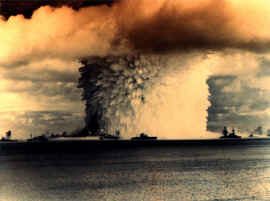
The 70th anniversary of Hiroshima is a good time to discuss the greatest single instance of mass murder ever.
The indefensible Hiroshima revisionism that haunts America to this day
Seventy years ago this week we vaporized 250,000 civilians, and yet still view the bombings as an act of mercy
By Christian AppyHere we are, 70 years after the nuclear obliteration of Hiroshima and Nagasaki, and I’m wondering if we’ve come even one step closer to a moral reckoning with our status as the world’s only country to use atomic weapons to slaughter human beings. Will an American president ever offer a formal apology? Will our country ever regret the dropping of “Little Boy” and “Fat Man,” those two bombs that burned hotter than the sun? Will it absorb the way they instantly vaporized thousands of victims, incinerated tens of thousands more, and created unimaginably powerful shockwaves and firestorms that ravaged everything for miles beyond ground zero? Will it finally come to grips with the “black rain” that spread radiation and killed even more people—slowly and painfully—leading in the end to a death toll for the two cities conservatively estimated at more than 250,000?
Given the last seven decades of perpetual militarization and nuclear “modernization” in this country, the answer may seem like an obvious no. Still, as a historian, I’ve been trying to dig a little deeper into our lack of national contrition. As I have, an odd fragment of Americana kept coming to mind, a line from the popular 1970 tearjerker Love Story: “Love,” says the female lead when her boyfriend begins to apologize, “means never having to say you’re sorry.” It has to be one of the dumbest definitions ever to lodge in American memory, since real love often requires the strength to apologize and make amends.
It does, however, apply remarkably well to the way many Americans think about that broader form of love we call patriotism. With rare exceptions, like the 1988 congressional act that apologized to and compensated the Japanese-American victims of World War II internment, when it comes to the brute exercise of power, true patriotism has above all meant never having to say you’re sorry. The very politicians who criticize other countries for not owning up to their wrong-doing regularly insist that we should never apologize for anything. In 1988, for example, after the U.S. Navy shot down an Iranian civilian airliner over the Persian Gulf killing all 290 passengers (including 66 children), Vice President George H.W. Bush, then running for president, proclaimed, “I will never apologize for the United States. Ever. I don’t care what the facts are.” What was our justification for the greatest single instance of mass murder since the Great Flood? Basically, that the Japanese were subhuman savages like America's Indians. We tried to exterminate one species of "vermin" so why not try it again?The president soon dropped the “military base” justification. After all, despite Washington’s effort to censor the most graphic images of atomic annihilation coming out of Hiroshima, the world quickly grasped that the U.S. had destroyed an entire city in a single blow with massive loss of life. So the president focused instead on an apologia that would work for at least the next seven decades. Its core arguments appeared in that same August 9th speech. “We have used [the atomic bomb] against those who attacked us without warning at Pearl Harbor,” he said, “against those who have starved and beaten and executed American prisoners of war, against those who have abandoned all pretense of obeying international laws of warfare. We have used it in order to shorten the agony of war, in order to save the lives of thousands and thousands of young Americans.”
By 1945, most Americans didn’t care that the civilians of Hiroshima and Nagasaki had not committed Japan’s war crimes. American wartime culture had for years drawn on a long history of “yellow peril” racism to paint the Japanese not just as inhuman, but as subhuman. As Truman put it in his diary, it was a country full of “savages”—“ruthless, merciless, and fanatic” people so loyal to the emperor that every man, woman, and child would fight to the bitter end. In these years, magazines routinely depicted Japanese as monkeys, apes, insects, and vermin. Given such a foe, so went the prevailing view, there were no true “civilians” and nothing short of near extermination, or at least a powerful demonstration of America’s willingness to proceed down that path, could ever force their surrender. As Admiral William “Bull” Halsey said in a 1944 press conference, “The only good Jap is a Jap who’s been dead six months.”
In the years after World War II, the most virulent expressions of race hatred diminished, but not the widespread idea that the atomic bombs had been required to end the war, eliminating the need to invade the Japanese home islands where, it was confidently claimed, tooth-and-nail combat would cause enormous losses on both sides. The deadliest weapon in history, the one that opened the path to future Armageddon, had therefore saved lives. That was the stripped down mantra that provided the broadest and most enduring support for the introduction of nuclear warfare. By the time Truman, in retirement, published his memoir in 1955, he was ready to claim with some specificity that an invasion of Japan would have killed half-a-million Americans and at least as many Japanese. Comment: The only good Indian is a dead Indian and the only good Jap is a dead Jap. Could Halsey have made the connection any clearer?
Neither the Indians nor the Japanese were good white Christian people like us. Therefore, it didn't matter to us if they lived or died.
That's been the core of the Euro-American mindset since 1492, if not earlier. We see it today as the police beat and kill brown people while Republicans slash their health and welfare services and Obama bombs and assassinates them. Many Americans simply don't care whether brown people live or die.
For more on the subject, see Whites Destroy Other People's Homes and Mass Murder in Gaza and Hiroshima.
The indefensible Hiroshima revisionism that haunts America to this day
Seventy years ago this week we vaporized 250,000 civilians, and yet still view the bombings as an act of mercy
By Christian Appy
Given the last seven decades of perpetual militarization and nuclear “modernization” in this country, the answer may seem like an obvious no. Still, as a historian, I’ve been trying to dig a little deeper into our lack of national contrition. As I have, an odd fragment of Americana kept coming to mind, a line from the popular 1970 tearjerker Love Story: “Love,” says the female lead when her boyfriend begins to apologize, “means never having to say you’re sorry.” It has to be one of the dumbest definitions ever to lodge in American memory, since real love often requires the strength to apologize and make amends.
It does, however, apply remarkably well to the way many Americans think about that broader form of love we call patriotism. With rare exceptions, like the 1988 congressional act that apologized to and compensated the Japanese-American victims of World War II internment, when it comes to the brute exercise of power, true patriotism has above all meant never having to say you’re sorry. The very politicians who criticize other countries for not owning up to their wrong-doing regularly insist that we should never apologize for anything. In 1988, for example, after the U.S. Navy shot down an Iranian civilian airliner over the Persian Gulf killing all 290 passengers (including 66 children), Vice President George H.W. Bush, then running for president, proclaimed, “I will never apologize for the United States. Ever. I don’t care what the facts are.”
By 1945, most Americans didn’t care that the civilians of Hiroshima and Nagasaki had not committed Japan’s war crimes. American wartime culture had for years drawn on a long history of “yellow peril” racism to paint the Japanese not just as inhuman, but as subhuman. As Truman put it in his diary, it was a country full of “savages”—“ruthless, merciless, and fanatic” people so loyal to the emperor that every man, woman, and child would fight to the bitter end. In these years, magazines routinely depicted Japanese as monkeys, apes, insects, and vermin. Given such a foe, so went the prevailing view, there were no true “civilians” and nothing short of near extermination, or at least a powerful demonstration of America’s willingness to proceed down that path, could ever force their surrender. As Admiral William “Bull” Halsey said in a 1944 press conference, “The only good Jap is a Jap who’s been dead six months.”
In the years after World War II, the most virulent expressions of race hatred diminished, but not the widespread idea that the atomic bombs had been required to end the war, eliminating the need to invade the Japanese home islands where, it was confidently claimed, tooth-and-nail combat would cause enormous losses on both sides. The deadliest weapon in history, the one that opened the path to future Armageddon, had therefore saved lives. That was the stripped down mantra that provided the broadest and most enduring support for the introduction of nuclear warfare. By the time Truman, in retirement, published his memoir in 1955, he was ready to claim with some specificity that an invasion of Japan would have killed half-a-million Americans and at least as many Japanese.
Neither the Indians nor the Japanese were good white Christian people like us. Therefore, it didn't matter to us if they lived or died.
That's been the core of the Euro-American mindset since 1492, if not earlier. We see it today as the police beat and kill brown people while Republicans slash their health and welfare services and Obama bombs and assassinates them. Many Americans simply don't care whether brown people live or die.
For more on the subject, see Whites Destroy Other People's Homes and Mass Murder in Gaza and Hiroshima.
March 28, 2015
Ratings belie anti-diversity argument
Another response to the Deadline Hollywood article points out that diversity isn't just good morally. It's good financially, leading to better ratings and more revenue for broadcasters.
As Multicultural TV Shows Succeed, Some Wonder if Diversity has Gone Too Far
By Jeff YangHunt warns that like prior TV flirtations with diversity, this progress could be temporary. Yet the numbers—the only things that matter in Hollywood—show that this time, something different may be happening. Out of the scripted shows with all-white leads introduced this past season, just one—a reboot of “The Odd Couple”—seems guaranteed a renewal. Meanwhile, nearly every series centered on diverse characters looks like a solid return, for two reasons.
The first is that they’re expanding network audiences in ways that reflect the new demographic reality. Analyses provided by Nielsen show that the three most-watched non-event shows among 18-49 year old Asian Americans as of February were “Fresh Off the Boat,” “Fresh Off the Boat” and “Fresh Off the Boat”—and it’s not even close, with Asian Americans being twice as likely to watch FOTB as any other scripted program. A full third of all 18-49 year old African Americans watch “Empire” each week, making it more popular than the Super Bowl in that demographic. And 17 of the top 25 shows among 18-49 year old Hispanics are on Univision—the Spanish-language network that regularly draws bigger audiences than Fox and NBC.
The second is that it’s these shows aren’t just catering to their communities. Asian Americans make up as much as 20% of FOTB’s audience—but the other 80% is non-Asian, and they’re what is keeping the series competitive against juggernauts like “The Voice” and “NCIS.”
Ultimately, points out UCLA’s Hunt, “we live in a diverse society, and people want to see stories that reflect that. We’re curious about other groups’ experiences. It shouldn’t come as a shock that white households don’t only want to see shows with just white people.” Comment: For more on the subject, see Where Are the Native TV Shows? and Deadline Hollywood on TV Casting.

As Multicultural TV Shows Succeed, Some Wonder if Diversity has Gone Too Far
By Jeff Yang
The first is that they’re expanding network audiences in ways that reflect the new demographic reality. Analyses provided by Nielsen show that the three most-watched non-event shows among 18-49 year old Asian Americans as of February were “Fresh Off the Boat,” “Fresh Off the Boat” and “Fresh Off the Boat”—and it’s not even close, with Asian Americans being twice as likely to watch FOTB as any other scripted program. A full third of all 18-49 year old African Americans watch “Empire” each week, making it more popular than the Super Bowl in that demographic. And 17 of the top 25 shows among 18-49 year old Hispanics are on Univision—the Spanish-language network that regularly draws bigger audiences than Fox and NBC.
The second is that it’s these shows aren’t just catering to their communities. Asian Americans make up as much as 20% of FOTB’s audience—but the other 80% is non-Asian, and they’re what is keeping the series competitive against juggernauts like “The Voice” and “NCIS.”
Ultimately, points out UCLA’s Hunt, “we live in a diverse society, and people want to see stories that reflect that. We’re curious about other groups’ experiences. It shouldn’t come as a shock that white households don’t only want to see shows with just white people.”
March 24, 2015
TV starts to reflect America
So, So Fresh: US TV Is Starting to Reflect the US
By Eisa Nefertari UlenBuoyed by the success of ABC's "Modern Family," television has developed projects that more accurately express who we are. It is glorious and wonderful and mostly just fun. Shows like "Fresh Off the Boat," "Blackish," even "Empire," "Scandal" and "How to Get Away With Murder," do more than just center people of color in each 30 or 60-minute time slot, and also do much more than accurately reflect how we look. These shows also express a refreshing diversity in terms of how we think, how we feel, even how we parent in non-White families and, often gloriously, perfectly hilariously, these shows center how we be.
The moment feels a whole lot like the country has flash-danced back to another era. Television in the late 1980s and 1990s, back in the "Humpty" days, celebrated Black family. Sensing that the post-Norman Lear lineups were too white and that the United States was way ready for a few shades of brown, NBC piloted "The Cosby Show," and family television forever changed. The examples include Fresh Off the Boat:Do we still want more Asians in our primetime lineup? Hells yeah! But only if they're featured on a show as good as "Fresh Off the Boat." The nearly unprecedented wonder of a television program featuring Asian-Americans makes "Fresh" worth focusing on. Perhaps because the comedy series is based on the 2013 same-titled memoir written by the real-life Eddie Huang, "Fresh" is fresh. The title teases the racialist, derogatory term used to describe newly arrived immigrants, but it's also a big pun, a play on the positive, affirming hip-hop colloquialism for anything extra ahead of the mainstream. This verbal dexterity is just one of the program's never-ending winks. And Empire, whichis beautiful, one of the most important programs in US television. On its surface, Lee Daniels' primetime serial is simply another iteration of the soap operas that have captivated US audiences since the 1964 debut of "Peyton Place." But, with the program's elegant use of Kehinde Wiley portraiture, examinations of the human condition, exploration of important social issues and its central theme of love, aching human love, "Empire" is a work of telegenic triumph. More on Empire, this year's breakout show in terms of diversity:
Why Can’t We Stop Watching ‘Empire’?What is it about “Empire,” the Fox series about a family of music moguls that wraps up its first season this week, that makes the show so addictive? It might be the juicy plotlines; Taraji P. Henson’s ferocious and charming portrayal of Cookie Lyon, the estranged matriarch of the family; the so-bad-it’s-almost-good soundtrack, produced by Timbaland; or some combination of all three. The soapy drama, which debuted in January, was the highest-rated new series on television this season. Its ratings and audience numbers have risen each week the show has aired—a phenomenon that is practically unheard-of. Fox has already renewed the series for a second season.
The appeal of “Empire” is widespread—roughly 15 million people watch every week—but according to Nielsen, the show resonates particularly strongly with black viewers, who make up 62 percent of its primary audience. NPR’s Code Switch blog called the “Empire” success a “particular achievement for a show with an almost entirely black cast.” Below: Bryshere Gray, Terrence Howard, Trai Byers at the FOX TV "Empire" Premiere Event at a ArcLight Cinerama Dome Theater on January 6, 2014 in Los Angeles, CA.

By Eisa Nefertari Ulen
The moment feels a whole lot like the country has flash-danced back to another era. Television in the late 1980s and 1990s, back in the "Humpty" days, celebrated Black family. Sensing that the post-Norman Lear lineups were too white and that the United States was way ready for a few shades of brown, NBC piloted "The Cosby Show," and family television forever changed.
Why Can’t We Stop Watching ‘Empire’?
The appeal of “Empire” is widespread—roughly 15 million people watch every week—but according to Nielsen, the show resonates particularly strongly with black viewers, who make up 62 percent of its primary audience. NPR’s Code Switch blog called the “Empire” success a “particular achievement for a show with an almost entirely black cast.”
May 29, 2014
Rodger's half-white male entitlement
Many pundits have called the Santa Barbara shootings an act of white male entitlement and hyper-masculine rage against women. It's a bit more complex than that.
Clearly he was driving by racial as well as sexual animus. Some postings explain how:
Santa Barbara shooter had history of posting racist, misogynist comments on hate site
By Tom BoggioniAccording to the SPLC, Rodger posted comments in January, beginning with “Saw a black guy sitting with 4 white girls,” causing him to admit his frustration over white women socializing with minority men:Today I drove through the area near my college and saw some things that were extremely rage-inducing.
I passed by this restaurant and I saw this black guy chilling with 4 hot white girls. He didn’t even look good.
Then later on in the day I was shopping at Trader Joe’s and saw an Indian guy with 2 above average White Girls!!!
What rage-inducing sights did you guys see today? Don’t you just hate seeing these things when you go out? It just makes you want to quit life. After being called out on the website for the racism in his comments, Rodger responded, “Here we are suffering on PuaHate when these lesser, undeserving men that I saw today are walking around with hot girls. It doesn’t make sense.”
Rodger also wrote that Asian men could never date white women, leading a commenter of Asian descent to post a picture of himself with a white woman.
Rodger dismissed the photos as fake, writing: “Full Asian men are disgustingly ugly and white girls would never go for you. You’re just butthurt that you were born as an asian piece of shit, so you lash out by linking these fake pictures. You even admit that you wish you were half white. You’ll never be half-white and you’ll never fulfill your dream of marrying a white woman. I suggest you jump off a bridge.” Elliot Rodger’s half-white male privilege
The killer’s Asian heritage matters. So does his ugly class entitlement. Misogyny crosses lines of race and culture
By Joan WalshWhy is it so hard to recognize Rodger as of mixed racial descent? It certainly doesn’t negate the role white entitlement and privilege played in his “syndrome.” Rodger is at least partly a victim of the ideology of white supremacy, as well as its violent enforcer. He struggled with his status as half-Asian, writing “I always felt as if white girls thought less of me because I was half-Asian.”
Elsewhere he explains:
On top of this was the feeling that I was different because I am of mixed race. I am half White, half Asian, and this made me different from the normal fully-white kids that I was trying to fit in with. I envied the cool kids, and I wanted to be one of them.
He dyed his hair blond, trying to fit in, but the dye job left him with blond tips and black roots, a sad metaphor for a racial mixture he couldn’t accept.
Merely labeling Rodger white, and his problem one of “white privilege,” also obscures the role of class in heightening his toxic sense of entitlement. He wondered: Why would “an inferior, ugly black boy be able to get a white girl and not me? I am descended from British aristocracy.” He believed his aristocratic background, his gorgeous home, his Armani shirts, Hugo Boss shoes, and shiny BMW—not just his race—entitled him to blond women. He even had a narcissistic mantra he said to himself to boost his confidence: “I am the image of beauty and supremacy.”
Of course he saw a racial hierarchy where he, being half-white, is near the very top of the pyramid, below white men but, as half Asian, still above every other race and racial mix. He degrades “full Asian” men as “disgusting” and mocks them for not being half-white like him. Then he’s aghast when he sees “this Asian guy who was talking to a white girl. The sight of that filled me with rage … How could an ugly Asian attract the attention of a white girl, while a beautiful Eurasian like myself never had any attention from them?” Every attempt to “explain” his isolation and loneliness unravels. There is only one explanation: the evil of beautiful, blond white girls. Comment: I'd say white male entitlement is a cause, or at least a factor, in any shooting spree. If the shooter is white, he's acting out his entitlement. If he's a minority, he's angry because he thinks he's not getting what whites get. He's lashing out at others for their entitlement.
For more on the subject, see The Rage of Misogynist Nerds and Santa Barbara Shootings Show America's Pathology.

Clearly he was driving by racial as well as sexual animus. Some postings explain how:
Santa Barbara shooter had history of posting racist, misogynist comments on hate site
By Tom Boggioni
I passed by this restaurant and I saw this black guy chilling with 4 hot white girls. He didn’t even look good.
Then later on in the day I was shopping at Trader Joe’s and saw an Indian guy with 2 above average White Girls!!!
What rage-inducing sights did you guys see today? Don’t you just hate seeing these things when you go out? It just makes you want to quit life.
Rodger also wrote that Asian men could never date white women, leading a commenter of Asian descent to post a picture of himself with a white woman.
Rodger dismissed the photos as fake, writing: “Full Asian men are disgustingly ugly and white girls would never go for you. You’re just butthurt that you were born as an asian piece of shit, so you lash out by linking these fake pictures. You even admit that you wish you were half white. You’ll never be half-white and you’ll never fulfill your dream of marrying a white woman. I suggest you jump off a bridge.”
The killer’s Asian heritage matters. So does his ugly class entitlement. Misogyny crosses lines of race and culture
By Joan Walsh
Elsewhere he explains:
On top of this was the feeling that I was different because I am of mixed race. I am half White, half Asian, and this made me different from the normal fully-white kids that I was trying to fit in with. I envied the cool kids, and I wanted to be one of them.
He dyed his hair blond, trying to fit in, but the dye job left him with blond tips and black roots, a sad metaphor for a racial mixture he couldn’t accept.
Merely labeling Rodger white, and his problem one of “white privilege,” also obscures the role of class in heightening his toxic sense of entitlement. He wondered: Why would “an inferior, ugly black boy be able to get a white girl and not me? I am descended from British aristocracy.” He believed his aristocratic background, his gorgeous home, his Armani shirts, Hugo Boss shoes, and shiny BMW—not just his race—entitled him to blond women. He even had a narcissistic mantra he said to himself to boost his confidence: “I am the image of beauty and supremacy.”
Of course he saw a racial hierarchy where he, being half-white, is near the very top of the pyramid, below white men but, as half Asian, still above every other race and racial mix. He degrades “full Asian” men as “disgusting” and mocks them for not being half-white like him. Then he’s aghast when he sees “this Asian guy who was talking to a white girl. The sight of that filled me with rage … How could an ugly Asian attract the attention of a white girl, while a beautiful Eurasian like myself never had any attention from them?” Every attempt to “explain” his isolation and loneliness unravels. There is only one explanation: the evil of beautiful, blond white girls.
For more on the subject, see The Rage of Misogynist Nerds and Santa Barbara Shootings Show America's Pathology.
April 04, 2014
#CancelColbert stymied "Redskins" protest?
Snyder Wins: How 'CancelColbert' Drowned Out the Native VoiceTwitter activist Suey Park, who became known for her hashtag #NotYourAsianSidekick and helped Native Tweeters publicize tags including #NotYourTonto and #NotYourMascot, reacted to the Tweet swiftly, calling for Colbert's firing with the #CancelColbert hashtag, which became a ubiquitous news story. Meanwhile, Stephen Colbert could only watch it unfold: he'd already taped his Thursday episode and his show does not air on Fridays, so he would not be able to address the controversy on his show until Monday.
This he did, last night, in a long segment, punctuated by sips of a Bud Light Lime, that began with the context of the joke--Dan Snyder and the Redskins, remember--and ran through many of the details above. (You can watch the whole thing at Comedy Central's website.) He also called for the attacks on Park, which had become quite vicious, to stop. In his closing words, he said that he would be donating the money raised by his offensive faux charity to the offensive real-life charity that inspired the joke that caused the kerfluffle: The Washington Redskins Original Americans Foundation.
"...which Twitter seems to be fine with," he said, "because I haven't seen shit about that."
And that's the bottom line for the Native activists on Twitter who saw a real opportunity to open some eyes when Snyder announced his bizarrely named charity: The momentum building for their campaign--#Not4Sale--was stymied by #CancelColbert. In an interview with The New Yorker that only briefly mentioned Dan Snyder and his foundation, Suey Park admitted she likes Colbert Report and didn't actually want to see it canceled. Yet a single Tweet connected to a satirist--whose well-known shtick is to parody arrogant conservatives--made more waves than a campaign against a racist team name that has been with us for decades.
As Jackie Keeler of Eradicating Offensive Native Mascotry tweeted from her @jfkeeler feed: "Issue is not critique of skit but disproportional outrage vis a vis Actual racist foundation--Snyder wins." 
#CancelColbert Collateral Damage to EONM (Eradicating Offensive NativeMascotry)
By Jennie StockleThe reason this plays in what happened in the aftermath of #CancelColbert is that it was those same people, and I believe Suey Park herself either believing them or encouraging them, that would come back at us with a catastrophic effect to Native Americans.
During #CancelColbert several EONM members/supporters noticed several of us tweeting under the hashtag. So they jumped in thinking this was about Native Mascotry. I myself thought that Colbert had actually done something to support Dan Snyder. I hadn't seen the skit. I stopped early on believing that I needed to get back to addressing the very real problems with Snyder's organization. Also, after I watched the skit and became aware that many, many Native Americans were feeling betrayed. After those events, EONM released two brief tweets stating that we would be supportive, but keeping our focus on #Not4Sale.
"Why is she sidelining what happened to us? Did she know about #Not4Sale? Is she dumb? I thought she was a friend, but this isn't supportive? Does she work for Snyder now? This is childish, if twitter users want to address satirical organization over a real racist organization what has the world come to." are just some of the things I heard and got direct messaged about. This was followed by so many stunned that Suey Park was on Native Trailblazers instead of not one of all the Native Americans angered by "OAF"! Jaw-dropping was a pretty common theme. Was that how far Native Rights activists had been eclipsed, that they weren't even on a Native show?
A tweet Jackie Keeler had made was featured in a Wall Street Journal article by Jeff Yang. It was not making light of Suey Park's actions. Her tweet was only expressing the disparity and proportionality of the response to #CancelColbert vs "OAF" and other Native American rights hashtags. Suey Park attacked the criticism a fair and balanced take on what happened. She called for Jeff Yang to be fired. #CancelColbert accomplished nothing: Why social change movements must be inclusive
A draining debate has left the fight for awareness and understanding in a worse place. So where do we go from here?
By Anoosh JorjorianPeople of good conscience can disagree about how we get there and what are the right tools. I don’t know a sure path from my past to a future free of anti-Asian prejudice. But at this moment, I can say that the weekend of #CancelColbert did not bring us closer to that future.
By Monday morning, I was left wondering, what have we accomplished? How much coal have we burned by keeping our modems alight and charging the batteries on our laptops and smartphones? At this cost, how many minds have we changed, and how many alliances have we forged to make a better future?
Here’s what I “saw” over social media: A lot of people expend a lot of energy, emotion and time because of a single comedy sketch (one that, for the record, did not offend me personally). I saw long-standing members of Asian American communities who have been working for decades toward that future get blisteringly insulted and attacked. I saw Native Americans wondering how Colbert’s valid point about Dan Snyder doubling down on the 80-year-old football team’s name in service of some cheap P.R. got buried in an avalanche of outraged pro- and anti-AAPI tweets. I saw, predictable as a turning tide, an outpouring of white anger, defensiveness and ridicule. I saw racial epithets explode and hurl around like corn kernels in an air popper.
And I have a bitter, bitter taste in my mouth. Colbert’s satirical Ching-Chong Ding-Dong joke references familiar ground, the kind of belittling and insults that Asian Americans are accustomed to hearing from white folks. But an internecine fight of this scale cuts deep, and the wound to Asian American communities will take far longer to heal than it took Park to initiate it. (The first efforts toward healing have centered around the #BuildDontBurn hashtag.)
Jeff Yang wrote a smart, thoughtful article on the limits of Hashtag Activism. For this, Suey Park tweeted that he was less of a friend to her than Fox commentator Michelle Malkin, notorious conservative and defender of the Japanese internment. Park has certainly borne the brunt of the storm generated by her campaign, however. The crest of the Twitter backlash featured the now-routine gendered discipline: death and rape threats. I'm Not Your Disappearing Indian
By Jacqueline Keeler[L]ast Thursday, it happened again, this time it was the folks on social media trending #CancelColbert and completely forgetting about Dan Snyder and the real foundation to promote the racial slur Redsk*ns. Once again, ostensibly about us, but of the issue garnered no real attention until it fell in someone else’s hands and then they, once again, forgot about us.
No, it wasn’t Stephen Colbert who forgot about us, nor was is "Stephen Colbert," a character played by comedian Stephen Colbert, to satirize the extreme insensitivity of Republican conservatism. His show, The Colbert Report did a whole skit skewering Dan Snyder, billionaire owner of the Washington Redsk*ns, and Snyder's new Original Americans Foundation (OAF), exposing it--through satire--as a blatant attempt to use charity to provide cover for his NFL team’s racist name. It was the hashtaggers, PoC (People of Color) and progressives, our own allies on Twitter who trended the hashtag #CancelColbert in response to the fictional foundation’s name featured in the skit. And yet, Dan Snyder’s real foundation promoting an ethnic slur against us, a foundation that actually exists, failed to garner even a tiny fraction of outrage by the same group. In fact, in her Time Magazine article that followed the enormous success of #CancelColbert, hashtag originator Suey Park failed to mention Snyder’s foundation at all. She certainly did not mention the Native hashtag protesting it #Not4Sale, despite it being covered by Mike Wise at the Washington Post and Al Jazeera America’s The Stream just days before. Only one reporter, Jeff Yang of the Wall Street Journal included any mention of Native responses to it.
Could you imagine national coverage of #CancelColbert or the previous trending hashtag promoted by the Asian American community #NotYourAsianSidekick without interviewing any Asian Americans? Or without any mention of the creators of the hashtag like Suey Park?
Obviously, #CancelColbert did not lead to the canceling of The Colbert Report, and in a New Yorker interview Ms. Park claimed she never intended for the show to be cancelled; furthermore, she had never even viewed the actual skit, and had reacted to a tweet (since deleted) without understanding the original joke to which it referred. What’s most frustrating to me is that a deleted tweet garnered more outrage than the actual existence of a foundation to promote a slur against Native Americans. A foundation announced just days after the U.S. Patent Office, reasoning that the word is a racist epithet, refused to grant a trademark to "Washington Redsk*ns Potatoes"! A potato has more rights than Native people do! (And yes, there is a Native hashtag for it--#NotYourPotato--and no, our allies on Twitter have not trended it.) 
How #NotYourMascot Passed Me By, and How I was Wrong For Letting It
By ReappropriateAs an Asian American, and as a person who is dedicated to anti-racist activism, I am always at danger of focusing too much onto my own work; it is my duty to remember that I share a mutual goal with other people of colour in wanting to see an end to racism and racial discrimination in our world. And while our specific foci, angles and tactics might differ (as well it should), it is essential that we push back against our own tendencies to become too specialized, too factionalized and too isolated from one another. Instead we must reach out to one another, work together, form alliances and recognize our common goals. We must allow our individual efforts to integrate with one another rather than to interfere with one another; only by doing so can we hope to achieve a critical mass of anti-racist work that can challenge institutionalized racism and white supremacy.
That it took me this long to say something about #NotYourMascot is my fault, and for that I apologize.
#NotYourMascot is a common sense fight, one that by itself deserved primacy over the last two weeks; one that did not deserve to be distracted from. #NotYourMascot is a fight for anyone who wants to see the world less racist, a world where we don’t treat people of colour like mascots, where we respect Native people in particular and all people of colour, in general.
In short, #NotYourMascot is not just “a Native issue” and doesn’t deserve to be treated like one; #NotYourMascot is an issue that deserves full and vocal support from all of us—particularly every person of colour, as well as anyone else who has dedicated ourselves to challenging racism as it manifests around us. The Real Reason Why Stephen Colbert’s Brand of Racism Should Be Making You Angry #CancelRedskinsThe Stephen Colbert character, in his usual style, has taken the offenses done by others and made them that much more offensive. The show dismantled the offense moniker of Daniel Snyder’s foundation, and rebuilt it with a more visible ethnic group as its target. The result—outrage. At the end of the skit, Stephen Colbert, as a kind of nod to the offensive nature of the skit, makes a request of his audience. “I owe all this sensitivity to Redskin’s owner, Daniel Snyder. So Asians, send your thank you letters to him, not me.”
If you are angry, welcome to the club. Be angry at Stephen Colbert and his show, a show that mirrors and perpetuates the prevalence of racism, classism, and oppression in order to get a laugh. But be more angry at the reality that the Colbert Report mocks. Be angry at Daniel Snyder, the owner of that offensively named Washington team. Be angry that corporate interests (and there are many) continue to make money on histories of genocide and oppression. I think the final sentiment is one we can all agree on.
My take on #CancelColbert
A lot of people didn't come off well in this conflict. Colbert, for his ill-considered "ching-chong" joke. Suey Park and other activists, for hijacking the debate without addressing the offensive "Redskins." The media, for focusing too much on #CancelColbert and not enough on the underlying cause. Anyone, including liberals, who threatened Park for daring to challenge Colbert and the white status quo.
Nevertheless, I'm not as bothered by the #CancelColbert flap as some Native activists are. Some reasons:
1) From my vantage point as a media observer, I didn't get the sense that the #Not4Sale protest was taking off the way previous Twitter protests had.
2) Even if the #Not4Sale protest did take off, it didn't seem that effective to me. #Not4Sale was too generic; it could've been about almost any cause. Without an explanation, most people wouldn't get the connection between brown-skinned people with dollars on their mouths and the Redskins foundation (OAF).
3) It's not clear to me that the Native activists lost out on anything. Without an event like the Super Bowl or the Oscars to tweet about, the protest was always going to be relatively small. We're talking about a small "Redskins" protest on its own vs. a big #CancelColbert protest with a small "Redskins" protest included. Either way, the "Redskins" portion is small.
In other words...yes, the #CancelColbert coverage may have decreased the coverage the Redskins protest got. But it may have increased the coverage too. There's no way to know.
4) Reappropriate addressed the issue of "intersectionality" above. It's the idea that prejudice against one group affects and should concern everyone. It's something we all need to remember. Yes, Suey Park's #CancelColbert protest derailed Colbert's critique of the Redskins--but her argument about the liberal tolerance of racism has merit.
More to the point, it's relevant to mascot protests. Names and mascots such as "Redskins" don't persist because a small number of conservative racists keep them alive. They persist because many Americans, including liberals, have a broad tolerance for prejudice against minorities, women, and gays. We see this constantly in debates about welfare, immigration, law enforcement, income inequality, and so forth and so on.
Even the tolerance of minor things such as "jokes"--aka microaggressions--is widespread. And that's a problem. Colbert or hipsters or anyone can put on a headdress and say they're being "ironic," and people will give them a pass.
The #CancelColbert protest tried to expose this problem. It tried to show that minorities aren't going to roll over for conservative or liberal white privilege anymore. Until people get that people like Dan Snyder and Stephen Colbert shouldn't be the arbiters of what's offensive, I doubt anything will change.
5) As some people noted, a Twitter campaign is a tactic, not a goal. It helps to raise awareness of an issue, but it rarely causes change by itself. That's especially true when dealing with a major corporation like Disney (#NotYourTonto) or the Washington Redskins.
The best outcome of #Not4Sale would've been an increased awareness of Snyder's PR ploy in creating the Redskins foundation. But the foundation is only a small part of the Redskins brand. In the unlikely event that activists shamed Snyder into ending the foundation, it would've had no effect on the brand overall. Snyder still would've been committed to keeping the name and logo forever.
I'm sure "Redskins" will go away someday, but not because people have criticized the foundation. So nothing was "lost" except a minor opportunity to mock Snyder's tactics. With or without Colbert's input and the #Not4Sale hashtag, the protests will continue until the name is gone.
For more on the subject, see Debating #CancelColbert and Suey Park's Activism.
This he did, last night, in a long segment, punctuated by sips of a Bud Light Lime, that began with the context of the joke--Dan Snyder and the Redskins, remember--and ran through many of the details above. (You can watch the whole thing at Comedy Central's website.) He also called for the attacks on Park, which had become quite vicious, to stop. In his closing words, he said that he would be donating the money raised by his offensive faux charity to the offensive real-life charity that inspired the joke that caused the kerfluffle: The Washington Redskins Original Americans Foundation.
"...which Twitter seems to be fine with," he said, "because I haven't seen shit about that."
And that's the bottom line for the Native activists on Twitter who saw a real opportunity to open some eyes when Snyder announced his bizarrely named charity: The momentum building for their campaign--#Not4Sale--was stymied by #CancelColbert. In an interview with The New Yorker that only briefly mentioned Dan Snyder and his foundation, Suey Park admitted she likes Colbert Report and didn't actually want to see it canceled. Yet a single Tweet connected to a satirist--whose well-known shtick is to parody arrogant conservatives--made more waves than a campaign against a racist team name that has been with us for decades.
As Jackie Keeler of Eradicating Offensive Native Mascotry tweeted from her @jfkeeler feed: "Issue is not critique of skit but disproportional outrage vis a vis Actual racist foundation--Snyder wins."
#CancelColbert Collateral Damage to EONM (Eradicating Offensive NativeMascotry)
By Jennie Stockle
During #CancelColbert several EONM members/supporters noticed several of us tweeting under the hashtag. So they jumped in thinking this was about Native Mascotry. I myself thought that Colbert had actually done something to support Dan Snyder. I hadn't seen the skit. I stopped early on believing that I needed to get back to addressing the very real problems with Snyder's organization. Also, after I watched the skit and became aware that many, many Native Americans were feeling betrayed. After those events, EONM released two brief tweets stating that we would be supportive, but keeping our focus on #Not4Sale.
"Why is she sidelining what happened to us? Did she know about #Not4Sale? Is she dumb? I thought she was a friend, but this isn't supportive? Does she work for Snyder now? This is childish, if twitter users want to address satirical organization over a real racist organization what has the world come to." are just some of the things I heard and got direct messaged about. This was followed by so many stunned that Suey Park was on Native Trailblazers instead of not one of all the Native Americans angered by "OAF"! Jaw-dropping was a pretty common theme. Was that how far Native Rights activists had been eclipsed, that they weren't even on a Native show?
A tweet Jackie Keeler had made was featured in a Wall Street Journal article by Jeff Yang. It was not making light of Suey Park's actions. Her tweet was only expressing the disparity and proportionality of the response to #CancelColbert vs "OAF" and other Native American rights hashtags. Suey Park attacked the criticism a fair and balanced take on what happened. She called for Jeff Yang to be fired.
A draining debate has left the fight for awareness and understanding in a worse place. So where do we go from here?
By Anoosh Jorjorian
By Monday morning, I was left wondering, what have we accomplished? How much coal have we burned by keeping our modems alight and charging the batteries on our laptops and smartphones? At this cost, how many minds have we changed, and how many alliances have we forged to make a better future?
Here’s what I “saw” over social media: A lot of people expend a lot of energy, emotion and time because of a single comedy sketch (one that, for the record, did not offend me personally). I saw long-standing members of Asian American communities who have been working for decades toward that future get blisteringly insulted and attacked. I saw Native Americans wondering how Colbert’s valid point about Dan Snyder doubling down on the 80-year-old football team’s name in service of some cheap P.R. got buried in an avalanche of outraged pro- and anti-AAPI tweets. I saw, predictable as a turning tide, an outpouring of white anger, defensiveness and ridicule. I saw racial epithets explode and hurl around like corn kernels in an air popper.
And I have a bitter, bitter taste in my mouth. Colbert’s satirical Ching-Chong Ding-Dong joke references familiar ground, the kind of belittling and insults that Asian Americans are accustomed to hearing from white folks. But an internecine fight of this scale cuts deep, and the wound to Asian American communities will take far longer to heal than it took Park to initiate it. (The first efforts toward healing have centered around the #BuildDontBurn hashtag.)
Jeff Yang wrote a smart, thoughtful article on the limits of Hashtag Activism. For this, Suey Park tweeted that he was less of a friend to her than Fox commentator Michelle Malkin, notorious conservative and defender of the Japanese internment. Park has certainly borne the brunt of the storm generated by her campaign, however. The crest of the Twitter backlash featured the now-routine gendered discipline: death and rape threats.
By Jacqueline Keeler
No, it wasn’t Stephen Colbert who forgot about us, nor was is "Stephen Colbert," a character played by comedian Stephen Colbert, to satirize the extreme insensitivity of Republican conservatism. His show, The Colbert Report did a whole skit skewering Dan Snyder, billionaire owner of the Washington Redsk*ns, and Snyder's new Original Americans Foundation (OAF), exposing it--through satire--as a blatant attempt to use charity to provide cover for his NFL team’s racist name. It was the hashtaggers, PoC (People of Color) and progressives, our own allies on Twitter who trended the hashtag #CancelColbert in response to the fictional foundation’s name featured in the skit. And yet, Dan Snyder’s real foundation promoting an ethnic slur against us, a foundation that actually exists, failed to garner even a tiny fraction of outrage by the same group. In fact, in her Time Magazine article that followed the enormous success of #CancelColbert, hashtag originator Suey Park failed to mention Snyder’s foundation at all. She certainly did not mention the Native hashtag protesting it #Not4Sale, despite it being covered by Mike Wise at the Washington Post and Al Jazeera America’s The Stream just days before. Only one reporter, Jeff Yang of the Wall Street Journal included any mention of Native responses to it.
Could you imagine national coverage of #CancelColbert or the previous trending hashtag promoted by the Asian American community #NotYourAsianSidekick without interviewing any Asian Americans? Or without any mention of the creators of the hashtag like Suey Park?
Obviously, #CancelColbert did not lead to the canceling of The Colbert Report, and in a New Yorker interview Ms. Park claimed she never intended for the show to be cancelled; furthermore, she had never even viewed the actual skit, and had reacted to a tweet (since deleted) without understanding the original joke to which it referred. What’s most frustrating to me is that a deleted tweet garnered more outrage than the actual existence of a foundation to promote a slur against Native Americans. A foundation announced just days after the U.S. Patent Office, reasoning that the word is a racist epithet, refused to grant a trademark to "Washington Redsk*ns Potatoes"! A potato has more rights than Native people do! (And yes, there is a Native hashtag for it--#NotYourPotato--and no, our allies on Twitter have not trended it.)
How #NotYourMascot Passed Me By, and How I was Wrong For Letting It
By Reappropriate
That it took me this long to say something about #NotYourMascot is my fault, and for that I apologize.
#NotYourMascot is a common sense fight, one that by itself deserved primacy over the last two weeks; one that did not deserve to be distracted from. #NotYourMascot is a fight for anyone who wants to see the world less racist, a world where we don’t treat people of colour like mascots, where we respect Native people in particular and all people of colour, in general.
In short, #NotYourMascot is not just “a Native issue” and doesn’t deserve to be treated like one; #NotYourMascot is an issue that deserves full and vocal support from all of us—particularly every person of colour, as well as anyone else who has dedicated ourselves to challenging racism as it manifests around us.
If you are angry, welcome to the club. Be angry at Stephen Colbert and his show, a show that mirrors and perpetuates the prevalence of racism, classism, and oppression in order to get a laugh. But be more angry at the reality that the Colbert Report mocks. Be angry at Daniel Snyder, the owner of that offensively named Washington team. Be angry that corporate interests (and there are many) continue to make money on histories of genocide and oppression.
My take on #CancelColbert
A lot of people didn't come off well in this conflict. Colbert, for his ill-considered "ching-chong" joke. Suey Park and other activists, for hijacking the debate without addressing the offensive "Redskins." The media, for focusing too much on #CancelColbert and not enough on the underlying cause. Anyone, including liberals, who threatened Park for daring to challenge Colbert and the white status quo.
Nevertheless, I'm not as bothered by the #CancelColbert flap as some Native activists are. Some reasons:
1) From my vantage point as a media observer, I didn't get the sense that the #Not4Sale protest was taking off the way previous Twitter protests had.
2) Even if the #Not4Sale protest did take off, it didn't seem that effective to me. #Not4Sale was too generic; it could've been about almost any cause. Without an explanation, most people wouldn't get the connection between brown-skinned people with dollars on their mouths and the Redskins foundation (OAF).
3) It's not clear to me that the Native activists lost out on anything. Without an event like the Super Bowl or the Oscars to tweet about, the protest was always going to be relatively small. We're talking about a small "Redskins" protest on its own vs. a big #CancelColbert protest with a small "Redskins" protest included. Either way, the "Redskins" portion is small.
In other words...yes, the #CancelColbert coverage may have decreased the coverage the Redskins protest got. But it may have increased the coverage too. There's no way to know.
4) Reappropriate addressed the issue of "intersectionality" above. It's the idea that prejudice against one group affects and should concern everyone. It's something we all need to remember. Yes, Suey Park's #CancelColbert protest derailed Colbert's critique of the Redskins--but her argument about the liberal tolerance of racism has merit.
More to the point, it's relevant to mascot protests. Names and mascots such as "Redskins" don't persist because a small number of conservative racists keep them alive. They persist because many Americans, including liberals, have a broad tolerance for prejudice against minorities, women, and gays. We see this constantly in debates about welfare, immigration, law enforcement, income inequality, and so forth and so on.
Even the tolerance of minor things such as "jokes"--aka microaggressions--is widespread. And that's a problem. Colbert or hipsters or anyone can put on a headdress and say they're being "ironic," and people will give them a pass.
The #CancelColbert protest tried to expose this problem. It tried to show that minorities aren't going to roll over for conservative or liberal white privilege anymore. Until people get that people like Dan Snyder and Stephen Colbert shouldn't be the arbiters of what's offensive, I doubt anything will change.
5) As some people noted, a Twitter campaign is a tactic, not a goal. It helps to raise awareness of an issue, but it rarely causes change by itself. That's especially true when dealing with a major corporation like Disney (#NotYourTonto) or the Washington Redskins.
The best outcome of #Not4Sale would've been an increased awareness of Snyder's PR ploy in creating the Redskins foundation. But the foundation is only a small part of the Redskins brand. In the unlikely event that activists shamed Snyder into ending the foundation, it would've had no effect on the brand overall. Snyder still would've been committed to keeping the name and logo forever.
I'm sure "Redskins" will go away someday, but not because people have criticized the foundation. So nothing was "lost" except a minor opportunity to mock Snyder's tactics. With or without Colbert's input and the #Not4Sale hashtag, the protests will continue until the name is gone.
For more on the subject, see Debating #CancelColbert and Suey Park's Activism.
April 03, 2014
Debating #CancelColbert
#CancelColbert turns ugly: Why does it make white people so angry to talk about race?
People can disagree about #CancelColbert. But why's the response always so vile when people try to talk about race?
By Katie McDonoughFeel whatever you’d like about #CancelColbert (Brittney Cooper’s take is well worth your time), but those in the camp defending a television host’s (failed) attempt to satirize racism may want to ask themselves why they aren’t equally outraged by the racism and misogyny being hurled at the woman behind the conversation.
Suey Park is a writer and activist, but follow most of the conversation around #CancelColbert and you will read that she is a “hashtag activist” — a coded bit of language meant to communicate that she is not a person who should be taken seriously. (Follow what’s going on in Park’s Twitter mentions and you will see that a frightening number of people believe much worse.)
HuffPost Live invited Park to do a segment Friday morning, but rather than discuss what makes for good satire or mention the racist and misogynistic responses Park received (and tweeted about) while trending the hashtag, host Josh Zepps asked her if she understood comedy and called her opinions “stupid.” After a tense exchange with Zepps, Park said that she was done—that she wasn’t going to entertain inquiries about her intelligence or motives when the question of racism was not being taken seriously. Zepps seemed all too happy to oblige; he said a chipper goodbye and promptly cut her feed, prompting W. Kamau Bell to tweet that Zepps “reigns down the full weight of his #WhitePrivilege” during the segment.
Dave Weigel, who was critical of the hashtag from the start, weighed in at Slate to insinuate Park is somehow bullying Comedy Central—a television behemoth owned by a media behemoth—and question her activist bona fides:The network had made a powerful hashtag enemy, as Park reminded it. This was her work. She started hashtags like Comedy Central started six-episode sketch shows. The Guardian had placed her in a list of the “top 30 young people in digital media,” No. 12, right below “Kid President.” Her Facebook fan page and Twitter account provided information on how to book her, because she “speaks on race/gender and social media” and is a “board member of Activist Milennials.” He also seemed comfortable parroting a common right-wing cop-out, suggesting that when you bring the word “racist” into a conversation, it’s no longer a conversation—it’s a knife fight:As [hashtag activists] explained in 140-character bursts, when a white comedian like Colbert joked about racism by playing a racist, he was still telling his audience to laugh at a racist joke. Anyone who disputed this was trying to “whitesplain” satire—an argument that can never be debunked. You can laugh at being told to “check your privilege,” but hearing that plants an idea that you can’t shake. (This is not necessarily a bad thing, even though this particular hashtag was born midair above a shark.) And if it brings fame and clout to activists who have not really done anything to win your attention previously, that’s a sweet fringe benefit. Weigel is free to disagree with Park, but to question her legitimacy because she has different credentials than he does is plainly offensive. And it’s uncomfortable, put mildly, to see an established white male journalist suggest that an activist and writer of color hasn’t “done anything” to “win your attention.” Why we fight about Colbert and Lena Dunham: Twitter politics are all we have left
Yes, social media's culture wars can get overheated and silly—because "real" politics is totally broken
By Andrew O'HehirFirst of all, I don’t get to tell people not to be offended by a joke or a tweet or some potentially revealing public gaffe, just because I think I understood it better than they did. Personally, I think Stephen Colbert’s biggest sin in the dubious “Sensitivity to Orientals” gag that sparked so much Internet navel-gazing on Friday is that it’s overworked and not very funny. It was a satirical jab directed at both Rush Limbaugh and Washington Redskins owner Dan Snyder that was highly dependent on context; stripped of that context by the de-nuancing machine of Twitter, it came uncomfortably close to the kind of yahoo-flavored racist ugliness it was mocking. And, Stephen, that joke was never worth the risk in the first place. What we have here is a failure of comedy cost-benefit analysis.
But in this case, as in dozens of others of public discourse gone off the rails, I don’t have the right to instruct Asian-Americans or other commentators about whether or not they have been injured or insulted or attacked, or whether Colbert has something to apologize for. Let’s back up a year, to the 2013 Oscars: From the comfort of my sofa, I thought Seth MacFarlane’s “We Saw Your Boobs” musical number was pretty funny, and that its satirical intention, a takedown of Hollywood sexism and the “male gaze,” was clear enough. But the signal-to-noise ratio of MacFarlane’s shtick turned out to be way off, and millions of viewers received it in the opposite spirit, as a smug white dude making juvenile and offensive jokes about women’s bodies. So in that sense I was wrong. I’m still entitled to my private analysis, of course, but as a social event it wasn’t “funny” at all.
That might sound like I’m adopting a pose of excessive postmodern caution, or being the bearded dude in Birkenstocks who goes to the feminist bookstore to pick up chicks. But it’s more like an important lesson about life in a multivocal and diverse public culture, a lesson that, yes, white guys with media megaphones would do well to take seriously. Each of us needs to remember that our own subjectivity is not a universal condition, and that it was shaped by social and cultural forces we can’t necessarily see. Without any perception of your own possible or actual privilege and bias, you risk becoming the notorious Washington Post columnist Richard Cohen, utterly convinced that you are an enlightened and reasonable person and deeply, hilariously wrong. My white liberal frenemies: When Twitter exchanges reveal untrustworthy allies
Once again, the Colbert flap reminds us that it's not just white conservatives who traffic in supremacy online
By Brittney CooperNothing made this point about the complicated nature of interaction with white liberals more apparent than last week’s Huffington Post Live interview with host Josh Zepps and Suey Park, the Twitter activist who trended #CancelColbert.
In the interview Park explains that the calls to cancel Stephen Colbert’s show were largely tactical. I suspected that, which is one reason I had no trouble supporting the campaign. But Suey also explained that one of the reasons the Colbert joke did not work is because it was a joke about race from a white liberal largely intended to pique the consciousness of other white liberals.
Unfortunately, Josh Zepps demonstrated just how dangerous unthoughtful liberalism can be in his interview with Park; he sneered at her and mocked her for the entire five minutes and even called her opinion stupid. Zepps felt threatened by Park’s analysis, he got emotional, and he verbally attacked her.
I think Suey’s call-out of white liberal complicity in this matter is exactly right. Though I am a big fan of Colbert’s show and though I know many people of color who are—one of my best homegirls from college is the person who turned me on to the show years ago—based on the passionate way in which Colbert’s defenders ran roughshod over many people of color to defend him, I wonder if I have been watching a show that ultimately does not have me in mind as it conceives its audience, even though I’m supposed to believe that satire has my best interest at heart.
I get the sense from at least a few of the Colbert apologists that I’m supposed to be happy with Colbert for the deftness with which he addresses most race issues. I’m supposed to be happy, and I’m supposed to shut up.
He’s one of the good guys.
Look. I suspect Stephen Colbert is one of the good guys. I just don’t know what that has to do with whether he messed up in this instance. Liberal political commitments do not make one’s race politics above reproach, because such arguments traffic in the fallacy that racism only happens if it is intentional. On #CancelColbert and the Limits of 'Liberal Pass' Humor
By Arturo R. García[This] problem has plagued both The Colbert Report and its sister show, The Daily Show, for years: the notion that they constitute Liberal Passes for many of their fans and/or defenders. That, because the two shows mostly pick on conservative politicians or “The Media,” their viewers are progressive by default. No doubt some of these people are also quite happy to tell you these days that they Love Science because they watch Cosmos; after all, it even has a Black person in it!
As Mia McKenzie at Black Girl Dangerous puts it:
Where are these theoretical people who were racist until they watched “Colbert,” or “SNL,” or “Chelsea Lately,” or any other show that uses white racial satire, and had their racist minds changed? Do we really believe these people exist? Do we really believe there were hella people watching Colbert’s skit about Dan Snyder’s awful foundation who had their minds changed about it as soon as Asian slurs were thrown into the mix?
Thus, if Park is to be criticized for being supported in public by Fox News contributor Michelle Malkin, what does it say about Colbert that these are the types of sentiments expressed in his defense? ... [D]o these sound like people who are rushing to center Native American activism? To reiterate García's points, who exactly would not get the mountains of criticism of the Redskins name, but would get it when Colbert compared the Redskins Foundation to the Ching-Chong Ding-Dong Foundation? Someone who's deaf and blind to Native criticism but completely sensitive to Asian criticism?
If this tiny group of people even exists, what are the odds that Colbert's "joke" would reach them? What are the much greater odds that the Asian "satire" would offend people who don't like racism in any form?
And if all of Colbert's fans "get it," why are they so vociferously attacking Suey Park and defending Colbert? Wouldn't a proper response be more like, "I disagree with your interpretation of Colbert's joke, but I agree that racism against Natives and Asians is an ongoing problem that we're not doing enough to combat."
The self-satisfied white privilege of Colbert's fans is glaring: "We get the joke, so we don't have to do anything else to fight racism. We get it so much that we can attack racial advocates who are doing the hard work of challenging the status quo while we pat ourselves on the back for our awareness."
Stewart, like Colbert
A related postings tells us more about "liberal racism":
Jon Stewart cursed me out: I dared question a “Daily Show” warm-up comic’s racist jokes
I asked why a "Daily Show" warm-up targeted African-Americans and a woman in a wheelchair. The host wasn't happy
By Alison KinneyJon Stewart came onstage to take a couple questions from the audience.
I believed in him. I believed in the subversive political humor of his show; I believed that he was delivering messages in a way the mainstream news media should take notice of. I believed that somebody had to speak for the scapegoats, and that a live-audience question to the boss would change things more effectively than a letter to the network. I believed that, if Stewart knew that his warm-up comic had been making invasive, racist gibes about a black couple’s sex life, he couldn’t possibly countenance it.
So I raised my hand and asked, “Why does your warm-up comedian use ethnic humor?”
In retrospect, I should have phrased it more accurately: Why does your show use a comedian whose politics and belief system are so clearly at odds with the show’s? Why is this kind of prejudice being associated with “The Daily Show”? But I was nervous; I didn’t rehearse my question beforehand; I felt I had no time to lose. My tone wasn’t combative, only curious. I didn’t see Stewart as a big media producer on a schedule: I saw him as a person who cared, who asked the same kind of questions I believed in asking.
Stewart’s face creased with annoyance. He said, shortly, loudly, glaring at me, “BECAUSE. IT’S. FUCKING. FUNNY.” The audience erupted into wild applause. I'd guess Colbert and Stewart have an attitude similar to Seth MacFarlane of Family Guy and Trey Parker and Matt Stone of South Park. Namely, that they feel it's okay to use stereotypes to make fun of stereotypes. That the "satire" label turns whatever they do from straight-out racism to a spoof of straight-out racism in their own minds.
And I'd guess that comes from being privileged white men surrounded by like-minded people. The kind of people who wear Indian headdresses and cheer Indian mascots because "they don't have a racist bone in their bodies." In other words, because being hip gives them a pass to do the same things conservatives do, but claim it's "ironic."
For more on the subject, see Debating Colbert's "Ching-Chong" Joke and Colbert's Joke vs. Mascot Satires.
People can disagree about #CancelColbert. But why's the response always so vile when people try to talk about race?
By Katie McDonough
Suey Park is a writer and activist, but follow most of the conversation around #CancelColbert and you will read that she is a “hashtag activist” — a coded bit of language meant to communicate that she is not a person who should be taken seriously. (Follow what’s going on in Park’s Twitter mentions and you will see that a frightening number of people believe much worse.)
HuffPost Live invited Park to do a segment Friday morning, but rather than discuss what makes for good satire or mention the racist and misogynistic responses Park received (and tweeted about) while trending the hashtag, host Josh Zepps asked her if she understood comedy and called her opinions “stupid.” After a tense exchange with Zepps, Park said that she was done—that she wasn’t going to entertain inquiries about her intelligence or motives when the question of racism was not being taken seriously. Zepps seemed all too happy to oblige; he said a chipper goodbye and promptly cut her feed, prompting W. Kamau Bell to tweet that Zepps “reigns down the full weight of his #WhitePrivilege” during the segment.
Dave Weigel, who was critical of the hashtag from the start, weighed in at Slate to insinuate Park is somehow bullying Comedy Central—a television behemoth owned by a media behemoth—and question her activist bona fides:
Yes, social media's culture wars can get overheated and silly—because "real" politics is totally broken
By Andrew O'Hehir
But in this case, as in dozens of others of public discourse gone off the rails, I don’t have the right to instruct Asian-Americans or other commentators about whether or not they have been injured or insulted or attacked, or whether Colbert has something to apologize for. Let’s back up a year, to the 2013 Oscars: From the comfort of my sofa, I thought Seth MacFarlane’s “We Saw Your Boobs” musical number was pretty funny, and that its satirical intention, a takedown of Hollywood sexism and the “male gaze,” was clear enough. But the signal-to-noise ratio of MacFarlane’s shtick turned out to be way off, and millions of viewers received it in the opposite spirit, as a smug white dude making juvenile and offensive jokes about women’s bodies. So in that sense I was wrong. I’m still entitled to my private analysis, of course, but as a social event it wasn’t “funny” at all.
That might sound like I’m adopting a pose of excessive postmodern caution, or being the bearded dude in Birkenstocks who goes to the feminist bookstore to pick up chicks. But it’s more like an important lesson about life in a multivocal and diverse public culture, a lesson that, yes, white guys with media megaphones would do well to take seriously. Each of us needs to remember that our own subjectivity is not a universal condition, and that it was shaped by social and cultural forces we can’t necessarily see. Without any perception of your own possible or actual privilege and bias, you risk becoming the notorious Washington Post columnist Richard Cohen, utterly convinced that you are an enlightened and reasonable person and deeply, hilariously wrong.
Once again, the Colbert flap reminds us that it's not just white conservatives who traffic in supremacy online
By Brittney Cooper
In the interview Park explains that the calls to cancel Stephen Colbert’s show were largely tactical. I suspected that, which is one reason I had no trouble supporting the campaign. But Suey also explained that one of the reasons the Colbert joke did not work is because it was a joke about race from a white liberal largely intended to pique the consciousness of other white liberals.
Unfortunately, Josh Zepps demonstrated just how dangerous unthoughtful liberalism can be in his interview with Park; he sneered at her and mocked her for the entire five minutes and even called her opinion stupid. Zepps felt threatened by Park’s analysis, he got emotional, and he verbally attacked her.
I think Suey’s call-out of white liberal complicity in this matter is exactly right. Though I am a big fan of Colbert’s show and though I know many people of color who are—one of my best homegirls from college is the person who turned me on to the show years ago—based on the passionate way in which Colbert’s defenders ran roughshod over many people of color to defend him, I wonder if I have been watching a show that ultimately does not have me in mind as it conceives its audience, even though I’m supposed to believe that satire has my best interest at heart.
I get the sense from at least a few of the Colbert apologists that I’m supposed to be happy with Colbert for the deftness with which he addresses most race issues. I’m supposed to be happy, and I’m supposed to shut up.
He’s one of the good guys.
Look. I suspect Stephen Colbert is one of the good guys. I just don’t know what that has to do with whether he messed up in this instance. Liberal political commitments do not make one’s race politics above reproach, because such arguments traffic in the fallacy that racism only happens if it is intentional.
By Arturo R. García
As Mia McKenzie at Black Girl Dangerous puts it:
Where are these theoretical people who were racist until they watched “Colbert,” or “SNL,” or “Chelsea Lately,” or any other show that uses white racial satire, and had their racist minds changed? Do we really believe these people exist? Do we really believe there were hella people watching Colbert’s skit about Dan Snyder’s awful foundation who had their minds changed about it as soon as Asian slurs were thrown into the mix?
Thus, if Park is to be criticized for being supported in public by Fox News contributor Michelle Malkin, what does it say about Colbert that these are the types of sentiments expressed in his defense? ... [D]o these sound like people who are rushing to center Native American activism?
If this tiny group of people even exists, what are the odds that Colbert's "joke" would reach them? What are the much greater odds that the Asian "satire" would offend people who don't like racism in any form?
And if all of Colbert's fans "get it," why are they so vociferously attacking Suey Park and defending Colbert? Wouldn't a proper response be more like, "I disagree with your interpretation of Colbert's joke, but I agree that racism against Natives and Asians is an ongoing problem that we're not doing enough to combat."
The self-satisfied white privilege of Colbert's fans is glaring: "We get the joke, so we don't have to do anything else to fight racism. We get it so much that we can attack racial advocates who are doing the hard work of challenging the status quo while we pat ourselves on the back for our awareness."
Stewart, like Colbert
A related postings tells us more about "liberal racism":
Jon Stewart cursed me out: I dared question a “Daily Show” warm-up comic’s racist jokes
I asked why a "Daily Show" warm-up targeted African-Americans and a woman in a wheelchair. The host wasn't happy
By Alison Kinney
I believed in him. I believed in the subversive political humor of his show; I believed that he was delivering messages in a way the mainstream news media should take notice of. I believed that somebody had to speak for the scapegoats, and that a live-audience question to the boss would change things more effectively than a letter to the network. I believed that, if Stewart knew that his warm-up comic had been making invasive, racist gibes about a black couple’s sex life, he couldn’t possibly countenance it.
So I raised my hand and asked, “Why does your warm-up comedian use ethnic humor?”
In retrospect, I should have phrased it more accurately: Why does your show use a comedian whose politics and belief system are so clearly at odds with the show’s? Why is this kind of prejudice being associated with “The Daily Show”? But I was nervous; I didn’t rehearse my question beforehand; I felt I had no time to lose. My tone wasn’t combative, only curious. I didn’t see Stewart as a big media producer on a schedule: I saw him as a person who cared, who asked the same kind of questions I believed in asking.
Stewart’s face creased with annoyance. He said, shortly, loudly, glaring at me, “BECAUSE. IT’S. FUCKING. FUNNY.” The audience erupted into wild applause.
And I'd guess that comes from being privileged white men surrounded by like-minded people. The kind of people who wear Indian headdresses and cheer Indian mascots because "they don't have a racist bone in their bodies." In other words, because being hip gives them a pass to do the same things conservatives do, but claim it's "ironic."
For more on the subject, see Debating Colbert's "Ching-Chong" Joke and Colbert's Joke vs. Mascot Satires.
Suey Park's activism
The person and the motivation behind the #CancelColbert hashtag:
The Campaign to "Cancel" Colbert
By Jay Caspian KangAt its best, #NotYourAsianSidekick provides a channel for thousands of Asian-American women and their allies to discuss the tokenism that so often accompanies broad conversations about diversity in this country. Dissatisfied with the idea of a “seat at the table,” Park uses social media to facilitate a self-contained conversation among Asian-Americans that does not require any explanation or translation of our shared cultural norms. The ultimate significance of a string of tweets can always be questioned, but that a hashtag conversation on Twitter could have such resonance speaks to just how desperate Asian-Americans have been to talk about identity without deferring to the familiar binaries that shape most discussions of race in this country.
#CancelColbert could be seen as a similar attempt to carve out space for Asian-Americans to discuss something that has nothing to do with parody, Daniel Snyder, or the good intentions of “The Colbert Report.” There’s a long tradition in American comedy of dumping tasteless jokes at the feet of Asians and Asian-Americans that follows the perception that we will silently weather the ridicule. If I were to predict which minority group the writers of a show like “The Colbert Report” would choose for an edgy, epithet-laden parody, I’d grimace and prepare myself for some joke about rice, karate, or broken English. The resulting discomfort has nothing to do with the intentions of the joke or the political views of the people laughing at it. Even when you want to be in on the joke—and you understand, intellectually, that you are not the one being ridiculed—it’s hard not to wonder why these jokes always come at the expense of those least likely to protest.
In our conversation, Park admitted that despite the hashtag’s command, she did not want “The Colbert Report” to be cancelled. “I like the show,” she said. Instead, she said, she saw the hashtag as a way to critique white liberals who use forms of racial humor to mock more blatant forms of racism. “Well-intentioned racial humor doesn’t actually do anything to end racism or the Redskins mascot,” Park told me. “That sort of racial humor just makes people who hide under the title of progressivism more comfortable.”
It’s important to note here that Suey Park identifies herself as an activist, and does not make any claim to objectivity or fairness. #CancelColbert might have rankled and annoyed people who got Colbert’s joke, but Park says that the point of the “movement” was to argue that white liberals who routinely condemn what she called “worse racism” will often turn a blind eye to, or even defend, more tacit forms of prejudice, especially when they come from someone who shares their basic political beliefs. “The response shows the totality of white privilege,” Park said. “They say, ‘Suey is trying to take away a show we enjoy, so we’re going to start a petition to take away her First Amendment rights and make rape threats.’ All this happens because they were worried that a show they enjoyed might be taken away.” #CancelColbert activist Suey Park: “This is not reform, this is revolution”
The 23-year-old comedian, writer and activist tells Salon what she wanted from #CancelColbert
By Prachi GuptaOK. But you used this specific joke as a platform to have that conversation. Why was that?
It’s a tool. [Our conversation was interrupted here. Park excused herself and called back a few minutes later.]
Do you want to continue your thought?
Yes, because I think this is important. A lot of white America and so-called liberal people of color, along with conservatives, ask, “Do I understand context?” And that’s part of wanting to completely humanize the oppressor. To see the white man as always reasonable, always pure, always deliberate, always complex and always innocent. And to see the woman of color as literal. Both my intent behind the hashtag and in my [unintelligible] distance, is always about forcing an apology on me for not understanding their context when, in reality, they misunderstood us when they made us a punch line again. So it’s always this logic of how can we understand whiteness better, and that’s never been my politics. I’ve always been about occupying the margins and strengthening the margins and what that means is that, for a long time, whiteness has also occupied the margins. Like, people of color get in circles with no white people in the room and we see that whiteness still operates. So I think it’s kind of a shock for America that whiteness has dominant society already, it also seeps into the margins. What happens the one time when the margins seep into the whiteness and we encroach on their space? It’s like the sky is falling.
Do you think race has a place in comedy? Is it OK to joke about race, and if so, under what circumstances?
I mean, I don’t think people realize what I write about. I write a lot of comedy myself, I write scripts, I write jokes about race all the time, but I think they’re supposed to make a social commentary. A cheap joke is hitting a trope of a minority in order to get a point across. I think a better joke is to point to the depths and the roots of white supremacy, not simply joking about the Ku Klux Klan, not simply joking about Dan Snyder. But actually, like, when are we actually going to have these conversations about how white supremacy has caused Orientalism, slavery and genocide? When will we actually touch on those big things? And I don’t think that we’ve seen that yet in comedy, and I do think it’s possible, but no one is ready to flip the switch to make the white person the subject of the archetype. Comment: For more on the subject, see Debating Colbert's "Ching-Chong" Joke and Colbert's Joke vs. Mascot Satires.

The Campaign to "Cancel" Colbert
By Jay Caspian Kang
#CancelColbert could be seen as a similar attempt to carve out space for Asian-Americans to discuss something that has nothing to do with parody, Daniel Snyder, or the good intentions of “The Colbert Report.” There’s a long tradition in American comedy of dumping tasteless jokes at the feet of Asians and Asian-Americans that follows the perception that we will silently weather the ridicule. If I were to predict which minority group the writers of a show like “The Colbert Report” would choose for an edgy, epithet-laden parody, I’d grimace and prepare myself for some joke about rice, karate, or broken English. The resulting discomfort has nothing to do with the intentions of the joke or the political views of the people laughing at it. Even when you want to be in on the joke—and you understand, intellectually, that you are not the one being ridiculed—it’s hard not to wonder why these jokes always come at the expense of those least likely to protest.
In our conversation, Park admitted that despite the hashtag’s command, she did not want “The Colbert Report” to be cancelled. “I like the show,” she said. Instead, she said, she saw the hashtag as a way to critique white liberals who use forms of racial humor to mock more blatant forms of racism. “Well-intentioned racial humor doesn’t actually do anything to end racism or the Redskins mascot,” Park told me. “That sort of racial humor just makes people who hide under the title of progressivism more comfortable.”
It’s important to note here that Suey Park identifies herself as an activist, and does not make any claim to objectivity or fairness. #CancelColbert might have rankled and annoyed people who got Colbert’s joke, but Park says that the point of the “movement” was to argue that white liberals who routinely condemn what she called “worse racism” will often turn a blind eye to, or even defend, more tacit forms of prejudice, especially when they come from someone who shares their basic political beliefs. “The response shows the totality of white privilege,” Park said. “They say, ‘Suey is trying to take away a show we enjoy, so we’re going to start a petition to take away her First Amendment rights and make rape threats.’ All this happens because they were worried that a show they enjoyed might be taken away.”
The 23-year-old comedian, writer and activist tells Salon what she wanted from #CancelColbert
By Prachi Gupta
It’s a tool. [Our conversation was interrupted here. Park excused herself and called back a few minutes later.]
Do you want to continue your thought?
Yes, because I think this is important. A lot of white America and so-called liberal people of color, along with conservatives, ask, “Do I understand context?” And that’s part of wanting to completely humanize the oppressor. To see the white man as always reasonable, always pure, always deliberate, always complex and always innocent. And to see the woman of color as literal. Both my intent behind the hashtag and in my [unintelligible] distance, is always about forcing an apology on me for not understanding their context when, in reality, they misunderstood us when they made us a punch line again. So it’s always this logic of how can we understand whiteness better, and that’s never been my politics. I’ve always been about occupying the margins and strengthening the margins and what that means is that, for a long time, whiteness has also occupied the margins. Like, people of color get in circles with no white people in the room and we see that whiteness still operates. So I think it’s kind of a shock for America that whiteness has dominant society already, it also seeps into the margins. What happens the one time when the margins seep into the whiteness and we encroach on their space? It’s like the sky is falling.
Do you think race has a place in comedy? Is it OK to joke about race, and if so, under what circumstances?
I mean, I don’t think people realize what I write about. I write a lot of comedy myself, I write scripts, I write jokes about race all the time, but I think they’re supposed to make a social commentary. A cheap joke is hitting a trope of a minority in order to get a point across. I think a better joke is to point to the depths and the roots of white supremacy, not simply joking about the Ku Klux Klan, not simply joking about Dan Snyder. But actually, like, when are we actually going to have these conversations about how white supremacy has caused Orientalism, slavery and genocide? When will we actually touch on those big things? And I don’t think that we’ve seen that yet in comedy, and I do think it’s possible, but no one is ready to flip the switch to make the white person the subject of the archetype.
March 30, 2014
Debating Colbert's "ching-chong" joke
In the controversy over Colbert "ching-chong" joke, some people took the #CancelColbert campaign (too) seriously:
No, we shouldn’t #CancelColbert
The outrage over a tweet shows how much umbrage we can take
By Mary Elizabeth Williams“The Colbert Show’s” entire shtick is based on the parody of the right-wing blowhard, and as such it’s consistently taken clever jabs at the issues of race in our country. And it’s understood that if you want to have a successful, middle-aged white man take on these topics, there’s something to be said for dressing him up as a character. Yet as a colleague wisely noted this morning, there is a limit to how much these Caucasian male-dominated venues like “The Colbert Report” and the Onion can get away with on the subject of race. And most of us with any sensitivity whatsoever understand that one person’s biting satire is another’s insult. The only thing that distinguishes a joke is whether it works or not, and in this case, what got a laugh on TV fell flat on Twitter. It’s reasonable to point these things out, and to point them out in the context of how the media represents these issues in general.
But as a full-time, professional offended feminist, I’ve got to say that we all undercut the serious points we may be trying to make about changing the conversation when the response to something that we deem inappropriate is a full-on demand for somebody’s head. Aside from the fact that it’s ludicrous to think for a moment that a network is going to cancel an award-winning, successful show because of a poorly executed tweet, it’s just plain arrogant to even call for it. It gets attention, and maybe that’s the ultimate point, but it also says that if we see something we don’t like, we are justified in trying to eradicate it entirely. That’s an extreme and intellectually unsophisticated response. Earlier this month, a similar case of misplaced self-righteousness blew up when a University of California at Santa Barbara professor took and allegedly destroyed an abortion protester’s sign, telling her, “I may be a thief but you’re a terrorist,” and claiming that she’d been “triggered.” Twitter killed Stephen Colbert’s joke
An uproar to cancel "Colbert Report" over possibly insensitive joke says more about the Internet than the satirist
By Neil DrummingCritics of the tweet say it violates a cardinal rule of satire, which is that it fails to target power and/or authority, but instead goes after the oppressed. That may be true of the words excerpted without proper context. But if you watch the entire routine that aired on Comedy Central on Wednesday night, it seems fairly obvious that Colbert and his writers are going after a deserving target, that is, Snyder et al.
So, when you think about it, it’s really Twitter that ruined Colbert’s totally legitimate dig. (I don’t suppose anyone’s down to get behind #CancelTwitter at this point, though.) Someone at @ColbertReport probably should have realized that not all of the long-winded host’s humor can be disseminated as bite-size chunks. Honestly, the best part of the joke—a tag about triangle hats—didn’t even make the feed. Maybe someone at the office should be held accountable for not knowing how Twitter works—but that doesn’t sound like a firing offense. I mean, really, “The Colbert Show” has given us so much pleasure over the years.
But the fact that a joke died on the Internet yesterday is not the problem here. The most unfortunate result is that now all over cyberspace--and regular space—folks are asking themselves whether or not “The Colbert Report” should be taken off the air instead of asking, “Wait, why are they still called the Redskins?” 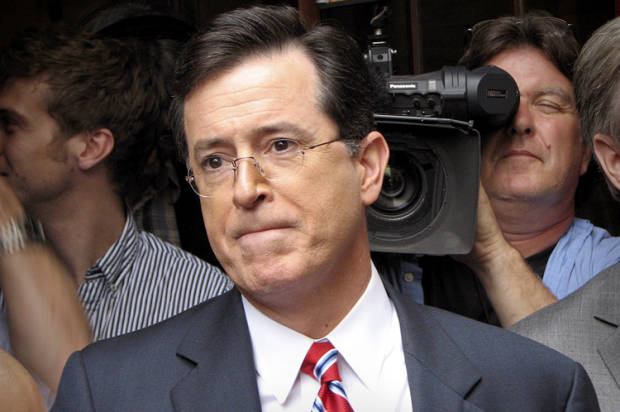
Racism in "satire" = racism
Others thought the "joke" went awry. Whether they agreed with #CancelColbert or not, they were with okay with criticizing Colbert's insensitivity.
In support of #CancelColbert: Why Stephen Colbert needs to make this right
I’m a Colbert fan and know he was trying to expose the absurdity of slurs against Natives. But here’s why it failed
By Brittney Cooper[W]hite people do not have a history of being devalued as white people on the basis of the slurs. Yes, Irish Americans, Italian Americans and Polish Americans in the late 19th and early 20th centuries were frequently the object of ethnic epithets and discrimination. But as those groups “became white,” whiteness itself became what Cheryl Harris calls a form of property, a protection against racial devaluing. So when Colbert, a white male, uses these slurs, even in the mode of critique, he steps into incredibly muddy water, and surely cannot expect to come out unsoiled.
In other words, I’m saying that though the bit was intended to critique racism, it failed. Yes, Colbert was spot on in his analysis of the ridiculousness of Dan Snyder’s “Original Americans” Foundation. But to paraphrase one of my Twitter-locutors, Chris Robinson, you can’t make Asian people collateral damage on your way to proving a point about racism toward Native people.
And what we should understand is that as satire goes, there is the thinnest of lines between critiquing racism and reinforcing or reinscribing those very stereotypes. Remember the 2008 cover of the New Yorker, called “The Politics of Fear,” that attempted to satirize the range of racist mischaracterizations of the Obamas. It communicated the absurdity of those stereotypes, but did not communicate an alternative narrative, that would effectively combat the stereotypes at hand. And:If Colbert had used the N-word instead to prove his point about Natives, we would have been outraged. And we would have seen #CancelColbert as the only appropriate response. Yet, many of the folks I dialogued with felt that calls to cancel the show were too much, and suggested that an apology was more appropriate.
One, we never get to tell the harmed group what the proper response to racial injury should be for them. Two, rather than critiquing the strategy, why not simply send a tweet or email demanding an apology? Solidarity is rarely simple, but choosing not to minimize someone else’s struggle is quite easy.
We have to learn ways to be in solidarity with one another. Increasingly, racism does not follow a simple white-on-black schema. And while I’m well aware of the pervasiveness of anti-black racism among all groups including Asians and Latinos, I also know Orientalism (Edward Said’s term) when I see it. And it is unacceptable. Black folks should be against all forms of othering, ethnic insensitivity and racism. Period. Don’t #CancelColbert, just hire more writers of color
An out-of-context joke went viral on Twitter and sparked a national debate about the limits of satire
By Prachi GuptaBut in the segment, Colbert built the punch line upon a cringe-worthy depiction of a “Chinaman” that went on for long enough to wonder if the humor in the segment was derived from Colbert’s mockery of Dan Snyder, or his actual impression and its finely crafted puns at the expense of Asians. As Brittney Cooper, generally a fan of Colbert, wrote for Salon, “By using language that seemingly sounds like how Asian Americans talk, Colbert’s bit communicated absurdity but also seemed to suggest that all Asians really do speak this way.” And:With more non-white people, more women, more LGBTQ people, more people who are just not straight white dudes, the humor expands to become more inclusive and original. More people will be able to say, “Hey, maybe this is not the best way to present X,” or “This sort of bothers me and might alienate other people, too.” We routinely see edgier stuff coming from diversity in television, and as audiences, we’re less confused about whether what we’re watching is punching down on a minority, or punching up on a minority’s behalf. 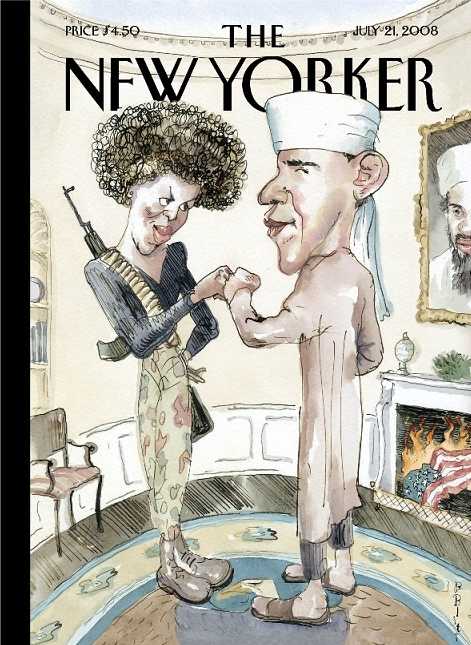
Why the "joke" failed
Why Colbert’s Joke Failed #NotYourSafeComedyRace
By InitAs an Asian American, I know that what Colbert the persona is saying is racist. Therefore, it’s easy for me to draw the conclusion that because what Colbert is saying is racist, what Dan Snyder is doing is also racist. And were Colbert’s whole audience composed principally of Asian Americans, this would have worked, because everybody is in on the joke.
However, where The Colbert Report‘s satire fails is that a significant portion of The Colbert Report‘s audience does not intuitively or instinctively believe in their guts that saying “Ching Chong Ding Dong” or using the term “Orientals” is necessarily racist. Not everybody who laughs at “Ching Chong Ding Dong” is laughing because Colbert the character is so stupidly racist, but they are laughing at Asians. I believe this to be the case because this kind of anti-Asian dialog is still common in our society and is not immediately countered by most of society for being racist. It only becomes a problem, like for Rosie O’Donnell and her ching-chonging on The View, when Asians and anti-racists mobilize and call the offender out on it.
In Jonathan Swift’s “A Modest Proposal,” he calls for the sale of Irish children as food for the wealthy in order to resolve poverty. It is unconscionable and undeniably wrong, No one could call for such a thing in society without immediate reaction and knowing that it is wrong.
In order to properly satirize Snyder, then Colbert would have to say something that is undeniably racist to the whole of his audience. However, as we know, offense against Asians isn’t undeniably racist to the public because the outrage against the use of the word “Ching Chong Ding Dong” nor the casting of Asians as “sensitive” does not come from the whole of the public, but primarily from Asian Americans and their allies in the anti-racist movement. Comment: This applies to many so-called "satires" of racism. For instance, every time South Park or Family Guy shows an Indian in leathers and feathers. These instances reinforce the dominant stereotypes, not critique them. Many Americans think they're true, not false, so they don't get the so-called joke.
Same with the New Yorker cover (above). A substantial minority of Americans thinks Obama is a foreigner and a Muslim. How is it a "satire" to reproduce their false beliefs without commentary?
Same with Colbert's "ching-chong" joke. No one knows what percentage of Americans "gets" that Asians talk in a normal voice, not in a sing-song cadence. If the "joke" failed to register with some people, it failed, period.
Then there's a whole subconscious level of perception going on. Where do people get the idea that Indians are savages or blacks are criminals? From movies and TV shows--including "satires" such as The Colbert Report.
That's true even though people "know," superficially, that stereotypes are false. Deep down, seeing or hearing is believing. People absorb stereotypical messages even when they think they know better. Especially when the messages repeated over and over.
For more on the subject, see:
Stereotyping explained to South Park apologists
Tomahawk Tassels stereotypes Native women
"Jokes" without punchlines are racist
The Dudesons, Polish jokes, and minstrel shows
Okay to stereotype in "satires"?

No, we shouldn’t #CancelColbert
The outrage over a tweet shows how much umbrage we can take
By Mary Elizabeth Williams
But as a full-time, professional offended feminist, I’ve got to say that we all undercut the serious points we may be trying to make about changing the conversation when the response to something that we deem inappropriate is a full-on demand for somebody’s head. Aside from the fact that it’s ludicrous to think for a moment that a network is going to cancel an award-winning, successful show because of a poorly executed tweet, it’s just plain arrogant to even call for it. It gets attention, and maybe that’s the ultimate point, but it also says that if we see something we don’t like, we are justified in trying to eradicate it entirely. That’s an extreme and intellectually unsophisticated response. Earlier this month, a similar case of misplaced self-righteousness blew up when a University of California at Santa Barbara professor took and allegedly destroyed an abortion protester’s sign, telling her, “I may be a thief but you’re a terrorist,” and claiming that she’d been “triggered.”
An uproar to cancel "Colbert Report" over possibly insensitive joke says more about the Internet than the satirist
By Neil Drumming
So, when you think about it, it’s really Twitter that ruined Colbert’s totally legitimate dig. (I don’t suppose anyone’s down to get behind #CancelTwitter at this point, though.) Someone at @ColbertReport probably should have realized that not all of the long-winded host’s humor can be disseminated as bite-size chunks. Honestly, the best part of the joke—a tag about triangle hats—didn’t even make the feed. Maybe someone at the office should be held accountable for not knowing how Twitter works—but that doesn’t sound like a firing offense. I mean, really, “The Colbert Show” has given us so much pleasure over the years.
But the fact that a joke died on the Internet yesterday is not the problem here. The most unfortunate result is that now all over cyberspace--and regular space—folks are asking themselves whether or not “The Colbert Report” should be taken off the air instead of asking, “Wait, why are they still called the Redskins?”
Racism in "satire" = racism
Others thought the "joke" went awry. Whether they agreed with #CancelColbert or not, they were with okay with criticizing Colbert's insensitivity.
In support of #CancelColbert: Why Stephen Colbert needs to make this right
I’m a Colbert fan and know he was trying to expose the absurdity of slurs against Natives. But here’s why it failed
By Brittney Cooper
In other words, I’m saying that though the bit was intended to critique racism, it failed. Yes, Colbert was spot on in his analysis of the ridiculousness of Dan Snyder’s “Original Americans” Foundation. But to paraphrase one of my Twitter-locutors, Chris Robinson, you can’t make Asian people collateral damage on your way to proving a point about racism toward Native people.
And what we should understand is that as satire goes, there is the thinnest of lines between critiquing racism and reinforcing or reinscribing those very stereotypes. Remember the 2008 cover of the New Yorker, called “The Politics of Fear,” that attempted to satirize the range of racist mischaracterizations of the Obamas. It communicated the absurdity of those stereotypes, but did not communicate an alternative narrative, that would effectively combat the stereotypes at hand.
One, we never get to tell the harmed group what the proper response to racial injury should be for them. Two, rather than critiquing the strategy, why not simply send a tweet or email demanding an apology? Solidarity is rarely simple, but choosing not to minimize someone else’s struggle is quite easy.
We have to learn ways to be in solidarity with one another. Increasingly, racism does not follow a simple white-on-black schema. And while I’m well aware of the pervasiveness of anti-black racism among all groups including Asians and Latinos, I also know Orientalism (Edward Said’s term) when I see it. And it is unacceptable. Black folks should be against all forms of othering, ethnic insensitivity and racism. Period.
An out-of-context joke went viral on Twitter and sparked a national debate about the limits of satire
By Prachi Gupta
Why the "joke" failed
Why Colbert’s Joke Failed #NotYourSafeComedyRace
By Init
However, where The Colbert Report‘s satire fails is that a significant portion of The Colbert Report‘s audience does not intuitively or instinctively believe in their guts that saying “Ching Chong Ding Dong” or using the term “Orientals” is necessarily racist. Not everybody who laughs at “Ching Chong Ding Dong” is laughing because Colbert the character is so stupidly racist, but they are laughing at Asians. I believe this to be the case because this kind of anti-Asian dialog is still common in our society and is not immediately countered by most of society for being racist. It only becomes a problem, like for Rosie O’Donnell and her ching-chonging on The View, when Asians and anti-racists mobilize and call the offender out on it.
In Jonathan Swift’s “A Modest Proposal,” he calls for the sale of Irish children as food for the wealthy in order to resolve poverty. It is unconscionable and undeniably wrong, No one could call for such a thing in society without immediate reaction and knowing that it is wrong.
In order to properly satirize Snyder, then Colbert would have to say something that is undeniably racist to the whole of his audience. However, as we know, offense against Asians isn’t undeniably racist to the public because the outrage against the use of the word “Ching Chong Ding Dong” nor the casting of Asians as “sensitive” does not come from the whole of the public, but primarily from Asian Americans and their allies in the anti-racist movement.
Same with the New Yorker cover (above). A substantial minority of Americans thinks Obama is a foreigner and a Muslim. How is it a "satire" to reproduce their false beliefs without commentary?
Same with Colbert's "ching-chong" joke. No one knows what percentage of Americans "gets" that Asians talk in a normal voice, not in a sing-song cadence. If the "joke" failed to register with some people, it failed, period.
Then there's a whole subconscious level of perception going on. Where do people get the idea that Indians are savages or blacks are criminals? From movies and TV shows--including "satires" such as The Colbert Report.
That's true even though people "know," superficially, that stereotypes are false. Deep down, seeing or hearing is believing. People absorb stereotypical messages even when they think they know better. Especially when the messages repeated over and over.
For more on the subject, see:
Stereotyping explained to South Park apologists
Tomahawk Tassels stereotypes Native women
"Jokes" without punchlines are racist
The Dudesons, Polish jokes, and minstrel shows
Okay to stereotype in "satires"?
Subscribe to:
Posts (Atom)