Showing posts with label awards. Show all posts

March 03, 2016

Diversity lacking at 2016 Oscars

Chris Rock’s Oscars didn’t “fight the power”: A night of crude jokes and cynical deflection is a poor way to show progress

Rock's big night shows us Hollywood wants it both ways—for movies to be powerful art and blameless entertainment

By Arthur Chu
The stage was set with Chris Rock’s opening monologue, which, while it certainly directly addressed the #OscarsSoWhite issue, made two breathtakingly tone-deaf arguments in quick succession: One, that the Oscars (and representation in entertainment media in general) is really not that big a deal, and two, the reason people are making a stink about it now is that we are no longer dealing with things that are big deals, like the actual violence and murder protested by the 1960s civil rights movement.

This was an incredibly stupid thing to say. The fact that #OscarsSoWhite has trended in tandem with its preceding sister hashtag #BlackLivesMatter isn’t exactly subtle to anyone who’s ever glanced at so-called Black Twitter. (Which Rock clearly has, given his much-appreciated last-minute shout-out to #BlackLivesMatter at the end of the ceremony.) A #BlackLivesMatter documentary addressing the violence and murder going on in the streets right now was commissioned by HBO as a direct result of the uncomfortable negative attention #OscarsSoWhite put on the film industry.

Acting like caring about day-to-day violence in the streets and the impact media and culture have on that violence are somehow mutually exclusive—a common, frustrating, tired argument anyone who talks about racism in media will inevitably see dozens of times in the comments section—ignores history.

It ignores the many, many arguments that have been made about how the excuses made for the deaths of Trayvon Martin and Mike Brown frequently come verbatim from untrue stereotypes out of TV and movies, how the only way Darren Wilson’s description of Brown as a “demon” who was “bulking up to get through the bullets” could possibly make sense to anyone is after a lifetime of media portrayals of the scary superhuman black man. It ignores Martin Luther King going out of his way to call Nichelle Nichols and tell her not to quit “Star Trek” because having a black woman on TV who wasn’t a domestic servant mattered. It ignores the ongoing civil rights protests around the Oscars back in the 1960s and ’70s, including Marlon Brando making history as the first and only best actor winner to boycott the ceremony, sending American Indian Movement activist Sacheen Littlefeather to accept the award in his place.

It ignores the fact that at the very moment Chris Rock was talking, there was a “Justice for Flint” fundraiser going on in protest of the Oscars, hosted by two black prominent filmmakers snubbed for best director nods who used #OscarsSoWhite to bring attention to the cause of a predominantly black community whose water was literally poisoned.
8 Reasons Why I Hated Chris Rock's Oscars Monologue

Opinions about the funnyman's opener ranged from "he told the truth" to "I laughed at parts," to "it sucked." Here are eight reasons why Akiba Solomon wishes it never happened.

By Akiba Solomon
One: Rock was foul for saying that Jada Pinkett Smith was only boycotting the Oscars because she wasn't invited. I can see why some see Pinkett Smith's actions as calculated and insincere, but Rock didn't say that. Instead, he reduced everything—the #OscarsSoWhite hashtag, the boycott and the alternate events (including one starring his brother)—to the sour grapes of a self-centered, spoiled, unqualified Black woman. It was also dumb. Because Jada Pinkett Smith can get into the Oscars.

Two: #OscarsSoWhite isn't some silly little hashtag. This year, people of all races have used it to talk about the problems large and small with an awards show that nominates strictly White actors across 20 categories. Plus the hashtag, news coverage and discussions provided Cheryl Boone Isaacs, the Black woman who heads up the Academy, with the political cover I believe she needed to change membership and voting rules that have grossly privileged elderly White men for years.

Three: Claiming that Black people care about #OscarsSoWhite because we have nothing real to be mad about was hostile to the truth. Here is a man who made an (uneven, sexist) documentary about Black hair in 2009 because his daughter was sad about not having "good hair." But in 2016, Rock knows nothing of contemporary Black struggle? Like, when people say "Black lives matter," does he hear, "Tekjjdioj gj()gui p;/00+"? Does "I can't breathe" bring anything to mind? How about "Sandra Bland," "Michael Brown," "Eric Garner" and "not guilty"?

Four: Using the image of a Black grandmother hanging from a tree as a punch line was blasphemous. This country has never atoned for its history of lynching, castrating and fatally dragging Black people from pickup trucks. Nor has it meaningfully addressed the burning of entire Black towns, race riots and other lynching-adjacent crimes.
Commentary: Joe Biden wasn't as funny at the Oscars as Chris Rock, but at least he didn't make an Asian joke

By Dexter ThomasAs the show progressed, some people who were watching used Twitter to ask why Chris Rock wasn't talking about all underrepresented people, instead of just black people. This has been a point of concern for a while, as some have assumed that just because the #OscarsSoWhite hashtag was started by a black woman, it must be black-focused, though the originator has repeatedly clarified that she was speaking of inclusion for all people.

The argument spun off into a separate conversation under the #NotYourMule hashtag, as people argued over whether black people should need to stand up for other people of color at every opportunity.

And really, Chris Rock shouldn't have to deal with this criticism: While he may have focused on the lack of opportunities available to black talent Sunday night, he is on record talking about diversity issues in Hollywood that go beyond black and white. In 2014, he wrote in the Hollywood Reporter:

But forget whether Hollywood is black enough. A better question is: Is Hollywood Mexican enough? You're in L.A, you've got to try not to hire Mexicans. It's the most liberal town in the world, and there's a part of it that's kind of racist—not racist like "... you, ..." racist, but just an acceptance that there's a slave state in L.A. There's this acceptance that Mexicans are going to take care of white people in L.A. that doesn't exist anywhere else.

That insight was nowhere to be found at the Oscars on Sunday when he made a cheap joke about Asian child labor.
The Oscars’ awkward & insincere masochism: Why the #OscarsSoWhite ceremony felt like such a disappointment

Last night's show was defined less by Chris Rock's uneven hosting turn than by the Academy's cognitive dissonance

By Jack Mirkinson
Watching this extended masochism session was a strange experience. We were told, time and again, how wrong the Oscars had gotten things, and then another award was given out and the violins swelled and an oh-so-worthy Oscar moment was had. The show was desperate for us to know how sorry it was to have failed us so thoroughly, but it also wanted us to remain utterly devoted to both the people who did get nominated and to the broader idea of importance and integrity of the Oscars. The cognitive dissonance seeped through the entire night.

One thing that really didn’t help was the ceremony’s complete tone-deafness about any diversity that didn’t fit into a black-white framework. Rock did a bit about Asians—using children, no less—that was so off-key, so glaringly unfunny that you wondered how it had gotten through in a year when the show was trying to prove that it had its finger on the pulse. Aside from winning director Alejandro Gonzalez Iñarritu and a couple of short film awardees, Asians and Latinos had virtually no presence for the entire evening. It was, to say the least, an odd choice.
After Oscars, Hashtags Ask: Does One Minority Group Have to Fight for Another?

By Karen WorkmanNo sooner had the curtains closed on the 88th Academy Awards, which was punctuated by Chris Rock’s scathing but broadly praised opening monologue on racism in Hollywood, than a new battle had reached a fever pitch on social media. And it had its own hashtag: #notyourmule.

Some viewers took issue with what they saw as the narrow focus of Mr. Rock’s opening monologue, which skewered racism in Hollywood but, they said, ignored the concerns of Asian, Latino and other minority artists. Others slammed the comedian’s bit involving Asian children posing as accountants as reinforcing negative stereotypes.
Summing it up

Critic's Notebook: Chris Rock's Monologue Is All #OscarsSoWhite All the Time

By Daniel FienbergFor viewers who think that Academy Awards diversity is not a problem at all, it was presumably way too monomaniacal, especially if you were hoping that Rock would unload on Donald Trump for a few minutes just to soften the blow of Jon Stewart's absence from late night.

But for people who think this actually is a serious thing because movies are supposed to be a reflection of society—and the Oscars are supposed to be a reflection of the best in movies—the actual effectiveness may have been mixed. Rock attacked the problem, while minimizing it; announced the racism, but made it seem benign and friendly; offered solutions, but the main feigned solution was black-only categories like "best black friend" ("And the winner for the 18th year in a row is, Wanda Sykes!").
Comment:  For more on the subject, see Asian Jokes at 2016 Oscars and Recapping the 2016 Oscars.

February 29, 2016

Asian jokes at 2016 Oscars

If the Oscars were all about diversity, why the crude Asian joke?

By Jessica ContreraChris Rock opened his monologue by saying he’d never be the host if he had to be nominated for the job. We all got the joke—Chris Rock is black, and for the second year in the row, not a single actor nominated for an Oscar was black.

But they also weren’t Asian or Latino. Representation is a problem in Hollywood for all minorities, but all night long, the show’s jokes focused almost entirely on the problem as it pertains to black people.

During a sketch in which Rock altered top movies to include actors of color, he chose Whoopi Goldberg, Leslie Jones and Tracy Morgan. Stacey Dash wished everyone a happy Black History Month. Kevin Hart joked, wasn’t it about time they put him in the front row?

There was a lack of diversity in the lack of diversity. This became most apparent when Rock brought three Asian children to the stage, posing as “bankers” from finance firm PricewaterhouseCoopers.
Chris Rock's Oscars joke about Asian American accountants stirs outrage

By Randall RobertsDespite an Academy Award ceremony focused on addressing issues of diversity in Hollywood, Asian Americans expressed outrage on social media after two jokes that poked at stereotypes. The comments, one by host Chris Rock during a skit and another by comedic actor Sacha Baron Cohen under his Ali G persona, were particularly notable due to the controversy surrounding the #OscarsSoWhite theme.

Rock's skit drew the most ire. In a rehearsed bit involving the tabulation of Academy Awards votes, he introduced the would-be PriceWaterhouseCoopers representatives overseeing the count. “They sent us their most dedicated, accurate and hard-working representatives," he said. "Please welcome Ming Zhu, Bao Ling and David Moskowitz."

Three kids of Asian descent, dressed in suits and carrying briefcases, walked toward center stage. Following a muted response from the crowd, Rock added: "If anybody’s upset about that joke, just tweet about it on your phone that was also made by these kids."

And react they did, many wondering how the gag made it out of the writers room.
“Yellow people with tiny dongs”?: The Oscars have more than one diversity problem—and it shows

Tasteless jokes about Asians put a damper on what was otherwise a joyous celebration of diversity

By Sonia Saraiya
Last night’s 88th Academy Awards was a major platform, at the center of Hollywood’s glitterati, for a discussion of diversity in Hollywood. As I wrote last night, host Chris Rock made that the focus of the evening, paying an equally self-righteous and self-mocking attention to the contributions of black performers in Hollywood, from Academy Award winner Jamie Foxx as Ray Charles to outspoken black conservative Stacey Dash as the Oscars’ “diversity outreach coordinator.”

But diversity in Hollywood isn’t just about black artists and performers in Hollywood. Writer Kelly Oxford observed on Twitter last night, “There have been more droids on the Oscar stage than Latinos or Asians,” after three “Star Wars” robot-characters rolled out and spoke or beeped to the audience. First Nations actors were only highlighted through their supporting roles in “The Revenant,” which nabbed both the Best Actor and Best Director awards.

And to add insult to injury, rather too much of the Oscars telecast mocked Asians and Asian-Americans. It’s one thing for a black host to play with stereotypes of both white and black people to create a commentary on inclusion in the Academy Awards, especially when notable roles by black performers were not recognized by the Academy. It is another for that same host—and that predominantly white show—to turn to making jokes about another marginalized race, as if that somehow neutralizes the issue.
Comment:  For more on the subject, see Recapping the 2016 Oscars and Facebooking the 2016 Oscars.

Recapping the 2016 Oscars

I guess Chris Rock dropped a lot of truth bombs at last night's Academy Awards, but I didn't find his monologue especially incisive or entertaining. Let's see what others are saying:

“Is that the first ‘rape, lynch’ joke by a host in Oscars history?”: Twitter loses it over Chris Rock’s Oscars monologue and #OscarsSoWhite

Chris Rock’s Oscars monologue stuns: “When your grandmother’s swinging from a tree it’s really hard to care about best documentary foreign short”

So the point of his lynching comment was what...that diversity in movies is a trivial issue? "All you movie protesters don't understand what really matters, so shut up"? That's the way I heard it.

What if your short documentary was about grandmothers swinging from a tree? Or about war, climate change, disease, or another important issue? Should the host of an arts program really be dismissing the arts?

Someone wrote that Rock was trying to thread the needle, but they didn't say exactly how. It was by dismissing or belittling the protests and congratulating the people like him who showed up.

Hence the diss of Jada Pinkett Smith--that she wouldn't have been invited anyway. And the "Black History Month Minute" that seemed to honor Will Smith but switched to Jack Black.

The rest of the show

“This Oscar is going home in a Honda Civic”: Louis C.K. steals the show with a real tribute to an unloved category

I agree: Louis CK stole the show. Make him the host next year!

And the winning short documentary was about honor killing, Chris Rock. So yes, short docs can be as relevant to the world as someone's lynching. In this case, they're roughly about the same subject: heinous but quasi-legal murder.

VP Joe Biden speaks out at Oscars against sexual abuse: “We must and we can change the culture”

Yep, one of the night's best moments.

Finally:

Leo earned his Oscar for “The Revenant”—and he might be our greatest movie star ever

Or not:

Leo’s Oscar isn’t overdue: He hasn’t won before because he didn’t earn it

For more on the subject, see Facebooking the 2016 Oscars and Duane Howard at the Oscars.

February 28, 2016

Facebooking the 2016 Oscars

Some people live-tweet events such as the Oscars. This year I posted a running commentary on Facebook. Here it is:

Opening monologue

I guess Chris Rock is giving a speech rather than telling jokes this year? ‪#‎OscarsSoWhite‬

"Writers, we know that you are the true backbone of the industry, and we love you for it. We also think you're all extremely hot."

So true! ‪#‎WritersSoHot‬

Commercial break! Debuting next week on ABC: The Real O'Neals. Finally, an Irish American family gets a turn in the spotlight. ‪#‎diversity‬

After #Blackish, #FreshOfftheBoat, #Empire, and #DrKen, it's about time someone featured a white family.

Kind of awkward to bring out Stacey Dash since everyone knows she's a Fox commentator and apologist for white supremacy. What's up with that? ‪#‎OscarsSoWhite‬

Response: awkward silence from the audience.

Pretty average ‪#‎Oscar‬ show so far. Obviously they decided to make it mainly about diversity. Slamming the issue with a sledgehammer rather than slicing it with a scalpel.

Moving along

Jared Leto makes the first merkin joke in Oscar history.

Consider the Merkin: A Brief History of Pubic Wigs in Hollywood

Guy thanked his one-week-old daughter. Not sure what her role was in the years-long production of Mad Max: Fury Road.

The "thank you" crawl beneath the award winners is a good idea. Everyone gets thanked on-screen and the winner can focus on thanking the key people. Or saying something distinctive and memorable.

At least the show is zipping along nicely. None of Neil Patrick Harris's middling stunts.

Let's cut to Sofia Vergara every so often! She's pretty...and Latina! ‪#‎OscarsSoWhite‬

We get to see some Indians on screen--usually savage warriors--whenever they play the standard clips from The Revenant. Yay? ‪#‎OscarsSoWhite‬

Giving Andy Serkis recognition for, well, anything is a novelty.

So far nothing that qualifies as a memorable moment. ‪#‎OscarsSoBland‬

Picking up the pace

Really? Selling your daughter's Girl Scout cookies? Is that supposed to be funny and charming rather than crass and competitive? ‪#‎OscarsSoMercenary‬

The interview segment straight outta Compton was cute. ‪#‎OscarsSoWhite‬

Louis CK was good. All the awards should be presented like that--with smart and seemingly spontaneous riffs.

Leonard Nimoy got the final spot in the "In Memoriam" montage! ‪#‎SpockLives‬ ‪#‎OscarsSoVulcan‬

Vice President Joe Biden! Another white guy! What film was he in? ‪#‎OscarsSoWhite‬

Cue the conservative Twitter outrage over the domestic violence segment. How dare the Oscars talk about the real world? It's only movies!

Unlike the Stacey Dash bit, that will go on the show's highlight list.

Pharrell has hair? Who knew?

Sacha Baron Cohen was entertaining. Thus proving my point re Louis CK.

Alejandro González Iñárritu mentions his Native American cast! ‪#‎OscarsSoWhite‬

Where's Sean Penn to make a follow-up joke about immigrants?

Not sure why the show is over three hours. It's not as if they padded it with a lot of unnecessary bits. ‪#‎NeilPatrickHarris‬ ‪#‎OscarsSoLong‬

The big awards

Gender confirmation surgery! I haven't heard that term before. ‪#‎OscarsSoFluid‬

Forrest Goodluck featured in Leonardo DiCaprio's Best Actor clip! ‪#‎OscarsSoWhite‬

DiCaprio won because of the kid!

"Climate change is real," says Leo. Cue the conservative numbskulls still raging over Lady Gaga and domestic violence.

Another one for the highlight reel. DiCaprio uses his speech time effectively.

2016 Oscar Winner DiCaprio Dedicates his speech to Mother Earth and Indigenous PeopleLeonardo DiCaprio used his Oscars speech to address climate change. He urged the audience to “support leaders around the world who do not speak for the big polluters or the big corporations but who speak for all of humanity, for the indigenous people of the world, for the billions and billions of underprivileged people who’ll be affected by this”.

"Making The Revenant was about man's relationship to the natural world, a world that we collectively felt in 2015 as the hottest year in recorded history. Our production had to move to the southern tip of this planet just to find now. Climate change is real. It is happening right now. It is the most urgent threat facing our entire species and we need to work collectively together and stop procrastinating.

We need to support leaders around the world who do not speak for the big polluters or the big corporations, but who speak for all of humanity, for the indigenous people of the world, for the billions and billions of under privileged people who will be most affected by this, for our children's children, and for those people out there whose voices have been drowned out by the politics of greed.

I thank you all for this amazing award tonight. Let us not take this planet for granted, I do not take this night for granted. Thank you so much."
Glad to see Spotlight won Best Picture. Just because I hate it when a film gets "momentum" and sweeps.

Sorry, The Revenant. Better luck next year.

Thus endeth the Oscars. A few good moments in the second half, but still nothing special. ‪#‎BlackLivesMatter‬

And Fight the Power plays over the final credits.

Journalism wins

A few final tweets:

Retweeted Kate Sheppard (@kate_sheppard):
I haven't seen any of these movies but hey, nice to see attn paid to sexual assault, climate change, and need for investigative journalism.

Retweeted Dave Pell (@davepell):
The message of Spotlight.
The media helps to protect us. Stop maligning it.

I forgot that conservatives also will rage at the Girl Scouts. Damn liberal feminist atheist girls!

For more on the subject, see The Best Indian Movies.

Duane Howard at the Oscars

It's extremely rare to see a Native at the Academy Award ceremony. So it's worth noting that actor Duane Howard attended this year.

The Revenant's Duane Howard outfitted by Haida designer for Academy Awards red carpet

Dorothy Grant had one week to stitch outfit that could be seen by millions at Oscars


With Forrest Goodluck, Arthur RedCloud, and Leonardo DiCaprio. I think this photo was taken before or after the ceremony, but I'm not sure. It could've been taken somewhere else.


With Cate Blanchett.

Others at the Oscars

Meanwhile, another Native actor in The Revenant wasn't invited.

Despite controversy over #OscarsSoWhite, Canadian actress and Revenant star Grace Dove was not invited to the Academy Awards

As a newly elected member of the Academy, veteran actor Sonny Skyhawk was planning to attend the ceremony too:

Sonny Skyhawk Bringing His War Bonnet to Oscars, Fighting for His People

But I didn't see any reports from him or others about his being there.

For more on the subject, see Why Are Oscars So White? and #OscarsSoWhite 2016.

January 24, 2016

Movie and TV diversity sells

After the #OscarsSoWhite announcement for 2016, Hollywood once again considered its failure to diversify.

In Hollywood, a major disconnect between economic interests and business practices

Study by UCLA Bunche Center finds that women and minorities are still underrepresented among actors, directors and executives

By Eric Greene
The report reveals a dramatic disconnect between the reality of America and the Hollywood dream factory. It found that although films and TV shows with casts that reflect the nation’s racial and ethnic diversity are more likely to succeed at the box office or in the Nielsen ratings, minorities and women continue to be severely underrepresented as directors, show creators, writers and lead actors.

For example, although women make up a little more than 50 percent of the U.S. population, only 6.3 percent of the films in the study were directed by women, and only 17 percent of film studio senior management were women. Not a single film studio CEO was a woman during the period studied in the report.

Similarly, while racial minorities are approximately 40 percent of the population, racial minorities directed just 17.8 percent of theatrical films in 2013 and represented only 8 percent of film studio senior management. Only one person of color was a film studio CEO.

The report also reveals that more than half of “frequent moviegoers”—a group that buys half of all domestic movie tickets—are minorities, suggesting that the industry’s hiring practices are out of sync with its economic interests.

“What we’re finding is that audiences want diverse content,” Hunt said. “They want diverse content created by diverse talent. So the industry would increase its odds of success if there was more diversity in the room.”
When will Hollywood figure out that diversity sells?

Panel discusses findings of UCLA's Hollywood Diversity Report

By Sarah Rothbard/Zocalo
Hunt, who wrote the report with Ana Christina Ramon, also with the Bunche center, said that he was not surprised by most of this year’s findings, which came from analyzing 200 films and more than 1,100 television shows released in the 2012-13 season. Film directors, writers and actors remain overwhelmingly white and male; TV is more diverse, but both nonwhites and women remain vastly underrepresented.

Hunt said that the study’s most interesting finding is that “diversity clearly sells.” More diverse TV shows are more popular than shows that aren’t diverse. And movies with diverse casts did best at the worldwide box office.

So why doesn’t Hollywood follow the money and create more diverse content?

Hunt said that white men have dominated positions behind the camera for many years. In a high-risk industry, they want to feel they have the best chance of succeeding, and so they tend to hire people who look and think like them.
Diverse movies are a huge business. Why doesn’t Hollywood make more?

By Drew HarwellThe industry is ignoring a gold mine. Every year for the past half-decade, the average white American has bought a ticket to fewer films than the average black, Hispanic or Asian moviegoer, industry data shows. Though 37 percent of the U.S. population, minorities bought 46 percent of the $1.2 billion in tickets sold in the United States last year.

Some of the year’s biggest surprises had diverse actors and small budgets but ended up dominating the silver screen. For five straight weeks ending in September, movies with predominately black casts topped the box office, including the Christian drama “War Room,” thriller “The Perfect Guy” and rap biography “Straight Outta Compton,” which has made $200 million on a $28 million budget to become the highest-grossing biopic of all time.

More recently, “Creed,” a “Rocky” spinoff starring Michael B. Jordan and directed by Ryan Coogler—both 20-something black men who led the 2013 critical darling “Fruitvale Station”—has triumphed with $72 million at the box office and one of the best opening weekends in the boxing franchise’s 40-year history.

High-profile hires of actors such as Jordan in “Creed” and John Boyega in “Star Wars: The Force Awakens” have remained the exception in a Hollywood that has shown only stuttering progress over the past year in getting more-diverse talent into blockbuster roles.
How Hollywood Keeps Minorities Out

By Dennis RomeroFilms with casts that are 21 to 30 percent minority fared better than movies with any other racial-ethnic mix, earning a median box office take of $160 million, according to Hunt's last UCLA study. Those films also saw the greatest return on investment. With major network TV, "median household ratings peaked" for shows with casts that were 41 to 50 percent minority, the report found.UCLA Releases Scathing Report on Diversity in Film and TV

By Melissa SilversteinJust when you thought it was safe to be hopeful again, here comes another reality check.

The Bunche Center at UCLA has released its annual "Hollywood Diversity Report" to remind us that we're still nowhere near where we should be in terms of gender and racial diversity. Researchers examined 172 theatrical films released in 2011 and 1061 TV shows aired during the 2011-12 season on six broadcast and 62 cable networks, eloquently explaining their reasoning as follows: "When media images are rooted primarily in stereotype, inequality is normalized and is more likely to be reinforced over time through our prejudices and practices."

Here's the crazy--and yet entirely logical and expected--part: Diversity means money. Broadcast comedies and dramas with more diversity get higher ratings. Films with just 21-30% diversity earned a global median box-office total of $160 million, while films with less than 10% diversity made just $68.5 million.
Oscars So White? Or Oscars So Dumb? Discuss.

By Manohla Dargis, Wesley Morris, and A.O. ScottMANOHLA DARGIS I love that so many people are enraged at this year’s whiteout—anyone who yells at the Academy is a friend of mine—but I wish that this anger was being expressed 365 days a year and not when the nominations are announced. As Tony suggested, it’s worth repeating again and again (and again!): The primary reason the Oscars are so white this year and most years is that the movie industry is overwhelmingly white. That’s infuriating, but that’s not shocking, and it sure isn’t news. And if that bothers people, then they need to start complaining loudly and perhaps even begin voting with their dollars. By, say, supporting movies with minorities and women. Because the only way the industry will change is if people give them hell.

WESLEY MORRIS Manohla, wouldn’t you say that’s what happened in the last year and the year before? The audiences paid to see women, films with mostly black actors and racially diverse casts, and paid often: “The Force Awakens,” “Inside Out,” “Furious 7,” “Pitch Perfect 2,” “Spy,” “Mad Max: Fury Road,” “Trainwreck,” “Straight Outta Compton,” “Cinderella,” “Creed,” “Get Hard,” “Sisters,” that second “Divergent” movie and the last “Hunger Games.” There’s demonstrable proof that North America wants to see itself—more of itself—in its entertainment. And the Academy—which is working to add more women, young people and color to its ranks—should want to see more of its ideal self at the Oscars.
Comment:  For more on the subject, see The Revenant vs. Life of Pi and Diversity Is "An Artistic Necessity."

January 17, 2016

Diversity is "an artistic necessity"

More on the #OscarsSoWhite controversy:

Oscars 2016: It's time for Hollywood to stop defining great drama as white men battling adversity

By Mary McNamaraBefore chalking all this up to a discussion of political correctness, Hollywood should take note that there is money at stake.

The movie and TV industries won't solve their main problem—how to capture the eyes of young audiences—by hewing to hallmarks of excellence set by previous generations. Millennials and post-millennials aren't just big franchise fans, they are also the most racially diverse and socially tolerant generations in history. As the crossover audiences for "Straight Outta Compton" and "The Hunger Games" series proved, they don't "need" their heroes to be white and don't expect them to be male or straight or anything but interesting.

So instead of panicking about the logistical challenges of the digital era, Hollywood should remember its own time-honored mantra: What matters is the story. The size and shape of the screens are, to a certain extent, outside the entertainment industry's control. What is playing on them, and how much it moves the audience, is not.

"Diversity," the lack of it and need for it, has been discussed and debated ad nauseam. But diversity isn't a civic duty, it's an artistic necessity. For any art form to remain relevant, it must grow with the society it explores, questions, criticizes and represents.
#OscarsSoWhite, Again: A Symptom of Hollywood's Racism

By Jacqueline KeelerThis generation of Native Americans actors do not follow their dreams to Hollywood in order to continue to play buckskin and loincloth Potemkin villager parts that serve only to provide a backdrop to a white male actor’s heroics. I agree with Nigerian novelist Chimamanda Ngozi Adichie when she said in her TED Talk that “The Danger of a Single Story”—that is, the world seen only from the perspective of the white male—is that, “it robs people of dignity. It makes our recognition of our equal humanity difficult. It emphasizes how we are different rather than how we are similar … Many stories matter.”

In light of this, I call for a moratorium on “buckskin and loincloth parts” until portrayals of Native people are balanced with those featuring modern Native American protagonists. We must get away from the portrayal of Native people as either savage warriors of the past, “Indian princesses” to be courted and conveniently killed off before giving birth to a Mestizo nation north of the Rio Grande, or as stoic stereotypes.
And:In this vacuum of diverse portrayals, it is no wonder that stereotypes are all most Americans know about Native people.

The result of this whitewashing of racially diverse American stories—both those based in the real world and those in fantasy—was found in a 2014 UCLA study to reduce minority representation in films by more than half. Racial minorities make up 40 percent of the population but only 17 percent of leads in films, while 83 percent of the lead actors in films are white.

America is rich in stories—embarrassingly so. Let’s bring all the missing stories to the table and then we can begin to see each other as people.
Comment:  For more on the subject, see Why Are Oscars So White? and #OscarsSoWhite2016.

January 15, 2016

Why are Oscars so white?

Some analyses of the #OscarsSoWhite phenomena:

The unbearable whiteness of Hollywood: The Academy should be ashamed—but the problem is bigger than the Oscars

For the second straight year, no performers of color have been nominated. Here's the real reason why

By Jack Mirkinson
What’s behind all this? Let’s call it one part economics and two parts institutional bigotry.

First, the economics: It’s no accident that television’s explosion of diversity happened at the same time that the economics of the business have morphed so much that it’s hard to articulate what constitutes “television” anymore. The plunge in ratings, the rise of streaming and the insane proliferation of outlets spending money on original series mean that TV creators have the luxury of targeting smaller audiences than movies do, and of taking more risks. The prestige wing of the industry has also embraced the new platforms enthusiastically. Having a show on Netflix is now seen as equivalent to having one on HBO.

Movies aren’t there yet. 2015 was actually the biggest year in both global and domestic box office history. That money, though, was generated on the back of a small handful of films—mostly thundering 3-D blockbusters that were easily exportable to every country in the world. More and more, the movie industry won’t take a chance on anything but the seemingly surest bets, and until it sees a sufficient threat to its way of life, it won’t veer from this path. What’s more, the on-demand platforms that could potentially sustain smaller, more interesting films are still seen as second-class, meaning that they don’t have a chance to break through in the same way that similar TV ventures do.

Here’s where the bigotry part really starts to rear its ugly head. All too often, “risk-free” still means “white men.” There remains a stubborn belief that movies about women or people of color won’t “play” in the international markets that have become so important to sustaining the film industry. What’s so infuriating about this is that, over and over again, movies about people of color or women that do get released make piles of money for the studios. It’s institutional barriers, not box office clout, that are holding back more of these films.

Even when movies aren’t expected to make a ton of money, the same rules still apply. Take another look at the 2016 nominations, many of which were given to smaller films. It’s not like the chosen white actors were plucked out of diverse movies. With a couple of exceptions, all of the movies they starred in contain almost completely white casts from start to finish. (They’re overwhelmingly male-centered, too: the most prominent female character in “The Revenant,” which won the Best Picture award at the Golden Globes, is a bear.)
Another Oscar Year, Another All-White Ballot

By Cara BuckleyFingers immediately pointed to the Academy of Motion Picture Arts and Sciences, which gives out the Oscars and which, despite efforts to diversify its ranks in recent years, still skews older, male and white, according to a 2012 investigation by The Los Angeles Times. Academy members themselves were taken aback, saying in private conversations, “Don’t look at me,” but also, “This really doesn’t look good.”

But the truth probably springs from a murkier confluence of factors both sweeping and granular, from missteps and misjudgments in awards campaigns in support of individual movies to the systemic lack of diversity in Hollywood.

The studios behind two films that focus on black characters, “Creed” and “Straight Outta Compton,” seemed to come late to the realization that their productions were awards contenders or proved unable to win enough votes. The Academy’s preferential voting system also works against films and actors not selected as voters’ top picks. And, perhaps the biggest factor of all, the industry’s overall offerings: Many of the 305 films eligible for Oscars did not, demographically speaking, reflect the lives and complexions of movie audiences.

“Every time I say the same thing: Until we get a position of power, with a green-light vote, it’s not going to change,” Spike Lee said in an interview a few hours after the nominations came out. “We may win an Oscar now and then, but an Oscar is not going to fundamentally change how Hollywood does business. I’m not talking about Hollywood stars. I’m talking about executives. We’re not in the room.”
The Oscars’ death spiral: The academy and Hollywood are locked in a crisis of their own making

Another super-white list of Oscar nominees, but the problem is less the academy than Hollywood's dominant ideology

By Andrew O'Hehir
From the point of view of the academy’s leadership, this pretty much presents an insoluble dilemma. Seriously, what are they supposed to do, beyond putting up with all the outraged blog posts and #OscarsSoWhite tweets and pushing onward for another year? Can they kick out all the stereotypical retired bit-part actors and movie executives in Beverly Hills, with their stereotypical sky-blue cardigans and white patent-leather shoes? Or send them all anthrax in the mail with their holiday-season screeners? They cannot. Can they rig the nomination process, or set up some informal quota system to ensure that at least one or two people of color show up in the acting and directing categories? Well, I suppose they could, and I wouldn’t be surprised if such things have been brainstormed in private. But consider all the ways that could go wrong—if Bill O’Reilly and Rush Limbaugh heard about it, for instance.

Barring such drastic measures, the academy is pretty much stuck with the membership it has, which is gradually growing younger and more diverse, but remains predominantly just the way you would think. Far more important, it’s also stuck with the production process of the Hollywood studios and “prestige” indie producers like Harvey Weinstein and Scott Rudin, which privileges certain kinds of movies, certain kinds of stories and certain kinds of characters over others. That’s where the heart of the problem lies, which is why I think it’s slightly misguided to point fingers and shriek at Mr. Sky-Blue Cardigan. Yes, to the extent Mr. SBC exists, he doesn’t get off the hook. (He didn’t nominate Ava DuVernay last year for “Selma,” the most Oscar-y movie imaginable.) But it should not come as an enormous surprise to learn that Oscar voters have safe and conservative tastes in many ways, or that they favor period pieces, inspirational fables and do-gooder tales, all wrapped in that indefinable quality best described as movie-ness.
The Oscars Will Remain So White If These 5 Things Don't Change

The first step to fixing the problem is admitting that it exists.

By Carolina Moreno
Hollywood's Diversity Problem Starts at the Top

Major Talent Agencies Represent Few Actors of Color

Studios and Talent Agencies Won't Take Responsibility

Films Just Aren't Casting Actors of Color

Yes, Academy Voters Are Seriously Lacking Diversity
Comment:  For more on the subject, see Hollywood Still White in 2015 and Another White Year at Oscars.

January 14, 2016

#OscarsSoWhite 2016

Oscars 2016: Here's why the nominees are so white--again

By Rebecca Keegan and Steven ZeitchikIt's another embarrassing Hollywood sequel: For the second year in a row, the Academy of Motion Picture Arts and Sciences has nominated an all-white group of acting nominees.

This year's list of Oscar nominees passes over popular, well-reviewed performances in the movies “Creed” and “Straight Outta Compton” and excludes prominent actors of color in 2015 films including Idris Elba, Samuel L. Jackson and Will Smith.

The news again provoked an outcry and raised fresh questions over a familiar issue: whether an industry that prides itself on its progressiveness remains stubbornly stuck in the past.

“For the two black movies that made over $100 million at the box office, touched a nerve and are artistically fresh, only white people were nominated. How does that work?” asked producer and academy member Stephanie Allain, referring to “Creed” and “Compton.”
Academy Nominates All White Actors for Second Year in Row

By Tim GraySome may conclude that the nominations reflect institutional bias against minorities and women within the Academy of Motion Picture Arts & Sciences, but the problem is with Hollywood’s major studios and agencies. There were 305 films eligible this year. If hiring reflected the U.S. population, Oscar voters would have weighed 150-plus films directed by women, 45 directed by blacks, 50 by Hispanics, and dozens of movies by directors who are Asian-American, LGBT individuals, people with disabilities and members of other minorities. Of course, the actual tallies were a fraction of those numbers.

Surprising omissions from the actor race this year included Idris Elba for “Beasts of No Nation,” Will Smith for “Concussion,” Michael B. Jordan from “Creed” and the many young actors in “Compton.”

Last year, #OscarSoWhite lit up the Twitter-sphere, generally focused on the acting and directing categories, mostly due to omission of actor David Oyelowo and director Ava DuVernay from “Selma.” But in fact, the imbalance carries into the majority of categories due to lack of opportunity.

In the Jan. 14 announcement, the Academy of Motion Picture Arts & Sciences listed 23 total producers for the eight movies picked in the best-pic race; seven were women. For the two screenplay races, 17 individuals are nominated, with four women and no racial minorities. The sole nom for “Straight Outta Compton” went to a self-described “white Jewish gay guy from Connecticut” and his white writing partners, Jonathan Herman and Andrea Berloff.)
Oscars 2016: It’s a Nearly All-White Nominees’ List—Again

Comment:  For more on the subject, see Hollywood Still White in 2015 and Another White Year at Oscars.

January 11, 2016

Mixed reactions to DiCaprio's speech

Reactions to Leonardo DiCaprio's Golden Globes speech poured in quickly. Some of them were off-the-charts ecstatic:

Leonardo DiCaprio's Golden Globes Acceptance Speech Is One of the Most Important He's Ever Made

Leonardo DiCaprio's Golden Globes Speech Made B.C. 'The Revenant' Actor All 'Choked up'

Others were more nuanced:

Leonardo DiCaprio's shout out to First Nations cause for introspection

Some quick to praise, but others skeptical of The Revenant star's Golden Globe speech

Native American Groups Officially Respond To Leonardo DiCaprio’s Call To Action

Representatives of the groups depicted in The Revenant spoke with BuzzFeed News about the actor’s Golden Globes speech calling on listeners to “protect … indigenous lands.”

By Ariane LangeThis week, Mark N. Fox, chair of the Mandan, Hidatsa, and Arikara Nation, wrote to BuzzFeed News: “Mr. DiCaprio’s words and support for our rights and the rights of all Indigenous nations are amazing and courageous. Like a man with true character, he is willing to challenge American Society where many others of influence fear to tread. His efforts both on and off the screen have brought honor to our Arikara, Hidatsa, and Mandan people. We look forward to allying with him in the struggle to promote truth and protect our rights as sovereign and Indigenous people!”But:Assiniboine activist Lauren Chief Elk-Young Bear tweeted Sunday night, “I think that shoutout was him making Native people his mascot,” noting that he did not thank any groups or individuals specifically and instead relied on vague language that rendered all Native peoples a monolith. In a separate series of tweets the next day, she criticized his wording as part and parcel of “white saviorism.”

“The reason the Leo shout out was so remarkable to folks is that Native peoples are invisible,” Keene tweeted. “It shouldn’t be revolutionary to call upon the peoples whose land you occupy, but it is.”
Comment:  For more on the subject, see Indians at Previous Oscar Ceremonies and All About Sacheen Littlefeather.

January 10, 2016

DiCaprio's Golden Globes speech

After the Golden Globes Sunday night, Leonardo DiCaprio's acceptance speech was the talk of Indian country:


Beginning at the 2:19 mark. PopSugar.com summarizes it:Leonardo DiCaprio was one of the honorees at the Golden Globe Awards on Sunday evening—he took home the trophy for best actor in a motion picture of his role in The Revenant. Not only did he look as handsome as ever, but he also a delivered an inspiring speech touching on the importance of raising awareness toward indigenous cultures and corporate greed, saying, "I want to share this award with all the first nation's people represented in this film and all the indigenous communities around the world. It is time that we recognize your history."Activist Dallas Goldtooth provides some context:Leonardo DiCaprio in his acceptance speech at the Golden Globe Awards tonight called out the need to support First Nations and Indigenous Peoples rights and our fights to protect Mother Earth.

I got to meet him last year when he marched with the Indigenous Bloc of the Peoples Climate March in NYC. Here is a photo I took of him standing with our folks in that march, holding a banner from IEN, Indigenous Environmental Network.

If you look closely former congressman Dennis Kucinich and Mark Ruffalo are in this photo as well--standing with many other frontline Indigenous leaders. ;-)

Much love to Leo. He walks his talk. And I hella respect that.


Comment:  For more on the subject, see Indians at Previous Oscar Ceremonies and All About Sacheen Littlefeather.

February 24, 2015

Immigration at the 2015 Oscars

This year's Oscars unmasked Hollywood's most dubious views

Despite stirring support for the spirit of Selma, and big prizes for Hispanic film-makers, it was the unfortunate throwaway remarks which will linger longest after the 87th Academy Awards

By Steven W Thrasher
“Who gave this sonofabitch his green card?” Sean Penn demanded before presenting Mexican film-maker Alejandro González Iñárritu the best picture Oscar for Birdman, giving a whole new political dimension to the racism of the 87th Annual Academy Awards.

Penn, who starred in Iñárritu’s 21 Grams all the way back in 2003, probably thought it was a funny joke with an old friend. But racism from friends assumed to be benign can be the worst kind, especially at an awards show: just ask black author Jackie Woodson, whose “friend” used presenting her with a National Book Award to make a watermelon joke.

The incident highlighted Oscar’s uneasy relationship with race, which was on full display throughout last night’s ceremony. Along with Tinseltown’s fraught relationship with American militarism, Penn bookended a politically awkward and often uncomfortable evening, which started with host Neil Patrick Harris making a joke about Hollywood celebrating its “best and whitest”.

Four hours later, Penn reminded the world that white supremacy is never far away in America, and it’s at its most insidious and powerful when wielded by self-proclaimed Hollywood liberals–like Penn.
And:Hollywood likes to think it is cutting-edge on social issues, but it’s usually very conservative. So it was good to see Glory’s musicians provide at least reference to what the hell has been happening in America between Happy and Everything is Awesome.

And Penn’s penultimate moment of the broadcast was its lowest point, when he brought to the fore not just the simmering, weird way race was near at hand with several African Americans who weren’t nominated. He showed that white supremacy in Hollywood needs to assert itself even in the face of minority exceptionalists who are nominated and actually win–that it needs to remind a brown film-maker receiving the Academy’s highest honor that he is still a sonofabitch with a green card, ostensibly stealing work from good white folk.

In a way, Penn did us a favor: he exposed Hollywood’s faux liberalism for what it truly is. Hollywood has an uneasy relationship with racism, feminism and militarism because it will exploit all of them to keep making money. It is not concerned with diversity or economic justice, except to the extent it can feign interest in any of them to perpetuate its own power.
“Who gave this son of a b*tch his green card?”: On the Oscars stage, there’s no such thing as a joke between friends

It doesn't matter if Alejandro Inarritu thought Sean Penn's joke was funny—the Oscars belong to the people at home

By Erin Keane
According to the Associated Press, Iñárritu brushed off concerns others voiced about Penn’s joke after the ceremony. “I found it hilarious,” Iñárritu said. “Sean and I have that kind of brutal (relationship) where only true friendship can survive.”

There’s no reason to believe that’s not true—as comedian Sara Benincasa tweeted last night, “Innaritu and Penn are both rich successful dudes who probably bro down in piles of money and make fun of each other.” As is their right! Friends know where the line is that they allow each other to cross and none of us know the particulars of their “brutal” friendship. My own family includes several different nationalities, and cultural differences do come up, and when they do, sometimes we joke about them, as is our privilege as private citizens with functioning senses of humor.

But Sean Penn wasn’t pulling his buddy’s leg at an afterparty or backstage. He planted himself front and center on stage and made a groaner of a green card joke at the climax of a long and weird ceremony that capped off a long and often intense Oscar campaign season that left many viewers furious over an #OscarsSoWhite and acting and directing snubs for “Selma.” None of that necessarily is Penn’s responsibility to ameliorate, but would it have killed the guy to keep the ethnic jokes to himself until he and his friend were safely off-screen?

I’m sure Penn just felt excited to see his good friend’s name in the envelope and responded the best way he knew how, with a comment that he perceived as fond. But even if the Oscars are Hollywood’s biggest night of the year, once the stars are on stage during the broadcast, the awards cease to belong only to them. Iñárritu might have been the man of the night, but this wasn’t a private party, or even a Comedy Central roast where the form explicitly calls for brutal personal jokes that cross the line of good taste. The Academy Awards are really for the viewing audiences at home. Isn’t that the contract behind this spectacle? They put on designer finery and learn to pronounce each others’ names and walk up on stage without making an ass of themselves, and we watch and clap and tweet and fawn and criticize and generally remind them that they’re still relevant in a world where television in all of its mutating glory is fast overtaking their industry in relevance, quality and diversity. And when an A-list star makes a tasteless joke in the middle of all of that, it can’t just be a personal gag at a close friend. Penn’s immigration joke went out to the whole viewing public—many of whom struggle with immigration status challenges that Iñárritu will not likely face again, if he ever did.


Of course, conservatives responded to this as well as Selma in a racist way:

Trump Weighs In On The Oscars: 'It Was A Great Night For Mexico, As Usual'

"There was a lot of conservative-hatred there. There was no question about that," Trump said. Yes, there's no question that Hollywood hates the conservatives' bigotry against blacks, women, gays, immigrants, et al. Trump nailed it for once.

For more on the subject, see Hollywood Still White in 2015 and Another White Year at the Oscars.

February 23, 2015

Race at the 2015 Oscars

In Their Moment of ‘Glory,’ Common and John Legend Showed the World Why the Selma Struggle Truly Is ‘Now’

With their electrifying acceptance speeches at Sunday’s Oscars, Common and John Legend affirmed the connection between the civil rights struggle portrayed in Selma and the fight for justice that continues today.

By Peniel E. Joseph
Despite being nominated in only two categories, Selma stole the Oscars Sunday night by virtue of a best original song victory that was preceded by an electrifying performance of the song, “Glory,” by John Legend and Common.

The musical performance added heart and soul to what was an otherwise pedestrian Academy Awards telecast. Accompanied by dozens of backup singers doubling as marchers and a set re-creating Selma, Ala.’s Edmund Pettus Bridge, along with portraits of both the real-life civil-rights-era demonstrations and their cinematic counterparts, Legend and Common shut down the Academy Awards. The audience of Hollywood heavyweights, including Oprah Winfrey and an emotional David Oyelowo—the actor who played Martin Luther King Jr. in Selma—was in tears.

But the triumph wasn’t over. A few minutes later, Legend and Common bounded up the steps to the stage, after being awarded the Oscar for best original song, where both artists eloquently dedicated their victory to America’s ongoing struggle for civil rights and racial justice. Legend kicked things off by recalling their recent performance at the Edmund Pettus Bridge to commemorate the 50th anniversary of Bloody Sunday demonstrations that culminated in the passage of the Voting Rights Act.
How Common and John Legend’s performance of “Glory” fired up Oscar night’s idling empathy machine

The stifled ceremony came alive when "Glory" stirred something frustrated, something human inside the stars

By Sonia Saraiya
It was Streep’s reaction to Patricia Arquette’s acceptance speech that first signaled to me something different about the night; until then, it had plodded along desperately, with Neil Patrick Harris doing a lukewarm job holding together a show that was bored with itself before it even began. It’s not uncommon for winners to get political in their acceptance speeches, as Arquette did, calling for equality for women. It is uncommon for well-heeled members of the audience—including front-row, A-list guests Streep and Jennifer Lopez, to her left—to respond with anything other than mild embarrassment. The Oscars, like much of Hollywood, are typically the Blasé Olympics: Losers smile and clap through their disappointment, awkwardly long speeches are played off with soothing orchestral music, and even the most liberal firebrands are expected to put on a nice dress and/or a suit and sit quietly throughout the proceedings. But here was Streep, leaning so far forward in her chair she might have been at church, and stabbing emphatically at the air in support of Arquette’s speech. Next to her, Lopez looked flabbergasted, but in a good way. And this, on a night where the entertainment was dull, the winners predictable, and the first true victory of the night went to a charming Polish man totally uninterested in heeding the playing-off music. It was, as far as the Oscars go, a powder keg waiting to blow.

The performance of “Glory” was the spark. Best original song is a category that invites spectacle, typically in the guise of artists from vastly different genres coming to the same stage and breaking the Oscar host’s rhythm with 90 seconds of a song. By now, though, Legend and Common have gotten very good at their stage game—they performed at the Grammys, too, earlier this month—and after rather minimalist performances from Adam Levine, Rita Ora and Tim McGraw, Legend and Common performed with dozens of extras on a reproduction of the Edmund Pettus bridge. The extras came down the steps of the stage to the carpet, and for a moment it seemed like they might storm the aisles, singing “glory, glory” and marching for freedom. They didn’t. But unexpectedly, the audience rose to their feet en masse, and this after the standing ovation for J.K. Simmons came in fits and starts.

Standing ovations aren’t exactly rare at the Oscars—though they are rare for a category as marginal as Best Original Song. But the fervor of it was unlike anything I’ve seen before—at least, as it was picked out by the producers of the show. David Oyelowo, the star of “Selma,” was openly sobbing in his seat (directly in front of Oprah). Actor Chris Pine, seated elsewhere, had tears streaming down his face. Presenter Jessica Chastain was visibly moved. Immediately after the performance, “Glory” won best song, and the entire audience stood up again. Was it motivated by guilt, or by an especially good performance of the song, or something else entirely? I don’t know, but once the artists finished their (very moving) speech, the audience stood up and applauded, again. (Pine was one of the first to spring to his feet.)


It wasn't just Common and Legend. Everyone at the ceremony was aware of Hollywood's racial issues from the beginning. If they weren't, host Neil Patrick Harris made them aware.

Neil Patrick Harris's jokes on whiteness of Oscars unsettle some viewers

By Alan YuhasA string of jokes about diversity at the Academy Awards and controversial nominee American Sniper made Neil Patrick Harris’s first year hosting the Oscars a controversial one–even before the ceremony reached its halfway mark.

Harris began with a self-conscious joke that quickly won praise from critics and viewers for taking on the lack of diversity in the Academy head-on, saying: “Tonight we celebrate Hollywood’s best and whitest, sorry … brightest.”

But several subsequent jokes directed at black actors in the audience, including Oprah Winfrey, Octavia Spencer and David Oyelowo, fell flat and changed the tenor of the ceremony.
And:The conclusion of many was that Harris’ approach to diversity and controversy, while perhaps laudable for the attempt alone, didn’t work. Grantland’s Rembert Browne took issue with the Oscars organizers at large, tweeting an imaginary thought-bubble of its organizers: “If we sit Kevin Hart close enough, it will totally make up for the Selma thing.”

Writer Julieanne Smolinski similarly felt that Harris and the writers were verging on desperate for approval from minorities whom had been largely excluded from the ceremony, tweeting: “‘I have black friends!’–the Oscars”.
Conservatives = racists

Meanwhile, conservative sniped in their usual illogical ways:

Sean Hannity and others are freaking out about “American Sniper’s” Oscar loss

It was a "predictable" outrage by "liberal" Hollywood that American Sniper and Selma both won only one Oscar?

Yeah, Hollywood really showed its bias by honoring the apolitical Birdman and Grand Hotel Budapest rather than black rights (Selma), gay rights (Imitation Game), or nerd rights (Theory of Everything).

No, really...Hollywood is biased toward the apolitical. According to the studios, racism is always about one person, usually an athlete, breaking down barriers. It's never about centuries of white male Christian supremacy.

Then there was this racist reaction:

Fox 8's Kristi Capel Dropped "Jigaboo" On Air This Morning

It's okay...she says she didn't even know it was a word. She often utters random syllables. You can't blame her if they accidentally form a racial slur.

For more on the subject, see Hollywood Still White in 2015 and Another White Year at the Oscars.

February 22, 2015

Misty Upham in the 2015 Oscars

Here are my Facebook comments on the 2015 Academy Awards. The big issue for fans of Native movies was whether actress Misty Upham would appear in the In Memoriam tribute.

Live-blogging

Entertaining Oscar ceremony so far.

Lots of brown people getting screen time on the ‪#‎Oscars‬ to make up for the lack of them in the movies.

As usual! So much diversity on the #Oscars show!

Nice to see the Village People performing Everything Is Awesome. But seriously, a few years ago, you would've seen an Indian chief and others in ethnic costumes. Progress!

‪#‎Oscar‬ acceptance tip: Don't talk about getting a free donut at your local bakery when you have only seconds to thank everyone who helped make your film.

Oprah Winfrey, Lupita Nyong'o, Octavia Spencer, Kerry Washington, Viola Davis...so many black actresses who aren't starring in movies or getting ‪#‎Oscars‬ this year!

Good times if you're a black actor too. Less so if you're any ethnicity but black or white. ‪#‎Oscars‬


Casting directors, check the ‪#‎Oscars‬ if you want an actor of color! They're all there!

Thank you, Edward Snowden, for exposing the excesses of government. ‪#‎Oscars‬

So much talk about the struggles that continue today! The ‪#‎Oscars‬ are un-American!

Who hates America more: Oscar or Obama?

The sound of music

Redemption for John Travolta pronouncing "Idina Menzel"! Our long national nightmare is over! ‪#‎Oscars‬

Awesome comments by Common and John Legend. I'm glad someone can talk about race since our president and politicians can't. ‪#‎Oscars‬

The Sound of Music...best movie ever! ‪#‎Oscars‬

Nice classical singing by Lady Gaga...unlike almost every singer today.

David Oyelowo wasn't nominated for Best Actor? Selma should've gone colorblind and cast Bradley Cooper or Benedict Cumberbatch. ‪#‎Oscars‬

That's what often happens when the main character is Latino, Asian, or Native. Why shouldn't it happen when the main character is black?

I think I'll make a movie called 12 Years a Slave Movie--the searing struggle to get a slavery movie made. It's a lock to win an Oscar.

Now I gotta call my mom because J.K. Simmons said so? Geez.

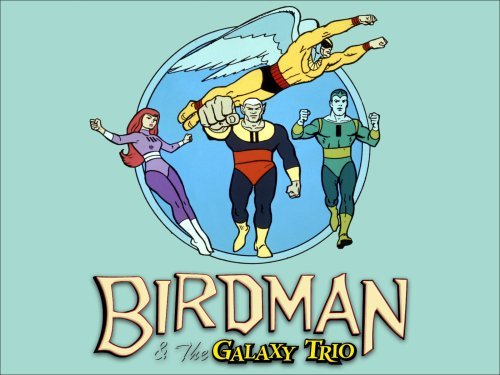
Next year, it's the Galaxy Trio's turn for an Oscar!

Birdman and the Galaxy Trio


Epilogue

Misty made it! Diversity among the dearly departed!

Other than her, I don't think any other Natives appeared on-screen at the ceremony. As usual, the question is why 1-2% of the performers aren't Native to match the Native population.

And poor NPH! Alas, the reviews for Harris's hosting weren't kind:

Neil Patrick Harris’ painfully boring Oscar night: How did a great host get it so wrong?

I don't think he was on-screen enough to call him boring or painful. But nothing he did was special or memorable either.

For more on the subject, see Hollywood Still White in 2015 and Another White Year at the Oscars.

January 16, 2015

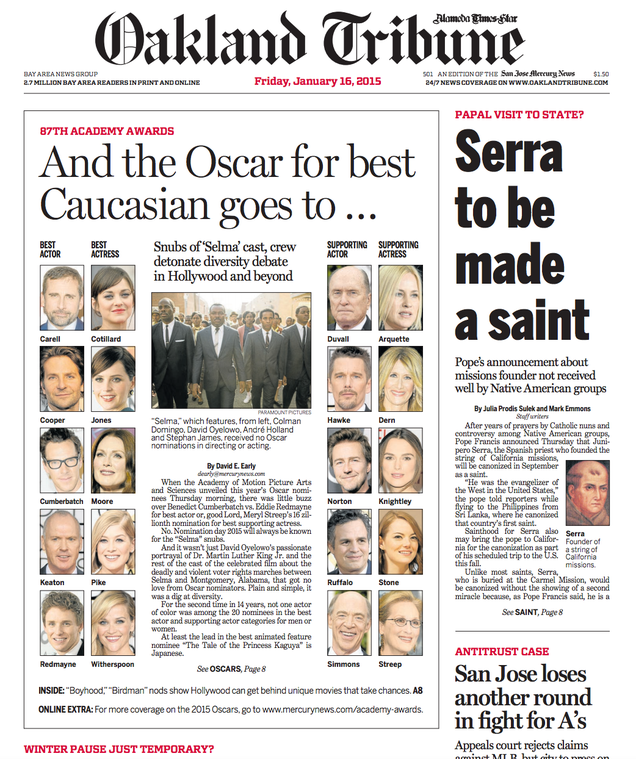
Another white year at Oscars

People are talking about how the acclaimed movie Selma got only two Oscar nominations. Here are some thoughts on why it happened:

Oscar Voters: 94% White, 76% Men, and an Average of 63 Years Old

The Oscars’ white-guy backlash: Why academy voters retreated to their comfort zone

There's actually some good news in this year's nominations--but the academy has swamped it in white backlash

By Andrew O'HehirI think New York Daily News critic Elizabeth Weitzman was the Twitter winner on Thursday morning: “I, for one, am taking great comfort in the fact that all of this year’s Best Actress nominees are women.” Amid the understandable social media outrage and amazement (#OscarsSoWhite has been the hashtag of the day), we are dragged once again back to the question of whether the Academy of Motion Picture Arts and Sciences has some moral or social responsibility to respond to larger cultural issues or foster diversity within its industry. It’s a question to which, white hetero cis-male that I am, I do not claim to know the answer. There are prominent voices within Hollywood and the academy, including Denzel Washington, who have argued that a virtual quota system should be instituted to bring academy membership–which is more than 90 percent white and about three-quarters male, with a median age around 63–in line with the general population. (As Washington and others have noted, Latinos are even more poorly represented within the academy than black people.)

Quite obviously, that is not the dominant current of opinion within the academy. You can certainly defend, in the abstract, the idea that movie awards should be entirely about the art and craft of cinema, not about who made the movies. And one can argue, from a film-lover’s point of view, that this year’s Oscar nominations have fewer ludicrous howlers than usual, and a few genuine surprises: Marion Cotillard’s best-actress nomination for the Belgian film “Two Days, One Night”; Wes Anderson’s first directing nomination, for “Grand Budapest Hotel”; the presence of “Ida” and “Leviathan” and “Timbuktu,” three tremendous works of world cinema, in the foreign-language category. But let’s be clear: Those things are not the big story today, and the academy’s interest in film as an art form has always been a secondary concern. The primary mission of the Oscars is to burnish the public image of the American film industry, and on that front the voters have screwed the proverbial pooch.

So here we are facing what feels way too much like the White Backlash Oscars, announced on the morning of Martin Luther King Jr.’s actual birthday. A year after awarding its biggest prize to a confrontational film about the most painful aspects of America’s racial history, Oscar voters appear to have retreated into their collective comfort zone. (This is not meant to impugn the excellence of “12 Years a Slave,” but conservative critics who accused Hollywood of being driven by liberal guilt had a point.) No doubt Ava DuVernay’s potent civil-rights drama “Selma,” the most obvious casualty of this retreat–it garnered a best-picture nomination, but DuVernay and star David Oyelowo were both spurned–was undermined in part by the controversy over its depiction of Lyndon B. Johnson. But I feel like the LBJ issue was used as a mask for issue fatigue, an unexpressed and not-quite-conscious feeling that We gave it to a “black movie” last year, dammit.

This retreat into whiteness and maleness was not an intentional decision, in any ordinary sense of that word. There is no overt racist or misogynist conspiracy within the academy, just a whole lot of cluelessness and insularity. But the effect is likely to be extremely damaging, and as I said earlier it’s also likely to overwhelm the positive nuggets to be found in the nooks and crannies of this year’s nominations. If Oscar voters want to claim that they’re all about cinematic quality and above petty considerations of cultural politics, it might help if they didn’t swoon, year after year, for mediocre inspirational pictures dosed with obvious Oscar sauce.
Hollywood’s political ignorance: What Cosby, “Selma” & Hebdo reveal about white liberal consciousness

The causes celebrities feel comfortable backing--and those they do not--speak volumes. And it's not pretty

By Brittney Cooper
I had tuned in to the Globes among other reasons, because Ava DuVernay’s film “Selma,” a historical drama about the passage of the 1965 Voting Rights Act, was up for four awards including best song, best picture, best director and best actor in a drama. John Legend and rapper Common took home the award for their song “Glory.” Common, ever the spoken word artist, declared in his remarks, “I am the hopeful black woman who was denied her right to vote. I am the caring white supporter killed on the front lines of freedom. I am the unarmed black kid who maybe needed a hand, but was instead given a bullet. I am the two fallen police officers slain in the line of duty. … Selma has awakened my humanity. Selma is now.”

Common clearly took a lesson from the book of Kanye West when he refused to say the words that felt as if they were hanging from the tip of his tongue: “Black lives matter.” I was struck by the audacity of inclusion in Common’s remarks and reminded that this is precisely the kind of racial discourse that we don’t need. But it is the kind of racial discourse in which liberal black folks are forced to publicly engage in order that they might not seem antagonistic to white people. Even when we want to say, Black lives matter, we talk about the lives of other people of color, and about white lives, too. We include everybody, because accusations of exclusion often make white folks less willing to listen to our critiques. Of course, all lives matter. But only some lives—black lives—are consistently treated as if they don’t.

Moreover, white people are not held to the same standard of radical inclusivity. As I watched multiple white celebrities don the stage and stand in solidarity with the victims of the Charlie Hebdo attack and other innocent bystanders, I marveled at the privilege that they had of being specific. Even though some people of color were casualties of the attacks in Paris, by and large this was an attack on white French satirists whose bread and butter was the routine disrespect of the Muslim community. Attacks on largely white victims received a huge and committed show of solidarity, while the Black Lives Matter Movement that has consumed our news cycle for the last four months was apparently not even worthy of mention.

That this happened on the same night that “Selma,” a film that has come under much fire for its refusal to tell a white savior narrative favoring LBJ, received no awards, perhaps matters, too.

It would be impolitic to say that “Selma” received no awards because of white liberal racism. I don’t particularly believe that. But I do wonder if America is really ready for a world in which black people are entrusted to narrate their own freedom stories and freedom dreams. Can white Americans deal with not being at the center of the black freedom narrative? Why is it the expectation that our history would favor our most ardent villains? Can white people really stand knowing that in the broader black narrative of the civil rights movement, we are not especially enamored of white heroes?
The dubious upside of Selma’s Oscar snub: Hollywood can’t continue to ignore its own race issues

Ava DuVernay, Russell Simmons and Reginald Hudlin weigh in on race and Hollywood

By Erin Keane
Director Ava DuVernay says she knew back in December that she wouldn’t be the first African American woman nominated for an Academy Award for Best Director for “Selma,” which is up for the Best Picture award. In a story published yesterday, Entertainment Weekly reports the director chalked it up to simple Academy math, and it turns out she might be right. The Academy is overwhelmingly white (94 percent) and male (77 percent). While we might want to think of artistic awards as strictly merit-based, race and gender may very well have worked against DuVernay—several Academy voters indicated to EW that DuVernay’s unequivocal response to criticisms of her portrayal of President Lyndon Johnson as reluctant on civil rights “came off as strident and defensive.” In a majority culture that can paint outspoken African American artists with the “angry black woman” brush, and that only just awarded a woman the best director statue in 2009 (Kathryn Bigelow for “The Hurt Locker”), a lack of representation allows one side to dominate the conversation and dismisses what they don’t want to hear.

The conversation would be different if an African American woman helming a Best Picture nominee wasn’t already such a rare occurrence. In a new interview with Variety, venerable hip-hop (and now film and TV with his Def Pictures) producer Russell Simmons criticized Hollywood’s “deafening” lack of racial integration: “The segregation in Hollywood is incredible.” He also blasted well-meaning Hollywood liberals who see themselves as more progressive than they are when it comes to understanding African-American culture and how that cultural blindness can stifle minority talent from rising to the tops of their fields.
Comment:  For more on casting issues, see Diverse TV Shows Get Higher Ratings and Director: Native Actors Lack "Charisma."


March 03, 2014

Results of the #NotYourTonto storm

No Oscar for redface–but is that progress?

By Adrienne KeeneLast night, when the category came up for Best Makeup and Hairstyling, I held my breath. Luckily, the award went to Dallas Buyers Club, which had an overall budget of $250 FOR THE WHOLE MAKEUP FOR THE WHOLE MOVIE (ETA: Dallas Buyers Club is not without controversy over representations as well. There are folks in the trans* community who are very unhappy about the ways their community was portrayed in the film). Not that it looked like Lone Ranger spent any more than that with JD’s day-after-halloween-slept-in-your-facepaint look. But anyway.

So does that mean anything? Hooray, a movie didn’t win an Oscar for its brilliant use of redface? Not really, but it does bring to light some bigger issues. Before and during the Oscars, a group of Native activists organized a “twitter storm” using the hashtag #NotYourTonto to focus on the ongoing issues of misrepresentation of Native peoples in Hollywood. The series of tweets from everyone last night was really powerful, and shows how in 2014, the one-sided stereotypes that represent Native peoples in mainstream film really haven’t progressed at all. In 1973 Marlon Brando famously refused his Oscar and had Sacheen Littlefeather take the stage to protest the treatment of American Indians in Hollywood, and I think this portion of the speech, which didn’t air, is incredibly pertinent:Perhaps at this moment you are saying to yourself what the hell has all this got to do with the Academy Awards? Why is this woman standing up here, ruining our evening, invading our lives with things that don’t concern us, and that we don’t care about? Wasting our time and money and intruding in our homes.

I think the answer to those unspoken questions is that the motion picture community has been as responsible as any for degrading the Indian and making a mockery of his character, describing his as savage, hostile and evil. It’s hard enough for children to grow up in this world. When Indian children watch television, and they watch films, and when they see their race depicted as they are in films, their minds become injured in ways we can never know.
1973. Forty one years ago. And those are words I could have easily written on my blog today. Rob Schmidt from Bluecorn Comics pointed out on twitter that the image of Tonto was the only Native the entire audience would see last night.


#NotYourTonto Sparked an Internet Backlash for All the Right Reasons

By Andrea Garcia-VargasIndigenous activist and writer Jacqueline Keeler came up with hashtag #NotYourTonto to respond to the nomination. Keeler, who had also organized the hashtag #NotYourMascot to protest the Washington Redskins during the Super Bowl, teamed up with fellow indigenous activist Ethan Keller to organize a Facebook event and Twitterstorm starting the night of March 2. The National Congress of American Indians and EONM (Eradicating Offensive Native Mascotry) also signed on to help promote the movement.

It seemed to work. As the Oscars got underway on Sunday, the hashtag began to really take off.

Soon, it was trending all over the U.S.

In fact, Keeler noted that by the end of the night 1.8 million people were involved.
In a tweet Keeler added:@bluecorncomics @AndreaGarVar Our latest analytics say 2.5 million reached by #NotYourTonto! Thanks for all your help!What the NotYourTonto Twitter Storm Looked Like [24 Images]


For more on the subject, see Faux Indians at the 2014 Oscars and Before the #NotYourTonto Storm.

March 02, 2014

Faux Indians at the 2014 Oscars

After the run-up to the Oscars:

Twitter storm planned for Oscars
Before the #NotYourTonto storm

Here's what I tweeted before and during the ceremony:

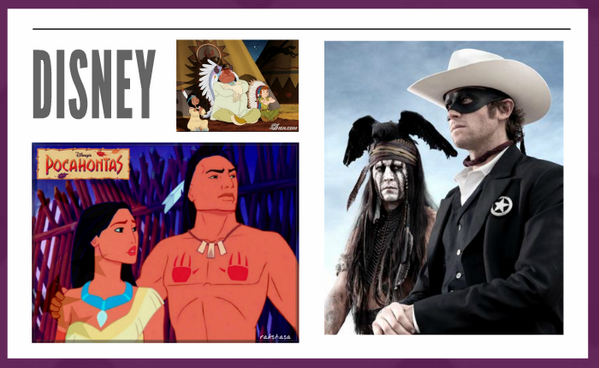
Who wants to bet that the only "Indian" we'll see at the Oscars tonight is a shot of Johnny Depp playing Tonto in redface? #NotYourTonto

Naturally, Johnny Depp as Tonto in #redface was the first (and only?) Indian or faux Indian to appear at the #Oscars. #NotYourTonto

2nd appearance of an Indian or faux Indian at the Oscars: Johnny Depp as Tonto in redface in a visual effects clip. #NotYourTonto

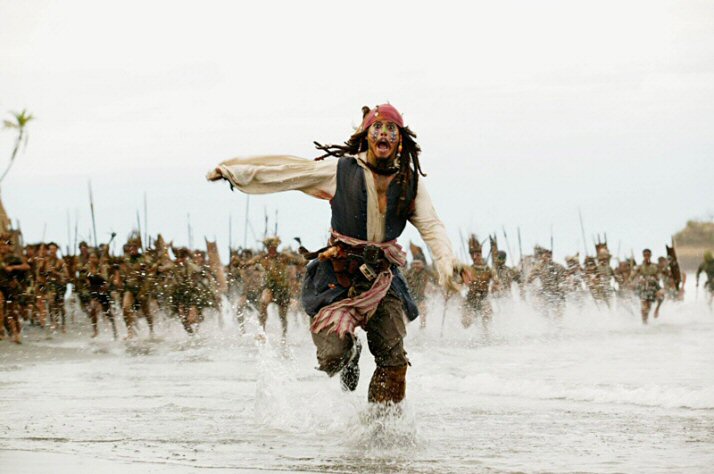
3rd appearance by Indians or faux Indians: the savage cannibals in "Pirates of the Caribbean." Also starring Johnny Depp. #NotYourTonto


4th and 5th appearances by Indians or faux Indians: Tom Laughlin as Billy Jack and a hint of Will Sampson in "Cuckoo's Nest." #NotYourTonto

No real Indians

My first tweet was retweeted several dozen times. And it proved to be accurate, of course.

At least The Lone Ranger didn't win for it makeup or visual effects. That's something, I guess.

If you stretched, you could claim Angelina Jolie and Jessica Biel represented Natives at the ceremony because they supposedly have a tiny amount of Native blood. But I don't count them.

Someone noted that actor August Schellenberg, who died last year, wasn't included in the "In Memorium" section. Since Russell Means wasn't included the year before, I wouldn't expect the Academy to include the lesser-known Schellenberg.

Oddly, Schellenberg is included in the longer memorium list at http://oscar.go.com. But not in a similar listhttp://www.oscars.org/academy/members/memoriam.html. I have no idea what's up with that.

For more on the subject, see Indians at Previous Oscar Ceremonies and Racism at the 2013 Oscars.

March 01, 2014

Before the #NotYourTonto storm

Native Americans Protest 'The Lone Ranger' Oscar Nomination for Redface

By bahesmamaEradicating Offensive Native Mascotry, a group of Native parents from across the country are protesting the nomination of 'The Lone Ranger' for an Academy Award in makeup, basically, for Redface. To this end, they are conducting a “Twitterstorm” under the hashtag #NotYourTonto and will try to trend the hashtag both the Saturday night before the Oscars and during the Oscar broadcast.Some of the better tweets on Saturday and Sunday before the storm, and the links they shared:Debbie Reese ‏@debreese Mar 1
#Parents! #Librarians! Reject racist toys: http://www.lego.com/en-us/theloneranger/characters/tonto #NotYourTonto
The Lone Ranger

Debbie Reese ‏@debreese Mar 1
Native film prof calls Depp's Tonto "major setback" http://www.examiner.com/article/ucla-professor-says-depp-s-tonto-reinforces-native-american-stereotypes #NotYourTonto
UCLA professor says Depp's Tonto reinforces Native American stereotypesLisa Tatonetti ‏@lisatatonetti Mar 1
No one is hurt? Research shows Indigenous children shown Native stereotypes lose "self esteem" and "belief in achievement." #NotYourTonto

tara zhaabowekwe ‏@zhaabowekwe Mar 1
Talented Native actors are available, why the need for #redface? We're capable of representing ourselves onscreen. #NotYourTonto

Debbie Reese ‏@debreese Mar 1
Spinoff bk 4 kids: "He had never seen a real Comanche Indian." That wasn't a real Comanche Indian! That is Depp in redface #NotYourTonto

Jessica Deer ‏@Kanhehsiio Mar 1
Indigenous people are #NotYourTonto #NotYourPocahontas & #NotYourBigChief pic.twitter.com/wmiwP2bVrK
Jessica Deer ‏@Kanhehsiio Mar 1
The Lone Ranger reinforces & perpetuates the ideology that Indigenous ppl are one stereotyped monolith rooted in colonialism #NotYourTonto

Mags ‏@Creekleo Mar 1
Art and words by powerful artists @WhatTRIBE @apachesk8boards change the status quo and turn big heads #notyourtonto pic.twitter.com/KbIfCWIFn4

Frank Waln ‏@FrankWaln Mar 2
Johnny Depp is nominated for best makeup in his portrayal of a white man dressed like what white ppl think an NDN looks like #NotYourTonto
My contribution

I also contributed to the pre-Oscar fun with the following tweets:

Native movie roles (guesstimate): Lakota, Cheyenne, and other Plains Indians 70%; Navajo and Apache 30%; other tribes 10%. #NotYourTonto

"The Lone Ranger" wins a Razzie award for worst remake/rip-off or sequel. Johnny Depp is shut out. #NotYourTonto http://www.latimes.com/entertainment/envelope/moviesnow/la-et-mn-movie-43-named-worst-film-of-2013-razzie-awards-20140228,0,5893779.story

'Movie 43' is named worst film of 2013 at the 34th Razzie Awards

Old white men of the Academy have an abysmal track record of honoring the work of minorities. #NotYourTonto #Oscars http://nyti.ms/1pk0H3S

The Academy and Diversity, by the Numbers

For more on the subject, see Twitter Storm Planned for Oscars and Razzie Nominations for Lone Ranger.