Not Your Asian Ninja: How the Marvel Cinematic Universe Keeps Failing Asian-Americans
White isn’t a neutral color: “Doctor Strange,” Tilda Swinton and the “unwinnable” diversity argument
George Takei gets real about 'cringeworthy' Marvel casting for 'Doctor Strange'
The Director of Doctor Strange Thinks One Asian Character Makes Up for the Movie's Biggest Screw-Up
Showing posts with label casting. Show all posts
Showing posts with label casting. Show all posts
September 12, 2016


December 22, 2015
Pan gets panned
Many people complained about the casting of Rooney Mara as Tiger Lily before Pan came out. But I didn't see anyone talking about this casting after Pan came out. Amid a welter of bad reviews, the movie quickly sank from sight.
Here are a couple of typical reviews that mention Rooney Mara's role:
'Pan' review: A movie so resoundingly godawful that you have to see it
By Josh DickeyHook and Peter manage to escape the mine pit, but are at cross purposes: Peter has got it in his head that his mother is here, while Hook just wants to get "home." And if everything you've read so far seems like a barrel of hot nonsense, well, buckle up, because you're about to meet Tiger Lily if everything you've read so far seems like a barrel of hot nonsense, well, buckle up, because you're about to meet Tiger Lily.
Rooney Mara's casting as the Native American princess got its share of blowback when it was announced. Politically it wasn't a great move, but creatively it was worse. Mara's icy detachment worked for The Girl With the Dragon Tattoo, but here she just seems weird and slightly mean, the leader of a tribe of mostly people of color who wear ghastly bright rainbow streaks and warpaint and do a lot of coordinated dance-fighting. Pan Review
By Sandy SchaeferSpeaking of Blackbeard: the character is essentially a tweaked version of the Captain Hook character in Pan, and Hugh Jackman very much chews the scenery while he’s playing the role–sometimes for the better, sometimes not–but ultimately, the Blackbeard character fails to add anything new to the Peter Pan mythology that the (older) Hook before him didn’t (sidenote: Blackbeard also gets an exceptionally weird introduction in the film). Similarly, the decision to make the natives of Neverland a multi-ethnic group, rather than literal Native Americans, helps to distinguish Pan from Peter Pan adaptations past–but only on a surface level. The same goes for the decision to play up the warrior aspect of Tiger Lily’s personality, yet not give Rooney Mara much else to work with.
Pan falls short at being either an imaginative origin story for Peter Pan and/or a satisfying standalone big-budget fantasy adventure, when all is said and done. Director Joe Wright’s usual inventiveness as a cinematic storyteller gets lost amidst the CGI malaise of the film, while the movie’s attempt to craft a more complicated mythology out of the relatively simple Peter Pan story might’ve worked–but would have required a far less conventional and run of the mill approach, in order to do so. 
Comment: Now that the movie's out, we can say a few things about its execution.
1) The multi-ethnic "world tribe" of brown-skinned people is nothing new. In fact, that seems to be the default in Peter Pan productions these days.
Alas, it doesn't solve the racism problem. It merely shifts the problem from Native Americans in particular to indigenous people in general.
In almost every production, the pirates are white and the natives are brown. With their ships and guns, the pirates represent civilization--of the 19th century, at least. With their wooden weapons and half-naked outfits, the natives represent savagery. This is a core message of Western Civilization and the latest Pan merely repeats it.
2) Joe Wright talked about how wonderful Rooney Mara would be as Tiger Lily. No one seems to have shared that opinion. Whether Mara was poorly (1st review) or Tiger Lily was poorly written (2nd review), no one liked the character.
I'm guessing Wright didn't think deeply about Mara's ability to play an indigenous princess. I'll bet he thought, "She's small and sprite-like just like Peter Pan. She won't overshadow him as Jennifer Lawrence, Michelle Rodriguez, or Zoe Saldana would. Let's intentionally make her a lesser character so Peter shines as the 'chosen one.'"
Is that how you honor an indigenous character? No, that's how you whitewash one. It's a classic case of how "racebending" a character serves to neuter her.
For more on Peter Pan, see "From Tiger Lily to Green Inferno" and Natives Protest Tiger Lily Casting.
Here are a couple of typical reviews that mention Rooney Mara's role:
'Pan' review: A movie so resoundingly godawful that you have to see it
By Josh Dickey
Rooney Mara's casting as the Native American princess got its share of blowback when it was announced. Politically it wasn't a great move, but creatively it was worse. Mara's icy detachment worked for The Girl With the Dragon Tattoo, but here she just seems weird and slightly mean, the leader of a tribe of mostly people of color who wear ghastly bright rainbow streaks and warpaint and do a lot of coordinated dance-fighting.
By Sandy Schaefer
Pan falls short at being either an imaginative origin story for Peter Pan and/or a satisfying standalone big-budget fantasy adventure, when all is said and done. Director Joe Wright’s usual inventiveness as a cinematic storyteller gets lost amidst the CGI malaise of the film, while the movie’s attempt to craft a more complicated mythology out of the relatively simple Peter Pan story might’ve worked–but would have required a far less conventional and run of the mill approach, in order to do so.
Comment: Now that the movie's out, we can say a few things about its execution.
1) The multi-ethnic "world tribe" of brown-skinned people is nothing new. In fact, that seems to be the default in Peter Pan productions these days.
Alas, it doesn't solve the racism problem. It merely shifts the problem from Native Americans in particular to indigenous people in general.
In almost every production, the pirates are white and the natives are brown. With their ships and guns, the pirates represent civilization--of the 19th century, at least. With their wooden weapons and half-naked outfits, the natives represent savagery. This is a core message of Western Civilization and the latest Pan merely repeats it.
2) Joe Wright talked about how wonderful Rooney Mara would be as Tiger Lily. No one seems to have shared that opinion. Whether Mara was poorly (1st review) or Tiger Lily was poorly written (2nd review), no one liked the character.
I'm guessing Wright didn't think deeply about Mara's ability to play an indigenous princess. I'll bet he thought, "She's small and sprite-like just like Peter Pan. She won't overshadow him as Jennifer Lawrence, Michelle Rodriguez, or Zoe Saldana would. Let's intentionally make her a lesser character so Peter shines as the 'chosen one.'"
Is that how you honor an indigenous character? No, that's how you whitewash one. It's a classic case of how "racebending" a character serves to neuter her.
For more on Peter Pan, see "From Tiger Lily to Green Inferno" and Natives Protest Tiger Lily Casting.
November 15, 2015
Eddie Little Sky in Gilligan's Island
Actor Eddie Little Sky appeared three times on Gilligan's Island--twice as Polynesian natives and once as a "witch doctor" with Mesoamerican roots. Here's more on him:
Eddie Little SkyEddie Little Sky was born August 15, 1926, as Edsel Wallace Little on the Pine Ridge Indian Reservation in Shannon County, South Dakota to Oglala Lakota parents, Wallace Little, Sr. and Wileminna Colhoff. He also served in the United States Navy and worked as a bull rider and bareback rider in the rodeo. As an actor, he took the name "Eddie Little Sky" and starred in numerous in numerous feature films and over sixty television shows, mostly Westerns, playing Native Americans at a time most Indians were often played by white actors under heavy make-up. He was one of the first Native American actors to play Native American roles and is best remembered for his performance as Black Eagle in "A Man Called Horse' (1970). He was also technical adviser for the movie "Soldier Blue." Comment: For more on Gilligan's Island, see Indigenous Episodes in Gilligan's Island and Native Voodoo in Gilligan's Island.
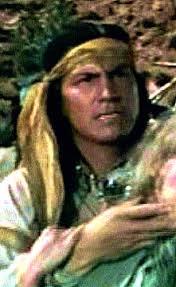
Eddie Little Sky
March 28, 2015
Ratings belie anti-diversity argument
Another response to the Deadline Hollywood article points out that diversity isn't just good morally. It's good financially, leading to better ratings and more revenue for broadcasters.
As Multicultural TV Shows Succeed, Some Wonder if Diversity has Gone Too Far
By Jeff YangHunt warns that like prior TV flirtations with diversity, this progress could be temporary. Yet the numbers—the only things that matter in Hollywood—show that this time, something different may be happening. Out of the scripted shows with all-white leads introduced this past season, just one—a reboot of “The Odd Couple”—seems guaranteed a renewal. Meanwhile, nearly every series centered on diverse characters looks like a solid return, for two reasons.
The first is that they’re expanding network audiences in ways that reflect the new demographic reality. Analyses provided by Nielsen show that the three most-watched non-event shows among 18-49 year old Asian Americans as of February were “Fresh Off the Boat,” “Fresh Off the Boat” and “Fresh Off the Boat”—and it’s not even close, with Asian Americans being twice as likely to watch FOTB as any other scripted program. A full third of all 18-49 year old African Americans watch “Empire” each week, making it more popular than the Super Bowl in that demographic. And 17 of the top 25 shows among 18-49 year old Hispanics are on Univision—the Spanish-language network that regularly draws bigger audiences than Fox and NBC.
The second is that it’s these shows aren’t just catering to their communities. Asian Americans make up as much as 20% of FOTB’s audience—but the other 80% is non-Asian, and they’re what is keeping the series competitive against juggernauts like “The Voice” and “NCIS.”
Ultimately, points out UCLA’s Hunt, “we live in a diverse society, and people want to see stories that reflect that. We’re curious about other groups’ experiences. It shouldn’t come as a shock that white households don’t only want to see shows with just white people.” Comment: For more on the subject, see Where Are the Native TV Shows? and Deadline Hollywood on TV Casting.

As Multicultural TV Shows Succeed, Some Wonder if Diversity has Gone Too Far
By Jeff Yang
The first is that they’re expanding network audiences in ways that reflect the new demographic reality. Analyses provided by Nielsen show that the three most-watched non-event shows among 18-49 year old Asian Americans as of February were “Fresh Off the Boat,” “Fresh Off the Boat” and “Fresh Off the Boat”—and it’s not even close, with Asian Americans being twice as likely to watch FOTB as any other scripted program. A full third of all 18-49 year old African Americans watch “Empire” each week, making it more popular than the Super Bowl in that demographic. And 17 of the top 25 shows among 18-49 year old Hispanics are on Univision—the Spanish-language network that regularly draws bigger audiences than Fox and NBC.
The second is that it’s these shows aren’t just catering to their communities. Asian Americans make up as much as 20% of FOTB’s audience—but the other 80% is non-Asian, and they’re what is keeping the series competitive against juggernauts like “The Voice” and “NCIS.”
Ultimately, points out UCLA’s Hunt, “we live in a diverse society, and people want to see stories that reflect that. We’re curious about other groups’ experiences. It shouldn’t come as a shock that white households don’t only want to see shows with just white people.”
March 26, 2015
Casting controversy in The Unplugging
A play in Toronto is causing the latest casting controversy:
The Unplugging tells an indigenous story, but the actresses are white
Author Yvette Nolan and director Nina Lee Aquino decided to find their ideal cast for Factory Theatre/Native Earth production, regardless of race.
By Richard OuzounianWhen Caucasian actress Allegra Fulton was offered the part of an aboriginal woman in the Factory Theatre/Native Earth production of The Unplugging, her negative reaction was immediate.
“I turned it down. I didn’t think it was right,” she said on a break from rehearsals for the play, which opens Wednesday. “It’s hard enough as an older white actress to get roles. For my friends who are Métis or First Nations, it’s practically impossible. Why should I take a part away from them?”
But a trio of influential voices kept trying to influence her: the director of both Factory Theatre and the production, Nina Lee Aquino, well known for her work in multiracial theatre; Ryan Cunningham, the artistic director of Native Earth; and the show’s author, Yvette Nolan, herself of mixed Algonquin and Irish heritage.
Fulton kept refusing. “I said ‘I can’t do this. Don’t ask me.’”
Then she remembered what playwright Tomson Highway had said to her years before when she was offered a major role as a Métis woman in a TV series and expressed similar qualms.
“Allegra,” said the flamboyant Cree theatre artist, “if you can’t play Métis, then I can’t play Oscar Wilde. Do it for me.”
So Fulton now finds herself in the show along with Diana Belshaw, also a white woman playing a role whose ethnicity isn’t clearly defined by the script, but whom director Aquino clearly labels as “indigenous.”
“Nina says we’re all indigenous on some level,” says Belshaw, who is also a professor of theatre performance at Humber College. “I’d have to agree with her there. We all have links to history, ancestry, culture in our past. For many of us it’s been broken. But critics aren't necessarily buying it:
The Unplugging sparks debate by casting non-aboriginal actors in indigenous roles
Playwrights and actors divided on choice made by Toronto theatre company
By Kim Wheeler“We talked about the casting, made a list which included not only the indigenous actors ‘of a certain age’ but actors from the larger multicultural community,” said Algonquin playwright Yvette Nolan, who made casting decisions along with director Nina Lee Aquino.
“There are not that many. For many reasons—attrition, retirement, fatigue. Many of the women on our list were already working in other shows or in movies or on much bigger projects."
Community backlash
When Columpa C. Bobb, an actor, writer, director and producer, heard about the casting decisions she created a long list of female indigenous actors on her Facebook page.
That started a discussion among the acting elite--including Tantoo Cardinal who was recently selected by ACTRA for the award of excellence.
“I don't care how talented you are, you will never convince me you are Indian. I have not seen a non-Indian actor catch nuance that needs to be there,” said Cardinal in a phone interview. The problem isn't limited to one play:Playwright Ken Williams said his first mainstage production of Thunderstick—which went on to star Cree actor Lorne Cardinal and Anishinabe actor Craig Lauzon—had the same problem in 2002.
“We had the Isaac role cast but not one of the actors I wanted for Jacob were available. We ended up casting a non-native person for the role,” said Williams.
Drew Hayden Taylor's play, God & the Indian, will be the next Native Earth production. He's had over 70 productions of his work produced by several theatre companies.
Hayden said that on at least two occasions theatre companies have had to hire non-indigenous actors for his plays.
“I would rather have had a Native actress do the role, but as an artist, I would rather have a talented and experienced actress bring life to my characters than just somebody with a status card who's never acted,” said Taylor, who also saw The Unplugging. Comment: I don't think Native Voices at the Autry, here in Los Angeles, has ever experienced this problem. But it has a huge pool of Hollywood actors, including Natives, to draw on.
These articles don't quite address the core issue. Native Earth Performing Arts is supposedly a "professional Indigenous theatre company." Okay, then it should have developed a pool of talented Native actors in the Toronto area. In fact, Native Earth shouldn't exist unless it has a critical mass of Native actors, writers, directors, and so forth. What's the point of a Native theater company if you don't have enough Native people to put on Native plays?
I trust Native Earth has addressed and answered this question. Perhaps the article writers didn't have the time or space to go into it. But the question is central to the Unplugging controversy. Does Toronto have enough Native actors to put on Native plays or doesn't it? If it doesn't, what is Native Earth doing about it? If Native Earth is building an ensemble of Native actors but still can't find two of them for The Unplugging, it may be in the wrong business.
For more on Native theater, see Off the Rails at Native Voices and Stanford Cancels Bloody Jackson Play.
Below: "Allegra Fulton and Diana Belshaw star in Yvette Nolan's play 'The Unplugging.' It runs in Toronto at Factory Theatre until April 5." (Akipari)

The Unplugging tells an indigenous story, but the actresses are white
Author Yvette Nolan and director Nina Lee Aquino decided to find their ideal cast for Factory Theatre/Native Earth production, regardless of race.
By Richard Ouzounian
“I turned it down. I didn’t think it was right,” she said on a break from rehearsals for the play, which opens Wednesday. “It’s hard enough as an older white actress to get roles. For my friends who are Métis or First Nations, it’s practically impossible. Why should I take a part away from them?”
But a trio of influential voices kept trying to influence her: the director of both Factory Theatre and the production, Nina Lee Aquino, well known for her work in multiracial theatre; Ryan Cunningham, the artistic director of Native Earth; and the show’s author, Yvette Nolan, herself of mixed Algonquin and Irish heritage.
Fulton kept refusing. “I said ‘I can’t do this. Don’t ask me.’”
Then she remembered what playwright Tomson Highway had said to her years before when she was offered a major role as a Métis woman in a TV series and expressed similar qualms.
“Allegra,” said the flamboyant Cree theatre artist, “if you can’t play Métis, then I can’t play Oscar Wilde. Do it for me.”
So Fulton now finds herself in the show along with Diana Belshaw, also a white woman playing a role whose ethnicity isn’t clearly defined by the script, but whom director Aquino clearly labels as “indigenous.”
“Nina says we’re all indigenous on some level,” says Belshaw, who is also a professor of theatre performance at Humber College. “I’d have to agree with her there. We all have links to history, ancestry, culture in our past. For many of us it’s been broken.
The Unplugging sparks debate by casting non-aboriginal actors in indigenous roles
Playwrights and actors divided on choice made by Toronto theatre company
By Kim Wheeler
“There are not that many. For many reasons—attrition, retirement, fatigue. Many of the women on our list were already working in other shows or in movies or on much bigger projects."
Community backlash
When Columpa C. Bobb, an actor, writer, director and producer, heard about the casting decisions she created a long list of female indigenous actors on her Facebook page.
That started a discussion among the acting elite--including Tantoo Cardinal who was recently selected by ACTRA for the award of excellence.
“I don't care how talented you are, you will never convince me you are Indian. I have not seen a non-Indian actor catch nuance that needs to be there,” said Cardinal in a phone interview.
“We had the Isaac role cast but not one of the actors I wanted for Jacob were available. We ended up casting a non-native person for the role,” said Williams.
Drew Hayden Taylor's play, God & the Indian, will be the next Native Earth production. He's had over 70 productions of his work produced by several theatre companies.
Hayden said that on at least two occasions theatre companies have had to hire non-indigenous actors for his plays.
“I would rather have had a Native actress do the role, but as an artist, I would rather have a talented and experienced actress bring life to my characters than just somebody with a status card who's never acted,” said Taylor, who also saw The Unplugging.
These articles don't quite address the core issue. Native Earth Performing Arts is supposedly a "professional Indigenous theatre company." Okay, then it should have developed a pool of talented Native actors in the Toronto area. In fact, Native Earth shouldn't exist unless it has a critical mass of Native actors, writers, directors, and so forth. What's the point of a Native theater company if you don't have enough Native people to put on Native plays?
I trust Native Earth has addressed and answered this question. Perhaps the article writers didn't have the time or space to go into it. But the question is central to the Unplugging controversy. Does Toronto have enough Native actors to put on Native plays or doesn't it? If it doesn't, what is Native Earth doing about it? If Native Earth is building an ensemble of Native actors but still can't find two of them for The Unplugging, it may be in the wrong business.
For more on Native theater, see Off the Rails at Native Voices and Stanford Cancels Bloody Jackson Play.
Below: "Allegra Fulton and Diana Belshaw star in Yvette Nolan's play 'The Unplugging.' It runs in Toronto at Factory Theatre until April 5." (Akipari)
March 25, 2015
Deadline Hollywood on TV casting
An article on casting in TV is generating a lot of controversy:
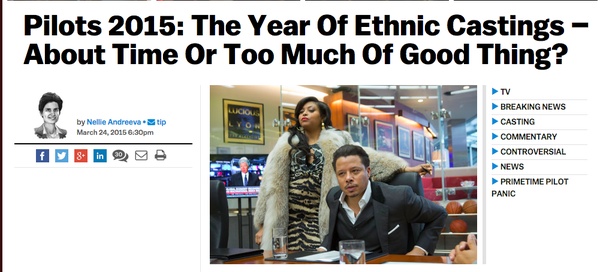
Pilots 2015: The Year Of Ethnic Castings
By Nellie AndreevaThere was a noticeable shift toward minority castings last season, with more parts opening up to ethnic actors, a casting term used for non-Caucasian thesps. It was a concerted effort, with more than one instance where a family member role was rewritten as adopted to make them ethnic. Then, following the success of freshman series How To Get Away With Murder, Black-ish, Fresh Off The Boat, Jane the Virgin and especially Empire, which launched to huge ratings at the kickoff of pilot casting season, ethnic castings exploded this season.
The change is welcomed by talent agents who no longer have to call casting directors and ask them if they would possibly consider an ethnic actor for a part, knowing they would most likely be rejected. “I feel that the tide has turned,” one agent said. “I can pitch any actor for any role, and I think that’s good.” It started off fine, but then veered into troubling waters with these paragraphs:This is not to say that there weren’t other hot commodities this pilot season—star names were in demand as usual, as were hot young guys and girls and occasional foreigners with that “sparkle.” But the big trend this pilot casting season was the huge spike in the number and prominence of roles that went to minority actors.
But, as is the case with any sea change, some suggest that the pendulum might have swung a bit too far in the opposite direction. Instead of opening the field for actors of any race to compete for any role in a color-blind manner, there has been a significant number of parts designated as ethnic this year, making them off-limits for Caucasian actors, some agents signal. Many pilot characters this year were listed as open to all ethnicities, but when reps would call to inquire about an actor submission, they frequently have been told that only non-Caucasian actors would be considered. “Basically 50% of the roles in a pilot have to be ethnic, and the mandate goes all the way down to guest parts,” one talent representative said.
But replacing one set of rigid rules with another by imposing a quota of ethnic talent on each show may not be the answer. Critics destroy Deadline
You can see the original headline, which was more specific and reflected the content better, above. In any case, critics quickly ripped Andreeva's piece:
TV networks have gone way overboard with this diversity stuff, Deadline says
By Joshua AlstonLast night, the Hollywood trade publication Deadline convened a small group of concerned Studio City citizens to nibble on finger sandwiches, crudites, and ambrosia salad and have a frank discussion about the…*ahem*...changes in the neighborhood. Y’know, how the...um...tone of the television landscape has shifted in recent months. Okay fine, if we have to come out and say it, Hollywood is unsettled by the influx of “ethnic actors” on television. But it’s not about prejudice or anything like that. People are justifiably concerned about property values!
That’s more or less the thesis of Nellie Andreeva’s trend piece, Pilots 2015: The Year Of Ethnic Castings—About Time Or Too Much Of A Good Thing?, which is a reasonable headline since the clicks aren’t going to bait themselves. Andreeva discusses the television season’s triumphs of diversity—Empire, Black-ish, Fresh Off The Boat, and How To Get Away With Murder—which alerted the television industry to the existence of minority actors and inspired network executives to hire more of them to star in 2015 pilots. (In case it’s unclear, the word “more” is intended to be read in the tone of Mr. Bumble from Oliver!) The scourge of non-white actors has become so severe, Andreeva writes, white actors are being crowded out of the field on which they’ve had a chokehold since the advent of television. Hey, white Hollywood: Looking for work in the age of “Empire”? Here’s some friendly advice
The "ethnics" are invading TV!! What's a struggling white actor to do?!
By Arthur ChuIn every happy story there is always an unseen victim, someone who gets rained on by everyone else’s silver lining. You might think that the news for primetime TV in 2015 can only be good–audiences are celebrating the wave of smart programming with diverse ensembles both in front of and behind the camera.
And far from having to make some virtuous financial sacrifice at the altar of diversity, the network suits are cleaning up. Over-the-air primetime TV has never felt more vibrant or relevant, even as “alternative” streaming platforms continue to thrive. “Empire” has shattered records and reclaimed the eyeballs of the Twitter commentariat from “prestige” cable channels.
Critics are happy. Advertisers are happy. Viewers are happy. The cast and crew and showrunners and suits and stockholders are all happy.
But here comes Deadline, telling us who’s being victimized by all this: White actors. Hardworking white actors without star power who now have to compete for an ever-shrinking number of audition slots as more and more roles are designated “ethnic,” a term Deadline’s Nellie Andreeva uses so often it starts to not sound like a word anymore. “Ethnic” actors aren’t stealing white roles: The racist, clueless backlash to TV’s greatest season begins
Nostalgic for the good ol' TV days of "Friends" and "Seinfeld," insiders are whining about "unfair" "ethnic quotas"
By Sonia SaraiyaMost alarming is Andreeva’s reductive implication that more roles for “ethnic” actors isn’t “fair” to white actors. Agents and casting directors that have long benefited from the incredible, overwhelming whiteness of Hollywood casting insert sly comments in her piece lamenting unfairness—if roles can’t be designated white (which they usually are, still, despite the existence of “Empire” and “Black-ish” and “Scandal,” because there is a lot of television in Hollywood) then shouldn’t we be “fair” and make them colorblind? I mean, if we’re going to be fair, and promote diversity, then shouldn’t we not ask about race at all? Dear Nellie Andreeva and Deadline, About Your Piece on Too Much “Ethnic Casting” on TV
By LuvvieWait. Wayment. Wait a gahtdamb minute. You’re pointing out that because people of color are getting roles, white actors are starting to suffer. Jehovah, hold my mule and be a fence because what I am NOT able to do is deal with this. This rash idea that because we got ONE MEASLY SEASON where TV isn’t whiter than fresh snow, then white actors are somehow being unfairly excluded from roles. WHAT ABOUT BLACK ACTORS WHO HAVE BEEN FIGHTING FOR PARTS SINCE FOREVER? AND LATIN@S WHO ONLY GET “SPICY” ROLES? AND ASIANS WHO CAN ONLY PLAY THE NERD? AND EVERYBODY WHO ISN’T WHITE?? Are you serious? You cannot be. You cannot think that it’s even a wonder that should be wondered. “HELL NO”: Shonda Rhimes and others destroy Deadline’s ridiculous “Ethnic Casting” backlash story
People are rightfully angry at writer Nellie Andreevna's notion that minorities are stealing white actors' roles
By Anna Silmanshonda rhimes @shondarhimes
1st Reaction:: HELL NO. Lemme take off my earrings, somebody hold my purse!
2nd Reaction: Article is so ignorant I can't even be bothered.
Nichole @tnwhiskeywoman
We still have so far to go to see underrepresented cultures on screen & @Deadline is like "these last 3-5 years should be enough, right?"
Dave Itzkoff @ditzkoff
Just astounding that something so tone deaf could be published in 2015 by a supposedly credible news source. http://deadline.com/2015/03/tv-pilots-ethnic-casting-trend-backlash-1201386511/
Matt Wallace @MattFnWallace
.@Deadline You are literally creating the problem when you label TV a white person's medium and suggest non-whites are a trend.
Farhad Manjoo @fmanjoo
Has the pendulum swung too far in the direction of TV representing the world how it actually is???!!!! Comment: For more on the subject, see TV Starts to Reflect America and White Males Still Dominate Hollywood.
Pilots 2015: The Year Of Ethnic Castings
By Nellie Andreeva
The change is welcomed by talent agents who no longer have to call casting directors and ask them if they would possibly consider an ethnic actor for a part, knowing they would most likely be rejected. “I feel that the tide has turned,” one agent said. “I can pitch any actor for any role, and I think that’s good.”
But, as is the case with any sea change, some suggest that the pendulum might have swung a bit too far in the opposite direction. Instead of opening the field for actors of any race to compete for any role in a color-blind manner, there has been a significant number of parts designated as ethnic this year, making them off-limits for Caucasian actors, some agents signal. Many pilot characters this year were listed as open to all ethnicities, but when reps would call to inquire about an actor submission, they frequently have been told that only non-Caucasian actors would be considered. “Basically 50% of the roles in a pilot have to be ethnic, and the mandate goes all the way down to guest parts,” one talent representative said.
But replacing one set of rigid rules with another by imposing a quota of ethnic talent on each show may not be the answer.
You can see the original headline, which was more specific and reflected the content better, above. In any case, critics quickly ripped Andreeva's piece:
TV networks have gone way overboard with this diversity stuff, Deadline says
By Joshua Alston
That’s more or less the thesis of Nellie Andreeva’s trend piece, Pilots 2015: The Year Of Ethnic Castings—About Time Or Too Much Of A Good Thing?, which is a reasonable headline since the clicks aren’t going to bait themselves. Andreeva discusses the television season’s triumphs of diversity—Empire, Black-ish, Fresh Off The Boat, and How To Get Away With Murder—which alerted the television industry to the existence of minority actors and inspired network executives to hire more of them to star in 2015 pilots. (In case it’s unclear, the word “more” is intended to be read in the tone of Mr. Bumble from Oliver!) The scourge of non-white actors has become so severe, Andreeva writes, white actors are being crowded out of the field on which they’ve had a chokehold since the advent of television.
The "ethnics" are invading TV!! What's a struggling white actor to do?!
By Arthur Chu
And far from having to make some virtuous financial sacrifice at the altar of diversity, the network suits are cleaning up. Over-the-air primetime TV has never felt more vibrant or relevant, even as “alternative” streaming platforms continue to thrive. “Empire” has shattered records and reclaimed the eyeballs of the Twitter commentariat from “prestige” cable channels.
Critics are happy. Advertisers are happy. Viewers are happy. The cast and crew and showrunners and suits and stockholders are all happy.
But here comes Deadline, telling us who’s being victimized by all this: White actors. Hardworking white actors without star power who now have to compete for an ever-shrinking number of audition slots as more and more roles are designated “ethnic,” a term Deadline’s Nellie Andreeva uses so often it starts to not sound like a word anymore.
Nostalgic for the good ol' TV days of "Friends" and "Seinfeld," insiders are whining about "unfair" "ethnic quotas"
By Sonia Saraiya
By Luvvie
People are rightfully angry at writer Nellie Andreevna's notion that minorities are stealing white actors' roles
By Anna Silman
1st Reaction:: HELL NO. Lemme take off my earrings, somebody hold my purse!
2nd Reaction: Article is so ignorant I can't even be bothered.
Nichole @tnwhiskeywoman
We still have so far to go to see underrepresented cultures on screen & @Deadline is like "these last 3-5 years should be enough, right?"
Dave Itzkoff @ditzkoff
Just astounding that something so tone deaf could be published in 2015 by a supposedly credible news source. http://deadline.com/2015/03/tv-pilots-ethnic-casting-trend-backlash-1201386511/
Matt Wallace @MattFnWallace
.@Deadline You are literally creating the problem when you label TV a white person's medium and suggest non-whites are a trend.
Farhad Manjoo @fmanjoo
Has the pendulum swung too far in the direction of TV representing the world how it actually is???!!!!
March 11, 2015
Unbreakable Kimmy Schmidt just a comedy?
I haven't watched The Unbreakable Kimmy Schmidt yet. But a posting about it in Facebook's Eradicating Offensive Native Mascotry group led to this debate:I think y'all have too much time on your hands to worry about racism in comedy. Seriously? You're taking comedy seriously? LOL!
...just curious how you felt when 1491s did full on Black face to illustrate the point about Red face... Why would we take representations in comedy less seriously than elsewhere? It's media and it's pervasive. This is how most people learn about Indians: from what they see in movies and on TV.
This whole mascotry cause is devoted primarily to representations in sports. Is that a serious field? More serious than comedic TV?
I'd argue that they're both unimportant in the grand scheme of things. But they're both important to the issue of Native representations because of their influence.
Is a product package important? How about a fashion show? A college frat party? A Halloween costume? Give us some important examples of racism--as opposed to these "unimportant" examples.
P.S. I appreciate what the 1491s did because they were trying to make a point. Unlike comedies such as this one.
Trying to make a point?...how do you know this comedy is not trying to make a point?
Idk. What is appropriate comedy about Indians?
What is your solution? I'm sure they were trying to make a point. Just as hipsters are trying to make a point about how "tribal" they are by wearing Plains headdresses. And how mascot lovers are trying to show how much they "honor and respect" Indians with their clown costumes.
As always, the issue isn't what they intended in their little minds. It's what results on the screen or at an event.What if there are Indian comedy writers for this show? Would it be ok?
How is the comedy hurtful? I have known people who have been in this country for decades, since the 1970's and who still do not speak a bit of English. I have known fair skinned Indians who have passed themselves off as White...actually I know a lot of people like that, especially the richer ones! I have seen Black, Asian, Latin, Native American men go coo coo for White ladies, and it certainly makes me smirk when I see that. What's my solution? Better comedy.
Native writers would do better in general. But this show may have had a Native writer or two.
They don't get a pass just because they're Native. Same as the Natives who declare they love the "Redskins." It's the results that matter, not the intent.
My blog has 79 postings on "humor" going back 10 years. I'm not going to repeat them all in a tiny Facebook box. Read what I and others have written on the subject for years. Assume we've thought about the issues in depth.
Meanwhile, what's your solution for Jane Krakowski getting another acting role that should've gone to a Native? Are you okay with being invisible? People like me are offering critiques and solutions while you're accepting the status quo.
Comedy is tricky?Comedy is a tricky thing...different people find different things funny.
Which Native actor who looks White should have gotten the role? Suggestions please...
...and if you want to change the story line, what makes you think that your story line would be funny?
Better comedy, btw, is not a solution.
Rob...I am afraid you are stuck in the good ol George Bush mentality of us vs them...geez, lighten up, fella! Been hanging around Russell Means too much perhaps? LOL! So far I've seen five criticisms of Jane Krakowski playing a Native. No one has said this storyline was funny.
Have you seen light-skinned Natives with dark-skinned parents? In particular, light-skinned Natives with eastern European features? Because that's the issue here--not merely light-skinned Natives.
What's the harm? You mean besides Krakowski taking a role from a Native actor? The harm is depicting, for perhaps the 10,000th time, that being Native is something a white person can do by putting on a costume and some jewelry. Krakowski is engaging in redface by pretending to be Native.
I'm a writer and I've proved I can write funny characters without engaging in redface. Which is a point you haven't addressed. Having white actor play a Native is the same thing we've complained about for decades. Did you miss these complaints? Because there are thousands if not millions of them in existence.
Another thing you're missing is that it takes no effort for a white actress to pass as white, so there's no comedy or drama there. If the actress were Irene Bedard or Kimberly Guerrero, as one critic suggested, she'd have to struggle to look white. The contrast between what she was trying to achieve and what she actually achieved might be funny.
I'm still waiting for your answer on which instances of racism we should criticize if not TV shows? Mascots? Product packages? Fashion shows? College frat parties? Halloween costumes? Go ahead and address each of these so we'll know what we should and shouldn't protest.
The only "us vs. them" here is Natives who want better representations vs. Hollywood which refuses to represent them better. I'll gladly take the Native side in that battle. You can stick with the "it's just comedy" Hollywood status quo that keeps Natives invisible in the media.
Conclusion
After the debate, a few final thoughts.
Obviously, as critics have said, Kimmy Schmidt was trying to explore the issue of Natives who want to and can pass for white. It's a legitimate topic--for some show, at least. But it raises questions.
One, what is it doing in this show? Critics have noted how Krakowski's character could be any ethnicity. She could be Greek, like creator Tina Fey, trying to fit into the non-Greek world. She could be Ukrainian, Brazilian, or Australian.
Remember how Crocodile Dundee had trouble fitting in in New York City? One doesn't need to engage in redface, brownface, or blackface to play a fish out of water. Even if someone has the same skin color as the majority, her language, culture, or religion can set her apart.
It seems the writers added this subplot because one or two of them are Native. That's not a great reason. The subplot doesn't flow naturally from the premise. As critics noted, it feels tacked on.
Two, it's true an actress such as Irene Bedard might look "too Native" to pass comfortably as white. Using someone like her might make the subplot difficult to pull off. Kimberly Guerrero doesn't look traditionally Native, I'd say, but some actresses do.
Okay, but there are thousands of Latina and multiracial actresses who have Native blood. As we've seen on countless shows, they can pass for many ethnicities. Many of them have experienced exactly the plight of Krakowski's character. In one context, they seem Hispanic, or whatever their predominant ethnicity is. In another, they seem white.
That's the kind of actress who should've gotten this role. Not the lily-white Krakowski. Krakowski was cast because she's white and she's Tina Fey's colleague. Not because she has any affinity for a "white Indian" role.
For more on Unbreakable Kimmy Schmidt, see Jane Krakowski in Unbreakable Kimmy Schmidt.
...just curious how you felt when 1491s did full on Black face to illustrate the point about Red face...
This whole mascotry cause is devoted primarily to representations in sports. Is that a serious field? More serious than comedic TV?
I'd argue that they're both unimportant in the grand scheme of things. But they're both important to the issue of Native representations because of their influence.
Is a product package important? How about a fashion show? A college frat party? A Halloween costume? Give us some important examples of racism--as opposed to these "unimportant" examples.
P.S. I appreciate what the 1491s did because they were trying to make a point. Unlike comedies such as this one.
Trying to make a point?
Idk. What is appropriate comedy about Indians?
What is your solution?
As always, the issue isn't what they intended in their little minds. It's what results on the screen or at an event.
How is the comedy hurtful? I have known people who have been in this country for decades, since the 1970's and who still do not speak a bit of English. I have known fair skinned Indians who have passed themselves off as White...actually I know a lot of people like that, especially the richer ones! I have seen Black, Asian, Latin, Native American men go coo coo for White ladies, and it certainly makes me smirk when I see that.
Native writers would do better in general. But this show may have had a Native writer or two.
They don't get a pass just because they're Native. Same as the Natives who declare they love the "Redskins." It's the results that matter, not the intent.
My blog has 79 postings on "humor" going back 10 years. I'm not going to repeat them all in a tiny Facebook box. Read what I and others have written on the subject for years. Assume we've thought about the issues in depth.
Meanwhile, what's your solution for Jane Krakowski getting another acting role that should've gone to a Native? Are you okay with being invisible? People like me are offering critiques and solutions while you're accepting the status quo.
Comedy is tricky?
Which Native actor who looks White should have gotten the role? Suggestions please...
...and if you want to change the story line, what makes you think that your story line would be funny?
Better comedy, btw, is not a solution.
Rob...I am afraid you are stuck in the good ol George Bush mentality of us vs them...geez, lighten up, fella! Been hanging around Russell Means too much perhaps? LOL!
Have you seen light-skinned Natives with dark-skinned parents? In particular, light-skinned Natives with eastern European features? Because that's the issue here--not merely light-skinned Natives.
What's the harm? You mean besides Krakowski taking a role from a Native actor? The harm is depicting, for perhaps the 10,000th time, that being Native is something a white person can do by putting on a costume and some jewelry. Krakowski is engaging in redface by pretending to be Native.
I'm a writer and I've proved I can write funny characters without engaging in redface. Which is a point you haven't addressed. Having white actor play a Native is the same thing we've complained about for decades. Did you miss these complaints? Because there are thousands if not millions of them in existence.
Another thing you're missing is that it takes no effort for a white actress to pass as white, so there's no comedy or drama there. If the actress were Irene Bedard or Kimberly Guerrero, as one critic suggested, she'd have to struggle to look white. The contrast between what she was trying to achieve and what she actually achieved might be funny.
I'm still waiting for your answer on which instances of racism we should criticize if not TV shows? Mascots? Product packages? Fashion shows? College frat parties? Halloween costumes? Go ahead and address each of these so we'll know what we should and shouldn't protest.
The only "us vs. them" here is Natives who want better representations vs. Hollywood which refuses to represent them better. I'll gladly take the Native side in that battle. You can stick with the "it's just comedy" Hollywood status quo that keeps Natives invisible in the media.
Conclusion
After the debate, a few final thoughts.
Obviously, as critics have said, Kimmy Schmidt was trying to explore the issue of Natives who want to and can pass for white. It's a legitimate topic--for some show, at least. But it raises questions.
One, what is it doing in this show? Critics have noted how Krakowski's character could be any ethnicity. She could be Greek, like creator Tina Fey, trying to fit into the non-Greek world. She could be Ukrainian, Brazilian, or Australian.
Remember how Crocodile Dundee had trouble fitting in in New York City? One doesn't need to engage in redface, brownface, or blackface to play a fish out of water. Even if someone has the same skin color as the majority, her language, culture, or religion can set her apart.
It seems the writers added this subplot because one or two of them are Native. That's not a great reason. The subplot doesn't flow naturally from the premise. As critics noted, it feels tacked on.
Two, it's true an actress such as Irene Bedard might look "too Native" to pass comfortably as white. Using someone like her might make the subplot difficult to pull off. Kimberly Guerrero doesn't look traditionally Native, I'd say, but some actresses do.
Okay, but there are thousands of Latina and multiracial actresses who have Native blood. As we've seen on countless shows, they can pass for many ethnicities. Many of them have experienced exactly the plight of Krakowski's character. In one context, they seem Hispanic, or whatever their predominant ethnicity is. In another, they seem white.
That's the kind of actress who should've gotten this role. Not the lily-white Krakowski. Krakowski was cast because she's white and she's Tina Fey's colleague. Not because she has any affinity for a "white Indian" role.
For more on Unbreakable Kimmy Schmidt, see Jane Krakowski in Unbreakable Kimmy Schmidt.
March 10, 2015
Jane Krakowski in Unbreakable Kimmy Schmidt
What’s Up With the Native American Subplot on Unbreakable Kimmy Schmidt?
By Libby HillUnbreakable Kimmy Schmidt, Netflix’s new series with a 30 Rock sensibility, is the show of the moment. It premiered to glowing reviews last Friday, with critics largely agreeing: It was “winning,” "very funny,” and “daftly effervescent.” But because the show is a delight to watch on so many levels, most reviews also swept one persistent plot point under the rug: Jacqueline Voorhees’s odd, irrelevant, and ultimately offensive Native American past.
Here’s the problem: In the third episode, the audience learns that Kimmy’s boss, Voorhees, is secretly a Native American. This revelation would be one thing on its own, but Jacqueline is played by the very white, very blonde Jane Krakowski. The episode includes flashbacks to her adolescence, where Jacqueline (then called Jackie Lynn) is still played by Krakowski, with lip service played to her dyeing her hair blonde and getting blue contacts—but these are subtle details.
When addressed, the subplot is passingly called “bizarre” and “inexplicable,” but most critics decide to leave all mention of it out—good or bad. At the panel for the show at this year’s Television Critics Association press tour, Kimmy Schmidt co-creator Robert Carlock explained the story line, but his argument reads like the rough equivalent of, Well, I have Native American friends: “We have a couple of writers on staff with Native American heritage […] So we felt like we had a little room to go in that direction.” He further explains: “Wouldn’t that be a crazy A-to-Z for her to deal with that, and maybe reconcile with it, and re-embrace who she really is, ultimately.” Basically, he's explaining, they wanted to give her a sympathetic background.
Carlock positions the decision as a narrative choice. But this specific backstory is most frustrating because it doesn’t serve a purpose, either narratively or comedically. There must be more compelling (and funnier!) ways to give Jacqueline a backstory that don’t require sloppily marginalizing a group of people who are already as marginalized as you can get. It’s especially disappointing because Unbreakable Kimmy Schmidt so deftly integrates race in other instances, mainly in the latter half of its first season. The most prominent example comes when Kimmy’s African-American roommate, Titus, gets a job that requires him to dress as a werewolf. The punch line: He discovers he gets better treatment from strangers while in a monster costume than he does as a black man. The point is sharp, and it works largely because Titus is the one pointing out the discrepancies. This is precisely what isn’t happening when it comes to the dynamic between Jackie Lynn and her parents. In Which I Explore the Native Cameo in Unbreakable Kimmy Schmidt or Troll The Respawn Jeremy If You're Gonna Do This Story Lets Do It Right
By Cutcha Risling BaldySo yes, Jenna (sorry, she’s called Jacqueline in this show although she will always be Jenna Maroney to me…) is a secret Native American. Not like “Top Secret” where she sometimes puts on her Pendleton jacket and heads out to fight colonization or to try and push secret government agencies for more money for language revitalization… but a secret Native American because she thinks the path to prosperity is to become an upper east side wife and upper east side wives are white… and blonde so she decides not to be Native American anymore, at least not in the “I have brown hair and brown eyes and respect my parents” kind of way. The biggest problem with this:CON: Jacqueline is played by a white actress pretending to be a Native person who is pretending to be white.
WHAT THE WRITERS NEED TO KNOW: Lots of white people have played Indian people in movies… on TV… on the radio… at sporting events… and even if you don’t want it to, it adds a layer of disingenuousness to your story. When white actresses are given the leeway to play Native it hearkens back to these days where any actor could play native by slapping a headband on or crying for the spoiling of the earth on TV commercials (stop littering. You are making the Natives sad). It might not be “fair” or “what you intended” but this is the way that it is when white people play Natives… and it will be this way until we get more positive representations of Native people, by Native people, with Native people. That’s what you’re signing up for with this story writers, deal with it. Her conclusion:I know people are (understandably) somewhat upset about this tongue in cheek portrayal of Nativeness on this very white show in a very white universe. I sometimes think that it’s just reflective of how exhausting modern, privileged, white centered comedy is. It’s always outside looking in. It’s always “look at my privilege, be awash in my privilege, watch my privilege allow me to make whatever jokes I want or to write whatever I want because I want to oh and by the way here's where i say sorry if you were offended.” It’s so tongue in cheek that it can be exhausting–especially when that’s all there is. (It's the reason why those pointed lines that make fun of this privilege are so exciting for people. It's also why people think they can get away with the other problematic portrayals of race on the show "but we made a joke about privilege, so we can now make this problematic character speak in a funny accent...).” 
The Unbearable Whiteness Of Unbreakable Kimmy Schmidt—Tina Fey's Racist New Show
By Ijeoma OluoI've never seen a show with such a diverse cast that was written so obviously and exclusively for privileged white people.
I was (and still am) a huge fan of 30 Rock. The show about a fictional late night TV show with a hilarious crew of neurotic misfits skyrocketed Tina Fey to stardom as one of the best comedic writers of our day. So when I heard that Tina Fey had a new show, Unbreakable Kimmy Schmidt, and it was available for binge-watching on Netflix, I was beyond excited. I settled in with my laptop, snacks on hand, prepared to laugh.
I was not prepared for how incredibly tired, hack, and downright offensive this show would be when it comes to race. I've never seen a show with such a diverse cast that was written so obviously and exclusively for privileged white people. Unbreakable Kimmy Schmidt is the story of a young woman who was abducted as a teenager into a religious cult and forced to live underground with three other women for 15 years. After she is freed, she moves to New York to start a new life. Hilarity ensues. Or, racism ensues. I guess it depends on what you find funny. Is Jane Krakowski Native American? As A Mixed Race Woman, I Question Her 'Kimmy Schmidt' Character's Past
By Mallory CarraAll that being said, I appreciate more diversity on TV in any form and Unbreakable Kimmy Schmidt is certainly doing its part—Kimmy’s roommate Titus is African American and her love interest Dong is Vietnamese. But I’m not sure the Krakowski-as-a-Native-American storyline should be included in that. It’s a joke that gets old quickly and is unnecessary—Jacqueline could’ve been Russian or have any other ethnic background. She didn’t have to be Native American. Co-creator Robert Carlock tried to justify Jacqueline’s Native American backstory at the Television Critics Association press tour, saying, “We have a couple of writers on staff with Native American heritage. So we felt like we had a little room to go in that direction.” But that doesn’t quite work for me.
It’s also not the best timing for a joke like this, coming after #OscarsSoWhite and the big push for Hollywood to embrace diversity on-screen and off. I mean, already we’ve seen white British actor Adam Rayner being cast as an Arab in Tyrant and David Schwimmer land the role of famous Armenian Robert Kardashian in the upcoming American Crime Story. For all of Kimmy Schmidt’s contributions to inclusiveness, casting white actors in ethnic roles is not the path to diversity. 'Unbreakable Kimmy Schmidt' Has Two Native American Actors. It Needed ThreeUpadhyaya sees the Native storyline as a troubling way to make a simple point: "'Why does it matter where I’m from? It’s where I’m going that counts,' Jacqueline asks. Sure, yes. That seems to be the character’s central philosophy. But we probably could have gotten there in a different, less whitewashy way."
Here's another way we could have gotten there: Keep the Native American character, and hire a Native American actress, one who looks like she might share a single gene with pappy Gil Birmingham, to play her. Irene Bedard and Kimberly Norris Guerrero are contemporaries of Krakowski, either of them with dyed-blonde hair would be funny—funnier than a white woman playing a Native who is passing as white. When a character is passing as another race, the comedic question is Who does she think she's fooling? But instead of a joke within the narrative, any moderately intelligent viewer is more likely to feel like the show's creators are trying to pull a fast one: Do they really expect us to believe she's Native American?
Krakowski, though, is a selling-point of the show; she comes with the fairy dust of 30 Rock and Ally McBeal on her. Tina Fey and company would sooner rewrite the character than replace her with a Native actress. So perhaps they should have rewritten the character. As much as we like—correction: we love—seeing Gil Birmingham and Sheri Foster in a sitcom, watching them pretend to be Jacqueline's biological family is unsettling, on more than one level.
As Libby Hill says in the conclusion of her Vulture article, "What's most disheartening about this isn't that it exists, it's that apparently, nobody thought it would raise alarms at all." Comment: For more on the subject, see White Males Still Dominate Hollywood and Race at the 2015 Oscars.

By Libby Hill
Here’s the problem: In the third episode, the audience learns that Kimmy’s boss, Voorhees, is secretly a Native American. This revelation would be one thing on its own, but Jacqueline is played by the very white, very blonde Jane Krakowski. The episode includes flashbacks to her adolescence, where Jacqueline (then called Jackie Lynn) is still played by Krakowski, with lip service played to her dyeing her hair blonde and getting blue contacts—but these are subtle details.
When addressed, the subplot is passingly called “bizarre” and “inexplicable,” but most critics decide to leave all mention of it out—good or bad. At the panel for the show at this year’s Television Critics Association press tour, Kimmy Schmidt co-creator Robert Carlock explained the story line, but his argument reads like the rough equivalent of, Well, I have Native American friends: “We have a couple of writers on staff with Native American heritage […] So we felt like we had a little room to go in that direction.” He further explains: “Wouldn’t that be a crazy A-to-Z for her to deal with that, and maybe reconcile with it, and re-embrace who she really is, ultimately.” Basically, he's explaining, they wanted to give her a sympathetic background.
Carlock positions the decision as a narrative choice. But this specific backstory is most frustrating because it doesn’t serve a purpose, either narratively or comedically. There must be more compelling (and funnier!) ways to give Jacqueline a backstory that don’t require sloppily marginalizing a group of people who are already as marginalized as you can get. It’s especially disappointing because Unbreakable Kimmy Schmidt so deftly integrates race in other instances, mainly in the latter half of its first season. The most prominent example comes when Kimmy’s African-American roommate, Titus, gets a job that requires him to dress as a werewolf. The punch line: He discovers he gets better treatment from strangers while in a monster costume than he does as a black man. The point is sharp, and it works largely because Titus is the one pointing out the discrepancies. This is precisely what isn’t happening when it comes to the dynamic between Jackie Lynn and her parents.
By Cutcha Risling Baldy
WHAT THE WRITERS NEED TO KNOW: Lots of white people have played Indian people in movies… on TV… on the radio… at sporting events… and even if you don’t want it to, it adds a layer of disingenuousness to your story. When white actresses are given the leeway to play Native it hearkens back to these days where any actor could play native by slapping a headband on or crying for the spoiling of the earth on TV commercials (stop littering. You are making the Natives sad). It might not be “fair” or “what you intended” but this is the way that it is when white people play Natives… and it will be this way until we get more positive representations of Native people, by Native people, with Native people. That’s what you’re signing up for with this story writers, deal with it.
The Unbearable Whiteness Of Unbreakable Kimmy Schmidt—Tina Fey's Racist New Show
By Ijeoma Oluo
I was (and still am) a huge fan of 30 Rock. The show about a fictional late night TV show with a hilarious crew of neurotic misfits skyrocketed Tina Fey to stardom as one of the best comedic writers of our day. So when I heard that Tina Fey had a new show, Unbreakable Kimmy Schmidt, and it was available for binge-watching on Netflix, I was beyond excited. I settled in with my laptop, snacks on hand, prepared to laugh.
I was not prepared for how incredibly tired, hack, and downright offensive this show would be when it comes to race. I've never seen a show with such a diverse cast that was written so obviously and exclusively for privileged white people. Unbreakable Kimmy Schmidt is the story of a young woman who was abducted as a teenager into a religious cult and forced to live underground with three other women for 15 years. After she is freed, she moves to New York to start a new life. Hilarity ensues. Or, racism ensues. I guess it depends on what you find funny.
By Mallory Carra
It’s also not the best timing for a joke like this, coming after #OscarsSoWhite and the big push for Hollywood to embrace diversity on-screen and off. I mean, already we’ve seen white British actor Adam Rayner being cast as an Arab in Tyrant and David Schwimmer land the role of famous Armenian Robert Kardashian in the upcoming American Crime Story. For all of Kimmy Schmidt’s contributions to inclusiveness, casting white actors in ethnic roles is not the path to diversity.
Here's another way we could have gotten there: Keep the Native American character, and hire a Native American actress, one who looks like she might share a single gene with pappy Gil Birmingham, to play her. Irene Bedard and Kimberly Norris Guerrero are contemporaries of Krakowski, either of them with dyed-blonde hair would be funny—funnier than a white woman playing a Native who is passing as white. When a character is passing as another race, the comedic question is Who does she think she's fooling? But instead of a joke within the narrative, any moderately intelligent viewer is more likely to feel like the show's creators are trying to pull a fast one: Do they really expect us to believe she's Native American?
Krakowski, though, is a selling-point of the show; she comes with the fairy dust of 30 Rock and Ally McBeal on her. Tina Fey and company would sooner rewrite the character than replace her with a Native actress. So perhaps they should have rewritten the character. As much as we like—correction: we love—seeing Gil Birmingham and Sheri Foster in a sitcom, watching them pretend to be Jacqueline's biological family is unsettling, on more than one level.
As Libby Hill says in the conclusion of her Vulture article, "What's most disheartening about this isn't that it exists, it's that apparently, nobody thought it would raise alarms at all."
March 07, 2015
White males still dominate Hollywood
After the whitest Oscar nominations in years, several articles on Hollywood's lack of diversity appeared:
Dear White Male People: You Still Dominate HollywoodA little over a week ago, Best First Screenplay Spirit Award winner Justin Simien told the revelers at the ceremony that he started writing Dear White People “as an impulse because I didn’t really see my story out there in the culture.” Simien went on to encourage other young filmmakers, “If you don’t see yourself in the culture, please put yourself there, because we need you. We need to see the world from your eyes.”
A few days later, when the Ralph J. Bunche Center for African American Studies at UCLA released its Diversity Report, it proved just how desperate and urgent Simien’s plea really is.
In the exhaustive report—which examined the top theatrical film releases in 2012 and 2013 and all broadcast, cable and digital platform TV programs from the 2012-13 season—the news for artists and executives of color went from bad to worse then horrific.
When you read the highlights—and by that we mean low points—below, keep in mind that minorities constitute nearly 40% of the US population. Women make up half the population in the country.
Minorities are getting shut out of lead film roles
Of 174 films examined for 2013, minorities got less than 17% of lead roles. Women and minorities' share of TV writing jobs lower, guild says
By Ryan FaughnderThe 2013-14 TV season showed no progress in the hiring of female and minority writers, according to the Writers Guild of America, West.
In fact, women and minority groups have recently lost ground compared with their white counterparts, the trade group said.
In a new report, the guild said women writers' share of TV staff jobs was 29% in the most recent season, down from 30.5% in the previous season. Meanwhile, minorities accounted for 13.7% of employment, compared with 15.6% during the 2011-12 season.
The WGA report, released Tuesday, covered about 3,000 writers working on about 300 shows on 36 networks. The declines in the most recent season follow slow gains over the last decade. WGA Study: Most Jobs Go To White Guys in Their 40s
By David RobbThis lack of diversity at the beginning of the hiring process almost assures a lack of diversity at the end of it, the report’s author told Deadline. “The funnel is pretty narrow at the beginning of the phase in terms of project pitching, so it’s pretty much guaranteed that it’s going to be even narrower at the end of the pipeline,” said Dr. Darnell Hunt, director of the Ralph J. Bunche Center for African American Studies at UCLA. “The pitching process needs to be more diverse. The higher payoff is diversifying the process at the very early stages.” And:“Blame is rightfully shared,” Hunt told Deadline, noting that showrunners, networks, studios, production companies and talent agencies that package the deals all need to do a better job of diversifying their writing staffs if audiences are going to continue to tune in to their shows. “Studies show that audiences do prefer more diverse programming,” he said. “I just don’t see how the industry is going to be viable if they don’t give increasingly diverse audiences what they want.”
But he said the chances of that happening on its own are not good. “The market by itself is not going to fix it; there are too many obstacles,” Hunt said. “It’s not going to correct itself. Something else is going to have to happen.” Hollywood's Diversity Problem Starts At The Top, UCLA Report Finds
By Carolina MorenoHollywood’s diversity problem is far from shocking. Over the past few years, studies have highlighted the profitability of diverse casting and the lack of minority representation both in film and television. But a new study, released by UCLA’s Ralph J. Bunche Center for African American Studies, goes one step further to pinpoint the root of the problem.
Overwhelming white and male executives coupled with predominantly white rosters in the industry’s top three talent agencies are mainly to blame for the lack of diversity Hollywood, according to the university’s “2015 Hollywood Diversity Report.” And:“Because of the high risk associated with the typical project—most new television shows fail, most films underperform—individual stakeholders in the industry (typically white and male) look to surround themselves with other individuals with whom they feel comfortable, with whom they feel they have the best prospects for producing a successful project,” the authors wrote. “These latter individuals, of course, tend to think and look like the former, thereby reproducing an industry culture that routinely devalues the talent of minorities and women.”
When the study looked into film studios’ executive ranks in 2013, 94 percent of CEOs and/or chairs and 92 percent of senior management were white. Television executives didn’t prove significantly more diverse either. The report found that 96 percent of chairs and/or CEOs and 93 percent of senior management were white. HBO Is Determined To Tackle Its Diversity Problem
By Sasha BronnerOn Wednesday, the network that currently has hit shows "Game of Thrones," "Girls," "True Detective" and "Last Week Tonight with Jon Oliver," declared that they will seek "emerging writers from diverse backgrounds" and that those selected will participate in a week of master classes, focusing on things like story development and how to pitch their work, before embarking upon an eight-month writing journey paired with an HBO development executive.
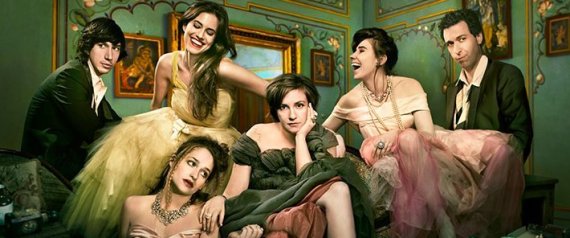
In the past, HBO has come under fire for the general whiteness of its programming--particularly "Girls"--and while many may feel that its unfair to pin all diversity requirements on one half-hour program, critics like The New York Times' Jon Caramanica proclaimed: "Television is nowhere near diverse enough--not in its actors, its writers or its show runners. The problems identified by critics of 'Girls' are systemic, traceable to network executives who greenlight shows and shoot down plenty of others. It’s at that level that diversity stands or falls."
Bustle wrote an article titled "Why HBO and Other Networks Need to Pay Attention to Diversity," and used HuffPost infographics to make their point.
For example, between 1975 and 2014, 38 individuals created hour-long dramas at HBO. Of the 38, 33 of these people were white men. Three were women and only one was a non-white man. Comment: For more on the subject, see Race at the 2015 Oscars and Hollywood Still White in 2015.
Below: The white stars of HBO's Girls.
Dear White Male People: You Still Dominate Hollywood
A few days later, when the Ralph J. Bunche Center for African American Studies at UCLA released its Diversity Report, it proved just how desperate and urgent Simien’s plea really is.
In the exhaustive report—which examined the top theatrical film releases in 2012 and 2013 and all broadcast, cable and digital platform TV programs from the 2012-13 season—the news for artists and executives of color went from bad to worse then horrific.
When you read the highlights—and by that we mean low points—below, keep in mind that minorities constitute nearly 40% of the US population. Women make up half the population in the country.
Minorities are getting shut out of lead film roles
Of 174 films examined for 2013, minorities got less than 17% of lead roles.
By Ryan Faughnder
In fact, women and minority groups have recently lost ground compared with their white counterparts, the trade group said.
In a new report, the guild said women writers' share of TV staff jobs was 29% in the most recent season, down from 30.5% in the previous season. Meanwhile, minorities accounted for 13.7% of employment, compared with 15.6% during the 2011-12 season.
The WGA report, released Tuesday, covered about 3,000 writers working on about 300 shows on 36 networks. The declines in the most recent season follow slow gains over the last decade.
By David Robb
But he said the chances of that happening on its own are not good. “The market by itself is not going to fix it; there are too many obstacles,” Hunt said. “It’s not going to correct itself. Something else is going to have to happen.”
By Carolina Moreno
Overwhelming white and male executives coupled with predominantly white rosters in the industry’s top three talent agencies are mainly to blame for the lack of diversity Hollywood, according to the university’s “2015 Hollywood Diversity Report.”
When the study looked into film studios’ executive ranks in 2013, 94 percent of CEOs and/or chairs and 92 percent of senior management were white. Television executives didn’t prove significantly more diverse either. The report found that 96 percent of chairs and/or CEOs and 93 percent of senior management were white.
By Sasha Bronner
In the past, HBO has come under fire for the general whiteness of its programming--particularly "Girls"--and while many may feel that its unfair to pin all diversity requirements on one half-hour program, critics like The New York Times' Jon Caramanica proclaimed: "Television is nowhere near diverse enough--not in its actors, its writers or its show runners. The problems identified by critics of 'Girls' are systemic, traceable to network executives who greenlight shows and shoot down plenty of others. It’s at that level that diversity stands or falls."
Bustle wrote an article titled "Why HBO and Other Networks Need to Pay Attention to Diversity," and used HuffPost infographics to make their point.
For example, between 1975 and 2014, 38 individuals created hour-long dramas at HBO. Of the 38, 33 of these people were white men. Three were women and only one was a non-white man.
Below: The white stars of HBO's Girls.
February 27, 2015
Civil War Indian in Bewitched
An old episode of Bewitched featured an Indian character. Here's the story:
Bewitched: Season 2, Episode 9
...And Then I Wrote (11 Nov. 1965)Because she feels it's a worthwhile community event, Samantha agrees for Darrin to do the advertising for a Civil War pageant without telling him beforehand. The problem is is that Darrin has no time to do the work, but he feels he can't back out on Samantha's word. In a tit-for-tat move, Darrin in turn gives his word to the event organizer that Samantha will do something for the pageant, namely write it. Despite having intimate knowledge of the event itself, Samantha is having writer's block. Endora suggests that she materialize the characters in front of her so that she can get a better idea of the story once those characters are in front of her. Once she materializes her three main characters--a Confederate soldier (complete with his steed), his Yankee love interest, and a native American--two problems arise. First, a nosy Mrs. Kravitz sees these characters materialize and disappear in and out of thin air. Second, the characters materialize whenever Samantha thinks about them. Samantha has to figure out a way to make her vivid imagination not so vivid so as to control when the three characters appear. She may get the answer how to do so directly from her vivid cast of characters. 
Comment: As usual for "Native" appearances in the late 1950s and the 1960s, this episode is a mixed bag.
On the negative side, the Indian is dressed as a stereotypical "brave." Unlike the soldier and his lady, he doesn't have a name. And he's played by an actor named Tom Nardini--probably a non-Native of Italian descent.
On the positive side, the Indian--unlike the soldier and his lady--talks like a modern man. In fact, he talks like a youth from a "beach blanket" movie, with phrases like "cool cat" and "daddy-o."
I think he's the one who suggests an ending for Samantha's story. Alas, it involves the soldier dying tragically and the lady mourning his loss.
And it's odd for an Indian to be associated with the Civil War. Very odd.
Civil War Indian
Indians were involved in the war--especially in the West, after their removal from the South. Some info on the subject:
Native Americans in the American Civil WarNative Americans in the American Civil War composed various Native American bands, tribes, and nations. Native Americans served in both the Union and Confederate military during the American Civil War. At the outbreak of the war, for example, the minority party of the Cherokees gave its allegiance to the Confederacy, while originally the majority party went for the North. Native Americans fought knowing they might jeopardize their freedom, unique cultures, and ancestral lands if they ended up on the losing side of the Civil War. 28,693 Native Americans served in the Union and Confederate armies during the Civil War, participating in battles such as Pea Ridge, Second Manassas, Antietam, Spotsylvania, Cold Harbor, and in Federal assaults on Petersburg. A few Native American tribes, such as the Creek and the Choctaw, were slaveholders and found a political and economic commonality with the Confederacy. The Choctaw owned over 2,000 slaves. This Indian doesn't look or act anything like a Civil War participant. In fact, the episode doesn't explain why he's there or what his connection is.
But simply saying the Civil War has a Native connection is unusual. That's more history than you'll get from most TV appearances of "Indians."
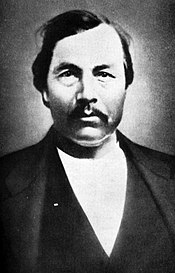
Below: Jackson McCurtain, Lieutenant Colonel of the First Choctaw Battalion in Oklahoma, CSA.
A Civil War Indian dressed like a stereotypical "brave" from another time and place.

For more on the subject, see TV Shows Featuring Indians.
Bewitched: Season 2, Episode 9
...And Then I Wrote (11 Nov. 1965)
Comment: As usual for "Native" appearances in the late 1950s and the 1960s, this episode is a mixed bag.
On the negative side, the Indian is dressed as a stereotypical "brave." Unlike the soldier and his lady, he doesn't have a name. And he's played by an actor named Tom Nardini--probably a non-Native of Italian descent.
On the positive side, the Indian--unlike the soldier and his lady--talks like a modern man. In fact, he talks like a youth from a "beach blanket" movie, with phrases like "cool cat" and "daddy-o."
I think he's the one who suggests an ending for Samantha's story. Alas, it involves the soldier dying tragically and the lady mourning his loss.
And it's odd for an Indian to be associated with the Civil War. Very odd.
Civil War Indian
Indians were involved in the war--especially in the West, after their removal from the South. Some info on the subject:
Native Americans in the American Civil War
But simply saying the Civil War has a Native connection is unusual. That's more history than you'll get from most TV appearances of "Indians."
Below: Jackson McCurtain, Lieutenant Colonel of the First Choctaw Battalion in Oklahoma, CSA.
A Civil War Indian dressed like a stereotypical "brave" from another time and place.
For more on the subject, see TV Shows Featuring Indians.
February 12, 2015
Eskimo in Lucy Goes to Alaska
I've seen all the I Love Lucy shows, but its later incarnations are seldom aired. I recently caught this episode at random:
The Lucy-Desi Comedy Hour: Season 2, Episode 3
Lucy Goes to Alaska (9 Feb. 1959)The Ricardos and Mertzes head to Alaksa, but arrive a day early and their room is not ready; it is occupied by none other than Red Skeleton, who generously shares his room with the foursome. Later, Ricky and Fred learn that they own land that is all ice and are constantly at each other's throats. Ricky and Fred's bickering causes Lucy to ask Red if he will buy the property, but chaos ensues.
In the second half, the non-Native Iron Eyes Cody guest-stars as an Eskimo. He's accompanied by another Eskimo, played by Charles Stevens, who actually looks Asian.
At this point in the story, Lucy and Red Skelton are lost in an Alaskan snowstorm after crashing their jeep. Dressed in the usual parkas, the Eskimos appear out of nowhere. Talking loudly as if the Eskimos don't understand English, Lucy asks if they have a dog sled. In perfect English, Iron Eyes answers that they have a plane nearby.
Iron Eyes agrees to fly them back to civilization--for a price. He's piloting when Lucy cranks the wrong lever and sends the plane into a dive. He hits his head on the steering wheel and is knocked unconscious, forcing Skelton and Lucy to land the plane.
The only wrong note comes when they help him out of the plane. Dazed, he asks, "Who flew [the] plane?" That is, he drops the article "the" in a bit of Tonto talk.
Other than that, it's a fine portrayal--if you ignore the Italian playing an Eskimo. The Alaskan Native is more competent at surviving in the wilderness and more superior at using technology. He's even a better negotiator; he gets a valuable piece of land for rescuing the others.
For more on the subject, see Caribbean Cannibal in I Love Lucy.
Below: The station master helps Iron Eyes Cody the "Eskimo," barely visible inside the plane.

The Lucy-Desi Comedy Hour: Season 2, Episode 3
Lucy Goes to Alaska (9 Feb. 1959)
In the second half, the non-Native Iron Eyes Cody guest-stars as an Eskimo. He's accompanied by another Eskimo, played by Charles Stevens, who actually looks Asian.
At this point in the story, Lucy and Red Skelton are lost in an Alaskan snowstorm after crashing their jeep. Dressed in the usual parkas, the Eskimos appear out of nowhere. Talking loudly as if the Eskimos don't understand English, Lucy asks if they have a dog sled. In perfect English, Iron Eyes answers that they have a plane nearby.
Iron Eyes agrees to fly them back to civilization--for a price. He's piloting when Lucy cranks the wrong lever and sends the plane into a dive. He hits his head on the steering wheel and is knocked unconscious, forcing Skelton and Lucy to land the plane.
The only wrong note comes when they help him out of the plane. Dazed, he asks, "Who flew [the] plane?" That is, he drops the article "the" in a bit of Tonto talk.
Other than that, it's a fine portrayal--if you ignore the Italian playing an Eskimo. The Alaskan Native is more competent at surviving in the wilderness and more superior at using technology. He's even a better negotiator; he gets a valuable piece of land for rescuing the others.
For more on the subject, see Caribbean Cannibal in I Love Lucy.
Below: The station master helps Iron Eyes Cody the "Eskimo," barely visible inside the plane.
January 18, 2015
Jimmy P. flops at box office
When the movie Jimmy P. came out in 2013, I discussed the redface casting of Benicio Del Toro as a Blackfeet Indian. Now the movie has made it to Japan, or something, because a recent article raised the issue again.
Jimmy. P: ‘not one actual Native American could be found to play the lead role?’
By Giovanni FazioDel Toro, for his part, put in some work trying to master a proper Blackfoot tribe accent, but the result is more than a little off-putting. His pattern of speech is so painfully laconic and halting that it almost comes off as a caricature, especially since all the other Native Americans cast in the film sound much more contemporary and colloquial. It’s unfortunate that this wasn’t noticed by French director Arnaud Desplechin (“Kings and Queens”)—this is his first attempt at an English-language film. Furthermore, the issues of racial discrimination that are raised tend to lose their bite when apparently not one actual Native American actor could be found to play the lead role. A Freudian slip? Comment: In the past, Desplechin said they couldn't find any Native actors while Del Toro said it was a money issue. I ripped these positions in Director: Native Actors Lack "Charisma."
Then I could only guess how badly Jimmy. P would do at the box office. Now we know. Box Office Mojo reports that it earned a pathetic $24,329. Not $24 million, $24 thousand.
So much for all the asinine claims that Del Toro is a big star who could earn big bucks for investors. The producers could've cast anyone, even me, and the movie would've earned just as much. Someone could've earned $24K by screening home movies of pets and babies.
The fallacy of the big-name actor strikes again. These actors are worthless from a financial standpoint--at least in movies like this one. There's no financial reason--none--for hiring Del Toro rather than a Native actor for Jimmy P.
The producers hired him because they were "familiar" or "comfortable" with him. In other words, because he was white like them. That's a typical example of discriminating on the basis of race, or racism.

Jimmy. P: ‘not one actual Native American could be found to play the lead role?’
By Giovanni Fazio
Then I could only guess how badly Jimmy. P would do at the box office. Now we know. Box Office Mojo reports that it earned a pathetic $24,329. Not $24 million, $24 thousand.
So much for all the asinine claims that Del Toro is a big star who could earn big bucks for investors. The producers could've cast anyone, even me, and the movie would've earned just as much. Someone could've earned $24K by screening home movies of pets and babies.
The fallacy of the big-name actor strikes again. These actors are worthless from a financial standpoint--at least in movies like this one. There's no financial reason--none--for hiring Del Toro rather than a Native actor for Jimmy P.
The producers hired him because they were "familiar" or "comfortable" with him. In other words, because he was white like them. That's a typical example of discriminating on the basis of race, or racism.
January 17, 2015
Hollywood still white in 2015
Complementing the discussion of Selma's Oscar snub, a 2013 posting confirms that minorities are underrepresented in movies:
USC study: Minorities still under-represented in popular films
A study from USC's Annenberg School looks at 500 films from 2007-2012 and finds characters don't mirror the audiences.
By Rebecca KeeganWith this year's high-profile movies "The Butler," "42" and "12 Years a Slave" prominently featuring black actors, it may seem as though the multiplex is enjoying new levels of diversity. But popular films still under-represent minority characters and directors, and reflect certain biases in their portrayals, according to a study being released Wednesday by USC's Annenberg School for Communication and Journalism.
Researchers evaluated 500 top-grossing movies released at the U.S. box office between 2007 and 2012 and 20,000 speaking characters, finding patterns in the way different races, ethnicities and genders are depicted.
Hispanic women, the study found, are the demographic most likely to be shown nude or in sexy attire; black men are the group least likely to be portrayed in a committed relationship.
In 2012, the researchers found, 76.3% of all speaking characters in these movies were white; according to U.S. Census figures, 63% of the country is white, and according to the Motion Picture Assn. of America, 56% of movie ticket buyers are white. The industry is super-aware of the problem, even if it hasn't done much about it.
Academy president responds to firestorm over Oscar’s lack of diversity
By Sandy CohenAll 20 of this year’s acting contenders are white and there are no women in the directing or writing categories. After the nominations were announced Thursday morning, the hashtag #OscarsSoWhite started trending on Twitter.
The Asian Pacific American Media Coalition issued a statement Friday saying the nominations balloting “obviously reflects a lack of diversity in Oscar voters as well as in films generally.”
Yet Boone Isaacs insisted the academy is “committed to seeking out diversity of voice and opinion” and that outreach to women and artists of color is a major focus.
“In the last two years, we’ve made greater strides than we ever have in the past toward becoming a more diverse and inclusive organization through admitting new members and more inclusive classes of members,” Boone Isaacs said. “And, personally, I would love to see and look forward to see a greater cultural diversity among all our nominees in all of our categories.” Is the World Really Ready for Diversity in Major Film Franchises?
For more on casting issues, see Diverse TV Shows Get Higher Ratings and Director: Native Actors Lack "Charisma."

USC study: Minorities still under-represented in popular films
A study from USC's Annenberg School looks at 500 films from 2007-2012 and finds characters don't mirror the audiences.
By Rebecca Keegan
Researchers evaluated 500 top-grossing movies released at the U.S. box office between 2007 and 2012 and 20,000 speaking characters, finding patterns in the way different races, ethnicities and genders are depicted.
Hispanic women, the study found, are the demographic most likely to be shown nude or in sexy attire; black men are the group least likely to be portrayed in a committed relationship.
In 2012, the researchers found, 76.3% of all speaking characters in these movies were white; according to U.S. Census figures, 63% of the country is white, and according to the Motion Picture Assn. of America, 56% of movie ticket buyers are white.
Academy president responds to firestorm over Oscar’s lack of diversity
By Sandy Cohen
The Asian Pacific American Media Coalition issued a statement Friday saying the nominations balloting “obviously reflects a lack of diversity in Oscar voters as well as in films generally.”
Yet Boone Isaacs insisted the academy is “committed to seeking out diversity of voice and opinion” and that outreach to women and artists of color is a major focus.
“In the last two years, we’ve made greater strides than we ever have in the past toward becoming a more diverse and inclusive organization through admitting new members and more inclusive classes of members,” Boone Isaacs said. “And, personally, I would love to see and look forward to see a greater cultural diversity among all our nominees in all of our categories.”
For more on casting issues, see Diverse TV Shows Get Higher Ratings and Director: Native Actors Lack "Charisma."
January 16, 2015
Another white year at Oscars
People are talking about how the acclaimed movie Selma got only two Oscar nominations. Here are some thoughts on why it happened:
Oscar Voters: 94% White, 76% Men, and an Average of 63 Years Old
The Oscars’ white-guy backlash: Why academy voters retreated to their comfort zone
There's actually some good news in this year's nominations--but the academy has swamped it in white backlash
By Andrew O'HehirI think New York Daily News critic Elizabeth Weitzman was the Twitter winner on Thursday morning: “I, for one, am taking great comfort in the fact that all of this year’s Best Actress nominees are women.” Amid the understandable social media outrage and amazement (#OscarsSoWhite has been the hashtag of the day), we are dragged once again back to the question of whether the Academy of Motion Picture Arts and Sciences has some moral or social responsibility to respond to larger cultural issues or foster diversity within its industry. It’s a question to which, white hetero cis-male that I am, I do not claim to know the answer. There are prominent voices within Hollywood and the academy, including Denzel Washington, who have argued that a virtual quota system should be instituted to bring academy membership–which is more than 90 percent white and about three-quarters male, with a median age around 63–in line with the general population. (As Washington and others have noted, Latinos are even more poorly represented within the academy than black people.)
Quite obviously, that is not the dominant current of opinion within the academy. You can certainly defend, in the abstract, the idea that movie awards should be entirely about the art and craft of cinema, not about who made the movies. And one can argue, from a film-lover’s point of view, that this year’s Oscar nominations have fewer ludicrous howlers than usual, and a few genuine surprises: Marion Cotillard’s best-actress nomination for the Belgian film “Two Days, One Night”; Wes Anderson’s first directing nomination, for “Grand Budapest Hotel”; the presence of “Ida” and “Leviathan” and “Timbuktu,” three tremendous works of world cinema, in the foreign-language category. But let’s be clear: Those things are not the big story today, and the academy’s interest in film as an art form has always been a secondary concern. The primary mission of the Oscars is to burnish the public image of the American film industry, and on that front the voters have screwed the proverbial pooch.
So here we are facing what feels way too much like the White Backlash Oscars, announced on the morning of Martin Luther King Jr.’s actual birthday. A year after awarding its biggest prize to a confrontational film about the most painful aspects of America’s racial history, Oscar voters appear to have retreated into their collective comfort zone. (This is not meant to impugn the excellence of “12 Years a Slave,” but conservative critics who accused Hollywood of being driven by liberal guilt had a point.) No doubt Ava DuVernay’s potent civil-rights drama “Selma,” the most obvious casualty of this retreat–it garnered a best-picture nomination, but DuVernay and star David Oyelowo were both spurned–was undermined in part by the controversy over its depiction of Lyndon B. Johnson. But I feel like the LBJ issue was used as a mask for issue fatigue, an unexpressed and not-quite-conscious feeling that We gave it to a “black movie” last year, dammit.
This retreat into whiteness and maleness was not an intentional decision, in any ordinary sense of that word. There is no overt racist or misogynist conspiracy within the academy, just a whole lot of cluelessness and insularity. But the effect is likely to be extremely damaging, and as I said earlier it’s also likely to overwhelm the positive nuggets to be found in the nooks and crannies of this year’s nominations. If Oscar voters want to claim that they’re all about cinematic quality and above petty considerations of cultural politics, it might help if they didn’t swoon, year after year, for mediocre inspirational pictures dosed with obvious Oscar sauce. Hollywood’s political ignorance: What Cosby, “Selma” & Hebdo reveal about white liberal consciousness
The causes celebrities feel comfortable backing--and those they do not--speak volumes. And it's not pretty
By Brittney CooperI had tuned in to the Globes among other reasons, because Ava DuVernay’s film “Selma,” a historical drama about the passage of the 1965 Voting Rights Act, was up for four awards including best song, best picture, best director and best actor in a drama. John Legend and rapper Common took home the award for their song “Glory.” Common, ever the spoken word artist, declared in his remarks, “I am the hopeful black woman who was denied her right to vote. I am the caring white supporter killed on the front lines of freedom. I am the unarmed black kid who maybe needed a hand, but was instead given a bullet. I am the two fallen police officers slain in the line of duty. … Selma has awakened my humanity. Selma is now.”
Common clearly took a lesson from the book of Kanye West when he refused to say the words that felt as if they were hanging from the tip of his tongue: “Black lives matter.” I was struck by the audacity of inclusion in Common’s remarks and reminded that this is precisely the kind of racial discourse that we don’t need. But it is the kind of racial discourse in which liberal black folks are forced to publicly engage in order that they might not seem antagonistic to white people. Even when we want to say, Black lives matter, we talk about the lives of other people of color, and about white lives, too. We include everybody, because accusations of exclusion often make white folks less willing to listen to our critiques. Of course, all lives matter. But only some lives—black lives—are consistently treated as if they don’t.
Moreover, white people are not held to the same standard of radical inclusivity. As I watched multiple white celebrities don the stage and stand in solidarity with the victims of the Charlie Hebdo attack and other innocent bystanders, I marveled at the privilege that they had of being specific. Even though some people of color were casualties of the attacks in Paris, by and large this was an attack on white French satirists whose bread and butter was the routine disrespect of the Muslim community. Attacks on largely white victims received a huge and committed show of solidarity, while the Black Lives Matter Movement that has consumed our news cycle for the last four months was apparently not even worthy of mention.
That this happened on the same night that “Selma,” a film that has come under much fire for its refusal to tell a white savior narrative favoring LBJ, received no awards, perhaps matters, too.
It would be impolitic to say that “Selma” received no awards because of white liberal racism. I don’t particularly believe that. But I do wonder if America is really ready for a world in which black people are entrusted to narrate their own freedom stories and freedom dreams. Can white Americans deal with not being at the center of the black freedom narrative? Why is it the expectation that our history would favor our most ardent villains? Can white people really stand knowing that in the broader black narrative of the civil rights movement, we are not especially enamored of white heroes? The dubious upside of Selma’s Oscar snub: Hollywood can’t continue to ignore its own race issues
Ava DuVernay, Russell Simmons and Reginald Hudlin weigh in on race and Hollywood
By Erin KeaneDirector Ava DuVernay says she knew back in December that she wouldn’t be the first African American woman nominated for an Academy Award for Best Director for “Selma,” which is up for the Best Picture award. In a story published yesterday, Entertainment Weekly reports the director chalked it up to simple Academy math, and it turns out she might be right. The Academy is overwhelmingly white (94 percent) and male (77 percent). While we might want to think of artistic awards as strictly merit-based, race and gender may very well have worked against DuVernay—several Academy voters indicated to EW that DuVernay’s unequivocal response to criticisms of her portrayal of President Lyndon Johnson as reluctant on civil rights “came off as strident and defensive.” In a majority culture that can paint outspoken African American artists with the “angry black woman” brush, and that only just awarded a woman the best director statue in 2009 (Kathryn Bigelow for “The Hurt Locker”), a lack of representation allows one side to dominate the conversation and dismisses what they don’t want to hear.
The conversation would be different if an African American woman helming a Best Picture nominee wasn’t already such a rare occurrence. In a new interview with Variety, venerable hip-hop (and now film and TV with his Def Pictures) producer Russell Simmons criticized Hollywood’s “deafening” lack of racial integration: “The segregation in Hollywood is incredible.” He also blasted well-meaning Hollywood liberals who see themselves as more progressive than they are when it comes to understanding African-American culture and how that cultural blindness can stifle minority talent from rising to the tops of their fields. Comment: For more on casting issues, see Diverse TV Shows Get Higher Ratings and Director: Native Actors Lack "Charisma."
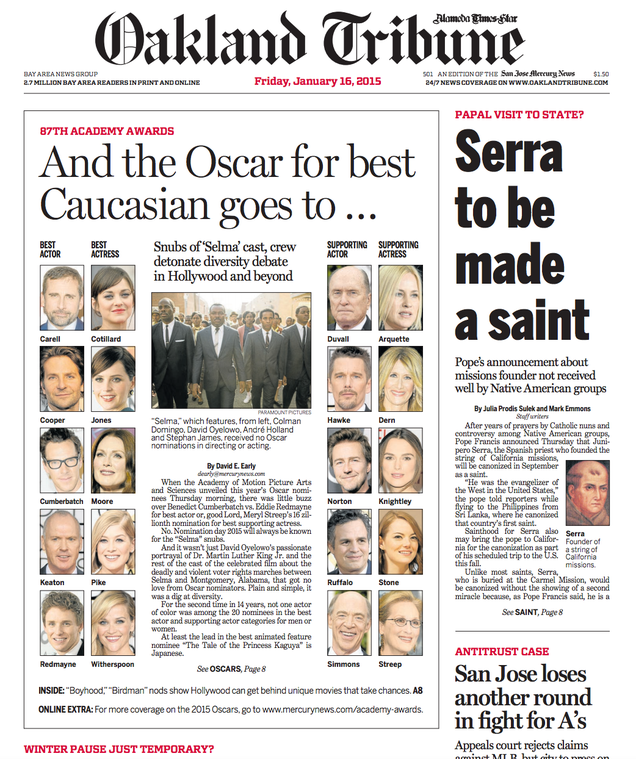
Oscar Voters: 94% White, 76% Men, and an Average of 63 Years Old
The Oscars’ white-guy backlash: Why academy voters retreated to their comfort zone
There's actually some good news in this year's nominations--but the academy has swamped it in white backlash
By Andrew O'Hehir
Quite obviously, that is not the dominant current of opinion within the academy. You can certainly defend, in the abstract, the idea that movie awards should be entirely about the art and craft of cinema, not about who made the movies. And one can argue, from a film-lover’s point of view, that this year’s Oscar nominations have fewer ludicrous howlers than usual, and a few genuine surprises: Marion Cotillard’s best-actress nomination for the Belgian film “Two Days, One Night”; Wes Anderson’s first directing nomination, for “Grand Budapest Hotel”; the presence of “Ida” and “Leviathan” and “Timbuktu,” three tremendous works of world cinema, in the foreign-language category. But let’s be clear: Those things are not the big story today, and the academy’s interest in film as an art form has always been a secondary concern. The primary mission of the Oscars is to burnish the public image of the American film industry, and on that front the voters have screwed the proverbial pooch.
So here we are facing what feels way too much like the White Backlash Oscars, announced on the morning of Martin Luther King Jr.’s actual birthday. A year after awarding its biggest prize to a confrontational film about the most painful aspects of America’s racial history, Oscar voters appear to have retreated into their collective comfort zone. (This is not meant to impugn the excellence of “12 Years a Slave,” but conservative critics who accused Hollywood of being driven by liberal guilt had a point.) No doubt Ava DuVernay’s potent civil-rights drama “Selma,” the most obvious casualty of this retreat–it garnered a best-picture nomination, but DuVernay and star David Oyelowo were both spurned–was undermined in part by the controversy over its depiction of Lyndon B. Johnson. But I feel like the LBJ issue was used as a mask for issue fatigue, an unexpressed and not-quite-conscious feeling that We gave it to a “black movie” last year, dammit.
This retreat into whiteness and maleness was not an intentional decision, in any ordinary sense of that word. There is no overt racist or misogynist conspiracy within the academy, just a whole lot of cluelessness and insularity. But the effect is likely to be extremely damaging, and as I said earlier it’s also likely to overwhelm the positive nuggets to be found in the nooks and crannies of this year’s nominations. If Oscar voters want to claim that they’re all about cinematic quality and above petty considerations of cultural politics, it might help if they didn’t swoon, year after year, for mediocre inspirational pictures dosed with obvious Oscar sauce.
The causes celebrities feel comfortable backing--and those they do not--speak volumes. And it's not pretty
By Brittney Cooper
Common clearly took a lesson from the book of Kanye West when he refused to say the words that felt as if they were hanging from the tip of his tongue: “Black lives matter.” I was struck by the audacity of inclusion in Common’s remarks and reminded that this is precisely the kind of racial discourse that we don’t need. But it is the kind of racial discourse in which liberal black folks are forced to publicly engage in order that they might not seem antagonistic to white people. Even when we want to say, Black lives matter, we talk about the lives of other people of color, and about white lives, too. We include everybody, because accusations of exclusion often make white folks less willing to listen to our critiques. Of course, all lives matter. But only some lives—black lives—are consistently treated as if they don’t.
Moreover, white people are not held to the same standard of radical inclusivity. As I watched multiple white celebrities don the stage and stand in solidarity with the victims of the Charlie Hebdo attack and other innocent bystanders, I marveled at the privilege that they had of being specific. Even though some people of color were casualties of the attacks in Paris, by and large this was an attack on white French satirists whose bread and butter was the routine disrespect of the Muslim community. Attacks on largely white victims received a huge and committed show of solidarity, while the Black Lives Matter Movement that has consumed our news cycle for the last four months was apparently not even worthy of mention.
That this happened on the same night that “Selma,” a film that has come under much fire for its refusal to tell a white savior narrative favoring LBJ, received no awards, perhaps matters, too.
It would be impolitic to say that “Selma” received no awards because of white liberal racism. I don’t particularly believe that. But I do wonder if America is really ready for a world in which black people are entrusted to narrate their own freedom stories and freedom dreams. Can white Americans deal with not being at the center of the black freedom narrative? Why is it the expectation that our history would favor our most ardent villains? Can white people really stand knowing that in the broader black narrative of the civil rights movement, we are not especially enamored of white heroes?
Ava DuVernay, Russell Simmons and Reginald Hudlin weigh in on race and Hollywood
By Erin Keane
The conversation would be different if an African American woman helming a Best Picture nominee wasn’t already such a rare occurrence. In a new interview with Variety, venerable hip-hop (and now film and TV with his Def Pictures) producer Russell Simmons criticized Hollywood’s “deafening” lack of racial integration: “The segregation in Hollywood is incredible.” He also blasted well-meaning Hollywood liberals who see themselves as more progressive than they are when it comes to understanding African-American culture and how that cultural blindness can stifle minority talent from rising to the tops of their fields.
December 01, 2014
White Tiger Lily, Aboriginal Chief?
A new image of actress Rooney Mara as Tiger Lily has people wondering:
Eric Haywood @Eric_Haywood
Something’s odd about this new Peter #Pan movie, but I just can’t put my finger on it. #TigerLily

Here are some excellent analyses of the ongoing problems with the upcoming Pan movie:
Rooney Mara's Tiger Lily Could Not Be Less Native. That's a Problem.If this new Tiger Lily is not a person of color, why is her dad so dark?
A poster and movie trailer for Pan, the Peter Pan prequel planned for a summer 2015 release, is giving the public a first glimpse of actress Rooney Mara in the role of Tiger Lily, a Native American character in J.M. Barrie's 1904 play. The visuals have reignited the controversy that broke out in March over the casting of Mara, a non-Native actress, in the role. Reporting on the choice touted the film's "multi-racial" world and "a very different [Tigerlily] than was originally imagined."
But there was concern and even outrage over Mara's casting. An online petition was started to urge Warner Brothers to "Stop casting white actors to play people of color!" On Twitter and other social media, many people voiced disappointment in Mara for accepting the role.
In our our earlier coverage of this issue, we saw two possible explanations of the casting choice. One was simply the old Hollywood practice of casting white actors as Indians—the traditions of "whitewashing" (casting well-known white actors in Native roles to ensure ticket sales) and "redface" (white actors playing Indians, often by invoking common stereotypes) that have been common from the silent-film era up through Johnny Depp's Tonto in 2013. We entertained another explanation, though: that the filmmakers, concerned by the racist portrayal of Natives in Peter Pan—and it's really bad, particularly in the 1953 Disney film—were trying to avoid repeating it. After all, many ICTMN readers have commented that the character of Tiger Lily is an inherently racist creation, and that Mara might as well take it because no self-respecting Native actress should have to reinforce the stereotype for the sake of a blockbuster credit. 
The image seems to suggest Mara's Tiger Lily is not Native. Aside from the actress's own physical appearance, there's a touch of tartan in her costume; Tiger Lily is the daughter of the Chief in the original story, but it looks to us like this Tiger Lily's dad might be less of an Indian chief and more of a Scottish or Irish chieftain. There is a big, big problem with this reading, though.
The Chief in Pan is played by Jack Charles, a famous Australian Aboriginal actor. Here's what he looks like: 
The choice to cast Charles as the Chief supports the worst-case scenario theories about this whole mess. Charles clearly signifies that the tribe in the film (originally the "Pickaninny Tribe" in J.M. Barrie's play and book, let's not forget) is non-European in nature. How or why does he have this white, Irish-looking daughter? It's hard to avoid drawing the conclusion that the filmmakers feel people of color are good for supporting roles, but a lead actress must be white. If the filmmakers wanted to avoid the racist attitudes behind the Tiger Lily and Chief characters, and cast a white actress to create a new, stereotype-free Tiger Lily, why is her father the Chief so iconically ethnic? If Tiger Lily's ethnicity doesn't matter, then go ahead and cast Rooney Mara, and give the character a dad who looks like he could have fathered her, given what we know about genetics. Casting a white actress as Tiger Lily to sell tickets but an Indigenous Australian as the Chief to keep the racial other-ness in the original story just isn't right. Rather than an attempt to rehabilitate a problematic character, it is what concerned petitioners originally feared: simple and unsubtle whitewashing, based on the belief that the film would not succeed with a Native actress in a Native role.
And yes, we're braced for the "revelation" of the plot twist that Mara's Tiger Lily came to Neverland from England before Peter did, and was adopted by the Chief. We can see that one coming a mile away. That doesn't negate the cynical nature of Mara's casting, just shows the filmmakers felt they had write an explanation into the storyline. Worshiping whites
From Debbie Reese's American Indians in Children's Literature blog:
How 'bout we all pan NBC's PETER PAN and Warner Bros PAN, tooThe trailer for the new movie due out next year has a scene where Pan is on the floor, spears aimed at him. It looks like he's about to be killed, but an older man (which I imagine the script says is an elder or maybe Tiger Lily's dad) stops them. In his hand is a necklace of some sort that Peter was wearing. The man says:
"The little one. He wears the pan."
Here's a screen capture of that scene in the trailer: 
The trailer cuts to Tiger Lily, played by Rooney Mara, who says: "The Pan is our tribe's bravest warrior."
Here she is in that moment: 
Her line (Pan is our tribe's greatest warrior) points right at the foundation for Barrie's film. Indians who worship whites. That's not ok. It was't ok then, and it isn't ok to give that racist garbage to kids today. Right?
Some of you know that there was a lot of discussion when Rooney was selected as the actress for the part. Many people said that a Native actress ought to be cast instead of Rooney. I disagree with that idea, too.
Fixing the words in the song, and/or casting a Native person in that role does not change the point of view(s) on which the story rests. These are, through and through, "the white man's Indian." There is no fixing this story or any production of it so that the Native content is authentic.
Attempts to do so remind me of the many schools that sought/seek to make their Indian mascots more "authentic" so that they could keep objectifying Native people, using their ideas of who Native people are for their own purposes.
Can we just let that stuff go? Comment: Even if all the "tribal" actors are white, the feathered costumes make them look tribal. Mara's ridiculous headdress makes her look tribal. That plus the spears make the tribe look primitive and savage. Even if they're white, they're strange and exotic--exactly what you don't want to see in a depiction of tribal people.
The "bravest warrior" line may be an exception. But if the creators are sticking to the original story, it suggests a huge problem. Tiger Lily starts as a helpless damsel in distress; she ends up worshiping Peter Pan. Here's a key passage from the original book:
Peter Pan--Chapter 10One important result of the brush [with the pirates] on the lagoon was that it made the redskins their friends. Peter had saved Tiger Lily from a dreadful fate, and now there was nothing she and her braves would not do for him. All night they sat above, keeping watch over the home under the ground and awaiting the big attack by the pirates which obviously could not be much longer delayed. Even by day they hung about, smoking the pipe of peace, and looking almost as if they wanted tit-bits to eat.
They called Peter the Great White Father, prostrating themselves [lying down] before him; and he liked this tremendously, so that it was not really good for him.
"The great white father," he would say to them in a very lordly manner, as they grovelled at his feet, "is glad to see the Piccaninny warriors protecting his wigwam from the pirates."
"Me Tiger Lily," that lovely creature would reply. "Peter Pan save me, me his velly nice friend. Me no let pirates hurt him."
She was far too pretty to cringe in this way, but Peter thought it his due, and he would answer condescendingly, "It is good. Peter Pan has spoken."
Always when he said, "Peter Pan has spoken," it meant that they must now shut up, and they accepted it humbly in that spirit; but they were by no means so respectful to the other boys, whom they looked upon as just ordinary braves. They said "How-do?" to them, and things like that; and what annoyed the boys was that Peter seemed to think this all right. If there's even a hint of white-worshiping tribespeople in the Pan movie, look out.
For more on Peter Pan, see Tiger Lily in Peter Pan: An Allegory of Anglo-Indian Relations.
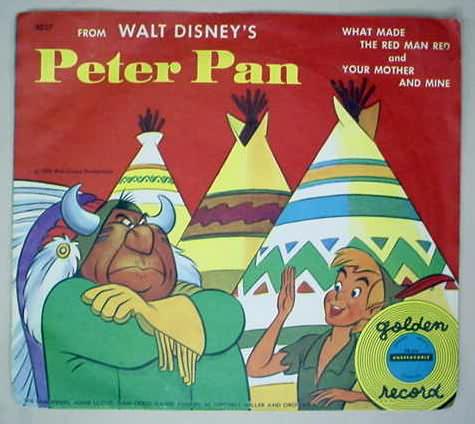
Eric Haywood @Eric_Haywood
Something’s odd about this new Peter #Pan movie, but I just can’t put my finger on it. #TigerLily
Here are some excellent analyses of the ongoing problems with the upcoming Pan movie:
Rooney Mara's Tiger Lily Could Not Be Less Native. That's a Problem.
A poster and movie trailer for Pan, the Peter Pan prequel planned for a summer 2015 release, is giving the public a first glimpse of actress Rooney Mara in the role of Tiger Lily, a Native American character in J.M. Barrie's 1904 play. The visuals have reignited the controversy that broke out in March over the casting of Mara, a non-Native actress, in the role. Reporting on the choice touted the film's "multi-racial" world and "a very different [Tigerlily] than was originally imagined."
But there was concern and even outrage over Mara's casting. An online petition was started to urge Warner Brothers to "Stop casting white actors to play people of color!" On Twitter and other social media, many people voiced disappointment in Mara for accepting the role.
In our our earlier coverage of this issue, we saw two possible explanations of the casting choice. One was simply the old Hollywood practice of casting white actors as Indians—the traditions of "whitewashing" (casting well-known white actors in Native roles to ensure ticket sales) and "redface" (white actors playing Indians, often by invoking common stereotypes) that have been common from the silent-film era up through Johnny Depp's Tonto in 2013. We entertained another explanation, though: that the filmmakers, concerned by the racist portrayal of Natives in Peter Pan—and it's really bad, particularly in the 1953 Disney film—were trying to avoid repeating it. After all, many ICTMN readers have commented that the character of Tiger Lily is an inherently racist creation, and that Mara might as well take it because no self-respecting Native actress should have to reinforce the stereotype for the sake of a blockbuster credit.
The Chief in Pan is played by Jack Charles, a famous Australian Aboriginal actor. Here's what he looks like:
And yes, we're braced for the "revelation" of the plot twist that Mara's Tiger Lily came to Neverland from England before Peter did, and was adopted by the Chief. We can see that one coming a mile away. That doesn't negate the cynical nature of Mara's casting, just shows the filmmakers felt they had write an explanation into the storyline.
From Debbie Reese's American Indians in Children's Literature blog:
How 'bout we all pan NBC's PETER PAN and Warner Bros PAN, too
"The little one. He wears the pan."
Here's a screen capture of that scene in the trailer:
Here she is in that moment:
Some of you know that there was a lot of discussion when Rooney was selected as the actress for the part. Many people said that a Native actress ought to be cast instead of Rooney. I disagree with that idea, too.
Fixing the words in the song, and/or casting a Native person in that role does not change the point of view(s) on which the story rests. These are, through and through, "the white man's Indian." There is no fixing this story or any production of it so that the Native content is authentic.
Attempts to do so remind me of the many schools that sought/seek to make their Indian mascots more "authentic" so that they could keep objectifying Native people, using their ideas of who Native people are for their own purposes.
Can we just let that stuff go?
The "bravest warrior" line may be an exception. But if the creators are sticking to the original story, it suggests a huge problem. Tiger Lily starts as a helpless damsel in distress; she ends up worshiping Peter Pan. Here's a key passage from the original book:
Peter Pan--Chapter 10
They called Peter the Great White Father, prostrating themselves [lying down] before him; and he liked this tremendously, so that it was not really good for him.
"The great white father," he would say to them in a very lordly manner, as they grovelled at his feet, "is glad to see the Piccaninny warriors protecting his wigwam from the pirates."
"Me Tiger Lily," that lovely creature would reply. "Peter Pan save me, me his velly nice friend. Me no let pirates hurt him."
She was far too pretty to cringe in this way, but Peter thought it his due, and he would answer condescendingly, "It is good. Peter Pan has spoken."
Always when he said, "Peter Pan has spoken," it meant that they must now shut up, and they accepted it humbly in that spirit; but they were by no means so respectful to the other boys, whom they looked upon as just ordinary braves. They said "How-do?" to them, and things like that; and what annoyed the boys was that Peter seemed to think this all right.
For more on Peter Pan, see Tiger Lily in Peter Pan: An Allegory of Anglo-Indian Relations.
July 03, 2014
The racebending of Billie Frechette
An old posting about the Native character in the 2009 film Public Enemies:
The Woman is Red: The Racebending of Billie Frechette
By Gabriel CanadaI had high hopes that such terrible inaccuracies wouldn’t be repeated three decades later when Universal Studios took on the retelling of Dillinger’s life for Public Enemies (2009). From the start, historical accuracy was respected with director Michael Mann shooting on location at the banks, hotels, prisons, and hideouts where the real events took place–even going so far as to have his set designer restore many of them, creating tourist havens for local communities. The actors and film makers even descended on the Dillinger family farm.
That is why it was even more disappointing that–though Billie’s romance was central to the plot of this new film and it was closer to the truth in almost every way–”racebending” was still employed, unapologetically. Marion Cotillard still introduces herself as half-Indian in her first scene. She makes it clear that she’s been scorned for it, saying that most guys don’t like that about her. (I am left with the impression that it isn’t “most guys” who wouldn’t like that about Billie, but rather “most guys in Hollywood.”)
Which is baffling. Michael Mann, the director of Public Enemies, was also the director of Last of the Mohicans and Heat. He played a large part in launching the careers of actors of color like Wes Studi and Eric Schweig in the 1990s. Though Mann keeps the context of Billie’s heritage intact in the film, and has a history of working with First Nation actors, we are left with Cotillard–who, like Phillips before her, is far removed from the Wisconsin reservation where Frechette lived most of her life. The only way to let the audience know Cotillard is playing an Indian is for the actors to come straight out and say it, as if denied the use of a buckskin dress, Hollywood simply didn’t know how to introduce an audience to a First Nations woman in a speakeasy.
Billie Frechette is the sole heroine in these Dillinger films, where tough guy gangsters are mowed down in hails of bullets and G-men don’t bother to flash their badges before opening fire. Yet, the first thing the film makers want the audience to know is that she is half Indian. It makes me wonder: If that detail about her is so important, why was this overlooked by the casting directors?
We are meant to feel sympathetic for Billie in Public Enemies and Dillinger. Not much good happens to her. She goes to jail and is tortured by the FBI for little more than falling in love with the wrong guy.
The films take pains to suggest she was with that wrong guy because no one wanted to dance or drink with an Indian. Well, if anyone is responsible for that last plight of Billie onscreen, it is Hollywood itself. Crime may not pay, but Hollywood–for whatever reason–still thinks racebending will. Comment: For more on Public Enemies, see Cotillard's Discovery of the Menominee and (Mis)casting in Public Enemies.
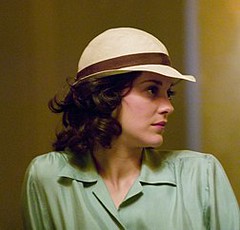
The Woman is Red: The Racebending of Billie Frechette
By Gabriel Canada
That is why it was even more disappointing that–though Billie’s romance was central to the plot of this new film and it was closer to the truth in almost every way–”racebending” was still employed, unapologetically. Marion Cotillard still introduces herself as half-Indian in her first scene. She makes it clear that she’s been scorned for it, saying that most guys don’t like that about her. (I am left with the impression that it isn’t “most guys” who wouldn’t like that about Billie, but rather “most guys in Hollywood.”)
Which is baffling. Michael Mann, the director of Public Enemies, was also the director of Last of the Mohicans and Heat. He played a large part in launching the careers of actors of color like Wes Studi and Eric Schweig in the 1990s. Though Mann keeps the context of Billie’s heritage intact in the film, and has a history of working with First Nation actors, we are left with Cotillard–who, like Phillips before her, is far removed from the Wisconsin reservation where Frechette lived most of her life. The only way to let the audience know Cotillard is playing an Indian is for the actors to come straight out and say it, as if denied the use of a buckskin dress, Hollywood simply didn’t know how to introduce an audience to a First Nations woman in a speakeasy.
Billie Frechette is the sole heroine in these Dillinger films, where tough guy gangsters are mowed down in hails of bullets and G-men don’t bother to flash their badges before opening fire. Yet, the first thing the film makers want the audience to know is that she is half Indian. It makes me wonder: If that detail about her is so important, why was this overlooked by the casting directors?
We are meant to feel sympathetic for Billie in Public Enemies and Dillinger. Not much good happens to her. She goes to jail and is tortured by the FBI for little more than falling in love with the wrong guy.
The films take pains to suggest she was with that wrong guy because no one wanted to dance or drink with an Indian. Well, if anyone is responsible for that last plight of Billie onscreen, it is Hollywood itself. Crime may not pay, but Hollywood–for whatever reason–still thinks racebending will.
June 30, 2014
Replacing white heroes with minorities
Comics curmudgeon John Byrne explains why he doesn't like the casting of Michael B. Jordan as the Human Torch.
John Byrne Explains Why 'Racebending' Doesn't Help THE FANTASTIC FOUR Reboot
The posting starts with an earlier quote from Byrne to suggest his racial attitudes:Personal prejudice: Hispanic and Latino women with blonde hair look like hookers to me, no matter how clean or “cute” they are. Somehow those skin tones that look so good with dark, dark hair just don’t work for me with lighter shades.--John Byrne, 2005 Byrne's main argument seems to be this:If we took a story written by a Black African, set in Africa, about Africans, and arbitrarily turned one of the characters White, there would be (justifiable) outrage. The valid point would be made that we cannot simply “whitewash” a Black character and end up with the same person, the same dynamic, the same presence in the story.
How is it any different to take a White character and paint him/her Black? Nick Fury, to cite but one example, had to turn into a different character when he was painted Black.
Why not MAKE him a different character? Give him is own identity, instead of one handed down from on high by White folk? Make him Gabe Jones, or Gabe Jones Jr, or Gabe Jones III, if you want to tie into existing continuity. As the “Everything That’s Wrong With…” site so aptly points out, Fury in the Marvel Movies has no depth at all. He is defined entirely by the eyepatch. I don't see how his "solution" of creating new minority characters applies.
It's a fine notion by itself, and it may lead to more minority characters in movies. In 25 or 50 years, when these characters become fan favorites. But how does it help integrate movies now?
It sounds like another way of saying, "Let's keep movies white until those uppity minorities have earned a seat at the table." Which ignores the fact that white creators pander to white fans in a racist feedback loop. That there's no "meritocracy" that gives minority characters a fair shot at becoming stars.
Marvel, champion of equality?
Byrne also gives us a pseudo-history of racial attitudes at Marvel in the 1960s:Lee, Kirby, Ditko and the rest introduced ethnic and racial minorities with a far greater frequency than, say, DC. Wyatt Wingfoot became a regular member of the FF’s supporting cast. Robbie Robertson showed up in Spider-Man. The Black Panther arrived. Heroic non-White figures arose from the ranks of the common man. Remember Al B. Harper, who died to save the world?
When Johnny is race-swapped the inevitable response from some segments of fandom and the media is that this is “necessary” due to comics in the 1960s being hotbeds of White supremacy—while nothing is further from the truth. American comics had long been the home to some of the most liberal, forward thinking people you were likely to meet. They cannot be taken to task for portraying society as that society perceived itself. But they should definitely be lauded for being, often, ahead of the curve when it came to social reform. I'd say his comments about how 1960s comics merely reflected how society perceived itself are wrong. First, he obviously meant white society, not our actual society with its multitudes of minorities. If Marvel's staffers had looked out the windows, they would've seen a lot more diversity than appeared in their comics.
Second, comics have always been on the trailing edge of social change. Movies such as The Defiant Ones (1958) tackled racial issues a good ten years before comics got around to them. I don't give comics much credit for belatedly changing after more progressive media embarrassed them into joining in.
Also note that Byrne's icons of equality, Wyatt Wingfoot and the Black Panther, aren't as progressive as he thinks they are. Both characters were members of super-scientific tribes that kept their advances hidden from the world. The implications of that are troubling.
What these comics told us is that these exceptional examples of Africans and Native Americans were the only ones worth mentioning. Perhaps one in a thousand of these nonwhite people were smart enough to be scientists or brave enough to be heroes. The rest weren't. Roughly 99.9% of blacks and Natives were apparently too stupid or scared to deserve depiction.
Aquaman the Aryan?
Another posting responds to the casting of Jason Momoa as Aquaman as well as Jordan as the Human Torch. It's excellent so read the whole thing, but here's a key excerpt:
Radioactive Blackness And Anglo-Saxon Aliens: Achieving Superhero Diversity Through Race-Changing
By Andrew Wheeler[T]he oceans are vast and interconnected, and Atlanteans are presumably well travelled and not bound to a single mainland culture. Making Atlanteans diverse is more interesting than making them homogeneous and white, and casting a mixed-race actor like Momoa makes the most sense. Casting a blond white actor would create the impression that Atlanteans are implausibly Eurocentric and strangely Aryan.
That’s a direction the filmmakers could explore, of course. Even without exploring it, a justification could be made for Aquaman’s blondness or whiteness. In most tellings, Aquaman is half-human, and half-American, and maybe even half-Floridian, so there’s nothing saying he can’t be white and blond. Some humans, some Americans, and some Floridians are white and blond. (Many are not, but some are.)
Come to think of it, an in-plot justification isn’t really needed. If the character is white and blond, audiences won’t actually question it.
The Way of All Flesh-Color
This is cultural bias in effect. General (generally white) audiences never question why characters are white and blond. If a character could be white, that’s usually justification enough. Whiteness as default becomes logical and comfortable. Only non-whiteness requires an explanation.
Indeed, if a character is not white, some people will cry out that their racial identity is the product of political agenda-driven tampering. If a character is white, the same people will comfortably assume that he or she came out of the box like that.
It should be noted that we’re not even talking about the broad US census category of “white,” which covers people whose families hail from Europe, North Africa or the Middle East—including many people with tan, olive or ruddy skin.
In comics, whiteness is predominantly represented by the pale pink complexions of Northern Europeans—the color once problematically referred to as “Flesh” on Crayola crayons, until Crayola changed it to “Peach” in 1962. Real world white comes in many shades, but in comics all white people seem to trend towards hex color #FFCFAB. (Individual colorists may of course bring more nuance to their work, but how many white superheroes can you name who are consistently portrayed with bronze or olive-toned skin?)
Superhero comics don’t actually favor whiteness; they favor a subset of whiteness that borders on Aryan idealism. We ought to regard that as uncomfortably fetishistic, because it’s an aesthetic that the industry has chosen.
All fiction is manufactured. Authors make their worlds and choose what goes in them. It is always possible to contrive a fictional justification for a character looking whichever way the author wants, up to and including finding a way to make a white person the hero in a story about, say, feudal Japan, or ancient Egypt, or Persia during the Islamic Golden Age. A white hero is not the most likely scenario, but it’s always a possible scenario, so in that way it always becomes justified.
The decision to cast Michael B. Jordan as the Human Torch has been called out by message board posters as evidence of an agenda at work—but white heroes in these non-white settings are rarely called out as similar evidence of an agenda. It’s all artifice, it’s all contrived. Fiction exists in service to an author’s design. All fiction serves an agenda, whether it’s articulated or not. Comment: Wheeler's argument applies very well to Natives in movies, TV, and comics. Whites star in Native-oriented movies (e.g., Dances with Wolves), are cast as Native characters (e.g., Taylor Lautner, Brandon Routh, Johnny Depp), or replace Native characters with whitewashed versions (e.g., The Last Airbender).
Ironically, Momoa is something of an offender, taking Native roles in The Red Road and other projects despite his tiny amount of Native blood. Which shows how the prevailing narrative gets twisted. White characters are often blond and Aryan--a fact that's especially obvious on TV. But Native characters can be anyone with a tan.
For more on casting issues, see Natives Protest Tiger Lily Casting and Stand-Off Over Cry, Trojans!

John Byrne Explains Why 'Racebending' Doesn't Help THE FANTASTIC FOUR Reboot
The posting starts with an earlier quote from Byrne to suggest his racial attitudes:
How is it any different to take a White character and paint him/her Black? Nick Fury, to cite but one example, had to turn into a different character when he was painted Black.
Why not MAKE him a different character? Give him is own identity, instead of one handed down from on high by White folk? Make him Gabe Jones, or Gabe Jones Jr, or Gabe Jones III, if you want to tie into existing continuity. As the “Everything That’s Wrong With…” site so aptly points out, Fury in the Marvel Movies has no depth at all. He is defined entirely by the eyepatch.
It's a fine notion by itself, and it may lead to more minority characters in movies. In 25 or 50 years, when these characters become fan favorites. But how does it help integrate movies now?
It sounds like another way of saying, "Let's keep movies white until those uppity minorities have earned a seat at the table." Which ignores the fact that white creators pander to white fans in a racist feedback loop. That there's no "meritocracy" that gives minority characters a fair shot at becoming stars.
Marvel, champion of equality?
Byrne also gives us a pseudo-history of racial attitudes at Marvel in the 1960s:
When Johnny is race-swapped the inevitable response from some segments of fandom and the media is that this is “necessary” due to comics in the 1960s being hotbeds of White supremacy—while nothing is further from the truth. American comics had long been the home to some of the most liberal, forward thinking people you were likely to meet. They cannot be taken to task for portraying society as that society perceived itself. But they should definitely be lauded for being, often, ahead of the curve when it came to social reform.
Second, comics have always been on the trailing edge of social change. Movies such as The Defiant Ones (1958) tackled racial issues a good ten years before comics got around to them. I don't give comics much credit for belatedly changing after more progressive media embarrassed them into joining in.
Also note that Byrne's icons of equality, Wyatt Wingfoot and the Black Panther, aren't as progressive as he thinks they are. Both characters were members of super-scientific tribes that kept their advances hidden from the world. The implications of that are troubling.
What these comics told us is that these exceptional examples of Africans and Native Americans were the only ones worth mentioning. Perhaps one in a thousand of these nonwhite people were smart enough to be scientists or brave enough to be heroes. The rest weren't. Roughly 99.9% of blacks and Natives were apparently too stupid or scared to deserve depiction.
Aquaman the Aryan?
Another posting responds to the casting of Jason Momoa as Aquaman as well as Jordan as the Human Torch. It's excellent so read the whole thing, but here's a key excerpt:
Radioactive Blackness And Anglo-Saxon Aliens: Achieving Superhero Diversity Through Race-Changing
By Andrew Wheeler
That’s a direction the filmmakers could explore, of course. Even without exploring it, a justification could be made for Aquaman’s blondness or whiteness. In most tellings, Aquaman is half-human, and half-American, and maybe even half-Floridian, so there’s nothing saying he can’t be white and blond. Some humans, some Americans, and some Floridians are white and blond. (Many are not, but some are.)
Come to think of it, an in-plot justification isn’t really needed. If the character is white and blond, audiences won’t actually question it.
The Way of All Flesh-Color
This is cultural bias in effect. General (generally white) audiences never question why characters are white and blond. If a character could be white, that’s usually justification enough. Whiteness as default becomes logical and comfortable. Only non-whiteness requires an explanation.
Indeed, if a character is not white, some people will cry out that their racial identity is the product of political agenda-driven tampering. If a character is white, the same people will comfortably assume that he or she came out of the box like that.
It should be noted that we’re not even talking about the broad US census category of “white,” which covers people whose families hail from Europe, North Africa or the Middle East—including many people with tan, olive or ruddy skin.
In comics, whiteness is predominantly represented by the pale pink complexions of Northern Europeans—the color once problematically referred to as “Flesh” on Crayola crayons, until Crayola changed it to “Peach” in 1962. Real world white comes in many shades, but in comics all white people seem to trend towards hex color #FFCFAB. (Individual colorists may of course bring more nuance to their work, but how many white superheroes can you name who are consistently portrayed with bronze or olive-toned skin?)
Superhero comics don’t actually favor whiteness; they favor a subset of whiteness that borders on Aryan idealism. We ought to regard that as uncomfortably fetishistic, because it’s an aesthetic that the industry has chosen.
All fiction is manufactured. Authors make their worlds and choose what goes in them. It is always possible to contrive a fictional justification for a character looking whichever way the author wants, up to and including finding a way to make a white person the hero in a story about, say, feudal Japan, or ancient Egypt, or Persia during the Islamic Golden Age. A white hero is not the most likely scenario, but it’s always a possible scenario, so in that way it always becomes justified.
The decision to cast Michael B. Jordan as the Human Torch has been called out by message board posters as evidence of an agenda at work—but white heroes in these non-white settings are rarely called out as similar evidence of an agenda. It’s all artifice, it’s all contrived. Fiction exists in service to an author’s design. All fiction serves an agenda, whether it’s articulated or not.
Ironically, Momoa is something of an offender, taking Native roles in The Red Road and other projects despite his tiny amount of Native blood. Which shows how the prevailing narrative gets twisted. White characters are often blond and Aryan--a fact that's especially obvious on TV. But Native characters can be anyone with a tan.
For more on casting issues, see Natives Protest Tiger Lily Casting and Stand-Off Over Cry, Trojans!
Subscribe to:
Posts (Atom)