Showing posts with label Little House on the Prairie. Show all posts

March 30, 2015

Pioneer Girl impugns Little House

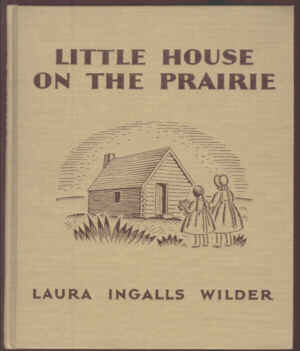
The true story of Laura Ingalls Wilder and her "little house on the prairie":

Pioneer Girl by Laura Ingalls Wilder review–gritty memoir dispels Little House myths

Full of theft, alcoholism and violence, the novelist’s unvarnished account of her childhood is a darker, more vicious affair

By Sarah Churchwell
For most of Laura’s childhood, she lived in close proximity to drunks, rapists, horse thieves, adulterers and more than one murderer, including perhaps a brush with a notorious family of serial killers.

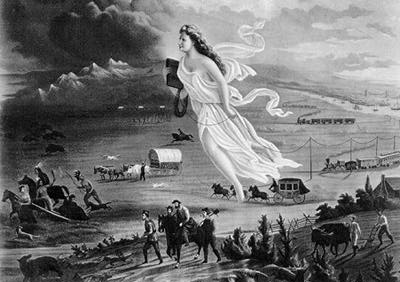
Nor was the Ingalls family’s progress a simple westward expansion, as the novels more or less report it: Wilder deliberately simplified their back-and-forth journeys across the midwest in order to create the impression of westward progress, an image in keeping with her theme of nation-building. In fact, the Ingallses retreated east more than once, while the self-styled “pioneers” were land-grabbing as fast as they could: manifest destiny was a giant get-rich-quick scheme. The family emerges as far more opportunistic, even on occasion unscrupulous, than the whitewashed novels would have us believe. Charles Ingalls knew that he was in Indian Territory illegally, while his wife’s brother Tom went to the Badlands on an ill-fated and illegal search for gold. The family snuck away from debts on at least one occasion, making their escape in the middle of the night. The fundamental drama in the novels comes not from conflicts within the family, but with the external forces of government, Indians and nature. Of the three, the last is the one we are most apt to sympathise with today; the attitude of the settlers to the Indians makes for uncomfortable reading (“Treaties or no treaties, the land belongs to folks that’ll farm it. That’s only common sense and justice,” one neighbour declares). It is an attitude that the Ingallses and their relatives clearly shared; many of their actions were in flagrant violation of treaties.

The most extensive difference between the two accounts is Wilder’s decision to excise an entire interlude in Iowa from the novels. The family’s retreat to the east undermined her triumphalist tale of westward progress, but their time in Iowa also featured some of the family’s grimmest experiences. They lived in a hotel adjacent to a saloon, which is hard to imagine the fictional Ma Ingalls permitting; the decision was a mark of their “financial desperation,” as the editor of Pioneer Girl notes. There were bullet holes in a wall, made by a drunken man shooting at his wife; another dragged his wife around by her long hair, carrying a lamp that was pouring kerosene; Charles Ingalls intervened to keep them all from being burned to death.
Comment:  For more on Little House on the Prairie, see Little House = Libertarian Fable and Little House Celebrates Land Theft.

October 27, 2013

Little House = libertarian fable

Little Libertarians on the prairie

Was Laura Ingalls Wilder’s beloved children’s series written as an anti-New Deal fable? The Wilder family papers suggest yes.

By Christine Woodside
From the publication of the first book in 1932, the series was immediately popular. And, at a time when President Franklin D. Roosevelt was introducing the major federal initiatives of the New Deal and Social Security as a way out of the Depression, the Little House books lulled children to sleep with the opposite message. The books placed self-reliance at the heart of the American myth: If the pioneers wanted a farm, they found one; if they needed food, they killed it or grew it; if they needed shelter, they built it.

Although Wilder and Lane hid their partnership, preferring to keep Wilder in the spotlight as the homegrown author and heroine, scholars of children’s literature have long known that two women, not one, produced the Little House books. But less well understood has been how exactly they reshaped Wilder’s original story, and why. Throughout the 1930s and early 1940s, as the Little House fans clamored for more, Wilder and Lane transformed the unpredictable hardships of the American frontier experience into a testament to the virtues of independence and courage. In Wilder’s original drafts, the family withstood the frontier with their jaws set. After Lane revised them, the Ingallses managed the land and made it theirs, without leaning on anybody.

A close examination of the Wilder family papers suggests that Wilder’s daughter did far more than transcribe her mother’s pioneer tales: She shaped them and turned them from recollections into American fables, changing details where necessary to suit her version of the story. And if those fables sound like a perfect expression of Libertarian ideas—maximum personal freedom and limited need for the government—that’s no accident. Lane, and to an extent her mother, were affronted by taxes, the New Deal, and what they saw as Americans’ growing reliance on Washington. Eventually, as Lane became increasingly antigovernment, she would pursue her politics more openly, writing a strident political treatise and playing an important if little-known role inspiring the movement that eventually coalesced into the Libertarian Party.
Comment:  The article doesn't say much about Indians, but they're the "elephant in the room." Pioneers like the Wilders didn't just "find" farms. They moved onto Indian land illegally; the government took the land and gave it to them illegally. Thus the stolen Indian land became the farms they "found."

As perhaps the biggest government handout in US history, it's the opposite of the libertarian fairy tale of self-reliance. The Wilders might've been homeless refugees if not for the the government's charity.

For more on the subject, see Little House Celebrates Land Theft and Wilder the Typical Conservative.


October 13, 2012

Little House celebrates land theft

“Little House on the Prairie”: Tea Party manifesto

The far right has adopted the beloved children's books as an instrument for teaching the virtues of "lived liberty"

By Caroline Fraser
The Little House books, eight novels published between 1932 and 1943, are Laura Ingalls Wilder’s tribute to the great plains and her homesteading family. “I realized that I had seen and lived it all,” she wrote later, “all the successive phases of the frontier […] a whole period of American history.” Written during the depression, when the author was in her sixties and seventies, these autobiographical narratives of enduring wildfire, drought, locusts, tornadoes, and blizzards have sold tens of millions of copies.

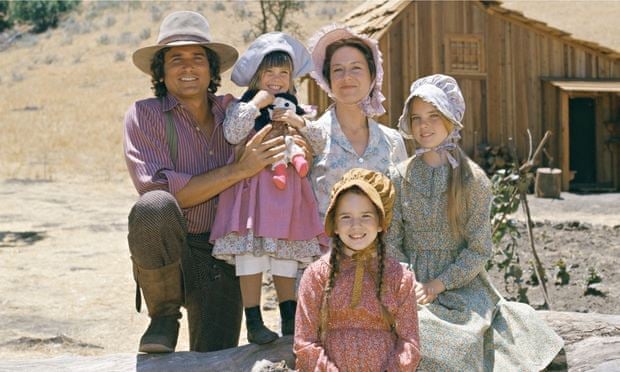
Beloved though they may be, however, the books are in danger of being politicized, having already acquired a certain conservative aura. Much of it emanated from the 1970s-era television caricature, “Little House on the Prairie,” which leached the books of their rich specificity while displaying an often shirtless Michael Landon, chest shaved, addressing concerns never mentioned in the originals, including drug addiction, rape, and menopause. Ronald Reagan reportedly called it his favorite television show (Landon campaigned for him), watching it in the White House while he and his wife dined off TV trays. In a 2008 profile of the Republican vice-presidential nominee, the New York Times cited one of Sarah Palin’s sisters remembering that her sibling read “a lot” as a child. The only specific title she could recall was Little House on the Prairie.

The impression has lately been reinforced by the books’ adoption into Tea Party circles as ideal teachers of “lived liberty.” That’s a phrase that occurs in “Lessons in Liberty from Laura Ingalls Wilder,” an essay in the summer issue of National Affairs, the reboot of Irving Kristol’s quarterly The Public Interest. Dedicated to helping Americans “rise a little more ably to the challenge of self-government,” National Affairs features the work of Charles Murray, George Will, and David Brooks, who hailed it as “the bloody crossroads where social science and public policy meet matters of morality, culture and virtue.”

Wilder is now detained at those crossroads by Meghan Clyne, managing editor of National Affairs, former speechwriter for Laura and George W. Bush and contributor to the New York Post (where she worried that an Obama nominee might introduce sharia law). Clyne calls for building an “historical-appreciation movement” around Wilder, who is to model self-reliance for millions of less worthy Americans currently receiving Medicare, Medicaid, Social Security, and “food stamps or other nutrition benefits.” Citing Jefferson, Clyne warns against “degeneracy” in the dependent, commending Frederick Jackson Turner’s 1893 paper for its depiction of “the conquest of this last unsettled frontier,” without remarking on the removal of natives that made it possible, paid for by the federal government and intended as the type of benefit she condemns. She takes no notice of the fact that Indians occupy a great deal of real estate in Little House on the Prairie, with its references to the 1862 “Minnesota massacre,” when Sioux warriors angered by treaty violations killed hundreds of soldiers and settlers and were then captured, tried, and hung in the largest mass execution in our history. Or that the little house in question was built illegally on an Osage reserve, which may explain why the Ingallses relinquished it.

Condemning “welfare-state redistribution,” Clyne embraces the 1862 Homestead Act, central to the later Little House books. Yet it was one of the biggest federal handouts in American history. Clyne praises it as policy that “encouraged habits of self-reliance rather than undermining them,” but it sought to give away a trillion acres of “free land,” as it was called, in 160-acre parcels to those over twenty-one if they could live on it and improve it over five years. Homesteading was no picnic, as Wilder makes clear, but everyone at the time knew it was a giveaway. Wilder remembers her father singing, “Uncle Sam is rich enough / To give us all a farm!” a popular ditty that hardly comports with Clyne’s contempt for “the crutch of government support.” The Homestead Act was not a particularly successful incubator of self-reliance, as only a fifth of the land went to small farmers, and less than half of all homesteaders managed to make the necessary improvements to keep it. The Act was also undermined by fraud and land speculation: Much of the property was acquired by railroads and large ranching interests.
Comment:  Cline's views are classic American myth-making. Celebrate land theft under the rubric of "pioneering." Ignore the Indians and our immoral acts against them. Relabel government handouts as "self-reliance."

In short, refashion America as a great white bastion of Euro-Christian triumphalism. Shout "USA is no. 1!" for people with fragile egos who can't handle the complex truth. Hold the hands of weak-kneed Americans so they won't bawl like babies.

For more on this conservative rewriting of history, see GOP America = Strivers vs. Parasites and America's "Bootstrap Theocracy." For more on Little House on the Prairie, see Wilder the Typical Conservative and Little House on the Reservation.

February 26, 2011

Three dubious literary "classics"

In The Education of Little Tree, a children's "classic," generic Cherokee Indians send their boy to a boarding school to be civilized. The book was considered an authentic Indian narrative until its author was revealed to be a white supremacist.

In Little House on the Prairie, another children's "classic," Indians are intimidating and unclean "savages." What most people don't know is that Charles Ingalls was squatting illegally on Osage Indian land and that his daughter the author was a staunch conservative.

Henry Wadsworth Longfellow's Hiawatha is the classic romantic Indian and probably the best-known fictional Indian before Tonto. People have adapted the epic poem into movies, plays, music, and other genres.

For literature that put this questionable literature to shame, see The Best Indian Books

April 19, 2010

Indians in Top 100 Children's Novels

Elizabeth Bird of the School Library Journal recently conducted a poll of the top 100 children's novels. Here are the results.

The top three are:

1) Charlotte's Web by E.B. White
2) A Wrinkle in Time by Madeleine L'Engle
3) Harry Potter and the Sorcerer's Stone by J.K. Rowling

I've read fewer than 20 books on this list, but the ones I've read probably belong there. These books include:

  • The Lion, the Witch and the Wardrobe by C.S. Lewis
  • Holes by Louis Sachar
  • Anne of Green Gables by L.M. Montgomery
  • The Phantom Tollbooth by Norton Juster
  • The Hobbit by J.R.R. Tolkien
  • Bridge to Terabithia by Katherine Paterson
  • Charlie and the Chocolate Factory by Roald Dahl
  • Hatchet by Gary Paulsen
  • Winnie-the-Pooh by A.A. Milne
  • The Wonderful Wizard of Oz by L. Frank Baum
  • Island of the Blue Dolphins by Scott O'Dell
  • The Borrowers by Mary Norton

    and the Harry Potter books. The only one I'd say doesn't belong there is the grossly overrated Alice in Wonderland.

    Of course, I'd put them in a different order. My top 5 probably would look like this:

    1) The Wonderful Wizard of Oz by L. Frank Baum
    2) Anne of Green Gables by L.M. Montgomery
    3) The Hobbit by J.R.R. Tolkien
    4) Holes by Louis Sachar
    5) Hatchet by Gary Paulsen

    The Native aspect

    Educator Debbie Reese reports that only one of the authors has any Native heritage. Wilson Rawls, who wrote Where the Red Fern Grows, said his mother was part Cherokee. He didn't claim to be Cherokee himself.

    Reese probably would like to see several Native authors on the list. That may be unrealistic. Since Natives make up only 1% of the US population, getting one of the 100 slots would be fair. Rawls and maybe one other Native author would fill the Native "quota."

    But as Reese goes on to note:Sherman Alexie, Joseph Bruchac, Louise Erdrich, Cynthia Leitich Smith, Richard Van Camp---none of the more successful Native writers are on the list. But overall, it does not lack for portrayals of American Indians.

    I say that in jest, of course, because most of those portrayals are in some way, stereotypical or biased. If you are a librarian, and you use this list to build your collection, you will not be providing your readers with a single worthy image of American Indians. A few of them are innocuous---like the Indian blanket in Charlotte's Web---but most are problematic. From "Honest Injun" to sitting "Indian style" to hunting Indians, there's a lot to say.
    According to Reese, 23 of the books mention Indians at least once. Perhaps eight of them have substantial Indian references, including the three by Laura Ingalls Wilder.

    Reese lists many of these references. I'd say more of them are benign than Reese did. An Indian quiver, the plant known as Indian paintbrush, children playing cowboys and Indians...I'd call these innocuous, not problematic.

    To be clear, I don't think kids should play cowboys and Indians, but it's a fact that they did and still do play it. I wouldn't put it in a book today, but in a book written 50 or 100 years ago, I don't consider it a problem. It's an accurate description of what children played then, not a conscious attempt to demonize Indians.

    It appears three of the books--Island of the Blue Dolphins, Walk Two Moons, and The Indian in the Cupboard--are about Indians. All of these are problematic. So are Little House on the Prairie and its sequels. And others on the list have clearly problematic references.

    Basically, there are no good books by or about Indians on the list. And few if any good books by or about other minorities, either. Whether the participants intended it or not, this is a white person's list of the best children's novels.

    For more on the subject, see Portrayals of American Indians in SLJ's 2010 "Top 100 Children's Novels"--compiled by Elizabeth Bird--PART ONE and The Best Indian Books.

  • November 18, 2008

    Smelly Indians in Little House

    Indigenizing Children’s Literature[T]he predominant characterization of Native peoples is of the primitive savage. The chapter titled “Indians in the House” exemplifies this viewpoint. In this chapter, two Indian men have come into the house while Pa is away. Laura, terrified and in hiding, is peering at them, and notices a bad smell. “Around their waists each of the Indians wore a leather thong and the furry skin of a small animal hung down in front. The fur was striped black and white, and now Laura knew what made that smell. The skins were fresh skunk skins”(Wilder, 1935/1971, p. 125). After they left the house, Laura said to Ma, “They smell awful” (p. 142) to which Ma replied “That was the skunk skins they wore” (p. 143). When Pa returned that evening, Ma told him they wanted her to make cornbread for them (which she did), and that they took his tobacco. Pa replied that she was right to do as they asked, and then he said, “Whew! What a smell” (p. 143). Ma told him the Indians wore fresh skunk skins, and “that was all they wore” (p. 144). Pa replied, “Must have been thick while they were here” (p. 144).

    As the text demonstrates, Laura, Ma, and Pa are all repulsed by the smell of skunk musk. The Indian men are not. The subtext is that these men are different from Laura and her family. Their sense of smell is not like theirs. In the natural world, animals know that skunks smell unbearably bad, and will avoid them, but apparently these two “Indians” do not. The image of Indian men wearing fresh skunk pelts is plausible only if the men aren’t really human; only if the reader thinks them to be ignorant or animalistic, and only if we believe that they do not know how to skin a skunk without puncturing the glands that hold the musk. With this episode, Wilder tells us these Indians are less-than-human and that they less-developed skills at trapping and preparing pelts than Pa does (in several places in the story, Pa is trapping animals and tanning hides). In short, she tells us, they are primitive.

    In this episode, Wilder’s (1935/1971) characterizations of Indians obscure their lives as members of civilized, self-governing societies. At that moment in history (1868), about 800 treaties had been negotiated between leaders of Native nations and representatives of the United States government.7 Treating with Native nations goes as far back as 1778. Two years after declaring their independence from England, the American government signed its first treaty with a tribal nation. President Washington negotiated the first treaty. Both parties to the treaty were militarily powerful and economically dependent on each other. Deloria (1984) writes that this treaty was significant “because it established an important precedent. Indian nations were to be dealt with as sovereign entities on an equal footing with the United States. Agreements were to be reached bilaterally, with each side given an opportunity to guest terms and provisions” (p. 101). This information presents Indian people in sharp contrast to the way that Wilder presents them. As diplomats, they were far from the primitive creatures Wilder portrays.
    Comment:  For more on the subject, see Little House on the Prairie.

    July 14, 2008

    Wilder the typical conservative

    An article on the book Little House, Long Shadow: Laura Ingalls Wilder's Impact on American Culture reports what the author learned about Wilder:She found, perhaps unsurprisingly, that Wilder's own staunch individualism had informed the tenor of the novels. "Distraught by New Deal policies that created an expanded role for government," Wilder had, in her books, expressly depicted government as "nothing but rules and bureaucracies destructive to the enterprising individual," sometimes manipulating the facts of her youth—on which the books are based—to achieve this effect. The Little House books instead champion the self-reliance, isolationism, and "buoyancy of spirit" Wilder felt had made America great.Debbie Reese summarizes how Wilder's vision applies to Indians:Little House and books like it that inaccurately portray American Indians as savages are formative in another way....They teach that there is such a thing as a savage other who is less than human, who must be dealt with for the security and safety of America. That ideology, well nurtured throughout the formative years, is what makes it possible for Americans to believe that there are savage others elsewhere, like in Iraq.(Excerpted from Debbie Reese's American Indians in Children's Literature, 7/7/08.)

    Comment:  Wilder's belief in self-reliance is a hypocritical crock. Her family sought a government handout in the form of land. Charles Ingalls didn't want to buy it fair and square; he wanted it free. And he didn't care if someone already owned it.

    In short, he was a typical Euro-American. He took what wasn't his while proclaiming his innocence and virtue. And his daughter rewrote history to make him the brave pioneer rather than the shiftless squatter.

    I'm not surprised to learn Wilder was a typical conservative. Her beliefs about America's greatness and the Indians' savagery go hand in hand. She shared the Euro-American vision of white Christians dominating the world--of Manifest Destiny. Her family's narrative--trying to claim "free" land on an Indian reservation--was a small but telling example of it.

    Demonizing the "other" is a necessary part of this vision. We've done it with Indians, Africans, immigrants, Asians, and Russians. Now we're doing it with Iraqis and other Muslims. We have to fabricate an evil ("The Indians or Iraqis are going to kill us!") to justify our illegal and immoral actions.

    For more on the subject, see America's Cultural Mindset.

    July 06, 2008

    Serial killers on the prairie

    In 1937 Laura Ingalls Wilder spoke about the mysterious Bender family near her "Little House on the Prairie":

    Selective Omissions, or, What Laura Ingalls Wilder left out of LITTLE HOUSEThere were Kate Bender and two men, her brothers, in the family and their tavern was the only place for travelers to stop on the road south from Independence. People disappeared on that road. Leaving Independence and going south they were never heard of again. It was thought they were killed by Indians but no bodies were ever found.Then she revealed the Benders' secret:In the cellar underneath was the body of a man whose head had been crushed by the hammer. It appeared that he had been seated at the table back to the curtain and had been struck from behind it. A grave was partly dug in the garden with a shovel close by. The posse searched the garden and dug up human bones and bodies. One body was that of a little girl who had been buried alive with her murdered parents.Educator Debbie Reese puts Wilder's story in context:In her book, she presents Indians as frightening and menacing. Through Mrs. Scott, she tells us about a massacre. And three times, her characters say "the only good Indian is a dead Indian." It is "fit" for children to read about "wild Indians" but not serial killers who are white, nor is it "fit" for children to read that Pa killed someone in order to protect his family from harm.(Excerpted from Debbie Reese's American Indians in Children's Literature, 7/3/08.)

    Comment:  For more on the subject, see The Best Indian Books.

    Little House on the reservation

    A commentator on Selective Omissions, or, What Laura Ingalls Wilder left out of LITTLE HOUSE adds an interesting note on the "Little House's" location:Yes, the Ingalls family was definitely illegally squatting on the Osage Diminished Reserve--Laura pretty much comes right out and says so in Little House on the Prairie. Pa says, "If some blasted politicians in Washington hadn’t sent out word it would be all right to settle here, I’d never have been three miles over the line into Indian Territory."

    Charles Ingalls never filed on a homestead claim in Kansas because the land wasn't yet open to settlers; it was still Osage land. However, Charles and the other settlers mentioned in the book had heard that the land would soon be open, and they knew it would go fast. The best way to be sure of getting a good piece of land was to get there before it was open for settling, and that way as soon as it was available, they could file their claim--first come, first served, so to speak.
    (Excerpted from Debbie Reese's American Indians in Children's Literature, 7/3/08.)

    Comment:  And people wonder why the Indians fought back against white settlers? Even "innocent families" like the Wilders were illegally trespassing on Indian land.

    White folks have rarely hesitated to evict squatters and trespassers. Why shouldn't Indians have had the same freedom to protect their property?

    For more on the subject, see Little House on the Osage Prairie and Little House on the Prairie.

    March 24, 2008

    American mom vs. Indian educator

    Letter to "American MOM"

    Mom:By not allowing Indians in literature (as your comment in Little House on the Prairie), are you trying to erase that from our history?Educator:In my critique of Little House on the Prairie, I seek--not to erase Indians from history--but to rid bookshelves of incorrect images of American Indians. It is factually wrong for you to allow your children to learn that American Indians were primitive, or barbarians, or uncivilized, or simple-minded. That is precisely the way they are presented in the Little House book.(Excerpted from Debbie Reese's American Indians in Children's Literature, 3/17/08.)

    Comment:  Educator wins the debate by a knockout.