Showing posts with label Thanksgiving. Show all posts

March 23, 2016

"Indians bring firewater" in All in the Family

In The Little Atheist episode of All in the Family (airdate: 11/24/75), neighbor Irene Lorenzo attends Thanksgiving at Mike and Gloria's house. She enters with a bottle of wine, saying: How! Indians spend Thanksgiving with Pilgrims, bring firewater.She's wearing a full-length dress that looks like it could be Navajo. Also necklaces of turquoise, silver, and other beads. You can see the bit at the 14:17 mark:


It seems like Irene has some knowledge of Indians and is trying to honor them. She's pretty clearly doing an Indian thing. But the fake "How!" greeting and the "firewater" crack...ugh. Stereotype alert!

For more on the subject, see Archie Bunker on Indians.

November 27, 2015

Criticism of Saints & Strangers

Saints & Strangers, the two-night National Geographic movie that aired last weekend, got a decent amount of publicity. Many noted how it presented the Native side of the "first Thanksgiving." But not everyone was happy with how it portrayed Indians.

How ‘Saints & Strangers’ Got It Wrong: A Wampanoag Primer

By Alysa LandryLess than 60 seconds into the film, a band of whooping Natives descends on the pilgrims and the two groups exchange fire—bullets from one side and arrows from the other. The scene exhibits many of what the four Wampanoag tribal communities are calling “cultural, historical and linguistic inaccuracies” in the film.

“It’s completely irresponsible telling of history,” said Linda Coombs, director of the Aquinnah Wampanoag Cultural Center. “This is one of the most well-documented parts of history, but it is distorted for the purposes of sensationalism.”
And:At another point in the film, the Wampanoag deliver to colonists the bloodied clothes of a child who had been lost, intimating that they had killed the boy because pilgrims had stolen their corn. That is grossly untrue, Coombs said.

“That’s an outright lie,” she said. “The Wampanoag took care of the lost child. When they returned him, he was happy and healthy and probably bedecked with beads. There’s nothing in history about knocking the kid on the head and bringing the bloody shirt to the colonists.”
And:[S]traying from the Wampanoag language proved to be Nat Geo’s biggest film gaffe, Coombs said.

“Abenaki is not Wampanoag,” she said. “This is the stereotype of the interchangeable Indian. If you can’t find an Indian who does what you want, keep going until you find one who will. It doesn’t matter. Indians are generic.”
Positive views

Perhaps not surprisingly, the Native actors defended the production.

“The Experience Was Incredible!” Kalani Queypo on NatGeo’s Saints & Strangers

By Vincent SchillingThere has been some criticisms of the film, but what do you think people are neglecting to notice in the face of making progress for Native actors?

Queypo
: The history of the portrayals of Native people in cinema is terrible, there have been gross misrepresentations, often times romanticized and fictionalized caricatures, that have been perpetuated and accepted as truth by the mass public. But more and more, native filmmakers are coming up and telling their stories. Even non-native filmmakers are rising to the challenge and making efforts to explore Native characters and storylines with truth and integrity. That is progress.

Having strong Native actors who are bringing rich portrayals to their roles is progress. Seeing more Native language being utilized in film is progress. Progress is always happening. It may seem like it is never enough, but portrayals of Native people in film have advanced.
“It Was Once in a Lifetime” Tatanka Means on NatGeo’s Saints & Strangers

By Vincent SchillingThere has been some criticisms of the film, but what do you think people are neglecting to notice in the face of making progress for Native actors?

Means
: This story has never been told on screen before. It is a hard story to tell. It is a sensitive subject matter and time in our history. I don't think any film based on our history will ever be as perfect as we would like unless tribal nations write and produce it ourselves. I believe the world deserves to know more of the truth of what really happened. This movie is exposing some of those truths in a more gritty and less fabricated way than ever before on screen.
“It Was a Gift” Native Actor Raoul Trujillo on NatGeo’s Saints & Strangers

By Vincent SchillingThere have been a lot of positive comments on social media--how does it feel to represent on such a large scale?

Trujillo
: It's very powerful and something that makes you feel proud to represent culture and language of other people's but also to bring a humanity and multi dimensionality to historic real human beings as iconic as they are to us now.
‘Saints & Strangers’ Review: Close Enough is Great

Comment:  For more on the subject, see The Wampanoag Side of Thanksgiving.

November 26, 2015

Indian costumes at annual Turkey Trot

Native American Activists Plan to Protest Redface Runners at Long Beach Turkey Trot

By Gabriel San RomanEvery Thanksgiving, runners head to Long Beach's annual Turkey Trot looking to put a dent in the calorie bombs sure to be gobbled up later in the day. They come by the thousands donning silly turkey hats with others wearing spoon and fork costumes. Too cute! Others, sadly, sport feather headdresses, sexy PocaHotties loincloths and war paint in a nauseating display of redface.

Native American activists are planning to protest this year's Turkey Trot, though, to put the brakes on redface runners. "Conquering our image is another form of colonization that began with the theft of our lands," says protest organizer Tahesha K. Christensen. "Redfacing is racist and it is no different than blackface, or making fun of Jews, Asians, or any other cultural group."

Christensen, a Native American of the Omaha Tribe, originally just wanted to find a charitable 5K around town to jog in when she heard about the Turkey Trot. Anna Christensen, Tahesha's mom and a Native activist in her own right, cautioned about the rampant redface she'd see. The would-be Turkey Trotter checked out the event's webpage and was mortified at all the photos of people playing Indian.

"It made me very angry and it really was painful to see all of those people so disrespectful to our Native cultures," she says. Christensen made polite pleas on the Turkey Trot's promotional page only to get blocked from commenting further.


And at the event itself:

Protesters want no Native American costumes at Long Beach Turkey Trot

By Andrew EdwardsA small group of protestors gathered near the beachfront site of the Long Beach Turkey Trot and called for ban against Native American-themed costumes at the event.

The protestors consider the wearing of such costumes disrespectful to Native Americans and their cultures.

“I got to speak with the organizer and I got to ask him if he would kindly ban the costumes, and he said he’s not in a position to do that just yet, but he understands our concerns,” said Gray Wolf, a protester who said he’s active with the American Indian Movement. “I think we made a little headway.”

Such costumes were a rare sight at Thursday’s event. A reporter observed about five people among an estimated 4,000 attendees who donned feathered headware that somewhat resembled ceremonial Native American attire. Many more people wore hats resembling Thanksgiving turkeys.
Comment:  The above image shows what past Turkey Trots were like. In fact, this photo may have inspired activists to launch a protest on Facebook and in person.

November 23, 2015

Refugee cartoon for Thanksgiving

Many people have posted Native-themed cartoons about immigration and refugees--especially around Thanksgiving. This one caught my eye because it's sweet and simple.


For more on terrorism, see Conservative Christians Aren't Good Samaritans and Let's Deport White Men.

December 10, 2014

"Cracksgiving" party at Bowdoin College

Bowdoin College athletes to be disciplined for dressing as Native Americans at ‘Cracksgiving’ party

By Beth BroganFourteen members of the Bowdoin College men’s lacrosse team will be disciplined for dressing up as Native Americans at a November party known as “Cracksgiving” held in an off-campus house known as “Crack House” rented by members of the team.

As first reported in The Bowdoin Orient, a student newspaper, and confirmed Wednesday by college spokesman Scott Hood, Dean of Student Affairs Tim Foster sent a campus-wide email Tuesday evening to inform the college community that Bowdoin will take disciplinary action against the students. However, Hood said no students will be expelled as a result of the incident.

In the email, printed in its entirety by the college newspaper and confirmed by Hood, Foster wrote that just prior to Thanksgiving, some members of the men’s lacrosse team who live in a residence known on campus as “Crack House” on Harpswell Road hosted “Cracksgiving,” and students were encouraged to dress up as pilgrims and Native Americans.

According to Foster, the invitation urged students to attend “wearing your finest Thanksgiving attire.”

Fourteen of the team’s approximately 50 members—some of them residents of the house—dressed as Native Americans, he said, “even after some of the team’s other members actively tried to talk them out of it.”

“Especially disturbing is that the hosts of this event knew—or should have known—that their actions would offend; yet they went ahead with their plans nonetheless,” Foster wrote.

November 27, 2014

45th National Day of Mourning

National Day of Mourning Reflects on Thanksgiving’s Horrific, Bloody History

By Matt JuulWhile families across the country indulge on their Thanksgiving Day feasts, hundreds will gather at Cole’s Hill in Plymouth on Thursday to commemorate a different tradition: the National Day of Mourning.

The event, held annually on Thanksgiving, is meant to honor Native American ancestors who died due to the European invasion, and to expose the bloody history behind the November holiday.

Now in its 45th year, the National Day of Mourning’s organizers hope to shine a light on modern issues facing Native Americans today, as well as to bring more awareness to the real, horrific story behind Thanksgiving.

“I think there seems to be this myth in this country propagated about Thanksgiving that, ‘Oh, you know, the Pilgrims and the Indians all sat down to have a meal together and they were good friends and everybody lived happily ever after,” says Mahtowin Munro, co-leader of the United American Indians of New England, which organizes the annual event. “It’s really important for us to stand up and talk about what the reality was and to teach others about that reality.”
This Thanksgiving, Let’s Talk About Genocide Rather Than Pilgrims and ‘Friendly Indians’

By Sonali KolhatkarFew people have put that context of violence on paper as eloquently as Roxanne Dunbar-Ortiz, an American Indian activist and academic whose latest book, “An Indigenous Peoples’ History of the United States,” is now in its fifth printing in less than two months since it was released. In it, Dunbar-Ortiz teases out the complex web of intersecting American policies toward Native peoples that include land theft, dispossession, extermination, broken pledges, Christian missionaries and boarding schools, but also self-determination, resistance and survival. Dunbar-Ortiz refutes the Thanksgiving ideal, writing that “the idea of the gift-giving Indian helping to establish and enrich the development of the U.S. is an insidious smoke screen.” Rather than her book being one that is told from a collective indigenous people’s perspective, she writes, “This is a history of the United States.”

American Indians are not simply a footnote in our collective origin story. They are here because they have survived genocide. Today there are nearly 3 million American Indians, comprising more than 500 federally recognized indigenous communities and nations. In the late 1800s, after centuries of extermination, there were fewer than 1 million indigenous people left who had descended from 15 million inhabitants of the land that we now call the United States of America. In a Nov. 5 interview on “Uprising,” Dunbar-Ortiz told me that “the Wounded Knee massacre of 1890 marks what people in the U.S. call ‘the end of the trail’—the last Indian. There was a [real] genocide and then a ‘narrative genocide’ in history.” It is this narrative genocide that Dunbar-Ortiz attempts to undermine, because, as she writes in her book, “it was crucial to make the reality and significance of Indigenous Peoples’ survival clear.”

To understand the magnitude of the genocide, it is instructive to lay out the pre-colonial sophistication of indigenous societies in the Americas. Not only were their agricultural systems highly developed to coexist with natural systems, they even invented methods of mass food storage, and charted trails within and between territories, many of which form the basis of the modern freeway system. Additionally, American Indians “were very healthy [and] lived long lives,” said Dunbar-Ortiz, “partly supported by excellent hygiene, which the Europeans always noted with some suspicion.” Many American Indian forms of self-government were matrilineal, which, explained Dunbar-Ortiz, was not simply “the opposite of patriarchy”; rather, it was a democratic form of government. In fact, “women were in charge of the food supply and the distribution of food.” There was also a rich and vibrant system of trade. These facts about pre-colonial Native American history “[don’t] make it out of the technical and archaeological journals,” she lamented.

The arrival of the pilgrims, which is celebrated today as part of this nation’s birth story, represented the beginning of the end of an indigenous way of life. Foremost in the project of extermination was the land grab, which is rooted in notions of “manifest destiny,” a sense of entitlement of land by Anglo settlers that was free for the taking. But that land was not free—it was inhabited for generations by indigenous people who had a very different approach to land ownership from the settlers. Dunbar-Ortiz expanded on that difference, saying, ” The United States when it was founded created this whole new idea of ‘parcels of land’ ... making parcels that were commodities for sale, real estate.” It promoted the notion of land as “private property,” which had never before existed on the continent.

May 17, 2014

Thanksgiving costumes in Castle

The Good, the Bad & the Baby episode of Castle (airdate: 11/25/13) had a Thanksgiving theme. A reviewer describes the relevant parts:

‘Castle’ season 6, episode 10 ‘The Good, the Bad & the Baby’ recap: Baby on boardThe opening sequence features Kate and Rick discussing Thanksgiving. Rick tells Kate that they all wear costumes for Thanksgiving. Kate is less than enthusiastic about the idea but before they could discuss further, Kate gets a phone call for a murder.And at the end:Rick and Kate are setting up for Thanksgiving dinner, and Kate comes out wearing her Pocahontas costume. Interestingly, no one else is wearing a costume. Rick confesses that he was joking about the costumes, and Kate said she wasn’t sure so she got him a costume to wear as well. Kate definitely gets one up on Rick in this situation.

Comment:  To be specific, Beckett got Castle a Pilgrim costume.

These bits are lame for several reasons:

1) Beckett doesn't ask Castle if he's serious? She doesn't double-check with Castle's mother or daughter? She doesn't ask if she's supposed to be a Pilgrim or an Indian?

Really? Ridiculous. Her lack of common sense sets up the predictable and unworthy "joke" at the end.

2) Castle or his writers should know that neither Pocahontas nor a generic Pocahottie was part of the first Thanksgiving. According to reports, Chief Massasoit and 90 warriors showed up at the feast uninvited. We don't know for sure, but it's likely that no Wampanoag women were present. And certainly not young maidens in buckskin dresses.

3) Castle or his writers should know that dressing up as Indians is frowned upon. Sure, he was supposedly joking, but it's not something to joke about.

Would he have jokingly suggested Beckett dress as a black woman--perhaps a mammy from slave times? Dressing as a false and stereotypical Native woman is the same idea. And it's wrong for the same reasons.

The only way Castle could "joke" about this is if he immediately let the others in on the joke. Like, "Just kidding. I wouldn't ask you to dress as an Indian maiden for real because that would involve the offensive practice of redface." But that didn't happen.

Castle has been one of the better network TV shows in terms of Native references. But this episode was a fail.

For more on Castle, see Bigfoot in Castle and Counting Coup in Castle.

April 01, 2014

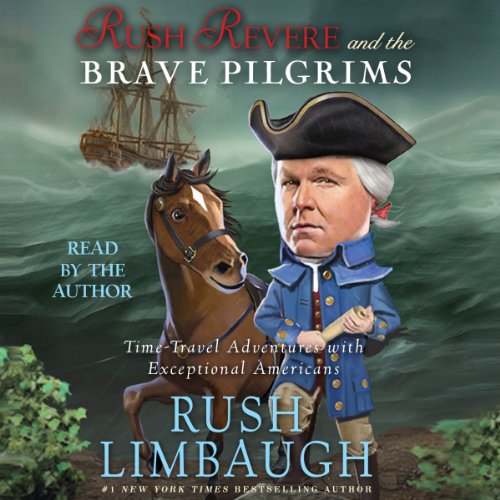
Rush Revere and the Brave Pilgrims

Rush Limbaugh's RUSH REVERE AND THE BRAVE PILGRIMS

By Debbie ReeseRush Limbaugh's book, Rush Revere and the Brave Pilgrims is a best seller. That status means he is on the Children's Book Council's (CBC) list of contenders for Author of the Year. People in children's literature were shocked when they saw his name on the list. Some suggested that the best selling status was not legitimate. The CBC responded with an open letter explaining why Limbaugh is on the list:The Author of the Year and Illustrator of the Year finalists are determined solely based on titles’ performances on the bestseller lists--all titles in those categories are listed as a result of this protocol. Some of you have voiced concerns over the selection of finalists from bestseller lists, which you feel are potentially-manipulable indications of the success of a title. We can take this into consideration going forward, but cannot change our procedure for selecting finalists after the fact.As for the book itself:Of interest to me is the character, Freedom, in Limbaugh's book. Mr. Revere loves her name. She has long black hair. One day she wears a blue feather, the next day she wears a yellow one. Other students don't like her, but Mr. Revere is intrigued by her. She has dark eyes and a determined stare. She speaks "from somewhere deep within." From her grandfather, she learned how to track animals. She and Mr. Revere's horse, Liberty, can read each other's minds. Liberty can also talk, which I gather from reviews, is what children like about the book. Freedom explains that he must be a spirit animal, that "there is an Indian legend about animals that can talk to humans." She wondered if Mr. Revere was "a great shaman" when she saw Revere and Liberty enter the time travel portal.

What is behind Limbaugh's creation of a Native American girl named Freedom?

Later in the story, we learn that her mother (we never learn of a specific tribe for Freedom or her mother) named her Freedom because she was born on the fourth of July. Let's think about that for a minute. There are obvious factual errors in the book related to Limbaugh's presentation of slavery. With his character, Freedom, we see how fiction can be manipulated in the service of a particular ideology. Limbaugh is creating a modern day Native girl as someone who holds the same views as he does. Packed into, and around, his Native character are many stereotypes of Native peoples. Does he cast her in that way so that it isn't only White people who view history as he does?

I think so. He casts Squanto and Samoset that way, too.
Some reviews from Amazon.com:This monstrosity of a book is nothing but Rush Limbaugh portraying himself and his talking horse, Liberty, as American heroes in this sniveling, biased, and corny book that purposely uses simple language so "Rush Revere" can do his best to create his own army of Super-Republicans out of easily influential 4th-7th Graders, and to train them to his personal beliefs.

If you want to allow your kids to form their own opinions with truthful facts and accurate depictions of history, then do not buy this book. It is appalling this could be published as a legitimate book. Talk about propaganda! This book is like training a child to be a robot and have no thoughts of their own. Please save the next generation from the brand of manipulative, deceitful (even hateful) propaganda Rush Limbaugh sells.

The first and last book by Limbaugh that I will read. He neglects to share what terrible things were done to the Native Americans. There land was stolen from them, there population was diminished by disease and being slaughtered. They were robbed of their lands and freedom. I guess that point is not important.

Historically, it was inaccurate, which really bothers me, as the premise of the book is to bring history to life. It is also full of jabs towards a certain political party that are completely unnecessary and have nothing to do with the story in the book. I am really disappointed with this book. Definitely not one I will be sharing with my children.

Yes, we certainly want a man who flunked out of college to teach history to American children. Why bother hiring qualified teachers in schools?
Comment:  For more on the subject, see Limbaugh Lies About Thanksgiving and Limbaugh: Indians = "Redskins," "Clowns."

January 24, 2014

"Thanks-Mas-Ween" in Cougar Town

In an episode of Cougar Town, titled It'll All Work Out (airdate: 5/15/12), Jules wants to hold Thanksgiving in the spring, when her friends and family are available.

To "celebrate," her friend Laurie wears a Halloween/Thanksgiving/Christmas outfit because she screwed up the previous holiday season. As Laurie put it:So today I'm going to represent all three holidays that I missed! Happy Thanks-Mas-Ween, everyone!Her outfit consists of a headband-like cord around her head, braids with feathers hanging from them, a short fringed vest, and a bone breastplate--all worn over a sexy Santa dress. You can see in the image below.
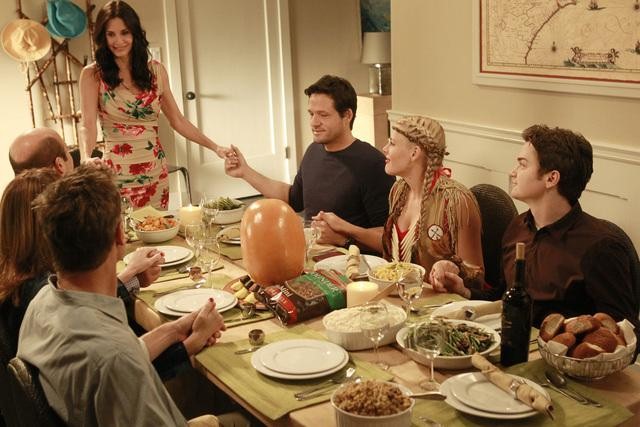


As is often the case, this bit has an uncertain effect. On the one hand, the Laurie character is dumb, and another character tells her the costume is crazy. Viewers could conclude that dressing like a faux Indian is a bad thing to do.

On the other hand, she wears the outfit for the rest of the show. And no one explicitly the costume is wrong--that it's racist or it stereotypes Indians. Viewers could conclude that if you want to be wacky and unconventional, there's nothing wrong with pretending to be an Indian.

That's the kind of mixed message a TV show shouldn't present. A straightforward message is much better. For instance, "That costume is racist, Laurie. I'm offended, so please change it."
December 13, 2013

Social Cycling's "Pilgrims and Indians" ride

UPDATED: Chain Reaction

Social Cycling Austin debuts 'Pilgrims and Indians' theme

By Brandon Watson
Naturally, when Comanche documentary filmmaker Julianna Brannum voiced concern about Social Cycling Austin's November theme for their monthly Thursday Night Social Ride, the reception wasn't exactly warm. Within minutes, the Facebook comments devolved into a pile on against Ms. Brannum.

The theme, "Indians and Pilgrims," is helpfully annotated with the suggestion to "bring blankets." In the occasionally brisk Austin autumn, that may be taken as a helpful reminder to be prepared for colder weather. Or to the more historically inclined, it could be taken as a reference to the ignoble Siege on Fort Pitt, where British soldiers attempted to drive back an American Indian rebellion with smallpox infected blankets.

Stop being so sensitive, folks. It's only genocide.
Apparently a huge flame war ensued. This was the eventual outcome:Notably, this isn't the first time Social Cycling Austin landed on a sketchy theme. Their April 2010 theme was "The Haaaay Ride," "hilariously" cashing in on Brokeback Mountain.

Still, it does not look like Brannum's objections will have any sway. When asked for comment, one of the organizers, Keith Byrd, dismissed the controversy.

"Not much to say. We've done this bike ride on Thanksgiving for years now. It's a small bike ride with friends that is about fellowship and pretty much looks like what goes on in practically every elementary school thanksgiving pageant across the country, but with bikes. I'm surprised this is news."

UPDATE: Social Cycling Austin has changed the theme of the November ride.
Comment:  Considering this item was posted December 13, I'm not sure why they're talking about a Thanksgiving ride as if it's upcoming.

To make the obvious point yet again, you wouldn't hold an event with the theme "_______ and Blacks" or "_______ and Latinos." Most people understand that you're not supposed to dress up as members of another race.

Then why do people think it's okay to dress up as Indians? Indians are a large group of diverse peoples and cultures, not a stereotypical Halloween costume.

For more on "Pilgrims and Indians" events, see Thanksgiving Pub Crawls in Indian Costumes and "Colonial Bros and Nava-Hos" Frat Party.

November 29, 2013

Mastodon's stereotypical Thankgiving t-shirt

An Open Letter to Mastodon regarding your Thanksgiving t-shirts [[Updated With Response]]

By EricaDear Troy, Brent, Bill and Brann,

A year ago, I finally had the chance to see Mastodon play with Ghost and Opeth in Saskatoon. I was front row center, pressed against the gates for the first two sets. It was easily one of the best lineups I’ve seen, and an amazing night–made even cooler when Bill tossed me his pick.

Which is why my heart sank when I saw the new Mastodon “Thanksgiving” shirts.

Metal and hard rock music are still viewed as the domain of straight white men–I’ll assume you don’t need proof of this beyond the sausagefest crowd at an average metal show. But there’s plenty of us who don’t fit that category and still want to feel at home in your music. This shirt does the opposite of that for me as an Indigenous woman.

I want to believe that the shirt was designed with the intent of trying to disrupt the lie of American Thanksgiving; a holiday based on the story of Pilgrims and Indians coming together and sharing a nice meal, when in reality what occurred was genocide. And of course, a critical element of “conquering” Indigenous people used in the United States and Canada is the rape and enslavement of Native women.

I want to believe that you knew all of that when you approved this shirt.

But there are better ways to make political statements than printing t-shirts with disturbing imagery that reinforces racist myths rather than challenging them. Indigenous women are not (and never have been) subservient, silent, compliant, helpless on our knees, always ready and willing in buckskin bikinis–but that is how we are viewed, and this image contributes to an already bursting repository of that crap.

If the band’s/the t-shirt artist’s intention was to challenge historical injustices, the reaction that is already coming from the Native American community should be an indicator that it was misguided.

There is nothing subversive or edgy about a scantily clad Native American woman on her knees serving a white man who is pointing a gun in her face.


Mastodon responds to critics

Mastodon Say Their Thanksgiving T-Shirt Is Not Racist

By Scott LapatineAtlanta sludge-metal outfit Mastodon have some new merch for sale, including a Thanksgiving t-shirt that some are claiming is racist.

The tee highlights the atrocities of American colonialism by depicting a pilgrim holding a musket to the head of a scantily clad Native American woman. As Pitchfork points out, Mastodon have responded to criticism with this Facebook post:Regarding our thanks giving shirt, whether you choose to believe or not, the American Indians were massacred by the white settlers who became the Americans we are today.

this shirt represents this atrocity and celebrating in the face of this atrocity is chilling.

we may have a sick sense of humor, but we are far from being “Racist” as some of you who might not get it are calling us.
Mastodon Defend ‘Thanksgiving’ T-Shirt From Racism Allegations

Critics respond to Mastodon

From the comments on the second posting:StephanieSays
Scantily clad Native woman on her knees with a gun pointed to her face? Yeah, not racist at all. Looks like the bullshit costumes ignorant white women wear on Halloween or to music festivals… and I want to give the band the benefit of the doubt and say that was part of the satire, but then they posted their response to the criticism completely not understanding why people were offended to begin with, trying to turn any backlash to the shirt as white people being upset that the band was ruining their idea of Thanksgiving.

And even if it WAS part of the satire, it’s really just another image furthering the fetishization of Native women. It’s not challenging stereotypes at all. Native American women are sexually assaulted and raped at higher rates than any other group in the US, and mostly by white men.

Regardless of their intent, they are garnering a ton of publicity and are currently sold out of the shirt. Using a genocide as a marketing tool is gross.

Today I learned that this band sells their own autographs on Ebay, which is fucking hilarious. Good on ya, dudes.

Toby Vanlandingham
Regardless of the intent, since a huge number of real native Americans are outraged over the imagery on the shirt, and the fact that it can also be worn proudly by non-native men who rape native women as a “badge” if you will, the shirt is an epic fail. Thank you Mastodon for trying to bring light to the horrible treatment that us native American’s have received since first contact, but if this is the way you are going to go about bringing us into the light, I think I can speak for the majority and say we will just go it alone. Again thanks, and if you would like to try again with some real native input, there are many knowledgeable natives who would be happy to help prevent another tragedy like this shirt.
Fans prove racist message

Stop Helping! Band Angers Natives With Shirt; Insists It's Pro-NativeKudos to Mastodon for forging new territory in the proliferation of racist and sexist imagery.

We've seen offensive t-shirts that make light of Native suffering and depictions of sexualized Indian maidens. But the hugely popular metal band has combined the two in a Thanksgiving themed item that it has defended as an image that will raise consciousness to the Native side of the Thanksgiving myth.
And:Mastodon addressed the controversy on its own Facebook page--well, sort of. The band's statement defends the shirt as a challenge to the Thanksgiving story--which didn't seem to have upset too many people--while ignoring the concerns raised by Natives about the choice of imagery.And:Following Mastodon's response, Erica updated her original post with some choice comments from Mastodon fans:

“All I know is that I’m thankful for smallpox blankets lol”

"Fuck em, they all just drunks anyways"

“No the Indians gave us the land… And now they want it back… Indian givers… Who cares it’s a shirt u don’t like the shirt, use it for a diaper u cry ass cry babies”

"I’m sorry some of my ancestors were smarter, more industrious and slightly more ruthless than the peoples they found when they got here."

"Grow up and quit be bitches. If the Indians wanted to land, they should of fought harder. Fuck em"

"Rock and roll mother fuckers, man the fuck up! Dude has a gun pointing it a hot Indian with big tits!"
Comment:  Erica and the Natives win this debate by a knockout. With their comments, Mastodon fans demonstrate that they didn't come close to understanding the band's message.

Not only did they like the sexy "Pocahottie," but they seem to have absorbed the notion of Indians as inferiors. Perhaps because the Native woman was scantily clad and kneeling with a gun to her head, which makes her look inferior...duh.

One obvious way to convey the alleged message would be to have a well-dressed man, perhaps a Wampanoag sachem, offering a turkey to the Pilgrim. But without an Indian woman as a sex object, that presumably wouldn't have sold as well.

We don't know if Mastodon thought about this issue, but they--as well as their fans--failed to understand the protesters' point. It's not about the shirt's anti-Thanksgiving message, it's about its anti-woman message. One has to be as dumb as a mastodon not to get that.

In short, this shirt is a colossal fail.

For more fashion fails, see "Dreamcatcher and Skull" Clothing Line, Vanity Fair's "Favorite" Indian Costume, and Natives Criticize "Inukt" Fashion Line.

November 28, 2013

The #1 Thanksgiving myth

The no. 1 Thanksgiving myth may be that the Pilgrims and Indians were "besties," as the first group of postings notes:

First Thanksgiving: Forget what you learned in school

By Cindy Yurth[T]he fact is that the great East Coast tribes at that time--the Pequot, Narragansett and Wampanoag--were in a constant joust for supremacy, Hopkins said. If the Pilgrims thought they had left in their past a land of interlocking empires and scheming aristocracy, they were mistaken.

Their arrival was not met by a band of happy-go-lucky savages eager to share their wealth with the starving newcomers. The tribes were wondering how the palefaces were going to fit into the power structure, and whether they should befriend them in the hopes of gaining new allies, or dispatch them on the spot to preserve the status quo.

"Massasoit wanted to make friends with the Pilgrims so he could get their help against the Narragansetts," Hopkins explained. "It worked."

Although Squanto, a Wampanoag who spoke English, had taught the Pilgrims what to plant in the New World, the two races were not quite on friendly terms by the time of that first harvest.

"What most history books don't tell you is that the Pilgrims limited the number of Indians who could attend that first Thanksgiving," Hopkins said. "They made sure to seat a white guy on each side of each Wampanoag warrior, just in case something happened."
Wampanoag Historian on Surviving Almost 400 Years of Thanksgivings

By Gale Courey ToensingWhat do you think is the most egregious misunderstanding about Thanksgiving?

Probably that it’s perceived that we welcomed them. Yeah, they think we were just standing there waiting for them and welcoming [them] and one guy handed them the turkey and another guy handed them the carving knife and they all went to dinner—it’s just ridiculous! What really happened was there was no contact with them for six months. But we were watching them and seeing what they were doing. And it was Samoset who was from Maine and was down visiting who made the first contact—I always figured they sent the guy from out of town to do it! But then there was a feasting event the next fall that’s been interpreted as the first Thanksgiving. But it wasn’t even dubbed that till the 19th century.
6 Thanksgiving Myths, Share Them With Someone You Know

By Vincent SchillingIn 1621, when the Pilgrims were celebrating a successful harvest, they were shooting guns and cannons into the air. The Wampanoag chief and 90 warriors made their way to the settlement in full warrior mode—in response to the gunfire. As the Huffington Post’s Richard Schiffman puts it, “It remains an open question, however, whether the Wampanoag were actually invited, or if they crashed the party.”

The Pilgrims were most likely nervous—the Wampanoag outnumbered the Pilgrims two to one, but it certainly wasn’t the happy picture put forth in many history books. According to Mashpee Wampanoag Tribal Historic Preservation Officer Ramona Peters, “It was Abraham Lincoln who used the theme of Pilgrims and Indians eating happily together. He was trying to calm things down during the Civil War when people were divided. It was like a nice unity story.”


Why Falsify Thanksgiving?

Why do we celebrate a happy-go-lucky feast between Pilgrim and Indian "besties"? Like Indian mascots and other stereotypical depictions, it obscures America's history of crimes against Indians.

Thanksgiving is for sociopaths

I don't have anything against turkey. But I can't abide a holiday that denies its genocidal historical context

By Robert Jensen
“I don’t hate Thanksgiving—I just think it’s appropriate to critique a celebration that obscures the reality of the European conquest of the Americas.”

That description is accurate, at one level—my rejection of Thanksgiving is more intellectual than emotional, a political decision to reject that distortion of history. Whatever the actual details of the 1621 celebration involving Pilgrims and Wampanoag Indians (and there is ongoing debate about various factual claims), Thanksgiving is one way the dominant culture minimizes or denies the larger historical context of Europeans’ genocidal campaign against indigenous people to acquire the land base of the United States. Without that genocide, there is no United States. For the victors’ descendants to take a day off to give thanks without acknowledging that seems, well, just a bit sociopathic.
Native Appropriation Month

By Ruth HopkinsIn November, schools throughout America encourage children to dress up as pilgrims and Indians to tell the myth of the first Thanksgiving. Educators, you have no excuse. Real history is at your fingertips. There’s no need to regurgitate the white washed story of Thanksgiving that you were spoon fed as a child. Stop pushing the Charlie Brown version where Pilgrims and Indians shook hands and feasted, and tell them the truth. Tell your students about the original inhabitants of this country, colonization, and the genocide that followed. If children can learn about slavery, World War II and the holocaust, they can learn about how Europeans invaded this land and what happened to its Indigenous people. Dressing school children in stereotypical Indian costumes doesn’t teach them about Thanksgiving. It teaches them about privilege and control.Thanksgiving Hypocrisy

By Stephen LendmanThe Thanksgiving holiday is also a way to promote what Edward Herman calls our “indispensable state,” our innate goodness and the illusion of American exceptionalism, moral and cultural superiority, and the belief that the Almighty made us special the way ideological Zionists feel Jews are “the chosen people.” It’s a short step from these views to judging others inferior, especially those ranked low in the racial, religious, ethnic or cultural pecking order–blacks, Latinos, and today’s number one target of choice for a nation at war and an enemy needed to justify it–Muslims hatefully portrayed as “radicals, extremists, gunmen, insurgents,” and “Islamofascists.”Do American Indians celebrate Thanksgiving?

By Dennis ZotighThe Thanksgiving myth has done so much damage and harm to the cultural self-esteem of generations of Indian people, including myself, by perpetuating negative and harmful images to both young Indian and non-Indian minds. There are so many things wrong with the happy celebration that takes place in elementary schools and its association to American Indian culture; compromised integrity, stereotyping, and cultural misappropriation are three examples.

When children are young, they are often exposed to antiquated images of American Indians through cartoons, books, and movies. But Thanksgiving re-enactments may be their most active personal encounter with Indian America, however poorly imagined, and many American children associate Thanksgiving actions and images with Indian culture for the rest of their lives. These cultural misunderstandings and stereotypical images perpetuate historical inaccuracy.
MSNBC’s Melissa Harris-Perry Tackles the Broad American Mythology

Comment:  For more on Thanksgiving myths, see Thanksgiving Is for Celebration Only? and Stereotypical Thanksgiving Paintings.

Best Thanksgiving cartoons 2013

The best Thanksgiving cartoons I saw this year:


And a poem in the same vein:

'Thanksgiving,' a Poem by Jonathan Garfield

For more on the subject, see PEACE PARTY Political Cartoon: Costumes and PEACE PARTY Political Cartoon: Thanksgiving.

Indians in Macy's parade 2013

Three reports on different Natives participating in the 87th Macy's Thanksgiving Day Parade:

Cherokee National Youth Choir to participate in Macy’s Thanksgiving Day Parade

Red Lake girl to take part in Macy's parade

Crow dancer to appear in Macy's Thanksgiving Day Parade

And a summary of their experiences:

Native Pride Celebrated at the 87th Macy's Thanksgiving Day Parade

By Cliff MatiasThe 2013 Macy’s Thanksgiving Day Parade will be remembered as the year of Native Pride. Three different Native American groups were highlighted in this year’s festivities. Returning for the fifth year in a row, the Oneida Indian Nation float called “The True Spirit of Thanksgiving” shared the parade route with the world renowned Native Pride Dancers from Saint Paul, Minnesota, and the Cherokee Youth Choir from Talequah, Oklahoma.

This was the first time Macy’s hosted more than one Native American group in its parade and for many Native participants, the general feeling was that this is the beginning of something exciting for American Indian people.

“I think this is a great time to share who we are,” said Ray Halbritter, Oneida Indian Nation representative and CEO. “It’s important for America to see who the real Indian people are. We are not mascots; we’re not stereotypes. We want a more accurate image of who we are and what our part in history has been.”

Temperatures were below freezing, but people’s spirits were upbeat. “We are pumped,” said Larry Yazzie, founder of the Native Pride Dance troupe. “We are excited to represent all Native Americans across Turtle Island. We have 10 champion fancy dancers with us today.”
Comment:  For more on the subject, see Oneida Float in Macy's Parade 2012 and Oneida Float in Macy's Parade 2011.

Below:  "The True Spirit of Thanksgiving float along the parade route at the 87th Macy's Thanksgiving Day Parade." (Cliff Matias)

November 27, 2013

"Ask a Slave" on Indians

YouTube Comedy 'Ask a Slave' Tackles the Thanksgiving Question: 'What About the Indians?'“Was your great-grandmother a Cherokee princess like mine? You can kind of see it in my cheekbones."

So launches the latest episode of Ask a Slave, the YouTube comedy series by comedian Azie Mira Dungey, an actress who spent two years playing a slave at George Washington’s plantation, Mount Vernon. So many absurd questions were posed to Dungey as she portrayed Caroline Branham, who “belonged” to Washington back in the 1700s, that she created the character of Lizzie May, “personal housemaid to president and Lady Washington,” as she puts it in her intro. “And I'm here to answer all of your questions.”

The episode posted on November 24 deals, fittingly, with Thanksgiving.

"I know you're a slave, but what about the Indians?” asks the aforementioned man whom Lizzie May dubs “Cheekbones.” “Do you know any?"

Luckily, she does.

"Well I don't know why y'all keep bringing up Indians,” says Lizzie May, after fielding a few Thanksgiving questions. “But it's a good thing I happen to have my dear friend Red Jacket here with me today."

Enter the Seneca leader Otetiani Sagoyewatha (which Lizzie can’t pronounce), using the English moniker given him for fighting on their side during the Revolutionary War. What ensues is not unlike the queries recounted last summer by a staffer at the information kiosk at the Montreal First Nations Festival in Montreal.

November 26, 2013

Thanksgiving pub crawls in Indian costumes

Apparently the negative publicity about Indian mascots and costumes hasn't reached some people. The latest offensive trend is Thankgiving-themed pub crawls.

We begin with Robin Leach, the former host of Lifestyles of the Rich and Famous, who is as clueless as his history suggests:

Strip Scribbles: ‘Innocent’ pre-Thanksgiving parties rankle Native Americans

By Robin LeachIt’s the latest absurdity of political correctness overstepping reality and trying to squash the fun of Las Vegas. A group of Native Americans is protesting plans by Las Vegas nightclubs over themed Thanksgiving costume parties where guests will wear Pilgrims and Indians outfits.

“It’s totally innocent on our part, and no disrespect or harm were intended,” nightlife party queen Tiffany Masters told me. “To call us racist is over the top. Two of us organizing one party have Native bloodlines. Another organizer has a Native daughter and really doesn’t appreciate this un-necessary drama. Our party this year is at Gold Lounge in Aria at CityCenter, and we used a model with fall foliage leaves instead of a costume.”

The protesters attacked social media sites of Las Vegas nightclub groups. “The Light Group is supporting us and is upset we’ve been singled out,” said Tiffany. “We won’t be threatened, but we have changed the name of our party to show our own sensitivity. But we still expect people will wear authentic costumes for the Thanksgiving parties. We can’t tell them what they can’t wear.

“We’ve had these parties for 10 years now every Thanksgiving Eve, and nobody has ever complained until now. It simply doesn’t make sense. All locals and nightlife industry people come together this night either because we are ‘orphans without family’ or are stuck working the holiday.”

I read some of the complaints, which stated: “Racism is real in Las Vegas. Am appalled at the audacity some event throwers in Vegas have toward my people. … It’s an incursion on me as a Native American. … I contacted several business owners because I think mockery should be stopped. … I am proud of my Native Line, and I don’t want it to be taken as a joke. … I believe in the celebration of cultures coming together—not the disrespect.”

I fail to see any racism or how a Thanksgiving Eve party with guests in Pilgrims and Native American costume shows disrespect. I didn’t hear any such accusations at Halloween, so I don’t think the wild accusations for Thanksgiving are deserved. Totally beyond me!
Leach didn't hear any of the dozens of Native "accusations" at Halloween? Perhaps his cocoon of white privilege cut off his hearing. Or perhaps he's an ignorant twit.

As I tweeted to him:3 Native protests over Halloween you missed: Ireland Baldwin tweets Indian costume / Toothpaste commercial shows stereotypical costume / Vanity Fair's "favorite" Indian costumeMore creepy crawls

Miami Pub Crawl Encourages Drinkers to Dress Up Like Native Americans for Thanksgiving

By Monique Jones

This Wednesday, Miami pub crawl organizing group Keep Crawling will run a Thanksgiving Costume Pub Crawl. Dressing in costume isn't required, but participants are encouraged to come as either a Pilgrim or Native American.

While most of the jokes one could make about dressing as a Pilgrim might include cracks about looking dowdy, dressing as a Native American is tremendously more problematic. It's also offensive.

To say Thanksgiving is a touchy time to mockingly dress up like a Native is an understatement. Conventional American lore states that Thanksgiving is a time to celebrate the Pilgrims surviving their first winter in America with help from the Wampanoag tribe. However, this narrative is more of a tall tale that romanticizes the harsh effects of colonization, and overlooks the mistreatment of Natives that followed: shady political treaties, forced and often violent removal of tribes from their lands, and the spread of misinformation about "savages."
And:Despite all this, Keep Crawling stands by its decision to encourage crawlers to dress in costume. "We give our crawlers the option of dressing in theme of the holiday. It's up to them how they would like to dress to the crawl," said John Gaebe of Keep Crawling. "Our pub crawls are often holiday themed. We take no stance on the issue. We just provide a platform for people to have a good time and celebrate a national holiday."

So yeah, Miami, the choice is yours: dress in offensive "redface" and get hammered the day before Thanksgiving, or just go drinking on your own time without trampling on the culture of people who've been mistreated for centuries. Choose wisely.
And a similarly offensive event in San Diego--a "Pilgrims and Indians" themed party after a pub crawl:


Fortunately, there was some good news:

Drinking event that encouraged Native 'costumes' canceledA Thanksgiving-eve drinking event that encouraged participants to wear Native American "costumes" has been canceled.

The Thanksgiving Costume Pub Crawl was to take place this evening in Fort Lauderdale, Florida. The organizers canceled the event but didn't explain why in a post on Facebook.
The post itself said:ATTENTION CRAWLERS:
The Thanksgiving Pub Crawl has been canceled.

Our sincerest apologies. We will be pushing the Coral Gables route back to a later date. We hope everyone has a wonderful holiday! We hope to see you on the next crawl!
Comment:  For more on "Pocahotties," see Pocahotties Show Depth of Microaggressions and Tanning Salon Promotes Indian "Color."

November 20, 2013

"Colonial Bros and Nava-Hos" frat party

'Colonial Bros and Nava-Hos' frat party prompts Cal Poly investigation

Fraternity-sorority event with theme of Native Americans gets complaints

By Julia Hickey
Cal Poly officials are investigating an off-campus fraternity and sorority party after complaints that the theme was offensive to women and Native Americans.

Men attending the party—identified in an email as having a “Colonial Bros and Nava-Hos” theme—wore Colonial-era costumes, while women wore sexually explicit Native American-themed attire.

The party took place this past Friday in the area of Foothill Boulevard, with approximately 60 people attending.

Cal Poly President Jeffrey Armstrong denounced the party in a campuswide email sent Tuesday and announced a university-sponsored forum to be held Friday to allow Cal Poly community members to come together and discuss the impact of the party.

“Let us be clear, events like these have no place in the Cal Poly community and are not reflective of the principles of The Mustang Way,” Armstrong said in his email. “Obviously, this was not a university-sponsored event.”
Naturally, non-Indians thought this racist event was fine:“Personally, I don’t think it was meant to be racist,” said a Cal Poly student and fraternity member named Daniel, who declined to provide his last name. Daniel, who said his fraternity was not associated with the party, said Greek life involves a lot of “guy-and-girl”-themed parties. Although he could not confirm what the party was called, he said it was meant to fit with Thanksgiving.

“It’s unfair,” he said. “We are taught that Thanksgiving is Pilgrims and Indians.”

A second-year sorority member, who also declined to be named, was invited to the party but did not attend.

“There are a lot more offensive themes out there, especially during Halloween,” she said.
Party brings debate to campus, leaves greeks on edge

By Sean McMinnIn an email to campus Monday, Humphrey and Armstrong decried the party, saying there is no place for events like it in the Cal Poly community.

“It’s very serious,” Humphrey said in an interview after sending the campuswide email. “I think its effects on our community are things we can’t even fully put our arms around, and that’s what makes it very disturbing. And we don’t know who something like this will offend, and they’ll choose to never come to Cal Poly, choose to not send their children to Cal Poly.”

Fraternities and sororities will be required to register all parties with the university beginning next quarter as part of an agreement earlier this year to loosen recruitment restrictions in exchange for tighter oversight of greek functions.

Humphrey said there is no pressure to speed up that process after this past weekend’s incident, but added that a party registration system could have prevented it from happening.

Cal Poly will hold a forum Friday to discuss racism and sexism. Lazier, Cal Poly’s spokesperson, said it will address the party under investigation, as well as broader cultural issues on campus.
What's wrong with the party?

Let's count the ways the Cal Poly frat party theme was wrong

By Joe TaricaWhere to even begin with how dumb this is?

Let’s start with the whole “bros and hos” thing, which has become a common fraternity/sorority mashup for guys-and-girls parties.

For the dim bulbs who organize these get-togethers, the rhyme-y phrase is obviously a convenient starting point. Jot down “bros and hos,” attach a theme, and voilà … let the beer pong commence.

Apparently referring to the women partygoers as prostitutes doesn’t bother anyone. I’m sure all would say it’s just a joke, and everyone is being too politically correct. The fact that fraternities host shindigs like this, which are then enthusiastically attended by sororities, speaks poorly of both sides.

Next up in the party planning was picking a theme, which in keeping with the month and season, seized on a Colonial America idea. Except don’t you like how the sexes were divided?

Of course it wasn’t “Colonial Hos and Indian Bros,” because who wants to see sorority girls dressed up like victims from the Salem Witch Trials? Women in bonnets and head-to-toe frocks isn’t sexy, especially when the other option is loincloths. So now we’ve got frat boy “bros” decked out as pilgrims and tarted up sorority girl “hos.”

But that’s still not enough, because the party name has to be catchy, not historically accurate to the New England locale. I guess when the organizers were going through tribe names, “Colonial Bros and Wampanoag Hos” didn’t have the right ring to it.

No worries, there’s a better option, and the name just rolls right off the tongue, leaving plenty of room in their mouths for the appropriate insertion of feet.

Who cares that these Native Americans are from the Four Corners region of the Southwest, most assuredly never shared turkey and sweet potatoes with the settlers from the Plymouth Colony, and were in fact subjected to terrible abuse at the hands of American soldiers (including the rape of Navajo women)?

Put it all together and there you have it: A fraternity brainchild that’s sexually demeaning, culturally offensive and historically ignorant—all for the convenience of a good time.
Cal Poly Frats Hold Classic 'Colonial Bros and Nava-Hos' PartyLast week, California Polytechnic State University students in multiple unnamed Greek organizations at the San Luis Obispo campus held a party with the delightful theme of "Colonial Bros and Nava-Hos," managing to figure out how to be both incredibly racist, incredibly sexist and incredibly unoriginal all at the same time.Comment:  I'm sure we could find more wrong with this party idea. For instance, casting men as conquerors and women as objects of conquest. Holy metaphor, Batman! Let's act out how white men raped Indians, literally and figuratively, in the guise of a party.

For more on the subject, see Drink's "Sexy Pilgrim & Indian Party" and Duke's "Pilgrims and Indians" Party.

Below:  An image from the Drink nightclub's "Sexy Pilgrim & Indian Party."

November 06, 2013

Tanning salon promotes Indian "color"

Tanning Salon Is Super Thankful Native Americans 'Brought Sexy Color'In honor of Thanksgiving, a chain of tanning salons in Alabama and Florida has launched a holiday-themed ad campaign that is both offensively stupid and stupidly offensive. "The Indians brought more than just 'CORN' to the first Thanksgiving," reads the copy, "they brought SEXY 'COLOR'!" Ugh, the unnecessary quotation marks. Ugh, the insensitivity. Ugh, the idea of indoor tanning. I feel like I'm getting brain cancer.

Club Sun Color Studios offers women who have never heard about how artificial tanning ages your skin and makes you look like an underbasted turkey carcass by the time you're 30 the opportunity for big, big savings this Thanksgiving with this super rad promotion. In addition to both savings and melanoma and that weird cooked skin smell that emanates from tanning salons, the promotion is advertised by a sexy blonde pilgrim and a woman in a Sexy Indian Halloween costume-style getup brought together by the magic of bad photo editing and really, really idiotic cultural appropriation.

As you can see, Sexy Indian is also wearing authentic fringed stilettos, which historians agree is part of the traditional dress of Sexy Indians when they taught Sexy Pilgrims how to tan back in History Days. After the tanning sesh, Sexy Indian and Sexy Pilgrim had a traditional Sexy Girl-On-Girl Makeout To Get The Boys' Attention. Then, the traditional Thanksgiving pube waxing. Then, sexy genocide, and hundreds of years of sexy exploitation of the sexy Indian women's daughters and granddaughters by the descendants of the Sexy Pilgrim, the sexy scars of which still linger to this day in Sexy American culture.


Tanning salon forced to remove Thanksgiving-themed ad for Native American 'sexy skin color' after it is branded 'offensive and tasteless'Reactions to the image have been mixed, with some customers calling its portrayal of a Native American both racist and inappropriate.

'Very poor taste,' wrote one commenter on KansasCity.com. 'I guess anything for a buck now-a-days.'

Another wrote that the ad was 'completely unacceptable,' as well as 'offensive and tasteless.'
Tanning Salon Promotes 'Indian Color' In Misguided Thanksgiving PromoAs we've seen time and time again, having non-Native American woman dress up as "Indians" in fake fringes, beads and feathers is pretty much always racist and ill-advised, not to mention tacky. Stereotyping Native Americans' skin color, too? Also highly not recommended.Company apologizes...

Tanning salon’s Thanksgiving special: ‘Sexy color’ like Native Americans

By Lisa GutierrezWednesday night, the ad had seemingly disappeared from both the company’s website and Facebook page.

Club Sun’s marketing director David Arnett posted an apology.

“In response to the recent post from Jezebel.com., the ad I created showing a Native American and Pilgrim in costume was in no way intended to be offensive or racist,” he wrote. “I sincerely apologize if it offended anyone.

“I myself am Native American and I am very proud of my heritage and skin tone. The thought process behind the ad was simply a play on my own sexy 'color'. Again, I apologize for any offense and misunderstanding.”

Can’t wait to see what they do with those Christmas elves.
...but not really:

AL tanning salon drops Thanksgiving ad touting 'sexy color' of American IndiansVice President of Sales Larry Andrews says the company was promoting its business, which is color. He said that's why he and the owner approved the ad. Andrew believes it was simply taken out of context.

"I mean, it was a very innocent in-house flyer," Andrews told. "I think this day and time people look for something to complain about and something to stir the pot. If they would look for more positive things in life we'd have a much better Thanksgiving and holiday season."
Comment:  What's the context that makes a racist costume not racist? I sure hope it's not the tanning salon's play on the word "color." We took that into account and...sorry, the costume is still racist.

In fact, if the ad had included an authentic Wampanoag Indian dressed in a 1620s style, people might not have complained. Or not as much, anyway. They're complaining primarily about the stereotypical Pocahottie, not the "color" word or concept.

And what does its being an "in-house" ad have to do with anything? First, the company posted it on its Facebook page, which strongly suggests it was meant for public consumption. Second, racism "in house" is just as wrong as racism outside the house. It's wrong, period, wherever it occurs.

Finally, how much do you want to bet marketing director David Arnett has a tiny amount of Cherokee blood, or believes he has? That's a perennial excuse for racist behavior, and it's just as stupid here as elsewhere. Unless you're a member of a Wampanoag tribe, Arnett, you have no business stereotyping Wampanoag Indians.

For more on stereotypical Pocahotties, see Ireland Baldwin Tweets Indian Costume and University Bans Offensive Halloween Costumes.

October 07, 2013

Plains Indians in Free Birds

'Free Birds' Tells Wrong Story, InaccuratelyIt's probably unreasonable to expect an animated children's movie about the First Thanksgiving to tell anything but the well-known sanitized version of the tale. All in all, it would be best to avoid the subject altogether, since the story of Indians and Pilgrims sitting down to a turkey dinner in 1621 sows seeds of basic disinformation that many people carry into adulthood. It simply didn't happen the way it's taught to children, and what did happen puts a smileyface on a long and shameful history of conquest and genocide.

The plot of Free Birds, coming to a theater near you November 1, finds an oppressed population traveling back in time to 1621 to change the course of history and save future generations. No, it's not Native Americans--it's turkeys. The turkeys from the future band together with their ancestors and wage a Braveheart-style war on the Pilgrims. It's your standard anthropomorphic kid-flick wackiness, and if history has to be fudged to make it work then so be it.
And:We haven't even mentioned Indians. There weren't any in the first trailer for the movie, and in the second they show up, briefly, in the final 20 seconds. One wears a large feather headdress and a bone breastplate, he has a partner and they're both riding horses. Wrong, wrong, and wrong.

The Natives who took part in the First Thanksgiving were Wampanoags. They didn't wear elaborate feather headdresses and they didn't ride horses. The Wampanoags shared a continent with the Cheyenne, Comanche and Lakota, but that doesn't make them interchangeable. Would it be OK to portray the Pilgrims as Italians? All white people from Europe are the same, after all. And then you could have these Pellegrini putting the turkeys in a pasta dish, which would allow you to rewrite the movie's puzzling tagline, "Hang On To Your Nuggets" (do people eat turkey nuggets?) as "Hang On To Your Meatballs."

Just a thought. Free Birds doesn't open for another three weeks, so perhaps there's time for some re-editing.
Comment:  I watched a commercial for Free Birds and didn't see anything about time travel. So I can't tell if it's a major or minor part of the movie.

Either way, the producers should've made an effort to get the Indians right. It wouldn't have been hard.

If the Plains Indians appear for more than a minute or so, I'd call this a serious offense. Once again, millions of people will see false and stereotypical images that warp their perceptions.