August 23, 2007

Gum proves Mexican origins

Ancient Chewing Gum Yields DNASteven LeBlanc has been dreaming about ancient DNA for several decades, but he never had any luck extracting it from museum artifacts. Then, a few years ago, LeBlanc, an archaeologist and collections manager at Harvard University's Peabody Museum in Cambridge, Massachusetts, had a brainstorm. He was staring at drawers full of quids--wads of plant material chewed by ancient Native Americans--when he realized, "Quid ... saliva ... DNA ... DING!"

In the September Journal of Field Archaeology, LeBlanc and several co-authors report that they have recovered DNA from 2000-year-old quids, as well as from aprons worn by Native Americans. The quids and aprons belonged to a vanished tribe that archaeologists call the Western Basketmakers. Between about 500 B.C.E. and 500 C.E., they lived in caves and rock shelters in what is now southern Utah and northern Arizona. Dry conditions are ideal for preserving DNA, and researchers have previously extracted ancient DNA from skeletons and feces of both humans and animals (ScienceNOW, 16 July 1998).

After getting the idea to test quids, LeBlanc teamed up with Thomas Benjamin, a cancer biologist at Harvard Medical School in Boston, Massachusetts, and other researchers. They pulled mitochondrial DNA from 48 quids and from 18 aprons that had been stained with what was likely menstrual blood. Then they scanned the DNA for various molecular markers called haplogroups, which appear in different frequencies in different parts of the world.

LeBlanc and his colleagues found that about 14% of these samples contained haplogroup A. This haplogroup is extremely rare in the Southwest, but it occurs in about half of the population of Central America. The intermediate frequency in the sample of Western Basketmakers fits with the idea that they migrated from somewhere in central Mexico, bringing agriculture into the turf of foragers. The results were confirmed by a second laboratory, and LeBlanc says the absence of European haplogroups rules out the possibility of contamination.

Another paean to Aaron

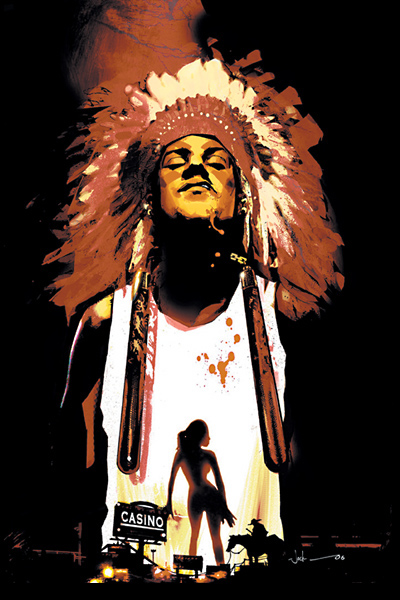
'Scalped' writer having sizzling August“Scalped,” Aaron’s first ongoing series, is set on an Indian reservation where its once proud people are ruled by drugs and organized crime.

“I love crime stories and it seemed like such a natural setting for a crime book,” said Aaron, who has had a lifelong fascination with American Indian culture.

Rob Schmidt, the author of “Peace Party,” a comic book featuring American Indians, has criticized “Scalped” for its “ultra-negative” portrayal of life on the reservation.

Aaron, though, says reaction has been overwhelmingly positive. “I’ve gotten letters from reservations all over the country, from Native Americans who are fans of the book.”

It’s not, however, a book for everyone, he cautions.

“It’s a violent, profane crime story, and I think some people just object to the principal of that.”
Comment:  I don't object to SCALPED because it's violent and profane. I object to it because it stereotypes Indians as criminals, thugs, and lowlifes.

Indians have always appreciated seeing themselves in the media, which is why they often like old Westerns and sports mascots. That doesn't mean these things aren't stereotypical.

For more commentary on SCALPED, go to SCALPED:  Another Comic Book Gets Indians Wrong.

Documentary touts Jesse Ed Davis

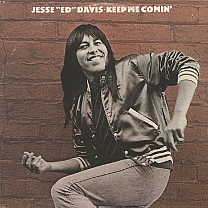
Oklahoma Filmmakers Hope to Get Legendary Kiowa Musician Inducted into Rock and Roll Hall of FameWhen Oklahoma filmmaker Steve Judd (Kiowa/Choctaw) came across an article written about the life of musician Jesse Ed Davis, he quickly telephoned his friend and business partner, fellow filmmaker, Tvli Jacob (Choctaw). The two had never heard of Jesse Ed Davis, and his story fascinated both of them. Davis’ impressive resume struck both filmmakers—so much so, that they decided to make a documentary to examine the life of the gifted musician.

“Several things about Jesse Ed affected me. He was from Oklahoma. He was Kiowa. He went to OU and he was an accomplished guitarist who played with all the greats, like John Lennon, Bob Dylan, Eric Clapton, all the big musicians,” Judd said.
The filmmakers' goal:Filmmakers Judd and Jacob hope their documentary will revive a new following and interest in Jesse Ed Davis, but most importantly, both filmmakers hope their documentary will serve as a catalyst in getting Jesse Ed Davis inducted into the Rock and Roll Hall of Fame.

“That’s really our main goal with this film, is to get Jesse Ed inducted into the Rock and Roll Hall of Fame. He deserves it,” said Judd.

"Prez on the Rez" online

Native Americans:  Honored or Snubbed by Dems?What do you get when you put 150 Native American leaders in a room to have at it with the three Dem Presidential candidates that are too radical for prime time, and throw in Chairman of the Democratic Party, the rebel yeller himself, Howard Dean? The most head banging peyote trip ever? Maybe not, but on August 23 you can catch it streaming live on www.prezontherez.org at 3:30 pm PST (5:30 pm Central). If you see one Presidential debate all year, catch this puppy!

Guaranteed, these three candidates, Governor Bill Richardson (NM), Congressman Dennis Kucinich (OH), and former Senator Mike Gravel (AK) are the ones that seem to have left their spin doctors at the door, and shock and awe nearly every time they open their mouths. They are usually brushed off by the mainstream media for the more big buck candidates and the retread sound bites of the purported duking it out by Hillary and Obama at the other debates, so this is a rare opportunity to hear some genuinely fresh and fearless voices hash it out. And the other ‘silent’ America, the Native Americans, get some long overdue quality time too. I don’t recommend missing it, and we will be there to report to you.

Indian culture drives success

Remember our Indian heritageOne of the central findings of the ongoing research of The Harvard Project on American Indian Economic Development is that native culture isn't an obstacle to be overcome, but instead is a powerful driver of the relative success or failure of Indian communities. This happens wherever tribes take over their own enterprises and manage them in a manner consonant with native priorities, perspectives and goals.

HPAIED's working definition of native culture is one that is derived from what resonates within a given native community and includes languages spoken, arts used to express who a people are and what they value, religions observed, and the ways in which people choose to define and govern themselves. The arts are an important part of socioeconomic development because the arts are the means by which a community defines and expresses itself. As the saying goes, "art is a way of life,” and art often is one of the primary mechanisms a community uses to project the definition of itself into the broader world.

Canada blocks UN declaration

Backpedalling on native rightsCanada is one of seven countries blocking the quest for a universal declaration on the rights of indigenous peoples. The other holdouts are Colombia, Guyana, Suriname, Russia, Australia and New Zealand.

Most members of the United Nations would like to see the charter, which has been under discussion for 20 years, adopted by the General Assembly at its fall session.

Sixty-seven states are co-sponsoring it. The UN Human Rights Council approved it last summer (over Canada's objections). Former foreign affairs minister Lloyd Axworthy calls it a test of "Canada's influence as a credible and influential voice for the protection of human rights."

My PEACE PARTY video

Promo for the upcoming graphic novel of PEACE PARTY, the multicultural comic book featuring Native Americans.

August 22, 2007

Web warriors for culture

Navajos Turn To Technology Vs. ProblemsNavajo leaders see tradition-based technology—tools that help preserve their customs and culture—as the way to ensure the Native American nation's survival.

"What we're trying to do is to get caught up with the rest of the world and at the same time, help ourselves to be independent—standing on our own—and get back to having pride," said Navajo President Joe Shirley Jr.

The Navajo Nation is setting up wireless Internet access in its 110 "chapter houses," which work like municipal governments for communities of 200 to 9,000 people.

Some 40% of the chapter houses have computer centers. Leaders hope eventually to have five Web Warriors for each of them. So far, the program has trained a total of 10.

The Navajos are learning to use the technology for land-use planning, geographical data analysis, demographic research and planning and estimating capital expenditures for infrastructure.

E-commerce is another benefit. Navajo artisans can sell their renowned turquoise and silver jewelry and rugs online.

Camp for Native candidates

Camp teaches how to run campaignLike most summer camp attendees, Maya Torralba found herself gaining confidence from the lessons instilled by her instructors.

But unlike most camps, where kids swim, play or practice a particular athletic skill, Torralba was one of 45 adults learning how to run a political campaign.

The camp is run by INDN's List, a partisan organization based in Tulsa, Okla., that backs American Indians who are Democratic candidates for political office.
What they learn:A total of 25 tribes from around the nation are represented at the camp. The camp offers vast lessons on the nuances of campaigns.

The first day's itinerary included such lessons as "Delivering an Effective Message," "Creating Your Stump Speech," "How to Create Your Vision," and "Opposition Research Basics."

Speakers are highly skilled consultants and campaign workers who donated their time, Free said.
Below:  Organizer Kalyn Free.

"Arctic Son" isn't expressive

Television Review | 'Arctic Son'

Learning the Simple Life With Stanley of the North[T]hese aren’t the most expressive of individuals. The director, Andrew Walton, chooses not to use narration, and neither man is very talkative. There are long pauses between statements, little extended dialogue and a tension that never really fades.

Almost reluctantly, Stan Jr. begins to enjoy learning at least some lessons in the old ways: how to harness a team of sled dogs, set a snare for a rabbit and unfurl a net under the ice when fishing in winter. When he catches a rabbit, he is clearly proud.

Stan Sr. is trying to help his son, but is also recruiting him. “It’s a good life,” the father says, “a simple life.” And speaking of his son, “It’s a better life for him, to live here.”

Stan Jr. returns to Seattle, though the wilderness and its creed of self-reliance have bitten him and his old life of drinking and partying holds a shade less appeal. It’s not clear what his decision will be, but he does make his way north again by the end of the film.

"How many Indians on the bridge?"

Internet game raises ire of Island First Nations

'The Duncan Bridge' posted on Facebook deemed racist by manyA game posted on the social-networking website Facebook has First Nations representatives in the Cowichan Valley enraged, calling the game racist and demeaning, and they're asking for it to be pulled.

The game, posted by a creator named Ted Hobby--a member of the University of Victoria network--involves predicting how many First Nations people are on the Trans-Canada Highway bridge, dubbed the silver bridge, that spans the Cowichan River in Duncan.

A similar game posted on Facebook last week called "How many Indians on the bridge?" had 2,000 people registered as participants. That page disappeared on Monday afternoon but was replaced yesterday with another page called "The Duncan Bridge." By mid-afternoon, 32 people had signed up.

Pocahontas's society was complex

Dig Casts New Light On Indian Culture

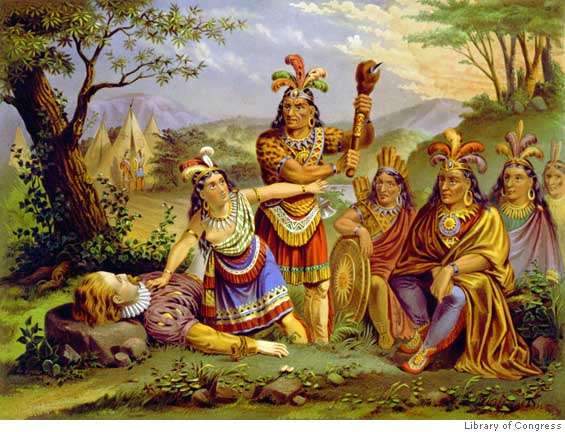
Va. Archaeological Findings Unveil Complex Society"There's no place like Werowocomoco," Gallivan said. For the Algonquians, for centuries the dominant tribe of Virginia's Tidewater region, it was the ancient center of the universe.

The discoveries at this site have provided a counter to impressions created by colonists such as Smith, who described the natives as "idle," "ignorant of the knowledge of gold" and "carelesse of any thing but from hand to mouth."

"Historians tend to portray Virginia Indians as a static, unchanging culture," said David Brown, another archeologist with the Werowocomoco Research Group. "This really widens our perspective of how complex this society was and had been for a very long time."

Native holiday proposed

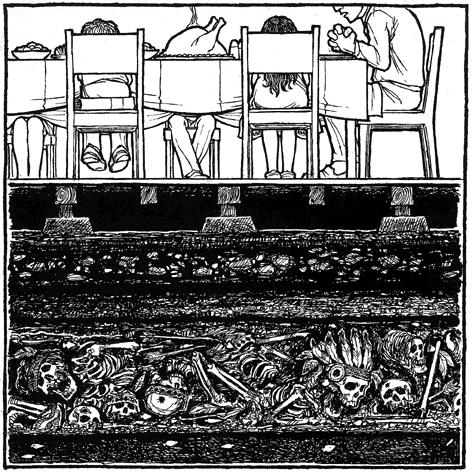
Bill would create holiday for Native AmericansBlack Friday, the day after Thanksgiving when the Christmas shopping season starts, could soon become known as Native American Heritage Day. That’s because lawmakers in Washington are discussing a bill that would create a special holiday honoring the contributions of Native Americans. S.1852, the bill’s number, was introduced by U.S. Senator Daniel Inouye (D-Hawaii).

For some Native Americans, Thanksgiving is called Thanks taking, a reminder of what tribes lost when Europeans made contact with their ancestors. By establishing a national holiday, Arizona Native Americans hope they’re heritage will finally be recognized.

August 21, 2007

Kudos for Raven Tales

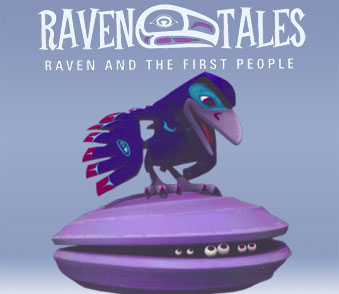
Animation artist inspired by American Indian heritageThe Kansas-born animator, producer, director, actor and writer moved to New Mexico as a baby.

"Growing up among the Navajo, Zuni and Hopi people of New Mexico gave me a great respect for North American aboriginal art and culture" and his own Cherokee heritage, he said.

"Raven Tales," an animated TV series inspired by legends of indigenous peoples of the Pacific Northwest, has aired in Canada, New Zealand, France, Germany, Japan, the United States and the United Kingdom and garnered rave reviews and numerous awards, including Best Animated Film at the 2005 Reel to Real International Film Festival for Youth in Vancouver, Canada, Best Animated Short Subject at the 2004 American Indian Film Festival, and Best Native Film at the 2004 Santa Fe Film Festival. In 2006, he was invited to the United Nations to screen "Raven Tales" at a special day of film as part of the U.N.'s Permanent Forum on Indigenous Issues.

"I think computer animation is the perfect medium to tell First Nations stories," Kientz said. "There is a certain visual freedom and sense of reality that is unique to the medium and complements the playfulness of the "Raven Tales.' The only limit to computer animation is your imagination. Nothing else comes close. I also like computer animation as a medium for First Nations stories because it shatters expectations. It tells people outside the First Nations community that there is no restriction on which medium First Nations people can adopt to tell their stories."

Macon park to include Native history

Group looking at ways to incorporate archaeological finds into Water Works ParkWhen Macon's newest and biggest city park opens to the public next year, you'll be able to picnic in the same spot where people have been eating their dinners for 10,000 years.

Archaeological research is being conducted throughout the 185 acres, surrounded by a bend in the Ocmulgee River, where NewTown Macon is developing Water Works Park. Surface collections in past decades, combined with a new study, reveal hundreds of spear points, primitive knives, shards of prehistoric pottery and more.
Officials want to do more than just dig up the past:Sheridan said the park should include American Indian and prehistoric history.

"Indian heritage is probably the least utilized aspect our area has got," he said. "There are three places on the North American continent where there's documented proof of human habitation since the last Ice Age. To me, that's a big deal," he said. "A lot of people would be interested in learning about that and in coming to Macon to do so, and we'd like to help those people."

Schoolhouse had "Americanization Room"

Not-so-proud historyToday, the Little Red School House in Cathedral City is colorfully painted with playful images of Mickey Mouse, Donald Duck and Dumbo. But 75 years ago in Palm Springs, color was used more insidiously.

Known as the "Americanization Room," it was used to segregate Mexican, Indian and black children from the adjacent Frances Stevens Elementary School in Palm Springs.

Every morning, their teacher, Miss Sharp, had about 36 children in first through third grades line up outside to check them for lice, food in their teeth, or smudges of dirt on their palms, said another former student, Vera Prieto Wall, 74, of Palm Springs.

If Miss Sharp found lice, she would cut the child's hair short. If there was food or dirt on one child, she'd have them all brush their teeth or wash their hands.

Compensation for dislocated children

Residential school settlement OK'dIf 5,000 had refused the settlement, Ottawa would have had the right to scrap the deal.

But few declined, meaning an aboriginal who was forced to be away from his or her family while attending a residential school will get an average $27,000.

The minimum payment is $10,000, plus $3,000 for each year he or she spent in a residential school.

The federal government forced generations of native children to attend residential schools run by six Christian denominations. Stories of dislocation as well as physical and sexual abuse are typical of their experiences. The policy continued up to the 1960s.

Toll road vs. sacred site

O.C. tollway could spoil burial site

The sacred burial site, mentioned in mission logs from the 1770s, abuts the planned extension of the 241 toll road.Robles is a member of the Juaneño Band of Mission Indians.

The valley, where her ancestors lived 4,000 years ago in an ancient Acjachemen Nation village called Panhe, is threatened by a proposed six-lane toll road next to the site that could unearth human remains and damage a sacred spot that Juaneños have visited for generations.

"To Indian people, we go to these places because they're our Vatican, our Mecca," said the San Clemente resident. We "go for spiritual renewal."

Poverty killed kids?

Fix native poverty or expect more tragedies:  leaderThere will be more deaths like the recent drowning of a boy on a Manitoba reserve by three youngsters unless something is done about the social ills rampant on many native reserves, the head of an aboriginal child welfare agency warns.

"We allow kids to grow up in extreme poverty," says Elsie Flett, head of the First Nations of Southern Manitoba Child and Family Services Authority. "Why are we then surprised when these kids become violent? Society has really been very violent towards them."

National Minority Manufacturer of the Year

Muskogee Metalworks recognized nationallyMuskogee Metalworks has received national recognition as the National Minority Manufacturer of the Year.

The National Minority Manufacturer of the Year award is given away annually to minority manufacturers that are certified. The award is given by the U.S. Department of Commerce and the Minority Business Development Agency.