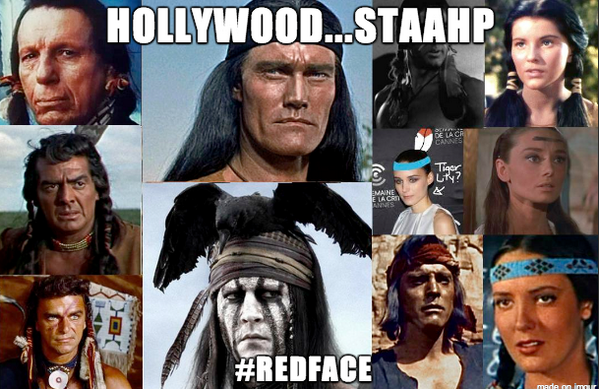
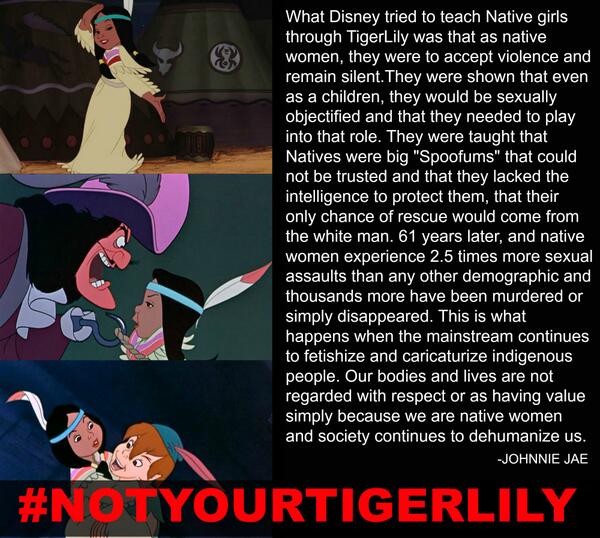
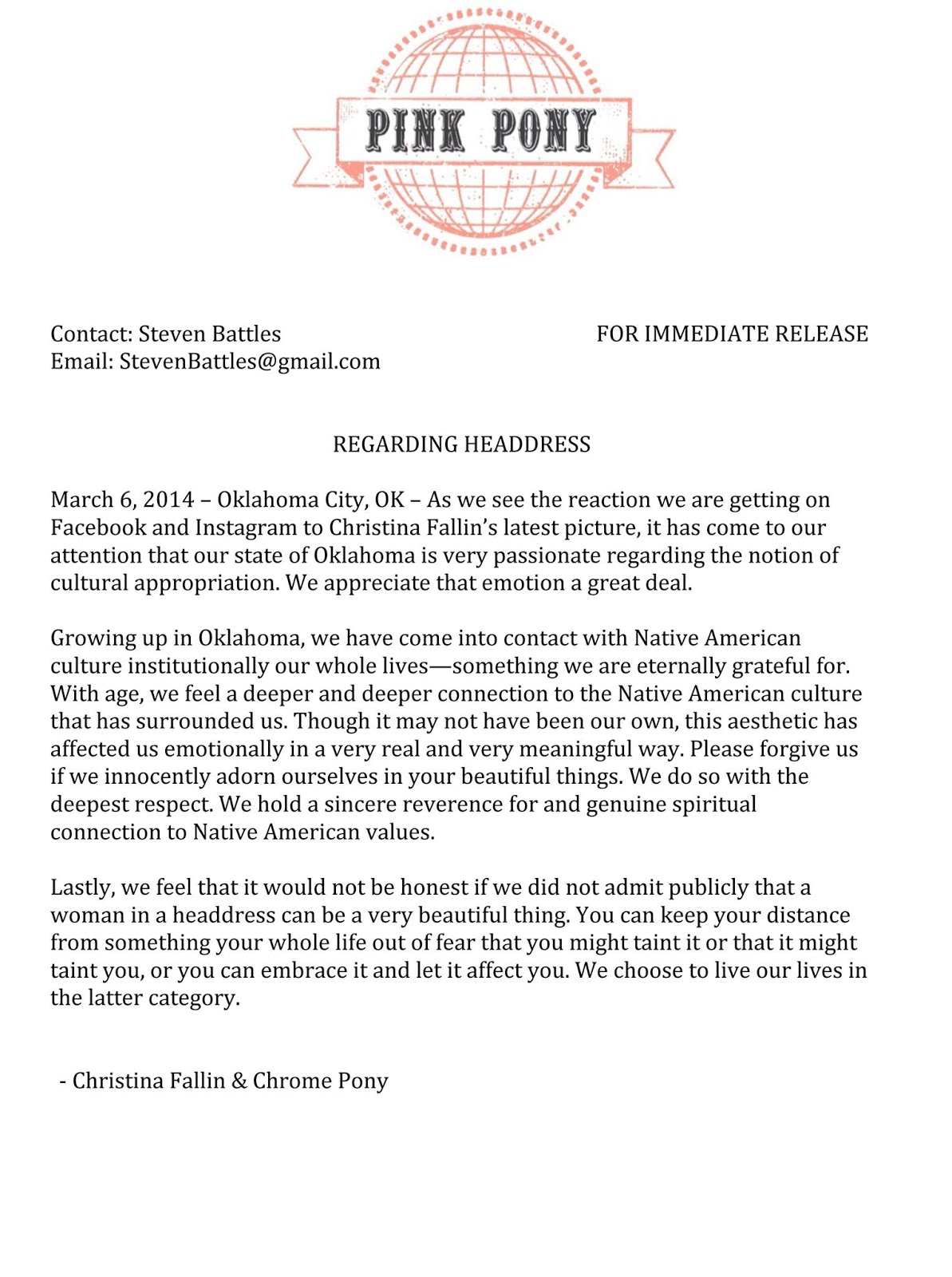
March 22, 2014

Microaggressions go mainstream

Students See Many Slights as Racial ‘Microaggressions’

By Tanzina VegamarchThe recent surge in popularity for the term can be attributed, in part, to an academic article Derald W. Sue, a psychology professor at Columbia University, published in 2007 in which he broke down microaggressions into microassaults, microinsults and microinvalidations. Dr. Sue, who has literally written the book on the subject, called “Microaggressions in Everyday Life: Race, Gender, and Sexual Orientation,” attributed the increased use of the term to the rapidly changing demographics in which minorities are expected to outnumber whites in the United States by 2042. “As more and more of us are around, we talk to each other and we know we’re not crazy,” Dr. Sue said. Once, he said, minorities kept silent about perceived slights. “I feel like people of color are less inclined to do that now,” he said.

Some say challenges to affirmative action in recent years have worked to stir racial tensions and resentments on college campuses. At least in part as a result of a blog started by two Columbia University students four years ago called The Microaggressions Project, the word made the leap from the academic world to the free-for-all on the web. Vivian Lu, the co-creator of the site, said she has received more than 15,000 submissions since she began the project.

To date, the site has had 2.5 million page views from 40 countries. Ms. Lu attributed the growing popularity of the term to its value in helping to give people a way to name something that may not be so obvious. “It gives people the vocabulary to talk about these everyday incidents that are quite difficult to put your finger on,” she said.

To Serena Rabie, 22, a paralegal who graduated from the University of Michigan in 2013, “This is racism 2.0.” She added: “It comes with undertones, it comes with preconceived notions. You hire the Asian computer programmer because you think he’s going to be a good programmer because he’s Asian.” Drawing attention to microaggressions, whether they are intentional or not, is part of eliminating such stereotypes, Ms. Rabie said.
Comment:  In the Native arena, the microaggressions include hipsters in headdresses, mascots, and every other stereotypical figure. All the things that naysayers dismiss with belittling comments like "Get over it" and "Don't you have more important things to worry about?"

These responses are the epitome of microaggression. They tell Native people: "Your feelings don't matter. We decide what's right or wrong, not you. We're in control and you're not."

For more on the subject, see:

Pocahotties show depth of microaggressions
Racism causes PTSD in DSM-5
"Little things" have big consequences
Natives experience racism every day
Subtle racism = psychological torture

March 21, 2014

"Redskins Potatoes" trademark rejected

Oneida Indian Nation Praises Rejection of Another 'Redskins' TrademarkAt least 12 trademarks with the word “Redskin” or “Redskins” have been denied by the U.S. Patent and Trademark Office thus far, but there’s one that’s status is still pending: the Washington (NFL) Redskins.

On Monday, however, the twelfth one, “Washington Redskins Potatoes” was not given protection because it contained the derogatory and dictionary defined slur “Redskins.”

In its decision, the agency said, “Registration is refused because the applied-for mark includes matter which may disparage or bring into contempt or disrepute persons, institutions, beliefs, or national symbols. Given that ‘REDSKIN’ in the mark is a derogatory slang term that refers to, and is considered offensive by, American Indians, registration of the applied-for mark must be refused.”

In January, ICTMN reported that the agency rejected an application for “Redskins Hog Rinds,” and listed five separate definitions to explain how offensive the word is.
Oneida Indian Nation Praises U.S. Patent & Trademark Office’s Rejection of Washington Redskins Product Due to the Derogatory Nature of the R-WordFor the second time in just three months, the U.S. Patent & Trademark Office has rejected a trademark application because it contained the derogatory, dictionary-defined slur “Redskins.” Monday’s ruling denying trademark protection to “Washington Redskins Potatoes” is being lauded by the Oneida Indian Nation and its grassroots Change the Mascot campaign, which have called upon the Washington NFL team to end its use of the offensive R-word.

“Registration is refused because the applied-for mark includes matter which may disparage or bring into contempt or disrepute persons, institutions, beliefs, or national symbols,” the agency stated in its decision. “Given that ‘REDSKIN’ in the mark is a derogatory slang term that refers to, and is considered offensive by, American Indians, registration of the applied-for mark must be refused.”

In January, the agency rejected a similar trademark application for “Redskins Hog Rinds,” listing five separate dictionary definitions showing the offensive meaning of the R-word and citing growing opposition to the name including the Change the Mascot campaign.

“Once again, the U.S. Patent & Trademark Office is making clear what should be obvious to everyone with a conscience--that “Redskins” is not a term which anyone with common decency would use to address a Native American. Despite the team’s claim that the mascot is a term of honor, the reality is that it is a dictionary-defined slur that insults and denigrates Native Americans. The R-word has no place in modern society,” said Oneida Indian Nation Representative Ray Halbritter. “It is heartening to see this latest step in the right direction, and we hope that the Washington NFL team will heed the clear calls for change and place itself on the right side of history by changing the team’s disparaging name.”
What it portends

Dueling opinions on what this ruling means:

A Setback for Redskin Potatoes Won’t Hurt The Washington Redskins

By Maya RhodanEven if they prevail, McCallion said, revoking the team’s trademark registration wouldn’t have a huge impact on the team or the name. The team could still sell merchandise and use the name, although some of the legal protection afforded by a registered trademark would be lost.

“If they lost federal registration that would hurt their branding,” said Patricia Rehfield, a Maryland-based copyright attorney.

Redskins spokesman Tony Wyllie said in a statement that “no matter what the ruling is this year, we expect no change that will impact the Redskins.”

“Even a negative ruling will have no effect at all on the team’s use of the Redskins name and logo,” he said. “That’s how the process works given our right to appeal.”
Loss of Trademark Would Be Final Straw for Washington Redskins' Name

By Brad GagnonAs Patrick Hruby from Sports On Earth establishes, the cost of changing the name is tantamount to peanuts. We're talking about one, maybe two Adam Archuletas (sorry for adding salt to the wound, 'Skins fans).

ESPN and ABC News sports business correspondent Darren Rovell told Keith Olbermann last year that changing names would be a wash in terms of profits/losses, while Olbermann himself believes Snyder would actually make money doing so.

Regardless, if trademark protection is lost and everyone else on the planet gains the right to manufacture and sell products that contain the team's name and logo without owing the league a dime, Snyder's hand will be forced.

And that'll be a good thing, because based on polls as well as the multitude of lawsuits launched in this regard from dozens of Native organizations, it's safe to conclude that thousands of Americans are personally offended by the name.
No end of criticism

Meanwhile, criticism of the Washington team keeps coming:

Time to Stop Playing Cowboys and Indians

By DaShanne StokesIt is ironic that the team would attempt to deflect attention from their own contribution to the oppression of indigenous peoples by posturing as an organization concerned with the issues confronting Indian country.

The real world is a very different place than the Red*kins would have us believe. A recent (2011) study by Chaney, Burke, and Burkley, for example, shows that many people, in fact, do not distinguish between their feelings between stereotypical Native mascots and actual, living, breathing, Native American people. Such mascots engender a racially hostile environment.

Like many Native Americans, my experience supports these studies. When I worked for the Boy Scouts of America, for example, other scouts, knowing that I was Native American, would sometimes put their hands to their mouths and chant “woo woo woo” upon seeing me at the summer camp where I taught. And every weekend, just before our Native American dance team would put on an exhibition as a treat for campers in an effort to promote cross-cultural awareness and understanding, campers would often greet us with tomahawk chops used at sports games--laughing and pointing at us while they chanted.

What the Red*kins seem not to realize is that ethnic mascots are integrally intertwined with their offensive team names and together they have the effect of perpetuating institutionalized racism. Institutionalized racism contributes to high rates of unemployment, poverty, health problems, and inadequate education for many Native Americans. In short, Native team names and mascots contribute to the very problems on which the Red*kins say we should be focused on solving.
Ethics, Morality And A Ticking Clock For How To Report On The R**skins

By Edward Schumacher-MatosThe word "redskins" is a racial slur. No doubt about it. But is it in the context of the team's 80-year-old name? Do most Americans think anything negative about Indians when they cheer, jeer or just say the name? What do most Native Americans hear in the name? Are the protesters just overzealous advocates long on "political correctness" and short on humor? Is there any proven harm being done to Natives? Or, relatedly, have we made mascots out a defeated people without asking them how they feel about it? On what side does the history of the name fall?

Those are just the factual questions. There is a moral one, ethics and morality not being the same thing. Is there a deeper moral issue of right and wrong at stake here, no matter what polls or studies show? If so, at what point does a news medium, especially a publicly supported one, have a responsibility to take a moral position? Or is its higher moral responsibility the professionally ethical one of being journalistically neutral?

Heavens.

Each of us will answer and weigh the questions in our own way, but my own conclusion based on the investigation that follows is that NPR should begin to purposefully disassociate itself from using the Redskins or the Washington Redskins on air and online.
Comment:  For more on the subject, see "Redskins Hog Rinds" Trademark Rejected.

March 20, 2014

Johnny Depp, white man

Every time I mention Johnny Depp on the NativeCelebs page in Facebook, people claim he's Native. No, he isn't. Let's put this myth to rest once and for all.

First, let's see what Depp has claimed. Because his claims are the only source for his alleged Native ancestry.

Inside the Actor's Studio

BRAVO TV--September 8, 2002JL: Now a question that has come up more frequently than I would have expected on this stage. Do you have any Native American ancestry?

JD: Yeah, apparently, yeah. My family comes from Kentucky. They've been there for many … you know … many, many generations. And my grandma … my great-grandmother … was … had a lot of Cherokee blood.
Johnny Depp wants 'The Lone Ranger' to back off Tonto: Why is the f–––ing Lone Ranger telling Tonto what to do?'

By Anthony BreznicanTonto’s treatment especially bugged him because Depp had always been told his family was part Indian. “I guess I have some Native American somewhere down the line,” he says. “My great grandmother was quite a bit of Native American, she grew up Cherokee or maybe Creek Indian. Makes sense in terms of coming from Kentucky, which is rife with Cherokee and Creek.”And...that's it. If any statements of his ethnicity exist other than these, I can't find them. Two flimsy claims, period.

How flimsy? Well, he's been told. He guesses. "Apparently."

In other words, he has no evidence whatsoever that he's Cherokee. No facts, no documentation, nothing. All he's doing is repeating family stories just like every other Indian wannabe in America.

What do real Indians think of wannabes who claim Cherokee heritage--exactly as Depp has done? Most Indians scorn these people as fakes and poseurs. Some examples of what they think:

Ask an Indian: How to Spot American Indian Wannabes and A Counterfeit Culture: Too Many Cherokees to Count

...My Grandmother Was a Cherokee Indian Princess...

I Hate All Dem Fake Ass Wannabe Cherokees Out There

Of Wannabes and Indians

The truth about Depp

Apparently Depp took a DNA test at some point. Alas, that and some genealogical research offer zero evidence that he has any Native ancestry.

Johnny Depp

By EthnicEthnicity: English, along with smaller amounts of Irish, Northern Irish (Scots-Irish), Scottish, Welsh, French, Dutch, Belgian (Flemish), German, as well as 3/2048 African.

Both of Johnny’s parents, as well as all of Johnny’s grandparents, great-grandparents, and great-great-grandparents, were born in Kentucky. Johnny Depp has stated, on several occasions, that he has or likely has Native American ancestry (of varying tribes, most often Cherokee). It does not appear that this Native American ancestry has been documented. All of Johnny’s grandparents and great-grandparents are listed as “White” on United States Censuses. No verified Native American ancestry has been produced for Johnny Depp.
The Cherokee Princess Phenomenon, and Other Tall Tales of the West

By Ehud WouldAnother such case to recently garner national media attention is that of Harvard Law professor and Democratic Senator, Elizabeth Warren: she, like the majority of White Americans today, claims some Cherokee background. But the New England Historical Genealogical Society found no evidence of any American Indian lineage in her.

Actor Johnny Depp has apparently made public claims of Cherokee and/or Creek Indian heritage, but all genealogical and DNA research of his line has proven otherwise; he was found to possess no Indian blood whatsoever. He was quite disappointed to find that he was just a vanilla White man.
That would seem to be conclusive. Until Depp provides hard evidence that one of his ancestors was Cherokee, the facts indicate they were white. Which mean he's white too.

Dissembling helps Depp's career

If Depp isn't Native, why hasn't he said so plainly? Because it would hurt his mystique...and more important, cost him money. He couldn't get street cred for following in Marlon Brando's footsteps, and couldn't play potential blockbuster roles like Tonto.

Some thoughts on Depp's flimsy claims and why he keeps them in circulation:

Disney Exploiting Confusion About Whether Depp Has Indian Blood

By Angela AleissThe actor has said he hopes to fix years of Indian misrepresentations in Hollywood and has repeatedly stated that his great grandmother had mostly Cherokee blood.

But Native American leaders and educators are not buying it. They question Depp’s claims of Cherokee heritage, particularly the studio’s attempt to keep it ambiguous.

“Disney relies upon the ignorance of the public to allow that ambiguity to exist,” says Hanay Geiogamah, Professor of Theater at UCLA’s School of Theater, Film and Television. Geiogamah (Kiowa/Delaware) was a consultant for Disney’s Pocahontas and served as producer and co-producer for TBS’ The Native Americans: Behind the Legends, Beyond the Myths aired in the 1990s.

“If Depp had any legitimate blood of any tribe, Disney would definitely have all the substantial proof of that already. It’s not that hard to establish tribal connections,” Geiogamah says.

Richard Allen, Policy Analyst for the Cherokee Nation in Tahlequah, Oklahoma, agrees. He says that many celebrities have claimed Cherokee heritage—often based upon family stories they’ve heard—but like Depp they never try to verify it. “They all tell me they have high cheekbones,” Allen says.
An Open Letter to Johnny Depp's Tonto

By Natanya Ann PulleyIs Johnny Depp Native American or Native enough? Does he, like so too many others, have a distant Indian princess in his lineage? He’s said his great grandmother is Creek or Cherokee. Creek or Cherokee. He’s not sure which—this Creek-or-Cherokeeness of him amounts to one line on his Wikipedia page. Can casually embracing being part of this-or-that tribe somehow carry us forward?For more on Johnny Depp, see Johnny Depp Looks Indian? and Johnny Depp, Cherokee?

March 19, 2014

Natives protest Tiger Lily casting

Rooney Mara's casting as Native American princess Tiger Lily in new film Pan is slammed on social mediaCritics on social media are less than happy about Wednesday's news that Rooney Mara has been cast as Tiger Lily in Pan, a live-action adaptation of the classic fairytale.

And they are taking to Twitter and other Internet sites to complain, according to The New York Daily News on Friday.

The outlet quoted one internet commenter as writing: 'Rooney Mara cast as Tiger Lily in new Peter Pan film because there are clearly no Native American actresses.'

It quoted another as crediting the 28-year-old with being an 'an incredibly gifted, insightful artist. But come on. You couldn't find a Native American actress to play Tiger Lily?!?!'
Is #NotYourTigerLily next?

By Soraya Nadia McDonaldFirst there was #NotYourAsianSidekick.

Then #NotYourMascot.

Then #NotYourTonto.

Will #NotYourTigerLily be next?

Those Twitter hashtags were created by online activists in protest of stereotypical characterizations of Asian and Native American people and the racial microaggressions they encounter. #NotYourMascot trended during the Super Bowl, and #NotYourTonto trended during the Oscars.
Native Americans Demand Warner Brothers to Reconsider Casting of Rooney Mara for Role of Tiger Lily in Peter Pan remakeEradicating Offensive Native Mascotry, a group of Native parents and their allies from across the country are asking Warner Brothers Pictures and director Joe Wright (Atonement, Hanna) to reconsider the casting of the actress Rooney Mara for the role of Tiger Lily. To this end they are conducting a “Twitterstorm” and have already trended the hashtag #NotYourTigerLily nationally to make their concerns about this historically problematic role of a Native American princess heard.

The depiction of a Native American tribe the Pickaninnies in the Disney version of Peter Pan is a regressive and stereotypical portrayal of Native American men as savages who speak in simple guttural speak and the portrayal of the silent "Indian Princess" Tiger Lily is also stereotypical and is one that most Native parents do not want their children to see. The Native parents of EONM were very disappointed that Disney chose to rerelease the film in 2013.

"What Disney tried to teach Native girls through Tiger Lily was that as native women, they were to accept violence and remain silent. They were shown that even as children they would be sexually objectified and that they needed to play into that role. They were taught that Natives were big "Spoofums" that could not be trusted and that they lacked the intelligence to protect them, that their only chance of rescue would come from the white man."

-- EONM member Johnnie Jae (Jiwere-Nutachi/Chahta) Executive Managing Editor of Native Max and a freelance photographer
The protesters are doing more than just tweeting:

Thousands Protest Choice of White Actress for ‘Pan’s’ Tiger Lily

By Alex StedmanWhile the casting announcements for Warner Bros.’ Peter Pan remake “Pan” have been rolling in, one in particular caught the eye of activists.

The studio cast Rooney Mara as Tiger Lily, and thousands have taken to a Care2 petition to protest the choice of a white actress for the Native American role. More than 4,200 signatures, out of their stated 5,000 goal, have been received.

“This casting choice is particularly shameful for a children’s movie,” the petition reads. “Telling children their role models must all be white is unacceptable.”
Comment:  For more on the subject, see Redeeming Tiger Lily in Pan and Whitewashing Tiger Lily in Pan.

Below:  A previous Tiger Lily.

March 18, 2014

2016 Sacagawea dollar designs

After the "Mohawk ironworkers" theme for the 2015 Sacagawea dollar, the 2016 theme was extremely predictable:

CCAC Releases 2016 Native American Dollar Candidate DesignsThe Citizens Coinage Advisory Commission (CCAC) has released the following candidate design images for the 2016 Native American dollar coin. The 2016 Native American dollar reverse will recognize the heroic contributions of the Native American Code Talkers of World Wars I & II.

Native American Code Talkers from more than thirty tribes served with distinction and played an important role in concealing the nature of secret communiques between American forces.


I'd probably go with one of the more abstract ones: 1, 2, 3, 6, or 9. With a slight preference for 6. The others seem a little too specific and busy, although 10, 11, and 16 are okay.

CCAC Reviews 2016 Native American Dollar Designs

By Les PetersAfter the authorizing legislation for the dollar (Public Law 110-82) was read by April Stafford from the Mint, the 18 designs were culled by Chairman Marks, leaving designs 1, 2, 3, 4, 6, 9, 13, 16, and 17. The preferences of the stakeholders were designs 1 and 2 (Congressional Native American Caucus of the House of Representatives), 3 (Congressional Native American Caucus of the House of Representatives and the Senate Committee on Indian Affairs), 4 (National Congress of the American Indian), 9 (National Congress of the American Indian and the Senate Committee on Indian Affairs), 16 (Senate Committee on Indian Affairs).The committee favorites were 9 with 19 votes and 6 with 14 points. Design 9 received the committee's recommendation.


For more on the subject, see 2014 Dollar to Honor Lewis and Clark and 2013 Sacagawea Dollar Reverse Unveiled.

March 17, 2014

Rich people are sociopaths

Science Explains Why The Rich Are Calling Everyone Nazis

By Jillian BermanIt turns out F. Scott Fitzgerald was right about the very rich: Science confirms that they really are different from you and me.

That difference has been on uncomfortable display lately, with billionaires declaring themselves an oppressed but superheroic minority “being pummeled” and “picked on,” despite their incomes having grown exponentially over the past few decades, leaving the rest of us far behind.

Dacher Keltner, a psychology professor at the University of California-Berkeley, is not surprised by these rich-guy outbursts, which have included offensive comparisons to Nazi persecution. His research shows that large gobs of money often make people drift away from the reality the rest of us know. So if some of those millionaires and billionaires seem to be completely out-of-touch rich guys lacking sympathy for their fellow man, that's because they are.

“Extreme wealth in our lab makes people less compassionate, they care less about the suffering of others, they’re less empathetic,” he told the Huffington Post in an interview. “They tend to think that they have their tons of money because they have a stronger genetic profile. You put that together, and you get jackasses.”
The sociopathic 1 percent: The driving force at the heart of the Tea Party

In their warped view of society, only the individual exists--with no social relations, shared history and culture

By Paul Rosenberg
We’ve seen this most strikingly in a recent wave of attention to some bizarre thinking of the 1 percent. It was sparked by billionaire investor Tom Perkins, with his letter to the editor of The Wall Street Journal, in which he compared public criticism of the “one percent” to Nazi attacks on the Jews, and suggested we were on the road to another Kristallnacht, which was reinforced by the remarks of others, such as billionaire real estate investor Sam Zell, who supported him.

As Paul Krugman correctly noted, “Mr. Perkins isn’t that much of an outlier” among the 1 percent. Krugman scored them for their “paranoia” and “megalomania,” both of which are obviously present to some degree, but it was one of their own who zeroed in much closer to the mark. Venture capitalist Nick Hanauer—who has advocated a $15 minimum wage and for raising taxes on people like him “to reward the true job creators,” ordinary middle-class consumers—rightly called them sociopaths when he recently appeared on “All In with Chris Hayes.”

“These are the people who did not go to their kid’s soccer games. These are borderline sociopathic people and they don’t care about other people,” Hanauer said, to which Hayes responded, “I don’t want to diagnose anyone from afar, I just want to stipulate.” That’s an honorable, well-meaning liberal sentiment. But it’s a bit misplaced, particularly since it meant a missed opportunity for deeper understanding. The point isn’t to stigmatize any one particular individual, but to identify and arm ourselves against a pervasive, corrosive mindset. It’s a mindset devoid of empathy or conscience, for whom other people simply are not real, a mindset that has gripped us collectively, ever more tightly, over the past 30 to 40 years, regardless of how much mayhem it creates, as the richest 1 percent has roughly tripled its share of income, while the rest of us, collectively, have seen our incomes stagnate, despite rising productivity, year after year after year.

Remember Margaret Thatcher’s remark, “There is no such thing as society, only individuals”? That’s the sociopathic mindset in a nutshell. Of course, Thatcher added, “and their families,” an obligatory conservative feel-good trope. But as Hanauer told Chris Hayes, “These are the people who did not go to their kid’s soccer games.” In short, Thatcher was lying when she tacked on “families.” Sociopaths are like that—they lie a lot.
Comment:  These analyses obviously have many implications for racial and economic justice. Our political and economic systems are arguably directed by rich people for their own benefit.

For more on the subject, see Conservative Christian Persecution Fantasies and Mascot Love = Lack of Empathy.

March 16, 2014

"Cowboys and Indians" cheerleaders photo

'Cowboys-and-Indians' cheerleaders photo sparks Regina furor

University of Regina president issues apology, says participants will take sensitivity trainingThe University of Regina is responding after a photo depicting some members of the school's cheerleading team posing in stereotypical "cowboys and Indians" costumes sparked outrage over the web.

Some of the women in the Instagram picture are wearing plaid shirts and cowboy hats, while others have feathers, headbands and braids in their hair and dresses that are made to look like they're made from animal skin.

University of Regina President Vianne Timmons issued a written release Sunday acknowledging that the team was part of a social event Friday evening that included "culturally inappropriate themes and costumes."

Her statement went on to say that the team's coach has apologized.


U of R, First Nations community react to online 'cowboys and Indians' photo

By Heather Polischuk and Jason WarickAlthough the photo was taken down, the damage was done as far as some are concerned.

Riemer said the university is taking both the incident and the reaction seriously.

"To be frank, the university has a couple of goals," he said. "One is specific to people of First Nations ancestry and that is that the university as an institution would become a very welcoming place, and certainly appreciate that part of our society--particularly since Regina sits in Treaty 4 land."

Reimer said the other goal is that everyone on campus has "a responsibility to behave themselves in a manner that is respectful and responsible and that would make anybody, regardless of status within our larger society ... feel welcome and comfortable and respected on campus."
Why the 'Cowboys-and-Indians' photo is not OK

Former University of Regina cheerleader speaks out on controversial photo shoot

By Holly Ann McKenzie
These actions by the University of Regina cheer team are not isolated, they are informed by and reinforce stereotypes circulating in white settler communities in Saskatchewan, including Regina.

They are an indication of how entrenched these stereotypes and narratives remain. They also serve as an example of why ‘intention’ is not all that matters.

I believe that the cheer team did not intend to disrespect anyone.

As stereotypes of indigenous people and a frontier narrative of white-settler ‘progress’ are part of our liberal ideology, it is possible to both have good intentions and act in racist ways within Canada and Saskatchewan.

However, ‘good intentions’ do not undo the effects of our actions nor should they excuse them.

Rather, our responsibility as a (white-settler) community needs to shift from simple blind ‘good intentions’ (which justifies a continued ignorance of the effects of our practices) to critical reflection on our practices before we engage in them and reparations when we cause harm (whether unintentional or intentional).
For more on the subject, see "Cowboys and Indians" Beauty Showdown and "Cowboys and Indians" in Toronto Bar.

Below:  A similar photo the cheerleaders posted earlier. "Kill the savage Indians!"

March 15, 2014

2015 Sacagawea dollar designs

2015 Native American $1 Coin Design Candidates

By Darrin Lee UnserThe Mohawk Iron Workers theme is the latest in a series of annually changing reverses going back to 2009. The series celebrates the important contributions made by Indian tribes and individual Native Americans to the history and development of the United States, and it was authorized by the Native American $1 Coin Act, Public Law 110-82.

Mohawk Iron Workers describe the Mohawk people who helped construct skyscrapers and bridges throughout the United States. Their iron worker history dates back to the 1880′s when they labored to build a bridge over the St. Lawrence River. Their work ethic and sure footing demonstrated on that bridge gained them a respected reputation which has led to generations of Mohawk Iron Workers.

Previous Native American $1 Coins showcased the following themes:

2009 – Three Sisters Agriculture
2010 – Great Tree of Peace and the Iroquois Confederacy
2011 – Great Wampanoag Nation
2012 – Trade Routes
2013 – Treaty with the Delawares
A lot of good designs here. Only a few are subpar. I particularly like designs 4, 5, 13, 17, 18, 19, 20. If I had to pick one, I might go with 19 because of its robust figure:


Side note: I was wondering how the Mint would "commemorate" events from the early 1800s to the 1930s. You know, from the War of 1812 to the boarding-school era, when the greatest Native achievement was surviving the land thefts and military onslaughts.

And now we have an answer: by skipping them!

The so-called stakeholders didn't agree with my choices:

CCAC Reviews 2015 Native American Dollar Designs

By Les PetersDuring a meeting held on March 10th, 2014 at the U.S. Mint's headquarters in Washington, D.C., the Citizens Coinage Advisory Committee reviewed and discussed the reverse designs for the 2015 Native American Dollar.

The preferences of the stakeholders were designs 8 (Congressional Native American Caucus of the House of Representatives and the National Congress of the American Indian), 13 (National Congress of the American Indian and the Senate Committee on Indian Affairs), and 15 (Senate Committee on Indian Affairs).


The only one of these that made my list was 13, the middle one.

But the committee liked design 4, so it authorized some changes:The last was a twist, asking to set aside the 1-point margin that design 13 was given and instead recommend design 4, with the inclusion of an expansion of the second motion, changing the font throughout the design to the 2009-2012 style: this motion passed on a 6-2 vote, thus making design 4 the committee's recommendation.

Good choice!

For more on the subject, see 2014 Dollar to Honor Lewis and Clark and 2013 Sacagawea Dollar Reverse Unveiled.

March 14, 2014

Redeeming Tiger Lily in Pan

While some people slammed the whitewashing of Tiger Lily in the upcoming Pan movie, others took a broader view of the racial issues:

If Joe Wright’s ‘Pan’ Wants to Be “Multi-Racial,” Why Cast Rooney Mara as Tiger Lily?

By Kate Erbland“Wright is planning to create a world that very international and multi-racial, effectively challenging audiences’ preconceived notions of Neverland and reimagining the environment.” “Rooney Mara is in negotiations to play Tiger Lily.”

Do these two statements seem at odds with each other? The Wrap reported both--in the same story!--yesterday, as part of a casting bit that passes along word that Mara is reportedly in negotiations to take on the role of Tiger Lily in one of the many Peter Pan “reimaginings” flying around Hollywood. Director Joe Wright has steadily been lining up other interested talents for his Pan, and while there is a touch of international appeal here (one of them is Australian!), it certainly seems out of touch and frankly incorrect to tout that a film that seems poised to star Mara, Hugh Jackman, and Garrett Hedlund is somehow “multi-racial.”
Rooney Mara Cast As Tiger Lily, Wariness Ensues

By Lexi NisitaWarner Bros. appears to have anticipated this controversy—and rightly so. According to Variety, "The world being created is multi-racial/international—and a very different character than previously imagined." That, in and of itself, is not necessarily a problem. In fact, it sounds nice! In order to make the Peter Pan story into something progressive and relatable instead of an outdated, racist mess, you'd basically have to rewrite the entire thing. Re-imagining that world in a way that doesn't treat Native American characters like mythical creatures and preserving the core of the story while casting in a modern, colorblind way (à la Shonda Rhimes, perhaps) would restore a lot of our faith in Hollywood. It might work, but we're putting an emphasis on the might, because this is dangerous territory and it could also go very, very wrong. Re-imagining a story to remove unfortunate racial stereotypes is a worthwhile endeavor, but re-imagining a Native American character as a white character is not a step in the right direction, unless it's coupled by a lot of bold choices in the opposite direction. Almost everyone in mainstream cinema is already conceived of as white, to begin with...so, that's not a very imaginative way of doing anything, is it?

First, there's the issue that Native American people are hugely underrepresented in Hollywood as actors (and as characters). In a perfect world, people of a variety of different races would be cast in a variety of different roles—roles that aren't defined by the character's racial identity. But, that's not the world we live in. Instead, many non-white actors and actresses only get leading roles in movies that specifically deal with racial themes or require a specific ethnicity to be represented, for some reason. So, it only aggravates the problem when even for those roles, white actors are cast.
Rooney Mara’s Casting Isn’t the Only Problem With ‘Peter Pan’s’ Native American Character, Tiger Lily

By Tyler CoatesWhat’s astounding, of course, is that the outrage is about a white woman playing the character Tiger Lily rather than the fact that Tiger Lily is part of the new script at all. The character is not a particularly sensitive or sophisticated representation of a Native American woman; after all, the idea of a Scottish author adding a tribe of indigenous Americans to his fairy-tale land is a little uncomfortable, no? Especially given that Barrie’s name for the group is the Piccanniny Tribe. From their earliest appearance in Barrie’s 1904 play, Peter Pan; or, the Boy Who Wouldn’t Grow Up, the Picanniny Tribe was depicted in typical stereotypical fashion: wearing pelts and feathers in their hair, communicating in guttural grunts. Disney’s popular animated film version was not better; while Tiger Lily herself is visibly Native American, she doesn’t utter a line of dialogue. And let’s not forget the 1954 Broadway musical version of Peter Pan, which featured a Nordic Tiger Lily and the song “Ugg-a-Wug.”

Many other modern Peter Pan retellings, from Steven Spielberg’s Hook to Dave Barry and Ridley Pearson’s Peter and the Starcatchers series (and the subsequent Tony-winning play based upon the first book), have removed the Native American elements entirely, which is all probably for the best. It’s not that Native Americans don’t deserve to be depicted in the story; the question is: why have the Indians, representative of the English fascination with Native Americans, remained in the various adaptations of Peter Pan throughout the years in the first place?

The point is, the whitewashing of Tiger Lily and the Native American tribe is nothing new; if anything, it has its roots in J. M. Barrie’s own vision for the Peter Pan story. The Indians are the other, a fantasy-land version of a real, diverse group of individuals. That they have been depicted with such ruthless stereotypes is an unfortunate truth born out of the unsophisticated mindset of the time in which these characters were created.

If Pan does anything right, it’ll strike the notion that Tiger Lily is an Indian princess at all. Sure, if her “tribe” is in fact indigenous to Neverland, it would have been nice to see an actor of color play the part. But that the post-Victorian concept of Native Americans is still so deeply intertwined with Neverland’s indigenous peoples is an issue; if Pan does its job well as a reimagination of this classic story and its characters, it’ll treat Tiger Lily as a literary figure with more respect than previous films, theater productions, and books. After all, in this new, imaginative vision of Neverland—a fictional place, after all—all bets are off, and Joe Wright and his team could potentially improve upon over a hundred years of negative stereotypes of indigenous peoples.
Comment:  Until Pan casts its first person of color in a major role, the "multiracial" claim is a joke. Indeed, it may be an outright lie intended to ward off criticism.

I tend to agree with these critics. It's not enough to say Tiger Lily is Native, so she should remain Native. You have to consider the whole context: namely, Peter, Wendy, and the boys as white saviors and the Indians as primitive savages. No matter who plays Tiger Lily, these problems will remain.

I tweeted some thoughts on these issues:

New "Peter Pan" to be set in WW II era. So the Indians will be soldiers, factory workers, etc. in Western clothes?

Good writing could redeem the Lone Ranger's Tonto. The savage Indians of Neverland are irredeemable. They should be changed or eliminated.

Make the savages a band of pirates, cavemen, Greeks, or whatever. If no leathers and feathers, they won't "read" as Indians.

Indians aren't essential to story. A white or Native woman could lead generic tribesmen. But if they're Native, cast Natives.

Heck, turn Peter Pan's "Indians" into a multicultural band of hipsters a la Coachella. Then cast a Native actress as the tribe's leader.

No matter who plays Tiger Lily, Neverland's Indians = primitive people of the past. Literally fantasy figures divorced from tribal reality.

Tiger Lily vs. Tonto

Casting Rooney Mara as Tiger Lily has obvious has parallels with casting Johnny Depp as Tonto. But there are key differences:

  • The Lone Ranger is a reality-based story. Peter Pan is a fantasy.

  • You can argue that Westerns featuring traditional Indians don't help today's Native people. They reinforce rather than dispel the age-old stereotypes of Indians as primitive people of the past. Americans are already inundated with images of Indians as chiefs and warriors; they don't need any more.

    But if you're making a Western for whatever reason, traditional Indians are appropriate. They belong in such a story. Leaving them out is arguably worse than putting them in.

    In contrast, Peter Pan's Neverland adventures first appeared in 1904, in a story set in that era. Indians then were adopting Western clothes and lifestyles. They were no longer warriors in buckskins hunting animals and enemies.

    You could argue for including 20th-century Indians in a 20th-century Peter Pan. But no one has done that before, or is proposing that here. Inevitably, any Indians in Peter Pan will be fantasy figures like the story's mermaids, fairies, and pirates.

  • The Lone Ranger's "faithful Indian companion" is integral to the story. The Indians in Peter Pan aren't.

  • Without Tonto, the Ranger is just another gun-slinging lawman. His partnership with Tonto is arguably his defining trait.

    In contrast, J.M. Barrie wanted any old band of brutes to add exotic "color." As the "Piccaninny" name indicates, he didn't care whether they were African or Native American.

    Their role in the story is minor and can easily be omitted. Indeed, creators have done versions of Peter Pan without the Indians, which proves they're unnecessary.

    In short, hanging on to these stereotypical savages would be a mistake. Unless Tiger Lily is a sophisticated Native woman without a savage tribe, I don't see a good way to redeem her.

    For more on the subject, see Tiger Lily in Peter Pan: An Allegory of Anglo-Indian Relations.

    Below:  Carsen Grey (Haida) as Tiger Lily.

    One Direction singer in a headdress

    Harry Styles sparks 'racism' row after posing in Native American headdress--and his critics were his own FANS

    By Lucy Buckland1D's Harry Styles sparked a racism row after posing in a Native American headdress.

    Surprisingly his most vocal critics were his own fans, a popular Twitter account, @1DUpdates, which has almost 800,000 followers.

    "Cultural appropriation is not nice, regardless of context or intent. let's leave it at that," the account, run by @sharon__scottm @tiffanyytao, @kristyleaa and @sydneyanne_x, remarked after the black and white image was published.
    'Cultural appropriation isn't nice, regardless of context': Harry Styles sparks a race row among One Direction FANS as he poses in Native American headpiece

    By Louise SandersHarry Styles has sparked a Twitter racism row among One Direction fans after posing in a Native American headpiece for an Instagram shot.

    The 20-year-old pop heartthrob threw on in a feathered war bonnet, traditionally worn in battle and for ceremonial occasions, in an artistic black and white snap, which was promptly uploading to the social networking site.

    But the image quickly divided his loyal army on micro-blogging site Twitter, in particular receiving criticism from fan account @1Dneews, which boasts an impressive 732,000 followers.
    The 14 Most Absurd Twitter Responses To Harry Styles Being Called Racist

    By Alexis RhiannonHarry Styles Native American headdress photo March 2014A funny thing happened on the world wide web today--Harry Styles changed his profile picture on Twitter to a photo of himself wearing a Native American headdress, and suddenly the internet imploded.

    First it imploded with a bunch of people asking him to take it down, because they felt it was an appropriation of the Native American culture. And while there were some rude responses sprinkled in there, for the most part, it was people very politely asking that he select another photo. Some people did throw out the word ‘racist’, but regardless, they were largely calm, measured responses just basically being like, “Dude, not cool, please take it down and think it over in the future.”

    It happened enough times that Harry went ahead and took it down. (Probably a good move, if you ask me.) But then came the second implosion--fans who were extraordinarily pissed at the implication that Harry could be anything but perfect. And these are Directioners, so you know they’re not skimping on the caps or the invectives.
    One Direction Fans React as Harry Styles Native American Headdress Pic Causes 'Racism' Controversy

    Comment:  The main difference between this and the Christina Fallin controversy are 1) Styles or someone took down the photo in a couple of hours--as soon as people started criticizing it on Twitter. 2) Styles didn't offer a tone-deaf faux-pology trying to justify his actions. As Fallin's case proves, the "apology" is often worse than the offense.

    For more on the subject, see Crystle Lightning in a Headdress and Why Hipster Headdresses Aren't Okay.

    March 13, 2014

    Whitewashing Tiger Lily in Pan

    More on the controversial casting of Rooney Mara as Tiger Lily in Pan:

    White Woman Rooney Mara Might Play Tiger Lily in Pan, Because 2015 Needed Its Own The Lone Ranger

    By Rebecca PahleTo recap what we know about Pan so far: It’s a Peter Pan origin story. It’s directed by Joe Wright (Pride and Prejudice, Hanna, Atonement) and so far stars Hugh Jackman as Blackbeard and a Garrett Hedlund as a young’n'sexy pre-Captain Captain Hook. Deadline described it as a film in which Peter is the “savior of the natives” of Neverland, which I was a little skeptical of, because what movie, in the 21st century, would be so blatantly, toxically racist, on top of clueless enough to think that “Peter Pan, savior of the natives” is an OK thing to present to an audience of millions, many of them children?

    Apparently I may have been a little overly optimistic there. Because also falling under the “blatant, toxic, racist, clueless” category: Whitewashing Tiger Lily. I should have seen this coming. Star Trek Into Darkness. The Lone Ranger. Teenage Mutant Ninja Turtles. What a sweet summer child I was.

    The way Peter Pan author J.M. Barrie originally wrote his story’s Native Americans wasn’t exactly fair to begin with. They’re stereotypes: Violent, compared to animals, and frequently referred to as “savages.” It’s tough to watch “What Makes the Red Man Red?” from Disney’s animated Peter Pan without wincing.

    But Tiger Lily being a problematic character isn’t an excuse to cast a non-Native American actress. Rather, it’s the same as it was with The Lone Ranger: The key to bringing a racial caricature forward to the modern day isn’t to disregard that person’s race but to change the character so they’re not a racial caricature. Jesus Christ. It’s not that hard. There’s something to be said for “loyalty to source material,” but early 1900s racism is not one of the things you need to keep.


    "Tiger Lily Doesn’t Equal Human Torch" plus a very long rant

    By Felicia DayBottom line, actors of ethnicity don’t get a lot of work to begin with. And that very fact creates a scarcity in the number of actors of different ethnicities to choose from when casting. It’s a chicken and the egg syndrome. In what instance can you point out a role where a Native American actress has a chance to be a lead in any movie? Almost none. So why chase a dream that doesn’t seem like it could come true, because the system would never allow it?

    It’s a self-perpetuating reality we live with, so the only way to change it is to break the norm, and cast more leading characters with more diversity. At the very least give roles that are intended to be ethnically diverse to ethnically diverse actors, I mean, BARE MINIMUM, PEOPLE.

    So for me, the opportunity to give a leading role that could be a Native American, a possible protagonist role that the audience could relate to and live the story through, to a white actor, is kind of shitty and backwards to me. And that’s why I posted my initial tweet.

    To compare Tiger Lily being cast as a white women to Human Torch or Heimdall being cast as an African-American is not equivalent, because I don’t think this issue is about violating or adhering to “lore,” I think it’s about providing more representation. And that’s why I think that the Human Torch being cast as African-American is an awesome thing, because that move evolves Hollywood and storytelling and the Marvel universe.

    Remember in the past, lead characters were most likely written as white in the first place, because they were created in an even more white-centric world. Fantastic Four debuted in 1961, segregation was outlawed in 1964. You can’t say that the culture at large at the time didn’t influence the creator’s choices when making these characters! Fast forward fifty years, the culture at large NOW doesn’t match up with the lore from before, and we should be open to changing it.

    Tiger Lily, in the book, is actually portrayed in an EXTREMELY racist way. But hey, it could be a great opportunity to re-invent the character as a Native American to be proud of, rather than dodge the issue entirely, and take the role away and give it to a white woman.

    Why NOT re-imagine Tiger Lily so that the audience can fall in love with and admire a woman of color? Or reimagine a superhero as an African-American, one among a TON of white ones we see every day? Let’s show the audience that they can live through anyone’s eyes!


    Whitewashing, Colonialism, and Hollywood, Oh My!

    By Samantha EstoestaThis is not the first time that Hollywood prefers, or specifically asks for, actors or actresses who are white to play roles of characters who are people of color. Who can forget the casting call for Katniss Everdeen in the Hunger Games trilogy, specifically asking for actresses of white heritage or that the only actor who is a person of color in M. Night Shyamalan’s The Last Airbender (a tale that specifically focuses on persons of Central Asian, Inuit, South Asian, and Tibetan heritage) plays the villain, Zuko? There is even a list of the 25 infamous Yellow face performances in film.

    Before someone starts telling me that Mara is chosen for the role because there are not enough actresses of Native heritage to play the role, here are seven fantastic Native actress that could have played the part: Julia Jones, Amber Midthunder, Teneil Whickeyjack, Roseanne Supernault, Q’orianka Kilcher, Shauna Baker, and Shannon Baker.

    Listen, Hollywood, you liking and taking the histories of peoples only to transform those incredibly important histories into a bottom line is just another form of colonialism. Instead stripping people of color of the natural resources (things incredibly important to their existence as a people and their very histories) on the land that they inhibit in exchange for trinkets and small pox, you take their histories, transform it into a Hallmark-esque movie, only to vehemently refuse to give any proceeds back to the people.

    We see this every day as people of color, be it Katy Perry dressing like Geisha, Lime Crime’s China Doll make-up line, the ridiculous number of Bindi-wearing white celebrities, and ever-popular “Sexy Squaw” Halloween costume.


    Comment:  A couple of tweets on the subject:

    tara zhaabowekwe ‏@zhaabowekwe Mar 13
    Whether it's Johnny Depp or Rooney Mara, #redface is a disgrace. We're people, #NotYourTigerLily #NotYourStereotype and #NotYourMascot.

    Mags ‏@Creekleo Mar 13
    Native American women are depicted in movies as beautiful maidens sexually available to white men #NotYourTigerLily

    The last point is a good one. No matter who plays Tiger Lily, she'd better not be a typical "Indian princess" from the 20th century or before. I.e., someone who's basically a damsel in distress and a prize for the white hero (or white viewers).

    For more on the subject, see Tiger Lily in Peter Pan: An Allegory of Anglo-Indian Relations.

    David Yeagley dies

    Friends of Bad EagleDear Friends of Bad Eagle,

    On behalf of the Yeagley family, I am sorry to inform you that David passed away early yesterday morning, March 11, 2014.
    David Yeagley, Comanche activist, passes away at age of 62David Yeagley, a self-styled Comanche conservative activist who was a thorn in the side of Indianz.Com and many of its message board users, died on Tuesday. He was 62.

    Yeagley at one point threatened to sue Indianz.Com for allegedly libelous and inflammatory postings about his controversial views. He was particularly upset when comments about his opposition to inter-racial relationships became public. He had made the comments at an anti-Indian conference in Washington, D.C.

    Yeagley also engaged in a war of words with several message board users who questioned whether he was legitimately enrolled in the Comanche Nation and whether his ancestors were actually Comanche. His web site was named for Bad Eagle, whom he claimed was his great-great-grandfather.

    A memorial service is taking place this afternoon in Oklahoma City, according to an obituary.
    His fans at Stormfront are crushed:

    David Yeagley Dies of Cancer... Before He Collected $50K From One People's Project...

    But his enemies are gleeful:

    DAVID YEAGLEY, ROT IN HELL!

    Yeagley's longtime foe Al Carroll adds:I heard of it a few days ago from Comanches. I don't celebrate anyone's death, esp not from cancer. It is a shame we didn't get the chance to beat him in court, where everyone expected him to lose, even his own lawyer. He also was never going to collect that default judgment from his nuisance suit. The guy was in PA, judgment was in OK. What was amazing to me though was his intense hatred to the end. If I had so little time to live I wouldn't spend it on a hopeless court case. I wish him peace in the afterlife he never allowed himself in life.Comment:  For more on the subject, see Yeagley the Indian Apple.

    March 12, 2014

    Rooney Mara as Tiger Lily

    Apparently Hollywood didn't learn anything from its casting of Johnny Depp as Tonto. Here we go again:

    Rooney Mara to Play Tiger Lily in Warner Bros.’ ‘Pan’

    Hugh Jackman and Garrett Hedlund also on board

    By Justin Kroll
    Warner Bros. has tapped Rooney Mara to play Tiger Lily in its Peter Pan origin tale “Pan.”

    Hugh Jackman and Garrett Hedlund are also on board with Joe Wright set to direct.
    And:The film will be a new take on the classic story. It is set during World War II and follows an orphan named Peter who is kidnapped by pirates and brought to Neverland, where he discovers he’s destined to save the land from the pirate Blackbeard.

    The world being created is multi-racial/international--and a very different character than previously imagined.
    This news quickly spread through the mediaverse, with Native and liberal activists raising objections:

    Today in Hollywood whitewashing: Rooney Mara cast as Tiger Lily in Joe Wright’s Pan

    By Caroline SiedeJoe Wright’s Peter Pan origin story starring Hugh Jackman as Blackbeard and Garret Hedlund as Hook has potentially found its Tiger Lilly. If negotiations work out, the iconic role of the young Native American princess will be played by none other than Irish-Italian actress Rooney Mara. The film is being billed as a “new take on the classic story,” and in this case, that “new take” extends the old tale of Hollywood whitewashing characters of color. (Recently, Johnny Depp tried to skirt controversy by being “formally adopted” by the Comanche Indians before playing Tonto in the Lone Ranger film.)Rooney Mara Lands Tiger Lily Role, Stirs Controversy

    By Emma KoonseComments on social media sites such as Twitter revealed anger and confusion over Wright's selection of Mara for the part, with many accusing Hollywood of "whitewashing" films with white actors.

    "Rooney Mara cast as Tiger Lily in new Peter Pan film because there are clearly no Native American actresses," Sarah wrote on Twitter. "I like Rooney Mara and am impressed with her work, it's just frustrating how so many roles are whitewashed."

    Carey posted, "Person from impossibly wealthy family gets wealthier," after re-tweeting news that Mara would portray Tiger Lily in the Warner Bros film.

    Another Twitter user Lauren added," Rooney Mara joins Johnny Depp in 'People I Wish Hadn't Been Cast as Native Americans.'"


    Is It OK for Rooney Mara To Play a Native American Character in 'Pan'?

    By Matthew Hammett KnottThe internet exploded last night with the news that Rooney Mara was in talks to play Princess Tiger Lily in Joe Wright's forthcoming Peter Pan origin story "Pan." The uproar was immediate--Tiger Lily is a Native American character, while Mara is plainly white.

    At first glance, this would seem to be another example of the Hollywood whitewashing that required "Prince of Persia's" lead roles of Prince Dastan and Princess Tamina to be played by Jake Gyllenhall and Gemma Arterton. We all know why it happens, but it doesn't make it any more edifying.

    However, is this a similar scenario? Variety reports of Wright's film that "the world being created is multi-racial/international" and that Tiger Lily is "a very different character than previously imagined," adding that actresses including Adele Exarchopoulos and Lupita Nyong'o were considered for the role.

    While it bears mentioning that all starring roles announced thus far have gone to white actors, we don't yet know what exactly Joe Wright has done with the role of Tiger Lily or how he envisages this "multi-racial" world as a whole.
    Casting Controversy: Rooney Mara as Tiger Lily in 'Peter Pan' PrequelConcerned Natives and culture-watchers of many ethnicities are decrying the choice as yet another redface travesty, much like Johnny Depp's Tonto in the 2013 film The Lone Ranger.

    The 1953 film, adapted from Scottish author J.M. Barrie's 1904 play and 1911 novel, has always been a source of aggravation for many Native Americans for its depiction of a "redskin" tribe, complete with "injuns" who speak in pidgin and say "how" and "ugh."

    Casting a white actress as an Indian princess in a story that was far from racially sensitive to begin with--this really does sound like Johnny Depp's Tonto again, doesn't it?--was hailed as a stupid move all over the blogosphere and Twitter. "Great to see Hollywood so thoughtfully responding to criticism that it woefully under- and misrepresents indigenous people!" writes Callie Beusman at Jezebel.

    Jacqueline Keeler--@jfkeeler--one of the #NotYourTonto organizers, tweeted, "Rooney Mara cast as Tiger Lily in a Peter Pan remake? WT-? Why won't they stop! I need a rest!" Tweeter @fozmeadows wrote "Rooney Mara as Tiger Lily? Right. Because NOBODY IN HOLLYWOOD has Q'orianka Kilcher's contact details. *headdesk*"

    While casting a white actress as an Indian character is a familiar kind of disappointing, some folks who are trying to read the tea leaves are seeing something else--a revamped Tiger Lily who isn't Native American at all. This would be a departure from J.M. Barrie's source material, but maybe not such a radical one. Peter Pan's Indians, after all, do not live on Turtle Island, they live in "Neverland," and there is no real reason why they are Indians. And in J.M. Barrie's original play (but not the movie), they are said to be of the "Pickaninny Tribe," which adds an anti-African American slur to the anti-Native "redskin" caricature. It's a blurring that suggests Barrie didn't really care whether he was writing about Indians, or Africans, or African Indians or Indian Africans--he simply wanted a handy caricature and exotic other that might show up in the dreams of white English kids circa 1904.
    Comment:  My own snarky tweet on the subject:

    How long until Rooney Mara discovers one of her ancestors was Cherokee or Creek or something, and gets adopted into the Comanche tribe?

    Actually, I include myself among the "folks who are trying to read the tea leaves [and] seeing something else." The actresses they've considered for Tiger Lily suggest they'll avoid Indians altogether and make the "tribe" multiracial.

    For more on the subject, see Tiger Lily in Peter Pan: An Allegory of Anglo-Indian Relations.

    March 11, 2014

    Why are Indian Guides gone?

    Answer Man: Why are the Indian Guides gone?

    By Roger SchlueterWhen I was a child growing up in St. Louis in the '60s, my father and I were part of a YMCA-sponsored organization called Indian Guides. It was similar to the Boy Scouts but with an obvious American Indian influence. We had monthly meetings, camping trips, and many activities that were centered on American Indian cultures. It was great fun and instilled in me a lifelong interest and respect for Native Americans. My question is this: What happened to this organization? Do you have any history on it? Was it a victim of political correctness?

    -- WNC, of Collinsville
    Schlueter's answer, in part:Like you, it seems a shame to me to change a program originally set up to promote the best of Indian life to other peoples. I was thinking it would be kind of like me, of German heritage, asking various churches and granges to start using the term "pork sausage dinner" instead of "wurstmarkt," which may denote an afternoon of beer and fried, fatty meat to some rather than Old World tradition.

    But I have no Indian blood nor do I know to what extremes some of those YMCA tribes might have gone, so I can't speak definitively. In any case, the Y's Adventure Guides program still involves a quarter-million children and parents annually.
    My response: The Y-Indian Guides never promoted "the best of Indian life." It promoted a stereotypical, one-dimensional view of Indians as primitive chiefs, braves, and wampum-keepers. It ignored the wide diversity of thousands of Native cultures, not to mention the Indians' continued existence as modern-day people who don't dress in feathers and leathers.

    For more on the subject, see YMCA-Indian Guides.

    March 10, 2014

    The Orenda depicts villainous Iroquois

    An acclaimed novel about Indians is being called stereotypical by some:

    Critical Review of Joseph Boyden's "The Orenda": A Timeless, Classic Colonial Alibi

    By Hayden KingI wanted to like Joseph Boyden’s The Orenda. I’ve been a fan of Boyden’s work. Three Day Road, Born With a Tooth and Through Black Spruce all had compelling themes of redemption amid loss. Moreover, the advanced reviews proclaimed The Orenda a masterpiece, Quill & Quire calling the book a “magnificent literary beast”. So I was eager to read and happy to get an advanced copy from the publisher. Within the first few of the nearly 500 pages, it was clear why it was receiving the glowing reviews. But it was also clear I wouldn’t like the book. The Orenda is a comforting narrative for Canadians about the emergence of Canada: Indian savages, do-good Jesuits and the inevitability (even desirability) of colonization. The themes that push this narrative are a portrayal of Haudenosaunee peoples as antagonistic, the privileging of the Jesuit perspective, and a reinforcing of old story-telling tropes about Indigenous people. These themes work together to convey the message that the disappearance of the Huron and the loss of their orenda was destined happen.

    The book takes place in Wendaki, or contemporary central Ontario (in fact the community that I come from, Gchi’mnissing in southern Georgian Bay, plays an important role as a haunted safe haven). It covers the last years of the Huron Confederacy, after they’ve formed a trade relationship with the French and on the eve of their dispersal by the Iroquois in a period sometime between 1640 and 1650. To tell a fictionalized account of this story and provide space for each representative group Boyden uses a useful narrative device, shifting the perspective between three characters: Bird, a Huron warrior and leader, Snow Falls, a young Haudenosaunee girl adopted by the Huron, and finally and Christophe the Crow, a Jesuit missionary who comes to live among Bird and Snow Falls and based on Jean de Brebeuf (if readers don’t know the history of Brebeuf, this review includes what might be considered spoilers).

    While less complex, the multi-narrative technique is reminiscent of Faulkner’s As I Lay Dying. It works for The Orenda especially well because it neatly divides the three central perspectives, often re-telling the same episode from each point of view. The device is also used, I think, to attempt to provide balance to the story and equal space to each of the three groups involved in French colonization. Indeed, in his review of The Orenda the Montreal Gazette’s literary critic Ian McGillis praises Boyden for his fairness and “refus(ing) to draw easy lines between good and bad” and if there are “nominal villains” they are the Jesuits. Boyden himself has said a goal in writing the book was to recount an accurate history without casting blame or making it about “white hats and black hats.”

    But almost immediately black hats do emerge. It turns out that the Haudenosaunee are not represented well at all. The girl Snow Falls soon becomes Wendat and the only other Iroquois character of note is Tekakwitia, leader of the army that eventually destroys the Huron and tortures to death Christophe the Crow (and he appears only in the final chapters). In addition, the plot driving the story from the first pages is the threat posed by the relentless and terrifying Haudenosaunee. Bird, Christophe and many of the minor characters spend most of their time worrying and preparing for the inevitable attack, sometimes out-maneuvering the Iroquois, but always living in fear. So readers learn very little except that they're a menace, lurking in the dark forest, waiting to torture or cannibalize. In light of this limited (or skewed) portrayal it’s hard not to see the Iroquois as “nominal villains.”
    The Orenda won Canada Reads and I feel weird about it.

    By Christina TurnerMy discomfort with this novel is two-pronged. First, as is a risk with any historical fiction, that this book will now be taken as historical fact. But the historical basis for the novel has been widely contested. Boyden’s primary source for his descriptions of the Jesuit-Wendat interactions in general and torture scenes in particular was the Jesuit Relations, a series of reports sent back to France by the early missionaries. To say that these reports were biased would be an understatement—they were largely propaganda documents meant to raise funds to continue the Jesuit mission. In her historical review of The Orenda, Peggy Blair notes that the Jesuit Relations dramatize Haudenosaunee torture practices while making scant mention of the tortures the French carried out on their prisoners; similarly, they barely discuss Haudenosaunee clan mothers because the French saw women as powerless. And yet, The Orenda is already being taken as historical doctrine. In his review of the novel, Montreal Gazette critic Ian McGillis argued that the book should take "its rightful place on history course lists at every high school and university in the country."

    My second issue with the uptake of The Orenda is the way it portrays the Wendat as the architects of their own demise. In the novel, the conflict between the Wendat and the Haudenosaunee is portrayed as largely baseless, arising from an eye-for-an-eye mentality that spurs each side to attack and torture the other year after year. At one point, Bird reneges on a treaty with the Haudenosaunee, wrecking a planned peace deal and setting up the final battle between the two nations (which the Wendat ultimately lose). And as Hayden King notes in his review of the book, "the unnamed Sky People who open each section of the book observe the carnage below and conclude the grim history was pre-determined partly because of the selfishness, arrogance and short-sightedness of the Huron."

    March 09, 2014

    Stand-Off over Cry, Trojans!

    After the performance of Stand-Off at HWY #37 I attended, Native Voices held a talkback session. They mentioned the controversy over Cry, Trojans! and how they've tried to express their concerns.

    Some reviewers have also compared and contrasted the plays as they finish their Los Angeles runs.

    A 'Stand-Off' over Native Americana in 'Cry, Trojans!'

    By Don Shirley"Stand-Off" is considerably more lucid than "Cry, Trojans!," which closed Sunday. "Trojans" began as a collaboration with the Royal Shakespeare Company for a 2012 production of the enormously challenging "Troilus and Cressida" in the UK. Shakespeare's play is set during the Trojan War. In that 2012 effort, the Americans played the Trojans as generic early American Indians, while the Brits played the invading Greeks (and, judging from photos, dressed in present-day military fatigues). Apparently the production attempted to comment on American imperialism through the centuries.

    Returning to America after a disappointing reaction to the London production, the Wooster Group's director Elizabeth LeCompte decided to revive the material by assigning her actors to play all the parts on both sides, with the title "Cry, Trojans!," but also with the assistance of a tape of the British voices from the London production.

    And so, at the play's official premiere at REDCAT, both the Trojans and the Greeks wore Indian clothes, while a tipi dominated the background. Almost any direct parallel to American imperialism faded - the conflict looked more like an inter-tribal Native war.

    The Greeks were distinguished from the Trojans mostly by wearing little black masks atop their Indian outfits, which still exposed enough of the men's skin that the costumes (inadvertently? or ironically?) emphasized how white these actors are. They seemed to be white guys playing "Indians and Indians," as opposed to "cowboys and Indians."
    And:In a talkback after the Friday performance, LeCompte cited a number of secondary sources she used in her research--books, movies, tapes, some of which were created by Native Americans. But there was scant evidence that she had talked to any Native Americans. According to Reinholz, "there are thousands of Native American theater artists, scholars, and community leaders easily available for art makers to call upon. We are not hiding in the margins."

    During the talkback, LeCompte said a close friend--a playwright--had told her, "I wouldn't do a play like this without making sure I had a Native American in it." But, LeCompte added, "that is not where I live. I wouldn't do that. I couldn't do that." Then, though her language was vague, she appeared to indicate that she thought that adding Native Americans to the company would be seen as "who's at the party?" tokenism--"and that's horrible to me....Plus it's not about that. It's about everything bigger...We love the piece, we love the stories, we love the films, we love the people...We wanted to tell the story in this way and make it so big that this [lack of direct Native American input] wouldn't be a problem."

    New York, we have a problem.
    New Native American Play Feels Timely After Wooster Group Criticized for Using 'Redface'

    By Jenny LowerWatching the world premiere of Stand-Off at HWY #37, Vickie Ramirez's world premiere play at Native Voices of the Autry, it's difficult not to reflect on another portrayal of Native Americans that was just presented across town--the Wooster Group's production of Cry, Trojans! at REDCAT. That Troilus and Cressida adaptation (which closed Sunday), has drawn criticism from members of the Native community and others for its "redface" portrayal of a fictionalized Native American tribe with a completely Anglo cast.

    Native Voices' naturalistic production, directed by Jon Lawrence Rivera, couldn't be more different from the Wooster Group's stylized, experimental rendering. The latter was not trying to capture an authentic, specific Native experience, but used a pastiche of that culture as a set piece in depicting a soon-to-be-annihilated culture--and that may have been part of the problem. If the Wooster Group employed Native culture as a means to an artistic end, Stand-Off at HWY #37, though still in need of development, succeeds in portraying the complex, varied experiences of Native peoples as an end in itself.
    And:At the performance reviewed, the actors held an audience talkback to discuss the Wooster Group production and why it matters to have Native actors portray Native roles onstage. As Studi observed, you wouldn't cast a production of Roots without black actors; whenever possible, the same standards should apply to portrayals of indigenous peoples. In that light, the very existence of this production and Native Voices--the only Equity theater company in the country devoted to telling Native American stories--feels like a victory.Why are so Many People Miffed about Wooster Group’s “Cry, Trojans!” at REDCAT?

    By Colin MitchellWell it’s not because the show appears to be decidedly mediocre according to our LemonMeter Rating. Nope. It’s because a whole bunch of folks find this production’s use of “redface” to be incredibly racist. Check out the freakin’ rodeo of protest that’s occurring on the REDCAT Facebook page for the event.Then there's this difficult-to-understand defense of Cry, Trojans!:

    The Cassandra Syndrome

    By Guy ZimmermanBut what of the sensibilities of local indigenous American performers who angrily decry the racism allegedly at work in the Wooster’s appropriation of native American imagery? Here again, unspoken political dynamics swirl around the production; LeCompte’s decision to deploy a parody of American Indian motifs and tropes in her staging aims to critique the flawed representational logic of identity politics.Zimmerman claims Cry, Trojans! is a parody of Native motifs and tropes rather than a sincere but ignorant attempt to portray them. As I've said many times, if you can't tell a satire or parody from a straight attempt to tell a straight story, there is no difference.

    In other words, the satire or parody exists only in the creator's mind. Or in this case, the reviewer's mind, since he's the only one claiming it's a parody.

    Below:  LaVonne Rae Andrews as Aunt Bev, DeLanna Studi as Sandra Henhawk.

    Reviews of Stand-Off at HWY #37

    “Stand-Off at HWY #37” Examines Military Stand-Up then Stand Down in, as yet, Unexamined Places

    By Jennifer K. HugusThat this stand-off takes place in such a lovely venue makes it all the more eerie and harrowing. The governments involved: The U.S. and Indian i.e. Native American involving the Iroquois, Cayuga and Mohawk. Set in upstate New York on the border of a small town and its local Haudenosaunee reservation, the dispute involves the expansion of Highway #37 and the, as yet, unsullied land surrounding it.And:Up until now, the crux of the tension has been centered around Doxdater’s mission vs. Indian preservation as Doxdater, and Baldwin alike, will argue that the freeway extension is an indication of “progress; that the U.S. government is simply tending to the surrounding land. After all, it’s “just sitting there, getting overgrown” and no one’s really using it. Aunt Bev will argue the same thing; but that the Native People are tending to the land just fine adding that the fact that it’s getting overgrown and remains unpopulated is “progress.” If ever there was an argument so timeless, yet historically exact, this is it in all its authenticity and I can’t help but feeling, as I watch it, that no time has passed at all since the white man’s initial arrival on Native soil as a bit of a chill shoots straight up my spine…Divided Loyalties, Mixed Motives Mingle in Indigenous Drama

    By Ed RampellThere’s no doubt that the aboriginal bard is exploring and presenting a “ripped-from-the-headlines” type indigenous clash, as Natives must, once again, fight for their land to fend off what is referred to as “an occupying force.” But Ramirez also has something else up her tricky dramatist’s sleeve: Every one of her characters is beset by divided loyalties and mixed motives, which is the real leitmotif of her all-too-human drama.And:Aunt Bev’s exposition as the curtain lifts and before it drops violates rule #1 of dramatics: “Don’t tell me, show me!” But these, dear reader, are mere quibbles, and should not dissuade you from enjoying this thought provoking work, with its ensemble cast so ably directed by Jon Lawrence Rivera, a simple yet effective set (including, overhead, a Congressional resolution) by scenic designer Jeff McLaughlin, plus some projections designed by Adam Flemming. Los Angeles has North America’s largest urban Indian population—but to paraphrase those old wry rye bread ads, you don’t have to be Native to love this play, which is for any theatergoer who thrives on great drama, fab acting, quirky characters and a theatre of conscience and consciousness. Auds should not be stand-offish about seeing Ramirez’s sizzling Stand-Off at HWY #37.BWW Interviews: Playwright Vickie Ramirez Discusses STAND-OFF AT HWY #37

    By Ellen DostalDo you hope that Stand-Off will change the way people see events like these?

    V: I hope it makes them a little more aware of what's currently going on. These issues are ongoing. They're not anachronistic. Everybody seems to think that we're all good now and that everything's fine; since the boarding schools aren't happening anymore. We're good but the situation is not. It's awkward because, the truth is, I don't think anyone specifically is a black cowboy hat-wearing bad guy; it's just priorities are different and entitlements come from very different places, and there is invariably going to be a clash.

    I read that you started a Native theatre company in the early 90s. Is that something you did to create more opportunities for Native Americans?

    V: There was a group of us. It was Cochise Anderson, Irene Bedard, James Fall, Betsy Theobald, and a few others. We were tired of the anachronistic voice and the victimized Indian--the whole archetype of how people see us, because when they see us in that sort of persona, they don't actually see us as regular people. So we wanted to bring forward the contemporary Native voice to examine who we are now because we have been colonized; we have been changed dramatically. How do we cope? Who are we now? We do have major identity issues in the nations about where we fit in the world at large so we did work based on expressing those ideas.
    Stand-Off at HWY #37 by Vickie Ramirez: Press Photos

    Rob's review

    I attended a performance of Stand-Off at HWY #37 this afternoon. Later, I briefly discussed writing plays with Facebook friend Brad:

    Alas, I didn't think the play was that good. The majority of it was people saying or shouting talking points at each other.

    If you embedded that much conflict in, say, a novel, it might work. But as a 75-minute drama of nonstop harangues, no.Yeah theater isn't my thing either. It all pretty much feels like 75 minutes of people shouting at each other to me.I'm surprised that so many plays come out that way. You have the same amount of time as a TV show of 1-2 hours. But TV writers understand that you should build up to a few emotional moments--usually at the commercial breaks and at the end. Playwrights think nonstop conflict is the way to go. Wrong.I'm not even sure it's the writing. I'm just annoyed by the ridiculous overacting.

    It's like stage actors don't know how to have a normal conversation or do dialog without waving their arms around and shouting everything.
    I'd blame this one on the writer and director. It's not like the actors were hamming up a few dialogue lines of conflict. They had no choice because most of the lines involved conflict. You'd have to double the play's length, at least, to add some natural "breathing space" between the lines.I can see where direction could be a problem too. Of course if it WAS written that way then nothing was going to save it.On the positive side, Stand-Off at HWY #37 presented a variety of modern-day Indians free of mistakes and stereotypes. It addressed a wealth of issues that never reach the mainstream media--that most Americans don't know about.

    It would take a few rewrites before I could recommend it. But the raw material of a good play is there.

    Below:  Eagle Young as Private Thomas Lee Doxdater and Kalani Queypo as Darrin.

    March 08, 2014

    Oklahoma governor's daughter in a headdress

    Another day, another headdress controversy. The latest one involves Christina Fallin, daughter Governor Mary Fallin of Oklahoma.

    I believe this website was the first to report it:

    Christina Fallin appreciates Native American culture and other beautiful things…

    By PatrickHipster Boo Boo strikes again!

    Yesterday, Christina Fallin was “overseeing” a photo shoot as part of her new gig as a “marketing consultant” for So6ix magazine. During the shoot, she posted the following photo on Instagram:
    Christina Fallin put down her can of black face and decided it would be fun to disrespect and mock Native American culture in a state that has a whole bunch of Native Americans? Yeah, I’m aware. That’s why I sent a screenshot of her ridiculous photo out to our 20,000+ Twitter followers last night.

    That’s pretty awful, but on a positive note, at least she wasn’t chugging whiskey or rolling around on the ground mumbling “Tatonka.” I’m sure both crossed her mind. At least she showed some restraint.

    After we sent the tweet, people showered the out-of-touch, affluent, attention craving white poser who lacks any self-awareness of the real world with a whole lot of attention. Unfortunately, it wasn’t the “Oh My Gawd, you’re so creative Christinahhhh. I love youuu!” praise that she’s used to receiving from all her hipster friends and So6ix magazine cronies. They were more of the “Hey, you’re an insensitive racist bitch” variety.

    Obviously, the negative comments got Christina’s attention. She issued a statement about it this morning, but instead of apologizing, taking responsibility and showing any sort of remorse, she and her boyfriend simply used the pic as an opportunity to promote their awful band and justify the situation with some sort of “holier than thou” philosophical, stoned college student bullshit. It’s one of the most ridiculous, out-of-touch things I’ve ever read.

    Check it out:
    Fallin and Steven Battles are part of the band Pink Pony. Curiously, someone (Christina herself?) tried to defend Fallin and her "apology" on Pink Pony's Facebook page. Here's a typical exchange:


    I'm surprised Fallin left the posting up for six or whatever hours. And engaged with her critics, however poorly.

    I was one of those who chimed in with criticism. Eventually, she took down the faux-pology and the critical comments disappeared with it.

    Story goes wide

    Many people noted the irony of Fallin's wearing an Indian headdress while her mother governs the state formerly known as Indian Territory. For that reason, I think, the story got more coverage than headdress stories usually do. It took off after the Associated Press reported on it:

    Daughter of Okla. Governor Defends headdress photo

    By Kristi EatonFallin, the daughter of Oklahoma's first female governor, Mary Fallin, made headlines in 2011 after a photo shoot at the governor's mansion. A local magazine focused on 20-somethings posted videos from the session, showing her strolling around the mansion property in avant-garde fashions.

    Those videos were removed from the magazine's website after some people said they were distasteful. Christina Fallin issued a statement at that time saying she was thrilled to be a part of the magazine.

    The 26-year-old Fallin is currently a marketing consultant for and appears in another local magazine that features fashion trends, health tips and beauty advice. She is also part of a local band that describes itself as "electronic-punk."

    In the past few weeks, she's also posted several photos from events with her mother: first one from the State of the State speech at Oklahoma's capitol and others from Washington, D.C., while at the National Governor's Association meeting.

    The picture of the headdress quickly drew negative comments on Fallin's social media profiles, many of which were then deleted. Headdresses, historically worn by Native American warriors who received feathers for heroic deeds, are considered sacred items and are still used for some ceremonies.
    Daughter of Oklahoma governor causes uproar after posing in Native American headdress

    Gov. Mary Fallin is the one who signed away the rights to Baby Veronica, and who won't fund a museum for Oklahoma's Indians. Her daughter has appeared on the campaign trail with her and probably has similar beliefs. If this is the Fallins' attitude toward Indians, it's no wonder some Indians are sorry they supported Mary Fallin.

    Natives respond

    A couple of critics nailed the problems with the photo and the faux-pology:

    I’m a Native American Banned from Commenting on Cultural Appropriation by Pink Pony

    By Frances DangerPink Pony issued a statement regarding the photo early this morning, explaining their reasoning behind the usage of the photo. In the press release the band defends the use of the headdress, stating it was done with innocence and respect. There is no apology for the misuse of a sacred Native cultural item and, in fact, the statement dismisses the cultural significance by saying a woman in a headdress is beautiful.

    Pink Pony is currently riding a wave of national publicity for this stunt (and a stunt it is). Pink Pony willfully and knowingly appropriated Native culture then silenced, and continues to silence, Native voices when it does not fit their particular narrative of how they wish to be perceived. This is an issue not only of appropriation, but entitlement and institutional racism. Pink Pony feel that they are somehow entitled to use this culture because “pretty” overshadows the very real and very damaging disrespect shown to Native culture and ideals. If Pink Pony truly had respect for Native culture and saw them as people and not as props they would listen to the feedback, accept help to further their education, and issue a heartfelt and appropriate apology. Additionally, banning Natives from the discussion is indicative of their mindset in regards to Natives, i.e. “It’s ok for me to wear your pretty headdress and feel picked on when you don’t take it the right way so you should shut up about it and let me do what I want.” Pretty it up all you want, but marginalizing and silencing Natives regarding issues of their own cultural heritage is nothing short of racism.

    There is no room for debate where Pink Pony is concerned. Instead there is their canned press release and condescending and responsibility dodging answers to current comments on their page, stating they don’t see race or gender, which ultimately dismisses and once again marginalizes the culture they are profiting from. It’s like someone gave them a book on how to act during a PR crisis and they chose to do the opposite. I’d laugh if it weren’t so sad.


    As usual, Adrienne Keene knocked it out of the park in her Native Appropriations blog:

    Dear Christina Fallin[Y]ou see Christina, while a lot of those folks I wrote those letters to came at this from a place of ignorance (which doesn’t excuse it by any means), you knew that putting on that headdress would be controversial. You titled your photo “Appropriate Culturation” which means you are aware of the concept of cultural appropriation, and knew that Native peoples would be hurt by your choice, and you did it anyway.

    Then you released your “apology,” an “apology” which never actually apologizes, and instead says this:Growing up in Oklahoma, we have come into contact with Native American culture institutionally our whole lives—something we are eternally grateful for. With age, we feel a deeper and deeper connection to the Native American culture that has surrounded us. Though it may not have been our own, this aesthetic has affected us emotionally in a very real and very meaningful way.And then this line, which is the kicker:Please forgive us if we innocently adorn ourselves with your beautiful things. We do so with the utmost respect. We hold a sincere reverence for and genuine spiritual connection to Native American values.I can’t get over that line. I read it again and again, and can’t believe that you actually think that way of thinking is normal, excusable, and ok.
    After a summary of Native history, she continues:Notice the words I keep using here? Forcibly, stripped, prohibited, assimilated. This is not a happy history. This is a history marked by violence and by trauma. So while you may feel “eternally grateful” for your exposure to our cultures, you’re deliberately ignoring your own history if you think your donning of a headdress is “innocent.” Let’s fast forward to 2014. Now “tribal trends” are totally “in.” You can walk into any store in the mall and see “Native” imagery everywhere. As a Native person, when I look at them, I can’t help but remember the not-so-distant past when my people weren’t allowed, by law, to wear these things. It’s such a constant reminder of the colonial power structures still in place. Back in the day, white people had the power to take away our culture, and now they have the power to wear it however they see fit. These are our images, our cultural symbols, yet we are completely powerless to have control over them. It may seem extreme, but the best way I can say it is that your wearing of the headdress is an act of violence that continues the pain of colonization. “Please forgive us if we innocently adorn ourselves with your beautiful things.” The privilege and violence of that statement astounds me. “Please forgive us if we innocently use your beautiful land,” “Please forgive us if we innocently educate your beautiful children,” “Please forgive us if we innocently sexualize your beautiful women.” These actions are not benign.

    Comment:  For more on the subject, see Crystle Lightning in a Headdress and Why Hipster Headdresses Aren't Okay.