Showing posts with label War of 1812. Show all posts

June 25, 2013

The Honouring and The Road

Native-inspired performances at Fort York mostly hit the mark with melancholy subject matter

By Paula CitronWhat could be more surreal than a tomahawk-wielding Iroquois war party in full regalia with Toronto skyscrapers as a backdrop? Such was Kaha:wi Dance Theatre’s stirring new site-specific work, The Honouring, choreographed by Santee Smith.

The Honouring was part of the Indigenous Arts Festival @ Fort York, a celebration of the First Nations’ contributions to the War of 1812 presented by the City of Toronto. Also receiving its world premiere was the ambitious play The Road, written and directed by Herbie Barnes. While the dance piece took place outdoors, the play was presented in the Blue Barracks.

On the zeitgeist level, one came away from the performances with a sense of melancholy. The Honouring touches on the fact that 10,000 Haudenosaunee warriors died for the British cause against the Americans. (Haudenosaunee is the Aboriginal name for Iroquois.) The Road deals with the aftermath of the war and the trail of broken promises.

As Smith points out in her program notes, the native warriors took part in the war as “sovereign nation allies,” in other words, on equal footing with the British. But, as The Road depicts, what followed was an attempt at a systematic destruction of First Nation culture. What the audience takes away from these performances is, perhaps, an understanding of the Idle No More protest, whose roots go back 200 years.
Comment:  For more on the subject, see 1812 Survivors Take The Road.

June 18, 2013

1812 survivors take The Road

Charting a New Aboriginal Narrative

By Christopher JonesIt’s not easy cramming three lives and 50 years of history into a one-hour play but that didn’t stop playwright/director Herbie Barnes (above left) from giving it a go. Opening Friday at the Indigenous Arts Festival (June 20 to 22) at Fort York National Historic Site, The Road is based on an ancient photograph of three Six Nations elders who survived the War of 1812 and lived long enough to see Canadian Confederation in 1867, for better or worse.

The Road examines the choices facing First Nations people then and now—whether to adapt and assimilate or to push-back and fight: one of the three characters chooses the middle path of conciliation as a way to resolve the struggle.
Comment:  For more on Native theater, see Sliver of a Full Moon and The Dawes Commission Play.

Below:  "Three of the last surviving Six Nations members who fought in the War of 1812, photographed in Brantford in 1882. Left to right: John 'Smoke' Johnson, John Tutela, and Young Warner." (Library and Archives Canada, C-085127)

July 25, 2012

War of 1812 reenactment omits Natives

First Nations Omitted From War Of 1812 Re-EnactmentActors dressed in period costumes helped bring the War of 1812 theme alive at the Tall Ships Festival in Halifax, but the re-enactment left out Canada's aboriginal allies.

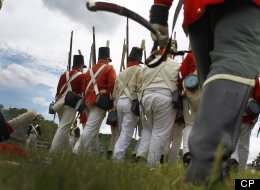
Professional re-enactors hired by Parks Canada marched on the Halifax waterfront as if braced for an American attack, but no one represented the First Nations soldiers who fought for the British colony.

Thousands of First Nations soldiers helped turn the tide of the war in British and Canadian favour.

"(We) certainly would not have been able to save our territory if not for the native contribution," said site manager Rob Roe.

Parks Canada has not officially replied to CBC's query about the missing aboriginal re-enactors, but Roe said he didn't know why aboriginals were not represented in the Halifax re-enactment.
Comment:  One detail missing from the article: Was this a reenactment of a particular event in Halifax? In which Natives might not have participated?

Or was it a general reenactment of the War of 1812, in which Natives were key players? In that case, the reenactment should've included them.

For more on the War of 1812, see Aboriginals Mark Canada Day 2012 and War of 1812 Documentary.

July 01, 2012

Aboriginals mark Canada Day 2012

July 1 is Canada Day, so a couple of postings on the subject:

Aboriginals Seek to Raise Awareness of Role in Country’s Formation as Canada Day Is Marked

By Elle Andra-WarnerCanada Day—that country’s equivalent of the Fourth of July, the U.S.’s Independence Day—is fraught with ambivalence for aboriginals, and perhaps even more so this year, as the country marks the 200th anniversary of the War of 1812.

Aboriginals, First Nations foremost among them, have long emphasized their role in the founding of the country. It was supposed to be a collaborative effort, the formation of this nation, and no where was that more evident than during the War of 1812, when the U.S. went to war with the British, trying to encroach on Canadian territory.

During this war between Britain and United States, more than 10,000 First Nations warriors fought as British allies to stop the American invasion of British Canada. Though these aboriginal fighters played a major role in the victory for Britain and Canada, there is hardly a mention of their contribution and sacrifice in today’s history books or monuments.

This year, with the 200th anniversary of the war’s beginning, aboriginal groups are working to change those perceptions. Forefront among them is the Assembly of First Nations (AFN), which will hold a series of public events designed to honor the warriors while educating Canadians about the significant role of First Nations in the War of 1812 and in the making of Canada.
White people, here’s your one-time Canada Day special: Native people apologize back!

By Drew Hayden Taylor[S]ome in the native community feel that perhaps we are being a little lax in not issuing an apology of our own.

We are not without some culpability. In the centuries that have passed since that fateful day of contact, we ourselves have been negligent and irresponsible in not acknowledging our liability in many regretful incidents and events in the past.

So in the spirit of cooperation, I would like to offer up these apologies to the people of Canada on behalf of the NAFNIP (native/aboriginal/first nations/indigenous people):

We hereby apologize for being so inconsiderate as to occupy land that, one day, your people would want. Even though we did not have a postal system or an Internet, this was an inexcusable oversight. We hope you are enjoying it.

We apologize for having so many politically correct and incorrect names for you to call us--everything from native to aboriginal to first nations to wagon burner to status-card number 48759375876-1.
Comment:  Hayden offers more "apologies" in that vein.

For more on holidays, see National Aboriginal Day 2012 and Heritage Month and Tribal Summit.

October 11, 2011

War of 1812 documentary

War of 1812 documentary offers aboriginal perspective

First Nations people were big losers in battle

By Randy Boswell
A new U.S. documentary, which was to be aired Monday, ahead of next year's bicentennial of the War of 1812 puts a different spin on the enduring debate over who won the historic battle between British Canada and the fledgling U.S., instead highlighting the unambiguous defeat suffered by North America's aboriginal nations as a result of the war.

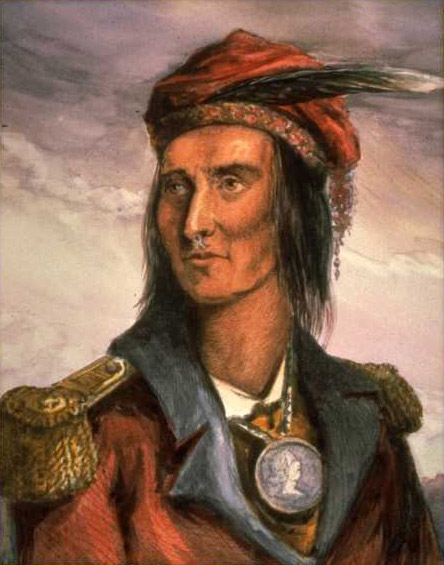
The two-hour film, produced by the Buffalo, N.Y.,-based PBS affiliate that has millions of viewers in southern Ontario, casts the native allies of the British-Canadian forces--led by the heroic Shawnee chief Tecumseh--as fierce and effective fighters in resisting American invasion attempts.

But the resulting deadlock in the war, which left North America's borders intact after 2 1/2 years of fighting, also ended Tecumseh's dream of a confederation of Indian nations with large, secure territories and a status comparable to the British colonies and American states.

The documentary, simply titled The War of 1812, "clearly deals with the fact that the one group that lost heavily is the natives," Canadian military historian Peter Twist, a consultant on the film, told Postmedia News.
Comment:  For more on the War of 1812, see War of 1812 Bicentennial Without Indians?

May 24, 2010

War of 1812 bicentennial without Indians?

Natives left out of War of 1812 bicentennial planning, groups sayNatives need to play an important role in celebrations marking the bicentennial of the War of 1812, say Parks Canada documents obtained by Canwest News Service, but First Nations groups say that isn't happening yet.

There are myriad references in 166 pages of documents to making sure natives and their "pivotal role" in the war to repel American invaders are properly recognized at historical 1812 sites and in interpretation centres.
And:But native groups say that is precisely what hasn't happened so far.

"Even if it's overdue, we welcome this," said Maurice Switzer, communications director for The Union of Ontario Indians, an advocacy group for 42 member First Nations across Ontario.

"The one thing that's important is that we do be engaged in the process. We don't want a bunch of non-native academics or civil servants deciding on what's the best way to do this. It's our history. Ask us."

Mr. Switzer says a perfect example of what is wrong with how the native role in the war has been underplayed is the famous Niagara-area memorial to British officer Sir Isaac Brock, who died resisting an American advance at the Battle of Queenston Heights in October 1812.

"One of the most memorable monuments in Canada is the one of Sir Isaac Brock overlooking Niagara River," he said. The statue is 56 metres high. "I knew there was a little marker somewhere on the park grounds," for the native role in the battle. "I couldn't find one staffer that could identify that location for me. Way down a hillside, all overgrown with moss and weeds, was a little teeny marker that acknowledges 'harassment' by Indians of the enemy. No specific names."

Mr. Switzer wonders if the government is reluctant to play up native involvement in helping build the country because it might strengthen land rights claims.

"It just sort of seems to take a long, long time to get around to admitting First Nations peoples [and] Aboriginal Peoples have played a big role in contributing to Canada being the successful country it is," he adds.

"It's quite likely that if it wasn't for the First Nations' support of leaders like Tecumseh . . . the flags that are flying over our public buildings in this country would probably be stars and stripes."
Comment:  Interesting how we keep seeing the same story over and over. Organizations promise to include Indians in planning celebrations and commemorations, then don't do it.

The British-Indian alliance is why many writers speculate that the Indians would've fared better under British rule.

For more on the subject, see Winning in Tecumseh's Vision.