Trail of Tears: Cherokee Legacy (Directors Cut)“Trail of Tears Cherokee Legacy” explores America’s darkest period: President Andrew Jackson’s Indian Removal Act of 1830 and the forced removal of the Cherokee Nation to Oklahoma in 1838. Nearly a quarter of the Cherokee National died during the Trail of Tears, arriving in Indian Territory with few elders and even fewer children. Presented by Wes Studi and narrated by James Earl Jones.
Distinguished Awards:
Silver World Medal for History, New York Festivals 2007
Silver Film Award, Telly Awards 2007
Best Documentary, American Indian Film Festival 2006
Founder’s Award, International Cherokee Film Festival 2006
Best Documentary DeadCenter Film festival
Best Feature Documentary Native American Music Awards
Platinum Best of Show Aurora Awards
Winner AEGIS Awards
James Earl Jones narrates Rich-Heape Films, Inc.'s "Trail of Tears Cherokee Legacy"
Noted actor James Earl Jones had previously provided his voice to Rich-Heape Films, Inc. award-winning documentary Black Indians: An American Story. Mr. Jones, who is of blended African and Cherokee heritage, narrates in his customary and convincing tones and will lead an already distinguished group of celebrity voices.
Wes Studi, the best known Cherokee actor, presents the documentary film, speaking on camera in his native tongue (with subtitles). Mr. Jones and Mr. Studi are supported by the celebrity voices of actor James Garner, Crystal Gayle and actor John Buttram and former Virginia Gov. Douglas Wilder reading diary excerpts, and a host of historical experts from major universities.
Endorsed by the Cherokee Nation and the Easter band of Cherokee Indians.
The Trail of Tears: Cherokee Legacy (2006)“In this movie, presented like a documentary, we learn volumes about the Cherokee nation at the time of Jackson's Indian Removal Act.”
“Liked how the speaking documentaries were interspersed with the re-created scenes.”
“The movie is well screened and the documentary is vivid and accurate.”Photo album:
Comment: I watched this documentary earlier this year. I'd say it's good, not great, on the events leading up to the forced march. For that part of the subject, the Trail of Tears segment of We Shall Remain is probably better.
Where it shines is in the description of the Trail of Tears itself. You learn a lot--maybe too much--about the deplorable conditions as people waited in camps, then moved. It's evenhanded, too. We learn that some US officials charged with organizing the march tried to delay it until the weather was better, supplies had arrived, and so forth.
Trail of Tears: Cherokee Legacy isn't necessarily the definitive documentary on the Trail of Tears, but it's a solid piece of work. Rob's rating: 7.5 of 10.
Hey, documentarians: How about visiting a rez besides Pine Ridge and reporting on the beauty, culture, dances, kids, and basketball there?
Right now the tally seems to be roughly Pine Ridge 7, Navajo 3, other 564 tribes zero.
Let the discussion begin
This led to a discussion with my Facebook friends:Although I agree, more coverage of the healthy aspects of the people is important, I don't feel we've seen enough of the continuing negative impact of this society on the natives.I'm all for looking at mainstream society's impact on Native nations. My point is that there are many, many ways to do that besides the obligatory visit to Pine Ridge.Yeah!!I think I'm watching the third PBS special in a row whose theme is, "Native Americans have a rich culture and history, but we know little about them. To remedy this, we decided to visit Pine Ridge...."
It's the 2013 version of the century-old stereotype that Indians are all about chiefs, warriors, tipis, and buffalo. Uh, no.
Heck, put the names of the 566 tribes in a hat and pick one at random. Anything but the umpteenth article/video/Johnny Depp drive-by.
What's up with Lakota docs?
If you didn't know anything about Indians until you visited Pine Ridge, and now you're all about helping the Lakota, I have to wonder about your motives. You're ignoring about 98% of the story by focusing your attention in one place.Anyone who wants to film a documentary on Indians really ought to come to AZ. We have "urban" reservations (three, at least, right by Phoenix), and last week I was up north in the White Mountain Apache reservation, which is in a beautiful forested area. Of course, we have the Navajo completely surrounding the Hopi reservation, which I always thought was odd. Plus, of course, there are several Indians who go to Norah's school who don't live on reservations. It's a smorgasbord!Right, although I think the Navajo Nation is also overrepresented. But if you want a lot of tribes in one region, try Oklahoma, Arizona, or New Mexico. Or Southern California.If someone wants to see modern Native Americans, the story can be found in one or all of the 39 Nations/tribes in Oklahoma. As I always say, the best kept Native secrets are in Oklahoma.For more on the subject, see Bridge the Gap and Born to Explore and Pine Ridge Gets Media Attention.
Moses Brings Plenty: Representing for 'Urban Rez'Urban Rez is a documentary about the relocation program that President Eisenhower put into place in the early 1950s. Urban Rez helped me to understand and educate me about the relocation process.The Medicine Game Premieres September 24 on Public TelevisionTucked away in central New York State is the Onondaga Nation, a sovereign Native American community known to produce some of the top lacrosse players in the world. ... Enter the Thompson brothers–Jerome "Hiana" and Jeremy–who are driven by a single goal of beating the odds against them and playing lacrosse for national powerhouse Syracuse University.Scot who saved American buffalo subject of film“He realised that if you eliminated the buffalo, you eliminated the Native Americans, and that was the mindset of the American government. Scotty could not understand this because he had tremendous respect for the Native Americans.”Below: Moses Brings Plenty.
Some reports from this year's Toronto International Film Festival:
First Nations filmmakers slam ‘Hollywood Indian’ image“Our iconography has been peppered through film since the inception of film so we’ve always associated with film, but have never been truly represented and you’re starting to see a shift in that,” said filmmaker Jeff Barnaby (“The Colony”), who was born and raised on a Mi’gmaq reserve in Canada’s Quebec province.TIFF’s native-Canadian features leave stereotypes in the dust[W]hen one of the world’s foremost film fetes programs three native-themed pictures pretty much back-to-back–a documentary, Hi-Ho Mistahey!, by National Film Board veteran Alanis Obomsawin, and two dramatic features, Jeff Barnaby’s Rhymes for Young Ghouls and Empire of Dirt, directed by Peter Stebbings–there’s a near-automatic tendency among mainstream pundits, regardless of ideology, to try to clump (ghettoize?) them together for purposes of winkling out big meanings, common threads, comparisons and contrasts. Revenge on the Rez: Roseanne Supernault of 'Rhymes for Young Ghouls'Roseanne Supernault is an award-winning Metis Cree actress whose recent work includes the acclaimed series Blackstone--and with Rhymes for Young Girls, she's again featured in a gritty drama set on a First Nations reserve. Yet Rhymes for Young Ghouls, a revenge-fantasy story that tackles the legacy of residential schools and takes place on the fictional Red Crow Mi'kmaq Reserve in 1976, is quite different. On the website of the Toronto International Film Festival, where Rhymes for Young Ghouls had its premiere on September 9, the film is described as "an S.E. Hinton novel ... re-imagined as a righteously furious, surreal thriller."Empire of Dirt: a busy post-TIFF life ahead“It was surreal,” [actress Cara] Gee recalled of the experience, a year after filming the low-budget drama about three generations of Cree women fighting to break free of a cycle of shame, addiction and bad decisions. “I was very, very nervous my first time seeing my dumb face in a giant screen. That’s trippy.”Aboriginal film 'Empire of Dirt' 'not trying to shove issues down throats'"We're not trying to shove any kind of issues down anyone's throat. It's a human story and hopefully that's what comes through," said Cara Gee, who plays a young single mother and former addict trying to save her teenage daughter from making the same mistakes she did.Comment: For more on TIFF 2013, see Hi-Ho Mistahey! and "Big Year" for Native Films at TIFF.
Editorial: Film provides true look into reservation communityPride and Basketball is a documentary that highlights the role that basketball plays for the community of Lame Deer, Mont. located on the Northern Cheyenne Reservation, as told from the perspective of current players, past greats, and community members. Pine Ridge: Venice ReviewThe Bottom Line A familiar style of magic-hour ethnography yields some entrancing and unflinching visions of American margins.‘Bury My Heart With Tonawanda’ selected for two film festivalsIt is the story of a young man with Down syndrome who escapes while being transported to a home for the insane in the late 1800s and finds his way into Western New York’s Native American community.
By Dominic MassaR.J. and Jay Paul Molinere, two of the stars of the Louisiana-based reality show “Swamp People,” were arrested Friday on battery charges, stemming from a fight at a convenience store nearly a month ago, the Terrebonne Parish Sheriff’s Office said.
Roland “R.J.” Molinere Jr., 51, and his son Roland III, 25, known as “Jay Paul,” both of Bourg, La., face aggravated battery charges. They turned themselves in to sheriff’s deputies on Friday, after a warrant was issued, according to a news release from Terrebonne Sheriff Jerry Larpenter.
The father and son are stars of the History Channel show "Swamp People," which chronicles the lives of south Louisiana alligator hunters.And:The Molineres have been featured on the popular "Swamp People" show for the past two television seasons.
"A Native American hunter with a fighter’s instinct, R.J. Molinere burst onto the scene two years ago and made a name for himself by catching some of the season’s biggest gators," reads the show's web site.
"Off the swamp, he’s a two-time world champion arm wrestler who channels the stress of hunting into his competitive drive," reads his bio. "Jay Paul Molinere is R.J.’s son, best friend and right-hand sharpshooter. This season, Jay Paul begins to assert his independence, putting extra pressure on his relationship with his father."Comment: For more on the subject, see Houma Hunters in Swamp People.
Below: "Roland Paul Molinere III (left) and Roland Paul Molinere Jr. were both booked into the Terrebonne Parish Jail for aggravated battery with a $1,000.00 cash bond each."
By Cassandra SzklarskiHi-Ho Mistahey! explores the wide disparity between educational opportunities for First Nations communities and the rest of the country.
It centres on the children of Attawapiskat, who have been waiting for a school for more than 10 years.
The community’s previous elementary school was closed in 2000 due to toxic land contamination. Ever since, students have been forced to learn in portables that have degraded substantially with each harsh northern winter. Today, the structures are rundown, drafty and infested with rodents, says Obomsawin.
Aboriginal presence at festival a growing trend, say native filmmakersOn Sept. 9, Barnaby will unveil the world premiere of his debut feature, Rhymes for Young Ghouls, which he wrote and directed. The irreverent drama is set against the backdrop of residential schools in the 1970s as it follows an aboriginal teen (Kawennahere Devery Jacobs) who exacts revenge on a sadistic Indian Agent.
Meanwhile, Obomsawin's doc, Hi-Ho Mistahey!, will make its world premiere this Saturday with a look at the plight of the Attawapiskat First Nation in northern Ontario and the lack of funding for the education of children in First Nations communities.
Between those two features and the Peter Stebbings-directed drama Empire of Dirt, which debuts at the fest on Friday, "it turned out to be a really big year for First Nations films," says Canadian features programmer Agata Smoluch Del Sorbo.
Barnaby predicts the trend will continue.
"I think there's a huge fascination with film on any native reserve, because there's so little to do there, and nine times out of 10 what you're doing is kind of occupying your time going to the movies or playing video games," he said. "So, I think the medium really has a presence in native reserves, particularly because there are so many films out there with native people in them.
Below: "Jeff Barnaby, left, will be one of several aborignal filmmakers screening films at this year's Toronto Film festival. He will be debuting his feature Rhymes for Young Ghouls, which stars Kawennahere Devery Jacobs, right." (Galit Rodan/Canadian Press)
Documentary Film, Standing on Sacred Ground, Premieres in ReddingStanding on Sacred Ground shares eight stories of indigenous communities around the world protecting their traditional sacred lands from government megaprojects, consumer culture, resource extraction, competing religions, tourists, and climate change. It was produced by the Sacred Land Film Project, sacredland.org, a project of Earth Island Institute.
Pilgrims and Tourists in the Pastures of Heaven focuses on the indigenous shamans of the Altai Republic, Russia, and Northern California’s Winnemem Wintu Tribe who find common ground in defending ancestral burial grounds and protecting their sacred places. In both countries, communities are confronting changes from modernism, recreational land use, and resource development.
Winnemem Wintu tribal members remember the exhumation of their relatives in the 1940s, to make way for the rising waters of Shasta Lake, the largest reservoir in California. They face an uncertain future and a second flood, if the US government’s plan to increase the height of Shasta Dam is approved by Congress. Dozens of sacred sites and burials would be affected by the increased water storage. Teenage girls grind herbs on a medicine rock during their coming-of-age ceremony on the banks of the McCloud River, as elders protest plans to enlarge one of the West’s biggest dams and forever submerge this touchstone of a tribe.Comment: For more on the Winnemem Wintu Tribe, see Winnemem Wintu Oppose "Frankenfish" and Boaters Interrupt Winnemem Wintu Ceremony.
I watched two documentaries on the Lakota recently:
Bridge the Gap to Pine RidgeIn Bridge the Gap, host and global explorer Chris Bashinelli travels the world to experience life outside of his hometown—Brooklyn, New York. In this program, he visits the Pine Ridge Indian Reservation to explore a culture all but expunged from the history books, that of the Oglala Lakota Native Americans. While there, he embarks on a life-changing buffalo harvest, gets “schooled” by the women’s college basketball team, visits with a 14-year-old suicide prevention activist, and finds himself shoulder deep up a cow’s backside while trying to better understand employment issues on the reservation. With humor and pathos, he uncovers stories of hope and learns how culture has prevailed in the face of adversity.
“What do you want people to remember about you?” Chris asks Martin Bad Wound, a respected community leader—“It ain’t just me I want you to remember. It’s my people. We ain’t all depressed, we ain’t all oppressed, we ain’t all alcoholics. We all want something out of life. We’re just like you.”The words of Martin Bad Wound echo in Chris’s mind. Martin is a man living on the brink of death. He has a bleeding spleen, a vertebrae sticking through his lung, a club foot, diabetes, high blood pressure, and he needs open heart surgery. At 45-years-old he looks no less than 60. Martin is an Oglala Lakota Native American. What’s most remarkable is that despite his immense physical pain, he continues to put others first. Martin goes out into the community and finds day labor work for the reservation’s youth, helping to fight the staggering 80% unemployment rate. Martin represents a larger metaphor for the Lakota way of life, one that is not normally portrayed on American media outlets—selflessness. Tribe first. Self last.
24-year-old Chris Bashinelli immerses himself fully into Lakota culture on this most personal journey in order to flip the media’s “negative” lens. The adventure begins with a buffalo harvest. Witnessing a two thousand pound animal die completely shifts Chris’s perspective on food and sacrifice. Patricia Hammond, a community volunteer, leads the hunt and ceremony with reverence.
From there, Chris tests his skills on the court with the women’s college basketball team, embarrassing himself beyond belief. He learns that basketball is more than just a game in Pine Ridge, it’s a way out of poverty and into the classroom. He’s sees more proof of the giving spirit of the Lakota people when he meets a student, whose coach gave her food, clothing, and a home, for nearly 10 years—so she could receive her education.
A 12 hour day of ranch work with a young Lakota man named Marcus, reveals some unique correlations between the “Lakota” and the “Western” mentality. But it’s the evening with the Suicide Prevention program that is inspiring more than one could imagine. After a fourteen year old girl shares her story of attempting suicide, when Chris seems to have lost all hope, the group rallies with love in support of Chris, a complete stranger, to remind him of the importance of looking beyond ourselves.
In the Black Hills of South Dakota stands a memorial to Crazy Horse, a Lakota warrior who symbolizes the Native American spirit. This land is sacred land. Richard journeys out West to learn about the Lakota Nation, the original hunters of the Great Plains whose history revolved around the buffalo. Discover how the culture of the Lakota people is still very much alive and celebrated through art, dance and song. Join Richard as he discovers the legend of creation of the Lakota people and visits Wind Cave, the location where all life was said to originate.Crazy Horse Monument! Erecting the teepee! Richard with Gus Yellow Hair! Taking notes from these skilled dancers! Richard climbing the teepee!
Rob's review
Both documentaries did a decent if superficial job. Both had a problem or two. Bridge the Gap was a little too much about Bashinelli and his misadventures. The white guy has to be the star in a Native drama.
This reached its climax when he became overwrought as the Lakota youngsters told him about trying to commit suicide. He went off to a corner where he tried to choke back sobs. The kids had to comfort him, even though they're the ones living with suicide every day. Poor white guy who can't imagine a life so hard that it impels people to kill themselves.
At the end, the Lakota watched the episode and had a few criticisms. They wanted to see a basketball game, a rodeo, a powwow. But no one said what they'd cut to make room for more segments. The show actually had a decent selection of slices of life.
Born to Explore was a little too gushing about Lakota spirituality. Everything inspired a sense of awe, even though it didn't go deeper than what you could read on thousands of Web pages. The Lakota believe all life is connected...wow.
Host Richard Wiese relied too heavily on stereotypes: buffalo, tipis, wolves, chiefs, warriors, dances, ceremonies, etc. Was it necessary to feature a white guy who makes buffalo-hide tipis? Especially since tipis aren't a part of everyday Lakota life? Or a Lakota artist who admires the wolf and the elk as well as the buffalo? What about the eagle and the bear? Can we talk about being one with nature without them?
But both Lakota docs gave a more positive and well-rounded view of the Lakota than the 2011 Children of the Plains special on 20/20. Bridge the Gap offered more scenes of people working and helping each other, while Born to Explore offered more history and culture. Bashinelli even criticized the US for treating the Indians unfairly.
All this should be unremarkable, but it's more than Diane Sawyer did. Even though she had more money and more experience--especially compared to the 24-year-old Bashinelli. If you had to learn about the Lakota from one of these shows, Bridge the Gap to Pine Ridge probably would be your best bet.
The voyage of Meriwether Lewis and William Clark to explore the West began in May 1804 when the two captains and 27 men headed up the Missouri River. They reached the Pacific Ocean the following year, and on March 23, 1806, began the return journey. After crossing the worst section of the Rocky Mountains, the expedition split up. Clark took most of the men and explored the Yellowstone River country to the south. Lewis, with nine men, headed west to the Great Falls of the Missouri River where he split the small party still further. Six men remained behind to make the portage around the Great Falls. Lewis took the remaining three and headed north to explore the Marias River country of present-day northwestern Montana.
It was a risky, perhaps even irresponsible, decision. Lewis knew the Marias River country was the home of the Blackfoot Indians, one of the fiercest tribes of the Great Plains. Lewis hoped he could meet peacefully with the Blackfoot and encourage their cooperation with the United States. Yet, if they met a hostile Blackfoot band and a fight began, the four explorers would be badly outnumbered.
On July 26, Lewis encountered a party of eight young Blackfoot braves. At first, the meeting went well, and the Indians seemed pleased with Lewis' gifts of a medal, flag, and handkerchief. Lulled into a false sense of security, Lewis invited the Indians to camp with them. In the early morning of this day in 1806, Lewis awoke to the shouts of one his men--the Indians were attempting to steal their rifles and horses.
Lewis sped after two Indians who were running off with several of the horses, calling out for them to stop or he would shoot. One Indian, armed with an old British musket, turned toward Lewis. Apparently fearing that the Indian was about to shoot, Lewis fired first and hit him in the stomach. The Indians retreated, and the men quickly gathered their horses. Lewis then learned that one of his men had also fatally stabbed another of the Blackfoot.
Fearing the survivors would soon return with reinforcements, Lewis and his men immediately broke camp. They rode south quickly and managed to escape any retribution from the Blackfoot. Lewis' diplomatic mission, however, had turned into a debacle. By killing at least one Indian, and probably two, Lewis had guaranteed that the already hostile Blackfoot would be unlikely to deal peacefully with Americans in the future.Background on the conflict
Blackfeet IndiansFifty years before Lewis and Clark, the Blackfeet Indians had a reputation of being hospitable to Europeans, who occasionally even wintered with the tribe. By 1806, however, the world inhabited by the Blackfeet in present-day northern Montana had grown increasingly complex.
The Blackfeet were regular commerce partners with Canadian-based British merchants, and in their frequent visits to trading posts, the Indians exchanged wolf and beaver pelts for guns, ammunition and alcohol. This relationship had lasted more than 20 years, and during that time, the Blackfeet–armed with guns–had been able to dominate their Nez Perce and Shoshone rivals.
Eight Blackfeet warriors encountered Meriwether Lewis and a party of the Corps of Discovery in July 1806. After their initial fears of the armed strangers had subsided, the Indians decided to camp with the Americans. During this first day and night, Lewis explained the United States’ intent to bring about a comprehensive peace between all the Indian tribes of the west. He went on to add that the Shoshones and Nez Perces–mortal enemies of the Blackfeet–had already agreed to this peace, and would be receiving guns and supplies because of it.
To the Blackfeet, American plans represented a direct threat. As far as the Indians were concerned, giving guns to their adversaries only could result in a weakening of Blackfeet power. That night, the Blackfeet attempted to steal the expedition’s guns. Their plans went awry, and in the chaos that ensued, Lewis and Reuben Field each killed a Blackfeet warrior. The incident marked the first act of bloodshed between the western Indians and representatives of the United States.
The surviving Blackfeet returned to their tribe, and communicated what they had learned of America’s goals for the region. From that point forward, the Blackfeet regarded the Americans with hostility, and acted toward them similarly. Ironically, in the years that followed, Blackfeet war parties would be responsible for the deaths of three former members of the Corps of Discovery.
Warriors or boys?
A recent article spins the story a little differently:
Untelling the Big Lie: The Murder of Two Blackfeet by Lewis & Clark PartyAccounts of what happened leading up to the shooting vary depending on who you ask, but the result was the same. When Captain Meriwether Lewis shot a Blackfoot Indian on July 27, 1806, and one of his group killed another, the Blackfeet didn’t trust whites anymore.
In fact, the Blackfeet closed off their territory to whites for the next 80 years.
“Lewis and Clark came from a culture based on war and encountered a very peaceful people,” tribal elder G.G. Kipp told the Blackfeet Community College Native American Scholars Program, according to a story that appeared in the Great Falls Tribune in 2003. “But they wrote the history books saying we were brutal and warlike so they could justify what they did to us.”
Kipp is right, most accounts you find of the story of Lewis shooting a Blackfoot Indian paint Lewis & Clark as intrepid explorers and the Blackfoot as fierce and hostile. History.com even calls Lewis’s decision to explore Marias River country, the home of the Blackfoot Indians at the time, a “risky, perhaps even irresponsible decision.”
Lewis and his party of three explorers encountered a group of eight young Blackfoot on July 26 and at first, the meeting went well. Lewis was hoping he could convince the Blackfoot to cooperate with the United States. Here is one place the accounts differ. Most places say the eight Blackfoot were “braves” or “warriors,” but Blackfeet oral histories say they were young boys from the Skunk Band.
“They stayed with them and gambled with them,” he said. “There is a story of a race. In the morning, they went to part company and the Indians took what they had won.
“That was it,” Kipp told the Great Falls Tribune. “That’s when they were killed.”Here's the source for Kipp's comments:
As I recall, the documentary portrays the Blackfeet as teenagers or young men. They were basically gallivanting about, as young men are wont to do.
I don't recall mention of gambling or a race. I think the Indians merely wanted the guns. I don't know if they would've acted if Lewis hadn't talked about ending the Blackfeet's advantage by giving everyone guns.
When the Indians fled, I believe one took a shot at Lewis that whizzed by his ear. Lewis fired back and killed him.
Interesting to think what would've happened if the Indian had killed Lewis. Without Lewis's leadership, the expedition might've failed. If the expedition didn't report back, the US might've left the Indians alone for another decade or two. That might've given them enough time to build up their defenses to resist encroachment.
Anyway, A Blackfeet Encounter does a fine job of recreating the incident and putting it in context. The documentary is split roughly into four parts: America's history leading up to Lewis and Clark, the expedition and the incident, the eventual defeat of the Indians, and the Blackfeet's survival as a modern-day people. You couldn't ask for more.
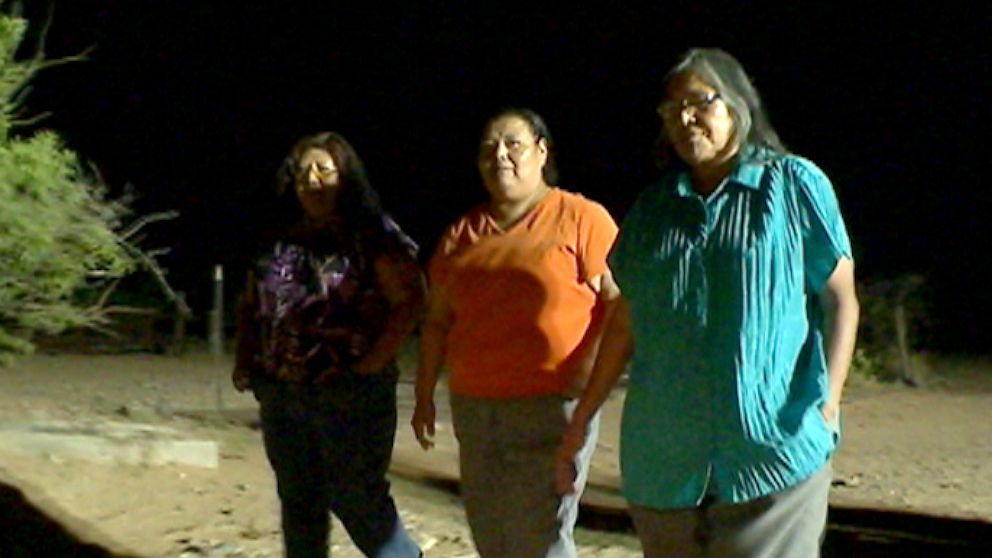
By Byron Pitts"Nightline" spent 48 hours with U.S. Border Patrol agents and the Tohono O'odham reservation police force to get a firsthand look at the battle on the border.
"The Tohono O'odham Nation is one of our most problematic areas," Arizona Commander Jeffrey Self of the U.S. Border Patrol told "Nightline". "The narcotics smugglers have moved up into the mountainous area. There is not a lot of access."
While border-crossing apprehensions in Arizona are down 43 percent from two years ago, it is a different, more complicated story on the Tohono O'odham Nation. Drug seizures on the reservation are steadily climbing--nearly 500,000 pounds of marijuana was seized last year, a number that has nearly doubled since 2010. Recently, Tohono O'odham police seized $1 million worth of marijuana in just one week.
But the Tohono O'odham tribal members are caught in the middle of a war between the Mexican drug cartels coming through their community and the U.S. Border Patrol officers who tribal members say have become more aggressive to stop them.
In the Tohono O'odham Nation is "The San Miguel Gate," an area on the U.S.-Mexico border considered to be sacred by the Tohono O'odham. It is the only place where Native Americans can freely walk across the border, but there, the only thing separating Mexico and the U.S. is a low fence guarded by a lone border patrol agent and a light pole powered by a generator.
Verlon Jose, a Tohono O'odham tribal leader whose family has lived on the reservation for generations, and other members of his tribe talked to "Nightline" at "The San Miguel Gate." Jose acknowledged that the Gate carries a myriad of problems.
"Drugs come through here, migrants come through here," he said. "We see harassment from individuals who are moving contraband north, moving migrants north. Homes broken into, vehicles broken into. It's gotten more aggressive."Comment: For more on Tohono O'odham, see Kitt Peak Observatory on Tohono O'odham Land and Jance's Tohono O'odham Mysteries.
Below: "The Tohono O'odham are caught in the middle of a war between the Mexican drug cartels coming through their community and the U.S. Border Patrol officers who tribal members say have become more aggressive to stop them."
By Christina RoseImagine if all it took to pursue your dream of making movies was to come up with seven written pages. Adrian Baker, producer of the animated series of nine half-hour shows, “Injunuity” did just that. “Whenever I talk to young filmmakers, I tell them I am living proof that six or seven pages can change your life,” he said.
“Injunuity” covers issues such as preserving sacred sites, the environment, health, language preservation and more. “We take information, make the story, then give it an animated background,” Baker said. “I had this project in my head for 10 years,” Baker said. Taking his idea, he wrote out the proposal and applied to Vision Maker Media. He received a “really positive” response, “And it took off from there,” Baker said, admitting that he was not new to the film scene and already had a comprehensive reel of films. “They knew what it would look like, and they wanted to do it. They gave me the initial funding,” he said.
Vision Maker Media is a Native organization that is heavily funded by Public Broadcasting. The group is always looking for provocative and engaging completed films from independent or public television producers. Their goal is to encourage works that address new and current issues reflecting the changing nature of Native American communities.
“We’re particularly interested in programs such as Native American Graduates, Women and Girls who Lead, and Veterans’ Issues,” said Shirley K. Sneve (Sicangu), Vision Maker Media’s executive director.Comment: For more on Native movies, see Running Deer Premieres at Ak-Chin and Black Cat in Space.
Pala Documentary About Tribe's History of Military Service in U.S. Nominated for Emmy AwardThe Pala Band of Mission Indians is proud to announce that their documentary, "Defending the Homeland: Native American Veterans in the United States Armed Forces," has been nominated for a 2013 Emmy Award by the National Academy of Television Arts & Sciences Pacific Southwest Chapter.
In the documentary, Chairman Robert Smith and members of the Pala Band of Mission Indians share intimate details of the Tribe’s history of military service in the United States Armed Forces.
"This documentary was dedicated to the many Pala Tribal members who made the ultimate sacrifice in service and we are proud it has been nominated for this very distinguished award," said Smith. "Our Tribe has a prominent tradition of participation in the United States military, so developing this documentary was a way for us to both preserve the stories of our courageous military leaders and share those stories with the world."
The documentary was nominated in the Military–Program/Special category. The Emmy Award winners will be announced on June 15 at the 39th Annual National Academy of Television Arts & Sciences Pacific Southwest Chapter Emmy Awards Ceremony in Las Vegas, Nevada.Comment: For more on Native documentaries, see Docudrama About Hominy Indians and LaDonna Harris as a "Maker."
By Ashlei KingA "Twilight" star is teaming up with the Osage Foundation and Fully Funded Films to shed light on an untold story.
They hope to make a film called "Playground of the Native Son."
The 1925 Hominy Indians professional football team represented 14 different tribes from 1925-1936.
"This is just another minority team that was really never recognized and we think it's about time they're recognized," associate producer Julia Lookout said.
In 1927, the world-champion New York Giants agreed to play Hominy in what they thought would be a joke.
"The coup de grace is the fact that they played the New York Giants and they beat them, so we decided to do a documentary and talk to a lot of the ancestors," Lookout said.‘Twilight’ actor to tell Hominy Indians story
Film's producer hopes to have it ready for a June release
By Shannon Shaw DutyThe filming for the docudrama Playground of the Native Son has wrapped and producer Celia Xavier hopes to have the documentary finished by June of 2013.
“We should have it finished in six months,” Xavier said at the Osage Nation Foundation Christmas Celebration Dec. 15, where cast and crew were invited. Director of the docudrama, Michael Nash, heard Xavier’s comment and said jokingly, “Eight months.”
Xavier said that when the film is finished she plans on having a showing in Pawhuska for Osages and area Natives. Xavier also wrote the Osage Tribal Murders documentary about the Osage Reign of Terror. Nash directed the 2010 documentary Climate Refugees, a film investigating mass migrations caused by the changing climate, according to the IMDb.com Web site.
According to the documentary Web site, the docudrama is based on the 1920s all-Native Hominy Indians professional football team and their 28-game winning streak. The 1925 Hominy Indians professional football team represented 14 different tribes from 1925-1936.Comment: For more on Indians in football history, see AMC Develops Carlisle Football Drama and The NFL's Oorang Indians.
Below: "The 1925 Hominy Indians professional football team represented 14 different tribes from 1925-1936."
Harris, one of three local women selected for the series, is a remarkable statesman and national leader who has enriched the lives of thousands. She has devoted her life to building coalitions that create change. She has been a consistent and ardent advocate on behalf of Tribal America. In addition, she continues her activism in the areas of civil rights, environmental protection, the women’s movement and world peace.
Artist Judy Chicago and Governor Susana Martinez were also selected for the series.
According to PBS, “MAKERS” tells the remarkable story of the most sweeping social revolution in American history, as women have asserted their rights to a full and fair share of political power, economic opportunity, and personal autonomy.Comment: LaDonna Harris is also well-known for adopting Johnny Depp as a Comanche.
By Chuck HagaThe Spirit Lake Nation’s continuing efforts to deal with deficiencies in its child protection system is about to get another round of national exposure.
The PBS news program “Frontline” has produced a two-part documentary titled “Kind Hearted Woman” featuring Robin Charboneau, a 32-year-old divorced single mother who lived on the Spirit Lake Indian Reservation.
The documentary follows her over three years, according to PBS, as she “struggles to raise her two children, further her education and heal herself from the wounds of sexual abuse she suffered as a child.”
The programs are to air April 1 and 2.
The tribe’s problems, especially allegations of sexual abuse of children and failure of authorities to investigate and prosecute sexual predators, already have received considerable regional and national attention.
The exposure has been promoted, welcomed or at least tolerated by some at Spirit Lake who have been critical of responses so far by tribal government, the federal Bureau of Indian Affairs and FBI. Other tribal members have lamented the attention, however, arguing that it paints a false picture of conditions and efforts by the tribe to make improvements.Comment: For more on violence against women, see VAWA Passes Over Conservative Objections and Grassley: Indians Can't Be Fair.
Documentary showcases filmmaker’s Native American heritageWhen she was 18 years old, Monique Verdin had no idea exploring her heritage through photography would lead to producing a documentary that captured intimate moments in her life as well as those around her.
Now at 32, the St. Bernard Parish resident has traveled across the country to share “My Louisiana Love” with many people.
“My Louisiana Love” tells Verdin’s story of returning to southeast Louisiana to reunite with her Houma Indian family. Capturing still images and video as a way to preserve the unique culture of her family, Verdin found herself in the midst of environmental devastation.
“I didn’t think I would show it in the way that I did, but life doesn’t turn out like you think it would,” Verdin said. “It’s like a 100-year story of three generations—my grandmother, my father and I.”Comment: For more on Native documentaries, see Eagle Boy Flies in Norway and Documentary About Jim Pepper.
By Vince DevlinIn this engaging documentary from Gry Elisabeth Mortensen that follows Sage through his year in Norway, the Montana Indian tries, with limited success, to make friends.
He hops on playground equipment with other kids only to see them jump off and head someplace else. They’re all good skiers; Sage is just learning. His attempts to talk to them are met with “Sorry, we don’t speak American.”
When he goes home, it’s not to one like his house in the forest back in Montana, but to a unit in an city apartment complex.
When International Day comes up at Sage’s elementary school, Sage’s father, Dean, wants Sage to dress in his colorful costume and feathers and dance like he did at the powwows back home, in front of the whole school.On Facebook:
By Theresa GoffredoPepper's heritage is Creek and Kaw and the film shows a rare, personal glimpse into the life of this jazz innovator, who made his name on the European stage rather than back home in America.
The film pays tribute to Pepper's life along with sharing his music, including a recording of his grandfather, Ralph Pepper, singing the original chant that became the basis for "Witchi Tai To."
Pepper played the tenor saxophone and the film opens with him performing the song "Caddo Revival" during the Kaw Pow Wow in Oklahoma, where Pepper grew up.
In the film, Pepper is recorded as saying music created by American Indians "comes directly from the ground, from the earth, from the four directions and the music is a healing force."Comment: For more on the subject, see Kaw/Creek Jazz Saxophonist and Hard Rock Promotes Native Musicians.