Showing posts with label law enforcement. Show all posts

December 29, 2015

Blacks = "threat" to America

As you probably know, a Cleveland cop killed 12-year-old Tamir Rice for the "crime" of being black. Today a grand jury failed to indict the cop for wrongdoing. Two postings on the subject:

Until White America looks at Tamir Rice and sees their own children, there will be no racial justice in the U.S.

He was 12, playing with a toy gun, in a locale with open-carry laws. Tamir Rice was executed for being a black boy

By Chauncy DeVega
Tamir Rice joins so many others, lives prematurely ended by the police, and their bodies put in the necropolis of Black Death in the Age of Obama. When protesters shout “Black Lives Matter” it is a statement of rage, protest and a demand for justice at that ugly national mausoleum.

In reflecting on the myriad of circumstances where the lives of unarmed and innocent black people have been stolen by America’s police—while surrendering; following police orders; sleeping in cars; sleeping at home; seeking help after car accidents; opening up wallets; walking down the street; shopping; playing in a park; standing outside; riding bicycles; asking for help with a mentally ill relative or neighbor; breathing air and just being nearby—it is abundantly clear that there is one unifying factor common to all of those examples.

To be black is to be under assault by American society and its legal system.

It is the stigma placed on those who because of an arbitrary melanin count and America’s ‘one drop rule’ are placed on the bottom of the country’s racial hierarchy.

To be black in America is also to occupy a place of fear and threat in the white popular imagination and collective subconscious: “black people” are “scary”; “black crime” is an “epidemic”; the “black family” is “broken”; “black men” are dangerous, violent, hyper-libidinal “thugs”; and “black women” are promiscuous “welfare queens.”

If you are black in America then preemptive violence by the state, its police, their allies, and white folks en masse under “stand your ground laws,” is presumed to almost always be legitimate and justified. To be black is to be guilty until proven innocent. America’s system of jurisprudence is inverted along the color line.

To be black in America is ultimately a state of existential terror, threat and violence.
The American criminal justice system is guilty of killing Tamir Rice

If, as the prosecutor said, officers followed policy in the killing of Tamir Rice something is horribly wrong

By Daniel Denvir
There are no doubt many instances when officers break the law by beating, shooting and lying.

But the most brutal features of the criminal justice system aren’t a result of the system malfunctioning; the biggest problem is that the criminal justice system often functions explicitly as it has been designed to work by politicians, prosecutors and police chiefs. That’s why 2.2-odd million people were behind bars in this country at the end of last year.
And:Injustice is a feature, and not a bug. America has a formidable gun culture, and an enormous number of guns. The country has extraordinary poverty concentrated in segregated neighborhoods, and lots of street violence. Americans use a lot of drugs and, because many drugs are illegal, a large illicit market to feed narcotic appetites. American politics has for decades fruitlessly tried to solve these problems through mass incarceration and aggressive policing. Police officers are on the front lines of a war created by politicians.

The challenge is not correcting dysfunction in the criminal justice system. In reality, the allegedly textbook shooting Tamir Rice is a chilling reminder that the fundamental problem is the criminal justice system’s very function.
Comment:  For more on the subject, see Police Shoot at Black Targets and Stop-and-Frisk = Controlling Minorities.

March 04, 2015

Police shoot at black targets

If you're black in America, stereotypes kill

By Olivia A. ColeBlack faces as shooting range targets—some with bullet holes through their foreheads and eyes—stings particularly painfully when, according to the Federal Bureau of Investigation, a white police officer used deadly force against a black person almost two times a week between 2005-2012. Police officers like Darren Wilson and wannabes like George Zimmerman often use the "I feared for my life" defense when attempting to justify the shooting and killing of unarmed black kids. We all remember Zimmerman—a trained MMA fighter—claiming that 17-year old Trayvon Martin overpowered him, forcing Zimmerman to use his weapon, and more recently, Darren Wilson—6'4" and 210 pounds—testified that he "felt like a five-year-old holding Hulk Hogan" in regards to his encounter with Michael Brown, calling Brown a "demon" and an "it." Wilson's testimony especially exposes something particularly disturbing about the way white people (even police) perceive black bodies—as dangerous, evil, inhuman—and what that means for the safety of black lives.

Research backs this up. In a study carried out by the University of California, research showed that dehumanization of black people led to increased violence (trigger warning for racist imagery):[Police officers] who compared blacks to apes were seen as having a higher level of dehumanization. Researchers compared ... officers' personal records against their levels of dehumanization towards blacks. They found that officers who had higher levels of dehumanization towards blacks were more likely of having a history of using force against black children in custody, than those who did not dehumanize blacks. Use of force was defined for the purposes of the study as instances of an officer using a takedown or wristlock; kicking or punching; striking with a blunt instrument using a police dog, restraints or hobbling; or using tear gas, electric shock or killing. Surprisingly, only dehumanization was found to increase a police officer's use of force against blacks. Both conscious and unconscious prejudice did not have any link to the likelihood of police officers using violent force against black children in custody.
And:We should remember this demonization of black people—whether young or old, male or female—when police take the lives of unarmed civilians: The police, like all of us, have been born and bred on a media culture that feeds us the myth of White Heroes and Black Thugs. With testimonies like that of George Zimmerman and Darren Wilson, Americans are persuaded to believe that it's scary being a cop (or a neighborhood watchman) and scary being face-to-face with black men. But what are we supposed to believe when police officers are caught using pictures of black men as target practice in the shooting range? That doesn't sound like fear: It sounds like hate. It sounds like the ideological construction of an enemy. The North Miami Beach officers have also claimed to have photos of Osama bin Laden in the range as a target. Is this how officers are molding their vision of the civilians they are sworn to protect? By equating them with terrorists?

A recent study found that police officers come out of the police academy already having a bias toward use of force, and that there is alarming correlation between race and perceived threat. But what of police who thrill themselves with this perception of threat? Literally training their eye in the shooting range to see a black face and shoot? Is it really fear triggering the gun, or is it the result of a well-practiced drill?

Like in the Implicit Association Test, in which the test taker must quickly choose whether to apply "bad" and "good" words to black or white people (pain, joy, horrible, pleasure) in the blink of an eye, in which all our prejudices are tested, perhaps police like those in North Miami Beach are underestimating what they teach their own brains when they tape up pictures of black boys to gun down. What it comes down to is that we are supposed to believe police officers' fear because we are supposed to believe that people with black skin are to be feared. We are sold the officers' fear and convinced to ignore the fear of being black in America, born with a target painted on one's face.
Comment:  Substitute "Savage Indian" for "Black Thug" and the same analysis applies. Indeed, the police are more likely to shoot Natives than any other minority.

Mascots and other stereotypical images contribute to the violence against Natives--just like the targets on the shooting range. If you see Natives as cartoon characters fit only for product labels or Halloween costumes, you're less likely to treat them as human beings. You're more likely to react negatively when they don't match your expectations.

Many Natives have heard comments along the lines of "You're not a real Indian" or "Where are the real Indians?" Anyone who says such things is doubtful and suspicious by definition. How are you supposed to receive fair treatment when the person opposite you questions your existence?

For more on the subject, see Blacks Killed Because of Racist Stereotypes.

October 31, 2013

Elsipogtog protesters beaten, insulted

Although the fracking conflict between Mi'kmaq protesters and the RCMP is over for now, there's still the aftermath to consider:

Mi’kmaq Warrior Society members say they were beaten, roughed-up after arrests

By Jorge BarreraTwo members of the Mi’kmaq Warrior Society say they were roughed up and beaten by RCMP officers and jail guards after they were arrested following a heavily-armed raid on a Mi’kmaq led anti-fracking camp in New Brunswick earlier this month.

Jason Augustine, Warrior Society district chief, said he was kicked in the head by an RCMP officer after he was cuffed and arrested during the Oct. 17 raid.

Augustine said he was later diagnosed with a concussion at the hospital in Moncton, NB.

“I was kicked in the head three times when I was taken down,” said Augustine. “I wasn’t resisting arrest, I had my hands behind my back, and this one RCMP started bashing my head in.”
RCMP investigating officer who uttered slur during raid on Mi’kmaq-led anti-fracking campAn RCMP officer involved in the Oct. 17 raid on a Mi’kmaq-led anti-fracking camp in New Brunswick is under an internal investigation for saying “Crown land belongs to the government, not to fucking natives.”

An RCMP spokeswoman said the force was informed of the statement on Oct. 18 and immediately sent the officer home and he is now the subject of an internal investigation.

“This type of behaviour is unacceptable and is taken very seriously by the RCMP,” said Const. Jullie Rogers-Marsh.

Rogers-Marsh wouldn’t say whether the officer was suspended.
Comment:  For more on Elsipogtog, see Murphy: Natives Dismiss Canada's Generosity and Media Frames Elsipogtog as "Clashes."

September 29, 2013

Meth crimes in Breaking Bad

With the series finale of Breaking Bad, the hype is approaching the "breaking" point. Here's more on the show's connection with Indian country:

Breaking Bad or Already Broken? Drug Crime on the Rez Is All Too Real

By Walter LamarWhat does it say about safety in Indian country when a television plot featuring meth distribution incorporates tribal land? Breaking Bad might give Indian country the new name of "Broken and Bad" after the brutal television series, featuring tribal lands, exemplified a continuing public safety crisis. Season 5, Episode 13, entitled “To'hajiilee,” aired on September 8, 2013 and marks the beginning of the end for the wildly popular AMC series. It's also one more example of how the media persistently depicts Indian country as the place to go to commit drug crimes, murder, and general mayhem.

From the very first episode, and periodically throughout the series, the remote To'hajiilee lands have been the setting for drug manufacture, murders, and concealing evidence. To'hajiilee is a non-contiguous section of the Navajo Nation lying in parts of three New Mexico counties, about 32 miles west of Albuquerque. Despite its proximity to an urban area, To'hajiilee feels isolated and remote. A tangle of secondary roads, many both unmarked and unpaved, crisscross the reservation's 121 square miles. With only 2000 residents, you may go miles without seeing a soul. In "Breaking Bad," the series of crimes committed on these tribal lands (theft, murder, extortion, drug manufacture and distribution, assault and much else), set the stage for what promises to be a violent and action-packed series finale.
'Breaking Bad' Actor Jeremiah Bitsui Shares his Thoughts on the FinaleActor Jeremiah Bitsui, Navajo and Omaha, played Victor in eight episodes of Breaking Bad, the AMC television series that is set to end on Sunday night. The character was the subordinate of drug kingpin Gus, played by Giancarlo Esposito, who ended up killing Victor at the beginning of season four. Bitsui, who has remained an avid fan of the series, took a few moments to look back on the experience and share his thoughts on the finale with ICTMN.Comment:  Since I've watched only the first season of Breaking Bad, I can't say whether its depiction of Indian country is stereotypical. But Walter Lamar implies that it is.

Even if crimes on the rez happen exactly as depicted in Breaking Bad, that isn't the whole story. As with recent Lakota documentaries, the question is whether the series shows a range of tribal circumstances, both good and bad. Any show that highlights the bad and ignores the good is stereotypical even if it's technically accurate.

For more on the subject, see To'hajiilee in Breaking Bad.

August 20, 2013

Stop-and-frisk = controlling minorities

Ever since George Zimmerman profiled Trayvon Martin as a hoodie-wearing black criminal, racial profiling has been in the news. A prime example of this is New York City's controversial stop-and-frisk policy. Here a columnist tells us what stop-and-frisk is really about.

Memo to police: No, you’re not making us feel safe!

Racial profiling and stop-and-frisk are meant to make black and brown people feel safe? Here's what it really does

By Brittney Cooper
As depicted in “Fruitvale Station,” Grant was a 22-year-old unarmed man, murdered by a police officer in Oakland in 2008. The officer, who served two years in jail for Grant’s murder, claimed to be reaching for his taser instead of his gun. There is a scene near the end of the movie–it’s not a spoiler, because we all know the end at the beginning–where the police confront Oscar and his friends. The officers yell at the young men, demand their silence, resist having their actions questioned and insist upon their right to detain these people simply for asking clarity on why they are being detained.

This weekend, “The Butler,” a film about race and the American presidency, made a splash at the box office. But in Silver Spring, Md., moviegoers in this largely African-American suburb were subjected to watching the movie at a Regal Cinema with armed police officers present. I went to see the movie over the weekend where I live, and nothing about it says public safety hazard. Those police were not there to protect or to serve. They were there to maintain order, because apparently middle-class African-American moviegoers are always out of order and cannot be trusted to watch a film about race without misbehaving.

We should be outraged when citizens are profiled, intimidated and treated in this manner. But we have come to believe this is how things have to be.

America is a culture of law and order junkies. Myself included. I am personally addicted to the show “Law & Order,” although just about any crime procedural will do, and it seems there is a “Law & Order” rerun or marathon playing at any hour of the day. I’ve even taken a gander at “Law & Order: UK.” I love watching because at the most basic level, the good guys win and the bad guys get what’s coming to them. But somehow, I know our national, almost pornographic obsession with these shows, both scripted and reality-based versions, feeds an unhealthy narrative that there is someone there, lurking in the shadows ready to do us harm. We believe this, even though violent crime started falling in the early 1990s, long before Bill Clinton and the GOP-led Congress engineered the makings of the Prison Industrial Complex.

These shows about the ever-present threat of violent crime have helped to feed a culture of fear. White people fear black and brown people. The police, no matter their color, treat us as a credible threat not only to white people, but to them, and to each other. Therefore, black and brown people fear the police. These fears are only exacerbated by neoliberal economic policies, a shrinking middle class, declining global reverence for American imperialism, and the global policing of brown people through the Obama administration’s use of drone warfare. These shows point us away from this broader set of logic and make us believe that we are in a simple cops-and-robbers fantasy. Every time we see the bad guys go down, we believe a little more in upholding the law and miss the ways that this has become about maintaining order.

The obsession with order is precisely why Mayor Bloomberg and police commissioner Ray Kelly can almost explicitly advocate for racial profiling in the use of stop-and-frisk, predominantly toward black and brown men. Black and brown people moving freely through public space upsets the order of things. Profiling them is viewed as a necessary evil that leads to the greater good of safety for all some. The same logic is used to profile Muslim Americans. Even though such practices are unconstitutional, they are indebted to this insidious logic of order, one in which criminals constitute a permanent underclass, and everyone needs to know and stay in their place. And of course, race determines place.
Comment:  For more on the subject, see Tim Wise on Trayvon Martin and Bigots Protest Brown-Skins on 9/11.

July 30, 2013

Studi apologizes to Santa Fe Police

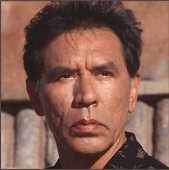
Actor Wes Studi apologizes to police

By Bill RodgersAn actor who was arrested last week on a charge of aggravated DWI has apologized for his behavior toward police during the arrest.

“While I cannot comment on the ongoing legal situation, I want to apologize to law enforcement officers for my behavior that evening,” actor Wes Studi said in a statement through a publicist. “Though it wasn’t apparent, I do have the highest respect for law enforcement.”

Studi goes on to say that, despite his behavior, the Santa Fe Police officers were professional. He states he “deeply respects” and appreciates that.

“I know I’ve hurt family, friends and supporters and I’m deeply sorry,” he states.
Wes Studi apologizes to Santa Fe Police but some fans unforgiving (Video)

By Roscoe PondAccording to the official website of KOB 4 News. Here are several of the immediate comments from New Mexico individuals after Wes Studi's apology. (Spelling & sentence structure corrected for readers).

Anthony Robbin--“Of course after the fact. After he has egg on his face. Alcohol does bad things.”

George Miller--“I am glad he apologized to the police, but he never apologized for his racist remarks he made (watch video!). He was my favorite actor, but no more and until he addresses those comments. I will not watch another of his movies. Again, go to 'www.krqe.com' and watch police video. The media seems to downplay his racist remarks, but it is there for the world to see. I hope he did not mean what he said, but maybe people don't care because he has and never will be a high profile actor like Denzil Washington or John Wayne--and after this he never will be!”

Carletta Murphy--“Blah, Blah. Blah! We've heard it all before. He's a jerk to everyone, (to) Anglos, Native Americans and always will be. The only thing he cares about is his ego and the bottle in his hand. It will happen again and I won't be surprised.”

Michael Dietz--“I believe that when any criminal says he/she is sorry. They are really only sorry they got caught.”

Joseph Sanchez--“It's said (that) when one is drunk the “truth” comes out!”

Louise Marquez--“I too take issue with Mr. Studi's very racist remarks. As an Anglo you can rest assured, actor or normal citizen, if I had made similar comments about a Native American or any other race. I would've been figuratively crucified by the media. I can't help but think that the only reason for his public apology was to attempt to salvage what might be left of his public (not to mention high-paying) career. Bigotry hurts in both directions. Thank you, Mr. Studi, for proving that racism is alive and well in all races!”
Comment:  Roscoe Pond should've corrected his own spelling and punctuation as well as the commenters'. <g>

For more on Wes Studi, see Wes Studi Arrested for DWI and Wes Studi Supports Gay Marriage.

July 26, 2013

Wes Studi arrested for DWI

Wes Studi charged with aggravated DWISanta Fe police confirm that Studi was arrested at 1 a.m. off of Old Pecos Trail and East San Mateo Road. The car he was found in was at a stop sign, and the two front tires were blown out.

Police said he refused a breath test, and was booked into Santa Fe County jail on a charge of aggravated DWI.
The details missing from the initial reports:

Native actor Wes Studi staggering drunk, spewing hate at police officer (Video)

By Roscoe PondNative American actor Wes Studi who starred in films such as “Avatar,” “Geronimo” & “Dances with Wolves” was arrested Friday morning on July 26, 2013 at 1 a.m. He was charged with aggravated DWI by Santa Fe police after Wes refused to take a field sobriety, breath alcohol & blood tests. He wanted a lawyer present while screaming derogatory words at the arresting officer. Wes was brought to jail & held with no cash bond at 4 a.m. He later pleaded not guilty when arraigned in court on Friday at 1:30 p.m. His bond was set at $3,000. The camera on the Santa Fe police vehicle shows Wes as staggering & drunk. He slurred his speech & admitted to driving. Then seconds later denied that he drove a car. At certain moments on camera the police officer had to keep Wes from falling over.

The black Volvo car did not belong to Wes Studi. It had a Missouri state license plate that was owned by a not-yet named 51 year old female. She told police officers that Wes was indeed drinking before he got behind the wheel to drive. She claims that her car hit something in the road that blew out two tires on the left side. They ended up on the Old Pecos Trail near East San Mateo street.

A driver in a security truck saw Wes trying to fix one of the flat tires. Wes had asked for a ride, but then fell over onto the ground. He & his lady friend had come from a performance at the Santa Fe plaza last Thursday night at approximately 8:46 p.m. The plaza has a summer music series each year & Wes joined the R&B group, “Jay Boy Adams and Zenobia” to sing a song. The couple later proceeded to the Palace Restaurant & Saloon.

News of Wes Studi's arrest brought all three local Albuquerque news teams to investigate. They are KOB 4 (NBC), KOAT 7 (ABC) & KRQE 13 (CBS). It also was covered by both the Albuquerque Journal & the Santa Fe New Mexican newspapers. The Santa Fe police camera of the arrest then was released to the public. It is 43 minutes long & shows Wes Studi as incoherently drunk who screams at the police officers with foul language.

On camera Wes is seen mumbling to himself in the back of the police vehicle. He was handcuffed with his hands behind his back. At one point he decided to get free by struggling with the seat belt. As the unknown female got in the front seat to be questioned by the police. Wes began screaming foul language at her too.

The arresting officer finally opened the back door to inform Wes he was being arrested. Wes did not understand why. The officer told him clearly again that he was being arrested for being under the influence of liquor or drugs. Wes then continued to scream foul interracial hatred toward the officer, “All your women would so much rather be with one of us. All your F****** women. All your F****** women. You stupid F****** white men.” (The police officer is a white male).
Comment:  DWI = driving while intoxicated.

So Studi was found with a "lady friend" who wasn't his wife? And when collared, he screamed, "All your women would so much rather be with one of us"? Hmm, sounds suspicious.

For more on Wes Studi, see Wes Studi Supports Gay Marriage and Studi Named "Great Western Performer."

July 23, 2013

Racist responses to Zimmerman verdict

Top 20 hypocritical statements about the George Zimmerman trial

By Charles Badger1. Let’s start with the obvious one: if you think Zimmerman had a right to self-defense or to “stand his ground,” but Trayvon did not, then you might be a hypocrite.

4. If you think it’s racist to “inject” race into this and we should just be “colorblind,” yet you:

a) support “stop and frisk” (NOT-colorblind)

b) support “show me your papers” (NOT-colorblind); and,

c) support profiling Arab males at airports (NOT-colorblind, either)

…then what you really want is colorblind rules when it’s to the disadvantage of people of color but colorful policies when it’s to the benefit of white people…ergo: you might be a hypocrite.

7. If you understand (correctly) that Elizabeth Warren’s claim to Native American status in Massachusetts was laughable, yet don’t see that Zimmerman having a Latina mother doesn’t make his claim to being “Hispanic” any less laughable–because your race isn’t your family tree, it’s the treatment you’re accorded by others–then you might be a hypocrite.

8. Moreover, if you think Zimmerman being Hispanic is at all relevant to determining whether he racially profiled Trayvon Martin–as if, somehow being Hispanic means you can’t be racist–yet you believe black people are more racist than white people (a recent Rasmussen poll shows 22-percent of Americans think this) and you believe affirmative action is “reverse racism” by white people against white people, then you might be a very amusing hypocrite.

(Moreover, if you think Zimmerman “having black friends” and black relatives means he can’t be racist, you should acquaint yourself with the names Strom Thurmond and Thomas Jefferson.)

19. If you say, but “what about the 90%+ of black men killed by other black men?,” after all, shouldn’t black people be more concerned about “black-on-black crime?”; without realizing that says nothing about race and violence since 86% of white people are killed by another white person—because crime, is in significant part, a function of proximity and opportunity.
How to Completely Miss the Point in a Conversation About Racism

By Kyle “Guante” Tran MyhreAfter a week of comments and conversations, I wanted to address the recurring points that some white people have brought up in the wake of the Zimmerman verdict. Because it’s not just about Trayvon Martin; every time there’s a national conversation about race and racism, white people (yes, I’m generalizing; no, I’m not sorry) tend to have the same kinds of reactions.

Getting wildly, irrationally defensive even though it’s not about you:
My column from last week basically just says “if you’re white and upset about the verdict, here are some things you can do to confront racism in your own life.” That’s it.

But then come the comments: “It’s racist to say that white people are racist!” “Why do we have to make such a big deal out of this?” “I’m white and I paid to go to college so there’s no such thing as white privilege!” “Why do we have to be singled out?“ The people talking about racism are the real racists!” “We’re not all like that!” “I’m so offended!”

White people: “talking about racism” does not equal “attacking you personally.” We desperately need to stop being so insecure every time anyone brings up anything remotely related to race and racism. You don’t have to agree, but to immediately jump into “eyes-closed-and-screaming” mode speaks volumes about you and the kind of world in which you’d prefer to live.

Refusing to acknowledge the role that race plays in our lives:
“It wasn’t about race.” That was the most consistent theme in the responses. Time and time again, when there is a racial incident in this country, people of color point to the giant racist elephant rampaging through the room and white people say “oh that’s probably just the wind.”

Is it possible that Zimmerman would have approached a white kid the same way he approached Trayvon Martin? Sure… it’s possible. But the lived experience of millions upon millions of people says that it’s also extremely naïve to believe that.

When people of color talk about racism, they’re not just making things up. There’s no Black Santa who delivers big bags of money to anyone who claims to have been discriminated against. Racial profiling, harassment and discrimination are daily realities for millions of people. To just dismiss that as “whining” or “playing the race card” is unbelievably arrogant.

“Refusing to talk about racism” doesn’t end racism. “Ending racism” ends racism. If your house is on fire, you don’t just ignore the flames away. Maybe a better metaphor is if your neighbors’ house is on fire, you don’t tell them to “stop making such a big deal out of it.” You don’t look the other direction and say “but are you sure it’s on fire?” You help, or you get out of the way.

Focusing on the details and ignoring the big picture:
“Zimmerman was half-Peruvian!” “911 dispatchers don’t have the authority to give orders!” “Trayvon was big and really strong and got in trouble at school!” “Zimmerman had an African-American girlfriend once!” “Since Travyon was right-handed, and standing at x angle, and the moon was at y point in the sky, there’s no way he could have…”

Stop.

I think the biggest misconception about the outrage around the Zimmerman trial is that people are mad about the verdict. To be fair, many are. But many more are mad because Travyon Martin happens every day in this country. It may not always end with a dramatic gun death, but young black and brown men are demonized, profiled, harassed, imprisoned and killed every day for being young black and brown men (and women too, let’s be honest).

The marches and rallies that have been happening recently aren’t just about Trayvon Martin. They’re about the culture that demonizes black and brown youth, assuming that they’re dangerous, threatening, and up-to-no-good. They’re about the lack of accountability and consequences in police brutality cases. They’re about disproportionate minority confinement. They’re about the selective application of the “Stand Your Ground” law. They’re about the gross over-representation of people of color in the criminal justice system. They’re about who is given the benefit of the doubt and who isn’t, time and time again. They’re about the continued de-valuing of black and brown life in this country.

Argue about the specific details of this specific case all you want, but nothing in the above paragraph is up for debate. That’s the big picture that we—especially those of us who identify as white—have to see, if we ever hope to transition from “having a conversation about racism” to “doing something about racism.”
Comment:  For more on Trayvon Martin, see America's Dual Justice System and American "Justice" Protects White People.

July 22, 2013

America's dual justice system

White people believe the justice system is color blind. Black people really don’t.

By John SidesQ: Why do blacks and whites have such different views of the criminal justice system?

Much of the difference comes down to either personal or vicarious experiences that people have with police and the courts. We found that African Americans, especially younger black men, were far more likely than whites to report being treated unfairly by the police because of their race. In fact, a recent Gallup Poll found that one of every four black men under age 35 said that the police have treated them unfairly during the last 30 days. Little has changed since our survey. And these contacts do not have to be personal. In a recent study we conducted with Jeffery Mondak, we found that the distrust felt by many blacks is compounded by their vicarious experiences. Many of their black acquaintances have also had similar negative encounters with the law.

Q: Are there factors that matter beyond personal or vicarious experiences?

A: So much of an individual’s judgment of the justice system comes down to perceived process. When African Americans see the enormous overrepresentation of blacks in correctional facilities, they assume there has been blatant procedural injustice—injustice due to prevalent biases in apprehensions, arrests, trials, sentencing, laws, and more. In his remarks Friday about the death of Trayvon Martin and the acquittal of George Zimmerman, President Obama himself described this view: “The African-American community is…knowledgeable that there is a history of racial disparities in the application of our criminal laws, everything from the death penalty to enforcement of our drug laws. And that ends up having an impact in terms of how people interpret the case.”

But in our data many whites (about 60 percent) believed that blacks deserve to be imprisoned more frequently. They often based their explanations of racial discrepancies in the prisons on racial stereotypes: Blacks, they believed, are more inclined to commit crimes or just less likely to respect authority. To a considerable extent, therefore, African Americans attribute outcomes to procedural bias, while whites are more willing to attribute them to character flaws of blacks.
And:Q: What are the consequences of these separate realities for opinions about how criminals could or should be punished?

A: The separate realities of whites and blacks affect those opinions too. Whites are significantly more likely than blacks to support capital punishment, three-strikes laws, and spending money building more prisons (rather than funding antipoverty programs) to prevent crime. Because blacks do not trust the justice system, they do not believe that punishment will be handed out fairly. But because whites do believe the system is fair and because they are more likely to hold blacks personally responsible for the crimes for which they are accused, they support considerably more punitive policies.

Given the pervasive cynicism and distrust among so many African Americans, as well as the belief in the integrity of the fairness of the justice system so prevalent among many whites, it was almost inevitable that responses to the Zimmerman acquittal would be racially polarized. Surveys have already documented far less support for, and far more disappointment with, the verdict among blacks than among whites.

In a recent YouGov poll 75 percent of black respondents said that they would have found Zimmerman guilty of a crime—39 percent said guilty of manslaughter, while 36 percent said guilty of murder. Among white respondents, only 34 percent would have found him guilty of one of the two crimes. The dominant emotions expressed by black Americans over the verdict were disappointment (53 percent) and anger (25 percent), whereas whites tended to say that they were pleased (25 percent) and relieved (21 percent) as well as disappointed (23 percent).

Q: What do the book’s findings tell us about the broader impact on public attitudes of the killing of Trayvon Martin and the acquittal of George Zimmerman?

A: Social scientists have uncovered an avalanche of evidence documenting whites’ stereotypes of blacks as violent and criminal. Social psychologists conducting controlled lab experiments, for example, have demonstrated that merely thinking briefly about blacks can lead people, including police officers, to evaluate ambiguous behavior as aggressive, to miscategorize harmless objects as weapons, to shoot quickly and, at times, inappropriately, and to endorse harsh treatment of a black (versus a white) suspect. And the association between race and crime is not strong, but also outside people’s awareness and control to some extent (see, for example, research here, here; and here).

The Trayvon Martin case demonstrates how the association between race and violence in the minds of many non-blacks is a recipe for tragic misperception and a failure to correct, or even to recognize, how stereotypes often lead to a series of faulty decisions and catastrophic errors.

If Trayvon Martin had been white it would be harder to make sense of the events surrounding the case—how Zimmerman assumed Martin, who was in a gated community carrying Skittles and a soft drink, was a dangerous criminal, why Zimmerman twice ignored the police dispatch asking him not to pursue Martin and instead confronted and shot him. It would be harder to understand how the Sanford police could have questioned Zimmerman and released him without charging him, or how for more than a month Zimmerman was not charged until a national outrage ensued, or how an all-white jury eventually acquitted Zimmerman for killing Martin.

From where we sit, which admittedly is far removed from the scene of the crime or the trial, the sequence of events should be informed by our knowledge of how racial stereotypes can bias judgments and rationalize decisions.
Comment:  In the same vein, I posted the following on Facebook:


I have a conservative white friend who said none of his conservative white friends are talking about race in the Zimmerman case. So race isn't an issue. *headdesk*

For more on Trayvon Martin, see American "Justice" Protects White People and Zimmerman Verdict Shows America's Pathology.

June 27, 2013

Nightline explores Tohono O'odham border

In Efforts to Secure US-Mexico Border, Ariz. Native Americans Feel Caught in the Middle

By Byron Pitts"Nightline" spent 48 hours with U.S. Border Patrol agents and the Tohono O'odham reservation police force to get a firsthand look at the battle on the border.

"The Tohono O'odham Nation is one of our most problematic areas," Arizona Commander Jeffrey Self of the U.S. Border Patrol told "Nightline". "The narcotics smugglers have moved up into the mountainous area. There is not a lot of access."

While border-crossing apprehensions in Arizona are down 43 percent from two years ago, it is a different, more complicated story on the Tohono O'odham Nation. Drug seizures on the reservation are steadily climbing--nearly 500,000 pounds of marijuana was seized last year, a number that has nearly doubled since 2010. Recently, Tohono O'odham police seized $1 million worth of marijuana in just one week.

But the Tohono O'odham tribal members are caught in the middle of a war between the Mexican drug cartels coming through their community and the U.S. Border Patrol officers who tribal members say have become more aggressive to stop them.

In the Tohono O'odham Nation is "The San Miguel Gate," an area on the U.S.-Mexico border considered to be sacred by the Tohono O'odham. It is the only place where Native Americans can freely walk across the border, but there, the only thing separating Mexico and the U.S. is a low fence guarded by a lone border patrol agent and a light pole powered by a generator.

Verlon Jose, a Tohono O'odham tribal leader whose family has lived on the reservation for generations, and other members of his tribe talked to "Nightline" at "The San Miguel Gate." Jose acknowledged that the Gate carries a myriad of problems.

"Drugs come through here, migrants come through here," he said. "We see harassment from individuals who are moving contraband north, moving migrants north. Homes broken into, vehicles broken into. It's gotten more aggressive."
Comment:  For more on Tohono O'odham, see Kitt Peak Observatory on Tohono O'odham Land and Jance's Tohono O'odham Mysteries.

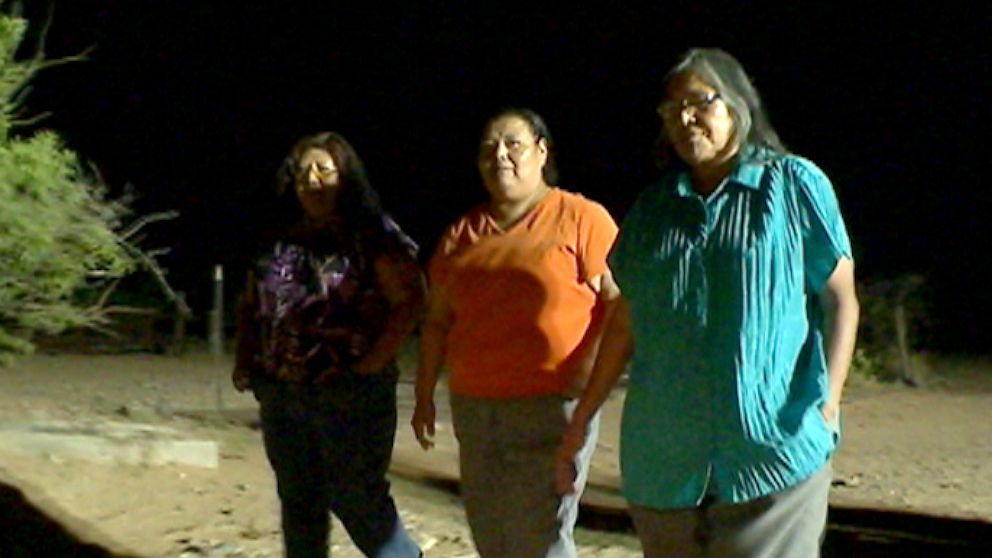
Below:  "The Tohono O'odham are caught in the middle of a war between the Mexican drug cartels coming through their community and the U.S. Border Patrol officers who tribal members say have become more aggressive to stop them."

March 11, 2013

Carjacking alert for "Native American male"

UW diversity communities concerned about racial profiling in UW alerts

By Imana GunawanWhen a Jan. 31 UW alert about a campus carjacking was sent out describing the suspect as a Native-American male, many members of the Native-American community expressed concerns about the possibility of racial profiling.

“Describing a Native-American person can be such a broad spectrum, from the West Coast to the East Coast; everyone looks different,” said Corinna Tordillos, Office of Minority Affairs & Diversity (OMAD) Student Advisory Board (SAB) representative from First Nations.

With the surge of UW alerts over the past few months, members of the UW diversity communities were upset about the inclusion of racial descriptors in the alerts. Many believed these descriptions could promote pre-existing negative stereotypes about underrepresented minority groups.

First Nations Powwow Chair Maria Givens said she heard concerns about potential attacks on the Native-American community in response to this profiling when the culture’s ethnicity can be really ambiguous.

In a discussion between SAB and the UW Police Department (UWPD) on Monday, many OMAD members proposed including the description of a specific skin complexion before describing a race, especially pertaining to individuals of color. Tordillos said adding words such as “seemingly” before describing a certain race could prevent causing further scrutiny of certain ethnic minorities.
Comment:  For more on the subject, see Racial Profiling for Blacks and Indians.

Below:  I wonder which of these Native American men the suspect looked like.


Maybe like this suspicious-looking character?

February 14, 2013

Mounties abuse Native women

Human Rights Watch Details Alleged Abuse, Rape, of Aboriginal Women by RCMP Officers in British Columbia

By David P. BallExplosive allegations of gang rape, widespread abuse and anti-Native racism have rocked Canada's national police force, the Royal Canadian Mounted Police (RCMP), which vowed on February 13 to investigate the claims by one of the world's leading rights groups.

According to a shocking report released on Wednesday by the respected U.S.-based Human Rights Watch (HRW)—which interviewed 50 aboriginal women and girls in numerous communities for its research—police officers gang raped one woman, stripped, sexually abused or raped several detainees in custody, and created a “constant state of fear” in victims.

The report, “Those Who Take Us Away,” details accounts of alleged widespread abuse by the RCMP.

This report “was about the level of fear that I and my colleague witnessed in the north at levels that we found comparable in conflict situations in post-war Iraq,” Meghan Rhoad, HRW's lead researcher for the report, said. “It’s about the lack of meaningful accountability for police neglect or police mistreatment, which creates an environment of impunity for violence against ingenious woman and girls.”
Comment:  For more on violence against women, see Republicans Fear VAWA's Tribal Jurisdiction and Canada's Racists Become Rapists.

Below:  "Meghan Rhoad, women's rights researcher at Human Rights Watch speaks during a press conference on Parliament Hill in Ottawa on Feb. 13, 2013." (Sean Kilpatrick/The Canadian Press)


Which one's the rapist?

December 20, 2012

Pelletier arrested for drugs, drunkenness

'Twilight' actor arrested at LAX for alleged public drunkenness"Twilight" actor Bronson Pelletier was arrested this week on suspicion of being drunk at LAX just days after he was charged with possession of cocaine and methamphetamines in West Hollywood, officials said Wednesday.

Pelletier, 25, was arrested Monday at Los Angeles International Airport for public intoxication after he boarded an aircraft and was determined by the flight crew to be an unruly passenger, LAPD officials said. Pelletier was booked at 2:15 p.m. and released seven hours later.
Actor Bronson Pelletier dismisses public urination claims“Twilight” actor Bronson Pelletier has denied reports he was caught drunkenly urinating in public at the Los Angeles International Airport on Monday, insisting the incident “did not happen.”

The Canadian star was allegedly removed from a plane at the terminal after airport police received a call about an unruly passenger, and he was ordered to wait for another flight later in the day as he was too intoxicated to fly.
Comment:  For more on the travails of Twilight actors, see Bronson Pelletier Assaulted and Kiowa Gordon Arrested in DUI Case.

December 11, 2012

Bolivian government rejects indigenous sanctions

Predictably, the Bolivian government isn't allowing an indigenous community to impose harsh penalties on criminals:

New Indigenous Community Justice Sanctions Criticized in Bolivia

By Rick KearnsOne indigenous community in Bolivia made headlines in early November after it was announced that, in their district, thieves would have a hand cut off after the 3rd or 4th arrest and that rapists “caught in the act” would receive chemical castration.

But these drastic measures may not go into effect even though indigenous communities have been given rights to impose traditional justice from the Bolivian Constitution.

National indigenous leaders in Bolivia have rejected the dramatic new sanctions created by that indigenous community in El Alto, the Qhapaq Uma Suya of La Paz, asserting that the new laws are not approved by their largest organization nor are they legal in Bolivia.
And:Along with the refutation by the National Council the sanctions have been strongly criticized by the Deputy Minister of Indigenous Justice of the Bolivian Government, Isabel Ortega.

“Definitely, neither the Political Constitution of the State, nor the Law of Jurisdictional Demarcation establishes these types of sanctions, which are out of place and should not be allowed,” Ortega asserted.

“While the Magna Carta defends the principles of due process,” Ortega continued, “neither castration nor the amputation of hands are admissible, because we are signatories to international conventions on the defense of human rights that all citizens of Bolivia must respect.”
Comment:  For more on the subject, see Bolivians to Punish Thieves with Amputation.

November 20, 2012

Beach supports manager convicted of fraud

Actor Adam Beach lends support at convicted immigration officer’s sentencing hearing

By Andrew SeymourAn immigration manager convicted of fraud enlisted star power to help try to convince a judge she deserves house arrest, not jail, for accepting cash and gifts in exchange for fast-tracking applications.

Actor Adam Beach wrote a letter in support of Diane Serré, whose common-law husband is also the father of singer Keshia Chanté.

“Diane is one of the kindest, most sincere people I have ever met,” wrote the Golden Globe-nominated actor who appeared in the Hollywood movies Windtalkers, Flags of Our Fathers and Cowboys and Aliens as well as countless other films and television shows.

Beach, who paid for Serré’s court application to receive government funding to mount a defence, said he had known Serré for a decade. She has been a guest at his house numerous times, he said, and would often attend traditional Aboriginal Powwow celebrations with his family. The day she was arrested, Beach said he visited Serré’s house to perform a cleansing smudge ceremony in offer of spiritual support.

“Diane is a generous, kind-hearted soul who I am very grateful to have had in my life,” Beach wrote. “She is a wonderful example as a successful Aboriginal woman who is spiritually connected to her culture—not only to those who know her well, but to young Aboriginal women across Canada.”
On Facebook a brief exchange ensued:Has she refuted any of the claims made against her?

No. She was found guilty on 15 counts of fraud and 12 counts of breach of trust. The evidence was "overwhelming." So why are people liking this? Are we saying it's okay because she's Ab[original] or because she has a celebrity like Adam to say yeah but she's "nice" so her sentence should be lenient?
To which I responded:

"Diane is a generous, kind-hearted soul," especially when it comes to giving other people's money to those in need, like herself!

But seriously, we're talking about Serré's sentencing, not her trial. It's too late for her to counter the charges.

If she wanted to be a role model for young Aboriginal women, one could argue that she should take her medicine without complaining. Perhaps find other ways to provide restitution besides serving her sentence.

Letting her off easy sends the message that crime isn't so bad. And the related message that it's who you know that matters.

For more on Adam Beach, see Adam Beach Promotes NWT Tourism and Adam Beach Foundation and Film Institute.

Below:  "Diane Serré was convicted in June of fraud and breach of trust for her role in illegally fast-tracking immigration applications." (Mike Carroccetto/Ottawa Citizen)

November 19, 2012

Bolivians to punish thieves with amputation

Bolivian City to Castrate Rapists and Cut Off Hands of ThievesThieves will be getting a lot more than a slap on the wrist in one Bolivian city, and convicted rapists will face something a whole lot worse.

Under a controversial, new law system for Bolivia’s indigenous people in the city of El Alto, thieves will have their hands amputated and those found guilty of rape will be chemically castrated.

After being sentenced in a newly created court, the unlucky crooks will be operated on by trained doctors paid to perform the procedures. However, if the doctors refuse to put the perps under the knife, lesser-trained, indigenous doctors from the surrounding highlands will be brought in to do the job.

Chemical castration is the administration of medication designed to reduce libido and sexual activity.

“Indigenous justice is handled differently, not between four walls as ordinary justice is. We will not be sending people to jail in these cases,” said Carmelo Titirico, leader of the National Council for Ayllu y Marka people, according to the New York Daily News.

The punishment was approved by the area's indigenous community “as it's the only way to stop those crimes,” he added.

Titirico said that the punishments are protected under Bolivia’s “community justice law.” Under current President Evo Morales, Bolivia is considered a plurinational state, which permits existence of multiple political communities and constitutional asymmetry.

While the measures could lead to widespread anger among the area’s indigenous peoples, Titirico said that his council won’t back down on their ruling.

The cutting off of hands has been used around the world for centuries as a way to punish thieves. Under Islamic law, the punishment is sometimes used part of Hdud and usually refers to the class of punishments that are fixed for certain crimes that are considered to be "claims of God."

Just a few months ago, a thief convicted of theft in war-torn Mali had his hand cut off by one of the radical Islamist groups controlling the northern part of the country.

Chemical castration has also been used in countries around the world as a way to prevent sex offenders, especially those convicted in crimes against children, from repeating their acts. Both South Korea and Russia currently have laws that permit for chemical castration of sex offenders.
Comment:  This doesn't sound like any Native justice I've ever heard of. Just the opposite, in fact.

It sounds more like a fundamentalist Christian or Muslim approach. I presume these Indians are practicing their traditional culture and religion, but perhaps they've converted to Christianity.

Traditional Native justice usually involves things like talking circles and banishment. You know, nonviolent approaches that favor restitution and rehabilitation over retaliation and retribution. Tribes weren't known for executing, imprisoning, or flogging their wrongdoers.

The traditional Native approach stems from viewing people as a mix of good and evil, I believe, not pure evil. Religious fundamentalists think differently, of course.

Does the penalty fit the crime?

Anyway, I could see chemical castration for rape, especially a second offense. I presume it can be reversed, so that's an advantage.

I can't see cutting off someone's hand. This is usually applied to relatively minor offenses by relatively poor people.

If you cut off a billionaire's hand when he cheated his company, his shareholders, or the public, then you might have something, but that'll never happen. Only the poor suffer under this harsh form of "justice."

It's also stupid because it doesn't resolve much. The victim doesn't get compensated for the stolen goods. The perpetrator probably becomes a burden on the taxpayer. And if the perpetrator is bent on stealing, he can hire someone to do it for him.

I guess this measure cows people into frightened submission, which doesn't sound healthy. And someone who doesn't like the repressive climate can go elsewhere, so the measures merely export the crime. Really, what's the advantage of making your society as harsh and unforgiving as Saudi Arabia? Does anyone except a rich sheik want to live that way?

For more on Bolivia, see Whitewashing in Quantum of Solace and Bolivia's Coke to End with Maya Calendar.

August 22, 2012

White buffalo died of disease

Authorities say white buffalo died of natural causes

By David SchechterAuthorities said an investigation into the death of a rare white buffalo shows the animal died from natural causes. Hunt County Sheriff Randy Meeks said Lightning Medicine Cloud and its mother, Buffalo Woman, died from a bacterial disease called Black Leg.

He also said neither animal had been skinned, contrary to what the owner of the ranch reported.

On Tuesday, Meeks closed the case but says his evidence contradicts statements by ranch owner Arby Little Soldier that Lightning had been skinned. In fact, law enforcement sources tell News 8, ranch personnel would have known the animal’s condition because they buried it in the first place.

“We have photographs indicating LMC was not skinned. The photographs depict skin and hair on the remains and the vet advised there was a lot of skin that was still left on the remains,” said Meeks.

Meeks also revealed Little Soldier waited six days to report Lightning’s death.

“Lightning Medicine Cloud was deceased at least six days and buried for three days prior to our notification. The remains were decomposed," Meeks said.
White Buffalo Was Not Murdered, Texas Authorities SayA bacterial infection commonly known as black leg is the suspected cause of Lightning Medicine Cloud’s death. According to a report at NewsOK.com, two more buffalo on the ranch have died since May. Texas A&M extension office veterinarian Terry Hensley told NewsOK.com that black leg spores will enter an animal’s body through the mouth or a wound, and can remain dormant for months or years. The animals are “healthy one day and the rancher finds them dead the next,” Hensley said. Hensley added that there is an approved black leg vaccine for cattle, but not for buffalo.

Contacted by WFAA before the announcement, Little Soldier said that Lightning Medicine Cloud was killed in what he feels should be regarded as a hate crime. Little Soldier has attracted attention for the $45,000 reward offer (there is an explanation for it at lightningmedicinecloud.com) and for reportedly naming Yolanda Blue Horse, who is part of Greenville’s American Indian community, as a suspect. The Sheriff’s Office said it would not file any charges against Little Soldier.
Sacred white buffalo--believed to have been ‘killed and skinned’--died from bacterial infection, say experts

Comment:  Wow. Assuming the latest reports are true, this must be one of the most bungled cases of reporting I've ever seen.

For starters, it seems Little Soldier was either lying to the press or deluding himself. He gave the impression that he found the calf's newly butchered carcass. You know, skin completely removed, raw meat visible, slash marks everywhere, blood and gristle on the ground, etc.

He also gave the impression that he called the police immediately and they confirmed the butchery. Or at least they didn't deny it.

Now it turns out he found a body with a substantial amount of skin left. Presumably the skin fell off because of the disease or decomposition. Are we to believe experienced ranchers couldn't tell the difference between skin falling off randomly and intentional butchering?

Then Little Soldier let the body rot for three days, buried it for three days, and then reported it to the police. Supposedly while he consulted with "elders." It doesn't sound like he was very concerned about finding the "killer." Did he seriously think the police would be able to do their jobs with a body that he'd handled, moved, buried, unburied, etc.?

No, it sounds more like he knew the calf died of natural causes but lied about it. And ordered his staff to lie too. How does a staff veterinarian not know the difference between intentional skinning and random decomposition?

It also sounds like Little Soldier used the natural death in a clumsy attempt to gain publicity and perhaps money. Perhaps even to frame a rival. I'm not seeing any explanation that makes more sense.

Everyone misreported the case

I'm not letting reporters off the hook on this one either. Did anyone ask to see photos of the body? Or construct a timeline of when it was discovered vs. when it was reported? Indeed, did anyone do any reporting in person?

Or did they simply take Little Soldier's word about what he found? I tell ya...if I called someone or someone called me about a case, I wouldn't just take their word for it. I'd ask for photos or confirm the story with the police, at least. You know, "Little Soldier claims his calf was killed and skinned. Is that true? Did you find it dead with its skin removed with knives?"

In short, how do you write the calf was found butchered and skinless when it was buried for days and still had part of its skin? Other than the fact of its death, the reporters got almost everything wrong. It's like writing about a "murder" without noting the victim was found hanging from the ceiling--an obvious sign of suicide.

Sheesh!

For more on the subject, see $45,000 Reward for White Buffalo Killer and Sacred White Buffalo Killed and Skinned?
August 16, 2012

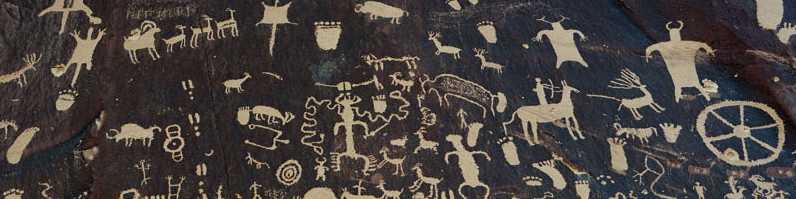
UFOs = Navajo fact of life

Paranormal Files of the Navajo Rangers

By Alejandro RojasWhen I asked Dover if the Navajo people generally believe in things such as UFOs, he says he doesn't like the term "belief," because it is akin to saying you believe something without evidence. "In these cases people have seen enough [UFOs], [UFOs] that have landed, [UFOs] that have flown over, so often that it is just a fact of life." Dover and Milford have had enough UFO cases that they have often sought the help of the Arizona chapter of the Mutual UFO Network, the largest civilian UFO investigation organization in the U.S.

Some of these cases have been quite startling. Dover and Milford say that in one case a young woman said she was followed by a glowing orb while driving home at night. When she arrived home she saw what appeared to be a large rabbit where she usually parks. She ran inside and went to sleep, only to awaken with a headache. Upon examination of the car, the Rangers found electromagnetic effects which ran through the car right where the driver would have been sitting.

Even more exciting was the case of an old man who lives way out in the desert by himself. He saw what appeared to be a strange craft land and several entities come out of it. These beings came over and examined his house. The Rangers found him to be very credible, and they found strange circular pits in the ground around his house. The witness said the holes were not there before the incident.

Not all of these events have been UFO-related. Milford went on a ghost investigation where he witnessed coins drop from the air, a common occurrence in this location which is believed to be haunted. He says several of these coins fell on him. There were no indications that there were vents or holes in the roof where the coins could have come from. They just seemed to manifest out of nowhere.
Comment:  For more on the subject, see UFO Sightings in Indian Country and Sisseton Wahpeton Oyate Paranormal Society.

March 12, 2012

Navajo Cops hypes the supernatural

New TV show featuring Navajo police to debut Monday nightA new television show that follows Navajo Nation police officers as they patrol the reservation’s 17 million-plus acres is set to hit the airwaves.

“Navajo Cops” premieres 10 p.m. Monday on the National Geographic Channel and features some of the tribal department’s 330 men and women on patrol.

The show follows officers as they provide services and respond to calls across the sprawling reservation. About 180,000 residents live on the nation’s largest Indian reservation, which extends across parts of New Mexico, Arizona and Utah. The officers have to balance modern law enforcement with ancient customs.

“I think one of the most eye-opening things for us was that, if you live in a big city, you’re used to police officers having partners, working in pairs,” show producer and director Sam Dolan told the Farmington Daily Times (http://bit.ly/zjdK9x). “On Navajo, they’re out there by themselves. There could be 50 miles in between officers. They make huge sacrifices, and it’s a very dangerous job.”
I think article means they're showing new episodes of an old show--not a new show. Since Navajo Cops debuted last year and all. It sounds like the equivalent of a second season.

'Navajo Cops,' off the reservation

Hypes the suspense element with scant effect

By Tom Conroy
The odds that the average policeman will encounter some serious action while accompanied by a documentary film crew are small. They're even smaller when that policeman is hunting a supernatural creature called the Howler.

That's one of the challenges facing the National Geographic Channel's new series "Navajo Cops." Like most cop documentaries, it is long on buildup but short on payoff. But when it ventures off into "Ghost Hunters" territory, it loses even the usual hyped-up suspense. The few insights into Navajo culture don't compensate for the general lethargy.

Premiering tonight at 10, the series follows cops as they patrol the huge Navajo reservation, which contains parts of Arizona, New Mexico and Utah and is the largest Indian reservation in the country. Most of the footage is shot at night, helping to heighten the moments of tension that occur just before the uneventful conclusions.

The premiere episode follows several plot lines. First, Officers Philbert Toddy and Genevieve Morgan pursue some suspects in what the narrator somewhat hyperbolically calls an attempted murder. In fact, it was a dispute among neighbors. The alleged target knew the man she thinks shot at her from a distance.
Comment:  For more on the subject, see New Episodes of Navajo Cops and Navajo Cops Stereotypes Indians.

February 02, 2012

Police pepper-spray Haka dancers

Police cleared in use of pepper spray on tribal dancers at Utah high school football game

By Paul FoyTwo police officers were cleared of wrongdoing Thursday for using pepper spray and a baton on a dozen spectators performing a traditional Polynesian war dance after a Utah high school's losing football game.

Uintah County Attorney G. Mark Thomas found that the two officers were justified in taking action because they feared a riot and because they were unfamiliar with the Haka war dance, which is a fan response popular at rugby matches and football games in other countries.
But:Joe Cohn, interim legal director for the ACLU of Utah, disagreed with that assessment and the county attorney's finding. "Force is lawful only when it's justified, and not for disobedience to orders—it's for officers who believe they face an immediate threat of danger. There's nothing in this report or investigation that indicates anyone was in any danger," he said.

"It was just 'make a hole, make a hole'—and smack."
Comment:  I didn't cover this earlier incident because the Haka is a Maori dance. And because I wasn't sure if there was a relevant issue here. But now it seems relevant. Police pepper-spray fans doing a scary indigenous dance. Savages on the warpath! Indians, immigrants, unionists, Commies, hippies, terrorists, and Occupiers...all trying to destroy America!! Look out!!!

And the powers that be excuse their own foot soldiers for attacking innocent civilians, naturally. This is about what happened in almost every US massacre of Indians, Koreans, Vietnamese, Afghans, Iraqis, et al. If you harm or kill a brown-skin under the cover of authority, our white Christian government usually will exonerate you. Being American means never having to say you're sorry.

For more on the subject, see WSJ: Maori Are "Googly-Eyed" and Maori Tribe Wants Haka Back.