Showing posts with label Lewis and Clark. Show all posts

April 20, 2016

Lottery ad portrays uninhabited Oregon

Coquille Tribe slams 'Lewis and Clark' campaign for Oregon LotteryThe Coquille Tribe is calling on the Oregon Lottery to stop running a Lewis and Clark-themed advertising campaign.

The spots depict explorers Lewis and Clark, and even an animated bear, "discovering" gaming machines in the wild. Chairwoman Brenda Meade said the ads falsely portray Oregon as a place devoid of tribal people.

"Amid Oregon's natural splendor, they encounter video lottery machines, which are described as 'native' to Oregon," Meade wrote in a a letter on Tuesday. "But this fictional Oregon is land without Indians--an empty wilderness, ripe for economic exploitation, with no competition from indigenous people."
A couple of follow-ups:

Lewis and Clark discovered—video gambling?

Oregon Lottery ad campaign pulled following criticism from Coquille Tribe

July 28, 2014

Review of Undaunted Courage

Back in December 2012 I read this book:

Undaunted Courage: Meriwether Lewis, Thomas Jefferson, and the Opening of the American WestFrom the bestselling author of Band of Brothers and D-Day, the definitive book on Lewis and Clark’s exploration of the Louisiana Purchase, the most momentous expedition in American history and one of the great adventure stories of all time.

Amazon.com Review
A biography of Meriwether Lewis that relies heavily on the journals of both Lewis and Clark, this book is also backed up by the author's personal travels along Lewis and Clark's route to the Pacific. Ambrose is not content to simply chronicle the events of the "Corps of Discovery" as the explorers called their ventures. He often pauses to assess the military leadership of Lewis and Clark, how they negotiated with various native peoples and what they reported to Jefferson.

From Publishers Weekly
Without adding a great deal to existing accounts, Ambrose uses his skill with detail and atmosphere to dust off an icon and put him back on the trail west. History Book Club main selection; BOMC split selection; QPB alternate; author tour.

wow, that was long trip
By Bill Chaisson on November 1, 1999

Ambrose chose a huge sprawling subject and wrote a medium size book that does not sprawl at all. In order to accomplish this he had to write in an almost telegraphic style. This book is largely descriptive with frequent, but brief interpretive asides.

Anyone fascinated by Native American cultures should read this book. It offers a tantalizing look at several tribes either at or immediately following "contact". If you know anything about the later history of the tribes of the Upper Missouri and Pacific Northwest, this book just drips with tragedy and none of it is spelled out in a silly melodramatic way; Ambrose's restraint makes the impact that much greater.

If you don't expect history books to be particularly literary, but just to tell a good story, then you'll think this is a terrific book. If you are looking for a meditation on the ramifications of the L&C expedition with regard to the settling of the American West, then this book is a little sparse on analysis, although it is good about reporting salient information. Having read it, I guess I feel prepared to read more in-depth account about smaller segments of this story.
Rob's reaction

Around that time I posted the following on Facebook:

Reading Undaunted Courage by Stephen Ambrose about Lewis and Clark. Tumors, boils, dysentery, diarrhea, syphilis, gonorrhea, mosquitoes, fleas, hunger, injuries, rain and snow, manual labor, bear attacks, hostile Indians...who wants to be an explorer? Anyone?

Hard to believe Jefferson seriously thought he could move all the Indians west of the Mississippi, where they'd 1) assimilate into American culture and 2) live unmolested by white settlers. This is a ridiculous fantasy on so many levels. Ambrose criticizes the plan to some extent, but not nearly as much as it deserves.

Hey, let's resolve the Irish problem by relocating them to Cyprus, and the Greek/Turkish problem on Cyprus by relocating them to Ireland. The Cypriots can become Irish and the Irish can become Cypriots. Then everyone can live in peace. What could possibly go wrong?

That's about how dumb Jefferson's plan was. Even if Ambrose stuck to primary sources, I bet he could've found someone critical of it. Saying "here's what Jefferson intended" and leaving it at that isn't enough.

Rob's rating of Undaunted Courage: 8.0 of 10.

March 05, 2014

Assimilation in 1950s movies

I watched three old 1950s Westerns recently. As usual, they had some authentic elements but were mostly inauthentic.

Together they spun a clear message of assimilation. America's "Indian problem" would go away if only the Indians joined the mainstream and became good white Christians.

The Far HorizonsPlot

An ambitious, historic attempt to explore and document an untamed American frontier unfolds in this rousing adventure drama. In 1803, Meriwether Lewis and William Clark, with President Thomas Jefferson's blessing, embarked on the government-sponsored Lewis & Clark Expedition–an attempt to discover a water route connecting St. Louis, Missouri, with the Pacific Ocean. Their trek takes them through the magnificent, danger-filled territory of the Pacific Northwest, with guidance from the Shoshone maiden Sacagawea.

Reception

In 2011, Time Magazine rated The Far Horizons as one of the top ten most historically misleading films, in part due to its casting of Caucasian Donna Reed as Native American Sacagawea, and the creation of a romantic subplot between her character and William Clark despite the fact that Sacagawea's husband, French-Canadian trader Toussaint Charbonneau, was in real life also a member of the expedition.


The explorers' first encounter with a tribe is reasonably accurate. The white man approach the Indians in full dress uniforms, present them with medals and other trinkets, and declare they're now subjects of the Great Father in Washington. The Indians pretend to go along, but after the white men leave, the chief throws down his medals and declares his opposition. No one can own the land, he says.

So far, so good...but then the angry Indians stalk the explorers and try to kill them. Uh, no. Lewis and Clark encountered several friendly tribes and stayed with them for a couple of winters. No one made a concerted effort to kill them.

The unavoidable message is white men good, Indians bad. The noble explorers are just innocently surveying the land. The evil savages can't stand the idea of sharing the country, so they go into a murderous rage. They don't plan intelligent counteroffensives like Tecumseh's confederation of tribes, which happened only a few years later. They lash out like wild beasts threatened with captivity.

The whole love subplot is ridiculous too. And it contributes to the overall message. Sacagawea journeys to Washington DC with Clark, but she can't fit into white society, so she leaves. Although you could take that as advocating separatism, I didn't. I took it to mean Indians can't be part of the mainstream unless they eliminate what makes them unique and become plain-vanilla Americans.

Walk the Proud LandPlot

This is the true story of Indian agent John Philip Clum (Audie Murphy) as told by Clum's son in the 1936 biography Apache Agent. The film begins in 1874, as Clum, an Eastern government representative, arrives in San Carlos, Arizona. He is sent to try a new approach to peace with Apaches based on respect for autonomy rather than submission to Army. He faces suspicions from the white settlers, the Army and the Indians, especially Geronimo.

Reception

The film was not a success at the box office, something attributed to the fact that Murphy played a pacifist rather than an action hero. This ended Murphy's plans to make his dream project, a biopic of painter Charles Marion Russell.


I saw only the final half of this, but I think I got the idea.

Clum plays the usual role of the white savior who knows what's best for the Indians. His "new approach" is to tell them to stop fighting and settle down as farmers. Many of the Apache agree, but Geronimo (Jay Silverheels!) and his renegades say they'll never give up their independence.

Needless to say, this isn't exactly a pro-Indian message. It's "pacifist" only in the sense that Clum isn't the one hold a gun to the Apaches' heads. But an implied threat is there. If the Indians don't do it Clum's way, the Army will enforce it their way.

Clum manages to trick Geronimo into submission. He approaches Geronimo with a small number of men and puts them in Geronimo's hands. But other men in the hills fire their guns, and the echoes make it seem as if Geronimo is outnumbered and surrounded. He finally surrenders.

So it's not Clum's pacifist message that carries the day. It's more of the white man's deception. The "bad" Indians are forced to accept the white man's way as the best and only possible existence.

ApacheApache was based on Paul I. Wellman's novel Broncho Apache, which in turn was inspired by a true story. Burt Lancaster plays Massai, a lieutenant of the great Apache warrior Geronimo (here depicted as an old man, played by Monte Blue). Though his tribe has signed surrender terms with the conquering whites, Massai refuses to do so. He escapes from a prison train and conducts a one-man war against the white intruders-and against some of his own people. Along the way, he claims Nalinle (Jean Peters), whom he previously regarded as a traitor to his cause, as his wife.

John McIntire plays famed Indian scout Al Sieber, who-in this film, if not in real life-is sympathetic to the Indians' plight and Massai's single-purposed cause. The real-life counterpart to Massai was killed by Sieber's minions after agreeing to call off the hostilities; United Artists objected to this, forcing producer/star Burt Lancaster to shoot an unconvincingly happy ending. --Hal Erickson, Rovi


Lancaster looks silly as an Indian, and initially sounds silly too. I guess he eventually grows into the role. But that's neither here nor there.

Apache shows what happened to Geronimo and his men when they surrendered to "pacifist" white men. They were sent to a prison camp in Florida and never saw their homeland again. So much for peace and reconciliation.

Massai escapes and, on the way home, meets a Cherokee farmer who touts the value of settling down and growing corn. Massai is scornful, but the man insists he hasn't given up his Cherokee identity. Massai takes some corn with him when he leaves.

When he reaches his own people, the weak-willed appeaser of a chief turns him in to the white men. He escapes and begins his one-man battle to remain free. Nalinle tries to help him and eventually they hole up in a remote cabin, where he angrily tosses the corn away.

The next spring, he's surprised to find a corn crop growing near the cabin. The white men track him down, and he and Sieber play a silly cat-and-mouse game in the corn patch while the others surround it. The white men have scorned the idea that wild savages could become tame farmers, but Sieber sees the corn patch as proof that they can. Amazingly, he lets Massai return to his cabin and live as a newly minted man of the soil.

Conclusion

So the implied assimilationist message of The Far Horizons becomes explicit in Apache. Become a farmer or go to prison and die. Even the boldest and most independent warrior must bend to this inevitable outcome. There's no place for Indians in America unless they give up their old ways and become good Christian workers.

True, these movies didn't come out in this order. But in different ways, white filmmakers were trying to present the same message. They each came up with pieces of the puzzle.

Put them together and you can see the whole assimilationist narrative. Indians were wild and savage. Americans just wanted to live with them in peace. Eventually the Indians agreed and gave up their uncivilized ways.

For more on the subject, see The Best Indian Movies.

September 02, 2013

Lewis and Clark in Drunk History

Drunk History: There's Nothing Funny About Violence Against Native American Women

By ElissaI’ve recently grown to love Drunk History. There’s nothing like the narration of a filter-free lush on the brink of a blackout to underscore the absurdity of Our Nation’s History, the kind that becomes fables in our young heads as soon as we’re old enough to memorize facts from textbooks. Drunk History is a Comedy Central series that presents drunken storytellers—comedians and other personalities—recounting historic events, with which historical reenactments are paired.

I was curious to see what Drunk History would do with the story of Lewis and Clark’s journey in the recent “Nashville” episode, which aired on August 27. As a lecturer of American Indian Studies at the University of Washington, I teach classes on literature and film, most recently a class on the representations of Native characters in the Twilight Saga.

The Drunk History treatment of the story of the Lewis and Clark Expedition was appalling. Yes, Drunk History has established a track record of using “mature” language—the people are wasted. They swear. Yes, the storytellers fudge the facts—that’s part of the point, and serves as a reminder that history is created by a massive chorus of voices, those with facts behind them and those without. But in narrating the Lewis and Clark segment, Alie Ward and Georgia Hardstark crossed a line from ribald to reprehensible.
Some specifics:The Native people have arrived on screen inexplicably pumped for a fight. We know these guys are “(beep)holes” because they’re partially unclothed, which is pop culture parlance for savage. The Lakota Chief shows up (fully clothed, so we know he’s no barbarian), played by Pakistani-American actor Kumail Nanjiani. Do the producers mean to make a comment by casting a non-white, non-Native actor in this role?

We’re told that “each of Lewis and Clark’s men got like four wives, for the night—like hookers.” “Like, I’m gonna check out these old hooker wives.” “And sure enough, everyone on the expedition, they got (beep) crazy STD’s.” The Native men are cast as pimps, the women as whores, and the white adventurers are just there to enjoy the bounty.

Ward and Hardstark continue to narrate as Nanjiani reappears in the role of another Native man, this time donning the iconic headband in place of the headdress. Both pieces of costuming have been used throughout cinema’s history to erase the cultural distinctions among individual tribes, stripping us of our individuality and reinforcing a false notion of “pan-Indian” unity.
Comment:  For more on Lewis and Clark, see Review of A Blackfeet Encounter and Manifest Destiny Comic Book.

Origin of "Indian giver"

I think I've posted an origin of "Indian giver" before. It comes up whenever someone uses the phrase.

But I can't find a posting dedicated to the origin, so here's one. It claims the phrase goes back to Lewis and Clark:

The History Behind The Phrase 'Don't Be An Indian Giver'

By Lakshmi GandhiSlaughter writes that in one instance, a group of Indians offered Lewis and Clark some roots, which the explorers rejected because they felt that "[the Indians'] expectation for those presents of a few roots is three or four times their real worth." Turning down the gift, however, insulted their hosts and led Lewis and Clark to label the Indians "forward and impertinent, and thievish," in their journals.

Author David Wilton argues in his 2004 book Word Myths: Debunking Linguistic Urban Legends that the concept of an "Indian gift" arose when white settlers misinterpreted the Native American concept of bartering:

"To an Indian, the giving of gifts was an extension of this system of trade and a gift was expected to be reciprocated with something of equal value. Europeans, upon encountering this practice, misunderstood it, considering it uncouth and impolite. To them, trade was conducted with money and gifts were freely given with nothing expected in return. So this native practice got a bad reputation among the white colonists of North America and the term eventually became a playground insult."

This definition stuck and the phrase "Indian giver" made its first appearance in linguist John Russell Barlett's Dictionary of Americanisms in 1848.
Comment:  I've read various explanations of "Indian giver" before. Including one claim that it referred to the white man's penchant for making and breaking deals.

But the above explanation may be the most common one. I don't know if most people think it began with Lewis and Clark, but most think it refers to a misunderstanding of Native customs.

For more on "Indian giver," see Limbaugh Calls Warren "Squaw Indian Giver" and Lauer Calls Vieira "Indian Giver."

August 11, 2013

2014 dollar to honor Lewis and Clark

7 Choices for the Back of the Next Dollar Coin: What's Your Favorite?According to the coin collecting news site CoinUpdate.com, the Commission of Fine Arts (CFA) has reviewed seven proposed designs for the 2014 Native American one dollar coin and made its recommendation to the Secretary of the Treasury. The Native American one dollar coin has a portrait of Sacagawea on its obverse (heads) side, and features a different themed design each year on its reverse (tails). The 2013 Native American one dollar coin commemorates the Delaware Treaty of 1778.

The theme for the 2014 coin is the cooperation among Natives and the Lewis and Clark expedition of 1804-06. Of the seven designs below, the CFA chose the sixth, a depiction of Chief Cameahwait recommending the alternate route to Captain Lewis. Which is your favorite?


Comment:  As you may know, I follow the Native developments in the numismatics field. This posting led to an interesting discussion on Facebook:

Reverse of the 2014 dollar will honor the Indians' role in the Lewis and Clark expedition. Because the obverse featuring Sacagawea doesn't do that enough already.Sorry, can't quite get far enough past the irony of that big LIBERTY placed over the head of a Native American woman to choose a reverse. That, and the fact that almost all the choices seem to say "They gave us their continent! HOW COOL WAS THAT?!?!?"I guess the Mint has run out of Native subjects, so it had to double down on Sacagawea. I guess not much happened before the Indians met the white man.

"Liberty" and "In God We Trust" are a given on all these coins. But it's a good point. Imagine if we changed the slogans to, I dunno, "Don't Tread on Me" and "In Creator We Trust." The latter would send conservatives into a frenzy; it would be bigger than Benghazi.The Mint could, of course, consider a male Native American subject, but that will never do. There's a reason "America" was represented by a woman on the old maps, and that reason is that "she" was an object to be ravished by "him" (Europe).The Indian Head penny nailed that point to the wall. It featured a little white girl in an Indian headdress. So we got a two-fer on the "Europe rapes America in the name of liberty" theme.


But I'm undecided on featuring Sacagawea. On the one hand, it's nice that they've honored Native women. On the other hand, she's a safe and unthreatening choice.

This will be the third of six coins honoring an accommodation with the white man. Depending on which design they choose, it could be the second to feature a peace pipe. Message: "How wonderful that the Indians got along with the white man." It could be the second to feature food. Message: "How wonderful that the Indians helped sustain the white man."

If the Mint is going in chronological order, the next two coins should feature Tecumseh and the Trail of Tears. Both of which reflect badly on the US.

If they go instead to Sequoyah's inventing the Cherokee syllabary, you can bet the rest of the coins will be equally sanitized.

Deconstruct your coins, people! They have hidden messages!

Incidentally, I vote for design #2 (below). Design #6 would be my second choice.

P.S. If Disney makes a big enough contribution to the US government, can we get Johnny Depp's Tonto on the obverse? After all, the Comanche have told us that his bird hat is authentic.

For more on the Sacagawea dollar, see 2013 Sacagawea Dollar Reverse Unveiled and 2012 Sacagawea Dollar Reverse Unveiled.

July 27, 2013

Review of A Blackfeet Encounter

I watched the documentary A Blackfeet Encounter a couple of years ago. It tells the story of this encounter:

Jul 27, 1806: Meriwether Lewis shoots Blackfoot IndianAttempting to stop a band of young Blackfoot Indians from stealing his horses, Meriwether Lewis shoots an Indian in the stomach.

The voyage of Meriwether Lewis and William Clark to explore the West began in May 1804 when the two captains and 27 men headed up the Missouri River. They reached the Pacific Ocean the following year, and on March 23, 1806, began the return journey. After crossing the worst section of the Rocky Mountains, the expedition split up. Clark took most of the men and explored the Yellowstone River country to the south. Lewis, with nine men, headed west to the Great Falls of the Missouri River where he split the small party still further. Six men remained behind to make the portage around the Great Falls. Lewis took the remaining three and headed north to explore the Marias River country of present-day northwestern Montana.

It was a risky, perhaps even irresponsible, decision. Lewis knew the Marias River country was the home of the Blackfoot Indians, one of the fiercest tribes of the Great Plains. Lewis hoped he could meet peacefully with the Blackfoot and encourage their cooperation with the United States. Yet, if they met a hostile Blackfoot band and a fight began, the four explorers would be badly outnumbered.

On July 26, Lewis encountered a party of eight young Blackfoot braves. At first, the meeting went well, and the Indians seemed pleased with Lewis' gifts of a medal, flag, and handkerchief. Lulled into a false sense of security, Lewis invited the Indians to camp with them. In the early morning of this day in 1806, Lewis awoke to the shouts of one his men--the Indians were attempting to steal their rifles and horses.

Lewis sped after two Indians who were running off with several of the horses, calling out for them to stop or he would shoot. One Indian, armed with an old British musket, turned toward Lewis. Apparently fearing that the Indian was about to shoot, Lewis fired first and hit him in the stomach. The Indians retreated, and the men quickly gathered their horses. Lewis then learned that one of his men had also fatally stabbed another of the Blackfoot.

Fearing the survivors would soon return with reinforcements, Lewis and his men immediately broke camp. They rode south quickly and managed to escape any retribution from the Blackfoot. Lewis' diplomatic mission, however, had turned into a debacle. By killing at least one Indian, and probably two, Lewis had guaranteed that the already hostile Blackfoot would be unlikely to deal peacefully with Americans in the future.
Background on the conflict

Blackfeet IndiansFifty years before Lewis and Clark, the Blackfeet Indians had a reputation of being hospitable to Europeans, who occasionally even wintered with the tribe. By 1806, however, the world inhabited by the Blackfeet in present-day northern Montana had grown increasingly complex.

The Blackfeet were regular commerce partners with Canadian-based British merchants, and in their frequent visits to trading posts, the Indians exchanged wolf and beaver pelts for guns, ammunition and alcohol. This relationship had lasted more than 20 years, and during that time, the Blackfeet–armed with guns–had been able to dominate their Nez Perce and Shoshone rivals.

Eight Blackfeet warriors encountered Meriwether Lewis and a party of the Corps of Discovery in July 1806. After their initial fears of the armed strangers had subsided, the Indians decided to camp with the Americans. During this first day and night, Lewis explained the United States’ intent to bring about a comprehensive peace between all the Indian tribes of the west. He went on to add that the Shoshones and Nez Perces–mortal enemies of the Blackfeet–had already agreed to this peace, and would be receiving guns and supplies because of it.

To the Blackfeet, American plans represented a direct threat. As far as the Indians were concerned, giving guns to their adversaries only could result in a weakening of Blackfeet power. That night, the Blackfeet attempted to steal the expedition’s guns. Their plans went awry, and in the chaos that ensued, Lewis and Reuben Field each killed a Blackfeet warrior. The incident marked the first act of bloodshed between the western Indians and representatives of the United States.

The surviving Blackfeet returned to their tribe, and communicated what they had learned of America’s goals for the region. From that point forward, the Blackfeet regarded the Americans with hostility, and acted toward them similarly. Ironically, in the years that followed, Blackfeet war parties would be responsible for the deaths of three former members of the Corps of Discovery.


Warriors or boys?

A recent article spins the story a little differently:

Untelling the Big Lie: The Murder of Two Blackfeet by Lewis & Clark PartyAccounts of what happened leading up to the shooting vary depending on who you ask, but the result was the same. When Captain Meriwether Lewis shot a Blackfoot Indian on July 27, 1806, and one of his group killed another, the Blackfeet didn’t trust whites anymore.

In fact, the Blackfeet closed off their territory to whites for the next 80 years.

“Lewis and Clark came from a culture based on war and encountered a very peaceful people,” tribal elder G.G. Kipp told the Blackfeet Community College Native American Scholars Program, according to a story that appeared in the Great Falls Tribune in 2003. “But they wrote the history books saying we were brutal and warlike so they could justify what they did to us.”

Kipp is right, most accounts you find of the story of Lewis shooting a Blackfoot Indian paint Lewis & Clark as intrepid explorers and the Blackfoot as fierce and hostile. History.com even calls Lewis’s decision to explore Marias River country, the home of the Blackfoot Indians at the time, a “risky, perhaps even irresponsible decision.”

Lewis and his party of three explorers encountered a group of eight young Blackfoot on July 26 and at first, the meeting went well. Lewis was hoping he could convince the Blackfoot to cooperate with the United States. Here is one place the accounts differ. Most places say the eight Blackfoot were “braves” or “warriors,” but Blackfeet oral histories say they were young boys from the Skunk Band.

“They stayed with them and gambled with them,” he said. “There is a story of a race. In the morning, they went to part company and the Indians took what they had won.

“That was it,” Kipp told the Great Falls Tribune. “That’s when they were killed.”
Here's the source for Kipp's comments:

"Blackfeet recollections differ from those recorded in Lewis' journal"

My thoughts

As I recall, the documentary portrays the Blackfeet as teenagers or young men. They were basically gallivanting about, as young men are wont to do.

I don't recall mention of gambling or a race. I think the Indians merely wanted the guns. I don't know if they would've acted if Lewis hadn't talked about ending the Blackfeet's advantage by giving everyone guns.

When the Indians fled, I believe one took a shot at Lewis that whizzed by his ear. Lewis fired back and killed him.

Interesting to think what would've happened if the Indian had killed Lewis. Without Lewis's leadership, the expedition might've failed. If the expedition didn't report back, the US might've left the Indians alone for another decade or two. That might've given them enough time to build up their defenses to resist encroachment.

Anyway, A Blackfeet Encounter does a fine job of recreating the incident and putting it in context. The documentary is split roughly into four parts: America's history leading up to Lewis and Clark, the expedition and the incident, the eventual defeat of the Indians, and the Blackfeet's survival as a modern-day people. You couldn't ask for more.

You can watch the whole documentary here:

A Blackfeet Encounter

Comment:  For more on Lewis and Clark, see Manifest Destiny Comic Book and Jefferson's Indian Removal Policy.

July 20, 2013

Manifest Destiny comic book

'Manifest Destiny' maps Lewis and Clark vs. monsters

Chris Dingess imagines the Louisiana Purchase going a lot differently in new comic book.This fall, Chris Dingess ventures from Being Human to being Lewis and Clark.

The TV screenwriter tackles two of America's greatest explorers and sends them on a much different journey—with a lot more weirdness—than history books would have you believe in Manifest Destiny, a new ongoing Image Comics/Skybound title announced today that launches in November.

Dingess takes the legend of Meriwether Lewis and William's Clark's famous three-year expedition in the early 19th century and posits it as America's first black-ops mission.

"The reason we got the Louisiana Purchase for so cheap from Napoleon was because the land west of the Mississippi was full of dangerous creatures and monsters," says Dingess, who wrote much of the series while on hiatus for the Syfy series Being Human.
Some details:Q: So how does this fictional take fit into actual history?

Lewis and Clark are put together by Thomas Jefferson, and they assemble a rag-tag group of soldiers and convicts to go west and just destroy monsters and eventually make a deal with the devil to allow the expansion of the United States.

The whole time Lewis is keeping two journals. There's the journal you're forced to read in eighth grade, and there's the real journal depicting all this horrible, bloody chaos, which I would have rather read in eighth grade as opposed to how much fruit stock they were loading on the boat.

Q: Which of their crew is your favorite so far?

I really enjoy writing Lewis and Clark together, because they are our eyes for this thing, but we meet Sacagawea. In their real journals, the young Native American woman is their guide—we've reimagined her here and she's a really fun character.

She's not just a passive woman showing them and communicating with other Indians for them. She's the one who gets her hands dirty—if this were G.I Joe, she would be Snake Eyes. She's a badass.

Lewis and Clark are strong, but a lot of times they're going to have to rely on Sacagawea's cunning and skill and strength to get them out of the big jams they're in. They're slowly going to realize just how important she is to them.
Comment:  This is an interesting idea, but a lot depends on the execution.

Since it's supposedly a secret history, it doesn't have to follow actual history too closely. But there are still potential pitfalls. For instance:

  • Turning positive or neutral characters from Native mythologies into "monsters."

  • Portraying the Indians along the way as savages, or using Plains stereotypes.

  • Making Sacagawea super-sexy in a revealing buckskin outfit.

    Alas, given her bare midriff on the cover, the last pitfall may come true.

  • For more on Lewis and Clark comic books, see Burgas Reviews Bertozzi's LEWIS & CLARK and Lewis and Clark Graphic Novel. For more on Lewis and Clark, see Jefferson's Indian Removal Policy.

    May 28, 2011

    Burgas reviews Bertozzi's LEWIS & CLARK

    Review Time!  With Lewis & Clark

    By Greg BurgasI’ve been a fan of Nick Bertozzi for a few years now, and while I haven’t loved everything he’s done, I like his art quite a bit and I love that he writes about interesting topics. I’ve never been a big fan of the Lewis and Clark expeditions (despite living for some time in Oregon, where there’s a college named after them), but I loves me some historical fiction, so I figured I’d give this a look. It’s published by First Second and is listed at $16.99.

    Bertozzi tells the story of the expedition in a fairly straightforward fashion, with one major exception, and through that we get a good sense of what life was like in the early nineteenth century both in the middle of civilization and out on the frontier.
    Bertozzi apparently handles the Native element well:Bertozzi, however, does a very nice job with the characters in the book reacting to the travails of the route. The relationship between Charbonneau and his wife, Sacagawea, is an unpleasant one, and Bertozzi doesn’t shy away from showing its ugliness. Clark’s slave, York, is presented in an uncomfortable way to modern audiences–he’s depicted much more like a servant than a slave, and even rejects the notion that Clark would free him when the expedition is over. Even Lewis, late in the book, expresses surprise that Clark hasn’t freed him yet. There’s also a lot of humor in the book, with two characters providing some of the comic relief. Bertozzi also does a nice job showing how the various Native American tribes treated the expedition. Some of them, like the Mandan, were very accommodating, while others were very wary. Bertozzi doesn’t get into the Indian culture too much, but he does a nice job showing how different the tribes were from each other. It’s an interesting glimpse into how the Indians sought to live with the whites and use them to their own purposes, which didn’t work out too well, as we know, but this was still early in their interaction with the new Americans.Comment:  For more on the subject, see Burgas Reviews Demon Bear Saga and Lewis and Clark Graphic Novel.

    February 09, 2011

    Text of Fischer's racist screed

    Perhaps realizing that Bryan Fischer's pro-genocide column wasn't playing well, the American Family Association appears to have taken it down. But they aren't getting away with self-censoring their bigotry that easily. To prevent computer glitches or sanity from eliminating Fischer's column, here it is, exactly as originally published:Bryan Fischer: Native Americans morally disqualified themselves from the land

    Tuesday, February 08, 2011 10:38 AM

    By Bryan Fischer


    Follow me on Twitter: @BryanJFischer

    In all the discussions about the European settlement of the New World, one feature has been conspicuously absent: the role that the superstition, savagery and sexual immorality of native Americans played in making them morally disqualified from sovereign control of American soil.

    International legal scholars have always recognized that sovereign control of land is legitimately transferred in at least three ways: settlement, purchase, and conquest. Europeans have to this day a legitimate claim on American soil for all three of those reasons.

    They established permanent settlements on the land, moving gradually from east to west, while Indian tribes remained relentlessly nomadic.

    Much of the early territory in North American that came into possession of the Europeans came into their possession when the land was purchased from local tribes, Peter Minuit’s purchase of Manhattan being merely the first.

    And the Europeans proved superior in battle, taking possession of contested lands through right of conquest. So in all respects, Europeans gained rightful and legal sovereign control of American soil.

    But another factor has rarely been discussed, and that is the moral factor.

    In the ancient tradition of the Hebrews, God made it clear to Abraham that the land of Canaan was promised to his descendants. But he told Abraham the transfer of land to his heirs could not happen for 400 years, for one simple reason: “[T]he iniquity of the Amorites is not yet complete” (Gen. 15:16).

    The Amorites, or Canaanite peoples, practiced one moral abomination after another, whether it was incest, adultery, sexual immorality, homosexuality, bestiality or child sacrifice, and God finally said “Enough!”

    By the time he brought the nascent nation of Israel to the borders of the land flowing with milk and honey, he had already been patient with the native tribes for 400 years, waiting for them to come to the place of repentance for their socially and spiritually degrading practices.

    His patience was not rewarded, and finally the day came when the sin had reached its full measure. The slop bucket was full, and it was time to empty it out. Israel under Joshua was God’s custodian to empty the bucket and start over.

    The native American tribes at the time of the European settlement and founding of the United States were, virtually without exception, steeped in the basest forms of superstition, had been guilty of savagery in warfare for hundreds of years, and practiced the most debased forms of sexuality.

    One of the complaints listed by Thomas Jefferson in the Declaration of Independence was that King George “has endeavoured to bring on the inhabitants of our frontiers, the merciless Indian Savages, whose known rule of warfare, is an undistinguished destruction of all ages, sexes and conditions.”

    The Lewis and Clark journals record the constant warfare between the nomadic Indian tribes on the frontier, and the implacable hostility of the Sioux Indians in particular.

    The journals record the morally abhorrent practice of many native American chiefs, who offered their own wives to the Corps of Discovery for their twisted sexual pleasure. (Regrettably, many members of the Corps, Lewis and Clark excepted, took advantage of these offers and contracted numerous and debilitating sexually transmitted diseases as a result.)

    The native American tribes ultimately resisted the appeal of Christian Europeans to leave behind their superstition and occult practices for the light of Christianity and civilization. They in the end resisted every attempt to “Christianize the Savages of the Wilderness,” to use George Washington’s phrase.

    They rejected Washington’s direct counsel to the Delaware chiefs in 1779, “You do well to wish to learn our arts and ways of life, and above all, the religion of Jesus Christ.”

    Thomas Jefferson three times signed legislation appropriating federal tax dollars for the evangelizing of the Native American tribes. It all came to nought, as one tribe after another rejected the offer of spiritual light and advanced civilization.

    Missionaries were murdered in cold blood, including Marcus Whitman, who was tomahawked to death in his own house in 1848 by the Cayuse and Umatilla Indians in what became the Oregon Territory.

    God explained to the nation of Israel that because of the “abomination(s)” of the indigenous Canaanite tribes, the land had become unclean and “vomited out its inhabitants (Lev. 18:25).”

    Is this to say the same holds true for native American tribes today? In many respects, the answer is of course no. But in some senses, the answer is yes. Many of the tribal reservations today remain mired in poverty and alcoholism because many native Americans continue to cling to the darkness of indigenous superstition instead of coming into the light of Christianity and assimilating into Christian culture.

    The continued presence of native American superstition was on full display at the memorial service for the victims of the Tucson shooter, when the “invocation” (such as it was) was offered by a native American who sought inspiration from the “Seven Directions,” including “Father Sky” and “Mother Earth,” rather than the God of the Bible.

    Sadly, this column will likely generate a firestorm of nuclear proportions among wingers on the left rather than the thoughtful reflection the thesis deserves.

    Even worse, the reaction will likely obscure the sobering lesson for today. America in 2011 is as guilty of “abominations” as the native American tribes we replaced. We have the blood of 53 million babies on our hands through abortion. We have normalized sexual immorality, adultery, and homosexuality, all horrors in the eyes of God, and are witnessing a surge in incest, pedophilia and even bestiality in our midst.

    God warned the ancient nation of Israel not to lapse into the abominable practices of the native peoples “lest the land vomit you out...as it vomited out the nation that was before you” (Lev. 18:28).

    Time eventually ran out for the Canaanites, because they filled up the full measure of their iniquity. Time ran out for the native American tribes for the same reason.

    The only question that matters today is this one: how much time does America have left to repent of its superstition, its savagery and its sexual immorality before it is too late, before we will have filled up our own slop bucket and will have morally disqualified ourselves from sovereign control of our own land?

    Thomas Jefferson wrote at the time of the Founding, “I tremble for my country when I reflect that God is just; that his justice cannot sleep forever.” It is long past time for us once again to tremble for our country.

    (Unless otherwise noted, the opinions expressed are the author’s and do not necessarily reflect the views of the American Family Association or American Family Radio.)
    Comment:  Yes, this column generated a firestorm of nuclear proportions among wingers on the left. And among wingers on the right. And among conservative Christians. And self-proclaimed fans of the American Family Association.

    Apparently this firestorm was too hot to handle, since the AFA withdrew the column. Not only are Fischer and the AFA racists, they're cowardly racists. They're too embarrassed by their own repugnant opinions to stand by them.

    For more on the subject, see Critics Slam Fischer's Racism and Fischer:  Natives Had No Morals.

    Below:  Jesus weeps over the lies and hypocrisies of so-called Christians like Fischer.

    February 08, 2011

    Fischer:  Natives had no morals

    It's still early in 2011, but I think we've found the most stupid, bigoted, and racist screed of the year. It comes from the same Christian cretin who told us Obama intends to give the US to the Indians.

    You can read the whole thing at the link below. I've included the key paragraph so casual visitors will know what we're talking about.

    Native Americans morally disqualified themselves from the land

    By Bryan FischerThe native American tribes at the time of the European settlement and founding of the United States were, virtually without exception, steeped in the basest forms of superstition, had been guilty of savagery in warfare for hundreds of years, and practiced the most debased forms of sexuality.Comment:  Fischer predicts his column will "generate a firestorm of nuclear proportions." Yes, because it's possibly the most racist screed of the year. Is that what you meant, bright boy?

    Wow. Could this piece of crap be any more bigoted? Let's rip this conservative liar, hypocrite, and asshole a new orifice by disassembling his column:In all the discussions about the European settlement of the New World, one feature has been conspicuously absent: the role that the superstition, savagery and sexual immorality of native Americans played in making them morally disqualified from sovereign control of American soil.Wrong. This has been a near-constant claim by Euro-Americans against Indians for 500-plus years. "We defeated and destroyed the uncivilized savages, so they don't deserve America. Genocide is its own justification. If you can kill people, they deserve to die. To the victor goes the spoils. Might makes right. Etc."

    I probably could find a million examples of this kind of thinking, literally, if I had enough time. It's the default position in standard US history. God took America from the savage Indians and gave it to the civilized white men.

    In case you missed it, note how Fischer doesn't capitalize the "native" in "Native American." Like other white racists, he's trying to delegitimize Indians by delegitimizing their name.International legal scholars have always recognized that sovereign control of land is legitimately transferred in at least three ways: settlement, purchase, and conquest. Europeans have to this day a legitimate claim on American soil for all three of those reasons."International legal scholars" from the conquering countries in the previous century, perhaps. I don't think any legal scholars from conquered countries have said that. And I don't think any legal scholars have said that recently. Ever since the 1960s, we've routinely denounced the conquest of foreign territory.

    Scholars okay with invasions?

    Also, this after-the-fact rationalization obscures the whole morality problem. A century after the onslaught, legal scholars and historians may downplay the moral crimes. But while the Europeans were invading, conquering, subjugating, enslaving, and murdering the Indians, they were violating most of Jesus's commandments. Their actions were pure evil by any religious standard in existence.They established permanent settlements on the land, moving gradually from east to west, while Indian tribes remained relentlessly nomadic.Wrong. Many Indian tribes had permanent settlements. That's why the country is full of Indian mounds and ruins--all examples of fixed settlements. Do you think they built huge monuments and then wandered away, or took them with them?

    And how are the foreigners who crossed an ocean to invade an occupied land not nomadic? If they believed in permanent settlements, they should've stayed in their home cities and villages.Much of the early territory in North American that came into possession of the Europeans came into their possession when the land was purchased from local tribes, Peter Minuit’s purchase of Manhattan being merely the first.Partly true but misleading. Many of these sales were committed under duress. When the Europeans used up an area's resources, the tribes had to sell and move or go hungry. Others were crooked deals. The white man violated some 400 treaties--many of which involved land sales.
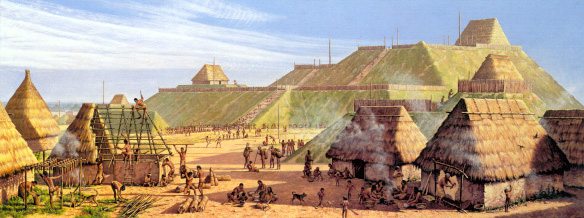


    Conquerors get to keep conquests?And the Europeans proved superior in battle, taking possession of contested lands through right of conquest. So in all respects, Europeans gained rightful and legal sovereign control of American soil.The right of conquest...that's hysterical. If Japan had successfully conquered Hawaii, would we have recognized that as a legal annexation? The way we recognized Nazi Germany's conquest of central Europe? Or Iraq's conquest of Kuwait during the first Gulf War? How freakin' stupid can you get?!

    So "all men are created equal," with "certain unalienable rights," including "life, liberty, and the pursuit of happiness." But some people have the right to conquer others and eliminate their lives, liberty, and pursuit of happiness? Does Fischer really think the Founding Fathers would've agreed to Great Britain's "right to conquer" them?

    Does Fischer's "right of conquest" permit conquerors to enslave and kill people, or just to subjugate them? I guess he thinks the Holocaust was okay, since the Nazis had the right to conquer the Jews. And anyone else they were "superior in battle" to.

    But I must've missed the part where "international legal scholars" recognized the conquests of the Axis powers, the Communist powers, et al. I look forward to Fischer's documentation on this point.The native American tribes at the time of the European settlement and founding of the United States were, virtually without exception, steeped in the basest forms of superstition, had been guilty of savagery in warfare for hundreds of years, and practiced the most debased forms of sexuality."Basest forms of superstition" = any superstitions other than Christian superstitions, obviously. "Savagery in warfare"? Hmm. Which continent was it that launched two world wars with poison-gas attacks, genocidal death camps, and nuclear mass murder? Oh, yeah...the same continent that engaged in hundreds of bloody wars, crusades, and inquisitions throughout its history:

    List of conflicts in Europe

    "Debased forms of sexuality" = sex outside a Christian marriage between man and woman, presumably. In addition, Fischer's claim that his claims are "virtually without exception" is a flat-out lie. There were countless exceptions.

    Jefferson's "merciless savages"One of the complaints listed by Thomas Jefferson in the Declaration of Independence was that King George “has endeavoured to bring on the inhabitants of our frontiers, the merciless Indian Savages, whose known rule of warfare, is an undistinguished destruction of all ages, sexes and conditions.”I think that line was more of a political statement than a personal belief. But suppose Jefferson meant it. I conclude the man who owned human chattel was almost as bigoted as Fischer. As I discussed in Jefferson's Indian Removal Policy. So what?The Lewis and Clark journals record the constant warfare between the nomadic Indian tribes on the frontier, and the implacable hostility of the Sioux Indians in particular.Lewis and Clark were preoccupied military men, not expert anthropologists. I'm pretty sure they didn't sit around watching tribes war with each other. I suspect a lot of what they recorded was what tribes told them about their enemies--an obvious source of distortion.

    Moreover, Lewis and Clark visited only a fraction of the American West for two years. This was after Americans began pressing westward, which forced tribes into unwanted proximity and conflict. Anything that happened centuries after European contact is arguably not a fair measure of tribal cultures.

    What Lewis and Clark didn't visit was the rest of the Western Hemisphere over its ten- or twenty-thousand-year history. From the Arctic Circle to Tierra del Fuego, they didn't have a clue what was going on. Generalizing from one small expedition to the entire history of two continents is incredibly asinine.
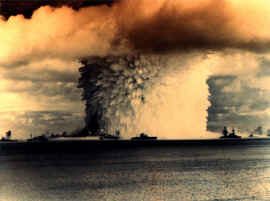


    Where's the warfare?

    Here's the only mention of warfare in the Wikipedia entry for Lewis and Clark:The Lewis and Clark Expedition established relations with two dozen indigenous nations. Without their help, the expedition would have starved to death or become hopelessly lost in the Rocky Mountains. The Americans and the Lakota nation (whom the Americans called Sioux or "Teton-wan Sioux") had problems when they met. The fear of attack by hostile Lakota was a constant source of apprehension. During the recent raid the Sioux had killed 75 Omaha Indians. One of their horses disappeared, and they believed the Sioux were responsible. Afterward, the two sides met and there was a disagreement, and the Sioux asked the men the stay or to give more gifts instead before being allowed to pass through their territory. They came close to fighting several times, and both sides finally backed down and the expedition continued on to Arikara territory. Clark wrote they were "warlike" and were the "vilest miscreants of the savage race."Summing it up, the Sioux didn't like white men passing through their territory. They probably realized Lewis and Clark were the forerunners of an onslaught of disease-carrying, treaty-breaking miscreants. They were smart to oppose the white man's passage.The journals record the morally abhorrent practice of many native American chiefs, who offered their own wives to the Corps of Discovery for their twisted sexual pleasure. (Regrettably, many members of the Corps, Lewis and Clark excepted, took advantage of these offers and contracted numerous and debilitating sexually transmitted diseases as a result.)There's no mention of this in Wikipedia. If Fischer isn't lying outright, it was probably a minor issue.

    Meanwhile, Fischer's holier-than-thou Christians had about 1,800 years of prostitution, adultery, pedophilia, orgies, rape, etc. under their belts at this point. Jesus probably was the first and last Christian to obey God's commandments.

    Washington the "town destroyer"They rejected Washington’s direct counsel to the Delaware chiefs in 1779, “You do well to wish to learn our arts and ways of life, and above all, the religion of Jesus Christ.”I can't imagine why Indians wouldn't trust and obey Washington. Oh, yeah, maybe this:After the Americans invaded Iroquois towns in the Susquehanna Valley in 1778, George Washington, determined to exterminate the Indian threat once and for all, ordered a massive sweep of Iroquois country, specifying that it should "not merely be overrun, but destroyed." Following orders by Washington to "lay waste all the settlements," Gen. John Sullivan's men ravaged 40 villages, burned 500 houses, and destroyed 100,000 bushels of corn. Some units stopped to plunder graves for burial goods; others skinned the bodies of dead Iroquois to make leggings.

    Through Indian Eyes
    Thomas Jefferson three times signed legislation appropriating federal tax dollars for the evangelizing of the Native American tribes. It all came to nought, as one tribe after another rejected the offer of spiritual light and advanced civilization.So Jefferson wanted to eradicate Indian cultures and religions so he could steal their land to enrich his fellow slaveowners. Again, so what? Presumably he had to keep busy between bouts of impregnating his female slaves. Since they couldn't opt out of sex with him, he was arguably a rapist.

    So much for America's "spiritual light and advanced civilization."

    Missionaries reaped what they sowedMissionaries were murdered in cold blood, including Marcus Whitman, who was tomahawked to death in his own house in 1848 by the Cayuse and Umatilla Indians in what became the Oregon Territory.Indians were murdered in cold blood too. After they were cheated out of their land by broken treaties, that is. That's the nature of war, unfortunately. But unlike the trespassing missionaries, the Indians were defending their homeland.

    As for Whitman, he was murdered in "his own house" in Indian territory, presumably. I wonder if he got a deed from or signed a rental agreement with his Indian landlords. Or was a he just a common trespasser who suffered the fate of other trespassers?Many of the tribal reservations today remain mired in poverty and alcoholism because many native Americans continue to cling to the darkness of indigenous superstition instead of coming into the light of Christianity and assimilating into Christian culture.Many of those reservations already have converted to Christianity. It hasn't made much difference in improving the tribes' lives. But Fischer is too bigoted to understand that. He thinks all Indians are savage beasts by definition. Incredibly, he can't conceive of a Christian Indian, a common occurrence.The continued presence of native American superstition was on full display at the memorial service for the victims of the Tucson shooter, when the “invocation” (such as it was) was offered by a native American who sought inspiration from the “Seven Directions,” including “Father Sky” and “Mother Earth,” rather than the God of the Bible.The continued display of conservative Christian hatemongering and vitriol was the main outcome of the memorial. It couldn't be plainer that conservative Christians like Fischer are stupid, ugly racists. You gotta love someone who defends Nazi-style genocide...not.

    Conclusion

    Let's sum it up. Fischer repeats the white supremacy claims uttered by five centuries of his ancestors. He depicts Indians as sick, depraved animals, not human beings.

    Gee, I can't imagine the connection between that and broken treaties, underfunded programs, violent crime, low-self esteem, depression and suicide, etc. Indians are subhuman beasts...but they have the same rights and privileges as everyone else. It's a level playing with no barriers to Indian advancement.

    If Indians aren't as successful as non-Indians, they must be lazy, good-for-nothing bums. It's not because of racism like Fischer's, because that's impossible in utopian America. We judge people on their merits, not on their race or religion.

    What a goddamned crock.

    For another deconstruction of this racist screed, see:

    AFA’s Bryan Fischer:  Native Americans Have Never Had Morals

    For more on the subject, see:

    Bachmann fibs about America's founding
    Obama's UN "coup" is "chilling"
    Racist rhetoric fuels hate crime
    Conservative website calls Indians "Beringians"
    Palin:  Racism is a ploy

    And about a thousand other postings in this blog.

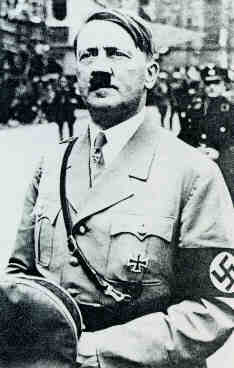
    Below:  Fischer's ideological bedfellow: "I agree with Herr Fischer! The Aryan race is the pinnacle of civilization! The mud people and homosexuals are nothing but stains on the earth! We rule the lesser races by the right of conquest! Ja wohl!"
    January 14, 2011

    Jefferson's Indian removal policy

    Here are some of the uncomfortable facts conservatives want to erase from children's textbooks:

    Thomas Jefferson, Founding Father of Indian Removal

    By Mark HirschFor Jefferson, democracy rested on the virtues of the yeoman farmer and on an unlimited supply of land. The man who cultivated his own land was sturdy and self-reliant, he believed, uniquely able to resist the blandishments of political demagogues and opportunists.

    "Our governments will remain virtuous for many centuries as long as they are chiefly agricultural," Jefferson proclaimed, "and this will be as long as there shall be vacant lands in any part of America."

    The problem was that America's "vacant lands" were populated by thousands of American Indians, whose notions of freedom rested on maintaining their tribal traditions and ancestral territories. Acquiring Indian lands became a crusade for Jefferson, one that led the United States toward the slippery slope of removal.

    When the American Revolution ended in 1783, Jefferson was already dreaming of expeditions to the West. He looked forward to the day when the United States would overstretch the entire continent and emerge as an "Empire Liberty." The West of Jefferson's imagination moved a giant step closer to reality in 1893, when the United States acquired the vast Louisiana Territory, which stretched from the Mississippi to the Rockies. When Jefferson sent Meriwether Lewis and William Clark on their epic expedition up the Missouri River to the Pacific, he instructed them to gather all the information they could about the new territories and the Native peoples who inhabited them.

    As Lewis and Clark explored the West, Jefferson began hammering out a policy for acquiring lands from tribes living east of the Mississippi. The plan rested on alternately encouraging, cajoling, bribing, tricking and pressuring Indians into signing treaties that ceded tribal lands to the United States.

    Jefferson first instructed his agents to persuade Indians to adopt agriculture. That new way of life, the agents explained, would require less land than hunting. With no need for their vast forests, the Indians were encouraged to sell their uncultivated territories for 25 cents per acre, the profits of which Indian farmers could use to purchase agricultural tools and manufactured goods. To stimulate Indian consumerism, Jefferson increased the number of government trading houses located near Native villages, arguing publicly that the establishments enabled Indians to share in the fruits of white "civilization." But it was a ploy. His real motive, he confided in 1803, was to lure Indians into spending themselves into debt, obligations that would be paid off through the sale of tribal lands.

    The weapons in Jefferson's arsenal of dispossession were many and varied, and they worked to perfection. As the historian Colin Galloway has observed, Jefferson's strategy yielded some 30 treaties with approximately a dozen tribes, who ceded some 200,000 square miles of land in nine states.

    Some Indian peoples, including many Cherokees, Choctaws, Chickasaws and Creeks, chose to heed Jefferson's call to adopt the ways of white society, adopting governments modeled on the United States, churches and schools producing high literacy. But other Natives rejected the white road. For them, Jefferson had little patience. Given his principles, Indians had two choices: full assimilation or removal.

    Jefferson began raising the specter of Indian removal in private letters written in 1803. Native resistance to European-style farming and to land sales, as well as white settlers' disrespect for Indian property rights, appears to have disposed Jefferson to doubt the feasibility of assimilating Native people into American life. Would it not be better to move Indians out of harm's way, he wondered, to exchange tribal lands in the east for lands west of the Mississippi?
    Jefferson's Indian Policy

    President Thomas Jefferson to William Henry Harrison, Governor of the Indiana Territory, 1803When they withdraw themselves to the culture of a small piece of land, they will perceive how useless to them are their extensive forests, and will be willing to pare them off from time to time in exchange for necessaries for their farms and families. To promote this disposition to exchange lands, which they have to spare and we want, for necessaries, which we have to spare and they want, we shall push our trading uses, and be glad to see the good and influential individuals among them run in debt, because we observe that when these debts get beyond what the individuals can pay, they become willing to lop them off by a cession of lands. At our trading houses, too, we mean to sell so low as merely to repay us cost and charges, so as neither to lessen or enlarge our capital. This is what private traders cannot do, for they must gain; they will consequently retire from the competition, and we shall thus get clear of this pest without giving offence or umbrage to the Indians. In this way our settlements will gradually circumscribe and approach the Indians, and they will in time either incorporate with us a citizens or the United States, or remove beyond the Mississippi.Happy President's Day:  A Native American Perspective

    By Julianne JenningsIn 1807, Thomas Jefferson instructed his War Department that, should any Indians resist against America stealing Indian lands, the Indian resistance must be met with "the hatchet." Jefferson continued, "And...if ever we are constrained to lift the hatchet against any tribe," he wrote, "we will never lay it down till that tribe is exterminated, or is driven beyond the Mississippi." Jefferson, the slave owner, continued, "in war, they will kill some of us; we shall destroy all of them."

    In 1812, Jefferson said that American was obliged to push the backward Indians "with the beasts of the forests into the Stony Mountains." One year later Jefferson continued anti-Indian statements by adding that America must "pursue [the Indians] to extermination, or drive them to new seats beyond our reach."
    Comment:  Force Indians into poverty, force them to sell their lands, force them to relocate. And destroy them with the hatchet if they don't accept their fate. Nice.

    These comments actually downplay the craven trickery used by Jefferson's agents to steal Indian land. Often they'd sign treaties with minor chiefs who had no authority to sell a tribe's land. Or worse, with chiefs from other tribes who really had no authority to sell a tribe's land. Basically, if the agents could cajole any Indian within a region to put an "X" on a piece of paper, they deemed the land sold.

    And rather than treat each treaty as inviolable, they treated it as a starting point for further theft. Sellers would pour into the newly acquired land and the adjoining Indian land. America's agents would throw up their hands and say the influx was beyond their control. Their only "solution" was to cajole or trick the Indians into giving up more land.

    Relocation = destruction

    These comments also downplay the impact of relocating entire cultures hundreds or thousands of miles away. To be forcibly removed from the places where you developed your religion, language, hunting and farming skills, laws, arts, etc. is absolutely shattering. I can't think of any group except Jews who have gone through such a culture-crushing experience. And we rightly deem what happened to Jews a crime against humanity.

    Even if tribes survived the relocation, they'd be subject to predictable onslaughts of hunger, disease, and poverty. They'd be decimated and devastated. Whether Jefferson realized it not, forcible relocation to a different country was a form of genocide.

    And of course Jefferson and the other Founding Fathers envisioned an American empire extending from coast to coast. It was a convenient fiction that they'd leave the Indians alone once they were west of the Mississippi. All they were doing was postponing the "final solution."

    If Jefferson weren't an intellectual coward, he would've admitted this. "In 50 or 100 years, we'll have to cheat, relocate, or kill the Indians again. But that's some future president's problem, not mine. As with my sex slaves, let's keep that out of the history books so I look like a noble hero."

    For more on the subject, see American Empire from the Beginning and Fun Fourth of July Facts.

    Below:  The father of American genocide?

    December 01, 2010

    Review of The Spirit of Sacajawea

    Here's another documentary I watched on PBS last week for Native American Heritage Month:

    The Spirit of Sacajawea (Lewis & Clark/Sacagawea/Sakakawea)One of the most revered women in American history, Sacajawea has been romanticized and often misinterpreted by non-natives. Revolving around interviews with her tribal peoples as well as recognized historians, this documentary examines the many controversies regarding her life, how her role in the Lewis & Clark journey impacted her tribes, and how they are surviving today.Documentary Premiere on PBSCharlotte filmmakers Beverly Penninger and Alyson Young of Naka Productions, Inc. are pleased to announce The Spirit of Sacajawea will air nationally via PBS Plus in November 2010.

    Over two hundred years after the storied Lewis & Clark expedition to the Pacific, this new documentary retells the story of the Indian woman who traveled with the Corps of Discovery, carrying her infant son across the country on her back. The Spirit of Sacajawea reexamines the life and legacy of this woman whose image adorns more monuments than any other woman in US history, this time from the point of view of her own Native American people. Through a mix of interviews, footage shot along the trail, the original Lewis & Clark journals, and an original score by Native American artists, the Naka Productions team has endeavored to tell Sacajawea’s story in a way that both adheres to fact and reaches beyond—to the larger truths of westward expansion and its impact on Native Americans past and present.

    The team’s hope is that the film will inspire “an honest exploration of American history. As a nation, we need to realize and acknowledge out loud that native peoples play into that history in much greater depth than what has traditionally been depicted."

    To date, The Spirit of Sacajawea has earned two Emmy awards, one for Best Historical Documentary and one for Best Editing, a bronze Telly Award and a Gracie Allen Award for Best Mid-length Documentary.
    Some facts noted in the documentary:

    Sacagawea BiographyAt the age of about sixteen she married a French trapper, Toussaint Charbonneau, who was also concurrently married to another Shoshone woman (he had purchased both from the Hidatsa as slaves). Sacagawea was pregnant with their first child when the Corps of Discovery arrived in the area to spend the winter of 1804/5. Needing someone to interpret the Hidatsa language, Lewis and Clark interviewed Charbonneau for the job. Although they were not overly impressed with him, the deal was sealed when they discovered that Sacagawea spoke Shoshone, an added bonus. She would become invaluable in her role as interpreter.

    Sacagawea gave birth to a son, Jean Baptiste Charbonneau, on February 11, 1805 while staying with the party at Fort Mandan. She would carry the infant throughout the entire trip to the Pacific Ocean and back. This had a very salubrious effect for the party—native tribes spotting the expedition knew that war parties didn't generally travel with a mother and child, and would therefore approach in a friendly manner. Undoubtedly this dispelled quite a bit of friction with the people they met throughout the excursion.

    Contrary to a common romantic view, Sacagawea did not act as a "guide" per se on the main part of the trip; her knowledge of the land was limited to the areas in which she grew up. Once the party was past her former Shoshone settlement, her knowledge of the land was no greater than that of the rest of the group. She did however perform well as a "pilot" in the North Dakota/Montana area; for example, she was able to help the group get a bearing on the return trip by pointing out Bozeman Pass.

    Her main duties were as a translator, and this worked in a very circuitous way. For example, with the Shoshone, she would translate into Hidatsa to her husband Charbonneau, who would then translate into French (he knew little English, but several others in the party knew French). The value of having Sacagawea as a Shoshone translator was proved when they reached her old village, and she was reunited with her brother, Cameahwait, who had by that time become a tribal leader. This smoothed the way in the negotiation to obtain much-needed horses from the Shoshone.

    As recorded in the expedition's journals for May 14, 1805, Sacagawea proved crucial to the success of the project when her husband Charbonneau capsized a pirogue the group was using to make its way upriver. Unable to swim, Charbonneau flew into a panic and was unable to help right the situation; Sacagawea therefore calmly went about collecting items which had been lost into the river: instruments, trade items and—perhaps most important, at least to future generations—the water-sodden pages of the journals themselves.
    Some people quoted in the film speak about her:

    Who was Sacagawea, and how did she aid the expedition?

    Rob's review

    The Spirit of Sacajawea opens with the ubiquitous flute music, which is annoying. Please, makers of Native-themed documentaries: Give us something other than flute music next time.

    The documentary is roughly divided between Sacagawea's own story, the Lewis and Clark expedition, and the continued existence of the tribes met along the way. This seems like about the right mix.

    The Spirit of Sacajawea shows us a plethora of Sacagawea statues and paintings. Paradoxically, these demonstrate that we don't know much about her--that she's become a semi-mythical character.

    A nice touch is that most of the speakers are women who are descendants, relatives, or experts on some aspect of her life and times. Only a couple are men.

    The documentary doesn't shy away from ticklish subjects: whether she was Shoshone or Hidatsa, the spelling and pronunciation of her name, when and where she was buried, etc. It doesn't give credence to claims that she was romantically involved with Clark or that she lived to an old age.

    The glorification of Sacagawea

    Despite a couple claims that Native history is complex and not comforting, The Spirit of Sacajawea mostly glorifies Sacagawea. The film praises her toughness, strength, and chutzpah. It's bookended by two over-the-top statements: "She changed history" and "arguably the most important American Indian woman in American history."

    Really? Let's review what she actually did for the expedition. 1) Fished a few items out of the river. 2) Found some roots to supplement the meals. 3) Translated the language of one or two tribes. 4) Pointed out an easier route a couple times.

    Was she essential to the expedition? No. Was she its most valuable member? No. Did she do as much as the men, who hunted for food, carried heavy supplies, paddled the boats upriver, etc.? No. Where are the statues to the 17th or 24th man of the expedition, who undoubtedly did as much as she did?

    The glorification reaches its apotheosis when the film recounts the boat incident. Someone says Sacagawea's tribal mindset gave her the presence of mind, put her in the moment, to rescue the items in the river. As if everyone else would've let the items sink and only she had enough foresight to act.

    More likely she just happened to be near the boat when it spilled. Anyone would've saved the sinking items because, well, that's what you do when you're hauling valuable supplies through the wilderness. In other words, her effort probably was a lucky coincidence, not a profound testament to her Native abilities.

    Expedition good or bad?

    In talking about her determination, The Spirit of Sacajawea glosses over a key point. She was more like a slave than a wife to her husband Charbonneau. He impregnated her when she was 15 or so, which would make her a child-bride and possibly a rape victim. It's not clear she had any choice about going on the expedition. She probably did whatever her lord and master told her to do.

    Someone in the film calls her a heroine. What, for obeying orders? A real heroine might've sabotaged the expedition to protect her people. Or run away to avoid a life of drudgery and early death. Simply carrying on and doing one's duty isn't enough to make one a hero.

    In talking about her importance, The Spirit of Sacajawea glosses over another key point. Namely, whether the Lewis and Clark expedition helped or hurt Indians. Would tribes have been better off if Sacagawea had died along the way? If the expedition had failed? Quite possibly.

    The expedition did little for Indians except further their decimation by disease and conquest by colonizers. If the "opening" of the West had been delayed a few years, the Indians would've had more time to develop a resistance to germs. And to put aside their differences and organize a common defense. They've might've grown strong enough to stymie the waves of settlers permanently.

    The film ignores the real reason we "honor" Sacagawea. Like Pocahontas and the Indians at the first Thanksgiving, she bolsters the American myth of greatness. Her story tells us that people of every stripe worked in harmony to build this grand country of ours. That whites and Indians were partners in settling the untamed wilderness and turning it into a "shining city upon a hill."

    In other words, that everyone did good and no one did bad. That Euro-Americans didn't demonstrate their immorality by stealing land, breaking treaties, and committing genocide. That we have nothing to feel guilty about as long as we remember noble Sacagawea.

    Conclusion

    So..."she changed history"? I think history would've been the same if she hadn't existed. "The most important American Indian woman"? I'm not sure she belongs in the top 100 Indian woman except as a symbol of other women. She's arguably the most overrated Indian woman in history...the one who least needs another statue, book, or film about her.

    I give The Spirit of Sacajawea a 7.5 of 10 for telling her story well. But I subtract points because it doesn't address the subjects I've raised. It could've done more to discuss why we honor Sacagawea and whether she deserves it.

    For more on Sacagawea, see 2011 Sacagawea Dollar Reverse Unveiled and A Holiday for Sacagawea?

    October 18, 2010

    In the Land of the Assiniboine

    Film chronicles Plains Indian tribe

    By Lorna ThackeryExplorers Lewis and Clark heard tales of a fierce people to the west when they holed up with the Mandan and Hidatsa during the brutal winter of 1804-05.

    They must have awaited spring with some trepidation knowing their journey up the Missouri would take them into the heart of Assiniboine Country. President Thomas Jefferson’s ambassadors to the newly acquired lands in the West probably felt fortunate on their passage through what became northeastern Montana that they did not see a single warrior.

    But the Assiniboine saw them.

    The non-encounter is one of the many stories packed into a video produced by Glasgow resident Mary Helland chronicling the history of the Assiniboine, who now reside on the Fort Peck Indian Reservation.

    The video “In the Land of the Assiniboine” was made by Camera One of Seattle with the cooperation of the Valley County Historical Society and Assiniboine Nation, and with the support of the National Park Service Challenge Cost Share Program.
    Comment:  For more on the subject, see Native Documentaries and News.

    August 28, 2010

    Story Circles at Sacajawea State Park

    Artist's 'Story Circles' honor Lewis and Clark expedition, tribal history

    By Kristi PihlDrums and Native American prayers once again echoed through the trees at the confluence of the Columbia and Snake rivers in Pasco.

    Members of area tribes performed a seven drums blessing as Story Circles was dedicated in Sacajawea State Park on Friday.

    The $1.6 million artwork, designed by world-renowned artist Maya Lin, is part of the $30 million Confluence Project to commemorate the Lewis and Clark expedition and the region's tribal history.

    The seven engraved basalt story circles, which range from 12 to 20 feet in diameter, mark where Capts. Meriwether Lewis and William Clark spent three days in 1805.
    The story continues at Sacajawea State ParkWith her latest Confluence Project artwork, Maya Lin will tell the complex story of what is now Sacajawea State Park, at the confluence of the Snake and Columbia rivers. Seven “story circles” and new landscaping at the site will recall its past, restore its native vegetation and reconnect it to the area’s Sahaptin-speaking people.

    In October 1805, Lewis and Clark spent three days here, hunting, repairing their equipment, mapping the river landscape, and celebrating with more than 200 Native Yakama, Wanapum, Walla Walla, Umatilla, Palouse and other people of the Columbia Plateau. Native people from the Rocky Mountains to the Pacific coast had already been gathering here for thousands of years, harvesting berries, root crops and medicinal plants; fishing and preserving the rivers’ abundant salmon; trading with one another; and celebrating together.

    Today, the site would be unrecognizable to the Corps of Discovery explorers and the Native people they encountered here. Manicured lawn grass and introduced shade trees have replaced the dry, open plain and riparian ecosystem that once thrived here. Dams have slowed the rushing rivers and raised their water levels, submerging the historic shoreline under more than 20 feet of nearly still water. Shore birds and other native fauna have been displaced. All but one of the site’s six species of salmon have become threatened or endangered.

    With text etched into seven story circles, some raised above the ground and some embedded within it, Maya Lin’s artwork will weave together the cultural, historical and environmental details that form the larger narrative of the area. The circles create voids in the landscape, representing the loss of habitat, wildlife and an important Native trading and fishing hub. As visitors walk from circle to circle, they’ll experience the present-day view of the river confluence as they reflect on its rich past. The story circles provide context for how the site has changed over time while re-establishing it as a spot to gather for generations to come.
    Comment:  For more on the subject, see Lewis and Clark Monument Sans Sacagawea and Statue of Crouching Sacagawea.

    August 03, 2010

    Sacagawea inspired comic-book guy

    In Ten Days on the Road, Part One, blogger Greg Hatcher describes a vacation he and his wife took in the Pacific Northwest:The Adventures of Lewis and Clark was one of the first--possibly the first--books I ever owned, back when I was seven years old. That was one of the books I learned to read on, and the story of Lewis and Clark and the Corps of Discovery made a huge impression on me, in large part due to John Severin's breathtaking illustrations. He made it all look real and believable in a way that a great many kid's books didn't then (and still don't today).

    Fort Clatsop, the camp at the mouth of the Columbia River where the expedition wintered in 1805 before turning back home, is very close to where we were staying in Seaside. I'd pestered my parents into taking me there once, when I was eight years old, but I didn't really remember anything about it and I wanted to be sure and go back this trip.


    After exploring Fort Clatsop, Hatcher discusses Sacagawea:And, of course, there was the gift shop. Lots of postcards and stuff, but also a fairly extensive library of books about Lewis and Clark and the Corps of Discovery. I had a vague hope that perhaps my beloved children's history book with those amazing Severin illustrations would be there, maybe in a new edition, and I could pick up a copy for Phenix--but no such luck. We resolved to keep an eye out for it for the rest of the trip, though.

    There were, however, a number of books about Sacagawea, the young Shoshone bride of the expedition's guide, Charbonneau.

    Sacagawea was an extraordinary young woman, and it's not really surprising that she continues to fascinate historians. I already told you the park ranger's characterization of the Corps as being 1805's version of the Special Forces, and how rough the expedition had it at Dismal Nitch. Now imagine coping with all that when you're a twentysomething Native American girl with only a vague grasp of English and carrying a newborn baby on your back.


    Hatcher ends up getting Marion Tinling's Sacagawea's Son for a friend's daughter.

    The interesting point is how something you read as a child sticks with you your entire life. For Hatcher, it was a book about Lewis and Clerk with comic book-style illustrations. Decades later, he's still writing about adventures in pop culture: comic books, novels, movies, etc.

    For me the milestones were The Wizard of Oz, Robinson Crusoe, the Tom Corbett adventure Stand By for Mars, and various books on astronomy and dinosaurs. Oh, and my Hopi kachina coloring book. You can sort of see that I'm still working in these areas, using my childhood inspirations.

    The kicker is: What if we gave today's children Native comic books, children's books, or DVDs? What if that was their seminal inspiration? Would they go on to mock and stereotype Indians, to deny them their rights? Or would they become champions of Indians and other oppressed people? There's no way to be sure, but I'm guessing the latter.

    For more on Sacagawea, see "Sacagawea" in Castle and 2nd Sacagawea Dollar Reverse Unveiled.

    January 29, 2010

    Composer shocked at own ignorance

    An Interview With Composer Rob Kapilow on Summer Sun, Winter MoonRob Kapilow, the composer featured in the documentary Summer Sun, Winter Moon to air January 31st on SundayArts, was commissioned by the St. Louis and Kansas City Symphonies and the Louisiana Philharmonic Orchestra to compose a symphonic work with a specific theme: a reflection of the enduring legacy of the Lewis and Clark expedition. Seeking to collaborate with Blackfeet tribal member Darrell Robes Kipp, the innovative artist delved into a sharply alternative--and controversial--avenue of perspective, that of the indigenous storyteller’s view “from the river bank, not the boat.” Summer Sun, Winter Moon documents the collaboration to create this cross cultural piece project that brings a Native perspective on American history to light.

    In connection with the January 31st airing of the documentary, Kapilow recently answered a number of questions for SundayArts via email about his creative process and his journey with Summer Sun, Winter Moon.

    At the beginning of the documentary Darrell calls you a good Blackfoot. What is your relationship Native American tribes? Would you say that your creative collaboration created a kind of tribal bond?

    I believe that relationships are with individuals and not groups. Before this project I had not a single relationship with a Native American. Over the course of this project and since its completion, I have developed hundreds of relationships with individual Native Americans of many different tribes–obviously the largest number within the Blackfoot community. I have become aware of a group of people, and a wide range of issues that I had previously never been aware of before, and developed extremely deep relationships with many different individuals and a sympathy for them and their issues I would not have thought possible. I have also developed a much greater comfort level in my dealings with all tribes and a sensitivity to the kinds of issues that can arise in these encounters that has deepened these relationships. I would not claim that I have a relationship with Native American tribes but the creative collaboration and the time I spent in the Native American world allowed me to connect with an enormous number of people and issues in the tribal world.

    What was the impetus to document the creative process behind the commissioned musical composition?

    From my side, the impetus came first from my own shock at how ignorant I was of the people and issues I was encountering as I entered the Native American world, and the hope that some of the amazing experiences I was having might be shared with others, and open up some of this world to them. I also believed profoundly that the tribal world had an important story to tell that we needed to hear–not only about Lewis and Clark but about their side of the American experience–and the more I learned, the more valuable it thought it might be to have this information shared with others. I also believe deeply in this kind of collaborative experience with people from completely different walks of life–”crossing the divide” experiences–and I hoped that by documenting this process, others might be inspired to try to create similar projects.
    Comment:  Kapilow's experiences sound a little like mine. It's taken 20 years before I could claim to be semi-knowledgeable about Indians.

    For more on the subject, see Native Documentaries and News.