Showing posts with label Thomas Jefferson. Show all posts

July 28, 2014

Review of Undaunted Courage

Back in December 2012 I read this book:

Undaunted Courage: Meriwether Lewis, Thomas Jefferson, and the Opening of the American WestFrom the bestselling author of Band of Brothers and D-Day, the definitive book on Lewis and Clark’s exploration of the Louisiana Purchase, the most momentous expedition in American history and one of the great adventure stories of all time.

Amazon.com Review
A biography of Meriwether Lewis that relies heavily on the journals of both Lewis and Clark, this book is also backed up by the author's personal travels along Lewis and Clark's route to the Pacific. Ambrose is not content to simply chronicle the events of the "Corps of Discovery" as the explorers called their ventures. He often pauses to assess the military leadership of Lewis and Clark, how they negotiated with various native peoples and what they reported to Jefferson.

From Publishers Weekly
Without adding a great deal to existing accounts, Ambrose uses his skill with detail and atmosphere to dust off an icon and put him back on the trail west. History Book Club main selection; BOMC split selection; QPB alternate; author tour.

wow, that was long trip
By Bill Chaisson on November 1, 1999

Ambrose chose a huge sprawling subject and wrote a medium size book that does not sprawl at all. In order to accomplish this he had to write in an almost telegraphic style. This book is largely descriptive with frequent, but brief interpretive asides.

Anyone fascinated by Native American cultures should read this book. It offers a tantalizing look at several tribes either at or immediately following "contact". If you know anything about the later history of the tribes of the Upper Missouri and Pacific Northwest, this book just drips with tragedy and none of it is spelled out in a silly melodramatic way; Ambrose's restraint makes the impact that much greater.

If you don't expect history books to be particularly literary, but just to tell a good story, then you'll think this is a terrific book. If you are looking for a meditation on the ramifications of the L&C expedition with regard to the settling of the American West, then this book is a little sparse on analysis, although it is good about reporting salient information. Having read it, I guess I feel prepared to read more in-depth account about smaller segments of this story.
Rob's reaction

Around that time I posted the following on Facebook:

Reading Undaunted Courage by Stephen Ambrose about Lewis and Clark. Tumors, boils, dysentery, diarrhea, syphilis, gonorrhea, mosquitoes, fleas, hunger, injuries, rain and snow, manual labor, bear attacks, hostile Indians...who wants to be an explorer? Anyone?

Hard to believe Jefferson seriously thought he could move all the Indians west of the Mississippi, where they'd 1) assimilate into American culture and 2) live unmolested by white settlers. This is a ridiculous fantasy on so many levels. Ambrose criticizes the plan to some extent, but not nearly as much as it deserves.

Hey, let's resolve the Irish problem by relocating them to Cyprus, and the Greek/Turkish problem on Cyprus by relocating them to Ireland. The Cypriots can become Irish and the Irish can become Cypriots. Then everyone can live in peace. What could possibly go wrong?

That's about how dumb Jefferson's plan was. Even if Ambrose stuck to primary sources, I bet he could've found someone critical of it. Saying "here's what Jefferson intended" and leaving it at that isn't enough.

Rob's rating of Undaunted Courage: 8.0 of 10.

July 14, 2013

Genocidal quotes from Founding Fathers

Nice Day for a Genocide: Shocking Quotes on Indians By U.S. Leaders, Pt 1If it be the design of Providence to extirpate these Savages in order to make room for cultivators of the Earth, it seems not improbable that rum may be the appointed means.Benjamin Franklin, from his autobiography, 1750sThe immediate objectives are the total destruction and devastation of their settlements and the capture of as many prisoners of every age and sex as possible. It will be essential to ruin their crops in the ground and prevent their planting more.Orders of George Washington to General John Sullivan, May 31, 1779Is one of the fairest portions of the globe to remain in a state of nature, the haunt of a few wretched savages, when it seems destined by the Creator to give support to a large population and to be the seat of civilization?Governor William Henry Harrison, of the Indiana Territory (1800-1812) while defending displacement of the IndiansWhat is the right of the huntsman to the forest of a thousand miles over which he has accidentally ranged in quest of prey? Shall the fields and vallies, which a beneficent God has formed to teem with the life of innumerable multitudes, be condemned to everlasting barrenness?John Quincy Adams, 1802, when rationalizing territorial imperatives as God’s willThis unfortunate race, whom we had been taking so much pains to save and to civilize, have by their unexpected desertion and ferocious barbarities justified extermination and now await our decision on their fate.President Thomas Jefferson, The Papers of Thomas Jefferson, December 29, 1813The hunter or savage state requires a greater extent of territory to sustain it, than is compatible with the progress and just claims of civilized life, and must yield to it. Nothing is more certain, than, if the Indian tribes do not abandon that state, and become civilized, that they will decline, and become extinct. The hunter state, tho maintain’d by warlike spirits, presents but a feeble resistance to the more dense, compact, and powerful population of civilized man.James Monroe, in a letter to Andrew Jackson, October 5, 1817Comment:  For more on the Founding Fathers, see Native Activities in 1776 and Anti-Government Extremism = White Supremacy.

May 06, 2013

No more Jefferson-Jackson Day dinners

It’s time for Democrats to ditch Andrew Jackson

As Biden speaks at event named for Old Hickory tonight, more appalling stories show party should dump him as icon

By Steve Yoder
Spring means that appeals for money are bursting forth from both major political parties. It also means Democratic officials in states and counties around the country are busy getting people out to their major fundraiser, the Jefferson-Jackson Day Dinner. And they’re bringing in the big guns: Vice President Joe Biden will keynote the South Carolina Democrats’ dinner tonight.

But after an election in which Democrats rode a wave of minority support to keep the White House and Senate, party activists should wonder about one of the founders for whom that event is named. If branding matters, then the tradition of honoring perhaps the most systematic violator of human rights for America’s nonwhites should finally run its course.

Renowned journalist T.D. Allman’s gripping Finding Florida: The True History of the Sunshine State argues that brutality was a habit of mind for party icon Andrew Jackson long before he laid the groundwork, as President, for the Trail of Tears, the thousand-mile death march that killed 4000 Cherokees in 1838−39.
And:But is it unfair to hold Jackson to today’s standards? It would be—had Jackson’s contemporaries not tried their best to stop him. Cave documents a campaign against Jackson’s Indian removal policy that continued throughout the 1830s; one signature petition from New York City was 47 yards long. From 1830 to 1842, 85 percent of opposition Whig Party congressional votes on removal were cast in opposition to Jackson’s policy, according to a 1993 journal article by historian Fred Rolater. And Allman describes an 1837 investigation by Congressman William Jay concluding that Jackson’s destruction of the Negro Fort constituted an illegal use of taxpayer funds to support slavery.

Today, Democrats sound open to reconsidering whether honoring Jackson still makes sense. In Jackson’s home state of Tennessee, party spokesman Brandon Puttbrese says, “I think we welcome these kinds of conversations about our history. What he did in office…these are not things we should proud of, but they’re definitely things we must learn from.” But if so, why keep Jackson as the party’s brand? “One explanation might just be inertia—it’s been that way forever, so it’s still that way,” says Puttbrese.

In Arkansas, party representative Candace Martin acknowledges that “If you look at the overall values of the Democratic party, then Andrew Jackson probably would not be representative…. It’s maybe something that we should be debating.”

And a Democratic official in one state who didn’t want to be named thinks Jackson’s days are numbered as a fundraising brand: “When I think of Andrew Jackson, I automatically think ‘Trail of Tears’…” the official says. “If a bunch of people in my generation were creating this dinner, I don’t think we would name it the Jefferson-Jackson Day dinner. I think a lot of things that happen in politics are just like, ‘well that’s the way it’s always been.’”
And:Should Jackson’s history matter to Democrats? If not, it’s hard to explain why Republicans went to such lengths before the presidential campaigns in both 2008 and 2012 to paint themselves as the historic defenders of minority rights by recounting the crimes of southern Democrats before the civil rights era. Today’s Democrats play into their hands by continuing to embrace Jackson; in the battle for minority votes, branding could prove to be the difference.

State parties have dumped Jackson before. In 1978, Minnesota Democrats renamed their Jefferson-Jackson dinner for Hubert Humphrey. Oklahoma Democrats replaced him with former Majority Leader Carl Albert in the 1990s. And in 2010, the North Dakota party picked legendary Senator Quentin Burdick as the fundraiser’s namesake instead.

With Republicans also raising money with Lincoln-Reagan dinners this spring, Democrats have to take a harder look at what the past means for their future. If so, they’ll find it’s not hard to do better. Roosevelt-Kennedy has a nice ring to it.
Comment:  Jefferson wasn't all he's made out to be, either. He owned slaves and wanted the Indians removed, making him Jackson's spiritual father. He's not a great fit with today's Democrats, since he favored small government and opposed big spending projects.

But the Jefferson-Jackson Day dinners are pretty weak evidence of "liberal racism." As the article indicates, most Democrats probably accept the name without thought. As with a dubious sports team nickname or geographic place name, inertia is largely responsible for keeping it in place.

It's like using a $20 bill with Jackson's picture on it, or driving on a freeway named for Jackson. Most people don't even think about it. Even if you cared, it would require a lot of effort to avoid Jackson's name and image, and it wouldn't have much effect. So I don't blame people for ignoring his presence throughout our culture.

That said, this name is something party leaders can easily change without harming anyone's sensibilities. "Roosevelt-Kennedy" does indeed have a nice ring to it. Or Democrats could abandon the "two presidents" convention and call the event something else. Maybe the Power to the People Dinner or the Ninety-Nine Percent Dinner.

For more on Andrew Jackson, see Most Overrated Presidents and "Most Terrifying Man Ever Elected President"

February 18, 2013

Most overrated presidents

Happy Presidents’ Day! Meet The Five Most Overrated American Presidents

By Ian MillhiserAmericans love to rank things. So lists of the best presidents in American history frequently allow historians to duke it out over whether George Washington, Abraham Lincoln or Franklin Delano Roosevelt should be remembered as our nation’s greatest leader. Meanwhile, recently departed President George W. Bush already ranks close to the top in polls of historians asked to rank the worst president in American history. Rather than wade into the thicket of which men best or worst served their nation during their time in the White House, we would like to offer a different kind of list. Here are five presidents who routinely rank far above what their performance in office deserves in surveys considering presidential performance:

1. Andrew Jackson

The Democratic Party frequently hosts Jefferson-Jackson Dinners honoring President Jackson and another historic president who is also on this list. It should reconsider this practice, as Jackson’s policy towards Native Americans was only a few steps shy of genocidal. In theory, President Jackson’s Indian Removal Act, permitted him to negotiate voluntary agreements with tribes in the southeastern United States encouraging them to exchange their eastern lands for new territory in the west. In reality, Jackson’s forced migration policy was anything but voluntary. By his last year in office, 46,000 Native Americans were removed from their lands, opening up tens of millions of acres to white settlement and slave-worked agriculture. As many as a quarter of the southeastern Cherokee people died of cold, hunger, and disease in the Trail of Tears march that began shortly after Jackson left the White House.

2. Ronald Reagan

3. Woodrow Wilson

4. Thomas Jefferson


Like Wilson, Jefferson’s legacy is far more mixed than malign, as no one can question the significance of his contributions to American history—beginning with the document that declared us an independent nation. Yet Jefferson’s most important accomplishment as president was also the most important flip-flop in American history. During the Washington Administration, Jefferson led a losing faction seeking to constrain federal power to foster the nation’s economic growth far beyond the limits contained in the Constitution’s text. This narrow vision of the Constitution initially led him to oppose the Louisiana Purchase as president, although he eventually relented and doubled the size of the United States in the process.

5. James Madison
Comment:  The comments about the Louisiana Purchase ignore the fact that the land belonged to the Indians, not the French or Spanish. The comments also ignore the many unfortunate consequences. Here's a summary of them:

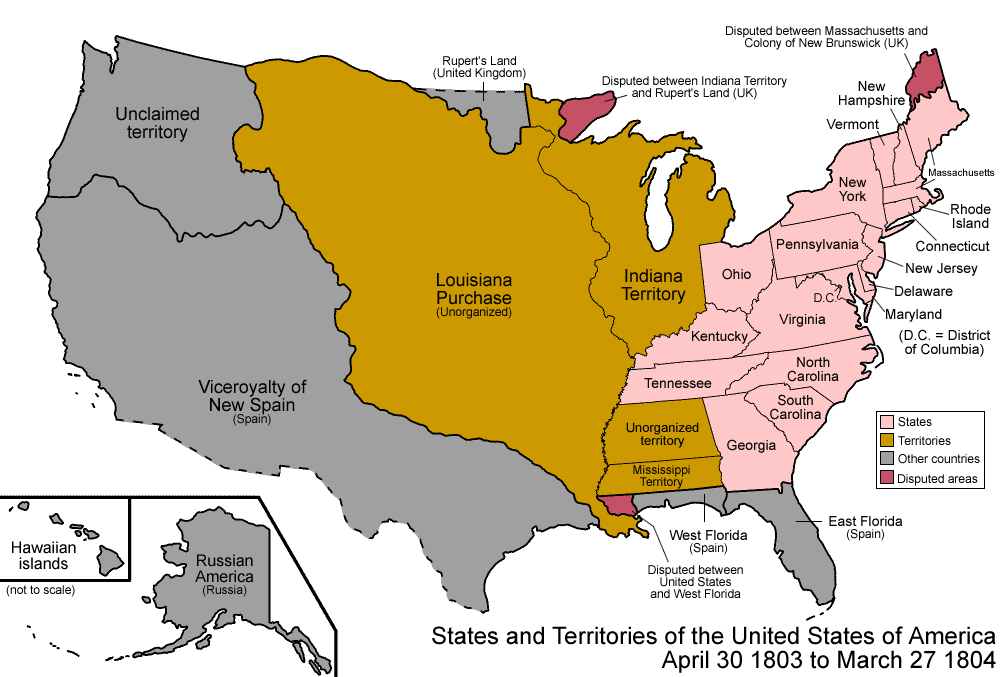
The Louisiana PurchaseOn April 30, 1803, the United States government made one of the greatest land transactions of all time when it purchased from the French Republic for $15 million dollars, a piece of real estate extending from the Gulf of Mexico north to Canada, and from the Mississippi River Basin west to the Rocky Mountains. Called the Louisiana Purchase, this transaction added 830,000 square miles of uncharted wilderness to the territory of the United States.

The Louisiana Purchase opened the west for settlement by Europeans and Americans and had grave implications for American Indians, who would soon find their ancestral homelands taken from them. It allowed for the extension of slavery, brought an end to French and Spanish domination in Arkansas and allowed a diversity of settlers to develop and perpetuate their own cultures in the six distinct geographic regions of the state.
For more on the subject, see "Most Terrifying Man Ever Elected President" and Best and Worst Presidents for Indians.

August 26, 2011

David Duke speaks to teabaggers

The White Supremacist Roots Of The Tea Party’s Obama HateThe racial bigotry against President Obama began before he was inaugurated and has continued unabated to this day. The hatred against Obama cannot be for his policies because he is a Centrist who has enraged many on the Left for not acquiescing to their demands that he pursue a Progressive agenda. Teabaggers complained from the start of the president’s term in 2009 that he was taxing them too much even though the tax rates were from George W. Bush’s term. The president cut taxes shortly after taking office and the teabags still claimed Obama was overtaxing them. The teabaggers have complained about all of President Obama’s policies regardless that they benefited from his agenda, so the only explanation for their opposition that makes any sense is his race.

David Duke made a video-taped speech for teabaggers that laid out bigoted reasons for the tea party’s desire to return America to the Founding Fathers’ days when African slaves were considered 3/5ths of a person and the predominant race was white. The racial bigot Duke told teabaggers that African Americans, Jews, and other minorities were interlopers trying to change America from a white man’s country into a diverse nation of ethnicities and that it will be the undoing of our country. No-one is surprised that David Duke is still a bigot, but his dysfunctional logic supporting ethnic cleansing gives one pause and informs why teabaggers want America to return to its original European, white roots set at the country’s founding.

Duke accused Jews in the media of promoting President Obama, and throughout his speech refers to “real Americans” as European-American people who overwhelmingly did not vote for President Obama and reject him as the country’s leader. Duke claimed the original Boston tea party was a rejection of foreign intervention in America’s government and he goes on to insinuate that the president, Jews, and non-whites are a foreign power who are robbing European Americans of their freedom to rule themselves. To further his argument for white supremacy, he referred to the Founding Fathers’ first immigration policy that limited immigrants to “free white people.” The racial rant quotes Thomas Jefferson and cites his reason for opposing slavery as a “danger to our posterity,” and that Jefferson said “unless African slaves were repatriated to their motherland, he shudders for America’s future.” Duke also said Jefferson’s writings on the slavery issue have been “completely censored in the popular media” and that it is a despicable plot to fool the American people.
There are many problems with Duke’s supremacist rant, and besides being sickening on many levels, it gives a clue to why teabaggers cite the Founders’ original intent at the nation’s beginning as being a golden age. Teabaggers and Duke have idealized the late 1700s as the model for 21st Century America as if the past two-hundred years of progress did not improve America. Duke’s racial tirade explains the Black voter suppression being supported by teabaggers as well as the attacks on women’s rights. Duke kept referring to the Founders’ and the Constitution, but never acknowledged the multitude of amendments that were necessary to keep pace with the changing landscape in this country.

Teabaggers have opposed the 14th Amendment’s Citizenship Clause as well as the Equal Protection Clause that are part of the so-called “Reconstruction Amendments” that include the 13th and 15th Amendments that abolished slavery and granted voting rights to people of colour respectively. If America was constrained to the original 10 amendments in the Constitution, the country would be no better than a third-world country and anyone who was not white would be little more than property.
You can watch the video here:

David Duke Addressing the Tea Party

Comment:  Note that Dukes is upfront about saying the Tea Party isn't a political movement, it's a racial movement. He's also upfront about stating it was a response to Obama's election, even though Obama has reduced our taxes even more than Bush did.

Let's reiterate a key point:Teabaggers and Duke have idealized the late 1700s as the model for 21st Century America as if the past two-hundred years of progress did not improve America.Note that teabaggers never say, "Let's go back to 1900--after slavery ended but before the income tax was passed." They never talk about freeing the slaves and guaranteeing their rights as if that were a good thing. Indeed, they never talk about the Founders' bigoted belief that only white male property owners could govern the country.

In short, their talk about returning to the Founders' Constitution and values means eliminating the rights of women and minorities. It means returning to white Christian rule.

For more on the subject, see Teabaggers Seek White Christian Rule and Whites Feel Like a Minority.

Below:  He killed Indians and enslaved blacks. That must be why he's the father of our country and so many people revere him.

July 09, 2011

Three words in Declaration of Independence

A woman wrote about her family tradition of reading the Declaration of Independence on the Fourth of July:

The Damaging Three Words of the Declaration of Independence

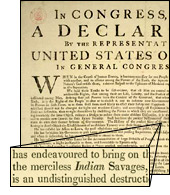
By Alison OwingsEventually, however, we get to "domestic Insurrections amongst us," and here it comes, the phrase that distresses me so much after spending close to a decade meeting, and listening to, Native Americans, that I can barely stand to read it, nor type it.

"... the merciless Indian Savages."

Say what? From the elegantly-quotable Jefferson? Yes. "... the merciless Indian Savages, whose known Rule of Warfare, is an undistinguished Destruction, of all Ages, Sexes and Conditions."

While Native Americans celebrate this 4th of July weekend, probably with hotdogs and fireworks, and possibly a powwow (as far as I know, the day has not attained the level of dislike or dismissal in Indian country that there is towards Columbus Day), I wonder whether we might all read the Declaration of Independence out loud, consider what that three word phrase wrought, not to mention the words about "undistinguished Destruction." Destruction of who by whom? Native people, among others, may ask.


Pretty innocuous stuff, you might say. The Founding Fathers had a problem with Indians...so? Newspaper Rock readers see more inflammatory comments almost every day. And this appeared in the Huffington Post, that bastion of the "liberal media."

According to Owings, here's what happened:

The Declaration of Independence, Jefferson’s “Merciless Indian Savages,” and Getting Flamed on Huffington Post

By Alison OwingsMention of “merciless Indian savage” kicked up such a huge and ferocious storm that I have not read all the comments: 3,187 of them when I last checked.

Of the many I did read, a majority were wagging finger-ish. “Didn’t I realize that the Declaration reflected thinking in the 18th century, not the 21st?” “Didn’t I know that the passage I quoted is part of a long list of grievances against King George III?” “Please be aware that Jefferson owned slaves…” To which I say, “Duh, duh, and duh.”

Some comments were shocking by perspective alone. Common themes: Look what Indians did to settlers, savagely and mercilessly, wrote several people. Jefferson was right! Or, “Jefferson was referring only to Indians in western settlements”—(“Nothing in that statement shows a belief that ALL Indians were merciless or even savage,” wrote nullcodes). Or, “Now Indians can go to college for free.” A person with the handle of jdjay comments, “There were some pretty evil tribes but focusing on the bad ones as being representa­tive of the whole is obviously not an objectivel­y Christian or spiritual approach.”

Here sunshine14 steps in: “Does not matter if their [sic] were evil tribes or good tribes, not our land was it, regardless­?” This rankles Syllogizer. “You are ignoring the facts that even Tocquevill­e pointed out: the Indians did not even HAVE a concept of land ownership when the Europeans arrived. So no, the land was not ‘stolen’, since it wasn’t ‘owned’ in the first place.”

Oh, Lordy. That one drew a lot of heat.

Thankfully, a number of people, including many self-identified as Native, challenged the challengers, and the challengers’ challengers. One gentleman (as I think of him) took on a creep who wrote that my essay, meant for the 4th of July of all days, was “treasonous.” Eek.
Comment:  "Treasonous," eh? Thanks for that deep understanding of the 1st Amendment, fella.

As you can see, there's so much ignorance among Americans, even liberal ones. So much denial of America's genocidal past.

We could rebut all the anti-Indian arguments, but why bother? Sunshine14's point is the basic one to remember. Regardless of the details, Europeans invaded a foreign land and conquered its people. The Indians correctly assumed these attacks would destroy their way of life and fought back in self-defense.

For more on our genocidal history, see US Condemned Indians to Diabetes and Scalia Demands Written Policies.

February 21, 2011

Happy Presidents Day 2011!

Two weeks ago some Lakota Indians protested a "Wizard of Oz" play because of L. Frank Baum's editorials 120 years ago. Their goal is apparently to banish The Wizard of Oz from our culture to teach Baum a lesson. Too bad he's been dead for 96 years and probably won't get the message.

In their honor, I posted the following suggestion on Facebook for Presidents Day: Let's also remove the anti-Indian presidents from our currency, Mt. Rushmore, the history books, etc.This led to a brief discussion:Rob, let's not forget that the slaughter of indigenous peoples, or the slavery of "lesser" people has been the cornerstone to this fine democracy--which recognizes the rights of all men (women excluded for obvious reasons...wink wink).That's why we need to eliminate these presidents!While you're at it let's not forget those 38 warriors who died by hanging in the largest mass hanging in the history of the US, their death warrant signed by none other than "Honest" Abe Lincoln.I'm including Washington, Jefferson, Jackson, Lincoln, and T. Roosevelt among the presidents to be eliminated along with Baum.OK. Can we then replace Andrew Jackson on the twenty with Richard Nixon?Yes, we can put Nixon on the $20 for his support of indigenous rights. Right after we remove The Wizard of Oz from every bookstore and DVD store.

For more on the subject, see Liberation Day, not Presidents Day and Fun Fourth of July Facts.

P.S. Needless to say, neither the presidents nor Baum's beloved children's story are going anywhere anytime soon. Protesting them is roughly equivalent to protesting the ocean's tides.

January 14, 2011

Jefferson's Indian removal policy

Here are some of the uncomfortable facts conservatives want to erase from children's textbooks:

Thomas Jefferson, Founding Father of Indian Removal

By Mark HirschFor Jefferson, democracy rested on the virtues of the yeoman farmer and on an unlimited supply of land. The man who cultivated his own land was sturdy and self-reliant, he believed, uniquely able to resist the blandishments of political demagogues and opportunists.

"Our governments will remain virtuous for many centuries as long as they are chiefly agricultural," Jefferson proclaimed, "and this will be as long as there shall be vacant lands in any part of America."

The problem was that America's "vacant lands" were populated by thousands of American Indians, whose notions of freedom rested on maintaining their tribal traditions and ancestral territories. Acquiring Indian lands became a crusade for Jefferson, one that led the United States toward the slippery slope of removal.

When the American Revolution ended in 1783, Jefferson was already dreaming of expeditions to the West. He looked forward to the day when the United States would overstretch the entire continent and emerge as an "Empire Liberty." The West of Jefferson's imagination moved a giant step closer to reality in 1893, when the United States acquired the vast Louisiana Territory, which stretched from the Mississippi to the Rockies. When Jefferson sent Meriwether Lewis and William Clark on their epic expedition up the Missouri River to the Pacific, he instructed them to gather all the information they could about the new territories and the Native peoples who inhabited them.

As Lewis and Clark explored the West, Jefferson began hammering out a policy for acquiring lands from tribes living east of the Mississippi. The plan rested on alternately encouraging, cajoling, bribing, tricking and pressuring Indians into signing treaties that ceded tribal lands to the United States.

Jefferson first instructed his agents to persuade Indians to adopt agriculture. That new way of life, the agents explained, would require less land than hunting. With no need for their vast forests, the Indians were encouraged to sell their uncultivated territories for 25 cents per acre, the profits of which Indian farmers could use to purchase agricultural tools and manufactured goods. To stimulate Indian consumerism, Jefferson increased the number of government trading houses located near Native villages, arguing publicly that the establishments enabled Indians to share in the fruits of white "civilization." But it was a ploy. His real motive, he confided in 1803, was to lure Indians into spending themselves into debt, obligations that would be paid off through the sale of tribal lands.

The weapons in Jefferson's arsenal of dispossession were many and varied, and they worked to perfection. As the historian Colin Galloway has observed, Jefferson's strategy yielded some 30 treaties with approximately a dozen tribes, who ceded some 200,000 square miles of land in nine states.

Some Indian peoples, including many Cherokees, Choctaws, Chickasaws and Creeks, chose to heed Jefferson's call to adopt the ways of white society, adopting governments modeled on the United States, churches and schools producing high literacy. But other Natives rejected the white road. For them, Jefferson had little patience. Given his principles, Indians had two choices: full assimilation or removal.

Jefferson began raising the specter of Indian removal in private letters written in 1803. Native resistance to European-style farming and to land sales, as well as white settlers' disrespect for Indian property rights, appears to have disposed Jefferson to doubt the feasibility of assimilating Native people into American life. Would it not be better to move Indians out of harm's way, he wondered, to exchange tribal lands in the east for lands west of the Mississippi?
Jefferson's Indian Policy

President Thomas Jefferson to William Henry Harrison, Governor of the Indiana Territory, 1803When they withdraw themselves to the culture of a small piece of land, they will perceive how useless to them are their extensive forests, and will be willing to pare them off from time to time in exchange for necessaries for their farms and families. To promote this disposition to exchange lands, which they have to spare and we want, for necessaries, which we have to spare and they want, we shall push our trading uses, and be glad to see the good and influential individuals among them run in debt, because we observe that when these debts get beyond what the individuals can pay, they become willing to lop them off by a cession of lands. At our trading houses, too, we mean to sell so low as merely to repay us cost and charges, so as neither to lessen or enlarge our capital. This is what private traders cannot do, for they must gain; they will consequently retire from the competition, and we shall thus get clear of this pest without giving offence or umbrage to the Indians. In this way our settlements will gradually circumscribe and approach the Indians, and they will in time either incorporate with us a citizens or the United States, or remove beyond the Mississippi.Happy President's Day:  A Native American Perspective

By Julianne JenningsIn 1807, Thomas Jefferson instructed his War Department that, should any Indians resist against America stealing Indian lands, the Indian resistance must be met with "the hatchet." Jefferson continued, "And...if ever we are constrained to lift the hatchet against any tribe," he wrote, "we will never lay it down till that tribe is exterminated, or is driven beyond the Mississippi." Jefferson, the slave owner, continued, "in war, they will kill some of us; we shall destroy all of them."

In 1812, Jefferson said that American was obliged to push the backward Indians "with the beasts of the forests into the Stony Mountains." One year later Jefferson continued anti-Indian statements by adding that America must "pursue [the Indians] to extermination, or drive them to new seats beyond our reach."
Comment:  Force Indians into poverty, force them to sell their lands, force them to relocate. And destroy them with the hatchet if they don't accept their fate. Nice.

These comments actually downplay the craven trickery used by Jefferson's agents to steal Indian land. Often they'd sign treaties with minor chiefs who had no authority to sell a tribe's land. Or worse, with chiefs from other tribes who really had no authority to sell a tribe's land. Basically, if the agents could cajole any Indian within a region to put an "X" on a piece of paper, they deemed the land sold.

And rather than treat each treaty as inviolable, they treated it as a starting point for further theft. Sellers would pour into the newly acquired land and the adjoining Indian land. America's agents would throw up their hands and say the influx was beyond their control. Their only "solution" was to cajole or trick the Indians into giving up more land.

Relocation = destruction

These comments also downplay the impact of relocating entire cultures hundreds or thousands of miles away. To be forcibly removed from the places where you developed your religion, language, hunting and farming skills, laws, arts, etc. is absolutely shattering. I can't think of any group except Jews who have gone through such a culture-crushing experience. And we rightly deem what happened to Jews a crime against humanity.

Even if tribes survived the relocation, they'd be subject to predictable onslaughts of hunger, disease, and poverty. They'd be decimated and devastated. Whether Jefferson realized it not, forcible relocation to a different country was a form of genocide.

And of course Jefferson and the other Founding Fathers envisioned an American empire extending from coast to coast. It was a convenient fiction that they'd leave the Indians alone once they were west of the Mississippi. All they were doing was postponing the "final solution."

If Jefferson weren't an intellectual coward, he would've admitted this. "In 50 or 100 years, we'll have to cheat, relocate, or kill the Indians again. But that's some future president's problem, not mine. As with my sex slaves, let's keep that out of the history books so I look like a noble hero."

For more on the subject, see American Empire from the Beginning and Fun Fourth of July Facts.

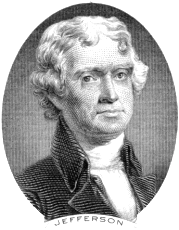
Below:  The father of American genocide?
October 23, 2010

Teabaggers = Constitutional hypocrites

America’s Holy Writ

Tea Party evangelists claim the Constitution as their sacred text. Why that’s wrong.

By Andrew RomanoContemporary Constitution worshipers claim that they’ve distilled their entire political platform—lower taxes, less regulation, minimal federal government—directly from the original text of the founding document. Any overlap with mainstream conservatism is incidental, they say; they’re simply following the Framers’ precise instructions. If this were true, it would be quite the political coup: oppose us, the Tea Party could claim, and you’re opposing James Madison. But the reality is that Tea Partiers engage with the Constitution in such a selective manner, and for such nakedly political purposes, that they’re clearly relying on it more as an instrument of self-affirmation and cultural division than a source of policy inspiration.

In legal circles, constitutional fundamentalism is nothing new. For decades, scholars and judges have debated how the founding document should factor into contemporary legal proceedings. Some experts believe in a so-called living Constitution—a set of principles that, while admirable and enduring, must be interpreted in light of present-day social developments in order to be properly upheld. Others adhere to originalism, which is the idea that the ratifiers’ original meaning is fixed, knowable, and clearly articulated in the text of the Constitution itself.

While conservatives generally prefer the second approach, many disagree over how it should be implemented—including the Supreme Court’s most committed originalists, Antonin Scalia and Clarence Thomas. Thomas sympathizes with a radical version of originalism known as the Constitution in Exile. In his view, the Supreme Court of the 1930s unwisely discarded the 19th-century’s strict judicial limits on Federal power, and the only way to resurrect the “original” Constitution—and regain our unalienable rights—is by rolling back the welfare state, repealing regulations, and perhaps even putting an end to progressive taxation. In contrast, Scalia is willing to respect precedent—even though it sometimes departs from his understanding of the Constitution’s original meaning.
And:Tea Partiers tend to sound more like Thomas than Scalia. Every weekday on Fox News, Glenn Beck—“the most highly regarded individual among Tea Party supporters,” according to a recent poll—takes to his schoolroom chalkboard to rail against progressives like Woodrow Wilson and Franklin D. Roosevelt. “They knew they had to separate us from our history,” he says, “to be able to separate us from our Constitution and God.” In Beck’s view, progressives forsook the faithful Christian Founders and forced the country to adopt a slew of unconstitutional measures that triggered our long decline into Obama-era totalitarianism: the Federal Reserve System, Social Security, the graduated federal income tax. True patriots, according to Beck, favor a pre-progressive vision of the United States. When Nevada Senate nominee Sharron Angle says we need to “phase out” Social Security and Medicare; when Alaska Senate nominee Joe Miller asserts that unemployment benefits are “unconstitutional”; when West Virginia Senate nominee John Raese declares that the minimum wage should “absolutely” be abolished; when Kentucky Senate nominee Rand Paul questions the legality of the Civil Rights Act of 1964; when Minnesota Rep. Michele Bachmann claims that Obama’s new health-insurance law violates the Constitution; and when various Tea Party candidates say they want to repeal the amendments that triggered the federal income tax and the direct election of senators—this is the vision they’re promoting. At times, the Tea Party can seem like a popularized, politicized offshoot of the Constitution in Exile movement.Comment: Scalia's willingness to bend his "principles" for the sake of precedence just means he's more hypocritical than Thomas. Thomas may be a porn-obsessed liar, but at least his judicial views are consistent. Stupid and wrong, but consistent.

Here's how to tell if teabaggers are sincere about wanting to return to the original Constitution. Tell them the following:Some Founding Fathers said President Jefferson didn't have the constitutional authority to execute the Louisiana Purchase. Therefore, let's go back to a "limited" Constitution and give the land back to the Indians. Is that okay with you, teabaggers? That is what you believe, right?If you're not clear what the Founding Fathers thought about the Louisiana Purchase, here's some info:

Louisiana Purchase
Jefferson disliked the idea of purchasing Louisiana from France as that could imply that France had a right to be in Louisiana. Jefferson believed that a U.S. President did not have the authority to make such a deal: it was not specified in the Constitution. He also thought that to do so would erode states' rights by increasing federal executive power.

The American purchase of the Louisiana territory was not accomplished without domestic opposition. Jefferson's philosophical consistency was in question because of his strict interpretation of the Constitution. Many people believed he was being hypocritical by doing something he surely would have argued against with Alexander Hamilton. The Federalists strongly opposed the purchase, favoring close relations with Britain over closer ties to Napoleon, believing the purchase to be unconstitutional, and concerned that the U.S. had paid a large sum of money just to declare war on Spain. The United States House of Representatives also opposed the purchase.
Like Scalia has done so often, Jefferson violated his principles for the sake of expediency. A strict interpretation of the Constitution would invalidate the Louisiana Purchase. So teabaggers who want to undo Social Security and the income tax should denounce the Purchase also.

More decisions to invalidate

Heck, the Marshall trilogy of Supreme Court cases are the essence of overreaching judicial activism. These cases fabricated the concept of Indian tribes as "domestic protected nations" rather than foreign nations. This fabrication was based on another fabrication, the Doctrine of Discovery, which said Indians didn't own the land they owned.

So believing in a limited Constitution also means restoring full sovereignty to Indian tribes, treating them as foreign nations, and permitting them to negotiate treaties with the US again. Am I right, Con Law experts? Yes, I think I am.

When the first teabagger says he's willing to return to an 18th-century view of the Constitution--which would mean invalidating the Marshall trilogy, the Louisiana Purchase, and other anti-Indian decisions--then I'll believe he's sincere. Until then, every teabagger who claims to believe in a "limited" Constitution is some combination of liar, hypocrite, and idiot.

For more on the subject, see Tea Party Guide to American History and What "I Want My Country Back" Means.

Below: The unconstitutional expansion of US borders.

May 04, 2010

Replacing Jefferson with Calvin

Conservatives Control The Past To Control The FutureFrom these Dark Ages came the Age of Enlightenment, trumpeted by liberal philosophers such as John Locke, who replaced the Divine Right of Kings and established religion with the political and philosophical concept that people form states to create and maintain a social contract which benefits EVERYONE–not just the top 1%.

The Founding Fathers were students of the Liberal Age of Enlightenment, recognizing the value of government enforcing the social contract, secular authority and rule of law.

Thomas Jefferson was also a true student of John Locke, directly adopting many of Locke’s ideas from his Two Treatises of Government into our founding documents. Jefferson was also a staunch advocate of the separation of church and state–another concept Conservatives cannot abide.

With the mind to create people stupid enough to vote Republican, the Texas Board of Ed have actively removed Thomas Jefferson from textbooks, not just to be distributed within the borders of the failed state Texas, but to infest school system’s country wide. The Texas Board of Ed has replaced Jefferson with John Calvin, a man who believed that God Almighty expressed either his anger or accolades on human by making them rich or poor. This view, of course, exonerates society at large from the responsibilities of creating a world that works for everyone. In other words, “the poor?” “FUCK ’EM!”

Jefferson was not alone in his liberal enlightened views, Washington himself stated, “As Mankind becomes more liberal, they will be more apt to allow that all those who conduct themselves as worthy members of the community are equally entitled to the protections of civil government. I hope ever to see America among the foremost nations of justice and liberality.” I often wonder what the Father of our Country would think today if he knew that sick ideologues were altering the past in order to control the future?
Comment:  Would it be fair to say Texan conservatives are replacing indigenous values with Western values? Yes, I think it would. Most indigenous tribes ruled by consensus--choosing the wisest people as leaders and replacing them if they screwed up. The idea of an absolute, divine monarch who received instructions from God was almost foreign to them.

Yes, the Aztec, Maya, and Inca empires had divine emperors, but those were the exceptions that proved the rule. In most of Europe, people were ruled by kings, popes, lords, bishops, and so on down the line. The few who remained relatively free tended to be indigenous or tribal people who rejected the Church's dominance.

Jefferson too liberal for conservatives

So the wingnuts who supposedly believe in the Founders' "original intent" are replacing the Founders' central figure? That figures. These people are obviously hypocrites who don't care what the Founders believed. If they did, they'd limit the right to bear arms to muskets.

Jefferson obviously is inconvenient for conservatives. He believed in small farms, not large corporations; loved nature, science, and rationality; and removed supernatural references from his Bible. As I wrote in Libertarianism = Anarchy, he's a lot closer to liberals than to conservatives today.

Of course, liberals have been rewriting conservative textbooks for the last 50 years. Revisions and revisionism are natural functions of the social order. As we gain new insights, we revise and repair whatever needs fixing.

The real question is: Why are both sides rewriting textbooks? Is it to teach students a wide variety of perspectives? Or to teach them one limited perspective? Which is the ideal: broad or narrow thinking?

It wouldn't be a problem if the textbooks included Jefferson and Calvin to compare and contrast their beliefs. That would teach students to think critically about "God-given" and human rights. But conservatives don't want people to think critically, which is why they're making the switch.

For more on teaching history, see Conservatives Want Christian Textbooks and White History Month Needed? For more on our beliefs and values in general, see The Myth of American Self-Reliance and America's Cultural Mindset.

September 01, 2008

Our black and Indian presidents

Barack Obama--America's 6th Black President?Joel A. Rogers and Dr. Auset Bakhufu have both written books documenting that at least five former presidents of the United States had Black people among their ancestors. If one considers the fact that European men far outnumbered European women during the founding of this country, and that the rape and impregnation of an African female slave was not considered a crime, it is even more surprising that these two authors could not document Black ancestors among an ever larger number of former presidents.

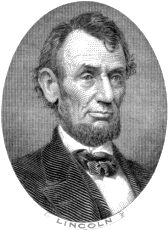
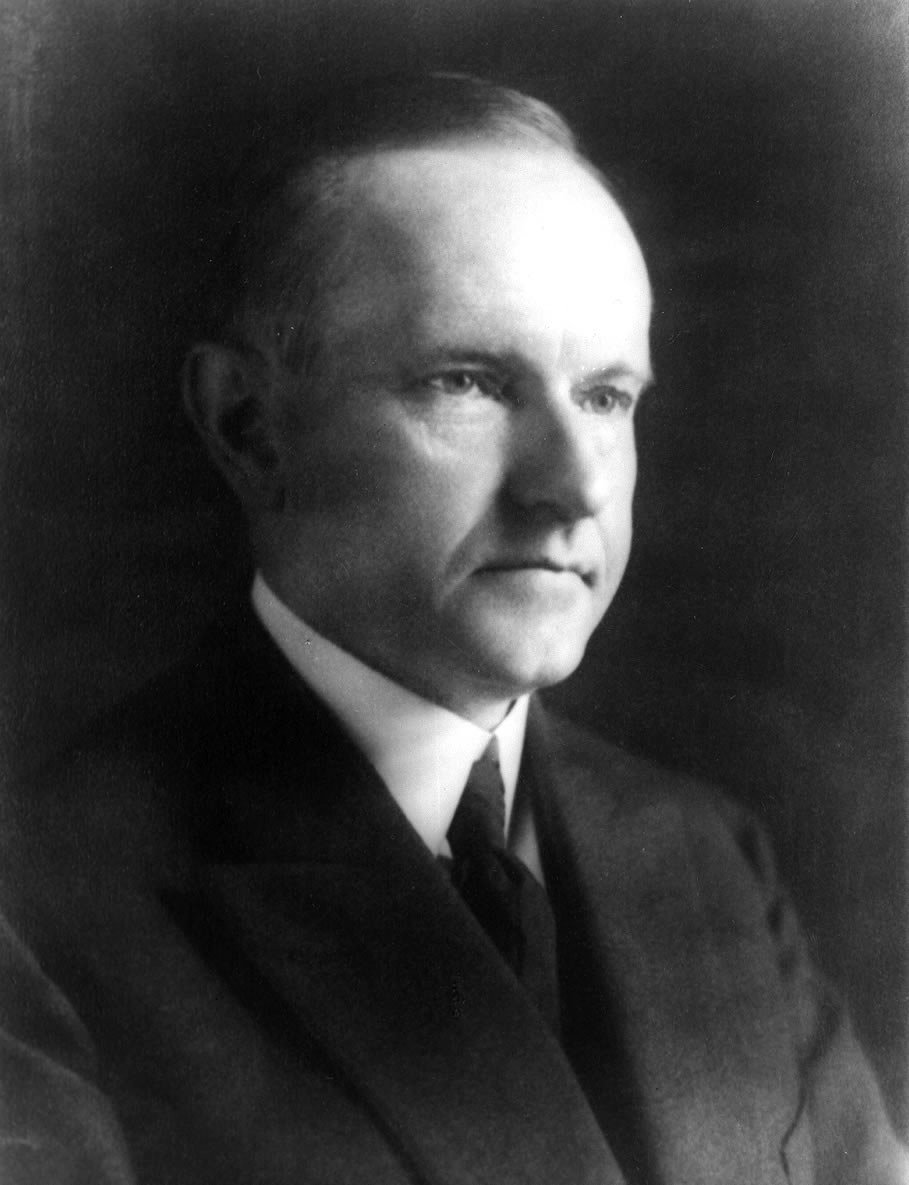
The president's names include Thomas Jefferson, Andrew Jackson, Abraham Lincoln, Warren Harding, and Calvin Coolidge.

The best case for Black ancestry is against Warren G. Harding, our 29th president from 1921 until 1923. Harding himself never denied his ancestry. When Republican leaders called on Harding to deny the "Negro" history, he said, "How should I know whether or not one of my ancestors might have jumped the fence." William Chancellor, a White professor of economics and politics at Wooster College in Ohio, wrote a book on the Harding family genealogy and identified Black ancestors among both parents of President Harding.

Andrew Jackson was our 7th president from 1829 to 1837. The Virginia Magazine of History Volume 29 says that Jackson was the son of a White woman from Ireland who had intermarried with a Negro. The magazine also said that his eldest brother had been sold as a slave in Carolina. Joel Rogers says that Andrew Jackson Sr. died long before President Andrew Jackson Jr. was born. He says the president's mother then went to live on the Crawford farm where there were Negro slaves and that one of these men was Andrew Jr's father.

Thomas Jefferson was our 3rd president from 1801 to 1809. The chief attack on Jefferson was in a book written by Thomas Hazard in 1867 called "The Johnny Cake Papers." Hazard interviewed Paris Gardiner, who said he was present during the 1796 presidential campaign, when one speaker states that Thomas Jefferson was "a mean-spirited son of a half-breed Indian squaw and a Virginia mulatto father." In his book entitled "The Slave Children of Thomas Jefferson," Samuel Sloan wrote that Jefferson destroyed all of the papers, portraits, and personal effects of his mother, Jane Randolph Jefferson, when she died on March 31, 1776.

Abraham Lincoln was our 16th president from 1861 to 1865. J. A. Rogers quotes Lincoln's mother, Nancy Hanks, as saying that Abraham Lincoln was the illegitimate son of an African man. William Herndon, Lincoln's law partner, said that Lincoln had very dark skin and coarse hair and that his mother was from an Ethiopian tribe. In Herndon's book entitled "The Hidden Lincoln" he says that Thomas Lincoln could not have been Abraham Lincoln's father because he was sterile from childhood mumps and was later castrated. Lincoln's presidential opponents made cartoon drawings depicting him as a Negro and nicknamed him "Abraham Africanus the First."

Calvin Coolidge was our 30th president, and he succeeded Warren Harding. He proudly admitted that his mother was dark because of mixed Indian ancestry. However, Dr. Bakhufu says that by 1800 the New England Indian was hardly any longer pure Indian, because they had mixed so often with Blacks. Calvin Coolidge's mother's maiden name was "Moor." In Europe the name "Moor" was given to all Black people just as the name Negro was used in America.
Comment:  For more on the subject, see Fun 4th of July Facts.