Showing posts with label Supreme Court. Show all posts

October 17, 2011

Medal case goes to Supreme Court

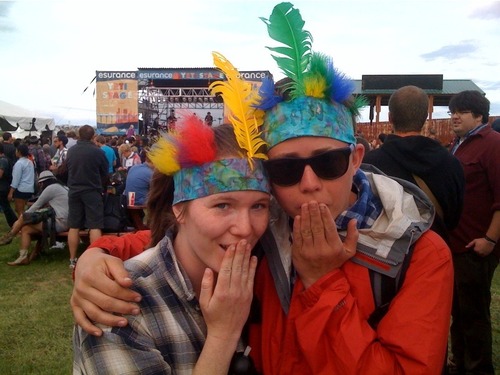
Long-time readers will recall my postings titled Hipster Medals Instead of Headdresses and Cooke Defends Medals, Headdresses. In them, I compared wearing Indian headdresses--revered by Indians as a special honor--to wearing military medals--revered by Americans as a special honor. Most Americans wouldn't think of wearing medals, pretending to be soldiers, and mocking our military. Yet they have no compunction about doing the same thing with Indian headdresses.

Now here's a posting that shows exactly how serious Americans consider the falsifying of our military honors. Serious enough to take the case all the way to the Supreme Court--that's how serious.

High court to rule on lying about military medalsThe Supreme Court will decide if telling a lie about yourself is a crime--if the lie claims military medals you didn't earn.

The court said Monday it will rule on the constitutionality of a law that makes it a federal crime for people to claim falsely, either in writing or aloud, that they have been awarded the Medal of Honor, a Silver Star, Purple Heart or any other military medal.

The Stolen Valor Act, which passed Congress with overwhelming support in 2006, apparently has been used only a few dozen times, but the underlying issue of false claims of military heroism has struck a chord in an era in which American soldiers are fighting two wars.

At the same time, the justices have issued a series of rulings in recent terms in favor of free expression, striking down California's violent video restrictions and a federal law involving cruelty to animals. It also upheld the right of protesters to picket military funerals with provocative, even offensive, messages.

The federal appeals court in California struck down the military medals law on free speech grounds, and appeals courts in Colorado, Georgia and Missouri are considering similar cases.

The Obama administration is arguing that the law "serves a crucial purpose in safeguarding the military honors system." The administration also says the law is reasonable because it only applies to instances in which the speaker intends to portray himself as a medal recipient. Previous high court rulings also have limited First Amendment protection for false statements, the government said.
Comment:  Even if the Supreme Court favors the free-speech argument, and you do too, I trust you see the point. People may have the "right" to pretend to be decorated soldiers, but nobody considers it harmless or good. It's a moral offense even if it isn't a legal offense.

The same applies to wearing Indian headdresses. The two cases continue to be exceedingly analogous.

For more on hipster headdresses, see Tribalism Is Trendy and Rap Video on Hipster Headdresses.

October 13, 2011

Courts okay jury bias against Indians

Racial bias involving Utah tribal member won’t go before high court

By Melinda RogersAn American Indian man convicted of assaulting a federal officer — by jurors who made racist comments about the defendant—has exhausted his appeals options.

The U.S. Supreme Court this week declined to hear the case of Kerry Dean Benally, 39, who was sentenced in June 2010 to 57 months in prison.

Benally’s sentencing came after a three-year delay, because Benally’s conviction was overturned when a judge learned jurors made racially biased comments during deliberations.

The sentence for Benally was later reinstated.

Benally was convicted in October 2007 of punching a Bureau of Indian Affairs officer and hitting him in the face with a flashlight. The officer had followed Benally because he was driving erratically in the White Mesa area in southeastern Utah and appeared intoxicated.

The day after the conviction, a juror came forward and reported that the jury foreman said: “When Indians get alcohol, they all get drunk and ... violent,” according to court documents.

Other jurors spoke about “sending a message to the reservation” with a guilty verdict for Benally. Another juror spoke about being angry at people who “mess with police officers and get away with it,” court documents state.
Comment:  Wow. I would've thought this was an extremely clear miscarriage of justice deserving another trial, at least. Shows what I know!

The Native stereotypes here occurred earlier, but the Supreme Court condoned these stereotypes by declining to take the case. Therefore, this case gets a Stereotype of the Month nomination now.

For a similar case, see Judge:  "Go Native" = "huge violence."

July 28, 2011

Understanding implicit bias

An article on the Supreme Court's Wal-Mart ruling explains how racism ("bias") works in our society.

There May be Bias, but Wal-Mart Can’t be Blamed, Says Supreme Court

By Rinku SenThe numbers don’t mean that all male managers at Wal-Mart are intentionally sexist. Their biases are implicit rather than overt, and most of these managers are probably unaware of having them. In 1995, researchers at Harvard and Stanford universities developed the Implicit Association Test (IAT), which measures reaction time to examine subconscious bias. The researchers assert that human beings place information about the world into personal “schemas,” or world views. Schemas allow for implicit stereotyping and perceptions about in-groups (the group you belong to) and out-groups (groups you aren’t a member of), which can translate into behaviors that are discriminatory, or that produce inequitable outcomes.

In the project’s online test, 75 percent to 80 percent of self-identified whites and Asians show an implicit racial preference for white relative to black. Everyday people, including the researchers who direct this project, are found to harbor negative associations in relation to various social groups (i.e., implicit biases) even while honestly reporting that they regard themselves as lacking these biases.

When implicit bias is combined with the human reliance on first impressions, the result can be devastating. As Malcolm Gladwell noted in the New Yorker, the impression from the handshake that precedes a job interview colors impressions of the interview itself. “The first impression becomes a self-fulfilling prophecy: we hear what we expect to hear,” Gladwell writes.

These patterns apply to other forms of discrimination as well. The Restaurant Opportunities Center of N.Y. (ROC-N.Y.) has conducted multiple studies of employment patterns in the nation’s fastest growing private sector industry. Restaurants, especially in the high-end market, are marked by a rigid racial hierarchy, and generally shut out women altogether.

In ROC-N.Y.’s first study, interviews with employers revealed their rationale for raced and gendered decisions. They wanted “tall, beautiful” people in the front of the house jobs—these are the workers who make more money and actually speak to diners. For the more dangerous, low-wage jobs at the back of the house, they prefer “hard workers” who are immune to the poor wages and conditions. Simply counting the workers through observation makes it quite obvious that only white men, and the very occasional white woman, meet the beauty criteria in most such workplaces. Immigrants have accents too thick to explain the menu, employers say, while women can’t take the fast pace and informality (i.e. sexual harassment) of restaurant work.

In a later study, ROC-N.Y. ran a matched-pair test, sending applicants with the exact same qualifications but of different races and genders to inquire about jobs. Without fail, white men got interviews at double the rate of others. This hierarchy is so ubiquitous as to become invisible unless you pay attention. Again, the bias is unconscious, but the result is the same. That’s why the remedies have to be intentional. Discrimination doesn’t just check itself.
Comment:  It's obvious how this analysis applies to Natives. Millions of stereotypical words and images have cast them as uneducated, uncommunicative, stoic, physical rather than mental, angry, warlike, barbaric, primitive, close to nature, predatory, animal-like. In other words, savage.

You know, like a mobster. A killer. A werewolf. A terrorist. A Wendigo. A malevolent spirit or demon. A source of evil magic.

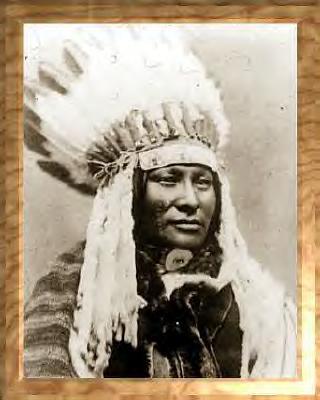
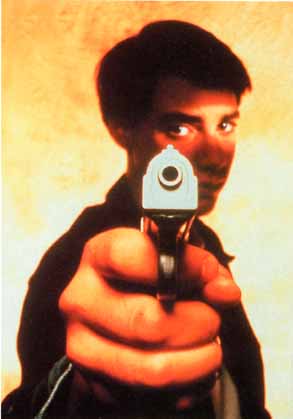
Now imagine what happens when a well-qualified Indian applies for a job. Even if you're well-intentioned and don't think you have any biases, who are you going to hire? Him?
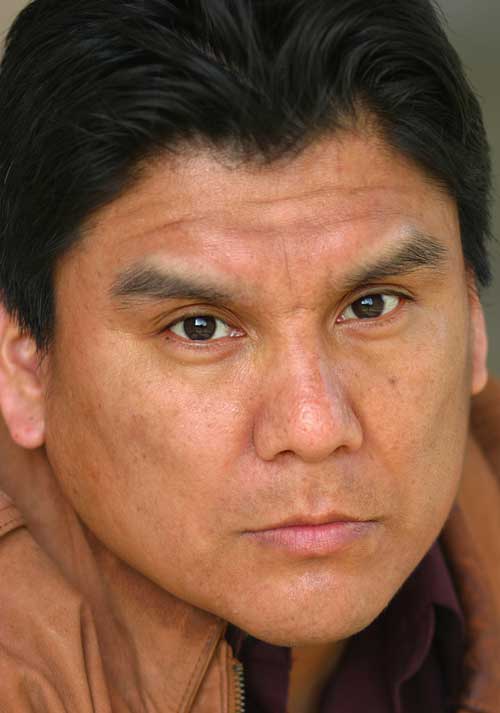


Or him?



Which one fits your image of a head waiter? A junior executive? Or the lead in a romantic comedy?

Y0u can bet a matched-pair test of two people like this would produce the same results as the ROC-N.Y. study. The white guy would get twice the number of job interviews and offers as the Indian.

Implicit bias in Hollywood

I'm sure this is what happens when Hollywood execs decide to cast Johnny Depp, Taylor Lautner, or Brandon Routh over an Indian. On the one hand, they have someone who looks and feels "normal." On the other hand, they have someone who looks and feels "strange."

They make the safe, biased choice and then dream up justifications. "Johnny Depp is a box-office bonanza. Brandon Routh is a big-name star." Wrong in both cases, but enough to convince the equally biased investors and distributors. "Let's go with the white obvious choice and let someone else be a civil-rights pioneer. It's not racism if everyone is doing it. It's just common sense."

So we get "safe" choices like casting white actors in The Last Airbender. Although that didn't make the movie a success. Oops!
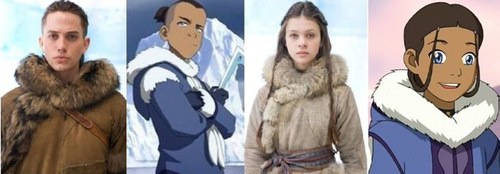


And "safe" choices like casting Indians as dark, scary creatures with a heart of gold. Because that's what Indians are good for. Snarling, hunting, and killing--i.e., savagery.
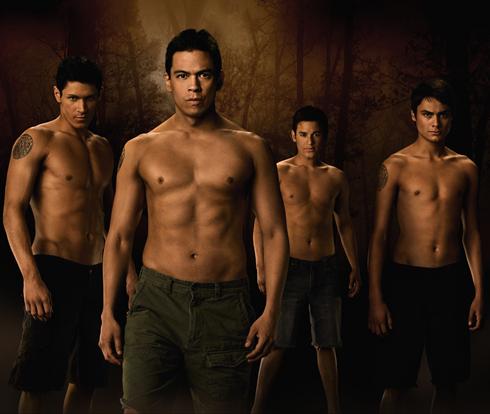


For more on the subject, see:

Americans refuse to acknowledge prejudice
Minorities suffer microaggression
Hollywood's cultural conservatism
Indians hold steady at 0.3%
Subconscious racism proved

June 23, 2011

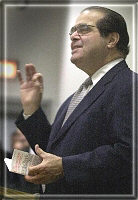
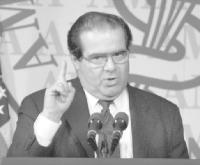
Scalia ignorant of Indian law

A Conversation with a Justice of the U.S. Supreme Court

By Steven T. NewcombAt a reception, I had an opportunity to talk with Justice Scalia. After saying hello and telling him my name, I asked: “I wonder if you might have ever read my law review article ‘The Evidence of Christian Nationalism in Federal Indian Law.’”

“No, what’s it about?” he responded.

I told him my article is about the U.S. Supreme Court ruling Johnson v. M’Intosh from 1823, a decision in which the Court said that the first “Christian people” to “discover” lands inhabited by “natives, who were heathens” have the right to assume the “ultimate dominion” over and title to the lands of the so-called “heathens.”

Given that Johnson v. M’Intosh was decided on the basis of the doctrine of discovery rather than the U.S. Constitution, I asked him how his guiding legal philosophy of “Constitutional Originalism” would relate to the Johnson decision. I asked him if the Court might ever consider overturning the decision.

Scalia said it was impossible to imagine an issuing ever coming up that would require the Court to address such a ruling; he also claimed in the same breath, however, that he had never heard of Johnson v. McIntosh. “I’ve never heard of it. I’ve never read it,” he said. He also said he’d never heard of the doctrine of discovery.
Comment:  Wow, this is revealing. Scalia seems to be totally ignorant of the foundations of Indian law. I gather he's cribbing his "reasoning" from elsewhere or making it up out of thin air.

Now that he's admitted he's ignorant of Indian law, will he recuse himself from any case involving Indians? Don't count on it.

For more on Scalia's stupidity, see Scalia Demands Written Records and Antonin Scalia:  Supreme Court Doofus.


June 20, 2011

Scalia demands written policies

Our right-wing Supreme Court justices give me another chance to ridicule them:

Supreme Court blocks huge class-action suit against Wal-Mart

The ruling in the suit, filed on behalf of as many as 1.5 million female employees, may all but end big class-action cases that seek money from employers for discrimination.

By David G. Savage
Women and minorities who think they are underpaid will find it nearly impossible to band together to sue employers for discrimination under a Supreme Court ruling against 1.5 million female Wal-Mart employees in the most important job-bias case in a decade.

Only if there is proof a company has a policy of paying less to women or minorities can the employees get together in a class-action suit, the court said in an opinion Monday by Justice Antonin Scalia. Statistics showing that a company's female workers earn far less and get fewer promotions than men will not suffice, the court said.

The decision is the latest in a series of major rulings favoring business under the stewardship of Chief Justice John G. Roberts Jr.

Columbia University law professor John Coffee said the Wal-Mart ruling all but sounded the death knell for class-action suits that seek money from employers for discrimination.
Comment:  So let me get this straight: If a company has a written policy saying women are inferior and deserve less pay, that's illegal. But if the company produces the exact same results through unofficial winks and nods, that's legal.

In related news, the Supreme Court tossed a class-action suit by American Indians against the US government for its history of genocidal actions. Writing for the pro-extermination majority, Scalia said there was no written policy stating "kill the Indians" or the like.

"In a country of the United States' size and geographical scope, it is quite unbelievable that all officials would exercise their discretion in a common way without some common direction," Scalia said. "Significant proof that the US government operated under a general policy of discrimination is entirely absent here."

Yeah, I can't imagine millions of greedy, selfish Americans persecuting Indians with the tacit support of the US government. According to Scalia, it couldn't have happened. It's a figment of the Indians' imagination and no legal action is necessary.

Genocidal policies were written

A couple of people added comments:Scalia is a real piece of artwork.William Henry Harrison gave the orders to kill the Indians along the Wabash river in the great Northwest territory. It was recorded and written duh, what an idiot.

In California it was written law. First one on the books when it became a state.
A good lawyer might argue that those were the work of rogue officials. That they didn't represent an official policy at the federal level.

But yes...federal, state, and local policies along with court rulings and military decisions all conspired to eliminate Indians. Scalia's demand for written proof is, once again, a dodge to shield wealthy exploiters from harm. The evidence for genocide is tens of thousands of irrefutable results, not a written policy.

For more on the subject, see Slaughtering Buffalo = Genocide and Boarding Schools = Holocaust?

October 23, 2010

Teabaggers = Constitutional hypocrites

America’s Holy Writ

Tea Party evangelists claim the Constitution as their sacred text. Why that’s wrong.

By Andrew RomanoContemporary Constitution worshipers claim that they’ve distilled their entire political platform—lower taxes, less regulation, minimal federal government—directly from the original text of the founding document. Any overlap with mainstream conservatism is incidental, they say; they’re simply following the Framers’ precise instructions. If this were true, it would be quite the political coup: oppose us, the Tea Party could claim, and you’re opposing James Madison. But the reality is that Tea Partiers engage with the Constitution in such a selective manner, and for such nakedly political purposes, that they’re clearly relying on it more as an instrument of self-affirmation and cultural division than a source of policy inspiration.

In legal circles, constitutional fundamentalism is nothing new. For decades, scholars and judges have debated how the founding document should factor into contemporary legal proceedings. Some experts believe in a so-called living Constitution—a set of principles that, while admirable and enduring, must be interpreted in light of present-day social developments in order to be properly upheld. Others adhere to originalism, which is the idea that the ratifiers’ original meaning is fixed, knowable, and clearly articulated in the text of the Constitution itself.

While conservatives generally prefer the second approach, many disagree over how it should be implemented—including the Supreme Court’s most committed originalists, Antonin Scalia and Clarence Thomas. Thomas sympathizes with a radical version of originalism known as the Constitution in Exile. In his view, the Supreme Court of the 1930s unwisely discarded the 19th-century’s strict judicial limits on Federal power, and the only way to resurrect the “original” Constitution—and regain our unalienable rights—is by rolling back the welfare state, repealing regulations, and perhaps even putting an end to progressive taxation. In contrast, Scalia is willing to respect precedent—even though it sometimes departs from his understanding of the Constitution’s original meaning.
And:Tea Partiers tend to sound more like Thomas than Scalia. Every weekday on Fox News, Glenn Beck—“the most highly regarded individual among Tea Party supporters,” according to a recent poll—takes to his schoolroom chalkboard to rail against progressives like Woodrow Wilson and Franklin D. Roosevelt. “They knew they had to separate us from our history,” he says, “to be able to separate us from our Constitution and God.” In Beck’s view, progressives forsook the faithful Christian Founders and forced the country to adopt a slew of unconstitutional measures that triggered our long decline into Obama-era totalitarianism: the Federal Reserve System, Social Security, the graduated federal income tax. True patriots, according to Beck, favor a pre-progressive vision of the United States. When Nevada Senate nominee Sharron Angle says we need to “phase out” Social Security and Medicare; when Alaska Senate nominee Joe Miller asserts that unemployment benefits are “unconstitutional”; when West Virginia Senate nominee John Raese declares that the minimum wage should “absolutely” be abolished; when Kentucky Senate nominee Rand Paul questions the legality of the Civil Rights Act of 1964; when Minnesota Rep. Michele Bachmann claims that Obama’s new health-insurance law violates the Constitution; and when various Tea Party candidates say they want to repeal the amendments that triggered the federal income tax and the direct election of senators—this is the vision they’re promoting. At times, the Tea Party can seem like a popularized, politicized offshoot of the Constitution in Exile movement.Comment: Scalia's willingness to bend his "principles" for the sake of precedence just means he's more hypocritical than Thomas. Thomas may be a porn-obsessed liar, but at least his judicial views are consistent. Stupid and wrong, but consistent.

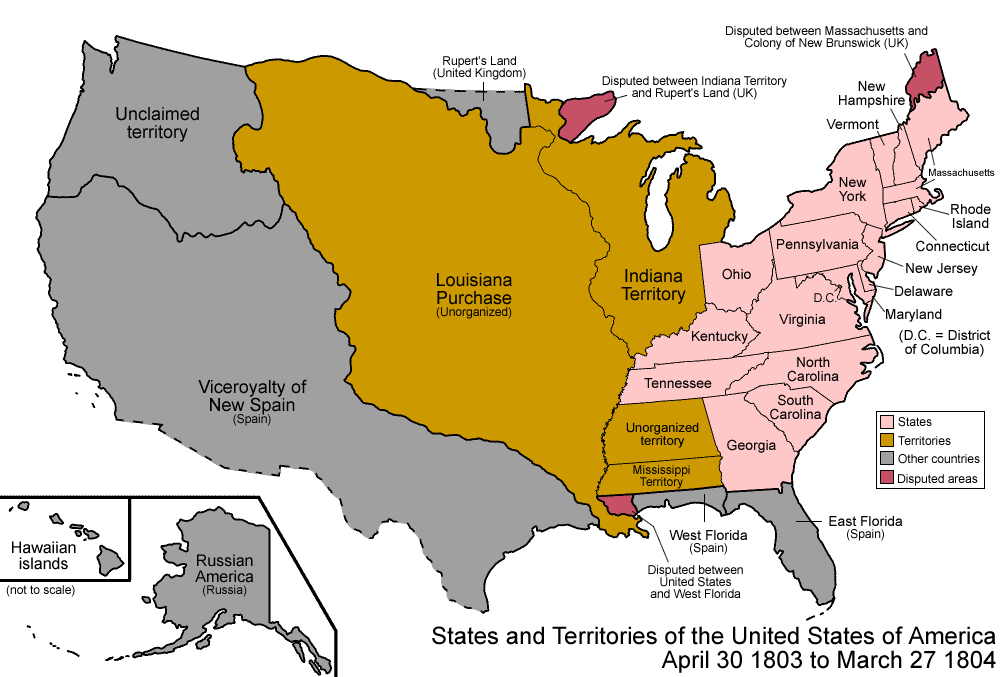
Here's how to tell if teabaggers are sincere about wanting to return to the original Constitution. Tell them the following:Some Founding Fathers said President Jefferson didn't have the constitutional authority to execute the Louisiana Purchase. Therefore, let's go back to a "limited" Constitution and give the land back to the Indians. Is that okay with you, teabaggers? That is what you believe, right?If you're not clear what the Founding Fathers thought about the Louisiana Purchase, here's some info:

Louisiana Purchase
Jefferson disliked the idea of purchasing Louisiana from France as that could imply that France had a right to be in Louisiana. Jefferson believed that a U.S. President did not have the authority to make such a deal: it was not specified in the Constitution. He also thought that to do so would erode states' rights by increasing federal executive power.

The American purchase of the Louisiana territory was not accomplished without domestic opposition. Jefferson's philosophical consistency was in question because of his strict interpretation of the Constitution. Many people believed he was being hypocritical by doing something he surely would have argued against with Alexander Hamilton. The Federalists strongly opposed the purchase, favoring close relations with Britain over closer ties to Napoleon, believing the purchase to be unconstitutional, and concerned that the U.S. had paid a large sum of money just to declare war on Spain. The United States House of Representatives also opposed the purchase.
Like Scalia has done so often, Jefferson violated his principles for the sake of expediency. A strict interpretation of the Constitution would invalidate the Louisiana Purchase. So teabaggers who want to undo Social Security and the income tax should denounce the Purchase also.

More decisions to invalidate

Heck, the Marshall trilogy of Supreme Court cases are the essence of overreaching judicial activism. These cases fabricated the concept of Indian tribes as "domestic protected nations" rather than foreign nations. This fabrication was based on another fabrication, the Doctrine of Discovery, which said Indians didn't own the land they owned.

So believing in a limited Constitution also means restoring full sovereignty to Indian tribes, treating them as foreign nations, and permitting them to negotiate treaties with the US again. Am I right, Con Law experts? Yes, I think I am.

When the first teabagger says he's willing to return to an 18th-century view of the Constitution--which would mean invalidating the Marshall trilogy, the Louisiana Purchase, and other anti-Indian decisions--then I'll believe he's sincere. Until then, every teabagger who claims to believe in a "limited" Constitution is some combination of liar, hypocrite, and idiot.

For more on the subject, see Tea Party Guide to American History and What "I Want My Country Back" Means.

Below: The unconstitutional expansion of US borders.

May 06, 2010

Power Authority debuts Tuscarora exhibit

Tuscaroras featured in new Power Vista exhibit

By Don GlynnPatterson, on a field trip with his Niagara-Wheatfield High School classmates, was viewing for the first time the new permanent exhibit of the Tuscarora Nation in the lower level of the New York Power Authority’s visitor center.

It’s a magnificent and informative exhibit—“The Times of the Tuscarora Nation”—that traces the nation from 800 A.D. to the present and features artwork, beadwork, and select photographs through the past century.

As several of Patterson’s classmates walked hurriedly by, without hardly a glance at the exhibit, the young Native American said he was impressed with the display: “I appreciate the fact it (exhibit organizers) respects our culture. Also, they do acknowledge that they did take our land.”

There was indeed a tense dispute that started simmering in the late 1950s, when it became evident that the Tuscarora Indians would probably lose some of their land through the state’s power of condemnation.
Federal Power Commission v. Tuscarora Indian NationFederal Power Commission v. Tuscarora Indian Nation, 362 U.S. 99 (1960) was a case decided by the United States Supreme Court which determined that the Federal Power Commission was authorized to take lands owned by the Tuscarora Indian tribe by eminent domain under the Federal Power Act for a hydroelectric power project, upon payment of just compensation.Comment:  The Supreme Court decision was legalized land theft. It was another case of the US breaking treaties and its trust obligation to Indians. It's an example of why many Indians still believe the federal government is out to get them.

Also note how the Supreme Court reversed the decision of the District Court, which sided with the Tuscarora. It demonstrates how weak and arbitrary our legal protections are. If five (or in this case) old white men decide they don't like Indians, the Indians lose. Their sovereignty is about as easy to flush as a treaty written on toilet paper.

For more on the Supreme Court's arbitrariness, see Antonin Scalia:  Supreme Court Doofus.

Below:  Someone wears a stereotypical chief's headdress to lead the Tuscarora resistance.

August 03, 2009

Americans want Native justice

Poll:  Americans Want Native American on Supreme Court

By Nikki SchwabThe president has cheered diversity on the Supreme Court with his nomination of Sonia Sotomayor, who would be the first Hispanic and third woman to be appointed to the bench. For his next pick, we turned to you in our most recent Whispers poll.

Respondents chose racial diversity over religious diversity or difference in sexual orientation. A whopping 50 percent of those surveyed said they would like to see President Obama choose a Native American for the Supreme Court if the president got a second selection. Nineteen percent said they would like to see Obama appoint an Asian and 16 percent an African-American justice. Only 13 percent hoped to see a gay or lesbian justice as Obama's next pick. And coming in last, with 2 percent, was a Muslim justice.
Comment:  I'm a little skeptical of this poll. If it's true, Americans may want a stereotype of a Native judge: quiet, dignified, like a wise elder in a Disney cartoon. What they probably don't want is a typical Native judge: a liberal advocate for tribal sovereignty and other Native causes who will make Sonia Sotomayor look conservative.

For more on the subject, see Native Lawyers Support Sotomayor and Multicultural Perspective for Judges.

Below:  America's idea of an acceptable Native justice? "Me no have strong views of my own. Me nod and do what white man say."

July 01, 2009

Native lawyers support Sotomayor

NNABA strongly supports Sonia Sotomayor’s nomination

By Brenda AustinHeather Dawn Thompson, president of the National Native American Bar Association, said that while the association cannot officially endorse the nomination of Judge Sonia Sotomayor to the Supreme Court, they are strongly supportive of her.

An official endorsement by the group requires an extensive background in Indian law, which Sotomayor does not have. “We think it is important to have a diversity of experiences and feel she will have a lot of understanding for the American Indian community. She has been very open-minded as a judge, which is important in looking into new areas of law. Both her personal history and her intellectual capabilities, we think, will make her a very good justice.”

Sotomayor will be the third woman and the third racial minority on the Supreme Court. She will be the first minority justice with some insight into the special property and political rights of minority people--in her case, the people of Puerto Rico. In many ways, neither American Indians nor Puerto Rico wants complete integration into the American polity, preferring a sovereign existence within the United States.
Courting Sotomayor

Some Natives see opportunity with Supreme Court nominee

By Rob Capriccioso
Matthew L.M. Fletcher, director of the Michigan State University Indigenous Law Center, agrees there are possibilities with Sotomayor, but for now, he thinks she would not be much more than a replacement vote for Souter–and his votes haven’t necessarily been sunshine and light for tribes.

“The only hope is educating the new justice,” Fletcher said. “I think tribal advocates need to keep doing what they’re doing–quality, if not excellent advocacy before the Supreme Court; carefully strategized amicus briefs; and desperately try to keep the cases out of the Supreme Court if at all possible.”

Despite Sotomayor’s similar background to some Native Americans, Fletcher said she likely knows little about Indians, Indian tribes and Indian law. He strongly supports catering legal briefs involving tribes to her for the next several years.

“She is a relative blank slate on Indian law. I’m convinced the majority of the rest of the court has already made up their minds about Indians, Indian tribes and Indian law. Judge Sotomayor could be persuaded with the tribal interest point of view, I think, in ways the rest probably cannot.”
Comment:  For more on the subject, see Multicultural Perspective for Judges and Sotomayor, Empathy, and Sterilization.

June 23, 2009

Multicultural perspective for judges

Stanley Fish explains why it's good for judges to have "empathy." His reasoning applies more broadly to many situations. It suggests the value of having a multicultural perspective on things:

What Kind of Judges Do We Want?In fact--and this is what Sotomayor means when she talks about reaching a better conclusion than a white man who hasn’t lived her life--rather than distorting reality, perspectives illuminate it or at least that part of it they make manifest. It follows that no one perspective suffices to capture all aspects of reality and that, therefore, the presence in the interpretive arena of multiple perspectives is a good thing. In a given instance, the “Latina Judge” might reach a better decision not because she was better in some absolute, racial sense, but because she was better acquainted than her brethren with some aspects of the situation they were considering. (As many have observed in the context of the issue of gender differences, among the current justices, only Ruth Bader Ginsburg knows what it’s like to be a 13-year-old girl and might, by virtue of that knowledge, be better able to assess the impact on such a girl of a strip-search.)

Throughout the evening, John Payton reminded us that these are not merely theoretical points. He read a chilling sentence from Herbert Wechsler’s influential essay “Toward Neutral Principles.” Wechsler is making the point that laws mandating the separation of the races burden both races equally: “In the days when I was joined with Charles Houston in a litigation in the Supreme Court before the present building was constructed, he did not suffer more than I in knowing that we had to go to Union Station to lunch together during the recess.”

One might wonder whether Houston would equate the lunchtime inconvenience suffered by his colleague with the humiliations he had to endure every day of his life. One might be amazed, as Payton was, by Wechsler’s blindness to what he is saying. He was a great legal mind, but something was missing. You can call it empathy or (as some in the audience suggested ) you can call it understanding or imagination. I called it hearkening to the spirit rather than the letter. But whatever you call it, everyone present that evening agreed that it was what we wanted.
Comment:  For more on the subject, see Sotomayor, Empathy, and Sterilization and Sotomayor Practices "Tribal Justice"?

June 04, 2009

Sotomayor, empathy, and sterilization

'Empathy' on 1927 Supreme Court might have saved thousands from the knife

By Michael Hiltzik[W]hen the political fight broke out over Sonia Sotomayor's assertion that a judge's ethnic and socioeconomic background might actually influence how he or she interprets the law, I cracked the history books to find support for that fairly obvious point.

The best illustration turns out to be a 1927 case known as Buck vs. Bell. Or as it might otherwise be known, the case of Oliver Wendell Holmes and the imbeciles.

Holmes, perhaps the most revered of all Supreme Court justices, was always proud of his opinion in Buck vs. Bell, which upheld a Virginia law allowing the forced sterilization of "mental defectives." Yet the terse ruling proclaims, in each of its four chilling paragraphs, the narrow elitism of his personal life experience. And its consequence was tens of thousands of ruined lives over the next half-century.
More on the Buck case:The case of Carrie Buck arose at a time when the pseudo-science of eugenics had achieved broad currency. Eugenics held that intelligence was an inherited trait, and that the "feeble-minded" or "socially inadequate" should therefore be forcibly sterilized to preserve the human race.

As the historian William E. Leuchtenburg observed in a 1989 essay, the target group encompassed the "wayward," the tubercular, the "blind, deaf and deformed," orphans, paupers and the homeless. Eugenicists seemed wholly untroubled by "the transparent class bias, not to mention the heartlessness toward the handicapped, in this classification scheme," he wrote.

When opponents of Virginia's sterilization law brought her case to the Supreme Court, Buck was 18 and a resident of the State Colony for Epileptics and Feeble Minded, where Superintendent J.H. Bell held the authority to order the sterilization of his wards--"under careful safeguard" of their due process rights, Holmes would write.

Holmes accepted at face value the state's contention that Buck was "a feeble-minded white woman, . . . the daughter of a feeble-minded mother in the same institution, and the mother of an illegitimate feeble-minded child." Upholding society's interest in avoiding the "transmission of insanity, imbecility, etc.," he produced one of the most infamous sentences in the annals of the court.

"Three generations of imbeciles," he wrote, "are enough."
Comment:  Thousands of Native women were sterilized using the same "logic" and perhaps the same ruling. Sotomayor's position is that her background might lead her to rule differently in such cases.

As Hiltzik wrote, "Is this really arguable?" I'd have to say that anybody who argues against this position is an imbecile.

For more on the subject, see Sotomayor Practices "Tribal Justice"? and Sotomayor Favors "Reconquista"?

June 03, 2009

Sotomayor practices "tribal justice"?

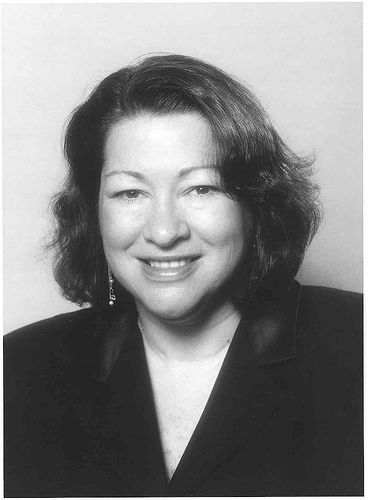
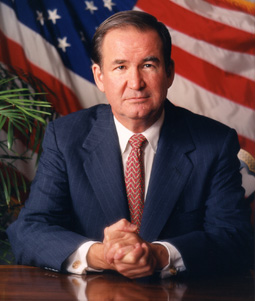
Buchanan:  Sotomayor Practices "Tribal Justice""In her world," Buchanan wrote yesterday of Supreme Court nominee Sonia Sotomayor, "equal justice takes a back seat to tribal justice."

"How can any Republican senator vote to elevate to the Supreme Court a judge who, all her life, has believed in, preached and practiced race discrimination against white males, without endorsing the Obama-Sotomayor view that diversity trumps equal justice, and race-based justice should have its own seat on the high court?"

In Buchanan's world, all racial groups--foreign and domestic--are competing, in a zero sum game, for the largest slice of the American pie. So a woman who spends much of her life trying to improve the livelihoods of Latinos and Hispanics is, just by default, preaching and practicing race discrimination against white males.
Comment:  To refresh your memory, conservative rants such as this are based on one line in a Sotomayor speech. A line that basically said, "My experiences are different from the typical judge's so I may bring something fresh to the table."

This is the same attitude we heard in Obama's Inaugural Address. White Americans believe in democracy, fairness, reason. Brown indigenous people believe in tribal politics, self-interest, emotions.

In other words, indigenous people are more primitive and savage than we are. So it's okay to invade their lands and kill them (e.g., Columbus in the "New World," Bush in Iraq).

For more examples of Buchanan's racism, see:

American patriots have same DNA?
Mestizo leaders = "scrub stock"?
Buchanan:  Helping Indians = "pigout"

For more on Sotomayor's nomination, see Sotomayor Favors "Reconquista"?

May 29, 2009

Sotomayor favors "reconquista"?

As with the lily-white tea parties that compared Obama to Hitler and stereotyped Indians, conservatives are demonstrating their racism again:

Tancredo Confuses Mottos, Logos, And Much, Much MoreAs you probably already know, right wing, anti-immigration extremist Tom Tancredo went on CNN yesterday and accused Supreme Court nominee Sonia Sotomayor of being a member of a "Latino KKK" (known to people like John McCain as the perfectly uncontroversial National Council of La Raza).How Tancredo got it wrong:The motto Tancredo's referring to seems to be a mistranslation of a slogan of sorts from the 1960s:"Por La Raza todo, fuera de La Raza nada," meaning, literally, "for the race [or community], everything; outside the race, nothing."

It's a line that appears in a '60s era manifesto called El Plan Espiritual de Aztlán, which was influential to members of a separate group called MEChA (Movimiento Estudiantil Chicano de Aztlán). Several decades ago, MEChA was a fairly radical student organization, whose mission was to return the lands of the southwest United States to Mexico--an idea called "reconquista." Since then it has become, basically, the equivalent of a Mexican Students Association at most colleges across the country.]
Why conservatives keep embarrassing themselves:These are the sort of ambiguities that I suppose you miss, if you can't tell the difference between a motto and a logo, or MEChA and NCLR, or, dare we say, people of Puerto Rican and Mexican descent.More on Sotomayor's alleged racism:

Commentary:  Judge Sotomayor is not a racist The evidence offered in support of Judge Sonia Sotomayor's alleged racism is a speech she gave in Berkeley, California, in honor of Judge Mario G. Olmos, a former judge, community leader and graduate of Boalt Hall Law School who died an untimely death at the age of 43.

The offending section of the speech is this: "I would hope that a wise Latina woman with the richness of her experiences would more often than not reach a better conclusion than a white male who hasn't lived that life." This passage inspired Gingrich, former speaker of the House of Representatives and potential 2012 presidential candidate, to call Judge Sotomayor "a Latina racist."

To lift one statement out of Judge Sotomayor's eight-page speech without examining the context and substance of her remarks, is an example of the kind of shoddy character assassination that I suspect will dominate this judicial confirmation process.

Judge Sotomayor's speech is, in fact, an excellent meditation on how the experiences of judges might affect how they approach aspects of judicial decision-making. It explores the important, and too-little examined reality that judicial deliberations can be affected by a judge's background, perspective and experience.
Comment:  The idea that judges are objective and decide cases based only on the law is a complete fiction. This is especially true of conservative judges and the people who tout them as models of judicial "restraint."

For evidence, look no further than all the 5-4 Supreme Court decisions that split along ideological lines. If beliefs didn't influence decisions, there would be no left-right splits.

For more on the subject, see The Search for Aztlán and Antonin Scalia:  Supreme Court Doofus.

September 30, 2008

Greatest threat to sovereignty?

Cole:  Tribal governments under fire“What is the greatest current threat to tribal governmental sovereignty?”

There is no question in my mind what the answer is, and I respond by saying, “In this Congress and the next, tribes face the greatest threat to their sovereign governments that the U.S. Congress has attempted in decades: the so-called Employee Free Choice Act.”

As Americans, we cherish our right to vote in private when it comes to elections. So, too, it seems to me with the individual right to vote in a union election in private–-without some goon looking over our shoulder to make sure we vote “the right way.”
And:The bill will allow and encourage union bosses to use the National Labor Relations Board and federal courts to require Indian tribal governments to make public internal--even confidential--tribal documents. The NLRB, already hostile to the sovereignty of Indian tribes, would be allowed to interview and subpoena tribal employees and, incredibly, could prohibit the tribe from speaking with its own members if they happen to also be employees of that tribe! That doesn’t sound like “free choice” to me.

This threat is very real. As the centerpiece of the Democratic Party’s legislative agenda, this bill was the first major bill pushed by the Democratic Party leaders.
Comment:  When Cole talks about the National Labor Relations Board and federal courts, he means the conservative National Labor Relations Board and federal courts. The ones who have regularly ruled against tribes because of the conservative bias against Indians. All that would change under a Democratic president, presumably.

Not surprisingly, Cole's prescription is to vote for McCain. A McCain victory may stop this particular bill, but it'll ensure a conservative mandate at the National Labor Relations Board and in federal courts for another umpteen years. It'll ensure more Supreme Court justices in the hypocritical mold of Scalia, Thomas, Robertson, and Alito. You know, justices who are for states' rights and against judicial activism except when they're not.

Not convinced? Here's more on Obama vs. McCain and the Federal Judiciary:Consider what eight years of the Bush II Administration did to tribal interests, and add that to the 12 years of the Reagan and Bush I Administrations. Federal Indian law professors now recognize in general that 1986 or so was a major turning point in the success of tribal interests before the Supreme Court. From 1959 to 1986, tribal interests prevailed about 55-60 percent of the time before the Court, when the majority of the Court were liberals and centrists. Since then, they have lost more than 75 percent of the time. Seven of the nine current Justices are Republican appointees.Therefore, my prescription is to vote for Obama. He'll appoint liberal judges who will protect tribal sovereignty much better than conservative judges have.

June 26, 2008

Court bolsters gun nuts

Justices Rule for Individual Gun RightsThe Supreme Court declared for the first time on Thursday that the Constitution protects an individual’s right to have a gun, not just the right of the states to maintain militias.

Justice Antonin Scalia, writing for the majority in the landmark 5-to-4 decision, said the Constitution does not allow “the absolute prohibition of handguns held and used for self-defense in the home.” In so declaring, the majority found that a gun-control law in the nation’s capital went too far in making it nearly impossible to own a handgun.

But the court held that the individual right to possess a gun “for traditionally lawful purposes, such as self-defense within the home” is not unlimited. “It is not a right to keep and carry any weapon whatsoever in any manner whatsoever and for whatever purpose,” Justice Scalia wrote.
Comment:  Gun love is fundamental to our national culture. It's tied to a host of other things we value: conquest, domination, authority, violence. We're all about imposing our will on others, and guns are an integral part of that.

Indians were the first victims of our unhealthy lust for guns. If we had had fewer guns, more slaves would've escaped and more Indians would've lived. Guns are why Indian haters such as Andrew Jackson could enforce their will despite the opposition to them.

Since other cultures don't share our fixation, it's clearly not universal. Americans see the issue one way and foreigners see it another. Therefore, it's a good reason to take a multicultural perspective--to view the issue as other people do.

Anyway, what can we conclude from this ruling?

  • Conservatives are willing to overturn two centuries of precedents whenever it suits them. In other words, they're shameless judicial activists. And they're flaming hypocrites because they complain when liberals do what they do constantly.

  • In the current term, the five conservative justices won several 5-4 decisions over the four liberal justices. Although the liberals occasionally take conservative positions, the reverse isn't true. I think Robertson has voted with the liberals only once or twice, and Alito never has.

    The claim that these two would be fair and impartial is a pathetic joke. They're almost pure ideologues who rarely if ever vote against their partisan beliefs. The Democratic senators who opposed them were right to do so.

  • This vote demonstrates the vital importance of being able to nominate judges. That's a major issue in any presidential campaign. When Obama or the next Democratic president nominates more centrist, less fanatical judges to the Supreme Court, decisions such as this one will go the other way.

  • Justice Scalia didn't say anything stupid this time, but he's still a doofus. His recent vote against the right of habeas corpus is a prime example. He supposedly votes based on the Founding Fathers' "original intent"...but in this case he thought a weak substitute for habeas corpus would be okay.

    Where in the Founders' voluminous opinions did they say habeas corpus was an option, not an absolute? Nowhere, that's where. The Founders would have kicked Scalia's ass for ignoring their clear intent.

  • Fortunately, this gun ruling doesn't affect my central argument: that the 2nd Amendment permits gun control. The Court prohibited only the most extreme form of regulation: banning guns completely. Other forms of gun regulation are still legal.