Showing posts with label Taylor Lautner. Show all posts

July 24, 2012

Celebrity wannabes don't know Indians

Got Native in You? Great. Just Try to Avoid Pulling a Justin BieberWhen Canadian pop singer Justin Bieber revealed in Rolling Stone that he believes he’s part Native, he wasn’t breaking new ground for a celebrity—believing or claiming to have Native ancestry is nearly as much as a celebrity-interview cliche as “…but what I really want to do is direct.” However, throwing in the comment that he thinks he could get “free gas” because of his heritage turned a perhaps-interesting detail about him into a confession of ignorance.

Many celebrities with no documented Tribal affiliation have said they’re part Native—and there’s usually little reason to doubt the sincerity of their beliefs. But there’s a difference between having an Indian ancestor and actually knowing anything about Indians. It may seem like obvious advice, but perhaps it should be the first lesson a publicist drills into a client: If you don’t know what you’re talking about, best keep your mouth shut. Here are some celebrities who have managed to discuss the Native roots they believe they possess—without pulling a Bieber.
The article gives a brief summary for each of the following:

Channing Tatum
Vanessa Hudgens
Anthony Kiedis (lead singer, Red Hot Chili Peppers)
Megan Fox
Johnny Depp
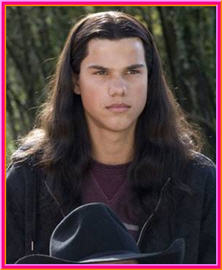
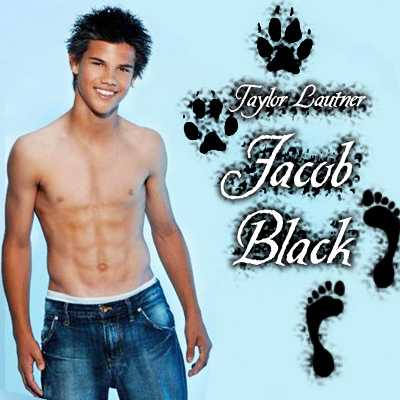
Taylor Lautner
Jonas Brothers
Shannon Elizabeth (actress, American Pie)
Tommy Lee Jones

Comment:  The article claims none of these people pulled a "Bieber." But I'd say the remarks of Johnny Depp, Taylor Lautner, and Megan Fox were about as bad.

The article highlights something Depp said that I haven't commented on. Namely, that he may have been the product of rape--presumably a white man raping a Cherokee woman.

Really? As we learned previously, Depp doesn't know whether he's Cherokee, Creek, or what. Now he doesn't know whether his ancestry resulted from a loving decision or a vicious assault? Heck, maybe one of the Cherokee "little people" delivered him from a hole in the ground.

How can he claim to have a Native heritage when he doesn't have the slightest clue what that heritage is? It sounds like he has the same info Elizabeth Warren has, which means none. They're both grasping at straws--i.e., guessing.

For more on Native identity questions, see Is Elizabeth Warren Native? and Khloe Kardashian Thinks She's Native.

January 04, 2012

Beach calls out wannabe actors

Getting "Native" with Adam Beach

By RachealCBC's winter season is about to start and they asked me to come in and chat with some of their stars. Adam Beach is a familiar face on both sides of the border, with am impressive resume ranging from North of 60 to Flags of Our Fathers; yet somehow the first thing I ask him about is Twilight.

People talk a lot about Taylor Lautner, being this young leading man who's also a native actor...

Adam quickly cuts me off.

"Well, it's very controversial, cause he isn't native. And there's speculation of a couple of other "native" actors who aren't native. And for me, when it comes to the demographic of native actors and filmmakers, there's a very small percentage. And when you take a movie that has a worldwide success and you're not hiring native talent, you're really pointing fingers at them saying "you're not good enough. You're not worth playing yourselves. We're going to hire a non-Indian to make you guys look good." And I don't believe that they're taking any of the steps that I've been struggling and striving to do in the past 15 years. It kinda makes me feel that Hollywood has no intention to change when it comes to changing that perspective and demographic of minorities in film and television."

Wow. This is not the conversation I expected to get into. On the other hand, it does bring up a nagging question: there are some people who would say that it's colour-blind casting and they're just hiring the appropriate person for that role. I mean, I'm Irish and there's always non-Irish people playing Irish. So how do you ride that balance between colour-blind casting and the need to embrace history and heritage?

"Well, you know, you're not going to see me try and play Martin Luther King. You're not going to see me try and play Irish folk. I stay in my group. I'm not going to play someone of Latin descent, 'cause that's just not my priority. When you look at the demographic of Native peoples and their struggles, to get out of the poverty that they're in, it's important that we maintain a certain honesty of who they are as a people. Especially when you're dramatizing them in this traditional way, and make a story that they're werewolves and shape shifting, and for them it's a direct message to the consciousness of a people that's been stripped of their identity, because of residential schools and land claims, and they're still doing in this medium of film and television.

"But they decided to take a few of the native actors and give them very minimal parts. It's unfair. And you know, I understand; like you demonstrated, when it comes to playing Irish, as long as you look white, it works. I understand that. But when you look at the portrayal of native people throughout Hollywood, they were always non-Indian and we're at a time where it doesn't have to be that any more, especially when they've so distorted our image and made us the victim, the alcoholic, the killer, the one that was raping and pillaging, when it was the other way around.

"For me, you're not going to be able to stop the Hollywood studio machine. All I could do is stop it within my circle. So I will not do anything where they're not representing in the right way."
Comment:  I imagine the other actors Beach is referring to include Tinsel Korey, Julia Jones, and Boo Boo Stewart. Not to mention Johnny Depp and Brandon Routh.

Someone on Facebook raised the inevitable counterargument. Since people are just acting, why can't anyone play anyone? Beach covered this point in his comments, but here's my response:

Adam could've gone further. Not only wouldn't he choose to play Martin Luther King, he'd never get the chance. Nor would he get the chance to play JFK, Columbus, or Superman. As I discussed in my blog:

Adam Beach as Superman?

When Adam gets cast as, say, Albert Einstein, then we can talk about casting Tinsel Korey and other non-Natives as Quieute werewolves or whatever. Until that happens, color-blind casting--aka choosing the "best actor for the role"--is a Hollywood myth. In general, whites are cast to play whites and whites are cast to play Natives.

For more on casting issues, see Gyasi Ross on Breaking Dawn and Taking Issue with Rene Haynes.

November 18, 2011

Taking issue with Rene Haynes

A interview with Rene Haynes, perhaps the leading casting director in Native filmmaking.

Picking the Twilight Wolfpack, and Others—a Conversation With Rene Haynes

By Vincent SchillingIn 2009, Haynes became part of the casting team for the Twilight Saga films New Moon and Eclipse, and had a hand in selecting young Native actors for films that were destined to be among the highest grossing motion pictures of all time. The actors selected for the quartet of shape-shifting Indians known as the “Wolfpack”—Chaske Spencer, Alex Meraz, Bronson Pelletier and Kiowa Gordon—have an unprecedented opportunity to raise the Native profile in Hollywood. Expectations are high for today’s opening of The Twilight Saga: Breaking Dawn, Part 1, predicted by BoxOfficeMojo to make as much as $148 million over the course of the weekend.What this paragraph doesn't say is that Haynes came in after the huge controversy surrounding the studio's hiring of non-Native Taylor Lautner for the role destined to be a career-maker. And Haynes presumably was responsible for hiring non-Natives Tinsel Korey, Julia Jones, and Boo Boo Stewart as well as the Wolf Pack. Only half (four of eight) the young roles went to Native actors: a mediocre .500 average.

Then there's this Q&A with Haynes herself:What are some of the bad things or things that are still difficult?

We still have the naysayers—individuals with a chip on their shoulders who tend to condemn a project, in a very public way, before even trying to find out the truth behind the intent of the filmmakers. It’s very rare these days for a Native film project not to employ technical and cultural advisors. The people who make trouble usually do not manage to halt a project, but they do give producers and studios a reason to question the idea of financing another Native project in the future. Remember, this is such a competitive business in all aspects, and particularly for funding. If producers and financiers have a choice, they are likely to choose the more commercial and less difficult vehicle. This doesn’t help all the Native filmmakers who are seeking financing for their own projects. I totally support someone’s right to speak out against a perceived wrong, I just would encourage a full investigation into the facts before making public condemnations. There are always going to be diplomatic ways to make a positive change.
Wow, what a mess. Just about every sentence of this response is riddled with errors and omissions. Let's examine it.

  • "We still have the naysayers—individuals with a chip on their shoulders who tend to condemn a project, in a very public way, before even trying to find out the truth behind the intent of the filmmakers."

  • Your guesstimate of the "naysayers'" motivation is flatly ridiculous. Fighting for social justice isn't remotely connected to having a chip on one's shoulder.

    The filmmakers' intent is generally irrelevant. What matters is what they do--whom they hire, what they put on the screen, etc.--not what they "intended."

  • "It’s very rare these days for a Native film project not to employ technical and cultural advisors."

  • When we're questioning a film's casting, the use of technical and cultural advisers is irrelevant. Nice try to change the subject, but no sale.

    But I'll play along. Are these advisers from the tribes in question? In the case of Twilight's characters, the Quileute Nation? If not, then so what? A Lakota or Apache adviser doesn't know any more about Quileute culture and history than I do.

    When movies do hire advisers, these people often rubber-stamp the creators' decisions so they can continue working in the industry. Or so I've heard. If a movie ever hired advisers who'd condemn a movie for its mistakes and stereotypes, I haven't heard of it.

    We saw a roundup of Twilight's mistakes in Truth vs. Twilight. If an adviser had pointed out these problems, would the producers have changed the movies? No? Then who cares about the advisers? They're useless when a studio has its mind(s) set on a stereotypical depiction of Indians.

    Big trouble but no halting?

  • "The people who make trouble usually do not manage to halt a project, but they do give producers and studios a reason to question the idea of financing another Native project in the future."

  • If the so-called troublemakers never halt a project, then what's the problem? Some studio exec has to rethink and rejustify his questionable decisions? Well, boo-hoo, you big baby!

    You're inventing a straw-man argument here. "Troublemakers" threaten every project even though they never harm a project? I guess they should just stop protesting and shut up, right? Thanks for regurgitating the studios' justification for ignoring protests and continuing on their racist ways.

    Ironically, the article begins with Haynes's big breakthrough: Dances with Wolves. Natives got cast because Kevin Costner insisted on it--an internal demand equivalent to our external demands. He didn't finesse or compromise the issue, he used his star power to lay down the law. (Too bad Johnny Depp doesn't have the same moral convictions.)

    Not surprisingly, the movie was a success because of its authentic casting. Again, this was because of Costner's impolite demands, not Haynes's polite diplomacy. Someone stood up to Hollywood's whites-only mentality and forced an unwanted change.

  • "Remember, this is such a competitive business in all aspects, and particularly for funding. If producers and financiers have a choice, they are likely to choose the more commercial and less difficult vehicle."

  • Yeah, like Jonah Hex and Cowboys and Aliens. And unlike Dances with Wolves, which must've seemed like a sure recipe for failure. Hurray for studio execs and their colossal ignorance of how to make successful movies. Including successful movies with Indians, as my list of flops indicates.

  • "This doesn’t help all the Native filmmakers who are seeking financing for their own projects."

  • The casting protests didn't hurt Twilight's success. And Twilight's success using Native actors helps prove the market for Native films using Native actors. So where's the next blockbuster franchise featuring Indians? Other than The Lone Ranger starring non-Native Johnny Depp, I'm not seeing it.

    All we have here is a loose string of faulty "logic." Troublemakers harm Native films. Some Native film was harmed somewhere, although it sure as hell wasn't Twilight. Despite Twilight's huge success, studios are reluctant to invest in Native films.

    And that's because of troublemakers who can't stop a film like Twilight, not the studios' inherent racism? Studios are avoiding the next money-making blockbuster starring Natives because they're afraid of a few protests? Uh-huh, sure they are.

    "Full investigation" before speaking out?

  • "I totally support someone’s right to speak out against a perceived wrong, I just would encourage a full investigation into the facts before making public condemnations."

  • One, the public doesn't have the ability to investigate a studio's internal processes from the outside. Don't blame us for not getting the complete picture. Blame the studios for not giving us the complete picture.

    Oh, wait...they pay your salary, so you can't criticize them for their failure to communicate. Never mind.

    Two, what if we do have the complete picture--as we did in the Taylor Lautner case? He absolutely was not the only actor who could've played Jacob Black. He's been roundly criticized for his dubious acting skills throughout the series. Half the Native actors in his range could've done a better job.

    So when we're right, is it okay if we speak up? And will you speak up also for the Native actors you supposedly care about? Oh, wait...see the previous comment about who pays your salary. Never mind.

  • "There are always going to be diplomatic ways to make a positive change."

  • Such as? Give us some examples of how outsiders who aren't involved with a movie can "make a positive change." Which of these techniques have you yourself tried for movies you weren't involved with? How did they work for you?

    As you may imagine, I think this is a lot of hot air. Protests worked in the Twilight casting case, so why should we try less effective techniques? When you come up with an alternative that would've produced the same results--more Native actors--write an instruction guide for us. Until then, you're just mouthing platitudes.

    Sheesh. These uncritical defenses of Hollywood's racism and stereotyping really slay me. Can you tell?

    For more on the subject, see:

    Minorities buy more movie tickets
    Hollywood:  Poor people are losers
    "We can't find the talent"
    Hollywood ghettoizes Native actors
    Patel's struggle shows Hollywood's racism
    Dismissing the pro-Airbender arguments
    Hollywood's cultural conservatism
    Hollywood's "liberals" are bigots

    Below:  "Veteran actor Gil Birmingham, who appears in 'Twilight Saga' films, with casting director Rene Haynes."

    September 22, 2011

    No Indians in Breaking Dawn posters

    'Breaking Dawn' to be released on November 18The much-awaited fourth and last installment of the 'Twilight' series, 'Breaking Dawn-The Twilight Saga', is set to hit the screens worldwide November 18.

    The first look of the film, produced by Summit Entertainment and starring Robert Pattison and Kristen Stewart, shows the fascinating, eternal love between Edward and Bella Swan.

    Another image shows Jacob (Taylor Lautner) in the foreground, standing proudly with the Quileute tribe and reflecting his agonizing desire to protect Bella.
    Comment:  Actually, the poster shows a wannabe and wolves. No actual Indians are visible.

    This is a nice example of how society renders Indians invisible. First Stephenie Meyer turned a real tribe into a fictional wolf clan. Then the filmmakers cast a non-Native in the primary role. Finally, the poster-makers decided that predatory beasts are the best way to represent Indians.

    For more on Twilight, see Rick Mora in a Wolf Hat and Twilight Ruining Indians' Reputation?

    February 27, 2011

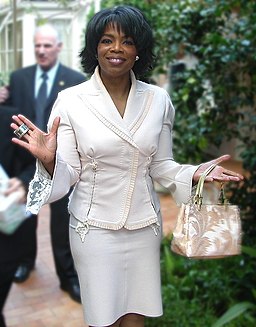
    Oprah Winfrey the Indian?

    Whenever I post items about non-Indian celebrities on NativeCelebs, fans inform me the celebs are Indians because they have the proverbial Cherokee great-grandmother or equivalent. In other words, a small amount of "Indian blood." Under the one-drop rule previously used by whites to classify blacks, this supposedly makes them Indian.

    It doesn't matter that they have no knowledge of or connection to a tribal culture. That most of their "blood" is non-Indian, they identify themselves as non-Indian, and they spend their lives immersed in the non-Indian world. Somewhere in their non-Indian DNA, a few nonstandard strands make them Indian.

    According to the NativeCelebs fans, this tiny amount of Indian blood qualifies them to assume Indian roles. So we have Johnny Depp playing Tonto and Taylor Lautner playing Jacob Black. It also qualifies them to talk and act like (their version of) Indians. So we have Jessica Simpson claiming her right to say "Indian giver" and Miley Cyrus rocking her dreamcatchers.

    Great. That's clear. Now let's apply the one-drop rule to another potential Indian:

    Oprah WinfreyA genetic test in 2006 determined that her maternal line originated among the Kpelle ethnic group, in the area that today is Liberia. Her genetic make up was determined to be 89 percent Sub-Saharan African, 8% Native American, and 3% East Asian; however, the East Asian markers may, due to the imprecisions of genetic testing, actually be Native American ones.Like the other people I've named, Oprah has no knowledge of or connection to a tribal culture. I'd call her a non-Indian with a small amount of Indian blood. But according to the one-droppers, she's an Indian.

    Oprah has less Indian blood than Johnny Depp or Miley Cyrus, but more than Taylor Lautner or Jessica Simpson. When she was younger, Oprah proved her acting talent in several roles. Therefore, let's cast her in the next Hollywood movie as an Indian.

    She's a bit too old to play Pocahontas or Sacagawea, but she can play the wife of a famous chief. Or Lozen, the warrior woman of the Chiricahua Apache. Or a modern Indian woman such as Wilma Mankiller.

    Why not? She looks and acts as much like an Indian as the other performers I've named. She knows as much as they do about being an Indian. And most important, she has roughly the same small amount of Indian blood.

    Does anyone doubt that Hollywood can and should cast Oprah as an Indian woman? If so, let's hear your case. Make sure you explain why it's not okay for Oprah to play an Indian, but it is okay for Depp and Lautner.

    Good luck with your answers...you'll need it.

    For more on Oprah, see Oprah to Visit Aboriginal Rock Art and Quileute Chairwoman Visits Oprah. For more on casting decisions, see New Spider-Man Is...White! and Denzel Washington as JFK?

    No Indians at the 2011 Oscars

    The pundits weren't kidding when they said this year's Oscar nominations were lily-white. The whole show was almost pure white. The number of minorities appearing on screen in any capacity was vanishingly small.

    After the first hour, the only nonwhite person we'd seen was Morgan Freeman in an elevator in the opening sketch. A black man as an elevator operator...think about the symbolism of that.

    When music time arrived, we saw a few minorities singing or reacting to the songs. Because minorities have a lot of rhythm, salsa, and soul, you know.

    Oprah Winfrey
    appeared to present the award for Best Documentary Feature. I guess they had to go for a TV star because no minorities are active in filmmaking.

    Around this time, a musical parody showed a shirtless Taylor Lautner and his Quileute tattoo for a few seconds. Millions of viewers could've seen a real Indian in this quick blaze of glory, but no.


    Jennifer Hudson introduced a couple of songs, then presented the Best Original Song Oscar. And Halle Berry gave a brief tribute to Lena Horne, noting how she had to break through racial barriers.

    Most of the winners looked white. Shaun Tan, who won the Best Animated Short Oscar for The Lost Thing, was the only obvious minority. A few of the foreign films had nonwhite subjects, but you really can't count them.

    Finally, the multicolored PS 22 Chorus from Staten Island sang Somewhere Over The Rainbow. And that was about it for color at the Oscars.

    Let's do the math. Of about three dozen winners, one was a minority. Of about three dozen presenters, three were minorities. Meanwhile, about 30% of Americans are minorities. Roughly 10 or 11 of the winners and the presenters should've been minorities.

    For more on the subject, see Native Diversity 2010 Video and No Indians at the 2010 Oscars.

    November 28, 2010

    Meraz among People's sexiest men

    Apparently People magazine has chosen Alex Meraz as one of its sexiest men of 2010. Meraz tweeted this pic of him and thousands of breathless Twihards reposted it on their Twilight blogs.


    There you go. Meraz is still getting only a fraction of the attention given to non-Native Taylor Lautner. But even a minor role in a major movie is enough to put Meraz on the map.

    People magazine is about as mainstream as it gets. This proves audiences will embrace Indians if they're given a chance. "Tall, dark, and handsome" has always been appealing, so why would Indians be any different?

    For more on the subject, see Twilight Screwed Native Actors?, How New Moon Robbed Natives, and Twilight's Missed Opportunity.

    June 20, 2010

    Twilight screwed Native actors?

    ‘Twilight’ Werewolf Rick Mora: Flick Was Shot in Oregon—to Gyp the Local Natives“There are reasons why movies like Twilight were shot in Oregon and cast with Oregon natives,” he tells host Neyom Friday.

    “It’s because they didn’t want to pay Hollywood Natives. It was easier for them to get local extras who didn’t understand the business and pay ’em, you know, a flat rate--versus taking the talent that’s worked very hard in Hollywood.

    “I can give you a list of very over-qualified actors who would be more than willing to take a scale rate to participate in a project, you know?” adds Rick, who played an uncredited native werewolf in Twilight, and has a starring role in the upcoming feature Big Money Rustlas, co-starring Brigitte Nielsen and Vanilla Ice.

    “As much growth as we’ve had, there are subtle changes in the arena of Native American contribution. It’s sad for me to say that there are still productions that are putting wigs on Caucasians and painting their skin,” he continues.
    Comment:  I'd say the ideal would've been to film on the Quileute reservation using Quileute Indians as extras. But for whatever reason, that probably wasn't an option.

    If the choice was filming in Oregon using local Indians as extras or filming in Washington using professional Indian actors...hmm, tough call. I don't have any particular loyalty to professional actors. If the cost impels filmmakers to use amateur actors, I'm okay with that. Making films "real" with real Natives is the main thing I care about.

    Note that an Oregon tribe is reasonably close, physically and culturally, to a Washington tribe. From an authenticity standpoint, you could say using nearby Indians is better than importing Indians from around the country. So I'm not sure I agree with Mora's main point.

    Putting non-Natives in wigs and makeup to play Natives is culturally unacceptable, of course. And Twilight screwed Native actors enough by hiring Taylor Lautner, Tinsel Korey, and Boo Boo Stewart.

    For more on the subject, see TeenHollywood Interviews Wolf Pack and Doors Open for New Moon's Indians.

    P.S. Someone on Facebook made an obvious point about the article's title:It's unfortunate that the author used the ethnic slur "to gyp" in the headline.I presume the word "gyp" didn't come from Mora.

    March 07, 2010

    No Indians at the 2010 Oscars

    Unlike the 2009 Oscars, which had a few minor references to Indians, the 2010 ceremony was almost a complete blank. The only "Native" presence I saw was Indian wannabe Taylor Lautner, with his bit of Potawatomi and Ottawa ancestry.

    The cameras showed him in the audience once, when he and Zac Efron were the subject of a Steve Martin joke. He presented an award with Kristen Stewart. And a film clip showed him playing girly-boy Jacob Black, the Quileute werewolf in Twilight.

    Once again we see how Twilight and New Moon robbed Natives of a chance at fame. Up to a billion people around the world watch each Oscar ceremony. Lautner was on-screen several times. It could be the most people ever to watch a pseudo-Indian at the same time.

    (If not this broadcast, then what? A Super Bowl or World Cup game with a Native player? A Rose or Macy's Parade? A previous Oscar broadcast?)

    What could've been

    Instead of a real Indian on stage, dressed in a tuxedo, talking to the world, we got pretty-boy Lautner. How many people who aren't Twilight fans even recognized him? How many non-Twilight fans know he's famous for playing an Indian. Zero?

    With a real Indian, the writers might've written something about his heritage. He might've said something like, "I'm happy to be at the Oscars without getting shot at by John Wayne." It would've been a great reminder to everyone that Indians are alive and kicking. But as it stands, it's another missed opportunity.

    For more on the subject, see Indians at the 2009 Oscars.

    Below:  Lautner about as he appeared in a brief film clip on the Oscar broadcast.

    November 29, 2009

    Jacob's Quileute words = Easter egg

    What did Jacob say to Bella? Among Quileutes, mum's the word

    By Paige DickersonQuileute tribal members say Taylor Lautner, who depicts Jacob Black in "The Twilight Saga: New Moon," spoke the tribe's language well, but they won't translate.

    In the movie, Lautner's Jacob leans in for a first kiss with Bella, played by Kristen Stewart, when he murmurs a phrase in Quileute.

    "I love you" seems to be the most popular translation chosen by blogging fans of the four-novel saga set in Forks, LaPush and Port Angeles.

    But the tribe isn't saying.

    "Please know we would love to translate the phrase for you, but out of respect for Jacob and his feelings for Bella, we are going to keep that private for now," Jackie Jacobs, tribal publicist, said in a prepared statement.

    "We are very excited that Jacob's 'Quileute whisper' has generated worldwide interest in our beautiful and very unique language."

    Lautner also has stayed mum on the phrase and told MTV that it was an "Easter egg that only the most hard-core 'Twilight' fans will be able to crack."
    Comment:  Respect for the feelings of a fictional character? Sound more like a clever marketing ploy to me. Don't tell people what the words mean; keep 'em guessing and thinking about the Quileute language.

    Good strategy on publicist Jackie Jacobs's part. Keep the words secret "for now." Reveal them at the most opportune time--perhaps when interest in the Quileute tribe is starting to flag. You probably could build a whole weekend event around the revelation: "Come learn the secrets of the Quileute, including the words Jacob said to Bella!"

    For more on the subject, see Native Aspects of New Moon and Quileute Werewolves in Twilight.

    Below:  "Terra Sheriff, Page Foster, Taegan Counsell and Chelsea Jackson--all members of the Quileute tribe--arrive in style in a limosuine to the Los Angeles premiere of 'New Moon' on Nov. 18. The group were treated to the premiere as a result of the tribe's prominent spot in the movie. At the event the girls met many of the celebrities in the film--including Taylor Lautner, who plays the Quileute teen Jacob Black in the movie--as well as author of the books Stephenie Meyer." (Photo by Quileute Tribe)

    November 27, 2009

    Taylor Lautner on Tonight Show

    On Monday's Tonight Show (airdate: 11/23/09), Taylor Lautner was the first guest. I was curious to see if he'd say anything about his role playing a Quileute Indian.

    Lautner got a big round of applause when Conan O'Brien mentioned his name. Lautner got an even bigger round of applause when O'Brien introduced him. I don't recall any guest getting as much applause--even Kristen Stewart, who was on the show the week before.

    As it turns out, O'Brien and Lautner didn't say anything about Indians. In fact, they didn't say anything about wolves or werewolves. The talk was mainly about the Twilight fans' craziness. According to Lautner, the least enthusiastic fans are screamers; the most enthusiastic fans are fainters.

    Wolf Boy appears again

    With the popularity of vampires, O'Brien occasionally does a bit about his "personal assistant," a "brooding, handsome, misunderstood" vampire named Cody Devereaux. Another "personal assistant," a tanned shirtless guy called Wolf Boy, has joined Devereaux a few times. Wolf Boy even has a circular tattoo on his shoulder similar to the one sported by the wolf boys in New Moon.

    With Lautner as the guest, it was probably inevitable that Devereaux and Wolf Boy would appear again. And so they did.

    Fortunately, Conan hasn't called Wolf Boy an Indian. Although I love Indians in pop culture, I'd say that's a good thing. Anything that associates Indians with were-beasts is bad in my mind.

    For more on the subject, see Twilight Reflects Sick Society and Native Aspects of New Moon.

    Below:  A previous appearance of Cody Devereaux and Wolf Boy.

    August 31, 2009

    Lautner:  Hiring me wasn't necessary

    Taylor Lautner Poses An Interesting QuestionFifty percent of the time a franchise's success depends on casting the right actor (I blame part of "Superman Returns'" failure on Brandon Routh and Kate Bosworth) and 50 percent of the time a franchise will be successful no matter who you cast (look at the ever-rotating casts of "Saw"). And to hear Taylor Lautner tell it, he believes "Twilight" falls squarely in the latter category.

    "I think the fans would love anybody who played Jacob," he says in the October issue of Teen Vogue. "I'm just lucky to be the one who got the chance."
    Comment:  We've heard talk about how hiring Lautner was necessary to get investors to fund the Twilight movie. Or necessary to get "tween" fans into the theaters.

    But finally Lautner has stated what some of us realized long ago. Namely, that from the studio's standpoint, it doesn't matter who plays Twilight's Indian characters. Any decent actors could do the job and everyone--investors, executives, filmmakers, fans--would accept them.

    In other words, Lautner has just shot down one of the rationales for hiring non-Natives like him rather than Natives like the Wolf Pack actors. Lautner wasn't necessary for Twilight's success and he knows it. Therefore, studios should stop making lame excuses and start doing the right thing: hiring Native actors for Native roles.

    For more on the subject, see Quileute Werewolves in Twilight.

    July 27, 2009

    Pix of Comic-Con 2009

    Here are some pictures to accompany my report on the 2009 Comic-Con and my Twilight adventure:

    San Diego Comic-Con--July 23, 2009

    Starring Edward James Olmos (William Adama), Michael Hogan (Saul Tigh), Bruce Campbell, Boba Fett, Ahsoka Tano, Michael Jackson, Iron Man, Bartman, a Sleestak, Star Trek cologne, robots, monsters, and more. Not to mention Rob Pattinson (Edward Cullen), Taylor Lautner (Jacob Black), and Kiowa Gordon (Embry Call) from Twilight and New Moon.

    For more on the subject, see Comic Books Featuring Indians.

    July 26, 2009

    Our Twilight adventure

    As I said, Victor, Eric, Rebecca, and I walked the Comic-Con floor Thursday, but our big adventure happened elsewhere.

    In addition to the Twilight panel at Comic-Con, the Twilight people scheduled a series of Q&As at a nearby theater complex. Fans stood in line for hours...to buy tickets for $11 apiece...to see the actors up close. The dozen or so actors were split into two groups, I think. After a long wait, the fans were trotted into an empty theater to spend 7-8 minutes with group 1 and 7-8 minutes with group 2. (Not a good expense of time and money, if you ask me, but I'm not a Twilight fan.)

    Anyway, Kiowa Gordon (Hualapai), one of the New Moon Wolf Pack, decided to fly from Arizona at the last minute for these events. Only problem was, no one knew he was coming. So his mother called my pal Victor and asked if he could pick Kiowa up at the airport.

    While Eric and I continued to wander the Con, Victor and Rebecca fetched the young wolf-man. We met at the Hard Rock Hotel downtown, where Twilight had a hospitality suite. Saying we were Kiowa's "people," we escorted him to the 11th-floor room.

    Into the Twilight world

    There a woman said she'd get us into the Q&A event. While Kiowa signed posters, we walked to the Pacific Theaters complex several blocks away. After some confusion and a break for ice cream, we finally got two tickets, two bracelets, and two staff passes. We still didn't know what was happening or what our passes were good for.

    We returned to the Con to get the kids some Big Lebowski and Harry Potter souvenirs. Then we returned to Pacific Theaters for the third time. Whew...a lot of walking back and forth.

    With our passes, the Twilight people let us into the lobby. There we could view the Nordstrom line of Twilight clothing or buy posters and tote bags while we waited.

    Eventually the actors appeared from somewhere, paraded past us, and posed outside for the adoring crowd. We couldn't see this well from the lobby, but it looked crazy. Perhaps a thousand Twihards lined the street and screamed for Edward, Bella, and Jacob.

    The actors returned and went upstairs. We talked to someone in charge and, using the "Kiowa's people" line again, followed them. We reached a closed-off theater with guards but, calling ourselves "Kiowa's family" this time, got in.

    This theater was the "green room" where the actors waited between Q&A sessions. Everyone was there: Rob Pattinson in a baseball cap, Kristen Stewart looking like Joan Jett for an upcoming movie, Taylor Lautner sitting way up in back with a buddy.


    Hanging with the stars

    Victor and I and his two young charges sat at the far side of the theater by ourselves. I think we were the only "civilians" in the place. Everyone else was a Twilight actor or support staff.

    Eric and Rebecca got up the courage to ask the actors for autographs. The actors were polite and obliging, so the kids eventually scored 13 or so autographs each. Thirteen Twilight autographs on a Comic-Con pass--that may be a record. Those passes may be valuable someday, if they aren't already.

    Kiowa came over and hung with us for a while, so we learned he wants to start a band playing eclectic music. Victor traded a Joan Jett comment with Kristen Stewart, since she's doing a Jett biopic and Victor once worked with Jett's band. Eric went over to hang with some stars and was soon telling them about his favorite movie, The Big Lebowski.

    All in all we spent about two hours watching the Twilight stars from our vantage point. It was a rare chance to observe Hollywood celebrities in their environment.

    Again not knowing what was happening, we got to see a final Q&A session with the Twilight actors, including Kiowa. We learned that the fans, who are about 90% girls, ask a lot of silly questions. I think someone mistook Kiowa for Taylor Lautner--because all Indians look alike? I think someone else asked him to take off his shirt.

    Others asked if they could pose for a picture with the stars or get their autographs. That goes beyond silly to selfish and stupid in a room with hundreds of people who want the same thing. "Can I monopolize the stars' time while the rest of you spend your $11 watching me?" Uh, no.

    Fleeing the scene

    Finally the evening ended. The stars returned to the bus that brought them over and the Twihards, still waiting outside, screamed. Kiowa got his bag and came with us. We walked to Victor's car and nobody recognized Kiowa. (No doubt that'll change with the release of New Moon.)

    Because Kiowa had nowhere to stay, Victor volunteered to take him home and get him to the airport the next day. And that's where we parted. I gather Victor's wife and the kids enjoyed having that cute li'l wolf-boy to themselves for a day.

    So that was our Twilight adventure. We got to see the Twilight phenomenon up close and personal from the Indian's-eye perspective. It's hard to imagine lovesick girls fans going ga-ga over Twilight until you see it.

    To me it reinforced the point I've been making all along: that Indians should be involved in books or movies about Indians. Twilight is a huge opportunity to spread the message that Indians are modern-day people who star in movies. And not a vanishing breed found only on signs and postcards.

    For more on the subject, see Quileute Werewolves in Twilight.

    June 07, 2009

    Lautner has a Native mindset?

    Surprisingly, people are still claiming Taylor Lautner is an Indian. In More on Lautner the Native, two anonymous readers challenged my claims about him.What exactly is your definition of Native American? It seems as though you are implying that Lautner is NOT Native American-enough, simply because he just recently discovered his ancestry.For my definition of who's an Indian, see "Actual Indian" Defined. Lautner doesn't qualify under any of the criteria.For that matter, take someone who is, let's say...more than 50% Native American, but does not acknowledge their tribe/ancestry because they do not know enough about it. Are they not Native?I'm glad you said "more than 50%," or we'd have to discuss the Joseph Gribble case again. Anyway, yes, this hypothetical person would qualify as Native.Or if someone is a small percentage Native American (like Lautner himself), but he or she does in fact pay a tremendous amount of tribute/respect/attention/etc. to their ancestry--are they not Native because of their lack of ancestry?Lautner may acknowledge his newly found ancestry, but he hasn't paid a tremendous amount of tribute or respect or attention to it. So he doesn't qualify even by your criteria, Anonymous #1.

    One Anonymous down, one to goJust a white guy who has some Indian ancestry?Yes, Anonymous #2, exactly.Apparently, friend, you are neither Native American nor have even a remote understanding of what it IS to be Native American.I'm definitely not Native myself. As for my "remote understanding," I explained some of what I know about mixed-blood Indians in Rob Doesn't Understand "Mutts"? I think I know enough about the subject to judge Lautner.There are so few Native Americans of pure blood left, that if we were to restrict the blood qualification to at least 1/4 Native American, we would be all but extinct.Who said anything about "pure blood"? Not me.

    Tell it to the hundreds of tribes that determine their own membership. Many of them still require a blood quantum of 1/4 or more. Others require documented proof of Indian ancestry. Which criterion does Lautner qualify under?

    I've written about the "extinction" subject several times--for instance, in Indians Doomed to Die Out? Read it to learn more about what I know.

    The Native mindsetThe Native American identity has become more of a mindset and philosophy than a genetic identity. It is your beliefs that make you Native American, not your blood.Your daffy definition would let Ward Churchill, thousands of New Age frauds and Indian wannabes, and me become Indians. Jump in the (gene) pool, everyone...you're an Indian if you believe you're one!

    More to the point, Lautner couldn't have had any Native beliefs, mindset, or philosophy until his recent "discovery." Despite this amazing find, he still hasn't shown signs of adopting a Native mindset or philosophy. So by your own criteria, he isn't an Indian.As one Native American responded to my inquiry, "how do you know if you're enough Native American to be considered a Native American?"

    "You know if you're Native American."
    Sounds like you've been talking to Russell Bates. He couldn't define who's an Indian any better than you can.

    But if you're right...great! I've just become an Indian. Where do I apply for the free benefits? Can I open my own casino? Etc.

    Better luck next time

    In short, thanks for agreeing with me that Lautner isn't an Indian, people. Next time you want to challenge me, try presenting reasons why he is an Indian, not reasons why he isn't. So far his trivial blood quantum, undocumented ancestry, and lack of beliefs disqualify him.

    But as always, I'm willing to reexamine the facts. Please let me know when you have a shred of evidence Lautner has done more than "acknowledge" his Indian roots and then forget about them. Then we'll discuss whether to change his status from wannabe to Indian.And also, if you want to be politically correct--I believe the correct term is in fact Native American, rather than “Indian.”I don't want to be politically correct, but I do want to be correct. Both "American Indian" and Native American" are accepted, but most Indians prefer "Indian." As I explained in Indians Prefer Identification by Tribe and "Indian" Term Dying Out?

    For more on the subject, see Defending and Attacking Lautner and Quileute Werewolves in Twilight.

    Below: "I believe in dreamcatchers, vision quests, animal totems...all that cool stuff. I'm an Indian!"

    May 18, 2009

    Race in Twilight movie

    In Romance in Twilight Movie, I talked about Twilight's weak or nonexistent characterizations. Now I'll talk about the movie's racial subtext.

    Several reviewers noted this subtext, although they weren't sure what to make of it. Some quotes from reviews:
  • The snob appeal of the wealthy, decadent Cullen clan is obvious, but race is also a big, weird deal here. "Aren't people from Arizona meant to be really tan?" someone asks the pale-faced Bella on her first day at school. "Yeah," she shoots back, "maybe that's why they kicked me out."

    The Cullens are even whiter. The pancake make-up on the actors has been applied with a trowel, while the less glamorous human characters include Bella's Native American childhood friend Jacob (Taylor Lautner), and a dorky boy of Asian heritage (Justin Chon) who writes for the school paper. It's hard to know what purpose this "colour-blind" casting served for the director Catherine Hardwicke, a specialist in teen films of one kind or another.  (The Age)

  • Even a slightly dopey new classmate feels compelled to ask the extraordinarily pale Bella why she doesn't have even a hint of a tan.

    No explanation is given--yet perhaps this is all the more reason that Bella notices the assorted alabaster faces of the Cullen clan, and vice versa. It's possible that this movie isn't about vampires or teenage abstinence or oddball ostracism--maybe matching skin tones is the running theme.  (Indie Movies Online)
  • Diversity at Forks High School

    Many people noted that the movie changed some of the students from whites to minorities. I haven't read the books, but even I noticed the in-your-face diversity. I can't put my finger on it, but somehow it seemed artificial.

    Normally I appreciate diversity, but let's think about this a moment. The vampires and vampire wannabe Bella are pure white. Normal people are multi-colored. And the beast-men werewolves are brown-skinned (Indians). Is that racial diversity or racial stratification, with the whitest people on top?

    Also consider the class issues. The normal students are unnaturally friendly. Unlike every school in reality, they welcome a stranger with open arms. They plan to feature her in a front-page article in the school newspaper.

    This seems good on the surface, but it serves to emphasize the class system. The Cullens are the upper class, standing apart from and looking down on the others. Bella also stands apart--as if she's trying out for the Cullen clan. Meanwhile, the Quileute Indians are the lower class, going to their own school and remaining apart. Everyone else is part of the happy-go-lucky middle class, where the most serious problem is whom to invite to the prom.

    In the real world, this isn't quite true. The Quileute Nation has its own school, but, as its website notes:Children attending high school may enroll in the tribal school or the Quillayute Valley Public school in Forks.Yet I didn't see any Indians in the movie's version of the high school. In Twilight, the lower class doesn't mingle with "regular people."

    By the way, if you're going to say this racial subtext wasn't in the book, don't bother. I believe Stephenie Meyer had final approval over the movie, or at least a huge amount of input. As with the book's messages, the movie's messages are basically hers.

    Vampires as the upper class

    But wait, there's more. Much more, actually. Below are some of the ways the Twilight movie differentiates its vampires and werewolves by race and class. First, the vampires:

  • Vampires sparkle like diamonds in sunlight--a symbol for their purity and whiteness. Meyer could've had them glow red to indicate their alleged evilness, but that isn't her position. To her, vampires are like flawed angels.

  • The Cullens live in a house on a hillside. It literally looks down on everyone else.

  • The house is modernist in style: clean, white, spacious. It reeks of wealth and power.

  • Note that the Cullens are trying to avoid arousing suspicion. They have to move frequently to avoid this suspicion. So why do they live in an ostentatious house with all the marks of permanence?

    What they should've done is buy an inexpensive ranch house in a quiet suburb where they could blend in and leave quickly. Instead, they've chosen to stand out. This isn't a logical move, it's a message to viewers. Vampires are the elite.

  • The house also has big picture windows. Why, when the Cullens are trying to avoid people seeing them in the sunlight? Any snooper with binoculars could catch them sparkling. The reason is that the big picture windows suggest wealth and power.

  • The house is decorated with tribal masks hung on the wall. Again, there's a subtle message of elitism: "We're the superior race. We collect inferior people's artifacts as trophies."

  • The Cullens display a collection of all the tassels they've earned graduating from high school or college. But vampires aren't supposed to be unnaturally smart. Why aren't some of them high-school dropouts, handymen, or ditch diggers? Because that would contradict the message of vampires as elitists.

  • Edward reveals that he loves classical music. Why not grunge, disco, or polka? Because that would contradict the message of vampires as elitists.

  • Edward drives a shiny new silver sports car. Again, this suggests wealth, power, and purity. Again, it's the opposite of what someone who was trying to avoid attention would drive. Message to viewers: Vampires are the elite.

  • When the students go on a field trip, Edward is trying to keep Bella away. He tells her the bus is full. It has enough room for the Cullens but not her. So he doesn't even send her to the back of the bus; he sends her to another bus. Message to viewers: Vampires are the elite.

  • Werewolves as the lower class

    On the other hand, here's what we learn about the Quileute werewolves:

  • In Jacob Black's first appearance, he tells Bella he's rebuilt her truck's engine. In other words, he's gotten his hands dirty. He enjoys manual labor. It's a sign he belongs to the lower class.

  • His father Billy Black is confined to a wheelchair. Physically speaking, he's literally less able than other people. It's an unfortunate metaphor for Indians being inferior to non-Indians and vampires.

  • In Jacob's second appearance, Bella accuses him of being a stalker, even though she's standing on his beach. Since he's appeared only once before, there's no evidence of his stalking her. So why would she jump to this conclusion? Because Indians are members of the lower class, which means they're potential criminals.

  • Billy, Jacob and his two Indian friends, and the Indian in the bookstore all have long hair. Many Indians don't have long hair, so this is an artificial choice. It sends the message that Indians are different--more unconventional and hippie-ish.

  • Again, the Quileutes attend their own school. Do the words "separate but equal" suggest anything to you?

  • You could dismiss any of these choices as random coincidences. But taken together, they paint an overwhelming picture of race- and class-based differences. If you didn't get this message, perhaps you weren't paying attention.

    Vampires as evildoers?

    In White Vampires Yes, Indian Werewolves No, I took some heat for describing the vampires as a noble elite. You don't understand, people told me. In Twilight, the vampires are evil and the werewolves are good.

    I'm glad to see the Twilight movie vindicates me. Do the math, people. The movie shows seven good vampires and three evil ones. Moreover, Laurent switches sides, so the final tally is 8-2.

    To reiterate, 80% of the vampires shown in Twilight are good, not evil. I guess all the evil vampires will show up later, because they aren't evident in the first movie.

    Even if they do show up, note that the first book sets the tone. Some people will stop with the first book, or remember the first book best. Message to readers: Vampires are more good than evil.

    True, Edward calls himself a monster because he lusts for human blood. But none of the Cullen clan does anything one could construe as evil. They have impulses and needs, just like anyone else, but they act as if they're good. Their worst flaw is giving Bella dirty looks when she intrudes on their family.

    The Cullens are much like a noble or royal family. Nobles lust for wealth and vampires lust for blood, but that doesn't mean they aren't good inside. Their nature is defined by resisting temptations, not by having temptations.

    To sum it up, Twilight gives us three racial and social classes: vampires, humans, and werewolves. The vampires are the white-skinned upper class and the werewolves are the brown-skinned lower class. Any questions?

    For more on the subject, see Quileute Werewolves in Twilight.

    Below:  Dark werewolf vs. light vampire.

    May 11, 2009

    Romance in Twilight movie

    You'll be glad to know that I finally saw the Twilight movie. Because of its Quileute characters and its racial subtext, I think I'll devote a few postings to it. This will give all the Twihards out there something to squeal about.

    For this series, I'll quote the reviews I agree with, then add a few comments of my own.
  • Complaint #1: This has to do with the movie, so I can’t comment on the book, but it was boring as all hell. The pacing, so painfully slow. The dialogue, cheesy, but not in a good way; just lame. The chemistry between the main characters? Non-existent. But the boredom mostly stems from…

    Complaint #2: Isabella Swan is just a terrible lead character. She has NO personality. There is nothing likable about her. She has no flaws, and she has no outstanding character traits either.  (Buffy Lists)
  • I wouldn't say the movie was too slow or boring, but I agree with the rest of these comments. Kirsten is about like any 17-year-old. She's cute and bright but there's nothing special about her.

    It's pretty funny that people have said the movie made Bella's character stronger--that she's a needy, helpless girl in the books. Because she still seems relatively weak and unfocused to me. Can you imagine Veronica Mars, enterprising private eye, or Blair Waldorf, queen bee of the New York social scene, moping around for Mr. Right? No.
  • Bella finds herself utterly transfixed by Edward. (Judging by the screaming tweens in the audience at the screening caught, she’s not alone.) Yet devoid of the novel’s first-person narration, the chain of events laid out in Melissa Rosenberg’s screenplay--Edward’s initial and inexplicable hostility toward Bella, his habit of rescuing her from contrived endangerment scenarios, their playfully barbed flirtation, his revelation of his identity as a self-controlled but still-lethal bloodsucker and, finally, their mutual surrender to their feelings--proceeds with none of the inner logic necessary even for a tale of the fantastic.

  • Stewart (seen recently and most impressively in “Into the Wild”) makes Bella earthy, appealing and slightly withdrawn, and British thesp Pattinson (who registered poignantly as the ill-fated Cedric Diggory in “Harry Potter and the Goblet of Fire”) is every inch the deadly dreamboat. But as helmed by Hardwicke, the actors’ early, awkward interactions feel particularly forced, and the script gives Stewart virtually nothing with which to convince the audience of her transcendent love for a guy who’d just as soon drink her blood as jump her bones.  (Variety)

  • The main problem here is the lack of any kind of romantic chemistry between the two lead actors in the film, Kristen Stewart of “Jumper” and Robert Pattison of “Harry Potter and the Order of the Phoenix.” Intense gazing is no substitute for real romance, sorry. As lovers, these two are not convincing. They don't produce enough of a spark to set off gasoline vapor.

    The high school scenes are somewhat interesting, and a bit creepy, when you think about a hundred year-old male vampire cruising for chicks. It is every dirty old man's dream.  (Laramie Movie Scope)

  • Complaint #5: Their relationship is built on nothing. She’s attracted to his vampireness, and he wants to drain her dry. If he were unattractive, she’d have filed a restraining order because he’s just a creepy stalker. You may argue that's a nice parallel for everyday teen romances, but its nothing to write about. Nothing to get excited over. Nothing to swooooon over.  (Buffy Lists)
  • Yes, I'd say Edward and Bella's chemistry is nonexistent. They're like two friends, or perhaps two strangers, told to pretend they're in love. For the most part they tell their feelings rather than show them.

    Bella is attracted why...because Edward's secrets and lies are so appealing? In reality, these two know little or nothing about each other's preferences or past. Their alleged attraction is based on love at first sight (or smell), but that's no basis for a long-lasting relationship. In anything but a fairy tale, they'd start getting real when they learned each other's flaws and pecadilloes. ("Honey, you left another deer carcass in the foyer. It's dripping blood all over the new tiles.")
  • Twilight is pure fantasy, emphasis on the pure; it's a soft-focus reverie for girls who want to be Disney princesses and have their bad boys, too... as long as the bad boys are models of tormented self-restraint.  (MissFlickChick.com)

  • It's a film completely lacking in dramatic momentum and genuine emotional involvement. I have no idea if this is representative of the books or not, but on screen it comes across as being every bit as fake in its depiction of teenage life as, say, Dawson's Creek or 90210.  (Home Cinema Choice)
  • I watch my share of youth-oriented dramas. Can anyone say these teenagers are more believably contemporary than those of, say, Joan of Arcadia, Veronica Mars, or Gossip Girl? Twilight's unhip characters act like something out of a Disney flick or a '80s TV drama--Saved by the Bell, perhaps. Good thing the vampires have superpowers, because any modern teenager would ridicule them unmercifully.

    The big kiss

    Their first kiss is symptomatic of this lack of emotional involvement. Edward pops up in Bella's bedroom. With no warning, no tension, no buildup, Edward suggests an experiment. He leans forward and they kiss. There isn't even a clichéd preamble such as "God, you're beautiful" or "I've been thinking about you all day." They just proceed because it's in the script.

    Let's invent some appropriate dialog for this scene:

    EDWARD:  So...what'cha doing?

    BELLA:  Reading a book for class. Unfortunately, I can't just drop out for days at a time whenever it's sunny.

    EDWARD:  Uh-huh.

    [Awkward silence because they're almost total strangers.]

    BELLA:  Um, would you like to play World of Warcraft on my PC?

    EDWARD:  I'm almost 100 years old, you know. I don't really understand the whole computer thing.

    BELLA:  Oh.

    [Awkward silence because they're almost total strangers.]

    EDWARD:  Say, would you like to make out?

    BELLA:  Okay, sure.

    [They kiss because physical attraction is the only thing they have in common.]

    Then there's this deleted scene after the first kiss featuring the little-known second kiss.

    BELLA:  Uh, wait a sec. Aren't you like a really old man or something?

    EDWARD:  Yeah, I've been sucking the blood of young virgins like you for a century.

    BELLA:  Eww, that's gross.

    EDWARD:  Yeah, I know. But I have a hot young body, so it's cool. Just close your eyes and pretend I'm not a World War I veteran.

    BELLA:  Okay, sure.

    [They kiss again because physical attraction is the only thing they have in common.]
  • Unsurprisingly, the majority of the brooding and staring in the film (which must make up the bulk of the two-hour running time) is backed up by an Emo-friendly collection of tracks by the like of Muse and Paramore to hammer home the emotions that the cast themselves seem incapable of generating.  (Home Cinema Choice)
  • Indeed. When you have to cue the romantic music to tell viewers a romantic moment is happening, this isn't a sign of success. Rather, it's a sign of failure--the aural equivalent of a Teleprompter for those who don't get the message.

    Most of the critics noted a few decent characters: Bella's father Sheriff Swan, Jessica, Alice. I'd add Gil Birmingham and Taylor Lautner as Billy and Jacob Black to that list. Lautner still doesn't look like an Indian, but he has more charisma than some of the other characters.

    Oh, and the cameo by Stephenie Meyer in the diner was cute. I wonder if the whole Twilight saga was just a ploy to see herself on the screen. Just kidding, more or less.

    For more on the subject, see Quileute Werewolves in Twilight.

    Below:  "My red-rouged lips love you, Bella. My caterpillar eyebrows love you. My wild, rebellious hair loves you."

    February 27, 2009

    Behind the Lautner casting decision

    Some correspondents fill us in on what led to Taylor Lautner's being cast as a Quileute werewolf in Twilight. First, from correspondent DMarks:You probably discussed this before, but a recent Entertainment Weekly article said that the "Twilight" movie crew considered hundreds of Native American actors for the Jacob role, rejecting them all to choose Lautner.Next, from correspondent JT:Did you know that a Native was originally cast as Jacob Black?

    Yes, it's true! Krys, who played Embry Call in Twilight, was Jacob Black.

    Unfortunately he lost the role to Taylor. I've been trying to find an actual source but most Twilight fans have said this on various forums.

    Another actor was also switched when Twilight was filming. Emmett Cullen was supposed to be played by another actor but the author stepped in and said no.

    So they found another actor, Kellan Lutz. I also couldn't find a source for this one too. The Twilight fans who've been following this movie, since its inception, know this to be true.

    I can't really say why Krys lost the role but they did the same thing to another actor.

    They seem to be making the same decisions for New Moon. Who knows what will happen for the next film Eclipse, releasing June 30, 2010.

    Taylor could've lost the his role, Solomon (Sam Uley) and Krys (Embry Call) seem to have both lost their respected roles.

    It's kind of obvious if you think about it. The author, Stephanie Meyer, suggested that Steven Strait should play Jacob.

    Yes, the guy from 10,000 BC is Jacob Black. Her other suggestions for the rest of the characters can be found on her website.

    Good thing she wasn't the casting director! Although she did have influence on their decisions.

    All I can really say is that most Twilight fans, including the author, don't care about casting actual Natives.

    As long as they fit the requirement of being "hot." They're good to go. The rest can be faked (a tan and dyed hair).
    Comment:  No, I didn't know or discuss any of this before. I'm really not obsessed with Twilight, friends. I write about it only when another aspect of it comes to my attention.

    This posting casts further doubt on the idea that Lautner's "tween" following made him the best choice. If that had been true, he would've been a top choice, not a bottom choice. I don't know why the producers rejected all the Native actors, but it seems they didn't choose Lautner because he was so obviously marketable.

    P.S. "Solomon" is actor Solomon Trimble, of course. Actor "Krys" apparently goes by only a single name.

    Below:  "Okay, so I wasn't their first, second, or third choice. I was only their 100th choice. I still rock, dude!"

    February 20, 2009

    Lautner's "tween" following

    In Natives on Non-Native Casting, someone mentioned Taylor Lautner's "tween" following as if that justified casting him as Jacob Black in Twilight. Uh-huh, sure it does. Does Lynn Collins also have a tween following that justified casting her as the Blackfeet woman Silver Fox? Does Tongayi Chirisa have a tween following that justified casting him as the Caribbean Indian Friday? How about Elijah DeJesus in Pearl?

    What's the difference between "Lautner has a tween following" and "Lautner and other white actors have a tween following because tween-oriented movies feature only white actors like Lautner"? Isn't this "tween following" argument just another excuse for following the historical pattern of hiring only white actors? How exactly will non-white actors gain a tween following if movies like Twilight don't give them a chance?

    Blame the financiers again?

    In the same posting, someone named Jet claimed the investors, not the studios, make the final decisions. Does that mean foreign movie moguls are following the American teenybopper market? Did some Asian or Arab high-roller say, "I won't put a penny into Twilight unless you hire that cutie-pie Taylor Lautner. My granddaughter will die if he isn't in the movie"?

    I doubt it. Rather, I'm guessing the studios presented a proposal to potential investors. It probably went something like this:

    "Ignore the fact that Twilight is already a hit among teenage girls and will attract viewers no matter whom we cast. And the fact that Taylor Lautner is a complete unknown except for the forgettable Adventures of Sharkboy and Lavagirl. We have no evidence of it, but we believe Lautner will bring in the tween audience. We must have him as part of the package."

    How to pitch Native actors

    In contrast, the proposal could've said this: "The teenage market is already sold on Twilight, so there's no need to hire non-Natives for the Quileute roles. By hiring actual Natives, you'll attract the 4.5 million members of the 'niche' Native audience. You'll also attract broader American audiences aching for multicultural movies that reflect reality. And you'll appeal to all the European and Asian markets that love Native Americans.

    "Moreover, you'll reap a huge amount of positive publicity. And you'll earn praise from critics like Rob Schmidt who look for authenticity in Native-themed movies. So this casting decision will be win-win for everyone."

    In short, I doubt any foreign investors required the casting of Taylor Lautner as Jacob Black. I suspect these investors know only what the Hollywood studios tell them. Therefore, the onus rightly belongs on Stephenie Meyer and Twilight's producers for hiring Lautner.

    The big picture

    One could go down the line of successful youth-oriented movies and disprove the need for teen-heartthrob actors. Harry Potter, Spider-Man, The Princess Diaries, Scary Movie, American Pie, Back to the Future, etc. Even in Disney's High School Musical series, I don't think the actors were teen heartthrobs until the movies made them ones.

    Therefore, my message to our anonymous reader is this: You're missing the big picture if you try to excuse or rationalize these casting decisions one by one. Hollywood execs aren't making rational decisions to cast non-Natives in Native roles. They're making irrational, racist decisions and then using phony excuses and rationalizations to justify them.

    Some of them probably don't even realize the racist subtext of their decisions. "Taylor Lautner has a tween following...and I doubt any Native actor could do as well. Lautner's tween following will make Twilight a success...or it'll cover my ass if the movie tanks. Therefore, I'll make the (racist) decision to cast non-Native Lautner as Jacob the Quileute Indian."

    Below:  "Dude, I was Sharkboy! What have Tobey Maguire, Elijah Wood, and Daniel Radcliffe done compared to that?!"

    January 14, 2009

    Natives outraged over Twilight

    Native Americans Outraged Over Twilight FraudNative Americans are outraged over what they hold as deceptions in and around the production of the Hollywood film series Twilight.

    With the commercial success of Twilight, Hollywood is abuzz with agents molding, fitting, and pushing their celebrity actors to pass as Native Americans.

    “The Twilight Series is one of few commercial films, a script, and a story with Native American roles.” said Lydia Ponce. “It is a sad day to see that the big power agents are marketing Filipino and Asian celebrity actors to play Native Americans. These are such rare opportunities. When films like Twilight knowingly and willfully select non-Native American actors to play Native roles, it sends the message that we’re not good enough to represent ourselves.”

    Not so long ago Old Western films hired Caucasian actors who were painted a brownish-red and wore wigs to portray Native peoples. Continued insult and injury further perpetuating bias, stereotypes, and racism, was so very wrong and evil then and now. Hollywood is using the tan spray and hair extensions again.

    Hollywood agents are instructing their talent to dig and find those ‘Native Roots’ and publicize their newfound Native American heritage in interviews conveniently in sync with current casting needs and trends.
    And:[I]n a film with such a strong Native American theme, only two actors of Native American decent were hired. But due to reasons unknown, Solomon Trimble (Apache) who played and established the character of Sam Uley, has suddenly lost his role.

    Sam Uley’s character has been re-posted onto the Hollywood-casting breakdown, and it is obvious that Hollywood is now looking for a more marketable teen heartthrob celebrity actor to play the more substantial and very desirable part.

    Given that this franchise’s upcoming sequels have two Native American female roles, it is concerning that there is only one female role currently open on the official breakdown casting. It is a very small role that never develops into a significant female lead.

    Reports surfaced across the Internet yesterday morning that Vanessa Hudgens has auditioned for the other withheld major Native American role in the series.

    It cannot be just mere coincidence that Chris Weitz, the new Director of the Twilight film series, shares the same powerful agent that is also representing Vanessa Hudgens and Taylor Lautner.

    “Today Native American communities offer plenty of known and unknown talent.” said Lydia Ponce. “How can we accept that Filipinos and other ethnic groups, talented or not, are being packaged and sold to us as the redefined and new and improved Native American image? What about the social responsibility the casting of this film will once more have in terms of its power to re-identify and redefine an entire culture within the public eye? Hollywood is not trusting native peoples to portray themselves once again. It’s like we’re being ethnically cleansed from mainstream films.”
    And:Action Alert: Join us in solidarity--Thursday, Jan. 15 @ 4:00 PM sharp--in front of Summit Entertainment for a Peaceful Rally/Demonstration: A Prayer Ceremony (Address is listed below).

    Also, please join us in solidarity by having your voice heard by calling, e-mailing and contacting ALL of the Twilight representatives listed below and urge them to honor Native Peoples by having us represent ourselves:

    Summit Entertainment (Production Company)
    Producer: Mark Morgan
    1630 Stewart St.
    Ste. 120
    Santa Monica, CA 90404
    USA

    mmorgan@imprint-ent.com
    Phone: 818-733-5410
    Comment:  A street rally over the Twilight casting decisions? I wouldn't have thought of that. I wish the protesters well and hope they achieve something. I doubt Twilight's people will respond, but perhaps a TV station or newspaper will cover the protest.

    Meanwhile, I've forwarded this bulletin to a lot of people on the Internet. And I'll keep blogging on the issue. I think I'll e-mail Mark Morgan and let him know about my Twilight postings.

    Below:  The biggest "Native" stars of 2009?