Showing posts with label wannabes. Show all posts

September 07, 2016

Black nationalist "Washitaw Nation"

Black nationalist group Washitaw Nation distances itself from the Baton Rouge shooter, who had pledged allegiance to it

By Jaweed Kaleem and Jenny JarvieGavin Eugene Long was the killer. The empire was the Washitaw Nation, an "indigenous" black group that claims ownership over vast swaths of the United States and Canada and of which Washington is a top leader.

In May 2015 in Jackson County, Mo., Long filed court papers declaring allegiance to the group, which has been monitored by the FBI and tied to sovereign citizen movements.
Comment:  Another fake Indian tribe.

October 19, 2015

1/8 Chippewa in Crazy Ex-Girlfriend

The new CW TV show Crazy Ex-Girlfriend is good. Here are a couple of reviews that capture its quirky qualities:

Crazy Ex-Girlfriend is a smart, dark delight

Crazy Ex-Girlfriend Series Premiere Recap: It’s Where Dreams Live

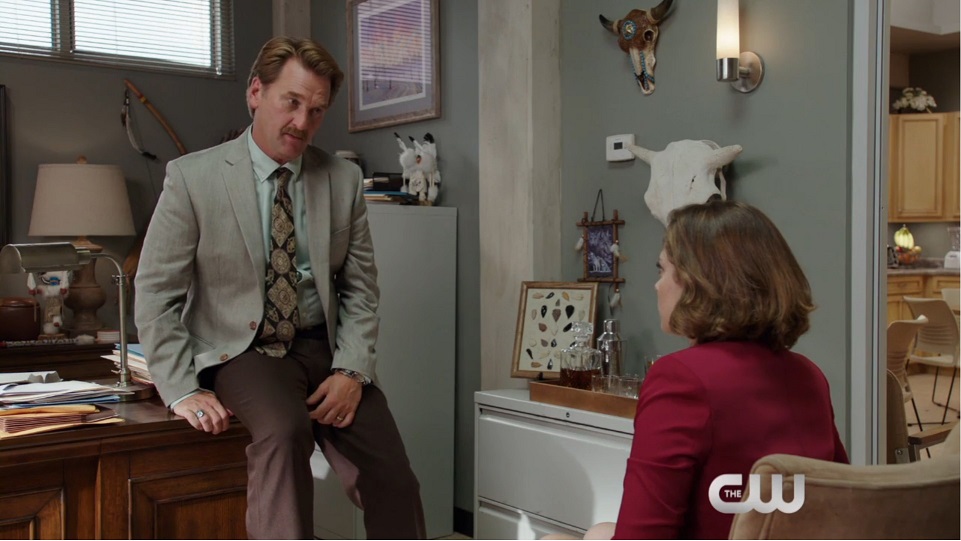
For Newspaper Rock, the relevant issue is the character Darryl Whitefeather:Darryl Whitefeather
Hometown: Scarsdale, New York


In The CW’s new comedy “Crazy Ex-Girlfriend,” Peter Gardner plays Darryl, Rebecca’s boss at a West Covina law firm. Darryl grew up in Orange County and considers himself very cultured and intellectual, a cut above the usual West Covina resident. He loves Rebecca because she is smart and well-educated, and he thinks she gives his firm instant credibility.


The problem is that he's 1/8th Chippewa, or so he says. This leads to several stereotype problems:

  • He doesn't look Native and he doesn't identify himself as an enrolled member of a tribe. These things aren't requirements, but they raise red or at least yellow flags.

  • His "Whitefeather" name is more of a stereotype than a real name--though a few Natives have names like it.

  • He wants to be called "Chief," though no one's doing it yet.

  • His office is a kitschy nightmare of Native items: wolf paintings, arrowheads, buffalo skulls, a dreamcatcher, a drum, a bow and arrows, a kachina-style figurine, a portrait of a chief, etc. Then there's his tie that sports Native basket patterns. None of this has anything to do with a genuine Chippewa culture.

  • He proves to be insensitive when he praises Rebecca because she's Jewish. And he proves to be buffoonish when he starts crying over his pending divorce.

  • You can watch a video about Darryl Whitefeather, with glimpses of his first appearance, here:

    Crazy Ex-Girlfriend--Full One Eighth

    As with his "Whitefeather" name and "Chief" title, his office is within the realm of possibility. A small percentage of people who claim to be Native will go overboard with displays like this. They're presumably overcompensating to banish doubts about their authenticity.


    Analysis

    Darryl and Rebecca comment on the wolf paintings, so it's not as if the kitsch goes unnoticed. But that's it for the Native commentary. And that lack of commentary is a problem.

    If you know anything about genuine Native cultures, you may snicker at Darryl's "wannabe" attitude. But most people don't know anything about genuine Native cultures, so they may take him at face value. They may say to themselves, "Okay, this is how a 1/8 Chippewa would act. Nothing strange here, just a guy trying to get in touch with his roots."

    That's what's missing from this caricature of a character: someone who explicitly says it's wrong. When Darryl makes a thoughtless Jewish comment, Rebecca pushes back against it. But no one challenges Darryl's "Native" gimmickry the same way.

    Without that, what are viewers supposed to think about Darryl the 1/8 Chippewa? Is he a real Native who's overcompensating? Or a "pretendian" who's trying to pass a la Ward Churchill, Johnny Depp, and Elizabeth Warren? There's no way to tell because the situation is unclear and no one clarifies it.

    There's a huge difference between satirizing a real Indian and satirizing a phony one. Someone needs to take a stand re Darryl if this subplot is to continue. Michael Stivic noted Archie Bunker's foibles on All in the Family and that kind of response is needed here too.

    September 20, 2015

    Indian wannabes = sports mascots

    A Facebook discussion of Indian wannabe-ism that applies to Susan Taffe Reed, Andrea Smith, and Rachel Dolezal:

    I don't understand this huge need to be Indian. Why can't people say they're multiracial? As in, "I'm A, B, C, D, E, F, and Delaware." Not Delaware, period.

    In my case, it would be English, Irish, Welsh, German, and other European groups. It wouldn't occur to me to pick one--say, Irish--and make that my identity. Much less tell other Irish people they need to accept me as one of them. I think Native Mascotry needs some serious study. It's like a mental illness.It's related to mascotry, I'd say. The same issues keep coming up--with Dolezal, Smith, and now Reed as well as generations of previous wannabes.

    Namely, that people don't want to be white because white folks did nasty, icky things. Much better to be an oppressed but still noble minority like black or Native.

    Now I'm on the good side, they can tell themselves, not the bad side. I'm like a virtuous Plains chief or the equivalent sports mascot. People don't fear and hate me, they love me!

    Same thing goes on with the Germans and other Europeans who act as Indian "hobbyists." They don't want to be a modern Indian fighting to protect a sacred site or prevent suicide. They want to be a noble Plains Indian on horseback by a tipi. I.e., a living mascot.

    Another clue is that no one ever claims to be descended from a Cherokee slave or scullery maid or fumble-fingered warrior. It's almost always "royalty" such as a princess.

    Why? Because it's about exalting yourself, not connecting to the culture. If you were seeking a genuine connection, you wouldn't care about the status of your alleged ancestor. A peasant or a slave would be as good as a chief.

    Wannabes = losers?

    Another commenter had similar thoughts:Ok, let's be honest--it's not just that people don't want to be White because White people did bad things--they're trying to justify why they're not benefitting from the White privilege they're supposed to have. They know full well that if they're White, good things are supposed to happen to them--so why are they poor? Why are they sick? Why can't they get ahead? And they justification a number of these people get is that they must be part something else. they're certainly not going to say they're part black, because that removes them from the White privilege sphere altogether--but Indian, now that's close enough to White, but because Indians have gotten so screwed, it explains why they're being screwed. It saves them from confronting the system that's more than happy enough keeping a foot on their neck, and comforts them at the same time, believing themselves to be just part of a long line of oppressed Noble Savages.For more on Indian wannabes, see Native Scholars Demand Academic Integrity and Wannabes Obscure Real Indians.

    September 19, 2015

    The Dartmouth Dolezal?

    Native Americans Blast Dartmouth for New Hire

    The new director of Dartmouth’s Native American Program is causing controversy over her confusing—and possibly inaccurate—background.

    By Samantha Allen
    A week ago, Dartmouth announced that ethnomusicologist Susan Taffe Reed is the new director of the college’s Native American Program, boasting that she is “the president of the Eastern Delaware Nations.”

    But the Eastern Delaware Nations (EDN) is not a federally recognized Native American tribe, it’s a 501(c)(3) that also allows “members [who] are not of Native American descent, but [who] join as social members.” And, after a searing blog post unearthed alleged death certificates of Taffe’s ancestors that show her family coming to the U.S. from Ireland after the Indian Removal Act, Native American alumni of the college are protesting the hire on their Facebook page. Native American media is also scrutinizing Dartmouth’s decision to hire someone for a student affairs position who seems less than forthcoming about her own heritage.

    The issue, they say, is not necessarily the EDN’s lack of federal recognition but a refusal of transparency on Taffe Reed’s part that recalls recent cases like disgraced former NAACP chapter president Rachel Dolezal and UC Riverside professor Andrea Smith, who continues to claim Cherokee identity despite backlash from Cherokee scholars and leaders.
    And:Dr. Nicky Kay Michael, a Native American historian and member of the federally recognized Delaware Tribal Council told The Daily Beast that she is very skeptical of Taffe Reed’s claim to be from the Turtle Clan if she is unwilling to openly discuss her heritage.

    “When you say those things, that’s a red flag,” Michael said. “If you are Delaware, you’re going to have to say who your family is. It’s not just a case of federal recognition; we want to know who you are. What family do you come from?”

    As Michael notes, the Delaware tribes in the United States that currently have federal recognition originally lived near the Delaware River but relocated west under pressure from the government beginning in the mid-eighteenth century. The Pennsylvania-based Eastern Delaware Nations group from which Taffe Reed hails claims on its website that most of its members are “descendants of Native Americans who lived in the Endless Mountains Region of Northeastern Pennsylvania and resisted being removed” but many in official Delaware tribes, Michael included, dispute the notion that a substantial number of Native Americans stayed behind in the Northeast.

    “They don’t ask our permission to use our name and then they appropriate our culture,” Michael said of the EDN. “What [Taffe Reed] did is she basically used this 501(c)(3) as a forum and then she wrote articles claiming to be Delaware.” Michael does not speak for the Delaware Tribe but she says that an official statement is forthcoming.
    The head of a Native studies program doesn't have to be Native herself. But people are questioning whether she fibbed about being Native, which is an ethics issue regardless of her ancestry.

    They're also concerned about conflating a nonprofit organization--one with non-Natives as members--with an unrecognized tribe. An unrecognized tribe has people living together with a shared culture and a documented history. A nonprofit like the Eastern Delaware Nations (EDN) Inc. generally doesn't.

    For more on the subject, see "White" = Ordinary and Bland and Andrea Smith the White Savior.

    September 12, 2015

    "White" = ordinary and bland

    You may have heard of this controversy. A white poet gave himself a Chinese name to get his poem published. It entered the Native consciousness because Sherman Alexie was the editor who selected the poem.

    You can Google the controversy, but here's an interesting take on why so many white people wanna be something or someone else.

    White guys’ yellowface envy: Underneath bizarre acts of racial subterfuge lurks a twisted desire to stand out

    Michael Derrick Hudson believed he had a better shot at literary stardom as "Yi-Fen Chou"—and he's not alone

    By Arthur Chu
    Tom MacMaster’s viral hoax, interestingly, started with random posts arguing with strangers on the Internet and the skeleton of a novel–just innocently experimenting with trying on an identity more exciting than “boring white dude” and increasingly becoming addicted to it. His outing led to the outing of “Paula Brooks,” the lesbian founder of the Lez Get Real blog that hosted Arraf’s writings, as married straight man Bill Graber. Graber’s justification for his deception was similar to MacMaster’s–he was passionate on LGBT issues but felt his own stance as a sympathetic straight ally wasn’t interesting enough to hold people’s attention. He needed to fabricate a version of himself, a younger gay woman, who had life experience, who had credibility, who was less ordinary than him.

    Look at the discussed-to-death case of Rachel Dolezal–keeping in mind that whatever reasons she gives for identifying as “transracial” today, she sued Howard University in 2001 because she thought her artwork was overlooked because she was white. Look at William Ellsworth Robinson, a.k.a. Chung Ling Soo, a stage magician so hungry for success that he ripped off not just the act and the shtick but the entire identity of rival Chinese magician Chung Ling Foo. Look at the stunt Kent Johnson pulled on the poetry world in the 1990s as “Araki Yasusada,” giving his poems the added historical weight of supposedly coming from the recovered notebook of a Hiroshima survivor. Take the mysterious, reclusive woman playwright who writes about women characters, Jane Martin, widely suspected to be well-known director Jon Jory using a pseudonym.

    It’s an identifiable pattern. A white man in the arts trying to be someone other than a white man in the arts. A creative person, an artist, who wants their art to mean something because of their unique life experience–growing up in war-torn Syria, being taught magic by Chinese mystics, fleeing the aftermath of the Hiroshima bombing–rather than being the result of the boring, workaday process of making shit up.

    “Whiteness,” after all, in our racial system simply means ordinariness, unmarkedness, blankness. Same with maleness–being a guy means getting to be the default, being just a “writer” rather than a “female writer,” being just “in tech” rather than a “woman in tech”.

    Ordinariness has tons of advantages. Being seen as ordinary means you don’t get stopped for shoplifting, it means you don’t get detained or shot or left to die in prison nearly as often. People don’t think twice before reading your résumé or renting your AirBNB. It’s much easier for you to wear what you want and buy what you want and live how you want without getting shit for it.

    But ordinariness that’s maintained by constantly comparing yourself to other people who are not ordinary can be stifling. “Whiteness” can mean, in people’s minds, that you’re basic–that you’re a sheltered, boring person, that your point of view is the same as the default point of view everyone else has already heard, that you’ve got nothing interesting to say compared to what an exciting exotic foreigner might say. It’s a powerful force, the force that drives this thing we call “cultural appropriation,” this thing that makes people insist their little “affirmative action” scheme is what’s getting them published, this thing that makes other people concoct elaborate hoaxes almost guaranteed to blow up in their faces.
    Comment:  See also Ward Churchill, Elizabeth Warren, Andrea Smith, and every other wannabe who (usually) claims to be Cherokee.

    For more on Indian wannabes, see Manson = West Virginia Sioux? and Andrea Smith the White Savior.

    August 13, 2015

    Manson = West Virginia Sioux?

    The only interesting part of short-lived Marilyn Manson controversy was the notion that he might be a Sioux from West Virginia. Here's a discussion of this on Facebook:...except he's not Sioux. http://www.geni.com/people/Marilyn-Manson/6000000026205220786He may be talking about a family legend undocumented in any genealogy. That's pretty much the case with every wannabe.Yeah, Sioux in West Virginia?If he means a Siouan culture rather than actual "Sioux," his claim isn't totally impossible:

    Virginia's First People--Culture--LanguageWhen Europeans and Africans began arriving in what is now Virginia, they met Indian people from three linguistic backgrounds. Most of the coastal plain was inhabited by an Algonquian empire, today collectively known as Powhatan. The southwestern coastal plain was occupied by Iroquoians, the Nottoway, and Meherrin. The Piedmont was home to two Siouan confederacies, the Monacan and the Mannahoac.One-drop rule?Rob Schmidt, there are a couple of points in his tree where something like that *could* have happened, and the closest one to him means that he *might* be something like 1/1024 but leagues past unenrollable and no-culture-present.I think he'd claim the ubiquitous Cherokee if he were just making this up. That's why I suspect he's repeating a family legend.

    Yes, his "Sioux ancestry" would've been so long ago that he'd be 99.9% white. In which case he'd have no business claiming to be part Native. You're like the whitest person on the planet if only one in 1,024 of your ancestors is nonwhite.One drop rule, though. Problem is, this is the first he's spoken about it, he's mis-spoken about it, and he does not normally claim it or follow his culture. Kinda hard to claim you are if you know nothing about it.Right, that's one possibility. Another possibility is that someone told him Sioux and West Virginia and he's too ignorant to know that doesn't make sense.Rob is right, a few times I came across a family getting "Siouan" confused with Sioux.I think a few people in the Virginia area claim to be Monacan. If someone told him that's a "Sioux" tribe, it could explain the discrepancy.

    July 12, 2015

    Andrea Smith the white savior

    Tribes Blast ‘Wannabe’ Native American Professor

    The Cherokee Nation is denouncing scholar-activist Andrea Smith for falsely claiming to be a member of the tribe. Beyond untrue, the ethnic fraud is a painful reminder of their past.

    By Samantha Allen
    In her public statement, Smith downplayed the fact that she is not enrolled in the Cherokee Nation: “My enrollment status does not impact my Cherokee identity or my continued commitment to organizing for justice for Native communities.”

    But according to Patti Jo King, a Cherokee historian and Interim Chair of American Indian Studies at Bacone College who says she privately conversed with Smith about her claims of Cherokee identity in 2007, it is Smith’s deception—not her enrollment status and not her advocacy—that constitutes the central issue.

    “She’s trying to switch the argument around here,” King told The Daily Beast in a phone interview. “We are not talking about her scholarship here. We are not talking about her commitment to Indian people.”

    King also shared more details about the 2007 conversation in which she and Richard Allen, a Cherokee policy analyst, met with Smith to discuss her claims of Cherokee identity. During that conversation, Smith told King and Allen that her mother had told her that she was Cherokee. According to Cornsilk’s timetable, however, Smith would have already received confirmation that she was not Cherokee twice by that time.

    King added that Smith was “very humble” during that meeting but now seems determined to continue claiming Cherokee identity in spite of the criticism she has received in the past week.

    “This infringes on our rights of self-determination, self-identity, and sovereignty,” King said. “We are the best experts of our own culture and we have the sovereign right to decide who our members are, just like any nation.”
    Cry Me a River, Andrea Smith

    By Terese Marie MailhotWatching two Native academics come to a consensus about Andrea Smith is like watching two eagles fight. No, wait, I mean egos. After Andrea Smith was outed for the second time as being non-Native, several Native academics leapt to save her from scrutiny. “Focus on more positive things,” they said. “Let’s not criticize her, because she’s done so much good for the community.” I’m done with that discourse. It’s time to be upset. White people can all-to-easily say they’re Indian, while claiming to be black is a cultural anomaly, ala Rachel Dolezal. It is with this in mind that I can say Andrea Smith is far more insidious a character than Dolezal.

    For years Smith has been conjuring her fake spirit animal to cry wolf, acting like she’s one of the many Indian women who face violence and subjugation. It’s a little too generous to say Smith was led to believe she was Indian. I mean, good lord, nobody told me I was an Indian. When my mom found out we were part Irish, she read a bunch of Irish literature, we made soda bread, and then called it a day. We couldn’t get in touch with our Irish roots, because by lineage, blood, and community, we were too Indian. So Indian my mother put the Irish flag on regalia. So Indian, my mother argued Irish people should be called Indigenous because, just like us, they were exploited by the Europeans. How was Smith lead to believe she was Indian? Did she grow up in an Indian community? Nope. Are either of her parents Indian? Nope. She, like most white people who think they’re Indian, was told she was part Indian. She took that and ran with it. Ran hard. Like, took that loose mouthed claim to lineage, and made a career out of it.

    Trust me, I empathize with people removed from their culture. The sixties scoop is a real issue for many Native people throughout North America. If you’re unfamiliar, it was a period in which the government could scoop up Indian children from their communities, then place them up for adoption in Canada and the US. That’s real: for the people disconnected from their cultures, and for the people who could not find their real parents. I empathize with Native people shut out from their culture, but don’t confuse their stories with that of Smith. She’s hella white, and she tried to save us. Can we call her what she is: a white savior.

    Native academic communities are far too kind. I’ve seen endless blog posts and editorials empathizing with Smith. Even defending her, saying she’s done so much good. No. Her deceit affected the ethos of every institution she worked for. Her criticism of government funding was coming from a dangerous space, where she never had to rely on government funding to feed her children or protect her sisters. She’s a fake. Her work was based around her identity, and scholars have the audacity to say how she identifies isn’t worth noting.
    Andrea Smith and the battle over sovereigntyIn the book, “Becoming Indian: The Struggle over Cherokee Identity in the Twenty-first Century” by Circe Sturm, anthropologist Michael Lambert, a citizen of the Eastern Band of Cherokee Indians described Cherokee identity politics as a “battle over sovereignty”:

    "One of the terrains on which this is being fought is that of how we define “Indian.” The current effort to define Indian as a racial/cultural group is an effort to extinguish Indian sovereignty. The only way for Indian nations to defend and expand their sovereignty is to make exclusive claim to defining who is Indian and what it means to be Indian. If Indians have sovereignty, then culture, behavior, and belief should have nothing to do with who is or is not Indian. After all, we wouldn’t deny someone’s Germanness because they hate sauerkraut, nor would we have the audacity to recognize someone as German simply because they love it. German is what German does. Indian is what Indian does…

    What does this have to do with non-enrolled Cherokees identifying as such? I see the basis of claims to Indian identity to be political acts. This is, and has been, a battle over sovereignty. One who bases their claim to Indian identity on any basis other than sovereignty is not taking a pro-Indian position.”

    By rejecting the idea that enrollment or citizenship in an Indian Nation is a factor in who is or is not Indian, Andrea Smith is taking an anti-Indian position. That is a direct attack on tribal sovereignty. No matter what Smith says, she is not acting in our best interest. She is not our friend and she is not seeking justice for us. Instead, she's forced us to a national stage where we must defend our tribal sovereignty, and once again, battle to protect one of the only things we Cherokees have left--our identity.
    Comment:  Andrea Smith is really the same issue as mascot lovers, German hobbyists, and hipsters in headdresses. These people proclaim themselves Indians so they can become wild, savage, and free. So they can be tribal and indigenous rather than corporate or processed or homogenized. It's all about feeling different and special rather than the same as everyone else.

    The problem is that if everyone's an Indian, no one's an Indian. It washes away the actual history of tribal sovereignty and government-to-government relations. It turns generations of subjugation and oppression into a feel-good party of rainbows and fairy dust.

    This is why people have complained about the "melting pot" metaphor. Wannabes are helping Natives melt into a homogenized stew of white gruel with bits of flavoring. The result is a bland "we're all Americans but some of us have funny names and costumes," which is vastly different from thousands of unique Native cultures with millennia of history.

    For more on the subject, see Cornsilk: Smith "Is Not a Cherokee" and Andrea Smith Defends Herself.

    July 10, 2015

    Cornsilk: Smith "is not a Cherokee"

    An Open Letter to Defenders of Andrea Smith: Clearing Up Misconceptions about Cherokee Identification

    By David CornsilkIt appears the Andrea Smith apologists are doing everything they can to divert attention from the one thing about her that is important right now, whether or not she is Cherokee. They want to make it about her work, not so. They want to make it about her complexion, not so. They want to make it about blood quantum, not so. Some have even suggested it is about jealousy, not so. The factual basis of all grievances against Andrea Smith, and others like her, begins and ends with whether or not she can prove Cherokee ancestry.

    These people don’t know real Cherokees, our history, culture, language and genealogies. They cannot speak intelligently to the question of her authenticity because they have no baseline, which is why they use diversionary tactics. Why would they know real Cherokees when all they see are fakes?

    In the 1990s, Andrea Smith sought me out as a Cherokee genealogist, on two separate occasions, to see if she had any connections. My research into Smith’s ancestry showed that her ancestry was not connected to the Cherokee people. In the subsequent years, many have challenged her identity including representatives of the Cherokee Nation. In those ensuing years, she has had ample opportunity to come forth with proof of her Cherokee claims. Instead, she has admitted to not being Cherokee or promised to stop claiming Cherokee; but perhaps because the foundation of her work as a ‘woman of color’ depended upon making others believe her claim she would back paddle and like a drug addict, fall off the truth wagon. As far as I can tell, nothing has changed in the evidence of her ancestry that would lead me to believe she is or even might be of Cherokee descent.

    Smith’s supporters don't like to be shown so lacking in knowledge of all things Indian; unwilling to admit they got duped by Smith. They are fully invested in her web of lies that they are willing to throw tribal sovereignty and self-determination under the proverbial bus. If they adore Smith's work, more power to ‘em. But do not let your love of one person's work blind you to the dangers false claims of Indian identity carry within it. Andrea Smith and all those like her are nothing more than the latest incarnation of settler colonial violence. Their apologists and collaborators are nothing new either.
    And:When I say someone has no Cherokee ancestry, it's not just that they or their ancestors are not enrolled. It's much more complex than that. In my past job as a Cherokee genealogist, I would look at the rolls and documents of course. But I also examine the wider extended family to see if there is any kinship to Cherokees on the roll during the ancestral time frame and in the tribe now.

    When Cherokees left the tribe or chose not to enroll, that was a decision at a specific moment in time. They would be on previous rolls. And most importantly, other members of the extended family, aunts, uncles, siblings, parents, grandparents and cousins would be among the tribal members and on the various rolls and records. Just like white Americans find kin in Europe whose ancestors remained, real Cherokees who can't enroll today have relatives in the tribe. Andrea doesn’t. Not a single Cherokee citizen living today claims her or her family. Either she emerged as a fully formed Cherokee Indian and we must recalibrate our creation story; or the reality is, she isn’t Cherokee.

    Andrea Smith isn't just missing from our tribe, but every generation back to the genesis of America, all of those relatives I mentioned are also MISSING.

    That fact speaks loud and clear that not only is Andrea Smith not enrolled, SHE IS NOT A CHEROKEE!
    Not Honoring Her AgreementsDespite her agreements with Richard Allen and Patti Jo King in 2007 and with Steve Russell in 2008 (all Cherokee citizens) to no longer publicly identify as Cherokee, Andrea Smith has continued to accept speaking engagements and PR as a “Cherokee intellectual” and has continued to identify herself in her publications as an Indigenous, woman of color scholar and activist. It is possible that in some cases a host institution, department, or program, or a press, has copied her bio material from an outdated website. But a simple email or phone call from her would have clarified matters. Here are a few of the dozens of examples since 2008.Comment:  For more on the subject, see Andrea Smith Defends Herself and Native Scholars Demand Academic Integrity.

    July 09, 2015

    Andrea Smith defends herself

    My Statement on the Current Media Controversy

    By Andrea SmithTo the academic and social justice organizing communities which I have been part of for many years, and to whom I am indebted:

    I have always been, and will always be Cherokee. I have consistently identified myself based on what I knew to be true. My enrollment status does not impact my Cherokee identity or my continued commitment to organizing for justice for Native communities.

    There have been innumerable false statements made about me in the media. But ultimately what is most concerning is that these social media attacks send a chilling message to all Native peoples who are not enrolled, or who are otherwise marginalized, that they should not publicly work for justice for Native peoples out of fear that they too may one day be attacked. It is my hope that more Indigenous peoples will answer the call to work for social justice without fear of being subjected to violent identity-policing. I also hope the field of Native studies might attend to disagreement and difference in a manner that respects the dignity of all persons rather than through abusive social media campaigns.

    Out of respect for the dignity and privacy of my family, and out of concern for the damage that these attacks have had on my students, colleagues, and organizing communities, I will direct my energies back to the work of social justice.
    A right-wing site helpfully parses Smith's language:

    Alleged fake Native American prof responds to charges (sort of) in blog post

    By Dave Huber“I have always been, and will always be Cherokee,” Smith writes. “I have consistently identified myself based on what I knew to be true. My enrollment status does not impact my Cherokee identity or my continued commitment to organizing for justice for Native communities.”

    The “consistently identified myself” sounds a lot like what Rachel Dolezal said. And note the use of the past tense: “what I knew to be true.”
    Comment:  For more on the subject, see Native Scholars Demand Academic Integrity and Smith's Defenders Denounce "Identity Policing".

    July 07, 2015

    Native scholars demand academic integrity

    The Andrea Smith controversy continues to simmer:

    Fake Cherokee?

    By Scott JaschikThe issue is both important and sensitive to many Native American studies scholars. Leaders in the field stress that they believe that outstanding scholarship has been done by people with a variety of backgrounds, Native American and other. But many also say that there is a particular obligation in this field--when the number of Native American scholars with prominent university positions is so small and when Native Americans have been misunderstood by scholars for generations--to be open about one's background.

    "All scholarship should be based on integrity and that integrity includes honesty and transparency," said Winona Wheeler, president of the Native American and Indigenous Studies Association, associate professor indigenous studies at the University of Saskatchewan, and a member of the Fisher River Cree Nation. "One of the significant tenets of indigenous studies as a discipline is that we strive to [situate] ourselves with our research. So it's really important in the discipline that we advise our readers somehow about the place that we're coming from."
    And:The American Indian Studies Program at the University of Illinois at Urbana-Champaign, where Smith had a postdoctoral fellowship, in 2010 issued a statement called "Identity and Academic Integrity."

    Robert Warrior, director of American Indian studies at Illinois, said that Smith didn't prompt the statement, but that the reports about her were "a topic of discussion throughout our development of it. We knew about the ethical issues regarding her claims to Cherokee descent at that point."

    The Illinois statement said in part: "We recognize the importance of being able to identify ourselves clearly and unambiguously. Too often, we realize, American Indian studies as a field of academic inquiry has failed to live up to its potential at least in part because of the presence of scholars who misrepresent themselves and their ties to the Native world. While we do not in any way want to suggest that only Native scholars can do good scholarship in Native studies, neither do we want to make light of the importance of scholars who work in this field being able to speak with clarity about who they are and what brings them to their scholarship and creative activity."
    Open Letter From Indigenous Women Scholars Regarding Discussions of Andrea Smith

    By various authorsWe call first and foremost for accountability to the communities in which we claim membership. This is not a call for the punitive or the exclusionary. This case evokes people’s fears and vulnerabilities about very real histories of disenfranchisement, expulsion, discrimination, and normative policing in Indian Country and beyond. Thus it bears repeating: our concerns about Andrea Smith do not emerge from statist forms of enrollment or non-enrollment, federal recognition or lack thereof. They are not about blood quantum or other biologically essentialist notions of identity. Nor are they about cultural purity or authenticity, or imposing standards of identification that those who would work for or with indigenous communities must meet.

    Rather, our concerns are about the profound need for transparency and responsibility in light of the traumatic histories of colonization, slavery, and genocide that shape the present. Andrea Smith has a decades-long history of self-contradictory stories of identity and affiliation testified to by numerous scholars and activists, including her admission to four separate parties that she has no claim to Cherokee ancestry at all. She purportedly promised to no longer identify as Cherokee, and yet in her subsequent appearances and publications she continues to assert herself as a non-specific “Native woman” or a “woman of color” scholar to antiracist activist communities in ways that we believe have destructive intellectual and political consequences. Presenting herself as generically indigenous, and allowing others to represent her as Cherokee, Andrea Smith allows herself to stand in as the representative of collectivities to which she has demonstrated no accountability, and undermines the integrity and vibrancy of Cherokee cultural and political survival. Her lack of clarity and consistency in her self-presentation adds to the vulnerability of the communities and constituents she purports to represent, including students and activists she mentors and who cite and engage her work. This concerns us as indigenous women committed to opening spaces for scholars and activists with whom we work and who come after us.
    And:Smith’s self-acknowledged false claims and lack of clarity on her own identity perpetuate deeply ingrained notions of race—black, white, and Indian—that run counter to indigenous modes of kinship, family, and community connection. When she and others continue to produce her as Cherokee, indigenous, and/or as a woman of color by default, they reinforce a history in which settlers have sought to appropriate every aspect of indigenous life and absolve themselves of their own complicity with continued dispossession of both indigenous territory and existence.

    The stories we tell have consequences, and the harm that some stories produce goes beyond their individual context. One of the devastating consequences of Smith having served as the often singular representative of indigeneity in a variety of academic and activist social justice contexts is damage to strategic alliance building, especially between indigenous and non-indigenous women of color. Accountability to communities, kinship networks and multiple histories is part of the difficult work scholars of indigenous and critical race studies must be willing to undertake to ensure that our work combats rather than reinforces or leaves untouched the intricate dynamics of heteropatriarchal racist colonialism.
    Comment:  For more on the subject, see Smith's Defenders Denounce "Identity Policing" and "Cherokee" Activist Isn't Cherokee.

    July 02, 2015

    Smith's defenders denounce "identity policing"

    As the criticism of "Cherokee" activist Andrea Smith unfolded, her defenders also took to the Internets. The first "criticism" I saw was mild:

    No, Andrea Smith is not the “Native American Rachel Dolezal”

    By Erica Violet LeeYes, if it is true that Andrea’s claims to heritage were entirely made up, it is a betrayal. Pretending to be Indigenous is not okay, regardless of your intentions. Accepting the astounding number of public engagements she has done over the years (and payments for these events) on the basis that one is a Cherokee scholar is unthinkably harmful and displaces countless Indigenous women scholars. For this reason I support the many Indigenous scholars I know that have worked to bring this particular case to light and demanded accountability; many of them important, senior women scholars who make spaces in the academy for young Indigenous women like me.But:Moving forward, how do we best deal with this situation?

    Rather than tearing down any one woman, support the already-existing immense body of work of Indigenous scholars, particularly, that of Indigenous feminists and Indigenous women. Support the work of Indigenous feminists whose work is useful for our communities.
    It's not one or the other. We can tear down Smith's wall of denial while supporting the work of genuine indigenous scholars. In fact, nudging Smith out of the limelight does exactly that. It frees up time and space for us to examine other people's work.

    Jealous of Smith?

    But then Smith's defenders got serious with their accusations:

    Statement from Tawna Barnett-Little (Muscogee Creek/Seminole)All academics have shortcomings and it amazes me that you choose to attack Andy’s identity as her shortcoming and take it to this level. That’s the best you could do in finding something to call her out on? How pitiful. Why not go after her scholarship, her arguments? Oh yeah, because they’re brilliant! And her work is used in both grass roots organizing spaces and academic settings. Testimonies of Indigenous female rape survivors have asserted Andy’s work to be healing and empowering. Andrea and her sister Justine have both been extraordinarily positive voices in my life as well as other members of my family. This also rings true during times of hardship when their words have been encouraging and they have been physically present in our lives…..oh, remember that I said I’m a FULL-BLOOD (black haired-brown skinned-Indian looking individual unlike the rest of these insecure-in-your-identity-academic-mixed-bloods who I would not have criticized until you decided to exercise identity policing) which means that Andrea does hang out with Native People, contrary to previous blogging claims that she does not hang around other Natives. Many others can attest to that as well.

    As we say in Muscogee, “mistvlke fekcahke owet fullet owes” (they are going about in a jealous way). I guess if my academic scholarship was lacking, I might also develop jealousy toward Andrea Smith. So, attacking her identity on grounds of not having an enrollment card and “misrepresenting herself” is an easy target eaten up by non-grass roots Indigenous Peoples and is something that only mainstream whites and insecure Natives seem to care about. It is obvious that these attackers do not know Andrea and her personal family challenges, particularly those surrounding her lineage. Trying to survive in academia can be brutal in Native Studies arenas where everyone wants to be Indianer-than-thou. I am altogether compassionate toward her claim/misunderstanding about enrollment in the Cherokee Nation. That doesn’t dismiss her exceptional work, commitment to social justice and desire to end global oppression. Andrea does not claim to be a Cherokee cultural or language expert and these attackers evidently have fooled folks into thinking they are somehow culturally and linguistically superior to Andy in their Native identity. Wow, that’s a joke! Andrea has not used her Cherokee identity as a way to promote herself; rather, she identifies with what she was told her identity is growing up and she participates in social justice advocacy--for people other than herself. In fact, she went to law school to defend those who cannot defend themselves. Andrea has made INCREDIBLE personal sacrifices for her family and herself in order to fight for justice, and anyone that attempts to discredit her clearly does not get the whole picture. The virtues of my Muscogee People (vnokeckv, eyasketv, mehenwv, kvncvpkv) do not support this kind of hateful behavior. It sounds like most of these attackers are without traditional teachings from their respective nations; they have yet to learn how to live on this earth.
    Why not go after Smith's scholarship? Because her scholarship and her identity are two separate issues. Duh.

    If I ever heard of Smith before this controversy, I don't remember it. I'm not Native, "traditional," or academic, so there's nothing for me to be jealous of. I criticize people who lie and dissemble because lying and dissembling is wrong.

    For the umpteenth time, no one is saying a word about Smith's work or her advocacy. We're talking about her identity problems such as the "misunderstanding" about being an enrolled Cherokee.

    More important things to do?

    Why Realness Fails Us in Native Studies

    By Chris FinleyIn the shadow of the Rachel Dolezal scandal, mostly non-Cherokee Indigenous academics have raised an alarm about Andy Smith’s identity once again. I want to point out that it is mostly tenured faculty that are doing this. I want to know why you have an investment in Andy’s identity in particular. Indian identity has always been heavily policed. Usually it was the settlers trying to undo us, but in this case, it is ourselves. This is the part that makes me truly sick. There isn’t a settler in sight but there is a massacre occurring. It isn’t only Andy who is hurt and scared by this discussion. I know if my identity was held up to a microscope or even a magnifying glass, I would fail spectacularly. I don’t speak my language, I don’t make it home much, I don’t eat venison because I’m a vegetarian (total Indigenous failure!), I don’t even like camping, I haven’t had sexual relations with an Indian in over 5 years, and I never wear turquoise jewelry. Sure, I’m enrolled, but as an Indigenous person my identity is always scrutinized and measured. (People often ask me for my blood quantum or specific questions about my cultural practices.) As a Native woman, my identity and civility are always under attack. Native men in the academy do not have their identities and work scrutinized as much as Native women do.

    Andy Smith has done more for Indigenous people than I ever will and this is not because I think she blocked me but I just never had the energy she had to dedicate every waking moment to ending oppression. To me the question or desire should not be for a self-confession from Andy about what went wrong or what she is or is not, because I think her actions speak louder than that. My desire is for Indigenous people to stop tearing each other apart and to stop attacking someone who really tried to do some good. Why didn’t so many people call out Kevin Costner when he was adopted by the Rosebud Nation and then built a casino and that was not about sovereignty or decolonization. I tell you, I saw Andy go through her tenure battle at Michigan and the institution would have never treated a white woman that way, but it most certainly would have done so to a Native feminist.
    And:For us to forsake Andy for not being Native when we have a white president of Native American and Indigenous Studies is very hypocritical. Why let white people run Native Studies? Does that make us less Native? I don’t think so but maybe it does. We have real things to worry about, theorize, and love. And this debate does not get us there. It is not a caring debate. The debate relies on those who want to be Native informants who tell all the other non-Natives that Andy is not Cherokee or Native like this means something really deep. To me, it doesn’t. When I found out there wasn’t a Santa Claus, I got over it.

    This is not the most important thing happening in Native America, nor should it be.

    This is NOT about Andy, but this is about us and how we deal with this shit.
    I call postings such as this "Fifty shades of defending wannabes."

    Wow, I am so sick of the "more important things" argument. If you're in academia, you're automatically not doing anything truly critical. "Chris Finley is a queer Native feminist finishing her PhD in American culture at the University of Michigan"...and that's what we should be doing instead of criticizing Andrea Smith? Because getting a PhD is the key to saving Native lives?

    Finley and her ilk are thinking, writing, and teaching about long-term issues, which is fine and dandy. But don't tell us you're holier than thou--e.g., saving children from burning fires--and we're not. Academics, journalists, entertainers, and artists all contribute to the furtherance of Native culture and history in their own ways. Talking about wannabes who co-opt Native identity is one of those ways.

    Working for Big Brother?

    Statement from Klee Benally (Diné/Russian-Polish)Off social media most of the day and now back to a witch hunt against fierce feminist author and friend, Andy Smith. While I’m not privy to all that’s been published, so far I’ve read tequilasovereign’s (aka Joanne Barker) tumblr and a couple others. tequilasovereign’s statements eerily evoke cointel-pro badjacketing rather than Indigenous feminism. Reading it I couldn’t help ask myself, what interests are served via this pillory?

    When Ward Churchill’s identity was called into question it clearly served a conservative agenda. My position then was that his identity is between him and the creator and an issue for his family and Nation to address internally through their own cultural process. After all, the primary issues regard accountability, colonialism, and white supremacy. I still maintain that his political contributions shouldn’t be uncritically thrown out when challenged with the colonial institution of “blood-quantum.”

    Accountability on Indigenous terms figures quite different than putting someone on a social media blast. Certainly ethnic fraud should be critically addressed regarding Indigenous (mis)representation but is this the proper way and venue to address matters that have such serious implications? Perhaps we should also consider the standard set by Cherokee Nation of Oklahoma’s shit politics regarding anti-black dis-enrollments? It’s further concerning how the logic of this applies to non-Federally recognized Indigenous Peoples too, what are the standards for Indigenous academic purity there?

    This isn’t to excuse redface, but to recognize that quantum/enrollment issues are more complex than the Dolezal matter (her own family put her on blast, which is quite different than what’s playing out with Andrea Smith), just check the Pechanga or Pala issues for reference: http://losangeles.cbslocal.com/…/casino-tribe-outcasts-cla…/
    Churchill's and Smith's identities are between them and their creator? Is that also true of Iron Eyes Cody and all the German hobbyists and hipsters in headdresses? They're Native if they say they are?

    In other words, Benally is excusing redface. Anyone and everyone can pretend to be Native if they feel like it. If my heart and soul tell me I'm Cherokee, I am.

    Unfortunately for Benally, Smith isn't being accused of having a too-low blood quantum, or of violating the Cherokee Nation's standards. She's accused of having no Cherokee heritage whatsoever. No blood ties, no community ties, nothing. So spare us the histrionic talk about how the System and the Man are trying to oppress poor Andrea the wannabe.

    Sticking to Smith's fraud

    Another commenter pushed back against these accusations, noting how people were trying to change the subject from Smith's misdeeds.

    On the Politics of Distraction

    By Joanne BarkerMy point is that expecting Andrea Smith–or anyone else–to be honest, to have integrity, in how they identify themselves and their work is not the same thing as policing their/her identity through the standards of racial authenticity. No one I know has ever asked her what her racial quota is or whether or not she can produce her CDIB.

    Equating “identity policing” with the expectation of integrity with how someone presents themselves as Native is part of the trouble–anticipating that kind of racialized equivalence is exactly why Cherokee people and Native scholars who have known about Smith’s fraud for 7 to 24 years have never come forward.
    And:I share this because in the blogosphere of reactions to what seems like new information about Smith for a lot of people, people are speaking as if those of us who have known, who have tried to think out loud about the issues in the last few days and weeks, are spiteful and mean-spirited and hateful people. That has not been my experience. The Native feminists and NAIS allies, UCSC alum and others, who have known and who are just beginning to speak up about the issues are compassionate, generous, empathetic, and smart and have been genuinely distressed about Smith–and for Smith’s health and well-being–and what the right thing is to do and to say for years and years and years. It has required a lot of spiritual, emotional, professional, and intellectual energy to work through. And we are only just beginning.

    My challenge to everyone is to stay focused. There are too many distractions in conversations about these issues–too many accusations of papergenocide, lateral violence, cruelty. They have seemed, to me, disingenuous. A way to refocus the question and alleviate Smith of any kind of responsibility or accountability.
    You know, it wouldn't affect me one iota if I found a nonwhite ancestor in my family tree. Why should it? It literally would have nothing to do with my present circumstances or plans.

    Therefore, I don't understand why people would go around touting a rumor or a lie for years. Why don't they just save us the trouble and check themselves into a psychiatric institute? Because clearly they have unresolved issues and need help.

    For more on Indian wannabes, see Vague Ancestors Aren't a Free Pass and Rachel Dolezal = Indian Wannabe.
    July 01, 2015

    "Cherokee" activist isn't Cherokee

    Meet the Native American Rachel Dolezal

    Andrea Smith is a Native American activist and academic hailed for her Cherokee heritage. One small problem: She’s not Cherokee.

    By Samantha Allen
    Andrea Smith—an associate professor at University of California, Riverside, the founder of INCITE! Women of Color Against Violence, and a leading Native American studies scholar and activist—may not, in fact, be a Cherokee woman, despite repeatedly presenting herself as such since at least 1991.

    I first saw Andrea Smith in 2013 when she delivered a keynote at the Southeastern Women’s Studies Association (SEWSA) conference and, although her program bio did not explicitly mention that she was Cherokee, she was widely understood by conference goers to be a Native American speaker.

    After all, she was the author of Conquest, a landmark text about state-sanctioned acts of violence against Native American women, she had been involved with the Chicago chapter of the organization Women of All Red Nations (WARN), and when she was denied tenure by the University of Michigan, students and faculty rallied around her, suggesting discrimination on the basis of her Native American descent.

    She had a long history of speaking as a Native American woman on issues affecting Native Americans. Her tenure controversy, in particular, was legendary in academic circles. At the time, Inside Higher Ed referred to her as “[a] Cherokee,” adding that “she is among a very small group of Native American scholars who have won positions at top research universities.”

    But that’s not so, as David Cornsilk—a research analyst who did genealogical work for the Cherokee Nation in the late 1980s and has operated his own practice, Cherokee Genealogy Services, since 1990—can attest. He confirmed to The Daily Beast that Smith reached out to him twice during the 1990s to research her own genealogy. There was no evidence of Cherokee heritage either time.
    Some details on Smith's history of claiming to be Cherokee:

    Rachel Dolezal and Andrea Smith: Integrity, Ethics, Accountability, Identity

    By AnonNDNAbout two weeks ago, Annita Lucchesi (Southern Cheyenne) posted a comment on her tumblr page entitled “Andrea Smith is not Cherokee.” In Lucchesi’s biography for an article she wrote for Last Real Indians in honor of Loretta Saunders, it says, “Annita Lucchesi is a Southern Cheyenne survivor of sexual and domestic violence. She is a graduate student in the Critical Culture, Gender, & Race Studies department at Washington State University, and also works at the National Indigenous Women’s Resource Center, which is dedicated to reclaiming the sovereignty of Native nations and safeguarding Native women and their children.” Her comment on tumblr about Smith begins:

    “Andrea Smith is not Cherokee. omg. this is not new information. this is what bugs me about how Natives are treated by non-Natives in academia!!! most Native scholars that are connected to their cultures/communities have questioned her for a very long time. but non-Natives get so comfortable using their one token go-to Native Feminist to quote that those questions don’t get heard or understood.”
    And:Within a few days, a new tumblr page appeared: andreasmithisnotcherokee. With multiple Cherokee and other sources and primary and secondary documentation dating back to 1991, the page tracks a 24-year history of Smith misrepresenting herself as an enrolled Cherokee citizen, of being confronted on the validity of her claims and agreeing with the Cherokee Nation to no longer publicly identify as Cherokee, and of subsequently allowing others to misrepresent her as a Cherokee intellectual and activist.

    Smith’s admissions to multiple Cherokee people in 1993, 2007, and 2008 that she has no lineal descent claims as a Cherokee is as striking as the fact, as noted on tumblr, that, “To date, no member of the Redbirth Smith family or any other Cherokee family has acknowledged Andrea Smith’s claims of descent/belonging.”

    In the two weeks since Lucchesi’s posts, the twitter and Facebook flurry, and the appearance of andreasmithisnotcherokee, not a single national media outlet or professional institution or association to which Smith is a member has remarked on Smith’s case. And neither has Smith responded–to refute, to acknowledge, to apologize. In fact, it appears that all she has done in response is to close her twitter account (@andrea366, though one she seems to be affiliated with @NativeChristian remains active) and her Facebook account (Andy Smith).

    [Insert the sounds of crickets here.]
    Rachel Dolezal Outs Andrea Smith Again; Will Anybody Listen This Time?

    By Steve RussellBack in 2008, I signed a petition favoring her tenure at the University of Michigan and subsequently published a column here saying the same thing and saying why. I did not recant my opinion that she has produced serious scholarship when she was outed as not Cherokee about a month later because I do not believe ethnicity can be or should be a condition for academic employment.

    Still, fraud is fraud, and professors are to some degree, whether we like it or not, role models. When I had personal contact with Andrea Smith, I came away with the same impression many people have had after personal contact with Rachel Dolezal: this is a deeply disturbed person.

    How can you be an Indian without knowing which of your relatives is Indian? How can you be an Indian with no ties to an Indian community? How can you “mistake” whether or not you are tribally enrolled?

    By seeking grants and honoraria and academic positions as a Cherokee, she does harm both in the sense of denying these things to real Cherokees and in the sense of representing a Cherokee culture about which she knows little. Still, I can sense that she wants to be Cherokee as desperately as Rachael Dolezal wants to be black.

    When the dust settled over the outing of Andrea Smith half a dozen years ago, she had agreed to quit representing as Cherokee and several Cherokees, myself included, agreed to quit harping on the fraud already committed.

    Years later, I found out she never quit playing Cherokee and, worse, her sister Justine joined what is beginning to appear to be a family scam, reportedly going so far as to submit a Cherokee Registry card with her name and somebody else’s number on it to a prospective academic employer.
    Two prominent Native Americans accused of faking their Cherokee heritage: “They’re just trying to make a buck off of us”

    An artist and a scholar are both under fire for claiming to be Native American, which furthered their careers


    Why it matters

    Four Words for Andrea Smith: 'I’m Not an Indian'

    By David ShorterAndrea Smith surely thinks she is Cherokee; or she did at some point. She has been asked repeatedly to either stop claiming Cherokee identity or to either authenticate her claims through a reliable kinship, through ties to a specific family, or through the Cherokee Nation’s official process for enrollment. And she’s smart enough to know that in many tribal cultures, identity is not who you claim but who claims you. She has done incredible theoretical work in the academic field of Indigenous Studies and has even been recognized internationally for her broad and groundbreaking anti-violence coalition building. So does it matter that she did all of that in Red Face?

    Yes it does.

    Andy Smith did not just appear out of an egg, as a fully formed “woman of color” advocate, validated as an Indigenous scholar, and a Nobel Peace Prize nominee. She got there by grabbing the microphone, keeping others away from it, and deciding to speak both “as” and “for” a group of people. While writing my ethnographic works, I do sometimes speak “for” Yoemem; but I’ve also gone to great lengths to simply translate and when possible, amplify Yoeme people’s claims. But, I’ve never spoken “as” a Yoeme person.

    For every scholarship she received as a Native person, for every honorarium she has received as an Indigenous speaker, for her book sales that a publisher sold as coming from a “Cherokee” author, those recognitions came at the expense of some student who wasn’t funded, some speaker who wasn’t invited, or some book by an Indigenous author that wasn’t bought.

    She spent years cultivating relationships with other powerful women of color to ensure her insider status. And as I personally know, she pushed others out of her way by not only playing an insider, but also playing the gatekeeper. One only needs to visit this Tumblr page (http://andreasmithisnotcherokee.tumblr.com/) to see her strategic use of “we” when talking about Indigenous experiences and “them” when talking about colonizers. Andy and I both went to a graduate program, History of Consciousness, a place that excelled at theorizing the strategies of exactly such representations within social movements.

    Lisa Aldred wrote a great scholarly article that methodically shows why people want to be Indian. In “Plastic Shamans and Astroturf Sun Dances,” she demonstrated that non-Indians are unconsciously motivated to become or affiliate as Indigenous because doing so alleviates them of their guilt about colonization. This essay is powerful in the classroom because it shows the sheer power of this motivation, from headdresses, to sweat lodge tourism, to the entire market for anything smacking of Indian spirituality.
    Honest Injuns*: Policing Native Identity in the Wake of Rachel DolezalFor many of us, we’ve fought tooth and nail to hold onto our Native identity in the face of oppression. So woe unto the person who gains some kind of notoriety after claiming to be Native without also providing indisputable tangible proof. Just ask Ellie Reynolds, a conservative lapdog who was outed as a non-member with no lineage by the Oglala Sioux tribal government back in May after using her “Oglala Sioux Native American” background as a platform to speak in support of the use of Indian mascots. Or ask Elizabeth Warren. Or Andrea Smith (after reading that link, make sure to read this one AND this one).And:You’re Native? Back it up.

    Blogger tequilasovereign (Joanne Barker, Lenape) wrote about this very subject of indigenous identity back in April. From “13 Observations in 3 Parts: Anti-Racist Feminist Allies and the Politics of Indigeneity,” Barker asserts:If you say you are Indigenous, you should be able to identify who your nation/tribe/band is (Cherokee, Tlingit, etc.) and who your family/clan is (by name). This identifies you within a set of relationships but also within a set of responsibilities to/within the nation/tribe/band you claim. These responsibilities are political, ceremonial, and social.

    If you cannot identify your nation/group/tribe/band, then you should have a transparent explanation (adoption, for instance).

    Because of the histories of misrepresentation of Indigeneity in territorial dispossession and violence, there are deep ethical responsibilities in identifying oneself as Indigenous.
    I couldn’t agree more.
    Comment:  For more on Indian wannabes, see Vague Ancestors Aren't a Free Pass and Rachel Dolezal = Indian Wannabe.


    June 28, 2015

    Vague ancestors aren't a free pass

    Sherman Alexie offered a great quote on Indian wannabes. It was partly a response to the Rachel Dolezal controversy swirling in the air:

    Blow-Your-Mind Quotes On Race By Sherman Alexie And Tonya MosleyAfter this, one of you white people is going to come up to me, and you're going to say, "My great-grandmother was something." You're going to say it to me. Even though I am pre-mocking you. You are so deaf to your own privilege that you're not even hearing me right now saying this to you.

    I have Scottish ancestors. I would never go to Scotland, walk up to somebody Scottish and say you know what, you and I have a lot in common.
    Someone asked what she should do if she really was part-Native--1/8th, 1/16th or whatever--and wanted to join in. Couldn't she go up to Alexie then?

    My response:

    First I'd document your Native ancestry so people couldn't question it. And I wouldn't lead with it in a conversation. Sherman Alexie doesn't need to know your ancestry to acknowledge you.

    In my case, I have no Native ancestry. I don't ask or expect people to accept me because I have a Native great-grandma somewhere. Rather, I demonstrate my awareness of Native history and culture through my writings and postings. Then people can accept me or not as they choose.

    I'd say the people who start off talking about their great-grandmas are just trying to get approval or attention. Problem is, they haven't earned a place at the "Native table."

    They should listen, study, and learn about Natives first. Then people like Alexie will acknowledge them--because they've earned it.

    Someone else had a similar response:Alexie does not need to give cookies to people who trot out their family myths to him, who primarily identify and live as non-Indigenous.

    A vague ancestor does not confer being Native on a person. Why are folks not embracing OR redeeming their mostly white ancestors? I have a Scandivanian ancestor, whose last name I hold, but I do not run around claiming to be a Viking. That is not my experience. Being Native is not a costume one can put on when it's convenient. Don't be co-opting Native identity while you divorce yourself from our struggle.
    More on the subject

    Then I tweeted this comment:

    A Cherokee ancestor isn't a free pass to a secret society of Natives. Your beliefs and actions are what gain you admittance, not your blood.

    Followed by:

    A Native great-grandma is one of dozens of ways you can start a conversation about becoming a Native ally. Like a white person who grew up on a rez. Or Richard Nixon's playing for a Native football coach. Or my doing Native comic books.

    Then you can spend a decade or so looking, listening, and learning. And then you may be qualified to join a conversation on Native issues.

    But no, your possibly mythical ancestor doesn't let you bypass all the work and become an instant Native. If Johnny Depp and Elizabeth Warren didn't get a free pass, neither do you.

    So don't trot out your legendary great-grandma and expect to join the club. Nobody wants you because of a relative who may or may not exist.

    Some related thoughts:

    Fake Black Folks, Fake Indians, and Allies: The Native Roots of the Rachel Dolezal Saga

    For more on Rachel Dolezal, see Rachel Dolezal = Indian Wannabe and Churchill, Depp, Warren, and Dolezal.

    June 19, 2015

    Rachel Dolezal = Indian wannabe

    American Indians are Accustomed to Wannabes

    On Being Onkwe:honwe: Thoughts About Rachel Dolezal

    By Charles "Rain" BlackAmong Natives, if non-Natives come to us and ask how best to honor us, we are more than happy to give answers. Even if they approach our leaders with an existing idea (as Florida State did with the Seminoles) and say “We want to do this to honor you” or ask “Will this offend you?” we tend to give some consideration to the idea. However, doing it without getting our input, or worse, rejecting our feedback after the fact, is in no way honoring us. It's treating us as symbols, stereotypes or backdrops to colonialist activities. None of that honors Natives except in the self-centered thinking of the colonists doing so.

    Now we see the same sort of behavior on the part of Rachel Dolezal. Much as with all the descendants of “Cherokee Princesses” who want to co-opt Native culture, she has decided on her own to be something she isn't--being black--never asking if her actions would offend those who have to deal with being black from even before they are born. That is the nature of modern American society, to be so wrapped up in rights and what “I want” that any sense of responsibility and what others want becomes secondary, or completely unimportant.

    The situation with Rachel Donezal is bigger than just one woman unable to cope honestly with her family situation. It's about an entire society that has become so Narcissistic that people feel entitled to choose to be and do things that dishonor other people, yet claim they are doing so to honor them. The declaration is “If this is what I want to do to honor you, then you damn well better feel honored!” or be considered ungrateful or even prejudiced. Our society now too easily forgives or justifies people who do things without any regard for the impact their actions have on others.

    Whether it's Rachel Donezal pretending to be black, or fashion models wearing war bonnets, such actions cannot be justified if the people groups directly involved in the representation of race or culture are not consulted and give their permission ahead of time. That is the real issue, not her personal rights to express her identity. Basic courtesy requires that those you are going to attempt to honor be consulted on the matter and give their approval. Rachel Donezal didn't do this.
    Washington football fans are as guilty of cultural appropriation as Rachel Dolezal

    By Kevin B. BlackistoneFor much of my life, at least on fall and winter weekends, I was Rachel Dolezal.

    I donned a T-shirt, sweatshirt or cap emblazoned with some image and nickname of my hometown football team and cheered it on. In the beginning, it was a gold-and-white spear and arrowhead festooned with a single feather. Then it became a burgundy R with a circle around it and a pair of white-and-burgundy feathers dangling down the back. Finally, the R gave way to the silhouette of a dark-skinned man with feathers cascading from his scalp.

    He was an “American Indian,” as we’ve come to call the original and native people of the Americas. And the feathers, the golden spear and arrowhead, the paint that some who sat in RFK Stadium near Dad and me streaked on their faces, the headdresses that a few fans wore and nicknames they gave themselves, such as a guy who went by “Chief Zee,” were all that concocted Native American’s property—or his people’s.

    We stole it. That’s called cultural appropriation. It’s misapplication. It’s misuse. It’s a callous disregard of the sensibilities of others who are not us.

    That’s what too many of us continue to do in and around Washington, D.C., with native peoples’ culture, all for our selfish purpose as football fans. It’s the same as Dolezal—who Monday resigned her presidency of the Spokane, Wash., NAACP after her claim of being black was disproved by her white biological parents—stealing chunks of black American culture for her gain.
    Black and Red and White Like Me: Natives Know Too Many Rachel Dolezals

    By Mary Annette PemberThe story of Rachel Dolezal, a white woman posing as an African American, shines a light on the strange practice of ethnic fraud. Unfortunately, this practice is old news in Indian country; non-Natives, mostly Caucasians, have been posing as Native people for years.

    “Playing Indian” is so common that most Native peoples have grown inured to the cringe-inducing spectacle of white folks doing ungainly dances at hobby powwows all over the world. Not all participants at these events claim Native ancestry – many just want to be Indian for a day.

    There are more and more individuals and groups, however, claiming Native heritage in order to reap benefits, either professional or monetary. Many of these imposters also present themselves to the general public as authorities and spokespeople for Native peoples. These practices are a line in the sand for some Native people like Ben Barnes, Second Chief for the Shawnee tribe of Oklahoma and Tribal Historic Preservation Officer (THPO). He and representatives from other Oklahoma tribes are joining together and taking action.

    Barnes and leaders from the three federally recognized Shawnee tribal governments all located in Oklahoma (the Shawnee, Absentee Shawnee and Eastern Band Shawnee, as well as the Miami tribe), traveled to Illinois in May to oppose a state bill that would have conferred state tribal recognition to the Vinyard Indian Settlement. The group, located in Herod, Illinois, claims to be Shawnee.

    George Strack, THPO for the Miami Tribe of Oklahoma described the group as hobbyists.
    My Native identity isn't your plaything. Stop with the mascots and 'pocahotties'

    By Ruth HopkinsAre you a Pretendian? If you’ve ever worn a feathered headdress, clad yourself in head-to-toe Navajo prints or claimed without evidence that one of your great-great-great grandparents had some Native blood as a way to derail an argument about your white privilege, you’re the kind of person we Native Americans shame as seeking to co-opt Native identity.

    When Pretendians seek to adopt Native identity to appear more exotic, or for some other perceived benefit, yet lack a genuine claim to Native heritage, their actions are little more than an extension of manifest destiny and colonial conquest – you could even call it racial identity theft. Sacred objects like warbonnets and peace pipes, and even the sexuality of Native women, are treated like the spoils of war, free for the taking.

    Besides being descended from and related by blood to one of the more than 566 tribal nations recognized by the US government, Natives today agree that blood quantum is not the sole determinate of Native identity: kinship is key, because no true Native is an island. We have grandparents and cousins, blood roots and homelands. Pretendians lack kinship ties to tribal people.

    Pretendians also have not lived through the systemic oppression that actual Native people face on a daily basis. They lack connections to reservations or urban Native communities who battle the effects of historical trauma. Pretendians aren’t the survivors of genocide; rather, it was their colonial ancestors who set up housekeeping on stolen lands built over the corpses of our dead, and Pretendians have benefitted from it. Insisting on inclusion when unqualified just exploits the people that Pretendians seek to imitate.
    Comment:  Dolezal's Indian name is Stands with a Weave.

    For more on the subject, see Churchill, Depp, Warren, and Dolezal and Making Sense of Rachel Dolezal.

    June 14, 2015

    Churchill, Depp, Warren, and Dolezal

    Rachel Dolezal, Blackface and Pretendians

    By Ruth HopkinsUnfortunately, Ms. Dolezal is not the first Caucasian to claim native heritage with absolutely no proof or legitimate connection to native peoples. There’s been an epidemic of intellectual and spiritual redface in this country ever since they stopped massacring natives outright, and Hollywood, along with new agers, ushered in an era of native romanticism. Plastic shamans, drunk festival goers in headdresses, savage grinning mascots, and buckskin panty clad pocahotties followed in their wake.

    Perhaps grade school lessons led these posers to believe that Indigenous genocide was complete, so it was safe to assume our identity, or the theft of our lands, resources, women and children wasn’t enough to fill the void created by the assimilation that was demanded of their own European ancestors who freely entered the colonial melting pot, and the only thing left to steal was our cultural identity. Either way, pretenders continue to take on native personas when it is advantageous, by making them appear more ‘exotic,’ or to vouch for racist mascots or gain access to the sacred.

    We Oceti Sakowin (Sioux) call them wasicu. Fat takers.

    They want to take everything, but the burden.

    A little more than a century ago, pretending to be black or native could’ve meant death, just by virtue of being mistaken for being that race. In recent decades, pretending to be native meant you were sentenced to crushing oppression, poverty, and your children being shipped off to boarding school or foster care, if they survived infancy.

    One can’t help but wonder if Rachel Dolezal would have pretended to be black +100 years ago when she couldn’t profit from it.
    Some tweets on the subject:Kim TallBear @KimTallBear
    ‪#‎RachelDolezal‬ is big news. but it happens so often to Natives that Circe Sturm wrote a book about "Becoming Indian" https://t.co/GPD5G4omzQ

    Sherman Alexie @Sherman_Alexie
    After ‪#‎RachelDolezal‬ mess, fake Indians across USA are canceling this weekend's tanning bed & black hair dye appts.

    Kim TallBear ‏@KimTallBear
    #racheldolezal uses distant bio ancestry to make identity claim. "We’re all from..African continent." Sound familiar? http://huff.to/1L2HGfH
    Comment:  As I tweeted in response to TallBear:

    True! My ancestors also came from Africa 2 million years ago. I'm available if the NAACP needs a new chapter head. #Blacklikeme #WereallAfricans

    The cases of Ward Churchill, Johnny Depp, and Elizabeth Warren are similar if not identical. Each of them claimed Native heritage "with absolutely no proof or legitimate connection to Native peoples." Therefore, they all belong in this posting.

    For more on the subject, see Making Sense of Rachel Dolezal and White Woman Pretends to Be Black, Native.

    June 13, 2015

    Making sense of Rachel Dolezal

    Some postings on the subject of Rachel Dolezal, the white woman pretending to be black and Native:

    How to make sense of Rachel Dolezal, the NAACP official accused of passing for black

    Why Comparing Rachel Dolezal To Caitlyn Jenner Is Detrimental To Both Trans And Racial ProgressAs a white woman, Dolezal retains her privilege; she can take out the box braids and strip off the self-tanner and navigate the world without the stigma tied to actually being black. Her connection to racial oppression is something she has complete control over, a costume she can put on--and take off--as she pleases.Anderson Cooper and guests rip Rachel Dolezal for passing herself off as black: ‘The height of arrogance’“She was one of the people who said the Black Lives Matter movement needs to be led and directed by black people [and that] outsiders should not be there,” Hill said. “It’s the height of arrogance to say that and mendacity to say that at the very same time that you’re actually white in the middle of it.”Civil rights activist Rachel Dolezal misrepresented herself as black, claim parents

    Spokane NAACP president’s biological parents say daughter is not African American, but German and Czech with traces of Native AmericanDolezal does not discuss her own ethnicity in detail in her numerous writings on civil rights issues, but in several pieces she uses idioms such as “our cultural memory” when speaking about African American history.14 Amazing Lies Told By Rachel Dolezal, The White Professor Who Identifies As Black

    The Reactions To Rachel Dolezal's Lie That Get It Right

    Comment:  Most articles have devoted a sentence or two to her Native claims. They're kind of a clincher that Dolezal didn't just drift into a "black" identity. Rather, she was consciously constructing herself as an exotic "other." Someone who deserved her activist positions because of all she's been through--the ghetto and the rez.

    June 12, 2015

    White woman pretends to be black, Native

    By now everyone's heard the strange saga of Rachel Dolezal. Here's the original report:

    Black like me?

    Civil rights activist's ethnicity questioned

    By Jeff Selle and Maureen Dolan
    She's risen from North Idaho civil rights champion to positions of power in Spokane as a self-described black woman.

    But what if Rachel Dolezal is really white?

    Dolezal, chair of Spokane's Office of Police Ombudsman Commission and president of the city's chapter of the NAACP, has made claims in the media and elsewhere about her ethnicity, race and background that are contradicted by her biological parents.

    "It is very disturbing that she has become so dishonest," said Dolezal's mother, Ruthanne Dolezal, in a phone interview from Northwest Montana, where Dolezal grew up.
    Natives were particularly annoyed by this part of the story:Multiple interviewers have reported that Dolezal told them she was born in a teepee in Montana. The detail appeared in 2012 in a profile for Spokane Coeur d'Alene Living magazine and several times in interviews and features published by EWU's student newspaper.

    "That is totally false," Ruthanne said.

    Dolezal's mother said she and Larry lived in a teepee for a while in 1974, when they were first married and three years before Dolezal was born.

    "That was the end of living in the teepee," Ruthanne said.

    Ruthanne said other claims attributed to her daughter in the media are untrue.

    Rachel did not have to use bows and arrows to hunt for her own food, Ruthanne said, and she never lived in South Africa or Colorado. Ruthanne said she, Larry and the younger adopted siblings moved to South Africa in 2002, and lived there until 2006. Larry was stationed there as an employee of the faith-based Creation Ministries International.
    You can almost see the wheels spinning. She didn't have a plausible way to claim Latina or Asian heritage. But many blacks claim to be a little Native, and she had the whole teepee thing. Voilà...add "Native" to her biography!

    April 27, 2015

    Vanilla Ice defends Ridiculous 6

    Vanilla Ice Defends Adam Sandler’s ‘Ridiculous Six': It’s Not ‘Dances With Wolves’

    By Alex StedmanAfter reports surfaced this week that a dozen Native Americans walked off the set of the comedy because of offensive jokes in the script, Vanilla Ice, who plays Mark Twain in the film, defended it to TMZ.

    “It’s a comedy,” he said. “I don’t think anybody really had any ill feeling or any intent or anything. This movie isn’t ‘Dances With Wolves.’ It’s a comedy. They’re not there to showcase anything about anybody—they’re just making a funny movie, I think.”

    “I don’t have anything to do with it,” he added. “I just play my part.”

    Vanilla Ice also said he’s “part Choctaw,” so he sees both sides of the issue. The musician had previously worked with Sandler, appearing briefly in his 2012 film “That’s My Boy.”


    Dances with Wolves wasn't a documentary, you dimwitted "musician." It was a piece of fiction, just like Ridiculous 6.

    You've confirmed our point: that movies can and should be more authentic than your ridiculous trash. If Dances with Wolves can do it, so can Ridiculous 6.

    Choctaw Nation citizens slam Vanilla Ice's shaky ancestry claimThis isn't the first time Vanilla Ice has claimed to be Indian. In a tweet from December 2013 that has since been deleted, he said he was "Chactaw" and that his grandmother was "full blood."

    And last week, he posted a picture on Instagram from the set of the film in New Mexico. He boasted that he was with his "fellow Native's--Navajo, Apache, Comanche, Choctaw. Cherokee."

    But citizens of the Choctaw Nation looked into the actor's heritage claims and found them to be without merit. Rachel Byington and Erin Pinder Spiceland researched his family tree and discovered that the "full blood" grandmother on his maternal side in fact was the descendant of German immigrants to the U.S.

    "We think that Mr. Ice needs to study his family tree a little more, because we didn’t find a 'Chactaw Grandma' anywhere in it," Byington and Spiceland said in a press release.

    "There’s a vast difference in self-identifying as a Native American person and being a member of a federally recognized tribe,” added Alicia Seyler, an attorney who also is a Choctaw citizen.
    Comment:  For more on Adam Sandler, see Natives Brave to Protest Sandler and Sandler's Racist Ridiculous 6 "Jokes."

    December 30, 2014

    Jamake Highwater developed Chakotay

    The SF Debris video noted in Review of Voyager: Tattoo also pointed out the dubious source of the Chakotay character:

    ChakotayIn developing Chakotay, the producers sought the assistance of Jamake Highwater, a writer of more than 25 books of both fiction and non-fiction related to Native American myths and traditions. Highwater was a controversial choice of advisor, having been exposed by Hank Adams and Vine Deloria, Jr. as taking a fake Native American ancestry in order to sell books. Around September 21, 1993, Highwater gave seven pages of notes to producers regarding Chakotay's backstory but his tribal ancestry was unresolved. By the end of that month, Michael Piller drafted the first version of the writer's bible for the series in which the character was named "Chakotoy." By the time Piller wrote the first draft of the story that eventually became the Voyager pilot "Caretaker," the character was known as "Chakotay" and been made a Sioux. By the third draft of the story, submitted at the start of November, he had become a Hopi, but by the following February he once again had no tribal affiliation.Jamake HighwaterJamake Highwater, also known as Jay Marks and Gregory J. Markopoulos (ca. 1942–June 3, 2001) was an American writer and journalist. He was the author of over 30 fiction and non-fiction books of music, art, poetry and history, including the children's novel Anpao: An American Indian Odyssey (1973), which received a Newbery Honor, and The Primal Mind: Vision and Reality in Indian America (1981) which was also made into a documentary. Highwater assumed a false American Indian identity in the 1960s, which had been exposed by the mid-1980s, although confusion about his life remains widespread.Comment:  I read The Primal Mind long ago, before I knew Highwater was a fake. As with the work of Ward Churchill, another fake, I think Primal Mind had some good points. As I vaguely recall, it presented a believable picture of the so-called indigenous or primal mentality.

    But I suspect it was heavy on the New Age belief that Natives are more spiritual and in touch with nature. It would've made Chakotay a novelty in 1940s and 1950s, when most Hollywood Indians were violent savages. But in the 1980s and 1990s, practically every Hollywood Indian was spiritual and in touch with nature. At that point, Chakotay wasn't much except a tired cliché.

    For more on the subject, see Star Trek Voyager: Chakotay.

    October 24, 2014

    Non-Cherokee tattoos honor Cherokee ancestors?

    Santana Moss explains his new Native American-themed tattoo

    By Dan SteinbergSantana Moss got a new tattoo on his leg. It’s kind of large. And pretty evocative.

    “S/o to my Boi @tattzbyd for coming up to bless me wth this Cherokee mural representing my ancestors,” Moss wrote on Instagram.

    Chad Dukes asked Moss for further details this week on his 106.7 The Fan program.

    “I’ve been wanting to do another tattoo for like the last 10 years,” Moss explained, mentioning his Miami-based tattoo artist, tattzbyd. “He does great work. So I’ve been like ‘I want him to do something for me, i just don’t know what.’

    “And one day it just clicked,” Moss went on. “You know, I’ve heard so much about my mom’s side—she [has] a lot of Cherokee Indians in the family, starting back with my grandmother and her mom and their mom—so I just wanted to do something honoring them. And it came about, and I told him what I wanted—look up some chiefs, look up this and that. And he just put a little mural together for me and he went to work on my leg.”

    I heard about Moss’s tattoo because @RedskinsFacts—the team-funded name-defense organization—tweeted about it approvingly. And that will obviously have some people wondering if Moss’s tattoo relates to the NFL franchise. Dukes asked Moss if he was worried about people making that connection.

    “Don’t bother me; I won’t bother you,” Moss said.


    Comment:  Adrienne Keene of Native Appropriations tweeted the following in response:

    Dr. Adrienne K. ‏@NativeApprops
    Hey Santana Moss, this ish isn't even REMOTELY "Cherokee": http://www.washingtonpost.com/blogs/dc-sports-bog/wp/2014/10/22/santana-moss-explains-his-new-native-american-themed-tattoo/ … WILL IT EVER STOP? Plains stereotypes =/= Cherokee.

    Dr. Adrienne K. ‏@NativeApprops
    Absolutely hilarious this was promoted on @redskinsfacts. So typical of their "facts"...claiming respect/honoring but lacking basic research

    And a comment from Dinah on Facebook:Really? He 'pays tribute' through images that aren't remotely Cherokee? THIS is why we fight this crap!His instructions were: "Look up some chiefs, look up this and that." Glad he's so deeply committed to researching and understanding his supposed Cherokee ancestors.

    The stereotype here, of course, is that all Indians are interchangeable or the same. Wrong.

    Analysis

    From what we can see, the images may have come from romanticized paintings by non-Natives. For instance, by Kirby Sattler, who is infamous for inspiring Johnny Depp's crow head.

    I say paintings because modern Indians generally don't paint stripes on their faces. And old photographs usually aren't this detailed and aren't in color.

    There's also a painted horse, which undoubtedly comes from a Plains tribe. The Cherokee don't have any tradition of painting their horses.

    I'd have been impressed if the tattoos included Sequoyah, John Ross (in suit and tie), Will Rogers, Wilma Mankiller, et al. Because these are among the most famous Cherokees in history.

    But they didn't wear feathers and leathers, didn't paint their faces. They don't look primitive or uncivilized. They wouldn't suggest how "cool" and "tribal" Moss is. And that was Moss's real goal: not to honor actual Cherokees, but to link himself to savage warriors.

    He may have Cherokee blood--although everyone from Elizabeth Warren to Johnny Depp claims that and they're usually wrong. But I'd still call him a wannabe. He's trying to become Indian just as a mascot lover does--by appropriating and imitating someone else's culture.