Showing posts with label Sherman Alexie. Show all posts

September 12, 2015

"White" = ordinary and bland

You may have heard of this controversy. A white poet gave himself a Chinese name to get his poem published. It entered the Native consciousness because Sherman Alexie was the editor who selected the poem.

You can Google the controversy, but here's an interesting take on why so many white people wanna be something or someone else.

White guys’ yellowface envy: Underneath bizarre acts of racial subterfuge lurks a twisted desire to stand out

Michael Derrick Hudson believed he had a better shot at literary stardom as "Yi-Fen Chou"—and he's not alone

By Arthur Chu
Tom MacMaster’s viral hoax, interestingly, started with random posts arguing with strangers on the Internet and the skeleton of a novel–just innocently experimenting with trying on an identity more exciting than “boring white dude” and increasingly becoming addicted to it. His outing led to the outing of “Paula Brooks,” the lesbian founder of the Lez Get Real blog that hosted Arraf’s writings, as married straight man Bill Graber. Graber’s justification for his deception was similar to MacMaster’s–he was passionate on LGBT issues but felt his own stance as a sympathetic straight ally wasn’t interesting enough to hold people’s attention. He needed to fabricate a version of himself, a younger gay woman, who had life experience, who had credibility, who was less ordinary than him.

Look at the discussed-to-death case of Rachel Dolezal–keeping in mind that whatever reasons she gives for identifying as “transracial” today, she sued Howard University in 2001 because she thought her artwork was overlooked because she was white. Look at William Ellsworth Robinson, a.k.a. Chung Ling Soo, a stage magician so hungry for success that he ripped off not just the act and the shtick but the entire identity of rival Chinese magician Chung Ling Foo. Look at the stunt Kent Johnson pulled on the poetry world in the 1990s as “Araki Yasusada,” giving his poems the added historical weight of supposedly coming from the recovered notebook of a Hiroshima survivor. Take the mysterious, reclusive woman playwright who writes about women characters, Jane Martin, widely suspected to be well-known director Jon Jory using a pseudonym.

It’s an identifiable pattern. A white man in the arts trying to be someone other than a white man in the arts. A creative person, an artist, who wants their art to mean something because of their unique life experience–growing up in war-torn Syria, being taught magic by Chinese mystics, fleeing the aftermath of the Hiroshima bombing–rather than being the result of the boring, workaday process of making shit up.

“Whiteness,” after all, in our racial system simply means ordinariness, unmarkedness, blankness. Same with maleness–being a guy means getting to be the default, being just a “writer” rather than a “female writer,” being just “in tech” rather than a “woman in tech”.

Ordinariness has tons of advantages. Being seen as ordinary means you don’t get stopped for shoplifting, it means you don’t get detained or shot or left to die in prison nearly as often. People don’t think twice before reading your résumé or renting your AirBNB. It’s much easier for you to wear what you want and buy what you want and live how you want without getting shit for it.

But ordinariness that’s maintained by constantly comparing yourself to other people who are not ordinary can be stifling. “Whiteness” can mean, in people’s minds, that you’re basic–that you’re a sheltered, boring person, that your point of view is the same as the default point of view everyone else has already heard, that you’ve got nothing interesting to say compared to what an exciting exotic foreigner might say. It’s a powerful force, the force that drives this thing we call “cultural appropriation,” this thing that makes people insist their little “affirmative action” scheme is what’s getting them published, this thing that makes other people concoct elaborate hoaxes almost guaranteed to blow up in their faces.
Comment:  See also Ward Churchill, Elizabeth Warren, Andrea Smith, and every other wannabe who (usually) claims to be Cherokee.

For more on Indian wannabes, see Manson = West Virginia Sioux? and Andrea Smith the White Savior.

June 28, 2015

Vague ancestors aren't a free pass

Sherman Alexie offered a great quote on Indian wannabes. It was partly a response to the Rachel Dolezal controversy swirling in the air:

Blow-Your-Mind Quotes On Race By Sherman Alexie And Tonya MosleyAfter this, one of you white people is going to come up to me, and you're going to say, "My great-grandmother was something." You're going to say it to me. Even though I am pre-mocking you. You are so deaf to your own privilege that you're not even hearing me right now saying this to you.

I have Scottish ancestors. I would never go to Scotland, walk up to somebody Scottish and say you know what, you and I have a lot in common.
Someone asked what she should do if she really was part-Native--1/8th, 1/16th or whatever--and wanted to join in. Couldn't she go up to Alexie then?

My response:

First I'd document your Native ancestry so people couldn't question it. And I wouldn't lead with it in a conversation. Sherman Alexie doesn't need to know your ancestry to acknowledge you.

In my case, I have no Native ancestry. I don't ask or expect people to accept me because I have a Native great-grandma somewhere. Rather, I demonstrate my awareness of Native history and culture through my writings and postings. Then people can accept me or not as they choose.

I'd say the people who start off talking about their great-grandmas are just trying to get approval or attention. Problem is, they haven't earned a place at the "Native table."

They should listen, study, and learn about Natives first. Then people like Alexie will acknowledge them--because they've earned it.

Someone else had a similar response:Alexie does not need to give cookies to people who trot out their family myths to him, who primarily identify and live as non-Indigenous.

A vague ancestor does not confer being Native on a person. Why are folks not embracing OR redeeming their mostly white ancestors? I have a Scandivanian ancestor, whose last name I hold, but I do not run around claiming to be a Viking. That is not my experience. Being Native is not a costume one can put on when it's convenient. Don't be co-opting Native identity while you divorce yourself from our struggle.
More on the subject

Then I tweeted this comment:

A Cherokee ancestor isn't a free pass to a secret society of Natives. Your beliefs and actions are what gain you admittance, not your blood.

Followed by:

A Native great-grandma is one of dozens of ways you can start a conversation about becoming a Native ally. Like a white person who grew up on a rez. Or Richard Nixon's playing for a Native football coach. Or my doing Native comic books.

Then you can spend a decade or so looking, listening, and learning. And then you may be qualified to join a conversation on Native issues.

But no, your possibly mythical ancestor doesn't let you bypass all the work and become an instant Native. If Johnny Depp and Elizabeth Warren didn't get a free pass, neither do you.

So don't trot out your legendary great-grandma and expect to join the club. Nobody wants you because of a relative who may or may not exist.

Some related thoughts:

Fake Black Folks, Fake Indians, and Allies: The Native Roots of the Rachel Dolezal Saga

For more on Rachel Dolezal, see Rachel Dolezal = Indian Wannabe and Churchill, Depp, Warren, and Dolezal.

January 23, 2014

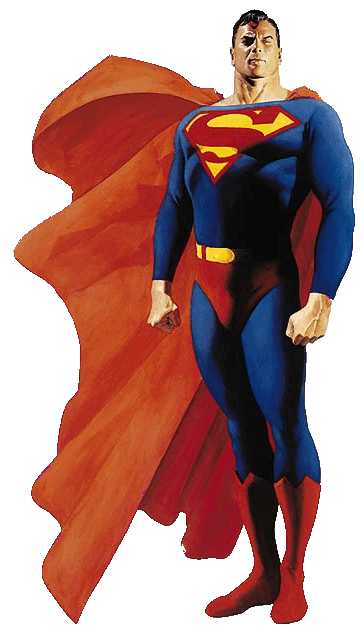
Superman taught Alexie to read

Superman and Me

By Sherman AlexieI learned to read with a Superman comic book. Simple enough, I suppose. I cannot recall which particular Superman comic book I read, nor can I remember which villain he fought in that issue. I cannot remember the plot, nor the means by which I obtained the comic book. What I can remember is this: I was 3 years old, a Spokane Indian boy living with his family on the Spokane Indian Reservation in eastern Washington state. We were poor by most standards, but one of my parents usually managed to find some minimum-wage job or another, which made us middle-class by reservation standards. I had a brother and three sisters. We lived on a combination of irregular paychecks, hope, fear and government surplus food.And:At the same time I was seeing the world in paragraphs, I also picked up that Superman comic book. Each panel, complete with picture, dialogue and narrative was a three-dimensional paragraph. In one panel, Superman breaks through a door. His suit is red, blue and yellow. The brown door shatters into many pieces. I look at the narrative above the picture. I cannot read the words, but I assume it tells me that "Superman is breaking down the door." Aloud, I pretend to read the words and say, "Superman is breaking down the door." Words, dialogue, also float out of Superman's mouth. Because he is breaking down the door, I assume he says, "I am breaking down the door." Once again, I pretend to read the words and say aloud, "I am breaking down the door" In this way, I learned to read.

November 15, 2013

Racist attempts to ban True Diary

Yet another attempt to ban Sherman Alexie's The Absolutely True Diary of a Part-Time Indian:

Montana Community Unites to Save Sherman Alexie Book From Being Banned

By Adrian JawortAbout 150 people—half of whom were Natives—crowded into a Billings, Montana School District 2 boardroom in overwhelming support of Sherman Alexie’s critically acclaimed 2007 novel, The Absolutely True Diary of a Part-Time Indian on Monday, November 11.

Three parents spoke on behalf of those wanting the book removed from the 10th-grade required reading list. Objecting to the books “vulgar” use of inappropriate words and phrases, Gail Supola says the book has no educational value in regards to Native Americans and only perpetuates negative stereotypes against them.

Supola says about the media spotlight surrounding her, “During this whole process my words have been misconstrued greatly. I want to ensure that every parent and child is given the option or alternative—whereas known as a choice—about what they have to read without being afraid of persecution.”

Supola’s sentiments, however, were stifled by those of Alexie’s supporters, who waited up to two hours to speak on the book’s behalf. Afterwards, the school board unanimously agreed to keep the book in the required curriculum.
And:Student Bryce Curry—a friend of Chad’s—said although he’s white, the story provided a window to him into the lives of Native Americans as it cleared up misconceptions and prejudices locals have.

“You know the parts that are ‘controversial’ and ‘offensive’? They’re meant to be offensive for a reason: to show that yes, prejudices do happen. The racism and prejudices Natives face is real. It’s not in the past, it’s in the present, and will remain in the future unless we openly discuss it in classrooms and show why it is wrong.”
Montana's Institutional Racism Behind Calls to Ban Alexie's Book

By Adrian JawortTo herself, Supola’s actions are undoubtedly the opposite of racist and a noble public service. And while Supola is entitled to her opinion about the pertinence of the book as an educational tool, going against her opinion is the heavy fact Alexie’s book has cleaned house in awards, including winning the 2007 National Book Award for Young People’s Literature.

However, to fully ingest my accusation of “institutionalized racism” against my own beloved state‘s people, one only needs to go back just a few years ago and look at the contents of a book that was also actually banned in 2007 from a Laurel, Mont. high school’s curriculum: Blackfeet author James Welch’s American Book Award winning Fools Crow. Coincidentally, Laurel is just 15 miles from Billings.

Although Fools Crow is historical fiction, it was described by Dee Brown of Bury My Heart At Wounded Knee fame as “the closest we will every come to understanding what life was like for a western Indian.” The book details the life of a Blackfeet man living in Montana in the post-Civil War era in which Plains Indians faced a transition of whites encroaching on their territory along with the continued wanton destruction of their lifeline that was the buffalo.

The book was not only challenged to be banned by Laurel parents, but high school students in Montana’s Bozeman and Helena towns who objected to the violence in it. Fools Crow details the Jan. 23, 1870 Marias Massacre in which a non-hostile Blackfeet camp was attacked and 173 men, women, and children were killed. Many more froze to death after their tipis were burned.

The camp was already weakened from a recent smallpox epidemic, and was made further defenseless by the fact most of the able bodied men were out hunting. Chief Heavy Runner was gunned down first while trying to approach the 200 U.S. cavalrymen with a paper showing he had friendly relations with the whites.

One student claimed the book left disturbing images in his head, while his mother argued that children were already exposed to too much violence via other mediums like TV and movies.

While it was the violent descriptions that disturbed students and parents, it’d obviously be naïve not to talk, write, or read about that period of time in Montana history without marking that as pivotal among its first indigenous inhabitants. The people who wanted it banned obviously didn’t care about that, however.
Comment:  If it's not one thing, it's another. Funny how white people always find some reason to ban books by minorities.

Have they ever objected to a book by a white author and demanded the school replace it with a book by a minority author? I doubt it.

Even if they object to books with too much sex and violence, the goal is similar. They want to censor anything that contradicts the Euro-Christian myth of America as a "shining city on a hill" where goodness and purity reign.

For more on our cultural values, see America = Captain Ahab and America's Culture Based on Violence.

Below:  "Gail Supola, a mother upset by the selection of Sherman Alexie’s The Absolutely True Diary of a Part-Time Indian, addresses a packed boardroom. Supola is asking School District 2 to remove the novel from its required reading list and tighten up its classroom opt-out policy." (Larry Mayer/Billings Gazzette)

October 15, 2013

How to Write the Great American Indian Novel

Excerpt from a poem by Sherman Alexie:

How to Write the Great American Indian Novel

By Sherman AlexieAll of the Indians must have tragic features: tragic noses, eyes, and arms.
Their hands and fingers must be tragic when they reach for tragic food.

The hero must be a half-breed, half white and half Indian, preferably
from a horse culture. He should often weep alone. That is mandatory.

If the hero is an Indian woman, she is beautiful. She must be slender
and in love with a white man. But if she loves an Indian man

then he must be a half-breed, preferably from a horse culture.
Comment:  Follow the link to read the whole thing.

August 12, 2013

15 Native Twitter accounts

15 Twitter Accounts Every Native Should FollowIt's Friday, a day also known in Twitterland as FollowFriday, when many faithful Tweeters take a moment to give a shoutout to the accounts they think others should follow. We hang out on Twitter quite a bit as @indiancountry (and there's @ICTMN_Arts as well, kind of a kid-brother feed) and we could go on and on about all the great people Tweeting news, views, humor and miscellanea relevant to Native readers. But on this occasion we'll keep it to 15--here are our must-reads and must-follows.Comment:  I follow Sherman Alexie and Adrienne Keene of Native Appropriations. Adrienne is the only one I consider a must-read. Your mileage may vary.

For more on Indians and Twitter, see Trail of Tears Basketball Tweet and Twitter War Over Immigration Reference.

November 29, 2012

Alexie makes comedy from tragedy

The Laughing Indian

By Lindsey Catherine CornumUsually when Indians make prime time it’s in a parade of dire statistics about poverty, alcoholism, and suicide on reservations. In his stories, Alexie does not directly challenge this image of a broken people naturally prone to self-destruction and struggling to survive in the modern world, but he writes about the child abuse, alcoholic fathers, and dead-end lives in tones light and breezy. He says when an Indian dies of alcoholism it should be considered “natural causes,” and he says it so you laugh.

That line, a flippant address to the very unnatural death by destitution common in Indian populations, appears multiple times in the latest collection of Alexie stories, Blasphemy. Every zinger Alexie writes must be written at least twice, so this career-spanning collection of new and selected shorts is full of one-liners stretched beyond their means. Just a shade away from cliché to begin with, Alexie’s language becomes a parody of itself. Blasphemy is a repetitive catalog of ways in which Alexie has made comedy from tragedy. The stories are mostly in the first person, mostly involve men, who mostly talk in the exact same way, and who are struggling with one or all of the following problems: women, fear of death, and absent fathers. They are almost all “funny.”

Despite cycling and recycling the same old tropes told in the same voice, Blasphemy has received not one poor review. Is Alexie really such a flawless writer that critics cannot go beyond praise as repetitive as his oeuvre itself? Or are most reviewers seduced by the charming prose of an Indian who eases their guilty consciences? The latter seems much more likely.

In a wonderful triumph of multiculturalism, Alexie can get famous writing about one of the most brutally repressed people in and because of America—just as long as he supports the popular perception of Indians and is friendly enough to have a good laugh about it. The laughter is key. Angry Indians do not win National Book Awards very often unless their anger is masked in metaphor, contained in the beautiful intricate prose of a Louise Erdrich or, in the case of Alexie, delivered with a punchline. Not only are his stories shot through with humor, almost every image of Alexie shows him laughing. On the cover of Blasphemy, in his twitter avatar, in the first images of a Google search: the guy is almost always buckled over in laughter.
Comment:  I've read four or five of Alexie's books. The Absolutely True Diary of a Part-Time Indian is probably the best.

I hadn't noticed this problem before, but I did notice it in Absolutely True Diary. It was a central part of my reaction. I thought the depiction of a teenage Indian's life was spot-on--possibly the best we'll ever see. But Junior's sharp wit sounded too much like adult humor put in a youngster's mouth, not a youngster's natural reaction to events.

In other words, the witticisms weren't always believable coming from a teenager. They made Junior seem more like a shallow TV character than a fully realized literary character. That limited the story's impact.

But that's a minor criticism for an otherwise excellent book. I'd probably give Absolutely True Diary a 9.0 of 10. It doesn't get much better than that.

For more on Sherman Alexie, see Why Alexie Is Voting for Obama and Best Teen Novels Are White?

September 08, 2012

Why Alexie is voting for Obama

90 Days, 90 Reasons

Let's restart the fire. Let's give President Obama four more years. Here are 90 reasons why.


Reason 30: Because the Liberal Messiah Doesn't Exist.More than a few Indians, Republicans and Democrats, said, "He hasn't done anything for Indians, so I'm not voting for him."

That made me wonder how many folks vote for a president primarily based on their own needs and wants. Or vote against a president based on one's other wants and needs.

And, yeah, I'm also one of the liberals who think Obama has often been a too-moderate wimp steamrolled by hateful Republicans. And, yeah, I dream of some third-party progressive messiah who can save us from Paul Ryan, Mitt Romney, the Ghost of Ayn Rand, and all of these current Democrats who are getting their asses handed to them by the Ghost of Ayn Rand.

But that liberal Messiah doesn't exist. Will never exist. Or rather, can only exist in the organic, free range brains of utopia-believing left-wingers.

Of course, I never actually believed that Obama was going to change the country. When he was elected, I didn't rush into the streets and sing "Don't Stop Believin'" with ten thousand other liberals. I'd already been fooled by Bill Clinton into singing "Don't Stop Thinking About Tomorrow."

Yeah, I'm cynical. Yeah, I'm bitter. Yeah, I'm disappointed and hurt by Obama.

But you know what? To love him, I only need to believe in 51% of what he does. And, hey, I'd guess I believe in 63% of what he does. So he hasn't done anything for Indians. You know what? I don't care nearly as much about that as I care about what he has not done to Indians. And has not done to poor people. And has not done to gays and lesbians. And has not done to the environment.

And, most important, I care about what he doesn't plan to do to the country. He's not going to end capital gains taxes or estate taxes. He's not going to gut public education. And, this is the big one, he's not going to put right-wing freaks on the Supreme Court.
Comment:  For more on Sherman Alexie, see True Diary on Most-Challenged List and Alexie on Tucson Book Ban.

August 09, 2012

Best teen novels are white?

On NPR's Very White Best Young Adult Books List

By Shaker LaurieEarlier this week, National Public Radio published its "100 Best-Ever Teen Novels" list. Voted on by NPR readers/listeners from a list of 1200 nominations, also audience-submitted, the list is loaded with amazing writing—amazing writing about white protagonists. Only two—yes, two—books on the list are written about main characters of color: House on Mango Street by Sandra Cisneros and The Absolutely True Diary of a Part-Time Indian by Sherman Alexie.

As a teacher of reading and English in schools with large populations of students of color, young adult fiction about characters of color is high on my radar. Many of my students don't see themselves as readers when they walk into my classroom. Reader identity and engagement are a huge component of the work we do as we address student reading problems, and when students are handed books full of characters that are unlike them racially, culturally, and socio-economically, the chasm between their picture of themselves and their idea of books and who books are for only widens.

The problem is not that amazing books about teens of color don't exist. They do. My kids latch obsessively onto books about teens like them and read them voraciously because adolescents in all their self-involved glory enjoy reading texts that remind them of, well, themselves. Sherman Alexie and Sandra Cisneros certainly deserve their received accolades: The House on Mango Street is a beautifully poetic account of a Latina's coming of age, and Absolutely True Diary poignantly tells the story of a boy who struggles with life on a reservation and his desire for a strong education. Judith Ortiz Cofer, Walter Dean Myers, Linda Sue Park, and Matt de la Peña's work also comes to mind, so when NPR comes along and declares 100 books the "Best-Ever" and leaves nearly every single young adult title written about people of color off the list without caveat or mention, damage is done.

Clearly, audience-selected "Best Ever" lists are dangerous and problematic, but the absence of any indication of NPR's awareness of the glaring neglect on their list is also troubling. A list of "Best-Ever" books that declares only two books about teens of color worthy keeps all of these amazing stories in the margins, and arguably marginalizes them even further. When the world of reading remains so predominantly white, children and teens of color receive the clear message that they don't belong. It sends a message directly from readers as well as NPR that writing about people of color is not valuable or valued, that their stories aren't as important as the trials and tribulations of Edward and Bella; the Twilight series ranks #27.
Comment:  For more on Native-themed books, see "Books that Shaped America" and Race in Revealing Eden.

April 09, 2012

True Diary on most-challenged list

Sherman Alexie’s Absolutely True Diary Makes ALA’s Most-Challenged List AgainSherman Alexie’s The Absolutely True Diary of a Part-Time Indian has made it onto the American Library Association’s (ALA) list of most-challenged books once again, though it has slipped from number two to number five since last year.

Cited for “offensive language, racism, religious viewpoint, sexually explicit, unsuited to age group,” Diary is the semiautobiographical story of a 14-year-old Native teen who explores questions of community, identity and tribe as he assimilates into a white, off-rez school. It is marked for adolescents in grades seven through 10.

The list is compiled annually based on numbers of complaints from parents, the ALA said in a press release on April 9. During 2011 the ALA Office for Intellectual Freedom received 326 reports attempting to have various materials removed or restricted from library bookshelves and school curricula, the organization said.

Last year Alexie joked about not making number one on the list; this year he’ll have to content himself with being solidly in the top 10. Besides making last year’s list, Alexie’s The Lone Ranger and Tonto’s Fist Fight in Heaven and Ten Little Indians were among the books banned earlier this year by the Tucson Unified School District when Arizona outlawed ethnic studies programs and the school district shut down its Mexican American Studies Department.
Comment:  For more on the book, see School Reverses True Diary Ban and Absolutely True Dairy's Variant Covers.

January 30, 2012

Alexie on Tucson book ban

Sherman AlexieLet's get one thing out of the way: Mexican immigration is an oxymoron. Mexicans are indigenous. So, in a strange way, I'm pleased that the racist folks of Arizona have officially declared, in banning me alongside Urrea, Baca, and Castillo, that their anti-immigration laws are also anti-Indian. I'm also strangely pleased that the folks of Arizona have officially announced their fear of an educated underclass. You give those brown kids some books about brown folks and what happens? Those brown kids change the world. In the effort to vanish our books, Arizona has actually given them enormous power. Arizona has made our books sacred documents now.Comment:  For more on Tucson's book ban, see Tucson's Books Censored, Not Banned? and Tucson Bans Native Books, Shakespeare Play. For more on Alexie, see Alexie and Erdrich Deserve Nobel Prizes and School Reverses True Diary Ban.

October 16, 2011

Alexie and Erdrich deserve Nobel Prizes

Why Sherman Alexie and Louise Erdrich Should Win the Nobel PrizeAmerican literature, or what Salon views as a canon or sorts (exclusively white authors), is weak on race. Probably the best novel on race by Salon’s stable of worthy-ish writers is Roth’s The Human Stain. It’s good, but it’s not really a direct engagement on race. First, it’s set on campus at a liberal arts college, maybe the whitest place around, and a frequent safe ground for American writers. Second, it’s not really about race. It’s about a white guy who finds out he’s black. And he suffers horribly for it. That’s the best Americans can do?

Sherman Alexie and Louise Erdrich have been writing about race for decades. They confront the question of race head on. They’re honest about it, especially Alexie. Americans are racists. So are American Indians, and blacks, and Latino/as, and Asians. We all are, and American literature runs from that reality, trying to avoid it, or cover it up. Derrick Bell didn’t run from it. He dealt with it. Alexie writes about Indians in white communities, Indians who sold out to join white America and how they can’t go back home, and Indians who hate whites so much they kill them. Erdrich writes about mixed race people of every stripe you can find in the northern plains. She adds the element of gender that’s beautiful and powerful and nasty.

America’s “canon,” the people Salon deems worthy of discussion, just don’t do any of these things.
Comment:  For more on Alexie and Erdrich, see Bestselling Native Children's Books.

September 09, 2011

Filming Winter in the Blood

Sherman Alexie, Chaske Spencer, and Gary Farmer talk about the novel and movie versions of Winter in the Blood:

On the Set:  It's taken a state to make 'Winter in the Blood'

The film has been a labor of love for Montanans from the governor on down. It was made by local-boys-made-good (the Smith brothers), funded locally and based on a novel by a local Native American author.

By Kenneth Turan
The book, which has been translated into eight languages and remains in print, was a foundation stone of the literary Native American renaissance and has inspired countless writers, from Louise Erdrich ("what astounded me was that something so familiar could be made into literature") to Sherman Alexie.

Alexie returned the favor by becoming an associate producer on "Winter in the Blood." When he spoke at a fundraiser in Missoula, remembers co-screenwriter Ken White, he said that reading the book "was the first time I read a story about myself, the first time I saw my story represented in literature. It gave me permission to speak. It's why I became a writer."
And:Spencer, raised on reservations in Montana and Idaho, is pleased to be able to use his "Twilight" fame to "help projects like this get going." Though his management was not initially enthusiastic, he says, "I put my foot down, I stuck with this project, I fought tooth and nail."

"I'm not getting paid that much; the experience of doing this is the reward," Spencer adds. "There are no special effects, no big-time soundtrack, but it's so layered, there are so many rich emotions. A role like this challenges me. It's why you hustle those tables, why you bartend, why I became an actor. There's no other reason to be in the Milk River up to your chest in sludge."

For Farmer, a three-time Independent Spirit Awards nominee for roles in "Powwow Highway," "Dead Man" and "Smoke Signals," a film like this, based on a celebrated Native American novel with a cast and crew that includes representation from close to 30 tribes, "has been a long time coming."

"For years as an actor, they never let us do the writing," he says. "We had to work twice as hard to socialize the writer to Native American realities. This for me as a career actor is the culmination of that. To witness this after a 38-year career is just magic."
Comment:  For more on the subject, see Welch Movie Reaches Kickstarter Goal and Chaske Spencer's Upcoming Projects.

Below:  "Actor Chaske Spencer studies his script on the set of Winter in the Blood outside of Chinook, Montana." (Patricia Williams/For The Times)

July 12, 2011

School reverses True Diary ban

Richland School Board OKs Sherman Alexie book after second vote

By Josh PetersonThe Richland School Board decides that a highly-debated book originally voted off the district's reading list, will be taught in schools after all.

Originally, the school board voted 3 to 2 to in favor of keeping the Sherman Alexie book, "The Absolutely True Diary of a Part-Time Indian" out of the high school curriculum.

But after reading the book and after some strong public opinion, two of those board members changed their minds.

The book is about a young, native american man struggling with his identity.

Some readers have concerns that the book contains inappropriate themes.
How thoughtless people make thoughtless decisions:

Richland School Board reverses course on book ban

By Jacques Von LunenNone of the board members had read Absolutely True when they first voted on it. That was the job of the Instructional Materials Committee, or IMC, established a little more than a year ago to review all books used in Richland schools.

Guay and Donahoe thought that the entire IMC read the book before its members gave it mixed reviews last month.

But to speed up the process, IMC members split up in groups. Each group reads a particular book and then shares its findings with the rest of the members.

Once Guay and Donahoe found out that only part of the committee had read the book, they wanted to revisit their votes against it.

"That was my misunderstanding," Donahoe said Monday.

He read the book two days after the June 14 meeting and found it to be "outstanding," he said.
Comment:  Another way to determine if a book is "offensive" is to spend five seconds Googling it. If you see people have praised it and given it awards across America, it's probably a good book.

Duhhh.

For more on Absolutely True Diary, see Young-Adult Fiction Too Dark? and Absolutely True Diary Challenged Again.

June 11, 2011

Absolutely True Diary's variant covers

Speaking of Sherman Alexie's Absolutely True Diary, educator Debbie Reese has posted 12 variant covers for her readers:

Australian cover for Absolutely True Diary of a Part Time Indian

(Source: Debbie Reese's American Indians in Children's Literature, 6/9/11.)

Comment:  Of the 12 covers, six show a stereotypical toy Indian chief or warrior. All six are brandishing weapons: a spear, bow and arrow, or rifle.

Another one shows a cartoon Indian with feathers in his hair along with a tipi and spearpoint. And another shows a boy with a shadow Indian.

So that's eight of 12 covers with a stereotypical Indian on them. Wow.

Yes, you could try to justify these stereotypical Indians. For instance:

  • The story deals with an Indian boy's efforts to overcome society's stereotypical beliefs about him. The stereotypical Indian is meant to suggest the boy's struggles, and thus the book's content.

  • Or,

  • The toy Indians are obviously facetious. They're contrasted with toy cowboys, also facetious, to mock society's beliefs. The stereotypical image is often small, to show it's an inferior or marginalized belief. In a couple of cases it's tilted to show it's a crazy or cockeyed belief.

  • But let's go to our tried and true test of stereotyping. How often do young-adult African American novels feature a 19th-century Zulu chief or warrior on the cover? How often is a black protagonist's identity so in doubt that the cover has to reference it?

    What other ethnic group has to ask and answer the implied question: Are we really primitive people from the distant past? No, as this book will prove, we're actually modern people. We live in houses, wear glasses and t-shirts, and play basketball just like everyone else.

    In short, the possible justifications for the covers are beside the point. The fact that the covers exist suggest the sorry state of Natives in America. Blacks are no longer slaves and Asians are no longer coolies, but in most people's minds, Natives are still savage warriors. In other words, the humanity of Natives is still an open question.

    For more on the subject, see Stereotypes in Dancing with the Indians and Stereotypes in Sign of the Beaver.

    June 10, 2011

    Young-adult fiction too dark?

    A essay about contemporary fiction for teens has launched a controversy:

    Darkness Too Visible

    Contemporary fiction for teens is rife with explicit abuse, violence and depravity. Why is this considered a good idea?

    By Meghan Cox Gurdon
    How dark is contemporary fiction for teens? Darker than when you were a child, my dear: So dark that kidnapping and pederasty and incest and brutal beatings are now just part of the run of things in novels directed, broadly speaking, at children from the ages of 12 to 18.

    Pathologies that went undescribed in print 40 years ago, that were still only sparingly outlined a generation ago, are now spelled out in stomach-clenching detail. Profanity that would get a song or movie branded with a parental warning is, in young-adult novels, so commonplace that most reviewers do not even remark upon it.
    Gurdon presents both sides of the argument in a biased fashion:The argument in favor of such novels is that they validate the teen experience, giving voice to tortured adolescents who would otherwise be voiceless. If a teen has been abused, the logic follows, reading about another teen in the same straits will be comforting. If a girl cuts her flesh with a razor to relieve surging feelings of self-loathing, she will find succor in reading about another girl who cuts, mops up the blood with towels and eventually learns to manage her emotional turbulence without a knife.

    Yet it is also possible—indeed, likely—that books focusing on pathologies help normalize them and, in the case of self-harm, may even spread their plausibility and likelihood to young people who might otherwise never have imagined such extreme measures. Self-destructive adolescent behaviors are observably infectious and have periods of vogue. That is not to discount the real suffering that some young people endure; it is an argument for taking care.
    What Gurdon considers "likely" is what I consider a made-up argument without substance. Show us the evidence, Gurdon. Put up or shut up.

    I've argued before that glorifying violence, racism, misogyny, and so forth helps normalize them. But that's a far cry from presenting "pathologies" in an objective or realistic way. There's a huge difference between showcasing murderers, rapists, and vigilantes and showing the ugly consequences of their actions. It's all the difference in the world.

    Sherman Alexie responds

    Gurdon mentions The Absolutely True Diary of a Part-Time Indian, Alexie's fictional take on his childhood, as an example of the books she's talking about. As we've seen, some schools have banned the book because they can't handle its "adult" themes and language.

    Apparently Alexie was asked or volunteered to respond to Gurdon's essay. I'd say he nailed it:

    Why the Best Kids Books Are Written in Blood

    By Sherman AlexieWhen I read Meghan Cox Gurdon’s complaints about the “depravity” and “hideously distorted portrayals” of contemporary young adult literature, I laughed at her condescension.

    Does Ms. Gurdon honestly believe that a sexually explicit YA novel might somehow traumatize a teen mother? Does she believe that a YA novel about murder and rape will somehow shock a teenager whose life has been damaged by murder and rape? Does she believe a dystopian novel will frighten a kid who already lives in hell?

    When I think of the poverty-stricken, sexually and physically abused, self-loathing Native American teenager that I was, I can only wish, immodestly, that I’d been given the opportunity to read “The Absolutely True Diary of a Part-Time Indian.” Or Laurie Halse Anderson’s “Speak.” Or Chris Lynch’s “Inexusable.” Or any of the books that Ms. Gurdon believes to be irredeemable. I can’t speak for other writers, but I think I wrote my YA novel as a way of speaking to my younger, irredeemable self.
    And:When some cultural critics fret about the “ever-more-appalling” YA books, they aren’t trying to protect African-American teens forced to walk through metal detectors on their way into school. Or Mexican-American teens enduring the culturally schizophrenic life of being American citizens and the children of illegal immigrants. Or Native American teens growing up on Third World reservations. Or poor white kids trying to survive the meth-hazed trailer parks. They aren’t trying to protect the poor from poverty. Or victims from rapists.

    No, they are simply trying to protect their privileged notions of what literature is and should be. They are trying to protect privileged children. Or the seemingly privileged.
    My childhood reading

    I haven't read The Absolutely True Diary of a Part-Time Indian yet, but I have read Laurie Halse Anderson’s Speak. It's a great book about the consequences of teenage rape. Other than a moment of violence when the girl finally confronts her rapist, there's nothing objectionable. Unless you object to talking about rape rather than keeping it a secret, as many people do.

    In high school, I read such works as:

    Macbeth
    Hamlet
    The Adventures of Huckleberry Finn
    To Kill a Mockingbird
    Catcher in the Rye
    A Separate Peace
    1984
    Darkness at Noon
    Crime and Punishment
    Billy Budd


    To Kill a Mockingbird is about a rape, and the other books include murder, prejudice, homosexuality, political executions, and other "adult" topics. They all offered serious discussions of the issues, not pandering or sensationalism. Some were a little scary to my young self, but I managed to get through them. And I'm undoubtedly better for having read them.

    Speak is probably in the lower half of "darkness" compared to the books I listed. I bet Absolutely True Diary is too. I wouldn't give them to elementary-school kids, but we're talking about teenagers. If high-schoolers could handle Crime and Punishment 35 years ago, they can handle the dark, "scary" books published for teens today.

    For more on the subject, see Absolutely True Diary Challenged Again and Absolutely True Diary Still Banned.

    March 28, 2011

    Tulalip Reads for Unity

    See Sherman Alexie

    By Julie MuhlsteinAward-winning author Sherman Alexie will be at Tulalip Casino on Tuesday evening for a free event. It's part of Tulalip Reads for Unity, a new literacy program presented by the Northwest Indian College-Tulalip.

    For the past month, people in the Tulalip community have been reading Alexie's young-adult novel, "The Absolutely True Diary of a Part-Time Indian." Like the book's main character, Alexie grew up on the Spokane Indian Reservation.

    Alexie, winner of the 2010 PEN/Faulkner Award for Fiction and other prestigious literary prizes, will talk about the book at 6 p.m. Tuesday in the Orca Ballroom of the Tulalip Resort Casino, 10200 Quil Ceda Blvd.

    Brooke Waite-Kellar, site manager of the Northwest Indian College-Tulalip, said Tulalip Reads for Unity was made possible by a donation from the Tulalip Tribes Charitable Fund. About 260 free copies of "The Absolutely True Diary of a Part-Time Indian" were distributed to people on the Tulalip Reservation, "from middle-schoolers to elders," Waite-Kellar said. Alexie's appearance is one of several events planned for Tulalip Reads for Unity.
    Comment:  Alexie's Absolutely True Diary has been part of non-Native reading programs before: Two Alexie Books for "One Philadelphia" and True Diary Chosen as One Book. But this is the first I've heard of a tribal reading program.

    Using Absolutely True Diary for such a program is a good idea. The book is culturally appropriate for Indians in general and Pacific Northwest Indians in particular. Since it's a young-adult novel, it shouldn't be intimidating to adults. One hopes it'll encourage reading while instilling a bit of Native pride.

    For more on the subject, see Bestselling Native Children's Books and Classmates Thought Alexie Would Shoot Them.

    November 18, 2010

    Bestselling Native children's books

    "Bestsellers in Children's Native American Books"One thing I (always) wonder about is best-selling books. One source of info is Amazon. In their "Bestsellers in Children's Native American Books" (time/date of list: 7:23 AM, Central Time, November 8, 2010) are the following titles. Some are on their more than once. In some cases, its clear that the duplicate is a Kindle edition, but others seem to just be repeats. There isn't, for example, a note that says it is an audio copy.

    It is, overall, a disappointing list and it makes me grumpy on this Monday morning....I'm glad to see Native authors on the list, but duplicates of some really problematic books like Touching Spirit Bear?! And it is pretty easy to see that Amazon's customers want works of historical fiction or "myths, legends and folktales."
    The top 10:

    1) The Absolutely True Diary of a Part-Time Indian, by Sherman Alexie

    2) Island of the Blue Dolphins, by Scott O'Dell

    3) One Little, Two Little, Three Little Pilgrims, by B. G. Hennessy

    4) Island of the Blue Dolphins (Kindle), by Scott O'Dell

    5) Squanto's Journey: The Story of the First Thanksgiving, by Joseph Bruchac

    6) Touching Spirit Bear, by Ben Mikaelsen

    7) North American Indians, by Douglas Gorsline

    8) Tapenum's Day: A Wampanoag Indian Boy in Pilgrim Times

    9) Encounter, by Jane Yolen

    10) Sing Down the Moon, by Scott O'Dell

    (Excerpted from Debbie Reese's American Indians in Children's Literature, 11/8/10.)

    Comment:  As Reese notes, there are only four recognizably Native authors on the list:

    Joseph Bruchac (10 books)
    Louise Erdrich (3 books)
    Sherman Alexie (2 books)
    Michael Dorris (1 book)

    Having 16 of the 100 books written by Native authors isn't a bad number. You'd expect most American books about any subject to be written by white Anglo-Saxon Protestants.

    But the list has other problems:

  • Too many books by a small subset of white authors: Scott O'Dell, Paul Goble, Jane Yolen. (I believe Natives have criticized Goble's book, at least.)

  • Too many problematical books: Touching Spirit Bear, Arrow to the Sun, The Indian in the Cupboard, Ten Little Rabbits, Meet Kaya: An American Girl, The Last of the Mohicans.

  • None of the many good Native children's books by a wide variety of Native authors.

  • For more on the subject, see Indians in Top 100 Children's Novels, Children's Books Are Mostly White, and Children's Book for Heritage Month. For more on the subject in general, see The Best Indian Books.

    October 26, 2010

    Classmates thought Alexie would shoot them

    Leaving reservation brought its rewards

    Native American author tells CSU-Pueblo crowd about overcoming obstacles

    By Gayle PerezAlexie spoke about his decision to leave the reservation school to attend a much more progressive high school in a bordering town.

    He said on the first day, he was terrified of the "white kids" and they were terrified of him.

    "They literally thought I was going to pull out a bow and arrow," he said. "We weren't human beings, we were Indians."

    Now looking back on that experience, Alexie said crossing the road to get to that high school was his ticket to a better life.

    "What I realize now is that road, that street was my Atlantic Ocean and that little white farm town school was my Ellis Island," he said.

    "I was a first-generation immigrant into the United States, which is pretty funny because I am indigenous. I was an indigenous immigrant, which was pretty ironic," he said. "So I was an ironic, indigenous immigrant and that is what I still am."
    Comment:  Once again we see the direct link between Native stereotypes and tangible harm. Because of these stereotypes, Alexie says, white kids were terrified of him. We don't know exactly what the consequences were, but we can guess: some combination of bullying, taunting, and shunning.

    Imagine how much worse it would be for a kid who wasn't as smart and funny as Alexie. Who couldn't handle himself in tense situations as Alexie probably did. This is one reason why Native kids give up and drop out of the system.

    For more on the subject, see Stereotypes Teach Natives They're Inferior and Stereotypical Thinking Causes Racist Results.

    Below:  "Author Sherman Alexie talks to a large audience Monday at Colorado State University-Puebloas part of the school's Distinguished Speakers Series." (Chieftain Photo/Chris McLean)

    October 25, 2010

    Two Alexie books for "One Philadelphia"

    2 by Sherman Alexie chosen for 'One Book' in Philadelphia

    By Michael D. SchafferThe "One Book, One Philadelphia" project, which aims to promote literacy and bring the community together by suggesting one book for all Philadelphians to read, is recommending two for the 2011 program.

    Both come from American Indian author Sherman Alexie, and both have won major literary awards.

    Mayor Nutter announces the selections Tuesday morning at the Free Library of Philadelphia, which sponsors "One Book, One Philadelphia" in conjunction with his office.

    One of the books is War Dances, a collection of short stories and poems published last year and winner of the 2010 PEN/Faulkner Award for Fiction.

    The other, The Absolutely True Diary of a Part-Time Indian, a novel for teens published in 2007, won a National Book Award.
    Comment:  For more on the subject, see Teachers Protest True Diary Censorship and True Diary Chosen as One Book.