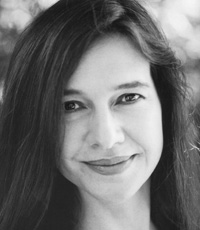
Showing posts with label Louise Erdrich. Show all posts

April 01, 2013

Erdrich wins Rough Rider Award

Author Erdrich named Rough Rider winner

By Helmut SchmidtAward-winning author and Wahpeton native Louise Erdrich was today named the 39th recipient of the North Dakota Theodore Roosevelt Rough Rider Award, the state’s highest commendation. Gov. Jack Dalrymple will officially present Erdrich with the award April 19 in Wahpeton. Dalrymple praised Erdrich’s body of work. “Her prolific compilation of novels, poetry and children’s books has earned national and international acclaim and success, including a National Book Award and being selected a finalist for the Pulitzer Prize. Throughout her career, Louise has maintained strong ties to North Dakota, often featuring her home state in her books. She has proudly represented our great state and it is my privilege to honor her with this prestigious recognition,” Dalrymple said in a news release.Comment:  For more on Louise Erdrich, see Erdrich Wins National Book Award and Louise Erdrich's Birchbark Books.

November 15, 2012

Erdrich wins National Book Award

Novel About Racial Injustice Wins National Book Award

By Leslie KaufmanBeating out an unusually competitive field, Louise Erdrich won the National Book Award for fiction on Wednesday night for “The Round House,” a novel about a teenage boy’s effort to investigate an attack on his mother on a North Dakota reservation, and his struggle to come to terms with the violence in their culture.

Ms. Erdrich accepted the award in part in her Native American language. She said she wanted to acknowledge “the grace and endurance of native women.”

She added: “This is a book about a huge case of injustice ongoing on reservations. Thank you for giving it a wider audience.”

The book was published by Harper, an imprint of HarperCollins. Ms. Erdrich is the author of 14 novels, including “Love Medicine,” which was published in 1984.
2012 National Book Award Winner, Fiction

By Mary Beth KeaneMary Beth Keane: Congratulations on being named a Fiction Finalist for the 2012 National Book Award. I know this must be a busy time for you, so many thanks in advance for doing this. How’d you learn you’d been named a Finalist and what was your first response?

Louise Erdrich: I am on a book tour and was just leaving Nashville, where I'd been at Ann Patchett's wonderful Parnassus Books. Jane Beirn, my publicist at HarperCollins, called me. I have worked with Jane since Love Medicine in 1984, so I know every nuance of her phone voice. I immediately knew this was something really, really good. The first call I made was to my parents. It was early in the morning but I knew they'd be awake.

MBK: Where did you begin The Round House? What was the seed idea?

LE: The immense difficulty of prosecuting crimes of sexual violence on reservations has haunted me for many years, but I didn't know how to tell the story. I wanted to write it as a suspense novel. How else to include jurisdictional complexity? I didn't want to bore myself. When my main character, Joe, started talking, I knew I had been waiting for him. A writer's gift. Even now I miss writing in his voice and miss working on this book.
Comment:  For more on Louise Erdrich, see Louise Erdrich's Birchbark Books and Alexie and Erdrich Deserve Nobel Prizes.

October 10, 2012

Erdrich's novel is book award finalist

Louise Erdrich Novel The Round House Finalist for National Book AwardFamed Ojibwe author Louise Erdrich’s latest novel, published this month, is on the short list for a National Book Award, the National Book Foundation announced on October 10.

The Round House (HarperCollinsPublishers, 2012) joins four other finalists in the fiction category, including This Is How You Lose Her (Riverhead Books, Penguin Group USA), by Junot Díaz, the Dominican-American author who last week was awarded a so-called genius grant by the MacArthur Foundation.

The other fiction nominees are A Hologram for the King (McSweeney’s Books), by Dave Eggers; Billy Lynn’s Long Halftime Walk (Ecco, an imprint of HarperCollinsPublishers), by Ben Fountain; and The Yellow Birds (Little, Brown and Company), by Kevin Powers.

Erdrich’s story, though fictional, is especially timely considering recent news about the Violence Against Women Act (VAWA) and revelations of rampant sexual abuse on at least one reserve. It’s the second in a trilogy begun in 2008 with The Plague of Doves (a Pulitzer Prize finalist, also published by HarperCollins), and unfolds in the aftermath of the rape of Geraldine Coutts on her North Dakota Ojibwe reservation in 1988. Her 13-year-old son, Joe, takes revenge into his own hands as he watches, helpless, while his mother succumbs to the emotional injuries wrought by trauma.
Comment:  For more on Louise Erdrich, see Louise Erdrich's Birchbark Books and Alexie and Erdrich Deserve Nobel Prizes.

December 14, 2011

Louise Erdrich's Birchbark Books

An article on a well-known bookstore in Indian country:

Shelf-Promotion:  Famed Novelist Louise Erdrich’s Bookstore Stocks Great Native Books

By Stephanie WoodardI confess: I love Ojibwe novelist Louise Erdrich’s Minneapolis shop, Birchbark Books, and you can, too. In fact, you can admit to anything you want there, in an honest-to-God confessional Erdrich rescued from a bar and set up in one corner of her multilevel bookstore. You can find Birchbark Books in a tiny strip of stores in a leafy neighborhood, along with Bockley Gallery, which often exhibits Native artists.

The cozy store offers lots of spots where shoppers can enjoy a rich array of images and experiences. Kids can climb into a toy-filled, tree house–like loft, while adults curl up and read in sunny corners. If you want absolution for anything, take a seat in the confessional, which Erdrich has renamed “the forgiveness booth.”

“You can be absolved right away there without having to say thousands of Hail Marys,” she says. “It’s about taking away shame. Of course, it’s the Catholic Church that most needs to be forgiven for what it did to Native people in the name of assimilation.”
And:Atop one bookcase are red-willow baskets by Georgianna Houle and by Curtis and Debi LaRoque, all from Turtle Mountain Band of Chippewa Indians, Erdrich’s home community. Alongside them are containers by Pat and Gage Kruse, a father and son from Red Cliff Band of Lake Superior Chippewa, who use birch bark for the vessels you’ll find at Birchbark Books, as well as for detailed bark paintings represented by Bockley Gallery. Star quilts hang from the bookshop’s rafters, and silver pieces by jewelers Mitchell Zephier, Lakota, and Josef Reiter, Anishinaabe, gleam in a glass-fronted case. Look for Reiter’s reproductions of Erdrich’s lucky feather earrings; when you wear them, she claims, wondrous things occur.

The store attracts clients from the Minneapolis Native community, reservations across the country and tourists from all over the globe. “They are attracted by Louise’s reputation,” says store manager Susan White. “She is truly beloved.” Customers know they will find books that are tasteful and accurate, White adds. They might even run into the novelist at the store, though Erdrich says her schedule is “unpredictable.”

The store specializes in Native writers and subjects in several categories: fiction and poetry; memoir and biography; Native studies; indigenous-language books and instructional materials primarily in Dakota, Lakota and Ojibwe; picture books for children; and young-adult volumes. It’s a small selection, tucked into every nook and cranny of the 850-square-foot store, but a fine one. “People come here to feel there’s a person behind what’s on our shelves,” says Erdrich. The store’s book buyer, Nathan Pederson, explains that deciding what to offer is a “happy science.” He sifts through data, figuring out what’s selling, but also trying to ensure that customers will come across items they never knew they needed.
Comment:  For more on Louise Erdrich, see Louise Erdrich Wants PEACE PARTY and Minnesota's Native Literary Community.

October 16, 2011

Alexie and Erdrich deserve Nobel Prizes

Why Sherman Alexie and Louise Erdrich Should Win the Nobel PrizeAmerican literature, or what Salon views as a canon or sorts (exclusively white authors), is weak on race. Probably the best novel on race by Salon’s stable of worthy-ish writers is Roth’s The Human Stain. It’s good, but it’s not really a direct engagement on race. First, it’s set on campus at a liberal arts college, maybe the whitest place around, and a frequent safe ground for American writers. Second, it’s not really about race. It’s about a white guy who finds out he’s black. And he suffers horribly for it. That’s the best Americans can do?

Sherman Alexie and Louise Erdrich have been writing about race for decades. They confront the question of race head on. They’re honest about it, especially Alexie. Americans are racists. So are American Indians, and blacks, and Latino/as, and Asians. We all are, and American literature runs from that reality, trying to avoid it, or cover it up. Derrick Bell didn’t run from it. He dealt with it. Alexie writes about Indians in white communities, Indians who sold out to join white America and how they can’t go back home, and Indians who hate whites so much they kill them. Erdrich writes about mixed race people of every stripe you can find in the northern plains. She adds the element of gender that’s beautiful and powerful and nasty.

America’s “canon,” the people Salon deems worthy of discussion, just don’t do any of these things.
Comment:  For more on Alexie and Erdrich, see Bestselling Native Children's Books.

March 29, 2011

Michelle Obama's mentors include Erdrich

Michelle Obama books stars to mentor:  Hilary Swank, Geena Davis, Anna Deavere Smith, Michelle Kwan

First Lady Michelle Obama to Host Mentoring Events with Renowned Women to Celebrate Women's History Month

By Lynn SweetOn Wednesday, March 30th, First Lady Michelle Obama will host a special event during the annual celebration of Women's History Month at the White House. Mrs. Obama will bring together more than twenty accomplished women, each paving their way in a variety of fields, to serve as mentors and share their experiences with students in the Washington, D.C. metro area. These women will showcase the important role mentoring can play in the lives of young people as they encourage all students, particularly young women, to pursue their dreams.Comment:  The list includes "Louise Erdrich, Pulitzer Prize winning author."

For more on Erdrich, see Louise Erdrich Wants PEACE PARTY and Bestselling Native Children's Books.

February 16, 2011

Louise Erdrich wants PEACE PARTY

Well, not quite. A woman called from Louise Erdrich's Birchbark Books in Minnepolis today. She said they'd heard about my comics and were interested in carrying them in the store. She added that TRICKSTER and The 500 Years of Resistance Comic Book were selling well and they were looking for similar works.

That's good news, but I have to produce more comics for them to sell. That may take another six months to a year. In the meantime, I'll send them a list of Native-themed comics and graphic novels that I recommend.

November 18, 2010

Bestselling Native children's books

"Bestsellers in Children's Native American Books"One thing I (always) wonder about is best-selling books. One source of info is Amazon. In their "Bestsellers in Children's Native American Books" (time/date of list: 7:23 AM, Central Time, November 8, 2010) are the following titles. Some are on their more than once. In some cases, its clear that the duplicate is a Kindle edition, but others seem to just be repeats. There isn't, for example, a note that says it is an audio copy.

It is, overall, a disappointing list and it makes me grumpy on this Monday morning....I'm glad to see Native authors on the list, but duplicates of some really problematic books like Touching Spirit Bear?! And it is pretty easy to see that Amazon's customers want works of historical fiction or "myths, legends and folktales."
The top 10:

1) The Absolutely True Diary of a Part-Time Indian, by Sherman Alexie

2) Island of the Blue Dolphins, by Scott O'Dell

3) One Little, Two Little, Three Little Pilgrims, by B. G. Hennessy

4) Island of the Blue Dolphins (Kindle), by Scott O'Dell

5) Squanto's Journey: The Story of the First Thanksgiving, by Joseph Bruchac

6) Touching Spirit Bear, by Ben Mikaelsen

7) North American Indians, by Douglas Gorsline

8) Tapenum's Day: A Wampanoag Indian Boy in Pilgrim Times

9) Encounter, by Jane Yolen

10) Sing Down the Moon, by Scott O'Dell

(Excerpted from Debbie Reese's American Indians in Children's Literature, 11/8/10.)

Comment:  As Reese notes, there are only four recognizably Native authors on the list:

Joseph Bruchac (10 books)
Louise Erdrich (3 books)
Sherman Alexie (2 books)
Michael Dorris (1 book)

Having 16 of the 100 books written by Native authors isn't a bad number. You'd expect most American books about any subject to be written by white Anglo-Saxon Protestants.

But the list has other problems:

  • Too many books by a small subset of white authors: Scott O'Dell, Paul Goble, Jane Yolen. (I believe Natives have criticized Goble's book, at least.)

  • Too many problematical books: Touching Spirit Bear, Arrow to the Sun, The Indian in the Cupboard, Ten Little Rabbits, Meet Kaya: An American Girl, The Last of the Mohicans.

  • None of the many good Native children's books by a wide variety of Native authors.

  • For more on the subject, see Indians in Top 100 Children's Novels, Children's Books Are Mostly White, and Children's Book for Heritage Month. For more on the subject in general, see The Best Indian Books.
    November 04, 2010

    Minnesota's Native literary community

    Telling "the big story":  Native voices are strong in Minnesota literature and theater

    By Sheila ReganThere has been quite a bit of buzz recently about Native American writers, particularly with the landmark production of Native writer Louise Erdrich's Master Butchers Singing Club at the Guthrie Theater. In fact, the Native writing scene here in the Twin Cities has been going strong for quite some time due to a tight, supportive network of artists who encourage and support each other, combined with a number of institutions that have been fostering Native voices.

    Later this month Louise Erdrich's sister, Heid, who writes in a number of different genres including poetry and plays, is having her play produced by Pangea World Theater at Intermedia Arts as part of the Indigenous Voices series. Heid wrote the play in 2005 and has been workshopping it for five years. The piece uses historical documents to create the dialogue about an Anishinabe man who went to Europe in the 1840s.

    Heid said that there are both formal and informal aspects to the Native writing community locally. There are organized writing groups, such as the TGI Frybread writing group sponsored by The Loft, while at the same time there are personal relationships that Native writers build with each other. There are "literary friendships that support each other's work and have for many years," she said.

    One great thing about the Twin Cities, she said, is that there are a number institutions—publication houses and theaters, for example—that are particularly supportive of Native writers. For example, Milkweed Editions has a new book out by Eric Gansworth called Extra Indians. Holy Cow Press and Coffee House Press also have typically supported Native writers, as have some local periodicals, such as the specifically Native Yellow Medicine Review and Loon Feather Press.
    Comment:  For more on Louise Erdrich, see Louise Erdrich on Faces of America and Love Medicine Chosen as Big Read.

    Below:  Birchbark Books. (Photo by Sheila Regan)

    September 21, 2010

    Preview of The Master Butchers Singing Club

    The Master Butchers Singing ClubSeptember 11-November 06, 2010
    Wurtele Thrust Stage

    by Marsha Norman
    based upon the novel by Louise Erdrich
    developed and directed by Francesca Zambello

    Adapted for the stage by Pulitzer Prize-winning dramatist Marsha Norman from the best-selling novel by Louise Erdrich, The Master Butchers Singing Club chronicles the intersecting lives of German immigrant and butcher Fidelis and sideshow performer Delphine as they settle into the small town of Argus, North Dakota. Bookended by the two World Wars and set against a tapestry of song, this moving story traces the bond between a mother and her child, the boundless friendship between two women, and one’s life-changing discovery of true love.


    Comment:  For more on the subject, see Louise Erdrich on Faces of America and Native Plays and Other Stage Shows.

    January 26, 2010

    Louise Erdrich on Faces of America

    Faces of America with Henry Louis Gates, Jr.What made America? What makes us? These two questions are at the heart of the new PBS series Faces of America with Henry Louis Gates, Jr. Building on the success of his series African American Lives (called by the New York Times "the most exciting and stirring documentary on any subject to appear on television in a long time,") and African American Lives 2, Harvard scholar Henry Louis Gates, Jr. again turns to the latest tools of genealogy and genetics to explore the family histories of 12 renowned Americans.

    The series premieres nationally Wednesdays, February 10-March 3, 2010 from 8-9 p.m. ET on PBS.

    Featured guests include:

    Yo-Yo Ma
    Queen Noor
    Malcolm Gladwell
    Eva Longoria Parker
    Mike Nichols
    Dr. Mehmet Oz
    Meryl Streep
    Stephen Colbert
    Louise Erdrich
    Krisi Yamaguchi
    Elizabeth Alexander
    Mario Batali
    Comment:  For more on the subject, see TV Shows Featuring Indians.


    October 26, 2009

    Love Medicine chosen as Big Read

    Corning's Big Read program encourages literacy, learning about Native American culture

    By Jeff MurrayResidents in the Corning area will have an opportunity over the next several weeks to get a taste of Native American culture and be encouraged to read.

    It's all part of "The Big Read--Love Medicine," which kicked off Sunday at the Corning skating rink.

    The Big Read is an initiative of the National Endowment for the Arts (NEA) to revitalize the role of reading in popular culture.

    Each year, the NEA selects novels as the focus of The Big Read, and this year's book is "Love Medicine" by Louise Erdrich, the story of two Native American families living in North Dakota during the 20th century.
    Comment:  Some people think Love Medicine is one of the best Native books ever. I thought it was good but not great. I give it a 7.5 of 10.

    For more on the subject, see The Best Indian Books.

    May 01, 2009

    Erdrich to give Dartmouth address

    Native American author Louise Erdrich '76 to give Dartmouth's 2009 Commencement address Sunday, June 14Louise Erdrich, a 1976 graduate of Dartmouth who has won acclaim as a writer in multiple genres—most recently she was a finalist for this year’s Pulitzer Prize for Fiction for her novel The Plague of Doves—will deliver the main address at the College’s 2009 Commencement exercises on Sunday morning, June 14, on the Dartmouth Green. She is one of seven individuals who will receive honorary degrees at the event.

    The daughter of a Native American (Ojibwe and French) mother and a German American father, Erdrich is an enrolled member of the Turtle Mountain Band of Chippewa. She grew up in Wahpeton, North Dakota and came to Dartmouth as a member of the College’s first class to include women. Since then she has built a career as a novelist, poet and author of children’s books, authoring 14 books that have become bestsellers or won awards—including the O. Henry Prize, the Los Angeles Times Book Prize and the Heartland Prize for Fiction. She was twice nominated for a National Book Award, and was a finalist for the 2009 Pulitzer Prize. One of her four daughters, Aza, is a member of the Dartmouth Class of 2011.
    Comment:  For more on the subject, see Erdrich's Books Are All-American and The Best Indian Books.

    January 16, 2009

    Erdrich on Peltier

    Attorney General Nominee Eric Holder Declares “Waterboarding Is Torture”On Wednesday night, I spoke with the Native American novelist and poet Louise Erdrich about Leonard Peltier.

    LOUISE ERDRICH: I sat through that trial as a young person, and I listened to all the evidence, and I heard it all, and there was no way I could see that this person would be convicted. There simply wasn’t evidence. And he was convicted. He received two life sentences, consecutive life sentences, and is incarcerated to this day, although human rights organizations all over the world have called for his release.

    AMY GOODMAN: Do you think your writing could literally liberate someone?

    LOUISE ERDRICH: No. I tried to write—there was a—I had an op-ed published, hoping that President Clinton would pardon Leonard Peltier. That did not happen. We all know who got pardoned instead.

    AMY GOODMAN: You might remember, that was Marc Rich.
    Comment:  For more on the subject, see Mr. X Did It? and Infighting Over an Indian.

    January 06, 2009

    Erdrich's books are All-American

    All AmericanTHE RED CONVERTIBLE
    Selected and New Stories 1978-2008
    By Louise Erdrich
    496 pp. HarperCollins Publishers. $27.99

    Last fall, the permanent secretary of the Swedish Academy, the group that hands out the Nobel Prize in Literature, disparaged American letters, saying our fiction was “too isolated, too insular” and “too sensitive to trends” in our own “mass culture” (in short, too American) to matter much to the wider world. But it’s the very Americanness of our literature—the hybrid nature of our national makeup, the variety and breadth of our landscape, our mania for self-invention and reinvention—that captured the international imagination at a time when most readers could never visit the country they dreamed about. It still does today.

    Americanness needs no apology; it’s the strength of our letters. And few of our contemporary writers exemplify its adaptive vitality better than Louise Erdrich, herself descended from the first Americans (her mother was part Chippewa, part French, and her grandmother was a tribal chairwoman) and from German immigrants. The author of some two dozen books for adults and children, Erdrich is also a wondrous short story writer. In “The Red Convertible,” she gathers 36 stories, 26 previously published, together creating a keepsake of the American experience. Like the painted drum in her story of that name, this collection can be considered “a living thing,” an emblem of the universe—“exquisitely sensitive for so powerful an instrument.”
    Comment:  For more on the subject, see The Three Erdrich Sisters and The Best Indian Books.