Showing posts with label warriors. Show all posts

March 05, 2016

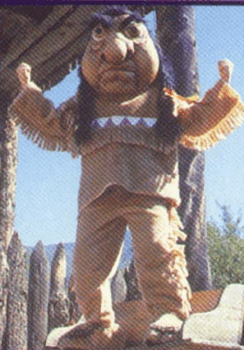
Approval sought for infantile mascot

Douglas county schools move forward on mascot issue

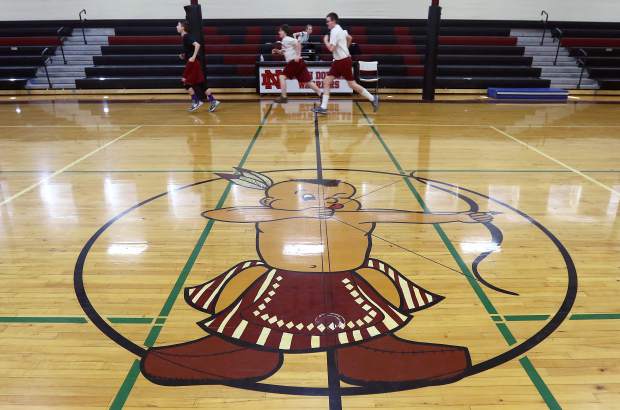
By Michael SullivanThree Douglas County school districts have decided to take the necessary steps to move forward with keeping their Native American mascots after a recent ruling made by the Oregon State Board of Education in January.

The state board ruled that Oregon public schools could keep their Native American mascots, pending approval from an Oregon tribe.

The ruling would allow Roseburg High School to remain as the Indians as long as the Cow Creek Umpqua Tribe agrees. The ruling also allows the Reedsport Community Charter School Braves and the North Douglas High School Warriors in Drain to seek approval from tribes to keep their mascots as well.

“Right now we have sent a proposed Memorandum of Understanding to the Cow Creek Tribe and their attorneys are looking at that and making changes to it,” said Roseburg Public Schools Superintendent Gerry Washburn.
Comment:  Someone could write a whole article on schools that use infantilized Indian mascots.

The "Warrior" image above has the usual problems: a half-naked savage in an aggressive stance using warlike implements. In addition, the child is simultaneously 1) wild and untamed, and 2) a cute, cuddly plaything for his white masters. He's a defanged threat--like a wolf that's been neutered.

The school district might as well repeat the commonplace 19th-century tropes. White folks = the Great White Father who is wise and powerful. Indians = naive and helpless children who need a firm hand. Because that's what they're saying with this mascot.

And this is the mascot that the Cow Creek Umpqua Tribe is thinking of approving. It isn't a warrior, it's a child. It has nothing to do with Cow Creek culture, Oregon tribal culture, or Native American culture.

It's a pure fiction...yet somehow Cow Creek has the right to approve it? That shows you how corrupt the Oregon mascoting process is. If the system were concerned with shielding schoolchildren from racism, this racist stereotype would be disqualified automatically. There's no justification for it...none.

For more on the subject, see "Mohawk Indians" Seek Grand Ronde's Approval and Grand Ronde: We'll Decide About Mascots.

June 08, 2015

America's toxic masculinity

Here's a great article on our national cult(ure) of male dominance aka machismo:

Masculinity is killing men: The roots of men and trauma

By Kali HollowayDespite its logic-empty premise, our society has fully bought into the notion that the relationship between maleness and masculinity is somehow incidental and precarious, and embraced the myth that “boys must be turned into men…that boys, unlike girls, must achieve masculinity.”

Little boys internalize this concept early; when I spoke to Real, he indicated that research suggests they begin to hide their feelings from as young as 3 to 5 years old. “It doesn’t mean that they have fewer emotions. But they’re already learning the game—that it’s not a good idea to express them,” Real says. Boys, conventional wisdom holds, are made men not by merely aging into manhood, but through the crushing socialization just described. But Real points out what should be obvious about cisgender boys: “[they] do not need to be turned into males. They are males. Boys do not need to develop their masculinity.”

It is impossible to downplay the concurrent influence of images and messages about masculinity embedded in our media. TV shows and movies inform kids—and all of us, really—not so much about who men (and women) are, but who they should be. While much of the scholarship about gender depictions in media has come from feminists deconstructing the endless damaging representations of women, there’s been far less research specifically about media-perpetuated constructions of masculinity. But certainly, we all recognize the traits that are valued among men in film, television, videogames, comic books, and more: strength, valor, independence, the ability to provide and protect.

While depictions of men have grown more complicated, nuanced and human over time (we’re long past the days of “Father Knows Best” and “Superman” archetypes), certain “masculine” qualities remain valued over others. As Amanda D. Lotz writes in her 2014 book, Cable Guys: Television and Masculinities in the 21st Century, though depictions of men in media have become more diverse, “storytelling has nevertheless performed significant ideological work by consistently supporting…male characters it constructs as heroic or admirable, while denigrating others. So although television series may have displayed a range of men and masculinities, they also circumscribed a ‘preferred’ or ‘best’ masculinity through attributes that were consistently idealized.”

We are all familiar with these recurring characters. They are fearless action heroes; prostitute-fucking psychopaths in Grand Theft Auto; shlubby, housework-averse sitcom dads with inexplicably beautiful wives; bumbling stoner twentysomethings who still manage to “nail” the hot girl in the end; and still, the impenetrable Superman. Even sensitive, loveable everyguy Paul Rudd somehow “mans up” before the credits roll in his films. Here, it seems important to mention a National Coalition on Television Violence study which finds that on average, 18-year-old American males have already witnessed some 26,000 murders on television, “almost all of them committed by men.” Couple those numbers with violence in film and other media, and the numbers are likely astronomical.

The result of all this—the early denial of boy’s feelings, and our collective insistence that they follow suit—is that boys are effectively cut off from their feelings and emotions, their deepest and most vulnerable selves. Historian Stephanie Coontz has labeled this effect the “masculine mystique.” It leaves little boys, and later, men, emotionally disembodied, afraid to show weakness and often unable to fully access, recognize or cope with their feelings.
Comment:  As I've said before, Americans lionize manly men: explorers, pioneers, cowboys, cops, soldiers, action heroes, superheroes, and so forth. Heck, we capitalize the term "Founding Fathers" because of their secular but holy importance.

The consequences for indigenous people and other ethnic groups are profound. "Taming the wilderness," aka the Frontier Thesis, is our national myth. We're great because we hunted and killed savage beasts and Indians like virile cavemen providing for their mates.

We're still great because of our manly ability to defeat our enemies: Nazis, Japs, Commies, terrorists, disease, crime, drugs, etc. We wage war on people, places, and things until they're dead and gone because that's what men do. That's why we elected and reelected Bush and invaded Iraq and Afghanistan: to prove our manhood to ourselves.

Anyway, read the whole article. It's worth it.

For more on the subject, see America the Warrior Society and America's Cultural Roots.

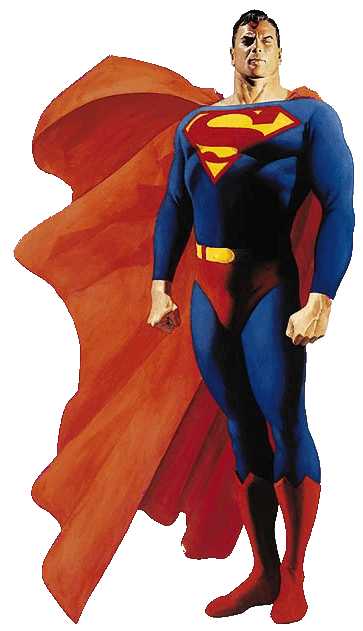
Below:  Superman aka America's self-image.

May 23, 2015

Why Indian mascots are anti-Indian

An excellent article makes a key point about mascots:

The invasion of America

The story of Native American dispossession is too easily swept aside, but new visualisations should make it unforgettable[T]he language used to chronicle the dispossession of native peoples–‘Indian’, ‘chief’, ‘warrior’, ‘tribe’, ‘squaw’ (as native women used to be called)–conjures up crude stereotypes and clouds the mind, making it difficult to see the wars of extermination, forced marches and expulsions for what they were. The story, which used to be celebratory, is now more often tragic and sentimental, rooted in the belief that the dispossession of native peoples was unjust but inevitable.Let me explain. The glorification of Indian warriors--in mascots, the military, and so forth--sends a pro-American, anti-Indian message.

How so? Because it furthers the American mythology of benign conquest. Our band of brave soldiers fought their band of savage warriors on horseback. Just like you saw in the movies.

We won because we were more noble and heroic; they lost. But we've extended the hand of friendship to our former foes. Let's forget our past differences and celebrate our common warrior heritage.

Slaughter, not skirmishes

How exactly is this anti-Indian? Because it reduces 500 years of conflicts to a few skirmishes where the "best side" won. It erases all the "wars of extermination, forced marches and expulsions," as the article puts it. All the times white people lied, cheated, and stole Native land and resources. Hundreds of broken treaties attesting to the white man's perfidy.

Moreover, it obscures the entire nature of Native America. The inhabitants weren't scattered bands of warriors on horseback. They were full-fledged nations with governments. They had complex laws, customs, languages, religions, arts, and sciences. The US didn't beat a few warriors in a fair or unfair fight. It decimated entire civilizations with its genocidal policies.

So talking about the strength and courage of Redskins or Warriors or Chiefs is a complete crock. It's designed to delude people into supporting the American mythology, the American way. The "conflicts" were "inevitable," so the story goes, so they couldn't be helped. Cultures "clashed," one side happened to win, and that's the end.

In particular, the "good guys" (Americans) won, so we'll pretend the "bad guys" (Indians) were good too. Both sides were good, so there's no need to question or challenge the mythology. We're all Americans now--North and South, black and white, American and Indian--so let's forget the past and move forward together.

That's what mascot lovers think. And that's what they want you to think. By challenging them, you're challenging the entire mythology of American goodness. They can't handle the truth, so they attack you instead. You lost, get over it, etc., etc.

All this because of the one-dimensional warrior stereotype.

For more on the subject, see Native Stereotyping = Anti-Indian Propaganda and "Redskins" = Pan-Indian Romanticism.

May 21, 2015

"Redskins" bad but helicopters okay?

On Facebook I shared a posting about the Washington Redskins and the US military. Although no longer available, it said something like:

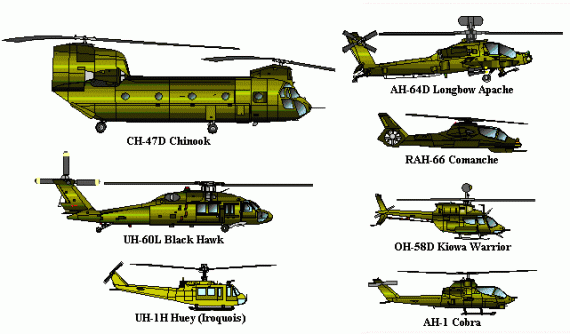
Why do Natives protest the Redskins name rather than the US military for naming items--Tomahawk missiles; Apache, Lakota, and Blackhawk helicopters; codename Geronimo--after them?

This led to a discussion of the subject:The military industrial complex is run by the same people that support the foul R-word, the same people that exploit others for their own wealth generation!

This is Apple/Oranges. The r-word is racist and it invokes racist behaviour.

Hold it, everyone. Here’s a white guy who offers an explanation about why we should feel honored by these names for military equipment. *Phew.* I feel much better after having him whitesplain it to me.

Everyone Relax—The Army’s Native American Helicopter Names Are Not Racist
Let the debate begin

Curiously, someone else posted the same article but put a different spin on it:You know a Native career soldier I know wrote this and posted this (not my position as I'm not a pro military type but wanted to share a perspective):

"No where is there a finer example of honoring a legacy than the moniker attached to the US Army's rotary wing fleet. Not only does the Army ask if the names can be used but they respectively utilize the proper names. They do not use slang or stereotypes. The first time I laid eyes on these aircraft I was instilled with pride and a sense of belonging. I thought to myself 'These guys get it. They respect me and my people's contribution to this enterprise.' I am honored by the lineage of these nomenclatures and honored to have been a small part of this warrior tradition. The US Army has had an intimate experience (for better or worse) with the history of my people and it is my pleasure to reciprocate the gesture. Sappers forward!"
My response: "Warrior tradition" = one-dimensional stereotype.

I "like" how this article basically confirms my point. Namely, that helicopters were named for a one-dimensional view of Natives:According to Bob Mitchell, the museum curator, Howze “envisioned the helicopter as a fast, mobile, stealthy machine on the field of battle using terrain and vegetation to an advantage similar to the Warrior Tribes.”"Warrior tribes" is redundant here since the Army seems to think all Indians are warriors.

Yet the same person continued to challenge me:It is undoubtedly something that is very important in Indian Country as they bring it up quite a lot. Hard for me to grasp due to oppressive nature of use of US Military abroad but it is what it is. 3 times the average rate of service.Yes, and many Indians take pride in being called "Redskins," too. That doesn't mean it's a good idea.

Many Indians also challenge the one-dimensional warrior image and call for a fuller understanding of Native cultures. I'm with them.Yes the R word is an offensive term whereas using tribal names is not. Also they choose to use correct names like Lakota for example not Sioux.

I am not saying I agree or disagree with any of this but know the thoughts of many folks in Indian Country over this and sharing that perspective.
Okay. I'm saying I disagree with it because it's stereotypical. I also disagree with the stereotypical choices made by filmmakers such as Johnny Depp and Adam Sandler.

Only names of tribes?The image you shared for one shows proper names from Indian Country being held in an equivalent manner to a racist term which is obviously not really comparable. Yes there is another debate good or bad to have about the context of the use of the other names. But if a helicopter was called Nigeria would that be as offensive as the N word?"Tomahawk" is a stereotypical weapon. "Blackhawk" and "Geronimo" are personal names. So this posting isn't just about using the names of tribes.

I think we can all agree that "Redskins" is the worst offense in this category, although I'd say calling a terrorist "Geronimo" is comparable. So? We can and do address lesser offenses all the time here.

If you really want to honor the widespread tendency of Natives to serve in the military, let's name helicopters after the Hopi, Creek, Tlingit, San Manuel, and Penobscot tribes. Why not, since their members have served at the same rates as every other tribe's?

Oh, but those tribes aren't known as fierce, deadly warriors. They aren't stereotypical enough. We want our hardware named only for ruthless killer Indians. Because we want to be as savage as they were.

In short, if this nomenclature is some sort of pan-Indian tribute, choose from the names of the 566 recognized tribes at random. By choosing only the tribes known for their savagery, the military is proving my point.Tomahawk is a form of battle axe and indeed there is another missile type called the Battleaxe missile. I would never imagine Kiowa and Blackhawk as being stereotypically savage and the others historically embodied strength. Apart from anything they are great sounding names. But yes as I said a lot of room for debate over the use of these names but the comparison in the image you shared to me seems rather manipulative.The Plains tribes in general, including the Kiowa, represent the stereotypical savage to most Americans.

The Comanche and Iroquois helicopters further demonstrate that the Army is honoring tribes known for aggression or violence, not just "strength" or "courage."

Strength, in particular, has nothing to do with fighting ability. Buddha, Jesus, and Martin Luther King were strong. Mothers who raise children in the face of adversity are strong. Let's name helicopters after them if we want to honor strength.

Other views

A few others chimed in:Gag. These are the same excuses used to justify the usage of Indians, and Redskins. Not okay for cars or helicopters or missiles or team names. #PeopleNotMascots

I completely agree, let them name some other people helicopters, missiles...etc.
We are not decals, toys and icons.
We are people and it is about time we are treated as such!
For more on the subject, see Indians in the Military.

Below:  Six copters named after tribes and one named after a snake.

June 28, 2014

Native military names assuage guilt

A writer lays out the problem with using Native names for killer missiles and aircraft:

The U.S. military’s ongoing slur of Native Americans

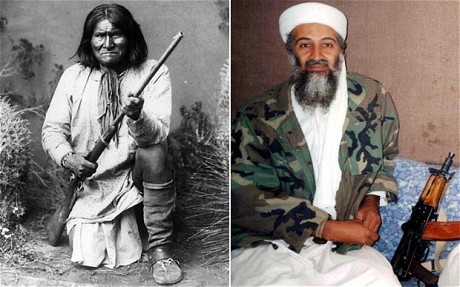
By Simon WaxmanIn the United States today, the names Apache, Comanche, Chinook, Lakota, Cheyenne and Kiowa apply not only to Indian tribes but also to military helicopters. Add in the Black Hawk, named for a leader of the Sauk tribe. Then there is the Tomahawk, a low-altitude missile, and a drone named for an Indian chief, Gray Eagle. Operation Geronimo was the end of Osama bin Laden.

Why do we name our battles and weapons after people we have vanquished? For the same reason the Washington team is the Redskins and my hometown Red Sox go to Cleveland to play the Indians and to Atlanta to play the Braves: because the myth of the worthy native adversary is more palatable than the reality—the conquered tribes of this land were not rivals but victims, cheated and impossibly outgunned.

The destruction of the Indians was asymmetric war, compounded by deviousness in the name of imperialist manifest destiny. White America shot, imprisoned, lied, swindled, preached, bought, built and voted its way to domination. Identifying our powerful weapons and victorious campaigns with those we subjugated serves to lighten the burden of our guilt. It confuses violation with a fair fight.

It is worse than denial; it is propaganda. The message carried by the word Apache emblazoned on one of history’s great fighting machines is that the Americans overcame an opponent so powerful and true that we are proud to adopt its name. They tested our mettle, and we proved stronger, so don’t mess with us. In whatever measure it is tribute to the dead, it is in greater measure a boost to our national sense of superiority. And this message of superiority is shared not just with U.S. citizens but with those of the 14 nations whose governments buy the Apache helicopters we sell. It is shared, too, with those who hear the whir of an Apache overhead or find its guns trained on them. Noam Chomsky has clarified the moral stakes in provocative, instructive terms: “We might react differently if the Luftwaffe were to call its fighter planes ‘Jew’ and ‘Gypsy.’”
Comment:  The long debate over Osama bin Laden's codename is the perfect example of Waxman's argument. We didn't code-name him "Geronimo" because we were honoring him. We did it because we considered Geronimo a ruthless savage, killer, and terrorist--like Bin Laden.

We're saying the same thing with Apache helicopters, Tomahawk missiles, and the other deadly weapons and aircraft. The're pure lethal force with no saving grace such as intelligence or compassion. They do nothing but kill.

For more on the subject, see Indians in the Military.

February 25, 2014

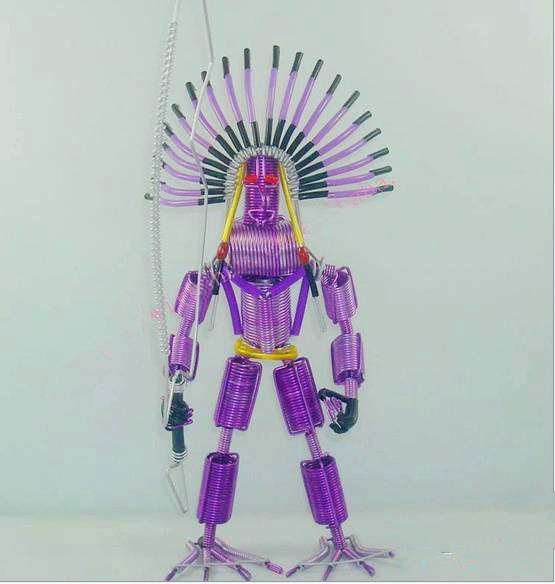
Stereotypical Indian Chief Robot

New Arrival Aluminum Indian Chief Robot Handmade Metal Robot Toy WSRB-004Zegapain

Is every imaginative guy dream

He is Optimus Prime and megatron!

He is shaped or predator!

They are armed to the teeth of the weapon equipment!

The mechanical structure of fine!

This series of manual robot will be the perfect combination of robot and the Chinese Kungfu culture.

rich in style, variety of weapons,

Realize your dream of intimate contact with robot.
Comment:  Note the headdress, the braids, and the weapon that evokes a tomahawk.

I imagine the wires lead to an electrical outlet, and the robot lights up when turned on.

I wouldn't mind if this toy were some random warrior--e.g., Zegapain. But it's labeled an "Indian chief" and described as a predator. That's stereotypical.

January 22, 2014

"From Super-Chief to Tonto"

From Super-Chief to Tonto: What comics tell us

By Niigaanwewidam SinclairGraphic novelist theorist Scott McCloud argues in Understanding Comics that "when we create and read comics we are really constructing reflections of ourselves over and over and over again."

In other words: we are telling stories to figure ourselves out.

This makes the history of indigenous representations in graphic novels so fascinating and one reason why we started a graphic novel collection both about and by indigenous peoples here at the University of Manitoba.

Called the Mazinbiige collection, it refers to an Anishinabe word meaning beautiful images and writing—something fairly easy to see in the dozens of texts by indigenous storytellers and artists representing their cultures and communities.

Something harder to see is in the approximately 100 graphic novels created by non-aboriginal artists in the collection that represent indigenous peoples in generally inaccurate and potentially damaging ways.
Sinclair goes through five categories of stereotypical characters:The Warrior

Angry and usually accompanied by a spiritual entity, warriors like Joshua Brand in Image Comics’ Shaman's Tears and Marvel Comics’ John Proudstar (aka Thunderbird) of the X-Men are isolated men with an axe to grind.

The Artifact

Off the pages of a textbook, clad in buckskin, and carrying archaic beliefs and weapons, characters such as Gold Key Comics’ Turok, DC Comics’ Super-Chief, and Eclipse Comics’ Scout: War Shaman are vestiges to a dying way of life in a modern world.

The Sidekick

Usually a decoration for a stunning, heroic, non-native hero, athletic and noble servants like Dell’s Tonto in the Lone Ranger comic books may have been ignorant or just played the role to please his handler, but either way relished in the role.

The Shaman

In his study Native Americans in Comic Books, Michael Sheyahshe writes that there is a popular “assumption that within every indigenous person there hides a potential shaman with 'magical' abilities to communicate with supernatural forces."

The Wannabe

Not an aboriginal character, but a non-aboriginal who is captured and/or raised by indigenous peoples, this character’s superpowers are gained simply by exposure.
Comment:  Most of the "warriors" are artifacts and most of the "wannabes" are warriors.

I wouldn't have labeled the range "From Super-Chief to Tonto," since those two characters span only a few years in the 1950s. "From Turok to Scalped" is a better summary of the genre.

I guess "From Super-Chief to Tonto" could be a commentary on the limited range of Native comic-book characters. Like they go all the way from A to B.

For more on the subject, see Mazinbiige Comic-Book Collection.

January 13, 2014

Christie's bullying shows American mindset

Why the Infatuation with Bullies Like Chris Christie?

Christie reveals a dark side of our society--a public enchanted by his tough guy antics and the press who encourages his sadism.

By Arun Gupta
The harsh reality of Christie is not his vile political persona, but the public enchanted by his bullying and the press who encourages his sadism by casting him as “a tough-talking, problem-solving pragmatist.” Christie may have muscled Democratic politicians into supporting his re-election bid last fall, but he won strong backing from Democratic voters, allowing him to pursue policies attacking the poor and public education, and coddling the wealthy and corporations.

Christie taps into something dark in the American political soul–a desire not just for order or efficiency, but pleasure in humiliating the weak. Is it surprising women are a frequent target of his abuse, who are pathologized in our society as weak?


Finally, a cowboy conservative! After the spectacular failures of George W. Bush, John McCain, Rick Perry, et al., we thought we'd never find another one!

Conservatives agree that Christie is a real American--like John Wayne and Ronald Reagan:

Karl Rove: Bridge scandal proves Christie is ‘what we want’ in a president

"We want a macho man who will stick it to women, minorities, the poor, and everyone else who hates America!"

Fox’s Brit Hume shocks female panelist: ‘Feminized atmosphere’ made Christie a ‘bully’

By David EdwardsFox News analyst Brit Hume on Sunday said that New Jersey Gov. Chris Christie (R) had only gotten a reputation for being a bully because men could not be “masculine and muscular” in the “feminized atmosphere” created by the media.

During a panel discussion on the Fox News show Media Buzz, host Howard Kurtz asked if Christie’s “bully image” was hurting him after his administration was accused for closing part of the busiest bridge in the world to hurt his political opponents.

“I have to say that in this sort of feminized atmosphere in which we exist today, guys who are masculine and muscular like that in their private conduct and are kind of old-fashioned tough guys run some risks,” Hume opined.

“Feminized!” Fox News contributor Lauren Ashburn gasped.

“Atmosphere,” Hume nodded. “By which I mean that men today have learned the lesson the hard way that if you act like kind of an old-fashioned guy’s guy, you’re in constant danger of slipping out and saying something that’s going to get you in trouble and make you look like a sexist or make you look like you seem thuggish or whatever. That’s the atmosphere in which we operate.”

“This guy is very much an old-fashioned masculine, muscular guy,” he added. “And there are political risks associated with that. Maybe it shouldn’t be, but that’s how it is.”


A brief discussion of this on Facebook:"Feminized atmosphere?" Is that supposed to be a bad thing?Yes! It's not manly enough for real Americans, who are men! A "guy's guy" is not, and never WAS, a bully.I've talked before about our macho culture of rugged individualism and self-reliance. Also known as the unfettered urge to subjugate women, blacks, and Indians, among others. Using repressive laws, bullying, or guns as necessary.

For instance:

The rage of angry white men
Patriarchal culture encourages violence
America's culture based on violence
Women and Indians as peacemakers
How America became cowboy country

I could find hundreds of articles to illustrate this point. Here's a typical one:

Death threats for researcher who demonstrated college athletes read below a third-grade level

A woman researcher dares to challenge our "might makes right" warrior culture with facts? Kill her! Thus proving the point.

Let's see...this incident includes hate against women, love of machismo, and hate against intellectualism. See also the related debates on Internet harassment, Sandra Fluke, Steubenville, military rapes, the Republican war on women, etc. Women make men weak, this "thinking" goes, so we must find ways to control them.

In short, all these things are related. Christie's bullying = rape culture = shooting sprees = genocide against Indians. They all stem from the white male Christian need to dominate and control others.

June 20, 2013

Depp to Indians: "You're still warriors"

Depp to Native Youth: 'You're Still Warriors, Man'And so the magazine-cover onslaught is underway. Expect to see Johnny Depp's Tonto-fied face (and bird-ified crown) all over your local newsstand—today, it's Rolling Stone. In the extensive cover story, Depp ruminates on his Hollywood success and his future, and addresses the role at hand: Tonto in The Lone Ranger.

ON THE COSTUME: "I wanted him to be no joke. ... First of all, I wouldn't f*** with someone with a dead bird on their head. Second of all, he's got the f***ing paint on his face, which scares me."

ON MOTIVATION: "I wanted to maybe give some hope to kids on the reservations. ... They're living without running water and seeing problems with drugs and booze. But I wanted to be able to show these kids, 'F*** that! You're still warriors, man.' "
Depp's warrior hope for Ranger roleStepping out on the red carpet at the film's world premiere at Disney's California Adventure theme park in Anaheim, the 50-year-old said he has always felt a connection with the role.

"It's something that has felt dear to my heart since childhood. I remember my parents talking about how we had some degree of Indian blood in us and it was a great point of pride even as a little kid.

"If this version of the Lone Ranger can help kids on the reservation, kids off the reservation to say I am a warrior, I can get through this, I want to keep my language alive then great."
Depp is sending a consistent message, but it's not the one he thinks. He obviously sees Tonto as a scary savage warrior. The personification of Tonto's Giant Nuts, his rock band.

This is no different from the last 10,000 examples of savage Indians. You can see the same traits in Sleepless Entertainment's racist "tribal cosplay," the stereotypical Whistling Warrior statue, the half-naked drummer dressed as an "Indian," and on and on.

These traits center around a lack of depth--a lack of culture, history, and religion. All these stereotypical savages are one-dimensional caricatures of real Indians.

Depp confirms his stereotypical thinking in another article:

Johnny Depp: I have been adopted by Native Americans ... my name is Mah-Woo-Meh“Being adopted, what it means and what it’s meant since that day, has given me so much in my life.

“I’m not a particularly spiritual person myself the only church I have ever seen that makes sense to me is the sweatbox. I do smoke a peace pipe as often as possible, because I like peace... ”
Others agree

Others have noted the same thing:

Johnny Depp Wants to Fix Racism With TontoJohnny doesn't just want to make sure he's not only being culturally sensitive, he wants to change the way things are for Natives in film. In an interview with Rolling Stone, Depp said he wants to take his role in The Lone Ranger and make it an inspiration for young Native Americans:

I wanted to maybe give some hope to kids on the reservations. They're living without running water and seeing problems with drugs and booze. But I wanted to be able to show these kids, "Fuck that! You're still warriors, man."

You're still warriors… man? Are you kidding me? If it wasn't so painfully steeped in an ignorant understanding of the modern Native American struggle, Depp's mission to "help" the Natives could be a hilarious comedy about how white dudes see the non-white world. If only.

This is just another case of white dudes solving the brown world's problems, problems that they think they've got figured out. "What are some Native American issues?" thought Depp. "White-dominated media tells me it's alcoholism and drugs. I want to change that by dressing up like a member of Kiss meets Navajo gift shop." And to top it all off, he wants to encourage those reservation kids to find their inner warriors, to hear the wolf cry to the blue corn moon, to paint with all the colors of the wind.

If Depp's version of Tonto was meant to "take some of the ugliness thrown on the Native Americans, not only in The Lone Ranger, but the way Indians were treated throughout history of cinema, and turn it its head," as Depp stated as his hopes for the role, he's turned it at a full 360 degrees and fallen back on the same binary depiction of Native Americans as alcoholic reservation kids on one hand and feather-sporting warrior braves on the other. What's worse is, even if Depp and Disney did the political correctness song and dance, thousands of kids will still be dressing as Tonto for Halloween and in their heads they'll say, "I feel like a warrior, man."
Annotating the racism of Johnny Depp's Tonto

The mystical bird-headed man

By Liana Maeby
We've all always suspected that Johnny Depp's portrayal of the pidgin English-speaking wildman Tonto in 'The Lone Ranger' might be more than a little racist, but now that we have an abundance of official images to go on, we can say conclusively that yep, this character is offensive as hell. Even better, Johnny-as-Tonto graces the cover of the new issue of Rolling Stone in full-on American Indian caricature mode. How how, paleface!

Exactly how cartoonish can this character get? Here are just some of the offenses of Johnny's Tonto.


It seems Depp sees most Indians as victims, but he wants them to be warriors. So his view is binary: Indians are either winners or losers. They can either get drunk, fall down, and die or put on a scary costume, pick up a tomahawk, and fight back.

This binary thinking suggests how shallow his knowledge of Indians is. It suggests he has no understanding of the complexities of Native history and culture. No awareness that Tonto's contemporaries were going to schools, becoming educated in the white man's ways, and challenging the status quo with words and ideas, not bows and arrows.

It's also condescending. "I'm a role model for you," Depp seems to be saying. "Why can't you be a tough guy like my super-scary Tonto? Don't you understand that your people were warriors and can be warriors again?"

For more on Johnny Depp, see Depp Keeps His Ancestry Ambiguous and Skyhawk: Depp Is a Charlatan.

January 21, 2013

"War paint for today's business world"

Adrienne Keene writes about a stereotypical billboard in her Native Appropriations blog:

New Billboard for Florida State’s MBA ProgramFlorida State University (home of the “Seminoles”) has unveiled a new billboard for their MBA program. I always wonder how these types of things make it through so many layers of approval. Kirsten who sent it over said this has been their slogan for awhile, apparently.

Associating business school with Seminole Indians and warpaint is stereotypical, of course.

Interest Convergence, FSU, and the Seminole Tribe of FloridaLive and learn. I guess the “quick post” model failed–you should see my inbox. Guys, I know the Seminole Tribe of Florida has worked with FSU and offered their approval of the mascot and associated images. I know quite a bit about the relationship, actually, and I’ve been learning quite a bit more in the last day or so…thanks to the strongly worded responses from some passionate FSU fans.

Quick background:

Florida State has been the “Seminoles” since 1947, and have had a “relationship” with the Seminole Tribe of Florida for many years, but it was solidified more recently. In 2005, the NCAA passed a resolution, calling Native American Mascots “hostile and abusive,” and prohibiting schools with these mascots from hosting post-season events. The Seminole Tribe of Florida then officially gave their permission to use Osceola as the mascot, letting FSU get a waiver from the NCAA rule.

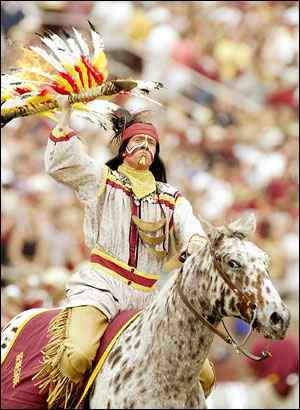
Disclaimer, and a big one–I am not Seminole, and I don’t want to speak for the tribe. I am offering my interpretation and perspective, but it’s just mine. I am going to be up front and say that I don’t agree with the choice to give the university permission to mock Native culture (see the billboard and video I posted earlier), and I don’t find a “stoic” dude in a wig and redface throwing a flaming spear “honoring” (see photo above), and I definitely don’t think that the “war chant” is respectful in any way. In fact I find it quite “hostile and abusive.”
And:Coming back to the billboard that I posted last week, here is the (unsolicited) response I received from the university:Hi Adrienne,

I work in Florida State University’s Office of University Communications. We’ve become aware of your recent blog post about several of Florida State University’s recent promotions which include Seminole imagery and symbols—and appreciate your concern. However, we wanted to take this opportunity to make sure you were aware that the relationship between Florida State and the Seminole Tribe of Florida is one of mutual respect.

In 2005, the tribe passed a resolution supporting the university’s use of the Seminole name, logos and images, including Osceola and Renegade. This was recognition of Florida State’s continued collaboration with the tribe, including prominent participation by tribal members in many of the university’s most meaningful events, and our seeking advice and direction to ensure tribal imagery is authentic.

Simply put, Florida State University is humbled and honored by the privilege of representing a group of people whose courage and spirit we admire and respect. Through the years, our administrators have made it clear the university will not engage in any activity that does not have the approval of the Seminole Tribe of Florida.

We hope this background is helpful. Please feel free to write me back if you have any questions.
The word “authentic” in there gave me pause–are they actually arguing that painting a red and yellow stripe of “warpaint” on a non-Native lady is “authentic”? And the language of the letter just feels weird to me–”a group of people whose courage and spirit we admire and respect”? It just feels like a slippery slope and super gray area between “respect” and romanticization.
A commenter added:I would only add that the whole metaphor of business as "war" is problematic to begin with. Besides actual armed conflict with drones, bombs, soldiers, etc., we have "wars" on drugs and crime in which people get killed also. So, you are going to go to "war" in your business life, to scalp and kill and shoot and bomb your competitors or even coworkers who get in your way? This metaphor speaks loads about capitalism and our culture that I don't even think FSU officials are conscious of. Thank you for these posts!Rob's reply

Did the Seminole Tribe really examine this particular image and declare it "authentic"? Based on what, exactly? Or did they give permission in general for FSU to do whatever it wants with the Seminole name, mascot, and imagery?

I posted the following comment to Adrienne's blog:I wrote about some of the same issues here:

Why FSU's Seminoles Aren't Okay

The warpaint, spear, horse, and name (Osceola wasn't a chief) are all phony.

The Seminole Tribe's approval conveys one of two things. Either these items aren't stereotypical, according to the tribe, or they are stereotypical but the tribe doesn't care. Those are two very different positions to take.

Until the tribe explains how these items aren't stereotypical, it's safe to assume they are. That means they're causing the same harm as every other one-dimensional "savage" stereotype. The tribe's approval doesn't change that.

The other Seminole tribes in Florida and Oklahoma haven't given FSU a pass. I don't think we need to either. If something is false or stereotypical, it's wrong, period.
P.S. Adrienne gave my website a nice plug in turn:Rob Schmidt just shared this resource in the comments of my FSU post, and I had to share. This is awesome.For more on FSU's Seminoles, see Seminole Fan in Plains Headdress and Chief Osceola Is "Respectful"?

November 24, 2012

Warrior women wear headdresses?

Michelle Shining Elk's posting on Crystle ("Crissy") Lightning in a headdress led to another debate on Facebook. From Carol:Bravo to Crissy for not being afraid to take her own stand! We may not all agree with this but we must surely admire such courage and I respect her greatly for following her own truth. I would expect nothing less from one raised by such a strong, compassionate, single mother who became her own warrior to raise her children in such a crazy world. Native's have suffered long from the historical trauma inflicted upon us. Family relationships were destroyed when we were forced to follow the European tradition of male-female relationships. We no longer follow our own tradition of holding women and children sacred. I admire all the women out there who become their own warriors!!Bravo to Michelle for calling out Crissy for violating a basic tenet of Plains culture: that women don't wear headdresses.

In response, Carol posted the following links:


Native American Women Warriors Vice President Sgt. Maj. Julia Kelly, representing the Crow Nation, is a retired Command Sergeant Major of the Army.


Sarah Winnemucca, Paiute.

American Indian Women: The Warriors

My response:

The first headdress probably was bestowed by tribal leaders to recognize a soldier's service. The second may have been worn as a publicity stunt in violation of cultural norms. Or--since Winnemucca was Paiute and the headdress isn't a Plains headdress--her tribe may have had different rules.

The only explanation that applies here is "publicity stunt in violation of cultural norms." The other explanations don't apply to Crystle Lightning. There's still no justification for a young Native woman to appropriate a Plains headdress for her own commercial purposes.

Now that you've found a couple of exceptions to the rule, try addressing the rule:

An Open Letter to Non-Natives in HeaddressesFor the most part, headdresses are restricted items. In particular, the headdress worn by most non-Natives imitate those worn by various Plains nations. These headdresses are further restricted within the cultures to men who have done certain things to earn them. It is very rare for women in Plains cultures to wear these headdresses, and their ability to do so is again quite restricted.

So unless you are a Native male from a Plains nation who has earned a headdress, or you have been given permission to wear one (sort of like being presented with an honorary degree), then you will have a very difficult time making a case for how wearing one is anything other than disrespectful, now that you know these things. If you choose to be disrespectful, please do not be surprised when people are offended… regardless of why you think you are entitled to do this.
P.S. Crystle isn't a warrior, so your posting on women warriors is irrelevant.

Round 2

More comments from Carol:Who are you to judge the paths we take? Are all battles fought only on the battlefield? Before you judge a person's path in life perhaps you should walk in their moccasins for a while. We are all warriors in our own way.Lana-Rae:Don't the Crow women in Montana wear them? I know they do a dance...some kind of war dance w/ headdresses on?And Andrea:Well if we all do our research into history it would seem NATIVE women did wear headdresses to honor their fallen fathers, brothers and husbands who earned their right of passage as warriors and this is not discounting that Native woman were also considered warriors who were clan leaders and in this day would not a woman be considered a warrior who has served her country or nation?

No, the posting on women warriors is not irrelevant, it's fact and facts cannot be denied. Crystle's intentions were honorable to honor Native America and the First Nations People and to dispute otherwise is insult to her and her mother whom I have known for many years and whom I consider a true warrior woman.

Let us stop the division, it serves no purpose.
Who are you to judge that Crystle is right and tens of thousands of traditional Natives are wrong when they say women shouldn't wear headdresses? I'll go with the vast majority of Natives over a tiny minority of Natives on this issue.

Crystle isn't honoring a fallen father, brother, or husband. She isn't a Crow woman and she isn't performing a traditional ceremony. I'm pretty sure she hasn't served in the military. So again, irrelevant.

Every person who wears a headdress believes their intentions are honorable. As does every person who stereotypes Indians: Johnny Depp in his Flying Nun costume, Saginaw Grant in the execrable Dudesons episode, every fan who has cheered Chief Wahoo or Chief Illiniwek, et al.

Their intentions are irrelevant when judging the outcome. So are Crystle's. Like every other woman who wears a headdress inappropriately, she's violating the tradition stated above. Period.

When you find a case of a Native woman honoring a ballerina from another tribe who's also wearing a headdress, please let us know. Because that's about the only case that would apply to this situation.

Meanwhile, you haven't begun to address the standard position stated above. Nor have you begun to address the blatant stereotyping involved in donning a headdress like a million Indian wannabes. I guess these issues are too hot to handle because you keep ducking them.

As for the so-called division, quit disagreeing with Michelle and me, Andrea, and the division will stop. We're stating the standard position held by most Natives. You're disagreeing with them because you arrogantly think you know better.

Round 3

Andrea again:LOL, I don't believe you got your tens of thousands of figures by taking a census. Traditional Indians/Indigenous people do not criticize period. You are right Native Celebs she is not a Crow woman, she is CREE and get your facts straight. Arrogance is not my style which is being exhibited here by your criticism of this fine young woman.I've read thousands of articles, blogs, and comments on the Plains headdress subject. Unless you're a Plains Indian or have read about Plains headdresses as much as I have, my understanding of the situation wins.

Another respondent raised the issue of Crow women wearing headdresses legitimately. Learn to read all the comments so I don't have to explain them to you.

I guess you're not Native since you're criticizing me. In fact, you're well-known for criticizing anyone who challenges your positions--e.g., your criticism of Adrienne Keene in the Johnny Depp affair. Fortunately, I'm not bound by that restriction.

It's arrogance to state the position held by most Natives? Wow. I guess you know as little about the definition of "arrogance" as you do about the Plains headdress tradition.

Again, you haven't begun to address the standard headdress position stated above. Nor have you begun to address the blatant stereotyping involved in donning a headdress like a million Indian wannabes. Whenever you want to start addressing these issues, go ahead.

For more on the subject, see Crystle Lightning = Maria Tallchief? and Crystle Lightning in a Headdress.
May 24, 2012

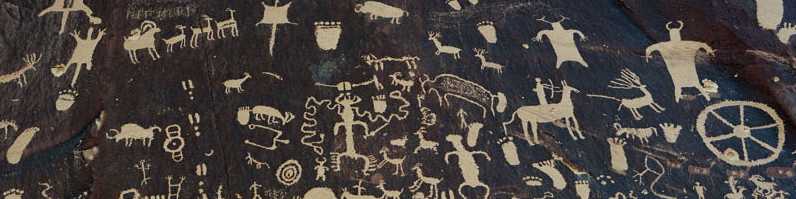
Siletz Tribe opposes mascot ban

Tribe Disapproves of Oregon Banning Native MascotsOne of the 15 schools affected by the Oregon Board of Education’s decision to ban Native American mascots is Siletz Valley School, an Indian charter school whose mascot is the Siletz Warrior, an Indian in a headdress, which will now have to change.

And the Confederated Tribe of Siletz Indians—one of 10 federally recognized tribes in Oregon—issued a statement Tuesday, May 22 expressing its disappointment with the board’s decision to ban the mascots.

“It is the opinion of the Siletz Tribe that this ban does nothing to address the real issues of racism nor does it address the issue of the low self-esteem of Native students attending public schools,” the statement from the tribe said. “For the Siletz Tribal community, this action has a negative impact on our students and our community. We will be forced once again to succumb to the misguided intentions of people who have no knowledge of Indian communities.”
And:The Register-Guard reported on May 23 that it’s unclear whether the Oregon Board of Education will be able to enforce the ban on tribal land though. The Guard also reported that other tribes in the state including the Confederated Tribes of the Coos, Lower Umpqua and Siuslaw Indians support the ban.

Their tribal chairman, Bob Garcia, told The Guard, “If it’s the Siletz Warriors, run by the Siletz Tribe, I don’t have a problem with that.”
Comment:  Hundreds of tribes and tribal organizations have come out against Indian mascots. Including some in Oregon. In other words, many mascot foes are Indians. The idea that they don't know "Indian communities" is a crock.

If the Siletz Valley School is under public administration, I don't care if it's on tribal land. The stereotypical mascot should go. A Plains chief in Oregon is stupid and ignorant whether the purveyor is Native or not.

But if the school is under tribal administration, let the ignorant Indians keep their stereotypical chief. If they want to portray themselves as primitive people of the past, not modern-day participants in American society, that's their right. No matter how foolish a choice it may be.

For more on the subject, see Oregon Bans Indian Mascots and Team Names and Mascots.

August 24, 2011

A Warrior's Heart to be released

"Twilight" Stars Kellan Lutz And Ashley Greene Reteam To Bring Lacrosse And Love to The Big Screen For "A Warrior's Heart"

In their first lead roles Kellan Lutz and Ashley Greene share star-making chemistry in the heartfelt drama "A Warrior's Heart."Xenon Pictures and California Pictures in association with Family Productions and Camelot Entertainment Group have announced plans to release the highly anticipated "A Warrior's Heart." Written by Martin Dugard and directed by Mike Sears, "A Warrior's Heart" stars Kellan Lutz and Ashley Greene ("The Twilight Saga"), Chord Overstreet ("Glee"), Adam Beach ("Cowboys and Aliens"), and Gabrielle Anwar (TV's "Burn Notice").

Screened at the 2011 Cannes Film Festival to enthusiastic cheers, "A Warrior's Heart" has inked a deal for a theatrical, VOD and DVD release.

Not only have early screenings of "A Warrior's Heart" been met with overwhelmingly positive reviews but the film has also been highly praised by lacrosse fans who are converging on the Major League Lacrosse Championship in Annapolis, Maryland on August 27th.

Producers Jamie Thompson, Steven Istock and Marc Spizzirri describe the movie as "a heartfelt family friendly teen love story."

In shock and denial over his Marine father's death in battle, high-school lacrosse star Conor Sullivan starts acting out in self-destructive ways until he's kicked off the team and sent to a wilderness lacrosse camp run by his dad's Native American combat buddy (Adam Beach). With support from his girlfriend Brooklyn (Ashley Greene) Conor embraces the game's Native American roots and open his eyes to the true meaning of sportsmanship and life.
Comment:  I reported on this film back in January 2009 when it was just called Warrior. The new title is about as bland as the old one.

The whole "athlete as warrior" thing is such a cliché. I'd be stunned if a movie compared an athlete to a poet, dancer, surgeon, chess player, or robot.

What about Crooked Arrows?

I thought Crooked Arrows was the lacrosse movie. Now we have two lacrosse movies. Will audiences sit still for that much lacrosse?

Like Crooked Arrows, A Warrior's Heart uses a non-Native protagonist to introduce a Native sport. Because we can't have a mainstream movie centered on Natives, right?

Movies where sports are a metaphor for life--where "bad" characters are redeemed by teamwork and camaraderie--are a dime a dozen, of course. Sometimes these movies are good despite the tired, clichéd premise. We'll see whether A Warrior's Heart is a good one or not.

For more on lacrosse movies, see Crooked Arrows Announces Lacrosse Team and Birmingham to Play Routh's Father.

August 01, 2011

Echo-Hawk’s Nike N7 t-shirt design

Nike N7 collection featuring designs by Bunky Echo-HawkBunky Echo-Hawk, of the Pawnee Nation in Oklahoma and Yakama Nation in Washington, is a graduate of the Institute of American Indian Arts who is focused on fine art, graphic design, photography, creative writing, traditional singing and dancing, community outreach and a unique style of “live art” aimed at merging his traditional values with art for greater purpose.

Echo-Hawk’s design for the Nike N7 collection T-shirts focuses on the traditional native warrior holding a basketball in a strike pose, embodying his belief, and interpretation of Nike N7, that there is a warrior within every athlete. Echo-Hawk portrays the warrior with an eagle feather standing straight up within a roach head dress, and scalp feathers positioned to the side of his head. The warrior is positioned in the basketball triple threat stance, which readies the athlete for any move he or she needs to make next--shoot, pass or dribble. Celestial stars embrace the warrior in the design, providing a connection to the earth. The T-shirts designed by Echo-Hawk are made with organic cotton and will be available in challenge red and dark grey heather for women and challenge red and dark turquoise for men.
Comment:  For more on the subject, see Echo-Hawk's Art Confronts Stereotypes and Obama Portrait Puts Echo-Hawk on Map.

June 17, 2011

Vilche the "Eskimo Warrior"

Red Bluff’s female heavy-hitter

Avery Vilche is a small but feisty mixed-martial-arts fighter

By Allie Colosky
Though she’s only 5 feet, 2 inches tall and weighs only 125 pounds, Avery Vilche walked confidently into the cage, ready to spar with a young man at least 15 pounds heavier than she. Almost immediately, she took charge, throwing him around with more force than anyone would expect from the tiny fighter.

Nicknamed the Eskimo Warrior, the 41-year-old mixed-martial-arts fighter from Red Bluff may not have size in her corner, but she’s never been one to back down from a challenge. After starting as a boxer before women were even allowed to participate in U.S. Amateur Boxing, and earning several commendations including a gold medal in the World Eskimo-Indian Olympics, Vilche continues to overcome obstacles and adversity as she trains for her next fight in North Carolina this Friday (June 17).
Comment:  I understand the Yup'ik embrace the word "Eskimo," so they wouldn't consider this nickname a slur.

At least Vilche doesn't come out in a headdress and warpaint yelling war cries. I hope!

For more on mixed-martial artists, see Yup'ik Kickboxer Champion and Chippewa/Blackfeet Fighter on Ultimate Fighter.

Below:  "Avery Vilche is a firecracker in the cage, taking on Alex Fazleev, a student of hers who’s almost half her age, while her trainer, Manuel Whatley, and husband, John, watch." (Allie Colosky)

June 11, 2011

Absolutely True Diary's variant covers

Speaking of Sherman Alexie's Absolutely True Diary, educator Debbie Reese has posted 12 variant covers for her readers:

Australian cover for Absolutely True Diary of a Part Time Indian

(Source: Debbie Reese's American Indians in Children's Literature, 6/9/11.)

Comment:  Of the 12 covers, six show a stereotypical toy Indian chief or warrior. All six are brandishing weapons: a spear, bow and arrow, or rifle.

Another one shows a cartoon Indian with feathers in his hair along with a tipi and spearpoint. And another shows a boy with a shadow Indian.

So that's eight of 12 covers with a stereotypical Indian on them. Wow.

Yes, you could try to justify these stereotypical Indians. For instance:

  • The story deals with an Indian boy's efforts to overcome society's stereotypical beliefs about him. The stereotypical Indian is meant to suggest the boy's struggles, and thus the book's content.

  • Or,

  • The toy Indians are obviously facetious. They're contrasted with toy cowboys, also facetious, to mock society's beliefs. The stereotypical image is often small, to show it's an inferior or marginalized belief. In a couple of cases it's tilted to show it's a crazy or cockeyed belief.

  • But let's go to our tried and true test of stereotyping. How often do young-adult African American novels feature a 19th-century Zulu chief or warrior on the cover? How often is a black protagonist's identity so in doubt that the cover has to reference it?

    What other ethnic group has to ask and answer the implied question: Are we really primitive people from the distant past? No, as this book will prove, we're actually modern people. We live in houses, wear glasses and t-shirts, and play basketball just like everyone else.

    In short, the possible justifications for the covers are beside the point. The fact that the covers exist suggest the sorry state of Natives in America. Blacks are no longer slaves and Asians are no longer coolies, but in most people's minds, Natives are still savage warriors. In other words, the humanity of Natives is still an open question.

    For more on the subject, see Stereotypes in Dancing with the Indians and Stereotypes in Sign of the Beaver.

    May 23, 2011

    Mascots = strength through fear

    An excellent essay from an occasional correspondent:

    Indians still inspiring fear for White America

    By Melvin MartinIndian sports mascots are dramatically akin to the colorful renderings of bears, tigers, wolves and even shark teeth that have appeared on a wide assortment of U.S. combat aircraft, naval vessels, and other forms of mechanized equipment since World War II. They are all starkly produced images (and names) designed to strike a deep sense of fear into the hearts and minds of enemy forces. And then, this very recent news article further acknowledges this particular U.S. military "tradition":

    Non-Indian America has always feared the American Indian as the most singularly hostile and fearsome adversary on the battlefields of Manifest Destiny. And given the unending obsession with mascot images, non-Indians consider Indians worthy antagonists on a wide range of fronts--not only on cultural, but on political and socio-economic fronts as well.

    The psychodynamics of fear are clearly at work here with this obsession and I can see why these mascots are so highly prized by those individuals and institutions who are so unwilling to relinquish them despite decades of highly organized protests against them. It is the basic symbology of the American Indian as a unique and profound source of strength derived through fear that provides these people with their sense of masculinity and "warrior-hood."

    And in a society where even perceived notions of strength and power and most importantly, the ability to defeat one's enemies and opponents still prevails, associating oneself with war-like Indians provides an enduring security blanket of emotional support. If a "real man" can't act like a "savage" and journey back to the cave in reality, at least his apparel and team paraphernalia can make the trip for him.

    In today’s popular American culture, traditional ideals of masculinity are under a constant state of attack. "White Privilege" is eroding with every passing day as minorities, women and gay people are advancing and gaining parity at all levels of society. In this environment, the all-American (essentially white) male is indeed a threatened species. And perhaps one of the last remaining bastions of this male superiority is the world of contact sports, where a man can still “be a man” in spite of the gay team member, the black head coach or the female team trainer or owner.

    The American Indian sports mascot has never been an example of honoring the so-called “character” of the American Indian, nor is it a genuinely constructed system of methods by which to specifically target America's Native people for derogatory treatment. It is merely an ancient, worn-out and deeply dysfunctional process of appropriating the impressive legacy of overwhelming fear that the Indian, in the overall mindset of white America, still possesses to a remarkable degree.
    Comment:  This essay pretty much says it all. I'd quibble only with the line about specifically targeting Indians for derogatory treatment. Mascots may not be a "genuinely constructed system of methods," but they act as if they were. They help produce the same results.

    School administrators and students may not support mascots for this reason. Not consciously, at least. But unconsciously, this is what's going on. Mascot lovers intuitively "know" that they benefit from keeping white people up and minorities down. So they attack government, Obama, healthcare reform, immigrants, gays, mosques, and so forth and so on.

    Keeping Indians and their treaties, land claims, and casinos in place is part of this agenda. If we present Indians as savage relics of the distant past, we don't have to deal with them today. As long as we ignore and dismiss them, we can "honor" or mock them (basically the same thing).

    For more on Indian mascots, see Gover Summarizes Native Stereotypes and Warriors Mascot Done Right.

    Below:  "You scared of me! You quake'um in fear, no score touchdown! That am big honor!"

    May 21, 2011

    Gover summarizes Native stereotypes

    Kevin Gover, NMAI director, gives a good overview of Indian mascots and stereotypes. He starts with how most Americans learn about Indians.

    Native Mascots and Other Misguided Beliefs

    By Kevin GoverOnly a very small percentage of the population has devoted extensive study to Native history, art, and culture, so their understandings are formed based on the limited information they have received from two sources: the formal education system in the United States and the popular media culture in the United States.

    My own experience contending with the information I was given while growing up in Oklahoma is instructive. Native history and culture was only rarely touched upon while I was in elementary school and junior high school. Though I had, of course, more than the usual interest in these subjects, I can recall only the occasional reference to American Indians, almost always accompanied by a photo of Indian people standing on a rocky hillside dressed in feathers and buckskin. I learned nothing about the history of Native people prior to contact with Europeans, save the few pages in my Oklahoma history book dedicated to the Spiro Mounds, a Caddoan-Mississippian archaeological site in eastern Oklahoma. It was as though what pre-existed Columbus’s arrival in America was uninteresting and unimportant.

    Like most young people of my generation, I absorbed an odd set of information about Native history after contact with Europeans. In grade school I learned that “In fourteen hundred and ninety-two, Columbus sailed the ocean blue. He sailed, and sailed, and sailed, and sailed to find this land for me and you.” I learned of the friendly Indian Squanto who taught the Pilgrims to grow corn; of the Indian “princess” Pocahontas who saved Captain John Smith from death at the hands of her evil father; of Sacajawea, the intrepid “squaw” who guided Lewis and Clark through the Rocky Mountains; of the massacre of the gallant General Custer by savage Sioux at Little Big Horn.

    Things improved somewhat in junior high school, where we did learn that all of Oklahoma had once been designated Indian Territory and of the removal of the “Five Civilized Tribes” from their homes in the southeast. But we moved quickly on to more important matters such as the land rushes, the discovery of oil, the establishment of Oklahoma Territory and the entry of Oklahoma as the forty-sixth state. I don’t recall being told that all of this involved the abrogation of treaty promises that Oklahoma would belong to Indians forever.

    Meanwhile, at the movies and on television, westerns were thriving. Even while knowing these stories were fictional, they wore on me. The Indians were semi-naked, mono-syllabic, and fierce (quite unlike the many Indians I knew as family and friends). The white people were smart, ethical (the heroes, anyway), and only reluctant users of violence. The racial message was consistent and powerful: Indians were stupid and violent, though noble in their savagery, and white people were civilized, principled, and heroic.
    Then he sums up the messages received:Taken together, the messages my generation received from our formal education and the popular culture were clear. Indians were interesting only in terms of their engagement with non-Indians. A good Indian was one who assisted white people in establishing civilization in the American wilderness. Native women were especially likely to see the virtues of white civilizers and assist them in their efforts. Native men, being violent and dim, resisted civilization ferociously but futilely. (Note that they were not portrayed as resisting the taking of their property and the ruin of their way of life; they were resisting “civilization” itself.) Above all perhaps, contemporary Indians were not relevant. Indians were figures of the past. It would be entirely fair for a non-Indian student in, say, Ohio to conclude that Indians simply ceased to exist. This is a powerful set of ideas being delivered over and over. They made growing up as an Indian child harder than it had to be.Gover notes the flaws found even in recent movies:Even the movies in which Indians are heroes too often engage in the old stereotypes. The large blue Indians of “Avatar” and the Indian werewolves of the popular “Twilight” series may be heroes, but note the spectacular violence of which they are capable. Note as well the addition of new stereotypes that evolved in the late twentieth century: Indians as pristine environmentalists and, even better, magic Indians.And how mascots send a similar message:Native mascots are primary offenders in perpetuating these stereotypes. Consider why a franchise or university might choose a Native image to represent its team or teams. We are told that they are meant to honor Native American qualities such as bravery, strength (physical, not mental), endurance, and pride. Certainly Native people had and have those qualities in varying degrees, though I do not believe that they had or have them in greater quantity than other peoples. And why is it that Native people are not chosen to represent positive human qualities such as intelligence, piety, generosity, and love of family? I suppose the answer is that we are far less interesting to mascot makers when revealed to be ordinary human beings, with all the virtues and failures of other human beings.Comment:  Let's reiterate the key points here. First, the source of Native stereotypes, which I've stated hundreds of times:[T]heir understandings are formed based on the limited information they have received from two sources: the formal education system in the United States and the popular media culture in the United States.And the implicit message of every chief, warrior, and mascot representing a old-fashioned Indian:Indians [are] stupid and violent, though noble in their savagery, and white people [are] civilized, principled, and heroic.Exactly.

    For more of Gover's positions, see Gover on Indians and Jews and Movies Teach "Racist Assumptions."

    Below:  "Me lik'um this essay. It heap good medicine."

    May 17, 2011

    Warriors mascot done right

    Celebrating a most unique connection"Warriors, always take care of one another.” This famous Arapahoe quote is frequently intoned by Principal Ron Booth over the intercom, at assemblies and during lunch. Anthony Sitting Eagle (the Arapaho tribal elder for whom Arapahoe’s main gym is named) originally spoke these words, which now circulate throughout the halls of Arapahoe signaling the respect between Arapahoe High School and the Arapaho Tribe.

    The trip to the Wind River Reservation recently took place on April 14 and 15 and, with its passing, the Arapahoe Herald would like to voice its support for this special association that is renewed each year.

    As freshman Warriors, we all learn about the unique connection Arapahoe shares with our mascot. The relationship with the Arapaho tribe is a special part of our high school experience that few other schools can claim. This connection brings us all together, both in times of peace and of tragedy. It allows us to be a stronger student body than that of other schools and creates a bond between all students.

    “I think understanding people who are different from us helps us to strengthen our understanding of ourselves,” Booth said.

    The Arapaho connection began in 1993 when a proclamation was signed as an agreement between the two cultures. The Arapaho Tribe endorsed the Warrior logo for Arapahoe High School’s purposes.

    Every year this relationship is rekindled, either by a portion of the student body visiting the Wind River Indian Reservation in Wyoming, or by several members of the Arapaho tribe coming to Centennial to share some of their culture with us.

    This unique mascot and the meaning behind it is so different from that of any other school. For other schools, in Colorado and across the nation, the mascot is no more than a picture, something used as a common theme in sporting events.

    For Arapahoe, the Warrior, originally designed by Wilbur Antelope, is an icon. It is a symbol of the struggles of the Arapaho Nation and its survival, and it serves as more than a picture on the wall of the school. It holds meaning and students learn to respect the image and the values it represents.

    For the very reason of respect, the Warrior image is not to be placed on floors where it could be disrespected by being stepped on. It also cannot be used on the jerseys of sports teams, because athletes in some sports spend time on the ground. One single constant image is used, rather than variations.
    News flash:  School board offers three choices for "Indian mascot": Orators, Healers, or Spiritualists. Students say, "Huh?"

    That's a joke, but it shows you how I feel about the "Warriors" nickname. Indians have been stereotyped as warriors a million times. No matter how tastefully it's done, another instance of this stereotype only adds to the problem. We need a million instances of of something other than warriors--of orators, healers, and spiritualists--to counteract the stereotype.

    But if the school "has" to use "Warriors," it's done the job right. It has asked permission. It uses a single image in respectful ways. It links the mascot to an educational effort so students actually learn about Indians.

    The image below is decent. On the one hand, it's a stereotypical chief. On the other hand, I presume it's an accurate portrait of an Arapahoe. And the off-center shield shape is interesting.

    Of course, the previous version (below) was much worse. This is your classic mean-faced, cartoon savage. It's how the school originally perceived Indians. It's what most people think when they think of "warriors."

    To reiterate, the super-sensitive approach is a recent addition that takes much effort to maintain. For most people, "warriors" are mean-faced, cartoon savages. For the 300 million-plus Americans who don't meet with the Arapahoe annually, the team name and logo contribute to the stereotype.


    For more on the subject, see Male Warriors and Female Princesses, Alexie on Warriors, and Carpinteria Warriors Don't Dance.

    April 12, 2011

    Videos on video-game Natives

    Part 1 Native Americans In Video Games (1990s Fighting Games)


    Part 2 Native Americans In Video Games (1990s Fighting Games)


    Comment:  I think this commentator, who goes by the name RantNRavinFection, hit the main points. A fine job overall.

    For more on Native video games, see Chieftain's Challenge and Wargle and Indians in Civilization Video Games.