Showing posts with label New Age. Show all posts

October 10, 2016

Fly on Hillary = spirit animal?

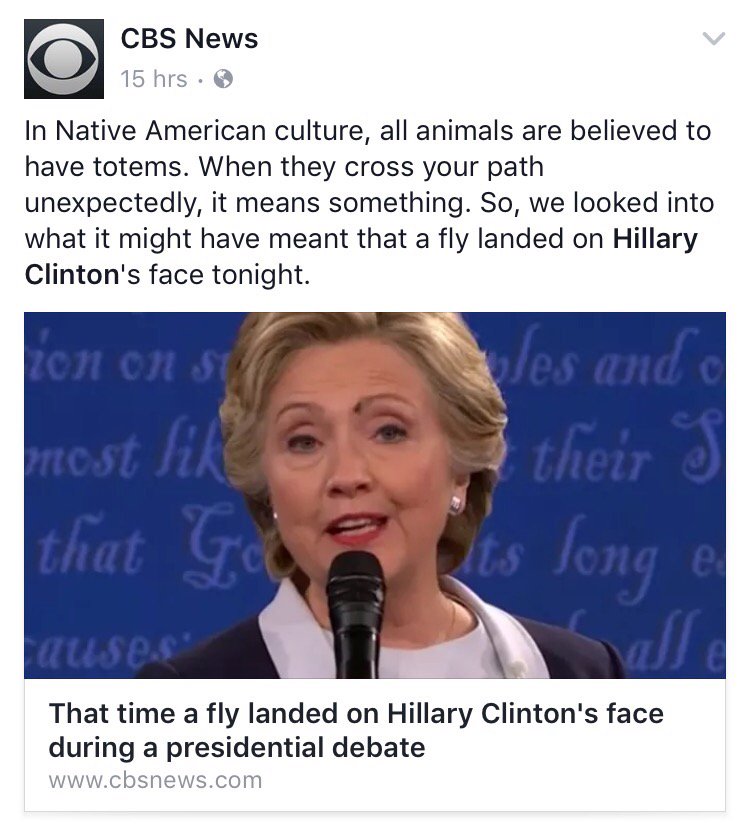
A tweet from educator Debbie Reese:In Native American culture, all animals are believed to have totems. When they cross your path unexpectedly, they mean something. So, we looked into what it might have meant that a fly landed on Hillary Clinton's face tonight.Comment:  Reese says CBS News got its info from a New Age website.

I believe CBS has garbled an already garbled claim. The fly on Clinton's face has a totem? What would the fly's totem be...another fly? An eagle? Donald Trump?

The actual claim, I think, is that all people have animal totems. Not that all animals have totems.

Of course, this claim is a false generalization about thousands of Native cultures. It may be true in a few cases--especially in Plains cultures--but I doubt it's widespread. I doubt it applies to everyone even within those cultures.

December 30, 2014

Jamake Highwater developed Chakotay

The SF Debris video noted in Review of Voyager: Tattoo also pointed out the dubious source of the Chakotay character:

ChakotayIn developing Chakotay, the producers sought the assistance of Jamake Highwater, a writer of more than 25 books of both fiction and non-fiction related to Native American myths and traditions. Highwater was a controversial choice of advisor, having been exposed by Hank Adams and Vine Deloria, Jr. as taking a fake Native American ancestry in order to sell books. Around September 21, 1993, Highwater gave seven pages of notes to producers regarding Chakotay's backstory but his tribal ancestry was unresolved. By the end of that month, Michael Piller drafted the first version of the writer's bible for the series in which the character was named "Chakotoy." By the time Piller wrote the first draft of the story that eventually became the Voyager pilot "Caretaker," the character was known as "Chakotay" and been made a Sioux. By the third draft of the story, submitted at the start of November, he had become a Hopi, but by the following February he once again had no tribal affiliation.Jamake HighwaterJamake Highwater, also known as Jay Marks and Gregory J. Markopoulos (ca. 1942–June 3, 2001) was an American writer and journalist. He was the author of over 30 fiction and non-fiction books of music, art, poetry and history, including the children's novel Anpao: An American Indian Odyssey (1973), which received a Newbery Honor, and The Primal Mind: Vision and Reality in Indian America (1981) which was also made into a documentary. Highwater assumed a false American Indian identity in the 1960s, which had been exposed by the mid-1980s, although confusion about his life remains widespread.Comment:  I read The Primal Mind long ago, before I knew Highwater was a fake. As with the work of Ward Churchill, another fake, I think Primal Mind had some good points. As I vaguely recall, it presented a believable picture of the so-called indigenous or primal mentality.

But I suspect it was heavy on the New Age belief that Natives are more spiritual and in touch with nature. It would've made Chakotay a novelty in 1940s and 1950s, when most Hollywood Indians were violent savages. But in the 1980s and 1990s, practically every Hollywood Indian was spiritual and in touch with nature. At that point, Chakotay wasn't much except a tired cliché.

For more on the subject, see Star Trek Voyager: Chakotay.

September 27, 2014

Cultural Appropriation Cat

Helpful hints for would-be anti-racist, Indigenous Solidarity activists, by Josdadalv

By Kathryn Price NicDhànaIf your "Indigenous Solidarity" group has no NDNs in it; if you have to work Real Hard to find an NDN person, any NDN person, to come speak to your group; and this search involves sending way-too-personal messages to strangers on the Internet... you have a problem.

If the members of your all-white group think they are showing "solidarity" by speaking in a subcultural patois of Newage Bafflegab crossed with TontoSpeak... you have a problem.

If your all-white, "Indigenous Solidarity" group has been meeting for six months and still hasn't met any NDNs... really, you guys have a problem.
Comment:  The points above are useful and you should read the whole thing. But I really like this posting because of the attached photo (below).

This is how it seems when non-Indians (mascot lovers, Boy Scouts and Y-Indian Guides, college boys and girls, hipsters and festival goers, models and actors, New Agers, Euro hobbyists, and wannabes with a tiny fraction of "Cherokee" blood) pretend to be Indians. They think they're honoring Indians, but the "honor" is ridiculous and insulting. It's about as genuine as this cat in antlers.

June 15, 2014

Native stereotypes in Mandala

The publisher or someone sent me the first issue of Mandala, a new comic-book series. They did it because they think Blue Corn Comics is a retailer, not a publisher. Wrong!

Anyway, Mandala features a Native subtext, so it's worth a look. Here's the official site:

MandalaARE YOU AWAKE?

Earth--here and now. Humankind is secretly enslaved by a global mind-control system called the GRID. Mike Morningstar and his spiritual spec-ops unit, the Thirteen, must alter time and take down the GRID before it's too late.

As fiction meets reality, the Thirteen need your help if they are to succeed in awakening humanity and changing the future...

Enter the Mandala...


And a couple of reviews:

Mandala by Stuart Moore and Bruce Zick

By Brad HawleyMandala is the story of Michael Patrick Murphy who has the potential to be a mythic hero, Morningstar, savior of all mankind, but often he is just Michael, a confused man, or even worse, he turns into his lower, demonic self. Borrowing a page from Michael Moorcock, author Stuart Moore has Morningstar drift from one reality to another, trying in each new plane of existence to fight the serpents and evil gods who control all humans in a post-apocalyptic world. He fights alongside the rest of “The Thirteen,” an organization made up of men and women similar to Michael Morningstar: They all have a human side and must learn to “wake up” their higher selves to unite and defeat serpents who are led by the evil Natasmia.

Moore borrows the time-traveling part of the plot from the Hawkman and Hawkgirl storyline at DC: Hawkman and Hawkgirl keep struggling to find each other again and again, but every time they do, they die and are reborn to seek each other out again—star-crossed lovers doomed by their rebirth-induced amnesia. Morningstar has his female counterpart in Mary Lozen Many Colors, or Raven. Raven’s Grandfather acts as spiritual guide for Michael and the rest of “The Thirteen.” He teaches Michael about the Empyrean and transformation, part of which has to be Michael’s willingness to be the “hanged man,” a familiar image seen in most Tarot decks.
Evil Geek Book Report--Mandala

By C-MartMandala is the story of how human evolution has been stopped dead in it’s tracks by an invading entity know as Natasmia and the mysterious world enveloping energy field known as the GRID. The Mayans predicted that humanity would take a great leap forward in terms of development and evolution in 2012, but thanks to Natasmia, that leap forward never came to be. Natasmia has her sights set on ruling all of humanity for the rest of existence and as anyone who’s ever dabbled in mind control knows; it’s easier to control a simpleton than it is to control a highly evolved being.And:Michael’s more evolved form, known as the Morningstar, is a superpowered demon king, destined to lead a group of other superpowered individuals known as the Thirteen into battle against Natasmia. With the help of his love Mary Lozen and her shamanic grandfather, the Morningstar is awakened within Michael and slowly he learns to use his powers in an attempt to save different timelines from the invading evil.Moore Tackles a Multiverse's Nightmarish Future in "Mandala"

The Native aspects

Angels, shamans, mandalas, Tarot, prophecies...if that sounds like a New Age mishmash to you, you probably have the right idea. I'd say the above descriptions give you a fair notion of how sprawling and mixed-up the story is.

In the story's centerpiece, we meet Mary Lozen Many Colors and her grandfather Charlie Many Colors--both supposedly Hopi. First, the names...oh my!

For starters, Lozen is an Apache name, and the Apache were traditionally enemies of the Hopi. It's unlikely that any Hopi would use the name Lozen.

Then there's the last name Many Colors. Really?! That's even worse than the usual stereotypical names such as Grey Wolf or White Eagle. It reeks of trying to give the Hopi a multicultural flavor--as if they represent all the "multicolored" tribes of the world. In other words, pure New Age claptrap.

FYI, real Hopi names include Honanie, Humetewa, Masayesva, Selestewa, Batala, Talayumptewa, and Keevama. You can see they follow a style that does not include English phrases such as "Sitting Bull" or "Crazy Horse." The "Many Colors" kind of name is found mostly among Plains tribes, not Southwestern tribes.
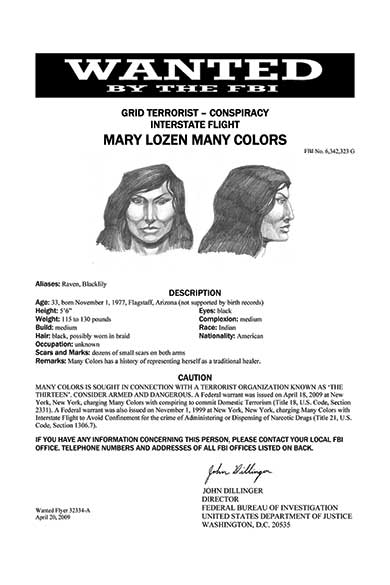
Michael and Mary materialize on the Hopi reservation--to find themselves in an Anasazi-style dwelling under a cliff. No. The Hopi's ancestors used to live in such dwellings, but that was 800 years ago. Such dwellings are uninhabited ruins now--protected and off-limits. And there are no ruins this well-preserved on the Hopi rez.

The whole concept conveys the unavoidable impression that the Hopi people are prehistoric, not modern. Even the furnishings visible in one panel--a wooden chair and cot--could be pre-modern. There's no hint that the Hopi have done anything since the 18th or 19th century.

Then Charlie, Michael, and Mary descend a ladder into what could be a giant underground kiva. Let's hope it isn't one, because that would be a gross violation of Hopi religion. No one's supposed to know what happens in a kiva except the Hopi themselves.

What they actually find isn't a Hopi shrine, but rather a warehouse of religious icons from around the world. Including an Aztec sun stone, a Plains headdress, and a phony totem pole:
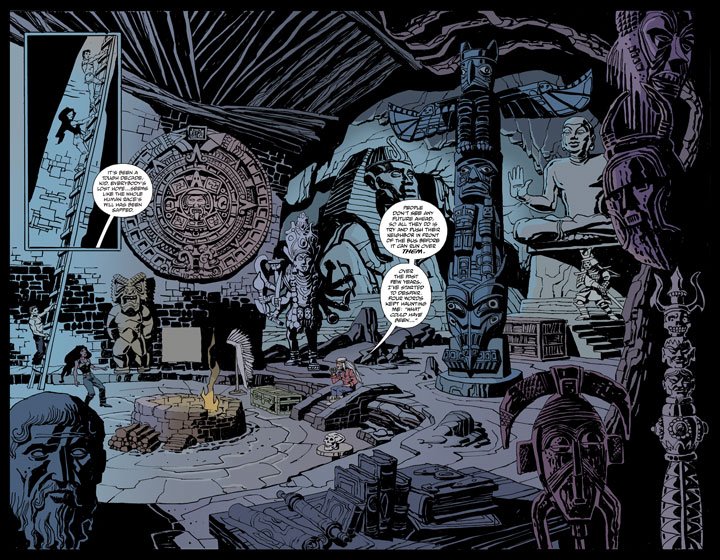


The message is that non-Western and indigenous religions are somehow related--part of the "nexus" or "multiverse" or interdimensional whatever. That they're not complete, standalone religions like Christianity, Judaism, and Islam. Instead, these religions are exotic, unfathomable, and otherworldly--perhaps literally. They're part of some vast, mysterious, cosmic sphere beyond the comprehension of modern minds.

This is a classic New Age belief, and it's an insult to all these religions. They're not exotic or unfathomable to their adherents. They don't require blood or virgin sacrifices to demons in the middle of the night.

Really, they're no stranger than the religions we're familiar with. To hide them away in an underground vault as some sort of dark secret is badly stereotypical. It's an Indiana Jones mentality from the racist era of tomb-robbing--but people should know better in 2014.

In a later issue, a Hopi sun god (below) leads the other "ancient" gods in holding hands and singing "Kumbaya." Or something. But don't expect the Christian God to show up and join them. Unlike these "mythical" gods, he's "real."
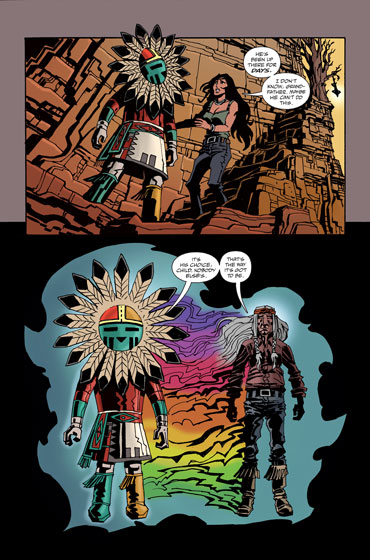


As the kicker, Charlie mentions a Hopi legend that a "true white brother" will appear to lead the everyone into the light. Yes, it's the "white savior" complex, uttered explicitly by a Native character, in 2014. Save us, Great White Father and Jesus Christ substitute! Only you are strong and brave and true enough to conquer evil.

I believe the Hopi do have such a legend. But it's one of many legends, not all Hopi believe it, and they certainly don't emphasize it. Author Stuart Moore easily could've avoided it and chosen some other legend to use. Instead, he's invented a pretext for why a white men should lead the "Thirteen," who are mostly nonwhite characters from non-Western cultures. Another white American to the rescue...yay!

I get a strong impression that Moore knows little or nothing about Native cultures. He probably skimmed a couple of books or websites before putting together this muddled stew of Hopi and Native lore. The result isn't much different from what you could read in any bad comic from the mid-20th century. If the scary masked figures and statues came alive and tried to kill our heroes, I wouldn't be surprised.

Like the previous image, the scene below wasn't in the issue I read. But it tells you all you need to know about Moore's ignorance. A Hopi "shaman" in a Plains headdress fighting a demon with a tomahawk: pure supernatural pan-Indian stereotyping.
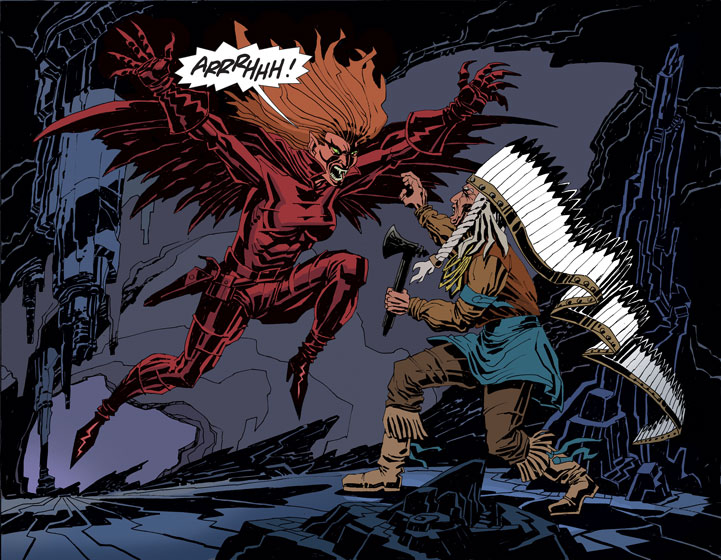


This is something I might've done in the first few months of putting together my Peace Party comics. But I soon realized how much I didn't know and kept studying. It was only after years of research that I felt I had a solid concept that didn't violate or trivialize the Hopi culture.

If I were Moore, I'd go back to the drawing board and start over. But he's invested too much time and energy in this venture to do that, of course. So we're left with another wrongheaded take on Native cultures in comics.
March 23, 2013

The German fetish for Indians

More evidence that German hobbyists honor Indians the same way Americans "honor" Indians with mascots.

Germany's Obsession With American Indians Is Touching—And Occasionally Surreal

By Red HaircrowJürgen Michaelis, who lives near Dresden, was standing in front of the small, improvised tipi he keeps in his back garden, wearing a homemade deerskin suit and a matted black wig that had a lone blue feather stuck in it. “I’m 75 percent Indian but still German,” the retired locksmith told a writer for Der Spiegel, adding that his Indian name is The Lonely Man.

Michaelis is not the only German who likes to pretend he is an Indian. Hobbyism or Indianism, the desire to copy Native Americans is a puzzling and persistent passion for many Germans. Every year, there are dozens of pow wows arranged, managed and run by non-Natives at which, Der Spiegel reported, “thousands of Germans with an American Indian fetish drink firewater, wear turquoise jewelry and run around places like Baden-Württemberg or Schleswig-Holstein dressed as Comanches and Apaches.” There are several German Wild West theme parks like Eldorado, a popular vacation spot featuring staged cowboys vs. Indians or small reenactments of notable battles, as well as dancers performing choreographed sets that combine dance styles and forms.

Michaelis’s life as an “Indian” mostly consists of emulating Natives who roamed the Great Plains of North America over two centuries ago, and now that he’s retired, he spends the majority of his time making and selling Native-inspired trinkets and small leather goods to sell. Some Germans don’t limit their dress-up to their backyards. They periodically put away their mobile devices and other modern tools for the weekend and recreate tipi encampments, dress in animal skins and furs, prepare and cook food over an open fire and address one another by Indian-sounding names such as White Wolf, all while discussing their feelings of invoking the spirit of what it is to be an Indian. There are also websites like Tipis.org, which declares itself “dedicated to all the people around the world who have ever studied the American Indian tipi and wanted to live the life of freedom on the Plains that this structure represents.” Posted there are photos of Europeans who have abandoned their own culture, either permanently or occasionally, to “live like Indians”—or what they have rather fancifully imagined what living like an Indian entails. Some of these people actually roam the countryside wearing buckskin, living off the land and practicing their peculiar brand of American Indian religion.

An estimated 40,000 Germans pay dues at more than 400 clubs so that they can pretend to be Indians. Some of these clubs serve a dual purpose because it is illegal in Germany to fire a rifle, ride a horse or camp unless you belong to a registered club and engage in those activities on club premises. Some of the more popular ones are the Cheyenne Indian Club, Western Club Freising and the Wild West Club. The Cowboy Club of Munich, founded in 1913, is the oldest club of its kind in Germany, and regularly hosts events in which members dress up and act as they believe Indians did hundreds of years ago, insisting upon what they believe is authenticity, although they call themselves rote Indianer—red Indians. They organize pow wows; make, sell and trade handiwork; and drum, sing and dance. Some even take lessons on horseback riding or shooting a bow and arrow.

Krisztina Szabo, who was interviewed for Linda Holley’s book, Tepees, Teepees and Tipis: History and Design of the Cloth Tipi, told the author, “Our camp is always in summer, in July for two weeks. During this time we live in tipis, we wear only Indian clothes. We don’t use technology, and we try to follow Indian traditions. We have those [pretending to be] Lakota, Oglala, Blackfoot Blood, Siksika, Pawnee…and we go on warpath against each other day and night, anytime at all. In two weeks, every tribe can fight each other. We don’t know when somebody will attack or when they will come to steal our horses. And the battles are always exciting, too. I really enjoy them.”

Adults playing dress-up might seem vaguely comic, but these people are shockingly earnest in their love for Native culture, regardless of how poorly many of them understand it. Many even acknowledge that their events—and even their costumes—aren’t about Native American life as it is today, or even was 200 years ago. They just consider their dress-up to be good fun and do not mean to give offense.

Some champions of Native culture don’t find these hobbyists funny or benign. Susan Marcia Stan, who wrote an essay about the impact of Native misrepresentation in children’s literature says, “ ‘Playing Indian’…assumes that being Indian is something that can be put on or taken off at will and completely ignores the cultural heritage of Native people.”


The source for these imitations:Where did this obsession with Native Americans come from? You can thank (or blame) the novels of Karl May (1842–1912), the best-selling German author in history. Many of his most popular books were about a German explorer and wanderer who traveled through America’s Old West and eventually became blood brother to Winnetou, a fictional Apache warrior. This German explorer comes to be called Old Shatterhand, and with his Indian companion battles and overcomes evil of all kinds. Winnetou is the stereotypical figure for many Germans of what a “real” Indian is like: how they dress, speak (broken English) and behave. The country’s long fascination with Native Americans spiked in the 1960s, after several of May’s books were made into films.More Indian than real Indians?Berlin’s HeileHaus is a popular meeting spot for younger hobbyists. It once offered Native American healing, meditation, vision quests and ceremonies that are said to help people find their spirit guide, animal totem or even their secret Indian names. Through Google you’ll find pages of results for such New Age groups, some with their personal Indian shamans, leaders or someone who says they’ve studied with Indians and have now brought these teachings to Europe, often for a fee.

Julian Crandall Hollick is a writer who has interviewed many German and European hobbyists and aficionados. “These are intelligent men and women—computer programmers, truck drivers, interior decorators—for whom the American West offers another identity necessary for their mental stability, a means of going back into history to make sense of as world in which they often alienated; another way for Man to renew the search for identity and his relationship with Nature,” he has written. “Of course, many ordinary Europeans have now visited the [American] West. They know full well their dream is about an America that no longer exists, may never have existed. But they are content with the myth because it fulfills [personal] needs.”

For some it goes far beyond weekend fun or a chance to adopt certain Indian values or beliefs; these hobbyists don’t limit themselves to occasionally procuring authentic garments, decorative items and handicraft projects. Such is the case with the self-proclaimed chief, Gerhard Fischer, known as Old Bull, who heads the Karl May fan club, which hosts a festival on the author’s birthday. Fischer and his kind have romanticized long-gone Native Americans to a degree that they think “latter-day” Indians are poor examples of their ancestors—whom they revere as noble savages. Old Bull’s followers believe Natives today are being perverted by modern culture and that they, not Native Americans, are preserving Native culture.

Instead of empathizing with the very real struggles of Natives now living in North America, these “new Indians” of Europe see the societal problems, substance or alcohol abuse, poverty and internal difficulties within some indigenous communities as evidence supporting their conclusions. They believe their activities are keeping Native American traditions alive, because—they believe—most Natives neglect or do not appreciate their own heritage.

The website for the “Indians and Mountain Men” club declares that “the purpose of the club is to maintain the customs and traditions of the North American Indians and Mountain Men.… We call ourselves practicing anthropologists and take our hobby and the related work, either in theoretical or practical shape, very seriously. The tipis, all the clothing, as well as all items are lovingly made by hand and decorated by us. Many of us even tan the leather itself and sew it together with animal sinews, as the Indians did before. We practice in many skills and craft techniques of this cultural group, and even in songs and dances we strive to achieve the utmost authenticity.”

David Redbird Baker, Ojibwe, told Noemi LaPinto for an article in the Canadian monthly magazine, Alberta Views, that when he first came to Germany, he was amused by the hobbyists, but his feelings changed as he spent more time amongst them. “They take the social and religious ceremonies and change them beyond recognition….They’ve held dances where anyone in modern dress is barred from attending—even visiting Natives. They buy sacred items like eagle feathers and add them to their regalia.” In his opinion, these hobbyists, by claiming the right to improvise on the most sacred rituals, have begun to develop a sense of ownership over Native culture.
Comment:  You can see it all here. Plains Indians...buckskins and tipis...no technology...vision quests and spirit animals...romantic myths and fairy tales...etc. Germans are imitating the Indians of legend--Karl May's books and old Western movies--not real Indians. Which are the same Indians portrayed in sports mascots--the same Indians worshipped by Americans. You know, while they remain ignorant about and cut the funding for today's Indians, who are the only real ones in existence. It's "honoring" Indians by perpetuating a false or stereotypical version of them at the expense of reality.

I read Winnetou, the first book in May's Old Shatterhand series, and debated it here. It's basically a white supremacist fantasy, with a Jesus-like Superman saving a few good Indians from a horde of bad ones. No wonder Adolf Hitler liked the books so much. They provide ample ammunition for exterminating the degenerate heathen "redskins"--i.e., most Indians.

For more on German hobbyists, see Germans Love Westerns and Chief Wahoo in Germany.

Below:  "May’s novels had little basis in fact, which may explain their worldwide appeal."

March 15, 2013

Running Bear the medicine man

Medicine man Running Bear puts down his roots near Edinboro

By John DudleyThe Lakota medicine man Running Bear lives in a neatly kept home near the intersection of two country roads about five miles outside Edinboro.

An American-made car is parked in the driveway. Around back is the workshop where Running Bear crafts primitive, handmade recurve bows, baskets made of tree bark woven together with animal ligaments, and the dream catchers he sometimes sells at powwows.

Next to the home is a large, nearly finished storage building with a high false front he made to look like a saloon from an old Western film.

In his living room is a sofa built from hickory branches he cut from trees on the property surrounding his home. He made the kitchen cabinets out of pine.

On top of the refrigerator is an assortment of breakfast cereals, from Frosted Flakes to Cheerios. And at a table next to the refrigerator, Running Bear sits and tells a visitor about the time, growing up on the Pine Ridge Indian Reservation in his native South Dakota, that an elderly Native American woman served him stew made with dog meat.

It is by choice that Running Bear--a 52-year-old self-employed carpenter, a member of the Lakota Nation and, by extension, not technically a full-fledged U.S. citizen--chooses to live in two worlds.

When he was young, an elder Lakota medicine man named Henry Crow Dog taught him that he would eventually need to make a decision about whether to pursue the life of a white man or a red man. Or he could learn to navigate both. As Henry Crow Dog put it, he could, upon reaching that fork in the river, "put one foot in each canoe, and bring them together."

And that's what Running Bear has done.

His wife, Lynn, is not Native American, nor are her sons, Anthony, 11, and Scott, 16. They attend public schools, and Scott is interested in computers and graphic design.

But they've also been taught to hunt in the primitive fashion Running Bear learned on the reservation, and he built them traditional Lakota teepees. And he has passed on to them the Lakota values of community and sharing.

That's why both boys join Running Bear in volunteering each week at the Edinboro Food Pantry. And they listen to him, dressed in one of the buckskin suits he stitched together and hand-tanned, talk about the importance of living in harmony with neighbors and nature.

"I was taught at a very young age that if you don't learn to embrace your past, you will have no future," said Running Bear, who sometimes wears T-shirts and bluejeans but prefers his native clothing.
Comment:  Several problems with this article:

1) The name "Running Bear" sounds stereotypical. It's the kind of name chosen by New Agers who want to emphasize their connection with "noble" nature.

If it is his real name, it probably should be Tom, Dick, or Harry Running Bear. Almost no one has one of these colorful "Indian names" without a first or "Christian" name.

2) Being a "medicine man" is a typical claim made by a New Ager or wannabe. If Running Bear is performing medicine rites, there's no evidence of it in the article. Making bows, baskets, and dreamcatchers isn't what a medicine man does.

3) Native clothing is t-shirts and jeans and other mainstream apparel. No one except a wannabe hobbyist wears buckskins in his daily life.

4) Dreamcatchers aren't a standard part of Lakota culture. They're mostly made for tourists who want a touchy-feely Indian experience. In other words, they're the kind of kitsch favored by New Agers and wannabes, again.

5) The "living in two worlds" concept is something that every Native person in the last 100 years has dealt with. There's nothing remarkable about it.

The article makes it sound as if Running Bear is doing something unusual or extraordinary. Not so. It's so commonplace that the article shouldn't have bothered mentioning it.

The "gee whiz" tone suggests that author Dudley has never met Indians and knows nothing about them. He should've researched the subject before writing about it. Or the newspaper should've assigned someone else to write it--someone who knows that "living in two worlds" is a tired old concept.

6) Technically, being an American Indian means Running Bear is a full-fledged U.S. citizen. The article is flat-out wrong on that point.

There's no evidence that Running Bear is fibbing about being an enrolled Lakota member, growing up on Pine Ridge, or being a medicine man. But there are a lot of red flags. If I were Dudley, I would've verified or at least questioned these claims. I wouldn't have swallowed them uncritically.

For more on the subject, see Wannabes Obscure Real Indians and New Agers Should Help Indians.

December 16, 2012

NASA debunks apocalypse scare

NASA releases ‘Told Ya So’ apocalypse video early

By Mike KrumboltzDec. 21, 2012, has long been rumored to be the day of the Mayan apocalypse, when Earth comes to its inglorious end. The good folks at NASA want you to know that isn't going to happen.

In fact, NASA is so confident that it recently published a video that appears as if it were intended to be aired on Dec. 22. Titled "The World Didn't End Yesterday," the four-minute clip explains how the idea of the Mayan apocalypse was a huge hoax and how the rumors began. A commenter on YouTube jokes, "The correct title for this video: Told ya so!—Love, NASA."

Time magazine reports that the space agency has been besieged with questions from citizens worried that their lives are about to end. NASA is taking the fears seriously, not because there is any danger, but because irrational fears can sometimes lead to irrational and dangerous actions.

NASA's official site features an area dedicated to debunking the claims. "The world will not end in 2012," NASA writes. "Our planet has been getting along just fine for more than 4 billion years, and credible scientists worldwide know of no threat associated with 2012."
Mayan Festival at National Museum of the American Indian Celebrates Bak’tun, Dispels Misconceptions About 12-21-12What NASA is debunking with science, indigenous groups are debunking with information about what the Mayans actually predicted. Which was nothing, except for the changing of a calendar page akin to flipping from December to January, or to the turning over of an odometer.

A misunderstanding of the Mayan calendar has sparked panic the world over, sending people from Russia to China to the U.S. into extremes of preparation frenzy or suicidal depression. Working on two fronts, scientists and indigenous experts have embarked on a common mission: to calm everyone down and convince them not to do anything rash in the face of the upcoming winter solstice.

The passing of the Mayans’ Bak’tun 13, otherwise known as the end of the Long Count Calendar, is a cause for celebration rather than dismay, and this weekend the National Museum of the American Indian (NMAI) sets out to highlight just that. Bak’tun 13: A Guatemalan Celebration of Time, a free festival from December 14 through 16, will showcase dance performances, lectures, workshops for families and Guatemalan cuisine in the museum’s Mitsitam Café.

It will include a presentation on Saturday December 15, Maya from the Inside: The 13 Bak'tun as Challenge to the Western Mind, a lecture by scholar Victor Montejo (Jakaltek Maya). His and other lectures will be webcast live at www.nmai.si.edu/webcasts, and the museum is encouraging visitors to tweet their questions to @SmithsonianNMAI using the hashtag #MayaCalendar.
The Maya apocalypse is not nigh

Don't quit your day job. The Mayans didn't predict that the world would end tomorrow

By Alex Halperin
Earlier this year Reuters reported that 10 percent of people believe the Maya 2012 phenomenon could signal the end of the world. Speculation surrounding the advent of the apocalypse has gained enough currency that a cranky NASA astrobiologist taped a video explaining that tomorrow will not be doomsday. What’s going on?

Tomorrow is the date 13.0.0.0.0 in the Maya’s (the generally accepted anthropological term) “long count” calendar. Remember the hoopla attending Y2K? This milestone is “almost exactly analogous to the end of the millennium for us,” according to Todd Little-Siebold, a professor of history and Latin American studies at the College of the Atlantic.
And:At the same time, the 2012 phenomenon has had real-world consequences. Little-Siebold of College of the Atlantic, said there has been an effort in the Maya region of southern Mexico and Central America to capitalize on 2012 besotted tourists. He added that during Guatemala’s long civil war there was a resurgence of interest in the Maya, in part because it was safer to organize around “cultural” topics like the ancients than “political” issues of the present. A renewal of interest in Maya civilization got another boost in 1992, the 500th anniversary of Columbus’ arrival in the new world.

Amid this resurgence, Sitler notes the “pizza effect,” by which Maya spiritual leaders have reincorporated some of the new international theories about the Maya into their own beliefs. On Saturday, assuming we’re still here, we can look forward to a new era of interpretation.
Mexico's ethnic Maya unmoved by 2012 "Armageddon" hysteria

By Alexandra AlperThousands of mystics, New Age dreamers and fans of pre-Hispanic culture have been drawn to Mexico in hopes of witnessing great things when the day in an old Maya calendar dubbed "the end of the world" dawns on Friday.

But many of today's ethnic Maya cannot understand the fuss. Mostly Christian, they have looked on in wonder at the influx of foreign tourists to ancient cities in southern Mexico and Central America whose heyday passed hundreds of years ago.
And:[O]ver the past few decades, fed by popular culture, Friday became seen by some western followers of alternative religions as a day on which momentous change could occur.

"It's a psychosis, a fad," said psychologist Vera Rodriguez, 29, a Mexican of Maya descent living in Izamal, Yucatan state, near the center of the 2012 festivities, the site of Chichen Itza. "I think it's bad for our society and our culture."
And:Mexico's government forecast around 50 million tourists from home and abroad would visit southern Mexico in 2012. Up to 200,000 are expected to descend on Chichen Itza on Friday.

"It's a date for doing business, but for me it's just like any other day," said drinks vendor Julian Nohuicab, 34, an ethnic Maya working in the ruins of the ancient city of Coba in Quintana Roo state, not far from the beach resort of Cancun.

Watching busloads of white-haired pensioners and dreadlocked backpackers pile into their heartland, Maya old and young roll their eyes at the suggestion the world will end.

"We don't believe it," said Socorro Poot, 41, a housewife and mother of three in Holca, a village about 25 miles from Chichen Itza. "Nobody knows the day and the hour. Only God knows."
Comment:  For more on 2012, see "Mayan Apocalypse" in Glee and Countdown to Non-Apocalypse Begins.

December 09, 2012

Review of Coyote Medicine

A book I recently read:

Coyote Medicine: Lessons from Native American HealingInspired by his Cherokee grandmother's healing ceremonies, Lewis Mehl-Madrona enlightens readers to "alternative" paths to recovery and health. Coyote Medicine isn't about eschewing Western medicine when it's effective, but about finding other answers when medicine fails: for chronic sufferers, patients not responding to medication, or "terminal" cases that doctors have given up on. In the story of one doctor's remarkable initiation into alternative ways to spiritual and physical health, Coyote Medicine provides the key to untapped healing methods available today.And a Facebook discussion of it:

After reading a New Age-y book about "Coyote Medicine," I need a book about Klingons bashing each other to cleanse the palate.Don't read that new age junk. You'll get fat.Someone said I "had" to read it. It was good but not great.

So far, the Klingon book is better.Uh, coyote is the example you are NOT supposed to follow. Someone caling a book Coyote Medicine might as well have named it Quack Healing.

Al is so right. I teach classes in cultural history. Interesting to see the reaction to the fact that there are several Native American cultures and religions. Schools have a lot to answer for.

I teach English comp, and I just had a student write a paper on the ways in which Native Americans are stereotyped. The first ones he mentioned are the notions that Natives are all gone and that they all had the same (Plains type) culture. That made me very happy.
It's a decent critique of modern medicine, but the descriptions of the ceremonies go on too long. Mehl-Madrona sometimes spends what seems like 20 pages on one ceremony or patient.

He justifies the use of the "Coyote" title. "Coyote Medicine" is about tricking a disease and surviving it using unconventional means.

On the other hand, he mostly does Lakota-style sweat lodges and vision quests. Which is odd since he's part-Cherokee and his teachers came from various tribes.

If you're going by what he practices, "Coyote" doesn't work for a predominantly Lakota approach. And he sometimes uses crystals for "energy," which pushes him (further) into the New Age category.

I'd fault him for mashing different tribal traditions into one undifferentiated bundle. But if they work in some cases, that's all the patients will care about.

Most of the ceremonies seem to be about helping a patient make a mind-body connection. It would be interesting to focus the same psychological attention on patients using non-Native, non-ceremonial means. It might prove that the ceremonies are unnecessary to achieve the "holistic" results.I understand, but there are very few Coyotes in Cherokee country. Plus, the Southern tribes' trixter is Rabbit.Right, and I believe it's Iktomi in Lakota lore. He mentions Iktomi a couple times, but only as an evil spirit.I recommended the book to Rob. It was my first introduction to Native anything, and the idea that there were other ways to deal with illness, which I suspected to be true, was life changing for me. Medrona does have mixed Lakota/Cherokee ancestry. He has been accused of telling too much in the book, in terms of ceremonies. But I have a Lakota friend who is a veteran. He said Madrona came by and visited the vets and was a very caring person.

In terms of learning that spirits/ceremonies can be helpful in healing, it would help a lot of people to understand there really are other ways that can work, including the mind/body that Rob mentions. I referred the book to Rob based on his agnosticism. I thought it would be interesting for him to read of cases where spirituality is a proven healer.
I'm not convinced spirits or spirituality did the healing. Mehl-Madrona combines a bunch of treatments, including diet, relaxation, massage, visualization, and botanical remedies. He convinced patients they needed the elaborate ceremonies, but he might've achieved the same results without them. All I'd say is that he persuaded the patients' minds to contribute to their bodies' defenses.

It's basically the placebo affect, but dressed up in ceremonies. Placebos have proved to work in many cases. Were the ceremonies and "spirits" necessary to cure people, or did activating their defenses by whatever means do the trick? That's the question here.We have a thread on Mehl-Madrona at NAFPS. The guy is basically assimilated with no knowledge of his heritage so he relies on New Age. This supposed academic endorses several really obvious impostors like Maria Naylin/Yraceburu, so it's apparent he knows very little.Note: NAFPS is New Age Frauds & Plastic Shamans. And yes, Mehl-Madrona is uncritical of everyone and everything that's allegedly Native.

It would be interesting to hear his thoughts on New Agers in general. And to hear what a Lakota medicine man who scorns New Agers thinks of this book.

For more on New Age beliefs and practices, see Serpent Mound Vandalized with Crystals and Tonto as a "Spirit Warrior."

November 02, 2012

Serpent Mound vandalized with crystal objects

Vandals admit muffin-crystal-thingie assault at Serpent Mound

By Alan JohnsonA group of “light warriors” buried what may be hundreds of small muffinlike resin objects, embedded with aluminum foil and quartz crystals, at Serpent Mound with the intent of realigning the energy of the ancient Native American site in Peebles.

The Ohio Historical Society and Adams County Sheriff K.R. Rogers haven’t arrested anybody yet in what they consider a serious vandalism case. But the people who apparently did it made it easy by laying out their actions in an extensive YouTube video where they acknowledge they “did some work” in September at the site in Adams County to help “lift the vibration of the Earth so we can all rise together.”

State officials aren’t seeing the light, however, and expect to file charges soon against three to five people who they say vandalized and desecrated the 1,000-year-old site that is on the National Register of Historic Places. The perpetrators face second-degree misdemeanors, punishable by up to 90 days in jail and a $5,000 fine.

So far, only three small buried items, known as “orgonites,” have been located. But there could be hundreds on the site, said George Kane, director of historic sites and facilities for the Ohio Historical Society. “Adding things to the property is just not acceptable,” Kane said. “This is very serious.”
Comment:  For more on Indian mounds, see Kincaid Mounds Vandalized and Weed Killer Sprayed on Indian Mound.

June 17, 2012

Serbin protests Chasco Krewe, wannabes

A Native American protests when white people dress, or play American Indians

By Leonora LaPeter AntonSal, 48, is half Sioux, half Puerto Rican. He looks more Indian, though, with his narrow, dark eyes and thick hair dyed the color of espresso to cover gray. He wore a T-shirt and jeans.

He'd left halfway through his daughter's roller derby competition in Sarasota that morning to drive to New Port Richey for this. His wife had been getting on him lately about gas money for these excursions.

And then suddenly the Krewe of Chasco was upon them, a parade float with a tepee surrounded by women in fringed leather halter tops and skirts and men in leather loincloths and beaded chokers.

Sal and his group—a Cherokee, two Navajos and two Chippewa—quickly bent down and grabbed their signs, elevating them silently over their heads.

Having Fun Playing Indian, Sal's sign asked. Grow Up!!

A man in a yellow mohawk headdress and a red beaded breastplate shrugged and lobbed a strand of pink beads over Sal's head. Another man in a beaded headband walked by as if he didn't even notice. A woman who was skipping along in knee-high moccasins, whooping and hollering, paused, mouthed something profane, and then stuck out her middle finger.

The real Indians stared back grimly.

And then just like that, the float and the fake Indians had passed.

The real American Indians gathered up their chairs and coolers. Five hours after Sal had left his family in Sarasota, less than a minute after he'd lifted his sign over his head, he trudged away.

The Chasco Fiesta Parade whooped and hollered in the distance.
And:Barbara Munroe of DeLand called the meeting of the Inter Tribal Circle to order. Her Indian name, she said, was Silver Otter but everyone called her Grandmother. She had clipped royal blue and purple feathers to the crown of her close-cropped white hair.

A woman in a dark top and long flowing skirt held up a medicine wheel that she called "the tree of life." It was red, black, white, yellow, representing Indians, blacks, whites and Asians. On the edge of the room, some of the Indians began to frown. That's not exactly what a medicine wheel represented to them; it was more to pray for health and well-being.

A girl named Tiger Lily, who wore fringed leather boots and had stuck a "third eye" green rhinestone between her brown eyes, gushed about how happy she was to be here.

"Everyone has such beautiful energy," she said.

At that point, one of the Indians stood up.

"I represent the United Urban Warrior Society and the Florida AIM and my message is fairly simple," said Joelle Clark, a Lakota Indian who lives in Gainesville. "If you want to know about Native Americans, find one. We're all over the place. I'm concerned my culture is being stolen and spiritually being abused. And I don't think anybody in this room wants to be a part of that."

Grandmother grimaced. Raven That Speaks With the Cloud People looked at the ground. A crease had developed near Tiger Lily's third eye.

"This is very arrogant," said the woman in the sunflower jumper. "I dislike people who tear something down and don't do anything to build it up."

"You have no right to judge us," yelled the Medicine Wheel lady. "I have worked with Native Americans. That's not the native way."

"In a past life, we were you," said Raven That Speaks With the Cloud People. "We were Indians."

"Let's just love each other," said Tiger Lily.

Sal stood up. Here he was, yet again, fighting with people who really didn't understand why his need to keep them from practicing his traditions mattered. Sal wasn't looking for big battles, like Wounded Knee. He knew that most people ignored him. But if he could make one person understand, perhaps he had accomplished something.

"If you want to continue with this group, if you could just add 'style' or 'hobbyists' to the end of your advertisements," he implored nicely. "This could be a wonderful thing if done properly."

"No problem," said Grandmother. "I will change the name if it will make everybody more at peace."
Comment:  Serbin's protests seem futile, especially the first one. I wouldn't waste a second trying to convert people one by one. He should be writing editorials or blogs, like me, or organizing large-scale protests.

If he can't get more than three people to hold up signs for a minute, he might as well give it up. That kind of protest won't persuade or educate anyone. It's not enough to even get their attention.

In fact, one could argue that it's counterproductive. Spectators see a tiny number of activists who have nothing better to do than harangue a parade for a minute. It makes them and their protest look inconsequential, as if no one supports them or cares.

Really, I suspect most adults won't change their minds about abstract issues like racism and stereotyping. You'd be better off trying to educate children not to tolerate Indian wannabes. Think in terms of shifting public opinion over a period of decades, not minutes.

For more on the subject, see Winddancer Called a "Cultural Thief" and AIM to Protest Chasco Krewe.

June 10, 2012

Tlingit ancestry in The Proposal

The Proposal is a 2009 romantic comedy starring Sandra Bullock and Ryan Reynolds. In Native Stereotypes in The Proposal, I noted the critical response to the movie. Everyone seemed to think Betty White's faux-Native dance was one of the worst parts.

Recently I saw The Proposal, so I can talk about it more concretely.

The Dance

As Ryan Reynolds's Alaskan grandmother, White goes into the woods to seek harmony. She wears a Pacific Northwest-style headdress and robe. The items are probably touristy kitsch, but at least they're from the right cultural region. They're reminiscent of the real thing. For example:

"Tlingit man named Charles Jones Shakes wearing headdress and blanket, Alaska 1940."

White chants an invocation to "Mother Earth." She doesn't use any Native phrases or gestures. When Bullock arrives, White encourages her to make up a dance and say nonsense words.

See the full scene here:

Dancing Scene--The Proposal

The scene is silly and unnecessary. But since White never says it's a Native ceremony, I'm not sure it rises to the level of offensive. It comes off as a generic New Age bit where one participant happens to wear Native garb.

White's ancestry

Later White gives Bullock a piece of jewelry from White's great-grandmother. White explains that her great-grandfather was Russian and her great-grandmother was Tlingit. The couple had to persevere to overcome the objections of their families.

Interesting. That means White's character is 1/8 Tlingit and Reynolds's character is 1/32 Tlingit.

This revelation offers some slight excuse for the previous scene. Perhaps White got the headdress and robe from one of her Tlingit ancestors. Perhaps she was doing a dimly-remembered version of a Tlingit ceremony performed by them.

These tidbits of Native history and culture are a poor substitute for the real thing. There are no actual Natives in the movie, and no cultural bits other than these. But at least there's a vague acknowledgement that Natives are part of the Alaskan environment.

As for the rest of The Proposal, it does have several cringe-inducing moments, but the main actors are charming, so it's enjoyable as light entertainment. Rob's rating: 8.0 of 10.

For more on the subject, see The Best Indian Movies.

March 13, 2012

Tonto as a "spirit warrior"

'The Lone Ranger': Johnny Depp Works With 'Pirates' Designer Penny Rose For Tonto Costume

Rose helped the actor come up with his now iconic Captain Jack Sparrow costume for the "Pirates of the Caribbean" franchise.

By Elizabeth Snead
If Johnny Depp’s costume and makeup in the just-released first look at The Lone Ranger looks a little over the top, that shouldn't come as a huge surprise.

After all, he’s working with his Pirates of the Caribbean costume designer Penny Rose, who worked on all four Pirates movies (Curse of the Black Pearl in 2003, Dead Man’s Chest in 2006, At Worlds End in 2007, and On Stranger Tides in 2011).

To say the actor and the costume designer have a very good rapport would be putting it mildly. It was Rose who initially gave Depp a wide selection of pirate hats. He went through them all, tried them on and picked the only one that he felt gave him just the right rock 'n' roll pirate swagger. Rose then had a dozen made up just like it. Now Depp's young fans around the world are wearing them.

So if Depp is wearing a dead raven on his head in the first Lone Ranger image--tweeted out by producer Jerry Bruckheimer today--you can bet it’s something he and Rose dreamt up together. Let’s just hope he doesn’t wear his war paint during the entire movie. But then again, we initially said the same thing about Capt. Jack's eyeliner and dreads.

Given that Disney came embarrassingly close to firing Depp for his stumbling drunken Captain Sparrow character, we’re willing to bet they will let him run with this new creation, who is now being called a 'Spirit Warrior.'
Comment:  Not surprisingly, the Pirates designer came up with Tonto's Flying Nun look. This article implies what I thought: that they're making up Tonto without reference to actual Native clothing or culture.

And they're calling Tonto a "Spirit Warrior," which raises a red flag. Because all Indians are spirit warriors, right? Who talk to ghosts and animals and stuff?

I wonder if we're going to miss the days when Tonto was just an average Joe with no "spiritual" beliefs.

Some snarky comments

There's absolutely no truth to the rumor that with his crow headdress, Tonto will be able to fly like the Flying Nun. Because that would be silly.

What are the odds of Depp's Tonto being a normal guy like Chief Dan George in Little Big Man? I'm betting he'll sound all wise and spiritual like a bad fortune cookie. "When the raven flies, your destiny awaits." Stuff like that.

Johnny Depp wanted a parrot in Pirates of the Caribbean. Instead he got a talking raven in The Lone Ranger. It's his spirit animal and it whispers secrets to him.

Tonto: How long till we get there?
Raven: Nevermore!

Just kidding, sort of.

Penultimate Fake Indians say: "We love Johnny Depp's crow headdress! It's all weird- and ethnic-looking! Like he's from a different planet or something!

‎"And he looks like he's crying. He's sad because of all the bad things done to his people. Poor sad Tonto."

Spirit animals

My buddy Ron and I discussed the "spirit animal" concept:Is this "whispering spirit raven" concept at all believable? I mean, is it something that Native Americas believed in "back in the day?"

I wasn't expecting any facepaint. I had a mental image of Lou Diamond Phillips from the Young Guns movies in my head.
I think most of the "spirit animal" thing is New Age mythology, not genuine Native belief. If it's genuine, it probably happens most most often in dreams or on vision quests. People don't carry an animal around or expect answers from one on a daily basis.

As for his looks, I kind of thought Tonto would look like this--not like Thor with waist-length hair and a winged helmet.


For more on the subject, see Johnny Depp in a Crow Headdress and Sources for Depp's Crow Headdress.

March 04, 2012

Wannabes obscure real Indians

Wanting To Be Indian

By Myke JohnsonOne of these traps I refer to as “wanting to be Indian.” In fact, American Indians have a name for people in this trap, the Wannabe Indians. This trap is an identification with the Indians, most likely out of our own distress or oppression, our disenfranchised desire. Indians become the “utopic other” holding the dreams we wish were true, whatever they may be. And here the romantic stereotypes take over. So for example, we might say, “In tribal cultures…women were held in respect.” “In tribal cultures…everything was shared communally.” “In tribal cultures…people lived in harmony with the earth.” And so on, filling in the blanks. We desire that utopia, want to be those romanticized Indians.

The other similar trap I call “guilt seeking redemption.” In this trap, we are aware of and acknowledge what White culture has done and reject that, but get stuck in the feeling of guilt. We desire release from the guilt of association with White culture. And so we seek out Indians to say we’re okay, to offer forgiveness, and welcome us, adopt [us] into their own better ways.

We can see an example of this trap in current movies about Indians. Movies went from those portraying Indians as the bad guys who threatened the survival of the White heroes, to a movie like “Dances with Wolves,” where the White hero is the exception to the destructiveness of White culture, and is adopted by the Indians. This trap explains the appeal of an Indian like Sun Bear who taught spirituality to White people, and started a non-Indian entity called the Bear Tribe. He was considered a sell-out by many traditional Native people. However, many White people felt welcomed and assumed a new identity as “tribal” members of a so-called Rainbow Tribe.

What are the problems with these three traps?

First of all, this redemption we find is really a cheap grace. It makes us feel better but doesn’t transform the situation of Native peoples. The injustices keep happening.

Secondly, by denying the spiritual and political autonomy of Indian people, the New Age “rainbow” people subvert whatever good intentions they may have about multicultural community. What gets created is multicultural white middle class dominance in yet another form.

Thirdly, these options perpetuate the fantasy image of the Indian, and distort the real picture. They prevent us from seeing the real lives of Native people. They obscure and drown out their voices and expression of self.
Comment:  For more on the subject, see Mythical Indian = "National Mascot" and Americans = Wandering Strangers.

February 14, 2012

School diorama in A Gifted Man

In Case of Complications, last week's episode of A Gifted Man (airdate: 2/10/12), had a Native bit. A father and his little girl Pilar seek treatment in the clinic where Dr. Michael Holt works. Pilar's father is carrying a model of a Native village with little huts and a fence made of matchsticks.

Holt asks Pilar about it:Holt: Is that a diorama for school?

Pilar: Yeah. It's a village like the Manhasset Indian tribe lived in? Did you know they used to call Long Island Oponoma Paumanok?

Holt: I did not. What's that mean? "Land of Shopping Malls"?

Pilar: "Land of Tribute."
Here's some of the lore Pilar is talking about:

American Indians of Long Island, NYThe Indians called Long Island "Paumanok," which meant "land of tribute". This name, by the way, is among many others recorded in historical accounts under different spellings--partly because the Indians did not write and early colonists were not good spellers.

The Long Island tribes lived fairly prosperly. Chiefly they were hunters and fishermen, but some of them were farmers who raised beans and corn. Game, which was rather plentiful on the Island at that time included deer, bear, racoon, turkey, quail, partridge, goose and duck. Also seafood was plentiful where fresh water met salt water, many Indian campsites could be found at such inlets--where the natives caught crabs, clams, scallops, lobster, and many kinds of fish including herring, bass and bluefish. The Indians were expert fishermen, equally adept with bows and arrows or simple hook/string methods of catching fish.

According to early accounts recorded by the first European settlers, Indian houses in the area were dome-shaped structures from 10 to 20 feet in diameter, covered with grass. Clay covered openings at the tops of the dwellings prevented them from burning when fires were lit inside: the vents allowed smoke and heat to escape.

The primary medium of exchange among the Indians was wampum, ornamental groupings of small sea shells strung on the sinews of small animals or attached to the inner bark of elm trees.
Comment:  As usual, it's nice to see some genuine Indian lore in a TV show. It's easy to work it in if you try.

Anton the Shaman

As I noted before, one of A Gifted Man's recurring characters is Anton the shaman. After his introduction, the show revealed that his full name was Anton Little Creek.

I've never heard anyone except a Plains Indian with a name like that. The show seems to be suggesting that Anton is not just a New Age shaman, but a real Native shaman. If so, his beliefs and practices are more questionable than I thought. A New Age shaman can do anything he wants, but a Plains-style "shaman" should reflect the culture(s) he comes from.

The real problem, of course, is that the Plains cultures didn't have shamans. Instead, they had medicine men and healers. The concept of a Plains shaman who communicates with the dead is that much closer to being stereotypical and wrong.

For more on shamans, see MUKTUK WOLFSBREATH Revived and Indian Religion Isn't Shamanism.

Below:  Early Indian life on Long Island.

December 27, 2011

New Agers should help Indians

New Agers Need to Put Money Where Their Mouths Are to Free Leonard Peltier

By Corine FairbanksThe American Indian Movement has been fighting the New Age movement for over 30 years now. This business supports a billion dollar industry. For all of the rhetoric that these New Age predators use, such as: "love and light," and "be the change you want the world to be," they execute strategic marketing plans to profits from selling and desecrating our ceremonies, sacred objects, and medicines.

These New Agers are white collar pimps that prostitute our spirituality and culture to whoever has a buck. In doing so, they export it all over the world, yet never once take a moment to identify American Indians as real people with real needs and real life and death issues.

Then there are costume companies and clothing companies that capitalize on cheap imitations of American Indian regalia. You know the kind I am talking about, the "Native Poca-Hottie" Halloween costumes that non-Natives seemed determined to where. Even famous actresses wearing cheap mock war bonnets think it is chic and sexy.

Here again, how much of the profits go back to Native people?

All of the billions of dollars generated by both of the above business ventures and nothing comes back to our Native communities. None of their profits comes back to our food and Social Service programs, veteran programs, let alone to Leonard Peltier and his defense committee or legal fund. Our communities are in need of funding; whether they be in an urban setting struggling with poverty, or with our relatives still back in our homelands, some of them freezing to death because they cannot afford to heat their homes.

We need to pin these "pimps" to the wall! We need to make them accountable to the appropriation and exploitation of our culture and spirituality--and make them hurt where it can only hurt with these predators--through their wallet. At the end of the day, how many of them laugh at us while counting change from all the sales they have made?
Comment:  Corine is a friend of mine.

For more on New Agers, see James Ray's Sacsayhuaman Video and Shaman in A Gifted Man.

November 13, 2011

James Ray's Sacsayhuaman video

Blogger Kathryn Price NicDhàna writes about a video by James Ray, the convicted sweat-lodge killer. She calls it:

The most racist thing I've seen today...This video perfectly sums up what is wrong with the newagers and others who engage in cultural appropriation. James Ray admits he has no idea what a local, possibly indigenous, woman at this sacred site is saying. She appears to be explaining the site to visitors. Ray not only ignores her words (that he could have recorded and had translated later, if she gave him permission to do so) but instead he talks over her, giving his outsider interpretation of what the symbols at this site mean, and what religious significance he thinks the site has. Of course, he uses appropriated imagery and his fantasies of Indigenous people's traditions for this, though he admits that he "doesn't understand a word" of it.

Her voice is drowned out, and his replaces it. His voice is broadcast over the Internet, as hers is reduced to background noise, and then forgotten. Misinformation and fantasy replace traditional knowledge. The appropriator says some more racist crap, laughs about the Indigenous people, and laughs about how clever he is.
If James Ray had listened to Indigenous people, the three people who died in his Sedona deathlodge would still be alive. Indigenous people said, "You don't know what you're doing. Don't pretend you are leading one of our ceremonies. Don't try to lead these fake ceremonies at all. No. Stop."

But like so many lower-profile appropriators of his ilk (who, like Ray, come from the dominant culture and never interact with traditional, non-colonized Indigenous people), Ray decided he knew better than those dumb Indigenes. He knew better: how to better interpret their sacred stories, how to better lead rituals of his own devising on their sacred sites, how to talk to those spirits (despite not understanding a word of their language), how to fulfill the newagers' fantasies of mystical ceremonies they secretly knew no Indigenous person would ever teach them. If the newagers had simply listened to the people who said traditional ceremonies must be in the language of that culture, maybe they wouldn't have paid $10,000 to die.
Comment:  For more on James Ray, see Ray Gets "Spiritual Comeuppance" and Ray Guilty of Negligent Homicide.

September 25, 2011

Shaman in A Gifted Man

I watched this TV show when it debuted:

A Gifted ManA Gifted Man is an American television series about a talented but self-absorbed surgeon (Patrick Wilson) who starts questioning his purpose in life when he is visited by the spirit of his deceased ex-wife (Jennifer Ehle).In the pilot episode, surgeon Michael Holt visits a shaman to exorcise his wife's ghost. Wikipedia describes the character:Pablo Schreiber as Anton, a shaman and spiritual healer who helps Michael understand his otherworldly experiences. Schreiber appeared in the pilot as a guest star but was later upgraded to a regular cast member.Anton is a dark-haired young man who appears to be white. His ethnicity isn't specified, but he could be Native or part Native.

When he performs his shamanic ritual, he borrows heavily from Native cultures. Holt lies on a Navajo-style rug. Anton waves a feather and a rattle over him. He invokes the "Great Serpent" of the South, which I think is a Mesoamerican reference. And he says "Aho," which means "thank you" in some Plains language.

There's a debate over whether it's proper to call any Native priest or medicine man a shaman. Since Anton doesn't claim to be Native, this isn't (quite) a problem. At least he does what a shaman traditionally does: intercede with the spirits of the dead.

I guess the problem here is the jumble of Native references: the rug, the "Great Serpent," and "aho." It would be better if A Gifted Man stuck to one indigenous culture, or didn't use indigenous references at all. At the moment, Anton seems like a typical New Age wannabe who calls himself a shaman.

For more on shamans, see MUKTUK WOLFSBREATH Revived and Indian Religion Isn't Shamanism.

Below:  Pablo Schreiber (Anton the shaman).

June 23, 2011

Ray gets "spiritual comeuppance"

Verdict in self-help guru's sweat lodge trial stirs reaction among Native Americans

By Jessica RavitzAmong those disappointed by the verdict is Valerie Taliman, a Navajo who serves as the West Coast editor for Indian Country Today Media Network.

“He deserves to pay for the lives he took. Our prayers go out to the families who lost their loved ones because of his greed and wrongful exploitation. He had no right to create the false illusion that he had any connection to Native ceremonies,” she said in an e-mail sent Thursday. “He is a worst case example of charlatans selling spiritual snake oil.”

She hopes that when jurors convene to pass down the sentencing, they’ll go as far as they can.

“He took something we hold sacred and broke every rule we go by, then sold his desecrated version of our ceremonies to people that he actually profited from, then killed. I hope they make an example of him and give him the maximum sentence," Taliman said.

"According to our teachings, what he’s done to these people will come back on him over a lifetime," she added. "Let’s see how spiritually grounded he is now.”
Comment:  Other Natives in the article said similar things. And I heard similar things on Facebook. But Taliman said it best, so I'm quoting her.

For more on the subject, see Ray Guilty of Negligent Homicide and Ray Misused Native Teachings.

SEEK to warn against New Agers

Nonprofit to serve as voice of sweat lodge victim

By Felicia FonsecaIn hindsight, the family of a woman who died in an Arizona sweat lodge ceremony said the red flags were obvious--nearly $10,000 for a weeklong retreat with no refunds led by a self-help author who employed high-pressure sales tactics and had people sign away the risk of serious injury and death.

Kirby Brown's family wants to make sure no one else is put in that situation again. They have formed a nonprofit group to help others avoid the kind of tragedy that unfolded at a 2009 retreat nestled among the Red Rocks of Sedona.
And:The group that Brown's family formed, called SEEK, or Self-help Empowerment through Education and Knowledge, cites market studies in estimating that the self-help industry generates $10.5 billion a year. Its intent is to educate people on how to choose a self-help guru, a motivational speaker or a coach through basic questions: What's the refund policy? What are the leader's credentials? Are safety measures in place for physical activities?

Ray used free seminars to lure people to more expensive events such as the five-day "Spiritual Warrior." He conducted the sweat lodge for several years in Sedona, the center of the new-age movement where practitioners believe they draw energy from the surrounding Red Rocks and various vortexes to heal others.
Comment:  For more on the subject, see Ray Guilty of Negligent Homicide and Ray Misused Native Teachings.

June 01, 2011

Hopi origin of Ya-Ya Sisterhood

Someone asked me if the group of women known as the "Ya-Ya Sisterhood" was connected to the Hopi Indians. I haven't read the book or seen the movie, so I couldn't say much about it. But I knew the name came from the Hopi, at least, and said so.

Other than book and movie reviews, there isn't much information on the Ya-Ya Sisterhood online. But here's a bit that hints at its Indian origin:

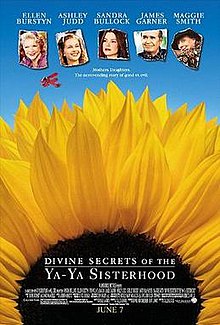
Divine Secrets of the Ya-Ya Sisterhood (film)The film opens in 1937 Louisiana with four little girls out in the woods at night, each wearing a home-made headdress. The leader, Viviane Walker, initiates them into a secret order she dubs the "Ya-Ya Sisterhood," which they seal by cutting their palms and taking a blood oath of undying loyalty.Yeah, because the Hopi wear headdresses and do barbaric things like cutting themselves...not.

Verifying the Sisterhood's origin

With all the New Age nonsense on the Web, I thought it would be easy to verify the Ya-Ya/Hopi connection. But it wasn't.

Fortunately, I'd read Frank Waters's Book of the Hopi. It devotes a chapter to the Ya Ya ceremony, which the Hopi consider a form of evil. Writing in 1963, he said:If the Ya Ya ceremony is finally and formally extinct, it is only because its beliefs and practices have gone underground, spreading throughout all Hopi villages in widely prevalent forms of witchcraft.I imagine this is the source of the Sisterhood's name. So the "sisters" gather in the night, don headdresses, and perform blood rituals. Because if you want to escape the narrow confines of civilization, becoming a "savage Indian" is the way to go.

Summing up Waters's book

Book of the Hopi was one of the first books I read about the Hopi 20 years ago. Initially I was impressed with the depth and breadth of Waters's knowledge. In retrospect, he sounds like a New Ager or Castaneda disciple who swallowed what he heard uncritically. And you have to suspect an outsider's ability to understand another culture.

I wonder what the Hopis think of his deconstructing their religion and revealing their sacred beliefs. It would be interesting to read their critique of his book. Somehow I doubt they appreciated it.

Anyway, I trust people who search for the origin of the Ya-Ya Sisterhood now will find this posting. The Sisterhood is another of our millions of words and ideas appropriated borrowed from Indians.

For more on Hopi beliefs, see Hopi Mask in American Dad! and Rainbow Gatherings Based on Hopi Prophecy?