Showing posts with label tourism. Show all posts

August 28, 2013

See Taos before you die

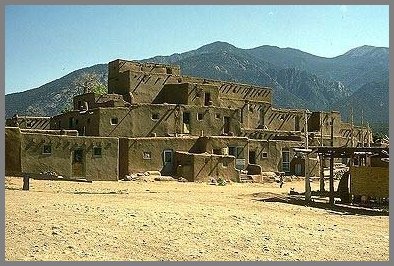
Taos Pueblo: See it before you die, Fodor’s says

By Jessica DyerBeen to Taos Pueblo yet?

Maybe it’s time.

Taos Pueblo has made Fodor’s list of the top 20 U.S. places “to see before you die.”

Fodor’s, a popular travel guide publisher, included the Northern New Mexico community alongside the likes of Times Square in New York City, Fenway Park in Boston and the Grand Canyon.
The complete list of places:

20 US Places to See Before You Die

Comment:  I visited Taos reservation once, but it was closed that day for religious reasons. Alas.

For more on the Native tourism, see Navajos Protest Wallenda Walk and Alaska Native Voices.

July 02, 2013

Navajos protest Wallenda walk

Wallenda walk over Little Colorado gets mixed reviews on Reservation

By Rosanda Suetopka ThayerA group of protesters expressed concern over the "circus-like" atmosphere of the event. The group included members of the Cameron Chapter, Save the Confluence tribal members, members of the Hopi Tribe and one member of the Supai Tribe who traveled the furthest to support his fellow Navajo and Hopi tribal members in the protest against Wallenda taking such a risk over their sacred land.

Many Hopis and Navajos consider the Grand Canyon and its surrounding areas, including the Little Colorado River Gorge, extremely sacred. The Hopi people consider the area an original emergence home-place. Zuni tribal members also consider this area to be sacred.

Milton Tso, Cameron Chapter president, spoke to members of the media on Sunday at the protest campsite near Cameron.

"Navajos are supposed to cherish life," he said. "But is this how we are now presenting ourselves as Navajos to the world? That we are willing to allow this man to gamble with his life over one of our most sacred places? All for the sake of tourism dollars?
And:Tso said he wondered if there was a plan B in case Wallenda didn't make it across the gorge.

He wondered who would be held liable had Wallenda fallen off the cable.

"Is the Navajo Nation Parks and Recreation or the Navajo President and his Vice President willing to assume such high liability for a media-hyped event that has nothing to do with our culture or our tribal tradition?" Tso asked. "Also no provisions were made for any of the local Cameron people to even participate either personally or communally in this event if they had wanted to. More than half of the Navajos living in Cameron don't even have electricity, so how would they even be able to watch this Wallenda event on a TV that is happening in their own backyard on their own land?"

Tso said nobody from the Navajo Nation Parks and Recreation Department met with the Cameron Chapter to explain the event.

"Neither the Navajo Nation Parks and Recreation department, its director Martin Begay or his assistant director, Helen Webster, ever met with us here locally at the chapter, though we have asked them to come to our chapter meetings to explain to us what this event was about and how could we all work together to benefit, if this was truly going to take place. We were only notified about this event less than three months ago," Tso said. "Although Webster did say that she would be getting us a $5,000 check for our local student scholarship fund, we have never seen the check or any follow up activity on her promise."
Comment:  For more on the subject, see Wallenda Crosses Little Colorado River Gorge and Tightrope Walk Over Grand Canyon Planned.

Below:  "Milton Tso, Cameron Chapter president, protests against the Nik Wallenda high wire walk June 23 at the junction of Highway 89 and High way 64 near the walk site." (Rosanda Suetopka Thayer)

June 25, 2013

Wallenda crosses Little Colorado River Gorge

Before Nik Wallenda's "Skywire" walk:

Where Evel Knievel Never Soared: A Wallenda Flies Over the Grand CanyonNik Wallenda, scion of the famous Flying Wallendas family and known as “The King of the High Wire,” will traverse the majestic Grand Canyon on a tightrope tonight, without using a harness. And the Discovery Channel is airing the feat live (8 p.m./ET, check local listings), and has a dazzling, dizzying Skywire Live With Nik Wallenda feature on its website (to visit, click HERE).

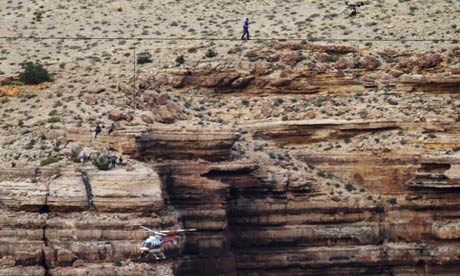
Wallenda will tightrope walk higher than he’s ever attempted before at 1,500 feet above the Little Colorado River, a height greater than the Empire State Building. In 2012, Wallenda became the first person to tightrope walk directly over Niagara Falls from the U.S. to Canada at a height of 200 feet.

“The stakes don’t get much higher than this,” said Wallenda in a Discovery press release. “The only thing that stands between me and the bottom of the canyon is a two-inch thick wire. I’m looking forward to showing the audience a view of the canyon they’ve never seen before.”

Wallenda, 34, said that this latest event will be the fulfillment of a lifelong dream to walk at such a great height as well as a chance to honor his great-grandfather, the legendary Karl Wallenda, who died after falling from a tightrope in Puerto Rico in 1978.

The Grand Canyon, one of America’s most visited tourist destinations, provides a spectacular backdrop to the event. The tightrope crossing will take place in a remote section of the canyon operated by the Navajo Nation Parks and Recreation Department.

“We are honored to be a part of this historic event and showcase the beauty that exists on Navajo country,” said Geri Hongeva-Camarillo, media representative for Navajo Parks and Recreation. “The Navajo Nation is home to more than a dozen national monuments, tribal parks and ancestral sites. Many visitors make Navajo Nation one of the top destinations for their travel plans.”
Wallenda skywire crossing a boon to tribal park

By Eric BetzIn an international made-for-television event, Nik Wallenda will use a 2-inch cable to walk across the "Grand Canyon" here live on the Discovery Channel this Sunday. And although viewers in other countries might not be able to tell the difference, the location is highly significant to Helen Webster, manager of the tribal park.

As part of the agreement with the Discovery Channel and NBC, which is producing the event, the Navajo Nation Parks and Recreation Department required that the two-hour television special include information about parks across the reservation and tribal culture.

More than 13 million Americans watched live as Wallenda walked the same cable across Niagara Falls one year ago. Many others watched the event worldwide. It was touted as the largest audience for a non-sports broadcast in six years.

Tribal officials hope to cash in on that audience when the majesty of their lands is broadcast around the world.


False advertising?

Some people noted the misleading references to the Grand Canyon:

One Problem With Nik Wallenda's Grand Canyon Walk: It Isn't At The Grand Canyon

By Andrew BenderWallenda’s death-defying deed will take place today east of the park, across the gorge of Little Colorado River Navajo Tribal Park. It’s on land of the Navajo Nation, near Cameron, Arizona.

“The event would not have been approved in Grand Canyon National Park,” says Maureen Oltrogge, the park’s public affairs officer. Under National Park Service regulations, she says, “events must not unreasonably impair the park’s atmosphere of peace and tranquility or have an unacceptable impact on the experience of park visitors.”

That doesn’t make the stunt any less risky or the visuals any less spectacular. Wallenda’s two-inch (5 cm) cable spans 1,400 feet (426 m) across the gorge, 1,500 feet (457 m) above ground; that’s higher than the Empire State Building. Plus, the site is likely to be buffeted with winds up to 30 mph (48 kph).

Although the tribal park is not in the actual Grand Canyon, they’re close neighbors. Some have called it a “little Grand Canyon,” and the Little Colorado River feeds into the Colorado River in the Grand Canyon.

Permitting Wallenda’s walk was not a casual decision, says Geri Hongeva, spokesperson for Navajo Parks & Recreation. “Discovery Channel, NBC Peacock Productions and Nik Wallenda all had to complete a number of clearances and gain proper permits,” including archaeological, biological and environmental surveys, and handle tribal park land use fees and filming approvals. Extreme sports are permitted only rarely on tribal lands.
High-wire artist Nik Wallenda walks across canyon, but maybe not GrandThe high-wire artist Nik Wallenda has completed a tightrope walk that took him a quarter of a mile over the Little Colorado River gorge near the Grand Canyon.

Wallenda performed the stunt on a 2-inch-thick steel cable, 1,500 feet (457 meters) above the river without wearing a harness.

Wallenda took just more than 22 minutes, pausing and kneeling twice and murmuring prayers to Jesus almost constantly along the way. He stepped slowly and steadily, but jogged and hopped the last few steps.
But:Before the walk, a group of Navajos, Hopis and other Native Americans stood along a nearby highway with signs protesting against the event.

The stunt was touted as a walk across the Grand Canyon, an area held sacred by many Native American tribes. Some local residents believe Wallenda has not accurately pinpointed the location and said the Navajo Nation should not be promoting the gambling of one man's life for the benefit of tourism.

"Mr Wallenda needs to buy a GPS or somebody give this guy a map," said Milton Tso, president of the Cameron community on the Navajo Nation. "He's not walking across the Grand Canyon. He's walking across the Little Colorado River Gorge on the Navajo Nation. It's misleading and false advertising."
'Skywire': Nik Wallenda Completes 1,500-Foot High-Wire Walk Near Grand Canyon Live On Discovery Channel


Navajo Leadership Congratulate High Wire Artist Nik Wallenda

By Levi RickertThe Navajo Nation received some exposure on television last night as Nik Wallenda walked across the Little Colorado River last night.

Navajo Nation President Ben Shelly and Vice President Rex Lee Jim were on hand to congratulate high wire artist Nik Wallenda after he successfully walked across the Little Colorado River Gorge on a two inch steel cable on Sunday evening near the Grand Canyon.

Wallenda's tightrope walk, which was near the Little Colorado River Navajo Tribal Park, was broadcasted live on the Discovery Channel to 217 countries throughout the world.

"I want to congratulate Nik on his successful walk. I want to thank the Discovery Channel, NBC and all the workers who made this event successful. This is an example of what can happen when we work together.

"I am pleased that the Navajo Nation was a part of this project and that we helped Nik achieve one of his lifelong goals. It was exciting to Nik walk on the tightrope with windy conditions and I am happy that he was successful.

"The worldwide audience was able to see the Navajo Nation and now we invite you to come Navajo land. Come see the pristine landscape for yourself, with your own eyes, you won't regret it.

"We invite travelers near and far to come experience Navajo land," President Shelly said.

President Shelly, Navajo First Lady Martha Shelly and Vice President Jim sat together near the edge of the Little Colorado Gorge and watched Wallenda walk across the gorge.

President Shelly gave a bolo tie to Wallenda after the walk and Vice President Jim presented Wallenda a silver and turquoise belt buckle.

Vice President Jim said Wallenda's success is about achievement.

"I want our Navajo children to know that they can dream big and have big success. Just like Nik dreamed about walking over the Grand Canyon, our young children can dream big about their goals in life and they can achieve them.

"We can use each success and build upon that. Each success builds for bigger dreams and larger successes.

"We can accomplish that for the Navajo Nation."
Comment:  For more on the subject, see Tightrope Walk Over Grand Canyon Planned.

Below:  "Natalie Morales, NBC News; High Wire Artist Nik Wallenda; Navajo President Ben Shelly and Vice President Rex Lee Jim."

May 04, 2013

Alaska Native Voices

Native corporation launches tourism service

By Rachel D'OroAn Alaska Native village corporation that operates a popular cruise ship destination has launched a commercial consulting service for others seeking help developing their own cultural tourism ventures.

Huna Totem Corp. opened Alaska Native Voices on Wednesday. Huna Totem is the village Native corporation for Hoonah—a largely Tlingit community of 775 in southeast Alaska—and one of the front-runners of tribal tourism, a growing trend in Alaska and nationally.

The corporation is entering the 10th year of operating its Icy Strait Point, a long-closed salmon cannery near Hoonah that was converted to a tourism complex with offerings that include Tlingit heritage performances and nearby attractions such as nature tram rides, whale watching tours and a mile-long zipline with a 1,300-foot vertical drop. Huna Totem also is entering its 13th year of providing cultural heritage guides to visitors of Alaska's Glacier Bay.

The corporation's new consulting business is available to Native groups as well as communities worldwide wanting to establish tourism around their own cultures, Alaska Native Voices director Mark McKernan said. The cost will vary, depending on the extent of services sought, he said.
Comment:  For more on the subject, see Promoting Alaska Native Tourism.

April 20, 2013

Promoting Alaska Native tourism

Alaska Makes Tourism in Rural Native Areas a Priority“Alaska is making waves in the tourism industry, especially Alaska Native tourism,” said American Indian Alaska Native Tourism Association (AIANTA) Executive Director Camille Ferguson during her recent keynote presentation at the Chickaloon Native Village Traditional Cultural Tourism Summit. “Creating educational tourism summits, like the Chickaloon Native Village and Chickaloon Native Village Council have done here, demonstrates a commitment to growth and sustenance of American Indian and Alaska Native tourism.”

Ferguson, Sitka Tribe of Alaska, gave a keynote presentation on growing cultural tourism in Indian country at the Chickaloon summit, held in her home state of Alaska on April 17 to 19.

The summit, “The Power of Place–Strength, Survival and Culture,” was held at the Alaska Native Heritage Center in Anchorage and presented by the Tene’ Ninicezet project under the Chickaloon Native Village Traditional Council’s Environmental Stewardship Department.

Ferguson was invited to present at the event, where she explained how AIANTA is working to grow cultural tourism across the six regions of Indian Country. Ferguson also educated attendees on how the international tourism market is bringing new opportunities for tourism growth to the U.S. and Indian country.
Comment:  For more on Native tourism, see Adam Beach Promotes NWT Tourism and Canadian Parks Incorporate Native Culture.

Below:  "The scenery is spectacular in Chickaloon."

April 08, 2013

Williamsburg teaches black, Native history

Colonial Williamsburg: Where the Tea Party gets schooled

There's lots of NRA and Tea Party garb in colonial Williamsburg. But the history has a confrontational new approach

By Andrew O'Hehir
You can still snack on butter-rich ginger cakes, go window-shopping for overpriced pewter ware and indulge in other old-timey pastimes in Colonial Williamsburg, and we did those things. But what I’ll never forget about that visit is sitting in stunned silence amid a crowd of 200 people, nearly all of them white, watching an African-American woman break down sobbing at the news that her children had just been sold at auction, while her husband describes the vicious whipping he received after a failed escape attempt. Yes, the chemistry between the intense emotion of the scene and the audience demographics bordered on the uncomfortable, but the effect also felt calculated. (Which may not have been the case with an infamous slave-auction re-enactment staged at Williamsburg in 1994, which led to considerable consciousness-raising.) It was one of the most powerful moments of live theater I’ve ever experienced.

This might sound far-fetched, but Colonial Williamsburg, in its subtly transformed 21st-century mode, feels like a covert battleground in America’s culture wars. It’s where an overwhelmingly white and conservative audience meets the post-Howard Zinn cutting edge of history. (How much attention they pay, and how much they like it, is another question altogether.) If your ideas about the place are based on that grade-school trip you took with your grandparents, I can assure you that the effect is pretty different now. Beneath its manicured and bewigged surfaces, Colonial Williamsburg is trying to break free of its stodgy traditions and bring its visitors face to face with the internal conflicts and contradictions of the Revolutionary War era and their ripple effects across politics and society today.

That wrenching scene backstage at the slave auction was the second of two episodes we watched about how the Revolutionary period affected the lives of African-Americans in Williamsburg, a city where black people, both free and enslaved, made up more than half the population in the 1770s. Later that day, we watched the second of two scenes about American Indians, in which warriors from the Chillicothe Shawnee people, who are holding the famous frontiersman Daniel Boone as a hostage, engage in a failed parley with an officer from George Washington’s Continental Army. The Shawnee men leave the gathering vowing to wage war against the perfidious “long knives,” or white American settlers, for control of the Ohio Valley, although they understand that the outcome might well be the destruction of their people.

These startling and even confrontational vignettes—part of a growing and evolving street-theater program called “Revolutionary City,” which explores the social conflict of the Revolutionary era from a variety of perspectives—are not isolated events. Over the last three decades, the Colonial Williamsburg Foundation, a nonprofit originally envisioned and endowed by John D. Rockefeller in the 1920s, has undergone a gradual but ambitious reinvention, fueled partly by changing cultural and social realities but also by a wealth of new historical research into the Colonial and Revolutionary periods. This conceptual reimagining, which has involved considerable collaboration with academic historians, seems to have accelerated rapidly since “Revolutionary City” was first introduced in 2006. (The American Indian programming we saw was introduced just two years ago.) Once concerned almost entirely with historical preservation, the foundation now sees its primary mission as “citizen education,” using “historically authentic stories” to illuminate contemporary issues. To put it another way, nearly the whole place feels like a teachable moment, from the time you leave the visitors center over a footbridge that nominally takes you backward into the past. (“1954: You tolerate segregated schools,” reads one inset in the bridge. “1920: You accept that women cannot vote or own property,” reads the next.)
Comment:  For more on the subject, see Studi and Bedard at Williamsburg and Blown Away by So Far From Scioto.

April 07, 2013

Tightrope walk over Grand Canyon planned

Tribes Have Mixed Feelings About Tightrope Walker Coming to the Grand Canyon

By Anne MinardFamed tightrope walker Nik Wallenda last made headlines in June 2012 by tightrope walking across Niagara Falls. This year, he’s headed for a remote section of the Grand Canyon on the Navajo Nation—which also happens to house a site held deeply sacred by the Hopi and other tribes.

The Discovery Channel will air the stunt live on June 23, as Wallenda tightrope walks higher than he’s ever attempted before—1,500 feet above the Little Colorado River near its confluence with the Colorado River in the Grand Canyon. His walk over Niagara Falls was only 200 feet off the ground. There’s another difference: he wore a safety harness over Niagara Falls, but will not do so over the Grand Canyon. That’s allowing publicists at the Discovery Channel to advertise the stunt as a “nail-biting” event, and “one of the most daring and captivating live events in history.”

Navajo Nation Parks and Recreation officials say they welcome the event as a chance to showcase their portion of the Grand Canyon. The tribe operates two viewpoints along Highway 64, which runs west from Cameron, Arizona to the Grand Canyon’s oft-visited South Rim in Grand Canyon National Park.

“Our visitation in this part of the Canyon is very low,” said Geri Hongeva, Navajo Parks and Recreation spokeswoman. “We would like families to come visit this area someday. There’s a lot of history; there’s a lot of culture there. We don’t have the budget to reach out to 13 million viewers. This is a great opportunity for us.”
But:Not everyone is as thrilled. Leigh Kuwanwisiwma, director of the Hopi Cultural Preservation Office, said his biggest concern is a cultural one. The Hopi Tribe has identified the Little Colorado River Gorge as a significant clan migration route.

“The Gorge and the Canyon are not about taking lives,” he said. “They’re about life, especially the spiritual lives of our ancestral people.”

Kuwanwisiwma said when a base jumper died in the area last year due to a parachute failure, it presented a cultural burden to the Hopi people—and, he suspects, to the Navajos living nearby.

“We were told that this guy is not wanting to wear a safety harness,” Kuwanwisiwma said. “What if he does fall? It’s another cultural dilemma for the Hopi people.”
Comment:  Actually, Wallenda walked a tightrope in Atlantic City in August 2012 and in Sarasota, Florida, in January 2013. Niagara Falls wasn't his last headline performance.

For more on Indians and the Grand Canyon, see Top Chefs Cook for Hualapai and Navajos Split on Grand Canyon Flights.

Below:  "Tightrope walker Nik Wallenda plans to walk across a section of the Grand Canyon held sacred by the Hopi and other tribes on June 23."

March 12, 2013

Nevada commercial features Indian dancers

Carson-area American Indian dancers in tourism commercial

By Teri VanceThe Nevada Commission on Tourism was in Carson City during the weekend filming a segment for its latest television commercial, part of its campaign to draw visitors to the state.

The commercial, the first the commission has done in four years, will highlight different aspects of the Silver State.
And:Sunday's segment was filmed along the Carson River in Riverview Park. It featured traditional American Indian dancers—fancy dancers father and son Ben and John Rupert, fancy shawl dancer and Miss Indian Nations Shannon Hooper, and grass dancer Martin Montgomery—dancing to the beat of the Red Hoop Drum Group from Minden.

“People don't always know about the Native Americans in this state,” said Sherry Rupert, director of the Nevada Indian Commission. “That's one of the things we're trying to do in Nevada is tell the story of the Native Americans. We're grateful to the Nevada Commission on Tourism that they see the value in including our culture. We're honored to be able to participate.”
Comment:  For more on powwow dancers, see Circle of Dance at NMAI and Apaches Perform No-Rain Dance.

January 18, 2013

Poverty Point nominated as World Heritage Site

Poverty Point nominated for World Heritage List

By Jordan BlumLouisiana’s Poverty Point State Historic Site and its ancient mounds in West Carroll Parish are officially vying for a spot on the World Heritage List that includes such famous sites as the Taj Mahal, Stonehenge and the Grand Canyon.

Outgoing U.S. Interior Secretary Ken Salazar announced Thursday the nomination that was prepared by the state and the National Park Service. The nomination was submitted to the World Heritage Centre in Paris. The world list includes 962 sites in 157 countries, but only 21 in the U.S.

“The Poverty Point earthworks are the remarkable legacy of a prehistoric hunter-gatherer society that existed thousands of years ago,” Salazar said in the announcement. “Designation as a World Heritage Site not only would be an honor for both Louisiana and the United States, but also would be an invitation to domestic and international travelers …”

Lt. Gov. Jay Dardenne said this effort has been in the works for a while and that he is “optimistic” Poverty Point will be added to the list when a final decision is made in 2014. Being the “No. 1” recommended site by the federal government certainly helps, he said.
Comment:  For more on Indians and archaeology, see Cave of Blue Dolphins Woman Found and Indiana Jones's Criminally Bad Archaeology.

January 07, 2013

Salt River butterfly pavilion

Butterfly Wonderland beginning to take flight

By Edward GatelyLike the transformation from caterpillar to butterfly, North America’s largest indoor butterfly pavilion is emerging from vacant acreage just east of Scottsdale.

Butterfly Wonderland is the first phase of a 35-acre, $170million entertainment complex at the northeastern corner of the Pima Freeway and Via De Ventura, on the Salt River Reservation.
And:The project will be the latest addition to an emerging entertainment corridor that includes the Talking Stick Resort and Casino, two adjacent golf courses and the Salt River Fields spring-training baseball complex.

At Butterfly Wonderland, visitors will “embark on an enchanting journey through the life of a butterfly” via educational and interactive exhibits, leading up to the experience of walking among thousands of butterflies inside a glass atrium with tropical plants and waterfalls.
Comment:  For more on the Salt River Reservation, see Eden Eats Visits Pima-Maricopa Rez and Minority Construction Firm of the Year.

December 16, 2012

NASA debunks apocalypse scare

NASA releases ‘Told Ya So’ apocalypse video early

By Mike KrumboltzDec. 21, 2012, has long been rumored to be the day of the Mayan apocalypse, when Earth comes to its inglorious end. The good folks at NASA want you to know that isn't going to happen.

In fact, NASA is so confident that it recently published a video that appears as if it were intended to be aired on Dec. 22. Titled "The World Didn't End Yesterday," the four-minute clip explains how the idea of the Mayan apocalypse was a huge hoax and how the rumors began. A commenter on YouTube jokes, "The correct title for this video: Told ya so!—Love, NASA."

Time magazine reports that the space agency has been besieged with questions from citizens worried that their lives are about to end. NASA is taking the fears seriously, not because there is any danger, but because irrational fears can sometimes lead to irrational and dangerous actions.

NASA's official site features an area dedicated to debunking the claims. "The world will not end in 2012," NASA writes. "Our planet has been getting along just fine for more than 4 billion years, and credible scientists worldwide know of no threat associated with 2012."
Mayan Festival at National Museum of the American Indian Celebrates Bak’tun, Dispels Misconceptions About 12-21-12What NASA is debunking with science, indigenous groups are debunking with information about what the Mayans actually predicted. Which was nothing, except for the changing of a calendar page akin to flipping from December to January, or to the turning over of an odometer.

A misunderstanding of the Mayan calendar has sparked panic the world over, sending people from Russia to China to the U.S. into extremes of preparation frenzy or suicidal depression. Working on two fronts, scientists and indigenous experts have embarked on a common mission: to calm everyone down and convince them not to do anything rash in the face of the upcoming winter solstice.

The passing of the Mayans’ Bak’tun 13, otherwise known as the end of the Long Count Calendar, is a cause for celebration rather than dismay, and this weekend the National Museum of the American Indian (NMAI) sets out to highlight just that. Bak’tun 13: A Guatemalan Celebration of Time, a free festival from December 14 through 16, will showcase dance performances, lectures, workshops for families and Guatemalan cuisine in the museum’s Mitsitam Café.

It will include a presentation on Saturday December 15, Maya from the Inside: The 13 Bak'tun as Challenge to the Western Mind, a lecture by scholar Victor Montejo (Jakaltek Maya). His and other lectures will be webcast live at www.nmai.si.edu/webcasts, and the museum is encouraging visitors to tweet their questions to @SmithsonianNMAI using the hashtag #MayaCalendar.
The Maya apocalypse is not nigh

Don't quit your day job. The Mayans didn't predict that the world would end tomorrow

By Alex Halperin
Earlier this year Reuters reported that 10 percent of people believe the Maya 2012 phenomenon could signal the end of the world. Speculation surrounding the advent of the apocalypse has gained enough currency that a cranky NASA astrobiologist taped a video explaining that tomorrow will not be doomsday. What’s going on?

Tomorrow is the date 13.0.0.0.0 in the Maya’s (the generally accepted anthropological term) “long count” calendar. Remember the hoopla attending Y2K? This milestone is “almost exactly analogous to the end of the millennium for us,” according to Todd Little-Siebold, a professor of history and Latin American studies at the College of the Atlantic.
And:At the same time, the 2012 phenomenon has had real-world consequences. Little-Siebold of College of the Atlantic, said there has been an effort in the Maya region of southern Mexico and Central America to capitalize on 2012 besotted tourists. He added that during Guatemala’s long civil war there was a resurgence of interest in the Maya, in part because it was safer to organize around “cultural” topics like the ancients than “political” issues of the present. A renewal of interest in Maya civilization got another boost in 1992, the 500th anniversary of Columbus’ arrival in the new world.

Amid this resurgence, Sitler notes the “pizza effect,” by which Maya spiritual leaders have reincorporated some of the new international theories about the Maya into their own beliefs. On Saturday, assuming we’re still here, we can look forward to a new era of interpretation.
Mexico's ethnic Maya unmoved by 2012 "Armageddon" hysteria

By Alexandra AlperThousands of mystics, New Age dreamers and fans of pre-Hispanic culture have been drawn to Mexico in hopes of witnessing great things when the day in an old Maya calendar dubbed "the end of the world" dawns on Friday.

But many of today's ethnic Maya cannot understand the fuss. Mostly Christian, they have looked on in wonder at the influx of foreign tourists to ancient cities in southern Mexico and Central America whose heyday passed hundreds of years ago.
And:[O]ver the past few decades, fed by popular culture, Friday became seen by some western followers of alternative religions as a day on which momentous change could occur.

"It's a psychosis, a fad," said psychologist Vera Rodriguez, 29, a Mexican of Maya descent living in Izamal, Yucatan state, near the center of the 2012 festivities, the site of Chichen Itza. "I think it's bad for our society and our culture."
And:Mexico's government forecast around 50 million tourists from home and abroad would visit southern Mexico in 2012. Up to 200,000 are expected to descend on Chichen Itza on Friday.

"It's a date for doing business, but for me it's just like any other day," said drinks vendor Julian Nohuicab, 34, an ethnic Maya working in the ruins of the ancient city of Coba in Quintana Roo state, not far from the beach resort of Cancun.

Watching busloads of white-haired pensioners and dreadlocked backpackers pile into their heartland, Maya old and young roll their eyes at the suggestion the world will end.

"We don't believe it," said Socorro Poot, 41, a housewife and mother of three in Holca, a village about 25 miles from Chichen Itza. "Nobody knows the day and the hour. Only God knows."
Comment:  For more on 2012, see "Mayan Apocalypse" in Glee and Countdown to Non-Apocalypse Begins.

November 04, 2012

Adam Beach promotes NWT tourism

Actor Adam Beach to promote the N.W.T.Actor Adam Beach will be the new face of tourism in the Northwest Territories.

He is now part of NWT Tourism's new marketing plan.

Television shows based in the territory, like Ice Pilots and Arctic Air, have increased the territory's profile.

Beach—the star of Arctic Air—could help attract even more travellers.

“I think a lot of people are missing this opportunity to see this part of Canada, this part of people that are out here. And I feel grateful that I am chosen to be the one to show the beauty of NWT, they say ‘Spectacular NWT’,” he said.
Comment:  For more on Adam Beach, see Adam Beach Foundation and Film Institute and Mini-Review of Path of Souls.

October 05, 2012

Cherokee Nation is Tribal Destination of the Year

Cherokee Nation selected as Tribal Destination of the YearThe Cherokee Nation was awarded Tribal Destination of the Year by the American Indian and Alaska Native Tourism Association, according to a media release.

The award was presented during the inaugural Soaring Stars & Infinite Skies Silent Auction and Awards Ceremony on Sept. 25 in Billings, Mont.

“The achievements of the Cherokee Nation are based on its cultural, historical, natural and recreational resources. Our success further strengthens Oklahoma as a top tourist destination in the nation and provides a much-needed economic benefit to communities throughout the state,” said Bill John Baker, principal chief of the Cherokee Nation. “Native American heritage and culture continue to be an asset for Oklahoma and we are honored to take the lead in sharing our history.”

The Cherokee Nation tourism program was created in 2007 to help preserve and promote Cherokee history and culture. The endeavor has formed one of the most authentic and comprehensive Native American programs within the United States. The Cherokee Nation offers cultural tours and events and operates museums, historic sites, gift shops and welcome centers, all supported by a one-of-a-kind interpretive program that shares a global Cherokee story.
Comment:  For more on Cherokee tourism, see Cherokees Debut Prison Museum and Cherokee "History After Dark."

Below:  "William Lowe, board member for AIANTA, presents Molly Jarvis, vice president of Cherokee Nation Cultural Tourism, with the award that recognizes the tribe for promoting Cherokee history and culture through its tourism efforts."

September 12, 2012

Kiowa Gordon to share Hualapai heritage

Kiowa Gordon, Twilight "Werewolf," to Share His Hualapai Tribal Heritage by Hosting Fans on His Native Land at Grand Canyon WestKiowa Gordon, a Hualapai Tribal member and part of the Twilight series' "Wolf Pack," has joined with Hualapai Tourism to offer his fans an up close and personal meeting while they enjoy the beauty of Grand Canyon West. Since playing Embry Call in New Moon, Eclipse and Breaking Dawn, Gordon's celebrity has grown rapidly but he hasn't lost the connection to his Hualapai roots. "I love my fans, I love my heritage. I take great pride in being Hualapai. Rafting the Colorado River and visiting Grand Canyon West will be a great opportunity to show my fans firsthand the beautiful land that my people come from," said Gordon.

On September 28th, Gordon will make an appearance at the Hualapai Lodge on Historic Route 66 at 7 P.M. He will take photos and sign autographs for anyone that eats at the Diamond Creek Restaurant that day (fans to show receipt for photo). On September 29th, Gordon will take the Hualapai River Runners trip (the only one-day Grand Canyon whitewater rafting adventure) with visitors that reserve for that day. Seats are limited and a few fans using the code "KG12" while booking in advance will have the chance to be on the same raft as Gordon. Fans will also get an autographed photo when using the code.
Comment:  For more on Kiowa Gordon, see Kiowa Gordon Talks Music and Movies and Actors Turn Out for Breaking Dawn.

August 02, 2012

Pine Ridge needs tourism

Impoverished SD Indian tribe debates developmentThe Oglala Sioux Tribe occupies a seemingly prime piece of South Dakota—a vast, scenic reservation that stands near a crossroads for tourists visiting Mount Rushmore, the Badlands, the historic Old West town of Deadwood and other popular sites.

But don't look for museums, hotels, restaurants or even many bathrooms here on the Pine Ridge Indian Reservation, because the Lakota make little effort to attract visitors or tourism dollars, despite the fact that they are one of the nation's poorest tribes.

A generation after many other American Indians sought to harness their history for profit, the Oglala Sioux are still debating how much culture they are willing to share.

"When you take a community of people where at one point our language was outlawed and parts of our culture were outlawed, it's hard for us to, I guess, open up to the idea of sharing that in a way to make money off of it," said Nick Tilsen, executive director of Thunder Valley, a nonprofit on Pine Ridge set up to keep traditional Lakota culture alive among young people.
Some discussion of the Wounded Knee site, which is the primary attraction on the reservation by default:Some tribal members think the site of the Wounded Knee Massacre, where more than 250 men, women and children were killed by the 7th Cavalry in 1890, should be turned into a tourist attraction with a museum. Others are fiercely opposed to development, saying it would be disrespectful to the dead.

The talk of development "hasn't matured yet," said Ivan Sorbel, executive director of the Pine Ridge Chamber of Commerce.
And:A museum commemorating the massacre was ransacked and its contents lost in 1973. Another museum dedicated to the massacre draws thousands of people annually, but it's 100 miles north of the reservation in Wall, S.D.—also home to Wall Drug, a famous cluster of stores and tourist attractions offering Western kitsch.

The Wall museum is not affiliated with the Oglala Sioux, although co-founder Lani Van Eck said the facility had the blessing of Wounded Knee residents when it opened in 2003. She and the other co-founders decided to build it along busy Interstate 90 to attract more visitors.
Comment:  As a first-time visitor to South Dakota, I can confirm this article's points. The state doesn't do enough to promote tourism on Pine Ridge and neither does the tribe. I discussed some of this in Economic Development on Pine Ridge.

Incidentally, I posted about the Wounded Knee Museum last December. But I forgot about it when I visited South Dakota, and there was no info to remind me of it.

I don't know how well it's doing. "Thousands of visitors annually" could translate to a meager 10-20 a day. But it's a shame that it's not on or near the rez. Pine Ridge needs several attractions like it to draw people from Mt. Rushmore, the Crazy Horse Memorial, and Deadwood.

Wounded Knee is a tough nut to crack from a tourist standpoint. The site is too modest to permit any development or traffic without ruining its solemn character. On the other hand, you don't want visitors to ignore it. You want to get them thinking about it--educate them about it.

If the Lakota had a museum, maybe it could have a huge room with a quarter-size replica of the site. So people could immerse themselves in it, get a feel for what happened, without harming the actual site. Or something like that.

A few visitors still would go to the actual site, miles away, just as they do now. But that or something like it would satisfy most visitors. There must be a way to have your Wounded Knee but protect it too.

In any case, tourism is an untapped possibility for the Lakota. They should get together with the state and start marketing the region's Native heritage. If they're doing it already, they should do more of it.

No doubt money is a big issue here, but still. Where there's a will, there's a way and all that. You can't win the game unless you play it.

For more on the subject, see Pix of My South Dakota Trip and Why Wounded Knee Matters.

Below:  "In a Friday, July 20, 2012, photo, from the left; Tricia Bear Eagle, Helen Red Feather, Rudell Bear Shirt and Edward Jealous Of Him, all of Wounded Knee, S.D., wait for tourists near the site of the Wounded Knee Massacre on the Pine Ridge Indian Reservation at a self-made visitors center. A generation after many other American Indians sought to harness their history for profit, the Oglala Sioux Tribe is still debating how much culture they are willing to share with tourists." (AP Photo/Kristi Eaton)

July 13, 2012

Canadian parks incorporate Native culture

Many of Canada’s National Parks Now Honor First Nations Peoples

By Hans TammemagiParks Canada, founded in 1911, was the world’s first national parks service. The government wanted a dedicated organization to protect the habitat, pursue education and tourism opportunities and establish additional parks. Since then Parks Canada has grown into a formidable organization, with 5,000 employees (40 percent of them seasonal) and an annual budget of about $800 million. It oversees 42 national parks, 167 national historic sites (including the Rideau Canal and the Fortress of Louisbourg) and four national marine conservation areas. Parks Canada’s goal is to create at least one national park in each of the nation’s 39 distinct natural regions. Right now, they have all but 10 of the regions covered.

Many national parks have initiated projects that enhance traditional Native values. The Fort Folly First Nation, for example, worked with staff of the Bay of Fundy National Park (in New Brunswick, with the world’s highest tides) to build an interpretive trail highlighting and describing traditional medicinal plants. At Terra Nova National Park in Newfoundland, the expertise of Miawpukek First Nation was essential in locating and mapping out the patches of rare boreal felt lichen.

When the federal Department of Fisheries and Oceans closed the fishery in and around Kouchibouguac National Park in New Brunswick, the Elsipogtog First Nation disputed how the fish stocks had been calculated and launched a reassessment that caused the government to rethink its decision. The First Nation also worked with the park to study salmon populations in the Richibucto River and to develop a restoration scheme combining aboriginal knowledge and scientific protocols. The Kouchibouguac park staff also works to help preserve Native languages and foster education programs involving Native culture.

Wood Buffalo National Park was established in the southern Northwest Territories in 1922 to protect wood bison from extinction. In an important shift in policy, it was acknowledged during the creation of this park that prohibiting the traditional activities of aboriginal peoples there would be detrimental to the habitat. Consequently, Native hunting and trapping and other activities were allowed to continue. This marked the first time Parks Canada had involved aboriginal peoples’ interests in a decision regarding park management.
And:Parks That Best Incorporate and Showcase Indigenous Culture

Gwaii Haanas National Park Reserve, British Columbia

Kluane National Park, Yukon Territory

Pukaskwa National Park, Ontario

Thaidene Nene National Park Reserve, Northwest Territories

Torngat Mountains National Park, Labrador
Comment:  For more on Canadian parks, see Doig Reserve Plans Tribal Park and Musicians Celebrate Canada's National Parks.

Below:  "Glaciers in Quttinirpaaq National Park."

July 10, 2012

Tribal tourism without cultural explotation

A good article describes how tribes in general and the Quileute in particular "reap the economic benefits of tourism without falling prey to cultural exploitation."

A big old 'Twilight' welcome

Washington's Quileute Tribe has seen a rush of visitors since it became known as the progenitors of the popular vampire series' werewolf pack. How they're dealing with the vampire-mania.

By Bryn Nelson
When the Twilight craze first erupted, the Quileute lacked a public relations contact and events coordinator. Ann Penn-Charles, a community leader who helps run the weekly drum and healing circle, says producers of the first movie randomly called villagers in hopes of securing permission to film a scene on First Beach. (It was ultimately shot on the Oregon coast instead.) The producers eventually visited La Push to get a better sense of the community. Tribal Secretary Naomi Jacobson says their ideas of Quileute kids were upended when they visited her cousin's home. "They didn't expect them to be modernized teenagers with iPods and Wii," she says.

Five years have passed since then, though, and the village has adjusted. Jackie Jacobs, the tribal publicist since 2009, has recruited several Twilight actors to visit the school and appear at the annual Quileute Days celebration in July. This festival has become the reservation's biggest tourist draw, and summer stays at the resort now require booking months in advance. When Jacobs asked some kids about how La Push has changed, she got a matter-of-fact response. "You definitely have to look now when you're crossing the street," they told her.

In the resort's main office, handcrafted basket earrings, drums, and decorative canoe paddles share display space with autographed pictures of movie stars. Centuries ago, the Quileute and other coastal tribes bred fluffy dogs for woven dog-hair blankets. Both the breed and art form are lost, though Penn-Charles and her mother knit woolen hats adorned with animals and geometric shapes. They too have adapted to the Twilight fans; one girl commissioned four purple-and-white "Team Edward" yarn hats last summer.

"The economic factor is big for our people who still do their arts and crafts," says Penn-Charles. In the summer, some of the tribe's youngsters sell handmade charm bracelets, rocks painted with wolf paw prints, and "La Push" and "Quileute" stickers, earning enough money to buy back-to-school clothing and supplies.

Group tours offer traditional meals served at the beach—crunchy biscuit-like "buckskin bread" and salmon cooked on sticks—along with the chance to sit around a bonfire and hear traditional stories. The outings—usually arranged through a new events coordinator—have generated much-needed income, and provided new ways for traditions and tales to be passed down to the next generation.
Comment:  I like the note about how ignorant the producers were about modern Native teenagers. I wonder where they got the idea that these teenagers would be unsophisticated, primitive, clannish--like animals in human form. Oh, yeah...from Stephenie Meyer's Twilight books, which portrayed them as an isolated band of wolf people.

For more on Twilight and tourism, see Quileutes Welcome Twilight Fans and Twilight Fans at Quileute Days.

Below:  "La Push's First Beach."

July 03, 2012

Zuni is first Native MainStreet

Zuni First Native American MainStreet Project

By Bob TenequerThe Pueblo of Zuni will make history by becoming the first Native American MainStreet Project in the nation on July 5.

The pueblo will hold a proclamation signing ceremony to formalize this important project at 2 p.m. at the Zuni Visitor and Arts Center.
And:The MainStreet project is a licensed program of the National Trust for Historic Preservation and has been adopted by the state of New Mexico’s Economic Development Department.

Tom R. Kennedy, Zuni tourism office director, said, “This successful model of downtown and community revitalization is a vital strategy for economic renewal for Zuni Pueblo as it strives to preserve the ancient cultural traditions and create new opportunities for the future.”

“Zuni being the first Native American Mainstreet is a big deal, because state and the national organizations are now beginning to look at ways to learn from tribal communities,” he continued. “As a tribal MainStreet project, there is a huge difference. Keep in mind that the State Highway 53, which is open 24/7, lies within one block of where the most significant cultural practices of that community occur.”
Comment:  For more on Native tourism, see Astro-Tourism at Pyramid Lake and Navajo Nation = Great Road Trip.

Below:  "Social dances are a regular and important feature of events at the Zuni Visitor and Arts Center and enable visitors to experience and to photograph glimpses of traditional Zuni culture."

May 15, 2012

Astro-tourism at Pyramid Lake

Astro-Tourism Hits Pyramid Lake

The planets are literally aligning this weekend over a crowd of 8,000 people who will be on Native American lands that have been closed to crowds like this for more than two decades.

By Kyril (Ky) Plaskon
The planets are literally aligning this weekend over a crowd of 8,000 people who will be on Native American lands that have been closed to crowds like this for more than two decades.

“It is a significant moment, it is the alignment of the three heavenly bodies that sustain our life,” said Paul West of Symbiosis, a 6-day music festival that will rock and sway the Pyramid Lake Paiute Tribal lands starting Wednesday.

Symbiosis is a festival that moves and according to celestial and other epic scenic locations. This time, that celestial scene appearing in the Reno area is the position of the moon in front of the sun, an eclipse that begins shortly after 5 p.m., Sunday. Only a few places are graced with being able to take advantage of this astro-tourism.

The Reno area is one of only four places in the nation where this eclipse, called an “annular eclipse” will be fully visible.
Comment:  For more on Native-themed festivals, see Balloon Festival in Monument Valley and 2011 South Dakota Festival of Books.

May 08, 2012

Navajo Nation = great road trip

Navajo Nation Part of Yahoo‘s Top Ten Places to Travel

10 great all-American road trips

By Elissa RichardDine' Tah Scenic Road
Arizona


Indulge your wanderlust on wheels while exploring Arizona's Wild West. It doesn't get more all-American than the Navajo Nation's ancestral lands: Whiz by sacred mountains, canyons, forests, and desert vistas, and stop off to peruse the wares of talented local artisans or to ogle ancient cliff dwellings and prehistoric drawings. Explore the heart of Navajo lands along the 100-mile Dine' Tah (“Among the People”) Scenic Road, which stretches along Navajo Routes 12 and 64 from Window Rock (the Navajo capital) to the magnificent Canyon de Chelly. Imperative roadside stops include the Navajo Nation Museum, Window Rock Memorial Park, and the archeological and historical majesty of Canyon de Chelly.
Comment:  I believe I've visited the Navajo Nation three times. While you're there, you also should go to Monument Valley, even if it's a bit out of the way. And Four Corners, and Mesa Verde, and Chaco Canyon...the whole area is rich with things to see.

For more on Navajo tourism, see Navajo Tourism Spending Increases 32% and Navajos Split on Grand Canyon Flights.