Movie Tells Story of Laguna Pueblo’s Grab Day
At Sundance, Tradition Meets Modern World in Billy Luther’s ‘Grab’
SUNDANCE REVIEW: Native Showcase Doc Fails to 'Grab' Audience
Comment: I don't agree with this review at all. I enjoyed seeing life in the little-known Laguna Pueblo. The ceremony showed us something other than the usual families mired in tragedy or dances in regalia. Shots of a train passing by and animated paper cutouts kept the cinematography fresh.
All in all, I'd say Grab is one of the better Native documentaries I've seen.
Showing posts with label Pueblo. Show all posts
Showing posts with label Pueblo. Show all posts
June 04, 2016


February 13, 2016
Koshare Dancers cancel Winter Dances
Boy Scout Koshare Dancers Need to Stop Stealing From Natives
By Tara HouskaIt’s an honor. Respect. Appreciation. Tradition. You just don’t understand. So go the familiar excuses made for appropriating culture to the objecting group.
The Boy Scouts are a prime ongoing example of this phenomenon, but perhaps reevaluation will lead to change. In mid-December, the “Koshare Dancers,” a so-called interpretive dance group from Boy Scout Troop 232, located in La Junta, Colorado, cancelled their Winter Dances at the request of the Hopi Nation Cultural Preservation Office. Whether this is permanent remains to be seen.
Since the 1930s, the Koshare Dancers of Boy Scout Troup 232 have been performing their version of Hopi, Lakota, Kiowa, Ojibwe, Blackfoot, Diné and Comanche religious ceremonies. Originally begun by James “Buck” Burshears as the “Boy Scout Indian Club,” mimicking Native American cultures became a core theme of Troup 232.
New members are called “Papooses,” and work toward the rank of “Koshare Brave,” which requires that troops learn five Koshare dances and create their version of traditional regalia. “Clan Chief” follows, upon reaching the rank of Eagle Scout. Comment: A few Facebook reactions to this photo:

What the heck????
They look like goddamn idiots.
Goofballs.
The lack of self awareness is staggering. The emperor wears racist clothing. I can't say if any of the outfits are inaccurate. At least there's no stereotypical Plains chief.
But I'm pretty sure the two "Koshare clowns" in stripes don't go with the other dancers. And all the dancers are divorced from their spiritual and symbolic meanings.
For instance, the koshares don't dance to entertain people. Rather, their purpose is this:
Pueblo clownsThe clowns perform during the spring and summer fertility rites. Among the Hopi there are five figures who serve as clowns: the "Payakyamu"; the "Koshare" (or "Koyaala" or "Hano Clown"); the "Tsuku"; the "Tatsiqto" (or "Koyemsi" or "Mudhead"); and the "Kwikwilyak." With the exception of the Koshare, each is a kachinam (personification of a spirit). It is believed that when a member of a kiva dons the mask of a kachinam, he abandons his personality and becomes possessed by that spirit.
Anthropologists, most notably Adolf Bandelier in his 1890 book, The Delight Makers, and Elsie Clews Parsons in her Pueblo Indian Religion, have extensively studied the meaning of the Pueblo Clowns and clown society in general. Bandelier notes that the Tsuku were somewhat feared by the Hopi as the source of public criticism and censure of non-Hopi like behavior. Their function can help defuse community tensions by providing their own humorous interpretation of the tribe's popular culture, by re-enforcing taboo, and by communicating traditions. Turning a religious figure into an entertainment figure is problematical, especially for a small and misunderstood group. Secularizing a sacred event is one step in diluting a cultural practice to the point of extinction.
For more on the subject, see Hopis Protest Koshare Dancers and Boy Scout "Indian Dance Teams."
By Tara Houska
The Boy Scouts are a prime ongoing example of this phenomenon, but perhaps reevaluation will lead to change. In mid-December, the “Koshare Dancers,” a so-called interpretive dance group from Boy Scout Troop 232, located in La Junta, Colorado, cancelled their Winter Dances at the request of the Hopi Nation Cultural Preservation Office. Whether this is permanent remains to be seen.
Since the 1930s, the Koshare Dancers of Boy Scout Troup 232 have been performing their version of Hopi, Lakota, Kiowa, Ojibwe, Blackfoot, Diné and Comanche religious ceremonies. Originally begun by James “Buck” Burshears as the “Boy Scout Indian Club,” mimicking Native American cultures became a core theme of Troup 232.
New members are called “Papooses,” and work toward the rank of “Koshare Brave,” which requires that troops learn five Koshare dances and create their version of traditional regalia. “Clan Chief” follows, upon reaching the rank of Eagle Scout.
They look like goddamn idiots.
Goofballs.
The lack of self awareness is staggering. The emperor wears racist clothing.
But I'm pretty sure the two "Koshare clowns" in stripes don't go with the other dancers. And all the dancers are divorced from their spiritual and symbolic meanings.
For instance, the koshares don't dance to entertain people. Rather, their purpose is this:
Pueblo clowns
Anthropologists, most notably Adolf Bandelier in his 1890 book, The Delight Makers, and Elsie Clews Parsons in her Pueblo Indian Religion, have extensively studied the meaning of the Pueblo Clowns and clown society in general. Bandelier notes that the Tsuku were somewhat feared by the Hopi as the source of public criticism and censure of non-Hopi like behavior. Their function can help defuse community tensions by providing their own humorous interpretation of the tribe's popular culture, by re-enforcing taboo, and by communicating traditions.
For more on the subject, see Hopis Protest Koshare Dancers and Boy Scout "Indian Dance Teams."
January 04, 2016
Hopis protest Koshare Dancers
Hopis say Boy Scout performances make mockery of tradition, religion
By Anne ConstableFor decades, Boy Scouts from Southern Colorado have been performing Indian dances during the holiday season at the Koshare Indian Museum in La Junta, Colo.
The Koshare Dancers, named for a Pueblo Indian clown society representing ancestral spirits, have visited 47 states and three different countries, attended Pueblo powwows and feast days, and even traveled to the White House and Madison Square Garden in New York. According to their website, they have been “recognized and accepted by the Native American community—the highest honor bestowed on a non-Indian group.”
But when Leigh Kuwanwisiwma, the director of the Hopi Office of Cultural Preservation in Kykotsmovi, Ariz., learned recently about the program and saw video online of some of the performances, he was disturbed. The performers, he said, were “mimicking our dances, but they were insensitive, as far as I’m concerned.”
Many other members of the tribe agreed with him, some of them posting their views on Facebook. “They’re making a mockery of our native religion,” one person said on the group’s Facebook page, while another wrote, “I can’t believe this Boy Scout troop thinks this is ok.”
Kuwanwisiwma wrote to the board of the museum asking for the dances to cease, and he followed up with phone calls. He called the Boy Scout performances “commercial exploitation” and said they were “mimicking the Hopi butterfly, buffalo and Tewa ceremonial clowns.”
Kuwanwisiwma said he got no response. But when he went to the Koshare Indian Museum’s website, he saw an announcement that the 2015 Winter Night Dances, scheduled to begin Dec. 19, had been canceled “for this year out of respect for our Native American friends and until there has been an opportunity to discuss the Hopi’s concerns in a timely manner.” Comment: Just looking at the photos, you can see several problems. The white boys are wearing powwow-style regalia associated with Plains tribes, not pueblos. A drum circle is also associated with Plains tribes. As is the boy dressed as a chief. One of the dancers has faux war paint, which I don't think is part of the powwow dance regalia.
All this is happening under the Koshare name. The koshares belong to a Pueblo clown society whose members don't dress up in regalia to dance. It's like a group of "Greek" dancers doing a Scottish number in kilts--inappropriate and inauthentic. I.e., stereotypical.
There's no word on exactly who in the "Native American community" approved the dances, if anyone. There are hundreds of Native communities, of course--not just one. But only some of them are relevant. Unless the dancers got wide-ranging approval from the two dozen Pueblo communities in Arizona and New Mexico, I wouldn't brag about it.
In these cases, "approval" often came decades ago from someone who didn't know any better. That's not close to being good enough. If present-day Pueblo leaders have approved these dances, please...let us know who they are.
For more on the subject, see Boy Scout "Indian Dance Teams."
By Anne Constable
The Koshare Dancers, named for a Pueblo Indian clown society representing ancestral spirits, have visited 47 states and three different countries, attended Pueblo powwows and feast days, and even traveled to the White House and Madison Square Garden in New York. According to their website, they have been “recognized and accepted by the Native American community—the highest honor bestowed on a non-Indian group.”
But when Leigh Kuwanwisiwma, the director of the Hopi Office of Cultural Preservation in Kykotsmovi, Ariz., learned recently about the program and saw video online of some of the performances, he was disturbed. The performers, he said, were “mimicking our dances, but they were insensitive, as far as I’m concerned.”
Many other members of the tribe agreed with him, some of them posting their views on Facebook. “They’re making a mockery of our native religion,” one person said on the group’s Facebook page, while another wrote, “I can’t believe this Boy Scout troop thinks this is ok.”
Kuwanwisiwma wrote to the board of the museum asking for the dances to cease, and he followed up with phone calls. He called the Boy Scout performances “commercial exploitation” and said they were “mimicking the Hopi butterfly, buffalo and Tewa ceremonial clowns.”
Kuwanwisiwma said he got no response. But when he went to the Koshare Indian Museum’s website, he saw an announcement that the 2015 Winter Night Dances, scheduled to begin Dec. 19, had been canceled “for this year out of respect for our Native American friends and until there has been an opportunity to discuss the Hopi’s concerns in a timely manner.”
All this is happening under the Koshare name. The koshares belong to a Pueblo clown society whose members don't dress up in regalia to dance. It's like a group of "Greek" dancers doing a Scottish number in kilts--inappropriate and inauthentic. I.e., stereotypical.
There's no word on exactly who in the "Native American community" approved the dances, if anyone. There are hundreds of Native communities, of course--not just one. But only some of them are relevant. Unless the dancers got wide-ranging approval from the two dozen Pueblo communities in Arizona and New Mexico, I wouldn't brag about it.
In these cases, "approval" often came decades ago from someone who didn't know any better. That's not close to being good enough. If present-day Pueblo leaders have approved these dances, please...let us know who they are.
For more on the subject, see Boy Scout "Indian Dance Teams."
May 31, 2015
Murder Digs Deep in Murder, She Wrote
An old episode of Murder, She Wrote (airdate: December 29, 1985) features a Native theme:
Murder, She Wrote: Murder Digs DeepJessica visits Cabot Cove's Dr. Seth Hazlitt at a New Mexico archaeological dig, with the idea of getting story ideas from the experience. The site is full of colorful characters, from the gold-digging Gideon Armstrong and his young wife, Cynthia, Southwest University professor Dr. Stan Garfield, TV celebrity Dr. Aubrey Benton, and the conflicted Raymond Two Crows, who both helps and hinders the dig. They're excavating in an Anasazi village, and perhaps Coronado's legendary city of gold. On a night after gold is found in the dig, Cynthia shoots at the "vengeful spirit" who shows up every night to drive out the grave diggers. The "spirit" falls back from the ledge, where the camp finds Raymond, dead on the ground. He wasn't shot, but it's not clear if his fall was really fatal, or if he died by other means. Jessica digs in, with the help of Dr. Seth, uncovering the truth behind the personalities, and the dig site itself. This episode has some good bits but more bad bits.
On the plus side, they're supposedly excavating at Gran Quivira, which is a real place:
Gran QuiviraThe Gran Quivira unit of Salinas Pueblo Missions National Monument is the biggest of the three units at 611 acres. Prior to Spanish contact, Gran Quivira was a vast city with multiple pueblos, and kivas. Gran Quivira isn't a site of the "Anasazi," now called Ancestral Puebloans. But it is a site of the Anasazi's descendants, so we're talking about similar cultures.
It's almost due south of Santa Fe, not due east. But at least it's in the same general area--i.e., north-central New Mexico.
It's not on Navajo land, but Navajo land isn't that far away. Navajos may have lived there before they were herded onto reservations. A Navajo might be concerned about white men digging on former Navajo territory.
So the details are wrong, but not terribly wrong. Since most TV shows put imaginary tribes in places where they never existed, this is better than average. So far.
On the other hand
Then there's the minus side. The archaeologists claim they're seeking "Coronado's legendary city of gold," which is ridiculous. That city never existed and nobody believes it did.
If it did exist, it wouldn't be in a known Pueblo village. We have historical accounts of Spaniards visiting Gran Quivira. They didn't find gold there or in any other Pueblo village.
I don't think archaeologists have found more than a couple of gold artifacts, if any, north of Mexico. To find two in one day is even more ridiculous. And the artifacts are perfectly preserved, not encrusted with dirt and pitted with corrosion. That's beyond ridiculous.
Then there's Raymond Two Crows. As another fansite notes about the archaeological party:
S02E11–Murder Digs DeepLater that night when they are all sitting around eating dinner they are rudely interrupted by a Native American standing on the hill above them, dancing and chanting. Karen informs JB that he appears at the same time every night, trying to scare them away from the dig, but by the time the guards get up to him he is gone. Forget Indiana Jones, this episode is a Great Dane away from becoming an episode of Scooby Doo. 
The onlookers are pretty sure it's Two Crows, but how is this even an issue? Either someone sees him leave, or everyone but him is present. Either way, there's no mystery.
And the idea that his act would scare people...ridiculous. The onlookers think it's ridiculous too...but even in that context, it's ridiculous. You do an act, people laugh at you...so you continue doing it? Not unless you're in a Scooby Doo cartoon.
As it turns out, this "Navajo" isn't what he seems. That explains his in-story mistakes, but not why the others tolerate his "evil spirit" routine. Either put a guard on Two Crows or stake out the ledge and his act ends immediately.
All in all, Murder Digs Deep is a typical Native-themed TV episode. It's a sincere attempt to present a Native story with a mixed bag of results. It could be better, could be worse.
You can read the rest of the plot in these reviews, including this one:
Season 2: Murder Digs Deep
And visit IMDB for the credits:
Murder Digs Deep
Murder, She Wrote: Murder Digs Deep
On the plus side, they're supposedly excavating at Gran Quivira, which is a real place:
Gran Quivira
It's almost due south of Santa Fe, not due east. But at least it's in the same general area--i.e., north-central New Mexico.
It's not on Navajo land, but Navajo land isn't that far away. Navajos may have lived there before they were herded onto reservations. A Navajo might be concerned about white men digging on former Navajo territory.
So the details are wrong, but not terribly wrong. Since most TV shows put imaginary tribes in places where they never existed, this is better than average. So far.
On the other hand
Then there's the minus side. The archaeologists claim they're seeking "Coronado's legendary city of gold," which is ridiculous. That city never existed and nobody believes it did.
If it did exist, it wouldn't be in a known Pueblo village. We have historical accounts of Spaniards visiting Gran Quivira. They didn't find gold there or in any other Pueblo village.
I don't think archaeologists have found more than a couple of gold artifacts, if any, north of Mexico. To find two in one day is even more ridiculous. And the artifacts are perfectly preserved, not encrusted with dirt and pitted with corrosion. That's beyond ridiculous.
Then there's Raymond Two Crows. As another fansite notes about the archaeological party:
S02E11–Murder Digs Deep
The onlookers are pretty sure it's Two Crows, but how is this even an issue? Either someone sees him leave, or everyone but him is present. Either way, there's no mystery.
And the idea that his act would scare people...ridiculous. The onlookers think it's ridiculous too...but even in that context, it's ridiculous. You do an act, people laugh at you...so you continue doing it? Not unless you're in a Scooby Doo cartoon.
As it turns out, this "Navajo" isn't what he seems. That explains his in-story mistakes, but not why the others tolerate his "evil spirit" routine. Either put a guard on Two Crows or stake out the ledge and his act ends immediately.
All in all, Murder Digs Deep is a typical Native-themed TV episode. It's a sincere attempt to present a Native story with a mixed bag of results. It could be better, could be worse.
You can read the rest of the plot in these reviews, including this one:
Season 2: Murder Digs Deep
And visit IMDB for the credits:
Murder Digs Deep
December 26, 2014
Valley of Fire State Park
After visiting my family Christmas Day in Las Vegas, I spent Dec. 26 in Nevada's Valley of Fire State Park. Unlike national parks such as Zion, Bryce, and Arches, Valley of Fire has a fair amount of Native lore.
Valley of Fire State ParkThe Valley of Fire derives its name from red sandstone formations, formed from great shifting sand dunes during the age of dinosaurs, 150 million years ago. Complex uplifting and faulting of the region, followed by extensive erosion, have created the present landscape.
Other important rock formations include limestones, shales, and conglomerates. Prehistoric users of the Valley of Fire included the Basket Maker people and later the Anasazi Pueblo farmers from the nearby fertile Moapa Valley.
The span of approximate occupation has been dated from 300 B.C.E. to 1150 C.E. Their visits probably involved hunting, food gathering, and religious ceremonies, although scarcity of water would have limited the length of their stay. Fine examples of rock art left by these ancient peoples can be found at several sites within the park. Leaving Las Vegas….Thursday, again after a trip through Subway for sandwiches, we drove east on I-15 for about an hour to the Moapa Travel Plaza Exit. From there, it’s an easy 15 miles or so to the West Entrance to the Valley of Fire State Park. And, yes, the park is open on Thanksgiving day. What I hadn’t seen yet, and had been meaning to check out, were the thousands of petroglyphs and pictographs located in the park, only an hour east of town! Sites here have been dated between 300 B.C. to 1150 A.D. and possibly older. The narrow canyon leading to “Mouse’s Tank” contains one of the highest concentrations of petroglyphs I’ve seen in one place. Think Sand Island, Newspaper Rock, Horseshoe Canyon and The Procession Panel–linked together.
If you find yourself in Las Vegas, have ingested enough secondhand smoke, and need some peace and quiet, I’d recommend a day (or more) at Valley of Fire. You’ll find quiet, private campsites, a well done, informative visitor center and a long weekend’s worth of desert hiking. Bring your camera and binoculars. Some of the rock art panels are up high and you’ll want magnification. A side-note to fellow Star Trek fans: This is the place where Captain Kirk died in Star Trek Generations! Comment: This is one of the best parks I've visited--roughly equal to Zion, Bryce, Arches, Monument Valley, and Red Rock Canyon. It's well worth a day trip if you visit Las Vegas.

Valley of Fire State Park
Other important rock formations include limestones, shales, and conglomerates. Prehistoric users of the Valley of Fire included the Basket Maker people and later the Anasazi Pueblo farmers from the nearby fertile Moapa Valley.
The span of approximate occupation has been dated from 300 B.C.E. to 1150 C.E. Their visits probably involved hunting, food gathering, and religious ceremonies, although scarcity of water would have limited the length of their stay. Fine examples of rock art left by these ancient peoples can be found at several sites within the park.
If you find yourself in Las Vegas, have ingested enough secondhand smoke, and need some peace and quiet, I’d recommend a day (or more) at Valley of Fire. You’ll find quiet, private campsites, a well done, informative visitor center and a long weekend’s worth of desert hiking. Bring your camera and binoculars. Some of the rock art panels are up high and you’ll want magnification. A side-note to fellow Star Trek fans: This is the place where Captain Kirk died in Star Trek Generations!
August 12, 2014
Redskins bribe Zuni for support
#NotYourRedskin: Wings Speaks Out Against Bribery and Blood MoneyWord has leaked out that the Washington Red****s so-called “First American Foundation” is seeking to buy “legitimacy” and the appearance of Indian “cover” for its continued insistence on using and profiting from a racist anti-Indian slur through a bald-faced bribery attempt.
I have written at length for many years about the inherent racism in this particular slur, and the incalculable harm that it does—most recently, here. But today, Wings has decided to take the extraordinary step of issuing this public statement in opposition to the team ownership’s continued racist use of the name; its continued attempts to co-opt Indians to use them as “cover” to further their racist and exploitative agenda; and its continued attempts to bribe and browbeat Indians into silence on this issue. This statement, and this particular blog post, are explicitly signed jointly by both of us.
From Wings:
I make this statement today as a matter of cultural and spiritual duty, of my obligation to our Native peoples, and of my obligation to my occupation as a Native artist.
I am unequivocally opposed to any and all use of Native-themed imagery, symbols, and cultural signifiers by non-Natives as mascots or for similar purposes. Appropriating such images and names steals our identity, our cultures, and that which we hold sacred—in many cases, some of the rare things left to us that have not already been stolen, warped beyond recognition, and used by unauthorized persons for improper purposes. I am especially opposed to the inherently racist use, under any circumstances, of the “Red****s” name, which is a vicious slur weighted with the scalps and skins, blood and bones of our peoples. It is a term of theft, rape, torture, murder, and genocide, and it has no place in a civilized society, particularly in so trivial a venue as a sporting event.
Zuni Pueblo is, of course, a sovereign nation, and it can do as its tribal leaders see fit. I express my hope, however, that this is merely an honest mistake on the part of someone there trying to help his or her people without knowing the backstory. Regardless of others’ motivations or intent, however, I cannot in good conscience participate as an artist, and I cannot remain silent. We Are Not Redskins
By Jim EnoteZuni cultural leaders for years have diligently worked to correct misrepresentation of Zuni culture in museums throughout the world, concerned in part that young Zunis will be exposed to misinformation about their culture and identity. Identity is an enormous issue in tribal communities everywhere and I believe mascots, particularly the Redskins mascot undermines the work of the A:shiwi A:wan Museum and Heritage Center and deepens individual and collective confusion about identity while flaming the spread of misrepresentation of Native Americans as a whole.
Some of our own people are unconcerned about the issue of mascots. These folks say they are strong in their identity and traditions and belittle those that are offended by the Redskins mascot. If you consider yourself traditionally well adjusted then good for you. However, not everyone is so fortunate. Through the ubiquitous power of modern media many Native children are already associating with images that have little to do with their true tribal identity and I believe we should be concerned about that.
What about Native folks that are proud of the Redskins mascot? I still wonder why they could feel empowered by or proud of an image that denigrates Native peoples? Does association with a mascot image that suggests toughness or dominance make them feel better about themselves? Why not be proud of our Native educators, school principals, lawyers, doctors, military personnel, and engineers to name a few. This is 2014; we are not war whooping savages.
Tomorrow by invitation from the Zuni tribal council, representatives from the Redskins will come to Zuni to seek art made by Zuni artists, especially art that includes the Redskins logo and team colors. The visit is obviously part of spin doctoring the Redskins struggling image. Most of us easily see through the scheme. Why didn’t the Redskins approach the organizers of Santa Fe Indian Market, the Indigenous Fine Arts Market, or any number of other Native art associations representing thousands of outstanding Native artists? Dan Snyder Seeks Original Native American Art to Redwash Foundation
By Rick CohenThat is the strategy of Snyder’s new foundation: Go to desperate poor Native American communities, offer foundation support of some sort or another that the communities are hard-pressed to reject given their needs, and connect it to the use and promotion of the Washington team’s racially disparaging name.
Some of this sounds less like charity and philanthropy and more like the history of a part of the Christian missionary outreach (actively supported by the federal government) to Native Americans in the 1800s. In return for assistance from whites, Native Americans were encouraged and expected to adopt white ways and to be assimilated into white culture. Now, through the philanthropy of Snyder’s NFL team, Native Americans are encouraged to assimilate a racially disparaging team name. That’s the chutzpah of Dan Snyder’s missionary approach to philanthropy, except that he isn’t offering food and assistance in exchange for white culture and religion. He simply wants Native Americans to take the charitable money in return, at a minimum, for turning a blind eye to the racially disparaging team name. NFL Redskin's representatives visit Zuni Pueblo looking to buy artwork
By Joseph LynchMore than 150 artists showed up with their work, hoping to sell their hand-made pieces from Zuni Pueblo. But not everyone was happy about the visitors from Washington.
On Facebook, several people were sounding off about the letter sent out notifying artists that the Washington Redskins would be on the pueblo.
"I'm going to make a poster saying, "I am a Zuni artist and I refuse to be bought by the Washington Redskins," said Facebook user Masika.
"I can't believe it! What has happened to our government? Sadly, it has come down to money... Then there is the last line, that's sad," said another Facebook user Francine.
The last line in that letter read, "Be respectful when you arrive. Do not smell of alcohol or marijuana, or be under the influence."
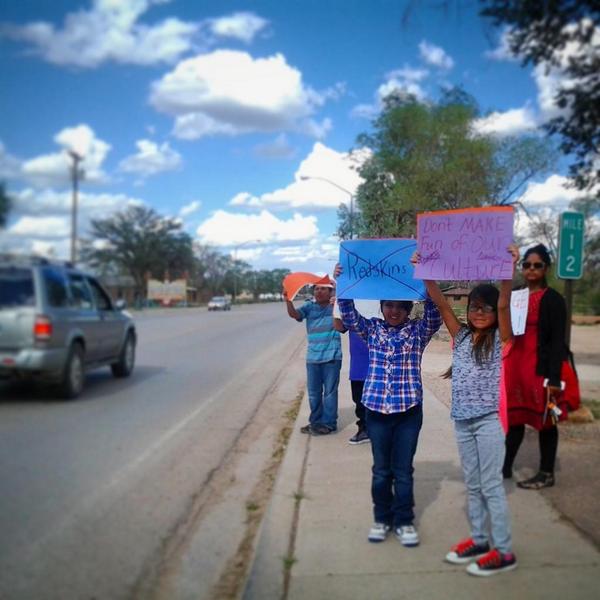
Another person on Facebook took offense saying, "those lines are basically stereotyping the people of Zuni." Below: "Not everyone in Zuni supports this. Never too young #CantBuyOurSupport #NotYourMascot #FutureLeadersofZuni"
I have written at length for many years about the inherent racism in this particular slur, and the incalculable harm that it does—most recently, here. But today, Wings has decided to take the extraordinary step of issuing this public statement in opposition to the team ownership’s continued racist use of the name; its continued attempts to co-opt Indians to use them as “cover” to further their racist and exploitative agenda; and its continued attempts to bribe and browbeat Indians into silence on this issue. This statement, and this particular blog post, are explicitly signed jointly by both of us.
From Wings:
I make this statement today as a matter of cultural and spiritual duty, of my obligation to our Native peoples, and of my obligation to my occupation as a Native artist.
I am unequivocally opposed to any and all use of Native-themed imagery, symbols, and cultural signifiers by non-Natives as mascots or for similar purposes. Appropriating such images and names steals our identity, our cultures, and that which we hold sacred—in many cases, some of the rare things left to us that have not already been stolen, warped beyond recognition, and used by unauthorized persons for improper purposes. I am especially opposed to the inherently racist use, under any circumstances, of the “Red****s” name, which is a vicious slur weighted with the scalps and skins, blood and bones of our peoples. It is a term of theft, rape, torture, murder, and genocide, and it has no place in a civilized society, particularly in so trivial a venue as a sporting event.
Zuni Pueblo is, of course, a sovereign nation, and it can do as its tribal leaders see fit. I express my hope, however, that this is merely an honest mistake on the part of someone there trying to help his or her people without knowing the backstory. Regardless of others’ motivations or intent, however, I cannot in good conscience participate as an artist, and I cannot remain silent.
By Jim Enote
Some of our own people are unconcerned about the issue of mascots. These folks say they are strong in their identity and traditions and belittle those that are offended by the Redskins mascot. If you consider yourself traditionally well adjusted then good for you. However, not everyone is so fortunate. Through the ubiquitous power of modern media many Native children are already associating with images that have little to do with their true tribal identity and I believe we should be concerned about that.
What about Native folks that are proud of the Redskins mascot? I still wonder why they could feel empowered by or proud of an image that denigrates Native peoples? Does association with a mascot image that suggests toughness or dominance make them feel better about themselves? Why not be proud of our Native educators, school principals, lawyers, doctors, military personnel, and engineers to name a few. This is 2014; we are not war whooping savages.
Tomorrow by invitation from the Zuni tribal council, representatives from the Redskins will come to Zuni to seek art made by Zuni artists, especially art that includes the Redskins logo and team colors. The visit is obviously part of spin doctoring the Redskins struggling image. Most of us easily see through the scheme. Why didn’t the Redskins approach the organizers of Santa Fe Indian Market, the Indigenous Fine Arts Market, or any number of other Native art associations representing thousands of outstanding Native artists?
By Rick Cohen
Some of this sounds less like charity and philanthropy and more like the history of a part of the Christian missionary outreach (actively supported by the federal government) to Native Americans in the 1800s. In return for assistance from whites, Native Americans were encouraged and expected to adopt white ways and to be assimilated into white culture. Now, through the philanthropy of Snyder’s NFL team, Native Americans are encouraged to assimilate a racially disparaging team name. That’s the chutzpah of Dan Snyder’s missionary approach to philanthropy, except that he isn’t offering food and assistance in exchange for white culture and religion. He simply wants Native Americans to take the charitable money in return, at a minimum, for turning a blind eye to the racially disparaging team name.
By Joseph Lynch
On Facebook, several people were sounding off about the letter sent out notifying artists that the Washington Redskins would be on the pueblo.
"I'm going to make a poster saying, "I am a Zuni artist and I refuse to be bought by the Washington Redskins," said Facebook user Masika.
"I can't believe it! What has happened to our government? Sadly, it has come down to money... Then there is the last line, that's sad," said another Facebook user Francine.
The last line in that letter read, "Be respectful when you arrive. Do not smell of alcohol or marijuana, or be under the influence."
Another person on Facebook took offense saying, "those lines are basically stereotyping the people of Zuni."
August 08, 2014
Redskins OAF seeks Zuni art
Redskins foundation seeks Native artwork with team logo
By Erik BradyWanted: Native artwork, preferably of a specific sort.
The Zuni Pueblo tribe sent notice to Native artists that representatives of the Washington NFL team's Original Americans Foundation will be in Zuni, N.M., on Monday afternoon to buy jewelry, pottery, etchings and other artwork.
"Preferred items will be those that have the Washington Redskins team logo, or use of team colors … embedded in the art work," the notice says. It also asks artists to "spread the word" to others who may have logo art to sell.
"We have a very depressed economy and the (tribal) governor wanted to help local Zuni artists," tribal administrator Hanna Weeke told USA TODAY Sports. She said buyers often insist artists cut their prices but she believes foundation buyers will pay in full. Redskins Want Native-Made Redskins Art. No Drunk Artists, PleaseOn Monday, August 11, representatives of the Washington Redskins will be visiting Zuni Pueblo, but they're not coming to build a skate park or hand out blankets.
They want Native-made artwork and crafts, particularly stuff that promotes the Redskins team brand. A letter bearing the logo of Zuni Pueblo has invited artists to show their wares at the Zuni Tribal Conference room. After providing some details, the letter ends with the instructions "Be respectful when you arrive. Do not smell of alcohol, marijuana, or be under the influence."
On Twitter, Last Real Indians gave the following interpretation: "Hey Indians, we want to buy your trinkets esp if they have Redskins logo. but don't show up drunk or high --Dan Snyder"
"'Be respectful when you arrive.' Is there any self-awareness there?" responded another Twitter user. Wanted: Native Art With Redskins Logo And Colors; Drunks Need Not Apply
By Sean NewellThe Zuni Pueblo's governor's office announced the event in a letter posted to its Facebook page. In the last line, the letter asks that people not show up drunk or stoned. "Be respectful," the letter directs.
People on Zuni Pueblo's Facebook page are obviously upset—when was the last time your local art fair asked the artists not to show up drunk?—and there are levels to this thing. Do you want to sell some of your art? Well, you better include a slur against yourself if you want some cash. Oh, also don't be drunk. Sell your racist-stereotype crafts, people of Zuni; just don't be one yourself.
One response to the Facebook post put a neat bow on all of it.I am tired of people claiming that there are bigger issues in Native America. Are we all so blind that we cannot see that everything is connected? We are in the positions we are in because no one in the external world views us as real human beings who deserve to be treated with respect and dignity. And guess what? Part of that problem is letting them go on pretending that we are either drunks, noble savages or mascots. 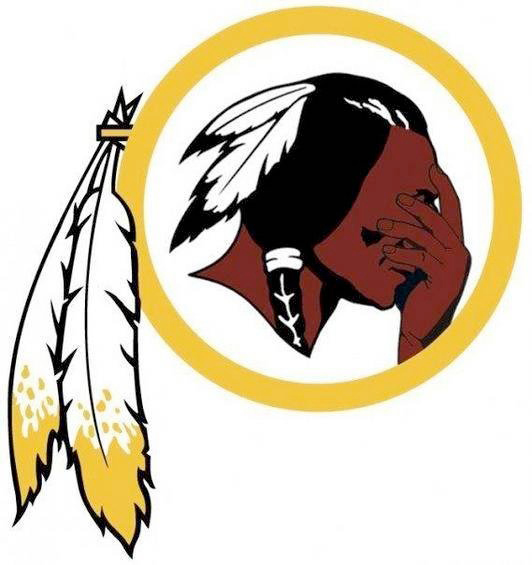
By Erik Brady
The Zuni Pueblo tribe sent notice to Native artists that representatives of the Washington NFL team's Original Americans Foundation will be in Zuni, N.M., on Monday afternoon to buy jewelry, pottery, etchings and other artwork.
"Preferred items will be those that have the Washington Redskins team logo, or use of team colors … embedded in the art work," the notice says. It also asks artists to "spread the word" to others who may have logo art to sell.
"We have a very depressed economy and the (tribal) governor wanted to help local Zuni artists," tribal administrator Hanna Weeke told USA TODAY Sports. She said buyers often insist artists cut their prices but she believes foundation buyers will pay in full.
They want Native-made artwork and crafts, particularly stuff that promotes the Redskins team brand. A letter bearing the logo of Zuni Pueblo has invited artists to show their wares at the Zuni Tribal Conference room. After providing some details, the letter ends with the instructions "Be respectful when you arrive. Do not smell of alcohol, marijuana, or be under the influence."
On Twitter, Last Real Indians gave the following interpretation: "Hey Indians, we want to buy your trinkets esp if they have Redskins logo. but don't show up drunk or high --Dan Snyder"
"'Be respectful when you arrive.' Is there any self-awareness there?" responded another Twitter user.
By Sean Newell
People on Zuni Pueblo's Facebook page are obviously upset—when was the last time your local art fair asked the artists not to show up drunk?—and there are levels to this thing. Do you want to sell some of your art? Well, you better include a slur against yourself if you want some cash. Oh, also don't be drunk. Sell your racist-stereotype crafts, people of Zuni; just don't be one yourself.
One response to the Facebook post put a neat bow on all of it.
August 28, 2013
See Taos before you die
Taos Pueblo: See it before you die, Fodor’s says
By Jessica DyerBeen to Taos Pueblo yet?
Maybe it’s time.
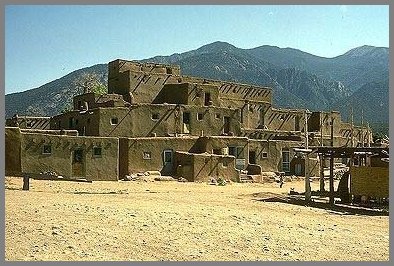
Taos Pueblo has made Fodor’s list of the top 20 U.S. places “to see before you die.”
Fodor’s, a popular travel guide publisher, included the Northern New Mexico community alongside the likes of Times Square in New York City, Fenway Park in Boston and the Grand Canyon. The complete list of places:
20 US Places to See Before You Die
Comment: I visited Taos reservation once, but it was closed that day for religious reasons. Alas.
For more on the Native tourism, see Navajos Protest Wallenda Walk and Alaska Native Voices.
By Jessica Dyer
Maybe it’s time.
Taos Pueblo has made Fodor’s list of the top 20 U.S. places “to see before you die.”
Fodor’s, a popular travel guide publisher, included the Northern New Mexico community alongside the likes of Times Square in New York City, Fenway Park in Boston and the Grand Canyon.
20 US Places to See Before You Die
Comment: I visited Taos reservation once, but it was closed that day for religious reasons. Alas.
For more on the Native tourism, see Navajos Protest Wallenda Walk and Alaska Native Voices.
July 31, 2013
Scooby-Doo meets Navajo "shaman"
Someone alerted me to this comic-book story featuring a Native character:
Scooby-Doo, Where Are You?The Case of Carlsbad's Creepy Caverns finds the Mystery Gang on vacation in New Mexico when a spooky scare at one of America's greatest natural wonders drags them into yet another caper. Before it's over they summon the Pueblo clown spirits with desert shaman Navajo Windfeather, run from a giant trilobite, and find themselves neck-deep in the most devilish force of all--show business! You can see the art for the ten-page story here:
The Case of Carlsbad's Creepy Caverns
My contact added:The story and artwork showcase themes, historic facts, and artistic motifs from the Pueblo, Hopi, and Zuni nations. I know the writer personally and he took great pride in putting as much native culture into the story as possible without being didactic. Here's a preview and a link to all of the artwork. I hope you enjoy it as much as I enjoy the posts on this site. --S Comment: Judging by the wordless art, the story goes like this: Scary things happen in cavern, gang consults Native "shaman" about who might be playing pranks, incidents are revealed to have a non-supernatural origin...as usual.
Based on what we know, the story already has a few problems:
"Shaman" doesn't mean any Native who performs magic. It's a particular kind of priest or medicine man. Shamans are mostly found in Siberian tribes, although there are some in Pacific Northwest and Alaska tribes.
I don't know if the character is a shaman Navajo named Windfeather or a shaman named Navajo Windfeather. Either way, the Windfeather part sounds like a name for a New Ager, not a Navajo.
Assuming a "shaman" can summon spirits, why would a Navajo summon Pueblo "clown spirits"? The Navajo and Pueblo tribes have different religions and cultures. A Navajo would have no more power over Pueblo spirits than he would over the Greek gods.
Even if the shaman is just describing Pueblo clown spirits, not summoning them, it doesn't quite make sense. His attitude seems to be: "I'm here and the Pueblo tribes are way over there. Let's blame their spirits even though my tribe's spirits are presumably here with me."
I'm not sure the koshares (clowns) and mudheads qualify as tricksters who play pranks in general. They may do so during Pueblo ceremonies, or in the Pueblo villages. But I don't think they roam all over the Southwest causing mischief. Coyote or Kokopelli might be more appropriate for that role.
For more on Scooby-Doo, see Scooby-Doo vs. the Ogopogo.
Below: A Navajo "shaman" explains Pueblo "clown spirits" even though the Carlsbad Caverns aren't claimed by either tribal group. Nice artwork, at least.

Scooby-Doo, Where Are You?
The Case of Carlsbad's Creepy Caverns
My contact added:
Based on what we know, the story already has a few problems:
Even if the shaman is just describing Pueblo clown spirits, not summoning them, it doesn't quite make sense. His attitude seems to be: "I'm here and the Pueblo tribes are way over there. Let's blame their spirits even though my tribe's spirits are presumably here with me."
For more on Scooby-Doo, see Scooby-Doo vs. the Ogopogo.
Below: A Navajo "shaman" explains Pueblo "clown spirits" even though the Carlsbad Caverns aren't claimed by either tribal group. Nice artwork, at least.
July 28, 2013
Pac-Man meets pueblo
Tradition meets cartoons
By Kathaleen RobertsNatay’s stairsteps-meet-street-art approach fuses Mimbres abstraction and graffiti techniques, tablitas and Japanese anime. It’s a hybrid of traditional motifs infused with the vibrant colors and minimalist forms of cartoons and comic books. Think Pac-Man meets pueblo.
His “Kiva Head” design combines an Angry Birds scowl with the traditional tablita headdress used in ceremonial dances.
“It’s actually the symbol for clouds in pueblo culture,” Natay explained. “It’s also the steps of the kiva.”
“You see so much Native American cartoon imagery that’s so stereotypical,” he continued. “I wanted to get away from that. I wanted to create cartoon characters.” Comment: For more on Native pop art, see Veregge's Superhero Totems and Birch Bark and Skateboards in Mni Sota.
Below: "Ehren Kee Natay (Kewa Pueblo/Diné) poses with a T-shirt he designed for the upcoming Santa Fe Indian Market." (Jim Thompson/Journal)

By Kathaleen Roberts
His “Kiva Head” design combines an Angry Birds scowl with the traditional tablita headdress used in ceremonial dances.
“It’s actually the symbol for clouds in pueblo culture,” Natay explained. “It’s also the steps of the kiva.”
“You see so much Native American cartoon imagery that’s so stereotypical,” he continued. “I wanted to get away from that. I wanted to create cartoon characters.”
Below: "Ehren Kee Natay (Kewa Pueblo/Diné) poses with a T-shirt he designed for the upcoming Santa Fe Indian Market." (Jim Thompson/Journal)
May 05, 2013
Michaels parlays Project Runway success
No regrets: Patricia Michaels talks 'Project Runway'
By Rick RomancitoShe didn’t win a single challenge.
She was close to being eliminated more than once. She fought with her team members several times and shed tears at the mean comments made about her designs. But, in the end, Patricia Michaels did it all with style, dignity and, even though she came in second place, she stands poised to take the fashion world by storm. And:Michaels got nothing.
However, what she has received in media exposure, name recognition, sales and celebrity status is probably worth millions. Just last weekend, she took 2011 Best Actress Oscar winner Natalie Portman to the annual Gathering of Nations Powwow in Albuquerque. Portman is in the state filming “Jane Got a Gun.” Michaels has been interviewed countless times for media stories and has brought a level of attention to Taos you cannot put a price tag on. The Smithsonian Institute wants to do a retrospective of her work in October. Despite loss, 1st Native American contestant on 'Project Runway' hopes to make it work
By Phaedra HaywoodMichaels' 12-piece collection, inspired by trees and embellished with horse hair and handmade sterling silver sequins, created quite a stir among the celebrity judges on the panel, including famed dress designer Zach Posen, who dubbed it "techno pow-pow."
And Michaels—the first Native American to appear on the show and a season-long favorite of host Klum—has already begun to parlay the exposure into a number of lucrative and creative projects.
Michaels' longtime assistant, Amber Gunn Gauthier, said the duo already are working on a line that they'll debut at New York Fashion Week in September, aided by support from Thursday's fundraiser. Posen has asked Michaels to collaborate with him on a textile project. Her work will also be the subject of a retrospective curated by the Smithsonian. Just this week, she turned away people who wanted to take her textile-making class at the POEH Center in Pojoaque. And she's she has several other projects that are still in the secrecy stage.
Guest judge and fashion superstar Michael Kors said at the beginning of her runway show, "I was like, 'Oh my god, the art teacher is on an acid trip,'" but he later called Michaels work "fabulous" and said it "comes from her soul." Comment: For more on Patricia Michaels, see Michaels Runner-Up in Project Runway and Michaels in Project Runway Finals.

By Rick Romancito
She was close to being eliminated more than once. She fought with her team members several times and shed tears at the mean comments made about her designs. But, in the end, Patricia Michaels did it all with style, dignity and, even though she came in second place, she stands poised to take the fashion world by storm.
However, what she has received in media exposure, name recognition, sales and celebrity status is probably worth millions. Just last weekend, she took 2011 Best Actress Oscar winner Natalie Portman to the annual Gathering of Nations Powwow in Albuquerque. Portman is in the state filming “Jane Got a Gun.” Michaels has been interviewed countless times for media stories and has brought a level of attention to Taos you cannot put a price tag on. The Smithsonian Institute wants to do a retrospective of her work in October.
By Phaedra Haywood
And Michaels—the first Native American to appear on the show and a season-long favorite of host Klum—has already begun to parlay the exposure into a number of lucrative and creative projects.
Michaels' longtime assistant, Amber Gunn Gauthier, said the duo already are working on a line that they'll debut at New York Fashion Week in September, aided by support from Thursday's fundraiser. Posen has asked Michaels to collaborate with him on a textile project. Her work will also be the subject of a retrospective curated by the Smithsonian. Just this week, she turned away people who wanted to take her textile-making class at the POEH Center in Pojoaque. And she's she has several other projects that are still in the secrecy stage.
Guest judge and fashion superstar Michael Kors said at the beginning of her runway show, "I was like, 'Oh my god, the art teacher is on an acid trip,'" but he later called Michaels work "fabulous" and said it "comes from her soul."
April 25, 2013
Michaels runner-up in Project Runway
Taos fashion designer comes up short in ‘Project Runway’
By Phaedra HaywoodThe judges called her collection spectacular, different, cool and unique. But Taos Pueblo fashion designer Patricia Michaels on Thursday night didn’t win Season 11 of Project Runway, the fashion-design-themed reality show on cable television’s Lifetime channel hosted by supermodel Heidi Klum. Michaels came in second.
“Sorry guys,” the designer said to supporters who gathered for a $100-a-plate dinner at a private home on Santa Fe’s east side to watch results of the competition’s finale, which was recorded last summer but kept secret until Thursday night’s broadcast.
Michaels’ second-place finish means she won’t get the $100,000 top prize to create a new line to sell at Lord & Taylor department stores. She also didn’t win a fashion spread in Marie Claire magazine or a new Lexus.
Those prizes go to first-place finisher Michelle Lesniak Franklin, who some partisans considered the “mean girl” on the show.
But Michaels’ 12-piece collection, inspired by trees and embellished with horse hair and handmade sterling silver sequins, created quite a stir amongst the celebrity judges on the panel, including famed dress designer Zach Posen, who dubbed it “techno pow-pow.”
And Michaels—the first Native American to appear on the show and a season-long favorite of host Klum—has already begun to parlay the exposure into a number of lucrative and creative projects. Taos designer Patricia Michaels: Oh so close
By Joan LivingstonMichaels, the show's first Native American contestant, clearly was inspired by her roots via her creative use of textile, texture and shape.
She employed materials such as horsehair and mica. Silver pieces were fashioned in her stepfather's blacksmith shop.
One judge labeled an outfit as "techno powwow."
Michaels was one of 16 contestants at the start. Originality was a key element in her designs throughout the season.
"We expected your collection to be one of a kind," Heidi Klum, head judge, told Michaels at the finale. Comment: For more on Patricia Michaels, see Michaels in Project Runway Finals and Michaels Remains in Project Runway.

By Phaedra Haywood
“Sorry guys,” the designer said to supporters who gathered for a $100-a-plate dinner at a private home on Santa Fe’s east side to watch results of the competition’s finale, which was recorded last summer but kept secret until Thursday night’s broadcast.
Michaels’ second-place finish means she won’t get the $100,000 top prize to create a new line to sell at Lord & Taylor department stores. She also didn’t win a fashion spread in Marie Claire magazine or a new Lexus.
Those prizes go to first-place finisher Michelle Lesniak Franklin, who some partisans considered the “mean girl” on the show.
But Michaels’ 12-piece collection, inspired by trees and embellished with horse hair and handmade sterling silver sequins, created quite a stir amongst the celebrity judges on the panel, including famed dress designer Zach Posen, who dubbed it “techno pow-pow.”
And Michaels—the first Native American to appear on the show and a season-long favorite of host Klum—has already begun to parlay the exposure into a number of lucrative and creative projects.
By Joan Livingston
She employed materials such as horsehair and mica. Silver pieces were fashioned in her stepfather's blacksmith shop.
One judge labeled an outfit as "techno powwow."
Michaels was one of 16 contestants at the start. Originality was a key element in her designs throughout the season.
"We expected your collection to be one of a kind," Heidi Klum, head judge, told Michaels at the finale.
April 05, 2013
Michaels in Project Runway finals
‘Project Runway’ native designer Patricia Michaels makes final 4
By Roscoe PondPatricia struggled throughout this episode because she was teamed with Richard who just wasn’t a seamstress. She admitted that she changed her design numerous times & got rid of the art factor. She had to teach Richard how to do a French stitch which took 45 minutes. She hit the panic button. Daniel was nice enough to ask Samantha to help Patricia at the last minute.
The judges called Patricia’s design “Element of surprise,” “Loved the one shoulder,” “Needed a belt,” “Good palette,” “Good look,” “Not finished,” “Didn’t see enough.” Nina however in discussion praised Patricia later for, “Not following other designers,” “Showed us things we haven’t seen before,” “She doesn’t copy anyone.” Jordana said Patricia “Tells a story with her design.” Heidi also added, “Patricia is authentic,” “It comes from her,” “A Champion.”
Native American designer Patricia Michaels has made it to the final 4 on “Project Runway.” She will face yet another challenge, a new judge & more fashion designs. Comment: For more on Patricia Michaels, see Michaels Remains in Project Runway and Michaels's Design in Project Runway.

By Roscoe Pond
The judges called Patricia’s design “Element of surprise,” “Loved the one shoulder,” “Needed a belt,” “Good palette,” “Good look,” “Not finished,” “Didn’t see enough.” Nina however in discussion praised Patricia later for, “Not following other designers,” “Showed us things we haven’t seen before,” “She doesn’t copy anyone.” Jordana said Patricia “Tells a story with her design.” Heidi also added, “Patricia is authentic,” “It comes from her,” “A Champion.”
Native American designer Patricia Michaels has made it to the final 4 on “Project Runway.” She will face yet another challenge, a new judge & more fashion designs.
March 04, 2013
Michaels remains in Project Runway
Native designer Patricia Michaels popular on ‘Project Runway’
By Roscoe Pond"Project Runway" is now in its 11th season airing each Thursday night on the ‘Lifetime’ cable TV network (9/8 p.m.). The first Native American fashion designer Patricia Michaels has moved through each round with concentration & hard work. Last week in the 6th episode she was forced to recreate her design for a chosen elderly female just hours before the runway. Patricia faltered & received some low scores by the judges, but was saved by her team Michelle & Layana with their higher scores. Host Heidi Klume told all three that they didn’t work as a team. Which means that either Patricia wasn’t listening or the other two just didn’t want to help her? Michelle has become the outspoken & complaining contestant this season. She’s been aggressively targeting Patricia with her jealousy & anger. Patricia has never said anything mean about anyone. She is very mature & is seen on camera as someone who wants to learn from a great opportunity.
This season is about team work & that is how the judges are voting on all fashion designs. According to the official website of “Project Runway,” that is linked to their ‘Facebook’ page. Here are the stats on popular ‘Likes’ by fans of the TV Fashion show. This is based on the recent team consisting of Layana Aguilar, Michelle Lesniak, [and] Patricia Michaels. Layana has 363, Michelle has 908, [and] Patricia has 2,300. Comment: For more on Patricia Michaels, see Michaels's Designs in Project Runway and Taos Designer in Project Runway.
Below: "Patricia Michaels design for Country singer Miranda Lambert."

By Roscoe Pond
This season is about team work & that is how the judges are voting on all fashion designs. According to the official website of “Project Runway,” that is linked to their ‘Facebook’ page. Here are the stats on popular ‘Likes’ by fans of the TV Fashion show. This is based on the recent team consisting of Layana Aguilar, Michelle Lesniak, [and] Patricia Michaels. Layana has 363, Michelle has 908, [and] Patricia has 2,300.
Below: "Patricia Michaels design for Country singer Miranda Lambert."
February 02, 2013
Lost Mesa in Fablehaven
Debbie Reese dissects another children's book in her American Indians in Children's Literature blog:
Brandon Mull's Fablehaven: Grip of the Shadow PlagueA few weeks ago, I pointed to stereotypes in Brandon Mull's Fablehaven: Rise of the Evening Star. Today, I'm pointing to problems in his Fablehaven: Grip of the Shadow Plague. The protagonist Kendra, who is one of the "Knights of the Dawn," seeks to recover a hidden artifact.That assignment takes her to the "Lost Mesa preserve" (p. 94) in Arizona which is on Navajo land. ... In chapter 7, Kendra and the other knights arrive at Lost Mesa. Here's the illustration at top of that page: 
As Reese notes, Lost Mesa is obviously based on the real Taos Pueblo (below).
According to the book, the Navajo reservation was supposedly created to hide Lost Mesa. Even worse, "Persian magi actually established the preserve" before the Europeans arrived. The "Anasazi" and later the Pueblo and Navajo people only "managed" the "preserve" for its magical inhabitants.
There's more, but this is enough of an insult. It reinforces the typical Eurocentric belief that Indians didn't accomplish anything themselves. Native civilizations must've been built by lost races of white men or space aliens. Indians were only "savages" who couldn't do much more than grunt and kill people.
Actually, the Pueblos and their ancestors must've built hundreds of Pueblo-style structures throughout the Southwest over the last millennium. That demonstrates how unmagical and unremarkable the architectural skill was. It's ridiculous to turn an ordinary but "exotic" culture into a fairy-tale place inhabited by wizards or whatever.
For more on lost civilizations, see Indiana Jones's Criminally Bad Archaeology and "Light Beam" from Maya Pyramid.
Brandon Mull's Fablehaven: Grip of the Shadow Plague
As Reese notes, Lost Mesa is obviously based on the real Taos Pueblo (below).
According to the book, the Navajo reservation was supposedly created to hide Lost Mesa. Even worse, "Persian magi actually established the preserve" before the Europeans arrived. The "Anasazi" and later the Pueblo and Navajo people only "managed" the "preserve" for its magical inhabitants.
There's more, but this is enough of an insult. It reinforces the typical Eurocentric belief that Indians didn't accomplish anything themselves. Native civilizations must've been built by lost races of white men or space aliens. Indians were only "savages" who couldn't do much more than grunt and kill people.
Actually, the Pueblos and their ancestors must've built hundreds of Pueblo-style structures throughout the Southwest over the last millennium. That demonstrates how unmagical and unremarkable the architectural skill was. It's ridiculous to turn an ordinary but "exotic" culture into a fairy-tale place inhabited by wizards or whatever.
For more on lost civilizations, see Indiana Jones's Criminally Bad Archaeology and "Light Beam" from Maya Pyramid.
January 26, 2013
Michaels's design in Project Runway
Jessica Metcalf reviews Patricia Michaels's first appearance in Project Runway in her Beyond Buckskin blog:
Patricia Michaels--Project Runway Top Contender
By Jessica R. MetcalfFor example, for the first competition, designers were challenged to create a garment that shows their personalities and is inspired by a view of New York City (they must also incorporate input from the rest of the designers on their teams--a new challenge added to Season 11). Michaels immediately takes to painting her fabric.
Other designers look at her with question--possibly since most purchase their fabric with patterns already inscribed, and they don't think to take their designs one step further and actually 'create' the fabric patterns themselves. One designer states that Michaels' fabric looks like a student craft project, while Emily (who gets voted off) remarks that Michaels shouldn't be painting since the designers have limited time (meanwhile, it's time that becomes Emily's worst enemy).
Yet, when it came down to judging, Michaels' shift dress was in the top 3--a major coup for us Indians on our couches watching from our tubes (or laptops). Here was a strong Native woman who is connected to her community and has sacrificed a great deal to pursue her dreams of working in the fashion industry. She is in the top 3 for the first competition, AND her design was modern with not one shred of Native American stereotypical mumbo jumbo to rely on for kiss ass points.
This last point is important for me to note and discuss, because sometimes people lead us to believe that we are only included in certain programs for the sake of diversity, and not because of legitimate talent or skill. This can cause a person to second guess themselves or doubt their abilities. When we get to that point, we feel obligated to play the 'Indian role' and out comes the cheap feathers, tan leather, and old lady turquoise to live up to the expectations. But it is so incredibly important to push past that, and to know that you are pushing past it, to accept the challenge, and to do it in a respectful and good way (because, hey, feathers, leather, and turquoise can be rather fabulous if done right!). We have seen Michaels use these items in a good way: she wore beautiful turquoise jewelry throughout the episode, and brought garments to the casting audition that featured painted feather patterns. Indeed, even this shift dress was made using gorgeous white leather! Michaels doesn't resort to stereotypes, and represents Indian Country well.
I appreciate Michaels' work because much of it is concept-based, environment-based, or story-based--which are some of the core entities of Native American creativity.
For her Episode 1 dress, Michaels explains, "I'm creating the 'New York window cityscape' look," and she achieves this look by handpainting partial squares using a silver grey paint and cutting slits into the leather dress.
The judges loved the fabric manipulation and appreciated the artistic qualities brought forth. They also applauded the cut slits because they gave the dress a tactile quality. A Q&A with Michaels conducted while watching the episode:
Live From the 'Project Runway' Premiere With Patricia Michaels
By Alex JacobsWere there any disadvantages?
There is that challenge that they don’t quite understand who you are and questioning your characteristics as a Native American. If I said something in Tewa, they thought maybe I was doing witchcraft or voodoo. They felt a bit threatened and maybe insecure. They didn’t know our culture and went right to the stereotype. They may have also expected the stereotype to be produced and they didn’t know that I knew how to work with other materials. As far as being from Santa Fe, my Mom opened a gallery the night before I was born, she was dancing in her buckskins. I was born into this, I went to the Institute of American Indian Arts. It’s no disadvantage to be from Santa Fe.
In fashion, anybody who’s intelligent knows it’s always supposed to change. They’re looking and waiting for that change. When they saw that my stuff was a whole different new take, they were enthusiastic and excited. They saw Native American Design be something they never expected to see.
Any big surprises?
Yeah, I cried a lot. And I was constantly educating. They didn’t expect me to be so well traveled, knowledgeable, sophisticated. So I guess they were more surprised than me. Project Runway premier at Legends Santa Fe: Patricia Michaels shines (Photos)
Comment: My mini-review of Michaels's design:
I'd say its shape is bland and uninteresting, but the pattern makes up for that. It evokes the Manhattan skyline, which was part of the assignment. But it also evokes the spires of places like Monument Valley and Canyon de Chelley on the Navajo rez. And the prints are reminiscent of the ancient handprints made by "Anasazi" artists on rock walls.
As for the shape, how about a sky-blue or turquoise-blue undergarment to accentuate the beige dress? That would really make the dress pop as well as evoke the Southwest's sand/sky color scheme.
Anyway, it's a fine accomplishment for a spur-of-the-moment design. If there was a prize for best use of one's cultural background, Michaels might win it. As it is, her design probably deserves to be in the top 3.
For more on the subject, see Taos Designer in Project Runway.


Patricia Michaels--Project Runway Top Contender
By Jessica R. Metcalf
Other designers look at her with question--possibly since most purchase their fabric with patterns already inscribed, and they don't think to take their designs one step further and actually 'create' the fabric patterns themselves. One designer states that Michaels' fabric looks like a student craft project, while Emily (who gets voted off) remarks that Michaels shouldn't be painting since the designers have limited time (meanwhile, it's time that becomes Emily's worst enemy).
Yet, when it came down to judging, Michaels' shift dress was in the top 3--a major coup for us Indians on our couches watching from our tubes (or laptops). Here was a strong Native woman who is connected to her community and has sacrificed a great deal to pursue her dreams of working in the fashion industry. She is in the top 3 for the first competition, AND her design was modern with not one shred of Native American stereotypical mumbo jumbo to rely on for kiss ass points.
This last point is important for me to note and discuss, because sometimes people lead us to believe that we are only included in certain programs for the sake of diversity, and not because of legitimate talent or skill. This can cause a person to second guess themselves or doubt their abilities. When we get to that point, we feel obligated to play the 'Indian role' and out comes the cheap feathers, tan leather, and old lady turquoise to live up to the expectations. But it is so incredibly important to push past that, and to know that you are pushing past it, to accept the challenge, and to do it in a respectful and good way (because, hey, feathers, leather, and turquoise can be rather fabulous if done right!). We have seen Michaels use these items in a good way: she wore beautiful turquoise jewelry throughout the episode, and brought garments to the casting audition that featured painted feather patterns. Indeed, even this shift dress was made using gorgeous white leather! Michaels doesn't resort to stereotypes, and represents Indian Country well.
I appreciate Michaels' work because much of it is concept-based, environment-based, or story-based--which are some of the core entities of Native American creativity.
For her Episode 1 dress, Michaels explains, "I'm creating the 'New York window cityscape' look," and she achieves this look by handpainting partial squares using a silver grey paint and cutting slits into the leather dress.
The judges loved the fabric manipulation and appreciated the artistic qualities brought forth. They also applauded the cut slits because they gave the dress a tactile quality.
Live From the 'Project Runway' Premiere With Patricia Michaels
By Alex Jacobs
There is that challenge that they don’t quite understand who you are and questioning your characteristics as a Native American. If I said something in Tewa, they thought maybe I was doing witchcraft or voodoo. They felt a bit threatened and maybe insecure. They didn’t know our culture and went right to the stereotype. They may have also expected the stereotype to be produced and they didn’t know that I knew how to work with other materials. As far as being from Santa Fe, my Mom opened a gallery the night before I was born, she was dancing in her buckskins. I was born into this, I went to the Institute of American Indian Arts. It’s no disadvantage to be from Santa Fe.
In fashion, anybody who’s intelligent knows it’s always supposed to change. They’re looking and waiting for that change. When they saw that my stuff was a whole different new take, they were enthusiastic and excited. They saw Native American Design be something they never expected to see.
Any big surprises?
Yeah, I cried a lot. And I was constantly educating. They didn’t expect me to be so well traveled, knowledgeable, sophisticated. So I guess they were more surprised than me.
Comment: My mini-review of Michaels's design:
I'd say its shape is bland and uninteresting, but the pattern makes up for that. It evokes the Manhattan skyline, which was part of the assignment. But it also evokes the spires of places like Monument Valley and Canyon de Chelley on the Navajo rez. And the prints are reminiscent of the ancient handprints made by "Anasazi" artists on rock walls.
As for the shape, how about a sky-blue or turquoise-blue undergarment to accentuate the beige dress? That would really make the dress pop as well as evoke the Southwest's sand/sky color scheme.
Anyway, it's a fine accomplishment for a spur-of-the-moment design. If there was a prize for best use of one's cultural background, Michaels might win it. As it is, her design probably deserves to be in the top 3.
For more on the subject, see Taos Designer in Project Runway.
January 13, 2013
Taos designer in Project Runway
From Taos to 'Project Runway': Native designer makes history on reality show
By Phaedra HaywoodTaos Pueblo fashion designer Patricia Michaels will appear on the 11th season of Project Runway, which will begin airing Jan. 24.
Michaels was one of 16 designers picked to compete for the popular show’s grand prize of $100,000, a fashion spread in Marie Claire magazine, a Lexus, $50,000 worth of technology and the opportunity to sell their collection at Lord & Taylor department stores.
The Taos Pueblo native was the first Native American designer to participate in the history of the show, which is hosted by supermodel Heidi Klum and provides budding designers an opportunity to launch fashion careers while competing in weekly challenges under the watchful guidance of industry insiders.
While many would-be contestants watch the show religiously and apply more than once, Michaels said that in her case, one of the show’s casting agents contacted her and encouraged her to enter after seeing her information on a website for fashion models.
“I hadn’t seen it, but I had heard a few things about it,” said the designer. “So I decided to rent a couple of seasons [to watch] and I was in awe of what the challenges were and the opportunities that could happen.”
The designer—whose work has been featured in French Elle and is in the permanent collection of several museums—said part of the reason she decided to apply was to encourage other Native American designers to break away from showing only in Native-themed events and galleries and expose themselves to more mainstream fashion outlets and influences.
“It’s about time Natives get out of our comfortable spots and go forward to other venues,” she said. “That’s why I took on this challenge, to have a new direction. Because just doing museum shows that people want me to do to draw a crowd really hasn’t gotten me anywhere. It’s important to always evolve. That’s the reason I became a fashion designer, because it’s always changing. It gives you that liberty to change.” Native Runway
Pueblo fashion designer slated to compete on Project Runway
Comment: For more on Native fashion, see Mohawk Designer on Victoria's Secret and Gong Launches Mockups.

By Phaedra Haywood
Michaels was one of 16 designers picked to compete for the popular show’s grand prize of $100,000, a fashion spread in Marie Claire magazine, a Lexus, $50,000 worth of technology and the opportunity to sell their collection at Lord & Taylor department stores.
The Taos Pueblo native was the first Native American designer to participate in the history of the show, which is hosted by supermodel Heidi Klum and provides budding designers an opportunity to launch fashion careers while competing in weekly challenges under the watchful guidance of industry insiders.
While many would-be contestants watch the show religiously and apply more than once, Michaels said that in her case, one of the show’s casting agents contacted her and encouraged her to enter after seeing her information on a website for fashion models.
“I hadn’t seen it, but I had heard a few things about it,” said the designer. “So I decided to rent a couple of seasons [to watch] and I was in awe of what the challenges were and the opportunities that could happen.”
The designer—whose work has been featured in French Elle and is in the permanent collection of several museums—said part of the reason she decided to apply was to encourage other Native American designers to break away from showing only in Native-themed events and galleries and expose themselves to more mainstream fashion outlets and influences.
“It’s about time Natives get out of our comfortable spots and go forward to other venues,” she said. “That’s why I took on this challenge, to have a new direction. Because just doing museum shows that people want me to do to draw a crowd really hasn’t gotten me anywhere. It’s important to always evolve. That’s the reason I became a fashion designer, because it’s always changing. It gives you that liberty to change.”
Pueblo fashion designer slated to compete on Project Runway
Comment: For more on Native fashion, see Mohawk Designer on Victoria's Secret and Gong Launches Mockups.
October 25, 2012
Native presence in New Mexican balloons
Albuquerque International Balloon Fiesta Is a Southwest Spectacular
By Jack McNeelThere is a Native presence in ballooning throughout the region and Native Americans are seen mixed throughout the crowds which number upwards of 100,000 viewers. Two balloons carry Native designs. One is the Zia Sun symbol which is also the New Mexico flag and the second carried a corn maiden design from the Acoma Pueblo.
A visit to the Albuquerque Balloon Museum shows a strong Native influence. A large pot standing four or five feet tall and painted like a Pueblo pot rests outside the main entrance to the museum. It has geometric designs of pueblo pottery but also four large circles around the circumference with scenes painted showing hot air balloons above the scenes.
Inside the museum one spots a display of five items made by Native people: two pottery pieces made by Fio and Lee Vallo of Acoma in the shape of hot air balloons, a balloon fiesta pot over Sandia Pueblo by Robert Tenorio of Santo Domingo and another of his with a design of a bird on a pot shaped like an inverted balloon. The fifth item is a Zia horse hair dance bustle made by Calvert Chapo and Jackie Platero and the center is shaped like a balloon with the Zia Sun symbol.
There’s a poster titled Acoma Sunrise with numerous balloons, plus various small pottery pieces depicting balloons and sold as ornaments by potters from Acoma, Jemez, and the Navajo Nation. Another horse hair bustle is for sale made by Lillian Romero, Laguna, and Marlene Petero, Navajo. It’s shaped like the one on display but has several bright colors on the balloon. Comment: For more on the subject, see Balloon Festival in Monument Valley.

By Jack McNeel
A visit to the Albuquerque Balloon Museum shows a strong Native influence. A large pot standing four or five feet tall and painted like a Pueblo pot rests outside the main entrance to the museum. It has geometric designs of pueblo pottery but also four large circles around the circumference with scenes painted showing hot air balloons above the scenes.
Inside the museum one spots a display of five items made by Native people: two pottery pieces made by Fio and Lee Vallo of Acoma in the shape of hot air balloons, a balloon fiesta pot over Sandia Pueblo by Robert Tenorio of Santo Domingo and another of his with a design of a bird on a pot shaped like an inverted balloon. The fifth item is a Zia horse hair dance bustle made by Calvert Chapo and Jackie Platero and the center is shaped like a balloon with the Zia Sun symbol.
There’s a poster titled Acoma Sunrise with numerous balloons, plus various small pottery pieces depicting balloons and sold as ornaments by potters from Acoma, Jemez, and the Navajo Nation. Another horse hair bustle is for sale made by Lillian Romero, Laguna, and Marlene Petero, Navajo. It’s shaped like the one on display but has several bright colors on the balloon.
October 14, 2012
Kachina video game
Debbie Reese writes about a children's video game in her Americans Indians in Children's literature blog:
Ben Esposito's "Kachina"IndieCade, or, the International Festival of Independent Games was held last week, October 4-7, 2012.
Ben Esposito's "Kachina" (which I gather is still in development) was designated as a 2012 Official Selection. Here's a screenshot from the website: 
Here's what the description says. See, in particular, the text I put in bold:
Kachina is a physics-based toy that evokes Katamari Damacy's sense of order & scale mixed with Windowill's childlike wonder. Drawing as readily from Hopi folklore as it does Bruce Springsteen, Kachina invites you to play with the creatures and artifacts of North American mythology. Reese sums up what's wrong with this game:Esposito and the IndieCade people who selected it as an Official Selection must not know that teepees and totem poles have nothing to do with the Hopi people. They obviously have no idea what kachinas mean to the Hopi people, and they also likely have no idea that calling the religious traditions of an Indigenous people "folklore" is derogatory. Comment: We should note that Hopi isn't the only tribe with kachinas. The Zuni and few other Pueblo tribes have them as well.
Looking at the video of the game, there seems to be no Native content besides the teepee and totem pole. No kachinas, which is good, since the Hopi undoubtedly would object. No other artifacts. Maybe a couple of animals.
Basically, it looks like there's no justification for the "Kachina" name. Or for the summary implying the game has substantial Native content. The Native concept appears to be a gimmick to make the game seem more educational and meaningful than it really is.
For more on Native video games, see Assassin Creed 3's Mohawk Origin and Evolution Video Game Features Lakota.
Ben Esposito's "Kachina"
Ben Esposito's "Kachina" (which I gather is still in development) was designated as a 2012 Official Selection. Here's a screenshot from the website:
Kachina is a physics-based toy that evokes Katamari Damacy's sense of order & scale mixed with Windowill's childlike wonder. Drawing as readily from Hopi folklore as it does Bruce Springsteen, Kachina invites you to play with the creatures and artifacts of North American mythology.
Looking at the video of the game, there seems to be no Native content besides the teepee and totem pole. No kachinas, which is good, since the Hopi undoubtedly would object. No other artifacts. Maybe a couple of animals.
Basically, it looks like there's no justification for the "Kachina" name. Or for the summary implying the game has substantial Native content. The Native concept appears to be a gimmick to make the game seem more educational and meaningful than it really is.
For more on Native video games, see Assassin Creed 3's Mohawk Origin and Evolution Video Game Features Lakota.
September 21, 2012
Chimney Rock to be national monument
Chimney Rock to be named a national monument
By Allison SherryPresident Barack Obama will designate Chimney Rock as a national monument Friday—a move that will help preserve 4,726 acres in southwestern Colorado, administration officials said.
Chimney Rock is in the San Juan National Forest, surrounded by the Southern Ute Indian Reservation.
The land will be managed by the U.S. Department of Agriculture and the Forest Service, and White House officials said they will work with the tribes in the area. Ranchers will maintain grazing rights.
The site is deeply spiritual to the Puebloan people and other tribes. Ancestors used the rock to see "lunar standstills"—a phenomenon that happens every 18.6 years, when the moon rises exactly between the two stone pillars of Chimney Rock. Colorado's 'Deeply Spiritual' Chimney Rock To Be A National Monument
By Mark MemmottIn his statement confirming the news, Bennet says Chimney Rock "contains the rare combination of a spectacular geologic formation with extraordinary cultural, historical and archeological significance."
The Chimney Rock Interpretive Association says the site "was home to the ancestors of the modern Pueblo Indians 1,000 years ago and is of great spiritual significance to these tribes. Their ancestors built over 200 homes and ceremonial buildings high above the valley floor, probably to be near the sacred twin rock pinnacles."
According to The Durango Herald, the designation will safeguard "the ruins of a thousand-year-old great house connected to the Chaco Culture of present-day New Mexico" as well as the two spires. Comment: For more on Pueblo Indians and national parks, see False Kiva in Motion and Chaco Canyon Quarter Debuts.

By Allison Sherry
Chimney Rock is in the San Juan National Forest, surrounded by the Southern Ute Indian Reservation.
The land will be managed by the U.S. Department of Agriculture and the Forest Service, and White House officials said they will work with the tribes in the area. Ranchers will maintain grazing rights.
The site is deeply spiritual to the Puebloan people and other tribes. Ancestors used the rock to see "lunar standstills"—a phenomenon that happens every 18.6 years, when the moon rises exactly between the two stone pillars of Chimney Rock.
By Mark Memmott
The Chimney Rock Interpretive Association says the site "was home to the ancestors of the modern Pueblo Indians 1,000 years ago and is of great spiritual significance to these tribes. Their ancestors built over 200 homes and ceremonial buildings high above the valley floor, probably to be near the sacred twin rock pinnacles."
According to The Durango Herald, the designation will safeguard "the ruins of a thousand-year-old great house connected to the Chaco Culture of present-day New Mexico" as well as the two spires.
Subscribe to:
Posts (Atom)