Showing posts with label sweat lodges. Show all posts

June 07, 2015

Mishipeshu in Grimm

** Spoiler alert ** for this Native-themed episode of Grimm.

'Grimm' fan recap: The legend of the Mishipeshu

By TeamTSDSeason 4 | Episode 18 | “Mishipeshu” | Aired Apr 17, 2015

NBC’s Grimm borrowed from real Native American mythology this week and tackled the legend of a well-known water being, the Mishipeshu.

Wesen of the week.

The Mishipeshu is a real legend among Great Lakes and Northeastern Woodlands Native American tribes, notably linked to the Ojibwa. It’s also referred to as an “Underwater Panther,” and Mishipeshu directly translates to “The Great Lynx.” In Native American mythology, the Mishipeshu is a serpent-feline mix with cat-like paws, scales all over its body, horns, and spikes on its tail. Descriptions of its size and appearance vary, and some even say the tail or horns are made of copper.

Our Grimm case of the week begins when a school janitor is found mauled to death. When Nick, Hank, and Wu question the principal, they find out that the janitor was most likely to blame for scrawling racial slurs on a former Native American student’s locker. The student was Simon George, who we learn watched his father be beaten to death when he was five years old. Hank and Janelle head to the reservation to find Simon, but are informed by a man named Hector that he’s currently on a power quest. What does this mean exactly? It means Simon was dropped off alone on a mountain to find his guardian spirit (an animal) and he’ll stay there for days probably starving, scared, and lost. No, this spirit quest is not the same as your two-day Daredevil marathon accompanied by agonizing internal conflicts over what to feed yourself (not that we’d know what that’s like.)

When another person is murdered at a car-repair shop, and another man is nearly killed in his home before Nick & Co. save him, the gang realize these three men all knew each other well. They also realize that Simon is being possessed by the Mishipeshu and is looking for revenge.

Vision Quest.

At the reservation, Hank, Janelle, and Nick are told by Hector that in order to find Simon, they need to enter the “dream world” and view Simon’s past. Hank drinks a mystery liquid (kids, don’t try this at home) and starts sweating and having visions.

In the vision, he is Simon, and he watches his father get beaten to death. Surprise! The men who killed Simon’s father are the three victims that the Mishipeshu mauled (although one is still alive). Meanwhile, Janelle gets too high and is kicked out of the wigwam. Bye, Janelle!

Hank, still linked to Simon, starts running through the woods toward the father’s burial spot. Unfortunately for Hank, he runs across Simon and the Mishipeshu decides to possess Hank instead. Body swap! The Mishipeshu wants to finish what he started and kill the third man. Nick, Simon, Hector, and Janelle reach Hank in time to keep him from killing the guy and expel the Mishipeshu from him. Everyone knows that this douchebag killed Simon’s father, but without evidence, they can’t arrest him. It’s totally fine though, because later that night, Janelle (voluntarily?) gets possessed by the Mishipeshu and kills the last murderer herself. Case closed.


Rob's review

Mishipeshu is another mixed episode of a network TV show. These days you can almost bet on "mixed," "average," or "mediocre" being the verdict. TV shows are rarely exceptionally good or bad where Natives are concerned. Mediocrity rules.

Let's review:

  • The tribe is unnamed but in the Portland, Oregon, area. It has hints of a Pacific Northwest culture. Oregon may be too far south for such a culture, but at least it's in the right vicinity. The episode gives us a culture that's regionally correct, at least.

  • The actors, Gregory Cruz and BooBoo Stewart, have some Native blood. They look like reasonable choices for their roles.

  • The Mishipeshu or underwater panther is a creature from Ojibwe mythology. A book shows us the legend's source.

    But the episode has to stretch for an explanation of why the Mishipeshu is in the Northwest: because it came with Simon's Ojibwe mother. It left its underwater home and traveled across half a continent...well, because.
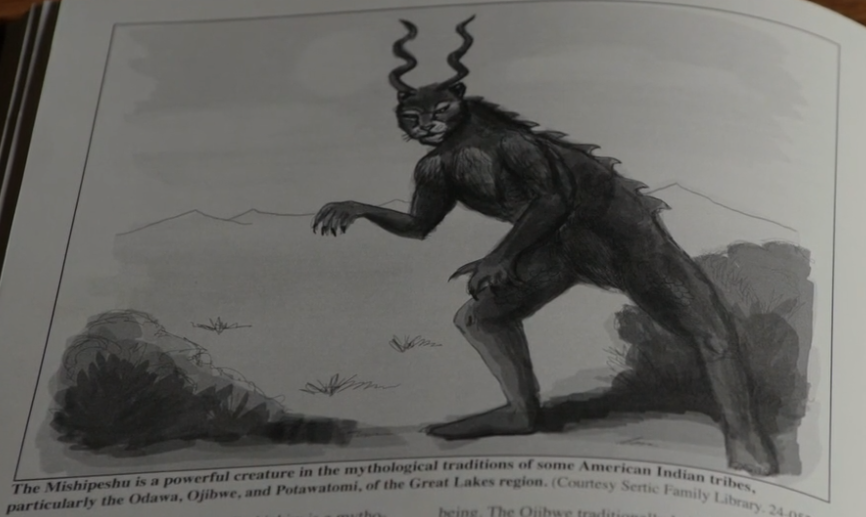


  • In fact, a quick search doesn't show anything about underwater panthers leaving the water, traveling long distances, or possessing humans. Other than getting its origin right, Grimm turns the Mishipeshu into a typical death-dealing demon.

  • Simon goes on a "power quest" to find his "spirit guardian." In other words, a vision quest to find his spirit animal.

    Alas, I don't think Pacific Northwest tribes practice vision quests. The made-up terms don't justify the pan-Indian stereotyping.

  • Similarly, I don't think Pacific Northwest tribes practice sweat lodges. Which is what the "dreamworld" ceremony is--a modified sweat-lodge ceremony.

    It comes across as pure rubbish. For starters, a tribal practitioner in Oregon wouldn't know anything about contacting a Great Lakes spirit. It would be like a Celt contacting a Greek god or a Greek contacting a Celtic god...ridiculous.

    And no way would Hector enlist two non-Natives to enter the dreamworld and seek the Mishipeshu. Like brain surgery or an exorcism, this isn't something done by amateurs. A medicine man or "shaman" would do it only by himself, after years of training.

  • So the look and feel of the tribe is decent. The use of real Native mythology--and not the overused wendigo--is decent. But the Mishipeshu's spree of possessing and killing people, and the phony ceremony to stop it, are stereotypical. The special effects are nice, but they're not enough to save the story.

    June 13, 2012

    Native Appropriations reviews Crooked Arrows

    Adrienne Keene reviews the Native lacrosse movie in Crooked Arrows: The good, the bad, and the flute music

    The good
  • I loved that they cast tons of local Haudenosuanee and other East Coast Natives as major roles (like all the lacrosse players), and all the extras were also local, so that was fun. I kept seeing people I knew--oh hey! There's Shiala! That's Charlotte! Look, that's Jonathan drumming!

  • The Natives weren't painted as backwards-stuck-in-the-past. This one seems like a "duh" kinda thing, but you'd be surprised. The students were shown using smart phones, ipods, laptops, etc., posting to twitter, Gil's character is shown posting to the Haudenosaunee Facebook page, which comes into play later. Even the elders made pop-culture references. Which is how I know the Native community (we use social media at higher rates than most other ethnic groups!), but most people think of us living in tipis without wifi.

  • This wasn't something I really noticed, since I'm not a LAX player, but apparently the action and all of the details around the sport itself were spot-on, and they included a lot of insider references for true fans of the sport. Nice.

  • I liked the playful Indian humor throughout--like the whole "vagina dodge" joke (Superman mis-translates the lacrosse term "v-cut" into the tribal language).

  • Overall the representations of Native "culture" (I should mention that the team is from the fictional "Sinoquat" Nation, which is supposed to be part of the Iroquois (Haudenosaunee) Confederacy) were done well, or as well as could be expected in a campy, cheesy sports movie. It was abundantly clear that the directors/producers tried very, very hard to show this was a Native film (more on that in a bit), while still appeasing majority non-Native audiences. They definitely showed a level of care and awareness that I haven't seen in a movie about Natives in a loooong time. Goes to show all the Native involvement in the film paid off.
  • The bad
  • The opening credits--I burst out laughing and grabbed Mikaela's arm. Picture flute music, and Gil Birmingham's deep Indian voice saying "A long time ago....a ball game was created...to please the creator." while a breech-clout-warpaint-wearing-old-timey-Indian runs through the forest, accompanied by, as pointed out by the 1491s, Papyrus font. Admittedly, it made me reeeeal worried for the rest of the movie. It was just so over the top.

  • and Oh Em Gee the flute music. Every 10 seconds the flute music. Anytime a Native character had a revelation or did something "Native," cue the flute music. (The 1491s had a similar reaction). So. much. flute. music. and correct me if I'm wrong, but wouldn't regional music be the rattle-and-drum variety, rather than flute music?

  • Also, the horribly CGI-ed eagles. They were supposed to represent Superman's (non-Native) mom watching over them, or something? But they appeared about as often as the flute music. Flying over the lacrosse field, sittin' on a pole, as scene transitions, eagle, eagle, eagle. We get it. Eagles are important.

  • The Casino. The point of the casino (I think) was to show how Superman had "lost his way," so it was supposed to be over-the-top and offensive. And to most Natives, I think it was. The slot machines played the Calvary Charge, the waitresses were dressed in Pocahottie outfits and dancing on the bar, they called Superman "chief," and he wore a feather headband and carried a suction-cup bow and arrow set while giving out "wish feathers" for luck. It was bad, intentionally. But the problem is, I don't think most non-Natives would realize that was "wrong"--because that type of imagery is so normalized in our society, from kids parties to halloween, they probably didn't give it a second thought. So I wonder if it did more harm than good?

  • The sweat lodge/spirit animals scene. This is the scene that irked me the most, and the movie could have been completely successful without it. The team goes in a "traditional" sweat lodge, and when they emerge, are asked what "vision" they saw. They each name an animal and are given that symbol on a necklace as their "spirit animal." So, from my limited knowledge and research through internet friends, sweat lodges as they were presented aren't a tradish Iroquois thing, nor are "spirit animals" (though someone said the animals were representative of the Iroquois clan systems?)--and it just felt really stereotypical and unnecessary to me.
  • The bottom lineCute, cheesy, campy sports movie, predictable plot line and characters, but cool to see so many Natives on screen, cool that at the minimum the audience will walk away realizing lacrosse is actually a Native sport, and cool that so much of the East Coast Native community was able to get involved. Some problematic stuff, but overall, not horrible. I enjoyed myself, and might watch it again if it ever comes out on Netflix.Comment:  Adrienne sounds more tolerant of the horrible stereotypes than I'd be. She wondered if the casino scenes did more harm than good. I wonder if the whole movie did more harm than good.

    The flute music, eagles, sweat lodge, spirit animals, and casino are all such hoary clichés. Audiences may have left the movie understanding that Indians aren't primitive people of the past...but did they learn Indians have hundreds of different cultures and religions? Not just one clichéd culture and religion that resemble a romanticized Plains painting?

    Indeed, could they tell us anything accurate about a Haudenosaunee tribe other than "they invented lacrosse"? Maybe, but it doesn't sound like it.

    At this point, we've seen a number of movies and TV series that present modern Native life with reasonable authenticity. Smoke Signals, Pow Wow Highway, Thunderheart, Skins, Christmas in the Clouds, Grand Avenue, Dreamkeeper, Imprint, Four Sheets to the Wind, and so forth. If a movie isn't in the same ballpark as these movies, I'm not willing to give it that much credit. Getting things half right is only half the battle.

    For more on Crooked Arrows, see Clichee´s Abound in Crooked Arrows and Onondagas Support Crooked Arrows.

    November 18, 2011

    Ray gets two years in prison

    James Arthur Ray gets prison time in sweat-lodge deaths

    By Bob OrtegaSelf-help entrepreneur James Arthur Ray was sentenced Friday to two years in prison for the deaths of three people at a sweat-lodge ceremony he led near Sedona, punishment years less than what relatives of the victims had hoped for.

    Ray received a two-year term for each of the deaths of Kirby Brown, 38; James Shore, 40; and Liz Neuman, 49, but Yavapai Superior Court Judge Warren Darrow issued concurrent rather than consecutive sentences. He also ordered Ray to pay $57,000 in restitution to the families of the three victims.

    "Justice doesn't feel like it's been served," said Andrea Puckett, Neuman's daughter. She and other family members of Brown, Shore and Neuman said they had hoped to see Ray serve the maximum sentence he could have received on the three convictions of negligent homicide, which was nine years.

    "Hopefully, it will be long enough for him to recognize all the damage and pain that could have been prevented had he paid attention to their pleas for help," said Jane Shore Gripp, Shore's mother.

    The families' disappointment was echoed by American Indian activists upset about what they view as Ray's appropriation and misuse of the sweat-lodge ceremony, which they see as sacred.
    Comment:  I seem to recall some people claiming Ray was too rich and white to ever go to prison. Nice try, folks, but things aren't quite that bleak.

    Most of the comments I saw online were of the "Ray got a slap on the wrist" variety. But I'm just glad he was found guilty and given any jail time.

    He really didn't want to hurt anybody, so I'm not out for his blood. He made some stupid mistakes and he's paying for them.

    For more on James Ray, see Ray Gets "Spiritual Comeuppance" and Ray Guilty of Negligent Homicide.

    November 13, 2011

    James Ray's Sacsayhuaman video

    Blogger Kathryn Price NicDhĂ na writes about a video by James Ray, the convicted sweat-lodge killer. She calls it:

    The most racist thing I've seen today...This video perfectly sums up what is wrong with the newagers and others who engage in cultural appropriation. James Ray admits he has no idea what a local, possibly indigenous, woman at this sacred site is saying. She appears to be explaining the site to visitors. Ray not only ignores her words (that he could have recorded and had translated later, if she gave him permission to do so) but instead he talks over her, giving his outsider interpretation of what the symbols at this site mean, and what religious significance he thinks the site has. Of course, he uses appropriated imagery and his fantasies of Indigenous people's traditions for this, though he admits that he "doesn't understand a word" of it.

    Her voice is drowned out, and his replaces it. His voice is broadcast over the Internet, as hers is reduced to background noise, and then forgotten. Misinformation and fantasy replace traditional knowledge. The appropriator says some more racist crap, laughs about the Indigenous people, and laughs about how clever he is.
    If James Ray had listened to Indigenous people, the three people who died in his Sedona deathlodge would still be alive. Indigenous people said, "You don't know what you're doing. Don't pretend you are leading one of our ceremonies. Don't try to lead these fake ceremonies at all. No. Stop."

    But like so many lower-profile appropriators of his ilk (who, like Ray, come from the dominant culture and never interact with traditional, non-colonized Indigenous people), Ray decided he knew better than those dumb Indigenes. He knew better: how to better interpret their sacred stories, how to better lead rituals of his own devising on their sacred sites, how to talk to those spirits (despite not understanding a word of their language), how to fulfill the newagers' fantasies of mystical ceremonies they secretly knew no Indigenous person would ever teach them. If the newagers had simply listened to the people who said traditional ceremonies must be in the language of that culture, maybe they wouldn't have paid $10,000 to die.
    Comment:  For more on James Ray, see Ray Gets "Spiritual Comeuppance" and Ray Guilty of Negligent Homicide.

    July 10, 2011

    Sweat lodges = parked cars?

    Cars and Sweat Lodges Can Both KillAfter a jury turned up the heat on self-help guru James Arthur Ray and convicted him of negligent homicide in connection with the deaths of three people who overheated in a Sedona, Arizona, sweat lodge, PETA hopes to erect a billboard in the sizzling Southwest town to remind people of the dangers dogs also face in the heat.

    Update: Since originally posting this, we were contacted by a representative of the family of two of the victims and asked to stop our campaign out of respect for the families. We are announcing that we are pulling the campaign out of deference to the family's wishes, although past victims of tragedies (and their families) have supported our educational campaigns. Our billboard was intended to turn a tragic and preventable occurrence into something positive by stopping further tragic and preventable heatstroke deaths. However, we understand the concerns of the family and will not be putting up our billboard in Sedona.


    Comment:  I don't have any special feelings for the three who died in James Ray's sweat lodge, so this doesn't bother me. If I die in some manmade calamity, feel free to use my death in a political cause I approve of.

    But if I were an Indian, I might think twice about this billboard. How many Americans have heard of James Ray? And how many associate sweat lodges with him? Not many, I'm guessing.

    In contrast, how many associate sweat lodges with Indians? All of them? Do we really want an ad that implies Native sweat lodges are killers?

    Unlike Ray's sweat lodge, Native sweat lodges don't push people to the brink of death intentionally. Few people die in them, and probably not because the conditions are unsafe. But this ad doesn't make that distinction.

    For more on James Ray, see Ray Gets "Spiritual Comeuppance" and Ray Guilty of Negligent Homicide.

    June 23, 2011

    Ray gets "spiritual comeuppance"

    Verdict in self-help guru's sweat lodge trial stirs reaction among Native Americans

    By Jessica RavitzAmong those disappointed by the verdict is Valerie Taliman, a Navajo who serves as the West Coast editor for Indian Country Today Media Network.

    “He deserves to pay for the lives he took. Our prayers go out to the families who lost their loved ones because of his greed and wrongful exploitation. He had no right to create the false illusion that he had any connection to Native ceremonies,” she said in an e-mail sent Thursday. “He is a worst case example of charlatans selling spiritual snake oil.”

    She hopes that when jurors convene to pass down the sentencing, they’ll go as far as they can.

    “He took something we hold sacred and broke every rule we go by, then sold his desecrated version of our ceremonies to people that he actually profited from, then killed. I hope they make an example of him and give him the maximum sentence," Taliman said.

    "According to our teachings, what he’s done to these people will come back on him over a lifetime," she added. "Let’s see how spiritually grounded he is now.”
    Comment:  Other Natives in the article said similar things. And I heard similar things on Facebook. But Taliman said it best, so I'm quoting her.

    For more on the subject, see Ray Guilty of Negligent Homicide and Ray Misused Native Teachings.

    SEEK to warn against New Agers

    Nonprofit to serve as voice of sweat lodge victim

    By Felicia FonsecaIn hindsight, the family of a woman who died in an Arizona sweat lodge ceremony said the red flags were obvious--nearly $10,000 for a weeklong retreat with no refunds led by a self-help author who employed high-pressure sales tactics and had people sign away the risk of serious injury and death.

    Kirby Brown's family wants to make sure no one else is put in that situation again. They have formed a nonprofit group to help others avoid the kind of tragedy that unfolded at a 2009 retreat nestled among the Red Rocks of Sedona.
    And:The group that Brown's family formed, called SEEK, or Self-help Empowerment through Education and Knowledge, cites market studies in estimating that the self-help industry generates $10.5 billion a year. Its intent is to educate people on how to choose a self-help guru, a motivational speaker or a coach through basic questions: What's the refund policy? What are the leader's credentials? Are safety measures in place for physical activities?

    Ray used free seminars to lure people to more expensive events such as the five-day "Spiritual Warrior." He conducted the sweat lodge for several years in Sedona, the center of the new-age movement where practitioners believe they draw energy from the surrounding Red Rocks and various vortexes to heal others.
    Comment:  For more on the subject, see Ray Guilty of Negligent Homicide and Ray Misused Native Teachings.

    June 22, 2011

    Ray guilty of negligent homicide

    Self-help guru convicted in Arizona sweat lodge deaths

    A jury finds James Arthur Ray guilty of negligent homicide in the 2009 deaths of three clients. One victim's family plans a watchdog group to monitor the self-help industry.

    By Nicholas Riccardi
    A jury in Arizona convicted a bestselling author and self-help guru Wednesday in the deaths of three clients during a sweat lodge ceremony in 2009 that was intended to help participants overcome adversity to reach their full potential.

    After hearing four months of testimony, the eight-man, four-woman jury deliberated for fewer than 12 hours before finding James Arthur Ray guilty of three counts of negligent homicide.

    The panel acquitted Ray of the more serious charges of manslaughter.

    Wearing a dark jacket and dress shirt in the Camp Verde courtroom, Ray sat silently during the televised proceedings, his face breaking into relief when the manslaughter charges were rejected. He became grimmer when the clerk announced that the jury had convicted him of the lesser charges.

    Prosecutors argued that Ray was criminally negligent in subjecting Kirby Brown, Liz Neuman and James Shore to life-threatening conditions, and that he deserved prison for their deaths. They played a recording of him urging participants to ignore their bodies' signs of distress during what he called a "hellacious" event.
    Comment:  As Nelson says on The Simpsons: "Haw haw!"

    Ray got what he deserved. I was thinking manslaughter, but it's hard to get around the signed waivers. Negligent homicide sounds good too.

    My main wish was to take Ray out of circulation and warn people against other New Age charlatans. This verdict does that.

    For more on the subject, see Sweat Lodge Trial Begins and Ray Charged with Manslaughter.

    Sweat lodge = witchcraft?!

    Here's more on the story I posted in Christian Crees Tear Down Sweat Lodge:

    Dismantled sweat lodge exposes rift in Christian, traditional teaching

    By Ingrid Peritz“The community was founded by Christian faith and values of our elders and past leadership,” the resolution reads. “The members of the Cree Nation of OujĂ©-Bougoumou hereby declare that the sweat lodge along with any form of native spirituality practices and events such as pow-wows, rain dances, etc., do not conform with the traditional values and teachings of our elders.”

    Chief Louise Wapachee, reached by phone, refused to discuss the case. Other band members also declined. But one Cree elder who opposes the sweat lodge said he believes it doesn’t belong in OujĂ©-Bougoumou.

    “We don’t want to confuse our youth,” said John Shecapio-Blacksmith, 61. “I’m a Christian. A lot of people here got saved through prayer. That’s why we don’t want to build anything.” He added: “You have to be careful what you bring into the community. You don’t want to bring in witchcraft.”

    The conflict underscores the complicated legacy of the Christian church among Canadian aboriginals, from residential schools to the missionaries who tried to suppress traditional ceremonies associated with shamanism.
    Comment:  Wow. Indians think sweat lodges aren't traditional but the Bible is. That's a twist.

    That's the kind of thinking that leads to banning Harry Potter books and "The Wizard of Oz." And in extreme cases, burning people at the stake.

    I guess we know why "two spirit" people are no longer accepted among many tribes today. Because they aren't traditional according to Leviticus.

    For more on the subject, see Conservatives Attack "Ugly" Native Prayer and Giago:  Native Religions Don't Work.

    April 10, 2011

    Ray misused Native teachings

    As the sweat-lodge trial continues, an article describes how James Ray taught indigenous beliefs and practices despite being unqualified to do so:

    Sweat-lodge trial:  James Arthur Ray often misused teachings, critics say

    By Bob OrtegaAt seminar after seminar, Ray would recount how he had trekked to the Andes, the Amazon and other remote reaches to learn hidden teachings directly from normally inaccessible masters.

    But those attending the Spiritual Warrior retreat did not know that Ray already was being accused of misappropriating and misusing others' teachings without permission or proper training. They did not know that his claims to have been initiated into three shamanic traditions, gaining expertise in a variety of spiritual and esoteric teachings, were either exaggerations or questionable.

    And they did not know that Ray's way of running a sweat lodge violated the spiritual and safety practices of the Native American traditions he claimed to follow.
    And:Several academics who study shamanic practices said that initiation usually requires a decade or more of direct apprenticeship to a shaman. Matthew James noted that this might be why, in discussing his shamanic initiations, "Ray was vague and ambiguous about where the information came from. I talk about who I learned from and my teacher's teachers and where their information came from. You do need to have credentials."

    A review of Ray's writings and recordings, and interviews with followers, did not reveal any reference in which he specifies from whom he learned two Native American spiritual practices he adapted for his Spiritual Warrior retreat: the "sweat lodge," in which participants gathered in a low, wood-frame shelter covered with tarps; and a preceding "vision quest," in which each participant was led into the countryside, required to mark out a 10-foot circle, and then stay there alone without food or water for 36 hours.

    Years before the deadly 2009 ceremony, Ray "was approached several times by native leaders and told he was not trained to run Native American ceremonies," said David Singing Bear, an Eastern Band Cherokee and Sedona resident who has run sweat lodges. Singing Bear said that Phillip Crazy Bull, a Lakota chief who died in 2006, spoke with Ray in 2005.

    Such training matters for physical safety reasons as well as for spiritual authenticity, says R.J. Joseph, a Cree filmmaker and former Native American program director at Sedona's Enchantment Resort.

    "Desert people aren't really vision-quest or sweat-lodge people; they've adopted those ceremonies from Plains Indians. So when you have a fast or vision quest, it's generally in cooler climates. You certainly wouldn't put anybody out in the desert for two days with no water. Not in the desert," he said.
    Comment:  For more on the subject, see Natives Scorn Ray's Sweat Lodge and Stealing Native Religion Is Okay?

    March 31, 2011

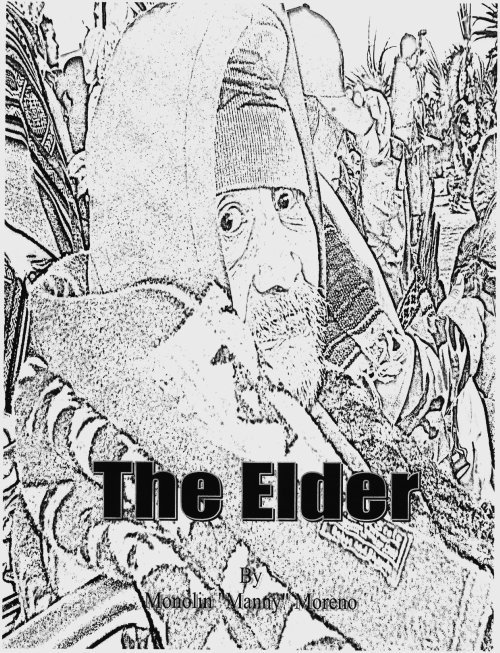
    Review of The Elder

    Author Manny Moreno was kind enough to send me a copy of his book The Elder. An excerpt from the book's introduction tells what it's about:

    Manny Moreno SiteManny Moreno’s book The Elder is about many things--loss, tribute, grief, brokenness, the mending power of ceremony—but above all, his book is a plea for the reintegration of elders into the fabric of our culture. Moreno’s book documents his long (and often thorny) relationship with revered Navajo elder and prayer man Harry Jack, especially his last years when he was changing from a spirited and healthy 500-mile runner to an increasingly incapacitated elder requiring a great deal of vigilance and attention. He is mugged on the streets, suffers strokes, and must be accompanied by someone at all times because, after his strokes, he is unsteady and capable of hurting himself. In spite of Jack’s infirmities and his telegraphic English (his first language was Navajo), he continues to enrich the ceremonial life of the Indian community through the power of his prayer and understanding, through his availability to those in distress, and through his luminous presence evident even to elementary school children who would write him love notes after visiting.

    Jack, tough and unrelenting (applying what some California Indians call the “elder hammer”), teaches the author, and many other recovering alcohol and drug addicts (at the Central Valley recovery lodge he helped sustain), the importance of health, commitment to community, and sensitivity to the suffering of others, no matter what their backgrounds. And the author, young and hardheaded when they first meet and seeking refuge from gang-infested Stockton, is not easy to teach.
    More on The Elder and Manny Moreno:

    Review:  In Writing A Tribute Writer Shares His Own Destiny...

    Interview by Livingston Chronicle

    Comment:  At 63 pages including photos, The Elder is a slight book. It feels like it's self-published, and at $12.50, it may be overpriced. But I'm glad I read it.

    It's relatively rare to see the struggle of urban Natives in fiction. Mysteries such as Tony Hillerman's present middle-class Native professionals. A few movies--e.g., The Exiles, Four Sheets to the Wind, and The Business of Fancydancing--and Sherman Alexie's stories give you a hint of what it's like.

    Moreno survives a youth filled with alcohol and petty crime. He works menial jobs for room and board. He lives in a trailer or a friend's rented room. He shuttles between the city, a recovery center, and an occasional sweat lodge or powwow.

    It could almost be a sequel to The Exiles. A couple of decades after drinking to excess, running with bad crowds, and being locked up, he's more or less hit bottom. Now he's middle-aged and searching for meaning in his life.

    Enter the elder

    Moreno has an off-and-on relationship with Harry Jack, a Navajo powwow dancer and prayer leader. At first, Harry treats him with disdain, yelling at him or ignoring him. Moreno has to learn patience and fortitude to endure the harsh treatment.

    But when Harry has a stroke, he calls upon Moreno to help him. Moreno becomes his driver, keeper, and ceremonial assistant. He learns more about compassion and helping others. Eventually Moreno rails against those who don't visit elders like Harry or treat them with respect.

    Finally, Moreno wonders who will perform the ceremonies when Harry is gone. He finds that others expect him to lead a prayer or pour water for a sweat lodge. He's come full circle, growing from a troubled young man into a respected elder himself.

    If you want to know how Indians live on the margins of the white man's world, The Elder is a good start. It presents a slice of Native life we seldom see. Rob's rating: 8.0 of 10.

    You can order the book directly from Moreno's website and have him autograph it for you.

    For more on the subject, see The Best Indian Books.

    March 02, 2011

    Sweat lodge trial begins

    New Age guru James Ray was in the news from October 2009 to February 2010 for the deaths he caused in a Sedona sweat lodge. Now his manslaughter trial for those deaths has begun.

    The trial doesn't exactly qualify as Native news, but Indians are still upset over Ray's appropriation of their culture. Some tidbits from a major article summarizing the situation:

    Sweat lodge trial fuels Native American frustrations

    By Jessica RavitzProsecutors say the deaths resulted from Ray's recklessness, an overheated lodge and because he encouraged people to stay inside when they weren't feeling well. His defense team denies those allegations, and attorney Luis Li has called what transpired "a terrible accident, not a crime."

    Accidents, in fact, have happened even in ceremonies overseen by tribes. The Seattle Times reported a year ago the death of a 29-year-old Puyallup tribe member in a Swinomish smokehouse ceremony on a reservation near La Conner, Washington. The cause of death, overheating, was ruled accidental by a county medical examiner, the paper reported. And no criminal charges were filed in that case because it was an accident, says Alix Foster, an attorney for the Swinomish Indian Tribal Community.

    The Ray case highlights an outrage that's long existed for many Native Americans. They are tired of their traditions being co-opted by others and exploited for capital gain. They resent that a ceremony they view as sacred is now being tied to terms like "death trap." They don't want their ancient ways to be deemed fashionable or inspire impersonators.
    And:After the disaster and criminal charges, representatives of various tribal nations stepped into the legal fray, filing a federal lawsuit last March against Ray and those who run the Angel Valley Retreat Center, where he had leased land for his program.

    The plaintiffs, on behalf of their tribes, sought to end the "abuse and misuse" of their ceremonies and hoped to convince the court that their rituals were their property and should be protected under the federal Indian Arts and Crafts Act. Just as a merchant can't claim earrings were made by Native Americans if they weren't, their ceremonies shouldn't be falsely advertised either, they argued.

    That suit was dismissed in October. The court held that "the operation of a sweat lodge is plainly not art, craftwork or a handcraft." Services can't be protected like goods, the court ruled.

    Amayra Hamilton, along with her husband, Michael, owns the Angel Valley Retreat Center, where the lodge was located. Their business has suffered greatly since the sweat lodge incident. The couple, in fact, has filed a business claim tort suit against Ray for running his retreat, on their property, in what their attorney Kelley Ruda calls "a ridiculous manner."
    I knew the Lakota lawsuit wouldn't go anywhere. And for facilitating Ray's nonsense, the Hamiltons deserve what they got.

    More thoughtsAutumn Two Bulls, 29, also lives on Pine Ridge, and just thinking about the dream catchers that hang in trendy gift shops, the non-Native Americans who make money off her people's artifacts, makes her cry "rape."

    "Haven't native people been through enough?" says Two Bulls, a writer who created Reservation H.E.L.P. (Helping Every Lakota Person), an organization to help impoverished families.

    "It's a fad to be Indian today. … They envision us like a fantasy culture," but the harsh reality is one they helped create and won't face, she suggests.

    She says this from her reservation, where there's 80 percent unemployment, suicide rates are reportedly 300 percent higher than the national average and alcoholism ravages her community. Two Bulls says she was 18 when her mother died in her arms from cirrhosis.
    Journalist Valerie Taliman offered her thoughts:Ray is a symbol, the latest and most horrifying example of what this trend purports, she says by phone. And the double standard in how he's been treated is glaring, she says.

    "If an Indian man, a traditional person, killed people in a sweat lodge, he'd be in jail," she says, not free on bond. "And if I went out, and I impersonated a Catholic priest, and charged people to attend ceremonies, they'd arrest me."
    Surprisingly, a Native built Ray's sweat lodge:Singing Bear is a 60-year-old Eastern Band Cherokee who calls himself a wisdom keeper, ceremonial leader and healer. He says he spent 20 years learning from tribal elders on reservations across North America.

    So when he was asked to design a sweat lodge outside Sedona, where he lives, it mattered to him that it was done right. He says he selected the blankets and canvas covering that would breathe and offered the space traditional blessings and prayers, at no charge. And he says he worried when he heard how large they said Ray wanted it to be.

    He says he told higher-ups at Angel Valley that what Ray wanted was too big and that only trained facilitators should lead ceremonies.
    Comment:  Singing Bear could've said no to completing the sweat lodge if he thought it was dangerous. But I guess it's hard to turn down a job over a hypothetical outcome.

    Incidentally, Autumn Two Bulls is one of the Indians Dominique Vantell Lonehunt attacked. I'd say she's doing a lot more to help Indians than he is.

    For more on the subject, see New Book on Sweat Lodge Killer and Sweat Lodge Deaths on Dateline.

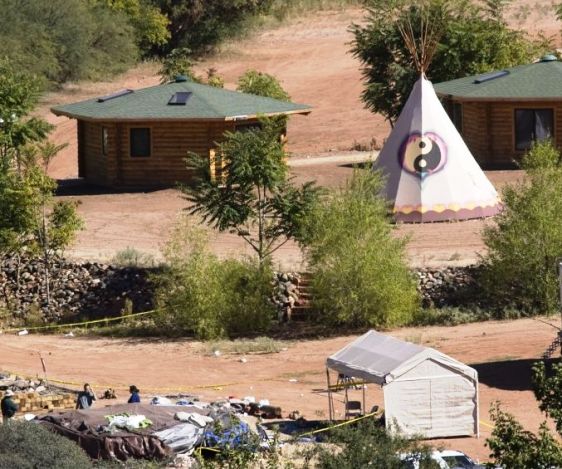
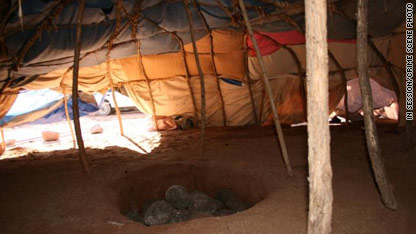
    Below:  "James Arthur Ray’s sweat lodge ceremony in this structure left three dead and became a crime scene."

    December 21, 2010

    Christian Crees tear down sweat lodge

    Banning spirituality

    OujĂ©-Bougoumou tears down a local sweat lodge to satisfy the community’s Christians

    By Amy German
    OujĂ©-Bougoumou’s Redfern Mianscum just days ago witnessed his community tear down a sweat lodge he built with his bare hands earlier this fall. The community did so under a new bylaw that was passed in late October banning all traditional spiritual practices within reserve limits after a petition was passed requesting it.

    Mianscum said he had built the sweat lodge in the backyard of his friend, Lana Wapachee, on October 5 because he felt there was a need for a source for traditional healing within Oujé.
    This action was based on a tribal resolution:The resolution reads that the Council of the Cree Nation of Oujé-Bougoumou:

    – hereby declares that the sweat lodge along with any form of Native Spirituality Practices such as Powwows, Rain Dances et etcetera do not conform with the traditional practices and teachings of our Elders.

    The resolution also stated that the community was founded under the Christian faith and values of the community’s Elders and past leadership and that the community will continue to uphold its faith in guidance with God.
    More on the tribe:

    OujĂ©-BougoumouThe Cree in the Chibougamau area had been marginalized in the 20th century by many forced relocations. After decades of relocations, this band gained recognition by the government and was given land to construct a new permanent village. It was designed by architect Douglas Cardinal (famous for the Canadian Museum of Civilization in Gatineau, Quebec) and was built in 1992. It has won recognition and awards for its modern concepts combining economic sustainability, environmental conservation, and design.Comment:  The tribe seems progressive enough, but its policy of banning traditional practices in favor of Christianity is shortsighted. Christianity has hurt more Indians than it's helped, which is why many Indians reject it.

    For more on the subject, see Catholics to Ban Indian Practices? and Landover Satirizes "Injun Sin."

    November 10, 2010

    "Firewater Friday" at University of Washington

    Racially Charged Party Invitation Becomes Headache for the Dean of UW's School of Public Policy

    By Dominic HoldenA student at the University of Washington's Evans School of Public Affairs sent an email to the EvansLife listserv on Tuesday inviting everyone to a house party this weekend with a racially charged theme. The party, titled "FIREWATER FRIDAY: the indians take it back," elicited an outcry from students so loud that Dean Sandra Archibald has called a meeting this afternoon to put out the fire.

    The event billed itself as a way to "celebrate the holiday with a little sensitivity." The invitation, which was also posted to an online forum, promises a pow wow, drum circle, sweat lodge, a vision quest, and a "march down the trail of tears to ravtav [?] before a new day dawns." But some may have been rubbed wrong by the accompanying photo:
    "As a Native American in the Evans School, I would like to point out that the invitation description for this event is in poor taste, disrespectful, and reflects poorly on the Evans School," one of the students wrote. Dozens of emails followed, mostly critical of racist overtones, despite the attempt at humor. "I realize you were going for Southpark/Sarah Silverman style meta-bigotry as a method of exposing prejudice, but your mesage [sic] falls completely flat in it's attempt," another student wrote.

    And another adds, "Despite how smart the senders of this invite THINK they are, they have only given us indication that they are at worst insensitive clods and at the very best perpetrators of a crass and sophomoric attempt at satire, which fell flat." The criticisms raged on from more students, including this one: "I can honestly say that I would NEVER find it funny for someone, particularly someone of a different race, to satirize hardships faced by my ethnic/racial group."
    Some comments on this posting:Yeah, because all Indians are the same, and they all have pow wows, drum circles, sweat lodges, vision quests, and trails of tears. Right? They all look like that Italian dude from the TV commercial with the tear in his eye about litter, right?

    I hope they show the classic "What Makes the Redman Red?" number from Disney's Peter Pan. Maybe this group can host a party on the day after MLK Day. The day could be filled with forced labor, singing spirituals, frying chicken and eating watermelon. Then they can show Disney's "Song of the South."

    PS ravtav is the Ravenna Alehouse.
    On the other hand:Most Indians I've known could care less about this kind of thing, and those who do care are basically assholes who just happen to also be Indians--and being dicky about being Native American is just one of the many things they're dicks about.

    A response like this is an occupational hazard of sending any message out on an academic listserve: there's always some miserable tight-ass out there who's looking to make their mark by being emotionally wounded, since they're too untalented to do it any other way.

    Ironically enough, the girl in the picture IS 1/16th Native American, though I don't recall the tribe. It's not Cherokee.
    Comment:  The last set of comments are stupid, of course.

    The worst case isn't that the perpetrators are "insensitive clods." It's that they're racists.

    Based on the information given, I don't see how this qualifies as a satire. Which phrases are the satirical ones? A satire of what, exactly?

    No, it's nothing but cloddish insensitivity. "Indians" aren't taking back "Firewater Friday" since no Indians are involved. Drum circles, sweat lodges, and vision quests are spiritual or religious practices that have no relevance to this party.

    The "Trail of Tears" line is probably the worst one. It's about like having an Auschwitz-themed beach party. "If the fire doesn't warm you up, we'll toss you in the oven until you're extra crispy!"

    For a similar college party, see "Conquistabros and Navajos" at Harvard.

    October 19, 2010

    Business off for New Age sweat lodges

    After Sweat Lodge Deaths, Fewer Spiritual Tourists

    By Marc LaceyThere is negative energy in the air here, which the channelers, mystics, healers, psychics and other New Age practitioners of Sedona are grappling to identify and snuff out. It has to do with the recent dearth of visitors to this spiritual mecca in search of enlightenment.

    Red Rocks State Park, near Sedona, Ariz., is less than five miles from Angel Valley, where three people died in a sweat lodge ceremony last October.

    Nobody is sure exactly what is keeping people away from Sedona’s four vortexes, those swirling energy sources emanating from the earth, but the effects are clear: far fewer crystals are being purchased, spiritual tours taken and treatments—from aura cleansings to Chakra balancings—ordered.

    That an earthly power—the economy—is a culprit is not in doubt. But some do not discount the lingering effect of an awful incident from a year ago that put Sedona’s New Age community in a bad light and that, to some degree, still lingers, despite efforts by metaphysical people to cast it away.
    Comment:  For more on the subject, see Oneida Sells Lakota Sweat Lodge? and New Book on Sweat Lodge Killer.

    Below:  "A memorial to the three people who died during a a sweat lodge ceremony at Angel Valley in Sedona, Ariz." (Joshua Lott for The New York Times)

    October 18, 2010

    Oneida sells Lakota sweat lodge?

    Here's a short-lived controversy from a few weeks ago:

    Oneida Indian Nation wrong to exploit sweat lodge

    By Nick Swan (Hehaka Ite Wakan)To The Editor:

    One of the many questionable activities by Turning Stone is their desecration of the Native American sweat lodge ceremony. They are selling it by misrepresenting the Oglala and Lakota Sioux tribes of South Dakota as partners. These tribes have NEVER joined with the Oneidas of Turning Stone to sell their (Lakota) ceremony. Yet they make this outright false claim on their Turning Stone/Skana Spa/Sweat Lodge page.

    It is an insult to the Lakota people who endure third-world conditions, while the wealthy Oneidas exploit the culture of the Lakota. Why does Turning Stone need such a sweat lodge anyway? Why doesn’t Turning Stone market and sell one of their own sacred Iroquois ceremonies? It’s because the Iroquois would never tolerate such a transgression.

    So Turning Stone uses the Lakota sweat lodge, which is equally an offensive transgression to those whom cherish that way of life. Thus, Ray Halbritter has ill-aligned his unscrupulous actions directly to James Arthur Ray, who notoriously oversaw a pay-to-pray sweat lodge in which three people died last year. Obviously this group of exploiters is really only interested in one tribe, the almighty tribe of Benjamins.

    Actions speak for themselves, and for these characters to play dumb is their final act of contempt to us all. Lastly, the Oneida leadership insults the integrity of their own people, of whom the vast majority does not condone such exploitive behavior.
    Comment:  Sounds like a straightforward offense, right? Well, maybe not.

    No tribal ceremony at sweat lodge

    By Chuck Fougnier, Wolf Clan RepresentativeTo The Editor:

    Nick Swan’s Sept. 23 letter attacking the Oneida Nation and its sweat lodge at Turning Stone was the ravings of a disgruntled employee.

    His concerns are not fact-based at all. As Indian guide for the sweat lodge, Mr. Swan directed the guest experience for the past 16 months. From when he was first hired he knew that our sweat lodge was not ceremonial like those he knew from home, but a resort experience that guests paid to take in.

    For facilitating this guest experience, he received regular paychecks and benefits from the Oneida Nation, as well as accepting generous tips from guests pleased with their time in the sweat lodge.

    I was one of the Oneida leaders who went to South Dakota to learn about sweat lodges and talk to the Oglala and Lakota people about building one at Turning Stone, not as an avenue to be part of a ceremony but as another high-end resort amenity.

    We then employed Milo Yellow Hair, a Lakota Indian skilled in this ancient practice to construct an authentic sweat lodge at our resort. Knowing that tribal ceremonies conducted in sweat lodges are sacred and private, as are our Oneida ceremonies, we went to great lengths to give our guests the experience of being in a sweat lodge and nothing more.
    Comment:  Hard to tell who's right in this case. It may depend on how Turning Stone markets its sweat lodge.

    The answer--at least the present answer on the Turning Stone website:

    Ska:ná:
    Sweat LodgeSka:ná: is proud to be one of the few spas in the world to offer a sweat lodge experience. Inspired by American Indian cultural traditions, the Ska:ná: sweat lodge is constructed of red willows, draped with buffalo hides, and located in a secluded woodland setting.Sounds like Turning Stone isn't selling its sweat lodge as an authentic Lakota experience. Of course, it may have changed its website since the controversy began.

    But the Lakota don't own the concept; other tribes have sweat lodges too. Therefore, I'd say Fougnier's argument seems to be ahead at the moment.

    For more on Native spas, see Sweat Lodge at Oneida Spa and Native-Themed Spas. For more on sweat lodges in general, see The Myth of Detoxification and How Sedona's Sweat Lodges Operate.

    September 16, 2010

    New book on sweat lodge killer

    A new book chronicles the rise and fall of James Ray, the alleged "sweat lodge killer":

    Tragedy in Sedona--My Life in James Arthur Ray's Inner Circle

    By Connie JoyJames Ray's debut in the film, The Secret, thrust him into the spot light...appearances on Oprah and Larry King Live...Tragedy in Sedona is a behind the scenes look at the rise and fall of the James Ray Empire, through the eyes of an ultimately disenchanted follower. Connie Joy takes you on her personal and authentic journey from being a devoted member of James' inner circle and Dream Team to...trying to warn others.

    --From the foreword by forensic psychiatrist Dr. Carole Lieberman

    Follow Connie Joy inside the seminars and once-in-a-lifetime trips to Egypt and Peru for an up close look at the transformative work of a charismatic teacher--and the underlying danger of mixing up the message with the messenger!

    In 2007, Connie participated in Ray’s sweat lodge, a Native American ceremonial sauna meant to be a place of spiritual renewal and mental and physical healing. It turned out to be only a test of endurance for Connie and many of the participants. Her prediction that someone could be seriously hurt came true in October 2009 when three people died and 18 participants were injured during a sweat lodge run by James Arthur Ray and his staff.

    After injuries at his previous events, why didn’t Ray get the message he was literally playing with fire?

    Connie and her husband attended 27 events over three years presented by James Arthur Ray, "Rock Star of Personal Transformation." As this book is released, Ray is charged with three counts of manslaughter and faces a criminal trial in Arizona as well as numerous civil suits.
    Comment:  For more on the subject, see Sweat Lodge Deaths on Dateline and Ray Claims He's Broke.

    June 18, 2010

    Sweat lodge deaths on Dateline

    Last Saturday (6/12/10), Dateline aired an episode on the James Ray sweat lodge deaths. Here's a transcript of the show:

    Deadly Retreat

    Could a well-known self-help guru have prevented the tragic deaths of three spiritual seekers at his retreat in an Arizona sweat lodge?

    And some thoughts from Roscoe Pond on it:

    Dateline NBC 2010 Episode Called Deadly RetreatJames Arthur Ray had built a mythical place that comes straight out of a stereotypical Indian movie. He has it all, the spiritual warrior concept, the huge sweat lodge compound and the chanting. He only created this beautiful place in order to take your money. My tribal elders never called themselves spiritual warriors, never built a compound holding 50 people or more and never chanted. Ever.Comment:  I'm not sure Dateline offered any new information on the subject. I didn't watch the episode or read the entire transcript.

    I just liked the way Pond put it. People have a stereotypical notion of noble savages and Native spirituality. It's based on the modern-day stereotype of the spiritual warrior: a wise shaman playing a flute beneath a soaring hawk on a mesa.

    This is a benign version of the old savage stereotype. It comes from a huge number of movies and other media sources in the last few decades.

    James Ray repackaged and sold the stereotypes. "You can be as strong and serene as a Native if you undergo a series of Native rituals. Just $9,000 for a Native-style weekend."

    Because of Ray's inexperience, his sweat lodge killed three people. The stereotypes played a critical role in the deaths.

    Here, let me spell it out:

    Genuine Native lore => stereotypical beliefs => New Age repackaging => dead people

    Summing it up: The stereotypical beliefs are what have created the New Age industry. Without them, few people would be seeking or paying for Native spirituality. Millions have lost their money and three have lost their lives because they believed what they saw in the media.

    For more on the subject, see Ray Charged with Manslaughter and Courting Death in Ray's Sweat Lodges.

    February 19, 2010

    Ray claims he's broke

    Guru charged in sweat lodge deaths says he's broke

    Author of "Harmonic Wealth" says $5 million bail is "excessive"

    By Felicia Fonseca
    A man who built a multimillion-dollar empire with a motivational mantra that teaches people to create wealth contends he's broke and cannot post bond in a criminal case that threatens the survival of his self-help business.

    James Arthur Ray was charged earlier this month with three counts of manslaughter stemming from the deaths of three people following a sweat lodge ceremony he led last year in Arizona. His bond has been set at $5 million, a figure his attorneys say is "excessive and oppressive."

    "Despite misconceptions perpetrated in the media, Mr. Ray is not a man of significant assets and certainly not the millions reported in the press," his attorneys wrote in documents obtained by The Associated Press from the court. The documents are now officially sealed.

    Ray himself has touted his wealth and success in numerous media interviews and on his Web site, including an estimated $10 million in revenue in 2009 and a seven-figure advance for his book, "Harmonic Wealth" that hit the New York Times Best Sellers List in May 2008.

    He told "Fortune Magazine" for an April 2008 article that his financial goal was $21 million a year and that he was sure there were limits, but "I am not aware of them."

    But the court documents paint a much different picture, showing that he is severely in debt with a net worth of negative $4.2 million. Real estate makes up about $3.1 million of Ray's total assets of nearly $4.2 million, but he has little equity.
    Comment:  The man without limits has reached his own limits. How ironic.

    Why don't you push past the barriers of your narrow thinking, Ray? Dream yourself into the prosperous person you want to be (again). Don't accept excuses, just do it. You expected your clients to, so why not you?

    Ray is a real funny guy. When he's rich, it proves how great he and his program are. When he's poor, it's someone else's fault and we shouldn't blame him.

    With every action, Ray continues to reveal what a fraud he is. Stupid New Age hypocrite.

    It sounds like most of Ray's money is in property, which is convenient. While he was dodging the authorities, I suspect he spent much of his time hiding his assets. "They can't take what they can't find," he probably thought.

    Ray already spent a couple months hiding from law enforcement. I'm guessing he is a flight risk and will use his hidden assets to flee. If someone is thinking of freeing him on bail, please put him under house arrest with an electronic monitor. Don't risk this jailbird's flying away.

    For more on the subject, see Ray Charged with Manslaughter and Ray Arrested for Sweat Lodge Deaths.

    February 13, 2010

    The myth of detoxification

    Sweat Lodges, Steam Rooms Aren't for Detox

    The concept that sweating can cleanse the body of impurities is a myth, expert says

    By Jennifer Thomas
    The Web is filled with products and practices that promise to "detoxify" the body through various means, from extreme diets to spa treatments to sweating.

    Though some may be relatively harmless, the desire to detox was brought to a tragic conclusion last fall when three participants died and several were made seriously ill during a pricey sweat lodge ceremony in Arizona. Self-help guru James Arthur Ray was arrested Feb. 3 and charged with three counts of manslaughter in the deaths.

    Doctors say the notion that you can--or should--undertake special efforts to cleanse the body of impurities is not only not necessary but potentially dangerous. The body has evolved through time to detoxify itself through its own processes, said Dr. Rachel Vreeman, an assistant professor of pediatrics at the Indiana University School of Medicine and co-author of Don't Swallow Your Gum! Myths, Half-Truths and Outright Lies About Your Body and Health.
    And:That's not to say sweating, or spending time in a sauna, has been proven to have no health benefits.

    Some studies have indicated that saunas lower blood pressure, enhance blood flow and improve cardiac functioning in people with congestive heart failure or other cardiovascular disease, Vreeman said. One study found weak evidence that saunas could help with chronic pain, and another showed minor benefits for some with chronic fatigue syndrome. There have been almost no studies done specifically on steam rooms or sweat lodges.

    Western medicine has largely ignored sweat lodges, but they continue to play a significant role in Native American culture, said David Delgado Shorter, an associate professor of world arts and cultures at the University of California, Los Angeles.
    Comment:  For more on the subject, see How Sedona's Sweat Lodges Operate and How Sweat Lodges Can Kill.