Showing posts with label Dances with Wolves. Show all posts

August 23, 2014

Run of the Arrow

I haven't seen the movie Run of the Arrow, but I saw this comment about it somewhere:For Run of the Arrow (1957), Fuller boldly cast real Native Americans. "It was the first picture where the Indians won."Curious, I checked it out and found these reviews:

Run of the Arrow (1957)

By Bosley CrowtherSeveral film historians, notably the late William K. Everson, have noted the striking resemblances between Run of the Arrow and the 1990 Oscar-winner Dances with Wolves. Rod Steiger stars as O'Meara, an Irish-brogued Confederate soldier with an intense dislike for Yankees. Unable to accept the South's defeat, O'Meara heads westward after the Civil War, to start life anew amongst the Sioux Indians. Surving a ritual rite of passage called the Run of the Arrow, O'Meara is accepted into the tribe, and shortly afterward marries Sioux woman Yellow Moccasin (played by Spanish actress Sarita Montiel, whose voice was dubbed by Angie Dickinson). The true test of O'Meara's fidelity to the Sioux comes when his adopted people come into conflict with a Cavalry troop, headed by Northerner Captain Clark (Brian Keith).Run of the Arrow (1957)

August 3, 1957
Screen: 'Run of the Arrow'; Steiger 'Stars in New Film at the Palace

By Bosley Crowther
THE Sioux Indians and the United States Cavalry are mixing it up again in Samuel Fuller's "Run of the Arrow," which came to the Palace yesterday with a new stage bill. The blood and warpaint look good in color. The plot looks pretty much as it always has.

That is to say, a Confederate soldier, embittered after the Civil War, goes to the West, joins a Sioux tribe and takes unto himself a beautiful Indian maid as squaw. When the cavalry comes into the region to build itself a fort, this naturalized Sioux, still sore at the Yankees, is attached to accompany it as scout.

Then along comes a renegade Indian—there's always one in every decent, respectable tribe—and starts shooting arrows at the soldiers. As usual, this means war! The cavalry goes after the Indians, the Indians retaliate. The first thing you know, tents are burning and everybody is having a high old time.

Meanwhile, what's with our turncoat? Well, the cavalry blame him at first, and that damyankee he all but killed at Appomattox is all for stringing him up. But then the Indians arrive, take over and are skinning the damyankee alive, which so horrifies our ex-Confederate that he—guess what!

Don't expect "Fort Apache." This is just an ordinary cavalry-Indian film, conspicuous for a lot of raw blood-letting and the appearance of Rod Steiger in the leading role. Mr. Steiger, familiar as a sullen tough guy in a number of gangster films, slightly overworks the Actors Studio method out there on the dusty frontier.
A Man Without a Country:  Sam Fuller's Run of the Arrow

By William JonesRun of the Arrow is notably similar to—and notably better than—Kevin Costner's Dances With Wolves. Both films are about a Civil War soldier who joins the Sioux nation, but the lengthy, slow-going Costner vehicle suffers from all sorts of excessiveness and look-at-me self-consciousness—traits that are (admirably) absent from Fuller's film.

There's a huge chasm that separates these two similar-on-the-surface but stylistically different movies and the great film critic Manny Farber really nailed it (for me anyway) in a famous essay written many years ago entitled "White Elephant Art vs. Termite Art."

Here, Costner's is the lumbering, overly praised and prized (it won the Academy Award for Best Picture) prestige film while Run of the Arrow is the modest but fast-paced, low-budget yet laudable "B" picture. You'd be wise to pass on the former (Costner's white elephant) and seek out the later (Fuller's industrious termite).
Run of the ArrowKarl Wielgus 12/3/08
Cliches about the Civil War, about the "frontier," about "Indians" about the simplicity of the human character," about the ways we can characterize people into simple codes of good and evil--all are exploded. Before "Broken Arrow," before "Dances with Wolves" this movie shows more than we have seen in westerns or movies in general. Even the "villain" (Ralph Meeker) is not a cardboard cutout. People act because they have made themselves into a certain way of seeing the world--this brings out conflicts and there are no simple villains. The very act that begins the story and the drama, also ends it--but the meaning changes. A great piece of work!

Goetan 4/29/14
An ugly, off-beat Western from director Fuller. Steiger, with a thick accent and a intense performances, is a rouge Southerner who can't accept his loss in the Civil War and joins a Sioux tribe; Monteil was dubbed by Angie Dickinson. Fuller's examinations of civilization, ethnic identity is weak and doesn't have the same impact as his later films. Fine, but dull. I give it a 3/5.
Comment:  I don't see any Native names in the cast, so I question whether Fuller "boldly cast real Native Americans." Even if he did, it wouldn't have been that bold, since Natives have appeared in movies since the early 1900s.

Also, Broken Arrow (1950) preceded Run of the Arrow by seven years.

For more on the subject, see The Best Indian Movies.

November 05, 2013

23rd anniversary of Dances with Wolves

Native History: ‘Dances With Wolves’ Premieres

By Christina RoseThis Date in Native History: It was 23 years ago, on November 4, 1990, that the film Dances with Wolves debuted to unexpected success beginning a new era of films featuring Natives in mainstream media.

The film earned $424 million, won 41 awards internationally and seven Academy Awards. The film’s success was a shock to the industry that had presumed Westerns were a dead genre, yet Dances With Wolves became the highest grossing Western and the first to win an Academy Award for Best Picture since 1931.
Some opinions about the movie, including mine at the end:Smith said many positive things came about through the film’s release. “It really opened some doors and showed the vitality and story of American Indians, and opened doors for those actors. They all went on to do things. Nobody knew who Graham Greene was, and he has been working ever since.”

Describing the effects on mainstream society and stereotypes, he said, “It was a little of both, it kept us in the past, it was a Western but it was a good Western. I am from Fort Peck, and my mom, who never went to the movies, saw it seven times.”

Not everyone had such high praise for the effects of the film. Dr. Leslie D. Hannah, Cherokee, developed a podcast through Kansas State University that featured some of the long lasting outcomes of the film and described his “love/late” relationship with it. “I love that American Indians were finally recognized as human beings but I hate that it happened under these circumstances.”

The circumstances relate to the fact that Indians have been telling their own stories for years, but it took a white, wealthy filmmaker to bring the reality of Natives to the world. “It took a white man to prove what Indians had been saying all along, Indians are human.”

Hannah said Dances With Wolves opened up people’s eyes, but more importantly it opened their minds. “Dances With Wolves made it cool to be Indian,” he said, noting that paradigm shifted as soon as the movie came out.

“Suddenly everybody wanted to be an Indian or at least had an ancestor, usually a Cherokee princess,” he said. “Some may say this is simply the effect of a more politically correct citizenry, but I will counter that claim by saying that politic correctness towards Indians might not have reached that level without this movie.”

Movie critic Roger Ebert took that observation one step further, describing American culture as “nearsighted, incurious and racist, and saw the Indians as a race of ignorant, thieving savages, fit to be shot on sight.”

Ebert called Dances With Wolves a sentimental fantasy where “whites were genuinely interested in learning about a Native American culture.” For Ebert, the real shift in consciousness is that the film’s main character, Lieutenant John J. Dunbar, played by Costner, “is able to look another man in the eye and see the man, rather than his attitudes about the man.”

While most people are grateful for the changes the film brought, Rob Schmidt, writer, blogger and expert in stereotypes still sees one slight fault within all of the film’s strengths. In an email, he wrote, Dances with Wolves reinforced the stereotypes prevalent at the time. It presented Indians as tipi-dwelling, buffalo-hunting, eco-warriors living in peace and harmony with the land.

“True, the film gave us characters who were recognizably human,” Schmidt said. “That was a big step up from the past. But we’re still waiting for Hollywood to show us Indians as doctors, lawyers, and teachers—as modern-day people.”
Comment:  For more on Dances with Wolves, see Hollywood Loves White Saviors and Dances with Wolves Changed Everything.

February 22, 2013

Hollywood loves white saviors

With Lincoln poised to win several Academy Awards, this is a timely subject:

Oscar loves a white savior

If a movie features white people rescuing people of color from their plight, odds are high an Oscar will follow

By David Sirota
According to oddsmakers, Steven Spielberg’s “Lincoln” does not have the best chance of winning the 2013 Academy Award for best picture. That top spot right now goes to Ben Affleck’s “Argo”—but it shouldn’t. If history is any gauge, “Lincoln” has to be the front-runner thanks to its status as this year’s only Oscar-nominated White Savior film.

If you’ve been to the movies in the last half-century, you know the White Savior genre well. It’s the catalog of films that features white people single-handedly rescuing people of color from their plight. These story lines insinuate that people of color have no ability to rescue themselves. This both makes white audiences feel good about themselves by portraying them as benevolent messiahs (rather than hegemonic conquerors), and also depicts people of color as helpless weaklings—all while wrapping such tripe in the cinematic argot of liberation.

This, of course, is the backbone of Spielberg’s “Lincoln.” As historian Kate Masur recently wrote in the New York Times, it is yet another “movie devoted to explaining the abolition of slavery in the United States” but one in which “African-American characters do almost nothing but passively wait for white men to liberate them.” The result, she writes, is a film that ignores actual events of the 19th century, “helps perpetuate the notion that African Americans have offered little of substance to their own liberation” and thus reinforces “the outdated assumption that white men are the primary movers of history and the main sources of social progress.”

Coming from Spielberg, this isn’t particularly surprising. He is, after all, the creator of one of the most unself-consciously archetypal White Savior movies of all time: “Indiana Jones and the Temple of Doom.” In that cartoonish adventure, a whip-wielding white archaeologist drops from the sky into India and quickly becomes the only person able to save destitute peasants from the rein of a tyrannical human-sacrificing cult.

Spielberg’s Abraham Lincoln is certainly a more nuanced character than Dr. Jones, just as his latest film is more sophisticated (if not as exciting) than the second iteration of his 1980s archaeologist-superhero franchise. In return, he has been rewarded with an Oscar nomination—but probably not just because “Lincoln” plays to the academy’s general love of historical drama. It also plays to Hollywood award organizations’ specific affinity for the White Savior.

Indeed, in the last quarter-century, 10 White Savior films have received major Hollywood award nominations, with fully half of those coming in just the last five years. In chronological order, here’s a look at them, and how they channel the same old story of white people saving the day for people of color who supposedly cannot help themselves.
Two of the movies:Dances With Wolves (1990)

Major Academy Award Nominations: Best Actor (Kevin Costner), Best Supporting Actor (Graham Greene), Best Supporting Actress (Mary McDonnell)

Major Academy Award Victories: Best Picture, Best Director (Kevin Costner), Best Adapted Screenplay (Michael Blake)


One of the major sub-categories of the White Savior genre is the “going native” narrative, and 1990′s “Dances With Wolves” is the modern era’s emblematic example. It is the story of a white Union soldier who fully embeds himself in the Sioux tribe and quickly becomes its primary protector. First, he leads the tribe’s defense against its hostile Pawnee rivals, then he helps them attempt to evade the Union army in which he once served.

Among the defining characteristics of “Dances With Wolves”—as it is with most “going native” stories—is the prominence of what has been called the Noble Savage. As TV Tropes describes it, that is a typically Native American “character who is, due to their race or ethnicity, a member of a barbaric or savage tribe (or a group simply perceived as such by others), who is nevertheless portrayed as nobler or of higher moral fibre than the norm.”

Because it portrays a few people of color in a positive light, the use of the Noble Savage caricature often preemptively blunts criticism of the underlying White Savior story. The idea is that a film like “Dances With Wolves” cannot be bigoted or overly white-centric if it at least shows Kicking Bird and Chief Ten Bears as special and exceptional. This, even though the whole story is about a white guy who saves the day.

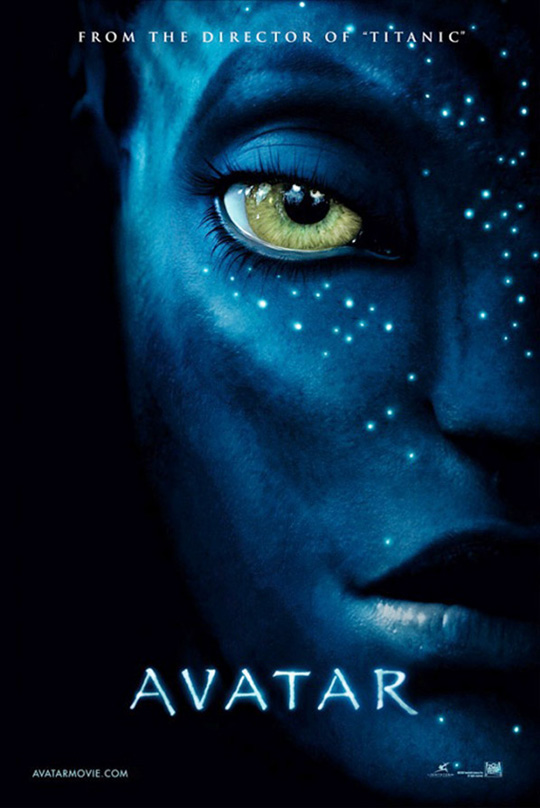
Avatar (2009)

Major Academy Award Nominations: Best Director (James Cameron), Best Picture


“Avatar” is such a stereotypical White Savior flick that it earned the nickname “Dances With Aliens.” That label is well deserved, as the film offers up almost every lazy meme in the genre.

Tribe of nature-loving Noble Savages? Check. White spy who “goes native” with said tribe? Check. Spy has an enlightened epiphany and a subsequent change of heart, aligning him with the tribe against their evil enemies? Check. White guy unifies disparate tribes to fight their collective oppressors in a more powerful way than they ever have? Check.

But it goes even deeper than that. As The Progressive magazine put it:Jake Sully, played by Sam Worthington, is the white hero who enters the Na’vi’s land, learns, in three months, all their secrets, becomes a super-Na’vi and is able to return and save them from the attack of his crazy nation’s warmongers. Jake is Cameron’s version of Tarzan, the white man who will save the “savages.” Jake is the only one who can successfully pray to the Na’vi’s mother goddess (Eywa). She hears him, not her own people’s prayers and grief.
Comment:  For more on the subject, see Cameron Defends Avatar's White Messiah and The White Messiah Fable.

May 27, 2012

Dances with Wolves changed everything

The Weight of Being Native American

By Lawrence SampsonWell into the eighties, Indian legislation and tribal lawsuits continued to strengthen and reaffirm Indian sovereignty. With this, social settings also became less tenuous. As a teenager, I became conscious that being Indian had gone from being shameful to acceptable but couldn’t imagine that it would soon enter the realm of being cool. Non-Indians began to identify with Native people and acknowledge or even claim non-existent Indian lineage. All of this would eventually culminate in the release of Kevin Costner’s seminal Dances with Wolves. A positive illustration of Indian life on the plains, it would fuel an explosion of Indian identification among both Indians and non-Indians, with both good and not so good repercussions. It is virtually impossible to overstate the affect this film has had on modern Indian people and society. Awareness, pride, knowledge of our issues, all of it, can be examined in a truly pre and post 'Dances' lexicon. Indian actors were actually used to portray Indian people in a positive light-long a rarity in Hollywood. What education, agitation, and lawsuits had done within Indian society, the release of a single film would do outside of our communities. In America and elsewhere American Indians were finally the thing to be.

A greater awareness of Indian people and Indian traditions brought the snake oil sales men and women who saw social change as financial opportunity. The exploitation and selling of Indian traditions or what were falsely called Indian traditions exploded in the aftermath of Dances. If you had the means you could and can still buy an Indian name or even participate in “real” Indian ceremonies. The leaders of these affairs may not be Indian, but they were after all “taught by an Indian” or through some nebulous means, got in touch with some claimed Indian ancestors. After having land and resources stolen for centuries, it seems the last vestige of our survival, our spirituality, would even be stolen. That legitimate Indian ceremonial leaders do not sell ceremony comes as a shock to many. While travelling abroad I have been approached countless times and asked to do everything from giving the venerable “Indian name,” to impregnate women with an Indian baby, to conduct traditional Indian marriage ceremonies. Being accepted into society comes with a price, it seems. Sometimes I wonder if it was better to be unknown and despised.
Comment:  I remembering hoping Dances with Wolves would change everything. I'm not sure it did. Whether it did or not is an opinion, not a fact.

But if this is even partly true, it's a profound testament to the power of the media. A single work of fiction shifting our view of Indians from negative to positive? Wow.

For more on Dances with Wolves, see Costner Wins in Sculpture Suit and Blake to Script Winnetou Movie.

May 10, 2012

Costner wins in sculpture suit

Court rules for Kevin Costner in sculpture appeal

By Andrea J. CookActor Kevin Costner did not violate his contract with local sculptor Peggy Detmers by installing commissioned bronzes at his Tatanka attraction, the South Dakota Supreme Court ruled Thursday.The key points:Detmers’ attempt to argue that she did not agree to Tatanka as a permanent site for the bronzes was not supported by the evidence, said Rapid City attorney Kyle Wiese, who represented Costner.

“The Supreme Court agreed with us that she agreed to put them there permanently,” Wiese said. “The Supreme Court said there was extensive evidence in the records that she and him had a meeting of the minds and agreed to put them there for the long term.”

Detmers’ active participation in the mounting of the artwork at Tatanka and the open house further demonstrated that she agreed with the location.
Comment:  For more on the subject, see Artist Sues Costner Over Tatanka Sculpture.

August 12, 2011

Blake to script Winnetou movie

'Dances With Wolves' Screenwriter To Adapt German Western 'Winnetou'

Oscar-winner Michael Blake to pen script for "Winnetou" remake.

By Scott Roxborough
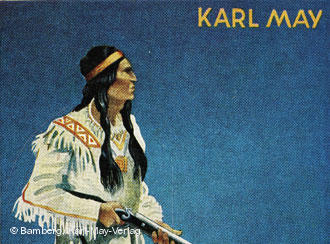
German mini-major Constantin Film is planning a revival of one of the country's most beloved film franchises: the Winnetou series of Westerns based on the novels by German author Karl May. A remake of the Winnetou films has been rumored for years but now Constantin has confirmed that it is pushing ahead with the project. Writer Michael Blake, who penned the Oscar-winning script to Dances With Wolves, will adapt May's work for the screen. Constantin's Robert Kulzer and Martin Moszkowicz will produce.Comment:  Let's hope Blake doesn't follow the first book too closely, since Old Shatterhand the German was the star and Winnetou was his faithful Indian companion. In other words, let's hope he doesn't turn the movie into another Dances with Wolves.

For more on Winnetou, see Rob Questions Winnetou Movie and Germans Plan Winnetou Movie.

February 23, 2011

Artist sues Costner over Tatanka sculpture

Actor Costner, artist disagree on Tatanka sculpture’s fate

By Andrea J. CookBrief glimpses of the sensitivity of creative people surfaced when actor Kevin Costner and artist Peggy Detmers took their turns on the witness stand at the Lawrence County Courthouse Tuesday.

Detmers, who created the massive bronze sculpture on display at Costner’s “Tatanka: Story of the Bison,” outside Deadwood is suing the actor to force him to sell the 17-piece sculpture she refers to as “Lakota Bison Jump.”

Costner commissioned the work in the early 1990s with the intention of using it as a focal point for The Dunbar, a five-star multi-million-dollar resort he envisioned building on 1,000 acres on the edge of Deadwood.

Detmers spent more than six years creating the 14 bison and three mounted Native American hunters that compose the sculpture.

The resort has not materialized, but Costner said Tuesday that he still entertains offers on the project.

“I haven’t given up,” Costner said, in response to questioning from Russell Janklow. Janklow and Andrew Damgaard, both of Sioux Falls, are representing Detmers.
Comment:  For more on Dances with Wolves, which got Costner where he is today, see Dances with Wolves the Musical? and Dances with Wolves Opened Film Floodgate.

January 06, 2011

Any change since Dances with Wolves?

Indians in Aspic

By Michael Dorris

Published: February 24, 1991
When I saw "Dances With Wolves" at an advance screening, I predicted that it would be less than a box-office smash. Though spectacular to look it, it struck me as too long, too predictable, too didactic to attract a large audience. Twelve Academy Award nominations and $100 million in revenue later, was I ever wrong. In fact, the movie probably sells tickets precisely because it delivers the old-fashioned Indians that the ticket-buying audience expects to find. Dunbar is our national myth's everyman--handsome, sensitive, flexible, right-thinking. He passes the test of the frontier, out-Indians the Indians, achieves a pure soul by encountering and surmounting the wilderness.

Yet, if "Dances With Wolves" had been about people who happen to be Indians, rather than about Indians (uniformly stoic, brave, nasty to their enemies, nice to their friends), it might have stood a better chance of acting as a bridge between societies that have for too long woodenly characterized each other.

With such tremendous popularity, the film is sure to generate a bubble of sympathy for the Sioux, but hard questions remain: Will this sentiment be practical, translating into public support for native American religious freedom cases before the Supreme Court, for restoration of Lakota sacred lands (the Black Hills) or water rights, for tribal sovereignty, for providing the money desperately needed by reservation health clinics? Pine Ridge is the most economically impoverished corner of America today, the Census Bureau says, but will its modern Indian advocates in business suits, men and women with laptop computers and perfect English, be the recipients of a tidal wave of good will?

Or will it turn out, once again, that the only good Indians--the only Indians whose causes and needs we can embrace--are lodged safely in the past, wrapped neatly in the blankets of history, magnets for our sympathy because they require nothing of us but tears in a dark theater?
Comment:  The answers to Dorris's 1991 questions are no and no. There was no tidal wave of good will toward Indians.

I'd like to think Dances With Wolves advanced the cause by increasing awareness of Indians. If not a tidal wave, it may have generated a steady stream of good will. It may have made everything from Hollywood movies and TV shows to Native American Heritage Month to the National Museum of the American Indian more possible.

But several factors washed out that good will in the last two decades. Among them were the public backlash against Indian casinos, Bush's uncompassionate conservatism against minorities, and 9/11, which made it more acceptable to denigrate brown-skinned people. I'm not sure people think any more favorably of Indians than they did in 1991.

If anything has advanced Indians, it's probably the economic and political clout that came with gaming revenues. Tribes with successful casinos are doing notably better than they were 20 years ago. "Money talks" in America; we respect people with cash.

For more on the subject, see Movies Convey America's "Master Narrative," Valenti:  Movies Are Merely Movies, and Ups and Downs of Hollywood Indians.

April 15, 2010

Dances with Wolves the musical?

Exclusive:  Dances With Wolves, the Musical, Is on the Horizon

By Kenneth JonesA Broadway-aimed musical is being developed from the novel "Dances With Wolves," which tells the culture-clash story of a Civil War-era U.S. Army lieutenant who bonds with the native Sioux nation as white people push into the American Dakota frontier.

Matt Murphy, a producer on Broadway's Memphis, Impressionism and Thurgood, told Playbill.com that he has acquired the stage rights to Michael Blake's 1986 book, which is better known as an Academy Award-winning 1990 film that starred Kevin Costner (it won Best Picture and Best Adapted Screenplay, among other Oscars). Murphy is putting together a writing team to adapt the novel into a musical for the Broadway stage. He expects the score to have music inspired by folk, Appalachian, Civil War and Native American music.
And:"It's a beautiful story set within a spectacular setting so that you get lush visuals along with a gorgeous romance along with something of cultural significance," Murphy told Playbill.com. "I have never seen Native Americans on stage, I've never seen this story on stage."

Murphy said he was attracted to the story's "collision of two different cultures" and its exploration of "how different and how similar people are."
And:Murphy said that he's seeking an experienced musical-theatre writing team for the libretto and music and lyrics. Novelist and Oscar-winning screenwriter Blake is not expected to pen the libretto.

The project's composer will be teamed with a Native American musical expert to lend authenticity to the score, in the same way South African artists worked with Elton John on the score for The Lion King.

Murphy said he wants to properly represent "the ritual and ceremony of Native Americans," and added that he will also be seeking native people for the cast.

"Our goal is to honor the legacy of Native American culture," Murphy said.
Comment:  It's a little scary to hear Murphy say he's never seen a Native on stage. Does that mean he has no idea about all the Native writers, actors, and directors working in the theater? Except for his Native adviser, how white will this production be?

I've posted about perhaps 50-100 Native plays since I started this blog. Perhaps 5-10 of them were musicals. I'd say Murphy should know the field better before he ventures into it.

For more on the subject, see Dances with Wolves Opened Film Floodgate and Native Plays and Other Stage Shows.

March 26, 2010

Means on his acting career

Means spirited:  American Indian actor and activist honored at Haskell film festival

By Jon NiccumRussell Means' Lakota Sioux name (Oyate Wacinyapin) translates to "Works for the People."

It's fair to say the American Indian activist and actor has earned that designation.

"I've made a difference in everything I've participated in," Means says.
Hmm. Means isn't exactly humble, is he?Q: Has Hollywood gotten better at portraying American Indians since you first started acting?

A
: In the '70s and '80s we thought they got it. They were finally treating us with respect. Then they do an about-face and become as bad, if not worse, than the treatment before. It's a horrible, racist, stereotypical image--racist to the point of genocidal. It engenders into the entire American psyche that we are primitive, dirty idiots.

Q: Can you give me an example of a movie you feel this way about?

A
: "Dances with Wolves"--even though the liberals loved it. "Missing" by that bald-headed, redhead kid (Ron Howard). "Black Robe" from Canada, which was the most vile of them all. ... The TV series "Into the West" that won all those awards. Anytime you portray Indian people in a stereotypical way, you win awards.
I don't agree with Means that Dances with Wolves is bad. It's certainly no worse than Disney's Pocahontas, which Means touts because he was in it.

But I do agree with Means that Native movies got better before they got worse. That was a central point in Ups and Downs of Hollywood Indians.Q: What do you remember about working on "Curb Your Enthusiasm"?

A
: Man, that was perfect. And when they had the audition, you should have seen the lineup. Normally, I only audition for white modern roles. I don't usually audition for Indian roles because I've been there, done that. But I agreed to audition for that. They told me I had to ad lib. They had their set lines. But the scene that's so famous (involving Wandering Bear's cure for Cheryl David's "female problems"), I ad-libbed that. They all laughed so hard that they hired me on the spot.
I didn't realize Means had appeared in Curb Your Enthusiasm.Q: Do you have a dream project?

A
: Yes I do. I co-wrote a script called 'Wounded Knee 1973.' Every time we've made the rounds in Hollywood we'd pitch the project. We'd go in with all the data. Understand, I'm well-respected in Hollywood because of my activism. It opens doors. Plus I did "Last of the Mohicans," "Natural Born Killers" and "Pocahontas"--three movies that have made over $100 million. That's the success benchmark. Consequently, a lot of doors are open to me beyond just being an actor. We'd go in and bring our statistics about the history of movies from the '50s to now that treated us with dignity. And every one of them made beaucoup bucks. There's no reason not to make a movie that treats us with dignity. But there were no takers. Now I've got a new management company that has influence, and we're making the rounds again. It might actually be made 40 years after it happened.
Hmm. I don't think there's much of a market for a Wounded Knee II movie. Thunderheart, Incident at Oglala, and We Shall Remain's Wounded Knee have covered the story already. I doubt Means wants to present an evenhanded look at the conflict. Pro-AIM propaganda is more likely. And the story's not that dramatic. As with the occupation of Alcatraz, the protest just sort of fizzled out after going on interminably.

On the other hand, he nailed the point that I've made repeatedly. Hollywood studios won't make Native-themed movies even though they've earned "beaucoup bucks." The reason must be something other than financial--in other words, racial.

For those "in the industry" who think I'm wrong, Means has more moviemaking experience than most people. And he agrees with me. Therefore, I'm sticking with my theory.

For more on the subject, see Russell Means Speaks and The Best Indian Movies.

January 20, 2010

Reel Injun trailer

In “Reel Injun,” Cree filmmaker takes a look at Native Americans – faux and the real deal--in moviesPity the poor film director. He wants to make a movie about Indians, but just can’t find enough Native American actors. Hence, there’s the spectacle of Anthony Quinn, Burt Lancaster, Sylvester Stallone--even Boris Karloff, for heaven’s sake--in, shall we say, redface.

And even when Native actors are used, things frequently aren’t quite right. As Graham Greene, who is Oneida, points out, he had to learn Lakota for his role in “Dances With Wolves,” even though he can’t speak his own language.

The documentary “Reel Injuns” by Cree filmmaker Neil Diamond explores that dynamic as well as that of “adopted” Indians who plays into the whole “white savior” myth. Diamond frequently handles this with humor, although the hurt shines through.

Check out the movie’s Web site, which features comments by Native actors and activists Wes Studi and Russell Means.

As both site and the trailer show, most of these movies purport to be about Indians, but are really about white people, with Native Americans as the supporting cast:

Think of Lieutenant Dunbar (Kevin Costner) in “Dances with Wolves”’; Hawkeye (Daniel Day Lewis) in “The Last of the Mohicans,” and John Morgan (Richard Harris) in “A Man Called Horse.”

“Reel Injun” opens in theaters in Canada Feb. 19. Can’t wait till it crosses the border to the States.


Comment:  Daniel Day-Lewis played a woodsman similar to an Indian, of course, not an Indian. His character Hawkeye wasn't a white man who took over a story supposedly about Indians. The Last of The Mohicans was always about Hawkeye first and the Mohicans second.

I'm not sure there's anything new to say on the subject of Indians in movies. People have done many books and documentaries on the subject already. Hollywood's portrayal of Indians has been stereotypical, racist, and wrong. Case closed.

For more on the subject, see The Best Indian Movies and Native Documentaries and News.

January 09, 2010

The White Messiah fable

The Messiah Complex

By David BrooksEvery age produces its own sort of fables, and our age seems to have produced The White Messiah fable.

This is the oft-repeated story about a manly young adventurer who goes into the wilderness in search of thrills and profit. But, once there, he meets the native people and finds that they are noble and spiritual and pure. And so he emerges as their Messiah, leading them on a righteous crusade against his own rotten civilization.

Avid moviegoers will remember “A Man Called Horse,” which began to establish the pattern, and “At Play in the Fields of the Lord.” More people will have seen “Dances With Wolves” or “The Last Samurai.”

Kids have been given their own pure versions of the fable, like “Pocahontas” and “FernGully.”

It’s a pretty serviceable formula. Once a director selects the White Messiah fable, he or she doesn’t have to waste time explaining the plot because everybody knows roughly what’s going to happen.
Comment:  "Fable" is a good word for Avatar. It's a children's fairy tale pretending to be adult science fiction.

Avatar and other hits like New Moon and Alvin and the Chipmunks: The Squeakquel show that you don't need a sophisticated concept for a hit movie. In fact, simpler may be better: Spacemen vs. natives! Teenage vampire romance! Singing chipmunks!

They also offer further proof of the fallacy of the big-name actor. Anyone who thinks Hollywood has to cast someone like Johnny Depp in a movie like The Lone Ranger and Tonto isn't thinking.

For more on the subject, see White Guilt in Avatar and The Best Indian Movies.

January 07, 2010

Means on Native movies

In Evaluating Hollywood’s So Called Indian Oeuvre, Russell Means weighs in on good and bad Native-themed movies.

According to Means, the bad ones include Windtalkers, Skins, Smoke Signals, Black Robe, and Dances with Wolves. About the much-loved Smoke Signals he says:Stereotypical drunken Indians--the only thing that was good is that it captured Indian humor.He continues:And then there are times Hollywood got it right, Outlaw Josey Wales, Thunderheart (the only contemporary movie where there aren’t dysfunctional Indians, the documentary Incident at Oglala (very good based on historical fact) and Pocahontas: It’s the first time in history that they told the truth about the Europeans: The reason they came over was to plunder, kill, and rape. I know Walt Disney turned over in his grave once that was released.Comment:  Thunderheart the only Native-themed movie set in the present with no dysfunctional Indians? I don't think so. I probably could name a dozen movies of that type.

Of course, that depends how you define "dysfunctional." If the protagonists are upset, troubled, or angry for any reason, does that mean they're dysfunctional? I wouldn't say so, but maybe Means would. If he's looking for a movie where Indians are saints who have no problems or flaws, he may have to stick to kiddie cartoons.

On the other hand, he may have a point about Pocahontas. I think prior movies--e.g., Little Big Man, The Mission, and Dances with Wolves--condemned European and American attitudes toward Indians. But did they explicitly say the foreigners came to rape, plunder, and kill? Pocahontas may well contain the strongest and most explicit condemnation of Western imperialism on film.

At least Means is consistent. He touted Pocahontas as a great film when it came out and he's still touting it. He doesn't seem to mind that the Indians are noble, tree-hugging nature worshipers. Or that Pocahontas is a model-like young woman rather than a child who wouldn't have fallen in love with an adult. As long as the movie paints Europeans in a bad light and Natives in a good light, who cares how much it distorts history?

What about Means's other roles? E.g., The Last of the Mohicans, Song of Hiawatha, Black Cloud, Into the West, Pathfinder. Their reviews ranged from pretty good (The Last of the Mohicans, Into the West to pretty bad (Song of Hiawatha, Pathfinder). Why is Means making these movies if he isn't proud of them?

For more on the subject, see Russell Means Speaks and The Best Indian Movies.

September 17, 2009

Dances with Wolves opened film floodgate

'Dances With Wolves' has lasting effect on state, actors

By Jomay SteenKevin Costner’s Oscar-winning “Dances with Wolves” opened a floodgate of opportunity 20 years ago for South Dakota and its residents who appeared in the movie.

Emily Currey, film and media relations representative for the South Dakota Office of Tourism, said Costner’s film truly showcased the state.

“His film played a very important role in the film industry in South Dakota,” Currey said.

“Dances with Wolves” will be celebrated at the South Dakota Film Festival today through Sunday, Sept. 20, in Aberdeen.
And:Other projects filmed in South Dakota since “Dances with Wolves” that incorporated Native Americans include:

  • “Son of the Morning Star,” ABC, 1991
  • “Incident at Oglala,” Dakota Plains Productions, 1992
  • “Thunderheart,” TriStar Pictures, 1992
  • “The Ride to Wounded Knee,” Ride to Wounded Knee Productions, 1992
  • “Wyatt Earp,” Warner Brothers, 1994
  • “Lakota Woman,” Turner Pictures, 1994
  • “Crazy Horse,” Turner Pictures, 1996
  • “Skins,” Firstlook Films, 2002
  • “Hidalgo,” Disney, 2004
  • Kevin Costner to be honored in FlandreauKevin Costner is coming to Flandreau. The Flandreau Santee Sioux Tribe will host a Friendship Ceremony for the Academy Award-winning actor and director at the Royal River Casino at 11 a.m. on Sunday, Sept. 20.

    Tribal President Joshua Weston said the Santee Sioux are eager to show their appreciation for Costner's support of Native American causes.
    Comment:  For more on Dances with Wolves, see Best South Dakota Movies and Dances with Wolves in Film Registry. For more on the subject in general, see The Best Indian Movies.

    August 21, 2009

    Avatar = Dances with Wolves?

    James Cameron:  Yes, 'Avatar' is 'Dances with Wolves' in space. . .sortaGB: With this movie, it feels like a classic going-native film, if that doesn't sound too flippant. In the half-hour of footage I saw I was reminded at certain points of “Farewell to the King,” “A Man Called Horse” and “At Play in the Fields of the Lord.”

    JC: Yeah, yeah, “At Play in the Fields of the Lord” was among the videos that I used as a reference. Yeah, absolutely. Tom Berenger did some real interesting stuff in that film.

    GB: There’s also maybe some heritage linking it to “Dances With Wolves,” considering your story here of a battered military man who finds something pure in an endangered tribal culture.

    JC: Yes, exactly, it is very much like that. You see the same theme in “At Play in the Fields of the Lord” and also “The Emerald Forest,” which maybe thematically isn’t that connected but it did have that clash of civilizations or of cultures. That was another reference point for me. There was some beautiful stuff in that film. I just gathered all this stuff in and then you look at it through the lens of science fiction and it comes out looking very different but is still recognizable in a universal story way. It’s almost comfortable for the audience--“I know what kind of tale this is.” They’re not just sitting there scratching their heads, they’re enjoying it and being taken along. And we still have turns and surprises in it, too, things you don’t see coming. But the idea that you feel like you are in a classic story, a story that could have been shaped by Rudyard Kipling or Edgar Rice Burroughs.
    Comment:  Literary scholars have criticized Kipling and Burroughs for their imperialist themes. Film critics have said similar things about Dances with Wolves. So I wouldn't necessarily brag about the similarities.

    The theme in question isn't just "a battered military man who finds something pure in an endangered tribal culture." It's "a battered military man who becomes the dominant player, even the leader, of an endangered tribal culture." In other words, these works are about white people who co-opt indigenous cultures, not the indigenous cultures themselves.

    It remains to be seen what Avatar will be like, but comparisons to Kipling, Burroughs, and Dances with Wolves are not what I'd consider encouraging. Geoff Boucher, who conducted this interview, may want to examine the premise more critically next time.

    For more on the subject, see James Cameron's Avatar and The Best Indian Movies.

    May 16, 2009

    How Graham Greene got started

    An Evening with Graham GreeneWhen asked what advice he gives to young, prospective actors, he says, "First, get your cab-driver's license. Then learn to wait tables; and how to tend bar." Actors, even very successful ones, he points out, are not acting all the time. And his principal justification for choosing particular roles at particular times is admirably pragmatic: "I've got a mortgage."

    Greene followed a curious path to the acting profession. During his high-school years, he says, he never thought about being an actor. Instead, he wanted to be a draughtsman--and he actually did that for a time in his youth, along with other construction-related and manual labour jobs. Eventually he found himself working as a tech guy in the music industry, touring around with bands. It was only when an acquaintance harassed him incessantly to appear in a play he'd written--Greene even once turned out the lights to pretend he wasn't in when the man showed up at his office one day--that he got his first acting role.

    Years of working in small-scale stage productions in Canada and Britain followed, until, one break leading to the next, Greene eventually found himself nominated for an Oscar for his work as Kicking Bird in Kevin Costner's epic Dances With Wolves.
    Comment:  For more on the subject, see The Best Indian Movies.

    June 19, 2008

    AFI's best Westerns

    AFI released its list of top 10 genre films, including the top 10 Westerns. Perhaps not surprisingly, Indians play a role in only two of them--and a negative role at that.

    Best of 10:  AFI releases top-10 genre film listsWESTERN

    1. “The Searchers,” 1956.
    2. “High Noon,” 1952.
    3. “Shane,” 1953.
    4. “Unforgiven,” 1992.
    5. “Red River,” 1948.
    6. “The Wild Bunch,” 1969.
    7. “Butch Cassidy and the Sundance Kid,” 1969.
    8. “McCabe & Mrs. Miller,” 1971.
    9. “Stagecoach,” 1939.
    10. “Cat Ballou,” 1965.
    Comment:  I haven't seen Unforgiven, Red River, or The Wild Bunch. As for the rest, yes to High Noon and Butch Cassidy and the Sundance Kid. Maybe to Stagecoach--it's been a long time since I've seen it. Maybe to Shane--it isn't a great movie, but it's iconic. No to the others, especially The Searchers. No also to Lonesome Dove, which some have called the best Western ever.

    Leaving Unforgiven on the list because it's an Academy Award winner, here's my tentative top 10 Westerns:

    High Noon
    Butch Cassidy and the Sundance Kid
    Dances with Wolves
    Broken Arrow
    Little Big Man
    Once Upon a Time in the West
    They Died with Their Boots On
    Sergeant Rutledge
    Open Range
    Unforgiven


    Note that my list has five movies that feature Indians, not merely two. That's because our "cowboys vs. Indians" legends offer the richest vein of stories to mine. As Frederick Jackson Turner suggested in his Frontier Thesis, the West is synonymous with Indians.

    Sadly, there aren't that many great Westerns. It's hard to making a gripping drama out of people shooting at each other from behind doors or rocks. Most of the movies on my list are about the characters, not a big gunfight at the OK Corral (or wherever).

    For more on the subject, see The Best Indian Movies.

    Best South Dakota movies

    A writer came up with the best movies (or TV shows) about South Dakota. Two of the five feature Indians.

    The Fives:  Move aside AFI, here's a movie list South Dakotans can dig their teeth intoI put together my own list: The five best films made (in part) or featuring South Dakota.

    5. "Into the Wild"
    4. "Incident at Oglala"

    This highly celebrated and controversial movie was one of the catalysts that propelled the Leonard Peltier case into a cause celebre worldwide. Robert Redford's film, which follows the path largely set out by author Peter Matthiessen in "In The Spirit of Crazy Horse" in examining Leonard Peltier's role--or lack, thereof, depending on whom you ask--in the murder of two FBI agents on Pine Ridge Indian Reservation during the tumultuous 1970s when Dick Wilson's goons and American Indian Movement sympathizers turned the reservation upside down with violence.

    3. "Deadwood"
    2. "Dances with Wolves"

    If "Deadwood" was a boon to one town, Kevin Costner's "Dances With Wolves" was a boon to the entire state.

    Filmed in South Dakota, "Dances With Wolves" epic examination of the post-Civil War westward expansion by the U.S. Army and one man's fictional encounter with Native American culture and his immersion into it was Costner's crowning achievement, both as an actor and as a director. The film was a hit among movie goers and among movie critics.

    1. "North by Northwest"
    Comment:  I haven't seen Into the Wild or Deadwood, but I'd put Skins and Imprint on this list before Incident at Oglala and North by Northwest. Dances with Wolves and Imprint probably would be my top two.

    For more on the subject, see The Best Indian Movies.

    February 11, 2008

    What makes a movie Native?

    The success of the Navajo-themed Turquoise Rose provides an opportunity to address an unresolved question.

    “Turquoise Rose”...What Navajo Made that Movie?The first time we spoke more than a year ago, Turquoise Rose director Travis Hamilton said he hoped people would leave the theatre asking, “What Navajo made that movie?”

    Travis Hamilton isn’t Navajo—hell, he isn’t even Native. But audiences who’ve seen his film, even Navajo audiences, are leaving the theatre asking that very question.

    Perhaps this explains the pleasure of watching his sweetly uncomplicated film with an all Navajo cast starring Natasha Kaye Johnson, Ethel Begay and Deshava Apachee.

    The film succeeds, not so much because of the light script, but because Hamilton has the confidence to defer to the images of sandstone landscapes, dusty highways and most of all, to his actors. Together, they tell her story; no, let me rephrase that—they show the growth of the young woman rejoining her external and spiritual life.
    More on Natasha Kaye Johnson:The fact that she pulled it off so effortlessly is even more impressive when you realize that the Twin Lakes, New Mexico actress had never performed in front of a camera before. And those in the know are noticing. She was nominated for Best Actress at the 2007 American Indian Film Festival and has filmed a short film for ABC-Disney called Rez Runner with other opportunities landing her way.

    She’s got the bug, she admits, but not just for acting. A former reporter for the Gallup Independent, Johnson recently moved to Phoenix to advance her journalism career while considering her options performing on the big screen.

    “Right now I’m on that fence about what I want to do…acting or journalism? ...So far, though, it’s been frustrating. Some of the scripts I’ve been sent have been sooo stereotypical. I mean, are you serious?”
    Comment:  As we saw in Bury My Heart at Wounded Knee and Comanche Moon, filmmakers are dead-serious about presenting false or misleading stories about Indians. They'll invest millions of dollars to mollify mainstream America with a safe and comforting message. Namely, that Indians were savages who engaged in warfare just like whites. That Americans were (and are) noble, honorable people who would never harm others intentionally. That conflict was inevitable and so we weren't to blame for the tragedy that ultimately happened.

    I look forward to seeing Turquoise Rose. But I'm still confused about what makes a "Native" movie Native. Turquoise Rose seems roughly analogous to Dances with Wolves--non-Native writer and director, largely Native cast. About Dances and other movies written by non-Natives, Carole Levine said that "no matter how good or lousy" they are, they "just can’t fake it." Yet Hamilton's work on Turquoise Rose suggests that a non-Native can do an acceptably "Native" movie. That non-Natives can indeed fake it.

    So the basic question remains unanswered. Can a non-Native create a movie (or play, or novel, or comic book) that Native people would accept as "Native"? Or must a work of fiction be created by a Native to qualify as "Native"?