Showing posts with label Avatar. Show all posts

March 10, 2013

"Old-timey prejudices" in movies

Cracked.com reviews prejudice in the movies. The top two items apply to Indians.

5 Old-Timey Prejudices That Still Show Up in Every Movie

By J.F. Sargent#2. If It's a Blockbuster, the Star Better Be White (or Will Smith)

Quick: name a horror movie where one of the good guys is black. Well, hell, that's easy. One of the ship's crew in Alien was black, and some of the soldiers in Aliens. Danny Glover was the cop in Saw, Carl Weathers was one of the squad in Predator. Lawrence Fishburne in Predators. Hell, there are lots of them.

Now count how many of them survived to the end.
And:So What's the Deal?

Even in the 21st century, with a black president and posters of black athletes adorning bedroom walls all across the world, white audiences still prefer to watch white characters.

It would be easy to argue that the box office numbers are skewed because, say, Fellowship of the Ring was simply a better movie than Big Momma's House. But you can get the same results from focus groups with everything else being equal. In this 2011 study, white undergraduates were given the synopses of 12 made-up romantic comedies. Along with the summaries, they got cast pictures and fake IMDB pages, which were manipulated so that each movie had six versions of the cast; an all-white cast, an all-black cast and four different versions in between.

Same plot, same characters, same everything--just different cast members. And unfortunately, the whiter the cast, the higher the likelihood of the students wanting to see the movie.

So how does this play out in real movies? Black characters end up in supporting roles, instead of being well-developed characters. They're just there so we can "judge the other (white) characters by how they treat them." In other words, we certainly don't root for racist characters, and we'll boo racist stereotypes. But our open-mindedness usually stops at the point of actually paying to see a black leading man. Other than Will Smith.
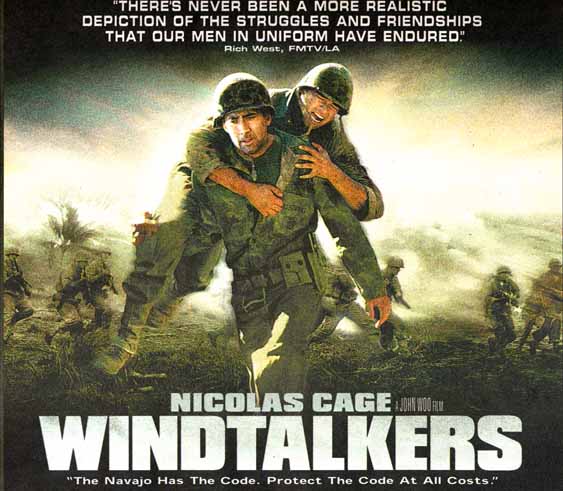
Below:  A movie about Navajo codetalkers starring a white guy.


And the top old-timey prejudice:#1. We Still Don't Care About History That Doesn't Involve White People

We're not exactly blowing your mind when we say that 300 had some slight historical inaccuracies when it came to the race of its heroes, or that Jesus was not exactly the European-looking Superman we're used to seeing in movies, paintings and bumper stickers.

What's weirder is when the movie pretends to be about the triumph of a minority character, but instead spends all its time talking about the white people who save him. Like in The Blind Side, which was supposed to be about Michael Oher, a poor black kid who ended up being adopted by a wealthy white family and going to college on a football scholarship. The movie is, of course, all about the white family. Michael Oher is just a thing that needs to be taken care of, not an actual character.
And:So What's the Deal?

Money. Once again, it's money. To get white people in the theater seats, the story has to revolve around white people.

And the phenomenon isn't even limited to stereotypes--Stuck, a movie about an African-American woman who is convicted of murder, had to cast a white woman in the lead role to get financed because, as one casting director pointed out, "It's about getting the movie done. Everyone is looking to make their money back." And as we already covered, black actresses don't bring in money. Giving white actresses cornrows, on the other hand, apparently will.

Or take The Help, a story about how the American civil rights movement affected the home lives of privileged white college graduates who have a book deal. That wouldn't really be a problem (you don't always have to tell the biggest story) if it weren't for the fact that it's one of the very few big-budget movies made about the civil rights movement. Ever. And just like Mississippi Burning, Ghosts of Mississippi and Driving Miss Daisy, the story is told from a white perspective.
Comment:  These two items--movies starring white guys and movies about white guys--are overlapping and interrelated, not separate and distinct. But that's okay.

Movies such as Think Like a Man and Karate Kid prove that minority-led movies can succeed. The lack of such movies is Hollywood's fault.

Studios could create minority stars by putting them in small-budget movies and building them up. Or by putting them in franchise movies such as The Lone Ranger, The Hunger Games, Transformers, etc. No one's gonna skip a blockbuster movie because the lead character happens to be a minority.

Avatar and Twilight remain two great examples of this. No one went to see Avatar because Sam Worthington played the lead role. And no one skipped Twilight because (they thought) Taylor Lautner was an Indian. The movies would've been equally successful with minorities playing these roles.

That Hollywood doesn't do this is because it's fundamentally conservative and racist. As I've said many times before.

For more on the subject, see Bottom-Line Argument Is Racist and Patel's Struggle Shows Hollywood's Racism.

Below:  Someone audiences managed to overcome their alleged antipathy toward minorities.
February 22, 2013

Hollywood loves white saviors

With Lincoln poised to win several Academy Awards, this is a timely subject:

Oscar loves a white savior

If a movie features white people rescuing people of color from their plight, odds are high an Oscar will follow

By David Sirota
According to oddsmakers, Steven Spielberg’s “Lincoln” does not have the best chance of winning the 2013 Academy Award for best picture. That top spot right now goes to Ben Affleck’s “Argo”—but it shouldn’t. If history is any gauge, “Lincoln” has to be the front-runner thanks to its status as this year’s only Oscar-nominated White Savior film.

If you’ve been to the movies in the last half-century, you know the White Savior genre well. It’s the catalog of films that features white people single-handedly rescuing people of color from their plight. These story lines insinuate that people of color have no ability to rescue themselves. This both makes white audiences feel good about themselves by portraying them as benevolent messiahs (rather than hegemonic conquerors), and also depicts people of color as helpless weaklings—all while wrapping such tripe in the cinematic argot of liberation.

This, of course, is the backbone of Spielberg’s “Lincoln.” As historian Kate Masur recently wrote in the New York Times, it is yet another “movie devoted to explaining the abolition of slavery in the United States” but one in which “African-American characters do almost nothing but passively wait for white men to liberate them.” The result, she writes, is a film that ignores actual events of the 19th century, “helps perpetuate the notion that African Americans have offered little of substance to their own liberation” and thus reinforces “the outdated assumption that white men are the primary movers of history and the main sources of social progress.”

Coming from Spielberg, this isn’t particularly surprising. He is, after all, the creator of one of the most unself-consciously archetypal White Savior movies of all time: “Indiana Jones and the Temple of Doom.” In that cartoonish adventure, a whip-wielding white archaeologist drops from the sky into India and quickly becomes the only person able to save destitute peasants from the rein of a tyrannical human-sacrificing cult.

Spielberg’s Abraham Lincoln is certainly a more nuanced character than Dr. Jones, just as his latest film is more sophisticated (if not as exciting) than the second iteration of his 1980s archaeologist-superhero franchise. In return, he has been rewarded with an Oscar nomination—but probably not just because “Lincoln” plays to the academy’s general love of historical drama. It also plays to Hollywood award organizations’ specific affinity for the White Savior.

Indeed, in the last quarter-century, 10 White Savior films have received major Hollywood award nominations, with fully half of those coming in just the last five years. In chronological order, here’s a look at them, and how they channel the same old story of white people saving the day for people of color who supposedly cannot help themselves.
Two of the movies:Dances With Wolves (1990)

Major Academy Award Nominations: Best Actor (Kevin Costner), Best Supporting Actor (Graham Greene), Best Supporting Actress (Mary McDonnell)

Major Academy Award Victories: Best Picture, Best Director (Kevin Costner), Best Adapted Screenplay (Michael Blake)


One of the major sub-categories of the White Savior genre is the “going native” narrative, and 1990′s “Dances With Wolves” is the modern era’s emblematic example. It is the story of a white Union soldier who fully embeds himself in the Sioux tribe and quickly becomes its primary protector. First, he leads the tribe’s defense against its hostile Pawnee rivals, then he helps them attempt to evade the Union army in which he once served.

Among the defining characteristics of “Dances With Wolves”—as it is with most “going native” stories—is the prominence of what has been called the Noble Savage. As TV Tropes describes it, that is a typically Native American “character who is, due to their race or ethnicity, a member of a barbaric or savage tribe (or a group simply perceived as such by others), who is nevertheless portrayed as nobler or of higher moral fibre than the norm.”

Because it portrays a few people of color in a positive light, the use of the Noble Savage caricature often preemptively blunts criticism of the underlying White Savior story. The idea is that a film like “Dances With Wolves” cannot be bigoted or overly white-centric if it at least shows Kicking Bird and Chief Ten Bears as special and exceptional. This, even though the whole story is about a white guy who saves the day.

Avatar (2009)

Major Academy Award Nominations: Best Director (James Cameron), Best Picture


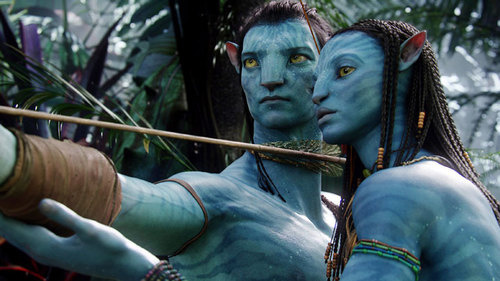
“Avatar” is such a stereotypical White Savior flick that it earned the nickname “Dances With Aliens.” That label is well deserved, as the film offers up almost every lazy meme in the genre.

Tribe of nature-loving Noble Savages? Check. White spy who “goes native” with said tribe? Check. Spy has an enlightened epiphany and a subsequent change of heart, aligning him with the tribe against their evil enemies? Check. White guy unifies disparate tribes to fight their collective oppressors in a more powerful way than they ever have? Check.

But it goes even deeper than that. As The Progressive magazine put it:Jake Sully, played by Sam Worthington, is the white hero who enters the Na’vi’s land, learns, in three months, all their secrets, becomes a super-Na’vi and is able to return and save them from the attack of his crazy nation’s warmongers. Jake is Cameron’s version of Tarzan, the white man who will save the “savages.” Jake is the only one who can successfully pray to the Na’vi’s mother goddess (Eywa). She hears him, not her own people’s prayers and grief.
Comment:  For more on the subject, see Cameron Defends Avatar's White Messiah and The White Messiah Fable.

October 07, 2012

"Honest Trailer" for Avatar

Here's an "honest trailer" that echoes the criticism that I and others have leveled against Avatar:


For more on Avatar, see Amazon Worldview Influences Avatar 2 and Review of Avatar.

October 14, 2011

Amazon worldview influences Avatar 2

How Amazonian tribes influenced James Cameron’s Avatar 2How have your experiences there influenced Avatar 2?

I've certainly learned from it. I've learned a little bit more about the indigenous community's perspective on our world. The way they think and the way they feel that they are (in a way) tasked by destiny to be the protective spirits of their rainforest, of their world. They are the people who speak for the natural world and we need to listen to them for a number of reasons. First of all, they have the right to exist the way they're used to existing, we don't have the right to change that. Although that doesn't seem to stop us. And secondly, because we need their wisdom. We need to listen to nature a lot more than we do as as civilization. And we're not listening and we're in peril right now.

We also asked Avatar producer Jon Landau (who has also traveled with Amazon Watch and Cameron) how these trips have impacted his film.

How did the Amazon experience impact Avatar 2?

Jon Landau: It gave us an even greater sense of social responsibility, that our films can have a social impact on people around the world and make an impact. And one of the great things I think Jim is able to do in Avatar is, he didn't preach but he exposed things to people and let them come to their own conclusions. So no one went out and said this is wrong and this is right, they took it upon themselves to interpret it however they saw fit. And I think as we go forward—not just as it relates to the movie—but as it relates to what we're doing with the Disney theme parks, whatever we might do in publishing. In the movies, we realize that we have a social responsibility to challenge people to do what Jake did in the movie. Open their eyes. We don't tell them what to do after they open their eyes, because we believe people make the right decisions, we just challenge them to open their eyes.
Comment:  Cameron and Landau don't say how Avatar 2 will be different, but they drop a few hints. More socially responsible, more challenging and provocative...whatever that means. Perhaps a deeper look into the indigenous worldview, since Avatar was so shallow. More of Neytiri's viewpoint and less of Jake's.

On Facebook, Brad responded to this posting by saying, "If that were true he [Cameron] could spare us another three-hour snooze fest and donate the billion-dollar budget to Native tribes." I replied, "No! The world needs another billion-dollar movie to warn us about conserving our resources."

For more on Avatar 2, see Avatar 2 Cast to Meet Indians and Brainstorming Avatar 2 with Indians.

September 20, 2011

Disney plans Avatar attractions

Disney to bring 'Avatar' to theme parksDisney and filmmaker James Cameron announced plans Tuesday to bring the world of the Oscar-winning movie "Avatar" to the entertainment giant's theme parks.

The first "Avatar" land will open at the Walt Disney World in Florida, with construction due to begin by 2013, said Walt Disney Parks and Resorts Worldwide, Cameron and Fox Filmed Entertainment.

"James Cameron is a groundbreaking filmmaker and gifted storyteller who shares our passion for creativity, technological innovation and delivering the best experience possible," said Disney president and chief executive Robert Iger.

Cameron added: "I'm chomping at the bit to start work with Disney's legendary Imagineers to bring our 'Avatar' universe to life.
Comment:  This is a potentially bad idea. Avatar's Na'vi already represent a stereotypical view of indigenous people: primitive, savage, warlike, whooping, scantily clad, in tune with nature, worshiping animals and trees, lacking innovations such as fire or writing, etc. And now Disney is going to simplify and sanitize them for popular consumption?

Will Disney's Indians Na'vi tell epic cycles of stories, plot planetary courses over the centuries, engineer great canals and pyramids, or develop advanced surgical techniques? Because these are all things Indian cultures did. Or will the Na'vi simply run, jump, fight, ride, and hook up with their magical tree? You know, purely physical tasks that don't require any intelligence or planning?

The latter, I'm betting. I'd be amazed if the Avatar attractions made the Na'vi seem less primitive rather than more primitive.

For more on Avatar, see Review of Avatar and Avatar 2 Cast to Meet Indians.

September 05, 2011

Review of Avatar

As long-time readers will recall, I posted a lot of items on Avatar's racial and cultural themes when the movie came out. What I didn't do was review Avatar myself. On the page below are some points that struck me—points that most reviewers missed.

Indigenous themes in Avatar


If you can't read the whole review, here's a summary:

Snap judgment on Avatar: It's entertaining in an extremely superficial way. People who have compared it to Ferngully aren't kidding. It's a $300-million version of a Saturday matinee for 12-year-olds...a super-CGI potboiler a la The Land That Time Forgot. Outsider finds lost world of prehistoric men and beasts...learns their primitive ways...and joins them against the villainous [fill-in-the-blank] people.

If you're familiar with Westerns, science fiction and fantasy, and comic books, you've seen this story dozens of times. Good little cave people (even if they don't live in caves) vs. big bad monsters. Avatar is just about that black and white. It's visually impressive but about as deep as a children's book.

For more on the subject, see The Best Indian Movies.

July 31, 2011

Aliens = metaphor for Indians?

“Cowboys & Aliens” & Obnoxious White GuiltWhen the Native Americans first saw European ships, these vessels may as well have been spaceships. And so goes the long-realized metaphors about aliens and the white man. One day the UFOs are going to come and enslave us all, just as we did to the Africans. It doesn’t take Stephen Hawking to realize that. Or they’re going to herd us like sheep and cattle and slaughter us for food. Okay, that’s an analogy employing general carnivorous human beings*. But the process is still the same, of turning our guilt about conquering other races and other animals into science fiction fantasies where we get a taste of our own medicine. Only in a movie like “Cowboys & Aliens,” the idea isn’t that we’re getting payback for our past wrongdoings. It’s not even that we’re now walking in the others’ shoes. Instead we’re getting to play the victim, and the hero, and the survivor.

Mostly, though, it’s a kind of slap in the face to the Native Americans and anyone else conquered and exploited by the European invaders. Because by having white guys as the heroes, even with assistance from an Apache tribe, it’s as if to say, “this is how it’s done.” I guess rather than today’s usual white guilt, this is more an act of white innocence with a ton of white pride—like a declaration that we’re strong enough to avert invasion, and it’s not our fault that others weren’t. Notice that in the title “Cowboys & Aliens,” it’s the Indians who are substituted for new bad guys. Even if “Aliens & Cowboys” had a better ring to it, the phrasing would be incorrect. Cowboys remain first, best, top-billing.
Comment:  Interesting viewpoint. Yes, aliens clearly were substituted for Indians in the title, at least. Does that mean Cowboys and Aliens is a metaphor for cowboys vs. Indians?

Could be. I can't say much more about this question without seeing the movie. But I'll reiterate that it's lame that the cowboys and Indians weren't equal partners against the aliens.

It's also lame that the protagonists were overwhelmingly white. In the Southwest where the Apache lived (and still live), the local population probably was a quarter to a third Latino, at least. How about having several minority characters in significant roles? And making a point of the humans having to overcome their prejudices to work together?

Killing monsters at the box office

I gather the aliens were mindlessly evil CGI effects. Although destroying monsters can be fun, the best villains--Darth Vader, Hannibal Lecter, the Joker--are more complex. They hold your interest more than creepy crawlers do.

Are overly simplistic heroes and villains what the audience wants? Apparently not. Proving Cowboys and Aliens was lacking something, it didn't crush the opposition at the box office:

Box Office:  Spielberg's Struggling 'Cowboys' Stumble on Surging 'Smurfs'In one of the biggest surprise box-office finishes of the summer, Sony's Belgium-based blue-troll movie "The Smurfs" over-performed and tied Universal's genre mix-up "Cowboys and Aliens" this weekend, with both films registering about $36.2 million in ticket sales, according to preliminary estimates.

Touting a high-profile roster of producers including Steven Spielberg and Ron Howard, and directed by Jon Favreau, "Cowboys and Aliens" had been projected to take in somewhere between $40 million to $45 million.
Comment:  Obviously, Cowboys and Aliens shoud've pitted humans against Smurfs. Blue aliens (Avatar) have a proven track record of success. It could've been fun if the Na'vi went back through time and space to conquer the humans before the humans conquered them.

For more on Cowboys and Aliens, see Adam Beach on Jimmy Kimmel Live and Indians MIA in Cowboys and Aliens.

March 29, 2011

Avatar 2 cast to meet Indians

James Cameron to Bring 'Avatar 2' Cast to Meet Brazilian Tribes

By Mike BrackenLast week, sources were saying James Cameron's plans to take a submersible to the deepest part of the Marianas Trench to capture underwater 3D footage for 'Avatar 2' were in jeopardy thanks to the recent earthquake in Japan. The director seems undaunted by that news and has other tricks up his sleeve to bring a sense of realism to the sequel to the highest-grossing film of all time. For example, he plans to take his cast to the rain forests of the Amazon and let them spend time with the indigenous tribes who live there.

The filmmaker, who is currently in Manaus for the second International Forum on Sustainability, feels that the experience will allow his actors to appreciate the setting and people that inspired 'Avatar,' and make the film even better.

"'Avatar' is a film about the rain forest and its indigenous people," Cameron said. "Before I start to shoot the two films, I want to bring my actors here, so I can better tell this story. Actors could learn about the natives and what real life in the jungle is like." Hopefully, this will make it easier for some poor thespian to stand in front of a giant green screen and pretend he's in a lush alien forest.
Comment:  For more on the subject, see Cameron Committed to Indigenous Causes and Brainstorming Avatar 2 with Indians.

September 06, 2010

Cameron's and Weaver's anti-dam films

In Cameron Helps with Anti-Dam Films, I noted James Cameron's contributions to the battle against the Belo Monte Dam. Now here are the two films in question:

A Message from Pandora

James Cameron produced this special feature about the battle to stop the Belo Monte Dam and defend the Amazon Rainforest.


Sigourney Weaver Narrates New Google Earth Animation on Brazil's Controversial Belo Monte Dam

10-minute Tour in 3-D Highlights the Dam's Harmful Impacts on Xingu River and Greener Alternatives


Comment:  The second film especially is a devastating indictment of the Belo Monte dam. It's hard to believe anyone would support the dam after watching it.

Really, the age of massive engineering projects is or should be over. We need to start living with nature instead of trying to destroy it.

You can see another point that I make frequently: that Amazon Indians are no longer primitive spearchuckers, if they ever were. Sure, these people sometimes dress in traditional costumes, but they also wear shirts and pants, use modern implements, live in villages, speak Portuguese, go to schools, etc.

Like most indigenous people around the world, they live in two worlds. Portraying them as hidebound captives of their old lifestyle is a blatant stereotype.

For more on Cameron's efforts, see Cameron to Film Tribe Opposing Dam. For more on Amazon Indians, see Amazon Indians Weren't Savages and Amazon Indian Students on the Net.

September 05, 2010

Cameron to film tribe opposing dam

Avatar director vows to return for Amazon tribe fightFilm director James Cameron said Sunday he will return to Brazil this year to make a 3D film on indigenous people of the Amazon who oppose construction of a huge dam for fear it could flood tribal lands.

"I want to return to meet some of the leaders of the Xikrin-Kayapo tribe who invited me," the Canadian director said in an interview published in the Folha de Sao Paulo newspaper.

"I want to take a 3D camera to film how they live, their culture," said Cameron, whose blockbuster movie Avatar tells the story of the peaceful Na'Vi people who live in harmony with nature on the planet Pandora and wage a bloody fight against strip-miners from Earth.
Comment:  For more on the subject, see Cameron Helps with Anti-Dam Films and Cameron Suffering "Cause Fatigue."

September 01, 2010

Cameron helps with anti-dam films

Brazil dam project prompts animated response from director Cameron

By Matthew Knight"Defending the Rivers of the Amazon" is a 10-minute interactive presentation created jointly by Amazon Watch and International Rivers and highlights the environmental issues surrounding the building of the Belo Monte dam, in Para state.

Narrated by the actress Sigourney Weaver, the video explains how the dam--scheduled to be built on the Xingu River, a tributary of the Amazon River--will flood 500 square kilometers of agricultural land and rainforest, displacing over 20,000 people who have lived there for generations.

Cameron's help on the project has been invaluable, Amazon Watch's program director, Leila Salazar-Lopez told CNN. The Oscar-winning director helped enlist the services of Weaver and Google Earth.
And:In addition to helping produce the Google Earth Animation, Cameron has also released "A Message from Pandora." The three-minute feature premiered the same time as the recent re-release of his 2009 box office hit, "Avatar."Comment:  Glad to see Cameron is still helping the Amazon Indians despite his "cause fatigue."

For more on the subject, see Okay to Meddle in Brazil? and Dam Suspended with Cameron's Help.

May 12, 2010

Cameron suffering "cause fatigue"

More on James Cameron's commitment to indigenous causes:

Talking the Amazon with CameronAfter meeting with the Kayapo Indians, “real life Na’vi,” as Cameron put it, the director got inspired and has been campaigning for indigenous peoples. Cameron says the Belo Monte boondoggle dam planned for the Amazon is a “quintessential example of the type of thing we are showing in Avatar—the collision of a technological civilization’s vision for progress at the expense of the natural world and the cultures of the indigenous people that live there.”

On a tear in New York, he spoke before a United Nations committee on aboriginal rights and even launched an environmental scholarship at Brooklyn Tech high school. Not content to stop there, he updated the Avatar website to keep fans informed about environmental issues and sponsored the planting of a million trees around the world as part of Earth Day.
But is Cameron's interest already waning?Having prevailed over the conventional logic and directed a mega hit with an environmental message, the real question now is how Cameron sees his role moving forward. When he made Avatar, Cameron didn’t imagine that people would interpret the movie as a call to action. In fact, he remarked, “I figured I’d be on vacation right now. I figured I’d make my big statement with the movie and let everyone else sort out what to do. Turns out there aren’t that many people figuring out what to do…. I think we’re facing [an environmental] crisis and I’m not going to stand around and leave it to someone else to deal with it.”

Those are energetic words, but when I saw Cameron speak in New York I got the impression that the director was a little overwhelmed by his new role. When one man stood up and asked Cameron if the director would help to save tribes from going culturally extinct in Colombia, the director frankly admitted he was suffering from “cause fatigue.” Later, when Quichua indigenous women got up and offered Cameron a ceremonial scarf, the director looked slightly taken aback.
Comment:  "There aren't that many people figuring out what to do" about the environment? Really? I would've guessed there was no shortage of people concerned about climate change, deforestation, and other environmental issues.

And Cameron's already feeling fatigued? After what...a month or two of challenging Brazil's hydroelectric dam? I've been studying Native issues for 20 years and I'm not much more than a dilettante. What does that make Cameron?

As I wrote in Cameron to Visit Oilsands?, start an organization, dude. Use you money to hire people and your clout to bring in other celebrities, open doors, and arrange meetings.

For more on the subject, see Dam Suspended with Cameron's Help and Cameron's Conversion to Environmentalist.

April 29, 2010

Cameron to visit oilsands?

Avatar director James Cameron wants to see oilsands for himself, former native leader says

By Trish AudetteAvatar director James Cameron may just take the Alberta government up on its invitation to visit the oilsands, a former First Nations leader said Sunday. “He actually suggested that he should be coming up there himself,” said George Poitras, a former chief of the Mikisew Cree. “He’s a Canadian, he knows the tarsands are an international issue. . . . He’s just generally interested.” Poitras was in New York on the weekend to attend the United Nations permanent forum on indigenous issues. He met with Cameron on Saturday morning, then joined him in a panel discussion later in the day. Last week, Cameron—who was born in Canada—made headlines when he said Alberta’s oilsands development is a “black eye” on the country’s environmental record. He suggested more emphasis be placed on the development of alternative energy, such as wind power.Avatar director James Cameron may snag invite to Canada's 'black eye':  the oilsandsThe Alberta government said Wednesday it has not extended an invitation to Oscar-winning director James Cameron to visit the province's oilsands, although if he wants to learn more about the project, that might change.

"I suppose it's possible," said Jason Cobb, a spokesman for Alberta Environment, when asked about an invitation. "We'll have to see how it goes."

Cameron, whose 3-D blockbuster Avatar deals with a fictional planet being destroyed in the mining of "unobtanium," is widely seen as an allegory on the oilsands.

The Canadian-born filmmaker and environmental activist said he hoped to learn more about bitumen operations this weekend when meeting with the Secretariat of the UN Permanent Forum on Indigenous Issues in New York. He called the oilsands a "black eye" for Canada while in Toronto to promote the release of his film on Blue Ray.

Alberta Energy Minister Ron Liepert shrugged off the criticism. Asked if anyone should care about Cameron's comments, the energy minister said, "You might, but I don't."
Comment:  I must've read 100 or more articles on Avatar. I haven't seen one that said it's an allegory for Alberta's oilsands.

A photo caption says the "bleak opening scenes are thought to be inspired by oilsands mining operations." The opening scenes--not the entire movie--is a bit more plausible.

It's great that Cameron is getting so involved in environmental issues. But I have to wonder about his methods. Is visiting places one by one--so he can see them himself--really the best use of his time? Is he saying he won't tackle any problem until he's personally investigated it?

If I were a billionaire celebrity who wanted to tackle environmental problems, I'd probably start a foundation. Or take over an existing one. I'd hire a staff to identify the most critical environmental problems. Then I'd send experts to identify and address the problems along with journalists to cover them. Maybe an actor or a filmmaker or both to leverage Cameron's fame and interest the American media.

Call them "Avatar Response Teams" or something similar, of course. Just like in the movie, they're outside representatives inserted into difficult situations. I can see the headlines already: "Cameron Sends Avatars to Stop Ocean Pollution" (or whatever).

This way, he could handle several of the most pressing environmental problems. The combination of scientific resources and celebrity-driven coverage could help resolve some of them. We're already seeing a hint of how this would work. Wherever Cameron goes, publicity seems to follow. Politicians, environmentalists, and the locale's indigenous population vie for his attention.

That's the way to have an effect. Invest your Avatar money in teams to investigate and publicize issues around the world. Multiply your passion tenfold and things will start happening.

For more on the subject, see Cameron Committed to Indigenous Causes and Canada's Avatar Sands.

Below:  "Avatar director James Cameron has indicated an interest in visiting Alberta's oilsands." (Chris Schwarz, Edmonton Journal)

April 27, 2010

Cameron defends Avatar's white messiah

‘Avatar’ Activism:  James Cameron Joins Indigenous Struggles Worldwide

By Jessica LeeWhile the film was well-received by the largely indigenous audience, Cameron did field some tough questions.

Deer pointed to large Hollywood films, such as Dances with Wolves, Little Big Man, Windtalkers and Avatar, where the hero who saves the indigenous people is always a non-indigenous person. He asked Cameron why he also chose this narrative, and instantly received a large cheer from the audience.

Cameron responded, “That was one of the backlashes against the movie, that the so-called main character was not an indigenous leader himself.” However, he said that the goal in making the film was not to try to “tell indigenous people how bad things are for them,” but rather to “wake up” people who play the roles of economic oppressors or invaders in real-life. “I understand the white messiah argument,” he said, “but in this movie, I am trying to make everybody a white messiah, for everybody to have the sense of responsibility to help with the problem. I think it is such absolutely courageous how you are fighting for your rights … But it is going to take people from the other side meeting you part way and taking responsibility for what has happened in the past and the way we need to live in going forward.”

Cameron continued, “But, if you’ll notice, I tried to go behind the normal Hollywood paradigm and have Jake work within the leadership system of the Na’vi, by not displacing the leader Tsu’Tey who had taken over leadership of the clan when the patriarch, when the father dies, as he stands up with him and ask him to translate for him—so that the message comes from both of them together. I tried to show two cultures meeting halfway to find a solution. And perhaps Hollywood can go further in that regard. Maybe it my own parochial, chauvinistic perspective as a writer. As an artist, it is very important to write from the heart, and Avatar is what came out.”
Comment:  This is one of the more disingenuous rationalizations I've heard recently.

Cameron's excuse is he wants everybody, not just indigenous people, to have a sense of responsibility. For change to happen, he thinks the Western, industrialized side must meet the indigenous side part way. Both sides must work together to find solutions.

Great, but what does that have to do with choose a white-messiah figure to lead the battle? Why couldn't a Na'vi leader be the one who brought the Terran and Pandoran sides together? Why couldn't the Terrans have followed his lead rather than the Pandorans following Jake's lead?

Cameron has admitted being ignorant about indigenous issues, and it shows. If he were following the Native media, he'd know that Natives lead hundreds of conferences, campaigns, and protests every year. They don't sit around waiting for white folks to bridge the gap with them. They take the lead and bridge the gap themselves.

That's what's missing from Avatar--that sense of indigenous people determining their fate with or without outside help. Indians leaders such as Tecumseh, Osceola, and Geronimo resisted the US for years, on their own, without a white man's advice.

Jake Sully...a co-leader?

Cameron's claim that Jake and Tsu'Tey were co-leaders is pure rubbish. Jake is the one who conquered the unconquerable Toruk, proving himself the messiah who could rally tribes from across the planet. Jake is the one who made the big speech, led the troops into battle, and secured the final victory. Even if Tsu'Tey was the Na'vi's nominal leader, his role was inconsequential.

The real reason for making the hero white is that Cameron was working inside his comfort zone. He chose to feature white characters because he's white. Which means he's consciously or unconsciously prejudiced against others.

I guess we'll find out for sure in Avatar 2. Now that he's made a billion dollars and proved the marketability of blue aliens, he can do whatever he wants. He could give Jake Sully a minor role in the sequel, or not use him at all. He could do an entire movie with Pandorans only--no humans in avatar's clothing. If he chooses to make Terrans the heroes again, it'll strongly suggest his bias.

For more on the subject, see The White Messiah Fable and White Guilt in Avatar.

Below:  "James Cameron receives several gifts from indigenous communities after Avatar was screened to some 400 delegates of the U. N. Permanent Forum on Indigenous Issues at the New York Directors Guild Theatre in Midtown Manhattan April 24."

April 26, 2010

Cameron committed to indigenous causes

‘Avatar’ Activism:  James Cameron Joins Indigenous Struggles Worldwide

By Jessica LeeBlockbuster Hollywood director James Cameron said that he is committed to helping indigenous peoples around the world who, like the fictitious Na’vi in his film Avatar, are “caught at the tectonic interface between the expansion of our technical civilization into the few remaining preserves of this planet.”

Several months after the release of Avatar, which quickly became the top grossing film of all time, and two days after the release of the DVD on Earth Day, Cameron was invited to speak at two events on April 24 that were associated with the Ninth Session of the United Nations Permanent Forum on Indigenous Issues taking place in New York City from April 19-30.

“I’d just like to say it is a tremendous honor for me to be here,” Cameron said in his introduction to a special evening screening of Avatar to some 400 people from the indigenous forum at the New York Directors Guild Theatre in Midtown Manhattan. “I applaud what you [at the forum] are doing. It is so critical given how many indigenous cultures are under threat throughout the world.”

Cameron said that he has been astonished by the response to the film and said that many indigenous communities and environmental organizations have contacted him seeking his help and support.

“It has been very, very interesting for me in the last couple of months to see how many people have come to [my wife] Susie and myself asking if there is something we can do in association with Avatar because so many people around the world working with indigenous issues have seen their reality in the film—even though the film is a fantasy that takes place on a mythical world—people are seeing their reality through the lens of this movie.”

While he said that he had never worked with indigenous people before in his life, he says he is now very committed to helping illuminate these struggles worldwide. “I never really dreamed that a Hollywood film could have that significant of an impact,” Cameron said on panel discussion earlier in the afternoon, “Not only is this is an opportunity, it is a duty. I do have a responsibility now to go beyond the film, because it doesn’t teach, and to become an advocate myself and use what media power I have to raise awareness.”
Native Peoples See Themselves in 'Avatar'

Comment:  A few points:

1) It sounds as though Cameron didn't know anything about indigenous issues before making Avatar. Undoubtedly this is reflected in the movie's super-simplistic storyline.

2) People have invoked Avatar in at least three conflicts around the world: Canada, Palestine, and Brazil. Yet people claim movies have no influence in the real world and are just pieces of entertainment? The facts prove this ignorant view wrong.

3) Cameron apparently was inspired by his own movie--researching and writing it--to become involved in environmental and indigenous causes. This shows how powerful the Native narrative can be. If you think about it, it has a timeless story structure: heroes (Natives) face an overwhelming foe, suffer a terrible defeat, but come back to win in the end.

Stories about slackers, hipsters, and yuppies aren't classically American. Stories about underdogs--e.g., minorities and immigrants--pursuing their dreams are. Something like Avatar--good Natives triumph over bad imperialists--should be a no-brainer for Hollywood.

For more on the subject, see Dam Suspended with Cameron's Help and Cameron's Conversion to Environmentalist.

Below:  James Cameron joins the panel discussion, “Real Life ‘Pandoras’ on Earth: Indigenous Peoples Urgent Struggles For Survival,” held at the Paley Center for Media in Midtown Manhattan April 24, 2010.

April 19, 2010

Okay to meddle in Brazil?

Avatar director James Cameron joins Amazon tribe's fight to halt giant dam

By Tom PhillipsNot all Brazilians have taken kindly to Cameron's engagement with the indigenous cause. "This type of intervention strengthens the belief… that the aim of the ecological movement is simply to maintain the status quo of the world economy," one columnist wrote in the Monitor Mercantil newspaper last week, adding that "Cameron's colonialist message" was an attempt to "exterminate the future of Brazil." Brazil's outgoing energy minister, Edison Lobão, told the Record news channel that Cameron understood "nothing about electric energy." "We don't try to get involved in cinema, because we know nothing about it," he said. "I wouldn't try to make Avatar, would I? It would be horrific."

But in many of the Xingu's indigenous villages, the man they call Camerón has been an instant hit. "It's very important that he has come here," said Mokuka Kayapó, a leader from the Moikarako village, after meeting the Canadian director. "Now he must invite us to go where he lives to tell the people our truth, in our language."

Cameron also defends himself from accusations of meddling. "I think one of the biggest questions is: 'What is your standing? What are you gringos doing here? What gives you the right to tell us how to run things within our country? It's our problem, it's not your problem.' I get all that," he said. "But North America is Brazil's future. We can come to Brazil from the future and say: 'Don't do this.'

"If this goes forward then every other hydroelectric project in the Amazon basin gets a blank cheque. It's now a global issue. The Amazon rainforest is so big and so powerful a piece of the overall climate picture that its destruction will affect everyone."
Comment:  It's okay with me if Cameron meddles in Brazil's affairs.

For starters, he isn't just criticizing the government. He's criticizing the government on behalf of the indigenous people whom the government doesn't represent. If they asked him to butt out, it would be a different story, but they clearly want his help.

Also, as Cameron notes, the fate of the Amazon rainforest affects us all. Like the oceans or Antarctica, it really should be an international resource. I wouldn't mind if the United Nations or whoever declared it one.

In short, when Brazil's actions start depriving Indians of their lives and the planet of oxygen, I'd say we have the right to intervene. If Brazil doesn't like it, too bad.

For more on the subject, see Cameron:  Lakota = "Dead-End Society" and Dam Suspended with Cameron's Help.

April 18, 2010

Cameron:  Lakota = "dead-end society"

Avatar director James Cameron joins Amazon tribe's fight to halt giant dam

By Tom PhillipsCameron said witnessing indigenous ceremonies and meetings in the Amazon had made him reflect on the plight of the North American Indians and inspired him to attempt to give the "global consciousness… a heads up."

"I felt like I was 130 years back in time watching what the Lakota Sioux might have been saying at a point when they were being pushed and they were being killed and they were being asked to displace and they were being given some form of compensation," he said. "This was a driving force for me in the writing of Avatar–I couldn't help but think that if they [the Lakota Sioux] had had a time-window and they could see the future… and they could see their kids committing suicide at the highest suicide rates in the nation… because they were hopeless and they were a dead-end society–which is what is happening now–they would have fought a lot harder."
Adrienne Keene of the Native Appropriations blog responds to this quote:Wow, James Cameron. Wow. So, the contemporary Lakota are "hopeless" and a "dead-end society"? And the generations of fighting against colonialism and continued oppression weren't and aren't fighting hard enough? Talk about ignorance. He makes it seem like the Lakota just rolled over and let their land be taken away. Couldn't be further from the truth.

Ugh. So hear that Natives? We should have just fought harder, and the state of our Native nations would be different. Right.
Some comments about this on Facebook:Just pisses me right off...glad I did not see his stupid movie. It was full of stereotypes anyways....JERK.

James Cameron will never get another cent of my money. Sorry SOB. Proud to be Lakota!

I will never see another of his movies. Just don't like him in general. Did not see Avatar.
Comment:  Someone asked if Cameron meant his remarks figuratively and someone else said no, he meant them literally. I don't know about that.

  • Cameron may have meant the kids who commit suicide feel they're in hopeless or dead-end situations. That isn't the same as saying the whole society is hopeless or dead-end.

    On the other hand, many people do think Indian reservations are hopeless, dead-end places. So Cameron may have meant what he said.

  • It's a common figure of speech to say, "If I'd known x, I would've done y." For instance, "If I'd known my blind date was a supermodel, I would've driven twice as fast to meet her." When people say something like this, they don't mean they'd literally do what they didn't do if given another chance.

    Nor do I think anyone has ever accused the Lakota of being soft on resistance. Considering they fought on until they were massacred at Wounded Knee, I don't see how anyone could've expected them to do more.

    On the other hand, maybe Cameron was seduced by his moviemaking. Maybe he really thinks his Na'vi offer a lesson for indigenous people. Something like, "If you're as smart and brave as my fictional warriors were, you too could win against the forces of imperialism."

    Never mind that the Na'vi probably should've lost against the Terran military--even with the help of Jake the white savior. It was a fluke that Jake encountered and was able to tame the giant Toruk, giving him the clout to unite the tribes. That Trudy turned her gunship against Quaritch's ship. And that the Pandoran wildlife joined the battle at just the right moment.

    I think it's obvious what Cameron wanted to say: that the traditional Lakota would be unhappy if they saw their people today. I think he chose his words poorly; he stupidly used a phrase that sounded like blaming the victim. But I don't think he meant what people inferred.

    For more on the subject, see Brainstorming Avatar 2 with Indians and Dam Suspended with Cameron's Help.

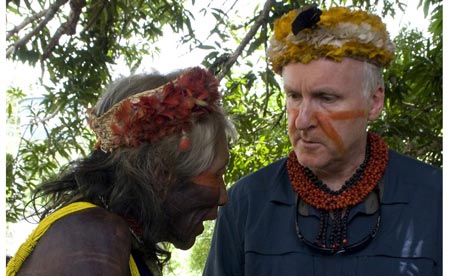
    Below:  "James Cameron talks to a Xingu leader in Brazil." (Atossa Soldani/EPA)

  • April 16, 2010

    Brainstorming Avatar 2 with Indians

    James Cameron Meeting With Brazilian Native Tribes To Brainstorm Avatar 2Where are you right now in production with Avatar 2?

    We are nowhere. We have a commitment that we want to make it. We have to work out a deal with Fox to make it. Fox wants us to make it. We've chosen on our own side to keep these people on as our team. We're continually thinking about it. We recently made a trip down to Brazil and learned a lot. Not just about the world and what's going on the issues there, but how it relates to Avatar and the world of Pandora. Jim meeting indigenous tribes down there, we are a culmination of our past experiences. And these experiences like in Brazil and presenting on the 24th, Avatar to the indigenous tribes United Nation here in New York. All of that is going to inform us about Avatar 2.

    What is the green message of Avatar?

    What I think people take away, or what it was intended to be—I think it's all different. What I think has happened, having been around the world with the film....The movie opens with eyes open, and it ends with eyes open. I think there's an awakening of people. It's something that they are more conscious of. I don't think they've necessarily figured it out for themselves.And the movie doesn't intend to preach. There are no facts, no information is being given. It just basically says, "Hey, this is something for you to think about. And for you to make your own choices." Someone said this to me—and I think this is really great—"After I saw Avatar, I noticed for the first time the oak tree that's been in my front yard for 15 years."
    Comment:  For more on the subject, see Dam Suspended with Cameron's Help and Indigenous Values in Avatar.