Showing posts with label Tecumseh. Show all posts

December 30, 2015

Atlantic's "influential" list omits Indians

Here's another list of the "top" Americans along with my comments:

Atlantic Magazine Listed the “100 Most Influential Figures in American History” And Didn’t Put a Single Native American on the List

A good list in some ways; a bad list in others.

They seem to have confused "important" and "influential." As these lists often do. They aren't the same thing.

They also seem to have confused the person and the accomplishment. The telegraph may have influenced the course of the country, but Samuel Morse didn't. Not enough to put him on the list.

They gave artists and "pop" celebrities short shrift. And despite Elvis, went mostly for establishment figures. Herman Melville? P.T. Barnum? Stephen Foster? William Faulkner? Louis Armstrong? How about Bob Dylan, John Wayne, Michael Jackson, Marilyn Monroe, or Michael Jordan? I'd put one or two of these choices against all five of Atlantic's choices in terms of influence.

The Native alternatives

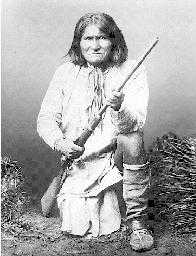
As for Natives, who would be the no. 1 choice? Perhaps Geronimo. From both sides--Native and non-Native--he must be the icon of Indianness. Natives see him as a savage resistance fighter determined to be free. Non-Natives see him as simply the ultimate savage.

Who else? Siting Bull? Pocahontas? I'm not sure how much they accomplished, but they were hugely influential as symbols. One or both of them could go on the list also.

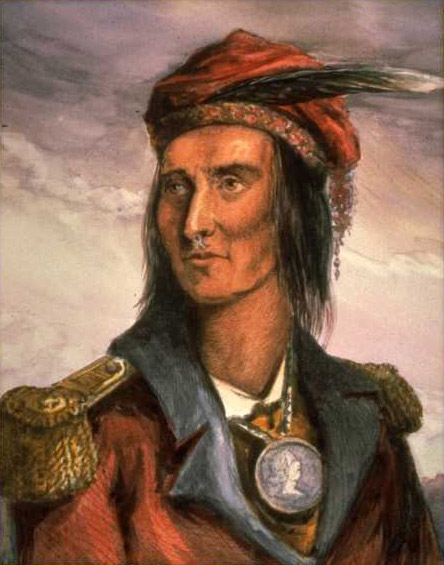
Tecumseh may qualify as the most accomplished Native in American history. But his accomplishment--building a widespread tribal coalition--fell apart at the end. So I'm not sure how much influence it had on the course of US history.

Anyone else? Sacagawea? She had one big accomplishment: keeping Lewis and Clark alive during the winter of 1805-6. But that was a single small role in a major expedition, and it's not clear how influential the expedition was. I wouldn't include her.

Jim Thorpe? He was hugely accomplished, but I'm not sure how his accomplishments influenced anyone else. Or changed the course of history. The historians may have been right to limit sports figures to people like Jackie Robinson and Babe Ruth.

The code talkers? Maybe if one of them had singlehandedly created and operated the group. But you can't have a group of 400 or whatever in a list like this. Otherwise you'd have to nominate George Washington's or FDR's Cabinet. Or the soldiers who landed at Normandy.

Why Indians?

Despite the "influential" tag, much of this list is about symbolism. For instance, Jackie Robinson didn't integrate baseball or other sports by himself. He's important as the first person to break the color--as a symbol of change. But if he hadn't been first, someone else would've been.

Like Neil Armstrong walking on the moon, Robinson didn't cause the change himself. He represented the forces of change working their way through society. He "influenced" history by being in the right place at the right time.

For the first century, most of America's "foreign" policy concerned the Indian question. Turner's Frontier Thesis argued that we defined ourselves in relation to the wild West--i.e., Indians. Taming the wilderness, turning "savagery" into civilization, is America's founding myth.

Symbolically, Indians loomed huge in our imagination. They played a much greater role than their actual numbers or accomplishments suggested. Therefore, you could easily argue for including one or more of them on the list. They were prominent for half our history, so they deserve some spots.

For more on the subject, see 100 Most Significant Americans? and Indians in the Celebrity 100.
December 23, 2011

Tecumseh stamp and freighter

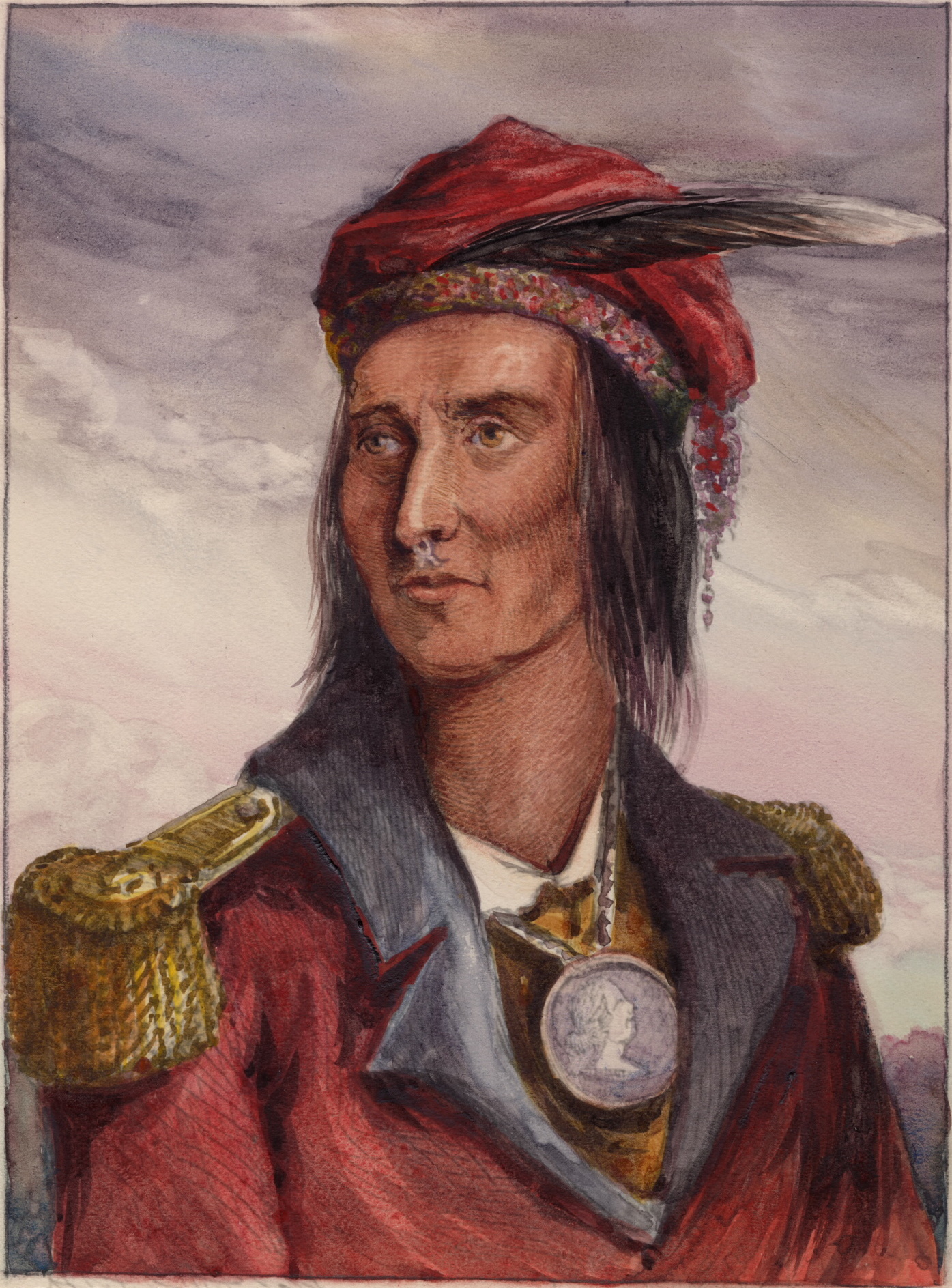
Tecumseh to Grace a Stamp, and a FreighterThe great Shawnee Chief Tecumseh, a key figure in the War of 1812, will be doubly honored during the bicentennial year of that conflict by both a stamp and a freighter. The former will bear his likeness, and the latter his name.

The stamp is scheduled to be unveiled in June, and at some point a Great Lakes freighter will be rechristened, champagne and all, with Tecumseh’s name, CBC News reports. Tecumseh joins First Nations musician Robbie Robertson, who had a stamp created in his honor last June.
Comment:  For more on Tecumseh, see War of 1812 Documentary and Cougars Named After Chiefs.

October 11, 2011

War of 1812 documentary

War of 1812 documentary offers aboriginal perspective

First Nations people were big losers in battle

By Randy Boswell
A new U.S. documentary, which was to be aired Monday, ahead of next year's bicentennial of the War of 1812 puts a different spin on the enduring debate over who won the historic battle between British Canada and the fledgling U.S., instead highlighting the unambiguous defeat suffered by North America's aboriginal nations as a result of the war.

The two-hour film, produced by the Buffalo, N.Y.,-based PBS affiliate that has millions of viewers in southern Ontario, casts the native allies of the British-Canadian forces--led by the heroic Shawnee chief Tecumseh--as fierce and effective fighters in resisting American invasion attempts.

But the resulting deadlock in the war, which left North America's borders intact after 2 1/2 years of fighting, also ended Tecumseh's dream of a confederation of Indian nations with large, secure territories and a status comparable to the British colonies and American states.

The documentary, simply titled The War of 1812, "clearly deals with the fact that the one group that lost heavily is the natives," Canadian military historian Peter Twist, a consultant on the film, told Postmedia News.
Comment:  For more on the War of 1812, see War of 1812 Bicentennial Without Indians?

August 12, 2011

Cougars named after chiefs

Big Cats at Cincinnati Zoo Named After Famous Chiefs

By Carol BerryThey were honored Native leaders—Tecumseh of the Shawnee and Chief Joseph of the Nez Perce.

Their 21st century namesakes in Cincinnati, Ohio are, however, furry members of the biological family felidae, which also includes cheetahs, tigers, and the domestic cat.

Appropriateness or lack thereof aside, the two male cougars in the Cincinnati Zoo named Tecumseh and Joseph are part of a new exhibit that will offer a close-up look at the cats, according to the Cincinnati Enquirer.
Below:  "The Cincinnati Zoo's Chief Joseph and Tecumseh were born September 19, 2010."

January 15, 2011

Tecumseh's presidential curse

I've heard of the so-called 20-year presidential curse before, but not that it was attributed to Tecumseh. Here's the scoop:

Curse of TippecanoeThe term Curse of Tippecanoe (also known as Tecumseh's curse, the presidential curse, zero-year curse, the twenty-year curse, or the twenty-year presidential jinx) is sometimes used to describe the pattern where from 1840 to 1960 each American President who had won election in a year ending in zero (such as 1880 or 1900) died in office. The pattern ended with Ronald Reagan, who won the presidential election in 1980, but did not subsequently die in office.

The curse

The curse, first widely noted in a Ripley's Believe It or Not book published in 1931, began with the death of William Henry Harrison, who died in 1841 after having been elected in 1840. For the next 120 years, presidents elected during years ending in a zero (occurring every 20 years) ultimately died while serving in office, from Harrison to John F. Kennedy (elected 1960, died 1963).
Tecumseh’s Curse and the Death of President Bush

By Ken KalbThere was a deep mystical tradition among the Shawnee Indians of the Ohio valley, embodied in the teachings and practices of a sage called "the Prophet," emboldened by his brother, the great Chief Tecumseh. Tecumseh felt that all Indians were one people, and insisted that only with the consent of all--could land rightly be ceded by or purchased from an individual tribe. For several years, he successfully journeyed from tribe to tribe, working with Indians of all sections to secure their cooperation in this great work of unification. Tecumseh was a daring visionary--a powerful orator, remarkable military chief, successful negotiator, and enthusiastic leader. Indeed, the flame of hatred for the white man burned in his heart, and he swore eternal vengeance against the white race for decimating his proud nation.

When the United States refused to recognize Tecumseh’s unification principle, he bound together the Native Americans of the Old Northwest, the South, and the Eastern Mississippi Valley as a military force to defend Native American rights to the land. His plan failed with the defeat of his brother, the Shawnee Prophet, at the battle of Tippecanoe in 1811. Although history reports the battle of Tippecanoe a draw, it nevertheless broke the power of the Shawnee, and became known historically as marking the collapse of the Native American military movement.

Legend transmits that after the historic battle of Tippecanoe, Tecumseh released prisoners with a prophetic message for General William Henry Harrison--a prophecy that has come to be known as--"Tecumseh's Curse."
A Plague on Your White House

The presidents killed by a Native American curse

By Nick Parkins
Legend tells that the wrathful chieftain now uttered a dire prophetic forewarning:

“Harrison will not win this year to be the Great Chief. But he may win next year. If he does… He will not finish his term. He will die in his office. You think that I have lost my powers. I who caused the Sun to darken and Red Men to give up firewater… I tell you Harrison will die. And after him every Great Chief chosen every 20 years thereafter will die. And when each one dies, let everyone remember the death of our people.”

Perhaps not surprisingly, accounts of the curse’s origin conflict. Some say it was born out of the defeat at Tippe­canoe; others claim that it was some time later, and that under the shadow of Tecumseh’s death the following year at the Battle of the Thames, it was Tenskwatawa who uttered the fateful words. The confusion doesn’t end there. Some say the curse is simply nonsense and that no records exist that support the existence of such a native Indian jinx. What is not in doubt is that the sinister malediction came to pass.
Comment:  So the "curse" may be a folktale someone made up decades after the fact...but it came true? Wrong. The curse didn't come true unless it existed in the first place, before Harrison's death, which no one can prove.

The Tecumseh book A Sorrow in Our Heart doesn't mention the curse. Author Allan Eckert has hundreds of pages of footnotes documenting how reliable each of his claims is. If he didn't think the curse was worth mentioning, you can bet there's no evidence Tecumseh uttered it.

As for the string of deaths, they're easily explained by mathematics. If you look at the series of American presidents, you literally can find millions of patterns. Maybe every fifth president was left-handed. Or every sixth president had a cat. Or every seventh president liked broccoli. And so forth and so on.

Let's say each of these patterns has only a one in a million chance of coming true. But there are at least a million of them. Therefore, it's almost certain that one of the million-to-one patterns will come true. The 20-year "curse" happened to be the one.

If it hadn't been this pattern, it would've been something else. For instance, every third president had a mailman named Mr. Brown. It's a coincidence, nothing more.

For more on Tecumseh, see 37th Outdoor Tecumseh Play and Freemasons, Washington, and Tecumseh.

July 10, 2010

The Aracoma Story

The Aracoma Story:  Historical drama rehearsals already underwayRehearsals are now underway for The Aracoma Story—Spirits & Legends summer production that will begin showing soon.

A cast of about 70 local residents from all across southern West Virginia are spending the next several weeks under the guidance of director Bill France, a press release from The Aracoma Story Inc., said.
What's the story about?

The Aracoma StoryLogan County, West Virginia, lays claim to one of America's most romantic legends, the story of Princess Aracoma. The story grew in Logan County around the authentic details of an incident in the history of the region more than 200 years ago.

The story asserts that Princess Aracoma and Boling Baker moved into this valley sometime close to the year 1760 and lived in peace on the island (today's City of Logan) until 1780.

"The Aracoma Story" blends tales of the Shawnee Indians with the story of young love. Boling Baker, a scout from General Braddock's Army, is captured by the Shawnee who are led by Chief Cornstalk. He is rescued from death by Cornstalk's daughter, Aracoma, and adopted into the tribe that moved to the island in the Guyandotte Valley. The drama tells how Baker and Aracoma's people were weakened by disease and how a raid, led by Baker to steal horses, ended in the destruction of this adoptive tribe.
Comment:  How many times have people told variations of the Pocahontas legend? I don't know, but with a couple centuries of "historical" legends, plays, novels, movies, comic books, and so forth, it seems like dozens.

I hope we're not supposed to believe any of these stories. Forget the obvious fact that few if any tribes had royalty such as "princesses." How is it that every legend involves a beautiful young chief's daughter saving a handsome young white man? What about all the times when the chief's grandmother or uncle or brother-in-law saved someone? What about all the times the person saved was a little girl, an old man, or a runaway slave? Did the Indians forget to record these legends?

Is Aracoma's story helpful?

I suspect the producers think they're helping Indians by telling this probably phony tale. But have they thought about the message they're sending? I'm guessing not.

Let's recap how the legend goes: Savage Indians capture civilized white man who's minding his own business. Indians look like monsters because they're willing to kill an "innocent." Only the intervention of a princess (more noble and honorable than the cutthroats around her) saves the princely white man.

And how does the story end? Judging by the summary, Baker's horse raid led to a deadly reprisal by settlers. So the virtuous white men simply overreacted to a nasty Indian attack. They weren't out to dispossess the Indians by hook or crook. They were minding their own business when the villainous Indians stole their property. Then they had to fight back.

In short, the Indians brought their misfortune on themselves. If they had just lived in peace like their white neighbors, they'd still dominate West Virginia. But they got greedy and suffered for it.

Life in Aracoma's land

I'm not sure if Aracoma and her people died in 1780. But Tecumseh, the famed Shawnee freedom fighter, was born in 1768 in nearby Ohio. He and the semi-historical Aracoma were contemporaries.

We don't know much about Aracoma's life, but here's what Tecumseh's early life was like:At least five times between 1774 and 1782, Tecumseh's village was attacked by colonials and later American armies as the Shawnee allied with the British during the American Revolutionary War. Following his father's death, his family moved back to Chief Blackfish's nearby village of Chillicothe. The town was destroyed in 1779 by Kentucky militia in reprisal for Blackfish's attack on Boonesburough. His family fled, and moved to another nearby Kispoko village, but their new home was destroyed the following year by forces under the command of George Rogers Clark. The family moved a third time to the village of Sanding Stone. That village was attacked by Clark in November of 1782, causing them to move again to a new settlement near modern Bellefontaine, Ohio.

Violence continued unabated on the American frontier after the American Revolution as the Northwest Indian War. A large tribal confederacy, known as the Wabash Confederacy that included all the major tribes of the Ohio and Illinois country, joined together to repel the American settlers from the region. As the war between the confederacy and the Americans grew, Tecumseh became a warrior and took an active part fighting along with his older brother Cheeseekua beginning at age fifteen. Tecumseh participated in several battles, including the 1794 Fallen Timbers, which ended the war in favor of the American settlers.
Did any of this make it into The Aracoma Story? I'm gonna go out on a limb and guess no.

What Aracoma tells us

The message of the Pocahontas Aracoma legend is this: White men came in peace. Savages who didn't understand the concept tried to kill them. The noble white man joined the Indians and tried to help them. And a few noble Indians tried to help the white man because his way was true.

Despite all this effort to save the savages from oblivion, they were doomed to fade away. Why? Because of diseases, misunderstandings, and a few overzealous white settlers. Federal and state policies, not to mention a culture of greed and entitlement, had nothing to do with it. It was an accident of fate that destroyed the Indians, not an avaricious Euro-American philosophy of conquest and genocide.

In short, the good whites and good Indians tried to save the bad Indians from the bad whites, but failed. The important thing to remember is they tried. Good Christian Euro-Americans did and do the right thing when given half a chance. Any failure on their part isn't their fault.

For more on the subject, see Pocahontas Bastardizes Real People and Tonto and the "Good Indian."

Below:  Non-Indian Laura Hatfield plays Princess Aracoma, further cementing the idea that Aracoma was as noble and pure as a white woman.

May 24, 2010

War of 1812 bicentennial without Indians?

Natives left out of War of 1812 bicentennial planning, groups sayNatives need to play an important role in celebrations marking the bicentennial of the War of 1812, say Parks Canada documents obtained by Canwest News Service, but First Nations groups say that isn't happening yet.

There are myriad references in 166 pages of documents to making sure natives and their "pivotal role" in the war to repel American invaders are properly recognized at historical 1812 sites and in interpretation centres.
And:But native groups say that is precisely what hasn't happened so far.

"Even if it's overdue, we welcome this," said Maurice Switzer, communications director for The Union of Ontario Indians, an advocacy group for 42 member First Nations across Ontario.

"The one thing that's important is that we do be engaged in the process. We don't want a bunch of non-native academics or civil servants deciding on what's the best way to do this. It's our history. Ask us."

Mr. Switzer says a perfect example of what is wrong with how the native role in the war has been underplayed is the famous Niagara-area memorial to British officer Sir Isaac Brock, who died resisting an American advance at the Battle of Queenston Heights in October 1812.

"One of the most memorable monuments in Canada is the one of Sir Isaac Brock overlooking Niagara River," he said. The statue is 56 metres high. "I knew there was a little marker somewhere on the park grounds," for the native role in the battle. "I couldn't find one staffer that could identify that location for me. Way down a hillside, all overgrown with moss and weeds, was a little teeny marker that acknowledges 'harassment' by Indians of the enemy. No specific names."

Mr. Switzer wonders if the government is reluctant to play up native involvement in helping build the country because it might strengthen land rights claims.

"It just sort of seems to take a long, long time to get around to admitting First Nations peoples [and] Aboriginal Peoples have played a big role in contributing to Canada being the successful country it is," he adds.

"It's quite likely that if it wasn't for the First Nations' support of leaders like Tecumseh . . . the flags that are flying over our public buildings in this country would probably be stars and stripes."
Comment:  Interesting how we keep seeing the same story over and over. Organizations promise to include Indians in planning celebrations and commemorations, then don't do it.

The British-Indian alliance is why many writers speculate that the Indians would've fared better under British rule.

For more on the subject, see Winning in Tecumseh's Vision.

July 12, 2009

37th outdoor Tecumseh play

Experience Tecumseh!

By CR RaeTecumseh truly was the ultimate experience. There were no arrows flying over head but the horses galloping past the audience, the battle scenes and the cannons firing from the top of the rocks took care of the excitement. Not only was it exciting but I learned a lot. I did not realize what a big part the Ohio Native Americans played in the history of our country.

The drama begins in southern Ohio near the banks of the Ohio River in 1784 and takes you through the life of the Shawnee and other Ohio tribes up to the year 1813. During that time Tecumseh dreamed of uniting all the Indians from the Gulf of Mexico to the Great Lakes into one Indian Nation. Governor of the Indian Territory, William Henry Harrison encouraged the older chiefs to sign a treaty that gave away three million acres of land for little money. That made Tecumseh angry and, well you are on your own to find out the rest of the story.

You might recognize the voice of the narrator, Graham Greene. He is a Native American actor best known for his Academy Award nominated performance as his role of Kicking Bird in Dances with Wolves.
Comment:  For more on the subject, see Ohio Plays Feature Indians and Native Plays and Other Stage Shows.

May 12, 2009

Freemasons, Washington, and Tecumseh

Newcomb:  Something missing from PBS’s ‘Tecumseh’s Vision’A couple years ago, when a woman from the production staff at WGBH in Boston called me at an early point in the project, I told her, “If you really want to tell the story of Tecumseh and his brother, then you need to accurately explain what they were up against.”

There is a fascinating back story leading up to Tecumseh’s remarkable campaign to unify the Indian nations. It traces to the Freemason founding of the United States. Some sense of this story is revealed in the book “The Secret Founding of America: The Real Story of Freemasons, Puritans, & the Battle for the New World,” by Nicholas Hagger (1998). This is not some crackpot “conspiracy theory,” it is the lesser known history of Freemasonry which is at the heart of the founding of the United States. It involves a well-conceived, long-range plan to take over and profit from the sale of all Indian lands in the Northwest Territory. The efforts of Tecumseh and his brother, and their allies, represent a concerted effort to stop this from happening.

George Washington (a freemason) plays a prominent role in the history. He had his eye on the Ohio Valley lands from the time he was young. He was a surveyor and land speculator, and other members of his family were also land speculators (his brothers were members of the Ohio Company). He referred to the United States as “our infant empire.”

Washington was the first to propose the colonization of the Ohio Valley, and he once said, “If the scheme of establishing a new government on the Ohio, in the manner talked of, should ever be effected, these must be the most valuable lands in it.”
Comment:  I don't agree that Tecumseh's Vision was missing something. Here's why:

1) The We Shall Remain episodes were packed with information already. There was little or no room to explore other aspects of Native history.

2) These episodes were supposed to be biopics--i.e., life stories told through the eyes of the participants. Tecumseh didn't know all the historical forces arrayed against him, so it would've been misleading to tell viewers about them.

3) These episodes were supposed to be snapshots of American (Indian) history, not a comprehensive review. They were meant to inspire people to learn more, not to tell them everything.

PBS could do a whole series on presidents and Indians--perhaps telling the stories of George Washington, Andrew Jackson, Abraham Lincoln, Teddy Roosevelt, and Richard Nixon. It would take another five episodes of 1.5 hours each to do the subject justice. Criticizing Tecumseh's Vision for not telling Washington's story is like criticizing a Washington documentary for not telling Tecumseh's story.

For more on the subject, see Review of Tecumseh's Vision.

May 01, 2009

Final quotes in Tecumseh's Vision

Concluding the discussion of Tecumseh's Vision, the second episode of PBS's We Shall Remain series:

A couple of historian quotes explain why Tecumseh is so memorable:Tecumseh is saved by his death for immortality. One of the great things in icons is to bow out at the right time. Tecumseh never lets you down. He bows out at the peak of this great movement he's leading.And:I think one of the things that is so important about Tecumseh is that he is a person who by his vision, and by his personality, and by the way he conducts himself, gives us glimpses of humanity at his best. That in the most difficult of situations--in the most hopeless of situations, perhaps--people can have the courage to stand up and fight for what they believe in. Courage in the face of adversity: Tecumseh personifies it.In an online poll conducted a few years ago, Native and non-Native respondents picked Leonard Peltier as the greatest Indian ever. I was thinking, "Are you out of your freakin' minds?" How does someone who has stoically endured a prison sentence compare to someone who almost led a confederation of Indians to victory over the USA? I'm not sure who would be the second choice--Sitting Bull? Crazy Horse?--but Tecumseh seems a clear choice for no. 1.

For more on the subject, see Winning in Tecumseh's Vision and Review of Tecumseh's Vision.

April 30, 2009

Winning in Tecumseh's Vision

Continuing the discussion of Tecumseh's Vision, the second episode of PBS's We Shall Remain series:

I was under the impression that Tecumseh suffered one major defeat--when his brother Tenskwatawa launched an ill-advised attack on William Henry Harrison's forces in Tecumseh's absence.

But I learned there were four turning points, not just one, from Tecumseh's Vision. Had the circumstances been different at any of these points, Tecumseh could've won--or at least kept fighting--against the Americans.

This reinforces what I said in Outcome of After the Mayflower--that Indians had many chances to stave off the Euro-American onslaught. They couldn't have defeated the foreigners outright, but they could've stymied them enough to make a coexistence compromise possible.

In all these cases, remember the context. The Americans had superior numbers, better weapons, and immunity to disease. Yet the Indians held their own under these adverse conditions. Any delay in an American victory gave the Indians more chances to rebuild their forces and fight another day.

The four turning points I noted in Tecumseh's Vision:

  • The Shawnee and their allies kept US forces on run in the Northwest Territory for six years--1788 to 1794. They were doing well until a disastrous loss at the Battle of Fallen Timbers. A well-planned retreat turned into a rout when the Indians' British allies locked them out of Ft. Miami.

  • The loss resulted in the Treaty of Greenville, which forced the Indians to give up the southern two-thirds of the Ohio Valley. As Wikipedia notes:One veteran of Fallen Timbers who did not sign the Greenville treaty was a young Shawnee war leader named Tecumseh, who would renew Indian resistance in the years ahead.The US troops were led by General "Mad Anthony" Wayne, whom I believe was a ruthlessly effective leader. At one point a tree fell on his tent and knocked him unconscious, but he recovered and carried on.

    If the British hadn't betrayed their Indian allies, or if Wayne had died from the falling tree or a stray bullet, the outcome might've been different. There would've been no Treaty of Greenville, and the Indians would've fought from a position of strength rather than weakness.

  • The aforementioned defeat--aka the Battle of Tippecanoe near Prophetstown in August 1811. Tecumseh told his brother Tenskwatawa not to do anything while he was gone rallying tribes to the cause. But the Western tribes in the confederacy didn't want to wait for Tecumseh's return. They urge a preemptive strike. Tenskwatawa bowed to the pressure and ordered a pre-dawn attack.

  • A noise apparently alerted a sentry at 4 am. He roused the troops and they forced the Indians to retreat and scatter. Then the troops marched on Prophetstown and burned it to the ground. So the Americans "won" even though they may have suffered more casualties, according to one historian.

    We can imagine several scenarios in which the Indians could've avoided or turned this battle. If Tenskwatawa had held firm to his brother's orders. If Tecumseh had had a trusted military aide whom he could've left in charge. If the sentry hadn't heard the Indians approach. If a stray arrow or bullet had killed William Henry Harrison.

    Though the loss smashed Tecumseh's confederacy, he was able to regroup the tribes in a year's time. At the beginning of the War of 1812, his position was as strong as before.

  • Tecumseh sold the British on the goal of reacquiring the Ohio Valley and they became allies again. Working with the aggressive General Brock, Tecumseh achieved "military brilliance" in the summer of 1812, forcing the Americans back.

  • According to Tecumseh's Vision, Tecumseh's finest hour was capturing Fort Detroit in 1812, which he and Brock masterminded together. A key trick was parading the same small group of fighters through a forest clearing to make the allied forces seem much larger. The Americans surrendered almost before the fighting began.

    As one historian put it:An independent Indian territory supported by the British was on the brink of becoming a reality.But Brock was killed in another battle in New York. Procter, the new British commander, was much less aggressive. He was interested only in defending Canada, not in defeating the Americans. Tecumseh had to goad him into action.

    If Brock had lived, the British/Indian forces might've continued their winning ways.

  • The British lost the Battle of Lake Erie and wanted to abandon Detroit. Tecumseh demanded that they stand and fight. But Procter retreated, offering little resistance along the way. As Wikipedia put it:The British retreat was badly managed, and the soldiers had been reduced to half rations. The British soldiers were becoming increasingly demoralized, and Tecumseh's warriors grew even more impatient with Procter for his unwillingness to stop and fight, giving Procter reason to fear a mutiny by the warriors.
  • The final betrayal occurred October 5, 1813, when the British abandoned their allies. Tecumseh fought on and was killed. His body was mutilated beyond recognition by Harrison's Kentuckians.

    This Battle of the Thames was "the final battle for control of the Great Lakes." But things might've been different if Procter hadn't bungled that final retreat, if he hadn't given up altogether, if he had stood and fought. Or if Tecumseh had survived the battle, or chosen a strategic retreat. (Tecumseh's Vision implies he wanted to go down fighting.)

    Even if the British and Indians lost the war, Tecumseh was only 45. He could've gone on organizing tribes for another 20 or 30 years. Imagine his convincing the Cherokees to resist the Trail of Tears relocation and instead fight back under his leadership.

    The short version of this long-winded posting is that no, Native defeat wasn't inevitable. There were a dozen scenarios in which Tecumseh could've won or staved off defeat for years if not decades. With a little luck, he could've been the central figure of 19th-century US history, not Andrew Jackson or Abraham Lincoln.

    For more on the subject, see Confederacy in Tecumseh's Vision and Review of Tecumseh's Vision.

    Below:  A speculative depiction of Tecumseh's death at the hands of Richard M. Johnson.

    April 29, 2009

    Confederacy in Tecumseh's Vision

    Continuing the discussion of Tecumseh's Vision, the second episode of PBS's We Shall Remain series:

  • Tecumseh's brother Lalawethika had a vision and was reborn as Tenskwatawa ("open door"). He stopped drinking and started preaching that Indians should make themselves whole by rejecting Western influences. That they should restore themselves by reviving their Indian cultures and identities.

  • Tecumseh saw that he could use this vision to reunify his people. He parlayed Tenskwatawa's preaching into a pan-Indian organizational scheme. But until war broke out, it was actually Tenskwatawa's movement, and Tecumseh was in his brother's shadow.

  • The movement sent shock waves through Indian country. Many tribes, even the brothers' own Shawnee, were divided. Some saw the brothers as self-serving power seekers.

  • William Henry Harrison wrote a letter to the Delaware Indians, telling them to demand proof of Tenskwatawa's prophetic power. Tenskwatawa responded by correctly predicting an eclipse.

  • Is this the first time someone predicted an eclipse to intimidate people since Columbus did it in 1504? Could be. Good to see this hoary literary device has some basis in reality.

  • A prophecy supposedly uttered by Tenskwatawa to his followers:They have taken away your lands which were not made for them. The whites I have placed on the other side of the Great Water, to be another people, separate from you. In time, I will overturn the land, so that all white people will be covered, and you alone shall inhabit the land.
  • Apparently speeches like this caused the US government to panic. As one historian nicely put it:By 1807 most Americans assumed an orderly process of dispossession and conquest, in which Native Americans would gradually recede from the picture, or assimilate into American society.Boo-hoo! Genocide not going as quickly as you wished? Send in the Indian killers (troops).

  • In 1809 Tecumseh began the first of his epic tours from Alabama to Canada. He offered a novel argument--that the land was held in common by all Indians. That no one tribe could cede it without the permission of the others.

  • As one historian noted, Tecumseh had a much tougher job than the Founding Fathers. They had to unite 13 colonies with central governments and a common language and heritage. He had to unite dozens of tribes with different cultures and languages.

    Moreover, many of the leaders he dealt with ruled only villages, not whole tribes. Getting the support of one band of Indians didn't necessarily mean the neighboring bands would agree.

  • In his 1810 confrontation with Harrison, Tecumseh did something never done before, according to one historian:He stood up, defended Indian land, and said he represented every Indian on the continent.

    He understood that Native American peoples were in a particular historical predicament, and he was articulating that predicament, and was doing it for all of them.
    Sounds like my kind of guy. He reasoned his way to a sound conclusion--that Indians should unite--and said so. He didn't worry if some people might disagree with him because his position was logical and rational.

    An equivalent today might be a Native intellectual arguing that mascots and other stereotypes harm Indians. It doesn't matter if some Indians (and many non-Indians) don't get it. The facts and evidence prove this argument to be true whether people get it or not.

    For more on the subject, see War Footing in Tecumseh's Vision and Review of Tecumseh's Vision.

    Below:  Tenskwatawa by Charles Bird King.

  • April 28, 2009

    War footing in Tecumseh's Vision

    As with After the Mayflower, I've read books about the events of Tecumseh's Vision. But the second episode of the PBS series We Shall Remain really brought the story alive for me. Again, it was a thought-provoker and anyone interested in Native history should see it.

    For a fuller account of Tecumseh, see such postings as:

    Tecumseh
    Tecumseh's War
    Tecumseh's Confederacy

    Here are some bits and pieces of Tecumseh's backstory and my thoughts on them:

  • Tecumseh was a "man who led a revolution of young men," according to one historian. "Young men who were tired of the accommodationist stance of their elders."

  • Good point. I wonder how often a generation gap played a role in the Indians' response to the Euro-Americans. We've often seen depictions of wise elders counseling caution and patience and young warriors demanding immediate action, but how real was this? And which approach worked better in the long run?

  • When Tecumseh walked into room, according to a historian, people would stop talking and stare at him. He had such an aura of leadership and respect that even his enemies admired him.

  • "Tecumseh," pronounced Te-cum-theh by some, meant "shooting star" or "crouching panther" according to Wikipedia. A Shawnee in Tecumseh's Vision notes that the Shawnee considered falling stars to be panthers jumping among the stars.

  • "Lalawethika," the name of Tecumseh's brother, meant "the noise maker" according to a historian or "one with open mouth" according to Wikipedia. The historian says we'd translate this as "loudmouth."

  • In 1801 Thomas Jefferson wrote:
  • The American settlements will gradually circumscribe and approach the Indians, who will in time either incorporate with us as citizens of the United States, or remove beyond the Mississippi.There you have it: the "great" Founding Father's statement of genocidal intent. Unless the Indians commit cultural suicide, we'll commit cultural homicide. We'll push them into the badlands, into the desert, into the sea until they're gone.

  • The Americans pushed the so-called "factory system" on the Indians. They established forts throughout the Ohio territory to promote a trade system of furs for goods. This eventually made Indians into debtors of the US. They could pay their debts only by ceding land.

  • After the Mayflower also mentioned an English effort to force Indians into debt. Hmm. People haven't reported a lot on the role of economic pressure in subjugating Indians. There's probably much more to be said about this subject.

  • The influx of settlers kept the Indians on a constant war footing. The loss of Indian men led to broken homes and communities. Having twice as many women as men put kinship systems under stress. Diseases flourished and spread under these conditions.

  • No wonder the Indians experienced feelings of despair and turned to alcohol for relief. Yet genocide apologists still claim that Western civilization was and is inherently "superior"? The only superiority I see here is the superiority of numbers. The greedy land-grabbers were like an unstoppable plague of locusts.

    For more on the subject, see Native Documentaries and News.

    April 27, 2009

    Review of Tecumseh's Vision

    Still a week late, here's my review of Tecumseh's Vision, the second episode of the PBS series We Shall Remain. In this part I'll concentrate on the storytelling aspects.

  • Although this episode is an hour and 20 minutes, or a bit longer than the first episode, it doesn't lag.

  • The credits say this episode was written and produced by Ric Burns and directed by Burns and Chris Eyre. So it's basically a white man's production.

  • A few shifts in tone and style from After the Mayflower are evident.

    1) Although Burns uses recreations throughout the episode, he shoots them at a distance...through tall grasses or smoke...out of focus...or using quick cuts. Clearly, as Burns said, he doesn't want us to take these recreations too literally.

    This technique doesn't hurt any, but I don't think it helps any either. I'd say Eyre was right to try for a more realistic look in After the Mayflower.

    2) Most of the narration is done by white historians, not by Benjamin Bratt or the actors. They tend to focus on the main characters and events and not on the Indian cultures.

    Between the impressionistic recreations and the white-man narrators remove us a step from knowing the Native characters intimately. But I'd still say Tecumseh's Vision seems to unfold through Native eyes. There's no obvious bias toward a Euro-American point of view.

  • Once again, everything looks and feels authentic to the untrained eye.

  • Michael Greyeyes does a fine job as Tecumseh. So does Billy Merasty as Tenskwatawa. Greyeyes should be the go-to guy every time Hollywood needs an intense Indian actor in his 30s.

  • A couple of times the production uses screeching hawks--once when young Tecumseh is running through the grass and once when his brother is reborn as Tenskwatawa. No more hawk cries, please.

  • In their joint statement to PBS, the Wampanoag leaders wrote:PBS in its support and broadcasting of this production has given credence to a radically altered interpretation of the great Shawnee Chief Tecumseh’s 1811 declaration to President James Madison’s messenger by deleting its land based implication. “We Shall Remain” implies a call for pity and does not carry the same declaration and meaning as “… AND HERE, WE SHALL REMAIN.”I don't quite understand this complaint. Are they claiming that removing the two words "and here" radically changes the meaning? Even if that were true, it's irrelevant. Tecumseh's Vision has Tecumseh saying what I presume is the whole line:The Master of Life has appointed this place for us to light our fires, and here we shall remain.Sounds like a land-based declaration to me.

    Conclusion

    Anyway, Tecumseh's Vision is an excellent documentary. It has the same virtues as After the Mayflower, but not its slow start. After watching this documentary, you'll understand why some people consider Tecumseh the greatest Native leader ever.

    Rob's rating:  9.0 of 10.

    For more on the subject, see Native Documentaries and News.


  • March 19, 2008

    Chris Eyre does Tecumseh

    Chris Eyre is apparently filming "We Shall Remain: Tecumseh," a historical drama set in Ohio.

    Myspace interview with Adoesha--"We Shall Remain: Tecumseh"The movie "We Shall Remain: Tecumseh" was shot in Indiana where the Shawnee were really from before they were removed to the Midwest. Some of the film footage done were actually shots where the Shawnees had the last battles with the American soldiers. I played Tecumseh’s brother's wife, and Michael Greyeyes was Tecumseh. Other native actors was Lawrence Santiago and Leland Chapin to name a few. I tell you Michael is a hoot. He loves to crack jokes and keep the energy on the set going, even if some of his jokes were dry. Hee hee. I really enjoyed watching him say his lines and how much he gave depth in respect on the Tecumseh’s words.

    I told Chris that truly I am honored to be a part of this film. I appreciated him directing this film because he knows how important it is to tell the truth to what he is a part of. A lot of non native directors in the past as you know didn’t tell truth to Native films. Plus, on this film they had fluent Shawnee tribal elders leaders flown in to be a part of this project and where right there talking to the Directors up on history.
    Comment: I corrected some misspellings in this posting to make it more readable.

    Hmm. I thought Chris Eyre said he was never going to do a historical drama because such a movie stereotypes Indians as people of the past. Maybe I misunderstood him.

    Oh, yeah. Here's what I quoted him saying in Too Many Serious, Sad Stories: "I don’t see the value in films that show the past. They all end the same way—the Indians die."

    Do the Indians triumph in Tecumseh's story? Er, no. But maybe Eyre's movie is a what-if fantasy in which Tecumseh wins.

    For more on the subject, see The Best Indian Movies.