Showing posts with label pop icons. Show all posts

December 30, 2015

Atlantic's "influential" list omits Indians

Here's another list of the "top" Americans along with my comments:

Atlantic Magazine Listed the “100 Most Influential Figures in American History” And Didn’t Put a Single Native American on the List

A good list in some ways; a bad list in others.

They seem to have confused "important" and "influential." As these lists often do. They aren't the same thing.

They also seem to have confused the person and the accomplishment. The telegraph may have influenced the course of the country, but Samuel Morse didn't. Not enough to put him on the list.

They gave artists and "pop" celebrities short shrift. And despite Elvis, went mostly for establishment figures. Herman Melville? P.T. Barnum? Stephen Foster? William Faulkner? Louis Armstrong? How about Bob Dylan, John Wayne, Michael Jackson, Marilyn Monroe, or Michael Jordan? I'd put one or two of these choices against all five of Atlantic's choices in terms of influence.

The Native alternatives

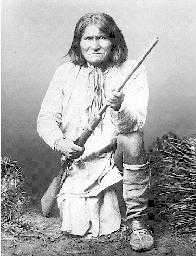
As for Natives, who would be the no. 1 choice? Perhaps Geronimo. From both sides--Native and non-Native--he must be the icon of Indianness. Natives see him as a savage resistance fighter determined to be free. Non-Natives see him as simply the ultimate savage.

Who else? Siting Bull? Pocahontas? I'm not sure how much they accomplished, but they were hugely influential as symbols. One or both of them could go on the list also.

Tecumseh may qualify as the most accomplished Native in American history. But his accomplishment--building a widespread tribal coalition--fell apart at the end. So I'm not sure how much influence it had on the course of US history.

Anyone else? Sacagawea? She had one big accomplishment: keeping Lewis and Clark alive during the winter of 1805-6. But that was a single small role in a major expedition, and it's not clear how influential the expedition was. I wouldn't include her.

Jim Thorpe? He was hugely accomplished, but I'm not sure how his accomplishments influenced anyone else. Or changed the course of history. The historians may have been right to limit sports figures to people like Jackie Robinson and Babe Ruth.

The code talkers? Maybe if one of them had singlehandedly created and operated the group. But you can't have a group of 400 or whatever in a list like this. Otherwise you'd have to nominate George Washington's or FDR's Cabinet. Or the soldiers who landed at Normandy.

Why Indians?

Despite the "influential" tag, much of this list is about symbolism. For instance, Jackie Robinson didn't integrate baseball or other sports by himself. He's important as the first person to break the color--as a symbol of change. But if he hadn't been first, someone else would've been.

Like Neil Armstrong walking on the moon, Robinson didn't cause the change himself. He represented the forces of change working their way through society. He "influenced" history by being in the right place at the right time.

For the first century, most of America's "foreign" policy concerned the Indian question. Turner's Frontier Thesis argued that we defined ourselves in relation to the wild West--i.e., Indians. Taming the wilderness, turning "savagery" into civilization, is America's founding myth.

Symbolically, Indians loomed huge in our imagination. They played a much greater role than their actual numbers or accomplishments suggested. Therefore, you could easily argue for including one or more of them on the list. They were prominent for half our history, so they deserve some spots.

For more on the subject, see 100 Most Significant Americans? and Indians in the Celebrity 100.
May 24, 2015

100 most significant Americans?

Last year the Smithsonian magazine tried to pick the 100 most significant Americans. This kind of exercise is popular, of course. You can find top 10 or 100 lists of almost any kind of person: presidents, rock stars, athletes, et al.

I did my own ranking of pop-culture icons back in 2004. Now inevitably out of date, alas.

Let's see how the Smithsonian did:

Meet the 100 Most Significant Americans of All Time

A new, special issue of Smithsonian magazine attempts the impossible: to list out the most significant people in United States history

By T.A. Frail
Skiena and Ward would be the first to acknowledge that their method has limitations. Their concept of significance has less to do with achievement than with an individual’s strength as an Internet meme—how vividly he or she remains in our collective memory. The English-language Wikipedia favors Americans over foreigners, men over women, white people over others and English speakers over everyone else. In their rankings of Americans only, past presidents occupy 39 of the first 100 spots, suggesting an ex-officio bias.

That’s where we come in. Smithsonian magazine has been covering American history in depth from its inaugural issue, published in 1970. Among the Smithsonian Institution museums we work closely with is the National Museum of American History. By synthesizing our expertise with the systematic rigor of Skiena and Ward’s rankings, we sought to combine the best of quantitative measures and qualitative judgment.

First, we asked Skiena and Ward to separate figures significant to American history from the world population. Then, rather than simply taking their top 100, we developed categories that we believe are significant, and populated our categories with people in Skiena and Ward’s order (even if they ranked below 100). This system helped mitigate the biases of Wikipedia.
Comment:  A few notes on the Smithsonian's approach:

  • The methodology used amounts to "most prominent on the Internet." This translates to something like "most popular" or "most memorable," not "most significant." It's silly to suggest popularity equals significance.

  • The body of the article redefines the headline: from "most significant Americans" to "figures most significant to American history." That justifies including Europeans who explored the continent before America existed.

  • It also would justify including people who never set foot in America--anyone from Jesus to Hitler. But never mind.

    Here are the Smithsonian's 10 categories and the Native people who made the list:

    Trailblazers
    Sacagawea

    Rebels & resisters
    Tecumseh
    Sitting Bull

    Presidents

    First women
    Pocahontas

    Outlaws

    Artists

    Religious figures

    Pop icons

    Empire-builders

    Athletes
    Jim Thorpe

    Five of 100 isn't bad considering Natives make up only 1-2% of the US population. Of course, they formed a majority of the continent's inhabitants as late as 1750, so perhaps they deserve five slots.

    I'd actually take out Sacagawea and Pocahontas because I don't think they were that important in the grand scheme of things. I might add Geronimo for his fearsome reputation. Maybe Will Rogers depending on how popular he really was.

    Poorly chosen categories

    The biggest problem with the Smithsonian's list is its choice of categories. There's no category for scientists and inventors, or intellectuals and writers. These are major omissions.

    Furthermore, why outlaws, athletes, or artists? Was Billy the Kid or Secretariat really significant in US history? I don't think so.

    I imagine someone at the Smithsonian thought outlaws would be more exciting than scientists, and athletes more exciting than intellectuals. I doubt the Smithsonian could justify these choices on the basis of significance to US history.

    Here's how I'd redefine the category to reflect significance, the supposed subject of this exercise, rather than popularity, marketability, or whatever criterion the Smithsonian used.

    Trailblazers
    Rebels & resisters
    Presidents
    Military & political leaders
    First women
    Intellectuals & writers
    Social reformers
    Outlaws
    Artists
    Architects, artists, & musicians
    Religious figures
    Pop icons
    Athletes, entertainers, & pop icons
    Empire-builders
    Scientists & inventors
    Athletes

    Some explanations:

    I don't particularly like the "Trailblazers" category. I'd take out Columbus and Vespucci because they never set foot in America. Besides, if you include them, why not King Ferdinand and Queen Isabella, Sir Francis Drake, Hernán Cortés, or King George III?

    In any case, I'd take out a few other "trailblazers" and replace them with the Spanish and other explorers who helped colonize the West.

    I'd probably include most of the people in the "Rebels & resisters" category, but they'd have to fit into "Military & political leaders," "Intellectuals & writers," or "Social reformers." These categories would create room in "Military & political leaders" for generals such as William Tecumseh Sherman or Dwight D. Eisenhower and politicians such as Henry Clay or John C. Calhoun.

    The biggest omission must be scientists and inventors: Benjamin Franklin, Eli Whitney, Robert Fulton, Samuel Morse, Alexander Graham Bell, the Wright brothers, Albert Einstein, J. Robert Oppenheim, Wernher von Braun, Margaret Sanger, Jonas Salk, James D. Watson and Francis Crick, et al.

    You could argue for or against any of these...but really, none of them made the top 100? How about most or all of them instead?

    As for the omitted categories: Sorry, first women...you'd have to be significant in another category to qualify. Sorry, outlaws and athletes...you'd have compete in the category with other pop icons. In either case, if you're not significant enough, you're out.

    I don't think my categories would lead to any more Natives making the list. But something like a quarter or a third of the entries would change. The results would reflect "significance to American history" much better.

    January 05, 2012

    Time afraid to name Person of Year

    Where’s Time Magazine’s Cojones?

    By Ruth HopkinsTime magazine selected “The Protestor” as its 2011 Person of the Year. The seminal publication’s decision as to who or what is worthy of the title of Person of the Year is based upon what person or thing they feel most influenced the news and global culture over the past year. Time said protestors involved in The Tea Party Movement, The Arab Spring, Occupy Wall Street and other demonstrations across Europe and the U.S. “redefined people power” and changing the shape of global politics.

    I’m hardly dazzled by their selection. As a native woman I’m turned off by anything that appears half-hearted or cowardly. By naming “The Protestor” as its Person of the Year, Time attempted to appease the masses by using a nonspecific catch-all descriptor. In reality such a short-sighted, anesthetized, blanket acknowledgement only serves to water down the potency of the historic, meaningful deeds of those it meant to honor. Time pulled this stunt before: most recently in 2006, when it named “You” its Person of the Year, meaning the millions of people who anonymously contribute user-generated web content to Wikipedia, YouTube, MySpace (remember Myspace?), Facebook, and other similar websites, cause you know, we, i.e. “You” use the internet and occasionally buy magazines and stuff. What’s the point of selecting a Person of the Year if millions of people, all with different motives and levels of sincerity, are lumped together into one faceless heap? It’s like giving everyone in class an ‘A’ regardless of whether or not they turned in their homework or studied for the final.
    Hopkins names some alternatives to "The Protestor":Mohammed Bouazizi, a Tunisian street vendor, would have been a good choice for Time’s Person of the Year. He was the catalyst for the Tunisian Revolution and the Arab Spring. Conditions in the Arab world have been ripe for revolution for awhile, but it was when Mr. Bouazizi set himself on fire after a policewoman confiscated his unlicensed vegetable cart, spat on him, and insulted his dead father, that his countrymen decided they could take no more. Mohammed had gone to the local authorities to object to his mistreatment, but they refused to see him. When he died in the hospital several weeks later, the Tunisian people took to the streets. As a result, then-President Zine El Abidine Ben Ali stepped down after 23 years in power.

    Indian Country presented its own heroes in 2011. Debra White Plume, a Lakota grandmother, has become a prominent figure in the Environmental movement. She protests uranium mining on Tribal lands, and was arrested at the White House during protests against the Keystone XL pipeline this year. 102 years after his death, Geronimo made international headlines after it was revealed that his name was used as a code for Osama bin Laden in the Navy Seal operation to dispose of the terrorist. There was a public outcry throughout Indian country and the world, yet President Obama refused to issue an apology for the slight. If Time magazine intended to honor the spirit of defiance of protestors, they could have done no better than naming Geronimo their 2011 Person of the Year.
    Comment:  For more on Indians as pop icons, see Indians in the Celebrity 100 and No Time for Indians.

    Below:  An alternate cover for Time magazine's announcement. Since I protest more than almost anyone, I should've been Time's Person of the Year.

    February 09, 2010

    Indians in the Celebrity 100

    Here's Forbes magazine's listing of its Celebrity 100:

    The Celebrity 1001  Angelina Jolie 27 3 5 3
    2  Oprah Winfrey 275 4 8 2
    3  Madonna 110 9 6 8
    4  Beyonce Knowles 87 2 20 16
    5  Tiger Woods 110 54 4 4
    6  Bruce Springsteen 70 32 19 25
    7  Steven Spielberg 150 48 26 48
    8  Jennifer Aniston 25 6 30 21
    9  Brad Pitt 28 11 7 6
    10  Kobe Bryant 45 53 10 15
    11  Will Smith 45 37 18 17
    12  Dr. Phil McGraw 80 74 55 10
    13  Britney Spears 35 10 16 11
    14  David Letterman 45 35 36 9
    15  Coldplay 70 64 17 57
    16  Adam Sandler 55 25 43 44
    17  Harrison Ford 65 13 48 75
    18  Michael Jordan 45 19 33 39
    19  LeBron James 40 58 15 27
    20  Tom Cruise 33 33 13 19
    21  Bon Jovi 50 20 57 50
    22  Donald Trump 50 57 47 26
    23  Rush Limbaugh 54 80 45 22
    24  George Lucas 170 71 65 85
    25  Simon Cowell 75 62 97 40
    Comment:  The four numbers following the name are Pay ($mil), Web Rank, Press Rank, and TV Rank.

    Annie of NativeCelebs says:I only saw one bona fide Native on that list (I skimmed quickly, so may have missed a name or two): Carrie Underwood (no. 75). She's enrolled. OK, so Tiger Woods, Cameron Diaz, Angelina Jolie are rumored to be part Native.As I said in Questions About Carrie Underwood, her enrollment status is doubtful. It may be more correct to say there are no Natives on the list.

    Beyoncé is another one who's part Native, and there may be others. If you add up these few "part Natives," you could say about 1-1.5% of the list is Native. That's roughly the proportion of full and part Natives in the US.

    So we can't complain too much. But it's kind of a shame that there isn't an established Native on the list: someone like Wes Studi, Adam Beach, or Chris Eyre.

    Annie adds, "BTW, where's Johnny Depp?" Looks to me like the list is some sort of weighted average of the four columns. Depp could have a bad ranking in the Press and TV categories.

    I'm not sure this list tells us much. It's Forbes idea of who's the biggest celebrity based on a combination of earnings and Web, press, and TV rankings.

    For more on the subject, see Debating Carrie Underwood and The 200 Greatest Pop Culture Icons.

    July 18, 2008

    Natives not on Canada's list

    First Nations added to list of defining Canadian iconsThe list, commissioned by Citizenship and Immigration Canada and the Dominion Institute, was compiled from the responses of more than 3,000 Canadians who were asked to identify those people, places, events, accomplishments and symbols that best define Canada.

    "The top symbols were the Maple Leaf, the beaver, the Canadian flag," said Marc Chalifoux, executive director of the Dominion Institute.

    "Aboriginal culture, in my view—it was a really surprising element that was missing from the list. The survey was quite exhaustive."

    After the original list was finalized, the project's website posed the question: Tell us what's missing?

    "What's nice is to see that, when Canadians were asked what was missing from the list of 101, that's what came in as the first choice, the most glaring omission," Chalifoux said.

    As a result, the institute announced Tuesday that aboriginals would take the 102nd spot. They will also be included in 101 Things Canadians Should Know About Canada, a book scheduled for release in the fall.

    Ontario Regional Chief Angus Toulouse called it "disappointing" that aboriginals didn't make the original list. A lack of proper education in Canadian schools about the role First Nations played in building the country could be to blame, Toulouse said.

    For many Canadians, aboriginals remain "out of sight, out of mind," he said.
    Comment:  Here's the original list of 101 Things Canadians Should Know About Canada.

    "Just over 1.3 million people reported having at least some Aboriginal ancestry in 2001, representing 4.4 % of the total population," according to Statistics Canada. Therefore, four or five items on the list should've been Aboriginal. "Space exploration" made the list--because Canadians are so famous for that--as well as "Olympics," "2010 Vancouver Olympics," and "Olympic Stadium." But there wasn't room for Natives.

    Did the organizers throw out the vote because it was ridiculously biased and Eurocentric? Did they apologize to Canada's First Nations for the gross oversight? No, they held another vote, with no guarantee it would rectify the situation. Here's how it went:

    Aboriginal Canadians Voted # 102On June 30, 2008 with the launch of 101 Things Canadians Should Know About Canada, we invited Canadians to vote for the one person, place, symbol, event or accomplishment that they believed was missing from the list of 101 things generated by Ipsos-Reid.

    More than 4,000 Canadians logged on and cast a vote. They selected Aboriginal Canadians as the missing topic. In total the Institute received more than 400 topics from online visitors.

    The Dominion Institute will include a write-up on Aboriginal Canadians in our Key Porter Books publication to be released in October 2008.

    Aboriginal Canadians
    (114 votes)

    Canada "Eh?"
    (96 votes)

    Strong and Free
    (86 votes)
    Whew...close call. "Aboriginal Canadians" barely made it onto the list, followed closely by the word "eh?" What else was on the list: "duh," "I dunno," and "whatever"? Nice to see how insignificant Natives are in most Canadians' minds.

    Of course, the results would be roughly the same in the US. Indians would deserve 4-5 spots on an American list of things Americans should know. But I wouldn't be surprised if they got zero votes.

    In reality, something like "cowboys and Indians" should make the list. There also should be several items that are implicitly about Indians: e.g., Columbus, the Pilgrims, Thanksgiving, pioneers, the Wild West, etc. I'd say an entry for each of the nation's major minorities--blacks, Hispanics, Asians, American Indians--would be appropriate.

    For more on the subject of popular icons, see The 200 Greatest Pop Culture Icons.

    May 20, 2008

    No Time for Indians

    Tim Giago claims "The 2008 Time 100: The World's Most Influential People" unfairly excludes Indians. The reality is more complex than that.

    Time Magazine Snubs Indians AgainThere are the usual suspects of movie stars, rock singers and politicians on the list and I am sure they have exerted some influence on some people or activities in their lifetime. But again I ask, why no Native Americans? Could it be that the editors of Time magazine are, as the editors of other mainstream media, so ignorant of the Native Americans in their midst that in their minds they do not exist? To go from the predominant culture to non-existent in 500 years is truly amazing and frightening.

    Every Native American can probably name 10 Indians that deserve to be on Time's list of most influential people. The problem is nobody asks them. Out of sight out of mind does not lead to a cohesive means of communications. White and black editors see who is around them in their own little world and Native Americans are not a part of their world.
    Comment:  Giago goes on to name Ernie Stevens Jr., John Echohawk, John Yellow Bird Steele, Wilma Mankiller, and Eloise Cobell as candidates for the list.

    I wish there were more influential Natives. But I don't have a problem with Natives not being on the list. We're talking about the 100 most influential people in the world. Heads of state, of religion, of multinational corporations. Newsmakers and celebrities whom millions of people listen to and emulate. Does any Native person really compare to that?

    Stevens or Cyrus?

    Consider Ernie Stevens Jr. He's been a great leader for the Indian gaming industry, but how many people does this industry affect worldwide? Not that many. If he hadn't existed, would the industry be substantially different? I doubt it.

    Or consider Elouise Cobell. She brought a great scandal--the lack of payments on trust fund accounts--to light. But so far there hasn't been a definitive court ruling requiring payment. And even if the US did pony up billions of dollars, how many people would it help? A few hundred thousand? That's less than 1/10,000th of the world's population.

    Giago compares Stevens to Miley Cyrus:Stevens has managed to pull the gaming tribes together in a coalition that has stood as one to protect their rights. I would say that his influence is much more consequential to a people than say that of a Miley Cyrus.This shows the problem with Giago's position. The list isn't of the 100 people whose influence has saved the most lives or lifted the most people out of poverty. That would be a different, more narrowly focused list. This list is about the most influence, period.

    It doesn't matter whether the influence is good or bad, consequential or inconsequential, short- or long-lived. If millions of people are following you, it doesn't matter where you're leading them. You have influence by definition.


    Giago makes a mistake

    If you look at Time's list, I think you could argue against most of the people on it. If I were making the list, it would consist mostly of world leaders and CEOs with a smattering of inventors and celebrities. No way would I include Robert Downey Jr. (who isn't really a millionaire playboy industrialist) and leave off Pope Benedict XVI. But I doubt I'd add any Natives.

    Actually, Giago has overlooked one Indian on the list: Evo Morales. As Time put it:When union organizer Evo Morales was elected President of Bolivia in 2005, it was the first time in the country's history that the indigenous people, who make up roughly 60% of the population, had one of their own as President. He moved quickly away from the neoliberal policies of his predecessors to try to help his community, the vast majority of whom live below the poverty line.Morales, an Aymara Indian, is the kind of Native who should be on the list. For starters, he's trying to transform an entire nation. More than that, he's providing a vision for indigenous movements around the world. That's a lot bigger than leading a tribe, nonprofit, or trade association in the United States, no matter how well someone does it.

    Let's look at the numbers. There are roughly 50 million Indians in the Americas. Most of them--about 95%--are in Latin America. These Indians comprise slightly less than 1% of the world's population. (50 million = 1% of 5 billion.)

    If you went by the statistics, you'd expect to find one Indian, a Latin American, in Time's 100. Lo and behold, that's exactly what you find. Far from being biased, Time has fairly and accurately gauged the relative importance of Indians.


    Who's the most influential?

    Unfortunately, Time didn't rank the people in its list. Humorist Joel Stein explains the problem:Numbering a list is a journalistic rule so obvious even E! understands it. But TIME's editors won't stoop to rank the TIME 100. No, they're afraid of hurting people's feelings or making a mistake.Stein, who is proud of having no mathematical abilities, came up with a formula for ranking them. It's based on such factors as number of Google hits and mentions in the British Financial Times.

    To me this seems like a valid approach. The number of times we talk about people is a rough guide to their influence. As someone who does have a mathematical background, I approve of Stein's effort.

    With that in mind, here are Stein's top 10:

    Vladimir Putin
    George W. Bush
    Ben Bernanke
    Hillary Clinton
    Barack Obama
    Evo Morales
    John McCain
    Tony Blair
    Kevin Rudd (Australian PM)
    Dalai Lama

    Not bad. According to Stein, a Native is the sixth most influential person in the world. Morales is the third highest world leader, the second highest non-Caucasian (after Obama), and the highest person from the "Third World."

    Of course, one could argue with this ranking also. Clinton, Obama, and McCain won't have a significant world influence unless they're elected president. Blair is out of office. No one from Australia has significantly influenced the rest of the world.

    For more on the subject, see The 200 Greatest Pop Culture Icons.

    Below:  Someone can be influential even if he doesn't know what the hell he's talking about.