Showing posts with label Keystone XL. Show all posts

June 17, 2013

Moccasins on the Ground vs. Keystone XL

Native Sun News: Moccasins on the Ground battles Keystone

By Talli NaumanIn the wake of three public-school emergency preparation drills that cast Keystone XL Pipeline and uranium mining dissenters as “terrorists,” the grassroots Native American non-profit Owe Aku (Take Back the Way), announced its upcoming Moccasins on the Ground training would be held on the Cheyenne River Indian Reservation June 14-16.

The teach-in would be the latest in a series to demonstrate means of peaceful resistance to the Canadian corporate proposals, said Owe Aku founder Debra White Plume, a Lakota grandmother from Manderson. White Plume told the Native Sun News that the dissenters are not a threat, rather “The KXL and uranium mining: That is what all communities need protection from," she said.

The training in Bridger will focus “on skills, tactics, and techniques of nonviolent direct action, such as blockading heavy equipment,” in the event that the U.S. President Barack Obama approves a permit allowing the private fossil-fuel distribution project to proceed, Owe Aku International Justice Project spokesman Ken Lebsock said in a written statement.

“An organized, prepared community is our best protection if President Obama chooses to issue the KXL permit,” White Plume added.
And:Lebsock emphasized that the three-day training session in Bridger would consist of workshops on strategic media, street medic training, knowing legal rights in civil disobedience, building solidarity, human rights and the U.N. Declaration on the Rights of Indigenous Peoples, as well as Lakota sacred teachings on water.

“Delegations are coming from the four directions to participate in this training, all people who want to learn are welcome,” says Vic Camp, organizer for Owe Aku.

Among activist presenters expected are: White Plume and Camp; actress Tantoo Cardinal of Ft. McMurray, Canada; Winona LaDuke of Honor the Earth; Kandi Mosset of the Indigenous Environmental Network; Nina Waste of Idle No More, Manitoba, Canada; Bruce Ellison of the National Lawyers Guild, Alex White Plume of the Black Hills Sioux Nation Treaty Council; Faith Spotted Eagle of Treaty to Protect the Sacred, and Jo Red Sky of the Warriors Alliance.

Trainers also were expected to include representatives of the Great Plains Tarsands Resistance, Texas Blockade, People’s Media Project of Chicago, Protect the Sacred of Ihanktowan Nation, Christian Peace Maker Team, Lakota Media Project, Deep Green Resistance and many other organizations and individuals.
Comment:  In America, Indians, environmentalists, and anyone else who opposes "progress" (i.e., development) are "terrorists."

For more on the Keystone XL pipeline, see Tribes Spurn Keystone XL Meeting and Natives Keep Protesting Keystone XL Pipeline.

Below:  "Sara Jumping Eagle, Robin Lebeau, Faith Spotted Eagle, Tantoo Cardinal, Debra White Plume, Nina Waste, Winona Laduke, and Joy RedSky."

May 17, 2013

Tribes spurn Keystone XL meeting

Native American tribes challenge Obama over Keystone XL pipeline

By Benjamin BrayfieldLeaders from 11 Native American tribes from South Dakota to Oklahoma walked out of a meeting with federal officials in Rapid City on Thursday to protest the proposed Keystone XL pipeline.

They then issued a direct challenge to President Obama: Talk to us directly or not at all.

The meeting was arranged amid mounting tension in Indian Country about the pipeline, which would pump oil from Canadian tar sands to Texas refineries. Although the pipeline would not go directly through any Native American reservation, tribes in proximity to its proposed path say it will encroach on their traditional lands and that the project is fraught with environmental risks.

To help ease those concerns, representatives from the Department of State, which is deciding whether to approve the pipeline, agreed to meet with tribal leaders on Thursday morning in the Hilton Garden Inn in Rapid City.

But before the talks could begin, tribal leaders walked out, upset that the government had sent what they considered low-level officials. In a press conference held by the tribes after the walkout, leaders took turns issuing angry statements against the project and the Obama administration.

"I will only meet with President Obama," said Bryan Brewer, president of the Oglala Sioux Tribe, who added that was the only true way to conduct nation-to-nation talks.
Sovereign Nations Walk Out of Meeting With U.S. State Department Unanimously Rejecting Keystone XL Pipeline

By Jacob DevaneyThe State Department, still with "egg on its face" from its statement that Keystone XL would have little impact on climate change, sunk a little lower today as the most respected elders, and chiefs of 10 sovereign nations turned their backs on State Department representatives and walked out during a meeting. The meeting, which was a failed attempt at a "nation to nation" tribal consultation concerning the Keystone XL Pipeline neglected to address any legitimate concerns being raised by First Nations Leaders (or leading scientific experts for that matter).

Climate Science Watch, The EPA and most people with common sense rebuked the State Department's initial report and today First Nations sent a very clear message to President Obama and the world concerning the future fate of their land regarding Keystone XL.
Comment:  I don't know how realistic it is to expect a face-to-face meeting with President Obama. But it certainly sends a message about how seriously tribes take the pipeline.

And were the tribes surprised by the "low-level officials" who attended? Wasn't the meeting and its participants arranged in advance with everyone's consent?

So the walkout may have been more of a publicity stunt than a genuine reaction to the event. If so, it was a good one, earning the tribes some press.

For more on the Keystone XL pipeline, see Natives Keep Protesting Keystone XL Pipeline and TransCanada Sponsors Powwow, Awards.

April 20, 2013

DeLaune: Politicians ignore Native concerns

After criticizing Senator Elizabeth Warren (D-Mass.) for her alleged grandstanding, a columnist notes her indifference to Native issues:

Elizabeth Warren, Heidi Heitkamp, Markwayne Mullin and Us

By Cole R. DeLauneNow, even more disturbing anecdotes have emerged regarding the antagonism Warren and her staff continues to display toward Natives. According to Lisa Begay, an Arizona activist and member of the grassroots organization Reservation Rats, “Last week, six Narragansetts who helped her during the election went back and forth between Rhode Island, Massachusetts, and DC trying to meet the Senator. She did not even give them the time of day. Her staff didn't bother to reply to their emails either.”

Sadly, such disregard is symptomatic of the prevalent attitude among DC's elite when it comes to indigenous peoples. Heidi Heitkamp declared her desire to be a "voice" for "Indian Country" when she needed every vote she could muster in a hotly contested race against Rick Berg. And although her margin of victory in that election is conventionally attributed to the backing she amassed among the nations of North Dakota, the freshman Senator has largely ignored their objections to the construction of the Keystone pipeline. In recent weeks, she joined 16 other Democrats in a symbolic filibuster-proof affirmation of the TransCanada project authored by John Hoeven.

Perhaps most irresponsibly, Congressman Markwayne Mullin of Oklahoma's 2nd District prioritized his antipathy toward gays, lesbians, and other sexual minorities above his support for VAWA. As a member of the CNO, the Westville rancher co-authored a resolution with Chickasaw citizen Tom Cole to strengthen language in the legislation pertaining to questions of tribal jurisdiction, but was ultimately willing to jettison what progress was accomplished for indigenous women because of "details" concerning LGBT concessions in other articles of the bill. Talk about tunnel vision.
Comment:  Like Elizabeth Warren, Heidi Heitkamp is a Democrat. Markwayne Mullin is a Republican.

For more on Elizabeth Warren, see "Not an Indian" Sign for Brown and Brown Is "Bay State Birther".

March 01, 2013

Natives keep protesting Keystone XL pipeline

The Obama administration is still considering the Keystone XL pipeline and Natives are still protesting it. Here's an update:

Grassroots Natives Meet EPA, Highlight Keystone XL Concerns

By Rob CapricciosoAmerican Indian citizens are ramping up efforts to inform various federal agencies about the potential harmful effects on tribal communities if the proposed Keystone XL Pipeline is granted permission to run through large portions of Indian country.

At least 100 grassroots tribal citizens participated in a thousands-strong February 17 rally in Washington, D.C., as they had at a similar White House peaceful protest in fall 2011. Their message was consistent: The federal government has done a poor job of consulting with tribes about the possible health and cultural impacts of the pipeline if it were allowed to carry oil through their homelands. Many of them fervently believe that such development could adversely affect health, have cultural ramifications and destroy sacred sites.

New messages were shared as well, said Kandi Mosset, an organizer with the Indigenous Environmental Network (IEN) and a citizen of the Mandan, Hidatsa and Arikara Nations on the Fort Berthold Reservation in North Dakota.

“This protest was meant to show that our concerns have not faded—they have grown stronger,” she said, noting that with a new Secretary of State, John Kerry, there is also new opportunity to educate him and his staff on tribal positions. “This is a moment for John Kerry and the Obama administration to truly put their words into action in the protection of our Earth now and for future generations.”

Richard Ray Whitman, a citizen of the Yuchi/Muskogee Creek Tribes, said many Indians want to show their support for Canadian First Nations people who have already been affected by pipeline development on their homelands.

“Our concerns also go far beyond what might happen here,” he said in an IEN action alert. “Because of the extraction of the tar sands, we are currently witnessing the devastation of lands considered sacred by indigenous people in Canada. Opposing the Keystone XL Pipeline means standing in solidarity with all our Native brothers and sisters in the Northern U.S. and Canada.”
Comment:  For more on the Keystone XL pipeline, see TransCanada Sponsors Powwow, Awards and Hunger Strike Against Keystone XL Pipeline.

Below:  "Tribal members onstage at anti–Keystone XL and climate change rally on February 17, 2013, left to right: Patricia Shepard (Ojibwe, Wisconsin), Casey Camp (Ponca, Oklahoma), Crystal Lameman (Beaver Lake Cree, Alberta, Canada), Melina Laboucan-Massimo (Lubicon Cree, Northern Alberta, Canada) and Kandi Mossett (Mandan, Hidatsa, Arikara, North Dakota)." (Jenna Pope)

February 22, 2013

TransCanada sponsors powwow, awards

TransCanada Platinum Sponsor: Indspire Awards & Thundering Hills Powwow Immediate ReleaseTransCanada appears to be selectively distributing its funds into First Nations communities with its recent “partnership” in the Indspire Awards (formerly the National Aboriginal Achievement Awards) and its Platinum “sponsorship” of the upcoming Thundering Hills Powwow on July 5, 6, & 7th hosted by the Nekaneet First Nation.

Could TransCanada be seeking to stifle Indigenous communities’ opposition to the Tar Sands and the XL pipeline?

TransCanada is the Canadian oil and gas company behind the purposed XL pipeline that would bring Tar Sands oil from Alberta to Texas crossing First Nation and Tribal communities along the way. Opposition to the Tar Sands and the XL pipeline has been strong from various grassroots Indigenous communities and environmental activists including a recent gathering of tribal Nations in Yankton to sign the “International Treaty to Protect the Sacred from Tar Sands and Keystone XL” and the 40,000 plus gathering of activists who descended on D.C. recently to call on President Obama to reject the XL pipeline.

We call on all Tribal Nations, to reject TransCanada’s attempts to “buy” support for its XL pipeline and other Tar Sands related projects. Projects that not only will cause significant damage to the very tribal communities it is “investing” in, but cause irreversible damage to our planet and first mother Maka Ina.

Let us reject major corporations that are causing reprehensible damage to our communities, homelands, health and welfare from funding powwows, award shows, or any other related activities or events. Call on the Nekaneet First Nation to drop TransCanada as its Platinum sponsor.
Natives respond

This announcement spread quickly on Facebook. Natives were surprised to learn the Nekaneet First Nation of Saskatchewan had partnered with TransCanada. Some of their reactions:Divide and conquer...the wolf in sheep's clothing....

WOW, let me sponsor your powwow and while your having a good time, I'll be sucking the LIFE out of the very ground your dancing on ! Better yet, I'll bribe and payoff your relatives and tribal leaders into taking my sponsorship and THEY will convince you it is for the best. Classic move TRANSCANADA, get the Indians to do themselves in, a move right out of the old history books. NOT THIS TIME TRANSCANADA! NOT THIS TIME!

Money talks and by the looks of this flyer, money has reeled em in!

WTH!! Why can't TransCanada realize that the IDLE NO MORE movement is based on their terribleness, insensitivity to the land. And unfortunately their money will bring NDN people to their thoughts.

WTF!!!! Our people have gone the way of the white man GREED!!!!
Comment:  For more on the Keystone XL pipeline, see Hunger Strike Against Keystone XL Pipeline and Protesters Block Trucks on Pine Ridge.


April 03, 2012

Hunger strike against Keystone XL pipeline

Lakotas Launch Hunger Strike Against Tar Sands Pipelines

By Rocky KirstnerIn the Dakotas, members of the proud Lakota Nation rose in protest this week to join a 48-hour hunger strike in opposition to the Keystone XL pipeline—and all tar sands pipelines—they say will destroy precious water resources and ancestral lands in the U.S. and in Canada.

On Sunday, dozens of hunger strikers and supporters marched at a rally against tar sands oil mining operations and pipelines in Eagle Butte, SD, a impoverished community on the Cheyenne River Indian Reservation, close to TransCanada’s 1,700 mile proposed Keystone XL pipeline route to refineries in the Gulf.

Lakota tribal members and their children drove to a camp in the rugged hills near the Missouri River to fast in solidarity with a hunger strike at the Bella Bella Community School in British Columbia. Children at the school are protesting a plan to ship millions of barrels of oil through a potentially dangerous “Northern Gateway” pipeline that would pipe corrosive tar sands oil from Alberta to giant super tankers navigating Canada’s treacherous Pacific coast.
What exactly they're protesting:

Natives Have Environmental and Spiritual Concerns Over “Prioritized” Keystone XLAmerican Indians have generally sided with liberals on the issue, maintaining that the continued use of fossil fuels is an attack on nature, and also voicing concern over the potential for catastrophes such as the one in Michigan that leaked over 800,000 gallons of oil into a creek that feeds the Kalamazoo River.

The artist, actor and activist Richard Ray Whitman, Yuchi Creek, observed that “A lot of tribal councils and Indian businesses struggle to find a balance between economic resources and our inherited responsibilites for the Earth,” according to peoplesworld.org. He added that the important question is, “How will the decisions we make now affect coming generations?”

Additionally, some tribes are now worried about sacred sites in the path of the seemingly imminent pipeline. According to an Associated Press report, Chief George Thurman of the Sac and Fox Tribe has expressed concern that the pipeline will disturb unmarked graves. A spokesperson for Transcanada, the company building the pipeline, said that its route had been selected to avoid as many registered sacred sites as possible, and that there are procedures in place to deal with unexpected archaeological finds. But for many Natives, it’s not just about what’s in the ground—it’s also about the ground itself. As Sandra Massey, the Sac and Fox Nation’s historic preservation officer, said, according to the AP, “Even if nothing is left, it’s still a sacred site.”
Comment:  I'm not sure it counts as a hunger strike if it has a time limit. But if it accomplishes something, never mind.

For more on the Keystone XL pipeline, see Protesters Block Trucks on Pine Ridge and Chief Predicts "Aboriginal Uprising."

Below:  "Tar sands oil protesters in Eagle Butte, SD." (Rocky Kistner/NRDC)

March 06, 2012

Protesters block trucks on Pine Ridge

Native Americans threaten to confiscate Keystone Pipeline trucks

By David EdwardsAt least five Native Americans were arrested in South Dakota on Monday after a six-hour standoff that temporarily blockaded trucks from moving equipment thought to be destined for the Keystone XL Pipeline.

Lakota activist Olowan Martinez told Raw Story that members of the tribe were working to obtain a restraining order that would allow them to confiscate any future shipments coming across Pine Ridge Indian land. The group opposes the pipeline because of health and environmental concerns.

“They arrested people for prohibiting the trucks from going through,” Martinez explained. “Five were arrested for disorderly conduct. They were let out on TR bond, which is just a temporary release. You know, it probably sent a chill down the spines of the XL transport people because they can’t just freely come through the territories unnoticed anymore.”

She said that activists expected the trucks to be accompanied by armed security the next time they came through.
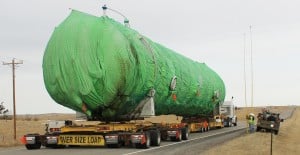
And:Activist Debra White Plume, who was arrested on Monday, told Censored News that the State of South Dakota had worked with the corporation’s office in Canada to create a route across the Pine Ridge Reservation in order to skirt weigh stations on the Interstate Highway System, which could have cost $50,000 for each of the two trucks.

“The truckers told us the corporation office from Calgary, Alberta, Canada and the State of South Dakota made a deal to save the truckers $50,000 per truck, there were two trucks, from having to pay $100,000,” Plume said. “They each carried a ‘treater vessel’ which is used to separate gas and oil and other elements. Each weighs 229,155 pounds, and is valued at $1,259,593, according to the papers we got from the truck drivers.”
Five Lakota Arrested for Forming Blockade on Pine Ridge Reservation

Protesters block trucks on Pine Ridge Indian ReservationA spokesman for the Canadian company seeking to build an oil pipeline across the United States to the Texas Gulf Coast says company trucks were not involved with a protest on South Dakota’s Pine Ridge Indian Reservation.

Opponents of the proposed Keystone XL Pipeline say they were arrested for disorderly conduct after they blocked two large trucks for six hours Monday in Wanblee.

Debra White Plume was among those arrested.

She says the truckers told the group they were heading to a Canadian oil field with empty containers for drinking water and were driving through the reservation to save money.
Trucks stopped in Wanblee not for pipeline, company says

By Ruth MoonTwo large trucks stopped by Native American protesters earlier this week in Wanblee had permits to drive through South Dakota and were not related to the Keystone XL pipeline project, according to the company that owns the trucks.

A group of protesters in Wanblee stopped the trucks for more than six hours Monday as they were passing through the Pine Ridge reservation. About 40 protesters were in the group, according to Tom Poor Bear, vice president of the Oglala Sioux Tribe, who was at the protest as well.

Several protesters, including Poor Bear, said they believed the trucks were related to the Keystone XL project. The pipeline expansion is part of an oil pipeline project being developed by TransCanada, a Canada-based energy supply company. The $13 billion project would connect Hardisty, Alberta, with Houston and run across South Dakota from the northwest corner to the south-central part of the state, according to maps on the TransCanada website.

The project, which has not been approved by the Obama Administration, has been opposed by environmentalists, Native Americans and some property owners along the route.
Comment:  Despite the company's denial, the trucks' status isn't clear. Were they carrying "treater vessels" to separate oil and gas or empty water containers?

Gotta say the cargo looks more like giant pipes than "empty containers for drinking water." Unless the so-called containers are huge water tanks, I suppose. The company needs to explain itself better if it expects anyone to buy its story.

For more on the Keystone XL pipeline, see Chief Predicts "Aboriginal Uprising" and Obama Rejects Keystone XL Pipeline.

January 23, 2012

Chief predicts "aboriginal uprising"

‘An aboriginal uprising is inevitable’ if Harper doesn’t listen, chief threatens

By Peter O’NeilCanada could face an Arab Spring-style “uprising” if Prime Minister Stephen Harper doesn’t give a clear indication in his meeting with aboriginal leaders here Tuesday that he’s prepared to take their concerns seriously, a B.C. native leader warned Monday.

“We must do better. The honour of the Crown and the very integrity of Canada as a nation is at stake,” said Stewart Phillip, grand chief of the Union of B.C. Indian Chiefs, in a news release issued by the Assembly of First Nations’ B.C. wing.

“Otherwise, an aboriginal uprising is inevitable.”

An estimated 400 chiefs from across Canada, including 47 from British Columbia and 22 from Alberta, have gathered here for their first face-to-face meeting with Harper since the Conservatives formed government in 2006.
Comment:  For more on the subject, see Gingrich Cheers Killing of Indians and First Nations = Political Threat?

Below:  "Prime Minister Stephen Harper talks with Assembly of First Nations Chief Shawn Atleo." (Chris Wattie/Reuters files)

January 18, 2012

Obama rejects Keystone XL pipeline

Keystone XL Pipeline Rejected, Indians Say Fight Continues

By Rob CapricciosoCiting a lack of time to review the Keystone XL Pipeline expansion through the United States, the federal government has rejected the plan.

The State Department, charged with overseeing transnational economic developments, confirmed the rejection on January 18. Officials there also made clear that the Obama administration will allow the company that owns the pipeline, TransCanada, to reapply for a permit to build through the U.S. after it develops an alternate route around Nebraska’s Sandhills.

“Earlier today, I received the Secretary of State’s recommendation on the pending application for the construction of the Keystone XL Pipeline,” President Barack Obama said in a statement. “As the State Department made clear last month, the rushed and arbitrary deadline insisted on by Congressional Republicans prevented a full assessment of the pipeline’s impact, especially the health and safety of the American people, as well as our environment. As a result, the Secretary of State has recommended that the application be denied. And after reviewing the State Department’s report, I agree.

“This announcement is not a judgment on the merits of the pipeline, but the arbitrary nature of a deadline that prevented the State Department from gathering the information necessary to approve the project and protect the American people,” Obama added.
Native Americans Applaud President Obama’s Decision Rejecting the Keystone XL Pipeline

By Clayton Thomas-MullerTribal leaders and Native organizations from the United States and Canada are standing together today pleased that President Barack Obama is acknowledging his pledge to listen to the voices of this countries’ original people, by rejecting the Transcanada Keystone XL pipeline. Recent months have brought tribal leaders to Washington DC requesting Obama to reject the pipeline. “Tribal governmental leaders from the Rosebud Sioux Tribe, the Oglala Sioux Tribe, and the Sac and Fox Nation met with President Obama and his administration in Washington DC in early December to deliver a message to reject the Keystone XL pipeline in defense of Mother Earth,“ says Tom B.K. Goldtooth, executive director of the Indigenous Environmental Network.

“I say miigwetch, thank you, to the Creator for giving President Obama and the U.S. Department of State the courage, strength and wisdom to deny the presidential permit for the Keystone XL Pipeline. Lifting up this issue as a Native rights issue bringing our tribal grassroots and governmental leaders together with environmentalist and private land owners of the prairie lands sent a message loud and clear that this was the right thing to do,” said Marty Cobenais, lead pipeline organizer with IEN.

Debra White Plume, a grandmother of the Oglala Lakota Oyate who was arrested in the Washington DC protest of the pipeline says, “Rejection of the Keystone XL oil pipeline is a reason to celebrate! At least that source of contamination that was a threat of our drinking water sources, the Missouri River, and the Ogallala Aquifer has been removed. Now we just have to stop the uranium mining that is poisoning the aquifer every day.”

“President Obama and the State Department deserve our thanks for having the foresight and courage to reject the permit application for the pipeline. The stated number of jobs on the project was so inflated that it started to outweigh the health, environmental and climate impacts being experienced by the Cree, Dene and Métis communities living downstream from the tar sands in Canada. In any of these carbon intense fossil fuel developments, and its pipeline infrastructures, economic externality costs have to be thoroughly assessed,” said Pat Spears, President of Intertribal Council on Utility Policy, based in South Dakota. “In the Northern Plains our tribes have alternatives for clean renewable energy.”

“This is one battle won for our Mother Earth,” said Clayton Thomas-Muller, campaign coordinator with IEN Canadian Indigenous Tar Sands Campaign. “Other pipeline battles linked to the Canadian tar sands continue. We remain vigilant in our work with First Nations in Canada and grassroots leaders to halt the tar sands. We are working with activists in British Columbia to stop the proposed Enbridge Northern Gateway pipeline, and other pipelines throughout Canada.”
Comment:  For more on the Keystone XL pipeline, see Keystone XL Pipeline Halted and Keystone XL Pipeline Protests to Continue.

December 01, 2011

Natives endorse Mother Earth Accord

Indigenous Action on Anti-Pipeline Front

By Rob CapricciosoIndigenous leaders in the United States and Canada have taken their latest steps in a string of well-choreographed actions against potentially-destructive oil pipeline developments in both countries that pose harm to Native culture and land.

The latest day of action for Indians in the U.S. opposed to the development of the TransCanada Keystone XL Pipeline through Indian country came December 1 when a group of Natives gathered at the National Press Club to reiterate their concerns. There, they presented their support for a “Mother Earth Accord,” which includes signatories from American Indian tribes and Canadian First Nations.

They vowed to present the document to the White House and Obama administration agency heads later in the week, saying that it is important for the administration to truly understand the unique Native American issues involving the project.

The document highlights indigenous trepidations over the pipeline, including a lack of meaningful federal consultation with tribes–required under the U.S.-supported U.N. Declaration on the Rights of Indigenous Peoples–the threat to tribal water supplies, including the Ogallala Aquifer, and cultural resources and treaty rights violations, especially the Fort Laramie Treaty of 1868. The Mother Earth Accord was developed in September during a Rosebud Sioux tribal summit.
Comment:  The battle has moved to Canada, where the company has proposed an alternative pipeline that would carry oil from Alberta to the West Coast. British Columbia's tribes are opposing the pipeline's going through their land.

Meanwhile, the Keystone XL pipeline is merely on hold until after the 2012 election, not dead. If it's still a feasible option then, I wouldn't bet a lot of money on Obama's canceling it. He often bends to the wishes of big business.

For more on the subject, see Keystone XL Pipeline Halted and Report Backs Controversial Oil Pipeline.

Below:  "Oglala Sioux Nation President John Steele, flanked by indigenous leaders, addresses Indian concerns over Keystone XL on December 1 at the National Press Club in Washington." (Clayton Thomas-Muller)

November 11, 2011

Keystone XL pipeline halted

I've posted a few items about the Alberta oilsands and the Keystone XL pipeline meant to transport the oil. Now the controversial pipeline has come grinding to a halt.

Indians Score a Win With Pipeline Postponement

By Rob CapricciosoIn a major victory for American Indian activists, the Obama administration has decided to postpone a decision on whether to allow the Keystone XL pipeline to flow from Canada until after the 2012 presidential election.

Administration officials said that the extra time is needed to allow for study for a new route for the pipeline. Indians, environmentalists, and others have been especially concerned that it would cross Indian country lands and likely cause pollution to the Ogallala Aquifer in Nebraska.

The State Department said in a statement released the afternoon of Nov. 10 that the Obama administration will reassess the proposed route through Nebraska. “Given the concentration of concerns regarding the environmental sensitivities of the current proposed route through the Sand Hills area of Nebraska, the Department had determined it needs to undertake an in-depth assessment of potential alternative routes in Nebraska,” the statement said.

“Because this permit decision could affect the health and safety of the American people as well as the environment, and because a number of concerns have been raised through a public process, we should take the time to ensure that all questions are properly addressed and all the potential impacts are properly understood,” President Barack Obama said in his own statement.
Indians Celebrate Pipeline Postponement, Express Caution

By Rob CapricciosoIndian Country Today Media Network is highlighting a few of the statements from key indigenous organizers below. We will add to it throughout the day as reactions come in.

“The position taken by the Obama administration today to delay the permit for the Trans Canada Keystone XL pipeline in order to do a new environmental review is the right decision—an ethical decision. We applaud President Obama and the State Department for listening to the voices of youth, elders, faith-based groups, labor, students, environmental organizations, Native Nations, and those living along the proposed pipeline, who are standing united against dirty oil from the tar sands. This is the beginning of a new era in which people are demanding that their rights be recognized. The need to protect our sources of clean water, to fight for stabilizing climate change, and to say “No” to corporate polluters setting the agenda in Washington is now. We must not let up. The struggle for environmental and economic justice—for energy and climate justice—and the fight for Native Treaty Rights must continue. Mother Earth has achieved victory today.”

–Tom B.K. Goldtooth, Indigenous Environmental Network

“President Obama, in my opinion, has released a statement that is very disappointing. I believe he is playing politics now. A statement to DENY the TransCanada dirty oil pipeline would have demonstrated that he is walking his talk. However, to postpone a decision until after the election next year does put a huge economic price tag on the project that TransCanada may not be willing to pay, thus scuttling their plan, causing them reroute directly out of Canada and staying out of North America. That action by the corporation will just put their weapon of mass destruction into the First Nations communities it must run thru to get to the west coast of Canada. Wherever they plan to run this pipeline, there will be a fight, either here or in Canada. We need to shut down the tarsands oil mine. Then there will no need for a pipeline anywhere.”

–Lakota activist Debra White Plume in a statement on Facebook
Keystone Pipeline May Not 'Survive' U.S. Delay, Flaherty Says

By Andrew Mayeda and Greg QuinnThe U.S. State Department's decision to delay its review of TransCanada Corp.'s $7-billion Keystone XL pipeline until after next year's presidential election may doom the project and accelerate Canada's efforts to ship crude to Asia, Canadian Finance Minister Jim Flaherty said.

"The decision to delay it that long is actually quite a crucial decision. I'm not sure this project would survive that kind of delay," Flaherty said yesterday in an interview at the Asia-Pacific Economic Cooperation summit in Honolulu. "It may mean that we may have to move quickly to ensure that we can export our oil to Asia through British Columbia."

The deferral on Keystone XL is a blow to the government of Prime Minister Stephen Harper, who called U.S. approval of the pipeline a "no brainer." Canadian officials underestimated the strength of resistance to the project by Nebraska farmers and environmentalists, political and foreign-policy experts said.

The State Department said yesterday it will study an alternative route to avoid environmentally sensitive areas in Nebraska. Nebraskan farmers, officials in the state and some members of Congress argue the proposed route across the Sandhills area risks contaminating the Ogallala aquifer that supplies water to 1.5 million people.
Comment:  This isn't exactly a Native or a pop-culture issue, which is why I haven't reported on it more. But Indians have been among the most vocal opponents of the Alberta oilsands because the environmental destruction affects their land. And the oilsands protests led to the pipeline protests, where Indians also were prominent. So it's fair to say Indians played a significant role in getting the pipeline postponed and probably shut down.

From relatively minor issues like Urban Outfitters' "Navajo" products and Bedlam's "PocaHotAss" party to Occupy Wall Street and the Keystone XL pipeline, protests continue to have an effect on corporate and government policies. Why do activists keep protesting? Because protests work.

For more on the subject, see Keystone XL Pipeline Protests to Continue and Report Backs Controversial Oil Pipeline.

Below:  "Protesters gathered outside the White House on November 6." (Rob Capriccioso)

August 27, 2011

Keystone XL pipeline protests to continue

54 More Arrested at White House as Environmental Community Excoriate New State Department Report

By JamieAs almost the entire environmental community condemned the final State Department report on the environmental impact of the proposed Keystone XL tar sands pipeline released this morning, another 54 Americans were arrested at the White House today to push President Obama to stand up to Big Oil and deny the pipeline the permit necessary for construction.

“The U.S. State Department’s final report on the Keystone XL today is an insult to anyone who expects government to work for the interests of the American people,” said the Sierra Club in a press release this morning. “The Sierra Club and our 1.4 million members and supporters are looking to President Obama for bold action and we urge him to reject this abomination.”

NASA scientist Dr. James Hansen will join a large delegation of interfaith leaders for next Monday’s sit-in. Actor and natural gas fracking activist Mark Ruffalo will join Tuesday’s demonstration before a large contingent of former youth organizers for Obama risk arrest Wednesday morning.
Native American and Canadian First Nations To Take Part In Largest Act of Civil Disobedience to Stop Keystone XL Pipeline

By Clayton Thomas-MullerThe Indigenous Environmental Network (IEN) is a national environmental justice and indigenous rights organization taking part in the largest act of civil disobedience in decades taking place at the White House in Washington DC from August 20 to September 3, 2011.

The purpose of these actions is to send a direct message to President Obama to deny approval of the 1,702 mile Keystone XL pipeline. The pipeline would be transporting pollution from the tar sands (also known as oilsands) of Canada to the United States by carrying 900,000 barrels per day of thick, corrosive, toxic, synthetic crude oil for refining in Texas and the Gulf States. If approved, the Keystone XL would lock the US into a dependency of energy intensive, hard-to-extract dirty oil and create a massive expansion of the world’s dirtiest and most environmentally destructive form of oil development currently taking place in northern Alberta Canada. These operations are already producing 1.5 million barrels per day and having horrendous environmental justice and human rights impacts on the way of life and health of the local Native communities of Cree, Dene and Métis.

The proposed pipeline threatens to pollute freshwater supplies in America’s agricultural heartland and grasslands with increased emissions in already-polluted communities of the Gulf Coast. The Keystone XL would cross Indian Country; States of Montana, South Dakota, Nebraska, Kansas, Oklahoma and Texas encompassing Indian-US treaty territories crossing water aquifers and rivers, grasslands, cultural sites and ecological sensitive areas. Leaks and spills are common occurrences from such pipelines that could result in disproportionate impact to Native Nations and thousands of tribal members. A spill from the Keystone XL poses an even greater threat, given that the pipeline would run directly through the Ogallala aquifer, which supplies one-third of our nation’s ground water used for irrigation, and drinking water to 2 million citizens.
Comment:  For more on the subject, see Report Backs Controversial Oil Pipeline and Cardinal Arrested at White House Protest.

August 26, 2011

Report backs controversial oil pipeline

Obama administration backs oil pipeline from Alberta to Texas

Campaigners disappointed as White House says 1,700-mile pipeline will not cause significant environmental damage

By Suzanne Goldenberg
The Obama administration has given an important approval to a controversial pipeline that will pump oil from the tar sands of Alberta to the Texas coast.

In a blow to campaigners, who have spent the last week at a sit-in at the White House, the State Department said the proposed 1,700-mile pipeline would not cause significant damage to the environment.

The State Department in its report said the project–which would pipe more than 700,000 barrels a day of tar sands crude to Texas refineries–would not increase greenhouse gas emissions. It also downplayed the risks of an accident from piping highly corrosive tar sands crude across prime American farmland.

Campaigners accused the State Department of consistently overlooking the potential risks of the pipeline.

"The State Department…failed to acknowledge the true extent of the project's threats to the climate, to drinking water and to the health of people who would breathe polluted air from refineries processing the dirty tar sands oil," Friends of the Earth said in a statement.
State Department to Allow Canadian Pipeline

By John M. Broder and Clifford KraussIn reaching its conclusion that the Keystone XL pipeline from the oil sands deposits in Alberta would have minimal environmental impact, the administration dismissed criticism from environmental advocates, who said that extracting the oil would have a devastating impact on the climate and that a leak or rupture in the 36-inch-diameter pipeline could wreak ecological disaster. Opponents also said the project would prolong the nation’s dependence on fossil fuels, threaten sensitive lands and wildlife and further delay development of clean energy sources.

The State Department said in an environmental impact statement that the pipeline’s owner, TransCanada, had reduced the risks of an accident to an acceptable level and that the benefits of importing oil from a friendly neighbor outweighed the potential costs.

Final approval of the $7 billion project will not come before the end of the year, after public hearings and consultation with other federal agencies. But the State Department report Friday gave every indication that the administration was prepared to see Keystone proceed. The pipeline is expected to open in 2013 unless delayed by lawsuits or other challenges.

For many in the environmental movement, the administration’s apparent acceptance of the pipeline was yet another disappointment, after recent decisions to tentatively approve drilling in the Arctic Ocean, to open 20 million more acres of the Gulf of Mexico for oil leasing and to delay several major air quality regulations. The movement is still smarting from the administration’s failure to push climate change legislation through Congress.
Comment:  For more on the subject, see Tantoo Cardinal Marches Against Pipeline and 10-Year-Old vs. Oil Pipeline.

Below:  "The proposed pipeline will carry oil from the tar sands of Alberta (above) to the Texas coast." (Jeff McIntosh/AP)

August 23, 2011

Cardinal arrested at White House protest

Aug 23 Press Release:  Actors Margot Kidder and Tantoo Cardinal among 60 Arrested at White House Pipeline ProtestThe iconic Canadian actors Margot Kidder and a Tantoo Cardinal were arrested this morning at 11:30 AM in Washington, DC as part of an ongoing sit-in at the White House to pressure President Obama to deny the permit for a massive new tar sands oil pipeline.

“I can’t think of a more important place to be,” said Kidder, who is best known for her role as Lois Lane in four of the original Superman movies. “President Obama has the chance here to do the right thing and stop this pipeline. I’m here to help make sure he does it.”

“It’s an honor to be here with so many people from across the US,” said Tantoo Cardinal, the iconic indigenous actor best known for her roles in Legends of the Fall, Dances with Wolves, and Smoke Signals. Cardinal was born in the capitol of the tar sands, Ft. McMurray, Alberta. “This is about protecting our land, our water, and our climate. The tar sands destruction has to stop.”

Cardinal and Kidder gathered with a crowd of over 150 people in Lafeyette Square park this morning to hear from environmental author, Bill McKibben, who is spearheading the protests. In an effort to “deter future participants,” the DC Park Police had held McKibben and 55 other participants from last Saturday’s demonstration in jail for two nights before dropping all charges and releasing them on Monday afternoon. Sunday and Monday’s protestors were released after being arrested, taken to a Park Police station, and paying $100 fine for “disobeying a police order.”

“When we were in jail, the only thing we wanted was more company,” said McKibben to a cheering crowd this morning. “Your work has helped make this the most important environmental question President Obama has to make before the 2012 election. And we’ll be here every day this week and next to make sure he makes the right call.”
Comment:  For more on the subject, see Tantoo Cardinal Marches Against Pipeline and 10-Year-Old vs. Oil Pipeline.

Below:  "Tantoo Cardinal and Margot Kidder at the White House protest before being arrested." (Milan Ilnyckyj/TarSandsAction.org)

August 22, 2011

Tantoo Cardinal marches against pipeline

Margot Kidder marches on Washington

By Martin KnelmanNext week Kidder will be playing Earth Mother for real—doing whatever it takes to get herself arrested in front of the White House while trying to persuade Barack Obama not to sign a deal allowing a new pipeline carrying oil from the Alberta tar sands to Texas.

One of her partners in crime is another celebrated Canadian-born actress and dear old friend, Tantoo Cardinal, an Aboriginal from northern Alberta.

Theirs will be only two faces among the thousands taking part in a large-scale protest, but they will bring a bit of showbiz glitter to the event while showing there are Canadians as well as Americans appalled by the horrifying danger of spreading poison from Alberta all over North America.
And:Though she has been a U.S. resident for decades, Kidder has proudly held onto her Canadian citizenship. But she became a dual citizen so that she could vote against George W. Bush in 2004—and so she could take part in protests against the Iraq war without being at risk of deportation.

“Tantoo and I are both northern Canadian babies who believe that the North is a beautiful place worth saving.

“The tar sands have caused a lot of damage already in Alberta, where a lot of people have a weird new kind of cancer. The kind of oil being extracted is thick and corrosive, like molasses, and it has to be pumped at a high heat, emitting poisonous carbon.”
Comment:  For more on the subject, see 10-Year-Old vs. Oil Pipeline and Spirit Bear in National Geographic.

August 14, 2011

10-year-old vs. oil pipeline

A story from July 2011:

Ten-year First Nations girl denied access to Enbridge office

By Angela SterrittTen-year-old Ta’Kaiya Blaney stood outside Enbridge Northern Gateway’s office today waiting for officials to grant her access to the building. She thought she could hand deliver an envelope containing an important message about the company’s pipeline construction. But the doors remained locked.

“I don’t know what they find so scary about me,” she said, as she was ushered off the property by security guards. “I just want them to hear what I have to say.”

The Sliammon First Nation youth and North Vancouver resident put in a great effort learning about environmental issues and the pipeline in particular, and hoped to share her knowledge and carefully crafted words about the pertinent topic.

Enbridge officials said they were unable to provide Ta’Kaiya space or time and failed to comment because the Vancouver office is staffed by a limited number of technical personnel. Their headquarters are located in Calgary.

So Ta’Kaiya stood outside, accompanied by three members of Greenpeace, her mother and a number of reporters and sang her song “Shallow Waters.” The song’s video has hit YouTube and been viewed almost 5000 times.

She co-wrote her song after learning of Enbridge’s bid to build twin 1,170 km pipelines to transport oil from the Alberta tar sands to B.C.’s north coast. The pipeline is widely opposed largely because it would bring hundreds of oil supertankers a year to the Great Bear Rainforest–an ecologically significant region along a particularly dangerous route for tankers.


Comment:  For more on the subject, see Spirit Bear in National Geographic.

July 29, 2011

Spirit Bear in National Geographic

Gitga’at and Spirit Bear Grace National Geographic’s August CoverIt’s a “white-knuckled fight” against the proposed Northern Gateway Pipeline from the Athabasca Oil Sands in Alberta, and the Gitga’at First Nation is determined to safeguard the mooksgm’ol, or Spirit Bear, and its rainforest habitat from the havoc wreaked by pipeline leaks and oil spills.

The August cover story of National Geographic profiles this white black bear, the Gitga’at and the struggle against Calgary-based Enbridge’s attempts to build a pipeline from the oil sands in Alberta to the Pacific coast, cutting right through the territory of dozens of First Nations. Such a pipeline would be Canada’s key to the international market beyond the U.S.—China is thirsting for fuel, for instance—but numerous First Nations coalitions have turned down financial incentives designed to get them to permit the transport of the extracted crude and gas across their lands.

Also at issue is the method of getting the oil ocean-bound: Under the plan, huge oil tankers, some as tall as an NYC skyscraper, would wend their way up winding, narrow waterways to Kitimat, which is coastal but not on the open sea, and load up on the viscous liquid.

A spill anywhere along the route, the Gitga’at and others point out, could have far-reaching repercussions on the environment and thus the people who depend on it.
Comment:  For more on oil spills, see Oil Spill = "Runaway Greed" and Oil Spill Shows American Values.

Below:  "The First Nation of Gitga’at, part of the Tsimshian people who inhabit the northwest coast of British Columbia, are stewards of the white black bear known as the Spirit Bear. They are all featured, along with Enbridge's proposed pipeline, on the August cover of National Geographic."