Showing posts with label George W. Bush. Show all posts

February 20, 2012

Best and worst presidents for Indians

This Presidents’ Day, We Highlight the Best Presidents for Indian Country

By Rob CapricciosoRichard M. Nixon: He’s the president who’s not usually on anyone’s best list, but for Indian country, he was a champion. Changing course on many of the policies that had driven so many Indians into bleak poverty, Nixon, with the guidance of his Mohawk Indian affairs leader Louis R. Bruce, endorsed a self-determination plan for tribes, ushering in a new era for Natives.

Barack Obama: It’s taken this “One Who Helps People Throughout the Land”–his adopted Crow name–just three years to show that he’s seriously committed to taking action on Indian issues, brokering passage of the Indian Health Care Improvement Act reauthorization, the Tribal Law and Order Act, and the $3.4 billion Cobell settlement.

Franklin D. Roosevelt: His New Deal will never be forgotten. For Natives, it included the Indian Reorganization Act of 1934, which ended the sale of tribal lands and restored ownership of unallocated lands to Native American groups. The policy helped reverse the Dawes Act’s infamous privatization of communal holdings of tribes, while returning to tribal self-governance.

Bill Clinton: He set a model for Obama, hiring Natives to work in his administration, and holding meetings with tribal leaders at the White House—both areas that the current president has taken the ball and run with. And he made some memorable commitments.

Ulysses S. Grant: This blast from the presidential past reminds us that good intentions were sometimes present in American history toward Indians—but that good federal intentions were and are not always the best for tribal interests.

Worth noting:

George H.W. Bush: When he signed the Native American Graves Protection and Repatriation Act into law in 1990, it was a pretty progressive move, especially when compared to his son who would later leave most things Indian alone.

John F. Kennedy: JFK and his brothers, Bobby and Teddy, are remembered fondly by many Natives due to their push for Indian education initiatives, as well as Bobby’s campaign visit to Pine Ridge Reservation in 1968 just before his assassination.

Jimmy Carter: He signed the American Indian Religious Freedom Act into law in 1979, saying, “It is a fundamental right of every American, as guaranteed by the first amendment of the Constitution, to worship as he or she pleases.”
Indian-Killer Andrew Jackson Deserves Top Spot on List of Worst U.S. Presidents

By Gale Courey Toensing and ICTMN StaffAndrew Jackson: A man nicknamed “Indian killer” and “Sharp Knife” surely deserves the top spot on a list of worst U.S. Presidents.

Andrew Jackson “was a forceful proponent of Indian removal,” according to PBS. Others have a less genteel way of describing the seventh president of the United States.

Dwight Eisenhower: President Dwight Eisenhower, the World War II hero who served as President from 1953 until 1961, was an early advocate of consultation. On August 15, 1953, he signed into law H.R. 1063, which came to be known as Public Act 280, because he believed it would help forward “complete political equality to all Indians in our nation.”

George W. Bush: While George W. Bush was one of three presidents since 1995 to issue proclamations designating November as National American Indian Heritage Month, his understanding of tribal sovereignty is limited.

Abraham Lincoln: The majority of the United States knows Lincoln as the president who “cannot tell a lie,” and as the leader of the Emancipation Proclamation. However, if you were to ask Native Americans their perception of the great president, the image would be much darker.

Ulysses S. Grant: Grant made it on our ‘Best’ Presidents list as well. Mostly because his intentions were in the right place and something that hadn’t been seen in that time. But those good intentions can’t save him from the fact of the matter.
Andrew Jackson--The Worst President The Cherokee Ever Met

By Christina BerryThe title of worst US president is hotly debated and is most often awarded to Andrew Johnson or Warren Harding. Many polls and studies rank Andrew Jackson in or near the top 10 best presidents. However, to many Cherokees Andrew Jackson is without a doubt the worst US president.Comment:  For more on the presidents, see George Washington, Thomas Jefferson, Andrew Jackson, Abraham Lincoln, Teddy Roosevelt, Richard Nixon, Bill Clinton, George W. Bush, and Barack Obama.

September 17, 2011

Did Prescott Bush steal wrong skull?

Marc Wortman reviews a popular legend about Geronimo. He tackles the burning question: "Did a group from Skull and Bones break into Geronimo’s tomb and ship his skull back to the society’s clubhouse at Yale?" Below he offers a possible answer.

The Skull—and the Bones

By Marc WortmanTowana Spivey, the museum curator, was adamant: “The facts on the ground here just don’t line up with the story being told.” I’ve been involved in the Geronimo story, more or less accidentally, for a number of years, and agree with Spivey. That’s not to say that I don’t accept the story about Prescott Bush—in fact, I do. The circumstantial evidence suggests that Bush and his friends did indeed mount a grave-robbing operation, and that they came away with something. But with what? The historical rec­ord is clear that in 1918, when the “most spectacular ‘crook’” took place, Geronimo’s body was not lying in the kind of vault described in the Skull and Bones logbook. It had been buried in an unmarked grave, precisely to deter would-be grave robbers. The pres­ent monument was not built until 1930. There’s no iron door on it, like the one the Bones history describes. Assuming that Prescott Bush and his friends did smash open a burial vault, there are only two possible candidates at Fort Sill.

One of them straddles the grave of a Kiowa chief named Kicking Bird. It sits in a cemetery just a few hundred yards from the barracks where the Bonesmen were quartered. Spivey believes this was the grave they struck. I have my doubts. It’s so close to a main road that it’s hard to believe they wouldn’t have been observed.

The other site is three or four miles away—it’s the small Otipoby Comanche Cemetery, on a rise overlooking the prairie. A burial vault lies at its center. A modern stone marker next to it bears the words “Mark ‘Thomas’ Perconnic / Comanche Tribe / Son of Perconnic.” There’s evidence of past tampering: bricks now seal what once must have been a doorway. I suspect that the young men from Yale ended up here, having assumed that this very prominent grave must hold “the worthy Geronimo the Terrible.” If they took anything away, it was not Geronimo’s head. It was Tom’s.
Kicking Bird was the name of Graham Greene's character in Dances with Wolves, of course.

Below:  "Two burial vaults that the tomb raiders may have mistaken for Geronimo's. Left, the crypt of Kiowa chief Kicking Bird, in the Post Cemetery at Fort Sill, Oklahoma. Right, the tomb of Mark 'Thomas' Perconnic, in the Otipoby Comanche Cemetery, three or four miles away." (Marc Wortman)


Who is Harlyn Geronmio?

Another interesting aspect of the story is the role of Harlyn Geronimo. I've mentioned him before when the subject of Geronimo's bones came up. But now his story seems more suspect than it did before:Harlyn Geronimo, the lead plaintiff in the lawsuit, was born Harlyn Via. Now 63 years old, he is a sometime actor and a self-proclaimed Apache medicine man who lives in Mescalero. Harlyn is also a sculptor and has said that he would like the new Geronimo grave site to be marked by a monumental sculpture of his own creation. About 15 Years ago, Harlyn and his brother Joseph legally changed their surname to Geronimo. According to at least one credible Geronimo biographer, their grandmother was Geronimo’s daughter from a brief marriage during the period of his exile in Alabama. Released by the army, the mother went to Mescalero with the baby and soon remarried.

Whatever the nature of Harlyn’s kinship, he has certainly exploited the name. As Harlyn Geronimo, he has acted on television and been featured in documentaries. He has traveled to France and Germany, where fascination with America’s cowboys-and-Indians history is high. A book he co-authored, Sur les pas de Geronimo ( In the Footsteps of Geronimo ), was published in France in 2008. For his televised interviews and appearances at public events and festivals, (sometimes) on horseback he wears the type of feathered headdress used by the Plains Indians, not by the Apaches. When in Paris, you have to give the Parisians what they’re expecting. I have encountered Harlyn only once—in a shared television appearance in the aftermath of my discovery of the Winter Mead letter. His anger seemed genuine. I attempted to reach Harlyn many times over the course of several months, to ask him about the Ramsey Clark lawsuit, but he seemed always to be traveling in Europe, and unreachable. I finally contacted his brother Joseph, in Mescalero. Joseph was not interested in pursuing a conversation. What he in fact said was “I ain’t giving anything away for a handful of beads. Mail me a check, and if it’s enough and don’t bounce, I’ll talk.”


For more on the subject, see:

Geronimo vs. Geronimo Over Geronimo
Apaches don't want Geronimo moved
Geronimo sues Skull and Bones

May 04, 2011

US couldn't change "Geronimo" codename?!

One of the sillier claims in the "Geronimo" codename controversy is that the US couldn't have changed the codename once it set it. On Facebook the debate went like this:Was the code name a creation of the Bush Administration?I'd guess no. But even if Bush created it, Obama stuck with it. I'd say the responsibility was Obama's.Well if it was a code name created by Bush (or Clinton for that matter), then I would accept an explanation from Obama that a name change would pose security difficulties and not be justified because it was offensive.I wouldn't accept that. And I'd still blame the original officials who came up with the idea.

At this point a second person chimed in:Well no Rob once a code name is set by the Military Command it is kept! Case in point how many administrations has the Project Blue Book existed over? Obama had nothing to do with the code name. And the name supposedly being offensive is of no concern to the Military in any way shape or form!No one I know of has said where the codename came from. If you have any information about that, feel free to provide it.

The commander-in-chief can overrule any decision by his underlings. And the military's lack of concern doesn't concern me.

Obama is getting a firestorm of criticism from the Native people he supposedly supports. If he's okay with aggravating key constituents who voted overwhelmingly for him, so am I.The code name was either given by the Intelligence or Military organisation. That is standard procedure!Operation Kick Butt

Naturally, I quickly thought of an exception to this "rule":

Operation Enduring Freedom was originally called Operation Infinite Justice. So spare us the fiction that presidents can't change the name of military operations in response to politics. They can and do.Never said they couldn't Rob.You never said, "Well no Rob once a code name is set by the Military Command it is kept!"? Could've fooled me.

Anyway, whoever said or thinks this, they're mistaken. "Operation Infinite Justice" is a perfect example of a military codename changed when people protested it.Remember Military thinking is not ever rational thinking. Sure some politician can change the names or wording if they have reasons. After all they changed most of the Treaties the government ever made with the Tribes!

I'm not wasting my limited brain power on what the Government did here, it's already History!

Not being short or rude with you Rob, I just figure the subject matter isn't worth my time! Though that may sound fickle as I get upset about other mundane subjects and go on about them too. Maybe I'm just tired today! Ciao
Things will go faster next time if you get your facts straight. <g>

P.S. As we learned in Why US Chose "Geronimo" Codename:It isn’t clear yet which branch of the military came up with the nickname—the Army, Navy, CIA or any of the anti-terror special forces groups involved in planning the raid—but it apparently wasn’t bin Laden’s nickname for very long.So the codename probably didn't originate with Bush. Obama gets full "credit" for another example of insensitivity to Indians.

For more on the subject, see Congress to Examine "Geronimo" Codename, Apaches Demand Apology for Codename, and Critics Slam "Geronimo" Codename.

Below:  Operation Kill Muslims in Revenge for 9/11 Infinite Justice Enduring Freedom.

May 02, 2011

Obama gets Osama!

Thoughts on the news of the day:

Mission accomplished: Obama gets Osama!

Obama does what Bush couldn't do.

Can we get out of Afghanistan now?

"Shucks," said a disappointed ex-president Bush. "I was still looking for him under the table and behind the sofa."

Who'll be the first Republican to blame Obama for doing something wrong? Any bets?

Conservatives weigh in

Bush reiterates that he was never concerned about Osama bin Laden. "I got me the real terrorist: Saddam Hussein! Only cost me 4,000 American soldiers...a bargain!"

"I'm happy but a little confused," said the peanut-brained Bush. "Cheney told me bin Laden was in Iraq. Dick?!"

What do Charlie Sheen, Donald Trump, and the royal couple think about Osama? Or vice versa?

Donald Trump quickly claimed credit for bin Laden's death. "Obama finally did what I told him to," said the short-fingered vulgarian with the fox on his head.

Confusingly, Trump added, "I won't believe Osama is dead until I see his death certificate."

Look for krazy konservative kooks to embrace Trump's new "deather" theory.


Moral of the story: Never send a boy (George W. Bush) to do a man's job.

Rob's approach was best

‎"Apply relentless political and economic pressure against the Al Qaeda network and anyone who supports it until the terrorists surrender or are surrendered. Carry out covert missions against Al Qaeda and other terrorist cells and nests beyond government control."Rob Schmidt, Sept. 17, 2001This is the alternative I posted to the idiots who thought invading (or nuking) Afghanistan would kill "the terrorists" and make us safe. Glad to see Obama and the US finally followed the Schmidt approach. Better late than never, dummies.

Instead of this approach, Bush gave us two unnecessary wars costing a trillion-plus dollars and hundreds of thousands of lives. And yet, I'm not in charge of everything yet. Hmm...odd.

In related news, many critics say we'll have to negotiate a settlement with the Taliban to end the war in Afghanistan. Too bad we didn't negotiate a settlement with the Taliban to begin with. One that avoided an unnecessary war and included the the surrender of bin Laden.

It's tough to be right all the time, people. Trust me on that!

Bring in the clown

From his bunker/ranch somewhere in Texas, worst-president-ever Bush whined, "Those Pakistanians were harboring terrorists. They weren't with us, they were against us. We need to invade or nuke Pakistan now."

‎"Remember how presidential I was after 9/11?" Bush added while wiping away a tear. "Remember?"

Some conservatives think Obama should thank Pretzel-dent Bush. "Yes, thanks for being so incompetent that America would actually elect a black man to replace you. A trained poodle could've done a better job of hunting Osama bin Laden, but our Commander-in-Chief finally got it done."


When Cheney suggested trained SEALs to Bush, Dubya reportedly responded, "Dolphins ain't gonna cut it, Dick. Osama's in a cave somewhere, not in the water."

‎"I saw a trained poodle act on the TV the other day," Bush added. "Get 'em on the phone. Maybe they can sniff out Osama."

‎"Seals in Afghanimastan?" Bush chortled to himself. "Might've worked against that Katrina whatchamacallit, but not in the desert."

"That's why I'm the decider, Dick, not you. I know about seals and dogs and whatnot."

The bottom line

The Ability to Kill Osama Bin Laden Does Not Make America Great

By Kai WrightOsama Bin Laden, evil incarnate, has justified so, so much American violence in the 21st century. We have launched two wars and executed God knows how many covert military operations in the ethereal, never-ending fight he personifies. We have made racial profiling of Muslim Americans normative, turned an already broken immigration system into an arm of national defense, and reversed decades worth of hard-won civil liberties while pursuing him, dead or alive. We have abandoned even the conceit of respect for human rights in places stretching from Abu Ghraib to Guantanamo Bay in the course of hunting him down. Now, finally, the devil is dead.

Upon the news of this victory, crowds gathered in front of the White House and at Ground Zero to chant “U.S.A.! U.S.A!” It was as if we’d just won an Olympic hockey game, rather than capped a decade worth of war and recession with a singular act of violence.
And:The gap between rhetoric and reality has long been a defining trait of American life. Lies about our values have shielded us from the brutal facts of our nation ever since we built it on the back of genocide and slavery. But it is in times like these that the dissonance becomes unbearable.

The president says we can do anything we want because we can kill. We could not stop poverty rates from spiraling upward to a record-setting 14.3 percent of Americans in 2009, but we can kill so we are exceptional. One in four black and Latino families live below the poverty line now, and as a result America’s child poverty rate—one in five kids—is the second worst among rich nations, behind Mexico. But we can kill, so we are great.

Fourteen million Americans are out of work, nearly a third of them for more than a year. The Depression-like jobs crises in black neighborhoods around the country have become so acceptable as to be literally unremarkable in national news media. When overall joblessness inched downward in March, the fact that black unemployment increased, again, was greeted with callous shrugs from the White House to CNN. But America is exceptional because we can kill.
When we end poverty and discrimination, provide jobs and healthcare for all, and address the ongoing destruction of the planet, then maybe I'll cheer "USA! USA!"

And when we honor our Indian treaties, too.

For more on the subject, see Terrorism:  "Good" vs. "Evil" and Native Intelligence:  The Long View.

October 24, 2010

Teabaggers are mad...now

Were You Mad When...?After the 8 Years of the Bush/Cheney Disaster, Now You Get Mad?

You didn't get mad when the Supreme Court stopped a legal recount and appointed a President.

You didn't get mad when Cheney allowed Energy company officials to dictate energy policy and push us to invade Iraq.

You didn't get mad when a covert CIA operative got outed.

You didn't get mad when the Patriot Act got passed.

You didn't get mad when we illegally invaded a country that posed no threat to us. You didn't get mad when we spent over 800 billion (and counting) on said illegal war.

You didn't get mad when Bush borrowed more money from foreign sources than the previous 42 presidents combined.

You didn't get mad when over 10 billion dollars in cash just disappeared in Iraq.

You didn't get mad when you found out we were torturing people.

You didn't get mad when Bush embraced trade and outsourcing policies that shipped 6 million American jobs out of the country.

You didn't get mad when the government was illegally wiretapping Americans.

You didn't get mad when we didn't catch Bin Laden.

You didn't get mad when Bush rang up 10 trillion dollars in combined budget and current account deficits.

You didn't get mad when you saw the horrible conditions at Walter Reed.

You didn't get mad when we let a major US city, New Orleans, drown.

You didn't get mad when we gave people who had more money than they could spend, the filthy rich, over a trillion dollars in tax breaks. You didn't get mad with the worst 8 years of job creations in several decades.

You didn't get mad when over 200,000 US citizens lost their lives because they had no health insurance.

You didn't get mad when lack of oversight and regulations from the Bush Administration caused US citizens to lose 12 trillion dollars in investments, retirement, and home values.

No...you finally got mad

When a black man was elected President and decided that people in America deserved the right to see a doctor if they are sick.

Yes, illegal wars, lies, corruption, torture, job losses by the millions, stealing your tax dollars to make the rich richer, and the worst economic disaster since 1929 are all okay with you, but helping fellow Americans who are sick...Oh, Hell No!!
Comment:  This posting sums up the hypocrisy of Tea Party supporters nicely.

For more on the subject, see Teabaggers = Constitutional Hypocrites and Tea Party Guide to American History.

September 16, 2008

How Republicans "support" Indians

Here are three examples of how Republicans have "supported" Indians and would "support" them in a McCain/Palin administration.

First, Ben Nighthorse Campbell explains how Sarah Palin supports Native rights:

Nighthorse Campbell:  Governor Palin supports Native communitiesThe state of Alaska has always disagreed with how the United States proposes to regulate hunting and fishing in Alaska, and has filed several lawsuits over the years, including those cited by the attorneys mentioned above. When she became governor in 2006 after defeating the incumbent Republican governor, Palin inherited responsibility for those lawsuits.

To be fair, I am sure that most Alaska Native communities would have preferred that the state had taken a position that made Native subsistence practices a priority over all others. With many Alaska Natives being “rural residents,” they benefit significantly from the subsistence preference in ANILCA.

However, that federal law provides rights for all rural residents; and as governor, Palin is responsible to advocate for the interests of all Alaskans, Native and non-Native.
In other words, Palin opposes Native rights. For more on the subject, see Miller:  Sarah Palin’s Hostile Record on Alaska Native Subsistence.

Then there's the Bush/McCain failure to reauthorize the Indian Health Care Improvement Act:

Stand up, Congress, and pass Indian health legislationThe time has come for Congress to stand up and protect the lives of American Indians through reauthorization of the Indian Health Care Improvement Act.

What if your life expectancy was cut by 10 years?

What if someone you love had a brain tumor misdiagnosed as depression?

For American Indians, this is a reality. Thousands upon thousands of Native people are dying, right here in our backyard, because of terrible health care. Most Native communities have only one doctor and that one doctor sees 10 people a day. Indian country’s health care system is Indian country’s health care system is so poor that cancer is being misdiagnosed as depression.
Finally, there's the McCain/Palin campaign against earmarks--excluding the millions of dollars in earmarks accepted by Palin, of course:

Guest letter:  How an earmark can be worth every pennyRep. John Kline argues that federal earmarks are a "waste of your hard-earned tax dollars" and should be eliminated entirely (Opinion, Wednesday, Aug. 20). While I have no doubt that significant resources are squandered on seemingly inane projects, and a review of the federal appropriations system would benefit taxpayers, I offer one example of how federal earmarks can be a life-saving, cost-saving means to a end that benefit all of us.

The Minnesota Indian Women's Resource Center (MIWRC) of Minneapolis was awarded a federal earmark in the 2008 session to help us develop a culturally appropriate, gender-specific dual diagnosis treatment program for American Indian women that incorporates a sexual violence intervention. To our knowledge, this treatment model does not exist, yet presents a holistic approach to healing a population disproportionately affected by sexual violence, chemical dependency and mental illness.
Comment:  For more on the subject, see Why Indians Are Democrats.

August 20, 2008

Brenda Norrell censored?

Brenda Norrell is a non-Native journalist who's been writing left-leaning articles about Natives for decades. I've met her before and she's obviously passionate about her cause.

But in September 2006, she was terminated from her position at Indian Country Today. You can read the whole story in her blog, but here are the key paragraphs:

Censored in the USA:  Hush wordsIn Indian country news, there are also hush words, words to be used sparingly, if at all. For editors, those words include two names "Russell Means" and "Leonard Peltier." Also, in Indian country, reporters know it is unlikely that editors will publish any serious criticism of the war in Iraq or the Bush administration. Reporters also know it is unlikely that their articles will be published if they point out how the elected American Indian tribal councils sell out their people and their land, air and water for energy royalties and energy leases. At the same time, those councilmen and tribal chairmen give voice to the need to protect sacred Mother Earth.And:At ICT, I was terminated after one of my articles was rewritten, turning the exposure of Donald Rumsfeld profiteering from the bird flu's Tamiflu into a near advertisement for the product. Also before I was terminated, I was instructed to never write about, or even investigate, the fact that the Navajo commercial farm, Navajo Agricultural Products Industries, has a Raytheon Missile factory on the same land where it grows potatoes, corn and other commercial crops. The Navajo Nation owned NAPI also boasts that it uses genetically-modified seeds; seeds leading to widespread misery for the world's Indigenous Peoples.

I was also told I could not publish a news probe into whether Ben "Nighthorse" Campbell was actually Portuguese or Northern Cheyenne.
Comment:  Norrell notes that she was fired without a reason. She does give one example of a paragraph in a Longest Walk article that another newspaper "censored." Here it is before:It was in Greensburg, Kansas, that another dimension of the west opened up, the force of a tornado to rip out a town. The debris was still piled high nearly one year after the tornado of May 4, 2007. I could only think of the billions of dollars going to rebuild Iraq, after the US bombed it; the billions going to the corporate friends of the Bush family. Still, there was hope and abundant love in this town as the people were rebuilding green, focused on solar and wind power and sustainable gardening.And after:It was in Greensburg, Kan., that another dimension of the West opened up to the group--the force of a tornado to rip apart a town. Debris was still piled high nearly one year after the tornado struck on May 4, 2007. Still, there was hope and abundant love in this town as the people were rebuilding “green,” focusing on solar and wind power.Even though the article was a personal essay, I could see deleting the Bush remarks. They were kind of out of place. The article was supposed to be an overview of the Longest Walk, not a critique of Bush. If it had been an analysis of how we're underfunding necessary Indian services or our national parks and forests, then the Bush-bashing would've been appropriate.

It's possible to imagine why Norrell got fired. Her articles are a little "out there" for a mainstream publication. What does Rumsfeld profiteering from Tamiflu have to do with Native issues, for instance?

Still, she keeps fighting the good fight in various publications and on her blog. And we post her articles on PECHANGA.net to give them wider exposure. You go, Brenda!

For more on the subject, see Native Journalism:  To Tell the Truth.

June 10, 2008

George W. Bush = John Wayne

Actor John Cusack makes an apt comparison between Bush and Wayne. In this case we're all Indians. We're all getting screwed by Bush's obsessive desire to turn over the war, the environment, etc. to corporate America.

The Real Blackwater Scandal:  Build a Frontier, You Get Cowboys, Part IIWe've had Poppa Wayne (Reagan) and Baby Wayne (Bush). Ronald Reagan was the old John Wayne...when kindness comes. But the key to the old Wayne is that he was once a killer; you can see it in his eyes... beneath the kindness lingers that hard truth: he was once a killer. He tames the natural world, but he does it with a veneer of benevolence.

Bush is the young John Wayne--Ethan from The Searchers. Obsessive. Merciless. Ethan is a deranged person. He will fight the battle no one has the guts to fight...do whatever it takes...kill whoever violates the natural law of the frontier (jungle). This cowboy is the great righter of wrongs. He is wrath incarnate. Part of the mythology is that he's wrong a lot and pig headed and stubborn, it's part of the package. But he is a force of nature and you can argue about it all you want, but you must respect a force of nature.

The protector, the son of anger is coming, with god on his side, to protect the ones he has chosen to love. In Bush's case you can substitute the damsel being raped by natives with the US corporation denied 100 percent ownership of a privatized state company.
Comment:  For more on the subject, see Corporate Culture:  Rotten to the Core.

May 26, 2008

Bush as a Native contrary

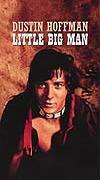
The Contrarian Nature of George W. BushLet's play a game. If George Bush was a character in the 1970 classic Western, Little Big Man, who would he be?

The obvious answer would of course be General George Armstrong Custer. Like our president, his character combines a sublime arrogance, a juvenile sense of the heroic, and sheer forehead-slapping stupidity in a manner that can only be described as gifted. And, employing these traits to their fullest, he also leads his troops into an unmitigated catastrophe. But that's too easy. Come on, play the game.
The author's answer:[R]ecent events have led me to choose one of the movie's lesser characters--Younger Bear, Little Big Man's nemesis within the Cheyenne tribe. In the course of the movie, Younger Bear becomes a "contrary," a strange phenomenon in Native American plains culture who says and does the opposite of what he actually intends. He rides his horse facing the rear, says "hello" when he means "goodbye," washes in the dirt and dries off in the creek.

I came to this conclusion after Bush's recent speech in Israel, where he famously equated Democratic presidential candidate Barack Obama's willingness to hold talks with Iran with the appeasement of Adolf Hitler prior to World War II. Pretty inflammatory rhetoric anywhere, but in front of the Knesset? Really over the top.

But it was the response of the Israelis themselves that clued me in. For no sooner had Bush's plane left the tarmac than they announced they were engaging in peace talks with arch-enemy Syria. They apparently learned their lesson in 2006. At that time, the Bush administration egged them on in their fight with Hezbollah "terrorists" in Lebanon, and it went about as well for them as our invasion of Iraq has gone for us. Well, "never again" as the saying goes. Now they know--whatever Bush says, do the opposite.
Below:  Little Big Man and little man, period.

May 20, 2008

No Time for Indians

Tim Giago claims "The 2008 Time 100: The World's Most Influential People" unfairly excludes Indians. The reality is more complex than that.

Time Magazine Snubs Indians AgainThere are the usual suspects of movie stars, rock singers and politicians on the list and I am sure they have exerted some influence on some people or activities in their lifetime. But again I ask, why no Native Americans? Could it be that the editors of Time magazine are, as the editors of other mainstream media, so ignorant of the Native Americans in their midst that in their minds they do not exist? To go from the predominant culture to non-existent in 500 years is truly amazing and frightening.

Every Native American can probably name 10 Indians that deserve to be on Time's list of most influential people. The problem is nobody asks them. Out of sight out of mind does not lead to a cohesive means of communications. White and black editors see who is around them in their own little world and Native Americans are not a part of their world.
Comment:  Giago goes on to name Ernie Stevens Jr., John Echohawk, John Yellow Bird Steele, Wilma Mankiller, and Eloise Cobell as candidates for the list.

I wish there were more influential Natives. But I don't have a problem with Natives not being on the list. We're talking about the 100 most influential people in the world. Heads of state, of religion, of multinational corporations. Newsmakers and celebrities whom millions of people listen to and emulate. Does any Native person really compare to that?

Stevens or Cyrus?

Consider Ernie Stevens Jr. He's been a great leader for the Indian gaming industry, but how many people does this industry affect worldwide? Not that many. If he hadn't existed, would the industry be substantially different? I doubt it.

Or consider Elouise Cobell. She brought a great scandal--the lack of payments on trust fund accounts--to light. But so far there hasn't been a definitive court ruling requiring payment. And even if the US did pony up billions of dollars, how many people would it help? A few hundred thousand? That's less than 1/10,000th of the world's population.

Giago compares Stevens to Miley Cyrus:Stevens has managed to pull the gaming tribes together in a coalition that has stood as one to protect their rights. I would say that his influence is much more consequential to a people than say that of a Miley Cyrus.This shows the problem with Giago's position. The list isn't of the 100 people whose influence has saved the most lives or lifted the most people out of poverty. That would be a different, more narrowly focused list. This list is about the most influence, period.

It doesn't matter whether the influence is good or bad, consequential or inconsequential, short- or long-lived. If millions of people are following you, it doesn't matter where you're leading them. You have influence by definition.


Giago makes a mistake

If you look at Time's list, I think you could argue against most of the people on it. If I were making the list, it would consist mostly of world leaders and CEOs with a smattering of inventors and celebrities. No way would I include Robert Downey Jr. (who isn't really a millionaire playboy industrialist) and leave off Pope Benedict XVI. But I doubt I'd add any Natives.

Actually, Giago has overlooked one Indian on the list: Evo Morales. As Time put it:When union organizer Evo Morales was elected President of Bolivia in 2005, it was the first time in the country's history that the indigenous people, who make up roughly 60% of the population, had one of their own as President. He moved quickly away from the neoliberal policies of his predecessors to try to help his community, the vast majority of whom live below the poverty line.Morales, an Aymara Indian, is the kind of Native who should be on the list. For starters, he's trying to transform an entire nation. More than that, he's providing a vision for indigenous movements around the world. That's a lot bigger than leading a tribe, nonprofit, or trade association in the United States, no matter how well someone does it.

Let's look at the numbers. There are roughly 50 million Indians in the Americas. Most of them--about 95%--are in Latin America. These Indians comprise slightly less than 1% of the world's population. (50 million = 1% of 5 billion.)

If you went by the statistics, you'd expect to find one Indian, a Latin American, in Time's 100. Lo and behold, that's exactly what you find. Far from being biased, Time has fairly and accurately gauged the relative importance of Indians.


Who's the most influential?

Unfortunately, Time didn't rank the people in its list. Humorist Joel Stein explains the problem:Numbering a list is a journalistic rule so obvious even E! understands it. But TIME's editors won't stoop to rank the TIME 100. No, they're afraid of hurting people's feelings or making a mistake.Stein, who is proud of having no mathematical abilities, came up with a formula for ranking them. It's based on such factors as number of Google hits and mentions in the British Financial Times.

To me this seems like a valid approach. The number of times we talk about people is a rough guide to their influence. As someone who does have a mathematical background, I approve of Stein's effort.

With that in mind, here are Stein's top 10:

Vladimir Putin
George W. Bush
Ben Bernanke
Hillary Clinton
Barack Obama
Evo Morales
John McCain
Tony Blair
Kevin Rudd (Australian PM)
Dalai Lama

Not bad. According to Stein, a Native is the sixth most influential person in the world. Morales is the third highest world leader, the second highest non-Caucasian (after Obama), and the highest person from the "Third World."

Of course, one could argue with this ranking also. Clinton, Obama, and McCain won't have a significant world influence unless they're elected president. Blair is out of office. No one from Australia has significantly influenced the rest of the world.

For more on the subject, see The 200 Greatest Pop Culture Icons.

Below:  Someone can be influential even if he doesn't know what the hell he's talking about.

April 12, 2008

Why Bush is like Custer

Memo to Petraeus & Crocker:  More Laughs, PleaseBack to poor Crocker. His brows are knitted. And he has a perpetually alarmed expression, as if, perhaps, he feels something crawling up his leg.

Could it be he is being overtaken by the thought that an honorable career has been besmirched by his obediently doing the dirty work of the tinpot Genghis Khan of Crawford, Texas? The one whose foolish military misadventure seems to increasingly resemble that of Gen. George Armstrong Custer at Little Bighorn?

Not an apt comparison, I admit.

Custer sent only 258 soldiers to their deaths.
Comment:  For more on Bush's cowboy attitude, see Dubya-Speak:  Justice Means Killing People.

March 30, 2008

Geronimo's skull and bones

Someone brought this posting to my attention. It's an old story, but since I haven't reported on it, it bears repeating.

Geronimo--Theft of remainsIn 1918, certain remains of Geronimo were stolen in a grave robbery. Three members of the Yale secret society of Skull and Bones served as Army volunteers at Fort Sill during World War I; one of those three members was Prescott Bush, father of the forty-first President of the United States George H. W. Bush and grandfather of George W. Bush. They reportedly stole Geronimo's skull, some bones, and other items, including Geronimo's prized silver bridle, from the Apache Indian Prisoner of War Cemetery. The stolen items were alleged to have been taken to the society's tomb-like headquarters on the Yale University campus, and are supposedly used in rituals practiced by the group, one of which is said to be kissing the skull of Geronimo as an initiation. The story was known for many years but widely considered unlikely or apocryphal, and while the society itself remained silent, former members have said that they believed the bones were fake or non-human, possibly in an attempt at misdirection.

In a contemporary letter discovered by the Yale historian Marc Wortman and published in the Yale Alumni Magazine in 2006, society member Winter Mead wrote to F. Trubee Davison:

The skull of the worthy Geronimo the Terrible, exhumed from its tomb at Fort Sill by your club... is now safe inside the tomb ("tomb" is the building at Yale University's Skull and Bones) and bone together with his well worn femurs, bit and saddle horn.
This prompted the Indian chief's great-grandson, Harlyn Geronimo of Mescalero, New Mexico, to write to President Bush requesting his help in returning the remains:

According to our traditions the remains of this sort, especially in this state when the grave was desecrated ... need to be reburied with the proper rituals ... to return the dignity and let his spirits rest in peace.