Showing posts with label John McCain. Show all posts

March 05, 2010

McCain vs. Hayworth on warpaint

Rob Capriccioso reports on the battle for Arizona's Republican nomination for senator:

McCain vs. Hayworth in battle of the war paintJ.D. Hayworth, Sen. John McCain’s challenger for his Arizona seat, released the following image in a fundraising appeal today, depicting the past presidential candidate in Avatar-like war paint:The image made it to the Drudge Report, and McCain staffers said it was offensive to Native Americans.

“Ex-Congressman J.D. Hayworth should immediately apologize and take down his latest online ad, which is an outrageous offense to John McCain’s lifetime of honorable service to our state and nation, and insulting to Native Americans here in Arizona and across America,” McCain campaign manager Shiree Verdone told told members of the press.

Hayworth’s staff responded that McCain needs to get a sense of humor, and ended up releasing a new image, this time with McCain depicted with bluer skin:


Comment:  Here's what I imagine Hayworth's people thinking: "Oh, wow. McCain's people thought those blue streaks were supposed to be Indian warpaint? Those idiots must be as clueless about the Avatar phenomenon as they are about everything else. Paint McCain's whole face blue so they can't possibly misunderstand the message."

For more on McCain and Indians, see McCain Attacks Native Grandparent Study and The 2008 Presidential Campaign. For more on Avatar, see Why the Right Hates Avatar.

January 26, 2009

Mellow "yellow" in Lowery's benediction

People have criticized my comments on "Red Man" in Lowery's Benediction. For instance:[I]t looks like you're just trying to criticize people, not comprehend what they are actually saying. In which case nobody (you included) would be above contempt, at least on occasion. Listen to the passage again and appreciate the fact that Lowery included us.My response:

I don't need to listen to the passage again, since I quoted it accurately. Along with Obama's comments about settling the West and dissolving tribes, it reflected poorly on Obama's inclusiveness. Obama and the other speakers could've said more on racial matters, but instead chose to ignore them.

I know many Natives don't mind being associated with the color red. But let's ask some Asian Americans if they enjoyed being labeled "yellow." I'm guessing the answer would be no.

Here's more on "yellow" from Wikipedia:East Asians are sometimes referred to as the yellow race. The use of "yellow" to refer to people of East Asian descent is usually regarded as offensive today in most contexts. In early 20th-century North America, immigrants from China and other East Asian nations were derogatorily referred to as a "yellow peril."So I noted a usage that's commonly considered "offensive." Do you have a problem with that? Then you probably shouldn't read this blog, because I do that often.

Anyway, I didn't go into a big long rant on this subject. I devoted exactly one paragraph to it, which is putting it in its proper perspective. You all have spent more time criticizing me than I spent criticizing Lowery, so I suggest you get your own priorities straight.

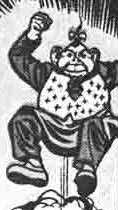
Below:  A "yellow" man (in black and white).

November 08, 2008

McCain locked Indians out

Nighthorse Campbell explains McCain’s Native downfallFormer Republican Sen. Ben Nighthorse Campbell would have loved to have seen his old friend Sen. John McCain capture the White House, especially given McCain’s strong record on Indian issues. But it quickly became clear to the politician that McCain just wasn’t willing to compete in Indian country in the same way as President-elect Barack Obama.

“I spoke to Sen. McCain personally four different times during the campaign to see if he would meet with Indian leaders,” Nighthorse Campbell told Indian Country Today in a post-Election Day interview.

“Each time, he assured me he wanted to and he would. But then when I would call his scheduler and his staff people, they absolutely locked Indian people out. They wouldn’t let him meet with them.”

Nighthorse Campbell contrasted McCain’s meager outreach with that of Obama, who, by some counts, visited tribal leaders and/or reservations at least nine times throughout the course of the campaign.

“You can’t live on your laurels in this business,” said the Northern Cheyenne tribal chief.

“You’ve got to keep reassuring people that you’re going to be there for them, and Sen. McCain just simply didn’t do that.”
Comment:  For more on the subject, see The 2008 Presidential Campaign.

Below:  "Sorry, Ben, I was too busy with Joe the Plumber to worry about Indians."

November 05, 2008

Who lost in the election

Good, and Now Back to Work: Avoiding Both Cynicism and Overconfidence in the Age of Obama

By Tim WiseIt was a defeat for the right-wing echo chamber and its rhetorical stormtroopers, foremost among them Rush Limbaugh, Sean Hannity and Glenn Beck.

It was a defeat for the crazed mobs ever-present at McCain/Palin rallies, what with their venomous libels against Obama, their hate-addled brains spewing forth one after another racist and religiously chauvinistic calumny upon his head and those of his supporters.

It was a defeat for the internet rumor-pimps who insisted to all they could reach with a functioning e-mail address that Obama was not really a citizen. Or perhaps he was, but he was a Muslim, or perhaps not a Muslim, but probably a black supremacist, or maybe not that either, but surely the anti-christ, and most definitely a baby-killer.

It was a defeat for those who believed McCain and Palin would be delivered the victory by the hand of almighty God, because their theological and eschatological vacuity so regularly gets in the way of their ability to think. As such, it was a setback for the religious fascists in the far-right Christian community whose belief that God is on their side has always made them especially dangerous. Now, having lost, perhaps at least some of these will be forced to ponder what went wrong. If we’re lucky, perhaps some will suffer the kind of crisis of faith that often prefaces a complete nervous breakdown. Either way, it’s nice just to ruin their Young-Earth-Creationist-I-Have-an-Angel-on-My-Shoulder day.
Comment:  Needless to say, Indians in particular and minorities in general were among the winners.

This election answered the question of who's a "real" American. The answer: those of us who voted for Obama. We're the majority, so we define who and what Americans are. If we say it's Jeremiah Wright, "socialists," homosexuals, Muslims, or Indians, then it is by definition.

If those of you in the minority don't like it, get the hell out of our country. Start your own country on a desert island somewhere. You can call it "America" and exclude whomever you want. But stop trying to divide and conquer our America with your racist, xenophobic poison.

For more on the subject, see The 2008 Presidential Campaign.

Below:  Some real Americans:


And a message from someone who doesn't deserve to be an American. (I'll bet big money that this person was a McCain/Palin supporter.)

October 27, 2008

McCain didn't author NAGPRA

A good rebuttal to the arguments of Tim Giago and Deron Marquez that Natives should support McCain because of NAGPRA:

Suzan Shown Harjo:  Sen. Obama's words matter moreI read the opinion piece with great interest because it reached a wrong conclusion based on a misreading of repatriation history and McCain’s role. As one of the people who made and wrote repatriation history and law, I can say that there are hundreds of people who could lay a better claim than the senator to being one of NAGPRA’s authors. It’s interesting that McCain himself does not make this claim and does not include Native cultural rights laws in his policy statements.And:In the 1980s, we began negotiating a repatriation agreement with the Smithsonian Institution, which was prerequisite to the nationalization of the world class Indian collection and the making of the national Indian museum. I was director and spokesperson for the National Congress of American Indians and a trustee of the Museum of the American Indian in New York, with Vine Deloria, Jr. (Standing Rock Sioux), and N. Scott Momaday (Kiowa). In the mid-1980s, we involved Sen. Daniel K. Inouye, who became the congressional champion for our repatriation and Indian museum campaigns.

Anti-repatriation scientists from Arizona and elsewhere slowed our momentum by having McCain insist that Indians take part in a national dialogue at the Heard Museum in Phoenix. I selected the Indian side of the national dialogue, which included Roger Buffalohead (Ponca), Oren Lyons (Onondaga) and other Native repatriators, who well remember it as the museums’ last-ditch effort to stop repatriation law and to insert “scientific rights” into our Native human rights law. We refer to it as McCain letting the anti-repatriation museums undermine certain aspects of repatriation law.

It is at the point of the national dialogue--more than 20 years after we began our work to achieve repatriation policy and museum reform and nearly 10 years after AIRFA--that Marquez fancies McCain airlifting NAGPRA to the Indians.
And:While we have had many successes, part of our coalition work has not been realized: a cause of action to protect all our sacred places. McCain would not support such legal protections in the early 1990s, when Inouye was championing the Native American Freedom of Religion Act. If McCain, at any point in his long congressional career, had championed his own sacred places right of action or gotten out of the way of others’ attempts, the Native peoples in his state and nationwide would not be facing the spiritual crises of today at San Francisco Peaks and elsewhere.

Instead, he and others in the Arizona delegation took targeted action against one sacred place in their state, when they secured space for a federally financed telescope project atop Mount Graham, an Apache holy mountain. All laws that could have given the Apache peoples a voice in the permitting process were waived through earmarks, which the senator so famously claims to eschew. These deeds may have something to do with the entire San Carlos Apache Tribal Council endorsing Obama over McCain for president.
Comment:  I didn't know NAGPRA's history, but it doesn't surprise me. In my voluminous readings on Indian Country, I don't recall McCain's name coming up often. As with NAGPRA, he's more of a supporter than a leader. Hundreds of Native organizations and individuals do the heavy lifting and then he co-sponsors the final legislation. After weakening it to protect his buddies in the white establishment (in this case, museums and universities).

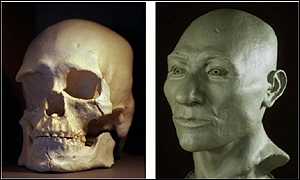
For more on the subject, see Kennewick Man, Captain Picard, and Political Correctness and The 2008 Presidential Campaign.

October 18, 2008

Kids say the dumbest things

What do our children think?

Presidential views from K. William Harvey Elementary School“My name is Emanuelle L. and I’m a member of the Salish Kootenai Tribe in Montana. I am 10 years old. Who I think should be president is Barack Obama. I think Barack Obama because he is letting some Indians into the government. ... I don’t want John McCain because he is just like George Bush and I don’t think our nation wants the same stuff.”Exactly.“I am Tanner O. and am white, but I live on the Flathead Indian Reservation. I’m 10 years old. The people I think should be president and vice president are John McCain and Sarah Palin. ... John McCain is a war veteran and knows how to stop the war in Iraq (and still win it).”Yeah, because McCain has such a great plan to end the war. So great that he's thinking of keeping a US presence there for 100 years.“I am Vannessa B. I am Salish Kootenai. I am 10. I choose John McCain because I think they will be really good. I think John McCain will be a good president because Obama might take away our guns.”Uh, wrong.“I am Colton R. I am from a white family. I live on the Flathead Reservation. The people I think that should be president should be John McCain and Sarah Palin because I think that Obama is going to raise taxes and stop the war.”Yeah, it would be terrible to end the war in Iraq. War is such a good thing. What would Halliburton, Blackwater, and various undertakers do without it?“My name is Chloe G. I am a white person, am 10 and am living on the Flathead Indian Reservation. I believe that John McCain would be the best president. I think that McCain would be the best because he believes in war. If we didn’t have war, how could we have peace?”This kid is half right. McCain believes in war. And he's half wrong. "We need war to have peace" sounds like something a 10-year-old (or a Republican) would say. Forty years ago, this kid would've said, "We had to destroy the village to save it."“My name is Morgan D. from Ronan, Mont. I am a member of the Confederated Salish and Kootenai Tribe and am 10 years old. The person I think would be the best president would be John McCain because Obama is saying things I don’t like. John McCain always tells the truth about things.”Obviously this kid watches only McCain ads and doesn't read the fact-checking analyses of them. He must've missed the commercial in which McCain claimed Obama wants to teach kindergartners about sex, for instance.“I am Jordyn C., a Salish Kootenai, and am 10. I think Barack Obama would be the best president because there has never been a black president. I also think Obama should be president because he is a nice guy and he is really going to work hard for the Native Americans’ rights. The vice president should be Joe Biden. I think that he should be VP because he is running with Obama and he is a Democrat.”Right on! This kid's reason for voting for Biden is unassailable. If you want Obama, you really have to vote for Biden too.“I am Carston Lee R. I am a descendant of the Salish Kootenai. I’m in fifth grade. Who I want to be president is John McCain because I am a Christian and I believe in Jesus Christ only, not other gods.”Yeah, because we wouldn't want to allow Allah and Yahweh and all those Native gods into the White House. Obama is black so he can't be a Christian...!

These kids obviously don't know much about the issues. They must be going more on style and less on substance than your average adult voter. Yet it's interesting to look at the racial divide:

Ten Native kids (including kids with Native ancestors): 7-3 Obama-McCain.

Five white kids: 3-2 McCain-Obama.

Curiously, these numbers are close to the actual percentages for white and minority voters. Does that mean children understand the issues as well as adults? Or does it mean they share the prejudices of adults? I.e., McCain is a straight talker and a Christian, Obama is shifty and a Muslim?

The kids' arguments sound like those of 10-year-olds, but at least their hearts are in the right place. The vote totals: 9 Obama, 6 McCain.

For more on the subject, see The 2008 Presidential Campaign.

September 29, 2008

Cowboy vs. Indian for president

Todd Gitlin analyzes the presidential race in terms of archetypes. First, there's McCain the cowboy type:

Race for president builds characters

Once again, we're treated to not just a campaign but a collision of myths.Part of what makes this year's race so volatile--and so absorbing--is the range of archetypes it has mobilized. Sen. John McCain is relatively familiar. He is the leathery man of the West, of exactly the sort who has entranced the Republican Party for almost half a century now. It is the role that Barry Goldwater, Ronald Reagan and George W. Bush played before him.

McCain himself invokes Theodore Roosevelt, the Rough Rider who, despite his New York origins, ranched in South Dakota and hunted throughout the West. Those who admire McCain tend to believe that it was men of this sort--rugged individualists, plain-spoken, straight-talking, self-sufficient men at home in nature (not in our effete cities)--who settled the West on their own. The myth discounts the immense role of the federal government in conquering the natives, seeing that the railroads were built, adjudicating disputes, arranging for water. No matter: Print the legend. In this image of the Old West, history belongs to the man who takes charge, the warrior in command who knows how to shoot and how to lead others to shoot as well.
Then there's Obama the Indian type:If the Republican ticket harmonizes with deep mythic currents, the Democrats this year are pioneering, and a bit scrambled, in their mythic significance. Obama is the quintessential outsider--a "sojourner," the New York Times' David Brooks has called him. He hails from exotic Hawaii, alien Indonesia, elegant Harvard and down-and-dirty Chicago, all at the same time. To his devotees, he is part city-slicker, part man of the world; to his enemies, precisely this combination makes him suspect. Like the Lone Ranger, he rides into town to serve a community in need, but in a surprising twist, this Lone Ranger is closer to the color of Tonto.

Mythically, therefore, Obama is elusive, Protean, a shape-shifter who, when not beloved, arouses suspicion. Perhaps he is that object of envy and derision, a "celebrity," as the McCain campaign suggested, but he's also an egghead. He's the professor--but one who can sink the shot from beyond the three-point circle. He too has a sidekick, but, if you judge by their resumes, it is as if Robin has chosen Batman. One thing is clear: He is not a man of the ranch. Personifying a welter of archetypes, he thrills some, confounds others and jams circuits. Some people ask, "Who is this guy?"
Comment:  I'm glad that Gitlin pointed out how much of America's Western history is a myth. I've discussed that before in postings such as Westerners = Freeloaders.

So McCain is the macho man and Obama is the trickster? Despite Native respect for the military, it's clear which candidate is more of an Indian in spirit. No wonder most Indians are Democrats and favor Obama.

For more on the subject, see Hercules vs. Coyote:  Native and Euro-American Beliefs.

September 28, 2008

McCain's gambling problem

John McCain's gambling habit could alienate Christian Republicans

Senator John McCain faced alienating the influential Christian wing of the Republican Party after it was revealed that he is a keen gambler with extensive ties to the gaming industry.Mr McCain's claims to be a Washington outsider were also thrown into doubt after his extensive ties to the gambling industry and its lobbyists were revealed by the newspaper. The Obama campaign seized on this to call into question his claims to be a "maverick" intent on changing the system.

"Gambling in casinos that you regulate with the lobbyists that represent those casinos is more of the same broken, special interest driven politics that has dominated Washington," said Dan Pfeiffer, Mr Obama's spokesman.

The Republican candidate once gambled in a casino on an Indian reservation that he oversaw as chairman of the Senate Indian Affairs committee, with lobbyists who had represented that casino, according to the paper.

Former members of Mr McCain's staff said he indulged in a marathon session at the Foxwoods Resort Casino in Connecticut in 2000 after he had lost the Republican presidential primary to George W Bush.

The casino is run by the Pequot tribe, which has contributed heavily to Mr McCain's campaigns and has transformed Foxwood into one of the world's largest casinos. He was accompanied by Rick Davis, his campaign manager, at the invitation of Scott Reed, Mr Davis' old boss and a McCain fundraiser who had done extensive lobbying work for the tribe.
Comment:  For more on the subject, see The Facts About Indian Gaming.

September 16, 2008

How Republicans "support" Indians

Here are three examples of how Republicans have "supported" Indians and would "support" them in a McCain/Palin administration.

First, Ben Nighthorse Campbell explains how Sarah Palin supports Native rights:

Nighthorse Campbell:  Governor Palin supports Native communitiesThe state of Alaska has always disagreed with how the United States proposes to regulate hunting and fishing in Alaska, and has filed several lawsuits over the years, including those cited by the attorneys mentioned above. When she became governor in 2006 after defeating the incumbent Republican governor, Palin inherited responsibility for those lawsuits.

To be fair, I am sure that most Alaska Native communities would have preferred that the state had taken a position that made Native subsistence practices a priority over all others. With many Alaska Natives being “rural residents,” they benefit significantly from the subsistence preference in ANILCA.

However, that federal law provides rights for all rural residents; and as governor, Palin is responsible to advocate for the interests of all Alaskans, Native and non-Native.
In other words, Palin opposes Native rights. For more on the subject, see Miller:  Sarah Palin’s Hostile Record on Alaska Native Subsistence.

Then there's the Bush/McCain failure to reauthorize the Indian Health Care Improvement Act:

Stand up, Congress, and pass Indian health legislationThe time has come for Congress to stand up and protect the lives of American Indians through reauthorization of the Indian Health Care Improvement Act.

What if your life expectancy was cut by 10 years?

What if someone you love had a brain tumor misdiagnosed as depression?

For American Indians, this is a reality. Thousands upon thousands of Native people are dying, right here in our backyard, because of terrible health care. Most Native communities have only one doctor and that one doctor sees 10 people a day. Indian country’s health care system is Indian country’s health care system is so poor that cancer is being misdiagnosed as depression.
Finally, there's the McCain/Palin campaign against earmarks--excluding the millions of dollars in earmarks accepted by Palin, of course:

Guest letter:  How an earmark can be worth every pennyRep. John Kline argues that federal earmarks are a "waste of your hard-earned tax dollars" and should be eliminated entirely (Opinion, Wednesday, Aug. 20). While I have no doubt that significant resources are squandered on seemingly inane projects, and a review of the federal appropriations system would benefit taxpayers, I offer one example of how federal earmarks can be a life-saving, cost-saving means to a end that benefit all of us.

The Minnesota Indian Women's Resource Center (MIWRC) of Minneapolis was awarded a federal earmark in the 2008 session to help us develop a culturally appropriate, gender-specific dual diagnosis treatment program for American Indian women that incorporates a sexual violence intervention. To our knowledge, this treatment model does not exist, yet presents a holistic approach to healing a population disproportionately affected by sexual violence, chemical dependency and mental illness.
Comment:  For more on the subject, see Why Indians Are Democrats.

September 15, 2008

Giago still undecided

Tim Giago:  Still undecided, despite all the hate mailAfter my column appeared across this great country I was suddenly inundated with email I will simply call “hate mail.” Some called me “stupid,” and others used even stronger language. I thought, my gosh, all I suggested was that I am “undecided,” and I certainly believe that this indecisiveness did not call for such venom and vindictiveness.

I began to get email with a long list of charges against Gov. Palin much of it totally without merit and most of it totally false. Many of the false charges labeled Gov. Palin as “anti-Indian.” However, most of the email from Native Americans failed to mention a most pertinent fact; Gov. Palin’s husband, Todd, has a grandmother from Bristol Bay who is a member of the Yup’ik Tribe of Alaska. Palin’s daughter, Bristol, was named after the land of her father’s ancestors. All of Palin’s children were home-schooled on many of the beliefs and practices of the Yup’ik people out of respect for their indigenous great grandmother. And I suppose those charging Palin as anti-Indian failed to see her wearing a beaded Indian barrette and Indian designed earrings during a recent television interview.

All of that may be neither here nor there, but it clearly points out that this election has turned into a very personal one for the Indian people of America. Let’s try to look at this entire situation with an open mind. There is a question that is asked more often than not of late by several Indian Republicans: What has the Democratic Party done for you lately?

Too often Democrats, and I used to be one before I decided to become an Independent, look to their party as their saviors and more often than not, they have been disappointed, but they keep voting as Democrats. Consider this; one of the most important pieces of Indian legislation in the past 100 years, Public Law 93-638, the Indian Education and Self-Determination Act, came under a Republican president; Richard Nixon. The Sacred Blue Lake of the Taos Pueblo was returned to that tribe against fierce opposition from the white ranchers of that region under the Nixon Administration. Giving land back to the Indians? Unheard of until then.
Comment:  Readers of this blog know that I've noted Palin's few positive associations with Natives along with her many negative associations.

Palin named her daughter Bristol after the land of her father’s ancestors? I'd be more impressed if Palin had used the Yup'ik name for the land rather than the Anglo-Saxon name imposed on the Yup'iks.

The real irony of this column is Giago's question to Indians: What has the Democratic Party done for you lately? His answer is to point out what the Republican Party did forty years ago, when the moderate Rockefeller Republicans were in power. These people haven't controlled the GOP for 28 years--ever since Reagan won the presidency.

Giago wants to know what the Democratic Party has done lately? What has the Republican Party done lately? Try naming something the present administration has accomplished, Tim. Or at least something that the majority of Americans under 50 might remember.

Here are some things the GOP is responsible for: Supreme Court decisions against tribal sovereignty. Insufficient funding for Indian services. Failure to resolve the Indian trust scandal. Attempts to limit Indian gaming. The list goes on and on.

For more on the subject, see Why Indians Are Democrats.

September 13, 2008

Republicans are a tribe?

Tribe rallies for Palin-McCainI don't doubt the sincerity of the tribalistic impulse either; what I do doubt is its validity. Because to the tribe, Palin's experience, or lack of it, really doesn't matter. Her knowledge, or lack of it, about Iraq or any other issue doesn't matter. She supported the "Bridge to Nowhere" before opposing it? Doesn't matter. All that matters is that she's of the tribe, infused with the inherent tribal honesty and ethicality and common sense.

So she can necessarily be trusted to make the "right" decision in every situation. Her heart is in the right place, and because of that she'll execute the duties of the vice president—maybe even president!—capably.

This "vicarious identification and clannishness," noted a commenter on Larison's site, are "basic survival instincts that precede and sometimes conflict with enlightenment values and the prudence necessitated by personal responsibility." But it also represents a devolution, a regression, in our politics.

This instinctual approach is directly responsible for the George W. Bush years, though don't think the tribe will accept any culpability for it. For the tribe cannot be wrong; as a result, we get Mitt Romney telling the rapturous throngs at the GOP convention, "We need a change all right—change from a liberal Washington to a conservative Washington!" Never mind that conservatives have run Washington for the bulk of the past decade; the tribe cannot fail. If there has been failure, it is obviously the fault of the tribe's enemies.

Once you understand this mentality you understand both the enthusiasm for Palin, and why McCain picked her. His move was cynically brilliant. Let the base get excited, let them pack the rallies and donate the money and snarl at the liberals. Let the tribe put its shoulder to the wheel, for this election can now be seen as a validation of the tribe itself.
Comment:  When I saw the headline of this article, I thought it was about an Indian tribe. Has some tribe bucked the trend (Most Indians Are Democrats) and favored Republicans?

As it turns out, no. But the article is still worth discussing.

What interests me is the use of the word "tribe" to describe ideological Republicans. This is basically a slur against Indian and other indigenous tribes. Tribes weren't and aren't unified bodies of unthinking adherents. Far from it.

Most modern Indian tribes have all sorts of internal disputes. Hotly-contested tribal elections. Debates over whether to open a casino or how to share the gaming revenue. Controversies over whether to ease the membership requirements or expel dubious members.

The Hopi:  a case study

Nor is this anything new. I've read more about the Hopi of Arizona, considered one of the most traditional tribes, than any other tribe. If it were true that tribes were of one mind, the Hopi should be among the most unified.

In fact, the Hopi aren't at all unified. They live in a dozen or so autonomous villages, each with its own religious authorities. The villages' quasi-governments co-exist uneasily with the overall tribal government, which the US fostered in 1934. There are frequent disputes about whether the tribe or a village has jurisdiction over a particular matter.

As with Indians as a whole, conflicts among the Hopi are nothing new. Let's consider some highlights of Hopi history:

Hopi mythologyThe Migrations

Upon their arrival in the Fourth World, the Hopis divided and went on a series of great migrations throughout the land. ... Long the divided people wandered in groups of families, eventually forming clans named after an event or sign that a particular group received upon its journey. These clans would travel for some time as a unified community, but almost inevitably a disagreement would occur, the clan would split and each portion would go its separate way. However, as the clans traveled, they would often join together forming large groups, only to have these associations disband, and then be reformed with other clans. These alternate periods of harmonious living followed by wickedness, contention, and separation play an important part of the Hopi mythos.
Hopi Indian Tribal HistoryAll the Hopi missions seem to have led a precarious existence until 1680, when in the general Pueblo revolt of that year four resident missionaries were killed and the churches destroyed. Henceforward no attempt was made to reestablish any of the missions save that of Awatobi in 1700, which so incensed the other Hopi that they fell upon it in the night, killing many of its people and compelling its permanent abandonment.Hopi CountryOld Oraibi (Orayvi)

The 20th century was difficult for this ancient village. In 1900 it ranked as one of the largest Hopi settlements, with a population of more than 800, but dissension caused many to leave. The first major dispute occurred in 1906 between two chiefs, You-ke-oma and Tawa-quap-tewa. Instead of letting fly with bullets and arrows, the leaders staged a "push-of-war" contest. A line was cut into the mesa and the two groups stood on either side. They pushed against each other as hard as they could until Tawa-quap-tewa's group crossed the line and won. You-ke-oma, the loser, left with his faction to establish Hotevilla four miles away.
Hopis[M]odern-day concerns have split the tribe into two factions, the Traditionalists and the Progressives. Traditionalists fear the erosion of Hopi culture by white cultural influences. Progressives feel that adoption of some aspects of modern American culture is necessary if the tribe is to survive and grow economically.

In 1966 the Hopi tribal council signed a lease with Peabody Coal Company to strip mine a 25,000 acre area in the Navajo-Hopi Joint Use Area. Traditionalists attempted to block the mining through the federal courts but failed; the case went all the way to the U.S. Supreme Court.

The complex land issues with the Navajo have led to complex relations. The Hopi elective government have fought for defense of their original reservation, while traditionalists support the Navajo families' efforts to remain on the disputed lands.
Comparing the records

Democrats are responsible for the greatest achievements of the 20th century: ending the Great Depression, Social Security and Medicare, civil rights, the space program. Democrats won the two greatest wars of the century: World War I and II. Democrats have a much better record of managing the economy.

And yet, Republicans claim that only they care about average Americans. That only they can safeguard the nation. That only they can create prosperity. None of these beliefs are rational, but Republicans believe them anyway.

In short, Republicans have an irrational aversion to liberalism. Which the dictionary defines as "a political or social philosophy advocating the freedom of the individual, parliamentary systems of government, nonviolent modification of political, social, or economic institutions to assure unrestricted development in all spheres of human endeavor, and governmental guarantees of individual rights and civil liberties." They think liberalism is a disease and they're the cure.

So the people who worship Reagan, Bush, and now McCain/Palin--despite their documented lies and frauds--aren't a tribe. They're a cult:1.
a. A religion or religious sect generally considered to be extremist or false, with its followers often living in an unconventional manner under the guidance of an authoritarian, charismatic leader.
b. The followers of such a religion or sect.
c. Obsessive, especially faddish, devotion to or veneration for a person, principle, or thing.
d. The object of such devotion.

4. A usually nonscientific method or regimen claimed by its originator to have exclusive or exceptional power in curing a particular disease.
For more on the subject, see America the Conservative.

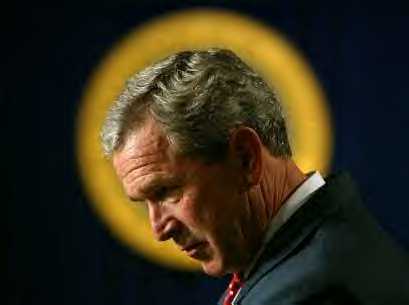
Below:  The holy messiah of the Republican cult.
September 05, 2008

Wrapping up the RNC

Republican Natives react favorably to Palin VP selection"I am delighted by her selection," said Jana McKeag, a co-chair of American Indians for McCain Coalition who attended the convention. "I think she brings a fresh face to the party, and she's a go getter. She's always looking at how to fix things. And we still have a lot of things out there in Indian country that need to be fixed."

Added McKeag, a member of the Cherokee Nation of Oklahoma: "We need strong leadership for this country that is familiar with Indian country. Both Sen. McCain and Gov. Palin can hit the ground running."

Indian supporters of the McCain/Palin ticket said they were pleased to have not one, but two, candidates running from states with large Native constituencies. The senator from Arizona presided over the U.S. Senate Indian Affairs Committee for several years, while Palin leads a state that contains more than 225 of the 560-plus federally-recognized tribes in the U.S.

Talk amongst Indian RNC attendees also centered on tribal history involving President Richard Nixon, whose initiative on Native economic development was operated largely through his vice president's office.

On specific tribal issues, especially healthcare improvement, Republican Indians were quick to say that McCain and Palin could bring change--and blamed certain Democrats for lack of action in recent times.

GOP attendees of the convention said they see the main holdup to getting the Indian Healthcare Improvement Act passed this year as being Democratic House Speaker Nancy Pelosi, who is not happy with the pro-life provisions of the bill.
American Indians for McCain Coalition debuts at GOP conventionJohn McCain's presidential campaign announced the leaders of the American Indians for McCain Coalition at a Sept. 3 meeting in St. Paul, in time for the two-month home stretch to the November presidential election.

It is perceived that Democrats greatly outnumber Republicans in Indian country, and John McCain's Democratic rival, Barack Obama, has pressed that perception for months now. But when McCain finally raised the flag for his Republican supporters in Indian country, they included a roster of influential figures.

At the top of the coalition's membership are Ben Nighthorse Campbell, Northern Cheyenne, the retired Republican senator from Colorado, and Rep. Tom Cole from Oklahoma, Chickasaw, the only enrolled tribal citizen in Congress.

Both issued statements of support for their party leader.

"John McCain has served on the Indian Affairs Committee since the first day he joined the U.S. Senate 22 years ago, twice serving as its chairman," said Campbell, himself a former chairman of the committee in a release. "He serves there not because he has to, but because he chooses to. He doesn't need to be educated on tribal issues, he has been working hard on behalf of Native people for a long time. John McCain is a man of honor and he will be a great President for Indian country, and all Americans."

Cole, in the same release, added, "Senator John McCain has been a leading advocate in Congress on tribal issues for over two decades. He has introduced and championed more legislation on behalf of tribes than any other member of Congress. He knows tribal issues and, as President, he will continue to fight for tribes and uphold tribal sovereignty."
GOP platform includes Native-specific language and goalsDelegates and leaders of the Republican National Convention have approved a national party platform for the next four years that includes several Indian-focused provisions.

Under a section in the 67-page document titled, "Supporting Native American Communities," the platform states that the "federal government has a special responsibility to the people in Indian country and a unique trust relationship with them, which has been insufficiently honored.

"The social and economic problems that plague Indian country have grown worse over the last several decades, and we must reverse that trend. Ineffective government programs deprive Indians of the services they need, and longterm failures threaten to undermine tribal sovereignty itself."

The platform, which amounts to a GOP roadmap of principles and goals for the next four years, says that Republicans believe that economic self-sufficiency is the ultimate answer to the challenges in Indian country and that tribal communities, not Washington bureaucracies, are better situated to craft local solutions.

"Federal--and state--regulations that thwart job creation must be reconsidered so that tribal governments acting on Native Americans' behalf are not disadvantaged."

The document states that the "Democratic Party's repeated undermining of tribal sovereignty to advantage union bosses is especially egregious."

"Republicans reject a one-size-fits-all approach to federal-state-tribal partnerships and will work to expand local autonomy where tribal governments seek it," according to the platform. "Better partnerships will help us to expand opportunity, deliver top-flight education to future generations, modernize and improve the Indian Health Service to make it more responsive to local needs, and build essential infrastructure."
In contrast, here's what the Democratic platform says:Democrats, at their recent convention in Denver, reaffirmed the importance of tribal sovereignty and stated that the "Democratic Party will honor the nation's treaty and trust obligations by increasing resources for economic development, health care, Indian education and other services."

The Democratic platform contained several notations of tribal issues throughout, such as recognizing a need to reduce disparities in health care for Natives in a culturally-sensitive manner. It also promised federal consultation with tribes on homeland security issues.

One stark contrast between the RNC and DNC platforms is that the Republican document does not include language promising to create a position for a White House advisor on Indian affairs, nor does it propose to hold annual summits between top federal political leaders and tribal leaders.
Comment:  The Republican platform is replete with buzzwords such as autonomy and empowerment. These are the same buzzwords the Bush administration has employed for the last eight years. Most Indians feel this administration has done little or nothing for them. McCain promises more of the same.

Republicans say the choice is between tribal communities and Washington bureaucracies. This is a lie since Democrats aren't calling for new bureaucracies. Democrats say the choice is between tribal communities with more resources and tribal communities with fewer resources. They know that when Republicans talk about getting out of the way, it means cutting the tribes' budgets and going home.

As usual, Republicans can't tell the truth if their lives depend on it. Which party has controlled Congress and the presidency for most of the last eight years? That's right, the GOP. But Democrats are to blame for the Bush administration's lack of accomplishments? Because they've oppose conservative attempts to control women's bodies in the last few months? Yeah, right.

If there are any Republicans who take responsibility for the Bush administration's failure to act in the last eight years, I haven't heard them. Hence we have McCain praising Bush to the hilt and then calling for change. And completely ignoring the fact that the Bush/McCain government is what needs to be changed. Heal thyself, old man.

About the only nugget of truth in these postings is that Democrats sometimes take the side of unions against tribes. When that threatens tribal sovereignty, as it often does, that's wrong. Indians should ask how the candidates stand on the recent National Labor Relations Board decision--the one that's forcing sovereign tribes to negotiate with unions.

As for all the things McCain has done for Indians, see What Has McCain Done Lately? The short version is that he's stood by while the Bush administration wasted government revenues on tax cuts and the war on Iraq rather than funding Indian services.

Below:  The POW braggart and Phyllis Schlafly Jr.

August 29, 2008

Mike Graham:  a national sick joke?

Mike Graham identifies himself as "a citizen of the Oklahoma Cherokee Nation, a retired service connected disabled Army veteran." He regularly posts columns on the Web, although I don't think I've seen his work in the press. For some reason he doesn't like Barack Obama:

Native Americans Against Obama For Good ReasonsObama, during the democratic primary campaign, stated he supported Native American issues. Obama even stated he supported bringing about a national holiday that recognizes Native Americans, but to date Obama has not seen fit as a U.S. senator to add his name to the national Native American Holiday Bill, currently before the U.S. Senate.

Not only has Obama failed to support Native American Indian issues, Obama has not supported the Native Hawaiian Government Recognition Bill before the U.S. Senate during his first term in office as a U.S. Senator. Obama should be front-and-center of this issue as he proudly claims Hawaii as his home state.

S.310: U.S. Senate Native Hawaiian Government Recognition Bill:

Title: A bill to express the policy of the United States regarding the United States relationship with Native Hawaiians and to provide a process for the recognition by the United States of the Native Hawaiian governing entity.

Obama failed to address "Real" Native American issues during the Democratic Primaries.

Obama over all, did not win the Native American Vote in the primaries across the country.
Graham follows these specific claims with a bunch of worthless rants. We can summarize them as follows:NATIVE AMERICAN HEALTH CARE: A NATIONAL SICK JOKE!

NATIVE AMERICAN EDUCTION SYSTEM: A NATIONAL SICK JOKE!

NATIVE AMERICAN POVERTY RATE: A NATIONAL SICK JOKE!

OBAMA HAS NO PLAN FOR "CHANGE" FOR NATIVE AMERICANS

A VOTE FOR OBAMA IS A VOTE FOR NO REAL CHANGE!

NATIVE AMERICANS AGAINST OBAMA FOR GOOD REASONS
Comment:  Would it be fair to note that the person screaming "NATIVE AMERICAN EDUCTION SYSTEM: A NATIONAL SICK JOKE!" misspelled "education"? Yes, I think so.

I trashed Graham's posting in Indianz.com's forum. Here's what I said:

Graham's posting consists mainly of a series of "Obama made no commitment" statements. My response:

1) Candidates are wise not to make too many commitments, especially when they haven't won the nomination or the election yet.

2) A lack of a formal "commitment" doesn't mean a lack of a policy on an issue.

3) McCain hasn't made a commitment on these issues either. He doesn't have sound policy proposals on most of them.

Obama on Hawaiian recognition

Graham is flatly wrong on the issue of Hawaiian recognition. Here are the facts:

Democratic convention plans Native Hawaiian recognitionU.S. Sen. Barack Obama of Illinois, the presumptive Democratic presidential nominee, issued a statement in full support of Native Hawaiian recognition in January before the state's caucuses. He said if the bill did not become law this year that he would sign it as president if elected.Where most Indians stand

As for this statement:Obama over all, did not win the Native American Vote in the primaries across the country.So what if Hillary Clinton won, say, 41% of the Native vote, Obama won 39% of it, and McCain won 20% of it? (All numbers are rough estimates.) The fact is that Natives voted for Democrats by something like 4-1. Clinton's and Obama's proposals for Indian country were close if not identical. And Clinton has endorsed Obama as the best choice for Indians and America.

If Graham is implying that most Indians oppose Obama and the Democratic agenda and prefer McCain and the Bush agenda, he's wrong again.

Finally, some information for Mike Graham about where Obama stands on the issues:

Barack Obama's Principles for Stronger Tribal Communities

August 27, 2008

Dean slams McCain on Cobell

Obama organizer:  American Indian votes crucialHoward Dean, chairman of the Democratic National Committee, rallied the crowd of more than 100 and said their communities will be crucial in electing Barack Obama.

"It is time to assume your rightful place in the political system of this country," Dean said.

Four or five Democratic senators owe their elections to Indian Country votes, Dean said.

Dean attacked Republican candidate John McCain, who led the Senate's Indian Affairs Committee, for his treatment of Eloise Cobell, the lead plaintiff in a multibillion-dollar Indian lawsuit against the federal government.

"He treated her like dirt. It was a disgrace. There's going to be a big difference between a John McCain presidency and a Barack Obama presidency for Indian Country," Dean said.

August 23, 2008

What has McCain done lately?

Is McCain's history with Indians a mixed blessing?As a senator from Arizona, a state with more than 20 federally recognized tribes, McCain has spent two decades on the Senate Indian Affairs Committee, including two stints as chairman. But some Native Americans are angry over McCain's attempts while chairman from 2005 to 2006 to put more regulations on Indian casinos. They say he should have been more focused on Indian health care and other needs.

Some also resent McCain's decision to refuse campaign donations from tribal governments.
And:McCain "couldn't claim any major legislative victories during his tenure as chairman concerning Indian country," said J. Kurt Luger, executive director of the Great Plains Indian Gaming Association in Bismarck, N.D. "He put forward a piece of legislation that would have added more burdensome regulation to our gaming industry at a time when our federal funding was at its lowest point."

To counter McCain's long history, Obama has met eight times with tribal leaders, opened campaign offices on reservations, run a radio ad in the Navajo language and released an Indian policy platform more than a year ago.

It's making an impression.
Comment:  For more on the subject, see McCain vs. Indians.

August 17, 2008

McCain vs. Indians

Now the truth is starting to come out about McCain's relationship with Indians:

McCain:  At a crossroads with Indian countryMcCain will remain a lawmaker to be reckoned with in Indian country if he doesn't win the presidency, a prospect that has generated a reluctance to criticize him on the record. In recent weeks, however, each of the following concerns has been raised by Natives who either liked him in the past, due to the knowledge of Indian country that he derives from representing Arizona tribes in the Senate; or who liked him in the past and still do, based on personal familiarity and character:

* McCain is opposed to raising taxes and in favor of balancing the budget. "That will only happen on the backs of Indian people."

* He has spoken highly of Supreme Court justices John Roberts and Samuel Alito. Neither has distinguished himself as an opponent of Indian country, exactly; but the next president will likely make several appointments to the aging court, and the great weight of opinion in Indian country is that a strong majority, cast in the McCain-favored mold of Roberts and Alito, would represent a clear and present danger to tribal rights.

* During his second stint as chairman of the SCIA, 2005 to 2007, with his Republican Party in the majority, his high-profile initiatives were to join GOP hard-liners in a failed rally against off-reservation gaming and to stiffen the requirements for the federal recognition of tribes. Meanwhile, issues that were all but invisible to non-Indians, such as law enforcement, health care, education and the rural drug crisis, got nothing like the attention they should have, in the view of numerous tribal and Indian-issue advocates.

* The candidate made a televised spectacle of himself on sex equity not long ago, misremembering quite how he had voted on a bill that would have given women the same insured access to birth control pills that men have to Viagra (he opposed the bill twice). Just as damning is that McCain declined comment on an evolving effort of President Bush's administration to regulate taking birth control pills as self-administered abortion, according to The Wall Street Journal.

* On the environment, McCain is still remembered for bringing a telescope to Mount Graham in Arizona, to the disruption of Apache culture and red squirrel habitat. And he is viewed with concern in some quarters for a commitment to offshore oil drilling and exploration, an agenda that could expand to include the Arctic National Wildlife Refuge in view of McCain's refusal to disavow oil extraction there.

One leader of the senior generation was more than willing to go on record against McCain. Elmer M. Savilla, Quechan, has a long memory of McCain, going back to the late 1980s, when he believes the SCIA injudiciously pursued Navajo leader Peter MacDonald. He is also convinced that McCain could have gone beyond the "one good shot" he gave to settling the litigation over the Individual Indian Money trust, in the case of Cobell v. Kempthorne.

"John McCain at one time claimed that he was a friend of Indians," Savilla said. "He hasn't done anything substantial except hold an occasional hearing and talk like a friend.

"I'm telling everybody out there that he's not the guy. He's not the man for Indian country."
Below:  McCain shows his concern for people the day after Hurricane Katrina.

August 06, 2008

McCain:  Bikers yes, Indians no

Column:  McCain policy should uphold Native religious freedoms, sitesIt's with some irony that Sen. John McCain has touted the federal government's “ethical and legal responsibility” to help Native people live the American Dream, a statement that smacked against the backdrop of the sacred Bear Butte as McCain paid tribute Monday to veterans attending a nearby biker rally.

While McCain has a strong record of championing Native causes, his legislative coups don't reflect the need to protect sacred sites and indigenous people's religious freedom.

McCain, the presumptive Republican presidential nominee, spoke to several thousand motorcycle enthusiasts at an annual tribute to military men and women attending the Sturgis Rally, the country's largest biker extravaganza. He greeted the crowd at the Buffalo Chip Campground, about four miles south of Mato Paha, a sacred butte rising 1,253 feet from the surrounding prairie.

Traffic to the campground was backed up for hours Monday night as people drove to the rough-and-rowdy, leather-and often-barely-clad venue for the night's headliners, featuring motorcycle stunts, Kid Rock, female wrestlers, the Miss Buffalo Chip Beauty Pageant - and McCain.

“I find it strange that he would come to a venue such as the Sturgis Rally that is very well known for nudity and drunkenness,” said Tamra Brennan, founder and director of Protect Sacred Sites.

“I understand he was there to honor the veterans, but it seems there's a lot of other ways he could have honored veterans.

“And why didn't he come into Indian Country while he was here?” she said. “During the campaign process, he didn't come to any of the reservations like the other candidates did and talk to people about Indian issues.”

Brennan, who lives at the base of Bear Butte, is among Native sacred site advocates campaigning to protect Bear Butte from continual encroachment, mostly by big biker bars within eye- and ear-shot of the ceremonial mountain, a religious area in the foothills of the Lakota Nation's revered Black Hills.
Comment:  As I said before, when Indian interests compete with white interests, guess which side McCain takes.

Below:  What McCain cares about:


And doesn't care about:

August 04, 2008

McCain seeks white-trash vote

Topless Women, Kid Rock, Bikers, And John McCainThe town of Sturgis, South Dakota will witness, on Monday, the rare fusion of drunken debauchery, public stripteasing, motorcycle rallying, a live performance by Kid Rock, and--last but not least--a veterans-themed speech by presidential candidate John McCain. Seriously.

On Sunday, the McCain campaign announced that the Senator will participate in the Sturgis Rally 2008 at Buffalo Chip in South Dakota, an annual tribute to American veterans. The event is up the Arizona Republican's wheelhouse, attracting thousands of active duty and former servicemen, many who have a natural affinity towards the Senator.

But it is hard not to notice the evocative, non-political sideshows that will literally surround McCain's speech. As the presumptive nominee takes the stage, the "Ringin' Wet & Wild" women's wrestling event will be taking place on the main amphitheater. Two hours before then, the "Miss Buffalo Chip Beauty Pageant--Bikinis on the Beach" will be staged at a different venue. That affair is described by ESPN's Jim Caple as "essentially a topless beauty pageant. And occasionally bottomless, too."
Here's a message sent out via MySpace by Louis Gray (Osage), I believe. It supplies the missing Native context:

McCain going to Sturgis, snubs NativesFrom: Louis
Date: Aug 4, 2008 7:06 AM

GOP candidate for President has decided to write off the Indian vote. First he hasn't campaigned anywhere in Indian country. Second he plans on going to the Sturgis motorcycle rally. Apparently he is after the naked girl and Hell's Angels vote. He is also snubbing and ignoring the well known Indian position of opposition to the rally because of its proximity to the the sacred Native site Bear Butte.

The rally is a yearly reminder that there are those who hold Native concerns with disdain; now we have a presidential candidate who shares those same considerations.

Shame.
Comment:  While McCain cavorts with topless and bottomless girls in a feeble attempt to look cool, his campaign is trying to link Obama with Paris Hilton and Britney Spears--two women Obama has never met and has nothing to do with. Can you say "hypocritical"?

FYI, Louis Gray was upset by my posting on The American statue. I believe Shan Gray the artist is his relative. Let's hope Louis likes this posting better.

For more on the Bear Butte controversy, see Sacred Site vs. Biker Bar.

July 18, 2008

Myopic Mt. Graham Observatory

Recently I posted an article on the battle over Mt. Graham: the University of Arizona and John McCain vs. Apaches and squirrels. If you visit the Mount Graham International Observatory website, you'd never guess that the Apache people claim the mountain as a holy site. In fact, the University has apparently scrubbed the Indians out of existence.

First, let's look at what the University considers A Long Time Ago...:Mount Graham International Observatory was conceived in the early 1980s. To understand more about the very early years--click on Site Testing Era. Two telescopes, the Vatican Advanced Technology Telescope and the Heinrich Hertz Submillimeter Telescope, were dedicated in 1993. The Large Binocular Telescope was dedicated in 2004 and is expected to be in full operation in 2009.Yes, the ancient era of the 1980s. Next, learn A Little Bit of History:"Local people refer to the entire mountain range southwest of Safford as Mt. Graham. The actual name 'Pinaleño Mountains' comes from an Indian word meaning "many deer," or deer mountain."

While the Mt. Graham area has been inhabited more or less continually in the past, the Gila Valley can trace its recorded history back to the time of the Spanish Conquistadores.

In the early 1880’s settlers came to the area in large numbers. These settlers found that the nearby mountains were a great benefit.
The first two paragraphs contain the only (oblique) references to Indians in the main text. The only other mention is in a footnote on the naming of a highway:2) This road was named Swift Trail after Thomas T. Swift, a Forest Supervisor with the Crook National Forest at that time. General Crook was involved with the Indian Wars in the late 1800’s.Let's get this straight. "Pinaleño" comes from an Apache word, but the website refers only to an "Indian word." The Apache have inhabited the Mt. Graham area for centuries, but the website refers only to inhabitation without naming the inhabitants.

In other words, the University has willfully removed any references to the Apache from its website. History began when the Spanish arrived and really got going when Anglos settled the area in the 1880s.

This is the same Eurocentrism that prevailed in past centuries in textbooks and other standard descriptions of American history. But it's funny to see it on an academic website in 2008.

I guess the University is afraid to admit the Apache have any claim on Mt. Graham. So it rewrites history and hopes nobody will notice. Talk about your intellectual cowardice.

Well, we've noticed. Let's hope this posting pops up high in the Google rankings whenever anyone searches for "Mt. Graham." It'll serve the University right.

July 17, 2008

University of Arizona vs. Apaches

Here's the story of how the University of Arizona built an observatory on a mountain sacred to the Apache:

How John McCain Doomed Mount Graham

Star WhoresIt turns out that Mount Graham isn't a very good place to probe the secrets of the heavens. There are updrafts of warm air pushing off the desert that distort the images, making them as jittery as the first snaps that came back from the Hubble space telescope. Plus, Mount Graham is a sky island and though it rises out of one of the driest stretches of land on the continent it is often cloudy on the peak.

"Any Apache could have told the astronomers that," says Vittorio. "It is a stormbringer mountain, summoning up all the moisture from the desert below, pooling it at the peak in a nimbus of clouds."

In fact, the University of Arizona knew that Mount Graham was a poor choice for the deep space telescopes from the beginning. In 1986, a team from the National Optical Astronomy Observatory conducted a two-year investigation comparing Mount Graham and Mauna Kea, Hawai'i as possible telescope sites. The Arizona peak fell far short. "There was no comparison," concluded Mike Merrill, an astronomer at the NOAO. Indeed, the study advised that there were 37 other sites ranking better than Mount Graham for observing stars-even the smog-shrouded Mount Hopkins topped Mount Graham.

This troublesome bit of news didn't deter the University of Arizona. In 1988, it announced plans to turn Mount Graham into a kind of astronomical strip mall, featuring seven telescopes at a cost of more than $250 million. They rounded up a bevy of partners, including the Vatican, several universities in the US and Europe and the odious Max Planck Institute, which in an earlier incarnation as the Max Planck Society gave assistance to the murderous experiments of Dr. Mengele.
And how it was partly John McCain's fault:[T]he University got its way because it has powerful politicians in its pocket, ranging from Bruce Babbitt to John McCain, and they used them relentlessly, especially the vile McCain.

The university tapped McCain to push through congress the so-called Idaho and Arizona Conservation Act of 1988. This deceptively-titled law was actually a double-barrel blast at the environment: it gave the green light to illegal logging in the wildlands of Idaho and for the construction of the Mount Graham telescopes, shielding them from any kind of litigation by environmentalists or Apaches. To help sneak this malign measure through congress, the University shelled out more than a half-million dollars for the services of the powerhouse DC lobbying firm Patton, Boggs and Blow.

The bill passed in the dead of night and, in the words of one University of Arizona lawyer, it gave the astronomers the right to move forward "even if it killed every squirrel".

It also exempted the project from the National Historic Preservation Act and other laws that might have made it possible for the Apaches to assert their claims to the mountain, giving the University of Arizona the dubious honor of becoming the first academic institution to seek the right to trample on the religious freedoms of Native Americans.
Comment:  So much for McCain's pro-Indian credentials. I wonder how many times McCain has supported Indians when it meant going against the white establishment. I'm guessing not many.