Showing posts with label Whiteclay. Show all posts

August 16, 2013

"Fighting firewater with firewater"

Pine Ridge Vote to Sell Alcohol Could Kill Whiteclay, Bring Huge Revenue to Tribe

By Vincent SchillingIn a public referendum vote on Wednesday, August 14, tribal members of the Oglala Sioux Tribe on the Pine Ridge Reservation voted to overturn the ban of alcohol with a vote of 1,843 in favor and 1,678 against. OST President Bryan Brewer has confirmed these results with Indian Country Today Media Network.

However, Brewer says that though the tribal members of the OST have stated their stance with a majority in favor of lifting the ban, the vote is not binding. The matter on whether or not to lift the ban is in the hands of the tribal council. Brewer says he expects the measure to pass in favor of lifting the ban.

Though Brewer says the matter of allowing alcohol on the Pine Ridge Reservation is a difficult one, he will support the decisions of his people and the vote of the tribal council. “If the council decides to do it, and I think they probably will, then we will start the process of legalizing alcohol on the reservation.”

“I find this entire matter troubling," said Brewer, “and, fighting alcohol problems with the proceeds of selling alcohol are like, fighting firewater with firewater.”
Key point:In a previous interview with James “Toby” Big Boy, Chairman of the Oglala Sioux’s Law and Order Committee, it’s not about alcohol problems as much as it is about taking down Whiteclay, a town that sits at the Reservation’s border and sells millions of dollars of alcohol to tribal members annually.

“The way I feel, we as a tribe understand the cultural meanings behind allowing alcohol, but you've got to understand the advantages to this. Today, Whiteclay is taking advantage of our people. To benefit our people we need to regain this revenue for ourselves,” said Big Boy.
Comment:  My take on this is that it's a tough question. I don't have a strong position on this issue.

I think it's worth trying, at least. If it works, I'm for it. If it doesn't work, I'm against it.

People probably have done studies on cities and counties that allowed alcohol sales after being "dry." I don't know what those studies say, but I'd use them if I had to formulate a position.

It may be worth doing just to drive Whiteclay out of business. Once the town dries up and disappears, the Lakota can reverse the decision if they wish.

For more on the subject, see Pine Ridge Legalizes Alcohol Sales and Oglala Sioux May Allow Alcohol.

August 14, 2013

Pine Ridge legalizes alcohol sales

Vote to legalize alcohol on SD's Pine Ridge passesNative Americans on the Pine Ridge Indian Reservation--home to some of the highest rates of unemployment, domestic abuse and suicide in Indian Country--have voted to end prohibition and legalize alcohol so the tribe can use the profits for education and treatment.

A majority of voters on Tuesday approved the measure, but the outcome was left hanging because of 438 challenged ballots that were more than the difference between the yes and no votes.

Francis Pumpkin Seed, Oglala Sioux Tribe Election Commission chairman, said workers on Wednesday checked each of those ballots to confirm they were cast by enrolled members. After that process was complete, the result was 1,871 for legalization and 1,679 against it, he said.

"Life will change now as we know it," said an elated Larry Eagle Bull, one of nine tribal council members who put the issue to a public vote. "This is a new era we're in. We've got to remember now we lived dry for 100 years and it was proven that prohibition didn't work. We're in new territory now."

Under the law, the tribe will own and operate stores on the reservation, and profits will be used for education and detoxification and treatment centers, for which there is currently little to no funding.

"Now we can finally get the help we need," said Eagle Bull, himself a reformed alcoholic. "Only good can come from it."
Comment:  This vote is a reaction to the voluminous alcohol sales to Indians just over the border in Whiteclay, Nebraska, of course.

For more on the subject, see Whiteclay Meeting Lasts Two Minutes and Oglala Sioux May Allow Alcohol.

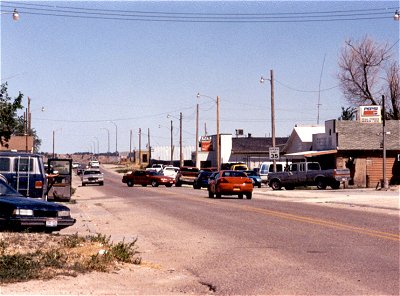
Below:  Whiteclay.

July 09, 2013

Whiteclay meeting lasts two minutes

Sioux president walks out of meeting with Neb. govThe president of South Dakota's Oglala Sioux Tribe met briefly with Nebraska Gov. Dave Heineman to discuss alcohol sales in Whiteclay, but walked out after less than three minutes.

Tribal president Bryan Brewer said Monday that he left the meeting because he felt the governor has no intention of trying to address alcohol-related problems that spread from Whiteclay, a Nebraska town that sells millions of cans of beer annually on the border of South Dakota's officially dry Pine Ridge Indian Reservation.

Brewer also says he felt disrespected by the governor. A Heineman spokeswoman denies the allegation.

Heineman says Nebraska has no legal authority to shut down the alcohol stores unless they violate the law. He says the tribe should focus on providing education and treatment to curb alcohol abuse.
Governor, tribal president talk for just 2 minutes

By Kevin AbourezkNot many problems can be solved in two minutes.

And that includes the situation in Whiteclay.

Oglala Sioux Tribe President Bryan Brewer of South Dakota and Nebraska Gov. Dave Heineman had planned for weeks to get together Monday morning to try to address alcohol sales in Whiteclay and alcoholism on the nearby Pine Ridge Indian Reservation in South Dakota.

But the meeting ended after fewer than three minutes, and the governor's office and Brewer later traded barbs over whose fault that was.
Comment:  For more on Whiteclay, see Fiasco Launches "Toast to Pine Ridge" and Oglala Sioux May Allow Alcohol.

October 09, 2012

Fiasco launches "Toast to Pine Ridge"

Rapper Lupe Fiasco Tweets Support for Fight Against Alcoholism with #ToastToPineRidgeHip hop star Lupe Fiasco gained notice in Indian country for the shout-outs to Pine Ridge in his single “Around My Way (Freedom Ain’t Free),” and later followed up with a low-profile visit to Pine Ridge; he’s now trying to further raise awareness with his 1.3 million Twitter followers.

He’s launched a campaign asking them to raise a glass—of water—to support the Lakota people struggling with alcoholism. The gesture comes in the wake of a federal court’s dismissal of the suit filed by the Oglala Sioux Tribe against brewers, retailers and distributors of alcohol sold in Whiteclay, Nebraska.

He announced this campaign on Sunday via his @LupeFiasco Twitter account, with a goal to amass 100,000 photos, over the next two weeks, of people toasting their support to those on Pine Ridge battling alcoholism.
Comment:  For more on the subject, see Pine Ridge Gets Media Attention and Fiasco Raps About Pine Ridge.

Below:  "Anthony Winfield, Lupe Fiasco's assistant, left, and Lupe Fiasco toast to the people of Pine Ridge with glasses of water."

October 04, 2012

Oglala Sioux may allow alcohol

Tribe Considers Lifting Alcohol Ban in South Dakota

By Timothy WilliamsThe Oglala Sioux Tribe will propose lifting an alcohol ban on the Pine Ridge Indian Reservation in South Dakota as a way to regulate the flow of beer and malt liquor onto the reservation, which has been plagued by alcohol problems for years, officials said Thursday.

Pine Ridge is a dry reservation where tribal members can be arrested if the police even suspect signs of drunkenness, like slurred speech or a wobbly gait. The reservation has disproportionately high rates of health and crime problems related to drinking.
And:Mr. Big Boy said lifting the ban would help the tribe control habitual alcohol consumption, reduce drunken-driving fatalities and use tax revenue to finance diversion and education programs. Pine Ridge is the only reservation in South Dakota that prohibits alcohol.

“I think it’s time to legalize alcohol,” Mr. Big Boy said. “It would reduce the risk of people going to border towns and endangering their lives, and we could use the money to build a family treatment center.”
Comment:  I'm not sure anyone thinks prohibition is working at Pine Ridge. Getting political relief from Nebraska or legal relief from a court seems unlikely. Maybe it's time to try this. Put a time limit on it so the ban resumes if drinking becomes even more of a problem.

For more on the subject, see Pine Ridge Gets Media Attention and Judge Dismisses Whiteclay Lawsuit.

October 02, 2012

Pine Ridge gets media attention

SD reservation sees barrage of media attentionBefore the [Whiteclay] lawsuit, an ABC documentary titled "A Hidden America: Children of the Plains" that aired last year drew both appreciation and consternation among tribal members because it focused on poverty, alcoholism and violence on the reservation.

More recently, Oprah Winfrey's OWN aired "Life on the Rez" part of its "Our America" series hosted by journalist Lisa Ling, in July. Rapper Lupe Fiasco mentioned Pine Ridge in his hit single "Around My Way" and tweeted photos from an impromptu visit to the reservation. And in August, National Geographic Magazine featured a 36-page spread documenting the history of the Lakota people, the poverty that has become entwined in their lives and efforts to overcome it.

Arriving to cover a story with a narrative already decided before the first interview is conducted isn't new in journalism. It's happened in Detroit with reporters writing about empty schools, skyscrapers and factories after the city's economy faltered. There's even a term for it: ruin porn. In Brazil, shantytowns known as favelas and the associated poverty and gang activity is a common thread that sees a lot of newspaper ink.

Giago has blasted "beer-sniffing reporters" who swoop in to Pine Ridge to report a story about alcoholism on the reservation without fully appreciating why the reservation has the statistics it does. Reporters often miss the people who are running the anti-alcohol programs or the schools trying to educate tribal members so they can get a job, he said.

Yet that media coverage on poverty and alcoholism has drawn many people from outside the reservation to donate their time and money to travel to Pine Ridge to try to help.
Comment:  I talked to an Indian Country Today editor about this "barrage of media attention," so people are aware of it. But we're not sure what's causing it. Is each story triggering more stories? If so, that shows the power of the media and the need for more coverage of Indian country.

It's also why I've blogged about Indian country for years: to draw attention to the issues and problems. I'm sure one TV special has more effect than my 10,000-plus postings, but every little bit helps.

For more on Pine Ridge, see Rally for Pe' Sla Purchase and My Interview with Steven Lewis Simpson.

Judge dismisses Whiteclay lawsuit

Judge dismisses Whiteclay lawsuit

By Robyn WischA federal judge has dismissed a lawsuit against some of the largest beer manufacturers in the world. The suit claimed the beer makers were contributing to chronic alcoholism on the Pine Ridge Indian Reservation in South Dakota.

The suit was filed in district court in Lancaster County on behalf of the Oglala Sioux Tribe. It named major beer makers, including Anheuser Busch and Miller Coors among others, along with four liquor stores that operate in the border town of Whiteclay, Neb. Whiteclay sits a few hundred yards from the border of Pine Ridge and is home to about 11 people. But the stores sell what amounts to four million cans of beer in Whiteclay each year. So most of that alcohol is presumed to be transported over the border into Pine Ridge, which is a dry reservation.
And:U.S. District Judge John Gerrard dismissed the suit Monday but in his ruling, he said there is “little question that alcohol sold in Whiteclay contributes significantly to tragic conditions on the reservation.” He suggested the defendants “could, or should” do more to improve those conditions before saying the matter does not belong in federal court.

White said the judge has left the door open for the tribe to pursue the case in state court, which he is advising his clients to do. Lawyers for the stores and the beer makers have declined to comment after repeated requests.
Comment:  As everyone but the Indians, perhaps, expected, the lawsuit went nowhere. But if it focused more attention on the problem, it served that purpose, at least.

For more on Whiteclay, see Pix of My South Dakota Trip and Fiasco Raps About Pine Ridge.

July 29, 2012

Pix of my South Dakota trip

I plan to write some articles about my South Dakota trip in June. Meanwhile, here are my photos of the trip. I trust the captions will explain our experiences well enough.

Day 1

LAX to downtown Rapid City--June 24, 2012 (7 am-3:30 pm)

Prairie Edge Gallery--June 24, 2012 (3:30-5:30 pm)

Dinosaur Park--June 24, 2012 (5:30-6:30 pm)

Etta Mine--June 24, 2012 (6:30-7:30 pm)

Cemetery and Mt. Rushmore--June 24, 2012 (7:30-10 pm)

Day 2

Hotel and Scenic, SD--June 25, 2012 (morning)

Sheep Mountain--June 25, 2012 (morning)

Fossil-hunting--June 25, 2012 (morning)

Visitor center and Stronghold--June 25, 2012 (morning)

Red Cloud Indian School--June 25, 2012 (late morning)

Pine Ridge and Whiteclay--June 25, 2012 (early afternoon)

Wounded Knee--June 25, 2012 (afternoon)

Lakota War Pony Races--June 25, 2012 (afternoon)

Oglala Lakota College--June 25, 2012 (afternoon)

Lakota Prairie Ranch Resort--June 25, 2012 (late afternoon)

Thunderstorm--June 25, 2012 (early evening)

Day 3

Iron Mountain Road--June 26, 2012 (early morning)

Custer State Park and Wind Cave--June 26, 2012 (morning)

Into the cave--June 26, 2012 (early afternoon)

Hole in the Wall and Needles Highway--June 26, 2012 (afternoon)

Sylvan Lake and Rapid City--June 26, 2012 (late afternoon)

Day 4

Hunting geodes and finding Nemo--June 27, 2012 (morning)

Homestake Gold Mine and Terry Peak--June 27, 2012 (morning)

Spearfish Canyon and Deadwood--June 27, 2012 (early afternoon)

Bus tour and Boot Hill--June 27, 2012 (afternoon)

Walking in Deadwood--June 27, 2012 (afternoon)

Day 5

Black Hills Institute--June 28, 2012 (morning)

Gift shop and Crazy Horse Memorial--June 28, 2012 (morning)

On the Crazy Horse Memorial--June 28, 2012 (early afternoon)

Visitor center and gift shop--June 28, 2012 (afternoon)

Veranda and Lakota dancers--June 28, 2012 (afternoon)

Sculptor's studio and cultural center--June 28, 2012 (afternoon)

Nature Gates and Rapid City--June 28, 2012 (afternoon)

Day 6

Hotel and Memorial Park--June 29, 2012 (morning)

City of Presidents, part 1--June 29, 2012 (morning)

City of Presidents, part 2--June 29, 2012 (morning)

City of Presidents, part 3--June 29, 2012 (late morning)

City of Presidents, part 4--June 29, 2012 (early afternoon)

Fountains and park statues--June 29, 2012 (afternoon)

Rose garden and flight home--June 29, 2012 (afternoon)

Plus a few postings on related subjects:

Cultural center at Crazy Horse Memorial
Anti-suicide campaign at Lakota college
Hundreds of Sun Dances
Economic development on Pine Ridge

July 16, 2012

Fiasco raps about Pine Ridge

Native Sun News: Lupe Fiasco speaks to Pine Ridge in new single

By David Arredondo“First off, say peace to Pine Ridge/Shame at all the damage that the white man wine did.”

This is the opening line of Wasalu “Lupe Fiasco” Jaco’s first single off his upcoming fourth studio album. The aptly titled single, “Around My Way (Freedom Ain’t Free),” was released on May 21 and is the Atlantic Records artist’s take on what he sees as wrong with America–past and present.

Since his debut in 2006, the rapper whose stage name is Lupe Fiasco has included his stance on social, political, religious and other worldly issues in his lyrics. This time he points out the historical and contemporary injustices done to the Oglala Lakota Nation.

Fiasco, an African American, mentions in his song the 5 million cans of beer sold annually at the Pine Ridge Reservation border town of Whiteclay, Neb. According to the Nebraska Liquor Control Commission’s website, there were over 400,000 gallons of alcohol consumed–roughly 4.2 million 12-ounce cans of beer–during 2011 by Pine Ridge residents who had purchased the brew in Whiteclay, so he’s not far off. Fiasco also brings up the topic of Indian gaming in his lyrics.


Hip Hop Star Lupe Fiasco Visits Pine Ridge and WhiteclayOn Sunday, the acclaimed rapper paid a visit to the reservation, which has increasingly become the focus of media attention thanks to two TV specials (episodes of Our America and 20/20) and a high-profile lawsuit against those who supply liquor and beer to the stores of Whiteclay.

The visit was preceded by little (if any) fanfare—on Sunday afternoon, Fiasco’s Twitter followers received the following tweet:

“Guess where I am??? Me and @StringBizness on a Road Trip to say ‘Peace 2 Pine Ridge’ in person… ”

He proceeded to snap a few photos and make further comments, although he does not seem to have made any publicity or promotional appearance on the rez.
Comment:  For more on Indians and rap, see Screw the Drugs Music Video and Litefoot's Reach the Rez Tour.

June 05, 2012

Lakota lawsuit publicizes Whiteclay problem

Beer Profiteers Fight Oglala Lawsuit That Seeks Control of Alcohol Sales

By Stephanie Woodard[B]usiness is booming, especially in Whiteclay, where four ramshackle stores annually sell the equivalent of more than 4 million 12-ounce servings of beer (though not spirits or wine), according to the Nebraska Liquor Control Commission. “Whiteclay is a unique situation,” said attorney Tom White, of White & Jorgensen, in Omaha. Through his firm, the tribe has filed a federal lawsuit in Nebraska against those who manufacture, distribute and sell the beer available in Whiteclay—including local retail outlets and the Anheuser-Busch, Miller, Molson Coors and Pabst brewing companies. The tribe demands as-yet-unspecified damages from the businesses for knowingly engaging in illegal sales and contributing to the epidemic of alcoholism on its impoverished reservation.

Most Whiteclay sales are inevitably illegal, said White, because the town has no public establishments, such as licensed bars or cafés, in which to consume alcohol lawfully. Virtually all booze sold there must be either drunk in public in violation of Nebraska law or carried onto the dry reservation in violation of Oglala Sioux Tribe law. “When a liquor store elsewhere sells its goods, it can assume they will be used lawfully,” White said. “In contrast, in Whiteclay, with no publicly accessible place to consume alcohol legally, the stores sell it knowing that, without a doubt, it will be used unlawfully.”

The amount that can be sold legally will be very small; residents of Nebraska towns with their own bars and carryout stores are unlikely to drive to Whiteclay to shop. So lawful booze purchases may be limited to just what Whiteclay’s few residents can drink—nothing like the millions of dollars in store sales and hundreds of thousands of dollars in federal and state excise taxes that Nebraska’s liquor commission says are generated yearly in Whiteclay.

The tribe has no jurisdiction over Whiteclay. Though the town lies on land claimed by the Oglala Sioux Tribe, that claim is disputed by both Nebraska and the United States, tying the tribe’s hands when it comes to enforcing liquor-control laws there. According to tribal Judiciary Committee head James “Toby” Big Boy, the tribe has pleaded with Nebraska to crack down on illegal sales in the town and set up tribal-police blockades of the road to Whiteclay. Tribal members march annually to protest unsolved murders and unexplained deaths of Natives in the Whiteclay area, he said. The new lawsuit follows decades of attempts to stop alcohol’s devastation.
Whiteclay: Oglala Lakota Lawsuit Keeps Alcohol Problem on Front Burner

By Mary Annette PemberAs a Native American woman and recovering alcoholic I am grateful for Whiteclay, Nebraska for the simple reason that it keeps the disease of alcoholism and addiction right where it needs to be for our people: front and center.

Having seen many failures and successes in sobriety, I am convinced that the message in the often-quoted recovery phrase willingness to do whatever it takes is the key to successful sobriety.

The Oglala Lakota lawsuit against beer companies and stores in Whiteclay is a bold step that reveals the communities' desperation. Social and health services on the reservation are overwhelmed. As a recovering alcoholic, however, I see their desperation as a good thing. It is helping the community gain the willingness to put aside shame, embarrassment, denial and public censure. Although the lawsuit may be destined for failure, it could be an important move towards changing the public narrative surrounding alcoholism as a disease of “choice.”

In an earlier article in ICTMN, Terri Hansen wrote about the research of two Native women journalists who were examining the way in which diabetes is also framed in the popular press as a disease of choice. They compared this perspective with the way in which tobacco addiction has changed in the public view and how greater understanding of the addiction has resulted in increased public funding for anti-smoking programming. They also noted how the public subsequently exerted greater pressure on tobacco companies to take responsibility for their roles in this public health crisis.

Although alcoholism is a disease, greed is not—it is a choice. The people working for corporations such as Miller Brewing Company and Anheuser-Busch and the liquor-store owners in Whiteclay are actively making a choice to profit from the sales of a product that fuels addiction and kill others. In an Associated Press story, Randall Goyette, an attorney for the Jumping Eagle Inn, one of the Whiteclay liquor stores named in the lawsuit, “alcohol problems on Pine Ridge can only be due to personal conduct.” Do such statements really absolve alcohol producers and sellers from culpability in this equation of addiction? Is publishing the disclaimer Drink Responsibly really enough?
Comment:  The beer companies say they're only obeying the law. But they've spent millions of dollars lobbying for laws that favor their business at the expense of Indians. When they've basically bought the laws they're supposedly obeying, their protest ring a little hollow.

I discussed the Whiteclay lawsuit before. I said I didn't think it had a chance of winning, but it could serve to publicize the issues. I'd say it's succeeded at that, with stories appearing in major media outlets such as the New York Times.

Is this a waste of our court resources? No more than a heavily lobbied legislature is a waste of its resources. Rich people lobby for the laws they want; poor people file lawsuits to stop these laws. The two are opposite sides of the same coin.

If you want a level playing field, ban both tactics: unnecessary rich lobbying and unnecessary poor lawsuits. But don't ban one and not the other. No way is it fair to let the rich buy the laws they want while the poor can't challenge them.

For more on Whiteclay, see Stopping Whiteclay Won't Stop Alcoholism and Suing Beer Sellers for Treaty Violation.

March 05, 2012

Stopping Whiteclay won't stop alcoholism

I haven't reported on the recent Whiteclay lawsuit because I'm not sure it qualifies as pop culture. But this op/ed piece on the subject caught my eye:

The $500 million Whiteclay lawsuit and a wide spot on the road called Swett

By Stew MagnusonI won’t presume to know what the true intentions of the Oglala Nation’s tribal leaders were when they filed the $500 million lawsuit seeking damages from the beer sellers in Whiteclay, Nebr., along with the distributors and brewers.

If they wanted to bring attention to the problem of chronic alcoholism on Pine Ridge where alcohol is prohibited, and the lack of resources being put toward the problem, then kudos!

In that respect, the lawsuit has already been a resounding success. I opened up the print edition of the Washington Post last week, and found the AP lawsuit story on page 2. USA Today, and other media outlets have picked up on the story. More importantly, eastern Nebraska newspapers have Whiteclay on their front pages again.
That's what's happening now. But Magnuson notes another location called Swett where Indians can buy alcohol even if Whiteclay is shut down. Here's what he concludes about the lawsuit:As far as making an impact on the real problem, that remains to be seen. If the tribe prevails, and wins a big chunk of money—and if that money is put toward effective and proven alcohol treatment programs, then it could help reduce the substance abuse rates on Pine Ridge. Or, if the brewers agree to build and fund a substance abuse center as a settlement, that would be a positive outcome.

Those are big “ifs,” though.

If through the lawsuit, the tribe manages to reduce the number of Whiteclay licenses, curtail the sale of beer there, or actually get the four stores shut down, it won’t result in a single sober day for a single person on Pine Ridge.

Why? The answer is Swett.

The shabby little town of Whiteclay is a symptom. The disease is drug and alcohol abuse.

Prohibition on Pine Ridge is not a treatment. It’s like a doctor entering the room of a cancer patient and telling him: “I don’t want you to have cancer.” Then expecting the tumor to magically go away.

Banning the possession and sale of booze on Pine Ridge as the Oglala Nation’s main policy to tackle alcoholism is an abject failure. Build a 20-foot high fence around Pine Ridge, fill up a moat with alligators and sharks, quadruple the number of cops, and give bootleggers the Death Penalty. None of that will help a chronic alcoholic get well and stop drinking.
Comment:  In 2010, various parties sued Whiteclay's beer sellers for a treaty violation. As far as I know, that lawsuit went nowhere.

As for this lawsuit, I tend to agree with Magnuson's views. It's a great publicity stunt, but I don't think it has a chance of winning. Prohibition won't do much good by itself; what Pine Ridge needs is a comprehensive strategy against substance abuse.

For more on Whiteclay, see Whiteclay = Genocide? and Whiteclay Protests Are "Wildly Ineffective."

January 14, 2010

Suing beer sellers for treaty violation

Native activists protesting "bad man" clause violation Friday in Whiteclay

By Mary GarriganA small group of Native American activists will march into Whiteclay, Neb., at 1 p.m. today to present a lawsuit they plan to file accusing four Whiteclay beer sellers and a Christian ministry of violating the "bad man" clause of the 1868 Fort Laramie Treaty.

Duane Martin Sr. of the Strong Heart Civil Rights Movement and the Black Hills Sioux Treaty Council say they will file a complaint in U.S. District Court in Lincoln, Neb., next week naming four Whiteclay beer sellers: Mike's Pioneer Liquor, State Line Inn, Arrow Head Inn and Jumping Eagle Inn, and the Christian nonprofit 555 Whiteclay, which operates a soup kitchen and other ministries in Whiteclay.
I wouldn't give this lawsuit much chance of success, but there's this:The proposed lawsuit, which Martin promises to file next week in Lincoln, asks the federal government to stop those establishments from doing business under Article 1 of the 1868 treaty between the Sioux nation and the U.S. government. The five entities are guilty of bringing "sickness and death to the Oglala Band of the Lakota Nation." It also calls on the state of Nebraska to not allow alcohol sales within a "buffer zone" between the two states.

The "bad man" legal argument was successfully used by Lavetta Elk, another Oglala Sioux, in a lawsuit alleging that a U.S. Army recruiter had violated the "bad man" clause when he sexually molested her while transporting her to a military recruiting appointment. Elk recently won a $650,000 settlement that left intact a federal judge's ruling that said the treaty language requires the government to reimburse Sioux tribe members who are injured by "any wrong" done by "bad men among the whites, or among other people subject to the authority of the United States."
Comment:  I'm amazed that a lawsuit based on the Fort Laramie treaty actually succeeded. Nice to know our judicial system doesn't totally ignore the "supreme law of the land."

This reminds me of a line from Archie's Grand Opening--All in the Family's seventh episode of its eighth season (airdate: 10/30/77). Archie Bunker has just reopened Kelcy's Bar as Archie's Place and was serving his first customers. Michael says they should cut off one bar patron who is already drunk. Archie asks if the man is driving home and if he's an Indian. The answers are no, so Archie says to serve him.

For more on Whiteclay, see Whiteclay Needs Creative Thinking and Whiteclay = Genocide?

April 23, 2009

Whiteclay = genocide?

A report on The Battle for Whiteclay, a documentary that's making the rounds of theaters.

Film aims to turn up heat on Whiteclay

Town's beer stores 'export ... misery to Pine Ridge'

By Jeff Martin
The film follows LaMere and fellow Native American activist Russell Means "through the streets of Whiteclay to the halls of Nebraska's State Capitol in their efforts to end alcohol sales in the place many have dubbed 'skid row on the prairie,' " according to an announcement for the free Sioux Falls screening.

In the film, men are shown passed out in the streets of the village.

"How can we talk about the good life, how can we talk about the promises of our state when Whiteclay flourishes in our backyard?" says LaMere, a member of the Winnebago Tribe of Nebraska who lives in South Sioux City, Neb.

Mark Welsch, Omaha coordinator of Nebraskans for Peace, has seen the film and said it left him stunned that Nebraska allows the stores to remain open.

"I mean, we're killing Indians by allowing that to happen," he said. "It's genocide. It's no different, really, than when we were shooting them in the heads, when we were trying to take over their land."
Comment:  I'd say this is somewhat less than a full-blown case of genocide. But it's a serious problem.

Perhaps Russell Means can get the town of Whiteclay to secede from Nebraska and become part of his Republic of Lakotah. Or perhaps he can simply declare it part of Lakotah by fiat.

For more on the subject, see Whiteclay Protests Are "Wildly Ineffective" and Nebraska's "Dirty Little Secret."

March 10, 2009

Whiteclay protests are "wildly ineffective"

Eliminating Whiteclay isn't the solutionIn Whiteclay, it’s estimated the small community's four stores sell about 4 millions cans of beer each year. Law enforcement and the community continue to deal with public intoxication and a wide variety of alcohol-related issues.

And yet the problem persists.

Earlier this week activist Frank LaMere led the protest at the Capitol. It’s familiar ground for LaMere who has protested sales at Whiteclay and urged the Nebraska legislature and law enforcement to solve the problem.

But if Nebraska laws aren’t being violated, what can be done?

Stepping up enforcement or pursuing blockades on the short stretch of road from Whiteclay to Pine Ridge might have a short-term impact but neither can be sustained for the long term.

What needs to be done is tribal leaders, as well as activists, should shift the focus from Whiteclay and look within the reservation borders to develop their solution. Prohibition doesn’t work but education, treatment and community involvement can.

The problem isn’t Whiteclay. If the city were to end sales of alcohol today, sales would simply shift to another location, another liquor store on a community bordering Pine Ridge.

While the acknowledgment of the problem on Pine Ridge and efforts to address it are admirable, focusing on a small community on the Nebraska border has been, and will continue to be, wildly ineffective.
Comment:  One could argue for the Whiteclay protests as a way of focusing attention on the problem. But I wouldn't argue for shutting down Whiteclay as the best or final solution to the problem.

For more on the subject, see my previous Whiteclay postings:

Nebraska's "dirty little secret"
The Battle for Whiteclay
Whiteclay isn't the problem?
Indians vs. Anheuser-Busch

December 17, 2008

Nebraska's "dirty little secret"

One Man's Fight Against Alcohol DealersJust south of Pine Ridge, S.D., is a place that Frank LaMere calls Nebraska's "dirty little secret."

It's a place that has made national headlines for selling 11,000 cans of beer daily, mainly to the residents within walking distance on the Pine Ridge Indian Reservation. It's a place that has only 14 residents but boasts four liquor stores. It's also a place that LaMere plans to bring up with President-elect Barack Obama. LeMere is an executive member of the Democratic National Committee.

"When I'm sitting across from the president of the United States, don't you think that I'm gonna bring up Whiteclay?" he said here at Nebraska Wesleyan University.

Film director Mark Vasina, Winnebago, unveiled his documentary, "The Battle for Whiteclay," Nov. 15 to an audience of about 20 people at the university. The movie explores LaMere's efforts to engage Nebraskans in the issue he said "has become very much an ‘out of sight, out of mind' situation."
And a mini-review:By filming marches and demonstrations, strategically making his point without formal interviews, Vasina puts viewers in the action. Rather than interview, he uses footage from organized marches, LaMere's own testimonies, snippets of state congressional hearings and local county board meetings. Especially insightful testimonies come from representatives of the grocers association and the National Beverage Association. A lot of effort and resources seem to have gone into keeping Whiteclay so opportunely located.

In one march from Pine Ridge to Whiteclay, nine Native people, including LaMere, were arrested for crossing a line that the Nebraska State Highway Patrol swat team told them not to cross. They were loaded onto a bus and taken to jail. Just as powerful is a moment in the movie following the testimony of several people who live in Sheridan County, Neb. The apathy and underlying racism are devastating.

Keeping the liquor stores in Whiteclay, rather than closing them down and making it more difficult for people in Pine Ridge to get the alcohol that is illegal on their reservation, they enjoy the security of knowing that the problem of alcoholism, violence and traffic of Native people is far from their homes. Maintaining convenient access to alcohol in Whiteclay—in a corner of Sheridan County far from the homes of most residents—is masked under the guise of concern for lawful distribution and the rights of the store owners.

While I tire of seeing movies that beat to death the same woes in Indian Country, this movie went a step beyond that. It showed someone doing something about it. And that someone wasn't just a good-hearted outsider. It was a Native person, albeit one from a different state.

In this movie, LaMere's actions inspire.
Comment:  For more on the subject, see Native Documentaries and News.

June 26, 2008

The Battle for Whiteclay

Whiteclay documentary debuts WednesdayThe controversy over the sale of alcohol in Whiteclay to Oglala Sioux tribal members is the subject of a new documentary film, “The Battle for Whiteclay.”

It is a five-year labor of love by producer/director Mark Vasina of Lincoln, who returned to Nebraska a few years ago to pursue documentary filmmaking after working for 10 years on Wall Street.

It follows Native activists, including Frank LaMere of Winnebago, from the streets of Whiteclay to the halls of the Nebraska State Capitol in their campaign to end alcohol sales in Whiteclay.

Whiteclay’s beer stores sell an estimated 11,000 cans of beer a day, mostly to Oglala Sioux tribal members living two miles north of the town. The sale and possession of alcohol is banned on the Pine Ridge Indian Reservation.
Comment:  For more on the subject, see Native Documentaries and News.