Showing posts with label language. Show all posts

February 03, 2014

Keres spoken in Coke commercial

Coca-Cola's controversial Super Bowl ad made good use of a Native language:

Coca-Cola’s ‘America the Beautiful’ Super Bowl Ad Causes StirMoving on to more historic points of fact: English is of course a foreign language to this country. When the first European explorers arrived here there was not just one Native American language—another common misconception—but hundreds spoken.

Many of those languages have survived and one was represented in the Coca-Cola ad. As Darrell Dodi Robertson pointed out when Deadspin posted its story, titled “Dumb People Mad at Multi-Lingual ‘America the Beautiful’ Coca-Cola Ad,” to Facebook, “My wife speaks Navajo. And they weren't even included in the commercial.”

Languages featured in the Coca-Cola ad were English, Spanish, Tagalog, Hebrew, Hindi, Keres, and Senegalese-French.

Keres is a language spoken by the Pueblo people and is also known as Keresan. The language is spoken by nearly 11,000 people in the American Southwest today.
Santo Domingo teen appears in debate-stirring Super Bowl ad

By Uriel J. GarciaOn Twitter, the hashtag #SpeakAmerican started trending through Sunday and Monday.

But others defended the commercial, saying it represents the country’s various cultures and diverse languages.

“Unless you’re speaking Sioux, Cherokee, Navajo, or any other Native American language there is no such thing as #SpeakAmerican,” a user with the Twitter handle @MsTriniSpyce wrote.

Bird agreed with supporters of the commercial saying that the U.S. is diverse, and the company was only trying to portray a positive image of the country.

“I was overwhelmed by everyone talking negative so quickly,” she said. “I was disappointed and hurt because America isn’t just English-speaking. There’s a lot of cultures out there.”

Bird, who wants to be an actor, said a former teacher at the Santa Fe Indian School emailed her about Coca-Cola’s casting call in Santa Fe for a Super Bowl ad. After going through two rounds of auditions, she was called late last year to appear in the commercial, which is her first, she said.
Coca-Cola--It's Beautiful in KeresMeet Christy and hear her sing "America the Beautiful" in Keres, one of the many languages in Coca-Cola's 2014 Big Game ad. #AmericaIsBeautiful

"Speak American"

It's pretty easy to rip the colonizers' insistence that we "speak American." For instance:

My view on the Coca Cola commercial

By Dana Lone HillSure only one of our over 500 languages made it on the Coca Cola commercial. But this land had hundreds of nations and languages before 1492. In all of the Americas, there were thousands. The landing on immigrants here was the beginning of the American holocaust. Native people of this land were killed for land, for gold, etc. This attempted genocide continued for over half a century and never ended. In the late 1800s, Native children were taken from their homes and put in military like residential schools from the age of 4 to 18. Often taken away from parents in handcuffs and not allowed to communicate with parents. Many times children died while at these schools, they were abused physically, sexually, and mentally. They were beaten until they spoke only English.

See, there were many beautiful languages on this land before English was ever even spoken here. These children who were beaten for speaking their own language were our grandparents and great grandparents. Today, there are many language revitalization programs on reservations, starting with immersion daycare. It is a beautiful thing to see a 4-year-old more fluent than her parents. With hope, hard work, and determination our languages will come back after they tried to beat it out of our ancestors for so many years.

Many times people who think so narrow minded, that English should be the only language here, often forget this is not “Their America,” instead it is the land that we belong to. So when I see so many people angry over the fact that there are other languages in this country, I smile. When I see people rant over the fact that their city has 5 versions of one phone book, I know how they feel. See, these people forgot that they are not original to this land, we are. And I know how they feel, because the same anger they have for there being so many languages in America is the same anger I have for our languages almost dying off. And I am tempted to tell them the three words every Native American hates to hear:

“Get over it.”
When you move to a new land, you learn the language, said the settlers who obliterated every culture and language they came in contact with. Thanks for the tip, hypocrites.


Yep, it's pretty damn stupid to insist on speaking "American" when there's no such language. When the only languages that can claim to be authentically American are Navajo, Lakota, Cherokee, and other Native tongues.

America the gay

Finally, it's ironic that conservative racists focused on the languages. The video featured what looked like two gay men with their children. They got more airtime than anyone else. If anything in the ad was a statement, that was.

It's especially ironic considering who wrote America the Beautiful:


Smart woman! Ninety years ago, she anticipated the GOP's decline and fall. She guessed the party would fail because of its bigotry and intolerance, and that's what's happening now.

July 05, 2013

Navajo Star Wars premieres

Navajo dubbed 'Star Wars' a crowd pleaser at premier

By Shondiin SilversmithThe original Star Wars: Episode IV--A New Hope premiered nationwide in 1977, but the characters based in a galaxy far, far away were brought a little closer to home during the Navajo dubbed film premiere on June 30 at the El Morro Theater.

"It has a lot of humor in it," said 2012-2013 Miss Navajo Nation Leandra Thomas adding that she caught herself smiling throughout the whole movie. "I've never seen any of the Star Wars movies and it made a lot of sense seeing it once (and) in the Navajo language."

The first character the audience is introduced to in the film is C-3P0 and R2-D2 as they walk through their spacecraft while it's being attacked. As the first line in Navajo is spoken by C-3P0 the audience erupts in cheers.

"I was very very impressed how all the recordings came together," said Geri Hongeva-Camarillo, who played C-3P0.

As the movie moved forward the crowd reaction remained high as the audience laughed and cheered as each character was introduced with a Navajo voice.

"The tone in Navajo definitely makes a big difference compared to when you listen to something in English," said Donovan Hanley from White Cone, Ariz., who attended the premiere with his mother Ann Maree Hanley. "It was very cool and good representation."
Comment:  For more on the subject, see The Best Indian Movies.

Below:  "Actors James Junes, left, and James Bilagody speak outside the El Morro Theater Sunday evening during the premiere of Star Wars Episode IV: A New Hope that was dubbed into the Navajo language." (Donovan Quintero)

May 23, 2013

Navajo Star Wars cast chosen

A coach as Vader?

Director unveils cast of Navajo 'Star Wars'

By Shondiin Silversmith
The Force proved to be strong with this group of Navajos as they earned the seven primary roles in the upcoming Navajo-language version of "Star Wars."

Terry Teller, of Lukachukai, Ariz. will be the voice of Luke Skywalker.

"It is pretty pretty awesome," Teller said happily, adding that he enjoyed the audition because it required him to really act. "Since it was going to be the first movie in Navajo I wanted it to be the best," he said. "I challenged myself to play the role, as it needs to be. It was hard because I have never done anything like that before."

Anderson Kee of Cottonwood, Ariz. will be the voice of Obi-Wan Kenobi.

Kee said the way the Obi-Wan Kenobi talks about the Force in the movie reminds him of a Navajo medicine man, especially when he says the words in Navajo.

"It was a new experience for me," he said.

Clarissa Yazzie of Rock Point, Ariz. will be the voice of Princess Leia.

Yazzie said she enjoys Princess Leia's sarcastic and dominating personality because she feels that her personality closely resembles Leia's.

"I was excited to just be a part of the whole experience," she said.

James Junes of Farmington, N.M. is the voice of Han Solo - and one of the very few experienced actors to win a part. Junes is part of the comedy team James and Ernie, and has had roles in low-budget films on the Navajo Nation.

Marvin Yellowhair of N.M. is the voice of Darth Vader.

Yellowhair said he wanted to be Darth Vader because he is the main character he remembers from Star Wars, mostly due to the fact that the villain is always in control and he is a leader. He said it related to him as a coach at Rock Point High.

"It felt so good being involved with this project," he said.
Comment:  For more on the subject, see Star Wars Translated into Navajo.

April 19, 2013

Star Wars translated into Navajo

Star Wars Saga to be translated into Diné language

By Bill DonovanComing as a surprise to everyone, especially members of the Navajo Tribe, Obi-Wan Kenobi will soon say, "May the Force be with you" in the Diné language.

Navajo members will soon be able to hear the beloved character from the Star Wars Saga say this and more as the Navajo Nation Museum, Navajo Parks and Recreation, and Lucasfilm, Ltd. have joined forces to dub Episode IV of the classic space fantasy film, Star Wars into the Diné language. This marks the first time that a mainstream movie will be dubbed into the Navajo language.

Manuelito Wheeler, the director of the Navajo Nation Museum, said he's been working on the idea of getting a popular film dubbed into Navajo for more than three years as a way to preserve the Navajo language.

"By preserving the Navajo language and encouraging Navajo youth to learn their language, we will also be preserving Navajo culture," Wheeler said.
And:The next step in the process will be casting men and women fluent in Navajo to be voice actors.

Auditions for the roles of Luke Skywalker, Darth Vader, Princess Leia, Han Solo, C-3PO, Obi-Wan Kenobi and Grand Moff Tarkin will be held at the Navajo Nation Museum on Friday, May 3 and Saturday, May 4.

If you are interested in trying out, call 928-871-7941 to book your time slot.

Walk-ins are welcome as well.

The tribe isn't necessarily looking for people who sound like Harrison Ford, Carrie Fisher, Mark Hamill or the others, but rather for performers who have the ability to speak the dialogue with the force and emotions of the original actors, according to Wheeler.
Comment:  If your Navajo is rusty, you can try out for Chewbacca.

For more on Star Wars, see Star Trek vs. Star Wars.

January 15, 2013

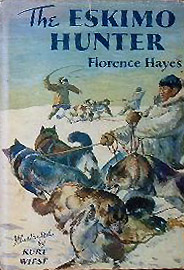
50 Eskimo words for "snow"

There really are 50 Eskimo words for ‘snow’

By David RobsonAnthropologist Franz Boas didn’t mean to spark a century-long argument. Traveling through the icy wastes of Baffin Island in northern Canada during the 1880s, Boas simply wanted to study the life of the local Inuit people, joining their sleigh rides, trading caribou skins and learning their folklore. As he wrote proudly to his fiancee, “I am now truly like an Eskimo. . . . I scarcely eat any European foodstuffs any longer but am living entirely on seal meat.” He was particularly intrigued by their language, noting the elaborate terms used to describe the frozen landscape: “aqilokoq” for “softly falling snow” and “piegnartoq” for “the snow [that is] good for driving sled,” to name just two.

Mentioning his observations in the introduction to his 1911 book “Handbook of American Indian Languages,” he ignited the claim that Eskimos have dozens, or even hundreds, of words for snow. Although the idea continues to capture public imagination, most linguists considered it an urban legend, born of sloppy scholarship and journalistic exaggeration. Some have even gone as far as to name it the Great Eskimo Vocabulary Hoax. The latest evidence, however, suggests that Boas was right all along.

This debate has rumbled on partly because of a grammatical peculiarity of the Eskimo family of languages. Boas studied Inuit, one of the two main branches; the other is Yupik. Each has spawned many dialects, but uniting the family is a feature known as polysynthesis, which allows speakers to encode a huge amount of information in one word by plugging various suffixes onto a base word.

For example, a single term might encompass a whole sentence in English: In Siberian Yupik, the base “angyagh” (boat) becomes “angyaghllangyugtuqlu” to mean “what’s more, he wants a bigger boat.” This makes compiling dictionaries particularly difficult: Do two terms that use the same base but a different ending really represent two common idioms within a language, or is the difference simply a speaker’s descriptive flourish? Both are possible, and vocabulary lists could quickly snowball if an outsider were to confuse the two—a criticism often leveled at Boas and his disciples.

Yet Igor Krupnik, an anthropologist at the Smithsonian Arctic Studies Center in Washington, believes that Boas was careful to include only words representing meaningful distinctions. Taking the same care with their own work, Krupnik and others charted the vocabulary of about 10 Inuit and Yupik dialects and concluded that they indeed have many more words for snow than English does.
Comment:  For more on the subject, see 31 Eskimo Words for "Snow" and 100 Eskimo Words for "Snow"?

March 16, 2012

Boney's art fosters Cherokee culture

Boney’s art combines cultures

By Renee FiteThe Japanese have animé, and the Cherokees have Boney.

Artist and language preservationist Roy Boney doesn’t remember a time when he didn’t draw. His cartoons, comic book characters and art are used to preserve and educate others about Cherokee history and language, even on an iPhone and iPad. One of his paintings hanging at the Cherokee Art Center depicts Sequoyah using an iPad with the Cherokee syllabary on it.

As a specialist with the Cherokee Language Technology program in the Education Services Department at the Cherokee Nation, Boney has an opportunity to combine several of his talents and interests–art, culture and history–like working with Apple to get the syllabary on the iPhone and iPad.

“You can text in Cherokee; every iPhone and iPad in the world has it now,” Boney said.

Boney seeks to broaden people’s perception of Cherokee art through his forms of artistic expression.

“It’s a goal to dispel the stereotypical ideas people have about Cherokees and Native Americans in general,” he said.
Some of his projects:In 1999 and 2000, he started doing online comics and developed a following. Canadian writer Matthew Shepherd approached him about collaborating on a project about zombies, “Dead Eyes Open,” which became a six-issue series, and then a trade paperback.

He illustrated one story, “Horn-toed Lady and Coyote,” in a collaboration for an anthology of Native American Trickster stories.
And:While he working for the American Indian Resource Center on projects with Joseph Erb, they went to schools with a high population of Cherokee students and made animation films with Cherokee and Creek language, using claymation. The students would help make clay figures, write the story boards, move the clay figures, and film the action. The schools and families were invited to see the completed films.Comment:  For more on Boney, see Cherokees Mourn Steve Jobs and Rising Stars in Native Animation.

February 25, 2012

Apologies for Menominee language incident

More on the story of the girl punished for speaking Menominee:

Sacred Heart, diocese send apologies

School's action satisfies Washinawatok family

By Tiffany Wilbert
Sacred Heart Catholic School and the Diocese of Green Bay have apologized to the family of the seventh-grade girl who was benched from a basketball game last month for speaking the Menominee language in class.

Letters of apology dated Feb. 22 were addressed to the family of Miranda Washinawatok and the Menominee Nation.
And:Miranda's mother, Tanaes Washinawatok, said she was satisfied with the apologies.

"It did take a month, but I know the letters helped with the closure of the incident that happened," she said. "We can move forward now with the diversity training and cultural events that they hope to bring into the school."

In his letter, Principal Dan Minter said he was "deeply sorry for any personal or collective hurt" that he caused Miranda, her family or the Menominee Nation.
Offender doesn't apologize

The mother was satisfied until she read the teacher's letter, it seems:

Menominee Language Incident: Teacher Offers Letter of Justification; Faults Miranda

By Levi RickertThis week her mother, Tanaes Washinawatok, received four letters from four different people associated with the Sacred Heart Catholic School in this small town, located six miles south of the Menominee Indian Reservation in northern Wisconsin.

The letters came from the Dr. Joseph Bound, director of education for the Catholic Diocese of Green Bay; Dan Minter, principal of Scared Heart; Billie Jo DeQuaine, assistant girls basketball coach and Julie L Gurta, teacher.

The Native News Network obtained copies of all four letters. Three of the letters were letters of apology.

The differing letter came from the teacher of Miranda, Miss Julie L Gurta. She is the one person who has direct contact with Miranda on a day to day basis. She did not offer an apology for slamming her hand on the desk and embarrassing the 12 year old for speaking her native language. She offered a letter of justification.

The letter differed in another way as well: Miss Gurta's letter was not written on official letterhead as were the other three letters. Her letter contained one paragraph that was 21 lines long.

Miss Gurta writes:

"In an academic setting, a student must be respectful of all of the other students--language and behavior that creates a possibility of elitism, or simply excludes other students, can create or increase racial and cultural tensions."
Comment:  So the actual offender still doesn't think she's done anything wrong? That outweighs the sincere apologies from everyone else.

The teacher doesn't seem to understand that others are apologizing for her bad behavior. I guess someone needs to say it explicitly: Miranda was right and Miss Gurta was wrong.

For more on apologies, see Why Wounded Knee Matters and No Apologies Without Remedies.

Below:  7th-grader Miranda Washinawatok.

February 12, 2012

New Zealander invents Tlingit encyclopedia

New Tlingit encyclopedia baffling to scholars, speakers

By Robert WoolseyA new encyclopedia of the Tlingit language has teachers in Sitka scratching their heads. The massive work by New Zealand scholar Sally-Ann Lambert is extraordinarily detailed, and the product of years of effort.

The problem is: The language in the book is not recognizable by contemporary scholars, or Native Tlingit speakers.

In a world as small as that of Tlingit scholarship, the appearance of Sally-Ann Lambert’s “Hlingit Word Encyclopedia: The Origin of Copper” came as quite a surprise.

So did the appearance of Sally-Ann Lambert, who traveled to Sitka in mid-January to launch the book.

No one had heard of her: Not the Alaska State Museum, the Sealaska Heritage Institute, or the very active group of Tlingit language teachers in the Sitka Native Education Program.
And:Lambert was born in New Zealand, but grew up in Samoa, where she developed an aptitude for language. Lambert turned her attention to Tlingit when she acquired a copy of a book by the late 19th/early 20th century ethnographer J. R. Swanton.

“I think often I’m led spiritually, and I don’t make my decisions with the full knowledge of the situation. Basically the book was given to me with Tlingit Myths & Texts by John Swanton, and Tlingit language is fortunate to have that resource.”

Swanton is indeed a classic, early ethnography of Tlingit, and a good starting point for the study of Tlingit culture, from a western perspective. “The Origin of Copper” is one of the stories he recorded, and Lambert uses it as a basis to parse the grammar and culture of the Tlingit.

This probably wasn’t the best strategy.

At the Sitka Native Education Program…

Roby–Swanton couldn’t hear many of the sounds of Tlingit, so he didn’t write it. So she didn’t speak them. Swanton didn’t put tone marks in his writing, so she doesn’t know where the tone marks go.
Comment:  Moron alert! New Zealander writes Tlingit-language encyclopedia without talking to Tlingit-language speakers. They say it's gibberish.

Hey, I wanna write a Tlingit dictionary too! Can I?

Some of my Scrabble letter combinations resemble Tlingit words. That plus the voice in my head is enough to qualify me.

I changed my mind. Now I'm working on a Mongolian/Basque/Zulu dictionary. A hawk appeared to me in my dreams and said I should combine the languages.

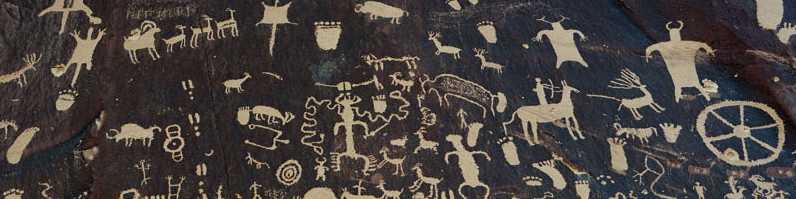
Get the picture? For more on Native languages, see my Pictographs blog.

February 06, 2012

31 Eskimo words for "snow"

Speaking of "Eskimo" stereotypes, I came across this soon after my posting on Suzuki's Dog-Sled Commercial:

31!And here they are:

Aluiqqaniq: Snowdrift on a steep hill, overhanging on top.

Aniuk: Snow for drinking water.

Aniuvak: Snow remaining in holes.

Aput: Snow on the ground (close to the generic snow)
.
.
.
These are 31 words about snow, from the Inuit, Aivilik and Igloolik languages.

(Julian Bentham, Adelaide Research Center)
Comment:  For more on the subject, see 100 Eskimo Words for "Snow"?

January 26, 2012

Girl punished for speaking Menominee

Using Menominee words at school gets girl benched

Diocese looking into incident

By Tiffany Wilbert
Parents of a child at Sacred Heart Catholic School are upset about the school's decision to bench the girl for "attitude issues" after she spoke a few words in the Menominee language at school.

The seventh-grader's mother, Tanaes Washinawatok, said her daughter, Miranda, was not allowed to play in the basketball game Jan. 19 after being reprimanded that day for using the Menominee language during a homeroom supervised by teacher Julie Gurta.

"A conversation was had between my daughter and two other Menominee children that go to school at Sacred Heart," Washinawatok said. "My daughter interpreted two words and then added one word; the words were hello, I love you, and thank you."

"The teacher came in and told my child, 'You are not to be speaking like that. How do I know you're not saying something bad and how would you like it if I spoke Polish and you didn't understand.'"
Comment:  The boarding-school mentality lives!

For more on the subject, see Language Whipped Out of Indians.

October 13, 2011

Google Maps in Cherokee

Besides using their language on iPhones and iPads, the Cherokee Nation is using it to create Google Maps in Cherokee. Read about it in my Pictographs blog.

October 07, 2011

Cherokees mourn Steve Jobs

Apple co-founder Steve Jobs leaves legacy in Cherokee language

By Christina Good VoiceThe Cherokee Nation lowered its flags to half mast Oct. 6 in honor of Apple Inc. co-founder Steve Jobs, 56, who died Oct. 5 in California after a long battle with cancer.

For the Cherokee Nation, its work with Apple has resulted in the adaptation of the Cherokee language to modern technology and renewed hope that the language will not only survive, but thrive.

“As a Nation we are saddened by the news of Steve Jobs passing,” CN Secretary of State Melanie Knight wrote in an emailed statement. “Steve Jobs was an innovative and tireless leader who will be greatly missed. A company takes on the character of its leadership, and we believe that was the case with Apple. The company and staff believed in our language and the Cherokee people.”

In 2003, Apple began supporting the Cherokee language by including a font and keyboard in the company’s computer operating system, wrote CN Language Technologist Joseph Erb in an emailed statement.

“In 2010, Apple’s mobile operating system, now known as iOS, began supporting the Cherokee syllabary by including a font and keyboard as well,” Erb wrote. “Now, all iPhones, iPads, and iPod Touches in the world include our language on them--out of the box.”
Cherokee Artist Roy Boney Jr. Reflects on Steve Jobs

By Roy Boney Jr.If one were to judge what features should be included on a device like the iPhone, the cold, hard numbers of the Cherokee population would be a strong argument against leaving out features like a Cherokee touchscreen keyboard and display font. We could’ve easily been ignored, and Apple would’ve continued raking in millions of dollars in sales.

The fact that Mr. Jobs, whose micromanaging and attention to detail was notorious, decided to include our language on his products is an amazing thing. Keeping our language relevant in the fast-moving mobile era provided a valuable tool in our effort to perpetuate our language. Apple’s support of Cherokee has even created opportunities for our language to be supported by other technology products such as Google’s search engine and Facebook. Since that day in September, I’ve literally used my language every single day.

Steve Jobs did a lot of things in his life. The media accolades and proclamations have been streaming in at a steady pace since the announcement of his death. One thing that may be lost amid the frenzy is what he did for the Cherokee language. I would ask that everyone out there that has an iPhone, an iPad, an iPod Touch, and even a Mac, which has supported our language since 2003, take a minute and honor Steve Jobs for helping create an avenue for our language to remain relevant in the lives of many modern Cherokees. It is by no means a savior for our language, but what a wonderful tool it has become. Send someone an email in the syllabary, or better yet, a text message in Cherokee. Use your language.
Comment:  For more on the subject, see Webcomic on Cherokee Language and Google Searchable in Cherokee.

Below:  "An image from Roy Boney Jr.'s illustrated story on the Cherokee language from This Week from Indian Country Today's September 28 issue."

July 26, 2011

Head shop's name offends Natives

Head shop name offends some First NationsA head shop in Winnipeg's West End is offending some people with its aboriginal name, Miigwetch.

In the Anishnaabe language, Miigwetch is the word for thank you.

The shop sells drug paraphernalia, such as glass pipes, and some aboriginal people are far from thankful to be associated with those items.

"Our language is sacred to us. I don't want our language to be a part of any drug culture," said Robert Sinclair, who was with his 11-year-old daughter when she spotted the shop's sign on Notre Dame Avenue.

Sinclair is an addictions worker and says many First Nations people need to reconnect with their aboriginal culture in a positive way.

He says this is a step backward that reinforces negative stereotypes "that we're all drug addicts and drunks."

"We've been trying to eliminate that for years and this doesn't help," Sinclair said.
Comment:  For more on Native language, see Peruvian Actress Sings in Quechua and Amondawa Has No Word for "Time"?

Below:  "The Miigwetch head shop sells drug paraphernalia and some aboriginal people are far from thankful to be associated with those items." (CBC)

June 24, 2011

Peruvian actress sings in Quechua

Rise of Indigenous Actress Marks Change In Peru

By Annie MurphyIn 2009, when the Peruvian film The Milk of Sorrow won top honors at the Berlin Film Festival, lead actress Magaly Solier did something surprising—she chose to accept the award by singing a song in Quechua, a common indigenous language of Peru.

Indigenous people make up more than half of Peru's population and about half of Peruvians live in poverty, yet it has long been run by a small elite. But that's beginning to change as Solier and others with indigenous roots move into the cultural and political spotlight.
And:In The Milk of Sorrow, Solier plays a young modern day Peruvian woman affected by the same rural violence Solier grew up with. The plot centers on the belief of some Peruvians that campesina—or peasant—women who were raped during Peru's armed conflict could pass their fear on to children through their breast milk. Solier's character is one of those children.

The role catapulted Solier into a successful international career, and her singing in the film led to a professional career in music.
Comment:  For more on the subject, see The Best Indian Movies.

May 27, 2011

Amondawa has no word for "time"?

Recent news reports about a Brazilian tribe have made the claim below. Blogger Stan Carey nicely deconstructs this claim:

Amondawa has no word for ‘time’?A recurring idea in popular discussions of languages–usually exotic or minority ones–is that they have “no word for X,” where X could be hello, tomorrow, burger, ten, accountability, robin, and so on. Sometimes it’s sheer fantasy, sometimes the language simply has (or has had) no need for the word (robins in the Arctic?), and sometimes it has other ways of conveying the idea–such as a longer phrase, a different kind of metaphor, or another syntactic category.

The point is, it’s not as though there’s a nagging word-shaped gap there that makes it difficult for speakers of a language to communicate with one another, to make sufficient sense of their experiences, and to get through the day without falling apart. If there’s a need for a word, a word will arise.

Irish has no word for yes, but this linguistic lacuna does not stop Irish speakers from agreeing, accepting, assenting, and shouting things in bed. Other idioms and grammatical markers are used instead. The lack of a word for something doesn’t imply the lack of a concept for it, yet this illogical extrapolation is repeatedly made, perhaps for reasons of naïveté, sensationalism, or romanticism, e.g., the appeal of a culture with no word for lying, and other spins on the “noble savage” myth.
Comment:  This kind of language stereotyping works both ways. Natives sometimes claim their cultures had no word for "religion" or "art." If so, they may have had other ways of explaining the concepts. So the claims may not be as significant as Natives imply.

For more on the subject, see 100 Eskimo Words for Snow?

May 20, 2011

Teenage Tulalip filmmaker wins award

Teenage Tulalip Director Wins Best Emerging Filmmaker award

By Richard Walker“History is Unwritten,” a short film by Tulalip filmmaker Aaron Jones, is striking in its beauty and elegant simplicity. It is narrated in Lushootseed, a Coast Salish language that was largely unwritten until the 1960s. The late Vi Hilbert, the Skagit educator who helped preserve the language, once called Lushootseed “the most beautiful language in the world.” The film was shot in a cedar forest, for centuries the source of materials for items that testify to the lifeways of the people: artwork, baskets, canoes, clothing, longhouses.

Jones himself composed the film’s score, a beautiful, unwritten piece he says he “winged” at the family piano. “It’s something I wanted to express, a mood I wanted to set for the film,” he says. He submitted “History is Unwritten” to the “History is ___” Film Competition hosted by the Museum of History and Industry in Seattle. Still, he wasn’t prepared to hear his name called at the museum awards gala May 7. “History is Unwritten” earned Jones the Best Emerging Filmmaker award.
Comment:  For more on the subject, see Native Documentaries and News.

Below:  "A still from the film 'History is Unwritten' by Tulalip filmmaker Aaron Jones."

April 13, 2011

The Reincarnation of Stories

Reincarnation of Stories:  New play, to be performed in Tlingit, opens tonight

By Amy CondraHope’s previous plays include “Raven Odyssey,” “Cedar House” and “Gunakadeit,” which was performed at the Smithsonian’s National Museum for the American Indian in Washington, D.C.

His newest work, “The Reincarnation of Stories,” opens tonight, and features four actors—Frank Katasse, Edward Littlefield, Erin Tripp and Hope himself—who will perform the story of Naatsilanei, the birth of the killer whale.

They tell the tale in Tlingit, as it was once told by traditional Tlingit artist Willie Marks. While everyone in the cast was raised speaking English, they have also each studied Tlingit.

“It takes a long time to memorize Tlingit,” Hope said. “It can be like pushing a rock up a hill! But everyone in the cast has Tlingit lines.”
Comment:  For more on the subject, see All About Ishmael Hope.