April 18, 2016

Winged monkeys = Indians?

Winged MonkeysAccording to some writers, the Winged Monkeys of Oz represent Native Americans in the West in the late 1800s. Baum himself had clear attitudes toward American Indians and some of his earlier writings about Indians are very similar to his descriptions of the Winged Monkeys found in Oz. These selections included on this page are all from Ritter’s 1997 article about Oz.

When they are introduced in the book, the Winged Monkeys appear as a fierce fighting band that destroy the Scarecrow, damage the Tin Woodman, and capture Dorothy and the Cowardly Lion. Later, when the monkeys are no longer under the control of the Witch and are helping Dorothy and her group, the king monkey explains their origin to Dorothy:

“Once,” began the leader, “we were a free people, living happily in the great forest, flying from tree to tree, eating nuts and fruit, and doing just as we pleased without calling anybody master. Perhaps some of us were rather too full of mischief at times, flying down to pull the tails of the animals that had no wings, chasing birds, and throwing nuts at the people who walked in the forest. But we were careless and happy and full of fun, and enjoyed every minute of the day.”
Another posting sees the analogies differently:

Indian-Hating in “The Wizard of Oz”

By Thomas St. JohnThe Winged Monkeys are the Irish Baum’s satire on the old Northwest Mounted Police, who were modelled on the Irish Constabulary. The scarlet tunic of the Mounties, and the distinctive “pillbox” forage cap with the narrow visor and strap are seen clearly in the color plate in the 1900 first edition of “The Wonderful Wizard of Oz”. Villagers across the Dakota territory heartily despised these British police, especially after 1877, when Sitting Bull retreated across the border and into their protection after killing Custer.And:The Wicked Witch of the West is illustrated in the 1900 first edition as a pickaninny, with beribboned, braided pigtails extended comically. Baum repeats the word “brown” in describing her. But this symbol’s real historic depth lies in the earlier Puritans’ confounding of European witches with the equally heathen American Indians.

The orphan Dorothy’s violent removal from Kansas civilization, her search for secret and magical cures for her friends, her capture, enslavement to an evil figure–and the killing of this figure that is forced on her–all these themes Baum takes from the already two hundred year old tradition of the Indian captivity narrative which stoked the fires of Indian-hating and its hope of “redemption through violence.”
Comment:  For more on the subject, see The Indian-Oz Connection.

April 13, 2016

Natives = last category on Jeopardy

A tweet from April 12 that I and many others retweeted:

Retweeted Martie Simmons (@msimmons444):
Last category on @Jeopardy b/c no one knows ‪#‎Indigenous‬ ‪#‎history‬ ‪#‎iblamethehistorybooks‬ https://t.co/Et2ISLm2X3

Someone took her photo of the TV screen and made it into a meme:


Easy questions

A Facebook friend reported on the episode, which I didn't see:I saw that episode. Too bad I was only playing from home.

None of the questions were terribly difficult. I don't remember the exact phrasing of the questions, but I do recall the answers.

One referred to the Trail of Tears (answer: the Cherokee); one referred to the largest US tribe (Navajo); another referred to a eyewitness to an 1876 event (I don't remember if they referred to it as a battle, or more properly as a massacre, but in any case it was Little Bighorn); one referred to and described the equipment used in Native stickball--so I sat there saying stickball, but the answer turned out to be "lacrosse" which annoyed me a bit; and finally a passage from Longfellow's poem, and the answer was Hiawatha.
Good to know.

As usual these days, the Jeopardy questions sound ridiculously easy. You often can boil them down to a couple of words:

1) Tears tribe.
2) Largest tribe.
3) 1876 battle.
4) Stickball.
5) Poem.

The questions aren't tough for the smart contestants the show usually has. What it shows is a sort of public fear: of looking ignorant about a minority. Or worse, of saying something stupid and looking racist. Better to avoid the category altogether.

P.S. Little Bighorn was only a massacre for Custer's troops after they foolishly attacked a camp of 10,000 Indians. Unlike Wounded Knee or Sand Creek, it was a real battle.

For more on the subject, see "Native American Foods" on Jeopardy and "Native American Tribes" on Jeopardy.

April 09, 2016

Trump and his supporters are racists

Donald Trump has dropped the GOP’s mask: Conservatism and racism now officially the same thing

Post-civil rights GOP is our largest white identity group. Maybe we should thank Trump for making it so obvious

By Chauncey DeVega
Political parties are a type of “brand name” that voters associate with a specific set of policies, ideas, personalities and moral values. Consequently, the types of voters who are attracted to a given political party also tells us a great deal about how it is perceived by the public. And in a democracy, the relationship between voters, elected officials and a given political party should ideally be reflected by the types of policies the latter advances in order to both win and stay in power.

By these criteria, the post-civil rights era Republican Party is the United States’ largest white identity organization, one in which conservatism and racism are now one and the same thing.
The GOP’s gross Adam Sandler primary: Donald Trump, penis jokes and the pathetic state of conservatism

Trump's hands. Mitt on his knees. Cuckservatives. What the party's junk obsession says about 2016 Republican Party

By Chauncey DeVega
Donald Trump threatens the Republican Party’s elites because he has unmasked the racism, white supremacy, nativism and xenophobia of the modern GOP. Trump will not be silenced because he and his public have little if any use for racist “dog whistles” in their full-on assault against “political correctness” and “the establishment.”

Trump’s proto fascist right-wing producerism is also a threat to Republican Party orthodoxy. Like the type of “socialism” practiced by the Nazis, Donald Trump wants to ensure that the in-group has access to resources from the State (healthcare, jobs, improved infrastructure) that are denied to the Other. The Republican Party’s elites want to destroy the social safety and government support for most Americans (the white middle and working classes will be given some resources only as a means of leveraging their anxieties against people of color and the poor). Trump offers a different vision: He will maintain the submerged state and other benefits for whites, and those others he identifies as “real Americans” and “deserving,” while unapologetically denying them to those individuals and groups whom the “Trumpeteers” want to dominate and abuse with impunity.
The payback candidate: Trump’s campaign is for conservatives seeking revenge on everyone they think disrespects them

Trump's running to get revenge on everyone who laughed at him, and that's why his supporters identify with him

By Amanda Marcotte
A lot of his support comes from people who see themselves in him: People who believe they—white conservative Christians who shun city life—deserve to be at the center of American life and culture, but look out and see a world where the president is a black man from Chicago, the charts are ruled by Rihanna and BeyoncĂ©, and Lena Dunham is a celebrity.

The modern conservative movement is filled with people who believe they are due deference from the rest of us but are getting mockery instead. The conservative media has stoked this narrative of cultural resentment for decades, too. “Liberal elite” is a common catchphrase on the right. Some might think that term is an economic one, but in reality, it’s a cultural one. The “liberal elite” is mostly composed of people who belong to the middle class: Journalists, college professors, artists, even lawyers, most of whom are not millionaires. Meanwhile, the right absolutely hero worships conservative billionaires like the Waltons, the Kochs, and yes, Donald Trump.

No, the “liberal elite” is a term of cultural resentment, rooted in a thwarted sense of conservative entitlement. It’s backed by this narrative that there once was a time when America was “great” because the culture was controlled by white Christians, but at some point, usually the 1960s, the undesirables—hippies, artists, people of color, secularists, feminists, gay people—started taking over. This sense that something has been stolen and needs to be taken back is the organizing narrative of conservative populism.

Trump is tapping into the same narrative that propelled Richard Nixon into the White House, fueled the “Disco Demolition” night of straight white men burning records associated with said “others,” helped start the Moral Majority and the Christian right, and is the engine that drives right wing talk radio and the relentless rage machine of Fox News to this day. And while it’s trendy, especially amongst those who believe the white working class is one pamphlet on democratic socialism away from leaving the Republicans, to say that it’s based on economics, the fact is these flare-ups aren’t quite as pegged to economic trends as one might think but can quite easily be linked to white conservative anger over cultural moments that remind them they are not the actual owners of American culture. With Obama to leave office soon in triumph, his legitimacy as not just the first black president but one of the greater American presidents secured, the anger is boiling over.
Fear of labeling racists

Hideous, disgusting racists: Let’s call Donald Trump and his supporters exactly what they are

Media wants to call them "economically anxious working-class whites." There's a clearer, more honest name to use

By Chauncey DeVega
Donald Trump’s voters are racists; Donald Trump is a racist. The rise of a dangerous proto-fascist movement has been aided by how too many members of the political chattering class have for too long avoided stating such facts.

Moreover, Conor Friedersdorf’s claim is an example of a very perverse and twisted phenomenon in post-civil rights era America, where to call a white person a “racist” is somehow worse than the harm that racism, white supremacy, and white privilege does to the psychological, material, and physical well-being of black and brown people.

This dynamic has also prevented many in the commentariat from directly describing today’s Republican Party as the United States’ largest white identity organization, one that reflects an ideology where conservatism and racism is one and the same thing.

As I have written about here at Salon and elsewhere, “Trumpism” is not an aberration or outlier, something that is alien to, something outside of, or distant from the Republican Party. The popularity of Donald Trump in the 2016 presidential primaries, with his unapologetic racism, bigotry, and nativism, are the uncensored id of the Republican Party
#Notalltrumpvoters: The media’s new big lie lets racist Donald Trump backers off the hook

Trump's fueled by white resentment, racism and nativism. Why does the media mistake that for working-class anxiety?

By Chauncey DeVega
As I explored in an earlier essay here at Salon, Milbank’s caveat is part of a larger pattern among the American commentariat where too many of its members are afraid to publicly (and correctly) label Donald Trump and his supporters as racists.

Why this anxiety? Why are so many members of the chattering class dancing around the clear and obvious truth that Donald Trump’s political movement is largely driven by white racial resentment, overt racism, bigotry and nativism?

Part of this answer lies in how telling the truth about white racism in the post-civil rights era is considered worse than the harm it does to people of color. Moreover, to suggest that a given white person is a racist—or alternatively, that white people as a group either benefit from institutional racism or are active racists—is an indictment of both their personal character and the various myths (meritocracy; American Exceptionalism; individualism; equality, etc.) that the country’s political culture rests upon. Together, these answers form a type of electrified third rail in American political discourse that few members of the chattering classes are willing to stand on. This is a profound failure of moral leadership.

The unwillingness by Milbank, Friedersdorf and others to plainly and directly state that Donald Trump and his supporters are part of a racist political movement is an example of what sociologist Robin DiAngelo has described as “white racial fragility” on a massive scale.
Poll confirms racism

Racists love Trump: This is what they mean by “taking the country back”—yet another poll confirms racial and cultural resentment is driving Donald Trump’s rise

72 percent of Trump supporters said government has gone too far in assisting minority groups

By Sean Illing
A new Quinnipiac poll is the latest in a string of polls to clarify what’s really animating Trump’s campaign. American voters were asked if they believed “America has lost its identity?” The answers from Republicans and Democrats in general are revealing: 79 percent of Republicans agree that America has lost its identity, while only 36 percent of Democrats agree. If nothing else, this is a reminder that the GOP has a race problem, the roots of which are traceable to its adoption of the “Southern Strategy” over forty years ago.

The “highest level of agreement” with this notion that America has lost its identity is expressed by Trump supporters–a staggering 85 percent. 91 percent of Trump voters also say their “beliefs and values are under attack,” again the highest of any candidate. There is a kind of persecution mania operating here. “Many American voters, especially Republicans, are dissatisfied with their own status and the status of the country,” said Quinnipiac University Poll Director Douglas Schwartz, “but by far the most dissatisfied are Donald Trump’s supporters, who strongly feel that they themselves are under attack.”

Lest you think this isn’t about race, note that the Quinnipiac poll asked respondents if they believe the “government has gone too far in assisting minority groups.” Predictably, 72 percent of Republicans agreed compared to 18 percent of Democrats. Among Trump voters, however, the number was 80 percent. These numbers align with a recent American National Election Study (ANES) and Washington Post/ABC News poll, both of which show that support for Trump is positively correlated with racial animus.

“America has lost its identity” is an ambiguous phrase, but let’s not pretend we don’t know what it means. The people who think America has lost its “identity” are the same people who believe we have to take the country back. Yes, many Trump supporters are suffering from an economy in which they have no place. And there are legitimate concerns about free trade and a corrupt establishment. But what distinguishes the typical Trump is his or her propensity to project their frustration on brown or black people.
And a few weeks later, a Native perspective:'The Good Old Days' Were Only Good for Whites

By Harlan McKosatoThe unspoken mantra among many white people is they long for the days when they, and only they, ruled the roost. Civil rights, Native rights, Gay rights, Women’s rights – dammit, what about White rights? That’s when America was great and we can make America great again, by God. Black lives matter, well white lives matter more. It says so right there in the Holy Scriptures.

The problem with white privilege is that when that’s all you know and you’re comfortable with it; then you’re confronted with an equality movement that you didn’t necessarily see coming, you probably do feel like you are being discriminated against. Trump has tapped into that emotion, although we all know white privilege is not going away anytime soon.
Comment:  For more on Donald Trump, see Conservatives Enraged at Losing Power and Trump's Death Wish Fantasies.

April 08, 2016

Ralphie May backtracks and apologizes

Continuing our look at Ralphie May's Rant Against Indians and No Excuse for Ralphie May's Rant. After blaming everyone but himself, May began backtracking and apologizing:

EXCLUSIVE: Ralphie May Talks About Indian Rant: “I Never Meant to Hurt Anyone”

Comedian responds to backlash over Native American rant

Ralphie May Releases YouTube Video Apologizing to Native Americans

UPDATE: Ralphie May agrees to meet with Fargo activists

Activist Walter Ruiz added this note on Facebook:UPDATE ON THE RALPHIE MAY ISSUE...i just got this email from Ralphie Mays publicist! i really hope they keep their word...Thank you for taking the time to speak with me today. As I said on the phone, comedian Ralphie May will be announcing tomorrow that he is postponing his shows in Fargo, Sioux Falls, and Minneapolis this week.

In a statement from Ralphie, he says “I am postponing my shows in Fargo, Sioux Falls, and Burnsville out of respect for the Native American community and safety for all parties. A video that surfaced on YouTube hurt and offended many people and I am truly sorry. I thought that I was a well-read, educated man. I know nothing. I’m a product of mass media and the US public school system. I have learned so much this week and I want to learn more. My eyes are open and I hope to be a conduit for things that we are not taught.”

Details are still being worked out with Ralphie’s travel, but please let me know if you would be able to speak with him by phone if an in-person meeting is not possible. Ralphie wants to do whatever he can to make this right. His beliefs and opinions are not portrayed in that video and as his publicist and friend for 20 years, I can promise you that Ralphie is not a racist person and he truly does have a heart of gold.

Regards,
Stacey Pokluda
Criticism continues

After May's rant and his attempts to apologize, he was still facing trouble:

Calls to boycott Ralphie May in Sioux Falls

City Hall Supports SMG Decision To Allow Ralphie May Concert At Orpheum

Comedian Ralphie May forced to postpone or cancel more shows

Three Ralphie May Shows Postponed After Death Threats Surface

Comedian Ralphie May tries to turn Indian joke controversy around

Finally, a "defense" that noted the key problem:

Whitney: In defense of Ralphie MayIt’s pretty obvious that May missed the mark with his decade-old “Dances with Wolves” routine. It wasn’t funny or insightful. It was a mean-spirited assault on a culture that has been discarded and disregarded too often by mainstream society. By all accounts, it is no longer part of his act.

April 07, 2016

No excuse for Ralphie May's rant

A Facebook discussion of Wreck-It Ralphie's diatribe against Indians. It occurred before we knew exactly what May had said:

I'm waiting to hear the context that makes this acceptable.

Sounds like he adds a coda at the end of his rants. Maybe something like, "But really, folks, hating people is bad. Don't be like the people who say these things." That's not nearly enough "context" to make the previous rants okay.

You can't have a stereotype-to-explanation ratio of 5-1 or 10-1. If anything, it should be the other way around. You can repeat a stereotype if you spend enough time explaining why it's wrong.That is basically what he is saying on twitter, he is saying that the entire joke is him imitating racist people who were mad about goodfellas losing to dances. I have seen his act before, and i can actually accept this because blatant racism isn't usually part of his act. However, he still needs to own those other comments that are just as ignorant.Okay. Sounds a lot like hipster racism to me. Like, "Someone else is racist, and I'm just repeating what they say. Ironically, that is, to mock them. And I had to go on ranting for three minutes to show how racist they are."

Why it's still wrong

Who cares who won the Oscar 25 years ago? It's not relevant to anyone today. It's ancient history.

May chose to build a routine around racist beliefs. He provides a fig leaf of an excuse, then spews a bunch of racist comments. And his cover is, "That's what someone said 25 years ago."

As you said, his Twitter comments show how he really feels. His real beliefs aren't far from his "ironic" beliefs--if there's any difference at all. He sort of understands that something bad happened to Indians, but that was long ago and now they're to blame for their problems.

And after his so-called apology:

As I said before, a single punchline is no excuse for what comes before that. He didn't even say he was imitating others who were upset at Dances with Wolves. Rather, he said he was upset about it.

So again, how does this 25-year-old "grievance" justify a racist rant? A: It doesn't.

Some questions for Ralphie

When Delores Schilling sought questions to ask May on her Native Trailblazers radio show, I e-mailed her the following:

1) May says he's been doing his Dances with Wolves joke since 1992. This so-called joke sounds like a pretext to do a racist rant about Indians.

If the subject of the 1992 (actually 1991) Oscars isn't outdated and irrelevant already, when does it become so? In 50 years? A hundred? Why shouldn't listeners assume what I just said: that May is inventing an excuse to vent his spleen against Indians?

2) Has May heard of hipster racism? It's defined as doing or saying something racist, then claiming it was ironic, satirical, or a joke. How is this any different from what May does?

"Indians are drunk losers," he seems to be saying, then "Ha ha, just kidding." Well, why should we take the "just kidding" part more seriously than the "drunk losers" part? Racists have a long history of dressing up their beliefs as fiction or humor. Why shouldn't we assume May is telling us what he really believes in the guise of comedy?

3) If May's so-called jokes depend on his reaching the punchline, isn't that a comedic failure? The jokes are insulting, insulting, insulting until the punchline, which magically renders them not insulting? What if listeners feel the punchline doesn't work? Or they miss the punchline because they leave in anger?

Isn't May's "thinking" here rather shallow and stupid? Isn't it like saying, "We had to destroy the village in order to save it"? Does he seriously claim he has to sling horrible vulgarities to show how others sling horrible vulgarities? Is he such a pitiful comedian that he can't think of another way to make his point?

4) May's tweets indicate he's still blaming Indians for the poverty and alcoholism they suffer. Which is just about what he said in his racist rant. Why should we believe there's a difference between his "jokes" and his beliefs when they're so similar?

Rob Schmidt

April 06, 2016

Ralphie May's rant against Indians

A round-up of articles about Ralphie May's anti-Indian rant:

Comedian Ralphie May Creates Twitter Firestorm After Rant on IndiansThe extracted audio clip of May’s comedy routine is from a CD entitled "Stealing the Sun Back." from the hip hop group Savage Family. In the video/audio clip, posted on YouTube, May goes into a rant about Indians.

“F--k a bunch of Indians. I am sick of hearing about it. Are we supposed to boo hoo over goddamn Indians that sh-t that was 120 years ago? F--kin’ get over it. Nobody 150 years ago was making you drink now. Dry up’ you buncha alcoholics and go get a real f--kin’ job.”
And:May further explained on Twitter that the comedic rant was extracted out of context and that the rant was based on the fact he was angry that Dances with Wolves beat Goodfellas for the best picture Oscar in 1992.

Sanford Center taking heat for booking comedian after video surfaces

Bemidji cancels gig by shock comic Ralphie May
YouTube rant against Indians is cited as the cause.

Ralphie May's Bemidji concert officially canceled despite apologetic video from comedian

April 02, 2016

Malheur standoff = white supremacy

A good analysis of Ammon Bundy's occupation of the Malheur National Wildlife Refuge in January:

White Supremacy and Property Rights: Tamir Rice and the Oregon Standoff

By Anne Bonds[T]he significance of recent events in Oregon extends beyond this obvious example of the differential treatment of racial groups by the state. We argue the events at the Oregon wildlife refuge are representative of what Arlo Kempf describes as a “colonial moment,” one that bolsters white supremacy and violence against people of color, as well as the ongoing dispossession of Indigenous peoples in the U.S. settler state.

The concept of settler colonialism emphasizes the ongoing occupation and privatization of Indigenous territories and the systems of race necessary to sustain the displacement and marginalization of Indigenous peoples. From this perspective, colonization is not an event of the past, but rather an enduring process that continuously unfolds across the landscape. Colonial moments normalize white domination and the racial status quo by obscuring histories of racial violence and exploitation and by reinforcing largely unquestioned assumptions about white settler property ownership and entitlement to stolen lands.

For some, the Bundys–both Ammon and his father Cliven–have become folk heroes for their efforts to reclaim federally owned and regulated land and for resisting the overbearing, ‘tyrannical’ federal government. However, as the chairperson of the Burns Paiute Tribe, Charlotte Rodrique, has explicitly stated, the Paiute peoples had been living on these lands for thousands of years prior to the arrival of white settlers. Deep ironies abound as the militia members demand that the federal government return the land to ranchers, loggers, and miners after claiming the federal government had usurped their rights.

Though it’s quite easy to dismiss the Bundys, their followers, and other white militias in the American West as a “radical fringe” group with a poor understanding of U.S. history, we believe that to do so would be ill informed. Not only is the Oregon standoff part of a much broader political, economic, and social movement rooted in individual private property rights and undergirded by white supremacy, the event–and popular reactions to it–sustain particular understandings of whiteness and land ownership that render invisible the displacement and exploitation of people of color that enabled white settlement and the acquisition of federal lands in this area in the first place.
Comment:  For more on the Bundy bunch, see Malheur Occupation Shows Toxic Masculinity and Bundys Hold Paiute Artifacts Hostage.

April 01, 2016

"Hostile tribes" illustration in Portland Monthly

An Apology From Portland Monthly

The combination of an illustration and a headline in our April issue caused justifiable offense.

By Zach Dundas
Recently, Portland Monthly published a short essay on the subject of school choice, accompanied by an illustration that adapted the standard school-crossing sign to show its stick-figure humans armed with arrow-like weapons. The headline—written by editors, not the freelance writer who contributed the body of the article—used the phrase “hostile tribes” to describe the social tensions arising from the issues discussed in the piece that followed.

Since the illustration and the article title appeared in our April issue and on our website, we have heard from numerous readers and Native American community leaders that this combination of words and images is offensive and derogatory, evoking negative stereotypes of Native Americans.

We erred in publishing this image and title, particularly in combination. We did not intend to offend any person or community, but in this case intention is beside the point. We have heard clearly that we caused pain, anger, and confusion among readers and communities we care about, and we are sorry.

As a first step, the image has been removed from the online version of the article, and the online headline has been changed. We’ll address the situation in print at the first opportunity afforded by our publication schedule, which will be our June issue.


Some thoughts from SorryWatch (!) on how well the Portland Monthly apologized:

Against all odds, another excellent apology, good heavens

March 31, 2016

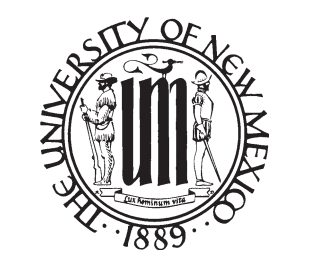
Students protest UNM seal

Protesters: Native American-made seal not native enough

  • The students are accusing the school of racism because the seal shows a frontiersman and a conquistador, but not a Native American.

  • The seal was designed by Theda Douglas Rushing, a Native American.

  • By Anthony Gockowski
    Students at the University of New Mexico (UNM) are protesting their school’s official seal because of its implicit discrimination against Native Americans even though the seal itself was created by a Native American artist.

    UNM’s student activists are accusing the school of racism because the seal depicts a frontiersman standing alongside a conquistador but fails to portray their historical counterpart—indigenous people.
    And:“The UNM [official seal] celebrates genocide and conquest—both are violations of basic human rights and belong in a museum of a bygone era,” said Nick Estes. “It’s 2016 and UNM is still celebrating crimes against humanity—colonialism and genocide—and Natives are still underrepresented at all levels at the University.”

    However, UNM awarded Native American artist Theda Douglas Rushing a Meritorious Service Medal in 1994 for her outstanding contributions to the school, among which was the creation of the school’s now discriminatory seal.

    Discussion

    A Facebook discussion of this key point: Students protest a UNM seal that shows a frontiersman and a conquistador, even though a Native woman designed it.

    I wonder if she was given free rein or a strict mandate. Kind of hard to believe someone thought a frontiersman and a conquistador were great ideas in the 21st century.

    Apparently the redesign was back in 1980. I can understand that some people, including Natives, might not have thought about the problems much back then.

    But I'm surprised it hasn't been protested out of existence since then. A frontiersman and a conquistador don't have anything to do with education. If anything, they're anti-education.

    The message is nothing but, "Europeans founded this state and school. Europeans made us great." How is that not glaringly obvious to everyone--not to mention embarrassing?

    They're even holding a gun and a sword. It's a pure conquest message--with Indians and their land as the implied booty. There's no educational message whatsoever.Yes. All that's missing is an equally in your face motto. "We exist because these guys spilled blood."Oddly, their school motto is "Lux Hominum Vita (Life, the Light of Men)." I guess because "Veni, Vidi, Vici" was taken?

    For more on government seals, see Whitesboro Issue Increases Awareness and Flipping the Whitesboro Script.

    March 28, 2016

    Powwows are "magic" at Dictionary.com

    Dictionary.com: A Pow Wow Is An Event Where Indians Practice 'Magic'

    By Simon Moya-SmithDictionary.com, a popular website of definitions and synonyms, defines a pow wow as an event where Native Americans—wait for it—practice "magic," ICTMN discovered Monday.

    In its official definition, the website writes that a 'powwow' is "[among North American Indians] a ceremony, especially one accompanied by magic, feasting, and dancing, performed for the cure of disease, success in a hunt, etc."

    The discovery of the curious definition comes weeks after a heated debate surrounding author J.K. Rowling's latest series, "A History of Magic In North America." In it, fictional Native Americans practice witchcraft and wizardry. Rowling is the author of the widely-successful 'Harry Potter' series.

    Sarah Ortegon, a jingle dress dancer who is currently studying fancy shawl, told ICTMN Monday that although the beauty of pow wows can "cast a spell" on viewers, it is not magic in its official definition.
    After a couple of days of online complaints, the problem was solved:Dictionary.com Agrees to Drop 'Magic' From 'Powwow' Definition

    By Simon Moya-SmithOn Monday, ICTMN reported that Dictionary.com, the world's leading digital dictionary, defines “powwow” as an event where Native Americans practice “magic.” Since then, Native Americans and others have taken to social media to express their disapproval over the antiquated definition.

    Within 24 hours, officials at Dictionary.com responded to ICTMN stating they will change their definition of “powwow,” and that they will effectively remove the word “magic.”

    “The word ‘magic’ does not appear in our revised definition,” Stephanie Cooley, spokesperson for Dictionary.com, said in an email.

    “After reviewing the entry for ‘powwow’ we concluded that the definition did not reflect the history and usage of the term, and so we’ve drafted changes to reflect this. We plan to reach out to a professor of Native American Studies as part of our editorial process. With almost half a million entries, sometimes outdated or erroneous definitions can go overlooked and we depend upon our dedicated users to let us know if they come across any entries in need of review that we’ve missed,” she wrote in an email.
    Comment:  Why would anyone think a social event like a powwow had "magic" dances? Because non-Natives think all Indian dances are meant to call spirits or whatever.

    According to the prevailing stereotype, Indians aren't normal like other people. They're otherworldly, with supernatural powers that let them talk to animals, control the weather, or summon demons.

    Needless to say, the definition is silly. Not only because of the "magic" reference, but the whole thing. Curing disease, insuring a successful hunt...these are ceremonies done within a tribe on religious occasions. Not dances done among tribes on social occasions. Other than the concept of Indians dancing, the two have little or nothing in common.

    For more on the subject, see Fictional Potterverse vs. Real Native Religions and Rowling Colonizes and Vanishes Indians.

    March 23, 2016

    "Indians bring firewater" in All in the Family

    In The Little Atheist episode of All in the Family (airdate: 11/24/75), neighbor Irene Lorenzo attends Thanksgiving at Mike and Gloria's house. She enters with a bottle of wine, saying: How! Indians spend Thanksgiving with Pilgrims, bring firewater.She's wearing a full-length dress that looks like it could be Navajo. Also necklaces of turquoise, silver, and other beads. You can see the bit at the 14:17 mark:


    It seems like Irene has some knowledge of Indians and is trying to honor them. She's pretty clearly doing an Indian thing. But the fake "How!" greeting and the "firewater" crack...ugh. Stereotype alert!

    For more on the subject, see Archie Bunker on Indians.

    March 22, 2016

    Seeing is believing in movies

    Someone asked me the following via e-mail:Q--Do you think people believe more what they see in the movies than actual history? Braveheart is a great example of something that played with history, yet is taken as largely factual by people. What are the negatives and positives to this? You wrote a bit about it happening with Apocalypto. Do you know of other examples?My response:

    I think people believe what they absorb from all sources--from movies to TV shows to history books. The problem is that most people have seen 10 or 100 movies and TV shows featuring stereotypical Indians for every book they've read. If the ratio were reversed--10 or 100 history books for every movie or TV show--I think their beliefs would be reversed too. But that isn't the case.

    I'd say this applies to every work of fiction featuring Indians, not just Apocalypto. I've written about it often--in general and in specific cases such as Apocalypto. For example:

    Why people believe movies
    The influence of movies
    Verisimilitude in movies
    Audiences don't want dry facts

    Others have written about this too because it's patently obvious. Movies try to recreate reality with locations, sets, costumes, and so forth. Lincoln was a tall guy with a beard and a hat, not a short bald woman. If everything else in a movie strives to seem real, why would someone assume the Indians are false and unrepresentative?

    Answer: No one would assume that. The fact that is that few if any people think critically about the elements of moviemaking. They assume a Native-themed movie is based on reality because the vast majority of historical dramas are based on reality.

    I hope that answers your question. Let me know if you have any other questions.

    Rob

    P.S. For more on the subject, see The Best Indian Movies.

    Inhuman sanctuary = Indian reservation

    The Parting Shot episode of Marvel's Agents of SHIELD (airdate: 3/22/16) had a pointed reference to Indian reservations. About all you need to know is that evildoer Malick wants to round up the superpowered Inhumans for nefarious purposes:

    ‘Marvel’s Agents of S.H.I.E.L.D.’ Recap 3×13: Pour One OutMalick makes an uncomfortable comparison between what Russia will be doing with the Inhuman sanctuary to what America did in setting up Native American reservations. You know, just in case it wasn’t already very clear that he was grade-A evil.MARVEL’S AGENTS OF S.H.I.E.L.D. Review: “Parting Shot”Malick’s plan for an Inhuman “Sanctuary State” comes into full focus this week, as he convinces the Russian Prime Minister’s own men to stage a coup against him. Powers Boothe is more wicked than ever in the role, as he smugly suggests that Native American Reservations were beneficial for the people forced to relocate to them, and that his own plan will do the same for the new “alien threat.” Which he intends to use as prison camp in order to weaponize Inhumans in a bid for more power.

    March 21, 2016

    Indigenous Chileans in Madam Secretary

    A recent episode of Madam Secretary dealt with

    Madam Secretary recap: 'Higher Learning'

    An agreement between a U.S. mining company and Chile goes awry.

    By Lindsey Kupfer
    Madam Secretary
    Season 2, Ep. 17 | Aired Mar 20


    The show opens in the Andes mountains in Chile. There is a group protesting an American company, Hercutel, for mining gold in their mountains. The protest gets ugly, and someone throws a rock at the American driver. According to Bess’ team, the mining agreement between Hercutel and the Chilean government was completely legal, but now the president of Chile has changed her mind and accused the company of negotiating more than their fair share of profits, sparking the various protests.
    Later:Bess talks to the foreign minister, threatening to cripple their economy, and Chile quickly agrees to reopen the mining operation in the morning. Nothing’s that simple, though. A man named Hugo from the Inhawoji people of Chile reveals in an online video that the mountain belongs to the indigenous people and has belonged to them for 6,000 years. That means that the Chilean government had no right to make an agreement with Hercutel. In protest, Hugo says he’s going to climb the mountain to save it or he will die trying—while live-streaming his climb of course. Welcome to 2016.College protester Brian Andrew Lindstrom confronts Bess, then sues her when her bodyguard "invades his personal space." Bess visits the Lindstrom family to talk Brian out of suing, leading to this exchange:Elizabeth McCord: I think the thing getting lost here, Mr. and Mrs. Lindstrom, is your son's passionate commitment to social justice. Young people rising up against the abuse of power has been a force for change many times in this country, and Brian was right. Not about the mining contract. That was legitimate. But about the larger issue. The brutal legacy of colonialism asserting itself once again in Chile. That turned out to be true. And, Brian, without you guys and the Chilean citizens rising up against what you thought was wrong, the Inhawoji people might not have dared raised their voices, too, and found a world ready to listen.

    Brian Andrew Lindstrom: Thanks, Mrs. Secretary.

    Blake Moran: Madam Secretary.

    Elizabeth McCord: Don't stop speaking truth to power. But, maybe the best way to call upon our better selves is for you to show us yours.
    Brian's parents yell at him to stop complaining and he agrees to drop the lawsuit.

    It's rare to hear a politician talk about colonialism, even if it happened as far as possible from the US but in the same hemisphere. Even a liberal Secretary of State such as John Kerry or Hillary Clinton wouldn't take the side of the people against a democratic ally. That's what makes Madam Secretary such a good show.

    Incidentally, I think the Inhawoji are a fictional group. I couldn't find anything about them on the Internet.

    March 19, 2016

    Fictional Potterverse vs. real Native religions

    What J.K. Rowling’s New Story Can Teach Us About Cultural Appropriation

    Rowling messed up big time. What next?

    By Claire Fallon
    Reading and listening to Native American and First Nations activists, authors, and readers reacting to the treatment of their cultural heritage, certain important points keep emerging: “History of Magic in North America” relied on worn-out stereotypes that erase tribal distinctions, ignore the true cultures and traditions of different nations, and reinforce conceptions of Native American people as mystical beings rather than real people who continue to exist today. The story was shallow and poorly researched, not a detailed and thoughtful exploration of the histories of the peoples who have lived on this continent for centuries.

    Scholar Amy H. Sturgis, who is of Cherokee descent, told me, “Some of her descriptions—the claim that the Native American wizarding community was ‘particularly gifted in animal and plant magic’ for instance—refer less to Native American cultural traditions than to stereotypes of the mystical Noble Savage that have been used for centuries by non-Natives to make Native Americans seem exotic and Other.”

    Regarding the skinwalker narrative, which has garnered particular outrage, she noted that it was particularly troubling to see Rowling make use of a Navajo tradition “as legend, a smokescreen for ‘real’ magical history, and to divorce this tradition from its specific origins and apply it to all of Native America as a whole.”

    One thing’s certain: Rowling didn’t have much idea what she was writing about, and it showed. “I don’t think she has the knowledge necessary to do justice to marginalized peoples,” Debbie Reese, a Nambe Pueblo Indian scholar, told me. (Reese writes the blog American Indians in Children’s Literature, which carefully reviews young people’s literature with representations of American Indians to tease out the often glaring misrepresentations, appropriations, and damaging stereotypes within.)
    The Rantin’ Raven: Harry Potter and the… WTF?

    By Dana CorbyHere’s the problem, as I see it, I said: Ms. Rowling seems to be unaware that the cultures she talks about are real. That there are still living members of these still-living cultures whose cause and position in the real world are harmed by the publication of untruths about them–untruths that are too often unconsciously accepted by those not interested enough to look into them.

    Most fantasy novels are set in an alternate universe, the future, the remote past, or in some other way are not part of the here-and-now. The fantasy becomes a shared game of “let’s pretend” and pretty much anything can go. But as eloquently pointed out by N.K. Jemisin in “It Could Have Been Great,” Rowling’s world purports to be a secret side of our real world, occurring in real time alongside everyday reality. The whole premise is that nobody who isn’t magical knows about those who are–with a few noted exceptions like the families of muggle-borns, of course. What a fun concept! But because it’s set in the real world, extra caution needs to be exercised not to do violence to what isn’t part of the fantasy.

    It’s not just Rowling’s clueless assumption that belief in skin walkers was/is continent-wide rather than strictly a DinĂ© belief, or her saying that “skin walker” is just an Indian word for animagus when in DinĂ© culture they are living vectors of evil. It’s saying that non-magical Native medicine people were/are fakes. She’s talking about people outside her wizarding subculture, and suddenly it’s not fantasy anymore.

    In all the Potter books, she never once so much as hints that Christianity and non-magical medicine might be fake, even when her wizarding characters are being condescending about the amazing ways muggles find to get along without magic. Christianity is assumed and respected in the Wizarding world, if not spoken of much, with crosses in the churchyard—and churches, for that matter—and St. Mungo’s Hospital. If Wizards aren’t Christians, how can there be a wizarding saint? Muggle medicine is shown to work fine for everything except magical maladies. But non-magical Indian medicine people are ‘fakes.’ Indians have been told this by Europeans for 500 years and it’s long past time we stopped doing it and they stopped being expected to tolerate it.
    Comment:  For more on the subject, see Rowling Colonizes and Vanishes Indians and Rowling's Magic in North America. Also see:

    Native People Respond to Rowling

    Why it's more than fiction

    Native People Respond to Jason Aaron's SCALPED and JK Rowling's Magic in North America

    March 16, 2016

    Rowling colonizes and vanishes Indians

    Paquette: J.K. Rowling lifts Indigenous traditions but ignores history

    By Aaron PaquetteRowling takes the more than 500 distinct Nations of North America and lumps them into a simplistic amalgam called “the Native American community.” She also appropriated the legend of Navajo skinwalkers (shape-shifters) without so much as a please or thank you and additionally painted some of the spiritual leaders of the Navajo as corrupt charlatans.

    So what? The stories are fiction, right? What about books and movies about ancient Greek or Norse gods? Or leprechauns and vampires? Isn’t this the same?

    Not really. No one believes in vampires.

    Many Navajo take their beliefs seriously and regard knowledge of skinwalkers as sacrosanct–part of an interweaving expression of the Navajo worldview. These aren’t just stories, they’re ceremony, as significant today as they were in the past.

    Rowling’s new foray is different than borrowing from old traditions no longer practised, or from cultures that are safe and thriving. She’s taking the property of a marginalized people for her own use simply because she can and wants to.

    This is colonialism. Simply put, it’s cultural theft and these are not her stories to tell.
    The Colonization Effect In Rowling’s Magical American History

    By Katie Majka“Harry Potter is fictional,” people have (and will continue to) insisted, and that’s true enough. But the history that Rowling has rewritten to suit that fictional world isn’t—that history is real and valid and important, and not to be used as a malleable narrative prop.

    As a white person, I can’t sit here and say that what Rowling did was permissible; I can’t and won’t attempt to justify it, both because I don’t think it’s worthy of justification, and at the end of the day it has nothing to do with me, anyway, and everything to do with the Native peoples whom it affects. While I don’t think Rowling purposely set out to colonize Native American history, the point is that’s precisely what happened and it needs to be addressed by her. When any person sets out to explore a culture that isn’t their own, it’s that person’s responsibility to do the proper research, and that responsibility goes double for white people. We have a wide and vast history of colonization and cultural appropriation, which we still benefit from and are ignorant of (see: a few notable American sports teams/mascots, white people on Halloween, etc.) today.
    Native Americans to J.K. Rowling: We’re Not Magical

    The author has come under fire for equating Navajo religious beliefs with the world of her fictional Harry Potter characters.

    By Becky Little
    There is another, more subtle, layer to the depiction of Native Americans as magical, fictional beings—they end up being portrayed as though they don’t exist. Howe refers to this as “the trope of the vanishing Indian.”

    “The vanishing American Indian is in art, it’s in stories—we’re the so-called Last of the Mohicans,” she says. “We exist in the minds of mainstream America as dead and forgotten because the white Americans won the American West.”

    When native traditions are constantly depicted as relics, it gives the impression that those traditions—and the more than 5 million native people in the United States—don’t exist anymore. Think of the Native American characters you’ve encountered in books and movies. How many of them were portrayed as characters from the past, and how many of them were depicted as people in the modern world? (Modern characters that are also magical don’t count—I’m still looking at you, Twilight.)

    On a more basic level, the stereotypes of the “vanishing Indian,” the magical medicine man, or even the noble savage dehumanize the people they profess to represent. Children read books to learn, but also to identify with the characters. For native children, this presents a problem if most of the images they see of themselves are otherworldly, long gone, or sports mascots.

    “These stereotypes hurt us in terms of our human rights,” says Howe. “You cannot have civil rights, you can’t really have human rights or be thought of in a significant way, if you are invisible and you’re dead. So the trope of the vanishing American Indian is in a way undermining the humanity of native people because the assumption is we’re dead, or there’s just a few of us left.”
    Comment:  For more on the subject, see Rowling's Magic in North America and Pocahontas in Harry Potter.

    March 12, 2016

    Man's "fox hat" religion challenged

    Man says DMV denied his license renewal because he wore 'silly fox hat'A man in Oregon says the DMV denied his license renewal because they thought he was wearing a silly hat in his photo. However the man says that was a violation of his religious freedom--and a judge agreed.

    The man, who goes by the name 'Bishop' is a practitioner of a Native American religion, in which each person has a wild animal totem. His is a fox--hence, the hat he wears wherever he goes.
    Comment:  I'm guessing this man's "religion" is probably a joke. Getting a "spirit animal" or "animal totem," usually in a "vision quest," may be the biggest stereotype of Native religion.

    Yes, some Native religions have a practice vaguely like this, but as far as I know, it doesn't require wearing anything. It's even less likely that a Native religion would require wearing a children's plaything, or whatever "Bishop" has on.

    Offhand, I'd guess that this guy doesn't wear his fox hat everywhere. That he isn't a member of a tribe and can't name the tribe whose religion he supposedly practices. That he got the idea from Johnny Depp's crowhead, or something equally silly, and copied it. In short, that his beliefs are insincere.

    For more on the subject, see Rowling's Magic in North America.

    March 11, 2016

    "War cries" disrupt Native healing

    UW-Madison investigating after Ho-Chunk elder heckled with 'war cry' shouts

    By Nico SavidgeA group of people in a UW-Madison dorm room shouted stereotypical “war cry sounds” at a Ho-Chunk elder who had come to the campus for a healing ceremony Wednesday night, according to witnesses and university officials.

    UW-Madison has launched an investigation into the incident, which happened during a ceremony at the Dejope residence hall recognizing Native American victims of sexual assault, spokeswoman Meredith McGlone said.

    The Ho-Chunk elder had been singing traditional songs as part of the ceremony, which was held at an outdoor fire pit, when attendees said multiple people in a dorm room above them began shouting out of a window, drowning him out.

    Emily Nelis, a junior and member of the Native American student organization Wunk Sheek, described the noises as “really stereotypical, like you (hear) when they try to portray Natives in the old western movies.”
    More than a month later, this response came:

    UW students involved in interrupting a Native American ceremony apologize

    By Roger LotzThe students who interrupted a Native American ceremony at UW-Madison are now apologizing.

    On March 9, UW officials say someone disrupted a community healing circle outside of Dejope Hall with mock war cries.

    On Wednesday, the students sent an apology via email to three specific residence halls. The message will also be sent to the 380 Native Americans who are part of the UW-Madison campus community.

    UW officials say the email is part of the students' restorative justice process. This process is separate from the school's disciplinary process. However, it allows the students to directly apologize to those who were impacted by their actions and explain in their own words what happened. In this case, the restorative justice process had the students participate in four specific activities.

    Larry Davis, UW-Madison's Associate Residence Life Director, was able to share with 27 News three of the four actions taken. One is the email which began its distribution Wednesday (27 News was able to acquire the e-mail sent to residents of Bradley Hall). The second had the students sit down and explain their actions to the staff members involved in March's Native American ceremony. This step also included the students apologizing to those staff members. The final step was a meeting with Native American Leaders and specifically the tribal leader who was interrupted by the students during the ceremony. Once again, the students apologized to those in that meeting.

    March 10, 2016

    Rowling's Magic in North America

    JK Rowling's problems began with the first trailer for her expansion of the Harry Potter universe, Magic in North America:

    “Magic in North America”: The Harry Potter franchise veers too close to home

    By Adrienne KeeneI don’t really know what to say beyond my original letter, but I’ll reiterate it again. Native spirituality and religions are not fantasy on the same level as wizards. These beliefs are alive, practiced, and protected. The fact that the trailer even mentions the Navajo concept of skinwalkers sends red flags all over the place, and that it’s mentioned next to the Salem witch trials? Disaster. Even the visual imagery of the only humans shown in the trailer being a Native man and burning girls places the two too close for comfort.

    We fight so hard every single day as Native peoples to be seen as contemporary, real, full, and complete human beings and to push away from the stereotypes that restrict us in stock categories of mystical-connected-to-nature-shamans or violent-savage-warriors. Colonization erases our humanity, tells us that we are less than, that our beliefs and religions are “uncivilized”, that our existence is incongruent with modernity. This is not ancient history, this is not “the past.” The ongoing oppression of Native peoples is reinscribed everyday through texts and images like this trailer. How in the world could a young person watch this and not make a logical leap that Native peoples belong in the same fictional world as Harry Potter?
    When Rowling released snippets of Magic in North America, Keene continued her analysis:

    Magic in North America Part 1: Ugh.

    By Adrienne KeenePart 1 of MinNA, The 14th to 17th century, starts with this:

    Though European explorers called it ‘the New World’ when they first reached the continent, wizards had known about America long before Muggles (Note: while every nationality has its own term for ‘Muggle,’ the American community uses the slang term No-Maj, short for ‘No Magic’).

    So first off, we’re centering Europeans, calling brutal colonizers benign “explorers” (yes, it’s written for children, but I don’t think anyone would argue the HP canon is absent of intense violence).

    The Native American magical community and those of Europe and Africa had known about each other long before the immigration of European No-Majs in the seventeenth century.

    “The Native American community.” Oh man that loaded “the.” One of the largest fights in the world of representations is to recognize Native peoples and communities and cultures are diverse, complex, and vastly different from one another.

    The legend of the Native American ‘skin walker’–an evil witch or wizard that can transform into an animal at will–has its basis in fact. A legend grew up around the Native American Animagi, that they had sacrificed close family members to gain their powers of transformation.

    What you do need to know is that the belief of these things (beings?) has a deep and powerful place in Navajo understandings of the world. It is connected to many other concepts and many other ceremonial understandings and lifeways. It is not just a scary story, or something to tell kids to get them to behave, it’s much deeper than that.

    The magic wand originated in Europe.

    Wands are a European invention, so basically she’s demonstrating Eurocentric superiority here–the introduction of European “technology” helps bring the Native wizards to a new level. AKA colonial narrative 101.
    Others quickly chimed in, often quoting Keene's remarks:

    J.K. Rowling's New Story & Cultural Appropriation

    By Carolyn L. Todd"No doubt you'll use the cloak of artistic license." Keene contended, "It's not 'your' world. It's our (real) Native world. And skin walker stories have context, roots, and reality."

    And that, right there, is the issue, isn't it? Are we living in Rowling's world—where magic is real and all inspirations are fair game? Or are we occupying the real world, where there is a real heritage and history that merits respectful and accurate portrayals? And who gets to decide? Isn't Rowling the arbiter of her own universe? But then, aren't Native Americans entitled to ardently defend their culture and history, one that has been decimated in the real world and repeatedly mangled by pop culture?

    I don't have the answer to these questions, and I won't pretend that I have the experience or knowledge to speak on the issue with any authority. What I can say for sure is that had I read this piece in a bubble, without knowing about the accusations of cultural appropriation beforehand, I probably wouldn't have thought twice about how the tale might affect Native Americans.
    J.K. Rowling's latest wizardry prompts criticism from Native Americans

    UNDERSTANDING CULTURES: Harry Potter fans in Native American communities are disappointed with the depiction of their cultures and history in the British novelist's latest stories.

    By Cathaleen Chen
    The biggest challenge, Mr. Fleming tells The Monitor, was for Rowling to have recognized that charms, potions, and spirituality are already deeply entrenched in Native cultures.

    “It’s very flattering that she would want to extend her world into [the Native American] world, but it’s not a very good fit, because it’s too good of a fit,” he explains. “What happens is that you’re taking an assumptive fictional community–the wizarding world–and you’re trying to apply it to a culture where it’s not an assumptive fictional world. There are elements that are believed and practiced.”

    For instance, some Native tribes really do believe that “charms” have certain powers, and that “medicine men” can conjure supernatural abilities to heal wounds. But when Rowling renders such concepts in a fictional context, the pertinent cultures are thereby simplified, or even erased, to become stereotypes.

    Rowling's depictions become all the more dangerous, Houska says, because these misconceptions of Native people already exist in American culture.

    “Her fiction isn’t far off from what kids are learning in school books,” she says. Houska recalls being the only Native student in a school of white kids, and how discouraging it was to be taught a skewed version of her culture’s history.
    J.K. Rowling's History of Magic in North America Was a Travesty From Start to Finish

    By Katharine TrendacostaOne of the many things that made Harry Potter so great was the specificity. Rowling was drawing on real places to create Wizarding Britain. It was all based on things she knew backward and forwards.

    But American history and culture are not her fields. And the beliefs of the various Native American tribes and their histories was something she was especially not qualified to speak on. If you absolutely have to include these things, speak to some people.

    Creating a second history for an existing place that is not your own is not easy. It requires a lot of research. Research Rowling clearly didn’t do.
    Comment:  For more on the subject, see Pocahontas in Harry Potter.

    March 09, 2016

    America "not a good country for gods"?

    Why Adapting Neil Gaiman’s American Gods for TV Is a Bad Idea

    By Abraham Riesman[P]erhaps most offensive, we'll get the book's Big Statement About America, which is bizarrely insulting to Native Americans. Near the end of the novel, a Native American with magical powers named Whiskey Jack tells Shadow he's not a god, but rather a "culture hero," because the land we call America "is not a good country for gods."

    "There are creator spirits who found the earth or made it or shit it out, but you think about it: who's going to worship Coyote?" Whiskey Jack tells Shadow. "[W]e never built churches. We didn't need to."

    Really? No houses of prayer? How, then, do you account for the Longhouses the Iroquois built for their prayer ceremonies? And no true gods that anyone bothered worshipping? That's an insane generalization about more than ten thousand years' worth of spiritual culture across an entire continent.
    American Gods by Neil Gaiman

    By BrontĂ«I wasn’t completely satisfied with the scope of the religions and cultures he represented. Of course, it would’ve been impossible for him to meaningfully represent every culture of the world in a 600-page novel, but most of the big characters from mythology were the easy choices, coming from popular European myth. It would’ve been nice to see a few more less popular, less Anglo-centric gods be given fleshed out stories or characters. There was almost nothing from South America. Does that count as part of the barren America?

    Which brings me to the subject of Native American representation. Gaiman justifies his plot-integral proposition that gods don’t thrive well in the Americas by stating that Native religions were truly more about land-worship and idols than the creation of gods. I know little about most Native religions, but 1) that’s a broad statement and 2) that just doesn’t seem fair. Can we truly say that or is this a case of misrepresentation and the molding of a culture to the author’s needs? I’m inclined to say the latter.
    Mark Reads ‘American Gods’: Chapter 18

    By Mark Oshiro“What I’m trying to say is that America is like that. It’s not good growing country for gods. They don’t grow well here. They’re like avocados trying to grow in wild rice country.”

    And it proves to be a shockingly astute observation about the history of this place. There were plenty of indigenous people who lived in America long before white men came to bring disease and genocide, and I think that’s what he’s referring to. We are a nation built on imperialism and immigration, and what gods we did have that were grown here were lost in the genocide against the Native peoples. (Obviously not entirely, because there are still Native Americans living all over this country, many who still believe in the same gods, some who believe in new ones, and some who don’t believe in any at all. I’m not a fan of language about Native peoples that paints them as if they just up and ~disappeared~.)
    Comment:  "Not entirely" is putting it mildly. Thousands of Native cultures still exist in North, Central, and South America. Their gods probably have more true believers than Thoth, Anubis, Ä’ostre, the Queen of Sheba, and kobolds do.

    So how does Gaiman figure that America failed to produce gods while the "Old World" succeeded? The only significant religions left in Europe and the Middle East are the worldwide ones: Christianity, Islam, Judaism, Buddhism, Hinduism, Jainism, Sikhism. The indigenous or "pagan" religions are mostly gone.

    For more on American Gods, see Whiskey Jack in American Gods.