Showing posts with label Enlightenment. Show all posts

May 26, 2012

"6 Ridiculous Lies" about Indians

A recent one of Cracked.com's entertaining lists was about Indians. People shared it widely on Facebook and Indian Country Today did a whole series elaborating on the "lies."

I've covered most of these points before, but the article is a fun read. I'll summarize the "myths" and "truths" here, but check out the source.

Note: The six points below state the truth, not the lies. That's a bit confusing.

6 Ridiculous Lies You Believe About the Founding of America

By Jack O'Brien, Elford Alley#6. The Indians Weren't Defeated by White Settlers

The Myth:

Our history books don't really go into a ton of detail about how the Indians became an endangered species. Some warring, some smallpox blankets and ... death by broken heart?

The Truth:

There's a pretty important detail our movies and textbooks left out of the handoff from Native Americans to white European settlers: It begins in the immediate aftermath of a full-blown apocalypse. In the decades between Columbus' discovery of America and the Mayflower landing at Plymouth Rock, the most devastating plague in human history raced up the East Coast of America.

#5. Native Culture Wasn't Primitive

The Myth:


American Indians lived in balance with mother earth, father moon, brother coyote and sister ... bear? ... If the government was taken over by hippies tomorrow, the directionless, ecologically friendly society they'd institute is about what we picture the Native Americans as having lived like.

The Truth:

One of the best examples of how we got Native Americans all wrong is Cahokia, a massive Native American city located in modern day East St. Louis. In 1250, it was bigger than London, and featured a sophisticated society with an urban center, satellite villages and thatched-roof houses lining the central plazas.

#4. Columbus Didn't Discover America: Vikings vs. Indians

The Myth:


America was discovered in 1492 because Europeans were starting to get curious about the outside world thanks to the Renaissance and Enlightenment and Europeans of the time just generally being the first smart people ever.

The Truth:

A bunch of Vikings set up a successful colony in Greenland that lasted for 518 years (982-1500). To put that into perspective, the white European settlement currently known as the United States will need to wait until the year 2125 to match that longevity. The Vikings spent a good portion of that time sending expeditions down south to try to settle what they called Vineland--which historians now believe was the East Coast of North America.

#3. Everything You Know About Columbus Is a Calculated Lie

The Myth:

Columbus discovered America thanks to a daring journey across the Atlantic. His crew was about to throw him overboard when land was spotted. Even after he landed in America, Columbus didn't realize he'd discovered an entire continent because maps of America were far less reliable back then.

The Truth:

The myths surrounding him cover up the fact that Columbus was calculating, shrewd and as hungry for gold as the voice over guy in the Cash4Gold ads. When he couldn't find enough of the yellow stuff to make his voyage profitable, he focused on enslaving Native Americans for profit. That's how efficient Columbus was--he discovered America and invented American slavery in the same 15-year span.

#2. White Settlers Did Not Carve America Out of the Untamed Wilderness

The Myth:


The Pilgrims were the first in a parade of brave settlers who pushed civilization westward along the frontier with elbow grease and sheer grizzled-old-man strength.

The Truth:

In written records from early colonial times, you constantly come across "settlers" being shocked at how convenient the American wilderness made things for them. The eastern forests, generally portrayed by great American writers as a "thick, unbroken snarl of trees" no longer existed by the time the white European settlers actually showed up. The Pilgrims couldn't believe their luck when they found that American forests just naturally contained "an ecological kaleidosocope of garden plots, blackberry rambles, pine barrens and spacious groves of chestnut, hickory and oak."

[In short, the Indians "tamed the wilderness" before the Europeans arrived.]

#1. How Indians Influenced Modern America

The Myth:


After the Natives helped the Pilgrims get through that first winter, all playing nice disappeared until Dances with Wolves. Even the movies that do portray white people going native portray it as a shocking exception to the rule. Otherwise, the only influence the Natives seem to have on the New World and the frontiersmen is giving them moving targets to shoot at, and eventually a plot outline for Avatar.

The Truth:

The fake mystery of Roanoke is a pretty good key for understanding the difference between how white settlers actually felt about American Indians and how hard your history books had to ignore that reality. Settlers defecting to join Native society was so common that it became a major issue for colonial leaders--think the modern immigration debate, except with all the white people risking their lives to get out of American society. According to Loewen, "Europeans were always trying to stop the outflow. Hernando De Soto had to post guards to keep his men and women from defecting to Native societies." Pilgrims were so scared of Indian influence that they outlawed the wearing of long hair.
Comment:  For more on the subject, see Descendant Excuses Columbus's Crimes and Europeans Hated Indians' Virtues.

May 17, 2010

Indians inspired feminism

The Untold Story of the Iroquois Influence on Early Feminists

By Sally Roesch WagnerIt is difficult for white Americans today to picture the extended period in history when--before the United States government's Indian-reservation system, like apartheid, concretized a separation of the races in the last half of the nineteenth century--regular trade, cultural sharing, even friendship between Native Americans and Euro-Americans was common. Perhaps nowhere was this now-lost social ease more evident than in the towns and villages in upstate New York where Elizabeth Cady Stanton and Matilda Joslyn Gage lived, and Lucretia Mott visited. All three suffragists personally knew Iroquois women, citizens of the six-nation confederacy (Seneca, Cayuga, Onondaga, Oneida, Mohawk, and later Tuscarora) that had established peace among themselves before Columbus came to this "old" world.

Stanton, for instance, sat across the dinner table from Oneida women during her frequent visits to her cousin, the radical social activist Gerrit Smith, in Peterboro. Smith's daughter, also named Elizabeth, was first to shed the 20 pounds of clothing that, fashion dictated, should hang from a white woman's waist, dangerously deformed from corseting. The reform costume Elizabeth Smith adopted (named the "Bloomer" after the newspaper editor who popularized it) bore an uncanny resemblance to the loose-fitting tunic and leggings worn by the two Elizabeths' Native American friends.

Gage, appointed by a women's rights convention in the 1850s, worked on a committee with New York Tribune editor Horace Greeley to document the woefully few jobs open to white women. Meanwhile she knew hardy, nearby Onondaga women who farmed corn, beans, and squash--nutritionally balanced and ecologically near-perfect crops called the Three Sisters by the Haudenosaunee (traditional Iroquois).

Lucretia Mott and her husband, James, were members of the Indian committee of the Philadelphia yearly Meeting of the Society of Friends. For years this committee of Quakers befriended the Seneca, setting up a school and model farm at Cattaraugus and helping them save some of their territory from unscrupulous land speculators. In the summer of 1848 Mott spent a month a Cattaraugus witnessing women share in discussion and decision-making as the Seneca nation reorganized their governmental structure. Her feminist vision fired by that experience, Mott traveled that July from the Seneca nation to nearby Seneca Falls, where she and Stanton held the world's first women's rights convention.

Stanton, Gage, and Mott regularly read newspaper accounts of everyday Iroquois activities--a recent condolence ceremony (to mourn a chief's death and to set in place a new one); the latest sports scores (a lacrosse match between the Mohawk and the Onondaga); a Quaker council called to ask Seneca women to leave their fields and work in the home (as the Friends said God commanded but as Mott opposed). Stanton, Gage, and Mott could also read that according to interviews with white teachers at various Indian nations, Indian men did not rape women. Front page stories admonished big-city dandies to learn a thing or two from Indian men's example, so that white women too could walk around any time of the day or night without fear.
Some of the practices that inspired the early feminists:Among the Haudenosaunee, family lineage was reckoned through mothers; no child was born a "bastard" (the concept didn't exist); every child found a loving and welcome place in a mother's world, surrounded by a mother's sisters, her mother, and the men whom they married. Unmarried sons and brothers lived in this large extended family, too, until they left home to marry into another matrilocal clan. Stanton envied how American Indian women "ruled the house" and how "descent of property and children were in the female line." Gage, while serving as president of the National Woman Suffrage Association in 1875, penned a series of admiring articles about the Iroquois for the New York Evening Post in which she wrote that the "division of power between the sexes in its Indian republic was nearly equal" while the Iroquois family structure "demonstrated woman's superiority in power." For these white women living in a world where marital rape was commonplace and forbidden by neither church nor state (although the Comstock Laws of the 1870s outlawed discussion of it), Indian women's violence-free and empowered home life must have looked like heaven.And:Iroquois women continue to have the responsibility of nominating, counseling, and keeping in office the male chief who represents the clan in the grand council. In the six nations of the Iroquois confederacy, she explained, Haudenosaunee women have worked with the men to successfully guard their sovereign political status against persistent attempts to turn them into United Stated citizens. In Audrey's direct and simple telling, the social power of the Haudenosaunee women seemed almost unremarkable--"We have always had these responsibilities," she said. I caught my breath again, remembering that radical suffragists also knew such women who lived their vision.Comment:  So Mott, Stanton, and Gage grew up around the same time as Joseph Smith. Along with him, they lived in or visited upstate New York, which was a hotbed of Anglo-Indian interactions. Mormonism, feminism...I wonder what other "-isms" Indians influenced.

For more on the role of Native women, see Ward Churchill's claims about no prejudice among Indians. For more on what Indians inspired, see Indians Gave Us Enlightenment.

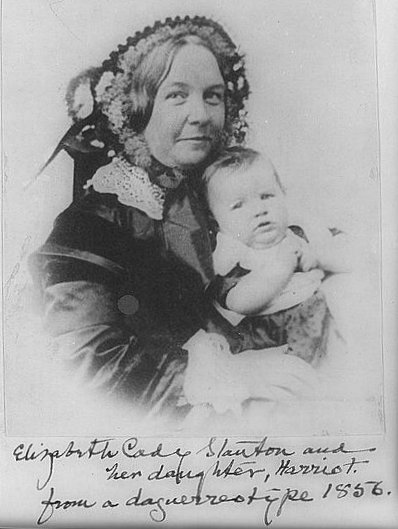
Below:  Elizabeth Cady Stanton.

May 04, 2010

Genius wrote about Native history

We get e-mail:Hey Rob, thought you might find this interesting:

William Sidis is believed, going by standardized testing, one of the smartest men who have ever lived.

Invented his own language at the age of 8, knew 40 other ones, he was a Harvard lecturer on mathematics at the age of 12. Shortly after graduating cum laude at MIT at the age of 16 however, he was arrested for attending a socialist protest and sentenced with 18 months on charges of sedition. His parents managed to persuade the court to transfer Sidis into their own sanitorium for a year and set about to "reform" their son.

After this ordeal, Sidis was dedicated to living the rest of his life in obscurity.
However, he released many works (stretching from cosmology, linguistics and public transit) under psuedonyms, one of which was The Tribes and the States in 1935, much of which he read directly from wampum beads.
Publications and subjects of researchFrom writings on cosmology, to American Indian history, to a comprehensive and definitive taxonomy of vehicle transfers, an equally comprehensive study of civil engineering and vehicles, and several well-substantiated lost texts on anthropology, philology, and transportation systems, Sidis covered a broad range of subjects. Some of his ideas concerned cosmological reversibility, "social continuity," and individual rights in the United States.

Sidis' The Tribes and the States (ca. 1935) employs the pseudonym "John W. Shattuck," giving a 100,000-year history of North America's inhabitants, from prehistoric times to 1828. In this text, he suggests that "there were red men at one time in Europe as well as in America."
Some excerpts from the book show Sidis's progressive beliefs:

The Tribes and the StatesIntroduction

There are certain definite departures from the common and well-known points of view regarding America and its past that the reader will notice. At the opening, it is obvious that the beginnings of American history are sought not in Europe but here in America, among the peoples who originally inhabited this country, and the characteristics of the various parts of the country are treated as directly traceable to the varying characteristics and customs of the early tribes in the same regions. The tribes of Indians are considered, not as savages or barbarians who created nothing of importance, but as the real founders of the best and most important parts of modern American institutions: federation, democracy, postal service, written constitutions, the idea of individual rights, are among the many things which, according to this version of history, modern America owes to its red predecessors. And, as a corollary, the coming of the white people to America, which, from the standard point of view, starting American history in Europe, was a series of discoveries, is here treated as a series of invasions from Europe by a barbarous people who understood nothing of American institutions, but who, in the very process of overrunning the continent, acquired, at least partially, many of the ways of doing things that they found on this side of the ocean, and civilized themselves, and even their original home countries, in the process.

Chapter II: The Red Man in America

The Different Red Stocks. America before the invasion by the whites was entirely inhabited by the red race, but it would be a mistake to suppose that that meant they were all of one language, stock, or nationality. Differences in nationality and characteristics were as pronounced as among the whites, if not more so. The mere fact that their white conquerors have lumped them all together under the incorrect heading of "Indians" does not make them all alike, and it is important to understand that pronounced national and language differences were to be found among the aboriginal inhabitants of America, and that therefore any statements about customs, forms of government, etc., applying to one red nation would be likely to be false as applied to their neighbors. There were many language groups among the red people which showed no relation to one another, beyond the common characteristics which will be mentioned in this chapter.

Chapter V: The Great White Invasion

An Invading Race. The new experiment in national administration, that of federation, was not to have a good chance to develop among the red people of America, where it was naturally best adapted. Almost immediately on the heels of the first trial of this new form of organization, came a most destructive series of invasions from across the Atlantic, by the same white race which, thousands of years before, had descended like a plague on Europe and wiped out the European branches of the red race. And now on they came across the Atlantic Ocean in great numbers, bringing with them the host of infections that had destroyed the red men of Europe and that was to wreak similar destruction in America. They not only brought with them weapons of warfare infinitely more destructive than any that had been known in America, but also conducted warfare with such ferocity as had never been known among red peoples from one end of America to the other. They brought over alcohol, an agent which, while destroying its victims, also in the process rendered the victim dependent on his destroyers; and, like the white man's infections, its effects were infinitely more destructive on the red man than on the whites, who had been accustomed to it for generations. Infections and alcohol were probably the most effective of the invaders' destroying agents, more than wars or other means of destruction that the white invaders brought over with them.
Comment:  I hadn't heard of Sidis before this.

Is it just a coincidence that someone with an IQ of 250 was critical of the standard economic, religious, and historical views? Maybe, but probably not.

Of course, Sidis also believed in a mid-Atlantic continent of Atlantis. According to him, it formed a land bridge between America and Africa and was home to the first great "red" civilization.

Sidis seems to imply that some Indian achievements came from Atlantis. This is a false and scurrilous view we often see in stories about Central and South American Indian civilizations.

For more on the subject, see Indiana Jones and the Stereotypes of Doom and America's Cultural Roots.

April 13, 2010

Indians inspired More's Utopia

Charles Trimble:  Decolonization and Native communitiesLegal scholar Felix Cohen, in his great book of essays titled “The Legal Conscience,” tells us that the great English philosopher and martyr Thomas More was inspired by contemporary reports of Amerigo Vespucci describing an idyllic native society he found in the New World. Shipwrecked in 1497 off the coast of what is now Brazil, Vespucci and his crew were rescued by Native people and treated with great kindness. It was from those accounts that Thomas More created the ideal society he called Utopia, described in his book of the same title.

After five centuries of conquest and occupation by European powers, little of that ideal world remains in the western hemisphere, except perhaps in some undiscovered tropical village along the Amazon. What remains of any semblance of traditional culture exist in enclaves of poverty surrounded by development and wealth. The poverty in these enclaves is the result of many decades of injustice--massive land theft, forced removal, and physical and cultural annihilation. This has left tribes in alien and much-reduced homelands unsuitable for the economic systems and lifeways that had sustained them for centuries, where they are wholly dependent upon their occupiers.
More connections between More's Utopia and Indians:

Utopia (book)[T]he communistic life style of a Utopian is a strange one coming from a rich landowner, though perhaps influenced by the Spanish colonization of the Americas, which was bringing to European ears tales of ideal civilizations at about this time.Thomas More's Magician: A Novel Account of Utopia in Mexico (Phoenix Paperback Series)This is the story of Vasco de Quiroga who used Thomas More's UTOPIA as the inspiration for building a functioning utopian society in sixteenth century Mexico. It is the story of a communist society that predated Communism and the world's first welfare state. The social structure of Quiroga's 'pueblo-hospitales' was grounded in the family, had an economy based on agriculture, and the politics was run through communal consensus given a voice by regular elections.

Toby Green uses this gripping slice of history to enquire into how feasible the utopian ideal is, especially when matched with our contemporary emphasis on the individual.
Roger Williams, Thomas More, and the Narragansett Utopia

Bartolome de Las Casas and Thomas More's Utopia

Comment:  Trimble goes on to say he's never seen descriptions of Indian "utopias" and wonders if Indians can return to a traditional "utopia" society. I think I have seen such descriptions. They usually apply to tribes that were smaller and more peaceful, not larger and more warlike.

And no, I don't think tribes can return to a utopian lifestyle based on traditional ways. Nor do I think that's necessarily a good goal. My ideal is to integrate traditional values of community, conservation, and thinking ahead into modern society. To create sustainable economic, political, and social systems that can provide for the world's people.

For more on the subject, see Indians Gave Us Enlightenment and Hercules vs. Coyote:  Native and Euro-American Beliefs.

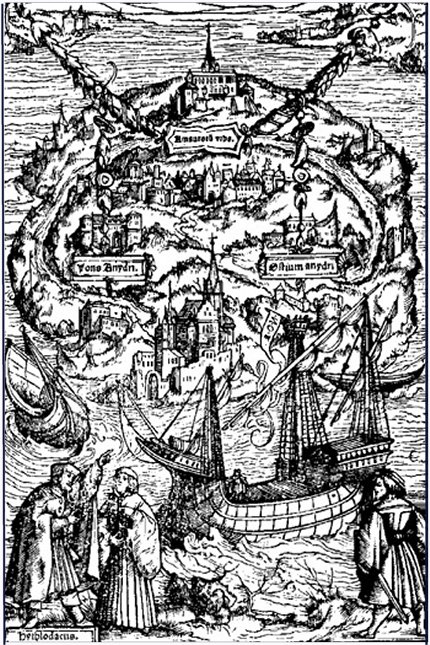
Below:  "Woodcut by Ambrosius Holbein for a 1518 edition of Utopia. The lower left-hand corner shows the traveler Raphael Hythlodaeus, describing the island."

February 28, 2010

Franklin and Indians knew best

In today's partisan political environment, Democrats can't lead and Republicans won't follow. Ben Franklin recommended the Indian model of governance to the squabbling colonies then and he'd probably recommend it to the squabbling parties now.

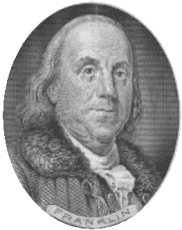
Benjamin Franklin:  Respect in political discourse is good Native value

By José BarreiroIn 1750, while deliberating thoughts on the “necessary unity of the colonies,” Franklin mocked his fellow colonial leaders, presumably the elite of the promised republic, with the much-published argument: “It would be a very strange thing, if six nations of ignorant savages should be capable of forming a scheme for such an union, and be able to execute it in such a manner, as that it has subsisted ages, and appears indissoluble; and yet that a like union should be impracticable for ten or a dozen English Colonies … who cannot be supposed to want an equal understanding of their interests.” (Letter to James Parker, Philadelphia, March 20, 1750.)

Franklin’s exhortation to gather American political forces is equally relevant today, when the unity of the American Republic appears in peril and in need of re-energized dialogue. The manner of its historically successful undertaking--by the value of careful, diplomatic and deliberate discussion--he attributes to American Indians, of whom he writes that, “having frequent occasions to hold public councils, they have acquired great order and decency in conducting them.”

Wrote Franklin: “He that would speak, rises. The rest observe a profound silence. When he has finished and sits down, they leave him five or six minutes to recollect, that if he has omitted anything he intended to say or has anything to add, he may rise again and deliver it. To interrupt another, even in common conversation is reckoned highly indecent.”

This important observation of an American Indian value, which sustains in most contemporary tribal councils and arguably proposed for American political discourse, is vintage Franklin.
Comment:  Hard to imagine that 150 years ago, Lincoln and Douglas debated for hours without prepared speeches, notes, or teleprompters and people listened. These days it's a major event if Democrats and Republicans sit down together and exchange a few sound bites for the cameras.

I don't know how ironic Franklin intended the phrase "ignorant savages" to be. It's pretty ironic considering the Haudenosaunee tribes were more united than the British colonies. Wasn't that unity one mark of their civilized, stately nature?

For more on the Founding Fathers and Indians, see Fun 4th of July Facts.

March 17, 2009

No prejudice among Indians?

Based on historical antecedents, Ward Churchill claims there'd be no prejudice--no classism, sexism, homophobia, or racism--in a truly sovereign Indian nation.

I Am Indigenist

Notes on the Ideology of the Fourth World

By Ward Churchill
There is no indication whatsoever that a restoration of indigenous sovereignty in Indian Country would foster class stratification anywhere, least of all in Indian Country. In fact, all indications are that when left to their own devices, indigenous peoples have consistently organized their societies in the most class-free manner. Look to the Haudenosaunee (Six Nations Iroquois Confederacy) for an example. Look to the Muscogee (Creek) Confederacy. Look to the confederations of the Yaqui and the Lakota, and those pursued and nearly perfected by Pontiac and Tecumseh. They represent the very essence of enlightened egalitarianism and democracy. Every imagined example to the contrary brought forth by even the most arcane anthropologist can be readily offset by a couple of dozen other illustrations along the lines of those I just mentioned.

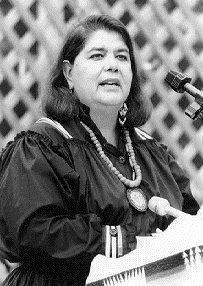
Would sexism be perpetuated? Ask the Haudenosaunee clan mothers, who continue to assert political leadership in their societies through the present day. Ask Wilma Mankiller, recent head of the Cherokee Nation, a people who were traditionally led by what were called "Beloved Women." Ask a Lakota woman—or man, for that matter—about who owned all real property in traditional society, and what that meant in terms of parity in gender relations. Ask a traditional Navajo grandmother about her social and political role among her people. Women in most traditional native societies not only enjoyed political, social, and economic parity with men, but they also often held a preponderance of power in one or more of these spheres.

Homophobia? Homosexuals of both genders were, and in many settings still are, deeply revered as special or extraordinary, and therefore spiritually significant, within most indigenous North American cultures. The extent to which these realities do not now pertain in native societies is exactly the extent to which Indians have been subordinated to the morés of the invading, dominating culture. Insofar as restoration of Indian land rights is tied directly to the reconstitution of traditional indigenous social, political, and economic modes, one can see where this leads; the Indian arrangements of sex and sexuality accord rather well with the aspirations of feminism and gay rights activism.

That leaves militarism and racism. Taking the last first, there really is no indication of racism in traditional indigenous societies. To the contrary, the record reveals that Indians habitually intermarried between groups and frequently adopted both children and adults from other groups. This occurred in precontact times between Indians, and the practice was broadened to include those of both African and European origin, and ultimately Asian origin as well, once contact occurred. Those who were naturalized by marriage or adoption were considered members of the group, pure and simple. This was always the native view.
Comment:  On the one hand, I think this is a gross exaggeration of the reality. It conveniently leaves out the stratified societies of the Aztec, Maya, and Inca. Churchill is clearly doing some cherry-picking among the hundreds of Native cultures. He's choosing examples that support his case and ignoring examples that don't.

And of course Churchill describes the way things were, not the way they are. Today most Indians speak English, live in cities, have jobs, own property, practice Christianity, etc. Most don't live a traditional lifestyle, to put it mildly. For better or worse, they've adopted Western ideas and attitudes.

On the other hand, I think there's a lot of validity to these claims. Native cultures were arguably much more egalitarian than the contemporaneous Western cultures. A return to the Native values of liberty, equality, and brother- and sisterhood would be a good thing. If a Native society were free to develop on its own, it might embrace these values.

For more on the subject, see Indians Gave Us Enlightenment. For more of Churchill's thoughts on indigenism, see:

Only one Indian civilization?
Churchill the indigenist

Disclaimer:  Nothing in this posting is meant to support any of Churchill's words or deeds except the words noted here.