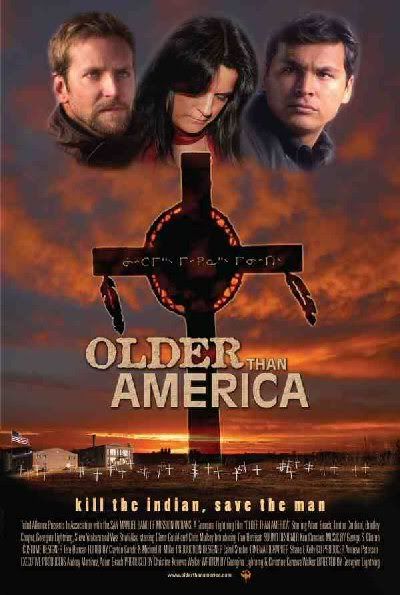
As part of the 2011 National Human Rights Conference in Los Angeles, the US Human Rights Network hosted a special screening of Georgina Lightning's
Older than America Saturday. Because it was at the Radisson LA Airport Hotel near my home, I was able to attend. (Finally, a movie screening within a 15-minute drive!)
Guests at the event included:
Frank J. King III (Rosebud Sioux)Tribal and government political consultant
Andrea Carmen (Yaqui)Executive Director, International Indian Treaty Council
Denise Lajimodiere (Turtle Mountain Band of Chippewa)National Boarding School Healing Project
Francisco Cali (Maya)General Assembly member of the State Parties to the International Convention on the Elimination of All Forms of Racial Discrimination (ICERD) and expert member of the UN Committee on the Elimination of Racial Discrimination (CERD)
Georgina Lightning (Cree)Writer, Director, Producer | White House Healing Effort
I didn't know they were going to serve a free dinner, paid for by the US government (I presume), but they did. I got to sit at the key table with
Georgina Lightning, Frank King,
Michelle Shining Elk, Sonny Skyhawk, and
Max Gail (Wojciehowicz on
Barney Miller), who's a big supporter of Native causes.
The evening's purposeThe purpose of the screening and a panel discussion afterward was a
strategic planning dialogue in seeking a public proclamation and apology from the White House acknowledging the profound grief, loss and cultural genocide of American Indians as a direct result of the boarding school experience so a path to healing and freedom can begin in Indian country.I mentioned the lack of a public apology in
Obama Still Should Apologize and
Obama's Invisible Apology. People are still urging him to apologize publicly. For instance:
The Quiet American Apology to IndiansA federal apology to Native Americans for a ruthless history has been made but mainly kept under wraps. Is it for shame or the fear of huge reparations?By Mary Annette PemberIn her recent article in Indian Country Today, Lisa Balk King reports hearing a non-Indian in Rapid City scoff, “You were conquered, get over it!”
I don’t purport to speak for all Indian people here in the U.S. but I think I can say that overall, it’s been tough to bounce back from the whole conquest thing. It’s been the gift that just keeps on giving for many of us. The legacies of European conquest in the form of United States policies such as The Dawes Act, Relocation, forced sterilization, assimilation through relocation, forced attendance at government boarding schools and adoption of our children to say nothing of outright extermination have made a lasting impact on Native peoples.
So it stuck in our craws when last month President Obama failed, once again, to make the United States apology to Native Americans public.And:
[D]espite the Obama administration’s work on Native issues, many in Indian Country still say that a public apology is warranted and would go a long way toward healing our people and the nation as a whole. King points out that an apology “could provide a much-needed shift in public attitudes toward tribes in the country, as well as attitudes of Native people toward the federal government.”
Tex Hall, Chairman of the Mandan, Hidatsa and Arikara Nation in North Dakota agrees: “While some may say, ‘Let’s forget the past,’ the truth is that only through remembrance can our nation’s conscience heal, and only though amends can we truly move forward in strength, hope and justice.”
I think that the U.S. is terrified to make too much of the 2009 apology for fear of setting off something like Canada’s 2006 $2 billion compensation package for aboriginal peoples who were forced to attend residential schools. In 2008 Canada’s Prime Minister Stephen Harper publicly apologized to former students of the schools; the country also established a Truth and Reconciliation Commission to address the consequences of these institutions.After the movieIn the panel discussion after the screening, King shed some light on the situation. He said Kimberly Teehee, the White House adviser on Indian affairs, told Obama the apology wasn't that important to Indians.
Everyone in the room seemed to disagree. The consensus was that if the US publicly expressed regret, Americans would stop denying the country's tragic past and start dealing with Indian issues.
Andrea Carmen said the US Human Rights Network would pass a resolution urging the public apology. King said he would take it to a meeting with Obama, along with calls to stop the
Keystone XL pipeline and pardon
Leonard Peltier.
Anyway,
Older than America, which I hadn't seen before, was good. If only the keynote speech and panel discussion didn't go on too long. People were still rambling on about their pet concerns at 12:30 am when someone mercifully halted the event.
All in all, it was an interesting evening, although it could've been an hour or two shorter. Here are photos of the event:
"Older than America" screening--December 10, 2011US Human Rights Network hosts special screening of OTAFor more on the subject, see
Brownback Reads US Apology and
Brownback Urges Public Apology.