July 14, 2007

How comics reflect social history

The Superhero as Society’s Mirror, From World War II to IraqTwig Johnson, the [Montclair Art] museum’s curator of Native American art, tracked down comic-book representations of American Indians for the show. “When I really started to look, most of the native characters weren’t really Indian characters; it was usually a white kid raised by natives,” she said.

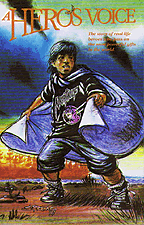
The examples Ms. Johnson found run the gamut from the cringe-inducing to the praiseworthy. A 1992 issue of NFL SuperPro from Marvel depicting villains clad as sacred kachina figures proved offensive to the Hopi tribe; “A Hero’s Voice” (2006), the real-life story of six 19th- and 20th-century tribal leaders, published by the Mille Lacs Band of Chippewa Indians in northern Minnesota, has been popular in elementary schools.
Comment:  As readers of this blog may recall, I was involved in this exhibit behind the scenes. For one thing, I helped the Montclair's curators obtain many of their Indian comics. For another, the documentary this article mentions is the one I was interviewed for.

Another review of "Legacy and Legend"

The Image of the American Indians at the Huntington LibraryThe most important artists that represented the American Indians, either after seeing them first hand or according to various sources (when imagination and myth became all powerful), were European or at least European trained. They really knew little about the Indians, so the images were both Romantic and dramatical. As new technologies for copying and reproducing made the works cheaper, the artists tried to offer the public the unusual of Indian culture: distinct clothing and weaponry, rituals, hunts. The life of the Indians was exotic, strange, pagan and at the same time fascinating.

These representations are still powerful, many of these changing very little over time. The men are still depicted as hunters and warriors, women are hardly seen and on the whole the Indians seem to be all blood thirsty and fanatically opposed to the White man.

Reenacting an Indian ambush

Weekend re-enactment, talks recall ambush of Hanna's TownHistory buffs can join about 50 re-enactors this weekend as log cabins and taverns come alive on the Pennsylvania frontier in the waning days of the American Revolution.

Although there will be no attacking Indians running out of the woods, visitors can get a glimpse of life on the Forbes Trail settlement up until the raiding Indians and British allies ambushed the town 225 years ago, said Rush Blady, who is helping to coordinate the event.

The Canary Effect trailer

Exclusive Clip from The Canary Effect--Columbus Day

July 13, 2007

Colorado trip pix (Days 4-6)

Lyons, Colorado--June 30, 2007
Rocky Mountain hikes--July 1, 2007
Rocky Mountain National Park--July 2, 2007

Indian lore:

  • An antique shop in downtown Lyons had an Iroquois-style wooden Indian in front of it.

  • We drove past the University of Colorado, Boulder--home of the infamous Ward Churchill.

  • Longs Peak is the only "fourteener" (14,000-ft. mountain) in Rocky Mountain National Park. According to a website, "Longs Peak was a landmark for the Utes, Arapaho, and earlier people who traveled, hunted, and sometimes fought in these mountains, and it is believed that ancient Indians scaled Longs Peak's summit, perhaps in efforts to trap eagles."
  • Indian lore at Rocky Mountain

    Archeological SitesRocky Mountain National Park has been the home to Native Americans for at least the last 12,000 years. The remains of all the known prehistoric cultures except Folsom (ca. 10,000-8000 years ago) have been found in the park. The basic prehistoric sequence is Clovis (11,000–10,000); Folsom; Early, Middle and Late Archaic (7,500-2,000); and the Early, Middle, and Late Ceramic cultures (2,000 to 300).

    The major inhabitants of the Park area in historic times were the Ute and Arapaho. Ute origins may have been in the Great Basin and/or the mountainous areas of the State and we strongly suspect that Uto-Aztecan speaking ancestors of the Ute have occupied the Colorado mountains for at least 6,000 years. The Apache appear to have been in the park for at least 400 years as based on the presence of their pottery and historical accounts of a battle with the Arapaho in the 1830s in Upper Beaver Meadow. The Arapaho homeland was originally in Minnesota, and they migrated into Colorado by about 1790. No less than 36 place names in the Park are of Arapaho origin. By about 1880, the Ute had been moved to reservations in Colorado and Utah, and the Arapaho to Oklahoma and Wyoming. Due to the high altitude and severe winters, occupation for these hunter-gatherers in the park was confined to the warmer months. Major occupation may have been in the fall of the year when the high altitude elk game drives were in operation. Present evidence indicates that winter occupation was at lower altitude along the Front Range, and in Middle and North Parks.

    Jamestown at the Hungtington

    Exhibition Examines the Colony’s Role in the Nation’s Early DevelopmentEarly Jamestown, Va., was the place where John Smith met Pocahontas, where settlers discovered the value of growing tobacco, and where the English permitted their colonists to practice self-government. But the fact that the colony survived long enough to achieve any of those distinctions, much less to have an anniversary worth celebrating 400 years later, is something of an accomplishment in itself.

    “Jamestown was, in fact, a notorious hellhole perched on the edge of a swamp,” says Peter Mancall, professor of history at the University of Southern California and director of the USC-Huntington Early Modern Studies Institute. Typhoid fever and famine wiped out a large percentage of the population each year, he notes. And by 1622, just a generation into settlement there, the Europeans and Indians were at war in a conflict that would ultimately leave hundreds of settlers and natives dead.

    Mancall is the guest curator of the new exhibition “Jamestown at 400: Natives and Newcomers in Early Virginia,” on view from July 7 through Jan. 14, 2008, in the West Hall of the Library. The exhibit is co-curated by Robert C. Ritchie, The Huntington’s W.M. Keck Foundation Director of Research. (The show is a companion exhibition to “Legacy and Legend” in the MaryLou and George Boone Gallery, which also marks the 400th anniversary of Jamestown by examining European depictions of Native Americans across four centuries.)

    Indian Country Interior Solutions

    Attention to detail boosts interior design firmWhen the owners of Indian Country Interior Solutions entered the field of decorating Native-owned resort properties in 2005, the two were already seasoned entrepreneurs ready for a new challenge.

    After all, they had already been in business together since 1994 as the joint owners of GEO & JEM Inc. The company specializes in luxury office and hospitality furnishings.

    ICIS is woman- and minority-owned. President Georgia O' Mary is of Japanese descent, and vice president Janie Millican is an enrolled member of the Muscogee Creek Nation of Oklahoma.

    Both women speak passionately about their goals to provide the best service possible to their Native clients.

    Gil Birmingham's feature of the month

    July 2007Rob Schmidt, writer and publisher of Blue Corn Comics. Rob creates multicultural comic books that feature Native Americans. He provides very insightful blogs and articles that focus on the issues facing us today with his unique perspective.

    Pollution at Ponca

    Watch the video:

    Black Sky White Eagle

    July 12, 2007

    Colorado trip pix (Day 3)

    Arches National Park--June 29, 2007

    Indian lore:

  • Paleo-Indians lived at Arches some 10,000 years ago.

  • Later the Fremont and Ancestral Puebloan cultures overlapped at Arches.

  • As the Arches NPS site notes, "The first reliable date within Arches is an interesting one. Denis Julien, a French-American trapper with a habit of chiseling his name and the date onto rocks throughout the Southwest, left an inscription in this area: Denis Julien, June 9, 1844."

  • More to the point, Julien foolishly inscribed his name over ancient petroglyphs. Today we'd arrest him for vandalism.

  • Because Arches lay at the boundary of two cultures, I gather it was mainly uninhabited. I was expecting to hear some Indian legends about the arches (you know, "Coyote froze a rainbow into an arch so it would never disappear"), but no.

  • Indians used the springs at Glenwood Springs, Colorado, where we stopped briefly. As one website notes, "Long before the white man came to this area, the hot springs were well known to Indian tribes for their healing aspects. The tribe in possession of the 'Yampah' Hot Springs possessed the 'big' medicine of that time (Yampah meaning 'big medicine' in Indian language).

    "The Ute Indians took advantage of the caves' curative powers for hundreds of summers before white men 'discovered' the area in the mid-1800s. The original Ute cave was on the south side of the river and was used until 1887, when it was sealed over by the railroad."
  • Indian lore at Arches

    History & CultureHunter-gatherers migrated into the area about 10,000 years ago at the end of the Ice Age. As they explored Courthouse Wash and other areas in what is now Arches, they found pockets of chert and chalcedony, microcrystalline quartz perfect for making stone tools. Chipping or knapping these rocks into dart points, knives, and scrapers, they created debris piles that are still visible to the trained eye.

    Then, roughly two thousand years ago, the nomadic hunters and gatherers began cultivating certain plants and settled into the Four Corners region. These early agriculturalists, known as the ancestral Puebloan and Fremont people, raised domesticated maize, beans, and squash, and lived in villages like those preserved at Mesa Verde National Park.

    While no dwellings have been found in Arches, the northern edge of ancestral Puebloan territory, there are rock inscription panels. Like earlier people, the ancestral Puebloans left lithic scatters, often overlooking waterholes where someone may have shaped tools while watching for game. People living in modern-day pueblos like Acoma, Cochiti, Santa Clara, Taos, and the Hopi Mesas are descendants of the ancestral Puebloans.

    The Fremont were contemporaries of the ancestral Puebloans and lived in the same general area, so distinctions between the two cultures are blurry. However, Fremont rock inscriptions, pottery and other artifacts clearly demonstrate the existence of different technologies and traditions. Both the Fremont and the ancestral Puebloans left the region about 700 years ago.

    As the ancestral Puebloan and Fremont peoples were leaving, nomadic Shoshonean peoples such as the Ute and Paiute entered the area and were here to meet the first Europeans in 1776. The petroglyph panel near Wolfe Ranch is believed to have some Ute images since it shows people on horseback, and horses were adopted by the Utes only after they were introduced by the Spanish.
    Comment:  Pictured below is the Wolfe Ranch, a non-Indian site at Arches.

    Gaming the economic engine

    Report tells the Indian gaming storyGaming is still the most successful economic development initiative in Indian country. A recently released research report leaves little doubt that this will continue to be the case in the coming years.

    The Indian gaming industry in 2006 sustained its year-over-year expansion, with revenue growth of 11 percent. While this marks a decline from the industry average of 14.6 percent growth between 1997 and 2006, one industry expert remains confident that expansion will endure.

    Alan Meister is an economist with the Analysis Group, a Los Angeles-based financial consulting firm. His "Indian Gaming Industry Report" paints a thorough and upbeat picture for the future of tribal gaming.

    "Amidst some future uncertainties, the outlook for Indian gaming as a whole remains positive," Meister wrote in the report. "While proposed legislative and regulatory changes if enacted could slow the growth of Indian gaming somewhat, particularly with regards to new gaming land acquisitions and Class II gaming, they are not likely to stop the growth of established Class III gaming. And if renegotiated gaming compacts are ultimately ratified by the California State Legislature, there is likely to be sizeable growth on the horizon in California, and as a result for nationwide Indian gaming."

    Lacrosse in the blood

    Indian Tribes Rediscovering LacrosseTim Glass’s mother tells him that he was born with a lacrosse stick in his hand, because his ancestors invented the game. Tim, 14, and his two younger brothers sometimes practice their chosen sport in T-shirts that say, “It’s in our blood.”

    Here on Oneida land, roughly 25 miles east of Syracuse, they are part of a new generation of American Indians reasserting their heritage through a game that was invented by their ancestors but in recent decades has been perceived mainly as the province of prep schools and elite colleges.

    Over the past four years, the North American Minor Lacrosse Association has grown into a league of six American Indian teams, each with different age divisions, in upstate New York, with 1,000 players ages 3 to 20. Some upstate Indian tribes, newly prosperous from gambling profits and keen to preserve their past, have hired coaches and referees, bought equipment and refurbished playing fields.

    Pure Faith of the Tuscarora

    Pura FéHer name translates as “pure faith”, and it reflects Pura Fe’s devotion to her multiple identity. She was born in New York of a Puerto Rican father and a mother who mixed roots in the Tuscarora tribe of North Carolina with those of Africa and Ireland. Pura’s has devoted a blossoming career to the music of the Tuscaroran people. But she has modernised it with the sounds of the blues and folk music. She co-founded the a cappella trio Ulali before striking out on a solo career. This has done honour to her soulful voice and the acoustic lap steel guitar she plays. In 2007 Pura released her second solo album Hold the Rain.

    Born in New York, Pura Fe inherited the mixed backgrounds of her Puerto Rican and Tuscaroran parents. The indigenous Tuscarora population was part of an Iroquois nation decimated by the European and American powers. They have since been forced onto reservations in North Carolina, New York State and Ontario, Canada. Fe has been struggling all her life to keep her people’s traditions alive through a painstaking career in music and theatre. But she also worked on Broadway as part of the Mercer Ellington Orchestra and a version of Hair. The multi-talented artist also studied and performed with the American Ballet Theatre company.

    Momaday the poet laureate

    Momaday named state's centennial poet laureateGov. Brad Henry on Thursday named Pulitzer Prize winner N. Scott Momaday as the state's centennial poet laureate.

    His 2-year term as the state's 16th poet laureate runs until Jan. 1, 2009. He succeeds Francine Ringold from Tulsa.

    Momaday, who was born in Lawton, earned the Pulitzer Prize in 1969 for his first novel, "House Made of Dawn."

    The 73-year-old is a poet, playwright, artist and scholar.

    Indian added to The War

    Burns' series expanding to include Hispanic, American Indian vetsKen Burns, criticized for overlooking the role of Hispanic soldiers in his new World War II documentary, said nearly a half-hour of footage on Hispanic and American Indian veterans is being added to the film.

    Profiles of two Hispanics will conclude the first and sixth episodes of the roughly 15-hour, seven-part “The War,” debuting Sept. 23 on PBS, Burns told a news conference. An Indian soldier's story will be at the end of episode five, he said.

    July 11, 2007

    Colorado trip pix (Day 2)

    Bryce Canyon National Park--June 28, 2007

    Indian lore:

  • Ancestral Puebloans occupied the site on our morning walk in Zion some 1,000 years ago.

  • On the way out of Zion, we passed a Native American Cultural Center, but we didn't have time to stop there. They had a group of tipis set up, perhaps as campsites for rent. We saw similar tipis at a campground near Bryce.

  • As Bryce's NPS site notes, "This area boasts some of the world's best air quality, offering panoramic views of three states and approaching 200 miles of visibility." Thus, we were able to see the sacred Navajo Mountain from 100 miles away.

  • Later that day, on the way out of Bryce, we passed Anasazi State Park. We didn't have time to stop there either.
  • Indian lore at Bryce Canyon

    American Indian HistoryPaiute Indians occupied the area around what is now Bryce Canyon starting around 1200 A.D. The Paunsaugunt Plateau was used for seasonal hunting and gathering activities, but there is no evidence of permanent settlements.

    The legend of Bryce Canyon was explained to a park naturalist in 1936 by Indian Dick, a Paiute elder who then lived on the Kaibab Reservation:

    "Before there were any Indians, the Legend People, To-when-an-ung-wa, lived in that place. There were many of them. They were of many kinds--birds, animals, lizards and such things, but they looked like people. They were not people. They had power to make themselves look that way. For some reason the Legend People in that place were bad; they did something that was not good, perhaps a fight, perhaps some stole something….the tale is not clear at this point. Because they were bad, Coyote turned them all into rocks. You can see them in that place now all turned into rocks; some standing in rows, some sitting down, some holding onto others. You can see their faces, with paint on them just as they were before they became rocks. The name of that place is Angka-ku-wass-a-wits (red painted faces). This is the story the people tell."
    Fremont and Anasazi people occupied the portion of the Colorado Plateau near Bryce Canyon from around 200 A.D. until 1200. The Fremont were more to the north and west, with the Anasazi more to the south and east. There is recently discovered evidence of the mixing of these two cultures on the Kaiparowits Plateau.

    Native Americans first occupied the Colorado Plateau 12,000 years ago, but no evidence of their activities has yet been found on the Paunsaugunt Plateau.

    Chavez champions Natives

    How Chavez Changed Life in the Tribal TerritoriesProud of his Pumé grandmother, he set himself up as champion of the indigenous peoples. While still a candidate he promised to "repay this historic debt" owed by the state and carried it through when he set up the new Bolivarian constituent assembly in 1999. Some tribes, such as the Wayuú, are well assimilated in urban areas; others such as the Yanomani live in the Amazonian jungle and have little contact with the outside world. But the indigenous tribes are relatively young, isolated from the rest of society and divided politically, especially the Wayuú in Maracaibo who support more traditional political parties, such as Democratic Action.

    In Ecuador or Bolivia, strong indigenous movements regularly shake up politics. Not in Venezuela where, according to the sociologist and anthropologist Daniel Castro: "The political space was opened up by the Creoles, not by pressure from the indigenous population. Nevertheless the attempt by Chávez to rebuild the country has rekindled old expectations about recovering land and defending a way of life." Chávez invited the indigenous peoples to take part in drawing up the constitution and in July 1999 the 600 delegates of the National Council of Venezuelan Indians (Conive) elected three representatives to the National Assembly. Along with 128 Creole delegates, they presented proposals drawn up by their rank and file. Then they had to get them passed.

    There was bound to be resistance, amplified by the media, from companies exploiting natural resources: the opposition. On the Chávez side, the Security and Defence Commission (former army officers) denounced a possible infringement of national sovereignty and a blow to national integrity. The argument lasted until 3 November 1999 when the Rights of the Indigenous Peoples were passed. These were the basis for chapter 8 of the constitution, ratified by 71% of Venezuelans (with a 60% participation rate) in a referendum. It is the most progressive constitution for indigenous rights on the American continent. What used to be, at best, a paternalistic attitude has been replaced by a policy of recognition and participation (see `New rights').

    Bad Michigan books

    Promulgation of Damaging Ethnic Stereotypes as a Cottage Industry in Northern Michigan:  Book ReviewsImagine confronting in your public schools, libraries, and community bookstores colorful children’s books full of imitation stories about your culture that utilize characters and words from your language but feature sexual predators, child molesters, murderers, and rapists from your extended family’s personal and oral histories. Imagine complaining to your local schoolteachers, librarians, and booksellers only to be told that this is acceptable, because the author has placed an obscure disclaimer in the front of the book, because the author is a very nice person with children of her own who claims to be honoring you by manufacturing these materials, because people from outside of your culture enjoy this particular form of lampooning you, or simply because the books make money for a lot of people outside of your extended family. Imagine this type of lampooning resulting in your inability to obtain equal employment at equal pay or resulting in deprecating comments directed at your children by their peers. This is what happens every day to the Anishinabeg, the aboriginal people of the western Great Lakes.

    The notion that a non-Indian can create alternative Native American legends and histories manifests residual racism, and the practice would not be tolerated were any other contemporary culture targeted in such a fashion. The practice has been described as disrespectful and exploitive by every Native American elder with whom I have discussed it. It is considered a threat to the very survival of our culture and is equated with genocide. When one disregards our culture, one disregards us as human beings. We are inseparable from our stories and our traditions. And we are tired of being told that we have no place in contemporary American culture unless we adapt these things to meet the marketing needs of non-Indians who have taken over more than ninety-nine percent of our traditional lands and now see fit to take over our cultural formatting as well.
    (Excerpted from Debbie Reese's American Indians in Children's Literature, 6/27/07.)

    Thor Heyerdahl in reverse

    Sailor attempts to cross Atlantic in reed boatDominique Gorlitz, a former teacher from Chemnitz, Germany, says his voyage from New York Harbor to Spain would replicate ocean voyages that he believes were taking place 12,000 years before Christopher Columbus.

    "We are trying to retrace the ancient waterways to prove that prehistoric people crossed the ocean both ways," Gorlitz said at a news conference.

    Scholars have expressed doubt about his assertions.

    "There's this 99.9 percent certainty that it didn't happen because we don't have evidence that it happened," Kenneth L. Feder, an anthropology professor at Central Connecticut State University in New Britain, Conn., said in May. He is the author of "Frauds, Myths, and Mysteries: Science and Pseudoscience in Archaeology."

    Gorlitz said traces of tobacco and cocaine were found in the tomb of Egypt's pharaoh Ramses II, evidence of long-distance trans-Atlantic commerce during the Stone Age. He also believes cave drawings in Spain show that people living 14,000 years ago had an understanding of ocean currents.

    Cherokees as eco-warriors

    Cherokee Nation honored as an environmental stewardThe Cherokee Nation of Oklahoma has been honored as a national, innovative leader in the effort to protect the environment. In recognition of its commitment to improve air quality and the environment, the Environmental Protection Agency presented the tribe its prestigious Clean Air Excellence Award.

    Ryan Callison, specialist with the Cherokee Nation's environmental program, explained that the tribe became active in ambient air quality monitoring in 1996, establishing a network of criteria pollutant monitors in the states of Oklahoma and New Mexico. As the lead agency in the Inter-Tribal Environmental Council, the nation has been the forerunner in protecting health, natural resources and the environment for the tribal community, according the EPA's Web site. Callison said the tribe is dedicated to providing quality environmental data to rural and tribal communities.

    Oneida film at "American Cannes"

    Raccoon & Crawfish Makes Moondance Finals“Raccoon & Crawfish,” the first 3-D animated short film created by the Oneida Nation’s Four Direction Productions, is a finalist in the Moondance International Film Festival, popularly known as the “American Cannes.” Moondance is one of the premier venues for the exhibition and promotion of feature and short films in the U.S. and one of the leading indie film festivals in the world.

    “Racoon & Crawfish,” an ancient Oneida legend that points to the dangers of boasting and deceit, debuted at the Syracuse Film Festival in April and already has earned two bronze Telly awards--one in the Entertainment category and one in the Use of Animation category.

    July 10, 2007

    Colorado trip pix (Day 1)

    Zion National Park--June 27, 2007

    Indian lore:

  • We drove through Barstow, California--site of one of the biggest off-reservation gaming battles. You can read about it here.

  • As the marker says, Indians traversed the Mojave Desert in prehistoric times.

  • Note the Plains-style headdress on the buffalo in Stateline, Nevada.

  • I believe Stateline, Laughlin, Tahoe, and Reno are all losing business to Indian casinos.

  • Las Vegas put gambling on the map, but Indian gaming has turned it into a nationwide industry.

  • We drove through about five miles of the Moapa Indian reservation in southern Nevada. This stretch of highway must be one of the most desolate places in the United States.

  • You can see a video of the Moapa landscape here and the Moapa casino here. This is undoubtedly one of the casinos that doesn't earn much.

  • Springdale, Utah, has such touristy shops as Tribal Arts Gallery and Indian Village.

  • In the main part of Zion National Park, there aren't many signs of ancient Indians. No rock art and only a small granary site beyond Weeping Rock, according to the shuttle driver.
  • Indian lore at Zion

    Zion HistoryThe Anasazi

    The first inhabitants of Zion were nomadic hunters known as the Anasazi (Navajo for "Ancient Ones"). The magnificent ruins of their dwellings, which were built around A.D. 750, are found throughout the Four Corners area where the states of Colorado, New Mexico, Arizona, and Utah meet. The remains of one large Anasazi settlement were discovered in the Parunuweap Canyon at Zion.

    While the Anasazi were farming the southern part of what is now Zion National Park, the northern part was occupied by people belonging to the Fremont Indian culture. But by A.D. 1200, both the Anasazi and the Fremont had begun to decline. Archeological findings suggest that as a sophisticated architecture developed, an increasing number of trees were used for building and fuel, thus destroying the water sheds so vital for crops, game, and forage food. According to this "ecological suicide" theory, the lack of raw materials and food eventually forced a mass exodus, perhaps as many as 700 years ago.

    The Paiutes

    During the next several hundred years, the region was visited by small bands of Fremont descendants, but Zion was not permanently populated again until the nineteenth century. We know the settlers as Paiutes, a tribe of Native American closely associated with some of Zion's great legends the pranks of Kai-ne-sava, the God of Fire, who set great flames (lightning) atop the West Temple, and the doings of Wai-no-pits, the Evil One, who invaded the Indian camps with disease. So deeply ingrained were these superstitions and the fears that grew out of them that the Paiutes were of little value as guides to the early white explorers.
    What's in a Name?Native Americans and early settlers gave colorful place names to Zion’s unique geologic formations, such as the Temple of Sinawava, The Watchman, The East and West Temples, The Great White Throne, Angel’s Landing, The Court of the Three Patriarchs, Mt. Majestic, The Altar of Sacrifice, and others that are just as reverent.

    Isaac Behunin, a Mormon pioneer and farmer, is credited with naming ZION, (Place of Peace) from a reference to a heavenly city in the Bible. But when Mormon leader Brigham Young paid a visit to the area in 1870, he was not impressed enough to allow such an earthly place to have such a heavenly name. So, in 1909, when President William Taft declared the canyon a National Monument, the Paiute name MUKUNTUWEAP (sacred cliffs) was chosen. However, locals continued to refer to the area as Zion, and in 1917 the name was changed to ZION CANYON. The name ZION NATIONAL MONUMENT was given in 1918.

    TEMPLE OF SINAWAVA: "Sinawava" refers to the Coyote God of the Paiute Indians.

    Many Zion place names come from Paiute theology including MOUNT WYNOPITS (after Wynopits, the God of Evil) and MOUNT KINESAVA (after Kinesava, the Trickster).
    Comment:  For more on the subject, see People at Zion's NPS site.

    From Grey's Anatomy to Mother Earth

    Reddmen to play 'Mother Earth'“Grey’s Anatomy” gave a local band the opportunity to share their music with millions of viewers when one of their songs was featured on an episode.

    Saturday, as many as 2 billion people may be able to experience the music of the Reddmen.

    The Reddmen have been invited to Washington, D.C., to perform at 4:30 p.m. MDT today for a special concert called “Mother Earth” at the Smithsonian’s National Museum of the American Indian.
    How it happened:It all started when Ed Ornelas, an editor for the TV show, heard one of their songs playing on his cousin’s MySpace profile. Porcupine received an e-mail from him asking where he could find their music. After some skepticism on the band’s part that anything would come of it, the pieces fell into place.

    After the show aired, Porcupine began receiving more feedback from friends and from people he did not know. He also saw the band’s name appear more often in blogs and Web sites when he did Internet searches on the Reddmen.

    “It’s bizarre. That show’s so huge. I never knew how big it was,” he said.

    Aboriginal Whitney/Celine

    Fara Palmer has resurfaced!Fara Palmer is an Aboriginal woman of Cree/Saulteaux descent. As a child it was her dream to sing, and sing she did. An early musical highlight was when, at the age of 12, she sang at an outdoor concert with headliner Buffy Ste. Marie. Fara has often been dubbed a pop/R&B diva with a musical sound similar to that of Whitney Houston and Celine Dion. Her first two albums entitled "This Is My World" and "Prettybrown" were nominated for Canadian Juno Awards, as well as for Canadian Aboriginal Music Awards. Both albums won in categories of "Best Song Of The Year" and "Female Artist Of The Year".

    It is now 2007 and Fara has resurfaced with a new album entitled "Phoenix". The sound is Pop Eclectica, a term she created to describe music that is based in Pop but branches into soul, folk, R&B, rock, and dance. She dedicates this new album to her brother Gabriel, who was murdered in 2002. Fara chose to call the album Phoenix because of the symbolic nature of the Phoenix bird. When a Phoenix dies, it is engulfed in flames and is reborn through its ashes. Fara relates the grieving, recovering, and healing process that she and her family went through to the life cycle of the Phoenix. In a way, her family has risen from the ashes of the loss of their beloved Gabriel, and been reborn.

    Mohawk exhibit on the move

    Native American exhibit coming to Cal UFor more than 100 years, Mohawk ironworkers have constructed some of the most well-known bridges and skyscrapers in the United States and Canada.

    Nicknamed "sky walkers" because they typically work without safety gear such as harnesses, the Mohawks have worked on virtually all of New York's major construction projects, including the Empire State Building, the George Washington Bridge, Madison Square Garden and the World Trade Center.

    On Sept. 1, "Booming Out: Mohawk Ironworkers Build New York," an exhibit created by the Smithsonian's National Museum of the American Indian, will come to California University of Pennsylvania, in efforts to provide a unique educational and cultural experience for students and residents.

    More on Imprint the movie

    'Imprint' haunts viewers, crewIt took only about three weeks for Rapid City resident and independent filmmaker Michael Linn of Linn Productions to shoot the film "Imprint" on the nearby Pine Ridge Indian Reservation.

    It was a short amount of time to weave Lakota cultural elements with a dramatic and suspense-filled storyline that twists and turns like a few of the daunting roadways that cut through the reservation. Bottom line: Folks who see this film are going to feel scared, but not disgusted by gore.

    "We want people who don't typically see scary movies to come see this film," Linn said. "It's not going to insult your intelligence."
    Comment:  You can read my Imprint commentary here.

    Golfing the Apache Stronghold

    Should You Play Apache Stronghold on Your Scottsdale, Arizona Golf Vacation?A few years ago, when a major golf magazine selected Tom Doak's Apache Stronghold as the No.1 golf course in Arizona, we knew we had to make the two-hour drive east from Scottsdale to the San Carlos Apache Indian Reservation to see if it was truly a "must play" on a Scottsdale, Arizona golf vacation. After our round, we had only one question: What were they thinking?

    When we visited, the grass was thin and the overall maintenance was far below Scottsdale's standards. More importantly, it wasn't nearly as picturesque as, say, We-Ko-Pa or Troon North. That said, Apache Stronghold is a superb design that often costs half as much as first-rate courses in Scottsdale.

    July 09, 2007

    Ellsbury and other Indian ballplayers

    Talent from the tribeThere have been a handful of successful pro ball players with American Indian roots—Johnny Bench is one-eighth Choctaw—but the last great Native, with at least one-quarter link to a tribe, was Allie Reynolds, who finished his career with the New York Yankees in 1954.

    Nicknamed the "Superchief," Reynolds appeared in seven All-Star games during stints with the Yankees and Cleveland Indians.

    The only Native inducted into baseball's Hall of Fame was Albert "Chief" Bender. The hurler won over 200 games on the mound and led the Philadelphia Athletics to five World Series titles during the early 1900s.
    The latest Indian to join them:Jacoby McCabe Ellsbury, who was called up by the Boston Red Sox late last week, joins a limited list of American Indian men who've played the game, but the small numbers were never an obstacle throughout his journey to the big leagues.

    "He never really thought about it," Emily McCabe Allison, Jacoby's aunt, said. "He is just proud of who he is. He has unique talents and he let nothing stand in his way. I think whether you're Native or not, it's possible to do whatever you want."

    Strong morals and work ethic were instilled into Ellsbury's character at an early age. He has a lot of respect and pride for his ancestry, thanks to the education passed on to him.

    "His mother taught him well," Allison said. "She taught him the native tongue. He can speak Navajo.

    "He even knows how to sing some Navajo songs," she added with a laugh.
    Ellsbury the role model:Ellsbury's status as the first, and only, Navajo ballplayer in the pro circuit presents him as a role model to the Reservation's young athletes. It's a position he's more than willing to accept.

    "He takes it seriously," Jaboby's mother, Marge McCabe Ellsbury, said. "He's talked to some of the youth during the Arizona Fall League. They see him as a guy who tried hard, got good grades and worked at his sport. He sees himself as a role model, and is always trying to do his best."

    With a disturbing amount of professional athletes making headlines because of off-the-field controversies, Ellsbury lives a lifestyle that all youngsters should follow, according to his aunt.

    "One thing hard amongst today's kids is alcoholism and drugs," Allison said. "It prohibits them from reaching their goals. Coby has been raised real well. He's very careful and very focused."
    Native American Prospect Has Red Sox Fans BuzzingEllsbury’s mother, Margie, is Navajo. His father, Jim, is Caucasian and works for the Bureau of Indian Affairs. Ellsbury was born on the Warm Springs Indian Reservation in Oregon and lived there for about six years before his family moved to the town of Madras, Ore. He also lived briefly on a Navajo reservation in Arizona while his family cared for his ailing grandmother.

    Ellsbury is a member of the Colorado River Indian Tribes, which includes the Mohave, the Chemehuevi, the Hopi and the Navajo. He says he can understand Navajo better than he can speak it, but is intent on immersing himself more in his native culture and mastering the language.

    “I know there are a lot of Native Americans who are interested in how I’m doing,” he said. “I definitely have a following and am proud of my heritage and am trying to set a good example for my community. I know there are not a lot of Native American athletes. I am trying to be a role model on and off the field.”

    Publisher features Native writers

    Earthworks book series presents poetry and proseThe power of storytelling permeates Earthworks, a two-year-old paperback book series featuring American Indian writers from Salt Publishing, a British firm. The recent arrival in bookstores of the 2006 offerings brings the number of published volumes to 13, with more to come in the years ahead, according to series editor Janet McAdams, Alabama Creek, a poet and a faculty member at Kenyon College.

    According to McAdams, the series is selling well, and individual books have garnered awards in the United States, Great Britain and Australia. "Universities want to teach this material," she said. She added that nevertheless, American academia has a long way to go in understanding its significance: "It's shocking that you can earn a degree in American Studies without ever studying the culture of the people whose land this is. Works by white writers make up the default canon, while indigenous writers are seen as ornamentation."

    Gator wrestling disappearing

    Fla. alligator wrestlers becoming an endangered speciesJeremy Possman, 25, learned how to handle alligators from a member of the Miccosukee Indian tribe. He said some parents in Miccosukee tribe used to hope their children learned how to handle the animals because a good show could secure wealth for the family.

    "A long time ago, especially when the tourism of Florida was skyrocketing, most alligator handlers, they could pull a good amount of money in a week just off of tips," Possman said. "Nowadays, its not as good."

    Former Seminole Indian tribal chairman and alligator wrestler James Billie still keeps the finger that an alligator snatched in a jar at his house. Injuries are normal in the industry and wrestlers say they generally aren't deterred by a little blood.

    PETA criticizes Sioux slaughterhouse

    PETA calls for investigation of Gordon slaughterhouseAn animal-rights group has called for a state investigation into a Gordon meatpacking plant it claims mistreats animals during the slaughtering process.

    In a complaint filed Monday with the Sheridan County Attorney, the group People for the Ethical Treatment of Animals said Local Pride LLC allows cows to remain conscious for up to two minutes after their throats are cut during the kosher slaughtering process, among other things.

    PETA vice president Bruce Friedrich called the practice illegal and cruel.

    Local Pride opened in June 2006 under an agreement between the Sholom Rubashkin family of New York and the Oglala of South Dakota's Pine Ridge Indian Reservation.

    Disneyland's small, stereotypical world

    It's a small worldSpent yesterday at Disneyland in Anaheim, noting the presence of what I'll generously call "American Indians" at "It's a Small World."

    As you can see, the "Indian" is wearing a large feathered headdress. If you're a regular reader of this blog, you know this representation is THE image of an Indian, as seen in children's books, toys, and other media.

    So, it is no surprise to see this at Disneyland...
    (Excerpted from Debbie Reese's American Indians in Children's Literature, 7/3/07.)

    Comment:  For more on the subject, see Disneyland:  Where Seldom Is Heard a Discouraging Word.

    Growing need to learn about Indians

    American Indian studies blossom

    I.E. colleges now offering programsThe rise of reservation casinos and the high-profile politics associated with gaming have made Californians in the general population more aware of American Indians.

    Tribes have reached out to outsiders in recent years, sharing their cultures through educational programs and conferences, Trafzer said.

    "There's been a growing need for it, from the tribe's perspective," said Jacob Coin, a spokesman for the San Manuels. "How could we expect local governments to better understand us unless we provide an opportunity to learn about tribes?"

    The impulse behind English-only

    Good summary of the English-only issue over in Pictographs.

    July 08, 2007

    Pop songs about Indians

    Native American reservations

    There's no brave music for native peoples, says Yuval TaylorPop songs have been both ridiculing and venerating Native Americans for well over a century now, doing everything but portraying them as real human beings. (OutKast's particular trope--Indians appearing from outer space in order to rescue a dying earth--had already shown up in places as diverse as Caetano Veloso's Um Indio in 1977 and Kansas's album Monolith in 1979.)

    There were plenty of songs about Native Americans in the 19th century, but the earliest 20th-century example I've found is Navajo, from 1903, whose chorus runs, "Nava, Nava, my Navajo/ I have a love for you that will grow." Making love to Indians was a popular fantasy: it's the subject of old folk songs such as Little Mohee and Shenandoah; Tin Pan Alley numbers including Mineola (or the Wedding of the Indian and the Coon) and Arrah Wanna (An Indian Irish Matrimonial Venture), and Yiddish comedienne Fanny Brice's 1921 I'm an Indian, a fantasy about marrying one. But it didn't stop when most other racial attitudes from that era became unacceptable. Even that most bleeding-heart of songwriters, Neil Young, sang: "I would give a thousand pelts to sleep with Pocahontas"; and Slick Rick devoted not one, but two jaw-droppingly explicit songs to sex with squaws.

    Who Wants To Be A Millionaire visits Cherokee

    “Who Wants to Be a Millionaire” Auditions Coming to Cherokee Casino“Who Wants to Be a Millionaire,” hosted by Emmy Award-winning Meredith Vieira, Netflix, the world’s largest online movie rental service, and Cherokee Casino are joining forces to find hot seat contestants Friday, July 13, for the upcoming sixth season of the hit quiz show. Those who audition will have TWO chances to get into the “Millionaire” hot seat. In addition to regular episodes of the game show, “Millionaire” also will be looking for movie trivia-buffs for the third installment of “Netflix Million Dollar Movie Week,” which will feature movie-themed questions.

    Contestant auditions will be held in the Grand Hall of Cherokees in Cherokee Casino Resort on Friday, July 13 from 9:00 AM-4:00 PM. The audition line will form on the balcony of the Grand Hall, located on the 2nd floor. Auditions consist of a timed multiple-choice test and for those people who pass the test, an interview with a “Millionaire” producer.

    Edward Curtis, The Shadow Catcher

    'Shadow' explores memory

    HISTORICAL FICTION: The novel centers on the life of photographer Edward Sheriff Curtis.You couldn't find a more all-American story than Marianne Wiggins' masterful new novel, "The Shadow Catcher."

    This nation was built on independence and the pioneering spirit, but there's a downside. For every adventurer who lights out to find his fortune, or just himself, someone gets left behind.

    In "The Shadow Catcher," Wiggins weaves together many stories about those who leave and those who get left. The central story around which the others revolve is the life of Edward Sheriff Curtis.

    Myth or megatherium?

    A Huge Amazon Monster Is Only a Myth. Or Is It?Perhaps it is nothing more than a legend, as skeptics say. Or maybe it is real, as those who claim to have seen it avow. But the mere mention of the mapinguary, the giant slothlike monster of the Amazon, is enough to send shivers down the spines of almost all who dwell in the world’s largest rain forest.

    The folklore here is full of tales of encounters with the creature, and nearly every Indian tribe in the Amazon, including those that have had no contact with one another, have a word for the mapinguary (pronounced ma-ping-wahr-EE). The name is usually translated as “the roaring animal” or “the fetid beast.”

    Navajo round dance album

    First rez round dance album a masterpieceRound dancing originated among the northern Plains tribes and takes place during the winter solstice.

    Originally a ceremonial event, it has become a social gathering to celebrate people who have passed on and to renew relationships within a community.

    The idea for the album was the brainchild of Freeland, Navajo, who took the idea to Sayer, Cree, who is originally from Piapot, Saskatchewan. From there other singers were added and the end result is this album, titled "191 N.: 5 Bucks Gas" (Cool Runnings Music).

    Politically charged poet

    Indian outlook colors his poetry

    At local spoken-word events, poet Bobby Wilson is a voice for American Indians.His tattooed forearm reads "1492."I'm walking around with a tattoo on my arm and an Indian on my shirt, just exploiting myself," he said at another show, before breaking into a poem.

    "I/ continue to carry Columbus/ he walks among us/ tattooed/ on our souls is the/ end of freedom and/ the birth of freedom/ and the birth of forced control to a whip"

    Chickasaw Hall of Famers

    Chickasaw Nation Announces 2007 Hall of Fame Inductees"It is a privilege to honor each of these outstanding individuals," said Gov. Anoatubby. "This is a diverse group with a wide variety of talents and abilities. One thing they share, however, is an unselfish dedication to serving others."

    Pulitzer Prize finalist Linda Hogan, former BIA official Zane Browning and tribal elder Pauline Carpenter Brown are scheduled to be present for the induction ceremony.

    July 07, 2007

    Chichén Itzá, Machu Picchu win

    7 New Wonders of the World ChosenThe Great Wall of China, Rome's Colosseum, India's Taj Mahal and three architectural marvels from Latin America were among the new seven wonders of the world chosen in a global poll released on Saturday.

    Jordan's Petra was the seventh winner. Peru's Machu Picchu, Brazil's Statue of Christ Redeemer and Mexico's Chichen Itza pyramid also made the cut.

    About 100 million votes were cast by the Internet and cellphone text messages, said New7Wonders, the nonprofit organization that conducted the poll.

    The seven beat out 14 other nominated landmarks, including the Eiffel Tower, Easter Island in the Pacific, the Statue of Liberty, the Acropolis, Russia's Kremlin and Australia's Sydney Opera House.
    Comment:  I know I voted for the pyramids of Giza, the Great Wall of China, the Acropolis, the Taj Mahal, and the Eiffel Tower. I'm not sure what else I voted for, but it wasn't Jordan's Petra, Brazil's Statue of Christ Redeemer, the Statue of Liberty, Russia's Kremlin, or Australia's Sydney Opera House.

    Namuncurá to be beatified

    Pope beatifies native American of Argentina

    Long-considered a saint by Argentines, Ceferino Namuncura will be beatified in November 2007 at his birthplace in Argentina. Son of a native chieftain, Namuncura is the first native American of Argentina to be beatified.Pope Benedict XVI signed on July 6 a decree declaring the upcoming beatification of an Argentine native American. Ceferino Namuncurá, son of a native chieftain and student of the Salesian order of priests was born in the province of Rio Negro on August 26, 1886 and died at Rome on November 11, 1905.

    Now known as a “Servant of God”, Namuncurá’s beatification will be officially announced on November 11 in his native city in the Patagonia region of Argentina. He will be the first Native American born in Argentina to be declared one of the Church’s “blessed” or “beati”.

    Golf club as land settlement

    In Vancouver, golf drives treaty concerns

    Land-claims rally smothered by university tee-time tussleIn B.C., treaty talks generate sporadic interest at best, unless they involve the University Golf Club, smack in the middle of Vancouver's sleek and wealthy West Point Grey, home riding to Premier Gordon Campbell.

    None of them have generated the kind of fuss created over news that the venerable university links are likely to be transferred to the Musqueam in a land settlement.

    Some nattily attired golf naysayers are offended that their beloved tee times at the university club may eventually make way for Musqueam housing.

    To which the question must be asked: What is more important, convenient tee times for the West Point Grey set, or housing for aboriginals with legitimate needs and a solid land claim?

    The Pechanga Collection

    Star-studded gala unveils paintings of Pechanga patronsPechanga Resort and Casino hosted a gala last Wednesday to unveil six original oil-on-canvas paintings. Pechanga commissioned Todd White, noted artist and this year’s official artist for the Grammy Awards, to paint the “Pechanga Collection.”

    Celebrities such as CNN’s Larry King, actor Christian Slater and comedian Drew Carey were in attendance, as were entertainer Wayne Newton; actors Kathy Najimy (Dr. Mildred Finch of CBS’ “NUMB3RS”), Jeffrey Dean Morgan (Denny Duquette, ABC’s “Grey’s Anatomy”), Ricki Lake, Walton Goggins (Shane Vendrell, FX’s “The Shield”), Doug Savant (Tom Scavo, ABC’s “Desperate Housewives”) and Laura Leighton (“Law & Order”); and E! Channel’s “Wild On…” host Brooke Burke.

    NCAI supports Cherokees

    National Congress of American Indians Opposes Bill to Terminate the Cherokee NationThe National Congress of American Indians (NCAI) strongly opposes the recent legislation introduced by Congresswoman Diane Watson (D-CA), that would terminate the Cherokee Nation over a disagreement on the status of non-Indians within the Cherokee Nation.

    “It is outrageous to propose to terminate the existence of an Indian Nation,” said Joe Garcia, the President of NCAI. “This is an uncalled for response to a legal question of treaty interpretation. When Alabama or California takes an action inconsistent with Congressional views, there is no discussion of revoking their statehood. The attempt to revoke tribal nationhood is equally inappropriate. Not since the Termination Era of the 1950’s, when the official policy of the federal government was complete destruction of indigenous peoples, have we seen such a piece of legislation. NCAI was founded to oppose termination of Indian tribes.”

    Indians join Live Earth series

    Live Earth adds DC show to global eventThe "Mother Earth" show had been previously planned, but Gore announced Friday that it would be part of the Live Earth series. The concert will also feature films, music, dancing and guest speakers, including scientists and cultural leaders from the American Indian community.

    "There is no more important matter before us than the question of how to live sustainably on the Earth," said Tim Johnson, acting director of the American Indian museum and a descendant of the Mohawk tribe.

    Monument Valley Film Festival

    This film festival features some of the movies we've mentioned before:  Imprint, Mile Post 398, and Sleep Dancer. The interesting thing is that I picked up this flyer in the Anasazi Inn, our hotel, outside of Kayenta. The festival was being held 35 miles away and we could've attended it if we had rearranged our schedule.

    July 06, 2007

    Back from Colorado

    I'm back from my trip with a hundred things to do: post blog entries, answer comments, and upload pictures. Not to mention unpack, open mail, pay bills, buy groceries, do laundry, etc. Stay tuned!

    Professor:  Tribes knew best

    Haskell prof chosen for Live Earth appearance

    Dan Wildcat to speak on national television about environmentWildcat will be one of several experts talking from an American Indian perspective.

    “It probably doesn’t make sense for everyone in North America to live in a traditional, wood-frame house,” Wildcat said.

    For one reason, he said, there are lots of places on the continent that don’t have any timber. Try finding a fertile forest in Western Kansas, for example.

    That’s why American Indians who lived on the plains often built grass lodges or earthen berm homes. Wildcat said Americans ought to spend more time today researching how to build homes—with modern conveniences—from materials that are readily available rather than spending massive amounts of fuel and energy to ship timber and other supplies to a site. Plus, he said, sometimes how we build today doesn’t make as much sense as the way frontier-era tribes were building.

    “An earthen-berm lodge seems very insightful in a landscape where we have tornadoes,” Wildcat said.

    New Wonder of the World?

    Counting on Chichén Itzá

    Mexico uses Seven Wonders of the World contest to garner international attentionLong before she stunned the nation with her come-from-behind victory, Ortega launched a campaign to help Chichén Itzá win. Now, she's appearing in TV commercials airing 10 times a day to urge Mexicans to log on and vote for the sake of the nation.

    Meanwhile, Telmex, the national phone company, has printed 100,000 prepaid phone cards with a picture of Chichén Itzá and Coca-Cola has distributed 25 million cans urging people to cast ballots.

    Ortega's eyes shine with excitement when she talks about the possibilities. An airport nearby. A new Maya museum. Perhaps even a fast train from a cruise ship pier in the neighboring state of Quintana Roo to Chichén Itzá.

    “This could redefine Yucatán,” Ortega said. “But it is not isolated to Yucatán. This is a wonder for Mexico. We are ready to win.”

    What's an Indian Woman to Do?

    One woman's tribal tribulationsSocial consciousness suffuses "What's an Indian Woman to Do?" at the Los Angeles Theatre Center. Mark Anthony Rolo's solo play about the rift between heritage and modernity requires that a Native American actress play its multiple roles, which DeLanna Studi, a star of Cherokee origin, does with resolute skill.

    Focusing on Belle, born to an Ojibwe father and a white mother, Rolo's cunningly crafted monologue begins with a Halloween memory. Adolescent Belle plans to trick-or-treat as Disney's Pocahontas, only to discover that blond, blue-eyed Katrina, her "best friend," has deliberately appropriated Belle's costume.

    Katrina's encroachment on Belle's territory underpins the scenario, as she smilingly steals Belle's high school sweetheart, then embraces Ojibwe culture to bed Ojibwe men. Years later, Katrina and her Ojibwe boyfriend Moose enter the cafe where Belle works. A plan for revenge unfolds.

    Sorry for spraying children

    RCMP apologizes for B.C. pepper spray incidentThe RCMP has issued a formal apology to a B.C. First Nations community for an incident this week that saw an officer pepper-spray several residents, including children and infants.

    The tense confrontation occurred Monday night in Sechelt, about 45 kilometres northwest of Vancouver, as a group of residents held a parade of vehicles to celebrate two community youth teams' wins in a Vancouver soccer tournament.

    Officers and residents struggled after the driver of a pickup truck with several children in the back refused to stop for police.

    In a letter to the community, the Sunshine detachment said police had no intention of directly spraying children while trying to control adults as they were making an arrest.

    Convenience stores vs. Indians

    Ad blitz targets Spitzer

    Group wants public to urge him to collect on Indian salesThe state Association of Convenience Stores is urging Gov. Eliot Spitzer to begin collecting sales tax on cigarettes and gasoline sold by American Indian tribes to non-Indians--and it wants your help.

    A 60-second commercial, paid for by the association, hit the local TV airwaves Thursday, asking viewers to e-mail Spitzer and encourage him to collect the taxes.

    "Gov. Spitzer pledged on Day One, everything would change," said James Calvin, the convenience store association's president. "But on the tax collection issue, nothing has. Respectfully, our members think six months has been long enough to wait for Day One to arrive."

    What would Leno do?

    Foxwoods Loading Up The Big Anti-Union GunsJay Leno once refused to appear at a Las Vegas convention for human resource managers in which one of the seminars, “How To Stay Union Free,” was to be run by the renowned union-busting law firm of Jackson Lewis.

    One wonders how Leno, who appears frequently at Foxwoods Resort Casino, might react when he finds out Foxwoods has hired Jackson Lewis to, well, try to stay union-free.

    July 05, 2007

    Colorado trip report #3

    We're on our way home after three days of sightseeing in Indian Country (Western division). We saw ruins in Mesa Verde, buttes in Monument Valley, and fireworks over Kayenta. Details and pictures to follow!

    The best Aboriginal hip hop?

    REDDNATION Much Music Video “Wiggle Dem Toes”REDDNATION is an (Aboriginal) Hip-Hop group representing Edmonton, Alberta and Regina, Saskatchewan.

    WEBSITE: www.reddnation.com

    HISTORY: The group was established in Grande Prairie, AB in 2000. Touring extensively across Canada, they eventually became the best (Native) hip-hop group in Canada. From the onset it was apparent that RN was a diamond in the rough and over time their musical contributions to the Aboriginal music community would prove to be priceless. Relying on their traditional values and contemporary influences, they’ve helped bring native hip-hop one step closer to the mainstream. Backed by solid production with a global appeal; they stand alone from other groups as they attract both the native and non-native audience. Their live shows legendary; their presence commanding; very few existing groups have the game on lock the way RN does.

    Killing babies okay

    Anthropology Professor Says Tribal Killing of Disabled Babies Should Be RespectedA Brazilian university professor claimed that the practice of infanticide by indigenous tribes should be respected as a cultural practice, the Telegraph reports.

    Dr. Erwin Frank, an anthropology professor at the Federal University of Roraima, Brazil, is quoted in the Telegraph as having defended the violent practice, saying, "This is their way of life and we should not judge them on the basis of our values. The difference between the cultures should be respected."

    Certain tribes believe that some babies are "cursed" and therefore do not have souls. Such children include those with physical disabilities, females (or any children of an undesired gender), babies born to unwed mothers, twins or triplets. These "cursed" children are sometimes smothered by leaves, poisoned, buried alive by parents or simply left to die of exposure.

    July 04, 2007

    Standing Silent Nation on PBS

    The Battle Over Hemp on an Indian ReservationThe story is about the White Plumes, an impoverished, endangered Lakota family on the struggling Pine Ridge Indian Reservation (the site of the Wounded Knee massacre) in South Dakota. Citing the reservation’s right as a sovereign nation (established by treaty) to grow whatever it might on its hardscrabble land, the White Plumes tried seven years ago to harvest industrial hemp.

    Many other American Indians joined forces with them. Unemployment on the reservation stands at 85 percent. Their hope was that a banner crop like hemp (a botanical cousin of marijuana), which cannot by law be grown elsewhere in the United States, might get the tribe working again.

    But in spite of the apparent consensus that hemp crops would be good for the future of the Lakota, and the widespread doubt about the danger of hemp for the body politic, federal agents raided the crops the very first year. They took in trucks, guns and weed-whackers. They whacked and seized. And then the war was on.
    A question of freedom:  Documentary airing on PBS addresses one man's fight for sovereignty"Standing Silent Nation" is a film made by Lakota and
    American people--a Lakota story told through the lens of American filmmakers, Hermann said in a phone interview.

    Between interviews with drug policy analysts, tribal law attorneys and a former CIA head, the film follows White Plume and his expansive yet close-knit family in Pine Ridge, the same reservation where the Wounded Knee Massacre took place in 1890 and where the American Indian Movement would make a stand against the FBI 80 years later.

    Again, the conflict between nations comes down to sovereignty, as a small nation seeks to assert its rights to life and economic sustainability on its own terms.

    "When did you get your authority to administer justice over me as an indigenous person on this continent?" White Plume asks in the film.

    Aboriginals pepper-sprayed for honking horns

    B.C. band furious over pepper spray incidentSeveral aboriginal parents in a town northwest of Vancouver plan to file a complaint with the RCMP after a community celebration ended in pepper spray use and a confrontation with officers.

    It all happened Monday night in Sechelt, B.C., after the Sechelt band's two youth teams won first prize at a soccer tournament in Vancouver.

    The parents said it is a community tradition to celebrate with a grand entrance by honking horns.
    What happened this time:Shannon Phillips said she was carrying her baby and tried to intervene on behalf of her husband, Troy Myers, who was the driver of the pickup truck.

    "They pepper sprayed him and when I went to say, 'What are you doing?' they turned around and pepper sprayed me and Kaden—quite a few times, actually."

    Calvin Craigan, a former chief with the Sechelt band, told CBC Radio Tuesday that band members are "going to have a session with the RCMP" and demand an explanation.

    The annual Tekakwitha Conference

    Tekakwitha attendees urged to follow in footsteps of Blessed KateriMore than 700 American Indian Catholics gathered at the Basilica of the National Shrine of the Immaculate Conception for the Mass and the closing of the 68th annual Tekakwitha Conference, held in the Baltimore Archdiocese.

    Blessed Kateri Tekakwitha, for whom the conference is named, was a member of the Mohawk tribe. She was born to a Christian Algonquin mother and a Mohawk father in 1656 in upstate New York along the Hudson River, and was baptized by a Jesuit missionary in 1676 when she was 20.

    She was devoted to prayer and cared for the sick. She died in 1680 at the age of 24. In June 1980, she became the first Native American to beatified.

    Uncas's rock regained

    Mohegans Get Back Sacred Rock Linked To UncasCochegan Rock, a gigantic freestanding boulder surrounded by 92 wooded acres, is believed to be the place where 17th-century Mohegan Chief Uncas met with his tribal council.

    Monday the Mohegan Tribe regained possession of the historic rock and the land around it and is bound by the deed to preserve it in its natural state. The tribe also will honor covenants with the previous owner, the Boy Scouts of America's East Hartford-based Connecticut Rivers Council, so Scouts can continue to camp and hold activities on the land.

    July 03, 2007

    Colorado trip report #2

    We spent the last three days in Colorado with my girlfriend's sister and brother-in-law. We didn't see much Indian culture, but we did a couple hikes, floated down a river on inner tubes, and played in the snow at 12,000 feet in the Rockies.

    In the final leg of the trip, we'll see Indians galore as we head into the Four Corner area of Indian Country. More reports soon!

    Navajo in the big leagues

    Navajo baseball player makes major league debutJacoby Ellsbury, a member of the Colorado River Indian Tribes, made his major league debut with the Boston Red Sox on Saturday.

    Ellsbury, 23, was drafted by the Sox in 2005. He participating in spring training this year and was called up to fill in for another player with an injury.

    According to the Associated Press, Ellsbury received a standing ovation when he entered Fenway Park. "This has been a lifelong dream, to play in the major leagues," he said before taking the field.

    Ellsbury is Navajo, one of the tribes that make up the Colorado River Indian Tribes.

    Casinos = madness?

    U.S. judge decries Indian gambling in handing down drug sentenceU.S. District Court Judge William F. Downes recited a litany of Montoya's addictions, beginning with marijuana and building to almost daily meth use.

    "Then the casino, the touted panacea for all that ails the reservation," Downes said. "The casino, which will cause more suffering to the tribal communities than any institution there since the U.S. Calvary.

    "What madness, a casino in the heart of a reservation beset with these kinds of addictions. What madness."

    Indians perform for Mother Earth

    The Smithsonian's National Museum of the American Indian Announces 'Mother Earth' in the Spirit of the Live Earth Concerts July 7The Smithsonian's National Museum of the American Indian announced that it will host a special concert event called "Mother Earth" Saturday, July 7, with musical performances and speakers from the scientific and American Indian cultural communities in the spirit of the Live Earth message. Live Earth is a 24-hour, seven-continent concert series that will bring together more than 100 music artists to raise awareness about climate change. As part of this environmental message, the museum will make the broadcast of Mother Earth available to Live Earth.

    "There is no more important matter before us than the question of how to live sustainably on the Earth," said Tim Johnson (Mohawk), acting director of the museum. "As an institution of living cultures, the National Museum of the American Indian is committed to elevating human understanding of global climate change through education and cultural performances."

    July 02, 2007

    First Nations Composer Initiative

    Young Composers Show their Stuff...FNCI Grant OpportunitiesThe First Nations Composer Initiative has this crazy idea that kids, Native kids, can compose and perform music that most of us would never consider, well “Indian.” Simply put, the FNCI nurtures the development of Indigenous musicians and composers, redefining the boundaries of what most think of as “Indian” music. One program, funded by the Joyce Foundation, offers composition classes to Native high school students who later have their work performed by the local symphony orchestra.

    Take nine minutes today to watch the following video filmed earlier this spring. Classical music created by Indian kids. Maybe it’s not what you’ve come to expect, but it’s beautiful. And Native. And that’s the entire point....

    Quechan elders vs. casino

    New Quechan casino remains point of contention

    Quechan elders call casino building site sacred, hold healing ceremoniesPrior to their day-long ceremony, the handful of tribal elders stressed that construction at the proposed casino site has offended their creator and their ancestral spirits by endangering lands considered sacred for their history and ancient artifacts.

    "Now they have destroyed Pilot Knob itself, but cutting into it," said elder Vernon Smith. "They have uncovered something that we as a people need to go back and do a ceremony over there to alleviate the bad feelings that are happening. All of the turmoil, a lot of the morale that's going down, a lot of the deaths that have been happening, it can all be attributed to what is happening."

    National Day of Action

    Canada:  Mohawks block roads, rail lines in National Day of ActionFirst Nations activists held protests across Canada over the Canada Day holiday weekend in a National Day of Action against the Conservative government emphasizing land claims and other disputes. In Ontario, camouflage-clad Mohawks, some reportedly armed, blocked Highway 401 between Belleville and Napanee for more than 10 hours June 29 and also halted passenger and freight train service along the Canadaian National Railway's busiest corridor. Rail service between Toronto, Montreal and Ottawa was shut for several hours.

    In Ottawa that day, some 1,000 people marched past the Parliament buildings in a march led by Phil Fontaine, the national chief of the Assembly of First Nations. Speaking on an Ottawa River island that is claimed by an Algonquin tribe, Fontaine said the protest day was "about hope and giving our children a reason to live." He told marchers that his 13-year-old niece had recently committed suicide, a disproportionately high cause of death for many young people on Canada's native reserves.

    July 01, 2007

    It's Turquoise time

    “Turquoise Rose” Premieres in Window Rock, ArizonaThe long awaited and anticipated Navajo movie Turquoise Rose, filmed last year on the Navajo Reservation, officially premiered on June 29 and 30 in Window Rock, Arizona at the Navajo Nation Museum.

    The movie will introduce first time Navajo actors Natasha Kaye Johnson, Deshava Apachee, Ethel Begay, Rhonda Ray, the well-known comedian Vincent Craig, and a number of other first timers to the big screen. In addition, Ernie Tsosie III, from the comedy duo ‘James and Ernie’ plays an important part in the film. “I’m excited to let Navajoland see their own in the movie. It was a goal I set out to accomplish years ago and now it’s right here in front of me. Natasha has already had other opportunities to get in front of the camera…I know after this film comes out, so will Deshava and a lot of others. The opportunities are only beginning for Dinétah in the film world…I believed it. Now I know it.”

    Conservatives target indigenous rights

    Rolling Back Indigenous RightsFresh from state ballot victories that roll back the clock on affirmative action and restrict marriage rights, conservatives are opening a new front in its battle against human rights—an offensive against the rights of the country's indigenous peoples. Representatives of major neoconservative think tanks and their media outlets have joined with prominent neoconservative congressional leaders to target the Native Hawaiian Government Reorganization Act.

    The NHGRA is a modest proposal to provide federal authority for the native Hawaiian community to choose a method of self-government within the parameters and limitations of the federal law that applies to U.S. Indian tribal nations. It was introduced with unanimous support of all members of the Hawaiian congressional delegation, the (Republican) state governor and attorney general, and is supported by nearly three-fourths of the state.

    Mohawk blessing = prayer

    Mohawks lose lawsuit over blessing in school

    Judge says Native American address could be seen as religiousA federal judge on Thursday dismissed a lawsuit by a group of Mohawk Indians who contended their local school district discriminated against them when officials there took a traditional Native American blessing off their public address system.

    Officials at the Salmon River school district near Akwesasne in northern New York didn't remove the Thanksgiving Address from the district's public address system because it was Mohawk, nor could they be faulted for thinking the blessing could be akin to a prayer, ruled U.S. Northern District Court Judge Thomas McAvoy.