Showing posts with label sacred sites. Show all posts

May 11, 2014

ATV rally threatens Native sites

Welfare Cowboy Jr. Leads 300 Armed Protesters on Crusade for More Stuff They Aren’t Entitled To

By Josh KilburnThe entitled lowlifes at the Bundy Ranch are back at it again, and this time gathering 300 strong to ride roughshod through the Four Corners region that is home to ancient dwellings and other cultural resources to the Ancestral Pueblo—because the White man cannot do enough damage to Native American history, he also has to run ATVs through historically important land as well.ATV Rally to Ride Through Sacred Native American Burial Sites

By Scott Gaudinier[B]oth Native Americans and environmentalists state that the current ATV ban is vital at Recapture Canyon, as there are fragile artifacts, burials and homes of ancient Pueblo peoples, all of which need to be preserved. Current Navajo inhabitants claim that the dwellings and artifacts left there belonged to their direct ancestors, and that the sacred land needs to not be trodden upon out of respect for their people.

Lyman, in response to Native American criticism, stated that it would be possible for ATVs to ride through the area while preserving sacred ancient artifacts. However, Jessica Goad from the Center for Western Priorities strongly disagreed with Lyman’s statement, explaining how ATV riders ruined any chance of riding through the area when two men were discovered by authorities using picks and shovels to construct another trail for ATVs before the original ban had been instituted.

The ATV rally to ride through sacred Native American burial sites has since spurred anger among Natives, as well as environmentalists and other groups opposed to the rising threat of right-wing action in Western states. According to these groups, not only do these actions show extreme lack of respect to Native cultures, but it also shows a high amount of ignorance about the government’s involvement in the lives of citizens. This is due to both far-right individuals like rancher Cliven Bundy and the conservative group Americans for Prosperity, who each provoked the event.


Bundy supporters defy feds by riding ATVs in off-limits Utah canyon[BLM Utah director Juan Palma] said he was concerned the riders may have damaged artifacts and dwellings that "tell the story of the first farmers in the Four Corners region" of Utah, Arizona, New Mexico and Colorado.

"Damage to archaeological sites is permanent and the information about our collective past is then lost forever," Jerry Spangler, of the Colorado Plateau Archaeological Alliance, said to the Salt Lake Tribune. "It is sad that irreplaceable treasures of importance to all Americans would be sacrificed on the altar of anti-government fervor. It is worse that protesters would be so blinded to their own insensitivity as to what others consider to be sacred treasures of their past."

Palma also pointed out in his statement that there are more than 2,800 miles of trails on public lands that are open to ATV use within a short drive of Blanding. He also noted that BLM-managed public lands in Utah provide $490 million in local and national economic benefits in 2012.
ATVs in Recapture Canyon: What Are They Fighting For?

By Christina RoseLyman said he knows the area is sacred but somehow believes that ATV riders can preserve the area while riding down paths too narrow to pass without damaging the area.

“The trail within the closure area is very narrow. There are many points throughout the closed area where there are remains, relics, artifacts.” Crandall said. “Some are right next to the trail and some are even on the trail. You are risking those resources by using those vehicles.”

In a letter to the Salt Lake Tribune, Willie Grayeyes, chair of a nonprofit that lobbies to protect Navajo land, wrote that a Veterans Retreat had to be cancelled because of the rally.

“This opportunity for healing, to help these men and women has been postponed due to the threats of illegal activities by San Juan County Commissioner Phil Lyman on behalf of those who desire to drive their ATV toys over the sacred ruins of others.” Grayeyes wrote. “Contrary to the beliefs of many, southeastern Utah was not an empty place that no one wanted just waiting to be inhabited by European settlers or discovered as a recreation playground, but rather it was and remains our home.”

Lyman has complained that Blanding’s ancestors used that path 150 years ago to travel north and the townspeople have a right to the area, which is still legally accessible on foot and on horseback.

“I understand the viewpoint that many of the descendants of the original Blandings were there 150 years ago, but I would also say that the Native Americans have been here for two millennia,” Crandall responded.
How Cliven Bundy and the Land Rights Movement Screws Native Americans

Land Rights activists like to invoke ‘ancestral rights’ to federally owned land, even as they run roughshod over preservation sites for ancient Native American cultures.

By Caitlin Dickson
The piece of Recapture Canyon that Saturday’s protesters insist they have a right to drive on is closed off in order to preserve artifacts that offer invaluable insight into how ancient Native Americans lived.

“Damage to archaeological sites is permanent and the information about our collective past is then lost forever,” the Colorado Plateau Archaeological Alliance’s Jerry Spangler told The Salt Lake Tribune in response to the protest. “It is sad that irreplaceable treasures of importance to all Americans would be sacrificed on the altar of anti-government fervor. It is worse that protesters would be so blinded to their own insensitive as to what others consider to be sacred treasures of their past.”

Libertarians—the proponents of hands-off government, including land rights activists—are fond of appropriating Native American imagery to evoke negative sentiments toward the federal government, especially with regards to gun control. Last year, several gun control opponents warned that federal gun regulations would lead to a massacre akin to that of nearly 300 Lakota Indians by U.S. soldiers near the South Dakota’s Wounded Knee Creek in 1890. “Wounded Knee was among the first federally backed gun confiscation attempts in United States history,” one blogger at Libertarian politician Ron Paul’s website DailyPaul.com wrote last year. “It ended in the senseless murder of 297 people.” A popular Internet meme picturing a Native American tribal leader surrounding the words, “I’m all for total gun control and trusting the government to protect you…After all, it worked great for us,”promotes the same message.

That believers of the same ideology would try to appeal to the emotions of Native Americans to promote one agenda, while shamelessly ignoring the rights of those same people in an effort to further another cause, is ironic to say the least. So, too, is Bundy, a literal freeloader in every sense of the word, suggesting that black people would be better off as slaves than “under government subsidy.”
Arrest the bums

BLM Says It Will Prosecute Illegal ATV Riders at Recapture Canyon

By Public News ServiceThe federal government says it plans to prosecute everyone who illegally rode an ATV on federally protected lands in southeastern Utah over the weekend. Juan Palma with the Bureau of Land Management (BLM) says his agency will "pursue all available redress through the legal system to hold the lawbreakers accountable."

Motorized vehicles have been banned in the area, which contains ancient Native American cultural assets, since 2007.
Comment:  I hope prosecutions will happen, but I wouldn't bet on it. No one wants to go up against the gun-wielding Bundy "patriots" aka terrorists.

For more on Cliven Bundy, see ATV Rally in Off-Limit Canyon and What Bundy and Sterling Tell Us.

May 10, 2014

ATV rally in off-limits canyon

With links to welfare cowboy Cliven Bundy, anti-government "patriots" planned to show their contempt for the Constitution, the law, and Native Americans.

Gov. Herbert: Uphold laws during ATV protest

By Brady McCombsAn idyllic Utah canyon home to ancient cliff dwellings and native burials will be the site of a protest Saturday by a group of people who plan to mount their ATVs and ride a trail that has been off limits to motorized vehicles since 2007.

The Bureau of Land Management is warning riders to stay out, vowing prosecution against those who ignore a law put in place after an illegal trail was found that cuts through ruins that are nearly 2,000 years old. The canyon is open to hikers and horseback riders.

Utah Gov. Gary Herbert said he understands frustration around the issue, but urged people to uphold the law and not disrupt public safety during the protest.

The protest is the latest illustration of tension between Western residents and the federal government over management of public lands. But the off-road protest isn't expected to end in a confrontation like other recent ones.
Saturday’s Illegal Cliven Bundy-Endorsed ATV Rally Runs Through Sacred American Indian Sites

By Matt Lee-AshleyAn illegal all-terrain vehicle (ATV) ride planned this weekend through Recapture Canyon in Utah is the latest flashpoint between anti-government activists and federal land managers. The illegal ride is already drawing criticism from the Navajo Nation, putting American Indian burial sites and cultural resources at risk, and has even forced the cancellation of a traditional Navajo Warrior welcome home ceremony for veterans.

Yet San Juan County Commissioner Phil Lyman (R-UT) and his supporters appear determined to defy federal law by riding their ATVs through Recapture Canyon, an area of southeast Utah known as a “mini-Mesa Verde” because it contains one of the highest densities of archaeological sites in the country.

Cliven Bundy, the Nevada rancher who has refused to pay more than $1 million in grazing fees he owes U.S. taxpayers, has reportedly urged his supporters-–who include armed militia members–-to join Lyman in Utah this weekend.

“We need to help the people of Blanding re-establish who is in control of the land,” said Bundy and his wife, Carol, in an email that was reported by E&E News. “This is your next stand. Will you be there to help them like you helped us?”
NCAI Urges Cliven Bundy to Respect Native Ancestral Sites; Cancel RallyCliven Bundy’s group plans to ride roughshod through the Utah Canyon with a gang of all-terrain vehicles which would endanger places of cultural significance to Native peoples. Bundy thinks he is protecting his rights, but he is endangering the cultural integrity of the homelands of Native peoples.

Since well before the state of Nevada, the federal government, and farmers and ranchers occupied the area, tribal nations–including the Las Vegas Band of Paiute, Moapa Band of Paiute, and other tribes in the area–have respected and honored the Utah Canyon as a sacred place. Native peoples believe the canyon contains many markers from their ancestors. An action like this is no more appropriate than a similar activity at a church or other place of worship.

The NCAI strongly urges federal authorities to act–as part of its trust responsibility to tribal nations–to prevent this potential destruction of sacred places. We would oppose an action of this type not only by Mr. Bundy and his supporters, but by anyone with a disregard for Native peoples and cultures.
During the event

Trail ride challenges federal control of Utah land

By Jennifer DobnerHundreds of activists seeking to directly challenge federal control of swathes of territory in the U.S. West on Saturday drove dozens of all-terrain vehicles into protected land in Utah that is home to Native American artifacts and where such journeys are banned.

The ride into Recapture Canyon, which comes amid heightened political tensions, is a protest against indecision by federal land managers on whether to reopen canyon trails to recreational vehicle use after more than seven years of study.

About 300 people rallied at a nearby park before dozens of people, some of them armed with guns, set off in about 60 ATVs down a closed-off trail, which winds through red rock desert. The local sheriff had armed officers on horseback monitoring the protest.

The dispute is the latest squabble between conservative states' rights advocates in Utah and across the West, who want to take back millions of acres of public land over which federal agencies have authority. More than 60 percent of Utah's land is under federal control.

The canyon in the Four Corners region of Utah is home to the ruins of ancient dwellings and other cultural resources of Ancestral Puebloans. The Bureau of Land Management closed the area in 2007 after an illegally constructed trail was found and some artifact sites were damaged.


Utah ATV protest peaceful

But BLM says it documented illegal use

By John Peel
ATV riders drove at least a couple miles into an off-limits area Saturday to protest the closure of a trail in a popular canyon with ancestral Puebloan artifacts just east of town.

A rally before the ride and the ride itself both went off peacefully Saturday morning. But there were some testy moments at the morning rally at Centennial Park on the southwest edge of town as visitors from outside the area exhorted San Juan County residents to fully flaunt their right to the part of Recapture Canyon in question, located on Bureau of Land Management land and closed to ATVs in September 2007.

Also, a statement issued after the ride from BLM Utah Director Juan Palma said the agency had documented those who rode Saturday into the area closed to motorized use.

“The BLM was in Recapture Canyon today collecting evidence and will continue to investigate,” Palma’s statement said. “The BLM will pursue all available redress through the legal system to hold the lawbreakers accountable.”
Protesters in Utah drive ATVs onto federal land—but find no showdown

By John M. GlionnaThe ATVs kicked up sprays of dirt, their riders waving American flags and protest signs as they rumbled along a disputed canyon trail that federal officials had closed to motorized vehicles.

Their message Saturday was clear amid the dust: This was the latest challenge by citizens saying they are defending state and local rights against an increasingly arrogant federal government that has overstepped its role in small communities such as Blanding.

The protagonist this time wasn't a private rancher like Cliven Bundy, who prevailed in a standoff with the Bureau of Land Management in Nevada. This protest was the brainchild of a public official, San Juan County Commissioner Phil Lyman, who contends that this town of 3,500 residents has tried hard to compromise with the bureau to reopen scenic Recapture Canyon to all-terrain vehicles.

BLM officials banned the vehicles to protect archaeological sites, a move residents say has cheated them out of a prime recreational area. Unlike in the Bundy incident, no guns were brandished here, but the words were volatile. "If you make a rule that I have to lick your boots," Lyman said of federal officials, "I'm just not going to do that."
Dozens of protesters ride ATVs in off-limits canyon

Protesters ride ATVs through canyon despite ban, BLM officials document illegal activity

Welfare Cowboy Jr. Leads 300 Armed Protesters on Crusade for More Stuff They Aren’t Entitled To

Comment:  For more on Cliven Bundy, see What Bundy and Sterling Tell Us and Cliven Bundy vs. Dann Sisters.

September 11, 2013

Middlebury students uproot 9/11 memorial

9/11 Memorial Uprooted in Midday Protest

By Kyle FinckA 2,977 flag memorial was ripped out of the ground in front of Mead Memorial Chapel shortly before 3 p.m. on Wednesday, Sept. 11 by a group of five protestors claiming that the flags were on top of a sacred Abenaki burial site.

The flags—meant to commemorate each of the 2,977 lives taken in the Sept. 11, 2001 attacks—have been posted in the grass between Mead Chapel and the Davis Family Library annually in a joint effort between the College Republicans and Democrats for nearly 10 years.

Ben Kinney ’15, president of the College Republicans, spent two hours putting the flags outside of Mead Chapel on Tuesday night, and happened to be walking up the hill towards the chapel when he saw four females and one male stuffing the miniature flags into black trash bags.

“I got there just as they were taking the very last of them out of the ground and putting them in piles,” he said. “At first, I the group was comprised of College Democrats helping put the flags away before the rain rolled in, but then I realized what they were doing.”

Kinney said the protestors told him they were “confiscating” the flags in protest of “America’s imperialism.”
9/11 flag vandalism shocks Middlebury College

By Zach DespartHarris asked why they were tearing up the flags. When he told the individuals the memorial was commemorating those who died in New York, Washington, D.C., and Shanksville, Pa., during the attacks, he said one of them responded, “You’re commemorating the wrong deaths.”

The person continued, “This monument stands for American imperialism and we’re confiscating it.”

Middlebury College senior Julia Madden also witnessed the vandalism and approached the protesters at the same time Harris did.

“They said it was disrespectful to the Abenaki (native American peoples),” Madden said. “I told them they were being disrespectful to the victims of 9/11.”
And:A second person also spoke about her involvement in the vandalism through an online post and in an interview with the Independent.

In an article posted on climate-connections.org, Amanda Lickers stated she was also involved in the vandalism.

Lickers said she is a member of the Haudenosaunee Confederacy, another name for the Iroquois, a group of tribes in New York state.

According to her statement, Lickers said when she saw the 9/11 memorial, she made the decision that “the lands where our dead lay must not be desecrated.”
Native American tribe calls protesters who destroyed 9/11 memorial ‘disgusting’

By Robby SoaveThe protesters who uprooted a 9/11 memorial display at a liberal arts college in Vermont claimed they were defending Abenaki tribal lands and taking a stand against U.S. imperialism.

The Abenaki tribe’s response? “Disgusting.”

Don Stevens, chief of the Nulhegan Abenaki Tribe, said his tribe did not approve of the actions taken by five people–including one student–at Middlebury College last week.

“We didn’t know anything about this and if we had we certainly wouldn’t have sanctioned it,” he said in a statement to The Addison Independent.

The 9/11 memorial display consisted of 2,977 flags placed in a field on Middlebury’s campus. The flags represent the nearly 3,000 people who died in the terrorist attacks on September 11, 2001. The College Republicans and Democrats have cooperated to erect the display annually for years.

But this year, liberal activists uprooted all the flags on the pretext of defending the Abenaki tribe’s rights. The field is tribal land, they claimed, and Native American beliefs prohibit disturbing the earth on hallowed ground.

But Steven said there’s no evidence that the field is an Abenaki burial site. And even if it was, the flags would be a welcome presence.

“Our burial sites honor our warriors and their bravery,” said Stevens. “Putting flags in the earth to honor bravery would not be disrespectful.”
Comment:  I can't tell who muddled the story, but it's not clear what the students are claiming.

For starters, what land are they referring to? The particular patch of ground with the flags? The entire campus? The whole state or country? Or what?

And what are they claiming about this ill-defined piece of land? That it's literally a burial ground--with identifiable human remains in it? That it's some sort of "hallowed" land--hallowed by whom? That it belongs to the Abenakis, or to all Indians?

Not all tribal lands are "hallowed," of course. And not all "hallowed" lands are burial sites. It's a rhetorical flaw to confuse these things.

If the students are saying the entire country once belonged to the Indians, so no one should ever put an American flag in it--well, I don't think many Indians would agree. They're not that possessive about every square inch of America. They stand by their treaties, in which they ceded some of their land in exchange for peace.

If the spot was a burial mound or other sacred site, that would be different. One could argue that the college itself shouldn't be located there. But the Abenakis have had decades to make such a claim, and I don't think they've done so. It would be a major story if they had.

In short, non-Abenakis shouldn't be making claims on the Abenakis' behalf. Especially when the Abenakis disagree. The Abenakis are fully capable of telling us what they consider sacred or hallowed, so let's wait until they protest a flag ceremony.

For more on Indians and 9/11, see Alcaraz's "Twin Tipis" Cartoon and Native Artists Commemorate 9/11.

August 30, 2013

Standing on Sacred Ground

Documentary Film, Standing on Sacred Ground, Premieres in ReddingStanding on Sacred Ground shares eight stories of indigenous communities around the world protecting their traditional sacred lands from government megaprojects, consumer culture, resource extraction, competing religions, tourists, and climate change. It was produced by the Sacred Land Film Project, sacredland.org, a project of Earth Island Institute.

Pilgrims and Tourists in the Pastures of Heaven focuses on the indigenous shamans of the Altai Republic, Russia, and Northern California’s Winnemem Wintu Tribe who find common ground in defending ancestral burial grounds and protecting their sacred places. In both countries, communities are confronting changes from modernism, recreational land use, and resource development.

Winnemem Wintu tribal members remember the exhumation of their relatives in the 1940s, to make way for the rising waters of Shasta Lake, the largest reservoir in California. They face an uncertain future and a second flood, if the US government’s plan to increase the height of Shasta Dam is approved by Congress. Dozens of sacred sites and burials would be affected by the increased water storage. Teenage girls grind herbs on a medicine rock during their coming-of-age ceremony on the banks of the McCloud River, as elders protest plans to enlarge one of the West’s biggest dams and forever submerge this touchstone of a tribe.
Comment:  For more on the Winnemem Wintu Tribe, see Winnemem Wintu Oppose "Frankenfish" and Boaters Interrupt Winnemem Wintu Ceremony.

June 10, 2013

Navajo and Hopi protest Escalade

Navajo and Hopi oppose plan dubbed the Escalade

By Katherine SaltzsteinConfluence Partners, LLC of Tucson, Arizona hopes to build a museum, restaurant and walking path at the Grand Canyon with a gondola connecting the rim to the Canyon floor.

Dubbed the Escalade, the project, which would begin on Navajo land on the western rim of the canyon, has met with mixed reactions. Confluence Partners say it will create jobs and revenue for the tribe. But some Navajos oppose the plan and the Hopi Tribe passed a resolution opposing it. Also, the National Park Service does not approve of projects in the canyon and some environmental groups have spoken out against it.
Dueling views:“The Canyon was and still is home to several Native American tribes including the Hopi, Havasupai, Hualapai, Kaibab-Paiute, Navajo and Zuni,” the Hopis said in the press release. “Sacred sites dot the river and canyons, one of the most important areas being the confluence where the Colorado River meets the Little Colorado River. The sacred area serves as a connection to the Hopi tribes’ ancestral past and is home to ceremonial trails, shrines and ruins.

Driven by the lure of tourist dollars, the Confluence Partners is threatening the beauty of this natural wonder While they expect a large economic impact to come from the development, it is clear that the developers value the potential dollars to be made from this sacred area rather than respecting the beauty and sanctity of a pristine location that is so dear to many tribal communities.”

The resolution states that many Navajos oppose the Escalade project along with a river guide company, the Grand Canyon Trust, and local groups formed to oppose it.

The Hopis urge people to oppose the plan and say “construction of the Grand Canyon Escalade will irreversibly compromise this natural wonder for many generations to come.”

Asked about the Hopi tribe’s objections, Hale said “Escalade is not close to the Hopi sacred sites. The majority of their sites are along the Salt Trail within the Little Colorado gorge and their other sites on the Colorado River are significantly downstream of Escalade. The Sierra Club offers a Salt Trail trip. Strangely enough the Hopi have remained silent.”

“The Salt Trail on the Navajo Reservation is our route into the Grand Canyon and is an ancient one used by the Hopis, Navajos, Prehistory puebloans and prospectors,” Hale continued. He added that “our days will be spent enjoying seldom-seen views of spectacular scenery unparalleled in the world.” The Grand Canyon has been inhabited for about 13,000 years, Hale said and “tools figurines, petroglyphs, pictographs, baskets, pithouses, and other archaeological artifacts have been found sprinkled throughout the area. Archaeologists estimate that there are 50,000 archaeological sites distributed throughout the Canyon and prehistoric ruins can be seen along our route.”
Comment:  Naturally, I side with the presevationists on this issue. Once you develop something, it's almost impossible to undevelop it.

For more on the Grand Canyon and tourism, see Tightrope Walk Over Grand Canyon Planned and Navajos Split on Grand Canyon Flights.

Below:  "Navajo water walkers, Save the Confluence, are struggling to protect the pristine region at Bodaway Gap, Arizona, the Confluence, on the Navajo Nation, where the Colorado and Little Colorado Rivers meet. They walked to Window Rock this week to protest a plan to develop the area for tourists. Those leading the assault on the Dine' sacred area include former Navajo President Albert Hale who resigned during a financial corruption probe and was appointed to the Arizona legislature by the governor to fill a vacancy."

January 20, 2013

Sacred site in Parks and Recreation

The Two Parties episode of Parks and Recreation (airdate: 1/16/13) featured the return of Jonathan Joss as Ken Hotate, chief of the Wamapoke Tribe. Here's how it went:

Hotate enters a City Hall room filled with Indian artifacts for a meeting with Leslie Knope and company. Ann Perkins offers him water, which seems to upset him:KEN: Water. Like firewater? That's racist. And I do not appreciate it.

ANN [speaking fast]: No no no no no. I didn't mean it like that. I just meant, you know--

KEN [smiling]: I'm just messing with you.


They laugh nervously, but then:KEN: But seriously, I'll have a whiskey.Leslie explains who Hotate and the Wamapoke are. She points to murals that show Indians being run down by a train, threatened by a cannon, and (in a blurred-out section) dead.

In the past, Parks and Recreations has used murals to show Indians doing aggressive and offensive things. So these murals, in which white men are the only culprits, are a welcome change.

Below: Leslie reveals a portion of the mural normally covered up. It shows a "murder-y" scene.


The most prominent objects in the office are pottery vases and old photographs. There are also color photos of powwow dancers and a Plains headdress on a mannequin's head.

No doubt none of these things originated in Indiana, where the show is located. But as a modern tribe in a crossroads location, it's conceivable it could've adopted things from other cultures. In any case, the items aren't on screen long enough to create an impression.

Leslie wants to involve the Wamapoke in the Pawnee Commons, a kind of cultural park. Ken has an idea:KEN: What about, and I'm just spit-balling here, a large neon advertisement for the Wamapoke Casino. We have a new slogan that I'm quite proud of: "Our slots are downright filthy."

Leslie demurs, and Ken says he'll settle for the proposed Wamapoke playground.KEN: Why don't we retire to my longhouse and smoke the ceremonial peace pipe to celebrate?Leslie and Ann laugh nervously again because they don't know if he's joking again.

Battle of the Pawnee Commons

At the proposed site for the Pawnee Commons, a bulldozer is already digging. Councilman Jamm is there and Leslie asks what's going on.

Jamm has started building a Paunch Burger restaurant on Leslie's site. She thought she had another two weeks to finish a proposal and have it considered. Jamm says he doesn't care; he wants the Paunch Burger and Leslie can't stop him.

That night, Ann throws Leslie a bachelorette party, but she's consumed by the thought of losing her park. She hatches a plan:LESLIE: For almost 200 years, Pawnee repeatedly built factories, restaurants, and other stuff on land held sacred by the Wamapoke people. So we passed a law saying that if any sacred Wamapoke artifact was found on a development site, all construction must immediately stop.As she says this, she takes the Wamapoke objects she's retrieved from her office and buries them on the site.LESLIE [laughing evilly]: It would be terrible if that were to happen on this future Paunch Burger site.This is an accurate reflection of the Native American Graves Protection and Repatriation Act (NAGPRA) and similar state and local laws. Finding Native artifacts on a site can indeed hold up construction.

Even the date--almost 200 years ago--would be accurate for an Indiana town founded after the Indians lost the War of 1812. The writers are hitting on all cylinders at this point.

Leslie quickly realizes her actions were wrong. She convinces the other women at her party to help dig up the objects.

Next morning, everyone is exhausted, but they think they've gotten most of the objects. Groggy, Leslie accidentally "tweeps" a reporter, so she must rish to the site to see what she's set in motion. Councilman Jamm is already talking to the reporter, whose name is Tweep.JAMM: Look, I'm telling the truth here, lady. We haven't found any American Indian artifacts. Or regular Indian. Japanese. Muslim. Jewish. None of those weird countries.But a worker turns up shards of pottery, arrowheads, and a penis-shaped gummy candy from the bachelorette party. It's a PR nightmare, says Jamm's associate. The construction will have to stop until the Indian Affairs Commission weighs in.

Leslie 'fesses up

Back at the office, Leslie realizes she needs to tell Ken Hotate the truth before the Commission meets:LESLIE: In 1921 several Wamapoke families were moved from their homes, so that Pawnee could install a bumper-car track. In 1951, Pawnee made it illegal for people to "dance, or smell, like a Native American."

KEN: Why are you telling me all this?

LESLIE: Well, I--I want to raise the bar of awfulness, so that when I confess something to you, you have perspective.
She tells Ken what she did and apologizes profusely, but he is not happy.

At the Commission meeting, Ken says he's determined the artifacts couldn't have been buried in the lot. Leslie is about to confess her scheme, but Ken interrupts:KEN: I would like to go on record, speaking as a citizen of Pawnee, I do not like the way you went back on your deal with Councilwoman Knope. It reminds me of what the settlers of Pawnee did to my ancestors: the taking of their land without permission.

KEN [winking at Leslie]: You and Leslie had a deal. If that deal is not restored...well, I believe there are six Paunch Burgers in the Wamapoke Casino? Perhaps it's time we revisited those contracts.
Jamm's associate tells him to take down the Paunch Burger sign and wait for the official outcome. Then Leslie joins in the fun:LESLIE: In the spirit of fair play, I suggest we put on these authentic Wamapoke headdresses and dance around the table.

JAMM [appalled]: Absolutely not. That sounds highly offensive.

KEN: Does it, white man?

JAMM [suddenly doubting himself]: No. It's not offensive, so let's do it.

KEN: You first.

JAMM [putting on the headdress]: So clearly, this is not offensive.

KEN: It is offensive.

JAMM: I'm very sorry.

KEN: Take it off.


Analysis

Past episodes of Parks and Recreation have varied from bad to decent in terms of portraying Indians. But Two Parties is near perfect in this regard.

For starters, it revolves around a real issue: the Native concern for sacred land and artifacts. The portrayal of the legalities surrounding this issue is basically accurate.

Also, the chief is a modern businessman in a suit and tie. He's not a humble supplicant, but rather a commanding presence. He uses his casino clout to throw his weight around.

Moreover, all the jokes are on the white people. When Ken says something stereotypical, they don't know whether to take him seriously or not. His wicked sense of humor implies he's probably kidding, but they don't know any better because they're ignorant. (No one would take the initial "firewater" line seriously if they knew an Indian.)

Finally, the last scene hits a key point about broken agreements and stolen land. Non-Indians need to keep hearing this until they get it. Too often do we hear them say things like, "Indians lost so they forfeited the land." No. For the most part, Indians signed treaties before they lost, and their land was stolen during peacetime.

Even better, the episode makes fun of all the wannabes who wear headdresses because they don't know any better. Ken talks Jamm into wearing one because, again, Jamm is ignorant. (And racist, judging by his "weird countries" line.) If someone tells him the headdress is a fashion statement, he'll wear it.

But Ken sets the record straight with no more joking: It is offensive. Whether it's in a comedy or not, this is another message today's hipsters and mascot lovers need to hear. They may not get it until they hear it a hundred times, but it's start.

Indianz.com's brief commentary on the episode:

In The Hoop: Wamapoke Tribe returns to Parks and Recreation

For more on Parks and Recreation, see Drunken Savages in Parks and Recreation and Wamapoke Curse in Parks and Recreation.

November 30, 2012

Tribes buy Pe' Sla for $9 million

Tribes Reach $9 Million Goal and Purchase Sacred Site of Pe' Sla

By Vincent SchillingIn a historic culmination of events leading up to the Pe’ Sla purchase deadline of November 30, the Great Sioux Nation, or Oceti Sakowin has managed to raise the $9 million necessary to secure the sacred land in the Black Hills of South Dakota. In a private affair between the Reynolds family and representatives of the Great Sioux Nation, the contracts have been signed and the land is now in the hands of the nation.

According to Rosebud Sioux Tribe Chairman Cyril “Whitey” Scott, the purchase is a done deal. “I can tell you that Pe' Sla, the sacred land on behalf of the Oceti Sakowin, is secured. The $9 million was secured, Pe' Sla has been purchased.”

In an interview with Chairman Scott minutes ago, he read the only official statement released by the Great Sioux Nation and said anything stated before his comments have been “unofficial.”

“The historic requisition of Pe’ Sla started today in Rapid City, South Dakota. The Rosebud Sioux Tribe, the Crow Creek Tribe, and the Shakopee Mdewakanton Sioux Tribe community gathered in a historic assembly of the United Tribes.
Tribes raise $9M to buy sacred South Dakota landAfter months of high-profile fundraising that drew celebrities' attention and dollars, a group of Native American tribes has raised $9 million to buy a piece of land in South Dakota's Black Hills that they consider sacred, an official with an Indian land foundation said Friday.

The Indian Land Tenure Foundation president Cris Stainbrook told The Associated Press that the tribes raised enough money to purchase the land from its current owners. The foundation was one of several groups and organizations leading the effort to buy the land.

Stainbrook said the deal should be finalized Friday, which was the deadline for the tribes to raise the money.

The land, known as Pe' Sla, went up for sale after being privately owned. Members of the Great Sioux Nation have been allowed to gather there every year to perform rituals. The site plays a key role in the tribes' creation story, and members fear new owners would develop it.
Comment:  For more on Pe' Sla, see Celebs Raise Funds for Pe' Sla and Sioux Need $9 Million for Pe' Sla.

November 19, 2012

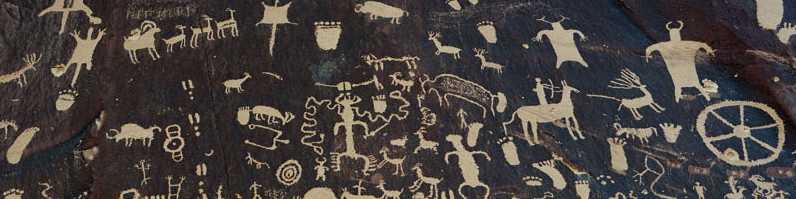
Petroglyph theft is "worst act of vandalism"

Petroglyph thefts near Bishop stun federal authorities, Paiutes

At least four ancient petroglyphs were cut from cliffs at the Volcanic Tableland and dozens of others damaged in 'the worst act of vandalism ever seen' on federal lands in the area.

By Louis Sahagun
Ancient hunters and gatherers etched vivid petroglyphs on cliffs in the Eastern Sierra that withstood winds, flash floods and earthquakes for more than 3,500 years. Thieves needed only a few hours to cut them down and haul them away.

Federal authorities say at least four petroglyphs have been taken from the site. A fifth was defaced with deep saw cuts on three sides. A sixth had been removed and broken during the theft, then propped against a boulder near a visitor parking lot.

Dozens of other petroglyphs were scarred by hammer strikes and saw cuts.

"The individuals who did this were not surgeons, they were smashing and grabbing," U.S. Bureau of Land Management archaeologist Greg Haverstock said last week as he examined the damage. "This was the worst act of vandalism ever seen" on the 750,000 acres of public land managed by the BLM field office in Bishop.

The theft required extraordinary effort: Ladders, electric generators and power saws had to be driven into the remote and arid high desert site near Bishop. Thieves gouged holes in the rock and sheared off slabs that were up to 15 feet above ground and 2 feet high and wide.

Visitors discovered the theft and reported it to the BLM on Oct. 31. BLM field office manager Bernadette Lovato delivered the bad news to Paiute-Shoshone tribal leaders in Bishop.

"It was the toughest telephone call I ever had to make," Lovato said. "Their culture and spiritual beliefs had been horribly violated. We will do everything in our power to bring those pieces back."
Comment:  Another horrible crime against humanity.

The article concludes:Damaging or removing the petroglyphs is a felony. First-time offenders can be imprisoned for up to one year and fined as much as $20,000, authorities said. Second-time offenders can be fined up to $100,000 and imprisoned up to five years.How about multiplying the first-time penalties by five and the second-time penalties by two? That would seem fairer to me.

For more on looting of Native sites, see Kincaid Mounds Vandalized and "Digger" Shows Promote Archaeological Looting.

November 14, 2012

Celebs raise funds for Pe' Sla

Hollywood and Hip Hop Unite to Help Save Lakota Sacred Site

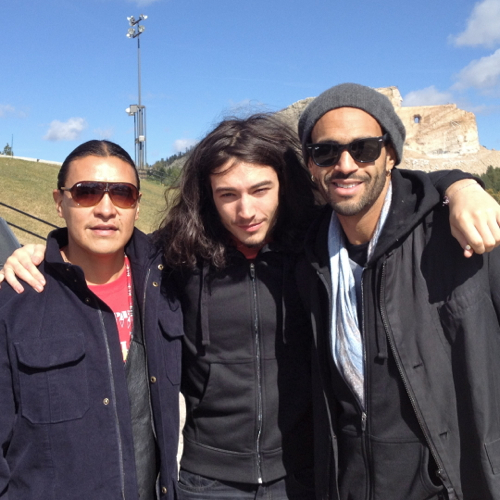
By Georgianne NienaberHollywood and hip hop have joined forces in a final push to save the Lakota sacred religious site Pe'Sla from the auction block. Ezra Miller, now starring in The Perks of Being a Wallflower, and producer Sol Guy went to South Dakota to meet with Standing Rock tribal member Chase Iron Eyes in early October. The result is a nine-minute documentary that is featured on the Pe'Sla fundraising site, hosted by Last Real Indians.

Fundraising has come a long way since August, when 1,942.66 acres of privately-held land containing sacred sites was offered for sale in South Dakota. Still, a final deadline of Nov. 30 looms, and the tribes face a $2 million shortfall. Pe'Sla, located in the Black Hills of South Dakota, is the epicenter of the creation story of the Lakota, Dakota and Nakota nations. Tribal elders and spiritual leaders conduct ceremonies essential to their culture and beliefs there.

The story to save Pe'Sla is a narrative of people coming together to support an idea that the sacred is essential. Private donations raised $388,000 and the Sioux Nation united to contribute $6 million, putting the public auction on hold. People offered pennies to hundreds of dollars as the struggle to protect the holy from development touched hearts around the world.

At approximately three minutes into Sol Guy's documentary, Chase Iron Eyes, founder of Last Real Indians, passionately explains what he calls the "powerful narrative" of Pe'Sla. For the first time since the Battle of the Little Big Horn, the great Sioux Nations "have come together." The lesson of Pe'Sla is that there is power in unity and it is time to stop writing about native people as helpless and hopeless. This show of solidarity between the Sioux Nation and people around the word is a vindication of the sacred; a testimony to the tenacity of indigenous people as they struggle to survive in the face of seemingly impossible obstacles.


More celebs help tribes' push for sacred SD land

By Kristi EatonMore celebrities are backing an online campaign to raise money so that Native American tribes in South Dakota can purchase land they consider sacred.

P Diddy and Bette Midler are the latest big names to throw their support behind a fundraising effort to buy nearly 2,000 acres of pristine prairie grass in the Black Hills of South Dakota.

Three days after the campaign began, P Diddy tweeted: "Help save the Sioux Nation! Click here," and linked to the website. Midler also lent her voice, tweeting: "Incredible story re the Sioux Sacred Grounds. Donate what you can."

More than $18,000 had been raised as of Sunday afternoon—$6,000 flowed in immediately after P Diddy's tweet. The campaign will last through Nov. 30, when the tribes of the Great Sioux Nation must have $9 million in order to purchase the land.
Comment:  For more on Pe' Sla, see Sioux Need $9 Million for Pe' Sla and Rosebud Signs Deal for Pe' Sla.

November 02, 2012

Serpent Mound vandalized with crystal objects

Vandals admit muffin-crystal-thingie assault at Serpent Mound

By Alan JohnsonA group of “light warriors” buried what may be hundreds of small muffinlike resin objects, embedded with aluminum foil and quartz crystals, at Serpent Mound with the intent of realigning the energy of the ancient Native American site in Peebles.

The Ohio Historical Society and Adams County Sheriff K.R. Rogers haven’t arrested anybody yet in what they consider a serious vandalism case. But the people who apparently did it made it easy by laying out their actions in an extensive YouTube video where they acknowledge they “did some work” in September at the site in Adams County to help “lift the vibration of the Earth so we can all rise together.”

State officials aren’t seeing the light, however, and expect to file charges soon against three to five people who they say vandalized and desecrated the 1,000-year-old site that is on the National Register of Historic Places. The perpetrators face second-degree misdemeanors, punishable by up to 90 days in jail and a $5,000 fine.

So far, only three small buried items, known as “orgonites,” have been located. But there could be hundreds on the site, said George Kane, director of historic sites and facilities for the Ohio Historical Society. “Adding things to the property is just not acceptable,” Kane said. “This is very serious.”
Comment:  For more on Indian mounds, see Kincaid Mounds Vandalized and Weed Killer Sprayed on Indian Mound.

October 03, 2012

Sioux need $9 million for Pe' Sla

Sioux Racing to Find Millions to Buy Sacred Land in Black Hills

By Timothy WilliamsThe Black Hills, the rolling range of mountains that rise out of the badlands of western South Dakota, are considered sacred to the Sioux, who for 150 years have fought on battlefields and in courtrooms for the return of the land.

And so the Great Sioux Nation exulted this summer when a long-sought parcel in the mountains called Pe’ Sla by the Lakota was put up for sale and a bid from the Sioux was accepted by the family that had controlled the land since 1876, the year that Gen. George Armstrong Custer died not far to the west at Little Bighorn.

But now, anxiety has replaced optimism as more than a half-dozen Sioux tribes, which include some of the nation’s poorest people, race to come up with the $9 million purchase price before the deadline next month.

Not only poverty stands in the way, but also the charged history: many Sioux ask why they should have to pay for land that already belongs to them, given numerous treaties broken by the United States and a landmark federal court decision in 1979 that called the government’s seizure of the Black Hills one of the most dishonorable acts in American history.

“It’s like someone stealing my car and I have to pay to get it back,” said Tom Poor Bear, the vice president of the Oglala Lakota Tribe in South Dakota.
More on the story:

The Fate of Pe’ Sla Purchase–Sioux Nation Working to Raise $9 Million, Tribal leaders Meeting in Rapid City Today

Great Sioux Nation Comes Together in Historic Gesture of Unity in the Name of Sacred Pe’Sla

Comment:  For more on the subject, see Rosebud Signs Deal for Pe' Sla and Rally for Pe' Sla Purchase.

September 21, 2012

Chimney Rock to be national monument

Chimney Rock to be named a national monument

By Allison SherryPresident Barack Obama will designate Chimney Rock as a national monument Friday—a move that will help preserve 4,726 acres in southwestern Colorado, administration officials said.

Chimney Rock is in the San Juan National Forest, surrounded by the Southern Ute Indian Reservation.

The land will be managed by the U.S. Department of Agriculture and the Forest Service, and White House officials said they will work with the tribes in the area. Ranchers will maintain grazing rights.

The site is deeply spiritual to the Puebloan people and other tribes. Ancestors used the rock to see "lunar standstills"—a phenomenon that happens every 18.6 years, when the moon rises exactly between the two stone pillars of Chimney Rock.
Colorado's 'Deeply Spiritual' Chimney Rock To Be A National Monument

By Mark MemmottIn his statement confirming the news, Bennet says Chimney Rock "contains the rare combination of a spectacular geologic formation with extraordinary cultural, historical and archeological significance."

The Chimney Rock Interpretive Association says the site "was home to the ancestors of the modern Pueblo Indians 1,000 years ago and is of great spiritual significance to these tribes. Their ancestors built over 200 homes and ceremonial buildings high above the valley floor, probably to be near the sacred twin rock pinnacles."

According to The Durango Herald, the designation will safeguard "the ruins of a thousand-year-old great house connected to the Chaco Culture of present-day New Mexico" as well as the two spires.
Comment:  For more on Pueblo Indians and national parks, see False Kiva in Motion and Chaco Canyon Quarter Debuts.

September 10, 2012

Rosebud signs deal for Pe' Sla

Tribe signs deal for Black Hills land

Sioux would share sacred site

By Steve Young
More than 1,940 acres of land in the Black Hills considered sacred to the Great Sioux Nation appear to be heading back to the ownership of the tribes after almost 140 years in private hands, several tribal officials say.

Vernon “Ike” Schmidt, executive director of the Rosebud Sioux’s Tribal Land Enterprise department, confirmed Monday that his tribe had signed a contract to purchase the land two miles north of Deerfield Lake called Reynolds Prairie—known to the Sioux as Pe’ Sla (pay-schlaw).

Rosebud President Cyril Scott told the Associated Press that his tribe had put down $900,000 as an earnest deposit and must pay the remaining $8.1 million of the agreed-upon $9 million purchase price by Nov. 30.

“We have a lot of hurdles to cross with reviewing the title policy and doing all the title work, and getting an environmental assessment,” Schmidt said. “But we feel we’re in the driver’s seat.”
Comment:  For more on the subject, see Rally for Pe' Sla Purchase and Tribes May Buy Pe' Sla.

September 07, 2012

Rally for Pe' Sla purchase

Unity rally draws support for Pe Sla purchase

By Kristina BarkerOn Wednesday, nearly 250 activists—Native Americans of all ages, with a smattering of non-Natives—marched from the Memorial Park band shell to Omaha Street, stepping to the beat of a drum and holding aloft posters reading "The Black Hills Are Not For Sale." At Omaha Street, they lined up along the street for several minutes before heading back to the band shell.

The poster was designed by Shepard Fairey, the same artist who created the iconic red and blue "Hope" poster for the 2008 campaign of then-presidential candidate Barack Obama.

Several speakers at the rally called on supporters to bind together as one and spread the word of the land sale.

"We are one people with one mind and mother, and that's the Earth, and we have to protect it," said Tom Poor Bear, vice president of the Oglala Sioux Tribe.
RC Rally Celebrates Acquisition Of Pe' Sla

By Derek OlsonEarlier this week an agreement was reached between area tribes and a family selling a tract of sacred land in the Black Hills known as Pe' Sla.

On Wednesday night, people gathered at Rapid City's Memorial Park to give thanks for Pe' Sla, which was nearly sold at auction nearly two weeks ago.

"People believe in the Bible, Adam and Eve, and how God created them. We believe in Pe' Sla," Cheyenne River Sioux Council Representative Robin LeBeau said.

"My heart beats very good that the Reynolds family is supportive on how we feel towards our sacred Black Hills and how much it means to us," Oglala Sioux Tribal Vice President Tom Poor Bear said.
As the headline above ("Celebrates Acquisition") indicates, people are talking as if this is a done deal. Not really, as another article explains:

Pe’ Sla Purchase: Not Out of the Woods Yet

By Vincent SchillingAccording to Debra White Plume, a resident of Pine Ridge, information stating Pe’ Sla has been saved is not entirely correct.

“Somehow the word is being put out there that we won and that Pe’ Sla has been saved. That message is wrong,” said White Plume.

According to her, the initial process in that the Oglala Sioux Tribe asked a federal agency to intervene and the Black Hills were taken off public auction, was correct, however, after working with Last Real Indians (LRI) the tribes only made a down payment.

In previous releases, stated amounts collected to help with the purchase of the sacred site included $1.3 million put up by the Rosebud Sioux Tribe and LastRealIndians.com, headed by attorney Chase Iron Eyes, which has raised more than $326,000. The funds were combined for the earnest offer made to the Reynolds family.

The down payment, according to White Plume, has not yet sealed the deal.

“The remainder of the purchase price still has to be paid to the Reynolds family, which is in about 21 days or so,” said White Plume. “So LRI is still raising funds to pitch in with the tribes. Until that final amount of money is paid in full, the land has not been returned to the Lakota people.
Comment:  This article also suggests an answer to the previous question: Why did the Reynolds family halt the auction? Because the Oglala Sioux Tribe called or threatened to call a federal agency. Presumably to inform it of a treaty or legal violation of Native rights.

For more on the subject, see Tribes May Buy Pe' Sla and Pe' Sla Auction Canceled.

Below:  "Chief Black Spotted Horse speaks to the crowd gathered Wednesday evening at the Memorial Park band shell." (Kristina Barker/Rapid City Journal)

September 03, 2012

Tribes may buy Pe' Sla

Indians declare victory in their effort to buy the sacred Pe' Sla site:

Sioux Leaders of Pe’ Sla Land Movement in S.D. Announce Deal Between Tribes and Land Owner and Call for Unity Among Reservations; Celebration Rally Planned for Rapid CityLast Saturday, at a press conference in Eagle Butte, South Dakota, Lakota leaders of the movement to secure the Lakota pilgrimage site Pe’ Sla for the Sioux Nation announced that the tribes will purchase the 2000 acres of sacred land in the Black Hills. After several weeks of intense fundraising, the nine tribes raised enough to make a deal with the current owners of Pe’ Sla, Leonard and Margaret Reynolds—though details of the arrangement are still being negotiated. The fundraising effort on the part of the Sioux tribes was begun by Attorney Chase Iron Eyes, and the negotiations were carried out in part by Cheyenne River Tribal Councilwoman Robin Lebeau. Both leaders spoke on Saturday. Saturday’s action was organized by Last Real Indians and the Lakota People’s Law Project, two organizations operating in South Dakota that support the return of the Black Hills to the Sioux.Sioux are victorious in effort to restore Black Hills land to the tribes. Fund-raising continues

But a later article suggests the announcement may be premature:

Tribe pays on Black Hills land

But money doesn't necessarily mean sale, Rosebud Sioux say

By Steve Young
The Rosebud Sioux Tribe is making an earnest payment on land it considers sacred in the Black Hills, though tribal officials say that doesn’t mean a deal to buy it is imminent.

Alfred Walking Bull, a communications specialist for the tribe, said Tuesday that Rosebud has met the financial threshold to make an earnest payment on some or all of the 1,940 acres for sale two miles north of Deerfield Lake.

“A lot of people have taken this as a sign that the tribe is going to be able to buy the land,” Walking Bull said. “We don’t know that yet. It’s really too early to declare victory. We have met the conditions to be at the negotiating table. It would be premature to say the land is going to be ours.”

The owners of the ranchland known as Reynolds Prairie had planned to auction the property in five separate tracts Aug. 25 in Rapid City, but canceled the sale before it happened with no explanation. Leonard and Margaret Reynolds of Hill City would not comment about news of an earnest payment by Rosebud.
Comment:  For more on the subject, see Pe' Sla Auction Canceled.

August 22, 2012

Pe' Sla auction canceled

Auction cancelled for SD land considered sacred

The planned auction of nearly 2,000 acres of land in South Dakota's picturesque Black Hills that is considered sacred by American Indian tribes has been cancelled, though it wasn't immediately clear why.

By Kristi Eaton
The planned auction of nearly 2,000 acres of land in South Dakota's picturesque Black Hills that is considered sacred by American Indian tribes has been cancelled, though it wasn't immediately clear why.

Brock Auction Company planned to auction five tracts of land owned by local residents Leonard and Margaret Reynolds on Saturday. But a message on the auction house's website Thursday said it has been cancelled at the land owners' direction.

The auction house and Margaret Reynolds declined comment, and tribal officials were left wondering what had happened.

"There are a lot of things we don't know at this point," Rosebud Sioux Tribe spokesman Alfred Walking Bull said. "If there was a change of heart, we're definitely thankful for that. We're hoping for the best. We can take a breath right now."
An update on all the efforts to save Pe' Sla, which still may be sold:

Fight for Lakota's Sacred Pe' Sla Brings Miracles

By Georgianne NienaberTwo weeks ago, the sale of Pe'Sla seemed inevitable, but 4,991 people on the fundraising site and 2,100 people on Facebook are saying "no," that this sale is not morally or spiritually correct. Good people from around the world are standing up and saying that the robbery of native sacred land must stop. The moral line has been drawn in the sand because of the idea that good people can stop this and return the land to the Lakota.

Sarah Jumping Eagle, a pediatrician and member of Lastrealindians, wrote about the importance of the public campaign to raise $1,000,000. The total now stands at $234,000. Some of that was raised on reservations. The Turns Around Wacipi (pow-wow) Blanket Dance held at the home of the Fort Peck Assiniboine and Sioux Tribes in Poplar, Montana, raised $150--money from the poorest of the poor, trying to buy back what was stolen from them.Our Pe' Sla Campaign team goal of $1 million is intended to supplement the contributions of the 7 Council Fires of the Great Sioux Nation. Yet, we also know that most of the bands of the Great Sioux Nation are made up of communities that are currently living in the poorest counties in the nation. What if your church was for sale? What if Bethlehem or Jerusalem or your Mosque was threatened by destruction or an auction? What would you do? Help us save our sacred lands!! Pe' Sla! The Center--The Heart of All That Is!The Wakpala of South Dakota, on the Standing Rock Sioux Reservation, raised $300.03 with a blanket dance during their traditional Wakpala Wacipi. "The elders in the community, the Uncis and Lalas (Grandmas and Grandpas) were brought to tears to see their children and grandchildren working to get our sacred lands back," reports Chase Iron Eyes of the Standing Rock Sioux Tribe.

International media is beginning to pick up on this story. You can read about it in the Guardian, the Associated Press, and on CBS and ABC news. In addition, the Lakota have gained a powerful ally in the United Nations High Commission on Refugees (UNHCR), which issued a statement from Geneva yesterday.


The UN expert's position:

UN human rights expert calls on US to consult with indigenous people over land saleA United Nations independent expert today called on the United States Government and authorities in the state of South Dakota to start consultations with indigenous people on a land sale that will affect a site of spiritual significance to them.

Five tracts of land in the Black Hills area in South Dakota are scheduled to be auctioned on Saturday. The tracts lie within a site sacred to the Lakota, Dakota and Nakota peoples, known as Pe’ Sla, said the UN Special Rapporteur on the rights of indigenous peoples, James Anaya, in a news release issued by the Office of the UN High Commissioner for Human Rights (OHCHR).

According to Mr. Anaya, the indigenous communities are concerned that the sale of the land will result in restrictions to their access and the use of Pe’ Sla for ceremonial purposes. They are also concerned that it may lead to a road development project that would diminish the cultural and spiritual integrity of their sacred site.

“I call on all concerned parties to engage in a process of consultation to find ways in which to resolve these concerns,” Mr. Anaya said. “I believe such dialogue is necessary in order to help heal the historical injustices endured by the Lakota, Dakota and Nakota peoples and to allow them to maintain their cultures and traditional practices for future generations.”
People don't know why the Reynolds halted the sale, but they have their suspicions:

Sale of the Sacred: How Pe’ Sla May Test Uncharted Waters of UNDRIP

By Lise Balk KingThe highly publicized auction of 1,940 acres in the Black Hills of South Dakota known to the Oceti Sakowin as Pe’ Sla, The Heart of Everything that Is, has been cancelled. The Reynolds family, “owners” of this property for the last 136 years (since the Gold Rush of 1876 pushed the Great Sioux Nation out of the Black Hills) has decided to make the land sale a private matter.

Neither the family nor the auction company has given a reason for the change, but one can offer a guess. Perhaps it was the thousands of tweets, the scores of news stories, and the hundreds of thousands of dollars raised in an unprecedented fundraising campaign to buy the land back for the tribes by LastRealIndians.com. Or the threat of sale day becoming a major media draw, complete with prayer circles and protesters both near and far.

But the final straw may have been yesterday’s announcement by the United Nations Special Rapporteur on the Rights of Indigenous Peoples, strongly suggesting consultation with tribes on the impending sale.

On December 16, 2010, President Obama announced the United States’ support for the United Nations Declaration on the Rights of Indigenous Peoples (the UNDRIP), an aspirational document adopted by the UN General Assembly in 2007. And in May of this year, the UN Special Rapporteur on the Rights of Indigenous Peoples, Prof. James Anaya, made his first official visits to Indian Country–the first of any UN special rapporteur. His tour included consultations in Arizona, Alaska, Oklahoma, Oregon, and South Dakota, where he visited the Black Hills and the Rosebud Sioux Tribe. His official analysis and recommendations included restoring some land to Native American tribes, and he specifically suggested returning portions of the Black Hills. It was a prescient statement.

The UNDRIP has not yet been tested here in the United States, and the fight for Pe’ Sla may provide the first such opportunity. While it is true that US property laws make legal the land grab that created this country (aka Manifest Destiny), international human rights regimes recognize the inherent moral and legal obligations to the indigenous inhabitants.
Comment:  A good guess is that the Reynolds family is feeling the heat. We'll see how this story plays out.

For more on the subject, see Online Fundraising to Save Pe' Sla.

August 17, 2012

Online fundraising to save Pe' Sla

This may be the biggest story in Indian country at the moment.

Sioux tribes take to the Internet to buy back sacred land

By Arturo GarciaMembers of the Sioux Nation are attempting to raise $1 million dollars to buy back a section of South Dakota land known in their culture as “the Center and heart of everything that is.”

About 2,000 acres of land in the state’s Black Hills is scheduled to go up for auction next week, including what’s known to the Sioux as Pe’ Sla. A local auction company posted that 1,942 acres of the land, known as Reynolds Prairie, after the family who owns it, is slated to go up for bid on Aug. 25.

The Rosebud Sioux Tribe has teamed up with the Native American blog Last Real Indians for an online fundraising campaign that began Monday, with an Aug. 23 deadline. As of Friday afternoon, the campaign had accrued just over $59,000.

“It’s not like a resistance movement or a militant thing,” Last Real Indians’ Chase Iron Eyes told Raw Story. “We have to protect these things. That’s what we’re on this Earth for.”
Black Hills Auction: The Auction of the Sacred

By Winona LaDukeAs Lakota scholar Chase Iron Eyes explains, “…Pe’Sla, to the Lakota, is the place where Morning Star, manifested as a meteor, fell to Earth to help the Lakota by killing a great bird which had taken the lives of seven women; Morning Star’s descent having created the wide open uncharacteristic bald spot in the middle of the forested Black Hills. (On American maps, this is called, Old Baldy) …The Morning Star placed the spirits of those seven women in the sky as the constellation “Pleiades” or “The Seven Sisters.”

This is, the “Center of the Heart of Everything that is… one of a small number of highly revered and geographically-cosmologically integral places on the entire planet….” Sacred places, recognized under federal judicial review, Presidential Executive Order (1996) and international law are to be protected.

On August 25, the Center of the Heart of Everything that is, will come up in on the auction block a Rapid City’s Ramkota Inn, destined to be diced into a set of 300 acre tracts, proposed for ranchettes, and a possible road through the heart, (and more divisions) of what has been, until now, a relatively un-desecrated sacred site. “We didn’t even know it was going to be sold,” Debra White Plume from Manderson tells me.” We heard nothing about it until we saw the auction announcement”.

The Brock Auction Company of Iowa and South Dakota in mid July announced, offering the Reynolds Ranch, noting, “This story begins in 1876 just 2 short years after General George Armstrong Custer led his historic expedition through the then almost unknown Black Hills in the Dakota Territory….In 1876 Joseph Reynolds filed his first claim & homesteaded … “Reynolds Prairie!” He was followed by 3 more generations …” Brock promotes the property noting, in some solace for potential buyers, “… As you sit in quiet solitude, with only the whispering of the wind gently easing through the pines, let your mind wander back in time & imagine the Native Americans, the Homesteaders & Pioneers who passed across this land that is now a part of yours & your families legacy forever!…” Some Lakota find this ironic, perhaps.
Exclusive Truthout Interview: Sioux Spiritual Leader Speaks Out on Land Sale at Sacred Site

By Jason Coppola"Our creation story comes from the Black Hills, from the heart of Mother Earth. We came up from the caves which are connected under our Black Hills, and we received several very sacred places to do ceremony," said Looking Horse.

"Pe' Sla is one of these central ceremonial places. This is where our existence comes from. Pe' Sla is where Morning Star came down to help the people, because we are star people," he said.

"Sundance happens at Pe' Sla," said Looking Horse. "Other ceremonies that our spiritual leaders must perform happen at Pe' Sla."

The Sundance ceremony, one of seven sacred ceremonies given to the Lakota by Pte San Win, is a closely guarded practice, but Iron Eyes explained that it is one of sacrifice and renewal: participants re-enact the sacrifice of a spirit, Inyan, who spun himself and sacrificed himself until his blood became water. The ceremony ensures that nature's process of renewal continues so that, for example, water, plants, and animals remain abundant.

"At Pe' Sla we give energy, as the whites call it; that is what our ceremonies do," said Looking Horse. "We humans have power, but we don't know it. We can send energy to the universe and it comes back to us. We can change the environment. People must understand that we have power, and if we are to live, we have to have faith and belief through our spiritual ways and our sites. All indigenous do this with energy."

"We need to come together to protect Pe' Sla," said Looking Horse. "All tribes, even though we went to war with each other at times, in our history. Yes, we went to battle with other tribes, but when either brought out spiritual bundles or was conducting ceremonies, nobody attacked. We actually worked together in spiritual ways because these were given by the Great Spirit to all his children here."
Comment:  I've been following this story, but I wasn't necessarily going to report on it. But once the tribes started raising fund on the Internet, I figure it became a pop-culture story.

At the very least, it shows the power of social media once again. This crusade started as a handful of postings on Last Real Indians and other blog sites--shared on Facebook. Then Indian Country Today and Indianz.com began posting stories on it with more reach. Then the major alternative press sites picked up, and finally it hit the mainstream media (the Associated Press).

Is there anything social media can't do? I'd love to see activists make a concerted effort to get rid of Chief Wahoo or the Washington Redskins. I bet we could shame them out of existence if we tried.

For more on sacred sites, see "Hunger Strike for the Peaks" and Weed Killer Sprayed on Indian Mound.

June 08, 2012

"Hunger Strike for the Peaks"

Flagstaff Residents Embark on Hunger Strike to Oppose Snowmaking on San Francisco Peaks

By Anne MinardA pair of young Flagstaff, Arizona residents has embarked on a hunger strike to oppose snowmaking at a ski area on the San Francisco Peaks, held sacred by 13 tribes in the Southwest.

Jessica Beasley, a Navajo tribal member and Northern Arizona University nursing student, and her partner, Joseph Sanders, are keeping vigil during daylight hours at Flagstaff City Call; a city-wide camping ordinance prevents them from staying overnight.

They say their approach differs from recent demonstrations during which protestors chained themselves to an excavator and were arrested for trespassing on the property of Arizona Snowbowl, the controversial ski resort.

“A hunger strike is a non-violent form of protest, and we’re committed to that,” Sanders said.

Tribal and environmental activists have been protesting Snowbowl’s use of the sacred mountain since the 1970s, and have consistently lost in courts. Protestors suffered another disappointing loss earlier this year, when Ninth Circuit Court of Appeals upheld a district court decision dismissing a lawsuit filed by the Save the Peaks Coalition against the Forest Service. Beasley and Sanders say they were partly inspired to begin their hunger strike when Coral Evans, then a candidate for Flagstaff City Council, said in campaign interviews this spring that snowmaking on the Peaks was a “dead issue.” The pair began their hunger strike on June 5. They say they don’t intend to injure themselves; they’ll be taking in fruit juices, tea and water to stay hydrated and somewhat nourished.

They’re hoping to call attention to what they believe is a human rights violation against people who hold the Peaks sacred. The U.S. Forest Service should rescind Snowbowl’s permit to build the infrastructure that will deliver reclaimed wastewater to the ski slopes, they say–or the city of Flagstaff should rescind its contract to deliver reclaimed water for the project.
Comment:  For more on the Snowbowl, see Blackfire Embodies Social Change and Forest Service Seeks Snowbowl Solution.

May 16, 2012

Weed killer sprayed on Indian mound

Franklin balks at apology for killing mound grass

By Quintin EllisonFranklin leaders declined last week to offer a formal apology to the Eastern Band of Cherokee Indians for using weed killer on an ancient Indian mound.

“I don’t think we did anything destructive,” said Franklin Alderman Sissy Pattillo. “And I have a problem with the chief or whoever saying we did something disrespectful. That just bothers me.”

Principal Chief Michell Hicks earlier this month said he was “appalled” by Franklin’s use of a weed killer to denude the mound. Hicks called on the town to formally apologize for what he termed a culturally insensitive action and one that demonstrated a marked lack of respect for the Cherokee people.

Alderman Bob Scott was the lone town leader who wanted to issue an apology. He had drafted a letter to the chief expressing regret for what had taken place, and said that perhaps the dustup could serve as a means of opening new dialog between Franklin and the tribe. His call to send the letter received a lukewarm response from fellow town board members, however. The other aldermen pointed out that they had never been formally asked by the tribe to apologize, but instead the demand for an apology had come only through the media.
Town claims the spraying wasn't malicious:Pattillo made the point that the town didn’t just dump weed killer on the mound out of malicious intent. Franklin leaders have said they were merely trying to cut back on weekly mowing maintenance of the 6,000-square-foot mound, which is located on town property. After the grass was killed off, the town intended to replant it with a low-growing native grass variety that wouldn’t need mowing.

Nikwasi Indian Mound is one of the largest intact mounds remaining in Western North Carolina. Large earthen mounds were built to mark the spiritual and civic center of American Indian towns that once dotted the Little Tennessee River Valley through Macon County and the region. Scholars note that while its precise age is uncertain, Nikwasi Mound pre-dates even the Cherokee.
But it wasn't necessarily approved, either:Mayor Joe Collins had earlier told The Smoky Mountain News that Town Manager Sam Greenwood had exceeded his authority in ordering the weed killer to be applied.

“But decisions were made and that’s where we are at right now,” Collins said. “It didn’t jump out at me as being an affront or an indignity to the mound and certainly not to the Eastern Band. I hope it’s not an issue of strong sentiment to the tribe in particular—I’m over there on a regular basis and I’ve not picked up on it.”
Comment:  For more on Indian mounds, see Maya Ruins in Georgia?! and Mound Supporters Compared to Violent Protesters.