Showing posts with label Parks and Recreation. Show all posts

February 26, 2015

Wamapoke Casino in Parks and Recreation

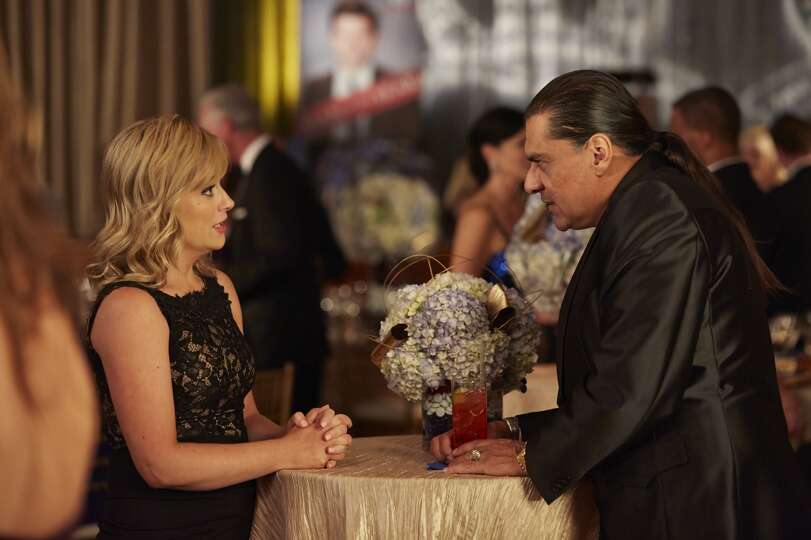
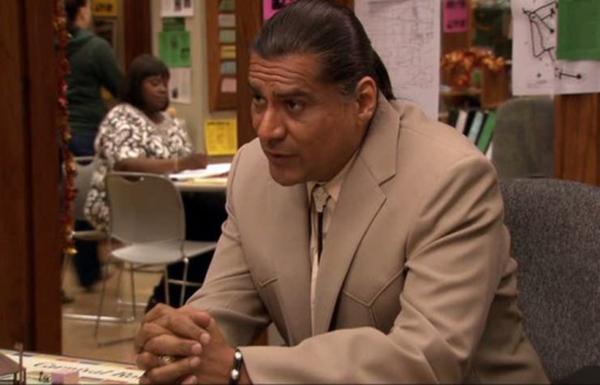
The TV show Parks and Recreation has ended, but not before one last appearance by "Wamapoke Indian" Ken Hotate (Jonathan Joss):

See all of 'Parks and Recreation's' fake 'Johnny Karate' commercials

By Casey RackhamWhat's better than an entire episode of "Parks and Recreation" dedicated to Andy Dwyer's "Johnny Karate Super Awesome Musical Explosion Show"? A "Johnny Karate" show plus four incredibly ridiculous commercials for things that thankfully/sadly only exist in the "Parks and Rec" world.

Throughout Tuesday's (Feb. 17) episode, which follows Andy and Co. during his last ever "Johnny Karate" show before he moves to Washington, D.C., a handful of commercials that might possibly be considered the most awkward ads ever aired.

There's one for Ron Swanson's building company that has approximately 20 seconds of silence, one for Paunch Burger that features a Dinner for Breakfast Burger Combo, one for Wamapoke Casino with Chief Ken Hotate using wolf folklore to get people to visit and one for a really scary-sounding company called Verizon Chipotle Exxon. It's pretty much all of the Pawnee-themed commercials fans could ever hope for.


Comment:  This commercial straddles the line between good and bad. Obviously, it uses the wolf stereotype only to subvert it with a casino pitch. But the Indian who uses a casino to take back the white man's money is also a stereotype.

You could say the joke is on the white casino customers who fall for this hucksterism and lose their money. Or you could say the joke is on the Indian who acts like a crass commercial money-grubber--i.e., a huckster.

Some Indian casino ads do have this rah-rah tone, but they're usually more sophisticated. Indian casinos are generally big businesses, akin to classy hotels or resorts. You don't see classy hotels or resorts advertising themselves like used-car lots, so why should a tribe take this approach. It implies Indians are less sophisticated--like amateurs or rubes--than they really are.

If it isn't a race-based claim--Indians are primitive and savage--it's a class-based claim. The implication is that Indians act low-class because they're one step up from poverty. Which is only slightly better than implying they don't understand the white man's ways.

In reality, you wouldn't even an Indian shilling for his own casino. Today's tribal executives have MBAs and run multimillion-dollar operations. They'd hire a management team that would hire an ad agency that would hire professional actors to do a commercial. Casino customers want fun and excitement, not Native culture, so that's what the pros give them.

January 14, 2015

Land sale in Parks and Recreation

In this season's debut of Parks and Recreation (airdate: 01/13/15), Wamapoke Indian Ken Hotate makes another appearance:

Parks and Recreation, “2017”/”Ron and Jammy,” (7.1-2)–TV ReviewThere’s a plethora of recurring characters from old episodes in this episode, including Ken Hotate, last seen in “Harvest Festival” (whose son sells Bolo ties on Etsy and is a complete disappointment).2017At the cocktail reception for the Bicentennial Banquet, Leslie hits up local Native American leader Ken Hotate for financial help with her dream of a new national park. Ken hints that the Wamapoke tribe has been thinking of building a second resort. Leslie explains that there'd be no resort--she's looking for a donation of $90 million. Ken points out to Leslie the irony of his people being asked to donate money for a federal land purchase of territory that was taken from them by the federal government in the first place.Comment:  As usual, Jonathan Joss's portrayal of a modern Native leader is good. Indeed, there's nothing to complain about in this brief bit.

March 05, 2013

How John Redcorn evolved

Actor Jonathan Joss Talks 'Parks and Rec,' 'King of the Hill,' and His NAMA Nomination

By Dustin TahmahkeraVeteran Native actor Jonathan Joss is arguably most known for his recurring voice-over role as animated Indian character John Redcorn on the Fox sitcom King of the Hill from 1997-2009. Joss worked hard to shape Redcorn's portrayals as he repeatedly challenged the dominant perception of Redcorn as just a New Age healer having an affair with the neighbor's wife. Through his off-screen lead vocals in the NAMMY-winning Red Corn Band, Joss influenced King of the Hill writers to introduce a new on-screen storyline for Redcorn, in which he fronts the band Big Mountain Fudgecake, then becomes a solo children's singer, and by the last season, a self-sufficient talent agent. Singing today under the stage name of The John Red Corn Experience, Joss has collaborated with the Graywolf Blues Band, a team-up that has been nominated for a 2013 Native American Music Award for Best Country Song for their version of the John Redcorn anthem "Still No Good." In addition to appearances in dozens of other productions, predominantly in Indian roles from Dead Man's Walk and Walker, Texas Ranger in the mid-1990s to recent roles in Comanche Moon and True Grit, Joss currently has a recurring role as Wamapoke chief Ken Hotate in the popular NBC sitcom Parks and Recreation.

On a recent visit to Southwestern University, Joss took some time to discuss his work with Graywolf, King of the Hill, and Parks and Recreation with ICTMN.

One could hear the Red Corn Band's albums The Red Corn Sessions and Still No Good as a soundtrack for the John Redcorn character and an extension of the series King of the Hill. What would you say is the role that music played in catapulting Redcorn toward becoming a fuller character and having his own band on the show?

It was all about changing the approach that King of the Hill had with John Redcorn. They liked the idea of him being a running joke, a good laugh of climbing in and out of the window. After a while of doing that, I felt they were wasting a good character that could have an arc and tell a story other than being a one-punch joke. I pitched ideas to the writers, such as Redcorn becoming a wrestler with a mask who finds a new fan in his son Joseph and becomes closer to him. It was all about coming from a good place and trying to make Redcorn a better character. When I approached Fox in a more mature and creative manner instead of complaining and refusing to do certain things, that got their ear. It wasn't until I discovered the music aspect of it and gave John Redcorn a voice through his music that the writers then had a picture to work with. They listened to the CD Golden Driplets that I did with musician Kris Kiser, and I got the call one day that they liked the aspect of Redcorn as a musician. Not everyone wants to hear the Indian talk about his land being stolen; but a lot of us will want to listen to music when we sing about it, which speaks to the power of music. I was able to communicate through John Redcorn to Fox, and they allowed him to have his band and to have an arc in a different place.

On the show, the music opens doors to other entrepreneurial avenues for Redcorn, eventually becoming a talent agent and his own boss—it was quite a journey for Redcorn, wasn't it?

He has his own business. Native characters and guest characters in general aren't allowed to arc like that. People have hit me over the head, saying I was that character sleeping with the white lady and having a kid I don't care about; but I tell him you didn't see King of the Hill after the first few seasons. Redcorn changed.
Comment:  For more on Parks and Recreation, see Sacred Site in Parks and Recreation and Drunken Savages in Parks and Recreation.

Below:  Jonathan Joss as Ken Hotate.

January 20, 2013

Sacred site in Parks and Recreation

The Two Parties episode of Parks and Recreation (airdate: 1/16/13) featured the return of Jonathan Joss as Ken Hotate, chief of the Wamapoke Tribe. Here's how it went:

Hotate enters a City Hall room filled with Indian artifacts for a meeting with Leslie Knope and company. Ann Perkins offers him water, which seems to upset him:KEN: Water. Like firewater? That's racist. And I do not appreciate it.

ANN [speaking fast]: No no no no no. I didn't mean it like that. I just meant, you know--

KEN [smiling]: I'm just messing with you.


They laugh nervously, but then:KEN: But seriously, I'll have a whiskey.Leslie explains who Hotate and the Wamapoke are. She points to murals that show Indians being run down by a train, threatened by a cannon, and (in a blurred-out section) dead.

In the past, Parks and Recreations has used murals to show Indians doing aggressive and offensive things. So these murals, in which white men are the only culprits, are a welcome change.

Below: Leslie reveals a portion of the mural normally covered up. It shows a "murder-y" scene.


The most prominent objects in the office are pottery vases and old photographs. There are also color photos of powwow dancers and a Plains headdress on a mannequin's head.

No doubt none of these things originated in Indiana, where the show is located. But as a modern tribe in a crossroads location, it's conceivable it could've adopted things from other cultures. In any case, the items aren't on screen long enough to create an impression.

Leslie wants to involve the Wamapoke in the Pawnee Commons, a kind of cultural park. Ken has an idea:KEN: What about, and I'm just spit-balling here, a large neon advertisement for the Wamapoke Casino. We have a new slogan that I'm quite proud of: "Our slots are downright filthy."

Leslie demurs, and Ken says he'll settle for the proposed Wamapoke playground.KEN: Why don't we retire to my longhouse and smoke the ceremonial peace pipe to celebrate?Leslie and Ann laugh nervously again because they don't know if he's joking again.

Battle of the Pawnee Commons

At the proposed site for the Pawnee Commons, a bulldozer is already digging. Councilman Jamm is there and Leslie asks what's going on.

Jamm has started building a Paunch Burger restaurant on Leslie's site. She thought she had another two weeks to finish a proposal and have it considered. Jamm says he doesn't care; he wants the Paunch Burger and Leslie can't stop him.

That night, Ann throws Leslie a bachelorette party, but she's consumed by the thought of losing her park. She hatches a plan:LESLIE: For almost 200 years, Pawnee repeatedly built factories, restaurants, and other stuff on land held sacred by the Wamapoke people. So we passed a law saying that if any sacred Wamapoke artifact was found on a development site, all construction must immediately stop.As she says this, she takes the Wamapoke objects she's retrieved from her office and buries them on the site.LESLIE [laughing evilly]: It would be terrible if that were to happen on this future Paunch Burger site.This is an accurate reflection of the Native American Graves Protection and Repatriation Act (NAGPRA) and similar state and local laws. Finding Native artifacts on a site can indeed hold up construction.

Even the date--almost 200 years ago--would be accurate for an Indiana town founded after the Indians lost the War of 1812. The writers are hitting on all cylinders at this point.

Leslie quickly realizes her actions were wrong. She convinces the other women at her party to help dig up the objects.

Next morning, everyone is exhausted, but they think they've gotten most of the objects. Groggy, Leslie accidentally "tweeps" a reporter, so she must rish to the site to see what she's set in motion. Councilman Jamm is already talking to the reporter, whose name is Tweep.JAMM: Look, I'm telling the truth here, lady. We haven't found any American Indian artifacts. Or regular Indian. Japanese. Muslim. Jewish. None of those weird countries.But a worker turns up shards of pottery, arrowheads, and a penis-shaped gummy candy from the bachelorette party. It's a PR nightmare, says Jamm's associate. The construction will have to stop until the Indian Affairs Commission weighs in.

Leslie 'fesses up

Back at the office, Leslie realizes she needs to tell Ken Hotate the truth before the Commission meets:LESLIE: In 1921 several Wamapoke families were moved from their homes, so that Pawnee could install a bumper-car track. In 1951, Pawnee made it illegal for people to "dance, or smell, like a Native American."

KEN: Why are you telling me all this?

LESLIE: Well, I--I want to raise the bar of awfulness, so that when I confess something to you, you have perspective.
She tells Ken what she did and apologizes profusely, but he is not happy.

At the Commission meeting, Ken says he's determined the artifacts couldn't have been buried in the lot. Leslie is about to confess her scheme, but Ken interrupts:KEN: I would like to go on record, speaking as a citizen of Pawnee, I do not like the way you went back on your deal with Councilwoman Knope. It reminds me of what the settlers of Pawnee did to my ancestors: the taking of their land without permission.

KEN [winking at Leslie]: You and Leslie had a deal. If that deal is not restored...well, I believe there are six Paunch Burgers in the Wamapoke Casino? Perhaps it's time we revisited those contracts.
Jamm's associate tells him to take down the Paunch Burger sign and wait for the official outcome. Then Leslie joins in the fun:LESLIE: In the spirit of fair play, I suggest we put on these authentic Wamapoke headdresses and dance around the table.

JAMM [appalled]: Absolutely not. That sounds highly offensive.

KEN: Does it, white man?

JAMM [suddenly doubting himself]: No. It's not offensive, so let's do it.

KEN: You first.

JAMM [putting on the headdress]: So clearly, this is not offensive.

KEN: It is offensive.

JAMM: I'm very sorry.

KEN: Take it off.


Analysis

Past episodes of Parks and Recreation have varied from bad to decent in terms of portraying Indians. But Two Parties is near perfect in this regard.

For starters, it revolves around a real issue: the Native concern for sacred land and artifacts. The portrayal of the legalities surrounding this issue is basically accurate.

Also, the chief is a modern businessman in a suit and tie. He's not a humble supplicant, but rather a commanding presence. He uses his casino clout to throw his weight around.

Moreover, all the jokes are on the white people. When Ken says something stereotypical, they don't know whether to take him seriously or not. His wicked sense of humor implies he's probably kidding, but they don't know any better because they're ignorant. (No one would take the initial "firewater" line seriously if they knew an Indian.)

Finally, the last scene hits a key point about broken agreements and stolen land. Non-Indians need to keep hearing this until they get it. Too often do we hear them say things like, "Indians lost so they forfeited the land." No. For the most part, Indians signed treaties before they lost, and their land was stolen during peacetime.

Even better, the episode makes fun of all the wannabes who wear headdresses because they don't know any better. Ken talks Jamm into wearing one because, again, Jamm is ignorant. (And racist, judging by his "weird countries" line.) If someone tells him the headdress is a fashion statement, he'll wear it.

But Ken sets the record straight with no more joking: It is offensive. Whether it's in a comedy or not, this is another message today's hipsters and mascot lovers need to hear. They may not get it until they hear it a hundred times, but it's start.

Indianz.com's brief commentary on the episode:

In The Hoop: Wamapoke Tribe returns to Parks and Recreation

For more on Parks and Recreation, see Drunken Savages in Parks and Recreation and Wamapoke Curse in Parks and Recreation.
January 13, 2012

Drunken Savages in Parks and Recreation

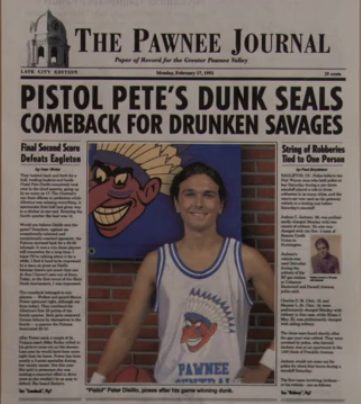
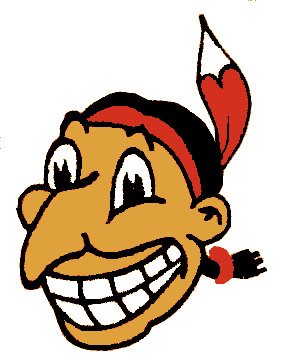
In The Comeback Kid episode of Parks and Recreation (airdate: 1/12/12), Leslie Knope recruits a high-school basketball hero to endorse her political campaign. She reveals that the school's team name was the Drunken Savages. She displays "Drunken Savages" in a newspaper headline with a devilish cartoon chief as the team mascot. She quickly adds, "Team mascot later changed."


This bit is meant to be satirical, but it fails. The Drunken Savages name and mascot get five seconds of airtime and the disclaimer only a split second. Viewers are left thinking about Indians as drunken savages, not about how the mascot is offensive and deserves to be changed.

If the mascot was so over the top that it was unmistakably a satire, things might be different. But this faux mascot is similar to several real mascots. In many people's minds, this is what Indians are like.


This is a great example of what I've said many times. Simply repeating a stereotype and assuming people will get the "joke" or the "irony" isn't enough to qualify as humor. If the average viewer may or may not get it, the so-called joke fails.

For more on Parks and Recreation, see Wamapoke Curse in Parks and Recreation and Wamapoke Wedding in Parks and Recreation

March 21, 2011

Wamapoke curse in Parks and Recreation

The TV show Parks and Recreation has stereotyped Indians before. In last week's episode, titled Harvest Festival (airdate: 3/17/11), a "Wamapoke Indian" finally appears on-screen. The town of Pawnee is about to hold its Harvest Festival and the local Indians aren't happy.

Of course, there are no federally recognized tribes or tribal casinos in Indiana. Tecumseh's Shawnee tribe and others were forced out after the War of 1812. But let's pretend the fictitious Wamapoke tribe exists.

You can see the whole episode here:

But here's a synopsis with my comments:

Parks and Recreation recap: “Harvest Festival”

By Megan Gilbert

Leslie explains to camera how the Harvest Festival is the biggest thing in her career and if it fails the Parks Department will be eliminated. Dun dun dun!

She, Ben, and Tom discuss the nerdiness vs. non-nerdiness of Star Wars (Tom and Leslie: nerdy; Ben: not-nerdy) while they wait for Ken, the leader of the Wamapoke tribe, who is sporting a slicked-back ponytail, a bolo tie and a festival-related grievance. Tom gets in a “Dope bolo” before Leslie addresses Ken in his native language. But this does little to assuage Ken’s grievance: the “carnival” is being held on the site of the Battle of Indian Hill, and its shooting galleries and fried dough stands need to be moved.

That Pawnee would hold a festival on a historic battlefield is hard to believe. Battlefields are treated as "hallowed ground" almost everywhere in the US. Moreover, the battleground is a potential tourist attraction for the cash-strapped town. The smart move would be to hold the festival near the battleground and urge people to see both.

The Wamapokes supposedly lost the battle because they didn't have any weapons, which is a bit insulting. Describing them as hapless children isn't much better than describing them as savage killers. Actually, as Allan W. Eckert's A Sorrow in Our Heart makes clear, Indiana's Indians were sophisticated defenders of their rights and cultures.

Leslie holds her ground—literally—going to the Map of Pawnee Settler Atrocities Against the Wamapoke (99% blue with “atrocities” in blue) for backup for the fact that given its history, Pawnee has a hard time not being offensive. Ken resignedly leaves, throwing a “I just hope that the souls of my ancestors don’t put a curse on this festival…” over his shoulder, then tells camera in confidence that white people's fear of curses is equal only to their love of Matchbox 20.The Indian's name is Ken Hotate, is which is better than Brave Eagle or Running Bear. But "hotate" is a Japanese name for plain scallops, not an Indian word.

Clearly Hotate has invented the "curse" to achieve his political goals. The idea that an Indian would place a curse in 2011 is silly. It would be like accusing someone of being a witch--a practice that died out centuries ago. But it's also silly that most of the townspeople believe him. The joke is primarily on them, not on him.

The "curse" takes hold

Things start to go wrong the day before the festival:

An emergency meeting is called. As Ron devises the mini horse recovery mission, April hurls the first of many passive-aggressive anti-Andy comments. The news of the curse spreads throughout the fairgrounds: Ann’s “beefy dude” patient is talking about it; Ken Hotate’s on the news talking about it; the Tawainese animators were inspired enough by the drama to create one of their masterpieces! The end screen of which is a representation of Leslie’s head turning into a skull with flaming red eyes.The TV news presents a CGI recreation of the meeting in which Hotate announced the curse. The video shows him grunting and dancing like a gorilla while a drum plays in the background. Ghosts fly about and Leslie's CGI head turns into a glowing skull.

That seems offensive to me. Even in this fictional context, it shows non-Indians conveying their stereotypical beliefs about how Indians act. In the real world, people would condemn this as a racist depiction of Indian spirituality.

Ron rethinks his tactics—the ground mission has failed, and it’s time for an air strike. He, April, Andy, Tom and Jerry mount the beautiful spinning beast. Meanwhile, the news media has flocked to the fairgrounds. Leslie addresses the ravenous crowd, clearing up rumors like a Roomba clears up so many dust bunnies (“At no time was any parks department worker quote feasting on petting zoo animals”), offering concessions to the Wamapoke tribe, and dismissing claims of a curse. Cue the grounds-wide power outage. Crap on a spatula.Hotate wanted the whole carnival moved and Leslie says she's moved the shooting gallery. It doesn't seem to be enough, which may explain why Hotate isn't around.Leslie learns that the generator is shot because the TV crews plugged in and overloaded it. Guess who has the only nearby generator? The Wamapoke casino. Leslie successfully barters with Ken, who lifts the “curse” on camera via a “sacred ceremony” crowned by the nonsense words “Doobee doobee do.”

For starters, the show has never mentioned that some Wamapokes survived. It definitely hasn't mentioned that there's a Wamapoke Casino in Pawnee. The casino doesn't fit with some of the previous claims made: that the town is broke, that its biggest attraction is a giant turnip or whatever, etc. A cash cow like a casino would be a major factor in the government operations of a town like Pawnee. See the Agua Caliente Casino Resort Spa in Palm Springs or the Chumash Casino in Santa Ynez for examples.

To obtain the generator, Leslie offers to "put the Wamapoke history exhibit inside the carnival grounds, right past the entrance turnstyle, so that you have to look at it before you start having fun." Funny, but the white folks still haven't addressed the Wamapokes' demands. Except for the shooting gallery, the bulk of the carnival still sits on the burial ground.

Clearly no one is taking the Indians' spirituality seriously. Not even Hotate, who finds Leslie's offer "interesting" and agrees to lift the curse. It's as everyone knows the white man's wishes trump the Indians', and all that matters is how to pay off a special interest group.

In the Wamapoke "ceremony," Hotate's Native song is subtitled in English. "I am not saying anything," he intones. "No one can understand me anyway. Doobee. Doobee. Do." Even though Hotate's actions are a spoof--he's lifting the "curse" he made up--this is really a slam against Native ceremonies. "We" don't understand what "they" mean, so perhaps the Indians are babbling nonsense. Perhaps their religious beliefs and ceremonies are nothing more than stunts to impress gullible non-Indians.

Joss speaks about his role

Wish granted: Joss lands Parks role

By Jeanne Jakle

Enter Joss, who is the potential fly in the ointment. The McCollum High graduate plays a local casino host and Wamopoke tribal leader who places the event in jeopardy when he threatens to put a curse on it. The festival carnival, you see, is taking place on sacred burial grounds--namely, the site of a seven-day battle that the Wamopoke lost. It would be offensive, he says, "to have shooting galleries and fried dough stands" there.

Whoops. Once the muckraking host of a 
local newsmagazine (Mo Collins) gets wind of this development, it quickly explodes into a huge story.

What a great role for Joss, marked by lots of fun, hilarity--even snappy clothes.

"I got to wear a suit," Joss said. He also spouts choice lines. For example: "There are two things I know about white people. They love Matchbox Twenty, and they're terrified of curses."

Joss said he was thrilled to work again with executive producer Greg Daniels, who co-created King of the Hill "And I really liked that they put so much thought into my story line," he said, adding the show was careful not to offend Native Americans. When his character performs an over-the-top ceremonial bit, for instance, the prop master brought over a bag to sprinkle over the crowd and "took care not use any actual ceremonial ingredients."

The producers may have been "careful not to offend Native Americans," but they could've done more. There were a few things Indians might find offensive.

Despite these criticisms, the episode is decent overall. The details--particularly the depictions of Indian ceremonies--are stereotypical, but the main points are solid. The producers cast an Indian to play an Indian. He's wearing a suit and tie, not some sort of costume. He has a normal name, not a funny Indian name.

Other than the phony curse, he doesn't offer any "wise" or "mystical" nonsense. He pulls the wool over the white man's eyes, but not in a "shifty casino owner" kind of way. Nothing about him suggests he's savage, uncivilized, or anything but a solid businessman and community leader.

For more on Parks and Recreation, see Wamapoke Wedding in Parks and Recreation and Spirit of Pawnee in Parks and Recreation.

May 01, 2010

Wamapoke wedding in Parks and Recreation

In this week's episode of Parks and Recreation, 94 Meetings (airdate: 4/29/10), Leslie Knope tries to save a historic gazebo. Standing in front of a mural, she explains the gazebo's importance:KNOPE: In 1867, the progressive Reverend Turnbill officiated a wedding between a white woman and a Wamapoke Indian chief. The secret ceremony was beautiful and romantic.The mural shows a Plains Indian chief and a white woman standing before a reverend in the gazebo.KNOPE: But then word got out and the reception was a bloodbath.The camera pulls back to show the rest of the mural. On the left are Plains chiefs and warriors shooting arrows and throwing tomahawks. On the right are US Army cavalrymen, one waving a sword, and settlers shooting and throwing things. One Indian is skulking on top of the gazebo.KNOPE: Fortunately there were two survivors. Unfortunately they were both horses.Portraying Indiana's Indians with Plains stereotypes is just plain wrong, of course.

The scene doesn't apportion blame for the alleged bloodbath, but the mural gives more space to the violent, weapon-wielding Indians. The casual viewer will conclude they're the aggressors.

A page on the faux Pawnee website refers to a similar incident. It could be the same incident, but the lovers' genders are reversed. In any case, the website confirms the show's flippant attitude toward Indians. People killing each other over Euro-American imperialism...ha ha.

Wamapokestone ParkYou may have heard local kids calling it “Wanna poke stoned” but lifetime Pawnee residents know Wamapokestone Park is one of the most romantic spots in town. In the words of Pawnee librarian Debra Fellinsich, “I got some! Finally!”

Wamapokestone Park was established in 1906 over the shared grave of a Wamapoke teen bride and the love of her life, an unknown White settler. Their story is like “Romeo and Juliet,” if Romeo had taken Juliet by force and Juliet’s father had then killed Romeo.
Poehler's poor record

Amy Poehler, the creative force behind Parks and Recreation, is building quite a track record on Indians. Unfortunately, it isn't a positive one.

There are these incidents in the series:

Spirit of Pawnee in Parks and Recreation
Face-Cutting in Parks and Recreation
Twisted to Death in Parks and Recreation
Indians in Parks and Recreation

Her Palin rap during the 2008 presidential campaign:

Palin Rap Features "Eskimos"

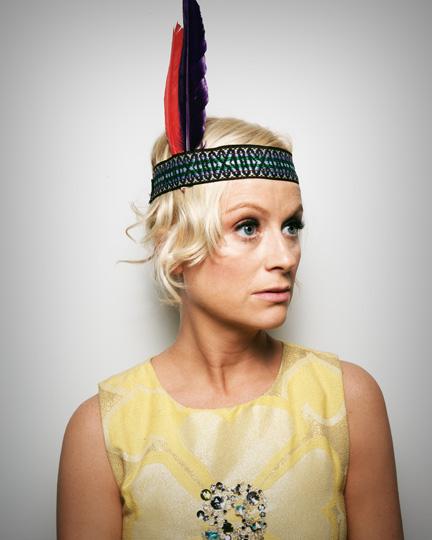
And this picture of her in a hipster headdress:


I wonder if this is the liberal equivalent of the conservative view of Indians. She doesn't come out and call them "savages," "drunks," or "lazy bums." But she appears to believe the most common stereotypes. Judging by the evidence, she's no more informed than the average ignorant student.

She may think she's helping or "honoring" Indians by including them in her show. But her tone is condescending, along the lines of: "Look at those quaint, colorful characters with their strange customs and clothing." It's the unconscious racism of a Stephenie Meyer or Hollywood exec rather than the conscious racism of a Pat Buchanan or Jim Marino.

For more on the subject, see TV Shows Featuring Indians and US Report to the UN on Racism.

November 14, 2009

Spirit of Pawnee in Parks and Recreation

Thursday's Parks and Recreation episode (11/12/09), titled The Camel, had a few references to Indians. Here's the basic plot:

The CamelThe Pawnee council decides it will replaced the town hall's "Spirit of Pawnee" mural, which has been repeatedly vandalized due to its racist undertones. When each Pawnee department is asked to propose a new mural, Leslie (Amy Poehler) becomes determined for the parks department to win, especially after she is taunted by Joe (Kirk Fox) in the sewer department. Everyone in the parks department is told to come up with a possible mural.Comment:  Here the bits featuring Indians:

  • The old mural shows a train racing across the plains. A cartoonish Indian warrior jumps off the track before the train can hit him. It's as if he didn't have enough sense to avoid a train. Nearby, another cartoonish Indian warrior is drinking "firewater" and gesticulating wildly.

    I think these are the primary "racist undertones" referred to in the summary. Since murals like this exist and Parks and Recreation characterized the mural as inappropriate, this seems like a reasonable use of stereotypes.

  • For inspiration for the proposed mural, Leslie examines a display of Indian artifacts: a desk with a couple of shelves of baskets and pottery. I couldn't tell where the artifacts came from--somewhere in the West, I suspect. But I doubt baskets and pottery would be the primary artifacts recovered for Indiana's Indians.

  • For more inspiration, Leslie examines an old painting that shows Anglos getting off a locomotive to meet a Plains chief by a tipi. As with the baskets and pottery, I don't think you'd find Plains imagery as far east as Indiana.

  • So the episode tells us a couple of stereotypical images are bad. It then undoes whatever good it may have done by presenting more mistakes and stereotypes: Indians are museum pieces, Indians make baskets, Indians look like Plains chiefs. Nice of you to include Indians again, Parks and Recreation, but you're still not doing it well.

    You can watch the episode at Hulu.com:

    Parks and Recreation: The Camel

    For more on Parks and Recreation, see Face-Cutting in Parks and Recreation and Twisted to Death in Parks and Recreation.

    May 09, 2009

    Face-cutting in Parks and Recreation

    In the Parks and Recreation episode titled The Banquet (airdate: 5/7/09), Leslie Knope opens with the following monologue:In a town as old as Pawnee, there's a lot of history in every acre. This wooded area is the site of, um, the murder, actually, of Nathaniel Bixby Mark. He was a pioneer who was killed by a tribe of Wamapoke Indians after he traded them a baby for what is now Indianapolis. They cut his face off, and they made it into a dreamcatcher. And they made his legs into rain sticks. And that's the great thing about Indians back then, is they used every part of the pioneer.Ha ha. That's supposed to be a joke.

    If the Wamapoke were so thrifty, I imagine they ate most of the pioneer's body. Why not go all the way and describe them as cannibals?

    The captions for the hearing impaired indicate that the script originally told of a different exchange:--after he sold them a baby that he claimed would magically grow corn.Hmm. Giving away the city of Indianapolis or buying a corn-growing baby. Hard to say which trade makes the Indians look stupider.

    This prologue is unrelated to the story that follows. It's completely gratuitous. Including the website and the previous episode I mentioned, it's the third time Parks and Recreation has described Indians as murderous savages.

    Judging by the "jokey" tone, the show's writers must think it's okay to make fun of Indians because they're no longer in Indiana. Although Indiana doesn't have any recognized tribes, I think it has several communities of Indians descended from the Miami, Shawnee, Potawatomi, and other tribes. Imagine watching the show and hearing that one of your relatives cut someone's face off.

    For more on the subject, see TV Shows Featuring Indians.

    April 17, 2009

    Twisted to death in Parks and Recreation

    In the second episode of Parks and Recreation (airdate: 4/16/09), Leslie Knope (Amy Poehler) refers to the fictional Indian backstory of her home town:Before we continue, I'd love to just give you a little history of Pawnee.

    The city of Pawnee was incorporated in 1817, when a young man by the name of Reverend Luther Howell came from Terre Haute on an ox. He planted his flag in the ground, and was met soon after by an angry tribe of Wamapoke Indians--who, when seeing the whiteness of his skin, twisted him to death.
    Comment:  Well, at least the "Wamapoke Indians" didn't scalp Howell. But angry Indians killing someone just because of his skin color is bad enough.

    It's more likely the Indians would've greeted Howell warmly and treated him as a friend. Until Howell and his people betrayed them and tried to exterminate them, that is.

    It seems the liberal Poehler isn't too sensitive to the plight of Indians. She could've made fun of Howell's covetousness, but instead she made fun of the Indians' savagery.

    For more on the subject, see TV Shows Featuring Indians.

    April 11, 2009

    Indians in Parks and Recreation

    The title sequence of the new comedy Parks and Recreation includes some history-oriented scenes. One of them is a giant Indian statue of the kind I've mentioned before.

    This one depicts a half-naked Plains Indian chief. But the story takes place in Pawnee, Indiana, where such Indians didn't exist. Stereotype alert!

    Pawnee is a fictional town, but it has its own website. This site provides several made-up bits of Indian lore:

    About PawneePawnee:  A Brief History

    In 1812, Reverend Luther Howell of Terre Haute traveled over 100 miles by pushcart and planted a flag in the ground. That soil, formerly inhabited by the Wamapoke Indian tribe, was to become Pawnee. Rev. Howell was soon dispatched by the tribe, but not before consecrating the town's first church, Pawnee Lutheran, which still stands today, though it was decommissioned in 1974 and is currently a wholesale linen outlet.

    "Pawnee" or "Wamapoke?"

    Visitors often ask about our name. There is a North American Native American tribe from the plains of Nebraska called Pawnee, a peaceful and noble tribe with roughly 2500 surviving members. However, we are not named after them! Legend has it, Reverend Howell chose "Pawnee" as the name for our city accidentally--a functional illiterate, he tried to write "Paradise" on the city charter and his scrawls were misinterpreted.

    The Native Americans who did live here were called the Wamapoke, as in the Olde Wamapoke Tribal Shop, located in the downtown shopping district. The Wamapoke tribe was a small group of 50-100, known for their distinctive circular patterned basket weavings and scalpings.
    Arts & CultureChief Running Face's Millinery--Shawnee Indian Storytelling

  • The Shawnee come to Pawnee! Join local milliner and businessman Chief Running Face (Ned Green), as he spins mystical tales of traditional Indian folklore. Let yourself be teleported to the mysterious, fanciful universe…of the Great Lakes region of Michigan! You've never seen mid-19th century America like this!

  • March 24th, Admission: $10, Free to Shawnee Indians
    Okay, the made-up Wamapoke tribe and Chief Running Face are lame attempts at satire. But I give the show's creators points for trying. They didn't have to include Indians in the fictional history of Pawnee, but they did.

    What's the point?

    Curiously, no historical content or awareness is evident in the first episode of Parks and Recreation. But with the opening montage and the bits on the website, the creators are suggesting something.

    It seems they view Parks and Recreation as part of some great American tradition. Perhaps they're implying the parks mentality is a small-scale version of Manifest Destiny. I.e., the land is there for us to use--to redevelop into playgrounds and tennis courts for middle-class white people.

    Or perhaps they just thought it was funny to make up a fictional history for "Pawnee." Who knows?

    I don't know if they're going anywhere with this historical awareness. But it's nice to see another show that has some historical awareness. More shows should acknowledge that our country was built on the backs of Indians.

    As for the show itself, it was a decent Office-style comedy. If you like The Office, you'll probably like it.

    For more on the subject, see TV Shows Featuring Indians.