Showing posts with label Seneca. Show all posts

March 09, 2014

Reviews of Stand-Off at HWY #37

“Stand-Off at HWY #37” Examines Military Stand-Up then Stand Down in, as yet, Unexamined Places

By Jennifer K. HugusThat this stand-off takes place in such a lovely venue makes it all the more eerie and harrowing. The governments involved: The U.S. and Indian i.e. Native American involving the Iroquois, Cayuga and Mohawk. Set in upstate New York on the border of a small town and its local Haudenosaunee reservation, the dispute involves the expansion of Highway #37 and the, as yet, unsullied land surrounding it.And:Up until now, the crux of the tension has been centered around Doxdater’s mission vs. Indian preservation as Doxdater, and Baldwin alike, will argue that the freeway extension is an indication of “progress; that the U.S. government is simply tending to the surrounding land. After all, it’s “just sitting there, getting overgrown” and no one’s really using it. Aunt Bev will argue the same thing; but that the Native People are tending to the land just fine adding that the fact that it’s getting overgrown and remains unpopulated is “progress.” If ever there was an argument so timeless, yet historically exact, this is it in all its authenticity and I can’t help but feeling, as I watch it, that no time has passed at all since the white man’s initial arrival on Native soil as a bit of a chill shoots straight up my spine…Divided Loyalties, Mixed Motives Mingle in Indigenous Drama

By Ed RampellThere’s no doubt that the aboriginal bard is exploring and presenting a “ripped-from-the-headlines” type indigenous clash, as Natives must, once again, fight for their land to fend off what is referred to as “an occupying force.” But Ramirez also has something else up her tricky dramatist’s sleeve: Every one of her characters is beset by divided loyalties and mixed motives, which is the real leitmotif of her all-too-human drama.And:Aunt Bev’s exposition as the curtain lifts and before it drops violates rule #1 of dramatics: “Don’t tell me, show me!” But these, dear reader, are mere quibbles, and should not dissuade you from enjoying this thought provoking work, with its ensemble cast so ably directed by Jon Lawrence Rivera, a simple yet effective set (including, overhead, a Congressional resolution) by scenic designer Jeff McLaughlin, plus some projections designed by Adam Flemming. Los Angeles has North America’s largest urban Indian population—but to paraphrase those old wry rye bread ads, you don’t have to be Native to love this play, which is for any theatergoer who thrives on great drama, fab acting, quirky characters and a theatre of conscience and consciousness. Auds should not be stand-offish about seeing Ramirez’s sizzling Stand-Off at HWY #37.BWW Interviews: Playwright Vickie Ramirez Discusses STAND-OFF AT HWY #37

By Ellen DostalDo you hope that Stand-Off will change the way people see events like these?

V: I hope it makes them a little more aware of what's currently going on. These issues are ongoing. They're not anachronistic. Everybody seems to think that we're all good now and that everything's fine; since the boarding schools aren't happening anymore. We're good but the situation is not. It's awkward because, the truth is, I don't think anyone specifically is a black cowboy hat-wearing bad guy; it's just priorities are different and entitlements come from very different places, and there is invariably going to be a clash.

I read that you started a Native theatre company in the early 90s. Is that something you did to create more opportunities for Native Americans?

V: There was a group of us. It was Cochise Anderson, Irene Bedard, James Fall, Betsy Theobald, and a few others. We were tired of the anachronistic voice and the victimized Indian--the whole archetype of how people see us, because when they see us in that sort of persona, they don't actually see us as regular people. So we wanted to bring forward the contemporary Native voice to examine who we are now because we have been colonized; we have been changed dramatically. How do we cope? Who are we now? We do have major identity issues in the nations about where we fit in the world at large so we did work based on expressing those ideas.
Stand-Off at HWY #37 by Vickie Ramirez: Press Photos

Rob's review

I attended a performance of Stand-Off at HWY #37 this afternoon. Later, I briefly discussed writing plays with Facebook friend Brad:

Alas, I didn't think the play was that good. The majority of it was people saying or shouting talking points at each other.

If you embedded that much conflict in, say, a novel, it might work. But as a 75-minute drama of nonstop harangues, no.Yeah theater isn't my thing either. It all pretty much feels like 75 minutes of people shouting at each other to me.I'm surprised that so many plays come out that way. You have the same amount of time as a TV show of 1-2 hours. But TV writers understand that you should build up to a few emotional moments--usually at the commercial breaks and at the end. Playwrights think nonstop conflict is the way to go. Wrong.I'm not even sure it's the writing. I'm just annoyed by the ridiculous overacting.

It's like stage actors don't know how to have a normal conversation or do dialog without waving their arms around and shouting everything.
I'd blame this one on the writer and director. It's not like the actors were hamming up a few dialogue lines of conflict. They had no choice because most of the lines involved conflict. You'd have to double the play's length, at least, to add some natural "breathing space" between the lines.I can see where direction could be a problem too. Of course if it WAS written that way then nothing was going to save it.On the positive side, Stand-Off at HWY #37 presented a variety of modern-day Indians free of mistakes and stereotypes. It addressed a wealth of issues that never reach the mainstream media--that most Americans don't know about.

It would take a few rewrites before I could recommend it. But the raw material of a good play is there.

Below:  Eagle Young as Private Thomas Lee Doxdater and Kalani Queypo as Darrin.

November 27, 2013

"Ask a Slave" on Indians

YouTube Comedy 'Ask a Slave' Tackles the Thanksgiving Question: 'What About the Indians?'“Was your great-grandmother a Cherokee princess like mine? You can kind of see it in my cheekbones."

So launches the latest episode of Ask a Slave, the YouTube comedy series by comedian Azie Mira Dungey, an actress who spent two years playing a slave at George Washington’s plantation, Mount Vernon. So many absurd questions were posed to Dungey as she portrayed Caroline Branham, who “belonged” to Washington back in the 1700s, that she created the character of Lizzie May, “personal housemaid to president and Lady Washington,” as she puts it in her intro. “And I'm here to answer all of your questions.”

The episode posted on November 24 deals, fittingly, with Thanksgiving.

"I know you're a slave, but what about the Indians?” asks the aforementioned man whom Lizzie May dubs “Cheekbones.” “Do you know any?"

Luckily, she does.

"Well I don't know why y'all keep bringing up Indians,” says Lizzie May, after fielding a few Thanksgiving questions. “But it's a good thing I happen to have my dear friend Red Jacket here with me today."

Enter the Seneca leader Otetiani Sagoyewatha (which Lizzie can’t pronounce), using the English moniker given him for fighting on their side during the Revolutionary War. What ensues is not unlike the queries recounted last summer by a staffer at the information kiosk at the Montreal First Nations Festival in Montreal.

May 24, 2013

Chief Halftown

A Facebook posting brought this Indian to my attention:Traynor Ora Halftown was born in 1917 of the Seneca Tribe on the Reservation in upstate New York. He had one of the longest running television shows in history (I personally believe second only to Meet the Press, which began airing in 1947), and personally touched the lives of many thousands of people through his numerous personal appearances. Chief Halftown started out wanting to be a singer, and made a living singing in nightclubs before serving this great country in the Army in WWII. In late 1950, he began his show at then-WFIL-TV, channel 6, airing cartoons, and teaching lessons and crafts from his Seneca customs and folklore. His show ran until late 1999. During summer weekends, the Chief appeared at Dutch Wonderland until 2001. He was also widely known as an excellent bowler. Chief Halftown passed away on July 5, 2003 in Absecon, New Jersey, at the age of 86. He and his wife, Margaret, were married for over 50 years.

I looked him up and found out more about him:

Chief HalftownHe always preferred the word "Indian" to the politically correct "Native American." Traynor Ora Halftown was 100% Seneca Indian. Born on the reservation on Saturday, February 24, 1917 in upstate New York, Chief Halftown always started his television broadcast with "Ees da sa sussaway" which was Seneca for "Let us begin" or "Let's get started." The idea was actually his mom's. He just wanted to say, "roll the cartoon."

Halftown grew up in Buffalo, just a couple dozen miles away from the Seneca reservation where both of his parents were born. Chief got his middle name, Ora, from his dad. That was his father's first name. His dad worked as a professional middleweight boxer and mill worker while his mother, Katie stayed at home as a "housemaid" as she liked to be called. His grandfather toured with Buffalo Bill's Wild West Show.

Halftown started his legendary channel 6 broadcasts a couple days after Labor Day of 1950. Upon "retiring" in 1999, he had spent 50 years (a half-century) on WFIL-TV that later became WPVI. It is the longest running local TV children's show in the history of the world. Not bad for a guy who was hired for a six-week series.

On his broadcasts and public appearances, Chief Halftown always dressed in full Indian costume. This included a full-feathered bonnet, beads, and buckskin. The show started out as an inexpensive cartoon vehicle and within weeks, Halftown was a star. Eventually, the Chief also included lessons dealing with tribal folklore, customs, language, crafts and chants.
Ees Da Sa Sussaway--Let's Get Started

By Erica StefanovichTo many, “ees da sa sussaway” would simply be syllables, but generations of Philadelphia children know differently. They know that these are the magic words of Chief Traynor Ora Halftown, beloved children’s entertainer and Philadelphia legend.

Chief Halftown began broadcasting his self-titled children’s television program in September of 1950. Originally intended to be a simple cartoon show, it grew into the longest running local children’s program in the history of television. For nearly 50 years, Chief Halftown was a part of the lives of Philadelphia children.

Chief Halftown was a full-blooded Seneca Indian born in upstate New York. His parents were both born on an Indian reservation near Buffalo and his grandfather had toured with Buffalo Bill Cody’s Wild West Show. He moved to Pennsylvania with the hopes of becoming the next great crooner and enjoyed moderate success until after WWII. While those dreams were never to be fulfilled, he did find his way to fame. When his children’s show began broadcasting, he had to rent his own costume from a shop on Chestnut St. Throughout the years, he always appeared on camera in native headdress, beads and buckskin. These signature marks were not just an aesthetic choice but also a teaching tool. His show, which began as a cartoon show, grew into a place to showcase the talent of local children and to teach about Native American traditions and culture.

In 1950 Chief Halftown was battling a prevalent stereotype. On television and in movies, there were very distinct depictions of Native Americans, generally as so-called savages or sidekicks. John Wayne and Jimmie Stewart both starred in films about Native American wars that year. If there were good roles for Native Americans, such as Cochise in Jimmy Stewart’s Broken Arrow, they were generally not portrayed by Native American actors. Fortunately, Chief Halftown refused to play to stereotype. He famously claimed, “I had no idea what it would come to, but I vowed that I would be myself. I wouldn’t talk like a Hollywood Indian…I made it clear that I was an Indian and no one was to tell me how to be an Indian.“
Comment:  So his teaching tool was a Plains headdress that told kids that all Indians were the same? He fought movie stereotypes by dressing exactly like every chief in movie history? That's not exactly impressive.

For more on the subject, see TV Shows Featuring Indians.

July 28, 2011

Seneca and eagle carved from tree

Castile tree carving honors history of Senecas

By Matt SurtelJohn Thomas cited William Prior Letchworth as he looked over his new and giant piece of artwork Monday morning.

The statue depicts an eagle lifting a Seneca Indian into the spirit world. And it’s getting its share of onlookers at his Liberty Street home.
And:He notes the eagle is the highest totem. The Indian wears a Hiawatha belt and turtle necklace. It also carries a spear, with a stone tip donated by the Thomas’ friend Ken Wallace.

“It has one feather because that’s Seneca,” Thomas said. “Western New York being Seneca, I thought it would be in reference to what went before us.”
Comment:  Compare this statue to The American, which also shows an Indian with an eagle perched on his arm. This statue is better for a couple reasons.

One, the Seneca Indian seems to be dressed authentically. He isn't a stereotypical half-naked brave.

Two, the eagle is actually doing something per Seneca beliefs. It isn't just perching there because it looks cool. Or because Indians supposedly have a mystical connection with eagles, wolves, and the rest of nature.

For more on the subject, see Is The American Worth It? and Is The American Still Feasible?

Below:  "John and Cathy Lee Thomas commissioned a statue of a Seneca Indian and eagle at their Castile home. It’s about 18 feet tall and was hewn from an old spruce tree." (Mark Gutman/Daily News)

November 27, 2010

Bulgarians like Indians

Native American Artist Peter Johns:  Bulgarians Show Great Interest in American Indians

By Ivan DikovPeter Jones is a potter and sculptor who resides on the Cattaraugus Territory of the Seneca Nation of Indians in New York state. He studied under Hopi artist Otellie Loloma while attending the Institute of American Indian Art in New Mexico. While creating his pottery, Jones uses the traditional Iroquois method of pit firing, hand-built coiling and slab construction. Jones' works have won numerous awards, and are on exhibit at museums such as the Institute of American Indian Art in Santa Fe, New Mexico, the Heard Museum in Phoenix, Arizona and in the Museum of Anthropology in Frankfurt, Germany to name a few.

Jones was awarded a grant from the U.S. Department of State to visit Bulgaria as a Cultural Envoy. During his 10 day program from November 10-20, he has visited schools, universities and art centers in the cities of Etera, Gabrovo, Plovdiv, Sofia Troyan and Veliko Turnovo. He spoke to more than 500 students at the American College in Sofia, conducted a demonstration for ceramics students at the Art High School "Professor Nikolay Rainov" in Sofia, and gave a lection at Sofia University.

Jones participated in a public lecture and exhibition at the American Corner in the City Library of Sofia on November 17th along with members of the Eagle's Circle Society. The Eagle's Circle are Bulgarians who study and practice Native American arts including music, dress and dance.
And:American Indians have been very popular in Bulgaria through a lot of novels about their life in the 19th century. Some of them might not be very realistic but all the way since the 1950s they made American Indians very popular in Bulgaria. Do you feel or hear about any of that?

I met the Eagle Circle Society based in Sofia. And we talked, and they did a performance of song and dance for us. I know about the other groups in other countries. The one in Germany is perhaps the largest that I know about. It is very interesting to see this group of dedicated people who are not really trying to be Indians but are just interested in our culture and our language.
Comment:  For more on German hobbyists, see Germans Think They Own Native Culture and Germans = "Only Real Indians"?

October 15, 2010

Paladino threatens New York's Indians

NY governor candidates promise ongoing tobacco tax war--and more

By Gale Courey Toensing“The fact that the past three governors have neglected to go up and enforce the law because they’re afraid of somebody standing on top of a police car, or they’re afraid of somebody burning some tires in the street, that’s not me,” Paladino said, referring to the tobacco battles of 1997 when the Seneca Nation shut down a section of the New York Thruway that runs through its territory.

“Let one [Indian protester] stand on top of a police car in my administration; it would be the last time they stood on top of a police car,” Paladino said.

His words echoed the threats of violence against Indians made recently by New York Mayor Michael Bloomberg, who advised Gov. David Paterson to arm himself like a cowboy to shut down the Seneca Nation’s tobacco economy.

But Paladino goes even further. If elected, he plans to shut down Turning Stone Resort Casino, owned by the Oneida Indian Nation, because he says it is operating illegally. And he promises to re-open the 2001 Seneca Nation’s gaming compact, presumably to grab more Indian money for the state.

“As governor, he would shut down Turning Stone until a legal contract could be approved by the Legislature. And any settlement would be required to include back pay for any worker who lost wages due to the Indian nation’s unwillingness to cooperate,” Paladino’s campaign manager Michael R. Caputo, said.

According to the Oneida Indian Nation, Paladino’s comments are wrong in many ways.

“Paladino is wrong legally. The federal government has exclusive jurisdiction to determine the legality of tribal gaming. The secretary of Interior approved the Oneida compact in 1993. The Department of Interior reaffirmed in 2007 that the compact remains in effect. The federal courts have ruled that the Oneida compact cannot be challenged. Challenges to the compact have been dead for a long time now. With this sort of reckless approach to governing, Paladino has shown he is unfit to be the governor,” the nation said in a statement.
Comment:  For more on the subject, see New York Wants to Terminate Senecas and Paterson Criticizes Bloomberg's Remarks.

August 31, 2010

New York wants to terminate Senecas

On the reservation, resentment

By Aaron BeseckerWhile two public, "peaceful" rallies are planned on the reservation this morning, tensions had been climbing, and the raw emotion has still shown its head.

The Senecas, who have been subjected to "continued aggression and encroachment from New York State," need to remain resilient, Tribal Council Member J.C. Seneca said Tuesday.

"I firmly believe that, like my father told me, the state government and the United States are not going to be happy until they eliminate us as a people. And this is the process of what they're trying to do," Seneca said.

"They want to terminate us and assimilate us into the white society," Seneca continued. "That's their goal, ultimate goal. And we're going to fight every inch of the way to stop them and to keep our culture and our traditions and our nation alive and well."

It's not just about the state attempting to collect taxes on cigarettes from non-Indians. Seneca frustration stems from generations of broken treaties, leased-land disputes and claims of eminent domain by the state, said Robert Odawi Porter, a Seneca Nation lawyer who is running for president of the nation.

"Really it goes back to the very beginning," Porter said. "The state and its officials have engaged in nothing but predatory conduct. It's just been one continued episode of theft and efforts to terminate us."
Comment:  For more on the subject, see Paterson Criticizes Bloomberg's Remarks and Indians Rally Against Bloomberg.

Below:  "Alexia Craft, foreground, and Shinny Clause of Tuscarora Reservation are among protesters along Route 31 in Sanborn as Native Americans affirm their opposition to the state's attempt to tax cigarettes sold to non-Indians." (Harry Scull Jr./Buffalo News)

August 18, 2010

Senecas denounce Bloomberg's remarks

The Seneca Nation responds forcefully to Mayor Bloomberg's suggestion that New York state "cowboy up" against them:

Seneca to file human rights and hate crime violations against NY Mayor Bloomberg

By Gale Courey ToensingThe Seneca resolution authorizes Snyder to file a complaint alleging a human rights violation and a hate crime with the New York City and New York State Human Rights Commissions, the United States Commission on Civil Rights, the U.S. Department of Justice Civil Rights Division, and the United Nations Special Rapporteur on Indigenous Peoples.

“Bloomberg’s cavalier attitude and inflammatory remarks, by which he encourages armed conflict as a means for resolution, evidences tremendous disrespect to those nation members and New York State Police officers who, to this day, bear the scars and trauma of the actual--not hypothetical--conflict that has twice occurred on the nation’s territory, is considered by the council to be a hate crime and violation of human rights,” the resolution said.

It also contrasts Bloomberg’s position of support for religious freedom and the building of the Muslim community center and mosque with his attitude toward Indian nations.

“Mayor Bloomberg’s contradictory positions regarding the constitutional protections afforded to those involved in the Islamic Center and Mosque, versus those afforded to the nation and its members, are demonstrative of the continued ignorance of the nation’s own constitutionally protected treaties as the supreme law of the land, which provide the underlying protections for the nation’s tax immune status on which its economy is based,” the resolution states.

The resolution says Bloomberg’s “hypocritical” support of constitutional protections only occurs if the protections don’t impact the city budget.

That hypocrisy, “coupled with his uneducated and uninformed statements on the issue, serve to fan the flames of aggression, and undermine the potential for peaceful resolution of these matters, while perpetuating a long dormant policy of Indian termination which dates back to the days of General Custer’s failed Battle of Little Bighorn, the resolution says.

Based on Bloomberg’s “inflammatory and racially insensitive” remarks, the resolution calls on the mayor to resign immediately or to issue a formal written apology to the Seneca Nation and its citizens that provides evidence of his “tolerance and respect” for the nation’s treaties.
Cowboys and Indians:  Bloomberg shoots from the hip

By David KimelbergImagine for a moment: New York Governor David Paterson finds himself in the 11th hour of a controversy involving an African-American group exerting its fundamental rights against the State of New York. He turns to Mayor Bloomberg for advice, thinking the mayor may have a promising diplomatic strategy to suggest. Instead, the mayor quips, “Get a white robe and piece of rope, and show them who’s boss--now that would be a great video!” Shock. Outrage from all corners. Marching in the streets. Political heads roll.

The real shock and outrage is that Bloomberg recently made essentially the same statements about Native Americans, and no one raised an eyebrow.
And:After being forced and coerced to give up our vast tracts of lands, in exchange for immutable treaty rights to conduct commerce without state interference on the miniscule reservations we now call home, we found a way to eek out a living for our people through the tobacco trade. Native Americans have the highest rate of poverty of any ethnic group in the U.S. A visit to any Indian territory would be a true culture shock for most non-Natives. But New York state needs to shore up its widening budget gap. So, let’s shake down the Indians--an easy and defenseless target. While we’re at it, let’s threaten them with shotguns and cowboy hats, and remind them that we’re not that far from taking scalps.

In addition to being a citizen of the Seneca Nation and an Indian, my father is Jewish. This makes me doubly insulted by the mayor’s remarks. As two of the most persecuted groups in history, there are many parallels between Indians and Jews. It’s incredible that Bloomberg, as a Jew, would go so far as to conjure up images of an oppressor doling out rough shotgun justice on a minority ethnic group. Taking away economic livelihood by force was a strategy employed by Hitler against the Jews. This strikes a similar chord.

The mayor’s statements are shameful. They further the notion that Native Americans are not a distinct people deserving of respect. Instead, the mayor reduces Native Americans to an inferior group that can only be dealt with in one way--with the butt of a shotgun.
Comment:  For more on the subject, see Obama = "Town Destroyer"? and Senecas to Collect Thruway Tolls.

August 14, 2010

Bloomberg suggests shooting Senecas

Bloomberg Tells Paterson To Cowboy Up, Crack Down On Senecas Selling Tax-Free Smokes On NY ThruwayMayor Bloomberg, channeling his inner Wyatt Earp, shot himself in the foot Friday.

The tough-talking mayor infuriated Native Americans by urging Gov. Paterson to handle a dispute over cigarette taxes by delivering some Dodge City-style justice.

"I've said this to David Paterson, I said, 'You know, get yourself a cowboy hat and a shotgun,'" said Bloomberg, blasting from the hip on his weekly radio show.

"If there's ever a great video, it's you standing in the middle of the New York State Thruway saying, you know, 'Read my lips--the law of the land is this, and we're going to enforce the law.'"

The politically incorrect crack--pitting cowboy Paterson against the state's Indians--drew a pointed rebuke from Barry Snyder Sr., president of the Seneca Nation of Indians.

"Regrettably, Mayor Bloomberg has made some reckless and insensitive statements to the people of the Seneca Nation, all Native Americans living in New York State and throughout the country," Snyder fired back.
Comment:  At least he didn't say, "Gov. Paterson should scalp them before they scalp us."

Someone on Facebook commented:You'd think Jewish people would be sensitive to negative stereotypes and the rights of nation/states who are seen as the "minority."Yep. Imagine if Seneca president Snyder or anyone told Bloomberg, "Shape up or we'll throw you in the oven." That's roughly the equivalent of telling Indians you're going to sic a cowboy with a shotgun on them.

Bloomberg's "law of the land" argument isn't necessarily the final word. The Senecas claim their treaty right exempts them from cigarette taxes. The non-Indians disagree, and so far the courts have backed them. But the Seneca response seems to be: Our sovereignty trumps your laws and court decisions, not the other way around.

Underlying this, of course, is the savage Indian stereotype. Bloomberg is implying the Senecas are unwilling or unable to resolve the conflict peacefully. I.e., outside the bounds of civilization. Shooting is what you do to savages and other wild animals you can't negotiate with.

For more on the subject, see Obama = "Town Destroyer"? and Senecas to Collect Thruway Tolls.

Below:  Does Bloomberg want to crush the Seneca figuratively?


Or literally?

April 01, 2010

Obama = "town destroyer"?

Seneca Nation of Indians Accuses President Barack Obama of Deliberately Betraying Native Americans by Signing the PACT Act

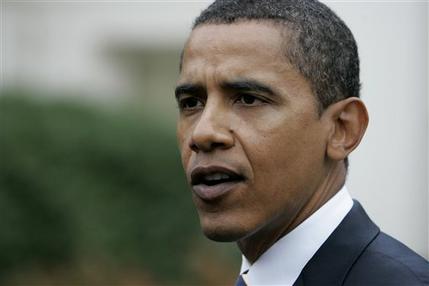
The measure, which bans distribution of tobacco products via U.S. Mail, will result in the loss of some 3,000 jobs in Western New York tied to the Seneca tobacco industrySeneca Nation President Barry E. Snyder Sr. called today's signing of the PACT (Prevent All Cigarette Trafficking) Act a "deliberate betrayal" of all Native Americans.

"The President of the United States invited Native American leaders to Washington D.C. in November and looked us in the eye as a sign of good faith in his pledge to protect federal treaties," Snyder said. "Now four months later he has betrayed that promise."

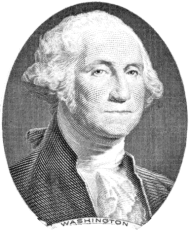
"In 1779, President George Washington was referred to as 'Hanodagonyas,' an Iroquois term meaning 'town destroyer,' for his attempt to quell Native American uprisings. I think that term should be dusted off and given to Barack Obama for the economic destruction that Pact Act will cause," Snyder said.

"This is certainly not the first time a U.S. president has failed to honor federal treaty rights, but it is particularly hurtful when this country's first minority president turns his back on another group of minority Americans, it's a very personal pain and insult," Snyder added.

The Seneca leader recalled Obama's meeting with Crow Nation representatives during his election campaign, during which the Crow adopted the candidate, giving him the name "Black Eagle."

"I guess he's forgotten friends he made when he wanted votes. He is no friend to Indian Country and I would hope the Crow revoke his honorary member status," Snyder said.
Comment:  Needless to say, the situation is more complex than Snyder makes it out to be. The US and New York state governments interpret the Seneca treaties differently. I believe the courts have upheld the federal and state position.

Which doesn't mean Obama had to sign the legislation. No, he could've said, "I think this bill infringes on Seneca treaty rights. I'm going to veto it no matter how popular it is." (It passed in the US House 387-25.)

I haven't seen or heard a lot of Native support for the Seneca position. Most tribes don't know much about New York history and don't have their own tobacco businesses to protect. I doubt Indians will start turning against Obama because of this.

But it's an example of what I've said before: that I doubt Obama will take a strong pro-Indian position against the interests of the non-Indian majority. Sure, he's increased spending for Indian programs and settled the Cobell trust case, but these aren't issues with strong opposition. Here's a situation where he could've supported Indians against the popular will, but didn't.

For more on the subject, see Obama Breaks Promise to Indians and Obama's Invisible Apology.

Below:  Two anti-Seneca "town destroyers"?

February 28, 2009

Mohegan Sun at Niagara Falls?

Off Main Street:  TV appearance ...

The offbeat side of the newsThe Seneca Niagara Casino & Hotel made a brief appearance in a recent episode of the popular HBO drama “Big Love.” The show, about a clandestine polygamist family living in suburban Utah, has intensified a story line in recent weeks about the family’s attempts to enter the casino business.

In a recent episode, the main character, Bill Henrickson, pitches a deal to a fictional Native American tribal leader when he shows a slide of the Seneca Niagara Casino.

“This is what they’ve done for the Mohegans,” Bill says, pointing to the Niagara Falls casino developed by the Seneca Nation of Indians.

For the record: The Senecas are an entirely different nation than the Mohegan Tribe of Connecticut.
Comment:  This casino mix-up could've been a simple mistake. Or it could've been the result of a staffer's ignorance and apathy. I can just imagine him saying, "What's the difference? One casino is the same as another." Or worse, "What's the difference? One tribe is the same as another."

For more on the subject, see Indian Casino in Big Love and TV Shows Featuring Indians.

January 14, 2009

Senecas to collect thruway tolls

Seneca Nation prepares for 'the worst' in tax disputeInvoking past uprisings provoked by proposed state taxation, the Seneca Indian Nation warned Tuesday it is building up its reservation security forces, has alerted tribal members to stock up on necessities, and served notice on the Paterson administration that it is "preparing for the worst."

The western New York tribe's action is related to Gov. David Paterson's decision to sign into a law a bill that would force tobacco wholesalers who supply Native American stores to pay excise taxes to the state. Paterson's budget plan for next year counts on $120.8 million from Indian taxes.

The law is aimed at resolving the long-simmering concern by lawmakers in Albany that Indian stores fail to collect and remit taxes on cigarettes and other products sold to non-Indians.
And:Shortly after Snyder made the statement, a few dozen people were spotted along the Thruway in Irving starting a big bonfire on the side of the highway, according to a Seneca Nation member.

In 1992 and 1997 tax protests, large tire fires closed a section of the Thruway, and tribal members clashed with State Police in violent confrontations that led to several arrests and injuries.

"This justifies taking any and all prudent actions to protect and defend the Nation's economy and the way of life of the Seneca people," Snyder said.
Comment:  For more on the subject, see Kootenai "War" Against the US.

November 01, 2008

Heritage month at Seneca casino

Experience the culture:  Celebrating Native American Heritage Month

Casinos to feature Native displays, vendorsThroughout November, Seneca Gaming Corporation will celebrate Native American Heritage Month with its annual “Experience the Culture” festivities at both Seneca Niagara Casino & Hotel and Seneca Allegany Casino & Hotel.

In Niagara Falls, a special display will be set up on the Casino Main Concourse, near the Bus Lobby, from Nov. 1–30, and a similar display will be in the hotel lobby at Seneca Allegany Casino & Hotel from Nov. 2–28. These displays, which have become very popular over the past few years, will feature authentic Native American crafts and artifacts, photographs and other displays that help depict and tell the story of the rich history of the Seneca Nation of Indians and other Indian tribes, and the influence they have had throughout history.
Comment:  For more on the subject, see Casinos Promote Culture.

August 03, 2008

Seneca makes quilt masterpiece

Designing woman

Seneca artist wins quilting award, aims higherWhen Faye Lone entered a few of her quilting designs in the annual Eiteljorg Museum Indian Market and Festival, she was cautiously optimistic. That optimism turned to gratification when her unique freestyle approach to quilt-making received top honors.

Lone, a member of the Tonawanda Band of Seneca Indians, was awarded a prestigious prize from the organization in June: the Purchase Award for a piece she named "Grand Entry." The award is given to only one entry in the juried art show, and the artwork was purchased for $5,000 for the museum's permanent collection.

The breathtaking masterpiece, as her friends and family have come to call it, depicts a complete pow wow scene on a 104 inches x 98 inches broken star king-size quilt in blues on a white background. It features nearly 100 stitched figures as dancers, drummers, staff and spectators, and even showcases a mainstay of pow wows: the Indian taco booth. She said it took her about 18 total hours to complete the project.

July 08, 2008

"Maid of the Mist" comic

The origin of the Seneca "Maid of the Mist" legend is told in an old comic book:

Strange Worlds #6 ~ Jan/1952

Comment:  Note the sexy Indian maidens, the studly Indian braves, the pink skins, the feathers in headbands, the chief in a headdress, and the teepees. All this in a story set around Niagara Falls in western New York.

For more on the subject, see The Best Indian Comics.

June 30, 2008

Senecas to run tour boats?

Senecas Eyeing Maid of the Mist Takeover as Logical Next Step Here"What they've got down there is a license to print money," one Seneca Niagara official told the Reporter last week. "They've had that for nearly 40 years, nobody else has been allowed to bid on it, and even the amount of money they pay to operate is a deep dark secret."

Even the name "Maid of the Mist," appropriated by Glynn's company for commercial gain, refers to an episode in the Seneca religious tradition that would be comparable to a story out of the Book of Genesis for Christians.

Operating the tour boats would be a natural fit for the Senecas, who could use the trips as perks for Players' Club members and other high rollers while still generating revenue from paying customers.

"One of the problems in the past is that anyone who might want to take over the operation would have to have a tremendous amount of startup cash just to buy new boats and other equipment," said one source familiar with the proposal. "Obviously, that would not be a problem for the Senecas."
Comment:  For more on the Indian lore of Niagara Falls, see The Wonder of Wonderfalls.

June 02, 2008

White Eagle Woman exposed

Whirling Rainbows, Twirling Fraudscalling all brady braves ... a new brady bravin' leader has arrived: White Eagle Woman aka the less colorful-animalistic-gendered Rachel Holwarth (a self-proclaiming Seneca. too bad the real Senecas don't recognize her, ennit?) ... according to http://whirlingrainbow.com/whiteeagle.htm, Rachel, er, White "is the director and drum keeper of the International GrandMother Drum Peace Project. She is an international shamanic healer, seer and performance artist." and for the low, low cost of $3,665 and 100 cents, you can whirl with the rainbows from Loveland, Colorado, to Vancouver Island, Canada, for a "transformational journey with all venues, weekends and healing sessions of our five month tour."Comment:  I previous wrote about White Eagle in No Peace for White Eagle.

For more on the subject, see Indian Wannabes.