August 23, 2012


August 22, 2012
Pe' Sla auction canceled
Auction cancelled for SD land considered sacred
The planned auction of nearly 2,000 acres of land in South Dakota's picturesque Black Hills that is considered sacred by American Indian tribes has been cancelled, though it wasn't immediately clear why.
By Kristi EatonThe planned auction of nearly 2,000 acres of land in South Dakota's picturesque Black Hills that is considered sacred by American Indian tribes has been cancelled, though it wasn't immediately clear why.
Brock Auction Company planned to auction five tracts of land owned by local residents Leonard and Margaret Reynolds on Saturday. But a message on the auction house's website Thursday said it has been cancelled at the land owners' direction.
The auction house and Margaret Reynolds declined comment, and tribal officials were left wondering what had happened.
"There are a lot of things we don't know at this point," Rosebud Sioux Tribe spokesman Alfred Walking Bull said. "If there was a change of heart, we're definitely thankful for that. We're hoping for the best. We can take a breath right now." An update on all the efforts to save Pe' Sla, which still may be sold:
Fight for Lakota's Sacred Pe' Sla Brings Miracles
By Georgianne NienaberTwo weeks ago, the sale of Pe'Sla seemed inevitable, but 4,991 people on the fundraising site and 2,100 people on Facebook are saying "no," that this sale is not morally or spiritually correct. Good people from around the world are standing up and saying that the robbery of native sacred land must stop. The moral line has been drawn in the sand because of the idea that good people can stop this and return the land to the Lakota.
Sarah Jumping Eagle, a pediatrician and member of Lastrealindians, wrote about the importance of the public campaign to raise $1,000,000. The total now stands at $234,000. Some of that was raised on reservations. The Turns Around Wacipi (pow-wow) Blanket Dance held at the home of the Fort Peck Assiniboine and Sioux Tribes in Poplar, Montana, raised $150--money from the poorest of the poor, trying to buy back what was stolen from them.Our Pe' Sla Campaign team goal of $1 million is intended to supplement the contributions of the 7 Council Fires of the Great Sioux Nation. Yet, we also know that most of the bands of the Great Sioux Nation are made up of communities that are currently living in the poorest counties in the nation. What if your church was for sale? What if Bethlehem or Jerusalem or your Mosque was threatened by destruction or an auction? What would you do? Help us save our sacred lands!! Pe' Sla! The Center--The Heart of All That Is! The Wakpala of South Dakota, on the Standing Rock Sioux Reservation, raised $300.03 with a blanket dance during their traditional Wakpala Wacipi. "The elders in the community, the Uncis and Lalas (Grandmas and Grandpas) were brought to tears to see their children and grandchildren working to get our sacred lands back," reports Chase Iron Eyes of the Standing Rock Sioux Tribe.
International media is beginning to pick up on this story. You can read about it in the Guardian, the Associated Press, and on CBS and ABC news. In addition, the Lakota have gained a powerful ally in the United Nations High Commission on Refugees (UNHCR), which issued a statement from Geneva yesterday. 
The UN expert's position:
UN human rights expert calls on US to consult with indigenous people over land saleA United Nations independent expert today called on the United States Government and authorities in the state of South Dakota to start consultations with indigenous people on a land sale that will affect a site of spiritual significance to them.
Five tracts of land in the Black Hills area in South Dakota are scheduled to be auctioned on Saturday. The tracts lie within a site sacred to the Lakota, Dakota and Nakota peoples, known as Pe’ Sla, said the UN Special Rapporteur on the rights of indigenous peoples, James Anaya, in a news release issued by the Office of the UN High Commissioner for Human Rights (OHCHR).
According to Mr. Anaya, the indigenous communities are concerned that the sale of the land will result in restrictions to their access and the use of Pe’ Sla for ceremonial purposes. They are also concerned that it may lead to a road development project that would diminish the cultural and spiritual integrity of their sacred site.
“I call on all concerned parties to engage in a process of consultation to find ways in which to resolve these concerns,” Mr. Anaya said. “I believe such dialogue is necessary in order to help heal the historical injustices endured by the Lakota, Dakota and Nakota peoples and to allow them to maintain their cultures and traditional practices for future generations.” People don't know why the Reynolds halted the sale, but they have their suspicions:
Sale of the Sacred: How Pe’ Sla May Test Uncharted Waters of UNDRIP
By Lise Balk KingThe highly publicized auction of 1,940 acres in the Black Hills of South Dakota known to the Oceti Sakowin as Pe’ Sla, The Heart of Everything that Is, has been cancelled. The Reynolds family, “owners” of this property for the last 136 years (since the Gold Rush of 1876 pushed the Great Sioux Nation out of the Black Hills) has decided to make the land sale a private matter.
Neither the family nor the auction company has given a reason for the change, but one can offer a guess. Perhaps it was the thousands of tweets, the scores of news stories, and the hundreds of thousands of dollars raised in an unprecedented fundraising campaign to buy the land back for the tribes by LastRealIndians.com. Or the threat of sale day becoming a major media draw, complete with prayer circles and protesters both near and far.
But the final straw may have been yesterday’s announcement by the United Nations Special Rapporteur on the Rights of Indigenous Peoples, strongly suggesting consultation with tribes on the impending sale.
On December 16, 2010, President Obama announced the United States’ support for the United Nations Declaration on the Rights of Indigenous Peoples (the UNDRIP), an aspirational document adopted by the UN General Assembly in 2007. And in May of this year, the UN Special Rapporteur on the Rights of Indigenous Peoples, Prof. James Anaya, made his first official visits to Indian Country–the first of any UN special rapporteur. His tour included consultations in Arizona, Alaska, Oklahoma, Oregon, and South Dakota, where he visited the Black Hills and the Rosebud Sioux Tribe. His official analysis and recommendations included restoring some land to Native American tribes, and he specifically suggested returning portions of the Black Hills. It was a prescient statement.
The UNDRIP has not yet been tested here in the United States, and the fight for Pe’ Sla may provide the first such opportunity. While it is true that US property laws make legal the land grab that created this country (aka Manifest Destiny), international human rights regimes recognize the inherent moral and legal obligations to the indigenous inhabitants. Comment: A good guess is that the Reynolds family is feeling the heat. We'll see how this story plays out.
For more on the subject, see Online Fundraising to Save Pe' Sla.
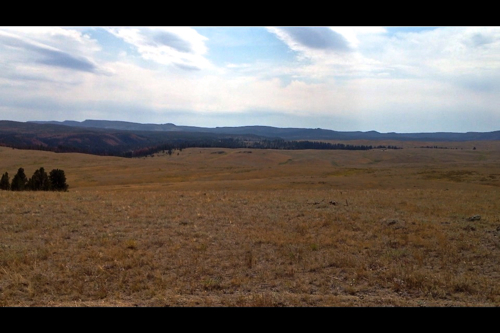
The planned auction of nearly 2,000 acres of land in South Dakota's picturesque Black Hills that is considered sacred by American Indian tribes has been cancelled, though it wasn't immediately clear why.
By Kristi Eaton
Brock Auction Company planned to auction five tracts of land owned by local residents Leonard and Margaret Reynolds on Saturday. But a message on the auction house's website Thursday said it has been cancelled at the land owners' direction.
The auction house and Margaret Reynolds declined comment, and tribal officials were left wondering what had happened.
"There are a lot of things we don't know at this point," Rosebud Sioux Tribe spokesman Alfred Walking Bull said. "If there was a change of heart, we're definitely thankful for that. We're hoping for the best. We can take a breath right now."
Fight for Lakota's Sacred Pe' Sla Brings Miracles
By Georgianne Nienaber
Sarah Jumping Eagle, a pediatrician and member of Lastrealindians, wrote about the importance of the public campaign to raise $1,000,000. The total now stands at $234,000. Some of that was raised on reservations. The Turns Around Wacipi (pow-wow) Blanket Dance held at the home of the Fort Peck Assiniboine and Sioux Tribes in Poplar, Montana, raised $150--money from the poorest of the poor, trying to buy back what was stolen from them.
International media is beginning to pick up on this story. You can read about it in the Guardian, the Associated Press, and on CBS and ABC news. In addition, the Lakota have gained a powerful ally in the United Nations High Commission on Refugees (UNHCR), which issued a statement from Geneva yesterday.
The UN expert's position:
UN human rights expert calls on US to consult with indigenous people over land sale
Five tracts of land in the Black Hills area in South Dakota are scheduled to be auctioned on Saturday. The tracts lie within a site sacred to the Lakota, Dakota and Nakota peoples, known as Pe’ Sla, said the UN Special Rapporteur on the rights of indigenous peoples, James Anaya, in a news release issued by the Office of the UN High Commissioner for Human Rights (OHCHR).
According to Mr. Anaya, the indigenous communities are concerned that the sale of the land will result in restrictions to their access and the use of Pe’ Sla for ceremonial purposes. They are also concerned that it may lead to a road development project that would diminish the cultural and spiritual integrity of their sacred site.
“I call on all concerned parties to engage in a process of consultation to find ways in which to resolve these concerns,” Mr. Anaya said. “I believe such dialogue is necessary in order to help heal the historical injustices endured by the Lakota, Dakota and Nakota peoples and to allow them to maintain their cultures and traditional practices for future generations.”
Sale of the Sacred: How Pe’ Sla May Test Uncharted Waters of UNDRIP
By Lise Balk King
Neither the family nor the auction company has given a reason for the change, but one can offer a guess. Perhaps it was the thousands of tweets, the scores of news stories, and the hundreds of thousands of dollars raised in an unprecedented fundraising campaign to buy the land back for the tribes by LastRealIndians.com. Or the threat of sale day becoming a major media draw, complete with prayer circles and protesters both near and far.
But the final straw may have been yesterday’s announcement by the United Nations Special Rapporteur on the Rights of Indigenous Peoples, strongly suggesting consultation with tribes on the impending sale.
On December 16, 2010, President Obama announced the United States’ support for the United Nations Declaration on the Rights of Indigenous Peoples (the UNDRIP), an aspirational document adopted by the UN General Assembly in 2007. And in May of this year, the UN Special Rapporteur on the Rights of Indigenous Peoples, Prof. James Anaya, made his first official visits to Indian Country–the first of any UN special rapporteur. His tour included consultations in Arizona, Alaska, Oklahoma, Oregon, and South Dakota, where he visited the Black Hills and the Rosebud Sioux Tribe. His official analysis and recommendations included restoring some land to Native American tribes, and he specifically suggested returning portions of the Black Hills. It was a prescient statement.
The UNDRIP has not yet been tested here in the United States, and the fight for Pe’ Sla may provide the first such opportunity. While it is true that US property laws make legal the land grab that created this country (aka Manifest Destiny), international human rights regimes recognize the inherent moral and legal obligations to the indigenous inhabitants.
For more on the subject, see Online Fundraising to Save Pe' Sla.
White buffalo died of disease
Authorities say white buffalo died of natural causes
By David SchechterAuthorities said an investigation into the death of a rare white buffalo shows the animal died from natural causes. Hunt County Sheriff Randy Meeks said Lightning Medicine Cloud and its mother, Buffalo Woman, died from a bacterial disease called Black Leg.
He also said neither animal had been skinned, contrary to what the owner of the ranch reported.
On Tuesday, Meeks closed the case but says his evidence contradicts statements by ranch owner Arby Little Soldier that Lightning had been skinned. In fact, law enforcement sources tell News 8, ranch personnel would have known the animal’s condition because they buried it in the first place.
“We have photographs indicating LMC was not skinned. The photographs depict skin and hair on the remains and the vet advised there was a lot of skin that was still left on the remains,” said Meeks.
Meeks also revealed Little Soldier waited six days to report Lightning’s death.
“Lightning Medicine Cloud was deceased at least six days and buried for three days prior to our notification. The remains were decomposed," Meeks said. White Buffalo Was Not Murdered, Texas Authorities SayA bacterial infection commonly known as black leg is the suspected cause of Lightning Medicine Cloud’s death. According to a report at NewsOK.com, two more buffalo on the ranch have died since May. Texas A&M extension office veterinarian Terry Hensley told NewsOK.com that black leg spores will enter an animal’s body through the mouth or a wound, and can remain dormant for months or years. The animals are “healthy one day and the rancher finds them dead the next,” Hensley said. Hensley added that there is an approved black leg vaccine for cattle, but not for buffalo.
Contacted by WFAA before the announcement, Little Soldier said that Lightning Medicine Cloud was killed in what he feels should be regarded as a hate crime. Little Soldier has attracted attention for the $45,000 reward offer (there is an explanation for it at lightningmedicinecloud.com) and for reportedly naming Yolanda Blue Horse, who is part of Greenville’s American Indian community, as a suspect. The Sheriff’s Office said it would not file any charges against Little Soldier. Sacred white buffalo--believed to have been ‘killed and skinned’--died from bacterial infection, say experts
Comment: Wow. Assuming the latest reports are true, this must be one of the most bungled cases of reporting I've ever seen.
For starters, it seems Little Soldier was either lying to the press or deluding himself. He gave the impression that he found the calf's newly butchered carcass. You know, skin completely removed, raw meat visible, slash marks everywhere, blood and gristle on the ground, etc.
He also gave the impression that he called the police immediately and they confirmed the butchery. Or at least they didn't deny it.
Now it turns out he found a body with a substantial amount of skin left. Presumably the skin fell off because of the disease or decomposition. Are we to believe experienced ranchers couldn't tell the difference between skin falling off randomly and intentional butchering?
Then Little Soldier let the body rot for three days, buried it for three days, and then reported it to the police. Supposedly while he consulted with "elders." It doesn't sound like he was very concerned about finding the "killer." Did he seriously think the police would be able to do their jobs with a body that he'd handled, moved, buried, unburied, etc.?
No, it sounds more like he knew the calf died of natural causes but lied about it. And ordered his staff to lie too. How does a staff veterinarian not know the difference between intentional skinning and random decomposition?
It also sounds like Little Soldier used the natural death in a clumsy attempt to gain publicity and perhaps money. Perhaps even to frame a rival. I'm not seeing any explanation that makes more sense.
Everyone misreported the case
I'm not letting reporters off the hook on this one either. Did anyone ask to see photos of the body? Or construct a timeline of when it was discovered vs. when it was reported? Indeed, did anyone do any reporting in person?
Or did they simply take Little Soldier's word about what he found? I tell ya...if I called someone or someone called me about a case, I wouldn't just take their word for it. I'd ask for photos or confirm the story with the police, at least. You know, "Little Soldier claims his calf was killed and skinned. Is that true? Did you find it dead with its skin removed with knives?"
In short, how do you write the calf was found butchered and skinless when it was buried for days and still had part of its skin? Other than the fact of its death, the reporters got almost everything wrong. It's like writing about a "murder" without noting the victim was found hanging from the ceiling--an obvious sign of suicide.
Sheesh!
For more on the subject, see $45,000 Reward for White Buffalo Killer and Sacred White Buffalo Killed and Skinned?

By David Schechter
He also said neither animal had been skinned, contrary to what the owner of the ranch reported.
On Tuesday, Meeks closed the case but says his evidence contradicts statements by ranch owner Arby Little Soldier that Lightning had been skinned. In fact, law enforcement sources tell News 8, ranch personnel would have known the animal’s condition because they buried it in the first place.
“We have photographs indicating LMC was not skinned. The photographs depict skin and hair on the remains and the vet advised there was a lot of skin that was still left on the remains,” said Meeks.
Meeks also revealed Little Soldier waited six days to report Lightning’s death.
“Lightning Medicine Cloud was deceased at least six days and buried for three days prior to our notification. The remains were decomposed," Meeks said.
Contacted by WFAA before the announcement, Little Soldier said that Lightning Medicine Cloud was killed in what he feels should be regarded as a hate crime. Little Soldier has attracted attention for the $45,000 reward offer (there is an explanation for it at lightningmedicinecloud.com) and for reportedly naming Yolanda Blue Horse, who is part of Greenville’s American Indian community, as a suspect. The Sheriff’s Office said it would not file any charges against Little Soldier.
Comment: Wow. Assuming the latest reports are true, this must be one of the most bungled cases of reporting I've ever seen.
For starters, it seems Little Soldier was either lying to the press or deluding himself. He gave the impression that he found the calf's newly butchered carcass. You know, skin completely removed, raw meat visible, slash marks everywhere, blood and gristle on the ground, etc.
He also gave the impression that he called the police immediately and they confirmed the butchery. Or at least they didn't deny it.
Now it turns out he found a body with a substantial amount of skin left. Presumably the skin fell off because of the disease or decomposition. Are we to believe experienced ranchers couldn't tell the difference between skin falling off randomly and intentional butchering?
Then Little Soldier let the body rot for three days, buried it for three days, and then reported it to the police. Supposedly while he consulted with "elders." It doesn't sound like he was very concerned about finding the "killer." Did he seriously think the police would be able to do their jobs with a body that he'd handled, moved, buried, unburied, etc.?
No, it sounds more like he knew the calf died of natural causes but lied about it. And ordered his staff to lie too. How does a staff veterinarian not know the difference between intentional skinning and random decomposition?
It also sounds like Little Soldier used the natural death in a clumsy attempt to gain publicity and perhaps money. Perhaps even to frame a rival. I'm not seeing any explanation that makes more sense.
Everyone misreported the case
I'm not letting reporters off the hook on this one either. Did anyone ask to see photos of the body? Or construct a timeline of when it was discovered vs. when it was reported? Indeed, did anyone do any reporting in person?
Or did they simply take Little Soldier's word about what he found? I tell ya...if I called someone or someone called me about a case, I wouldn't just take their word for it. I'd ask for photos or confirm the story with the police, at least. You know, "Little Soldier claims his calf was killed and skinned. Is that true? Did you find it dead with its skin removed with knives?"
In short, how do you write the calf was found butchered and skinless when it was buried for days and still had part of its skin? Other than the fact of its death, the reporters got almost everything wrong. It's like writing about a "murder" without noting the victim was found hanging from the ceiling--an obvious sign of suicide.
Sheesh!
For more on the subject, see $45,000 Reward for White Buffalo Killer and Sacred White Buffalo Killed and Skinned?
Eden Eats visits Pima-Maricopa rez
Cooking Channel’s ‘Eden Eats’ Visits a Family-Run Food Stand and a Home Kitchen on the Salt River Pima-Maricopa Indian Reservation
By Lee AllenYou don’t have to leave America to eat foods from around the world.
That’s the premise of a Cooking Channel TV show in which a crew of hard-core New York foodies were introduced to traditional native cooking by Arizona’s Salt River Pima-Maricopa Indian Community (SPRMIC).
SRPMIC is made up of desert peoples with two distinct backgrounds and cultures—the Pima (Akimel O’odham or River People) and the Maricopa (Xalychidom Piipaash or People Who Live Toward the Water). Current tribal members are believed to be related to the Hohokam (Those Who Have Gone), an ancient civilization that farmed the Salt River Valley as early as 300 B.C. These were farmers who could make the desert bloom, providing grain for the military and immigrants in the mid-1800s. And today, despite on-going water rights disputes, their descendants lead a farming economy responsible for a variety of crops from melons and onions to potatoes, broccoli, carrots and cotton.
What tribal farmers grew was what they ate and partly for that reason, Cher Thomas (Pima, Cocopah) was asked by The Cooking Channel to serve as Culinary Cultural Ambassador for an episode of a new show called Eden Eats, where hostess Eden Grinshpan—a Grande Diploma graduate of London’s Le Cordon Bleu—uses her TV time to explore international cuisines found in America’s backyard. The show is based on how communities reclaim their culture and customs through food. Comment: For more on Native cooking, see Top Chefs Cook for Hualapai and Chef Wolfman's Aboriginal Fusion.
Below: "TV show host Eden Grinshpan (L) and Cher Thomas (Pima, Cocopah) share in the making of the traditional bread (chumuth)." (Courtesy Cooking Channel)

By Lee Allen
That’s the premise of a Cooking Channel TV show in which a crew of hard-core New York foodies were introduced to traditional native cooking by Arizona’s Salt River Pima-Maricopa Indian Community (SPRMIC).
SRPMIC is made up of desert peoples with two distinct backgrounds and cultures—the Pima (Akimel O’odham or River People) and the Maricopa (Xalychidom Piipaash or People Who Live Toward the Water). Current tribal members are believed to be related to the Hohokam (Those Who Have Gone), an ancient civilization that farmed the Salt River Valley as early as 300 B.C. These were farmers who could make the desert bloom, providing grain for the military and immigrants in the mid-1800s. And today, despite on-going water rights disputes, their descendants lead a farming economy responsible for a variety of crops from melons and onions to potatoes, broccoli, carrots and cotton.
What tribal farmers grew was what they ate and partly for that reason, Cher Thomas (Pima, Cocopah) was asked by The Cooking Channel to serve as Culinary Cultural Ambassador for an episode of a new show called Eden Eats, where hostess Eden Grinshpan—a Grande Diploma graduate of London’s Le Cordon Bleu—uses her TV time to explore international cuisines found in America’s backyard. The show is based on how communities reclaim their culture and customs through food.
Below: "TV show host Eden Grinshpan (L) and Cher Thomas (Pima, Cocopah) share in the making of the traditional bread (chumuth)." (Courtesy Cooking Channel)
August 21, 2012
My interview with Steven Lewis Simpson
I met filmmaker Steven Lewis Simpson on my recent trip to South Dakota. Here's an interview I did with him afterward.
A Thunder Being Nation: A Comprehensive Documentary on Pine Ridge Debuts
By Rob SchmidtFilmmaker Steven Lewis Simpson has had an interesting career trajectory. Born in Aberdeen, Scotland, he became the youngest qualified stockbroker in Britain at 18. Fascinated by film, he made his first low-budget movie five years later. More film projects followed.
That doesn’t explain how he came to America and ended up making A Thunder-Being Nation, perhaps the definitive documentary about Pine Ridge. Via e-mail, ICTMN asked him about his journey. As with my Misty Upham interview, follow the link to read the published interview. But here's the long, unexpurgated version exclusively for Newspaper Rock readers:How did someone from Scotland become interested in American Indians?
Europeans grow up without the propaganda of “How the West Was Won” and thus more clearly see and empathize with the genocide that took place here and how appalling it is that the indigenous people who were also the best caretakers of the land are the people treated the worst in the US. But when I learned the story of Wovoka and the Ghost Dance movement and the events leading up to the Wounded Knee massacre it started to impact me far more deeply and I started developing a screenplay that in part dealt with that.
What drew you to Pine Ridge in particular?
I first headed to Pine Ridge in the summer of 1999 after I saw on the news that a Ghost Shirt taken from the Wounded Knee massacre site was due to be repatriated from a Scottish museum where it had been since 1891 to Pine Ridge and the moment I heard I knew I was going. Through twists of fate within my first three hours of being there I visited Wounded Knee and then Camp Justice which was newly formed protesting the lack of investigation over the murder of two Lakota men in White Clay, Nebraska, and then found myself at Russell Means's house where three days of political meetings were commencing and he asked me to film it.
Why did you decide to make A Thunder-Being Nation?
The documentary really sprang out of those experiences by chance. I filmed those initial events including those commemorating the Ghost Shirt's return and it made a tremendous impact and so I kept returning as people there wanted me to film more. It all snowballed from there as I made a commitment to those inviting me into their homes and their stories.
How did you gain the confidence of the usually wary Indians?
My feeling is if you find people wary in Indian country then you're doing something wrong. I find people in white border towns wary of me but never in Lakota country. Just by being yourself and open makes all the difference but the biggest asset I've found is having a raucous sense of humor. From a filming stand-point I didn't have a fixed agenda and let people there dictate how interviews were set up and what they wanted to talk about.
What were the biggest challenges in making the film?
Editing, editing and editing. With about 80 hours of original footage where we cover all the topics imaginable, bringing it into a smooth narrative was very time-consuming indeed. Then the task became finding archive [film] that could be woven through the narrative to make it come alive.
Which moments are you proudest of presenting in the film? Are there any moments you wanted to include, but couldn’t?
The film is so dense it is difficult to pinpoint individual points but there is some footage I found of the 7th Cavalry returning to Pine Ridge in 1913 as part of a tour forcing people on the reservations into adopting elaborate flag raising ceremonies. There is such power in the footage that it impacts me every time it appears in the documentary. I put the full source film on the extra features.
I ended up cutting out the footage of the Ghost Shirt repatriation because it was not necessary for the narrative and that was unfortunate but I included a part of it in the extra features. In all honesty there were many events that I was involved in that would have been amazing in the documentary but I felt it was not appropriate for me to film them. Most documentary filmmakers would have filmed through those times but would not then have gained the trust required to shoot such a breadth of material.
Ultimately I feel a real pride over the whole package of the Ultimate Edition DVD as I don't think there's a comparable resource about a single reservation available as within the 10 hours of extras there are some terrific full interviews with elders that have passed on and outtakes and full documentaries that made up much of our archive material.
What are the challenges in distributing and marketing a film such as A Thunder-Being Nation?
This is very hard. Traditional distribution would more or less ignore Indian country and that is not acceptable to me and so I direct distribute it into Indian country and particularly in Lakota country so it's available in corner stores, gas stations, trading posts etc. Online is hard though as although thousands of people are on our social networks few actually are purchasing DVDs. I think so many people now are used to illegally downloading movies that it kills it from our end. Without illegal downloading my Pine Ridge movie Rez Bomb would have been able to cover its costs so we could have produced more films in Indian country by now. The only way these time-consuming projects (2-3 years just editing A Thunder-Being Nation) can be made is by people out there who want to see them supporting them in the market. The game changer that could happen is when supporters of these projects actively help to get the word out about them to bring in a larger audience. At a certain point then films in Indian country become self-sustainable.
With Children of the Plains, Life on the Rez, and Aaron Huey’s projects, there seems to be a growing interest in Pine Ridge. Is this interest real? What’s behind it, if anything?
There's been an interest and empathy with Pine Ridge for years from Europe. News crews from major channels have come over and covered things. The US is catching up somewhat at the moment. I appreciate a lot of the work that is done though it is hard to fully cover the story in 42 minutes of TV. That's why for me A Thunder-Being Nation is set apart as it covers a full sweep of events from the origin story through to today and thus puts contemporary issues in context. Someone watching Children of the Plains are still not going to full appreciate educational issues with the kids for example if they don't understand the historical trauma from the boarding school system that still resonates through their world today. But we've gone from a place of people complaining about issues on Pine Ridge being ignored to one of frustration from some over how they are being covered. So that's at least an initial forward movement. Though I must say these shows lack the depth of my documentary or others like The Canary Effect.
With all these sources of information available, why should people watch A Thunder-Being Nation?
The crucial difference between A Thunder-Being Nation and these recent programs is an editorial one in that I stayed out of the way of the narrative as possible. This is very much in the words of a broad range of people on Pine Ridge. Also I covered many more of those voices. Numerous tribal presidents, elders, youth, and crucially a strong balance between male and female voices. The 10 hours of extras on the Ultimate Edition DVD I feel also provides an unparalleled resource.
What projects are you working on now? Anything new or exciting you want to share with your fans?
We're preparing to shoot an adaptation of Kent Nerburn's hugely popular novel Neither Wolf Nor Dog set throughout Lakota country. We're financed and ready to go and are just trying to assemble the perfect cast at the moment. Also I've shot a pilot promo for a magazine-type TV series about the contemporary creative community in Indian country today. It will be a very fun, vibrant and inspiring show. Comment: For more on Simpson's work, see Native Films Need Crossover Potential and Rez Bomb Released on DVD.

A Thunder Being Nation: A Comprehensive Documentary on Pine Ridge Debuts
By Rob Schmidt
That doesn’t explain how he came to America and ended up making A Thunder-Being Nation, perhaps the definitive documentary about Pine Ridge. Via e-mail, ICTMN asked him about his journey.
Europeans grow up without the propaganda of “How the West Was Won” and thus more clearly see and empathize with the genocide that took place here and how appalling it is that the indigenous people who were also the best caretakers of the land are the people treated the worst in the US. But when I learned the story of Wovoka and the Ghost Dance movement and the events leading up to the Wounded Knee massacre it started to impact me far more deeply and I started developing a screenplay that in part dealt with that.
What drew you to Pine Ridge in particular?
I first headed to Pine Ridge in the summer of 1999 after I saw on the news that a Ghost Shirt taken from the Wounded Knee massacre site was due to be repatriated from a Scottish museum where it had been since 1891 to Pine Ridge and the moment I heard I knew I was going. Through twists of fate within my first three hours of being there I visited Wounded Knee and then Camp Justice which was newly formed protesting the lack of investigation over the murder of two Lakota men in White Clay, Nebraska, and then found myself at Russell Means's house where three days of political meetings were commencing and he asked me to film it.
Why did you decide to make A Thunder-Being Nation?
The documentary really sprang out of those experiences by chance. I filmed those initial events including those commemorating the Ghost Shirt's return and it made a tremendous impact and so I kept returning as people there wanted me to film more. It all snowballed from there as I made a commitment to those inviting me into their homes and their stories.
How did you gain the confidence of the usually wary Indians?
My feeling is if you find people wary in Indian country then you're doing something wrong. I find people in white border towns wary of me but never in Lakota country. Just by being yourself and open makes all the difference but the biggest asset I've found is having a raucous sense of humor. From a filming stand-point I didn't have a fixed agenda and let people there dictate how interviews were set up and what they wanted to talk about.
What were the biggest challenges in making the film?
Editing, editing and editing. With about 80 hours of original footage where we cover all the topics imaginable, bringing it into a smooth narrative was very time-consuming indeed. Then the task became finding archive [film] that could be woven through the narrative to make it come alive.
Which moments are you proudest of presenting in the film? Are there any moments you wanted to include, but couldn’t?
The film is so dense it is difficult to pinpoint individual points but there is some footage I found of the 7th Cavalry returning to Pine Ridge in 1913 as part of a tour forcing people on the reservations into adopting elaborate flag raising ceremonies. There is such power in the footage that it impacts me every time it appears in the documentary. I put the full source film on the extra features.
I ended up cutting out the footage of the Ghost Shirt repatriation because it was not necessary for the narrative and that was unfortunate but I included a part of it in the extra features. In all honesty there were many events that I was involved in that would have been amazing in the documentary but I felt it was not appropriate for me to film them. Most documentary filmmakers would have filmed through those times but would not then have gained the trust required to shoot such a breadth of material.
Ultimately I feel a real pride over the whole package of the Ultimate Edition DVD as I don't think there's a comparable resource about a single reservation available as within the 10 hours of extras there are some terrific full interviews with elders that have passed on and outtakes and full documentaries that made up much of our archive material.
What are the challenges in distributing and marketing a film such as A Thunder-Being Nation?
This is very hard. Traditional distribution would more or less ignore Indian country and that is not acceptable to me and so I direct distribute it into Indian country and particularly in Lakota country so it's available in corner stores, gas stations, trading posts etc. Online is hard though as although thousands of people are on our social networks few actually are purchasing DVDs. I think so many people now are used to illegally downloading movies that it kills it from our end. Without illegal downloading my Pine Ridge movie Rez Bomb would have been able to cover its costs so we could have produced more films in Indian country by now. The only way these time-consuming projects (2-3 years just editing A Thunder-Being Nation) can be made is by people out there who want to see them supporting them in the market. The game changer that could happen is when supporters of these projects actively help to get the word out about them to bring in a larger audience. At a certain point then films in Indian country become self-sustainable.
With Children of the Plains, Life on the Rez, and Aaron Huey’s projects, there seems to be a growing interest in Pine Ridge. Is this interest real? What’s behind it, if anything?
There's been an interest and empathy with Pine Ridge for years from Europe. News crews from major channels have come over and covered things. The US is catching up somewhat at the moment. I appreciate a lot of the work that is done though it is hard to fully cover the story in 42 minutes of TV. That's why for me A Thunder-Being Nation is set apart as it covers a full sweep of events from the origin story through to today and thus puts contemporary issues in context. Someone watching Children of the Plains are still not going to full appreciate educational issues with the kids for example if they don't understand the historical trauma from the boarding school system that still resonates through their world today. But we've gone from a place of people complaining about issues on Pine Ridge being ignored to one of frustration from some over how they are being covered. So that's at least an initial forward movement. Though I must say these shows lack the depth of my documentary or others like The Canary Effect.
With all these sources of information available, why should people watch A Thunder-Being Nation?
The crucial difference between A Thunder-Being Nation and these recent programs is an editorial one in that I stayed out of the way of the narrative as possible. This is very much in the words of a broad range of people on Pine Ridge. Also I covered many more of those voices. Numerous tribal presidents, elders, youth, and crucially a strong balance between male and female voices. The 10 hours of extras on the Ultimate Edition DVD I feel also provides an unparalleled resource.
What projects are you working on now? Anything new or exciting you want to share with your fans?
We're preparing to shoot an adaptation of Kent Nerburn's hugely popular novel Neither Wolf Nor Dog set throughout Lakota country. We're financed and ready to go and are just trying to assemble the perfect cast at the moment. Also I've shot a pilot promo for a magazine-type TV series about the contemporary creative community in Indian country today. It will be a very fun, vibrant and inspiring show.
Navajo engineer receives presidential award
Native Engineer Receives Top Award From President Obama
By Lucinda Hughes-JuanAs a young child, Stanley Atcitty, a member of the Navajo Nation from Shiprock, New Mexico, recalls taking toys apart and building them back together. He was always fascinated by how things worked, and even built his own bicycle out of salvaged parts he retrieved from an old junk yard.
Today he continues to excel as in innovative engineer, and was recently honored with the Presidential Early Career Award for Scientists and Engineers (PECASE). At a White House Ceremony on July 31, Atcitty accepted the PECASE, one of the highest honors given by the U.S. government to individuals in the science and engineering professions in the early stages of their independent research careers.
“Discoveries in science and technology not only strengthen our economy, they inspire us as a people… and the impressive accomplishments of today’s awardees so early in their careers promise even greater advances in the years ahead,” President Barack Obama stated in a White House press release.
President Obama named 13 U.S. Department of Energy (DOE)-funded researchers as recipients of the award. Dr. Atcitty, a principal member of Sandia National Laboratories’ technical staff in New Mexico, was one of 96 researchers chosen nationally for the award in 2012. Comment: For more on Navajo science, see Navajo Engineer Helped Develop Curiosity and Navajo Undergrad Studies Climate Change.

By Lucinda Hughes-Juan
Today he continues to excel as in innovative engineer, and was recently honored with the Presidential Early Career Award for Scientists and Engineers (PECASE). At a White House Ceremony on July 31, Atcitty accepted the PECASE, one of the highest honors given by the U.S. government to individuals in the science and engineering professions in the early stages of their independent research careers.
“Discoveries in science and technology not only strengthen our economy, they inspire us as a people… and the impressive accomplishments of today’s awardees so early in their careers promise even greater advances in the years ahead,” President Barack Obama stated in a White House press release.
President Obama named 13 U.S. Department of Energy (DOE)-funded researchers as recipients of the award. Dr. Atcitty, a principal member of Sandia National Laboratories’ technical staff in New Mexico, was one of 96 researchers chosen nationally for the award in 2012.
Top chefs cook for Hualapai
Top Chef: Masters Heats Up as World-Renowned Chefs Cook For the Hualapai on the Rim At Grand Canyon West
By Colin DaviauBRAVO channel’s Top Chef: Masters episode, which first aired on August 15, 2012, featured eight world-renowned chefs cooking for Hualapai Tribal Members on the Rim at Grand Canyon West. During the dramatic cooking challenge, the chefs prepared dishes using traditional Hualapai ingredients such as rabbit, quail, venison, banana yucca and prickly pear. The Hualapai and Top Chef: Masters judges were served four dishes on a banquet table just feet from the rim of the Grand Canyon creating a breathtaking backdrop to the dramatic competition.
The chefs prepared the traditional ingredients on cooking stations also just feet from the rim. “I feel quite honored to be invited by the elders of the Hualapai tribe to cook for them,” said Top Chef: Masters competitor, Clark Fraiser. “To take their traditional Native American ingredients, and perhaps elevate them to a new level, is something that we can give, as chefs, to honor them.”
Hualapai elders and youth gave their thoughts on the meals to the show’s host Curtis Stone and esteemed judges. “I used to go with my aunt, sitting right down there [pointing to the other end of the table], to drive down to the Colorado River and pick prickly pears …it’s just like I’m back in the 50’s [referring to the prickly pear dish],” said Wynona Sinyella, Hualapai Tribal Elder.
To show their appreciation after the meal, the Hualapai included the chefs in a traditional dance accompanied by the rhythmic Hualapai gourds and song. “After the service, the Hualapai dance. There’s women in beautiful outfits, there’s young people, there’s old people, it’s obviously a big thank you from them to us, which is satisfying. There’s an incredible world there [Grand Canyon West] that’s very humbling,” said Top Chef: Masters competitor, Clark Fraiser. Comment: For more on Native cooking, see Chef Wolfman's Aboriginal Fusion, The Algonquin Martha Stewart, and Apaches in No Kitchen Required.
By Colin Daviau
The chefs prepared the traditional ingredients on cooking stations also just feet from the rim. “I feel quite honored to be invited by the elders of the Hualapai tribe to cook for them,” said Top Chef: Masters competitor, Clark Fraiser. “To take their traditional Native American ingredients, and perhaps elevate them to a new level, is something that we can give, as chefs, to honor them.”
Hualapai elders and youth gave their thoughts on the meals to the show’s host Curtis Stone and esteemed judges. “I used to go with my aunt, sitting right down there [pointing to the other end of the table], to drive down to the Colorado River and pick prickly pears …it’s just like I’m back in the 50’s [referring to the prickly pear dish],” said Wynona Sinyella, Hualapai Tribal Elder.
To show their appreciation after the meal, the Hualapai included the chefs in a traditional dance accompanied by the rhythmic Hualapai gourds and song. “After the service, the Hualapai dance. There’s women in beautiful outfits, there’s young people, there’s old people, it’s obviously a big thank you from them to us, which is satisfying. There’s an incredible world there [Grand Canyon West] that’s very humbling,” said Top Chef: Masters competitor, Clark Fraiser.
August 20, 2012
Gary Farmer in Evergreen
I watched the 2004 movie Evergreen a few months ago. It tells the story of how three generations of women--daughter, mother, and grandmother--cope with poverty in a Washington state town.
Gary Farmer is fourth-billed in the cast. He plays Jim, an Indian who befriends the women. He has several key scenes.
[* spoiler alert *]
1) The mother and daughter meet Jim in the Tulalip Casino. We eventually learn he's the head of the casino's poker operations and an occasional dealer. The women normally take the bus, but he offers them a ride home in his rez car.
Making conversation, Jim says the mother looks "Cherokee or Navajo or Gypsy." This question isn't as odd as it seems because she has high cheekbones and a slightly exotic look. It turns out the grandmother emigrated from Eastern Europe, so they're Slavic or something similar.
But why would he ask her about being Cherokee or Navajo rather than a local Washington tribe? That part doesn't make sense. It sounds like a naive screenwriter's notion of what an Indian is . Name some tribes that everyone's heard of.
Jim is robbed
2) When we see Jim next, he's cozying up to the mother in her kitchen. He's begun courting her.
The suspicious grandmother asks him if he's Mexican or Arab. This launches an argument between the three women. Ashamed of being poor, the daughter leaves, stealing the money from Jim's wallet. Jim leaves too, unwilling to be the cause of a fight.
Usually an Indian in his position would play the wise elder and peacemaker, so it's nice to see his human reaction. He can't stand conflict so he flees.
3) Jim fills his car with gas but then discovers he doesn't have any money. The attendant says he'll have to leave his car until he pays. Jim smiles and shrugs, then goes to hitchhike.
Again, it's a nice human reaction. In this situation you'd expect the Indian to be stoic or angry, but Farmer's character is too mellow for that.
"You're just an Indian"
4) Jim tells the mother that her daughter stole his money. She reacts defensively. "Who are you to accuse us?" she asks. "You're just an Indian who works at a casino."
This is a bit over the top. Consider the facts. The movie was filmed in 2002 or 2003 and presumably takes place then. By then Indian gaming had already taken off.
Evergreen shows a small casino. The Tulalip Tribes now have a mega-resort casino. I don't know when they completed it, but let's say it was after 2002-2003. Let's say they were still operating this modest casino.
Even with this small casino, the Tulalip Tribes would still be a decent employer. The film notes that the only other jobs in town are at a cosmetics factory and toilet-paper factory. The mother works at the former and it isn't glamorous.
Jim has a respectable managerial job at the casino. So why exactly is the mother scorning him? He's better off than she is.
Since she's new to town, she could be ignorant of the job situation. But it doesn't make sense for someone to be sneering at an Indian casino in the early 2000s. Gaming was booming then and the Tulalip Tribes were poised to expand. Jim was on the ground floor of what could've been a great career opportunity.
Again, you get the sense that the screenwriter doesn't quite know the reality of present-day Indians. Jim's character is good, but his status seems like it's 20 or 30 years out of date. Indians were scorned them, but not so much in recent years.
Outcome
5) Later the mother apologizes to Jim. They kiss and make up. At the end he's joined the family.
It's nice to see the Native guy "get the girl." Especially when he isn't a typical Native hunk like Adam Beach. Jim's essential kindness and goodness win over the skeptical mother.
Overall, Evergreen is too low-key and predictable to be a great movie. But it presents a solid look at a demographic--the poor--seldom seen in movies. And Farmer's role is notably non-stereotypical. Only a few off-key comments keep this role from being great.
Rob's rating of Evergreen: 7.5 of 10.
For more on Gary Farmer, see Farmer's Of Mice and Men Reviewed and Filming Winter in the Blood.
Alaska documentary on Native suicide
Alaska Documentary Takes Up-Close Look at Suicide Among Natives
By Mary Beth Smetzer“In a landscape as dramatic as its stories, Alaska Native people face staggering suicide rates, yet remain determined to heal and thrive.”
So begins the description of “We Breathe Again,” a documentary film in progress on Kickstarter.com, an Internet funding platform for creative projects.
“We Breathe Again, Heartbreak & Hope in Alaska,” is a collaboration between Gwanzhii LLC, the Indigenous Leadership Institute and Crawl Walk Run, whose principals form a tight-knit team that began filming more than a year ago in several locations around the state.
To date, the project has been funded with a lot of volunteer hours by numerous people and a couple of individual donors.
The group is seeking a project goal of $15,000 on Kickstarter.com to help finance another six months of filming to create a feature-length film for television and the theater. Comment: For more on Native suicide, see Anti-Suicide Campaign at Lakota College and Bucher's Free Anti-Suicide Concert.

By Mary Beth Smetzer
So begins the description of “We Breathe Again,” a documentary film in progress on Kickstarter.com, an Internet funding platform for creative projects.
“We Breathe Again, Heartbreak & Hope in Alaska,” is a collaboration between Gwanzhii LLC, the Indigenous Leadership Institute and Crawl Walk Run, whose principals form a tight-knit team that began filming more than a year ago in several locations around the state.
To date, the project has been funded with a lot of volunteer hours by numerous people and a couple of individual donors.
The group is seeking a project goal of $15,000 on Kickstarter.com to help finance another six months of filming to create a feature-length film for television and the theater.
August 19, 2012
Ecuadorean hip hop in Kichwa
Hip-hop Kichwa: Sounds of indigenous modernity
Kichwa hip-hop dethrones the imagery of indigenous peoples as living in rural communities isolated from modernity.
By Manuela PicqYou know hip-hop has become a universal language when indigenous peoples from the Andes use art forms developed by African-Americans in the south Bronx to contest power structures in Paris. It's not only that indigenous hip-hop represents the cosmopolitan, pop face of ancestral cultures. It is that hip-hop has become a tool to sing other worlds into existence, contributing alternative imaginaries in the pursuit for more, better democracies.
The Ecuadorian band Los Nin raps blending Spanish with Kichwa, the pre-Columbian language spoken during the Inca Empire. Their hip-hop has brought Los Nin international recognition. They have performed in the United States, Latin America and Europe. After Chicago and New York, Los Nin gathered crowds in Barcelona with their show Shinallami-Kanchik. They performed at Les Trois Baudets in Paris, the famous venue where musical icons such as George Brassens and Jacques Brel acquired celebrity status decades ago.
"On stage Los Nin blend languages and native musical instruments like the Andean flute with more electric sounds."
When they are not on an international tour, one may see Los Nin rapping among young crowds of Quito's indigenous bar--Cactus. The scene is the same as it would be in the Bronx, with students of communication and medicine gathering in a small venue to dance and collectively freestyle on the mic, except here the audience is a multilingual, multiethnic crowd, blending urban fashion with traditional attires.
Comment: I'm guessing Kichwa is the same as or similar to Quechua, the Andean Indian language.
For more on the subject, see Healing Natives Through Hip Hop and Bolivian Indigenous Hip Hop.

Kichwa hip-hop dethrones the imagery of indigenous peoples as living in rural communities isolated from modernity.
By Manuela Picq
The Ecuadorian band Los Nin raps blending Spanish with Kichwa, the pre-Columbian language spoken during the Inca Empire. Their hip-hop has brought Los Nin international recognition. They have performed in the United States, Latin America and Europe. After Chicago and New York, Los Nin gathered crowds in Barcelona with their show Shinallami-Kanchik. They performed at Les Trois Baudets in Paris, the famous venue where musical icons such as George Brassens and Jacques Brel acquired celebrity status decades ago.
"On stage Los Nin blend languages and native musical instruments like the Andean flute with more electric sounds."
When they are not on an international tour, one may see Los Nin rapping among young crowds of Quito's indigenous bar--Cactus. The scene is the same as it would be in the Bronx, with students of communication and medicine gathering in a small venue to dance and collectively freestyle on the mic, except here the audience is a multilingual, multiethnic crowd, blending urban fashion with traditional attires.
For more on the subject, see Healing Natives Through Hip Hop and Bolivian Indigenous Hip Hop.
How hippies helped Indians
Hippies and Indians: Pathway to the Mainstream
By Adrian JawortSherry L. Smith is the author of Hippies, Indians and the Fight for Red Power (Oxford University Press, 2012), which covers the period from the mid-1960s Northwest “fish-ins” through the 1973 Wounded Knee standoff and explores the alliance of leftists, hippies and other whites who supported Native American–led Red Power movements. Indian Country Today Media Network spoke with Smith, distinguished professor of history at Southern Methodist University, about how citizens of all colors united to give American Indians a stronger voice in their own land.
What was it about American Indians that drew hippies to them?
I think there was this perception that Indian people lived outside the mainstream of American culture, and in that perception of what Indian values were—I’m not talking about realities here, but stereotypes even—these were people who lived simply, lived off the land, and lived lives of deep spirituality. Also, hippies were seeking alternative ways of living. They were rejecting suburbia and white middle-class values, capitalism and they looked around the landscape and latched upon Indians—or their own ideas of what they assumed they were all about. In some cases the peyote movements brought some Indians and hippies together—a ‘long-hair convergence’—but some Natives were really willing to engage with them because they saw them as politically useful.
What made Indians realize they needed the help of whites?
Those Indians most politically active realized having allies was essential for several reasons. As you know, the Native American population in this country is small percentage-wise, so they simply didn’t have the political power to change things without any non-Indian allies. There was also the whole matter of educating Natives about political issues, so they also used non-Indians as conduits into the process of political change. They found people sympathetic to write about Indian issues to help give greater attention to them. They also found lawyers—of course Native American lawyers were involved as well—to get issues into the courts. Comment: For more on the subject, see Indians = Hippies and Rainbow Gatherings Based on Hopi Prophecy?
By Adrian Jawort
What was it about American Indians that drew hippies to them?
I think there was this perception that Indian people lived outside the mainstream of American culture, and in that perception of what Indian values were—I’m not talking about realities here, but stereotypes even—these were people who lived simply, lived off the land, and lived lives of deep spirituality. Also, hippies were seeking alternative ways of living. They were rejecting suburbia and white middle-class values, capitalism and they looked around the landscape and latched upon Indians—or their own ideas of what they assumed they were all about. In some cases the peyote movements brought some Indians and hippies together—a ‘long-hair convergence’—but some Natives were really willing to engage with them because they saw them as politically useful.
What made Indians realize they needed the help of whites?
Those Indians most politically active realized having allies was essential for several reasons. As you know, the Native American population in this country is small percentage-wise, so they simply didn’t have the political power to change things without any non-Indian allies. There was also the whole matter of educating Natives about political issues, so they also used non-Indians as conduits into the process of political change. They found people sympathetic to write about Indian issues to help give greater attention to them. They also found lawyers—of course Native American lawyers were involved as well—to get issues into the courts.
Irene Bedard launches film company
Inupiaq Yup’ik actress returns to Alaska to launch film company
By Joaqlin EstusInupiaq Yup’ik actress Irene Bedard, best known as the voice of Pocahontas in Disney’s animated classics series, is returning to Anchorage, where she grew up, and launching a film production company.
The name of the company is Sleeping Lady Films Waking Giant Productions.
It’s based on the legend linked to Mt. Susitna, across Cook Inlet from Anchorage, about a giant woman who will awaken when the world is at peace. Bedard says that fits with the company’s focus:
“It’s a production company that focuses on inspiring stories that feature Native characters, Native themes, Native stories that are inspiring, Alaska stories, and it’s something just to be proud to say that we’re here in Alaska,” Bedard said.
Bedard said the company will also help round out the image of Alaska.
“We are excited to have the shows Deadliest Catch and the Alaska State Troopers and I have been very proud to see those shows but I think there’s so much more to show and to be able to go to rural Alaska is something we’re excited about doing,” Bedard said. Comment: For more on Irene Bedard, see Studi and Bedard at Williamsburg and Friends for Irene Bedard Concert.

By Joaqlin Estus
The name of the company is Sleeping Lady Films Waking Giant Productions.
It’s based on the legend linked to Mt. Susitna, across Cook Inlet from Anchorage, about a giant woman who will awaken when the world is at peace. Bedard says that fits with the company’s focus:
“It’s a production company that focuses on inspiring stories that feature Native characters, Native themes, Native stories that are inspiring, Alaska stories, and it’s something just to be proud to say that we’re here in Alaska,” Bedard said.
Bedard said the company will also help round out the image of Alaska.
“We are excited to have the shows Deadliest Catch and the Alaska State Troopers and I have been very proud to see those shows but I think there’s so much more to show and to be able to go to rural Alaska is something we’re excited about doing,” Bedard said.
August 18, 2012
Indian chief bust at White Faux Taxidermy
Stuffed, Mounted, and WhitewashedWe can barely express our horror with this "product" from "White Faux Taxidermy."
That's right, we said TAXIDERMY.
Here's how they presented this "product" to their hipster audience:
"We are EXTREMELY excited to add to our shop a brand new product. Meet, The Viho, our Native American Indian Chief Wall Bust.
Visit him here:
https://www.etsy.com/listing/107069188/faux-taxidermy-the-viho-indian-chief
We adore him and think that you all will, too! Happy (almost) Friday!"
AND this from their website: "White Faux Taxidermy brings you the best quality and lowest priced white resin animal heads. We specialize in white deer heads, moose, and more..."
http://www.whitefauxtaxidermy.com/
Aside from being incredibly culturally insensitive--this is in violation of the United Nations Declaration on the Rights of Indigenous Peoples, Article 31:
"1. Indigenous peoples have the right to maintain, control, protect and develop their cultural heritage, traditional knowledge and traditional cultural expressions, as well as the manifestations of their sciences, technologies and cultures, including human and genetic resources, seeds, medicines, knowledge of the properties of fauna and flora, oral traditions, literatures, designs, sports and traditional games and visual and performing arts. They also have the right to maintain, control, protect and develop their intellectual property over such cultural heritage, traditional knowledge, and traditional cultural expressions."
Contact them, and demand that they remove this "product" and issue an apology:
http://www.whitefauxtaxidermy.com/contact
Email:
info@whitefauxtaxidermy.com
Mailing Address:
White Faux Taxidermy
105 S. State Street Suite 409
Orem, UT 84058
We're grateful to member Kerry Edwards, for bringing this to our attention. Comment: The Etsy link says the item is no longer available. The White Faux Taxidermy link doesn't show any Indians or other human heads. Apparently the protest worked.
The Indian chief is, as usual, stereotypical. The implications of grouping an Indian with a bunch of animals as trophies are obvious. You'd have to be pretty dense not to see the problem immediately.
But I doubt anyone could bring a case under the UN Declaration. This is a generic chief like a million other such stereotypes in our culture. It doesn't belong to any one particular tribe. It probably doesn't qualify as intellectual property.
This bust reminds me of wooden Indians and Indian mascots. I've compared these and other stereotypical chiefs to trophies before. They're all about remembering the past--in particular, America's God-blessed conquest of the Indians.
Now White Faux Taxidermy has made it explicit. Collect and own your own Indian chief. "Honor" the past by ignoring the present. The Indians put up a worthy fight, thus provingtheir our valor. Since we've beaten them, we can appreciate their noble qualities while they hang on a wall.
For more on that subject, see Smashing People: The "Honor" of Being an Athlete.

That's right, we said TAXIDERMY.
Here's how they presented this "product" to their hipster audience:
"We are EXTREMELY excited to add to our shop a brand new product. Meet, The Viho, our Native American Indian Chief Wall Bust.
Visit him here:
https://www.etsy.com/listing/107069188/faux-taxidermy-the-viho-indian-chief
We adore him and think that you all will, too! Happy (almost) Friday!"
AND this from their website: "White Faux Taxidermy brings you the best quality and lowest priced white resin animal heads. We specialize in white deer heads, moose, and more..."
http://www.whitefauxtaxidermy.com/
Aside from being incredibly culturally insensitive--this is in violation of the United Nations Declaration on the Rights of Indigenous Peoples, Article 31:
"1. Indigenous peoples have the right to maintain, control, protect and develop their cultural heritage, traditional knowledge and traditional cultural expressions, as well as the manifestations of their sciences, technologies and cultures, including human and genetic resources, seeds, medicines, knowledge of the properties of fauna and flora, oral traditions, literatures, designs, sports and traditional games and visual and performing arts. They also have the right to maintain, control, protect and develop their intellectual property over such cultural heritage, traditional knowledge, and traditional cultural expressions."
Contact them, and demand that they remove this "product" and issue an apology:
http://www.whitefauxtaxidermy.com/contact
Email:
info@whitefauxtaxidermy.com
Mailing Address:
White Faux Taxidermy
105 S. State Street Suite 409
Orem, UT 84058
We're grateful to member Kerry Edwards, for bringing this to our attention.
The Indian chief is, as usual, stereotypical. The implications of grouping an Indian with a bunch of animals as trophies are obvious. You'd have to be pretty dense not to see the problem immediately.
But I doubt anyone could bring a case under the UN Declaration. This is a generic chief like a million other such stereotypes in our culture. It doesn't belong to any one particular tribe. It probably doesn't qualify as intellectual property.
This bust reminds me of wooden Indians and Indian mascots. I've compared these and other stereotypical chiefs to trophies before. They're all about remembering the past--in particular, America's God-blessed conquest of the Indians.
Now White Faux Taxidermy has made it explicit. Collect and own your own Indian chief. "Honor" the past by ignoring the present. The Indians put up a worthy fight, thus proving
For more on that subject, see Smashing People: The "Honor" of Being an Athlete.
Julie Jennings reviews TEX WILLER
As longtime readers may recall, I looked at TEX WINTER, the Italian comic book about the Old West, a few years ago. Here are my postings on it:
Analysis of TEX WILLER
Best friends in TEX WILLER
The TEX WILLER comics
Now Julie Jennings, a Native colleague who lives in Italy, has reviewed them. Her comments are similar to mine:
How I Came to Know Tex Willer, Italian Comic Book Hero of the Old American West
By Julianne JenningsI was first introduced to Tex Willer while attending a pow wow in Italy; yes Italy—where Indians are served cheese lasagna and vino as opposed to frybread and lemonade for their participation after a days-worth of dancing and drumming. Dinner conversations varied depending on with whom and where you sat. Mine was with an Italian gentleman by the name of Domenico, who happened to be a Tex Willer enthusiast. “I started reading and collecting Tex in 1950, he says.” I asked, “Who is Tex?” He explains, “It’s a monthly comic book series of Western stories that give Italians an opportunity to experience the American frontier (with action taking place primarily in Arizona), and one of the few publications to showcase Indian people in a more favorable light at that time.”
Claudia Haddad (Mi’kmaq) has a different perspective. She says, “Tex offers an unreal prejudicial belief of white superiority by race and gender through cartoon illustration of militant devotion and glorification of colonization, and fanatical patriotism. It’s all about them and not about us!” And:Indians are portrayed wearing buckskin, feathers and beads among the colorfully illustrated, 200 page gag cartoon, emphasizing positive and negative aspects of their culture. The writers also attempt to incorporate, what they believe, exists a singular “Indian language” using words like, “how” and “ugh,” supplemented by hand signs, or smoke signals, just like our ancestors did many moons ago. In reality however, there are hundreds of Native languages and dialects in North America—a degree of linguistic diversity much greater than Europe, and comparable to all of Eurasia. American authorities, like the US Army, politicians, business-men, sheriffs or the Bureau of Indian Affairs (BIA) are also woven neatly into this comic book classic.
Tex had a son, named Kit Willer (who would become a ranger too), by a woman, named Lilith, the daughter of a Navajo Chief (she would later die of smallpox). Later, Tex himself went on to become the Chief of the Navajo tribe, known as Eagle of the Night. By using the character name Lilith the author is perpetuating an unproven Christian myth of Adam’s first wife (also named Lilith), who was put away for flagrant adultery, thus implying the Chief’s daughter was also an adulteress, and by extension, all Indian women. Comment: For more on the subject, see Comic Books Featuring Indians.
Analysis of TEX WILLER
Best friends in TEX WILLER
The TEX WILLER comics
Now Julie Jennings, a Native colleague who lives in Italy, has reviewed them. Her comments are similar to mine:
How I Came to Know Tex Willer, Italian Comic Book Hero of the Old American West
By Julianne Jennings
Claudia Haddad (Mi’kmaq) has a different perspective. She says, “Tex offers an unreal prejudicial belief of white superiority by race and gender through cartoon illustration of militant devotion and glorification of colonization, and fanatical patriotism. It’s all about them and not about us!”
Tex had a son, named Kit Willer (who would become a ranger too), by a woman, named Lilith, the daughter of a Navajo Chief (she would later die of smallpox). Later, Tex himself went on to become the Chief of the Navajo tribe, known as Eagle of the Night. By using the character name Lilith the author is perpetuating an unproven Christian myth of Adam’s first wife (also named Lilith), who was put away for flagrant adultery, thus implying the Chief’s daughter was also an adulteress, and by extension, all Indian women.
Christian curriculum praises Trail of Tears
Bible-Based Curriculum Says the Trail of Tears Was a Path to ChristLouisiana Gov. Bobby Jindal’s voucher program to privatize public education has come under fire recently for spending state tax dollars to teach Bible-based curriculum. An August 7 post on MotherJones.com, a news outlet covering the 2012 elections, took a look at the program and 14 “wacky facts” kids will learn under the state’s new program.
One of those “facts” is that “God used the Trail of Tears to bring many Indians to Christ.” The tidbit comes from a 1994 A Beka Book, which offers Christian education materials, titled America: Land I Love. Comment: This gets a Stereotype of the Month nomination because it implies Indians were like children who needed to be raised from savagery to civilization. No, they didn't.
For more on the subject, see Oklahoma License-Plate Challenge Dismissed and Christian Flyer Calls Lakota Rite "Satanic."
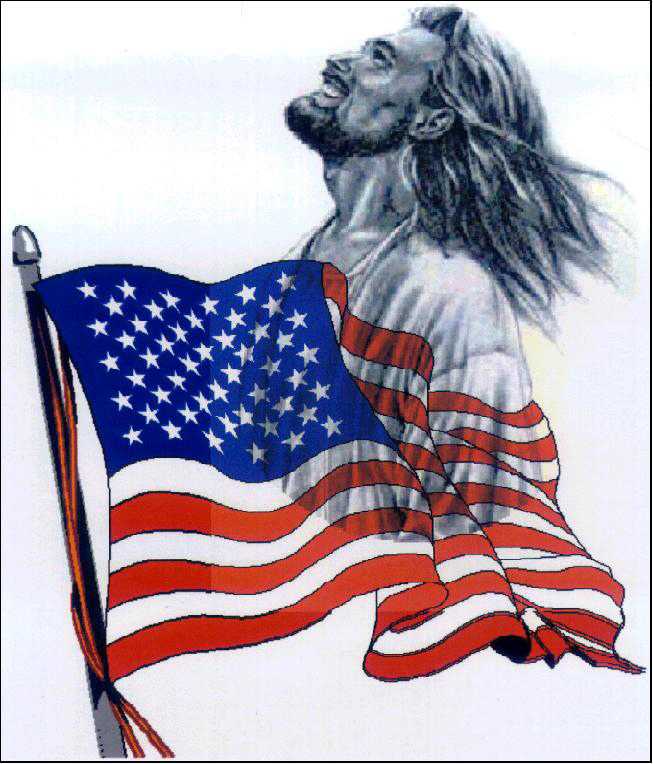
One of those “facts” is that “God used the Trail of Tears to bring many Indians to Christ.” The tidbit comes from a 1994 A Beka Book, which offers Christian education materials, titled America: Land I Love.
For more on the subject, see Oklahoma License-Plate Challenge Dismissed and Christian Flyer Calls Lakota Rite "Satanic."
August 17, 2012
Online fundraising to save Pe' Sla
This may be the biggest story in Indian country at the moment.
Sioux tribes take to the Internet to buy back sacred land
By Arturo GarciaMembers of the Sioux Nation are attempting to raise $1 million dollars to buy back a section of South Dakota land known in their culture as “the Center and heart of everything that is.”
About 2,000 acres of land in the state’s Black Hills is scheduled to go up for auction next week, including what’s known to the Sioux as Pe’ Sla. A local auction company posted that 1,942 acres of the land, known as Reynolds Prairie, after the family who owns it, is slated to go up for bid on Aug. 25.
The Rosebud Sioux Tribe has teamed up with the Native American blog Last Real Indians for an online fundraising campaign that began Monday, with an Aug. 23 deadline. As of Friday afternoon, the campaign had accrued just over $59,000.
“It’s not like a resistance movement or a militant thing,” Last Real Indians’ Chase Iron Eyes told Raw Story. “We have to protect these things. That’s what we’re on this Earth for.” Black Hills Auction: The Auction of the Sacred
By Winona LaDukeAs Lakota scholar Chase Iron Eyes explains, “…Pe’Sla, to the Lakota, is the place where Morning Star, manifested as a meteor, fell to Earth to help the Lakota by killing a great bird which had taken the lives of seven women; Morning Star’s descent having created the wide open uncharacteristic bald spot in the middle of the forested Black Hills. (On American maps, this is called, Old Baldy) …The Morning Star placed the spirits of those seven women in the sky as the constellation “Pleiades” or “The Seven Sisters.”
This is, the “Center of the Heart of Everything that is… one of a small number of highly revered and geographically-cosmologically integral places on the entire planet….” Sacred places, recognized under federal judicial review, Presidential Executive Order (1996) and international law are to be protected.
On August 25, the Center of the Heart of Everything that is, will come up in on the auction block a Rapid City’s Ramkota Inn, destined to be diced into a set of 300 acre tracts, proposed for ranchettes, and a possible road through the heart, (and more divisions) of what has been, until now, a relatively un-desecrated sacred site. “We didn’t even know it was going to be sold,” Debra White Plume from Manderson tells me.” We heard nothing about it until we saw the auction announcement”.
The Brock Auction Company of Iowa and South Dakota in mid July announced, offering the Reynolds Ranch, noting, “This story begins in 1876 just 2 short years after General George Armstrong Custer led his historic expedition through the then almost unknown Black Hills in the Dakota Territory….In 1876 Joseph Reynolds filed his first claim & homesteaded … “Reynolds Prairie!” He was followed by 3 more generations …” Brock promotes the property noting, in some solace for potential buyers, “… As you sit in quiet solitude, with only the whispering of the wind gently easing through the pines, let your mind wander back in time & imagine the Native Americans, the Homesteaders & Pioneers who passed across this land that is now a part of yours & your families legacy forever!…” Some Lakota find this ironic, perhaps. Exclusive Truthout Interview: Sioux Spiritual Leader Speaks Out on Land Sale at Sacred Site
By Jason Coppola"Our creation story comes from the Black Hills, from the heart of Mother Earth. We came up from the caves which are connected under our Black Hills, and we received several very sacred places to do ceremony," said Looking Horse.
"Pe' Sla is one of these central ceremonial places. This is where our existence comes from. Pe' Sla is where Morning Star came down to help the people, because we are star people," he said.
"Sundance happens at Pe' Sla," said Looking Horse. "Other ceremonies that our spiritual leaders must perform happen at Pe' Sla."
The Sundance ceremony, one of seven sacred ceremonies given to the Lakota by Pte San Win, is a closely guarded practice, but Iron Eyes explained that it is one of sacrifice and renewal: participants re-enact the sacrifice of a spirit, Inyan, who spun himself and sacrificed himself until his blood became water. The ceremony ensures that nature's process of renewal continues so that, for example, water, plants, and animals remain abundant.
"At Pe' Sla we give energy, as the whites call it; that is what our ceremonies do," said Looking Horse. "We humans have power, but we don't know it. We can send energy to the universe and it comes back to us. We can change the environment. People must understand that we have power, and if we are to live, we have to have faith and belief through our spiritual ways and our sites. All indigenous do this with energy."
"We need to come together to protect Pe' Sla," said Looking Horse. "All tribes, even though we went to war with each other at times, in our history. Yes, we went to battle with other tribes, but when either brought out spiritual bundles or was conducting ceremonies, nobody attacked. We actually worked together in spiritual ways because these were given by the Great Spirit to all his children here." Comment: I've been following this story, but I wasn't necessarily going to report on it. But once the tribes started raising fund on the Internet, I figure it became a pop-culture story.
At the very least, it shows the power of social media once again. This crusade started as a handful of postings on Last Real Indians and other blog sites--shared on Facebook. Then Indian Country Today and Indianz.com began posting stories on it with more reach. Then the major alternative press sites picked up, and finally it hit the mainstream media (the Associated Press).
Is there anything social media can't do? I'd love to see activists make a concerted effort to get rid of Chief Wahoo or the Washington Redskins. I bet we could shame them out of existence if we tried.
For more on sacred sites, see "Hunger Strike for the Peaks" and Weed Killer Sprayed on Indian Mound.

Sioux tribes take to the Internet to buy back sacred land
By Arturo Garcia
About 2,000 acres of land in the state’s Black Hills is scheduled to go up for auction next week, including what’s known to the Sioux as Pe’ Sla. A local auction company posted that 1,942 acres of the land, known as Reynolds Prairie, after the family who owns it, is slated to go up for bid on Aug. 25.
The Rosebud Sioux Tribe has teamed up with the Native American blog Last Real Indians for an online fundraising campaign that began Monday, with an Aug. 23 deadline. As of Friday afternoon, the campaign had accrued just over $59,000.
“It’s not like a resistance movement or a militant thing,” Last Real Indians’ Chase Iron Eyes told Raw Story. “We have to protect these things. That’s what we’re on this Earth for.”
By Winona LaDuke
This is, the “Center of the Heart of Everything that is… one of a small number of highly revered and geographically-cosmologically integral places on the entire planet….” Sacred places, recognized under federal judicial review, Presidential Executive Order (1996) and international law are to be protected.
On August 25, the Center of the Heart of Everything that is, will come up in on the auction block a Rapid City’s Ramkota Inn, destined to be diced into a set of 300 acre tracts, proposed for ranchettes, and a possible road through the heart, (and more divisions) of what has been, until now, a relatively un-desecrated sacred site. “We didn’t even know it was going to be sold,” Debra White Plume from Manderson tells me.” We heard nothing about it until we saw the auction announcement”.
The Brock Auction Company of Iowa and South Dakota in mid July announced, offering the Reynolds Ranch, noting, “This story begins in 1876 just 2 short years after General George Armstrong Custer led his historic expedition through the then almost unknown Black Hills in the Dakota Territory….In 1876 Joseph Reynolds filed his first claim & homesteaded … “Reynolds Prairie!” He was followed by 3 more generations …” Brock promotes the property noting, in some solace for potential buyers, “… As you sit in quiet solitude, with only the whispering of the wind gently easing through the pines, let your mind wander back in time & imagine the Native Americans, the Homesteaders & Pioneers who passed across this land that is now a part of yours & your families legacy forever!…” Some Lakota find this ironic, perhaps.
By Jason Coppola
"Pe' Sla is one of these central ceremonial places. This is where our existence comes from. Pe' Sla is where Morning Star came down to help the people, because we are star people," he said.
"Sundance happens at Pe' Sla," said Looking Horse. "Other ceremonies that our spiritual leaders must perform happen at Pe' Sla."
The Sundance ceremony, one of seven sacred ceremonies given to the Lakota by Pte San Win, is a closely guarded practice, but Iron Eyes explained that it is one of sacrifice and renewal: participants re-enact the sacrifice of a spirit, Inyan, who spun himself and sacrificed himself until his blood became water. The ceremony ensures that nature's process of renewal continues so that, for example, water, plants, and animals remain abundant.
"At Pe' Sla we give energy, as the whites call it; that is what our ceremonies do," said Looking Horse. "We humans have power, but we don't know it. We can send energy to the universe and it comes back to us. We can change the environment. People must understand that we have power, and if we are to live, we have to have faith and belief through our spiritual ways and our sites. All indigenous do this with energy."
"We need to come together to protect Pe' Sla," said Looking Horse. "All tribes, even though we went to war with each other at times, in our history. Yes, we went to battle with other tribes, but when either brought out spiritual bundles or was conducting ceremonies, nobody attacked. We actually worked together in spiritual ways because these were given by the Great Spirit to all his children here."
At the very least, it shows the power of social media once again. This crusade started as a handful of postings on Last Real Indians and other blog sites--shared on Facebook. Then Indian Country Today and Indianz.com began posting stories on it with more reach. Then the major alternative press sites picked up, and finally it hit the mainstream media (the Associated Press).
Is there anything social media can't do? I'd love to see activists make a concerted effort to get rid of Chief Wahoo or the Washington Redskins. I bet we could shame them out of existence if we tried.
For more on sacred sites, see "Hunger Strike for the Peaks" and Weed Killer Sprayed on Indian Mound.
Dakota walk commemorates war's anniversary
Dakota cross border to a 150-year-old welcome home
By Curt BrownDennis Red Owl pushed his 86-year-old mother's wheelchair over a crack in the asphalt Friday where South Dakota Hwy. 34 meets Minnesota Hwy. 30 at the border.
Elder Ada Red Owl, wrapped in a shawl, bowed her head and swept the smoke of burning sage over her face. A "Welcome to Minnesota" sign stood just across the road.
Traffic was halted as drum beats and prayer chants filled the unseasonably crisp air among the cornfields. More than 300 people circled around Ada and seven other Dakota grandmothers--four on each side of the border--as they exchanged eagle feathers at a symbolic welcome-home ceremony for exiles on the 150th anniversary of the U.S.-Dakota War of 1862.
In the wake of the war, in which hundreds of settlers, U.S. soldiers and Dakota fighters were killed, Congress passed a law in 1863 banishing the Dakota from Minnesota. Several hundred Dakota had gone to war after broken treaties and late annuity payments left their families starving to death in a narrow reservation along the Minnesota River. Their intent was to win back their land from a wave of immigrants sweeping into early Minnesota. The federal law, although unenforced, remains on the books. Dakota remember conflict with walk
Minnesota-S.D. border ceremony marks 1862 warAs the ceremony began, 11 horses carrying riders crested a hill on South Dakota’s Highway 34 and led a procession of walkers to the border. Winona, Minn., residents Barbi Bell and Richie Swanson held a sign that read “Welcome Home,” while Minnesota Secretary of State Mark Ritchie shouted the same greeting as walkers descended the hill.
“This is long overdue,” said Pipestone County Sheriff Dan Delaney, watching the ceremony as he stood next to the “Welcome to Minnesota” sign sitting on the state’s Highway 30.
An 1863 federal law remains that bans Dakota from living in Minnesota, though it’s not enforced. Gov. Mark Dayton issued a statement asking Minnesotans to “remember that dark past,” and he repudiated the actions of Alexander Ramsey, Minnesota’s second governor, who said after the war that the Dakota should be exterminated or driven from the state.
Dayton said, “Hostile feelings do still exist between some Native Americans and their neighbors.” He offered condolences to everyone who lost family members, and ordered all state flags flown at half-staff from sunrise to sunset Friday. For more on the US-Dakota War being commemorated, here's the last of a six-part series:
Little Crow's legacy
And an essay in the New York Times:
Lincoln and the Sioux
For more on the subject, see Memorial Sought for Mankato 38 and 150th Anniversary of US-Dakota War.

By Curt Brown
Elder Ada Red Owl, wrapped in a shawl, bowed her head and swept the smoke of burning sage over her face. A "Welcome to Minnesota" sign stood just across the road.
Traffic was halted as drum beats and prayer chants filled the unseasonably crisp air among the cornfields. More than 300 people circled around Ada and seven other Dakota grandmothers--four on each side of the border--as they exchanged eagle feathers at a symbolic welcome-home ceremony for exiles on the 150th anniversary of the U.S.-Dakota War of 1862.
In the wake of the war, in which hundreds of settlers, U.S. soldiers and Dakota fighters were killed, Congress passed a law in 1863 banishing the Dakota from Minnesota. Several hundred Dakota had gone to war after broken treaties and late annuity payments left their families starving to death in a narrow reservation along the Minnesota River. Their intent was to win back their land from a wave of immigrants sweeping into early Minnesota. The federal law, although unenforced, remains on the books.
Minnesota-S.D. border ceremony marks 1862 war
“This is long overdue,” said Pipestone County Sheriff Dan Delaney, watching the ceremony as he stood next to the “Welcome to Minnesota” sign sitting on the state’s Highway 30.
An 1863 federal law remains that bans Dakota from living in Minnesota, though it’s not enforced. Gov. Mark Dayton issued a statement asking Minnesotans to “remember that dark past,” and he repudiated the actions of Alexander Ramsey, Minnesota’s second governor, who said after the war that the Dakota should be exterminated or driven from the state.
Dayton said, “Hostile feelings do still exist between some Native Americans and their neighbors.” He offered condolences to everyone who lost family members, and ordered all state flags flown at half-staff from sunrise to sunset Friday.
Little Crow's legacy
And an essay in the New York Times:
Lincoln and the Sioux
For more on the subject, see Memorial Sought for Mankato 38 and 150th Anniversary of US-Dakota War.
"Fashion Heat" at Indian Market
As I've noted before, the annual Santa Fe Indian Market offers more than just fine Indian arts and crafts. It's becoming the Comic-Con of Indian culture. Everything from movies to skateboarding is available.
Here's a highlight from this year's affair:
Wes Studi welcomes huge crowd to “Fashion Heat” native fashion show
By Roscoe PondThe Museum of Contemporary Native Arts (MoCNA) is celebrating its’ 40th anniversary. They held events all day Friday Aug. 17, 2012, including the ‘Fashion Heat’ native fashion show from 6-7 p.m. A buffet table of vegetables, cake & candy-on-sticks nourished the sweet tooth of many individuals. It was all part of the Santa Fe Indian Market (SWAIA) 2012.
A red carpet, tent & chairs were set up at the MoCNA ‘Allan Houser Art Park.’ At 5:30 p.m. the place was packed with family, friends & fans of the Native American designers. They are, Connie, David & Wayne-Nez Gaussoin, Pilar Agoyo, Orlando Dugi, Consuelo Pascual, Dorothy Grant, Sun Rose Iron Shell, Jamie Okuma & Patricia Michaels. Music was performed by DJ Matt Carrasco-Trujillo.
Enthusiastic cheers greeted native actor, Wes Studi (Avatar) as he welcomed everybody to the show. A Navajo prayer & poems opened the fashion event. Many photographers were on hand as the first model set off the flash bulbs.
Native film directors were on hand, Chris Eyre (Hide Away) & Tim Ramos (California Indian). New Mexico casting director Angelique Midthunder & her daughter served as models. They walked the runway with style & attitude. Both of them worked on the A&E cable TV show ‘Longmire’ that was filmed in Santa Fe, N.M. Fashion Heat: The Sartorial Splendor of Native American Clothing Design
"As an unabashed fashion junkie, I was impressed with the attention to detail, color and compliance with tradition..."
By Greta Chapin McGillThe first segment focused on traditional Native dress. Buckskin-fringed garments embellished with traditional beading, were stunning. The details of these garments from the moccasins, belts, and hanging bags showed Native American tradition is still very much alive and certainly actively passed from generation to generation. These costumes were made to be worn for weddings and other special events in the lives of Native Americans today.
After a brief interlude featuring a Native American dancers, the show moved into contemporary designers. I was enthralled at the transition from past to present. The content glided effortlessly into beautiful couture evening, cocktail and separates. A sprinkling of junior dressing added some whimsy to the show. The point of view of these new Native American designers is obviously rooted in their cultural past. They paid homage to their culture in unique ways. Intricate and thoughtful use of accessories was one way the cultural traditions were obvious. Headpieces of feathers, earrings, cuffs and bracelets completed each garment. The shoes of the models were inspired works of art. Heels were wrapped in fabric and laced with eyelets or intricately painted and beaded to compliment the garments. Comment: For more on the subject, see Innovations at Indian Market and Skateploitation! at Indian Market.

Here's a highlight from this year's affair:
Wes Studi welcomes huge crowd to “Fashion Heat” native fashion show
By Roscoe Pond
A red carpet, tent & chairs were set up at the MoCNA ‘Allan Houser Art Park.’ At 5:30 p.m. the place was packed with family, friends & fans of the Native American designers. They are, Connie, David & Wayne-Nez Gaussoin, Pilar Agoyo, Orlando Dugi, Consuelo Pascual, Dorothy Grant, Sun Rose Iron Shell, Jamie Okuma & Patricia Michaels. Music was performed by DJ Matt Carrasco-Trujillo.
Enthusiastic cheers greeted native actor, Wes Studi (Avatar) as he welcomed everybody to the show. A Navajo prayer & poems opened the fashion event. Many photographers were on hand as the first model set off the flash bulbs.
Native film directors were on hand, Chris Eyre (Hide Away) & Tim Ramos (California Indian). New Mexico casting director Angelique Midthunder & her daughter served as models. They walked the runway with style & attitude. Both of them worked on the A&E cable TV show ‘Longmire’ that was filmed in Santa Fe, N.M.
"As an unabashed fashion junkie, I was impressed with the attention to detail, color and compliance with tradition..."
By Greta Chapin McGill
After a brief interlude featuring a Native American dancers, the show moved into contemporary designers. I was enthralled at the transition from past to present. The content glided effortlessly into beautiful couture evening, cocktail and separates. A sprinkling of junior dressing added some whimsy to the show. The point of view of these new Native American designers is obviously rooted in their cultural past. They paid homage to their culture in unique ways. Intricate and thoughtful use of accessories was one way the cultural traditions were obvious. Headpieces of feathers, earrings, cuffs and bracelets completed each garment. The shoes of the models were inspired works of art. Heels were wrapped in fabric and laced with eyelets or intricately painted and beaded to compliment the garments.
August 16, 2012
Reconstructing Iraq and Indians failed
Why American reconstruction fails
Our efforts in Iraq and Afghanistan have caused more harm than good, and we have only ourselves to blame
By Peter Van BurenBy 2010, when I wrote “We Meant Well: How I Helped Lose the Battle for the Hearts and Minds of the Iraqi People,” the possibility that some level of success might be close by still occupied some official minds. American boots remained on the ground in Mesopotamia and looked likely to stay on for years in at least a few of the massive permanent bases we had built there. A sort-of elected government was more or less in place, and in the press interviews I did in response to my book I was regularly required to defend its thesis that reconstruction in Iraq had failed almost totally, and that the same process was going down in Afghanistan as well. It was sometimes a tough sell. After all, how could we truly fail, being plucky Americans, historically equipped like no one else with plenty of bootstraps and know-how and gumption.
Now, it’s definitive. Reconstruction in Iraq has failed. Dismally. The U.S. couldn’t even restore the country’s electric system or give a majority of its people potable water. The accounts of that failure still pour out. Choose your favorites; here are just two recent ones of mine: a report that a $200 million year-long State Department police training program had shown no results (none, nada), in part because the Iraqis had been completely uninterested in it; and a long official list of major reconstruction projects uncompleted, with billions of taxpayer dollars wasted, all carefully catalogued by the now-defunct Special Inspector for Iraq Reconstruction.
Failure, in fact, was the name of the game when it came to the American mission. Just tote up the score: the Iraqi government is moving ever closer to Iran; the U.S. occupation, which built 505 bases in the country with the thought that U.S. troops might remain garrisoned there for generations, ended without a single base in U.S. hands (none, nada); no gushers of cheap oil leapt USA-wards nor did profits from the above leap into the coffers of American oil companies; and there was a net loss of U.S. prestige and influence across the region. And that would just be the beginning of the list from hell. Van Buren continues with the question, "Why reconstruction at all?":While, dollar-for-dollar, corruption and contractor greed account for almost all the money wasted, the idea that, deep down, we want the people we conquer to become mini-versions of us accounts for the rest of the drive and motivation. We want them to consume things as a lifestyle, use nice sewer systems, and send everyone to schools where, thanks to the new textbooks we’ve sponsored, they’ll learn more about…us. This explains why we funded pastry-making classes to try to turn Iraqi women into small business owners, why an obsession with holding mediagenic elections in Iraq smothered nascent grassroots democracy (remember all those images of purple fingers?), why displacing family farms by introducing large-scale agribusiness seemed so important, and so forth.
By becoming versions of us, the people we conquer would, in our eyes, redeem themselves from being our enemies. Like a perverse view of rape, reconstruction, if it ever worked, would almost make it appear that they wanted to be violated by the American military so as to benefit from being rebuilt in the American fashion. From Washington’s point of view, there’s really no question here, no why at all. Who, after all, wouldn’t want to be us? And that, in turn, justifies everything. Think of it as an up-to-date take on that classic line from Vietnam, “It became necessary to destroy the town to save it.”
Americans have always worn their imperialism uncomfortably, even when pursuing it robustly. The British were happy to carve out little green enclaves of home, and to tame—brutally, if necessary—the people they conquered. The United States is different, maybe because of the lip service politicians need to pay to our founding ideals of democracy and free choice.
We’re not content merely to tame people; we want to change them, too, and make them want it as well. Fundamentalist Muslims will send their girls to school, a society dominated by religion will embrace consumerism, and age-old tribal leaders will give way to (U.S.-friendly, media-savvy) politicians, even while we grow our archipelago of military bases and our corporations make out like bandits. It’s our way of reconciling Freedom and Empire, the American Way. Only problem: it doesn’t work. Not for a second. Not at all. Nothing. Nada. Why does remaking foreigners into Americans inevitably fail?Once it becomes clear that reconstruction is for us, not them, its purpose to enrich our contractors, fuel our bureaucrats’ vanity, and most importantly, justify our imperial actions, why it fails becomes a no-brainer. It has to fail (not that we really care). They don’t want to be us. They have been them for hundreds, maybe thousands of years. They may welcome medicines that will save their children’s lives, but hate the culture that the U.S. slipstreams in like an inoculation with them.
Failure in the strict sense of the word is not necessarily a problem for Washington. Our purpose is served by the appearance of reconstructing. We need to tell ourselves we tried, and those (dark, dirty, uneducated, Muslim, terrorist, heathen) people we just ran over with a tank actually screwed this up. And OK, sure, if a few well-connected contractors profit along the way, more power to them. Comment: It's uncanny how closely this situation parallels that of the American Indian after the Indian Wars. The following is almost exactly how US officials thought at the end of the 19th century:
Heathen Indians will send their children to school, a society dominated by religion will embrace consumerism, and age-old tribal leaders will give way to (U.S.-friendly, media-savvy) politicians, even while we grow our archipelago of military bases and our corporations (railroads, mines, and ranches) make out like bandits.
Alas, some things never change. American imperialism seems to be one of them.
For more on the subject, see Indians Say "Unoccupy America" and US Policy = Seeking Terror-tory.
Below: Two conquerors who invaded foreign territory to remake the inhabitants in their image.
Our efforts in Iraq and Afghanistan have caused more harm than good, and we have only ourselves to blame
By Peter Van Buren
Now, it’s definitive. Reconstruction in Iraq has failed. Dismally. The U.S. couldn’t even restore the country’s electric system or give a majority of its people potable water. The accounts of that failure still pour out. Choose your favorites; here are just two recent ones of mine: a report that a $200 million year-long State Department police training program had shown no results (none, nada), in part because the Iraqis had been completely uninterested in it; and a long official list of major reconstruction projects uncompleted, with billions of taxpayer dollars wasted, all carefully catalogued by the now-defunct Special Inspector for Iraq Reconstruction.
Failure, in fact, was the name of the game when it came to the American mission. Just tote up the score: the Iraqi government is moving ever closer to Iran; the U.S. occupation, which built 505 bases in the country with the thought that U.S. troops might remain garrisoned there for generations, ended without a single base in U.S. hands (none, nada); no gushers of cheap oil leapt USA-wards nor did profits from the above leap into the coffers of American oil companies; and there was a net loss of U.S. prestige and influence across the region. And that would just be the beginning of the list from hell.
By becoming versions of us, the people we conquer would, in our eyes, redeem themselves from being our enemies. Like a perverse view of rape, reconstruction, if it ever worked, would almost make it appear that they wanted to be violated by the American military so as to benefit from being rebuilt in the American fashion. From Washington’s point of view, there’s really no question here, no why at all. Who, after all, wouldn’t want to be us? And that, in turn, justifies everything. Think of it as an up-to-date take on that classic line from Vietnam, “It became necessary to destroy the town to save it.”
Americans have always worn their imperialism uncomfortably, even when pursuing it robustly. The British were happy to carve out little green enclaves of home, and to tame—brutally, if necessary—the people they conquered. The United States is different, maybe because of the lip service politicians need to pay to our founding ideals of democracy and free choice.
We’re not content merely to tame people; we want to change them, too, and make them want it as well. Fundamentalist Muslims will send their girls to school, a society dominated by religion will embrace consumerism, and age-old tribal leaders will give way to (U.S.-friendly, media-savvy) politicians, even while we grow our archipelago of military bases and our corporations make out like bandits. It’s our way of reconciling Freedom and Empire, the American Way. Only problem: it doesn’t work. Not for a second. Not at all. Nothing. Nada.
Failure in the strict sense of the word is not necessarily a problem for Washington. Our purpose is served by the appearance of reconstructing. We need to tell ourselves we tried, and those (dark, dirty, uneducated, Muslim, terrorist, heathen) people we just ran over with a tank actually screwed this up. And OK, sure, if a few well-connected contractors profit along the way, more power to them.
Heathen Indians will send their children to school, a society dominated by religion will embrace consumerism, and age-old tribal leaders will give way to (U.S.-friendly, media-savvy) politicians, even while we grow our archipelago of military bases and our corporations (railroads, mines, and ranches) make out like bandits.
Alas, some things never change. American imperialism seems to be one of them.
For more on the subject, see Indians Say "Unoccupy America" and US Policy = Seeking Terror-tory.
Below: Two conquerors who invaded foreign territory to remake the inhabitants in their image.
Ryan's wife is part Chickasaw
Republican VP Candidate Paul Ryan’s American Indian Outlook
By Rob CapricciosoOn the family front, Ryan’s wife, Janna, is some part Chickasaw, according to press reports, although she’s not enrolled in the tribe due to lacking historical evidence, and more research is needed to back up these claims. In the age of Democratic Senate candidate Elizabeth Warren’s unsubstantiated claims of Cherokee ancestry–and her reliance on family folklore without any background of having reached out to tribes or Indians, while claiming Indian heritage at institutions of higher education–Janna Ryan’s path here is likely to be scrutinized much more in the days leading up to the November presidential election.
If Janna Ryan is indeed Native, the situation would seem reminiscent of GOP vice presidential candidate Sarah Palin in 2008, whose husband, Todd is Yup’ik and whose children are Alaska Native Corporation shareholders. Evidence currently supports the notion that, like Palin, Ryan has paid attention to his spouse’s heritage, and it seems to inform at least a small part of his outlook.
What is known for sure is that Janna Ryan’s family has deep roots in Oklahoma’s Democratic and Indian-focused politics, with her first-cousin Rep. Dan Boren, D-Okla., set to become president of corporate development with the Chickasaw Nation at the end of his current term. While Boren is a Democrat, he has put out a statement supporting his cousin, as well as her husband, in the race against President Barack Obama: “Janna and I grew up together and I couldn’t be more proud of my cousin. Like my late mother after whom she is named, Janna is a wonderful parent to their children and will be Paul’s strongest supporter on the campaign trail. Paul has a firm moral compass and has always approached his job as a congressman with diligence and honesty. Having many friends on both sides of the aisle, he is an effective and talented leader. Although we belong in different political parties, I see Paul as a friend, a fellow hunter, and most importantly a family man.” Comment: I'm guessing Janna Ryan won't claim to be Chickasaw and no one will pay attention to her heritage in the presidential race.
For more on identity questions, see Justin Bieber Thinks He's Native and Warren: Conservatives Back Cherokee Protesters.

By Rob Capriccioso
If Janna Ryan is indeed Native, the situation would seem reminiscent of GOP vice presidential candidate Sarah Palin in 2008, whose husband, Todd is Yup’ik and whose children are Alaska Native Corporation shareholders. Evidence currently supports the notion that, like Palin, Ryan has paid attention to his spouse’s heritage, and it seems to inform at least a small part of his outlook.
What is known for sure is that Janna Ryan’s family has deep roots in Oklahoma’s Democratic and Indian-focused politics, with her first-cousin Rep. Dan Boren, D-Okla., set to become president of corporate development with the Chickasaw Nation at the end of his current term. While Boren is a Democrat, he has put out a statement supporting his cousin, as well as her husband, in the race against President Barack Obama: “Janna and I grew up together and I couldn’t be more proud of my cousin. Like my late mother after whom she is named, Janna is a wonderful parent to their children and will be Paul’s strongest supporter on the campaign trail. Paul has a firm moral compass and has always approached his job as a congressman with diligence and honesty. Having many friends on both sides of the aisle, he is an effective and talented leader. Although we belong in different political parties, I see Paul as a friend, a fellow hunter, and most importantly a family man.”
For more on identity questions, see Justin Bieber Thinks He's Native and Warren: Conservatives Back Cherokee Protesters.
Subscribe to:
Posts (Atom)